Laboratory confirmed cases of pertussis in England: April to June 2026
Updated 26 November 2026
Applies to England

© Crown copyright 2026
This publication is licensed under the terms of the Open Government Licence v3.0 except where otherwise stated. To view this licence, visit nationalarchives.gov.uk/doc/open-government-licence/version/3 or write to the Information Policy Team, The National Archives, Kew, London TW9 4DU, or email: psi@nationalarchives.gov.uk.
Where we have identified any third party copyright information you will need to obtain permission from the copyright holders concerned.
This publication is available at https://www.gov.uk/government/publications/pertussis-laboratory-confirmed-cases-reported-in-england-2026/laboratory-confirmed-cases-of-pertussis-in-england-april-to-june-2026
Introduction
This report summarises data on laboratory-confirmed cases of pertussis reported in England between April and June 2026. This report covers confirmed case numbers and their distribution, information on deaths related to pertussis, and data on vaccination uptake through the childhood and maternal programmes. Data for 2024 and 2025 have previously been published by the UK Health Security Agency (UKHSA).
Pertussis is a cyclical disease, with increases occurring every 3 to 5 years, and seasonal activity usually peaking each year in quarter 3 (July to September). Prior to the COVID-19 pandemic, the last major outbreak occurred in 2012 and cyclical peak in 2016. Intervention measures implemented to help control the spread of COVID-19 also had an impact on other infectious diseases, including pertussis. Consequently, pertussis activity was exceptionally low across England from April 2020 and persisted at very low levels until summer 2023 when case numbers began to increase (figure 1). This increase continued into 2024 peaking in May and then fell, but remained elevated compared to recent pre-pandemic years between June and October 2024. Total confirmed cases in November and December 2024 were similar to those observed in the same months in the years preceding the COVID-19 pandemic. Monthly case numbers between January and March 2025 continued to decrease and were in line with those reported in relatively low non-peak years. The number of cases continued to decrease between April and June 2025 and remained very low to June 2026 (figure 2).
Laboratory confirmed cases and incidence
In England, there were 85 laboratory confirmed cases of pertussis – culture, polymerase chain reaction (PCR), serology or oral fluid – reported to the UKHSA pertussis enhanced surveillance programme in the second quarter of 2026, from April to June (table 1). The total number of cases in this quarter was 23% higher than the 69 cases reported in the first quarter of 2026 and 49% lower than the 168 cases reported in the equivalent quarter of 2025 [footnote 1] (figure 1 and table 2).
Of the 85 cases confirmed between April and June 2026, 68.2% (58 cases) were in those aged 15 years or older. Seven cases were reported in children aged between 10 and 14 years, 8 cases in children aged 5 to 9 years and 5 cases aged between 1 to 4 years. Seven cases were reported in infants under one year of age (table 1), of these 3 cases were aged under 3 months.
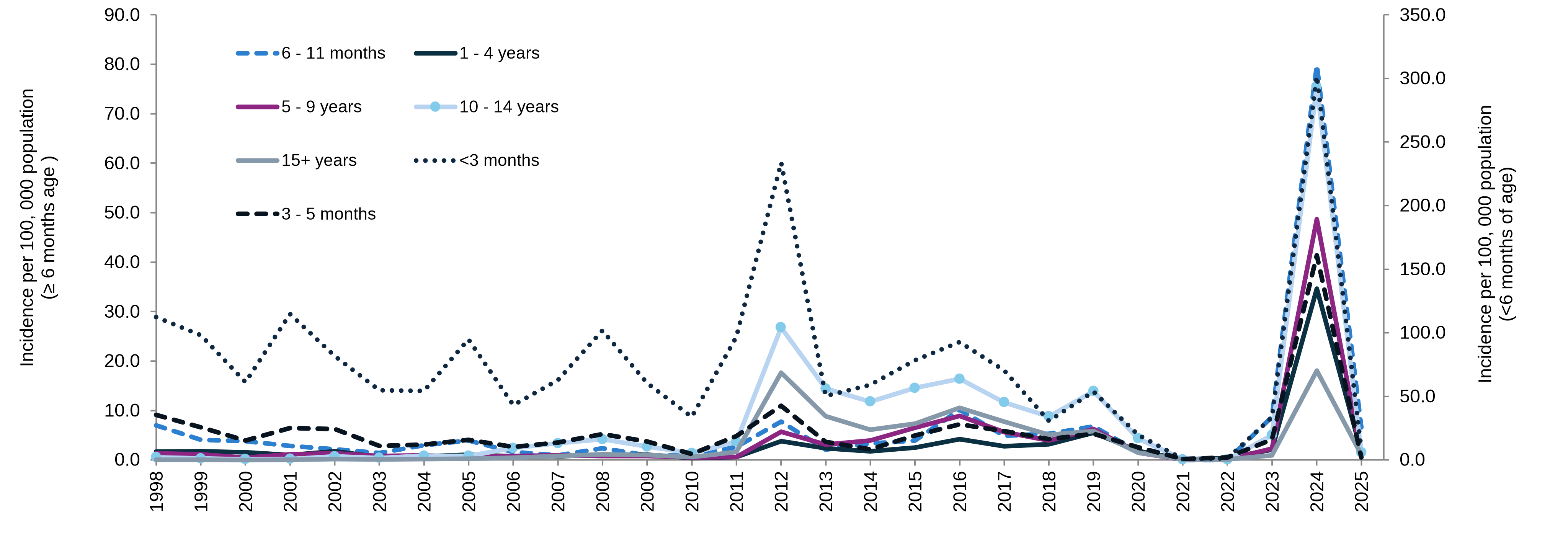
The number of confirmed cases in infants under 3 months, who are at highest risk of severe disease and too young to be fully vaccinated, peaked at 407 cases in the 2012 outbreak year then fell after the introduction of maternal vaccination. In recent years, cases in infants under 3 months increased from 2 cases in 2022 to 48 cases in 2023 and reached 433 cases in 2024. In 2025 the number of cases in infants aged under 3 months decreased to 12 cases. Incidence, however, continued to be highest in infants under 3 months in 2025 at 8.4 per 100,000 in 2025. The national incidence for all age groups based on laboratory confirmations in England in 2025 was 1.1 per 100,000 (figure 3).
Deaths
In the 12 years prior to the introduction of maternal pertussis vaccination in October 2012, 64 deaths occurred in babies aged under one year with confirmed pertussis. Since the introduction of pertussis vaccination in pregnancy, from 2013 to the end of December 2025, there have been 33 deaths in babies with confirmed pertussis who were all too young to be fully protected by infant vaccination, some of whom had coinfections and/or underlying health complications. Of the 33 infants that died, 27 had mothers who were not vaccinated in pregnancy. There were no reported deaths in infants with confirmed pertussis between January and June 2026 [footnote 2].
Maternal vaccination programme
Maternal vaccination is very effective against pertussis disease and hospitalisation in young infants (1,2). The latest calculated maternal vaccine effectiveness against infant death remains very high at 91.5% (2).
Maternal vaccine uptake in England fell from 74.6% in December 2017 to 58.9% in March 2024 but increased from April 2024 reaching 75.1% in December 2025. Coverage for 2026 quarter 2 (April to June) was 72.3%, which was 1.1 percentage points higher than the coverage for the same quarter in 2025. Whilst monthly coverage has been steadily increasing in recent months, it remains below the historic peak of 76.2% reported in December 2016. The increase in coverage may be partially explained by improved data flows [footnote 3].
Vaccination in pregnancy is key to passively protecting babies before they can be directly protected by the infant vaccine programme. Pertussis vaccination is recommended in every pregnancy, and women should normally receive their whooping cough vaccine around the time of their mid-pregnancy scan (usually 20 weeks) but can receive it from 16 weeks. To help provide optimal protection, the vaccine should be given before 32 weeks. Women who miss out can still have the vaccine later. It is also important that babies are vaccinated on time when they become eligible for infant doses at 8, 12 and 16 weeks of age and that those who miss vaccination are caught up at the earliest opportunity.
Childhood vaccination programme
The national vaccination schedule recommends pertussis vaccination at 8, 12 and 16 weeks of age and a pre-school booster at 3 years and 4 months. Children born on or after 1 July 2024 also now have an appointment at 18 months of age when they are offered a fourth dose of DTaP/IPV/Hib/HepB vaccine. Vaccine coverage in babies and young children has fallen in England over the last decade.
Annual coverage evaluated between April 2025 and March 2026 for DTaP/IPV/Hib/HepB immunisation across England, was estimated at 90.5% for 3 doses at 12 months of age, 0.8 percentage point lower than the previous financial year. The coverage estimate for DTaP/IPV (pre-school booster) by fifth birthday was 81.9%, 0.6 percentage points higher than the previous financial year.
Guidance
Guidance on public health management of pertussis was updated in May 2026 and includes details on the appropriate public health actions and laboratory investigation of suspected cases of pertussis. This public health advice is informed by the age of the suspected case and time since onset of their symptoms. Appropriate confirmatory testing ensures public health action is undertaken where needed and supports appropriate clinical management.
Figure 1. Laboratory confirmed cases of pertussis by quarter in England: 2011 to June 2026 (Q2) [note 1]
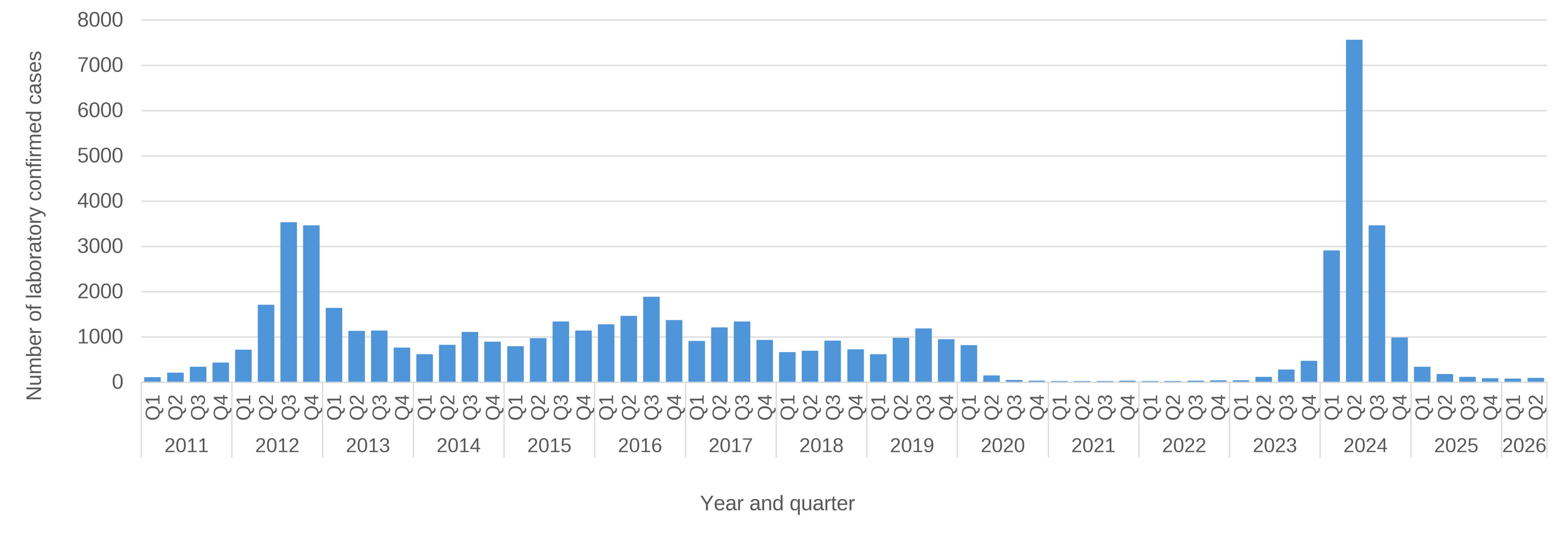
Table 1. Laboratory confirmed cases of pertussis by laboratory test method in England: April to June 2026 [notes 1,2,3]
| Age group | Culture | PCR | Serology | Oral fluid | Not reported | Total |
|---|---|---|---|---|---|---|
| Under 3 months | 0 | 2 | 0 | 0 | 1 | 3 |
| 3 to 5 months | 0 | 2 | 0 | 0 | 0 | 2 |
| 6 to 11 months | 1 | 0 | 1 | 0 | 0 | 2 |
| 1 to 4 years | 0 | 2 | 0 | 1 | 2 | 5 |
| 5 to 9 years | 0 | 0 | 4 | 4 | 0 | 8 |
| 10 to 14 years | 0 | 3 | 1 | 3 | 0 | 7 |
| 15 years and over | 0 | 11 | 42 | 4 | 1 | 58 |
| Total | 1 | 20 | 48 | 12 | 4 | 85 |
Figure 2. Laboratory confirmed cases of pertussis by month in England: 2018 to June 2026 [note 1]
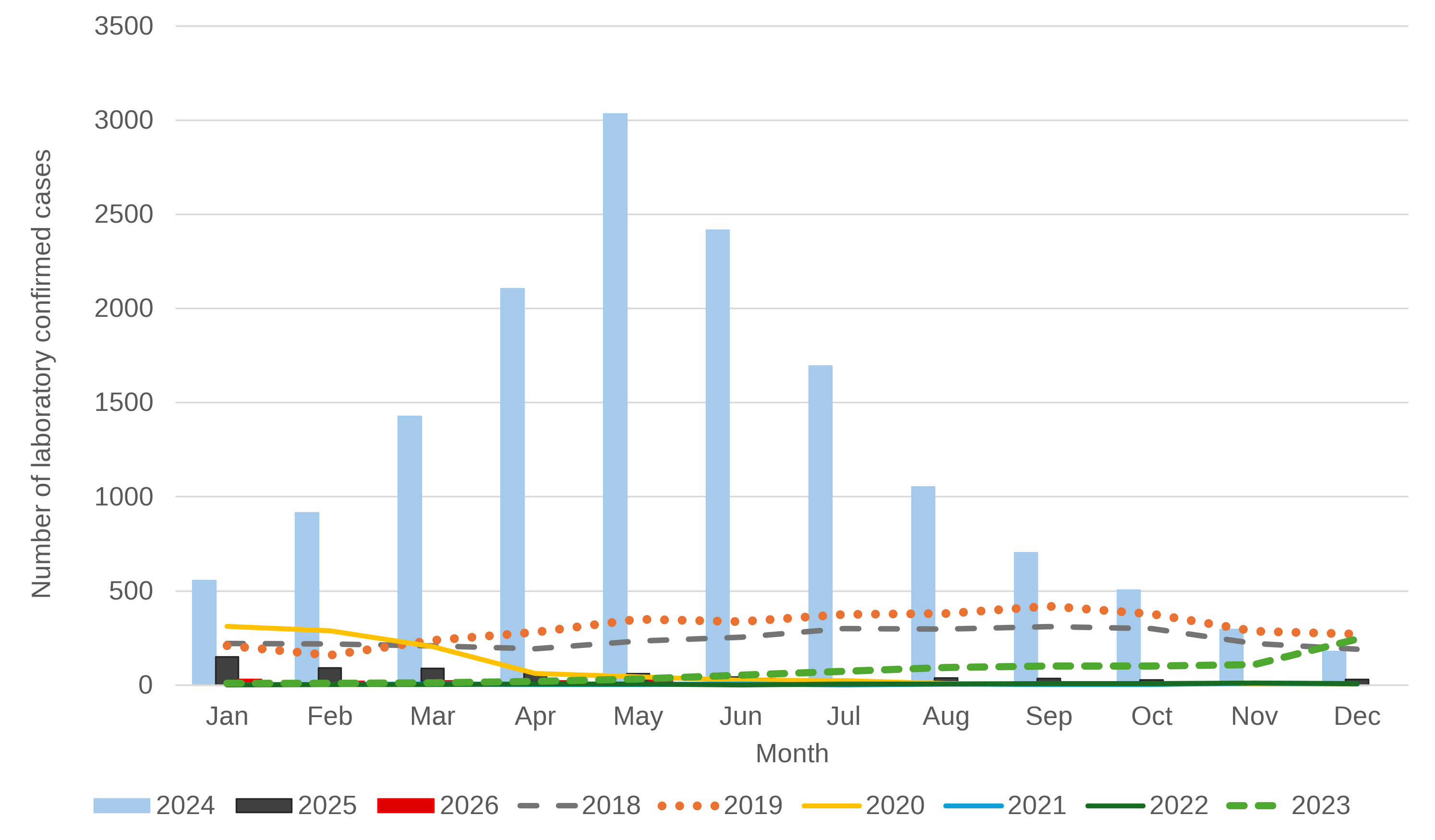
Table 2. Laboratory-confirmed cases of pertussis, by age and year, in England: April to June, 2018 to 2026 [notes 1]
| Age group | 2018 | 2019 | 2020 | 2021 | 2022 | 2023 | 2024 | 2025 | 2026 |
|---|---|---|---|---|---|---|---|---|---|
| Under 3 months | 10 | 23 | 13 | 0 | 1 | 8 | 219 | 5 | 3 |
| 3 to 5 months | 7 | 8 | 6 | 0 | 0 | 11 | 119 | 0 | 2 |
| 6 to 11 months | 2 | 8 | 2 | 0 | 0 | 10 | 116 | 4 | 2 |
| 1 to 4 years | 16 | 29 | 10 | 2 | 4 | 11 | 437 | 10 | 5 |
| 5 to 9 years | 42 | 65 | 7 | 0 | 0 | 7 | 965 | 10 | 8 |
| 10 to 14 years | 82 | 155 | 22 | 0 | 1 | 15 | 1,383 | 16 | 7 |
| 15 years and over | 521 | 681 | 73 | 7 | 7 | 44 | 4,314 | 123 | 58 |
| Total | 680 | 969 | 133 | 9 | 13 | 106 | 7,553 | 168 | 85 |
Figure 3. Annual incidence by age group of laboratory-confirmed cases of pertussis in England: 2011 to 2026 [note 1]
Notes relating to Figures 1,2,3 and Tables 1 and 2
Note 1: Data for 2025 and 2026 is provisional.
Note 2: Culture-confirmed cases may additionally have tested positive by any other method; PCR-confirmed cases may have additionally tested positive by serology or oral fluid; and serology-confirmed cases may also have been confirmed by oral fluid. Cases are only represented once in the table.
Note 3: Details of test method were not reported.
References
- Amirthalingam, G and others. Optimization of Timing of Maternal Pertussis Immunization From 6 Years of Postimplementation Surveillance Data in England Clinical Infectious Diseases 2023: volume 76, issue 3
- Walker JL and others. Antenatal pertussis vaccine effectiveness in England remains high post COVID-19 Journal of Infection 2026: volume 93, issue 4
Footnotes
-
Note that the number of laboratory confirmed cases presented are provisional and can increase as further test results are finalised but also decrease if cases are confirmed as vaccinated within a year of a positive serology or oral fluid test: both recent vaccination and/or recent infection will give a positive result using these test methods. ↩
-
Deaths are reported to the UKHSA pertussis enhanced surveillance programme from Health Protection Teams, Office of National Statistics or Patient Demographic Service. These are also provisional as there can be delays in reporting of deaths in babies with whooping cough. ↩
-
A new point of care app developed by NHSE to record vaccination events was introduced in September 2024. The Record a Vaccination service (RAVs) has improved dataflows into general practice, which may partially account for the increase in coverage reported in recent months. ↩