Unlock local giving: A toolkit for MPs
Published 13 April 2026
Applies to England

© Crown copyright 2026
This publication is licensed under the terms of the Open Government Licence v3.0 except where otherwise stated. To view this licence, visit nationalarchives.gov.uk/doc/open-government-licence/version/3 or write to the Information Policy Team, The National Archives, Kew, London TW9 4DU, or email: psi@nationalarchives.gov.uk.
Where we have identified any third party copyright information you will need to obtain permission from the copyright holders concerned.
This publication is available at https://www.gov.uk/government/publications/our-place-to-give-a-roadmap-towards-growing-place-based-philanthropy/unlock-local-giving-a-toolkit-for-mps
Grabbing the opportunity
Philanthropy is a Premier League club running free coaching sessions in your most deprived ward. A local business backing a mental health charity on your high street. Or a wealthy constituent funding opportunities for young people.
Philanthropy is already shaping your constituency, but it could do much more. You can make that happen.
The government has launched ‘Our place to give’, a place-based philanthropy roadmap. This maps out how philanthropy will work with national funding, such as the £5.8 billion Pride in Place programme that could increase investment in your area.
This funding will go to places that are organised, connected and ready.
As an MP, you are uniquely placed to turn that potential into reality – by connecting people, convening partners and championing local priorities. By building bridges and by influencing the national agenda.
This toolkit sets out how you can do exactly that.
A word from the minister
By giving wealth, time and expertise philanthropists actively support people in places to shape better futures. Futures built on a sense of community, pride and belonging.
This government wants to empower philanthropists and communities to do more together. To achieve tangible, lasting renewal.
Change starts with partnership. I recognise the value of place-based philanthropy working as a glue that binds communities together.
We want to support and grow this activity, which is why my department has launched ‘Our place to give: a roadmap towards growing place-based philanthropy’. This presents government’s first steps towards achieving this change.
This toolkit is designed to help MPs to unleash the power of philanthropy – establishing new partnerships, unlocking new philanthropic investment and connecting it to your constituency.
Stephanie Peacock MP, Minister for Sport, Tourism, Civil Society and Youth
What philanthropy can do for your constituency
For an MP there is an enormous opportunity to identify the key issues and bring us in. It would create huge social change and raise the MP’s local profile.
Philanthropist, North West
Research shows that place‑based giving forges stronger partnerships between councils, businesses and residents, enabling more effective, community‑driven solutions than government action alone.
By getting involved in philanthropy, by encouraging it and by joining the dots, you can be at the centre of positive change across your area.
As a champion for philanthropy, you will get more things done that matter in your community. You can unlock additional resources, making public money go further.
Impact economy inputs
Different types of money go into the impact economy from various people and organisations.
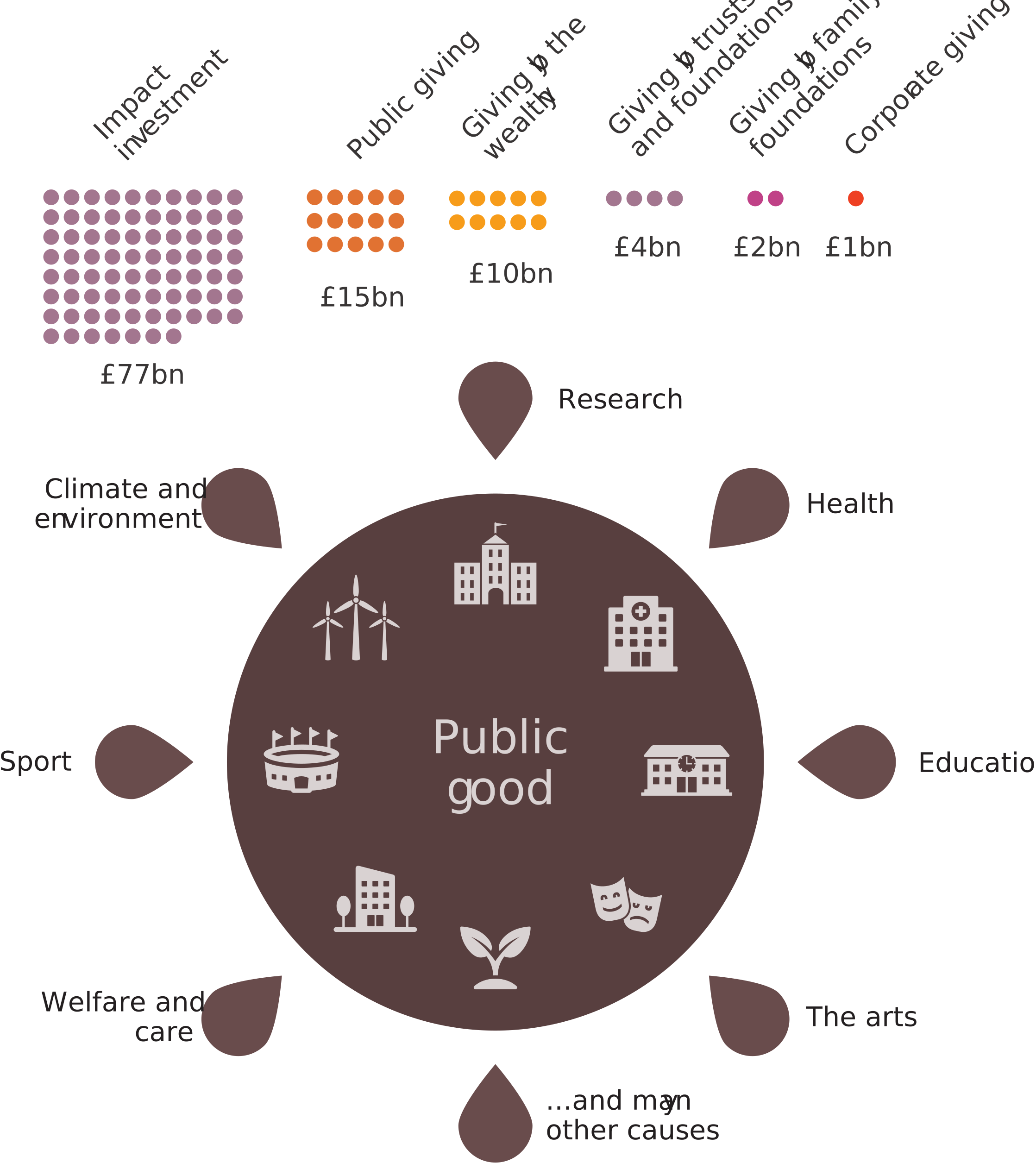
Sources: Impact Investing Institute, Charities Aid Foundation, New Philanthropy Capital and UK Grantmaking
This diagram shows the types of funding that flow into the impact economy, including impact investment (£77 billion), public giving (£15 billion), giving by wealthy individuals (£10 billion), trusts and foundations (£4 billion), family foundations (£2 billion) and corporate giving (£1 billlion). These inputs are shown contributing to public good outcomes such as health, education, research, climate and environment, welfare and care, sport and the arts.
Why focus on local giving
People give to the places that matter to them
People want to see the places they care about thrive. The places where they live and work, the places where they were born and bred.
Local knowledge drives better giving
Every area is different. Being plugged in to the local community and their needs means money can be targeted exactly where it’s most effective.
People want to feel connected
People give more when they can see projects, meet organisations and feel the difference their money is making.
Small amounts make a big difference locally
Local organisations are often small, but make a big difference in a community. Giving to the grassroots has a noticeable impact.
Local philanthropy could be much, much bigger
Even small-scale giving can be catalytic. Helping donors and businesses tap into community activity creates a first step to growing local giving.
If our MP showed an interest and asked to see where philanthropy is making a difference in the area, they could join the dots across a whole range of philanthropic activity.
Philanthropist, North West
How to engage more philanthropy in your area
As an MP, you have a key role in making more philanthropy happen in your constituency, and in making sure that philanthropy benefits your constituents in the best possible ways.
Ask local partners where philanthropy is already active and where it could make the biggest difference. Then use what you’ve uncovered to convene, connect, champion, bridge and influence.
As an MP you are…
A convenor
You can bring the right actors together to create momentum.
A connector
You are uniquely connected and can open doors others cannot.
A champion
You can bring authority, visibility and influence to an issue your constituency is facing.
A bridge builder
You have insight into national opportunities that can benefit your local area.
An influencer
You play a role in shaping systems and policies.
Actions and tactics
Your role in maximising impact in your constituency:
| Action | Tactics | Results |
|---|---|---|
| Convene local partners | Invite philanthropic organisations or funders to meetings you already convene. Discuss local issues and funding opportunities. | Shared priorities are discovered, collaboration is encouraged, ideas are seeded. |
| Connect people and organisations | Introduce partners who could benefit from working together: local organisations, community foundations, giving schemes and potential funders | New collaborations are unlocked. |
| Champion philanthropy | Highlight the value of philanthropy and local giving when talking to local people, organisations and the media. Highlight examples in speeches. Support or host events that celebrate local giving and encourage businesses, philanthropists and residents to get involved. | Participation is encouraged. The profile of local initiatives is raised. |
| Bridge the local and the national | Share information with local partners about relevant national programmes or funding opportunities. Introduce local partnerships to national programmes or funders. Or support a successful initiative in your region to open in another location. | Local action is unlocked by aligning with national initiatives. |
| Influence the national environment | Ask local organisations what barriers they face. Feed local insights into Whitehall and Westminster policy discussions. | Policy barriers are identified, helping improve opportunities. |
The faces of philanthropy
Philanthropy is linked to other parts of the impact economy and shows up in different guises. Anyone in these roles could be a philanthropist. As an MP you are already connected to many of them. Ask them about their involvement in philanthropy.
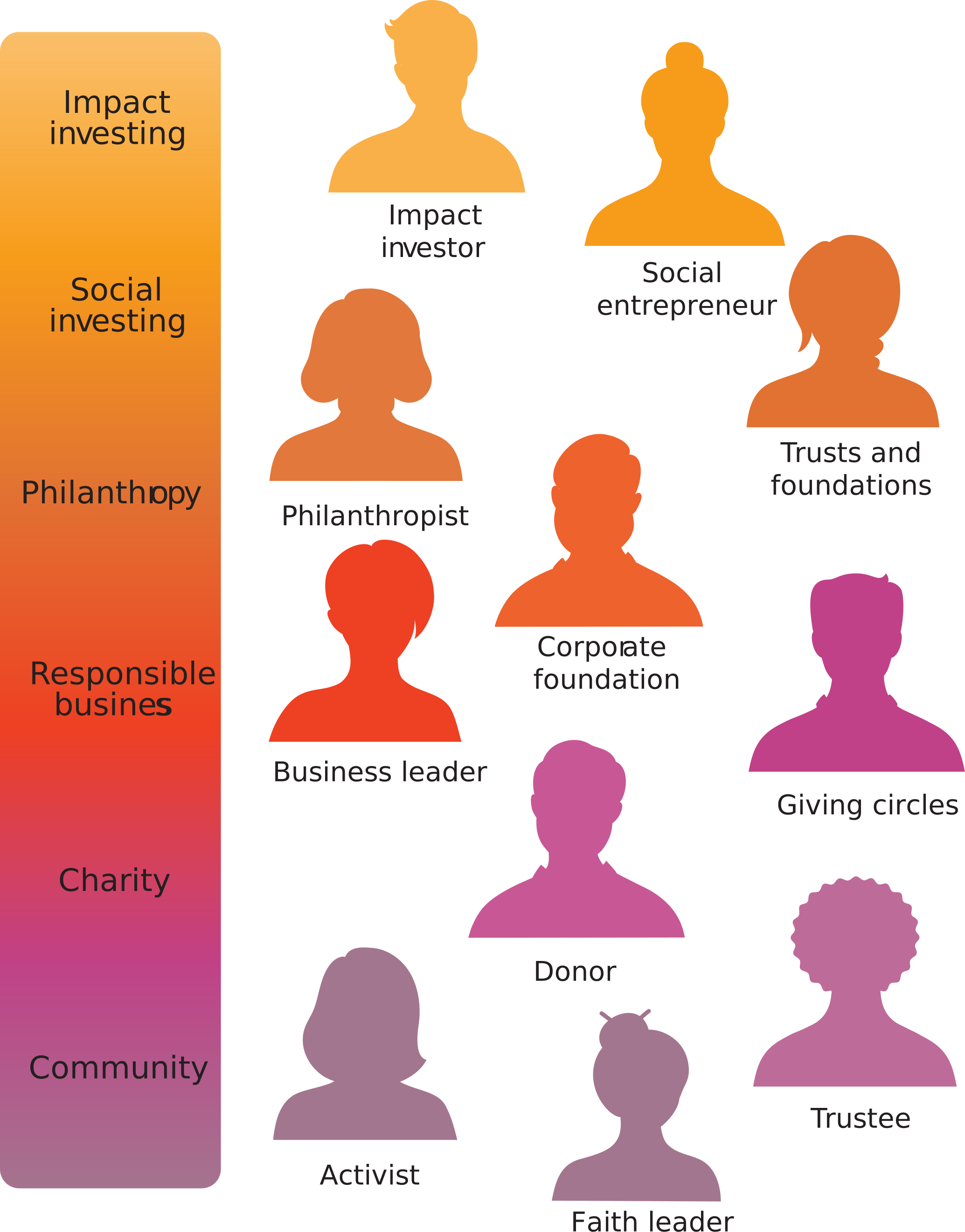
Diagram showing different roles involved in philanthropy, including impact investors, social entrepreneurs, philanthropists, charities, businesses, donors, community groups and faith leaders and their links to the impact economy.
Tips for success
-
Meet philanthropists in your constituency and find out what they are already doing to meet community needs.
-
Do your homework: understand who you are meeting, why they care about your area and what they have already invested in or supported.
-
Offer practical support and encouragement to people who are providing funding in your constituency.
-
Show that you value the contribution philanthropy makes, however big or small.
-
Share your insights into community needs, local systems, organisations doing good work and barriers that residents face.
-
Reassure donors that their philanthropic goals will be respected and not subsumed by political agendas.
-
Ask to see projects on the ground.
-
Find out about potential partners from your community foundation, or another intermediary. They can also help you to check them out.
-
Be generous with credit, recognising the crucial role the philanthropist and their work has made.
-
Keep asks for money for political or campaign purposes separate.
-
Build on work that is already happening in your constituency.
What to avoid
- Don’t suggest that philanthropic funds should cover core statutory gaps
- Don’t overpromise on behalf of government or local authorities
- Don’t introduce unnecessary complexity or bureaucracy
Help organisations drive philanthropy
As an MP you are in a unique position. You travel between civic bodies, organisations, businesses and funders all the time. By connecting the dots you can power philanthropy in your area.
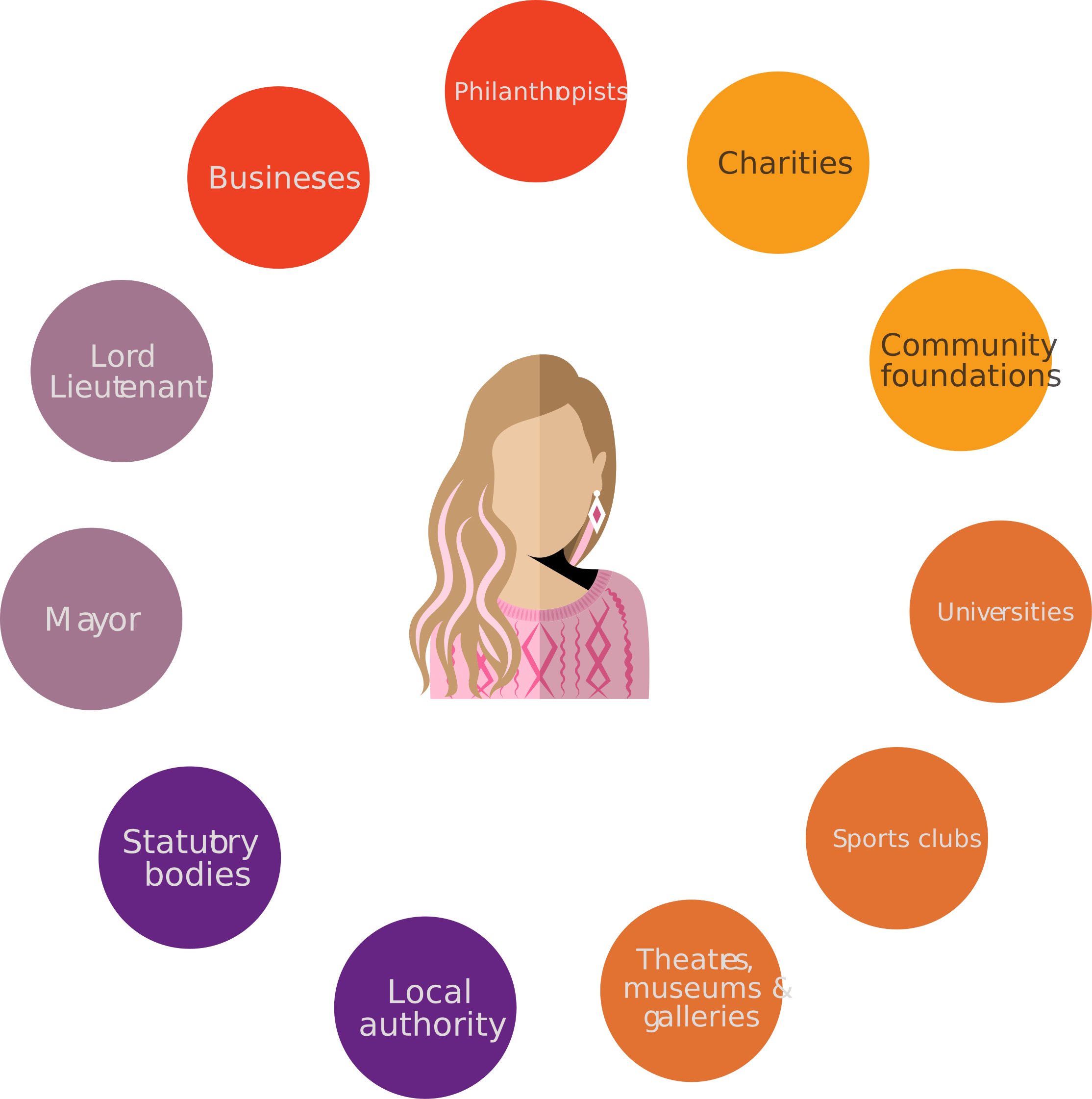
The diagram shows how an individual is surrounded by connected local and national actors involved in supporting local causes, including businesses, philanthropists, charities, community foundations, universities, sports clubs, cultural organisations, local authorities, statutory bodies, mayors and Lord Lieutenants.
As an MP, please can you champion what philanthropy and civil society are doing because otherwise successful renewal and regeneration projects are invisible.
Philanthropist, South East
Philanthropy in action
These six real case studies of MPs’ actions reveal what’s already working well around the country.
I created a local fund to address loneliness
Role: Connector
Loneliness was a growing concern in this rural constituency. Rather than starting a new initiative, the local MP worked to set up a fund with the community foundation, providing a simple and trusted way for donors to contribute. She also hosted events, such as summer receptions, connecting donors and community organisations. This led to donations from local businesses and over £16,000 in community funding.
Why it worked
MPs can strengthen local capacity by using existing philanthropic infrastructure.
I connected partners to create a new youth hub
Role: Connector
When a community facing rising youth crime found itself with an unused civic building, the MP helped turn the opportunity into something practical. They worked with the local authority to repurpose the building, secured initial local authority funding for a youth club and brought in an intermediary who works with philanthropists to find match funding. By drawing the right partners together, the MP helped transform the space and encouraged partnership between local authorities, charities and funders.
Why it worked
MPs can play a valuable role in linking people and resources to unlock community spaces and services.
I energised the diaspora for local impact
Role: Convenor
MPs brought together people with ties to the city to discuss supporting its development. One MP introduced the idea of ‘giving back’ and convened early conversations. Subsequent MPs sustained this through events and connections. The network is co-funded by philanthropy, the community foundation and the local authority. Today it has a 700-strong membership committed to the city’s future. It brought £311,400 into the city in the last 12 months.
Why it worked
MPs can catalyse collective action by uniting civic leaders, diaspora and philanthropists to unlock resources and opportunities locally.
I promoted philanthropic support for education
Role: Champion
A programme to raise literacy levels and create opportunities for young people in the north of England was supported by a partnership between philanthropists and local leaders. An MP used the programme as a public case study during her speech at a major national policy event. This helped build confidence and momentum for the programme to be replicated in other parts of the country and helped secure backing from a family foundation in another region to launch it in multiple wards.
Why it worked
MPs can increase confidence and inspire philanthropic investment to roll out local initiatives in new places.
I bridged local and national to create new opportunities
Role: Bridge-builder
Recognising the need for long-term investment to drive renewal in a deprived northern town, the local MP brought together businesses, funders, charities and the local authority to develop a vision for the place and a prospectus. The MP used this to support the partnership to make the case in Westminster for financial and strategic support. This secured additional government funding, which helped build momentum and attract further support from businesses, funders and philanthropists. By linking local ambition with national decision-makers, the MP helped turn a plan into funded projects.
Why it worked
MPs can use their platform in Westminster to unlock opportunities that communities can’t access alone.
I advocated for infrastructure to benefit local communities
Role: Influencer
Funding linked to a transport project created an opportunity to support communities affected by the development. The MP wrote to make the case that this funding should be directed towards long-term local benefit, rather than one-off activity. As a result, the government awarded £3.5m, specifying that it should be channelled through a local giving scheme. This created a way to support local communities over time and helped unlock further philanthropic funding from donors and partners. That seed funding has helped the scheme grow.
Why it worked
MPs can make the case to support infrastructure for additional philanthropy and funding for local causes. Initial investment can unlock long-term support.
By shining a light on issues and bringing together funders and charities MPs could really unlock some very knotty issues.
Philanthropist, North West
Government action and how to hook in
The government has committed to do more to support philanthropy locally. It’s setting out its approach in a new roadmap, with opportunities for government funding. Several programmes are already under way.
Partnership funding allows donors to work with government where there are shared priorities. This includes match funding, where government adds to the value of giving, increasing the impact of funds in your area.
Your area needs to be ‘Philanthropy Fit’
In order to benefit from funding opportunities you’ll need to be ready.
Do you…
- have a clear and detailed knowledge about your area’s priority needs, so you can identify the most relevant match fund
- know exactly the right person to contact at your local authority or combined authority so you can alert them to opportunities
- know the donors in your area who might want to increase their funding through working with government on one of these programmes
Have you…
- supported your local authority or combined authority to convene charities, funders, donors and businesses to discuss how philanthropic partnership with national government programmes could meet local needs
- considered if there is a local organisation that could receive and manage funding, such as a community foundation or large charity
- read the Civil Society Covenant, which outlines six principles for building trusted relationships between government and charities
- Contacted the Office for the Impact Economy, which is a new team in the Cabinet Office, to guide you on the different opportunities
Partnership opportunities
These are current partnership opportunities, as of April 2026.
| Name | Funding status | Details |
|---|---|---|
| Pride in Place | £5.8 billion for 284 places | Enabling Neighbourhood Boards made up of local people to plan the future of their place. Communities will decide how funding and support of up to £20 million will be invested to achieve their vision. |
| Better Futures Fund | £500 million over 10 years | Supporting up to 200,000 children, young people and their families via Social Outcomes Partnerships delivered by government, local communities, charities, social enterprises, investors, and philanthropists working together on place-based solutions to complex social problems. |
| Best Start Family Hubs | £500 million | Delivering government’s Best Start in Life ambitions supporting every local authority to improve outcomes for babies, children and families. |
| Community Wealth Fund | £175 million over 10 years | Investing up to £2.5 million to neighbourhoods of high deprivation and low social capital to meet needs identified by residents. |
| Local Covenant Partnerships Fund | £11.5 million in 15 areas | Providing support for 15 local authority areas across England to develop and implement new Local Covenant Partnership agreements. |
| Neighbourhood Health Services | Coming soon | Funding to develop new models that use social investment and outcomes contracting to support the Neighbourhood Health Services. |
Our place to give
The government’s ‘Our place to give: a roadmap towards growing place-based philanthropy’ sets out how government will make it easier to grow – and partner with – philanthropy at a local level. The roadmap has three pillars and six actions.
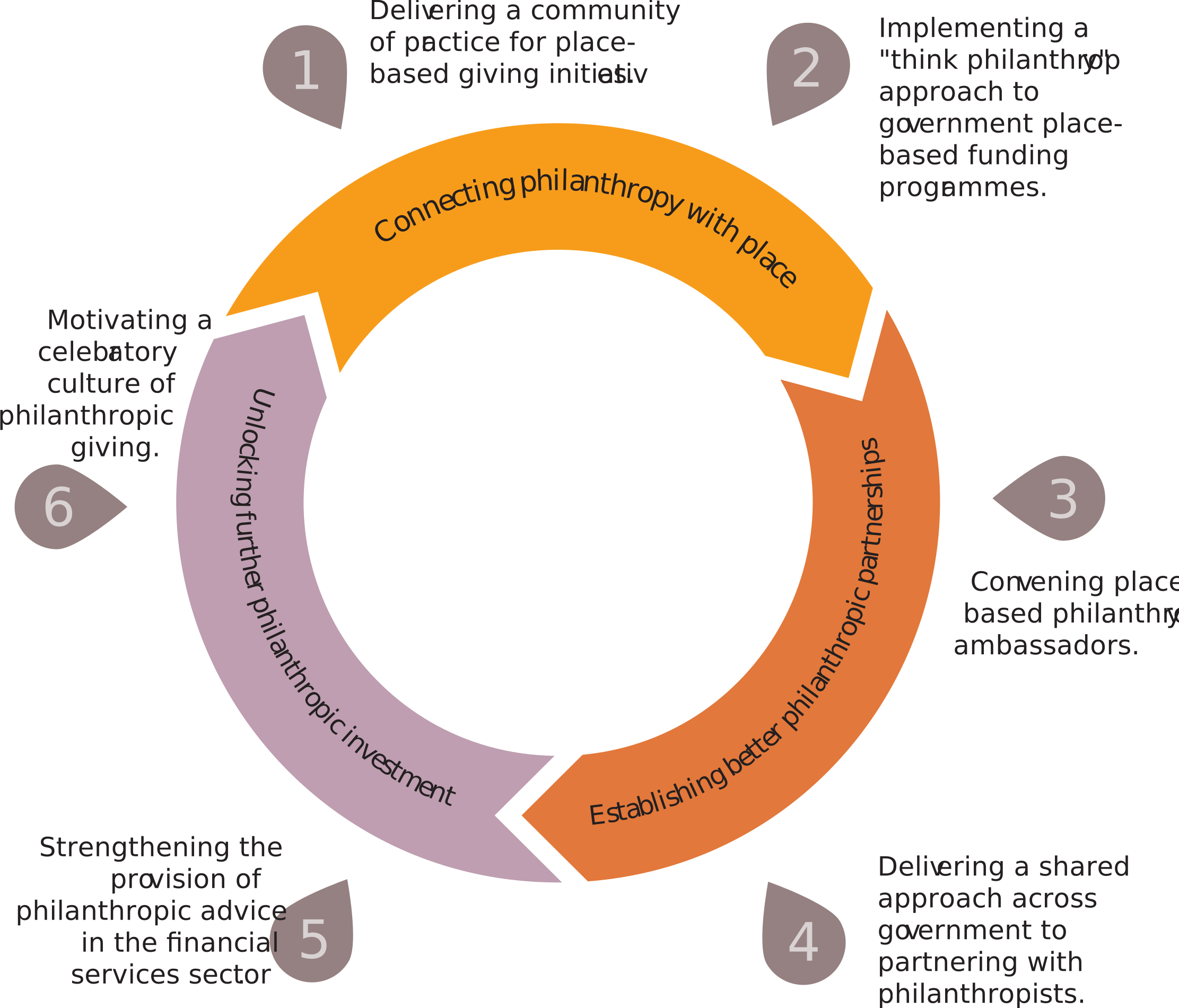
‘Our Place to Give’ roadmap
Pillar one: Connecting philanthropy with place
- Action one: Delivering a community of practice for place-based giving initiatives
- Action two: Implementing a ‘think philanthropy’ approach to government place-based funding programmes
Pillar two: Establishing better philanthropic partnerships
- Action three: Convening place-based philanthropy ambassadors
- Action four: Delivering a shared approach across government to partnering with philanthropists
Pillar three: Unlocking further philanthropic investment
- Action five: Strengthening the provision of philanthropic advice in the financial services sector
- Action six: Motivating a celebratory culture of philanthropic giving
What is the Office for the Impact Economy
The Office for the Impact Economy was launched in November 2025 to help the government grow and partner more effectively with philanthropists, impact investors and purpose-led businesses.
The Office will make these partnerships easier by offering a clear point of entry into government and by helping government teams design collaborations that actively attract impact-led investment, capability and innovation.
If you’d like to contact the Office for the Impact Economy, please email impacteconomyoffice@cabinetoffice.gov.uk.
We will only process your data in order to respond to enquiries. For more information on how we collect, hold, use or process your personal data, view the DCMS personal information charter.
Key concepts worth knowing
The government agenda in this area uses some key concepts, such as:
- spectrum of capital
- impact economy
- backbone organisation
- anchor organisation
Make sure you have a good grasp of these by using the glossary in this toolkit.
How to convene a meeting in your area to discuss partnership opportunities
Use or adapt this invitation to organise a meeting. This will help set the agenda and expectations.
On behalf of our local/combined authority, I am inviting you to a meeting of local leaders to understand what activity is underway to address social needs in our area. National government has a growing programme of partnership opportunities that could help us to leverage more funding into these priorities.
I’d like us all to discuss these questions:
-
What recent consultations have taken place on local needs?
-
Have any actions been agreed?
-
Which organisations are taking the lead?
-
Who else should be involved, including statutory bodies, local organisations, local funders, donors, impact investors or businesses?
-
What is needed to get initial activity underway?
At the end of this meeting, I will share a summary with the Office for Impact Economy to find out if our local activity aligns with any national government programmes. I will report back to the local authority or combined authority to decide on next steps.
MPs are an essential bridge between local and national.
Playing this role can strengthen communities and would also help rebuild faith in local politics serving local needs.
Philanthropist, South East
Checklist
There are many things you can do in order to encourage more – and more effective – philanthropy in your constituency.
Here are some key actions you can take.
- Accept invitations to visit community projects funded by philanthropy.
- Accept invitations to attend events hosted by philanthropists in your constituency.
- Meet with your local community foundation or local giving scheme.
- Find out which philanthropic funders are active in your area using the 360Giving website (a free, open data platform that shows where UK grant funding goes).
- Contact your area’s Lord Lieutenant’s office to find out if they engage with philanthropists.
- Champion local giving through your newsletter, social media, and local media.
- Ask local charities and community groups about unmet needs philanthropy could help address.
- Explore how giving in your constituency could be strengthened in a meeting with local businesses, philanthropists and charities.
- Speak with your local or combined authority about opportunities to attract philanthropic funding to your area, including potential government funding programmes.
- Read ‘Our place to give: a roadmap towards growing place-based philanthropy’, the government’s roadmap for place-based giving, and consider what actions could support your constituency.
- Support or help establish a local giving scheme if one doesn’t already exist in your area.
Learn more
Become fluent in place-based philanthropy by reading and learning more about it. Then use our checklist to help you follow through with action.
Definitions
Anchor organisation – organisations that have an enduring role in a place, such as theatres, universities, libraries, heritage sites, sports clubs, national parks, large local charities, local trusts and foundations, including community foundations.
Backbone organisation – a charitable organisation that can receive, distribute and report on public funding used for a match fund or blended finance programme.
Blended finance – grants from government or philanthropy that are used to attract private investment into projects that deliver social or environmental return.
Civil Society Covenant – shared set of principles to guide meaningful, lasting partnerships between government and civil society.
Community foundation – independent, place‑based charities that mobilise local philanthropy to address local needs over the long term. There are 44 in England, and one each in Northern Ireland, Scotland and Wales.
Donor – an individual or organisation that gives money or resources voluntarily to support charitable, community, social or environmental causes.
Donor advised fund – a tax-efficient vehicle administered by a charitable sponsor that supports philanthropic giving. Assets in the vehicle are invested and granted in accordance with the donor’s preferences.
Funder – an organisation, foundation, institution or individual that provides financial support to help charities, social enterprises or community initiatives deliver their work.
Impact economy – the ecosystem of philanthropy, impact investment, purpose-led businesses, charities and government working to generate social or environmental benefit alongside economic activity.
Impact investing – investing money to achieve a financial return and a measurable social or environmental return.
Impact investor – an investor who actively seeks both a financial return and a proven, measurable social or environmental impact.
Match funding – donations from philanthropists, foundations, companies or the general public are enhanced by grants from government. Sometimes, but not always, funds are matched pound-for-pound, doubling the amount available.
Outcomes contract – a way of commissioning public services where payment is based on measured outcomes, rather than the delivery of services
Philanthropy – giving money, time and expertise to support people, places and causes that need it.
Purpose-led business – businesses that address social or environmental issues and generate profit in the process.
Social investor – someone who provides loans to organisations or initiatives with the intention of generating measurable social or environmental outcomes and getting their money back.
Social outcomes partnership – **a type of outcomes contract involving collaboration between government, service providers and social investors where funding supports delivery and is only repaid if targeted outcomes are achieved.
Spectrum of capital – used to describe how different types of investment, from philanthropy to commercial investment, seek social or environmental gains alongside a financial return. Depending where they are on the spectrum they aim either for more social return or more financial return.
Volunteer – someone who gives their time, skills or expertise freely to support a cause, organisation or community without receiving financial compensation.
Myth busting
Myth
“Philanthropy is too big an ask – we only need £10k.”
Reality
Philanthropy is not only for large, multimillion‑pound projects. Many funders value targeted, high‑impact opportunities and are willing to support smaller, well‑defined intervention, especially when they meet a clear local need.
Myth
“Philanthropy is just wealthy individuals giving money.”
Reality
Philanthropy is an ecosystem of people and organisations motivated by impact, not just wealth. It can include foundations, family trusts, corporate funders, community foundations, intermediaries, and donor‑advised structures.
Myth
“Engaging philanthropy is too complicated.”
Reality
Philanthropic capital can often go where public capital cannot, and can move faster and more flexibly. This can make it a simpler solution.
Myth
“Working with philanthropy means aligning yourself with the people behind the money.”
Reality
Engaging philanthropy is about aligning behind outcomes for communities, not individuals. You can work with funders while maintaining full independence, focusing on shared goals such as improving local services or meeting unmet needs.
Myth
“Philanthropists should come to me.”
Reality
Philanthropists often don’t know where to start. MPs can play a crucial role by being proactive, opening doors, sharing insight, and making it easier for funders to understand what matters locally.
Myth
“Philanthropists only bring money.”
Reality
Philanthropy can bring far more than funding, offering expertise, skilled staff, data and evaluation capacity, valuable networks and partnerships, long‑term commitment beyond single grants, and its own convening power. All of these can strengthen local organisations and unlock further investment.
Other resources and useful links
Sector bodies, useful reports and tools to deepen knowledge and understanding.
-
Find your local community foundation
-
Read Charities Aid Foundation’s research
-
Explore New Philanthropy Capital’s resource hub
-
Read the Association of Charitable Foundations’ research
-
Explore UKGrantmaking and 360Giving
-
Find out more about funders and charities in the charity register on gov.uk
-
Read The Modern Philanthropist, a report from Barclays Private Bank
-
Find out more about impact investment at the Impact Investing Institute
-
Learn about the Impact Economy Collective
-
Read the Final report of the Social Impact Investment Advisory Group on gov.uk
-
Read the Civil Society Covenant on gov.uk
-
Find out more about Pride in Place on gov.uk
-
Find out more about Better Futures Fund on gov.uk
-
Find out more about Best Start Family Hubs and Healthy Babies on gov.uk
-
Find out more about The Local Covenant Partnerships Fund on gov.uk
-
Explore Local Civil Society Covenant resources on gov.uk
-
Find out more about the government response to the technical consultation on the design of a Community Wealth Fund in England on gov.uk
MPs don’t seem to realise that as philanthropists we often fund the charities that act as the glue between multiple agencies, stakeholders, sources of funding and statutory services.
Philanthropist, South East