Sexually transmitted Shigella spp. in England: 2016 to 2025
Updated 26 March 2026
Applies to England

© Crown copyright 2026
This publication is licensed under the terms of the Open Government Licence v3.0 except where otherwise stated. To view this licence, visit nationalarchives.gov.uk/doc/open-government-licence/version/3 or write to the Information Policy Team, The National Archives, Kew, London TW9 4DU, or email: psi@nationalarchives.gov.uk.
Where we have identified any third party copyright information you will need to obtain permission from the copyright holders concerned.
This publication is available at https://www.gov.uk/government/publications/non-travel-associated-shigella-infections/sexually-transmitted-shigella-spp-in-england-2016-to-2025
Background
Shigella spp. are highly contagious bacterial enteric pathogens, transmitted through faecal-oral contact, which can cause dysentery. The resulting illness can range from mild and self-limiting to severe, bloody diarrhoea, with fever and stomach cramps. In some cases, hospital admission and treatment is needed (1,2).
Globally, most of the burden of shigellosis has been associated with exposure to contaminated food or water during travel to endemic countries (3,4). In England shigellosis is increasingly acquired during close sexual contact, predominantly among men who have sex with men (MSM) (5). In this report, trends of S. sonnei and S. flexneri diagnoses are explored using laboratory surveillance data. Laboratory data does not usually record information about sexual orientation or route of acquisition of an infection. Throughout the report, adult men not reporting international travel, or where travel history is unknown, is used as a proxy definition for MSM who have acquired their infection through sexual transmission and are described as “presumptive MSM” (6).
Data concerning shigella connected with travel and non-sexual transmission in England is described in a separate report.
Main messages
The key observations from this report are that:
-
diagnoses of S. flexneri and S. sonnei that were potentially acquired during sexual contact have increased since 2022, with a sharp rise in laboratory diagnoses during 2025, leading to an annual total of 2,560
-
diagnoses among adult males not reporting travel, or where travel history is unknown (presumptive MSM), have been consistently higher, and increasing at a faster rate compared to females, or males reporting recent travel
-
in 2025, most diagnoses of sexually transmitted Shigella spp. were seen in London (54%), followed by Thames Valley (6%) and Surrey and Sussex (6%)
-
increasing antimicrobial resistance in Shigella spp. continues to be a significant public health concern: in 2025, over half of S. sonnei isolates were extensively drug resistant with markers of resistance to all three first line choices for treatment
-
UKHSA maintains enhanced surveillance to better understand the contribution of travel and sexual transmission on the acquisition and spread of this clinically significant pathogen
Data sources
Two sources of data were used (see Technical Notes). The Second Generation Surveillance System (SGSS) provides the total number of Shigella spp. diagnoses reported from diagnostic laboratories in England. Local laboratories refer specimens to the UK Health Security Agency (UKHSA) Gastrointestinal Bacteria Reference Laboratory (GBRU) for further testing, information that is captured in the Gastrointestinal Data Warehouse (GDW) dataset. The GDW is a subset of the SGSS dataset containing detailed information on the antimicrobial profile of isolates.
Overall trends
Trends in diagnoses recorded in presumptive MSM recorded in SGSS and GDW surveillance data
Over the last decade there has been an overall increasing trajectory of shigellosis in presumptive MSM reported to both surveillance systems (Figure 1). There was a notable dip during the period of COVID-19 related control measures, which restricted both international travel and social mixing within England. After Q3 2021, diagnoses reported to both SGSS and GDW increased rapidly and reached pre-COVID-19 pandemic levels in Q4 2022. Annual diagnoses reported to SGSS increased from 2,052 (2023) to 2,318 (2024), and then to 2,560 in 2025. Between Q4 2022 and Q4 2025, reported diagnoses further increased by 103% (391 to 792) in SGSS and 83% (167 to 306) for isolates recorded in GDW.
Typing information identifies clusters of Shigella that are genomically similar. There are several large and persistent clusters that are known to be sexually transmitted among GBMSM and recognised to be circulating internationally (7). Figure 1 shows the number of reported diagnoses that are known to belong to one of these persistent clusters as a subset of all reports from GDW presumed to be sexually transmitted, in turn a subset of all laboratory reports among adult men with no travel or travel not reported.
Figure 1. Diagnoses of Shigella spp. made in presumptive MSM by data source (SGSS, GDW): 2016 (Q1) to 2025 (Q4)

Data source: GDW and SGSS.
Regional distribution of diagnoses among presumptive MSM
In 2025, 54% (1,381 out of 2,549) of diagnoses among presumptive MSM were reported from London followed by Thames Valley HPT (6%), and Surrey and Sussex HPT (6%) respectively (Figure 2).
Figure 2a. Map of diagnoses of Shigella spp. among presumptive MSM by Health Protection Team (SGSS data), England: 2025
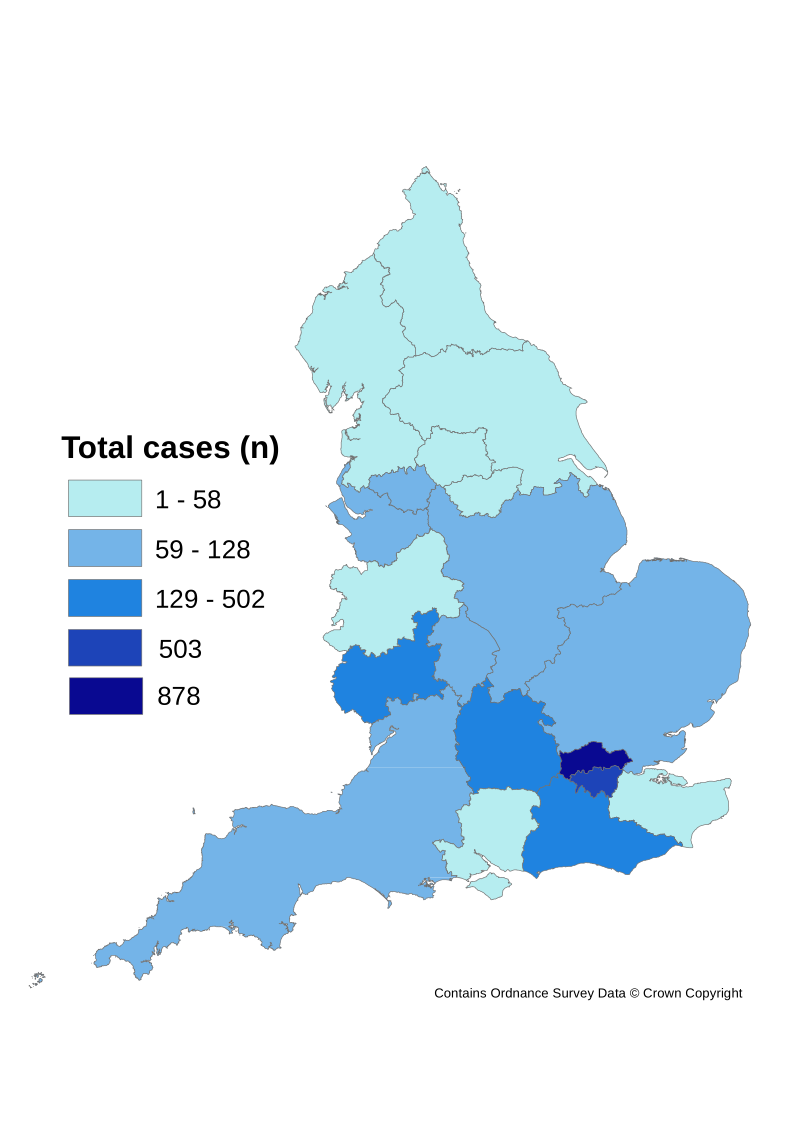
Data Source: GDW
Figure 2b. Histogram of diagnoses of Shigella spp. among presumptive MSM by Health Protection Team area (SGSS data), England: 2025

Note: Where patient residence was not known, the HPT of the reporting laboratory was used.
Trends in shigellosis by travel status
Comparing shigella diagnoses from GDW by sex and travel history illustrates that diagnoses among adult males not reporting travel or where travel history is unknown (presumptive MSM) have been consistently higher, and increasing at a faster rate compared to females, or males reporting recent travel (Figure 3).
Figure 3. Number of Shigella spp. diagnoses among all persons (adults and children) by sex and travel association (GDW data): 2016 to 2025

In 2020 and 2021 travel-associated diagnoses fell to very low levels and diagnoses among presumptive MSM also declined but continued to be reported. During this period around 75% of all shigellosis reports were presumed to be sexually transmitted (Figure 4). The proportion has since declined but, in 2025, still accounted for over half.
Following the easing of COVID-19 restrictions from Q2 2021, both travel-associated and non-travel associated diagnoses increased. This was more pronounced among presumptive MSM, with diagnoses increasing by 364% between Q3 2021 and Q4 2025 (from 66 to 306 records in GDW).
Figure 4. Diagnoses of Shigella spp. in presumptive MSM and the proportion of all diagnoses that were seen in presumptive MSM (GDW data): 2016 to 2025

Trends in diagnoses by Shigella species among presumptive MSM
Infections caused by Shigella flexneri have previously been thought to cause more severe illness compared to S. sonnei, although all Shigella species can cause serious disease (8). S. sonnei has been associated with the emergence of widespread and persistent, extensively drug-resistant clusters (8,9,10). Diagnoses of S. sonnei dropped markedly during 2020 and 2021 during the peak of the COVID-19 pandemic, accounting for much of the overall fall in shigellosis during the period and remaining low until Q3 2021 (Figure 5). Subsequently, diagnoses rebounded and increased by more than 10-fold (from 12 to 132) between Q3 2021 and Q4 2023. Throughout 2024, diagnoses of S. sonnei decreased again (from 103 in Q1 2024 to 65 in Q1 2025), before rapidly increasing throughout 2025 to 177 diagnoses in Q4 2025. Conversely, whilst reported S. flexneri diagnoses did decline in 2020 and 2021, the fall was not as large as for S. sonnei and transmission appears to have continued. From Q3 2021 diagnoses steadily increased to Q4 2024 (166%, 47 to 125), before declining in 2025.
Figure 5 Diagnoses of S. sonnei and S. flexneri (serovars 1b, 2a and 3a) among presumptive MSM, in England, by quarter (GDW Data): 2016 to 2025

Antimicrobial resistance among sexually transmitted Shigella spp.
The World Health Organization recommends ciprofloxacin (a fluoroquinolone) as a first-line treatment for shigellosis and classifies fluoroquinolone resistant shigella as a high priority pathogen (11). Other recommended treatment options in the UK are azithromycin (a macrolide) and ceftriaxone (third-generation cephalosporin) (12). This report focuses on resistance to these clinically relevant antimicrobials. The prevalence of resistance to other antimicrobials (such as tetracycline, sulphonamides and trimethoprim) has been consistently high for many years (13,14). In this report, isolates are classified as multidrug-resistant (MDR) or extensively drug-resistant (XDR) based on the presence of genetic markers of resistance to these three UK clinically relevant antimicrobials (see technical notes). The AMR determinants encoding resistance were: azithromycin (ermB and /or mphA); ciprofloxacin (gyrA, parC and/or qnr); and for third generation cephalosporins (blaCTX-M-15, blaCTX-M-27, blaCTX-M-3).
In 2025, among presumptive MSM, antimicrobial resistance (classified as either MDR or XDR) was consistently high in isolates of both S. sonnei (359 out of 416, 86%) and S. flexneri (461 out of 490, 94%) (Figure 6). In 2025, over half of S. sonnei isolates were classified as XDR (Figure 6a). Resistance to third-generation cephalosporins (including ceftriaxone) which is the final most reliable treatment for Shigella, increased sharply in the early 2020s. In 2025, resistance to the recommended first-line treatment ciprofloxacin was present in 83% of isolates, with high resistance to azithromycin (58%) and ceftriaxone (73%) as well.
The proportion of S. flexneri isolates that are XDR is smaller compared to S. sonnei, although isolates of S. flexneri that had markers of resistance to third-generation cephalosporins increased 8-fold from 2% in 2021 to 15% in 2022 and remain at a similar level (Figure 6b). This rise directly correlates to an increase in the proportion of isolates that are XDR from 1% in 2021 to 9% in 2022. The proportion of isolates that are XDR in S. flexneri has stayed relatively stable since then, with 9% XDR in 2025. Resistance to all three clinically relevant antimicrobials increased 2021 to 2024, before showing slight decreases into 2025 to 55%, 43% and 13% for ciprofloxacin, azithromycin and ceftriaxone respectively.
Figure 6a. Antimicrobial resistance detected in S. sonnei isolates among presumptive MSM, England: 2016 to 2025 [Note 1]

Data source: GDW
Note 1. Antimicrobial resistance is based on the presence of genetic markers. Only those isolates for which information on antimicrobial resistance markers and the overall classification (MDR or XDR) were available have been included.
Figure 6b. Antimicrobial resistance detected in S. flexneri isolates among presumptive MSM, England: 2016 to 2025 [Note 1]

Data source: GDW
Note 1: Antimicrobial resistance is based on the presence of genetic markers. Only those isolates for which information on antimicrobial resistance markers and the overall classification (MDR or XDR) were available have been included.
Travel associations with sexually transmitted Shigella
Although the proxy measure used for the surveillance of sexually transmitted Shigella in England excludes individuals with a recent history of travel, travel plays an important role in the epidemiology of sexually transmitted Shigella which persists in global sexual networks (14,15). Figures 1, 3, 4 and 5 above illustrate the effect of restricted international travel during 2020 and 2021 on reducing diagnoses of Shigella among MSM in England. The rapid increase in cases that was seen in 2022 included a specific cluster of XDR S. sonnei which was recorded in multiple countries in Europe (15).
Following regular reports of Shigella diagnoses among presumptive MSM mentioning travel, including to seasonal events with a large international reach, health advice for travellers to international pride events now routinely includes information about Shigella risks and provides links to general advice and precautions to reduce the risk of infection (16,17).
Conclusions
Following a decline in reports in 2020, diagnoses of Shigella spp. by 2025 had substantially exceeded the pre-pandemic 2019 level among presumptive MSM. The majority of cases continue to be in London.
The role of genomic surveillance is of increasing importance in terms of the detection of outbreaks of sexually transmissible shigellosis and monitor antimicrobial resistance. The proportion of S. flexneri and S. sonnei isolates that are MDR and XDR remains of concern, especially for S. sonnei where resistance to all three recommended treatment options is over 50%.
Diagnostic laboratories should continue to refer Shigella isolates (including S. sonnei) so that the emergence of pan-resistance can be monitored. Clinicians should take a sexual history in male cases presenting with diarrhoeal illness and be aware that first or second-line antibiotics may fail in severe shigellosis.
Acknowledgements
The authors acknowledge support of reporting laboratories, the local Health Protection Teams and the Gastrointestinal Bacteria Research Unit (GBRU, UKHSA).
Contributors
Ian Simms, Holly Fountain, Hannah Charles, Gauri Godbole, Claire Jenkins, Katy Sinka.
Technical notes
Data sources
Second Generation Surveillance System (SGSS)
This dataset includes primary laboratory-based diagnostic data and has the advantages of automated reporting and national coverage, so provides the total number of Shigella spp. diagnoses reported in England from diagnostic laboratories.
Shigella is a notifiable infection in England, and it is assumed that laboratory reporting to SGSS is complete. However, the total burden of shigella will be underestimated as people may not seek medical care for milder episodes of illness and in some cases treatment for those who do may be given based on symptoms without testing to identify the causal infection.
Gastro Data Warehouse (GDW)
Faecal specimens from cases with gastrointestinal symptoms are sent to local hospital, private and regional laboratories in England for culture. Local hospital laboratories are recommended to submit presumptive Shigella spp. samples to Gastrointestinal Bacterial Reference Unit (GBRU) at UKHSA for confirmation and typing. Approximately two thirds of Shigella spp. samples are submitted to the GBRU.
Presumptive men who have sex with men
Data obtained from SGSS and GDW does not include information on the sexual orientation or sexual behaviour of reported cases. The analyses presented here consider adult males with no recent foreign travel history or where travel history is unknown as a proxy for men who have sex with men (MSM). This is a definition for surveillance purposes, and it is recognised that this proxy definition is imprecise, however, the measure has been corroborated through research on the transmission of Shigella spp. in England (6).
Multidrug-resistant
Multidrug-resistant (MDR) is here defined as non-susceptibility to one or two of the clinically relevant antimicrobials (ciprofloxacin, azithromycin and/or ceftriaxone) and non-susceptibility to at least one agent in two or more other antimicrobial categories.
Extensively drug-resistant
Extensively drug-resistant (XDR) is here defined as non-susceptibility to all three clinically relevant antimicrobials (ciprofloxacin, azithromycin and ceftriaxone).
References
1. McGuire E and others (2019) ‘Shigellosis in adults: A retrospective study of clinical and epidemiological features in East London’. International Journal of STD & AIDS: volume 30, issue 14.
2. Cresswell FV and others (2015). ‘Shigella flexneri: a cause of significant morbidity and associated with sexually transmitted infections in men who have sex with men’. Sexually Transmitted Diseases: volume 42, number 6
3. Public Health England (2017). ’Travel-associated Shigella spp. in England, Wales and Northern Ireland: 2014’
4. Mikhail AFW and others (2021). ‘Utility of whole-genome sequencing during an investigation of multiple foodborne outbreaks of Shigella sonnei’. Epidemiology and Infection: volume 149, e71
5. Mitchell H and Hughes G (2018). ‘Recent epidemiology of sexually transmissible enteric infections in men who have sex with men’. Current Opinion in Infectious Diseases: volume 31, issue 1, pages 50 to 56
6. Mitchell HD and others (2019). ‘Use of whole-genome sequencing to identify clusters of Shigella flexneri associated with sexual transmission in men who have sex with men in England: a validation study using linked behavioural data’. Microbiology Genetics: volume 5, issue 11
7. ECDC (2024). ‘Shigellosis: annual epidemiological report for 2022’
8. World Health Organization (2005). ‘Guidelines for the control of shigellosis, including epidemics due to Shigella dysenteriae type 1’
9. Charles H and others (2022). ‘Outbreak of sexually transmitted, extensively drug-resistant Shigella sonnei in the UK, 2021 to 2022: a descriptive epidemiological study’. The Lancet Infectious Diseases
10. ECDC (2022). ‘Increase in extensively-drug resistant Shigella sonnei infections in men who have sex with men in the EU/EEA and the UK’ [Rapid risk assessment]
11. WHO (2024). ‘Bacterial Priority Pathogens List’
12. Mason LCE and others (2025). ‘Using demographics of patients to inform treatment of shigellosis in England’. The Lancet Microbe: volume 6, Issue 4
13. Baker KS and othrs (2018). ‘Genomic epidemiology of shigella in the United Kingdom shows transmission of pathogen sub-lineages and determinants of antimicrobial resistance’. Scientific Reports: volume 8, number 1
14. Baker KS and othrs (2018). ‘Horizontal antimicrobial resistance transfer drives epidemics of multiple shigella species’. Nature Communications: volume 9, issue 1
15. Baker KS and others (2015). ‘Intercontinental dissemination of azithromycin-resistant shigellosis through sexual transmission: a cross-sectional study’. Lancet Infectious Diseases: volume 15, pages 913 to 921
16. NathNaC (2025). ‘Celebrating Pride abroad?’. Travel Health Pro [news story]
17. Terrence Higgins Trust (2025). ‘Shigella’