Report on new HIV diagnoses in England: provisional data, 2025
Published 21 May 2026
Applies to England

© Crown copyright 2026
This publication is licensed under the terms of the Open Government Licence v3.0 except where otherwise stated. To view this licence, visit nationalarchives.gov.uk/doc/open-government-licence/version/3 or write to the Information Policy Team, The National Archives, Kew, London TW9 4DU, or email: psi@nationalarchives.gov.uk.
Where we have identified any third party copyright information you will need to obtain permission from the copyright holders concerned.
This publication is available at https://www.gov.uk/government/publications/new-hiv-diagnoses-in-england-provisional-data/report-on-new-hiv-diagnoses-in-england-provisional-data-2025
Main points
For the first time, the UK Health Security Agency (UKHSA) is releasing provisional, like-for-like new HIV diagnosis data (only from clinics who have reported data consistently between 2020 and 2025) to track progress of the HIV Action Plan 2025 to 2030 and to allow closer monitoring and to inform earlier local actions led by data. While figures are likely to be an underestimate of the true number of HIV diagnoses, they provide an early indication of emerging trends. The figures have been stratified by gender, by the 5 adult population groups highlighted in the HIV Action Plan, and by regions.
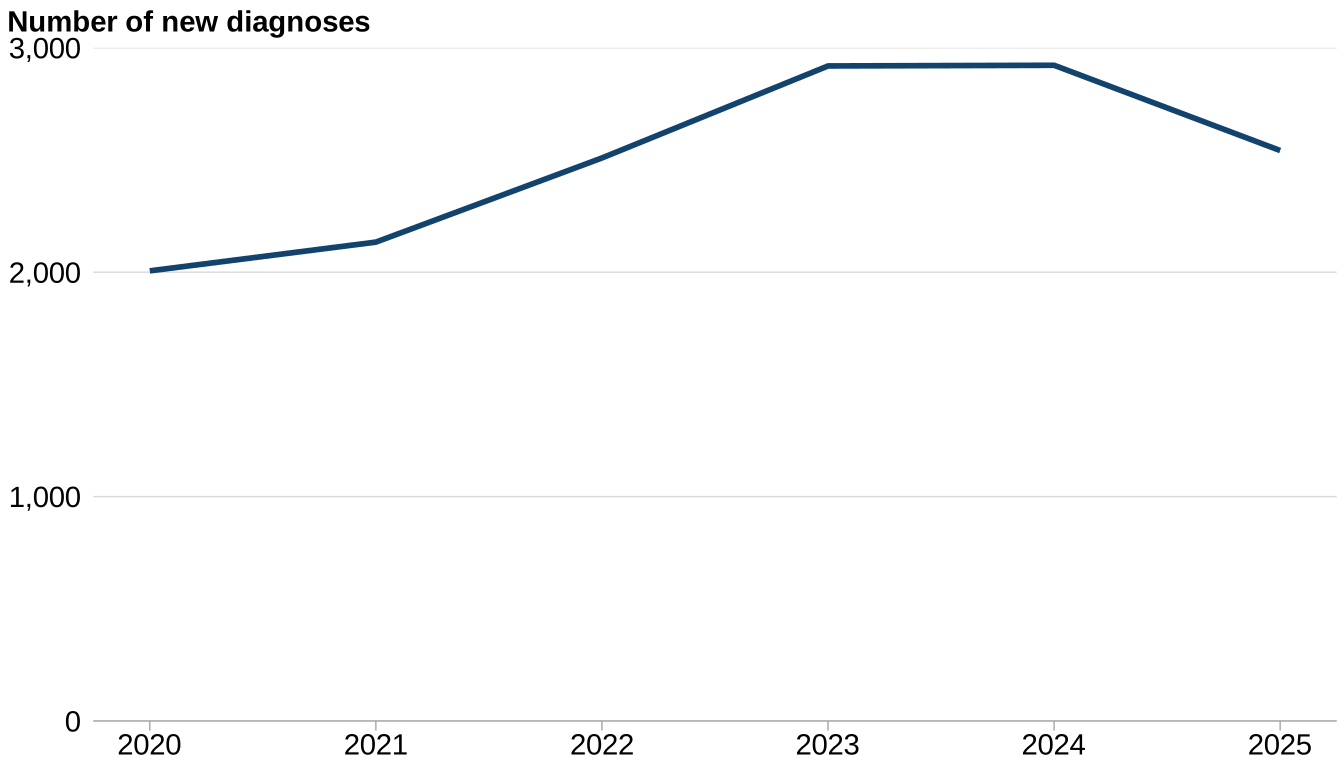
Provisional data indicates that new HIV diagnoses fell in England from 2,922 in 2024 to 2,542 in 2025. In 2025, there were 1,695 new HIV diagnoses in men and 844 new diagnoses in women.
Between 2024 and 2025, new HIV diagnoses fell by 7% in gay, bisexual and all men who have sex with men (hereafter abbreviated as gay and bisexual men) (822 to 761), by 15% in men exposed through sex with women (hereafter heterosexual men) (701 to 593), by 22% among women exposed through sex with men (hereafter heterosexual women) (821 to 641) and by 3% (40 to 39) among people injecting drugs.
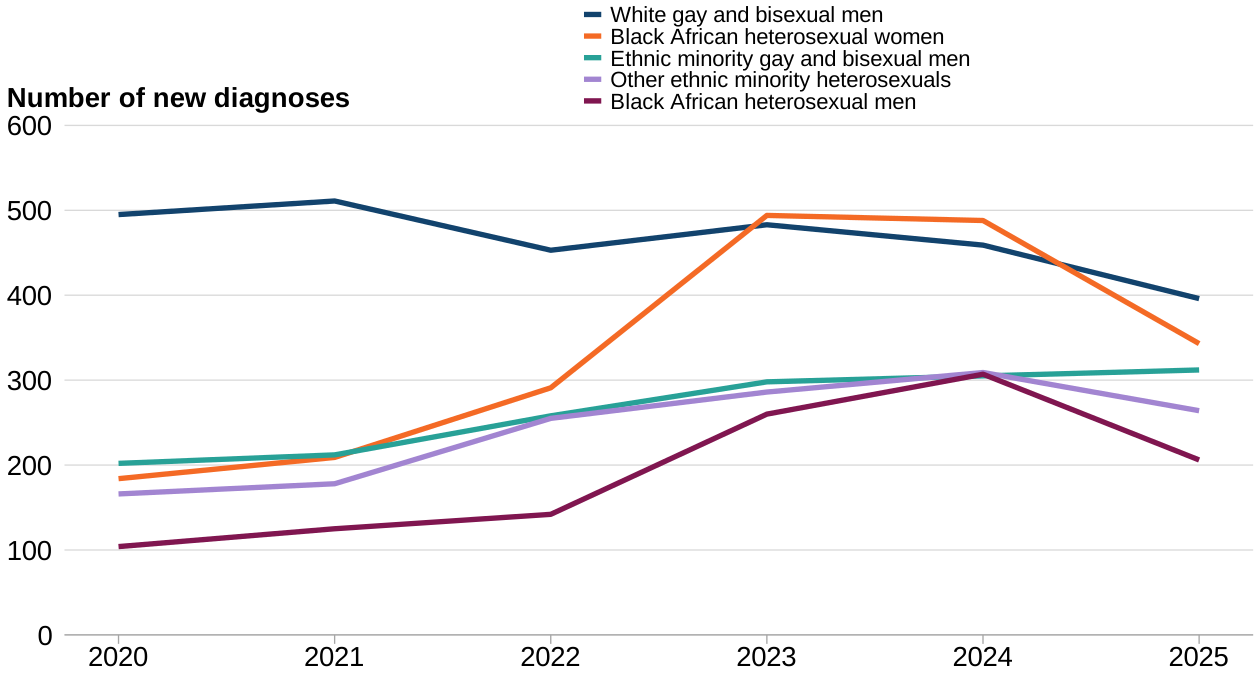
Among gay and bisexual men between 2024 and 2025, new HIV diagnoses fell by 14% among White men (459 to 396) but rose by 2% (305 to 312) in ethnic minority gay and bisexual men. In 2025, ethnic minority gay and bisexual men constituted 2 in 5 of all new diagnoses in gay and bisexual men compared to 1 in 4 in 2020.
Between 2024 and 2025, the rise in new HIV diagnoses in ethnic minority gay and bisexual men occurred in the North East, North West, East of England, Yorkshire and Humber and London, but declines occurred across the other regions.
The number of new HIV diagnoses in Black African heterosexual men fell by 33% from 307 in 2024 to 206 in 2025. The steepest declines were observed in the East of England, East Midlands, South East, South West, West Midlands and London.
Among Black African heterosexual women, the number of new diagnoses fell by 30% from 488 in 2024 to 343 in 2025. The declines were steepest in the North East, West Midlands, London, East Midlands, and the East of England.
There was also a 15% fall from 309 to 264 new diagnoses among ethnic minority heterosexuals other than Black African heterosexuals.
Further information will be available in the annual HIV official statistics, to be published in late 2026.
Background information
For the first time UKHSA is publishing provisional HIV data on new diagnoses, as research and analysis, to provide more timely preliminary emerging trends and inform delivery of the HIV Action Plan for England 2025 to 2030.
Data is only presented where information has been reported consistently from sites since 2020 (‘like for like’ clinics). These data should therefore be interpreted with caution and work is also ongoing to improve quality and completeness of data. These preliminary figures remain subject to change until the annual HIV official statistics and the indicators on the Sexual and Reproductive Health Profiles are published in late 2026.
New HIV diagnoses in England: provisional data
The provisional number of new HIV diagnoses was 2,542 in England in 2025, a 13% decrease compared with 2,922 in 2024. In 2025 there were 1,965 new diagnoses among men (including transmen), and 844 new diagnoses among women (including transwomen).
Compared to 2024, the provisional number of new HIV diagnoses among gay and bisexual men fell in 2025 by 7% from 822 to 761. Over the same period, there was a 15% decline from 701 to 593 among heterosexual men and a 22% decline from 821 to 641 among heterosexual women. The number of diagnoses remained stable and low among people who inject drugs (39), and among people who acquired HIV another way (such as vertical transmission or blood contact) (49). However, the latter number may increase as further information is received (Figure 1).
Figure 1. Provisional number of new HIV diagnoses, England, 2020 to 2025
Source: HIV and AIDS New Diagnoses Database (HANDD).
Table 1 shows the provisional number of HIV diagnoses for the 5 population groups identified in the HIV Action plan. A 14% decrease from 459 in 2024 to 396 in 2025 was observed in White gay and bisexual men. However, the number of diagnoses rose by 2% from 305 in 2024 to 312 in 2025 among ethnic minority gay and bisexual men. The number of HIV diagnoses fell between 2024 and 2025 by 33% from 307 to 206 among Black African heterosexual men and by 30% from 488 to 343 among Black African heterosexual women. There was also a 15% decrease from 309 to 264 HIV diagnoses among Other ethnic minority heterosexuals (excluding Black Africans) (Figure 2).
Figure 2. Provisional number of new HIV diagnoses by 5 populations groups, England, 2020 to 2025
Source: HANDD.
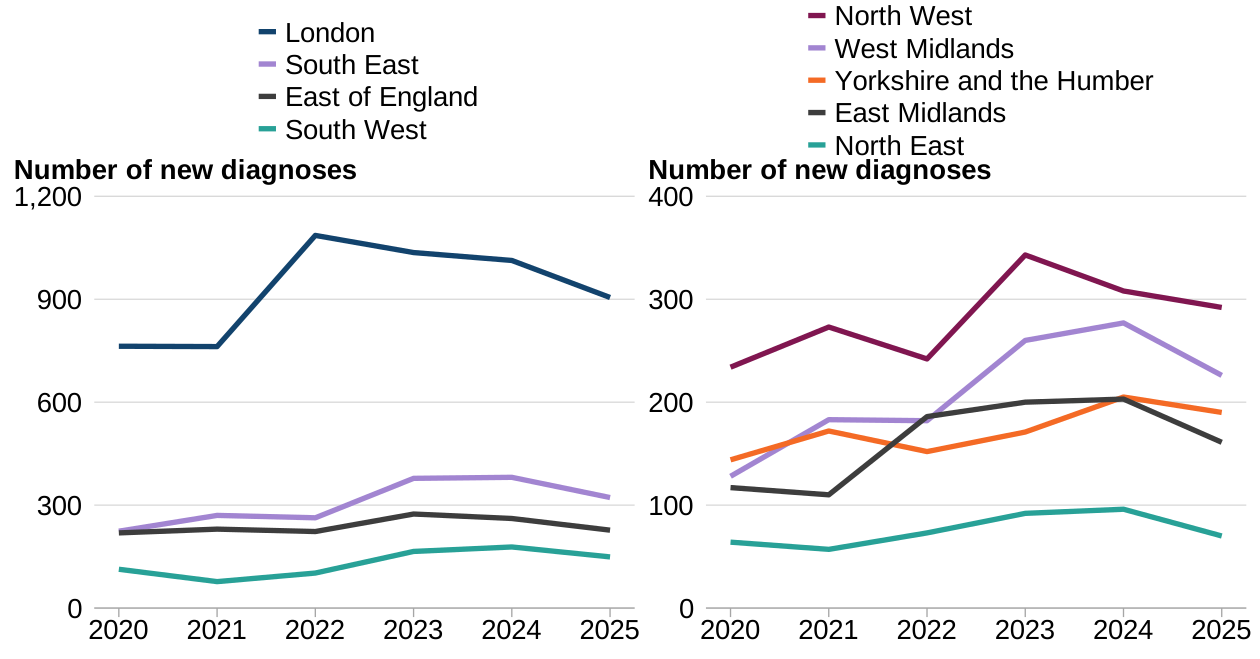
Over one-third of new HIV diagnoses in England continued to occur in London (36%, 905 of 2,542) in 2025. Between 2024 and 2025, a decline in new HIV diagnoses occurred across all regions: most steeply in the North East (27% from 96 to 70), East Midlands (21% from 203 to 161), West Midlands (18% from 277 to 226) and the South West (16% from 178 to 149). Smaller declines between 2024 and 2025 were observed in the South East (15% from 381 to 322), East of England (14% from 261 to 227), London (11% from 1,013 to 905), Yorkshire and the Humber (7% from 205 to 190) and the North West (5%, 308 to 292).
Figure 3. Provisional number of new HIV diagnoses by region, England, 2020 to 2025
Source: HANDD.
Among adult White gay and bisexual men, a fall in new HIV diagnoses between 2024 and 2025 was observed across all regions except for Yorkshire and Humber, where diagnoses rose by 35% from 23 to 31. The steepest falls were observed in the South West, 45% (44 to 24), North West (29%, 63 to 45), West Midlands (23% 39 to 30), South East (13%,62 to 54), the North East (11%,19 to 17), London (6%,145 to 136), East of England (8%, 37 to 34) and the East Midlands (7%, 27 to 25).
Among adult ethnic minority gay and bisexual men, between 2024 and 2025, the number of new HIV diagnoses rose in the North East, (but remained low, from 2 to 8), the North West (50%, 22 to 33), East of England (32%, 19 to 25), Yorkshire and the Humber (11% from 19 to 21), London (6% from155 to 165). However, the HIV diagnoses fell from 7 to 4 in the South West, by 40% in the South East (40 to 24), 33% in the East Midlands (12 to 8) and by 17% (29 to 24) in the West Midlands.
Between 2024 and 2025, the decline in new HIV diagnoses in adult Black African heterosexual men was steepest in the East of England (52%, 42 to 20), East Midlands (48%, 25 to 13),South East (44% 52 to 29), South West (41%, 29 to 17), West Midlands (35% 31 to 20) and London (27%, 70 to 51). Smaller declines were observed in the North West (8%, 26 to 24), Yorkshire and the Humber (4%, 26 to 25). While numbers remained low, there was a slight rise from 6 to 7 in the North East.
Between 2024 and 2025, among adult Black African heterosexual women the number of new HIV diagnoses declined in the North East (61%, 23 to 9), West Midlands 50% (60 to 30), London (36%, 114 to 73), East Midlands (34%, 53 to 35), East of England (29%, 59 to 42), South East (21%, 63 to 50) South West (19%, 32 to 26) and North West (15%, 41 to 35). The number remained stable in Yorkshire and Humber at 43 diagnoses.
Between 2024 and 2025, new HIV diagnoses fell among Other ethnic minority heterosexual adults (excluding Black African heterosexuals) by 34% (32 to 21) in East of England, 18% (125 to 103) in London, 18% (39 to 32) in West Midlands, 15% (13 to 11) in Yorkshire and Humber, 13% (24 to 21) in East Midlands, 7% (44 to 41) in the South East and by 7% (14 to 13) in the South West. Diagnoses stayed low and stable at 4 in the North East and rose by 29% (14 to 18) in the North West.
Data completeness and interpretation
While preliminary data indicates that HIV diagnoses have declined, this fall has not occurred equally across all groups and all regions. Preliminary data indicate that the number of HIV diagnoses continue to rise in ethnic minority gay and bisexual men. Further information on testing trends is needed to interpret whether the decline in diagnoses, particularly among heterosexual men and women, is indicative of a reduction in HIV transmission or influenced by other factors.
Provisional data will be incomplete due to outstanding HANDD and HIV and AIDS Reporting System (HARS) submissions. Some reports of diagnoses may also be missing demographic information, which will impact the reporting of numbers among the 5 populations, in particular. Therefore, numbers will change between this report and the annual HIV official statistics release. This highlights the importance of timely, complete and high-quality data submissions from the clinics across the country. Further details on submission completeness for HANDD and HARS database (which complements HANDD) are available in Table 1.
Table 1. HANDD key variable completeness, England, 2020 to 2025
| Variables | 2020 | 2021 | 2022 | 2023 | 2024 | 2025 |
|---|---|---|---|---|---|---|
| Gender | 100% | 100% | 100% | 100% | 100% | 100% |
| Probable HIV exposure | 80% | 81% | 76% | 84% | 84% | 82% |
| Ethnicity | 85% | 86% | 89% | 88% | 88% | 88% |
| First CD4 count | 90% | 90% | 90% | 92% | 90% | 80% |
| First CD4 count reported within 91 days of diagnosis | 81% | 78% | 83% | 86% | 86% | 92% |
| Viral load | 89% | 90% | 91% | 95% | 95% | 89% |
| Viral load count within 91 days of diagnosis | 70% | 73% | 69% | 82% | 85% | 93% |
Source: HANDD.
Suggested citation
New HIV diagnoses data in England 2020 to 2025: provisional data. May 2026, UK Health Security Agency, London