
Natural England's Strategy: Underpinning Evidence
Published 6 November 2025
Applies to England

© Crown copyright 2025
This publication is licensed under the terms of the Open Government Licence v3.0 except where otherwise stated. To view this licence, visit nationalarchives.gov.uk/doc/open-government-licence/version/3 or write to the Information Policy Team, The National Archives, Kew, London TW9 4DU, or email: psi@nationalarchives.gov.uk.
Where we have identified any third party copyright information you will need to obtain permission from the copyright holders concerned.
This publication is available at https://www.gov.uk/government/publications/natural-englands-strategy-underpinning-evidence/natural-englands-strategy-underpinning-evidence
Each of the outcomes in the Natural England strategy is grounded in evidence and responds to urgent environmental, social and economic challenges. This section summaries the key evidence that explains why we are focussing on what we are.
- Outcome 1: Recovering Nature
- Outcome 2: Building Better Places
- Outcome 3: Improving Health and Wellbeing
- Outcome 4: Delivering Security through Nature
Outcome 1: Recovering Nature
This summarises key evidence that shows why we are focussing on increasing the scale and quality of places where nature thrives.
Large places for nature are essential for biodiversity recovery and climate resilience
Nature recovery needs functioning ecosystems on land and at sea [footnote 1] [footnote 2]. This is especially necessary with accelerating climate change [footnote 2] [footnote 3].
Large sites allow natural processes to occur, support climate adaptation and deliver benefits for people, landscape and geology [footnote 4] [footnote 5]. Bigger sites can be self-sustaining, with natural dynamism creating diverse habitats that support species over the course of their lives [footnote 6]. These sites are more resilient due to species variety and larger populations [footnote 7] [footnote 8].
We need to tackle the underlying causes of nature loss
The five main global drivers of nature loss are land and sea-use change, exploitation of organisms, climate change, pollution and invasive alien species [footnote 9]. We need transformative change that addresses the deeply rooted economic, social and cultural patterns that underly and reinforce these drivers of loss [footnote 10].
Climate change will push ecosystems beyond their previous limits. Strategic action in vulnerable areas is essential to help nature adapt to inevitable change [footnote 2] [footnote 11].
We need to protect more sites on land and at sea and manage them better
Protected areas designated for nature are vital for the conservation and recovery of many species [footnote 12]. They also help species adapt to climate change by providing refugia and colonisation sites [footnote 13] [footnote 14]. Current protected areas will remain vital in the future, although their species composition is likely to change [footnote 15].
Only 7% of England is protected in Sites of Special Scientific Interest (SSSIs), many of which are too small or degraded to sustain wildlife populations long term [footnote 16]. Just 35% of SSSIs are in good condition [footnote 17]; better management, incorporating climate adaptation, and addressing external pressures is essential to recovery.
National Parks and National Landscapes are large areas that could deliver nature recovery at scale [footnote 18].
Nearly 40% of England’s seas are in Marine Protected Areas (MPAs) but effective management is still a challenge19. Reducing pressures through whole site (e.g. no-take) approaches are more effective than partial management [footnote 20].
Connectivity matters, helping species to thrive across nature networks
Connectivity can be physical or functional [footnote 5]. On land, nature-friendly farming can connect sites and support species movement between them [footnote 21]. At sea, MPAs often don’t match the range of highly mobile species [footnote 22], requiring the management of other activities, such as fishing, in the wider seas.
Species recovery is vital for ecosystem health
Intact ecosystems with a full complement of species are more resilient and can provide long-term socio-economic benefits [footnote 23]. Large spaces for nature in resilient nature networks will benefit most species, but some will still need targeted recovery actions. Natural England has worked with partners to identify the top actions to recover over 1,300 threatened species [footnote 24].
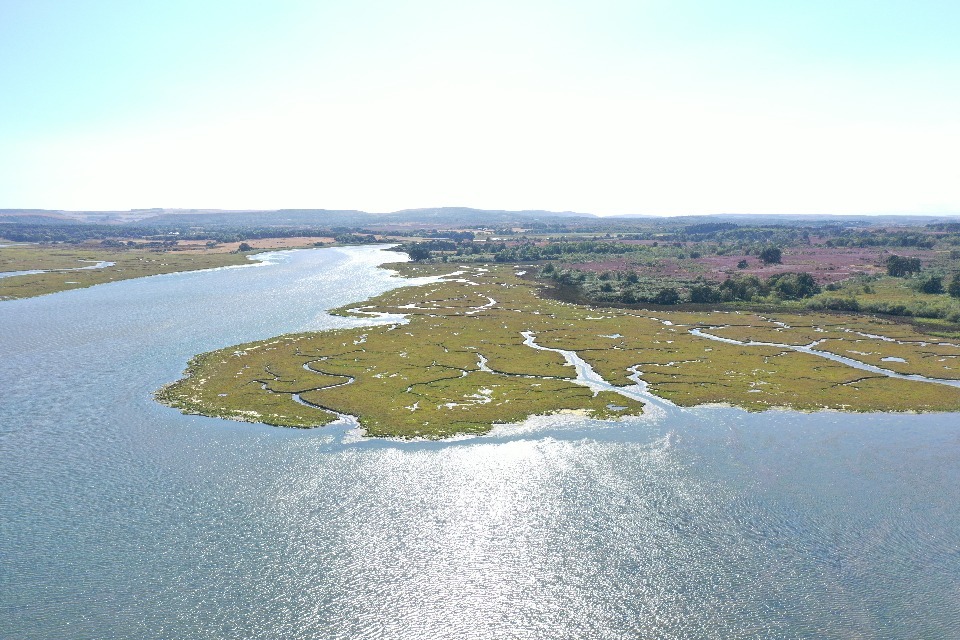
Poole Harbour and Purbeck Heaths National Nature Reserve. Credit: Edward Parrott.
Outcome 2: Building Better Places
This summarises key evidence that shows why we are focussing on building more nature into planning and infrastructure to create healthier and more investable places.
Integrating nature into planning reduces environmental and economic risks
Land and sea-use change, is a major driver of nature loss [footnote 9]. Integrating nature into land and sea-use planning helps create safer, more resilient places to live and work [footnote 2].
Nature loss related risks like flooding, pollution, water scarcity and soil degradation, are already disrupting key sectors such as housing, energy, agriculture, manufacturing and tourism [footnote 2] [footnote 25].
Climate change leads to additional demands on ecosystems. Embedding climate adaptation into development, reduces risks and provides co-benefits [footnote 2].
Nature is a source of national wealth and economic resilience
The value of the UK’s natural capital was estimated at £1.8 trillion in 2022, providing a £48 billion annual flow of services (excluding oil and gas) to the economy [footnote 26].
Chronic climate and nature degradation could reduce UK GDP by 4.7% this decade, outweighing gains from current infrastructure initiatives [footnote 25].
Using land and sea-use planning measures for nature recovery can reduce risks across sectors and improve long-term economic resilience [footnote 2].
With the right tools, nature and development can be delivered together
Strategic solutions provide increased certainty for developers, unlock development and underpin nature recovery projects [footnote 27] [footnote 28].
District Level Licensing (DLL) for great crested newts has delivered over 3,850 new or restored ponds funded by developers [footnote 27].
The Nutrient Mitigation Scheme has enabled 13,400 homes to be built while delivering over 1,000 hectares of land use change for nature recovery [footnote 28].
Mandatory Biodiversity Net Gain (BNG), introduced in 2024, has led to earlier and more consistent consideration of ecological impacts. Stakeholders are optimistic about its role in supporting local environmental priorities [footnote 29].
Adopting a whole-systems approach in our seas has enabled offshore wind development while also protecting our internationally important seabird populations [footnote 30].
Public and stakeholder engagement is key to better decisions and sustainable outcomes
Environmental issues are multi-scalar, requiring input from diverse stakeholders [footnote 31].
Inclusive, participatory planning and decision-making builds trust, empowers stakeholders, and leads to more legitimate and lasting decisions [footnote 31] [footnote 32].
Place-based, co-created strategies, can deliver effective nature recovery actions [footnote 33].
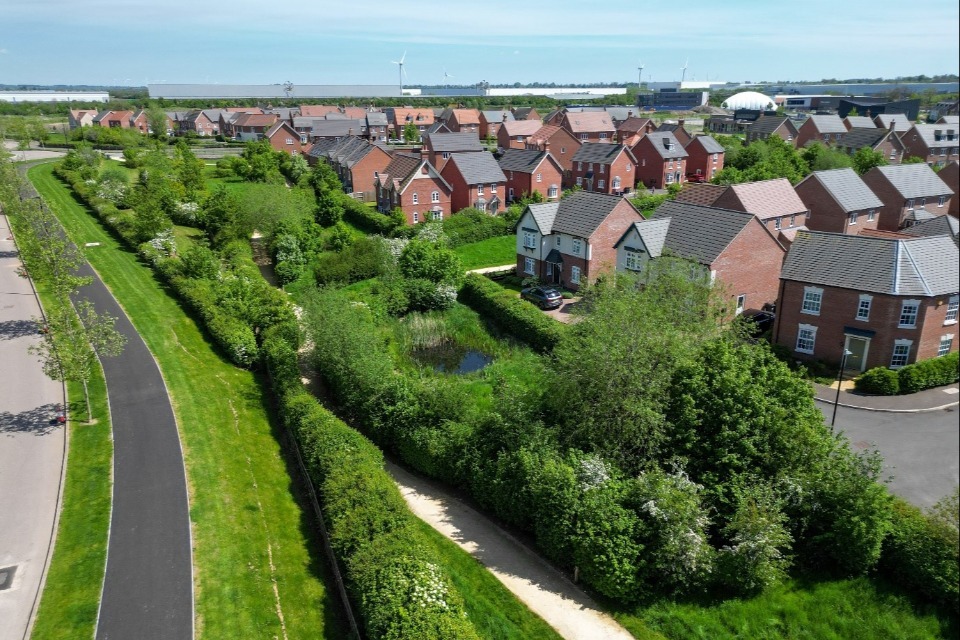
Houlton, Rugby. Credit: JTP and Craig Auckland, Fotohaus
Outcome 3: Improving Health and Wellbeing
This summarises key evidence that shows why we are focussing on building nature into everyday life so that people can benefit from and support nature, wherever they live.
Green and blue spaces are vital for health and wellbeing, but access is unequal across England
We are below government targets for greenspace on our doorsteps [footnote 34].
7% of people lack access to personal greenspace (e.g. gardens, allotments), especially those living in deprived areas, low-income and vulnerable groups [footnote 35].
The Green Infrastructure Framework is helping to embed nature into development. For example, the Houlton housing development in Warwickshire, will create over 6,200 homes with all residents living within 300m of greenspace, meeting the Local Greenspace Standard [footnote 36].
Nature provides essential services that support physical and mental health and improve wellbeing
The benefits nature provides, such as clean air and water, noise regulation, and climate adaptation, are fundamental to people’s health, as is spending time in nature [footnote 37].
Data from 2018 show 17.7% of the UK population are suffering from mental health issues [footnote 38], yet spending time in nature has been shown to improve health and wellbeing [footnote 35] and reduce the prevalence of depression and anxiety [footnote 39].
In the summer of 2022, heatwaves caused 2,985 excess deaths in the UK [footnote 40]. As summer temperatures increase, so does the need for green and blue spaces and trees for urban cooling.
The protection that nature provides from extreme weather events also supports our health and wellbeing. People under threat of flooding are 50% more likely to experience poorer mental health than other residents in England [footnote 41].
Connection to nature builds resilience
Contact with and connection to nature are linked to health, wellbeing and pro-environmental behaviours [footnote 42].
Over 50% of young people reported feeling highly connected to nature and 83% say caring for the environment is important to them [footnote 43]. Nature connection declines in the mid-teens, then rises again, highlighting critical windows for engagement [footnote 44].
Pro-environmental behaviours and wellbeing have been found to be highest among people who frequently visit natural environments and feel highly connected to nature [footnote 45]. Interventions that increase both contact with and connection to nature are most impactful [footnote 45] [footnote 46].
Inclusive decision-making can help to reduce the likelihood of people becoming marginalised and promotes active citizenship, which has wider benefits for society [footnote 32].
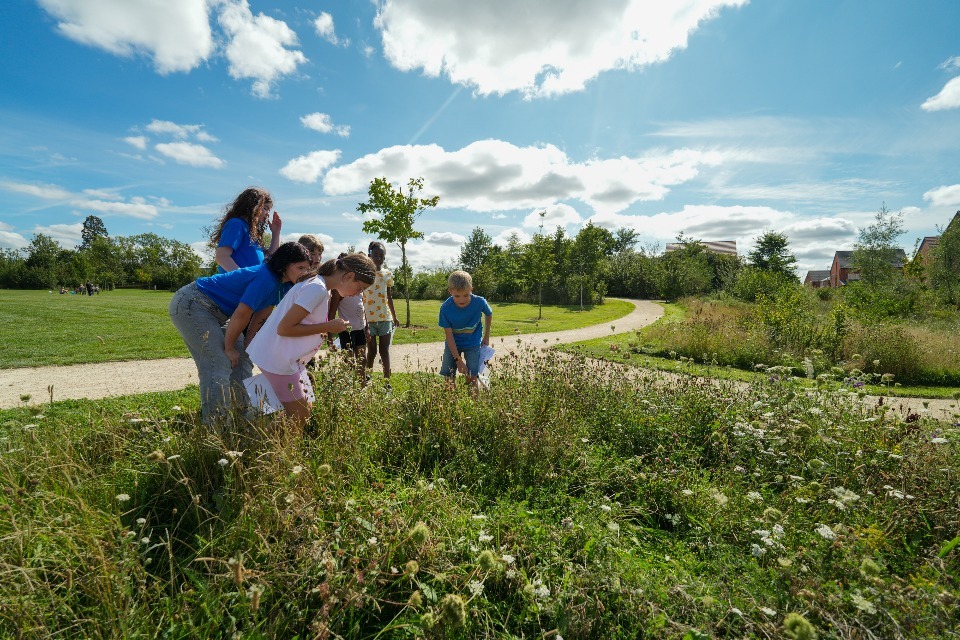
Caption: Connecting with Nature. Credit: Urban and Civic – Paul Bunyard.
Outcome 4: Delivering Security through Nature
This summarises key evidence that shows why we are focussing on nature’s role in helping us adapt to a changing climate and securing more sustainable food production, healthy soils, air and clean water.
Nature is critical to long-term security, especially in a changing climate
Natural England’s State of Natural Capital Report for England 2024 [footnote 2] shows that nature is critical to the long-term security of society and the economy through the benefits it provides.
Healthy nature-rich soils underpin key processes essential to human health and wellbeing: nurturing our food, regulating water quality and supply, regulating climate, recycling waste, and supporting nature-rich places that attract wildlife and inspire people [footnote 47] [footnote 48].
Restoring ecosystems is an effective way to combat climate change. For example, healthy peatlands store more carbon than any other land habitat [footnote 49].
Water security depends on upland water bodies and aquifers. 30% of drinking water comes from groundwater [footnote 50]. Storing water on floodplains and in wetlands can decrease downstream flood risk, while sand dunes and saltmarshes can act as natural flood defences [footnote 2].
Good fisheries management is one of the most effective strategies for protecting ocean carbon stores and can make an important contribution to climate mitigation and adaptation [footnote 51].
We need to act now
The Dasgupta Report [footnote 23] and Stern Review [footnote 52], conclude that early action to tackle biodiversity loss and climate change is far more cost-effective than not acting or delaying action.
Nature supports key industries
Farming, forestry and fishing all rely on the benefits healthy ecosystems provide but can also act as pressures and drivers of nature loss [footnote 2].
Nature reduces climate change impacts on agricultural food production by slowing water flows, increasing water infiltration and storage, improving soil health, and supporting pollinators [footnote 2].
Sustainable fishing practices and management that recover seabed and coastal ecosystems deliver benefits for wildlife, seafood stocks and carbon [footnote 2] [footnote 53]. Forestry resilience depends on species diversity to combat pests and diseases, which are likely to increase [footnote 2].
We need to scale up funding for nature recovery — urgently and strategically
Over the next decade, £56 billion is estimated to be needed to meet the UK’s nature-related outcomes [footnote 54]. This needs to come from public, private and philanthropic sources23. UK businesses are increasingly investing in nature-based solutions to build resilience and reduce their impacts on nature [footnote 25].
The State of Natural Capital Report for England 2024 [footnote 2], identifies priority nature recovery actions for private and public investment to reduce risks and increase resilience.
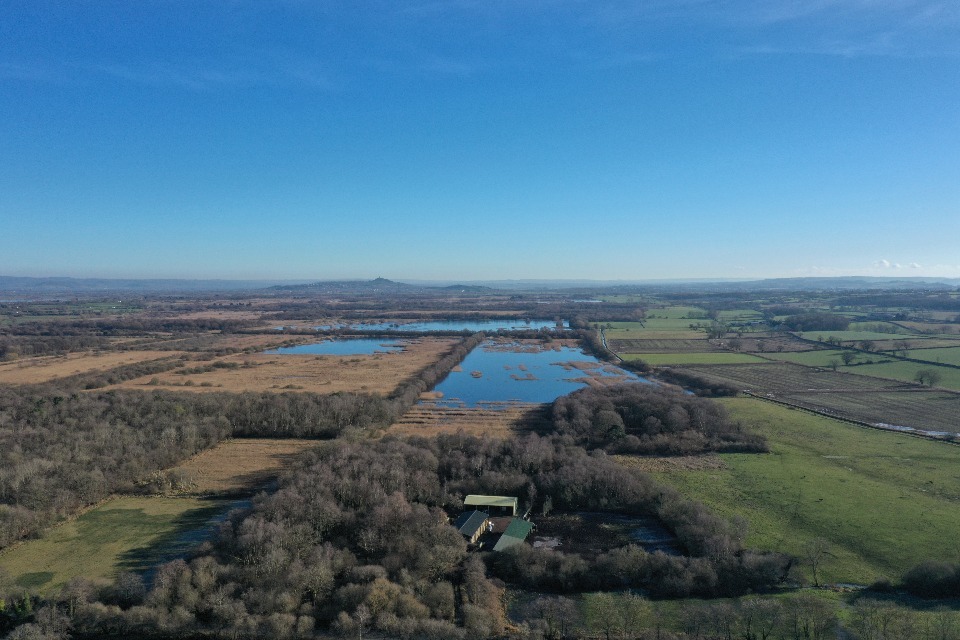
Shapwick Heath, Somerset Wetlands National Nature Reserve. Credit: Earth Observation Service – Bob Ashington.
References
-
Lawton, J. H. and others 2010. Making Space for Nature: a review of England’s wildlife sites and ecological network, Report to Defra. ↩
-
Lusardi, J. and others 2024. State of Natural Capital Report for England 2024: Risks to nature and why it matters. Natural England Research Report NERR137, Natural England. ↩ ↩2 ↩3 ↩4 ↩5 ↩6 ↩7 ↩8 ↩9 ↩10 ↩11 ↩12 ↩13 ↩14
-
Natural England, and RSPB 2020. Climate Change Adaptation Manual - Evidence to support nature conservation in a changing climate. 2nd Edition, Natural England. ↩
-
Jax, K. 2006. Ecological units: definitions and application. Q Rev Biol, 81(3), 237-58. ↩
-
Crick, H. Q. P. and others 2020. Nature Networks Evidence Handbook. Natural England Research Report NERR081, Natural England. ↩ ↩2
-
Webb, J. R. and others 2010. Managing for species: Integrating the needs of England’s priority species into habitat management. Natural England Research Report NERR024, Natural England. ↩
-
Saterberg, T. and others 2013. High frequency of functional extinctions in ecological networks. Nature, 499(7459), 468-70. ↩
-
Verboom, J. and others 2010. Population dynamics under increasing environmental variability: implications of climate change for ecological network design criteria. Landscape Ecology, 25(8), 1289-98. ↩
-
IPBES 2019. Global assessment report of the Intergovernmental Science-Policy Platform on Biodiversity and Ecosystem Services. E. S. Brondízio, J. Settele, S. Díaz, and H. T. Ngo, eds. IPBES secretariat, Bonn, Germany, 1148pp. ↩ ↩2
-
IPBES (2024). Thematic Assessment Report on the Underlying Causes of Biodiversity Loss and the Determinants of Transformative Change and Options for Achieving the 2050 Vision for Biodiversity of the Intergovernmental Science-Policy Platform on Biodiversity and Ecosystem Services (Transformative Change Assessment). O’Brien, K., Garibaldi, L., and Agrawal, A. (eds.). IPBES secretariat, Bonn, Germany ↩
-
Climate Change Committee 2021. Independent Assessment of UK Climate Risk: Advice to Government For The UK’s Third Climate Change Risk Assessment (CCRA3). ↩
-
Barnes, A. E. and others 2022. Rare and declining bird species benefit most from designating protected areas for conservation in the UK. Nature Ecology & Evolution, 7(1), 92-101. ↩
-
Thomas, C. D. and others 2012. Protected areas facilitate species’ range expansions. Proc. Natl. Acad. Sci. U.S.A. 109(35), 14063-8. ↩
-
Johnston, A. and others 2013. Observed and predicted effects of climate change on species abundance in protected areas. Nature Climate Change, 3(12), 1055-61. ↩
-
Shwartz, A. and others 2017. Scaling up from protected areas in England: The value of establishing large conservation areas. Biological Conservation, 212, 279-87. ↩
-
Gillingham, P. K. and others 2015. The effectiveness of protected areas in the conservation of species with changing geographical ranges. Biological Journal of the Linnean Society, 115(3), 707-17. ↩
-
Defra 2025. Extent and condition of protected areas (Accredited offical statistics). ↩
-
Cunningham, C. A. and others 2021. Translating area-based conservation pledges into efficient biodiversity protection outcomes. Commun Biol, 4(1), 1043. ↩
-
Sala, E. and Giakoumi, S. 2018. No-take marine reserves are the most effective protected areas in the ocean. ICES Journal of Marine Science, 75(3), 1166-8. ↩
-
Eycott, A. and others 2008. Which landscape features affect species movement? A systematic review in the context of climate change. Forest Research Report for Defra, Forest Research. ↩
-
Conners, M. G. and others 2022. Mismatches in scale between highly mobile marine megafauna and marine protected areas. Frontiers in Marine Science, 9. ↩
-
Dasgupta, P. 2021. The Economics of Biodiversity: The Dasgupta Review, HM Treasury. ↩ ↩2
-
Wilkins, T. C. and others 2025. Threatened Species Recovery Actions 2025 Baseline – Technical Report and Spreadsheet User Guide. Version 1.0. JP065, Natural England and partners. ↩
-
GFI and WWF 2025. Business Investment in Nature: Supporting UK Economic Resilience and Growth. ↩ ↩2 ↩3
-
ONS 2024. UK natural capital accounts: 2024, Office for National Statistics. ↩
-
The Importance of Great Crested Newts: Briefing produced by Natural England to Defra, March 2025. ↩ ↩2
-
Cao, Y. and others 2025. Nutrient Mitigation Scheme Evaluation-Phase 2 Process Evaluation Report; May 2025, ADAS, Ecorys, Fera. ↩ ↩2
-
Eunomia Research & Consulting Ltd 2025. Biodiversity Net Gain Evaluation Report. Natural England Commissioned Report NECR630, Natural England. ↩
-
Natural England and others 2023. What are the ecosystem risks and benefits of full prohibition of industrial Sandeel fishing in the UK waters of the North Sea (ICES Area IV)? Defra request for Evidence. ↩
-
Reed, M. S. 2008. Stakeholder participation for environmental management: A literature review. Biological Conservation, 141(10), 2417-31. ↩ ↩2
-
Hafferty, C. 2022. Embedding evidence-led, best practice culture of engagement: learning from the evidence. Natural England Commissioned Report NECR448. ↩ ↩2
-
Rice, P. and others 2021. Natural Capital Evidence Handbook: to support place-based planning and decision-making. Natural England Research Report NERR092. ↩
-
Craven, J. and others 2024. State of Natural Capital Report for England Appendix 1: Indicators and Data. Natural England Research Report NERR137 Appendix 1. ↩
-
Natural England 2021. The People and Nature Survey for England: Data and publications from Adults survey year 1 (April 2020 - March 2021) (Official Statistics) main findings. ↩ ↩2
-
Natural England 2025. Case Studies sharing best practice in the application of the Green Infrastructure Framework. Green Infrastructure Framework. ↩
-
Lamont, R. A., and Hinson, C. 2024. A narrative review of reviews of nature exposures and human health and well-being in the UK. Natural England Evidence Review NEER030, Natural England. ↩
-
OECD/European Union 2018. Health at a Glance: Europe 2018: State of Health in the EU CycleParis, OECD Publishing. ↩
-
Callaghan, A. and others 2021. The impact of green spaces on mental health in urban settings: a scoping review. Journal of Mental Health, 30(2), 179-93. ↩
-
UKHSA 2023. Heat mortality monitoring report: 2022. UK Health Security Agency. ↩
-
Environment Agency 2020. Flood and Coastal erosion risk management report: 1 April 2019 to 31 March 2020, Environment Agency. ↩
-
Seers, H. and others 2022. Connection to nature: evidence briefing. Evidence Information Note EIN068, Natural England. ↩
-
Natural England 2024. The Children’s People and Nature Survey for England: 2024 update. ↩
-
Hughes, J. and others 2019. Age and connection to nature: when is engagement critical? Frontiers in Ecology and the Environment, 17(5), 265-9. ↩
-
Natural England and other parties 2020. Nature connectedness among adults and children in England. Natural England Joint Publication JP032. ↩ ↩2
-
Martin, L. and others 2020. Nature contact, nature connectedness and associations with health, wellbeing and pro-environmental behaviours. Journal of Environmental Psychology, 68. ↩
-
Food and Agriculture Organisation of the United Nations 2015. The State of Food and Agriculture 2015, Food and Agriculture Organization of the United Nations (FAO). ↩
-
De Vries, F. T., and Bardgett, R. D. 2015. Climate change effects on soil biota in the UK. Terrestrial Biodiversity Climate Change Impacts Report Card Technical paper. . ↩
-
Gregg, R. and others 2021. Carbon storage and sequestration by habitat: a review of the evidence (second edition). Natural England Research Report NERR094. Natural England. ↩
-
Drinking Water Inspectorate 2022. Drinking Water 2022: Public supplies England. ↩
-
Andersen, N. F. and others 2024. Good fisheries management is good carbon management. npj Ocean Sustainability, 3(1). ↩
-
Stern, N., and Cabinet Office - HM Treasury 2007. The Economics of Climate Change - The Stern Review. ↩
-
Bentley, J. and others 2024. The importance of sprat to the wider marine ecosystem in the North Sea and English Channel (ICES Subarea 4 and Divisions 7.d–e). Defra request for advice. ↩
-
GFI and others 2021. The Finance Gap for UK Nature. Green Finance Institute ↩