National Fraud Squad (NFS) process evaluation
Published 5 February 2026

© Crown copyright 2026
This publication is licensed under the terms of the Open Government Licence v3.0 except where otherwise stated. To view this licence, visit nationalarchives.gov.uk/doc/open-government-licence/version/3 or write to the Information Policy Team, The National Archives, Kew, London TW9 4DU, or email: psi@nationalarchives.gov.uk.
Where we have identified any third party copyright information you will need to obtain permission from the copyright holders concerned.
This publication is available at https://www.gov.uk/government/publications/national-fraud-squad-nfs-process-evaluation/national-fraud-squad-nfs-process-evaluation
Authors
Dr Helen Powell, Dorothee Stellmacher, Waseem Meghjee, Dr Ammeline Wang and Balaji Savatherajan
Executive summary
The Home Office commissioned Ipsos UK to undertake a process evaluation of the National Fraud Squad (NFS). As part of the process evaluation, an NFS Theory of Change (ToC) was developed. This body of work forms part of a commitment made in the HM Government Fraud Strategy 2023 (HM Government, 2023) to undertake a review of fraud law enforcement, assessing the impact the additional posts have made and whether more substantial structural reform is needed.
The process evaluation explored how NFS funding is being implemented to prevent and reduce fraud, and the extent to which the NFS is meeting its intended aims. It included interviews with strategic managers, operational managers and fraud investigative officers (FIOs) within the City of London Police (CoLP), the National Crime Agency (NCA) and Regional Organised Crime Units (ROCUs). Findings within this report are based on the perceptions of those who took part in the interviews and reflect different levels of understanding and experience of the NFS among interviewees. Furthermore, it is not within the scope of the process evaluation to measure the impact of the NFS; however, through qualitative discussions conducted with stakeholders, their perceptions of the impact of the NFS on fraud investigations are explored.
In May 2023, the UK government published its Fraud Strategy, and announced £100 million of new funding to bolster law enforcement in the fight against fraud. This included funding for the NFS, provided to CoLP, NCA and ROCUs, to:
-
boost (or ‘uplift’) the investigative capacity and capability of Law Enforcement Agencies (LEAs) to improve serious fraud investigations
-
boost the intelligence capacity and capability of LEAs to improve the intelligence flow and ensure a more proactive approach to tackling serious fraud
-
reduce silos in the law enforcement response to fraud, through an improved collaborative approach to tackling serious fraud
The NFS has 500 posts, made up of 400 new posts across CoLP, NCA and ROCUs, including new specialist fraud investigators and intelligence officers, and an additional 100 posts, from existing resource.
Key findings
Awareness, allocation and use of NFS funding
Overall, there was a strong awareness of the objectives of the NFS – expanding resource to support proactive fraud investigations, delivery of broader economic crime strategies, and collaboration through a national network. Regarding the concept of the NFS, there was a strong awareness, particularly at managerial and strategic national posts, but more limited awareness at regional working level (investigators). This variance was partly attributed to inconsistent communication and lack of a clear ‘NFS’ branding, among the various other policing funding streams.
Overall, CoLP and NCA were positive about the allocation of funding, based on the working relationship with the Home Office being seen broadly as positive and constructive. Despite this, there was also a consistent view from CoLP and NCA that, initially, the level of reporting and performance monitoring requested by the Home Office was higher than they expected, and not always proportionate to the level of funding. However, this was reported to have improved over the course of delivering the programme.
While CoLP initially provided equal funding across all ROCUs, there was a shared view among some ROCUs that this was unhelpful as it did not reflect regional differences in fraud threat, geographical coverage, location, existing capabilities (some ROCUs needed specific specialist posts) and salary requirements. CoLP pivoted its approach since the year ending 31 March 2024 to allocate funding in a more tailored way according to the needs of each ROCU.
Furthermore, CoLP provided flexibility in how funding was used, yet perceptions varied and depended on the level of ROCU capability. ROCUs with pre-existing Proactive Economic Crime Teams (PECTs) resource (before NFS funding) appreciated this as it allowed them to navigate lengthy recruitment processes and recruitment freezes by hiring police staff (rather than investigators). The most common use of the funding was for full-time equivalent (FTE) investigative roles, but it was also used for police staff and specialists (for example analysts), with some posts working for other related crime types as well as fraud.
However, most ROCUs, who did not have pre-existing PECT resources, expressed the view that they would have welcomed more direction on how to use the funds effectively to achieve outcomes. The evaluation also shed light on some misunderstanding around appropriate use of funds, which impacted implementation, with some ROCUs thinking it could only be used for investigations.
Recruitment, training and retention
The evaluation found that significant recruitment challenges, which apply to wider policing and not only to NFS, caused delays in recruiting NFS-funded positions and posts becoming fully operational. There were lengthy release times from forces, and long vetting processes and training periods, especially as most recruits had no experience of proactive fraud intelligence/investigations. This resulted in NFS investigators being in post but not operational, as participants highlighted that it takes approximately 1 to 2 years before an investigator could work at full capacity. The limited pipeline of potential candidates for specialist roles such as forensic accountants had a particular impact on recruitment to the NCA component of the Fraud Targeting Cell (FTC), which was said to have experienced persistent staffing issues and a high level of vacancies. In turn, participants from the NCA reported that this impacted the number of intelligence packages that could be developed and tasked.
This was exacerbated by a focus on getting numbers in post as soon as possible without consideration for a training roadmap, leaving some officers left without sufficient work to do. Training was particularly challenging for ROCUs without established PECTs, as interviewees noted that they wanted more guidance and support with training provision. NCA and CoLP interviewees also highlighted that there was limited assurance of training and a lack of specialists to apply for the roles.
Retention was an issue due to short-term contracts, salary competition with the private sector and across different regions, and limited promotion opportunities. This was partially countered through a strong team culture, more flexible working, and manageable workloads and working patterns.
Perceived impacts of the NFS
The NFS was portrayed by interviewees as having contributed to an increase in law enforcement fraud capabilities and a fundamental shift in the fraud law enforcement response towards a smarter, proactive, intel-led and collaborative approach to tackling the most serious cases. Participants highlighted that the NFS has established a clear distinction between the reactive work of local forces and the proactive approach of regional and national partners, reducing the burden of lengthy complex investigations on police, allowing them to focus on reactive volume fraud cases. A common challenge referenced by participants was ensuring the NFS-funded resource focused solely on fraud investigations within a context of competing priorities and understaffed organisations.
Regarding FTC, interviewees considered it had created a greater sense of strategic coordination across the whole system. However, there was a sense that due to the recruitment challenges, NFS outputs were impacted by the slower than expected intelligence flow from the FTC, which suggests ensuring adequate resourcing is needed for the FTC to meet demand.
Stakeholders’ insights suggested the NFS uplift in resources and partnership working improved coordination, intelligence sharing, tools, methods, sharing of best practice, and achieved greater operational efficiency overall. Beyond the investigative outcomes, the NFS was also portrayed by participants to be contributing to improved outcomes for victims of fraud. Investigators referenced several examples where they were able to achieve different types of investigative outcomes that stopped vulnerable people from continuing to experience fraud.
All the above perceived effects of the NFS were framed within the challenges of attributing them to the NFS (for example, due to the complex web of funding for tackling fraud).
Conclusions and implications
The evaluation found consensus, centrally and regionally, that NFS funding is meeting its intended aims, enabling significant improvements in the strategic coordination and the capacity and capabilities of law enforcement to tackle fraud. It has allowed for the creation of dedicated fraud teams, enhanced intelligence capabilities, and a shift towards more proactive approaches to tackling fraud.
NFS funding was also seen to have enabled a cultural shift in the prioritisation and co-ordinated approach of tackling fraud across law enforcement. The development of an intelligence-led approach to tackling fraud was perceived to be reflective of more disruptions, translating to fewer incidents of fraud and reduced impact on victims. However, there was an acknowledgement that similar NFS investment had not been given to local forces to support the reactive response to fraud, which was seen to have constrained the overall improvement. Besides this, consideration should also be given to greater partnership working with the private sector, such as banks and tech companies.
The findings highlighted the importance of effective communication and ‘branding’ approaches for funding programmes like the NFS. It was evident from the evaluation that there were not only different levels of awareness of the NFS but also interpretations of the use of the funding. Greater consideration should be given to how the scope and aims of future funding are shared with recipient agencies, including clearer communication on the alignment with other funding initiatives. This would also help inform performance monitoring and future assessments of impact.
The evaluation found there were recruitment and training challenges experienced at a central and regional level. Central and regional stakeholders decided to recruit police staff instead due to staff being quicker to recruit and more likely to remain in post. While police staff do not have the same powers as police officers, once they have completed the Professionalising Investigation Programme (PIP) training, they have the skills required to conduct investigations. CoLP highlighted that broader consideration is being given to the role of police staff in addressing capacity gaps, particularly considering current policing demands. Recruitment challenges resulted in people recruited often requiring considerable training investment, which delayed operational delivery.
1. Background and methodology
The Home Office commissioned Ipsos UK to undertake a process evaluation of the National Fraud Squad (NFS). As part of the process evaluation, an NFS Theory of Change (ToC) was developed. This body of work forms part of a commitment made in the HM Government Fraud Strategy 2023 to undertake a review of fraud law enforcement, assessing the impact the additional posts have made and whether more substantial structural reform is needed.
The process evaluation explored how NFS funding is being implemented to prevent and reduce fraud, and the extent to which the NFS is meeting its intended aims. It is not within the scope of the process evaluation to measure the impact of the NFS; however, through qualitative discussions conducted with stakeholders, their perceptions of the impact of the NFS on fraud investigations are explored. The process evaluation included interviews with strategic managers, operational managers and fraud investigative officers (FIOs) within the City of London Police (CoLP), the National Crime Agency (NCA) and Regional Organised Crime Units (ROCUs).
1.1 Policy context
In May 2023 the UK government published its Fraud Strategy (HM Government, 2023). The strategy stated that although fraud accounted for over 40% of crime, it received less than 1% of police resource. In the strategy, the government announced £100 million of new funding to bolster law enforcement in the fight against fraud. This included provision for the NFS, as well as other initiatives delivered by the Fraud Reform Programme (FRP), and investment in the Action Fraud replacement service. The objectives of the NFS are as follows:
-
boost (or ‘uplift’) the investigative capacity and capability of law enforcement agencies (LEAs) to improve serious fraud investigations, including their criminal justice outcomes (such as prosecutions) and alternative outcomes (for example disruptions)
-
boost the intelligence capacity and capability of LEAs to improve the intelligence flow and ensure a more proactive approach to tackling serious fraud
-
reduce silos in the law enforcement response to fraud through an improved collaborative approach to tackling serious fraud
NFS funding was provided to CoLP, the NCA and ROCUs. The NFS has 500 posts, made up of 400 new posts across CoLP, NCA and ROCUs, including new specialist fraud investigators and intelligence officers, and an additional 100 posts from existing resource. It is important to note that, in addition to the 500 posts that make up the NFS, there is an existing historic pool of resources dedicated to tackling fraud across law enforcement and other bodies that support law enforcement. This includes posts across the police forces, NCA, Serious Fraud Office (SFO), National Trading Standards and the UK intelligence community.
The NFS is not a centralised function or a single team under a single leadership or organisation. Instead, it consists of posts in teams across the NCA, CoLP and ROCUs. The NFS is a network jointly led by CoLP, the national lead police force for fraud and NCA, the operational system lead for fraud. Resources and capabilities are shared to ensure a collaborative and consistent approach at a regional and national level.
The FRP sets out a range of key performance indicators (KPIs) that were tailored to CoLP and ROCUs, measures of which included the number of staff recruited, number of suspects arrested, voluntary interviews and charges, as well as the value of assets suspended and or seized. Separate KPIs were established for the NCA, which included strategic and operational measures such as delivering intensification campaigns and the establishment of the Fraud Targeting Cell (FTC).
1.2 Operational context
As part of the Fraud Strategy’s commitment to establishing the NFS, funding was allocated to enhance the capacity of the NCA, CoLP and ROCUs in developing a proactive, intelligence-led approach to investigating serious fraud and organised crime. Prior to NFS funding, law enforcement efforts to tackle fraud were seen to be predominantly reactive, which is responding to fraud incidents once they had taken place and been reported. The aim of the NFS was to increase the intelligence and investigative capacity centrally (NCA and CoLP) and regionally (ROCUs) to proactively investigate fraud. Proactive investigations leverage intelligence to identify and address potential fraud by detecting suspicious activities, aiming to prevent fraud before it occurs. Within ROCUs, the new NFS-funded posts sit within Proactive Economic Crime Teams (PECTs).
PECTs are specialist units within ROCUs focusing on investigating serious fraud cases, often with national or international reach. PECTs target organised crime groups involved in economic crime, including large-scale fraud and money laundering. Although previous funding through the Police Uplift Programme (PUP) initially established new PECTs in a few ROCUs (Home Office, 2022), NFS funding provided a significant funding boost to these existing teams, as well as enabling PECTs to be established in the other ROCUs.
As part of the Fraud Strategy, there was also a commitment to establish the FTC. The FTC was launched in April 2024 and produces intelligence packages for the NFS and the wider system. It is a multi-agency team, resourced from both CoLP and NCA and is a National Economic Crime Centre (NECC) owned capability, which also has contributions from other organisations, such as the Metropolitan Police Service (MPS), The Pensions Regulator (TPR) and the SFO. It primarily focuses on proactive, suspect-led intelligence cases on the highest harm fraud offenders impacting the UK. The FTC analyses data to develop intelligence, disseminating this information to the NFS to tackle fraud across regional, national and international borders. NFS funding also increased the capabilities of CoLP, as the national lead police force for fraud, to monitor wider policing’s activity on fraud and disseminate intelligence. Collectively with the NCA, the aim was for law enforcement to work together to share intelligence in tackling fraud.
1.3 Evaluation aims
The process evaluation sought to address the following research questions:
-
how has the NFS been implemented?
-
how have the NFS officers been recruited, trained and retained?
-
how has the NFS uplift impacted the quantity and quality of fraud investigations?
The evaluation also aimed to explore the extent to which there were different insights and nuances to the above research questions based on the type of organisation (ROCUs, CoLP and NCA).
1.4 Methodology
The evaluation sought to gather insights by conducting 51 interviews during November 2024 to February 2025 with a range of stakeholders involved in the design, implementation and delivery of the NFS. Interviewees included those working at the NCA and CoLP and in ROCUs (illustrated in Table 1) and at a range of levels of seniority including strategic managers, operational managers and FIOs, as shown in Table 2. Throughout the report, the terms centrally (in relation to NCA and CoLP) and regionally (in relation to ROCUs) are used to distinguish between these 2 stakeholder groups.
Six scoping interviews took place with Home Office staff to support with the refining of research questions and designing the research materials.
Table 1: Number of interview participants by organisation
| Central stakeholders | Number of interviews |
|---|---|
| CoLP | 7 |
| NCA | 10 |
| Regional stakeholders | |
| ROCUs | 34 |
| Total | 51 |
Table 2 shows, across CoLP, NCA and ROCUs, how many interviewees were strategic managers (those who are in decision-making or ‘heads of’ positions), operational managers (those who have day-to-day delivery and supervisory responsibilities) and FIOs (those who carry out the day-to-day delivery of fraud investigations). The breakdown of roles by CoLP, NCA and ROCU is not shown because it could result in participants being identified. Further details on the methodology and sampling are included in Annex A.
Table 2: Number of interview participants by type of role
| Role type | Number of interviews |
|---|---|
| Strategic manager | 13 |
| Operations manager | 19 |
| Fraud investigations officer | 19 |
| Total | 51 |
1.5 NFS Theory of Change (ToC)
As part of the process evaluation, a ToC for NFS was developed in 2025 (Figure 1). The purpose of the NFS ToC is to articulate how the NFS is intended to work, by showing how we get from the resources and inputs used, and activities carried out, to the overall outcomes and impacts that the NFS aims to achieve. Furthermore, it incorporates important nuances on the key assumptions underpinning the pathways to outcomes, as well as operational risks. The development of the NFS ToC was informed by a ToC workshop with Home Office and law enforcement stakeholders, as well as the findings from the process evaluation.
Figure 1 : National Fraud Squad Theory of Change
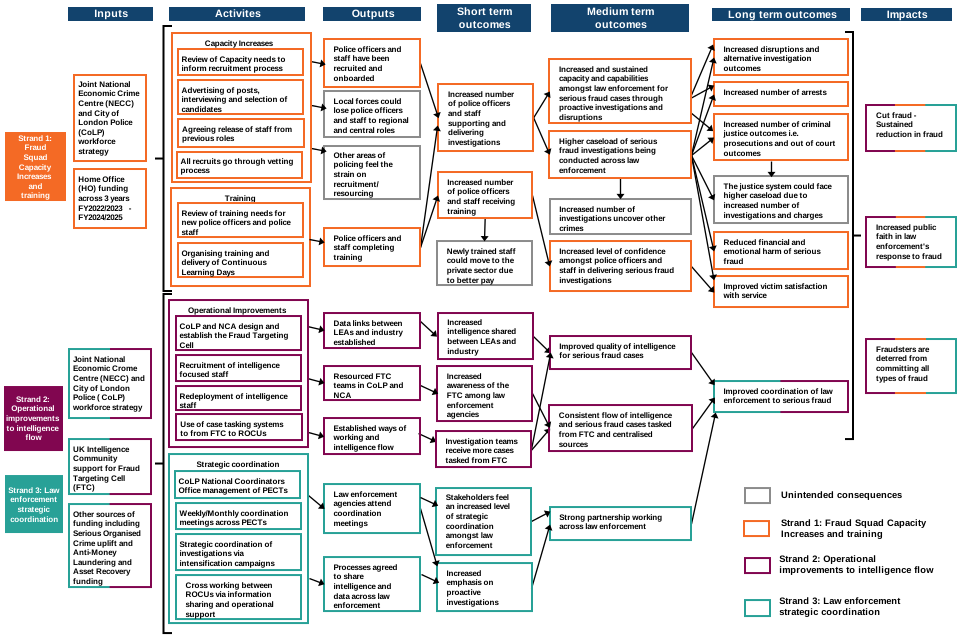
For an accessible version see National Fraud Squad evaluation report: Theory of Change (accessible version)
1.6 Analysis, interpretation and limitations
Interviews were conducted using different discussion guides (see Annex B), designed for the 3 different types of interviewee roles. These discussion guides were further tailored for interviews with CoLP and the NCA. With the consent of participants, interviews were recorded and then transcribed. Qualitative data was then transferred and analysed within an analysis framework, which was developed in line with the key evaluation questions. Thematic analysis sessions were conducted throughout the evaluation’s data analysis phase to discuss and consolidate themes and to identify and challenge findings. The report considers and presents similar or varying views from different stakeholder groups, including various roles at both central and regional levels. Case study examples are also provided in places to provide further context to the findings presented.
There are several key limitations relevant to interpreting the findings. Firstly, findings contained in this report are based on the perceptions of those who took part in interviews. It was not within the scope of this evaluation to triangulate findings with performance data gathered regionally and centrally; for example, to validate responses on the perceived impact of the NFS on investigations and disruptions.
This report also presents findings that measure the implementation and delivery of the NFS. While the findings provide insights into the perceived impact of NFS funding and the extent to which the NFS is seen as achieving its intended aims, it does not include measuring the outcomes and impacts of the funding. An impact evaluation is required to gather these findings.
The findings in this report are also based on the perceptions of those who took part in interviews, but interviewees had different levels of understanding, awareness and general experience of the NFS. In particular, understanding of the NFS varied between scoping interviews conducted with Home Office participants and ROCU interviews. Areas where there were differences in understanding included the overall number of staff funded by the NFS and perception of the requirements of the funding. As a result of this, the evaluation found diverse understanding and experiences of how NFS funding was implemented, which shaped perceptions of whether the NFS was achieving its intended aims. This is explored further throughout the report.
Additionally, the NFS is operating in a complex environment, and this poses challenges in attributing effects to the NFS specifically. This was due to multiple policies, programmes and funding streams that feed into the law enforcement’s response to fraud and policing of economic crime more broadly. For example, central and regional participants flagged other funding streams that contributed to their operations, such as the PUP, Serious Organised Crime (SOC) funding and Anti-Money Laundering and Asset Recovery (AMLAR) funding. In other instances, participants highlighted how some challenges, such as in recruitment or vetting, are not specific to the NFS but are barriers faced more broadly in policing. As a result, throughout the report, reference is made to broader recruitment and retention challenges and the impact this has had on NFS posts, but these challenges are not unique to the NFS.
Finally, most participants were unable to comment on working practices before the implementation of the NFS or on implementation decisions. Decisions on design were made before most participants were in post, except for some central stakeholders and strategic leads at a ROCU level who were involved in or were aware of the design and implementation decisions. Where this limitation influenced the findings or the level of insight generated, this is flagged throughout the report
2. Awareness, allocation and use of NFS funding
This section presents findings in relation to evaluation question 1: How has the NFS been implemented? Findings presented explore the allocation of funding from the Home Office to CoLP and NCA and onwards to ROCUs.
Key findings:
Overall, there was a strong awareness of the objectives of the NFS – expanding resource to support proactive fraud investigations, delivery of broader economic crime strategies, and collaboration through a national network.
With regards to the concept of the NFS, there was a strong awareness particularly at managerial and strategic national posts, but more limited awareness at regional working level (investigators). This variance was partly attributed to inconsistent communication and lack of a clear ‘NFS’ branding among the various other policing funding streams.
Overall, CoLP and NCA were positive about the allocation of funding, based on the working relationship with the Home Office being seen broadly as positive and constructive. Despite this, there was also a consistent view from CoLP and NCA that, initially, the level of reporting and performance monitoring requested by the Home Office was higher than they expected, and not always proportionate to the level of funding. However, this was reported to have improved over the course of delivering the programme.
While CoLP initially provided equal funding across all ROCUs, there was a shared view among some ROCUs that this was unhelpful as it did not reflect regional differences in fraud threat, geographical coverage, location, existing capabilities (some ROCUs needed specific specialist posts) and salary requirements. CoLP pivoted their approach since the year ending March 2024 to allocate funding in a more tailored way according to the needs of each ROCU.
Furthermore, CoLP provided flexibility in how funding was used, yet perceptions varied and were dependent on the level of ROCU capability. ROCUs with pre-existing PECT resource (before NFS funding) appreciated this as it allowed them to navigate lengthy recruitment processes and recruitment freezes by hiring police staff (rather than investigators). The most common use of the funding was for FTE investigative roles, but it was also used for police staff and specialists (such as analysts), with some posts working for other related crime types, as well as fraud.However, the majority of ROCUs, which did not have pre-existing PECT resources, expressed the view that they would have welcomed more direction on how to use the funds effectively to achieve outcomes. The evaluation also shed light on some misunderstanding around appropriate use of funds which impacted implementation, with some ROCUs thinking it could only be used for investigations.
2.1 Awareness of the NFS
The evaluation found that there was strong awareness of the objectives of the NFS. All participants considered its purpose to be threefold:
-
increasing staffing levels to combat fraud more effectively
-
aligning with broader economic crime strategies
-
promoting collaboration through a national network of fraud investigators
Participants were aware of the NFS funding’s intention to provide dedicated resources for proactive fraud investigations.
“I think the thing that we were aiming to do when we first started was to have a nationally and regionally networked proactive capability … The NCA is leading a proactive investigatory response, and the idea is that the regional element of that works well … so there is that collective, proactive response where we are working together to do so, rather than building up a little bit over here that doesn’t talk to another little bit over here.” - NCA operational manager
However, regarding the term and concept of the NFS, awareness varied across organisations and levels of seniority. Interviews found that strategic and operational managers at CoLP and NCA had a strong awareness of the concept of the NFS. However, for some FIOs the NFS concept was not as clear, which was in some cases attributed to joining PECTs after the funding had been implemented. In practice, this meant that although some regional FIOs were clear about their roles in the PECTs regarding working proactively on fraud investigations, there was sometimes limited knowledge of the fact that their roles were funded by the NFS.
Interviews highlighted several factors that could have influenced this varying level of awareness, including the widely held perception that there was not a clear communication plan for the NFS. Participants highlighted a wide range of ways in which they first heard about the NFS but also highlighted feeling as though there was no strong or clear branding of the NFS. This inconsistent communication and lack of branding was referenced as impacting the levels of awareness and a lack of collective identity as a so-called ‘squad’. Another key factor highlighted particularly by strategic and operational managers was the complex nature of funding that ROCUs, CoLP and the NCA receive in general. Strategic and operational managers referenced how posts within their teams are funded through a complex web of sources and therefore, at an operational level, sources of funding are not referenced.
The evaluation also revealed a broader confusion among stakeholders about the total number of positions funded through the NFS. While the Fraud Strategy committed to funding 400 new posts through establishing a new NFS, there was a lack of clarity among stakeholders on the total number of positions funded. There were a few reasons given for this. Both centrally and regionally, stakeholders noted that due to multiple funding streams accessed by LEAs to combat fraud, it was not always clear which posts were NFS-funded. In addition to this, it was unclear to some whether the NFS was made up of 400 entirely new posts or included existing fraud-related positions.
2.2 Allocation of funding from the Home Office to NCA and CoLP
At a central level, CoLP and the NCA both received funding to increase their investigative capacity and establish the FTC. CoLP, as the national lead force for fraud, used the funding to recruit posts across several different teams such as the Fraud Operations Team, Intelligence Development Team, the FTC and posts within the National Coordination Office. The NCA also referenced posts being funded across different teams. In addition to this, at the time of the evaluation, CoLP also held several FTE posts that made up the ‘London ROCU’ which was originally due to sit with the MPS. Due to several operational challenges and pending structural changes within the MPS, a workaround is that this function currently sits with CoLP.
Interviews with CoLP strategic and operational managers highlighted how funding was used to improve how combatting fraud is managed and dealt with using a 4P approach[footnote 1] and to improve the system approach to fraud. They also saw their role as supporting ROCUs in proactively gathering intelligence to inform investigative opportunities.
“We [are moving] from a position where we don’t target the crime, we target the criminal and the current activity of that criminal or that group of criminals. The [focus is the] organised crime aspect of it.” - CoLP operational manager
Similarly, the NCA, which implemented the funding within the NECC, used the funding across several teams and for different functions, including investigative capacity, intelligence capacity via the FTC and within the fraud threat leadership team. The details regarding the objectives of the FTC are presented in Section 1 and further nuances on the perceived effects of the NFS on the FTC are discussed in Section 4. The threat leadership team is responsible for the national response to SOC threats. It works with partners both internally and externally to set the strategic direction and facilitate effective delivery of the response to fraud investigations. The NCA also used the funding to help support operational coordination functions such as communications and human resourcing roles.
Similar to CoLP, strategic managers at the NCA acknowledged that the aim of the NFS was to develop a more proactive, intelligence-led response. Therefore, there was a recognition at the start of the funding period that the NCA had to grow its own intelligence capabilities and capacity.
“Within the NCA, [we] have both the intelligence machinery and the investigation machinery. [So] we realised we needed to expand our capacity and capabilities across those 2 components, but it was also very important for us to recognise that we were doing this on behalf of the system, as well as on behalf of the NCA.” - NCA strategic manager
Overall, CoLP and the NCA were positive about the allocation of funding, based on the working relationship with the Home Office being seen broadly as positive and constructive. Despite this, there was also a consistent view from CoLP and the NCA that, initially, the level of reporting and performance monitoring requested by the Home Office was higher than they expected, and not always proportionate to the level of funding.
Examples referenced by strategic managers included reviewing individual costs on small purchases such as screen protectors and needing to go back to ROCU finance managers multiple times to collect detailed justification for expenses. As a result of this, there was a sense amongst participants that, on occasions, the focus became more on financial reporting and monitoring the number of FTE employed. Participants also noted that sometimes this created additional work for strategic and operational managers. However, this was reported to have improved over the course of delivering the programme.
2.3 Allocation of funding from CoLP to ROCUs
CoLP took a central role in the coordination and management of the NFS with ROCUs. While a Grant Agreement existed between CoLP and the Home Office on this role, there were no formalised funding agreements between CoLP and ROCUs. CoLP described its approach as providing central direction around deliverables, minimum standards and requirements for what should be in place in relation to PECTs. However, decision-making was devolved to ROCUs as to the type of roles resourced with the NFS funding. Participants from CoLP reflected that this flexible approach was taken into account because different ROCUs have different organisational and governance structures and are subject to different external influences (such as local force funding and priorities). The flexibility was seen by CoLP as being important for establishing buy-in from senior management at regional levels and providing greater scope for the funding to be most useful.
Initially, a decision was taken by CoLP to split the funding equally across all regions. This decision was implemented during the first 2 financial years of the NFS funding (years ending March 2023 and 2024). CoLP participants reported that they did not feel they could make more nuanced decisions around how to split funding. This was because PECTs had varying levels of resources, with the majority having minimal pre-existing capacity. Therefore, splitting the resources equally was seen as enabling all regions to have sufficient ring-fenced funding for proactive fraud investigations.
However, CoLP participants reflected that this initial decision to split funding equally across the regions further contributed to varying fraud-related capacity and capability at the regional level. This is because the equal spilt of funding did not account for the difference in how many posts could be funded – based on the salary expectation in the regions – nor the difference in prevalence of fraud across the regions. Additionally, this initial decision did not account for the differing level of resource that existed regionally prior to the NFS and what role the NFS would play in either bolstering resources of existing PECTs or assisting with establishment of PECTs. The combination of these factors resulted in a sense that there was a ‘postcode lottery’, where the level of support of victims received and the ability to proactively investigate fraud depended on the geographic location.
“We were given a pot of money, and we had 9 regions plus the London region and split equally. So, each one got the same amount of money…. the cost[s] of living are different and X amount of money is going to buy you this many people in London, it’s going to buy you twice as many in Wales just because wages are so different… we also have so many offenders in London that we could’ve done with having double the number of people in the London PECT … So I think that was probably not a mistake but a learning. I think from our perspective, we didn’t feel like we were in a position where we could make the assessment then but now that we’ve delivered a programme like that, we would look at it.” - CoLP strategic manager
While this was not raised by stakeholders as part of this evaluation, it is important to note that CoLP has pivoted its approach since the financial year ending March 2024. In this new approach, CoLP has tailored each ROCU’s allocation based on their needs.
CoLP participants reflected that, although the flexibility given to regional units was in the main beneficial, it resulted in the use of NFS funding varying across regions. This also mirrored comments from strategic managers from ROCUs. For example, one ROCU strategic manager reflected on how their understanding of the funding was that resources were to be used only for investigative capacity, which was different to their counterparts in other ROCUs. In other cases, initial recruitment by ROCUs was more tailored to investigator roles, as they considered that intelligence functions take longer to set up. Another ROCU referred to considering how many operational manager roles to recruit and whether to recruit police officers or police staff in addressing resourcing gaps. This was seen as creating differing experiences of working in and receiving services from the NFS.
“I think if the outcomes were clearer, I think that would have been beneficial for everybody…but I know my colleagues in other ROCUs have done all sorts of things with the money that I don’t think I would have done, well, I didn’t do, with my understanding about how this should have been created. So, some of them got undercover online officers and all sorts of other roles brought in, whereas I wasn’t comfortable doing that, because the outcomes that the money were for were about investigation in my head.” - Regional strategic manager
ROCUs identified some benefits of the flexibility they were given about how to use the funding. ROCUs with some PECT capacity prior to NFS funding reported that they were able to consider capacity and capability gaps, using the NFS funding to address these. For example, one ROCU described how the flexibility in the funding enabled them to recruit more senior posts to support the management of police officers and staff who were already in post and the additional posts funded by the NFS.
“We had complete autonomy, if I’m honest with you, around the funding. That was great. It really was great because we were then allowed to recruit who we wanted, where we felt we had gaps, and stuff.” - Regional strategic manager
Some ROCUs also highlighted how this approach created space for them to respond to challenges as they emerged during the implementation of the funding. For example, one ROCU described challenges they faced in recruiting police officers due to hiring freezes implemented by their constituent forces. However, because of the flexibility in how they could use their NFS funding, they could refocus their recruitment on police staff investigators (PSIs). Police staff are employed by police forces but are not police officers. They can provide a wide range of support to policing, but unlike police officers, they do not have the power to arrest.
In contrast, some ROCUs reported that additional guidance from CoLP on how to use the funding would have been helpful. This perspective was particularly seen amongst ROCUs where NFS funding played a bigger role in establishing their PECTs. Interviews suggested that ROCUs establishing PECTs would have welcomed more guidance due to being less clear on the NFS capacity and capability requirements. In some instances, ROCU operational managers expressed the view that there had been some misunderstanding in terms of how they considered they could use the NFS funding.
In particular, there was a strong sense among these ROCUs that the KPIs and intended aims of the NFS could have been clearer from the start of the funding. Strategic managers across ROCUs consistently highlighted feeling that the KPIs did not fully reflect the work being achieved, nor did it allow for monitoring whether funding was delivered as intended. For example, one strategic manager reflected that the current monitoring system did not hold ROCUs to account for where there was a lack of delivery. ROCUs also highlighted the different KPIs that existed across various funding streams they accessed, which meant that data and reporting requirements did not always align.
“One thing that is really challenging, it’s the fact that you’ve got the City of London and your priorities and the full strategy, you’ve got the NCA strategy over here, haven’t you? You’ve got the ROCU strategies in the middle, they’ve got another strategy over there but when you come down to the KPIs and the deliverables, it’s like 15 different areas you’re trying to report on… all you’re doing there is creating another set of KPIs… it’s just priority after priority and KPI after KPI.” - Regional operational manager
2.4 Use of funding by ROCUs
The evaluation found 2 different approaches to integrating NFS-funded posts into regional structures. Firstly, some ROCUs integrated NFS funding into the existing PECT structure, creating new posts within the PECTs, enhancing the capacity of these existing teams. For example, one ROCU highlighted how, because of previous funding, they had several operational managers in post when NFS funding was implemented. Therefore, new posts funded by the NFS were incorporated into these existing teams and under the management of these existing roles. The second approach taken by ROCUs was to establish new and separate sub-teams using only the NFS funding. This was naturally the case where ROCUs used NFS funding to establish new PECT teams; however, some ROCUs with pre-existing resources also took this approach.
In cases where NFS-funded posts sat in NFS-specific teams, there was a greater likelihood that the capacity would continue to be ring-fenced for proactive fraud investigations. In contrast, where posts were embedded into PECT structures, the likelihood that funding would be used for other types of economic crime was higher. For example, some FIOs who sat in broader PECT teams also worked on anti-money laundering and cybercrime cases. This varied approach to how NFS-funded posts are integrated into regional structures highlights how the experience of working in the NFS differed depending on the agency.
It is important to highlight that for many participants, it was difficult to disentangle the application of NFS funding and the other pots of funding used to resource teams. Strategic managers and operational managers highlighted how different sources of funding from national programmes fed into resourcing the PECTs, with some roles receiving funding from a hybrid of sources.
Insight into how decisions were made in ROCUs about how the funding was used varied across those spoken to within ROCUs. As mentioned at the start of the section, this was because most participants engaged with said they took up their posts after funding decisions had been made. That said, participants said their perception of how funding was used would have been informed by senior, strategic leaders identifying gaps in capacity and capabilities. Key factors also referenced as influencing funding included: the scope of their geographical coverage; existing resources for tackling fraud; access to other funding sources; and their strategic objectives.
For example, one ROCU explained they had already received pilot funding for their PECT, so they decided to use the NFS funding for posts across both investigations and intelligence. This was because they already had proactive investigation capacity, so they decided to bolster this while also resourcing fraud-specific intelligence functions. Additionally, they decided to spread the new NFS-funded recruits across their offices in the region to allow for greater geographic coverage. They felt that because they already had a strong team culture and ways of working, remote working across different offices would be effective.
2.5 Implementation of the funding
As already highlighted, NFS funding across ROCUs, CoLP and NCA has been used differently, reflecting also the different ways of working in investigating fraud centrally and regionally. This section outlines how NFS funding has informed the delivery of fraud investigations.
Interviews with operational and strategic managers highlighted different approaches, centrally and regionally, to tackling fraud. At a regional level, PECTs were seen as more dynamic in their approach, focusing on quick, short-term disruption of fraud cases. The types of cases vary in terms of fraud type and the size, with ROCUs referencing responding to minor, moderate and major disruptions. Centrally, CoLP and the NCA referred to focusing on more complex, longer-term proactive as well as reactive cases. Their central function is also to provide a pipeline of intelligence to CoLP and ROCUs as well as being tasked by ROCUs to take on complex cases. Unlike ROCUs and CoLP, the NCA also referenced working with international jurisdictions and working with a range of private sector industry, such as financial institutions and telecommunications agencies.
3. Recruitment, training and retention
This section presents findings in relation to evaluation question 2: How have NFS officers been recruited, trained and retained?
Key findings:
The evaluation found that significant recruitment challenges caused delays in recruiting NFS-funded positions and posts becoming fully operational. These challenges were influenced by broader factors, such as the shortage of detectives across policing, lengthy vetting process, difficulty finding specialists (for example, forensic accountants) and delays in releasing police officers from existing roles.
In response to recruitment challenges, ROCUs chose to hire police staff (who are not trained police officers and therefore do not have powers of arrest) for posts they had assumed would be filled by police officers, with the perception that it was faster to get police staff into posts. CoLP and ROCUs also opted to recruit for generalist capabilities because of a broader gap in proactive fraud experience.
The limited pipeline of potential candidates for specialist roles such as forensic accountants had a particular impact on recruitment to the NCA component of the FTC, which was said to have experienced persistent staffing issues and a high level of vacancies. In turn, participants from the NCA reported that this impacted the amount of intelligence packages that could be developed and tasked.
The training needs of staff recruited into NFS-funded posts was high, due to limited existing proactive fraud investigation experience. While there was a broad sense that the training delivered to those in NFS-funded posts has been beneficial and helped build staff capabilities, challenges were also highlighted. The main implication of the training and skill development required was the impact it had on how quickly the NFS could be implemented and operationalised.
NCA and CoLP interviewees expressed concerns over the quality of training, with limited infrastructure to monitor which training has been delivered, when, by whom and its quality. While a wide range of training was provided, challenges included the length of time required for training (up to 2 years), insufficient advanced planning regarding training needs in some ROCUs, and limited monitoring and quality assurance of training, particularly from external providers.
Retention was highlighted as a key challenge across all stakeholders. Key retention challenges included fixed-term contracts, limited promotion opportunities within smaller PECTs, competition from the private sector offering higher salaries, and geographic factors related to ROCU locations. While measures like fostering strong team ethos and providing training opportunities were implemented to improve retention, these challenges persisted and mirrored broader issues within law enforcement.
3.1 Recruitment process and challenges
NFS recruitment was impacted by broader police resourcing demands, including the wider recruitment through the PUP of 20,000 officers. This was seen to have limited the recruitment process for the NFS. A lack of detectives across policing also affected NFS recruitment. Additionally, broader processes to release police officers working in police forces to take up new posts can be lengthy. ROCUs stated that where they were able to recruit officers from local forces, it could take months before an officer was released from their role. Vetting time was also mentioned as a challenge across policing more broadly and across all agencies.
For example, one ROCU spoke of the vetting process taking up to 9 months, excluding other elements of the process such as finding the right candidate and agreeing release terms. Extended wait times for vetting were consistently highlighted as significantly delaying the onboarding of new staff across all stakeholders spoken to. Similarly, the NCA reported challenges with recruiting at speed due to stringent vetting requirements, meaning that qualified candidates for roles like financial investigators (FIs) were waiting to start for a long time.
Alongside the broader challenges faced across policing, NFS-specific recruitment difficulties were highlighted. It was evident that recruitment challenges varied based on whether PECTs were established prior to the NFS or set up through NFS funding. Experience in proactive fraud investigations and intelligence gathering was found to be limited among law enforcement. As referenced in Section 2 a proactive approach uses intelligence to identify and prevent potential fraud. This contrasts with reactive fraud investigations, which are initiated after a crime has been committed. Strategic and operational managers, both regionally and in the NCA, reported that while most staff recruited had technical experience in investigations or specific experience in economic crime, experience in proactive fraud investigations was limited. This created significant training requirements, as discussed in Section 3.2, to ensure posts were able to be fully operational.
“It was very difficult to find the right people with the right skills. So, in terms of what I’ve ended up with, I’d ended up with some very, very keen people, they’re very good people, each and every one of them, and I’m really proud of their efforts, but they are not accomplished investigators yet…they’re not delivering where we want them to deliver to at all.” - Regional operational manager
Specialist roles such as forensic accountants and dark web analysts were also difficult to recruit because of the limited pipeline of potential candidates. This had a particular impact on recruitment to the NCA component of the FTC, which was said to have experienced persistent staffing issues and a high level of vacancies. In turn, participants from the NCA reported that this impacted the amount of intelligence packages that could be developed and tasked.
The duration of funding was the second challenge highlighted as being specific to the NFS. The perception of stakeholders regionally and centrally was that funding was for a 3-year period, between the financial years ending March, 2023 and 2025. As result, there was a view this meant they could only recruit on fixed-term contracts. Strategic and operational managers, regionally and centrally, felt that this impacted recruitment by making NFS roles less appealing to candidates and created uncertainty about the long-term viability of roles.
In response to recruitment challenges, ROCUs chose to hire police staff for posts they had assumed would be filled by police officers, due to concerns about being able to sustain police officer roles on fixed-term funding. There was also consensus that it was faster to get police staff into posts compared to police officers. This was due to the time it can take to release police officers from existing posts and competing resourcing demands of local forces, limiting possible recruitment opportunities.
“A lot of the regions then went for non-police officers to fill their roles because they could recruit them in, and they could put them on fixed-term contracts. So, you’ve got to remember as well, this is a 3-year funding programme. Everyone’s a bit like, ‘Is it going to last?’ You can’t make police officers redundant. So, staff have been used a lot more because of that. “ - CoLP strategic manager
Investment in learning and development for PSIs was seen as important in allowing NFS-funded roles to be filled not only by police officers. To support the training of PSIs, strategic managers from CoLP spoke of tailoring and offering the College of Policing’s Professionalising Investigation Programme (PIP) to PSIs, normally only delivered to police officers. While it was acknowledged that PSIs will not have the same powers of arrest as police officers, it provides them with the skill set to conduct investigations. This provides PSIs with the basics of an investigation, including interviewing skills and statement taking. PIP Level 2 training is required to conduct more serious and complex investigations. One ROCU referenced PSIs going through this training.
“To develop those career pathways…for non-police officers is a real priority for us and actually, this expansion of police staff investigators is a really good thing because actually what you’ll get is researchers and analysts that have worked in intelligence. So, they’ve got a lot of experience already, moving on to a more investigation role and they’re doing really well and the only thing they can’t do is arrest people and actually, we obviously need officers that can do that but you don’t need the whole team to be officers that can do that because they can still search a premise, they can still interview suspects.” - CoLP strategic manager
3.2 Training
Due to the range of skills and capabilities required but often missing at the recruitment stage, as discussed in Section 3.1 a wide range of training was provided to NFS-funded staff by the individual LEAs. Interviews with regional and central agencies indicate that this can be categorised into different training levels. This includes basic training and qualifications such as the PIP and threat-specific training such as Fraud Investigations Model training or Fraud Foundation course.
Training was often role-specific, varying based on prior experience and the specific requirements of each position. Strategic and operational managers described how both police officers and staff underwent similar and extensive basic training in areas such as fraud, money laundering, bribery and corruption. However, qualification training was based on the specific role and level of responsibility they were working towards, such as detective inspector (DI) qualifications. For example, an operational manager at the NCA highlighted how most staff in the NCA component of the FTC were new intelligence officers so, as a result, they received the standard foundational intelligence training first, before going through their PIP-accredited intelligence officer portfolio. They would then get additional fraud-specific training.
Beyond the foundational training, participants referenced receiving specialised training focused on fraud investigations. Some regional and central participants highlighted skills and capacity gaps in relation to undercover abilities, crypto expertise, fraud-specific intelligence, and broader technological capabilities (for example, understanding the role of AI in fraud cases and dark web technologies).
Participants across all agencies referenced on-the-job training and continuing professional development (CPD), alongside formalised training. The NCA, for example, relies heavily on CPD due to the diverse and hybrid nature of roles within the agency, and conducts training needs assessments to tailor individual development pathways. Reference was also made to opportunities to hear from guest speakers on topics such as international crime, or to hear from relevant agencies such as the Crown Prosecution Service (CPS) or specific training, such as on cryptocurrency.
While there was a broad sense that the training delivered to those in NFS-funded posts has been beneficial and helped build staff capabilities, challenges were also highlighted. The main implication of the training and skill development required was the impact it had on how quickly the NFS could be implemented and operationalised. This was significantly affected by the time needed for training. There was a consistent view that it can take up to 2 years for police officers and police staff to be fully trained, depending on their background and prior experience. While the funding was also used to fund existing posts, a training requirement was still needed, particularly in relation to investigative skills, which delayed posts being at operational capacity.
“We’re probably maybe 18 months, 2 years again off their full delivery potential, of which we have invested lots of money to train them, lots of time to mentor them, and lots of effort to develop things like a PIP1 pathway to be able to train these people and to be able to give them what they need to succeed.” - Regional operational manager
In some ROCUs, there was the perspective that there was not enough advanced planning about training requirements. Strategic and operational managers observed that the focus had been primarily on recruitment, with limited focus on considering the training needs of these new posts. Some ROCUs also considered that there was insufficient guidance on what the training roadmap should look like for police officers and staff. For example, one operational manager said there was no plan for training FIOs, funded by the NFS, to be able to do their role sufficiently. FIOs also expressed a similar sentiment that the focus on getting staff into posts had not been matched with forward-thinking about training roadmaps. As a result of this, some FIOs reported undertaking administrative tasks while waiting for the right training in order to access evidence and conduct investigations.
Where strategic and operational managers at a regional level had backgrounds in fraud or economic crime, there appeared to be a greater level of awareness of the different training packages available and stronger relationships with training providers to organise the training. Similarly, greater awareness of training requirements was evident for managers who worked in PECTs that existed prior to NFS funding. Where this was the case, besides pre-existing resource, strategic and operational managers appeared to have a greater level of understanding of the training needed for staff to conduct proactive investigations.
This contrasted with the views of another operational manager working in a ROCU with no PECT resource prior to the NFS. They highlighted the time it took to develop a training roadmap and organise the logistics of getting their newly recruited staff into training. There was also a view that information on training was not easily accessible, and they were unable to access this information via CoLP. Overall, there was a collective view regionally and centrally that the NFS could benefit from specific, co-ordinated training aligned with the capabilities required to deliver the aims of the NFS.
The final key challenge highlighted was the limited monitoring and quality assurance of training. CoLP and NCA interviewees reported that there was no way to monitor the quantity and quality of training received by NFS staff and whether this was delivered centrally or delivered by external, private providers. There was a concern about the quality of training from external, private providers, and as a result, a concern that the quality of training received by NFS staff varied by region based on who the training providers were. Participants identified that this risked there being an incohesive understanding across law enforcement on what good proactive fraud investigations looked like.
“There should be a nationally accredited fraud investigator’s course, which there are a number of different iterations of that across a number of different providers, suppliers, City of London Police, but for me, if you’re serious about a National Fraud Squad all singing from the same song sheet, surely, there should be one course for everybody because then, you all pull in the same direction.” - NCA operational manager
3.3 Retention
In addition to recruitment efforts and training provided, participants also reflected on the importance of retention in maintaining the increased capacity provided by the NFS. Participants distinguished between broader law enforcement retention challenges as well as those specific to the NFS.
The most common concern specific to the NFS was related to fixed-term contracts. Participants referenced how ambiguity over whether and when fixed-term contracts were going to be extended created uncertainty over job security. This resulted in NFS-employed staff looking for permanent job roles elsewhere.
Promotion opportunities also impacted retention, particularly for police officers compared to police staff. While this was highlighted as a challenge across policing, participants felt this was particularly pronounced for the NFS at a regional level. This is due to PECTs being relatively small teams compared to teams within local forces, and as a result the ‘space’ for promotion was seen as limited in scope. As a result, officers felt the need to return to their original forces or move to other teams to advance their careers.
“But that can be quite challenging that we then bring someone in, we give them training, we give them some skills, but then, they want to get promoted, and there aren’t always those vacancies within the fraud teams. And, of course, we can’t stop them or stand in the way of them getting promoted, so they’ll move to other areas of the business, as they’re attractive individuals for that.” - NCA strategic manager
Competition from the private sector was also seen as a significant challenge to staff retention due to its ability to offer higher salaries – a challenge that is more common across professionals working in the fields of economic and cybercrime. In addition, strategic and operational managers reported that pay disparities across different LEAs created competition. Central agencies based in London were specifically referenced as paying higher salaries.
Participants also spoke of retention being affected by the geographic location of ROCU hubs and the structural setup of the units. While this was not seen as a challenge specific to the NFS, it particularly impacted NFS staff at the regional level. For some, the geographic dispersion of hubs results in some staff facing long commutes.
The retention of police officers and staff was consistently referenced by participants as a concern for the sustainability of the NFS, both centrally and regionally. As a result, reference was made to several additional measures being implemented to aid staff retention including fostering strong team ethos, creating an environment where staff feel heard, creating opportunities to access mentorship, and financial incentives (such as a pay increase for achieving certain qualifications, such as a PIP qualification).
There was also a sense that certain features of NFS roles helped retain staff, including the provision of training and learning opportunities, the flexibility to work from home, a manageable workload compared to frontline policing, and more regular shift patterns. However, it is important to highlight that these were measures being implemented more broadly by agencies and were not specific to the NFS.
4. Perceived impacts of the NFS
This section presents findings in relation to evaluation question 3: How has the NFS uplift impacted the quantity and quality of fraud investigations? The findings presented in this section are based on the perceptions of regional and central stakeholders.
Key findings:
The NFS was portrayed by interviewees as having contributed to an increase in law enforcement fraud capabilities and a fundamental shift in the fraud law enforcement response towards a smarter, proactive, intel-led and collaborative approach to tackling the most serious cases. Participants highlighted that the NFS had established a clear distinction between the reactive work of local forces and the proactive approach of regional and national partners, reducing the burden of lengthy complex investigations on police, and allowing them to focus on reactive volume fraud cases.
A common challenge referenced by participants was ensuring that the NFS-funded resource focused solely on fraud investigations within the context of competing priorities and understaffed organisations.
With regards to the FTC, interviewees considered that it had created a greater sense of strategic coordination across the whole system. However, there was a sense that, due to the recruitment challenges, NFS outputs were impacted by the slow and limited intelligence flow from the FTC.
Stakeholders’ insights suggested that the NFS uplift in resources and partnership working improved coordination, intelligence sharing, tools, methods, and sharing of best practice, and achieved greater operational efficiency overall.
Beyond the investigative outcomes, the NFS was also portrayed by participants to be contributing to improved outcomes for victims of fraud. Investigators referenced several examples where they were able to achieve different types of investigative outcomes that stopped vulnerable people from continuing to experience fraud.
It should be noted that across the interviews, all these perceived effects of the NFS were framed against the challenges of attributing them to the NFS (for example, due to the complex web of funding for tackling fraud).
4.1 Perceived NFS impact on fraud investigations and intelligence flow
Among all the interviewees, there was a shared view that NFS funding appeared to have contributed to a substantial increase in LEAs’ capacity and capability to investigate fraud. Moreover, participants highlighted that the additional capacity generated by the NFS funding had enabled the prioritisation of fraud cases.
ROCUs reported they had seen significant growth in team sizes, with some units expanding from a handful of staff to over 30 members. This increase has enabled the creation of dedicated fraud teams across the regions, significantly enhancing their fraud resources. The NCA and CoLP also said the funding had increased their capacity and capabilities to investigate fraud. Strategic and operational managers in CoLP mentioned that, although more resources were still needed to fully manage the high prevalence of fraud, NFS funding had contributed significantly to their ability to investigate fraud. This was also reflected by the NCA, who reported an expansion in fraud-focused work within the organisation.
“And do we do more fraud than we did before? Yes, we do… Would that have happened without any fraud funding? Probably not. Because a lot of this was needing capacity.” - NCA operational manager
From the perspective of FIOs conducting investigations in ROCUs, the increase in funding also resulted in greater access to resources and tools to assist their work on proactive investigations. Examples included having access to tactical equipment, specialist vehicles and overtime. It is important to note here that the extent to which this can be directly and solely attributed to NFS funding was difficult to determine, as strategic and operational managers highlighted using multiple sources of funding to enable teams to carry out their roles.
“I mean it massively helps to be honest with you, you know. Like I’ve said we do have a lot, a lot of tools at our disposal, the funding allows us, you know, it allows us to travel nationwide to conduct investigations. If the investigation, you know, requires to work outside our normal hours there’s no issue with people getting paid for it if you like. So, that’s pretty much it to be honest with you, it does, it massively helps.” - Regional FIO
Furthermore, participants highlighted that through the NFS, LEAs were developing strong working relationships with various key partners during the fraud investigative process. Regional and central stakeholders highlighted how they worked with each other as well as local forces and law enforcement from international jurisdictions. Regional stakeholders highlighted the work they did with intelligence teams, either centrally or within ROCUs, to develop cases for investigation. The NCA and CoLP highlighted their fraud-specific intelligence functions, such as the Intelligence Development Team at CoLP and the FTC. Reference was also made to working with a wider range of partners including regulatory bodies (for example, Gambling Commission), other government bodies (for example, His Majesty’s Revenue and Customs) and finally, the private sector (such as telecommunications companies and financial institutions). The NCA also spoke of working with law enforcement from international jurisdictions.
There was a sense that the NFS had supported an increased focus on proactive fraud cases in a few different ways. The first and most frequently used example by ROCUs was through the intensification campaigns. Intensification campaigns, carried out by CoLP, are concentrated, time-limited surges in activity and resources dedicated to tackling a specific type of crime, often fraud. These campaigns involve various enforcement actions, public awareness initiatives and collaborations with other agencies. ROCUs referenced a wide range of intensification campaigns, which included examples such as Operation Henhouse. This was a month-long intensification period where additional funding allowed local, regional and central LEAs to scale up their existing fraud investigations or dedicate additional capacity to exploring new cases. According to the CoLP, Operation Henhouse resulted in 290 arrests and the seizure of over £6 million in assets.
Similarly, there was a sense amongst NCA participants that the NFS, alongside other contributing factors, had created a cultural shift in how fraud was perceived as a threat type and the benefit of tackling it proactively. Both strategic and operational managers highlighted how fraud is now spoken about with the same level of emphasis as other types of crime and how there is a greater willingness to invest in partnerships specific to fraud.
“The law enforcement response to fraud wasn’t where it needs to be … in particular, what was clear was that the law enforcement response at least was primarily a reactive response. … So, this is about basically turning a response from a primarily reactive response to a primarily proactive response, which is intelligence-led. So, we can focus our collective efforts where they will have greatest impact. So, that shift to a more proactive intelligence-led response was at the heart of what we want to do with the National Fraud Squad.” - NCA strategic manager
The increased ability to conduct proactive investigations was seen, by strategic and operational managers, to be supported by the gradual strengthening and improvement of the tasking of fraud cases, [footnote 2] yet this depended on the whether ROCUs had pre-existing PECT capability before NFS funding. For ROCUs with established PECTs, their intelligence capabilities and ability to self-generate cases through their own intelligence processes were more evident. These ROCUs referenced having fraud-specific intelligence capabilities in-house, generating tangible intelligence for investigations. In contrast, other ROCUs predominantly used the funding to establish PECTs, [footnote 3] and therefore relied more on the flow of intelligence from the FTC, CoLP and NCA. This was because these teams were still in the process of setting up and establishing their own intelligence capabilities.
However, there was a view, centrally and regionally, that PECTs established prior to the NFS had stronger working relationships with CoLP and the NCA, which influenced the tasking of cases. This was perceived to result in some ROCUs being allocated more cases than others, attributed to the view that established PECTs had developed the capacity to pick up these cases from the NCA. For those where the pipeline of intelligence was more limited, strategic managers at CoLP said this had resulted in some ROCUs creating Complex Fraud Teams, with resources used to investigate reactive, complex cases. Concerns were raised that the tasking system lacked a clear governance structure, impacting the ability of the wider system to track what happens to cases that are not picked up by ROCUs. This lack of a clear governance structure was seen as resulting from a lack of knowledge of the KPIs related to NFS funding and a lack of scrutiny of decision-making on cases.
“It is a little bit of a struggle sometimes because the system is not fully set up, we can’t see everything, so we can mainly see stuff that’s on APMIS [Agency and Partner Management Information System] , which is around disruptions data, but we know that a lot of the information comes from Action Fraud and a lot of that goes back to Action Fraud or doesn’t go back to Action Fraud because of the system challenges at the moment. So, it’s really hard to see what everybody across the system is doing, and by that I mean policing, but also because a lot of the partnership agencies we work with don’t all use APMIS properly.” - NCA strategic manager
Turning to the FTC (see Section 1 for details on its setup and purpose), it was seen as a step in the right direction. Strategic and operational managers highlighted that this has created a greater sense of strategic coordination across the whole system. However, there was a sense that the FTC was still not where it needed to be to provide sufficient intelligence to match the increase in investigative capacity funded by the NFS. Most ROCUs reported that the flow of cases and intelligence from the FTC had been lower than expected, although the FTC and centralised tasking of cases was still aiding their work. In some cases, ROCUs reported relying more on self-generated cases or taking on reactive cases if there were insufficient intelligence packages.
This was also reflected by CoLP and the NCA, who experienced several challenges in the setting up and running of the FTC, including difficulties in recruiting intelligence staff. There was also a view that the tasking system lacked a clear governance structure, impacting the ability of the wider system to track what happens to cases that are not picked up by ROCUs. Reference was made to no clear system or communication existing on what happened to cases where ROCUs lacked the capacity to investigate. Stakeholders highlighted that the impact of this is that cases can be passed around and potentially return to local forces who would still not have the capacity or capabilities.
“[The process] doesn’t have much governance around as a tasking system. I can quite rightly turn around and reject jobs, reject cases, and there’s no comeback and it’s not recorded anywhere that we’ve rejected it. There should be some better governance around all of that to make sure that all the regional leads know we’ve knocked it back, because if we’re not doing it, then the force are doing it, because there’s nobody else.” - Regional strategic manager
In discussing the increased capacity and capability to conduct proactive investigations, CoLP and ROCUs also raised that they had made a conscious decision to focus the capacity of PECTs on quick, short-term investigations. Strategic managers at CoLP explained that this emphasis on short-term cases stemmed from the limited capacity of the PECTs. Participants highlighted how investigations can often uncover complex webs of multiple different crimes that result in large, complex and protracted cases which can take up significant PECT capacity. There was a view that complex investigations were very time-consuming and therefore impacted on the capacity of PECTs to focus on other investigations. Allocating PECT resources to longer-term proactive or reactive cases would hinder law enforcement’s ability to effectively address the overall demand for fraud investigations. Teams therefore prioritised quick turnaround investigations for maximum impact.
“We focus on what it says on the tin, proactive investigations. So, it’s your more quicker turnaround fraud investigation, so we don’t like anything taking probably more than 6 months to a year, give or take.” - CoLP strategic manager
“The NCA is leading a proactive investigatory response, and the idea is that the regional element of that works well with us, so there is that collective, proactive response where we are working together to do so.” - NCA strategic manager
For proactive fraud cases, ROCUs and CoLP prioritised cases based on the volume of threat and the level of harm, focusing on fraud types prevalent in their region. They consider the potential loss, vulnerability of victims and overall impact of the fraud. For example, a ROCU might focus on courier fraud due to high case volumes or romance fraud because victims are often vulnerable. Regional stakeholders emphasised that PECTs should focus on short-term proactive investigations rather than complex, multi-year cases, which are better suited for the NCA. Identifying suitable cases for PECTs, with their focus on quick turnarounds (6 to 24 months), can be challenging, as investigations may uncover larger, more complex organised crime networks.
The extent to which this evaluation could determine the effectiveness of the NFS was limited by the difficulties organisations faced in ring-fencing the capacity funded by the NFS for proactive fraud investigations. Strategic and operational managers at regional and central levels highlighted the difficulty in ensuring NFS-funded resource focused solely on proactive fraud investigations within a context of competing priorities and understaffed organisations. For example, an operational manager in a ROCU highlighted how within their PECT, investigators worked across fraud, money laundering and other types of economic crime. Therefore, the extent to which NFS-funded posts focused on just fraud cases was difficult to determine. This was reflected in the experience of FIOs interviewed, some of whom flagged that their workload was not solely focused on conducting proactive fraud investigations.
Similar challenges were highlighted at the central level, with the NCA and CoLP both highlighting the difficulties in ensuring ring-fenced funding was maintained. For example, an NCA operational manager spoke of how their investigators also worked on a wider range of economic crime offences, including money laundering, therefore making it difficult to determine how ring-fenced NFS funding of posts is in practice.
“If the posts are allocated to an investigator, is that investigator permanently full-time engaged in fraud? Or is fraud part of a wider suite of offences that they investigate…I don’t know what the perception of the people within government releasing the funds were, but that dual process does exist… we have investigators funded in our 2 hubs that do money laundering and fraud, so they won’t always be 8 hours a day or 7 hours 37 minutes a day, 5 days a week on fraud.” - NCA operational manager
Despite this reported increase in capacity and capabilities for proactive fraud investigations and intelligence, it is important to note that interviewees consistently highlighted the challenges of attributing outcomes to the NFS. Strategic and operational managers across regional and central stakeholders highlighted the complex web of funding used to provide their fraud response offer.
“My caution with any evaluation of this is, understanding they operate in a much broader context and there’s way more than 400 working people who make the Fraud Squad operate, it’s not a binary thing at all.” - NCA strategic manager
4.2 Perceived NFS impact on strategic coordination
A consistent theme that emerged from both regional and central stakeholders was that NFS funding has contributed to improved partnership working and information sharing between agencies. ROCUs referenced seeing fraud as a shared challenge requiring collaborative solutions through joint working with other PECTs. They saw NFS funding and the shift in focus on fraud as a priority area as helping to maximise this.
“Partnership working in this particular threat area was lagging compared to other threat areas… That partnership has just come on leaps and bounds.” - CoLP strategic manager
Operationally, FIOs and operational managers cited numerous instances where partnership working, fostered by ring-fenced funding across regions and CoLP’s coordination, aided investigations. Partnership working was credited with enabling greater operational efficiency, greater information and intelligence sharing, and better allocation of investigations based on emerging investigative challenges. Examples included sharing intelligence across different policing jurisdictions, supporting operational activities such as arrest warrants, and sharing best practice. There was a sense that this ultimately improved cost saving and time management, and enabled a more efficient use of resources.
“So, there’s lots of information sharing there, so I think that network works really, really well. I’ve also done work with another ROCU in the past where we’ve gone to arrest someone in their region and, again, really, really helpful. It’s great just to have that contact, someone to go to who knows what you do, knows what your aims and objectives are. I would say that’s a massive enabler and a massive help.” - Regional FIO
Improved partnership working was also noted at a strategic level by the NCA and CoLP. Examples of this ranged from improved intelligence sharing via the FTC, data sharing via the APMIS database, and in the fraud threat leadership. For example, strategic and operational managers at the NCA described how, because of having consistent fraud-focused resource across law enforcement, there was a greater opportunity for coordinating responses to emerging threats such as the use of artificial intelligence in fraud.
While central and regional stakeholders acknowledged the impact of the NFS on strategic coordination, they also highlighted challenges in accessing information from the telecommunications and financial sector. Operational and intelligence managers reflected that there are often a limited number of data-sharing agreements, which constrain the ability of different private sector partners to share intelligence.
Case Study: Best practise for triaging incoming cases
A ROCU with relatively new PECT functions shared an example of how in the process of setting up their team and triaging cases, they looked to speak to a longer-established PECT to understand best practice. As part of their conversation, a suggestion was made for the process of triaging cases – a desktop evaluation form.
This desktop evaluation is a tool used to collate all existing information and intelligence about a case, which is then used by operational managers to determine whether a case is to be pursued or referred to another law enforcement agency. Information collated in this form includes any enquiries, financial information, orders and any information from research on local police systems. The newly formed ROCU implemented this form and continue to use it with adaptions to suit their ways of working.
4.3 Perceived effect of NFS funding on victims’ experience
Regional and central stakeholders also highlighted the improvements the NFS had made to how fraud was investigated, leading to better outcomes for victims of fraud. Increased law enforcement capacity to investigate and prosecute fraudsters will help improve the criminal justice system’s (CJS) response to fraud and therefore improve outcomes for victims.
“I just feel victims are getting a better service. Victims generally, they phone up the police, police say, ‘You’ve got to go to Action Fraud.’ Victims don’t realise that their fraud isn’t actually being investigated, it’s just a reporting system. I think now, we have got people who are. We’re out there, taking it seriously. We’re dealing with these fraudsters who are ripping these people off, taking their money and we’re getting results as well.” - Regional operational manager
Case Study: Cross ROCU working to prevent further incidents of fraud
One ROCU provided an example of how their partnership working with a neighbouring ROCU enabled them to achieve a positive outcome for a victim and proactively prevent further fraud. The case initially started when the neighbouring ROCU notified them that they were doing some covert activity in their jurisdiction. They were looking for a suspect using a specific phone but were having difficulty finding them. The only intelligence they had was that they were in the north-west area of the jurisdiction. The individual was suspected of defrauding an elderly woman and using her bank accounts.
“We took on that job, because we learnt that a 93-year-old lady had been defrauded and her bank cards had been taken from her by someone persuading her to give over her bank cards.”
To assist with the investigation, the ROCU deployed a similar tactic to help locate the individual. Based on their ability to invest more time in making enquiries in their own region and using their understanding of the local area, they were able to locate the individual. In enacting the arrest warrant on their premises, they were able to confirm the intelligence and uncover an organised crime operation.
“We learnt that he’s got a massive setup in his house where he’s clearly banging calls out to people every single day, god knows how many frauds he’s done, but that was a fraud factory. So, when you start rightly asking what has been the narrative effect of NFS, that’s a real classic, because no one is looking for that person every single day. You might try and investigate that one crime [and] you wouldn’t get anywhere. What you’ve got to do is start looking at the suspect and that is the opportunity here with NFS.”
FIOs in particular provided several examples of where they were able to achieve different types of investigative outcomes that stopped vulnerable people from continuing to experience fraud. Examples ranged from romance fraud, courier fraud and investment fraud. FIOs spoke at length about the financial and emotional impact of fraud and a sense that proactively investigating it at a SOC level was contributing to better outcomes for victims.
5. Conclusions and implications
The evaluation found consensus, centrally and regionally, that NFS funding is meeting its intended aims, enabling significant improvements in the strategic coordination and the capacity and capabilities of law enforcement to tackle fraud. It has allowed for the creation of dedicated fraud teams, enhanced intelligence capabilities, and a shift towards more proactive approaches to tackling fraud.
5.1 Implications
To ensure that the improvements resulting from the NFS continue to be effectively delivered, the following implications should be considered.
NFS funding was seen to have enabled a cultural shift in the prioritisation and co-ordinated approach to tackling fraud across law enforcement. However, there was an acknowledgement that the NFS forms part of a broader systemic approach to tackling fraud, with NFS funding being one of multiple funding streams that inform the work of stakeholders at a regional and central level. As a result, the importance of clear governance structures was highlighted in overseeing the continued delivery of the NFS. This could be facilitated by central organisations, ensuring alignment with KPI requirements and providing a clearer structure for sharing intelligence and evidence of good practice.
The findings highlighted the importance of effective communication and ‘branding’ approaches for funding programmes like the NFS. It was evident from the evaluation that there were not only different levels of awareness of the NFS but also interpretations of the use of the funding – particularly considering other funding streams. Aligned with this was clarity on the funding timeframe, which was seen to influence recruitment and retention approaches. Greater consideration should be given to how the scope and aims of future funding are shared with recipient agencies, including clearer communication on the alignment with other funding initiatives and greater clarity on the aims and terms of the funding. This would also help inform performance monitoring and future assessments of impact.
CoLP moved from an initial equal split of funding to a more tailored approach according to each ROCU’s needs. Following this approach for any future funding would be beneficial to ensure that funding is allocated based on each ROCU assessing their existing capability and capacity to support the identification of resourcing gaps and how funding can be used to address these.
The evaluation found that there were recruitment and training challenges at both the central and regional levels. Difficulties in recruiting NFS posts were seen to be compounded by national policing issues, such as a lack of police detectives. But there were NFS-specific issues in recruitment, namely a shortage of proactive fraud-specific investigative and intelligence-related experience. This resulted in people recruited often requiring considerable training investment, which delayed operational delivery. Having greater guidance on how to determine resourcing and capability gaps would have been welcomed. This could also have been supported by the provision of information on available training, including recommended training providers. These learnings highlight the importance of shared experiences and the development of good practice across ROCUs, with specific reference given to the importance of having a streamlined, co-ordinated approach to training for fraud investigations.
Additionally, strategic managers highlighted difficulties in recruiting police officers for NFS posts, with a decision made to recruit police staff instead due to staff being quicker to recruit and more likely to remain in post. While police staff do not have the same powers as police officers, once they have completed the PIP training, they have the skills required to conduct investigations. CoLP highlighted that broader consideration is being given to the role of police staff in addressing capacity gaps, particularly considering current policing demands.
Participants also highlighted the importance of improved guidance and governance structures to support the implementation and delivery of the NFS. Reference was made to clearer, agreed ways of working when working with multiple different stakeholders with different strategies at national and regional levels. Additional consideration should be given to how funding aligns with other sources of funding, and their aims, objectives and reporting requirements. Participants highlighted having multiple different KPIs and requirements to use different data sets, with sometimes limited read across between these monitoring systems. Therefore, there was a suggestion that greater consideration should be given to ensuring alignment across different funding streams and the governance of this funding.
There was a collective view that the NFS had improved the law enforcement approach to fraud. The development of an intelligence-led approach to tackling fraud was perceived to be reflective of more disruptions, translating to fewer incidents of fraud and reduced impact to victims. The NFS provided the funding to develop the capacity of ROCUs to conduct proactive investigations and short-term, quicker disruptions, with the NCA responding to complex, lengthy investigations, and local police forces providing a reactive response to fraud. However, there was an acknowledgement that similar NFS investment had not been given to local forces to support the reactive response to fraud. This was seen to have limited the overall improvement that could be made across law enforcement in tackling fraud, with suggestions that further funding could be extended to local forces to support their response to fraud.
Acknowledgement should be given to the competing resource demands of other policing priorities, both nationally and regionally, as well as to supporting PECTs in developing capabilities to respond to various types of fraud, such as cybercrime and cryptocurrency-related crime. Consideration should also be given to greater partnership working with the private sector, such as banks and tech companies.
6. References
College of Policing (2025) ‘4P approach to dismantling serious organised crime’ (viewed on 21 January 2026)
HM Government (2023) ‘Fraud Strategy: Stopping Scams and Protecting the Public’. CP 839 (viewed on 20 January 2026)
Home Office (2022) ‘The Police Uplift Programme’ (viewed on 22 January 2026)
-
4P is an approach to tackling various forms of crime, including serious and organised crime and fraud. It has 4 key elements: Prevent (stopping individuals from becoming involved in criminal activities), Pursue (investigating individuals and groups engaged in criminal activities and disrupting their operations), Protect (protecting people, organisations and systems from criminal activities) and Prepare (getting ready to reduce the impact of criminal acts) (College of Policing (2025) ↩
-
It should be noted that a section 5 Crime and Courts Act (CCA) tasking was issued in relation to the fraud threat on 13 June 2025, aiming to address gaps in the fraud tasking system. Specifically, the CCA included: 1) an R2 grid for fraud, setting out roles and responsibilities of partners, underpinned by a detailed capabilities manual; 2) principles and process for allocation of fraud activity; and 3) escalation process and principles to provide clarity on how activity can be escalated up the system. Interviews and analysis occurred prior to this, therefore the implications of the implementation of the section 5 CCA tasking have not been captured by this research project. ↩
-
As highlighted in Section 2, the establishment of PECTs in ROCUs was staggered over a period of time and used various sources of funding. As part of the Police Uplift Programme announced in 2019, the CoLP donated 30 FTE roles to 3 ROCUs for the establishment of the PECTs. As a result, when the NFS funding came into effect in 2022, these ROCUs already had PECTs that were more established in comparison to ROCUs that did not receive this pilot funding. ↩