Growing Places: Mobilising private finance for local nature recovery
Published 26 October 2026
Applies to England

© Crown copyright 2026
This publication is licensed under the terms of the Open Government Licence v3.0 except where otherwise stated. To view this licence, visit nationalarchives.gov.uk/doc/open-government-licence/version/3 or write to the Information Policy Team, The National Archives, Kew, London TW9 4DU, or email: psi@nationalarchives.gov.uk.
Where we have identified any third party copyright information you will need to obtain permission from the copyright holders concerned.
This publication is available at https://www.gov.uk/government/publications/mobilising-private-finance-for-local-nature-recovery/growing-places-mobilising-private-finance-for-local-nature-recovery
Credit: Getty Images. Image subject to copyright and usage restrictions.
Ministerial foreword
Every part of England should have the opportunity to prosper. Our ambition is for good growth in every postcode: growth that strengthens communities, creates opportunity and leaves places more resilient to the challenges ahead.
Achieving this means recognising that a thriving natural environment is a critical part of the infrastructure on which our economy depends. Healthy rivers, soils, wetlands, woodlands and green spaces underpin food and water security and reduce flood risk. But the climate crisis is placing these systems under growing pressure. Following the hottest summer on record, the need to build resilience into our economy and communities could not be clearer.
That is why this government is committed to a more preventative approach. Too often, we pay the cost of environmental decline after problems occur. By investing earlier in the natural systems that reduce risks – whether holding water in upland catchments, restoring wetlands or improving soil health – or creating greener urban environments, we can support growth while reducing long-term costs to communities, businesses and the public purse.
The people closest to a place are often best placed to understand its challenges and opportunities. Local leaders, mayors, farmers, land managers, businesses and communities should have a greater role in shaping how investment supports local priorities. Nature recovery requires strong local partnerships that bring together those who benefit from healthier, more resilient places.
Across England, we are already seeing what this can achieve. Catchment partnerships improving water quality and flood resilience; combined authorities developing nature investment pipelines; and farmers working together at landscape scale. They all demonstrate how local leadership can turn environmental ambition into practical delivery. These approaches also create new opportunities for economic renewal, supporting skilled jobs, innovation and investment in rural and urban communities alike.
Success will depend on collaboration. Government, business and academia must work together to develop the evidence, investment models and practical solutions needed to meet the scale of the challenge. By combining national ambition with local leadership and private sector innovation, we can create places that are more prosperous, more resilient and better prepared for the future.
This publication sets out how we will support that transition. It is an invitation to work together to ensure that nature recovery delivers not only environmental benefits, but long-term growth and opportunity across England.
Jenny Riddell-Carpenter MP, Department for Environment, Food and Rural Affairs
Mobilising private finance for local nature recovery
A thriving natural environment is fundamental to prosperous and resilient places. Healthy rivers, soils, woodlands, wetlands and green spaces support food and water security and reduce flood and climate risks. They improve health and wellbeing, and make communities better places in which to live, work and invest. Taking steps to protect and restore nature means growing the natural infrastructure on which local economies and communities depend.
This document sets out the government’s place-based approach to mobilising private finance for nature recovery and sustainable growth. It describes how:
- at a local and regional level, we will support co-ordinated action, collaboration and investment readiness
- at a national level, we are building the right regulatory, corporate reporting and market oversight arrangements to increase demand for nature and buyer confidence in it
- at a global level, we are working with our international partners to develop the enabling conditions for nature positive investments overseas, strengthening global supply chains and supporting the UK’s resilience
At all 3 levels, we are working closely with the devolved governments to share learning and align approaches where appropriate.
Our approach has 3 mutually reinforcing elements.
First, we will grow private sector demand for nature and make sure that it connects to place. We have already taken tangible steps. Our world-leading biodiversity net gain (BNG) policy requires development to leave biodiversity in a measurably better state. Our support for the Taskforce on Nature-related Financial Disclosures is helping businesses understand how they depend on and affect nature, so they can manage risks to their operations and supply chains. And local nature recovery strategies (LNRSs) connect these national frameworks to places, helping local partners mobilise around shared priorities and giving investors a clearer basis for directing capital towards them.
But we want to go further. This means supporting greater use of preventative and nature-based solutions across the built environment, water system and agri-food supply chain. It includes enabling regional and catchment partnerships to identify shared priorities, bring together organisations that benefit from a healthier environment, and create investable projects at the scale at which natural systems operate.
Second, we will build market confidence. A clear and trusted national nature market framework will give places the confidence to develop interventions that support their own environmental priorities, and investors the confidence to work with them. This document describes how the government is supporting the development of UK Nature Investment Standards, independent assurance, and more coherent market oversight. It also proposes principles that are intended to guide the future development of rules for combining environmental payments in the same place.
Third, we will build local investment pipelines. Farmers, land managers, local authorities and project developers are already bringing together partners and developing solutions to the environmental challenges their places face. Drawing on pioneering government programmes such as the Natural Environment Investment Readiness Fund and the Local Investment in Natural Capital scheme, we will work with market participants to help turn those locally-led solutions into commercially credible propositions. This means building the capability needed to develop projects, meet robust standards and attract investors, while retaining the local support on which lasting delivery depends. The Big Nature Impact Fund is also a pioneering example of how UK government is using its own capital to attract private investment.
The case studies in this publication show how local areas across England are already organising themselves to attract investment into the creation of resilient places. Examples rage from catchment-scale approaches to water quality and flood resilience, to landscape-scale habitat restoration and urban nature recovery. These examples of local leadership show how trusted partnerships can aggregate projects, co-ordinate buyers and delivery partners, and create practical routes for investment to reach farmers and land managers. We are committed to working with local authorities, businesses, and other stakeholders to increase their ability at a local level to attract private finance into nature recovery. In progressing the commitments and proposals set out in this document, our ambition is for:
- local leaders and communities to have greater influence over how investment is attracted and deployed
- farmers and land managers to have clearer routes to generate income from environmental delivery
- businesses and investors to participate with confidence
By combining a clear national framework with local leadership and capability, private finance can support healthier, more resilient and more prosperous places across England.
1. Growing demand for nature and resilience
Many economic sectors affect and depend upon our shared natural assets for their profitability and resilience. However, it can be difficult for individual businesses to invest effectively in the protection and improvement of nature, to secure the continuation of the essential services that nature provides.
Government has an important role to play in both creating and enabling private sector demand for high integrity nature services. Creating demand means establishing policy, regulatory and market frameworks that provide a clear commercial incentive to invest in nature. This includes compliance mechanisms that ensure environmental impacts are accounted for and generate revenue streams for nature restoration. Enabling demand means reducing barriers to investment by improving information and transparency, and helping organisations identify opportunities to invest in nature that deliver both environmental and economic outcomes.
Built environment
The UK is a world leader in demand side regulation for nature services, especially in the housing and development sector. Mandatory BNG for Town and Country Planning Act (TCPA) development was implemented in 2024 and is already supporting nature protection and creation in England. BNG will be extended to nationally significant infrastructure projects from November 2026.
BNG has underpinned the development of new and expanded rural businesses across the country to supply the demand for offsite biodiversity units. Over 350 gain sites are now listed on the public BNG register covering more than 10,000 hectares of new and improved habitat across England. These sites represent farm and rural business profitability, resilience, and skilled jobs in ecology, surveying, and land management, while allowing developers to secure measurable and lasting gains for nature.
Local nutrient offset markets for developers have also developed in many of the 27 English catchment areas subject to nutrient neutrality advice. Government has invested £140 million to bring forward nutrient mitigation schemes, unlock thousands of new homes and create new revenue streams for habitat banks, farmers, and others.
The government’s new Nature Restoration Fund (NRF) will streamline a range of developers’ environmental obligations in certain areas, including those relating to nutrients. Developers will be able to meet these obligations by paying a simple levy. The revenue will be pooled to secure evidence-based conservation measures set out in an Environmental Delivery Plan (EDP), delivering more for nature than the current approach to offsetting. The preferred route for securing these conservation measures will be through fair and open competitive procurement from local nature service providers. This will turn developer payments into a clear source of demand and build the supplier base needed to deliver nature recovery at scale.
The 2025 call for evidence on increasing private investment in nature provided valuable insights. Building on these, the government believes there are opportunities to learn from existing nature services markets and work with other sectors that use and depend on our shared natural assets. The government will:
- support the continued growth of conservation covenants as a way to secure long-term land use change and management agreements, supported by a new, industry-led responsible body code of conduct
- introduce greater clarity on where public money is being spent to make it easier to combine public and private funding for multifunctional projects that deliver multiple nature services
- ensure that the Farmer Collaboration Fund helps groups of farmers and land managers work together to access these opportunities in a locally relevant way
Water system reforms
Nature markets in regional water systems planning
From 2025 to 2030, water companies in England are investing over £3 billion in nature-based solutions and increasing biodiversity. Our ambitious reforms to the water system will allow us to significantly build on this investment in future price reviews wherever it can help improve value for money for customers, increase resilience, and deliver greater benefits to society.
Reforms to water systems planning will include more effective regional planning. Local government, environmental and community organisations, water companies, farmers and other businesses will work together to agree shared outcomes for the water system. These partnerships will help identify where preventative and nature-based solutions can provide the greatest value, pool funding from multiple beneficiaries, and create a pipeline of investable projects at catchment scale.
As regional working is strengthened, regional groups will be able to identify the most effective and cost-effective interventions in the local area. This could include testing and implementing innovative approaches, including those identified by strengthened catchment partnerships. These could include catchment-scale approaches to nutrient management, water resources and flood and drought resilience. Government will use the upcoming water reform bill to refocus our regulatory approach on outcomes, rather than process, enabling regulators to support delivery of locally developed solutions and outcomes.
Nature markets will be essential to delivering this change. They will allow nature-based and preventative solutions to be fairly priced, openly procured from local suppliers, and secured and monitored for the long-term. This is essential to ensure good value for customers and innovation in delivery, and to provide confidence to regulators, investors and the public that environmental outcomes are real and lasting. The government will therefore continue to support high-integrity standards and specifications for water quality, water resources, and natural flood risk management outcomes, so that water companies and others can buy these services with confidence.
Advances in digital technology, remote monitoring, and artificial intelligence will help make real-time monitoring and assurance of environmental outcomes more efficient and scalable on the ground. The government will seek opportunities to support wider piloting of these technologies for water systems outcomes, as regional planning is rolled out from 2027.
Nature first
The 2025 Infrastructure Strategy committed to preferring green and nature-based solutions to grey solutions where they are effective. In line with this, the government is considering how the water sector can identify and make greater use of nature-based and catchment solutions, ensuring these options are considered alongside traditional infrastructure solutions in business planning.
We will also ensure that our reforms enable the deployment of preventative and nature-based solutions, in place of traditional storm overflow upgrades where appropriate. This could include sustainable drainage and semi-natural wetlands instead of concrete storage tanks where these solutions are effective and capable of delivering equivalent or greater overall value.
Nutrient budgeting and trading
We have heard the recent calls from leading business and environmental groups to introduce catchment level cap-and-trade schemes for nutrients – similar to the Emissions Trading Scheme (ETS) for carbon. An overall cap on net nutrient pollution would be set for the catchment as a whole, and individual businesses which cause nutrient pollution would be allocated a share of this cap. Businesses responsible for pollution above their permitted share of the cap would need to purchase allowances from businesses that were beneath their share of the cap. Such schemes could establish a market price for nutrient losses to the environment and create the economic conditions for an efficient transition to sustainable, cross-sectoral nutrient management and reduced pollution over time.
A regulatory price signal of this kind would be a powerful intervention and so carry significant opportunities and risks. On the upside, a nutrient market could be expected to rapidly drive down any inefficient and wasteful nutrient use as obligated businesses would be incentivised to target the most cost effective nutrient reductions first. A nutrient price would also create a basis for investment in existing and new technologies for the valorisation and reuse of nutrient-rich organic waste such as manures, sludges, slurries, and digestates. A nutrient circular economy, with reduced dependency on imports of inorganic fertilisers, would be positive for food security and resilience.
However, nutrient pricing would also carry risks of new costs on businesses passing through to consumers, unintended consequences and a disorderly transition of agricultural practices that could impact food production. A strong evidence base, supported by ongoing monitoring of nutrient stocks and flows, would be required to set fair and appropriate initial allowances for businesses and establish an appropriate timeline and pathway to a sustainable end state. A robust and trusted digital platform would be required to facilitate and monitor allowance trading.
The government does not currently plan to implement universal nutrient budgeting but welcomes further views from interested sectors and others. We are already undertaking a programme of work to reform the agricultural water regulations which includes exploring measures to improve on-farm nutrient management. This will help build a clearer picture of nutrient flows and provide the foundation for consistent nutrient reporting and informed decision-making on farm. The government will also work with regional and local partners to improve our understanding of the evidence and likely impacts of catchment nutrient budgets and explore the scope for future pilots.
Smart water resources management
Water efficiency measures on farms and in other sectors can be incentivised by:
- water markets
- enabling spare abstraction capacity
- water savings achieved through efficiency improvements to be traded to those requiring new or increased water use to support growth
Water abstraction trading allows a licence holder to transfer some or all of their licensed abstraction rights to another user, either permanently or temporarily. This can provide an alternative route, in some circumstances, for those unable to secure a new licence because water is unavailable in their catchment.
We are looking at ways to make better use of water availability and tackle unsustainable abstraction. We are learning from the government’s Water Efficiency Programme in Cambridge, which is reducing water in existing homes and businesses to offset new development, trialling nature-based solutions for water resources. We are also learning from the successful, recent pilot of smart abstraction licensing, and exploring further opportunities for supporting these approaches.
Natural flood management
Restoring the hydrological and ecological function of catchments, especially in the uplands and areas upstream of settlements, can significantly reduce flood and drought risks by holding more water within the landscape for longer. For example, through improving surface roughness, grip and gulley blocking, peatland restoration improves flood resilience by slowing water leaving headwater catchments and significantly reducing peak flows. The Environment Agency estimates peatland restoration provides 36 cubic metres of floodwater storage per hectare. Sustainable drainage solutions in our towns and cities can also reduce risks of surface water flooding. However, building an investment case for any single business to act alone is often challenging.
Under the government’s new flood programme we have committed to investing £300 million in standalone Natural Flood Management (NFM) schemes between now and 2036. This is the highest figure to date and is equivalent to 4% of the total flood investment programme, with a target of 3% of capital spend for the current Spending Review period (2026/27 to 2028/29). Partnership funding is required for projects above £3 million and projects will be prioritised by their benefit-to-cost ratios to drive value for money, with partnership contributions boosting a project’s prioritisation. This approach uses government funding to unlock investment from other public and private sources, making every £1 of government investment go further, and encouraging larger, catchment-scale NFM.
New Flood Performance Certificates (FPCs) will provide a clear, standardised assessment of a property’s flood risk and resilience. Flood Re will work with insurers and lenders to introduce FPCs, piloting by the end of 2026, with a wider rollout to follow. FPCs will help households better understand their flood risk and ensure that if they take action to make their homes more resilient it is reflected in their insurance premiums. In doing so, they have the potential to help attract greater private investment into action to reduce local flood risk, supporting both more resilient communities and the transition to a more resilient insurance market.
The government will also build on approaches developed through the Advanced Water Industry National Environment Programme (A-WINEP) at Price Review 24. We will enable the mainstreaming of these approaches within the wider WINEP where these can deliver environmental improvements and climate resilience, value for customers, as well as supporting visible improvements to local places. Rain gardens, increased areas of permeable surfaces, tree pits, and other nature-based solutions should be a routine part of how we manage surface water across our towns and cities.
The government is engaging closely with FloodAction Coalition’s regional resilience demonstrators in Cambridgeshire and Greater Manchester, which are showing how nature-based solutions for flood, water resources and water quality can be scaled from one-off projects into mainstream regional investment. Water companies will co-invest alongside business, local and national beneficiaries, and together we will work to overcome the regulatory and market barriers, to make these kinds of approaches repeatable across the country.
Case Study 1: The Aire Resilience Company
The Aire Resilience Company (ARC) shows how local partnerships can turn flood risk into a practical investment proposition for nature. The mid and upper Aire Valley faces increasing flood pressure, with downstream communities and businesses exposed to the costs of flooding. At the same time, many of the most effective solutions sit upstream on privately owned and tenanted farmland, where land managers need a clear financially sustainable incentive for changing how land is managed. The Aire Resilience Company was created to close that gap.
Working across 6 priority sub-catchments, ARC brings together businesses, landowners, Leeds City Council, the Environment Agency, the Rivers Trust, Aire Rivers Trust and Yorkshire Wildlife Trust to deliver and maintain natural flood management. The model uses public funding for upfront capital works, while local business contributions fund ongoing maintenance costs, including payments to land managers. In March 2026, ARC began trading having secured the necessary threshold revenues of £225,000.
The model shows the market-building role public and third sector partners can play in place-based interventions. Rather than asking individual businesses or farmers to organise complex nature-based solutions themselves, ARC brings them together, co-ordinates delivery and gives funders confidence that their money is supporting credible outcomes in the places where they operate. It demonstrates how public sector leadership can encourage private contributions for local resilience, while creating a clearer route for farmers and land managers to be paid for the environmental services they provide.
Agri-food chain resilience
The agri-food chain is one of the most nature-dependent sectors in our economy. Globally, farming is severely exposed to climate change, environmental degradation and growing water resource pressures. The government’s vision, set out in the Farming Roadmap 2050, recognises the need to enable businesses and their investors to help fund the natural assets and nature services on which their businesses depend. This means balancing the demands of producing food with the need to strengthen long-term productivity, environmental resilience and nature recovery.
This must include re-examining how responsibility is balanced between:
- farmers, who are often small and medium enterprise (SME) businesses and ‘price takers’
- the input producers, traders, processors and retailers shaping farmgate prices
- other beneficiaries of nature services delivered by productive farmland
Following a recommendation from Baroness Batters’ Farming Profitability Review, we will work with industry partners through a new private finance taskforce to increase private sector investment in sustainable farming in England. This will put the benefits of local environmental resilience at the heart of food production and farm profitability. The taskforce’s work will focus on opportunities for new and expanded sources of private investment in more productive, resilient and sustainable forms of production by English farmers and growers. This is essential to increase national food security, improve farm business resilience and profitability, and support shared environmental outcomes.
The taskforce may also help inform our work on future standards. For example, regenerative agriculture does not currently have a nationally recognised, independent standard or kitemark of the kind that exists for organic and high-welfare food products. As regenerative farming becomes more widely recognised by businesses and the public, unsubstantiated claims may create increased environmental and reputational risk, which could in turn undermine investment in nature-friendly farming.
The government will work with industry to call for evidence in 2027 on the role we could play in co-developing a common national code or standard for regenerative agriculture and related claims about sustainable and regenerative food products. Such a standard could underpin consumer confidence, fair competition, innovation, and any future regulatory drivers for regenerative agricultural practices and products.
‘Insetting’ describes business investment within value chains to address climate and environmental impacts. This is of especial importance to increasing the resilience of agrifood supply chains. The government is moving quickly to design and initiate the ‘Soilshot’ programme, also recommended by Baroness Batters. This will pilot real world interventions that enable the agri-food supply chain, and other beneficiaries of sustainable soil management, to finance on-farm actions that restore and protect soil health. It will build on the innovative work industry is already doing through initiatives such as Landscape Enterprise Networks, the Soil Association Exchange, and private schemes that seek to offer a premium to regenerative farmers and growers. The response to the Voluntary Carbon and Nature Markets (VCNMs) consultation further sets out how the government is progressing work on insetting.
Soilshot will have a particular focus on the standards, metrics, and data required for private insetting payments to be combined with other sources of private and public revenue. This is important to ensure that farmers can farm sustainably and profitably, while allowing buyers and investors to have confidence in the benefits, quality and value for money of projects they support. These features of a high-integrity marketplace are essential for the successful and sustainable scaling of regenerative agricultural approaches.
Case Study 2: East Devon & West Dorset Green Finance Group
Supported through the government’s Natural Environment Investment Readiness Fund (NEIRF), the East Devon & West Dorset Green Finance Group is developing a new route for private investment into farm-led nature recovery. It has brought together 8 farm clusters and Landscape Recovery projects across 6 contiguous catchments, helping farmers and local partners work at the scale needed to attract investment.
The project responds to the challenge that, while many farms can deliver benefits for water quality, flood and drought resilience, biodiversity and soil carbon, individual opportunities can be too fragmented for buyers to engage with easily. The Green Finance Group is solving this by packaging farm-level opportunities into a place-based proposition for investment. Its offer focuses on 4 costed packages: healthy soils and carbon, water storage and security, river reconnection and restoration, and wetland habitat recovery.
The finance model is designed to blend public and private funding. Public funding can help support enabling costs and early delivery, while private and compliance-led payments can fund defined environmental outcomes, including biodiversity, carbon, water and wider nature-positive benefits. The farmer led approach keeps delivery rooted in farm clusters, rather than creating a single top-down vehicle, so farmers retain local ownership while buyers get a clearer route to invest in outcomes across a landscape.
The group has developed an investment proposition (that wraps up all 4 component packages) and is taking it forward with potential buyers, investors and public funding partners. The offer provides a route to invest in healthier soils, greater natural water storage, restored rivers and recovering wetlands across the landscape. By 2040, the group aims to restore around 22 kilometres of river, improve soil management across more than 2,000 hectares, and restore or create over 1,000 hectares of wetland and floodplain habitat.
The group’s work shows how government support can help build the local market infrastructure needed for private finance to reach farmers and land managers. This can turn individual nature recovery opportunities into a practical proposition for resilient rural places. The group is continuing after the end of NEIRF funding, as the farm clusters have built trust, understanding and green finance connections between them- and wish to keep up the momentum generated.
A video profile of the project is available from Ecosystems Knowledge Network: East Devon & West Dorset Green Finance Group video
Integrating nature into economic decision-making
Long-term private sector demand for nature depends on nature being integrated into economic decision-making across the public and private sectors. This means giving businesses, investors, public authorities and communities the information, incentives and tools they need to recognise their dependence on nature, manage nature-related risks, and invest in nature recovery.
The UK is supporting this transition at multiple levels, working with sectors:
- locally through place-based planning and investment opportunities
- nationally through sector pathways, reporting frameworks and public procurement
- internationally through partnerships that help build the enabling conditions for nature-positive investment around the world
Corporate reporting, disclosure and financial decision-making
The government continues to be a strong supporter of the Taskforce on Nature-related Financial Disclosures (TNFD). The TNFD framework helps companies to assess, address and disclose information on the nature-related risks and opportunities in their operations and supply chains. Defra funds the Green Finance Institute to support UK companies to engage with the TNFD’s recommendations, and the UK now has the second highest number of TNFD adopters globally.
The government has also been a strong supporter of the International Sustainability Standards Board (ISSB) since it launched with the goal of creating a global baseline for sustainability reporting standards. The government has published the UK versions of the ISSB’s first two standards. The standards are available on UK Sustainability Reporting Standards: UK SRS S1 and UK SRS S2. We welcome ISSB’s recently published Exposure Draft for consultation proposing a Practice Statement on nature-related disclosures, which draws on the work of the TNFD. The government is following ISSB’s work on nature and will consider the implications of this work for the UK’s corporate reporting framework. The independent UK Sustainability Disclosure Technical Advisory Committee will respond to the ISSB’s consultation on the draft practice statement.
In the meantime, Defra is leading work to integrate nature into its own supply chains to ensure that important strategic suppliers are aware of and are managing their nature-related impacts and dependencies. As part of this, Defra is integrating TNFD into its supply chains and procurement framework, including by rolling out a toolkit to enhance nature risk management capabilities across relevant internal job functions.
Practical steps to a nature-positive economy
The transition to a nature-positive economy requires businesses in every sector to take steps to transform their operations and processes. Each of those transitions will be different, requiring different actions from each business, and different kinds of policy intervention from government.
Government is proud to be supporting the development of Nature Positive Pathways (NPPs), which will provide a crucial mechanism to deliver nature targets across businesses and sectors. They will translate high-level national targets into clear, specific actions for each sector of the economy, giving both businesses and policymakers a shared understanding of what the transition requires and when. This sectoral clarity will enable government to effectively support businesses in taking those actions, identifying where interventions are needed to accelerate progress and remove barriers to change. These nature pathways will help mobilise private sector investment, ensuring the transition is driven in partnership with government and businesses working together.
We are supporting the Green Finance Institute, World Wildlife Fund (WWF) and UK Centre for Ecology and Hydrology to progress this work. They recognise that the agri-food sector is one of the sectors most directly dependent on nature. Building on our work in that sector described above, they will publish a sample agri-food pathway setting out how targets in the Environmental Improvement Plan can be met by this sector later this year. The sample agri-food pathway will be further developed, including incorporating any relevant actions from the Soilshot programme. Future work on pathways will prioritise the built environment and the water sectors, given their direct reliance on the natural environment. To complement this work, Defra will continue to support the Green Finance Institute to convene business and land-manager action on Developing Regional Economic Resilience through Nature-based Solutions, taking forward their scoping work on Building Business Demand and deep dive into Norfolk and Suffolk.
Developing the international enabling environment
The UK’s domestic efforts form part of a broader international transition. Nature-related risks and opportunities increasingly influence global supply chains, financial markets and investment flows. Through international partnerships, the UK is helping governments, regulators and financial institutions integrate nature into economic decision-making and build pipelines of investable opportunities.
The Nature Transition Support Programme supports partner governments to integrate nature into economic decision-making across finance, environment and planning ministries. The programme is funded by the UK and delivered in partnership with the UN Environment Programme, the United Nations Development Programme, the World Conservation Monitoring Centre, the University of Minnesota and local partner institutions. The programme has operated in Colombia, Ecuador, Ghana, Vietnam and Indonesia, generating evidence that has been incorporated into important national policy documents. These documents include Colombia’s Medium-Term Fiscal Framework and Ecuador’s National Biodiversity Strategy.
The UN Development Programme’s Biodiversity Finance Initiative (BIOFIN) supports governments to develop and implement evidence-based Biodiversity Finance Plans. These plans integrate nature into public financial management and economic planning, giving investors clearer priorities, policy frameworks and financing pathways to mobilise and align finance for biodiversity protection and restoration. Since 2018, BIOFIN has helped unlock $3.3 billion for biodiversity finance. The UK is funding BIOFIN to mobilise private finance for biodiversity across 14 countries, and to analyse and repurpose potentially environmentally harmful subsidies in 11 countries.
The UK is also a major supporter of the World Bank Group’s Global Programme on Sustainability (GPS), which helps countries integrate natural capital into economic decision-making and investment planning. Defra has been the programme’s largest donor since 2020 and has recently agreed a further £20 million contribution through to 2029. GPS has supported more than 50 countries to value and mainstream nature, producing natural capital data and analysis that has informed over 30 World Bank lending operations worth around $6 billion. The programme has also helped ministries of finance and development finance institutions develop credible sustainability-linked financing instruments, demonstrating how better information on nature can be translated into investment decisions and capital mobilisation.
Together, these programmes show how UK backed international action can create an enabling environment for nature finance to scale globally. By supporting partner countries to strengthen institutions, develop investment pipelines and build confidence in nature-related markets, the UK is helping to protect the natural systems that underpin global supply chains. This will also help advance our international obligations and reduce the nature-related risks that affect our long-term security, resilience and prosperity.
Case study 3: Financial Sector Deepening Africa (FSD Africa)
This Defra-funded programme supports financial market capability across Africa and mobilises private finance towards sustainable development outcomes, including nature. FSD Africa works with governments, regulators, financial institutions and business leaders to help incorporate nature into financial and economic decision-making. This includes through TNFD pilot testing, nature finance leadership programmes and accelerator programmes for high-integrity nature-based solutions projects.
This support is already helping to mobilise innovative financial products. In South Africa, FirstRand has issued a £115 million nature-linked outcomes-based bond to support the removal of invasive alien plant species from priority water catchments. Ecobank has also launched a £337 million Nature Bond. This is listed on the London Stock Exchange, with proceeds supporting sustainable agriculture and water infrastructure investments across 24 African countries. These examples demonstrate how targeted capacity building can help translate nature-related opportunities into investable propositions and financial products.
2. Enabling market confidence
Increasing private investment depends on market participants having confidence that environmental outcomes are genuine, claims are credible, and the rules governing participation are clear and consistent. As set out in the Corry Review of Defra’s regulatory landscape, government has an important role in creating the conditions that support nature market trust, transparency and integrity.
This includes providing clarity on how environmental outcomes can be financed, strengthening market standards and assurance, and improving oversight arrangements. Through initiatives such as the UK Nature Investment Standards, the UK is already taking a leading role in building the foundations of high-integrity nature markets, helping create a trusted investment environment for land managers, businesses, investors and communities.
Standards and market frameworks
UK Nature Investment Standards
The UK Nature Investment Standards (NIS) Programme is funded by Defra, and delivered in partnership with the British Standards Institution (BSI) and devolved governments. It aims to support the growth of high-integrity nature markets across the UK. The programme was established to address the lack of consistent standards and assurance mechanisms for environmental outcomes, which can create uncertainty for buyers, sellers and investors and limit the flow of private finance into nature recovery.
Through a market-led development process, the programme is creating a framework of interconnected standards covering areas such as overarching market integrity principles, biodiversity, nature-based carbon, nutrients and community engagement. The standards aim to build trust and confidence among buyers, sellers, investors and other market participants. They will do this by providing clear requirements, increasing transparency, reducing the risk of greenwashing and supporting future assurance arrangements. This will help increase private investment while maximising positive environmental outcomes.
In March 2026, BSI launched 2 new standards which set market-specific requirements for biodiversity (Flex 702) and nutrient markets (Flex 704). These establish consistent requirements for how biodiversity and nutrient projects should be designed, measured and reported, and build on Flex 701, which sets common principles for all UK nature markets.
BSI has already consulted on an initial version of the Supply of Nature-Based Carbon Benefits standard (Flex 703), with a version for market adoption anticipated in 2027. The standard will establish clear principles for a variety of high-integrity UK nature-based carbon investment schemes and projects across various habitats and landscapes. It is intended to support a variety of investment models and approaches. It will unlock new revenue opportunities for farmers and landowners looking to sequester and reduce carbon emissions by planting new woodlands, restoring peatlands and saltmarshes, and enabling the development of new soil and marine carbon projects.
The standard will also support the development of schemes that have the potential to gain recognition as high integrity carbon offset crediting programmes. Later this year, government will publish further details on the recognition of high-integrity carbon offset credits, including the role of the Integrity Council for the Voluntary Carbon Market’s Core Carbon Principles, in its response to the VCNM consultation.
The Community Engagement and Benefits Code of Practice is due for publication in early 2027. This code of practice will encourage nature investment projects to work with local communities. It will build further on existing local structures and priorities, such as community organisations, community action plans and local place plans (including LNRSs in England). This will ensure that investment in nature reflects local needs and aspirations. By promoting transparency, community impact assessment, tailored benefit-sharing arrangements and ongoing monitoring with communities, the code will support greater local ownership, empowerment and accountability. It will also give buyers and investors greater confidence that projects are locally grounded and have community buy-in. In doing so, the code will help turn national nature market ambitions into locally legitimate and socially beneficial outcomes. This will reinforce the broader policy objective of devolving influence over land use and economic opportunities to communities and places.
In combination, these standards will form the most comprehensive suite of nature market standards in the world.
Enabling high-integrity international markets
To support the growth of the UK’s domestic nature markets, we are also working internationally to shape high-integrity markets as they develop. Greater global convergence will strengthen confidence in UK approaches among international buyers and investors. Through international partnerships, we are supporting credible market rules, stronger governance and practical routes for investment that support biodiversity, climate and equity outcomes.
A central part of this work is the International Advisory Panel on Biodiversity Credits (IAPB), launched by the UK and France in 2023 and now operating as an independent not-for-profit entity. The IAPB has become an important global reference point by clarifying what biodiversity credits are, how they should be used, and the safeguards needed to prevent international offsetting or low-integrity claims. It is also helping build international capacity through policy and regulatory support, developing critical market infrastructure, and creating a robust knowledge base informed by on-the-ground pilot projects. The IAPB works closely with governments, financial regulators, businesses, investors, and indigenous peoples and local communities.
Through continued support to the IAPB, the UK is helping build the conditions for responsible biodiversity credit markets to develop internationally. This will support greater confidence, reduce fragmentation and help mobilise long-term private finance for biodiversity and sustainable development.
Market rules
Combining environmental payments
Government wants to encourage land use that delivers multiple environmental benefits. In many cases, actions on the same piece of land can improve biodiversity, reduce flood risk, improve water quality and sequester carbon. We want to enable farmers and land managers to be paid, from a combination of public and private sources, for the full range of benefits they can deliver. Current rules and market arrangements do not always make this straightforward, which can reduce the incentive to invest, and constrain the development of multifunctional land use projects.
Government believes that a clear and consistent approach on combining payments is needed to:
- provide confidence to market participants
- maximise environmental improvement
- maintain public trust in environmental markets
- encourage investment to where it can deliver the greatest benefits
In other words: the right approach means that we will be able to maximise investment in high-quality environmental outcomes.
Government believes that 3 principles could underpin a more coherent approach to combining payments for environmental outcomes in the same place. The principles describe the logic the UK government could apply when we design new mechanisms or revise existing ones. The government is considering adopting these principles in future policy development, but would like to seek views from interested parties before coming to a final decision. Find out how to share your views in the section ‘How to get involved’ below.
Alongside the development of these principles, government is progressing wider work on the claims and recognition frameworks for VCNMs. Further work will follow the government’s response to the consultation on VCNMs later this year.
Why a common approach is needed
Environmental outcomes are often interconnected. Actions that create one environmental benefit frequently deliver others at the same time. For example, creating woodland may help to store carbon, improve biodiversity, reduce flooding risks and improve water quality. Similarly, restoring wetlands can support wildlife while also improving water management and reducing greenhouse gas emissions.
This interconnectedness is one of nature’s strengths. However, it can also create uncertainty about how environmental outcomes should be funded and how claims relating to those outcomes should be made. Without a clear framework, environmental funding becomes complex. Land managers face barriers to accessing revenue streams for environmental improvement. Businesses find it harder to support multiple environmental improvement goals.
There is also a need to maintain confidence that environmental outcomes are being counted appropriately and that nature markets continue to deliver the genuine environmental improvement that is essential for sustained economic growth.
Government therefore considers that a coherent approach should seek to achieve 3 objectives:
- ensure environmental outcomes are clearly attributed where there are separate funding sources
- support efficient action to improve the environment and avoid penalising efforts to address multiple environmental challenges at the same time
- maintain environmental integrity where environmental improvement is used to compensate for environmental harm elsewhere
The 3 proposed principles, on which the government would like to seek further views, should achieve these objectives.
How to get involved
The 3 proposed principles are set out in detail in the technical annex.
To inform further development and application of these principles, government wants to collect views from a range of market participants.
We intend to host webinars and roundtable discussions on the principles over the autumn and winter. These discussions will inform further refinement of the principles, and their future implementation.
In the meantime, we welcome feedback on the principles. If you wish to share any feedback, or to take part in any relevant session, contact us at naturemarkets@defra.gov.uk.
Assurance
Validation and verification
Validation and verification (V&V) processes perform a critical role in nature markets. They ensure that the environmental benefits delivered by projects are accurate before the issuance of any credits for them. Stakeholder engagement, including through the government’s consultation on VCNMs from April to July 2025, has demonstrated the need for more validation and verification professionals. A shortage of these professionals can cause bottlenecks in credit issuance. Other issues reported include slow, inefficient and expensive V&V, inconsistently robust V&V methods, and limited use of digital tools and technology.
Government recognises the potential to address the root cause of issues in V&V by increasing and stabilising long-term demand for high integrity credits. In the meantime, government is taking action to build capacity through an ambitious package of investment readiness and support (see section ‘Investment readiness and capacity building’ below). This will identify gaps in the market, such as V&V, where further support for capacity and capability building is required.
The UK Woodland Carbon Code (WCC) has also been considering opportunities to improve efficiency, increase capacity, and support technological advances and innovative approaches to validation and verification bodies. For example, by improving efficiencies in administration processes, producing guidance to clarify responsibilities, and ensuring consistency in the application of V&V principles across WCC projects. There may be opportunities for Defra to support the application of these practices to the wider market where appropriate.
UK Nature Investment Standards Assurance Framework
Since the publication of the Nature Investment Standards, market participants have been encouraged to engage with the standards through a process of self-assessment. This is designed to provide a period of familiarisation with the standards and to encourage and facilitate voluntary adoption.
However, wider stakeholder engagement, including through the voluntary carbon and nature markets consultation, has shown that self-assessment alone cannot provide the consistency and independent verification needed for buyers and investors to participate with confidence. Several stakeholders have indicated that accreditation by third parties provides a layer of additional trust, and that in many cases, independent, third parties would be preferred for carrying out assurance activities.
Government has been clear since March 2026 that following the minimum two-year period of self-assessment, we expect the market to transition to a long-term assurance framework based on accredited certification. This will be delivered through conformity assessment bodies (CABs) operating with the United Kingdom Accreditation Service (UKAS), offering a recognised and trusted mechanism for independent assessment.
Government, working closely with the devolved governments, is funding a project to scope, develop, and pilot a proof-of-concept assurance framework for the Nature Investment Standards that supports the transition towards accredited certification. The project will test the framework with a range of market participants at different stages of readiness, assessing its practical impacts on costs, accessibility, and market uptake before wider rollout. The project is expected to run from 2027 to 2029.
Market oversight
The government’s consultation on VCNMs explored ways to strengthen and streamline market governance, so that suppliers, buyers and intermediaries can participate with confidence. Essential stakeholder groups have highlighted the negative impacts of fragmented oversight and regulation on market confidence and investment.
We are seeking to develop a coherent UK-wide governance framework for VCNMs. Market oversight is a critical component of this, enabling stable, transparent and fair VCNMs through which public and private funding can be confidently and efficiently allocated towards sustainable growth and a restored natural environment.
We are also working with regulators in response to consultation feedback on the opportunity for better co-ordination between them. We will provide further detail in the forthcoming government response to the consultation.
Environmental Market Governance Scheme
We are working with industry and devolved governments to explore an independent oversight mechanism for UK nature markets. This Environmental Market Governance Scheme would be a voluntary, industry-led mechanism, with registration conditional on compliance with the scheme rules. The body would sit above standards and assurance, aiming to provide a more visible and co-ordinated layer of oversight.
Defra has provided funding to support initial work on the scoping and design of the Scheme, and will provide further support to establish the Scheme subject to approval of the final design. This aims to test whether independent oversight provides enough practical, reputational and market value for participants, buyers and other stakeholders. This will help determine whether the Scheme should continue beyond the funding pilot period.
3. Building the local pipeline
Investment can only flow where there is a pipeline of projects capable of delivering environmental outcomes at a scale and a level of certainty that meets the needs of buyers and investors. Opportunities for nature recovery have often been fragmented, small-scale or insufficiently developed to attract investment.
Building the local pipeline means that we will continue to support the people, institutions and partnerships that sit between environmental priorities and financial investment. This includes strengthening investment readiness and improving capability and access to market intelligence.
Local leaders will play an increasingly important role in shaping how nature investment supports growth, resilience and place-making. This will help ensure that the benefits of nature recovery are rooted in local priorities and delivered through locally led partnerships.
Attracting investment into place
Local nature recovery strategies (LNRSs) have now been rolled out across the whole of England. Each of the 48 strategies sets priorities for environmental improvement, identifying the actions to achieve these and the locations where impact would be maximised. The strategies were all locally led by appointed ‘responsible authorities’. These followed an evidence-led process set out in legislation and guidance, which required them to work collaboratively with local partners and consult the wider public.
As we approach full nationwide coverage of published LNRSs, effort is increasingly focussed on delivery of the actions the LNRSs propose. Government has resourced responsible authorities to oversee delivery of their LNRSs. This is a role that includes working with local partners to translate proposed actions into strategically important projects for public and private funding.
In the meantime, we have been testing and developing this role for local authorities, and what it means for how Defra can best support place-based investment. Through the Local Investment in Natural Capital (LINC) programme, government supported 5 pioneering local and combined authorities between 2022 and 2026 to explore how they could play a leading role in attracting investment into LNRS delivery. The authorities were Cornwall, York and North Yorkshire, West Midlands, North East and Cumbria. Learning from the work of these authorities has been published on the Green Finance Institute’s ‘GFI Hive’ website in a series of ‘How to’ guides.
Defra has since started a programme of place-based delivery ‘pathfinder’ projects in partnership with combined authorities and a national park authority. The projects are testing how we can better integrate services, devolve decision-making, and align priorities – such as environment, planning, and growth – at the local level. This work is highlighting opportunities to strengthen Defra’s relationship with combined authorities in the context of English devolution.
We are also setting up pilots with a number of strategic authorities on the implementation of the Land Use Framework, particularly in areas of national importance for both growth and environmental outcomes. For example, we are collaborating with Greater Manchester Combined Authority to develop England’s first city-region uplands investment test case. This is focussed on turning upland restoration into a bankable proposition for flood resilience, water quality, carbon, nature recovery and sustainable growth. This will be a practical pilot for enabling strategic land use change in a growth area, where benefits and delivery sit across administrative boundaries. It will test a number of policy issues such as:
- quantifying water and resilience benefits
- combining public and private funding
- identifying policy barriers to nature investment
- securing landowner and farmer participation at scale
One notable aspect of this work will be consideration of how urban wealth funds, such as the GM Good Growth Fund, can provide a stimulus to landscape restoration in their catchments. This could deliver the risk mitigations and ecosystem services required by increasingly dense conurbations where investment is happening, while also delivering economic and ecological benefits within the landscape itself.
With their coverage of 25% of England and half of our most important land for nature, our Protected Landscape bodies also have an important role to play in attracting private finance into nature recovery. This is essential for achieving 30by30 (our national mission to effectively conserve 30% of England for nature by 2030). We are continuing to support National Parks Partnerships and the National Landscapes Association to act as national catalysts for this investment. They are supporting local teams to turn ambition into high-integrity, investable opportunities. Together, they have a combined pipeline of 100 projects covering a total of 242,379 hectares.
Besides the Defra Group, a number of other bodies across government can help bridge the gap between local nature priorities and the needs of private investors. The British Business Bank helps expand access to finance for small businesses by working with specialist lenders, sharing risk with private finance providers and supporting a wider range of debt and equity products. The Office for Investment can connect investors with propositions and coordinate action to remove barriers; and the Office for the Impact Economy can engage impact investors and philanthropists, and help to align public funding with impact capital. Defra will work with these organisations to develop stronger local investment propositions across a range of areas including nature recovery, water resilience, and the agricultural transition.
Case study 4: connecting investment with nature in the West Midlands
In the West Midlands, we’re exploring how the Combined Authority can develop and deliver a pipeline of projects to turn the priorities in their Local Nature Recovery Strategy into action. We’re also testing how Defra Group (including Natural England, the Environment Agency, and the Forestry Commission) can collectively help remove barriers to delivery.
The project reached a key milestone in July 2026, with the launch of the West Midlands Nature Investment Hub. The hub is a significant output of the Defra-funded LINC programme, which completed earlier this year.
West Midlands Combined Authority is seeing strong local projects struggle to access funding because they are small, complex, or not yet ‘investment ready’. At the same time, many investors are interested in financing nature-based solutions, but do not know where to start. The Nature Investment Hub is designed to close that gap. It is a single place where projects that benefit nature can be packaged and connected with investors.
Case Study 5: Locally led market and aggregation platforms
LINC Cornwall
Through Defra’s LINC programme, Cornwall Council established a natural capital exchange to connect locally developed nature projects with businesses, investors and other funders. The exchange combines project-development support with a public platform on which independently assessed projects can seek finance, helping farmers, landowners and environmental organisations develop stronger investment propositions and prepare projects for the market.
Cornwall Council subsequently developed the Cornwall LINC Nature Market with EnTrade and Arup. The market provides a mechanism for businesses to fund environmental improvements delivered by landowners, including measures supporting water quality, wildlife habitats and carbon benefits. The initial pilot round focused on BNG opportunities and attracted early interest from prospective buyers and sellers. Significant effort was invested in project development, market engagement and launch preparation. However, as the pilot round progressed, market demand reduced and ultimately proved insufficient to support trading at that time.
Despite the pilot being paused, the programme successfully established a robust market framework, built a pipeline of investment-ready projects, strengthened relationships between buyers, landowners and delivery partners, and improved understanding of demand and market barriers. This has left Cornwall well placed to respond quickly to future opportunities and to reactivate the market when conditions are favourable, with much of the groundwork already complete.
South Downs Woodland Carbon Platform
This platform is helping to restore and expand native woodland across the South Downs National Park through the creation of approximately 500 hectares of new habitat, supported by long-term carbon finance from L&G.
The national park authority is working with landowners and National Parks Partnerships to develop a unique financial model that aligns landowner incentives with the requirements of carbon credit buyers. In doing so, the national park authority is demonstrating how blended institutional finance can accelerate nature recovery while supporting resilient working landscapes.
Investment readiness and capacity building
Defra’s experience over the past 5 years demonstrates that investment readiness support needs to focus on building the capability, confidence, networks, tools and market infrastructure that enable nature market participants to translate environmental outcomes into investable propositions. Defra has supported nature projects to move from environmental ambition to commercially credible opportunities capable of attracting private investment. It has done this through programmes such as the Natural Environment Investment Readiness Fund (NEIRF) and the work of the Green Finance Institute and Ecosystem Knowledge Network Community of Practice.
NEIRF in particular was designed to address a fundamental challenge. Many land managers, environmental organisations and project developers had opportunities to generate environmental outcomes through habitat restoration, carbon sequestration, water quality improvements or biodiversity enhancement. However, they lacked the expertise, partnerships, governance arrangements and commercial models required to generate revenue and secure private finance. The programme therefore provided £13 million of targeted grant funding to help more than 130 projects develop revenue models, strengthen governance, establish baselines, engage investors and understand market opportunities.
Post-implementation evaluation shows that this funding helped projects improve their capability in finance, governance and delivery, develop ecosystem service business models and strengthen relationships across the market. At the time of evaluation, most projects were still in the early stages of revenue or investment generation. However, the programme did create a pipeline of investable projects and improve collaboration between land managers, buyers, investors and intermediaries. More information is available in Evaluation of the Natural Environment Investment Readiness Fund: Final report – Year 3.
The NEIRF also provided learning from practical experiences of the barriers experienced by other projects. This learning covered demand, challenging buyer attitudes, policy implications, and also data, skills and capacity gaps, which constrained the development of project propositions.
Importantly, Defra’s support extended beyond supporting individual projects. Through knowledge-sharing networks, webinars, case studies, peer learning and practical guidance, the work with the Ecosystems Knowledge Network and Green Finance Institute helped build collective market capability. Participants valued access to learning opportunities and connections with investors, businesses, local authorities and other project developers.
The evidence from this activity points to a wider opportunity. Defra’s investment-readiness programmes have shown that targeted support can increase the number of projects capable of engaging investors and progressing towards investment. However, scaling high-integrity nature markets requires a broader capacity-building approach that serves the whole market ecosystem rather than focusing solely on individual projects.
Farmers and land managers require practical guidance on market participation, revenue opportunities, risk management and combining public and private finance. Project developers need support on commercial structuring, investor engagement, aggregation models and project finance. Market intermediaries, brokers and service providers, such as validation and verification bodies need access to emerging best practice, market intelligence and opportunities for collaboration. Buyers and investors need greater understanding of nature market products, environmental outcomes, standards and opportunities for deployment of capital.
Nature markets will only scale effectively if local areas have the capability, confidence and evidence to shape opportunities around their own environmental priorities, economic context and community needs. Capability-building support helps shift delivery away from a centrally driven model. Instead, farmers, land managers, strategic and local authorities, responsible businesses and regional partnerships are empowered and better equipped to identify investable opportunities, develop credible projects and make decisions that reflect local circumstances.
By building capability across places, government can support a more distributed and locally-led market ecosystem. This will enable regions to retain greater ownership of nature recovery opportunities, attract investment into local priorities. It will also help them develop partnerships that reflect the specific environmental assets, land-use pressures and growth ambitions of each area.
We are therefore launching a detailed market discovery phase designed to identify priority areas for capability building to address gaps in current and future market activity. This discovery phase should help us identify important areas to support participants to realise market opportunities, build confidence in engaging with private finance, and reduce duplication across an increasingly complex landscape. This support, once rolled out, would not replace the role of the market. Instead, it would strengthen the underlying capability of market actors to participate effectively in high-integrity nature markets.
Case Study 6: Innovative Financing Mechanisms
The Big Nature Impact Fund (BNIF)
The Big Nature Impact Fund (BNIF) demonstrates how government can use blended finance to unlock private investment for nature recovery at scale. Managed as a private sector vehicle by Finance Earth, the fund was catalysed by Defra to address barriers that have historically constrained private investment in nature markets. It uses up to £30 million of cornerstone public investment to de-risk opportunities and attract at least twice as much private investment for deployment into projects such as woodland creation, peatland restoration and other habitat creation. Building on the learning from projects developed through the NEIRF, BNIF seeks to show that investments in natural capital can deliver both measurable environmental outcomes and financial returns. By using a first-loss public investment mechanism to improve investor confidence and accelerate market development, BNIF aims to both:
- increase funding for nature recovery
- demonstrate a viable model for future private investment in high-integrity nature markets across England and build institutional investor confidence in these markets.
The Cali Fund
The Cali Fund is the financial arm of the Convention on Biological Diversity’s (CBD’s) multilateral benefit-sharing mechanism for the use of digital sequence information on genetic resources. It was established by CBD Parties at COP16, under the leadership of the UK as co-chair of the negotiations. It aims to mobilise private sector finance through voluntary contributions from companies that benefit from the commercial value of genetic information. It creates a direct link between the use of biodiversity, recognition of the principles of fairness and equity, and direct investment in its conservation. At least 50% of the Cali Fund is directed to indigenous peoples and local communities (IPLCs), and the remainder to developing countries to deliver national biodiversity conservation and sustainable use priorities. The first 2 contributions to the Cali Fund were made by UK companies.
Tropical Forests Forever Facility (TFFF)
Tropical Forests Forever Facility (TFFF) is a blended finance initiative designed to generate long-term, predictable payments to countries that maintain tropical forests. The UK intends to invest £400 million in the form of a loan to the facility, helping signal confidence in the model and attract wider public and private investment. By combining concessional public finance with private capital, the TFFF aims to incentivise and reward tropical forest countries to keep forests standing, while also directly supporting IPLCs, who will receive at least 20% of finance generated.
Technical annex: principles for combining environmental payments
This technical annex provides the proposed principles for combining environmental payments. The objectives of these principles are described in the main body of the document. Government invites views on these proposed principles, as described above.
Principle 1: Suppliers should be clear what each payment is for
Suppliers should be able to combine more than one source of finance for environmental outcomes on the same land, provided that they clearly attribute each outcome to each funding source, with no double funding.
Separate attribution can be achieved in different ways. Two funding sources may support entirely different outcomes arising from the same project, or 2 funding sources may each support a defined share of one or multiple outcomes.
Clear attribution is the foundation of any system that seeks to support multiple sources of finance for different actions or outcomes from the same project. It enables greater flexibility to blend public and private finance while maintaining transparency and confidence.
There are 4 ways to attribute outcomes.
1. Proportional attribution
Separate funding sources are attributed a defined proportion of the whole project’s outcomes.
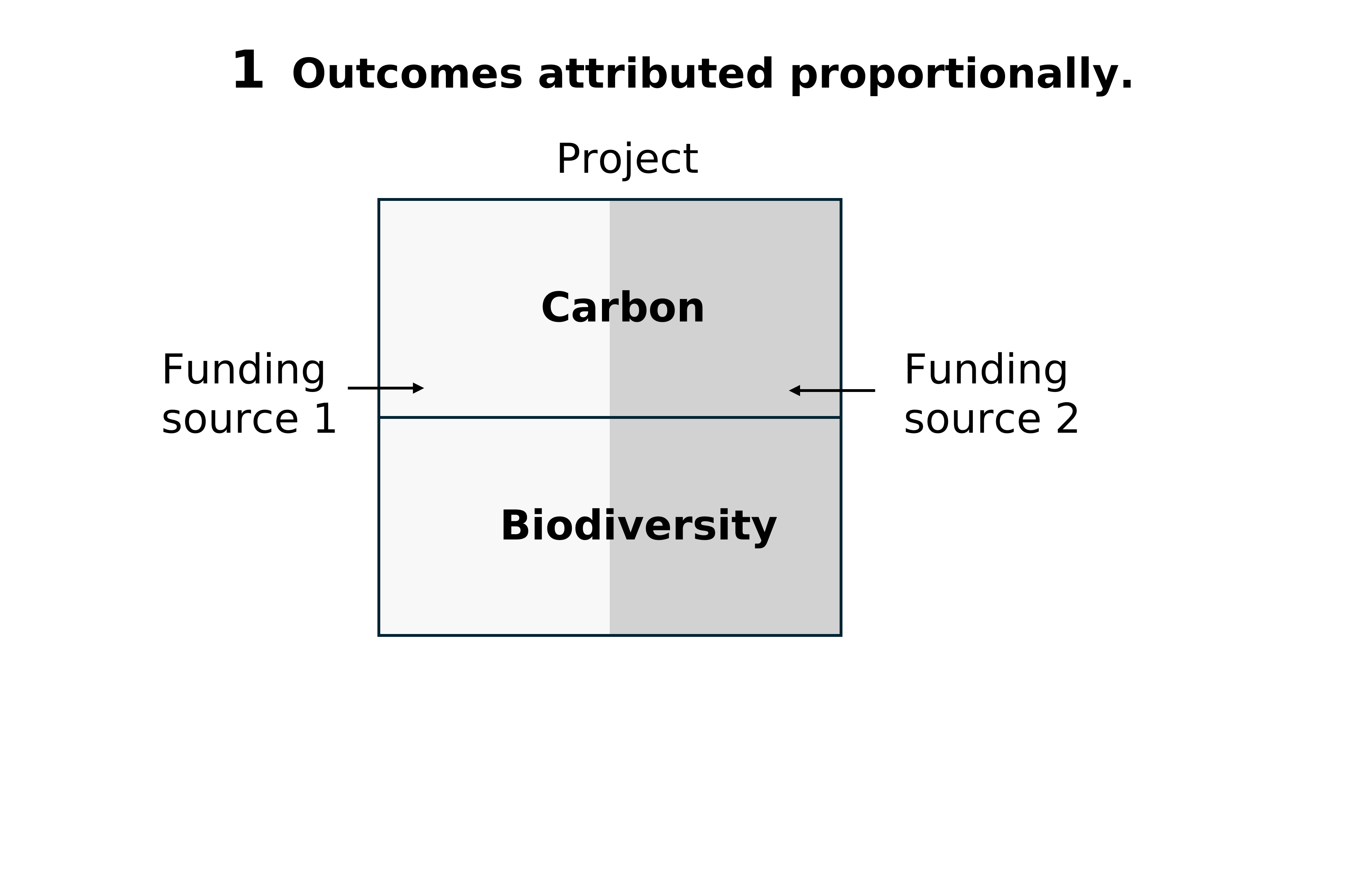
Figure 1: Example of proportional attribution for a project with carbon removal and biodiversity improvement outcomes. Half of each outcome is attributed to funding source 1. The other half is attributed to funding source 2.
2. Temporal attribution
Outcomes are attributed to different funding sources at different points in time. For example, outcomes are initially attributed to return-seeking finance which pays for the project at the start. Later, at a clearly defined point in time, outcomes are attributed to buyers, and the finance is repaid.
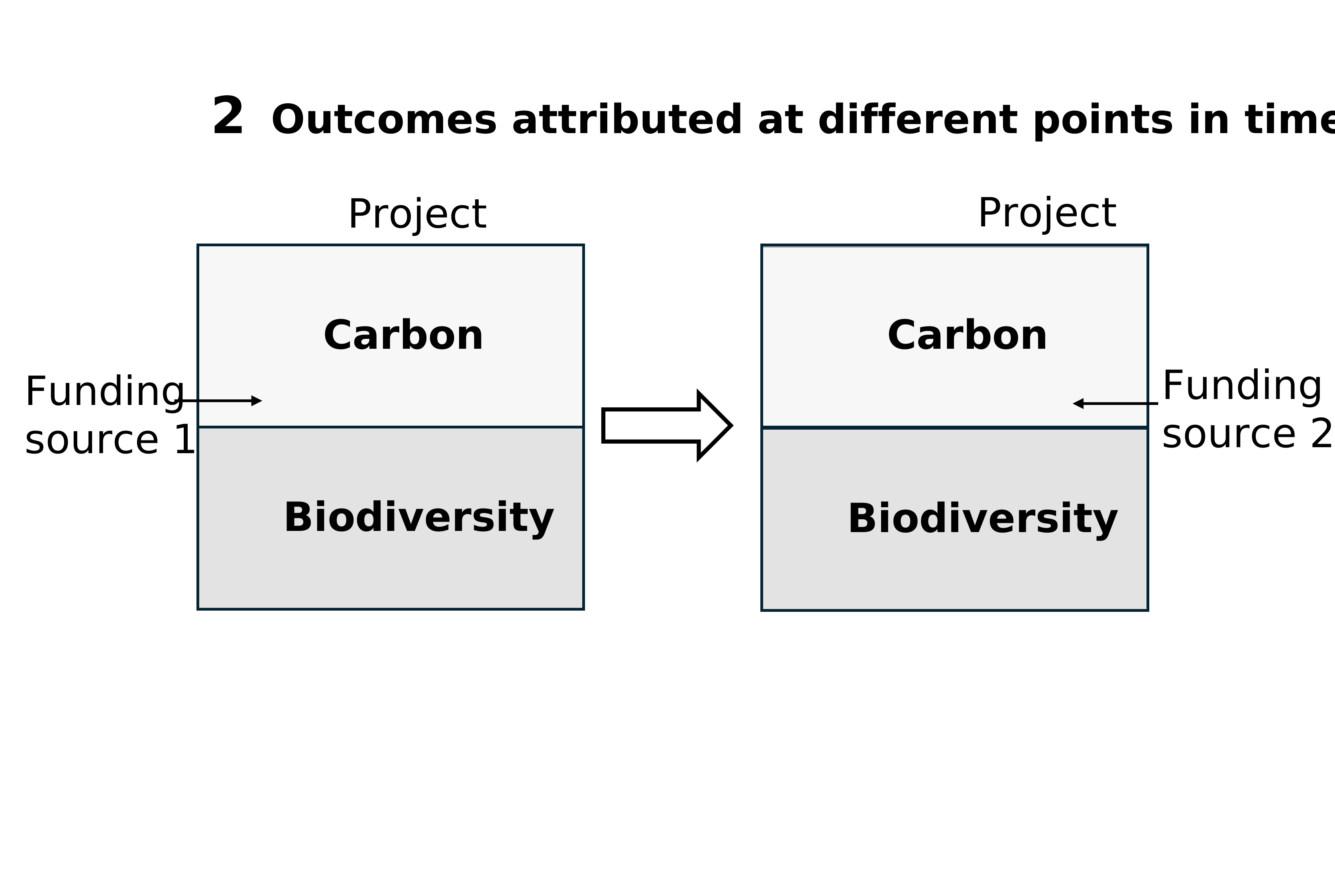
Figure 2: Example of temporal attribution for a project with carbon removal and biodiversity improvement outcomes. Both outcomes are initially attributed to funding source 1. Later, the outcomes are attributed to funding source 2.
3. Activity attribution
Funding sources are attributed to separate actions that can take place alongside each other and can create the same or different outcomes. Sometimes called ‘activity stacking’ or ‘re-baselining’.
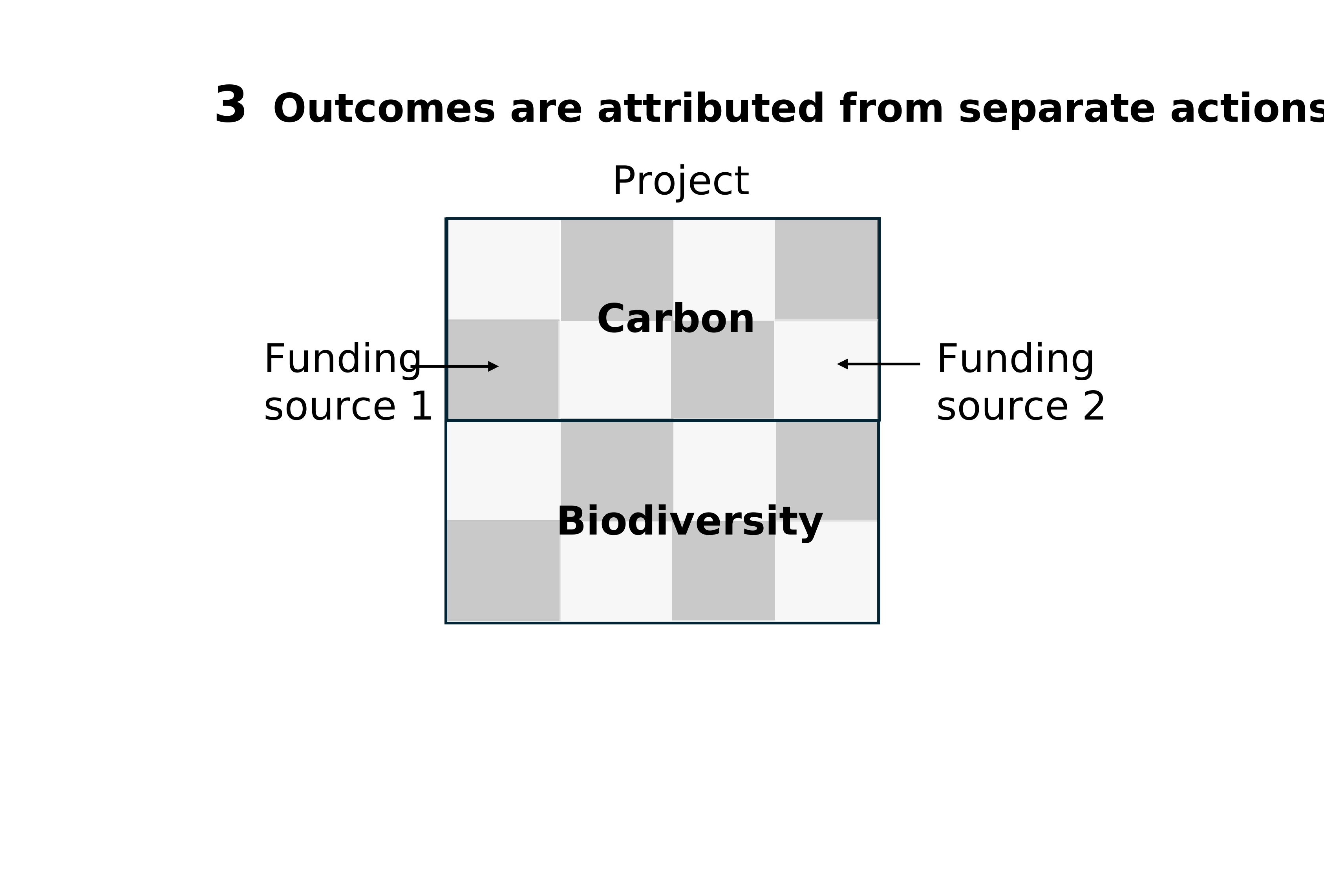
Figure 3: Example of activity attribution for a project with carbon removal and biodiversity improvement outcomes. Some activities within each outcome are attributed to funding source 1. Other activities are attributed to funding source 2.
4. Outcome attribution
Separate outcomes are attributed to separate funding sources. For example, one funding source pays for a carbon removal outcome, while another pays for a biodiversity improvement outcome.
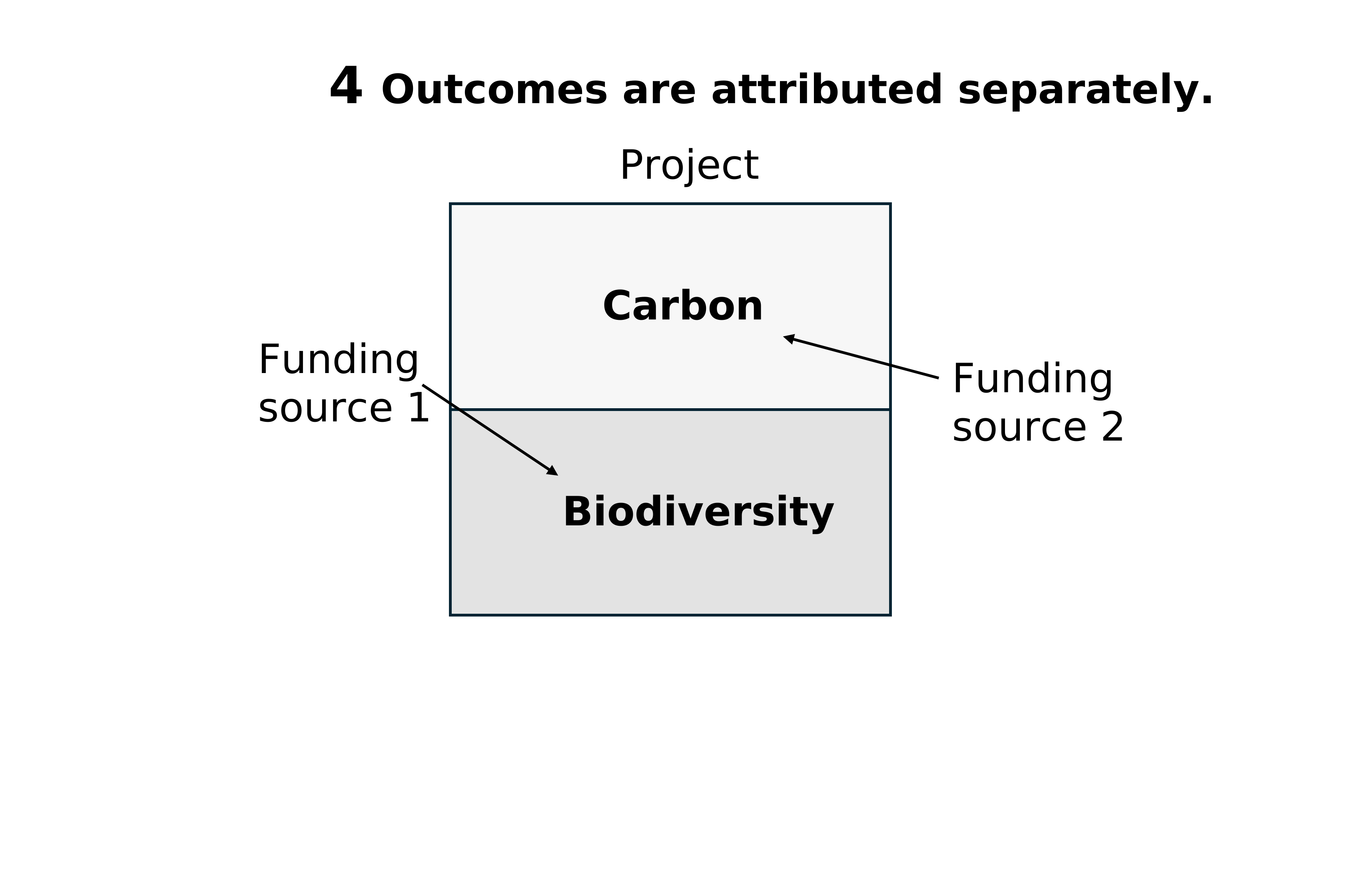
Figure 4: Example of outcome attribution for a project with carbon removal and biodiversity improvement outcomes. The biodiversity improvement outcome is attributed to funding source 1. The carbon removal outcome is attributed to funding source 2.
Principle 2: Buyers should not be penalised for taking responsibility for more than one environmental impact
Restricting the ability of buyers to finance more than one outcome from the same project can increase overall costs, create unnecessary complexity and discourage investment in environmental improvement.
We will create a system that incentivises ambitious action by business and does not unnecessarily inflate the costs of compliance with regulation or high-integrity standards for voluntary action. Where a business is taking action to address multiple environmental impacts, it should be able to explicitly pay for, and claim, the environmental outcomes of the projects it funds.
For example, a business may want to compensate for the residual greenhouse gas emissions of its operations, as well as any residual biodiversity impacts. It should be able to buy high-integrity, verified carbon and biodiversity outcomes from the same project.
This principle is not intended to replace a land manager’s choice of which outcomes to sell and to which buyers. It is simply intended to enable land managers to contract with buyers for the sale of more than one outcome if both parties choose. Rules around combining payments should not prevent them from doing so.
Principle 3: Maintain environmental integrity where outcomes are used for compensation
Particular care is needed where environmental outcomes are being used to compensate for environmental impacts elsewhere. In such circumstances, it is important to avoid situations where differences in environmental accounting by buyers create gaps in the way environmental impacts are accounted for.
This principle would shape how environmental outcomes used for compensation should be attributed and claimed. Government recognises that this raises questions of practicality and potential impacts on the market, and that stakeholders hold different views.
Environmental outcomes may be used to compensate for environmental harm elsewhere. In these cases, the government believes nature markets should avoid situations where different buyers rely on different outcomes from the same project to compensate for separate impacts in a way that undermines overall environmental integrity.
Where a buyer is compensating for one of their residual impacts on nature but has not accounted for other impacts, the other outcomes should be retired, and the price of the single, desired outcome adjusted accordingly. An exception may be appropriate where the buyer can demonstrate that they have no residual impact in relation to the other outcomes generated by the project and therefore have no need to use those outcomes for compensation.
This approach helps ensure that compensation efforts made by different buyers do not collectively leave gaps in the way net environmental impacts are accounted for, while still allowing flexibility where impacts have already been addressed through other means.
For example, a business with quantified residual greenhouse gas emissions may choose to compensate for those emissions by purchasing a nature-based carbon credit from a project that also generates biodiversity improvements. Under this principle, the biodiversity outcomes associated with that project would normally remain linked to the carbon credit, rather than being used by another buyer to support a separate compensation claim for biodiversity. In contrast, a business that can demonstrate it has no residual biodiversity impacts, or has otherwise compensated for these elsewhere, may purchase only the carbon outcome. Similarly, a business with residual biodiversity impacts but no residual greenhouse gas emissions may purchase only the biodiversity outcome.
This principle is not intended to limit the revenue that suppliers can receive. A supplier that has quantified outcomes under the relevant schemes and attributed them clearly to each source of funding, in line with principle 1, has met their responsibilities. Whether a buyer should buy only a single outcome or should buy all of them is a matter for the buyer and market infrastructure operators.
Payments that do not claim environmental outcomes
Some payments are provided without any claim over the specific environmental outcomes that result. Examples may include certain forms of public funding or philanthropy.
In these circumstances, the funding is helping to support environmental improvement but is not itself relying on the resulting outcomes for a specific purpose.
Government recognises that these forms of funding can play an important role in supporting the transition to a more sustainable economy. Where funding is provided without any claim over the outcomes, the principles for combining payments do not apply.
The government also expects that philanthropic donors will generally want to ensure additionality and best value from their donations, even where they are not seeking ownership or making claims about any specific outcomes.
What these principles would mean for existing schemes
The publication of these draft principles does not change any existing policies or schemes. The government is considering adopting these principles in future policy development. The principles describe the logic the government would expect to apply were we to design new mechanisms or revise existing ones.
If the government applies these principles when designing a new scheme or revising an existing one, the government would make appropriate transitional arrangements for outcomes delivered, contracted or sold under the rules in force at the time. The principles would not be applied retrospectively and would not be applied in a way that undermines investments or management decisions that were made in line with existing arrangements.