
Malpractice in vocational and technical qualifications: 2024 to 2025 academic year
Published 5 May 2026
Applies to England

© Crown copyright 2026
This publication is licensed under the terms of the Open Government Licence v3.0 except where otherwise stated. To view this licence, visit nationalarchives.gov.uk/doc/open-government-licence/version/3 or write to the Information Policy Team, The National Archives, Kew, London TW9 4DU, or email: psi@nationalarchives.gov.uk.
Where we have identified any third party copyright information you will need to obtain permission from the copyright holders concerned.
This publication is available at https://www.gov.uk/government/publications/malpractice-in-vocational-and-technical-qualifications-2024-to-2025-academic-year/malpractice-in-vocational-and-technical-qualifications-2024-to-2025-academic-year
Malpractice in vocational and technical qualifications
This release presents figures on proven cases of malpractice associated with selected vocational and technical qualifications (VTQs). Throughout the report only proven cases of malpractice are included, defined as where at least one penalty had been issued. Therefore, the data reported in this release may not reflect the full extent of malpractice as some malpractice instances may not have been discovered or may have been investigated but did not result in a penalty, for example if there was not enough evidence to substantiate the allegation.
The types of qualifications included in this release are: qualifications included in the Department for Education’s (DfE) performance tables (hereafter referred to as ‘PTQs’), other general qualifications not included in performance tables (hereafter referred to as ’other general qualifications (excluding PTQs)’), and Functional Skills qualifications. These types of qualifications are included because they are considered higher-stakes qualifications and we have collected data on them for several years. For PTQs, the figures for each year relate only to the qualifications that were on the performance table lists for that year, noting that individual qualifications can come into, and move out of, these lists over time.
In this release, ‘centre staff’ refers to teachers, trainers, other staff or volunteers involved in delivering a course of study. Likewise, ‘centres’ refers to schools, colleges and other training providers that undertake the delivery of assessment, training, or other related activities to students on behalf of an awarding organisation. ‘Examiner’ refers to assessors of any kind who are not centre staff.
Cases are only included for students in centres in England only, as well as examiners, centres and their respective staff members in England only, for the 2024 to 2025 academic year. Data from previous years is also provided for comparative purposes.
Malpractice cases that are not specific to a particular qualification or assessment and where the qualification number was unknown, are also excluded from this release. This can happen, for example, when a student was not yet certificating, or because the malpractice was not specific to a single qualification, but rather to multiple qualifications. It can also happen when a staff member or a centre as a whole committed malpractice not specific to a particular assessment or qualification. These cases are not included in this release as we cannot attribute them to a particular type of qualification.
These figures are correct at the time of publication, however not all investigations into cases of malpractice may be concluded by the time the data was collected. In 2024 to 2025, there were 65 malpractice cases which were ongoing at the time of the data cutoff date (11 November 2025).
Figures for the number of cases that resulted in at least one penalty (which are presented throughout this release) are not the same as the number of penalties issued. This is because it is not always possible to determine in our source data the number of penalties issued for each case. For further information, see the contextual information section.
A single malpractice case may involve an individual student, centre staff member, examiner, or whole centre, but may also involve multiple individuals from either within or across these groups. When determining whether multiple individuals were involved in a single malpractice case, awarding organisations may need to exercise their judgement based on the evidence provided. A single case may also span one or more qualifications, types of qualifications, assessments and can involve multiple types of malpractice. Therefore, the total number of malpractice cases should not be calculated by summing the values provided throughout the report; see the first point in the key headlines section below. For further information, see the contextual information section.
To ensure confidentiality, the data in this report has been rounded in line with our rounding policy for statistical publications. Further information on this release is available in the contextual information and data tables accompanying this report. For malpractice in general qualifications see our separate reports for malpractice in GCSEs, AS and A levels
Key Headlines
The key headlines for proven cases of malpractice for which a penalty was issued in selected vocational and technical qualifications for the 2024 to 2025 academic year were as follows.
- In 2024 to 2025, for PTQs, there were 1,195 student malpractice cases, a decrease compared with 1,220 cases in 2023 to 2024. For context, this is small in relation to the 719,830 certificates issued for PTQs in England in 2024 to 2025. For Functional Skills qualifications, there were 1,385 malpractice cases in 2024 to 2025, an increase compared with 1,125 malpractice cases in 2023 to 2024. For context, this is small in relation to the 326,060 certificates issued for Functional Skills qualifications in England in 2024 to 2025. For other general qualifications (excluding PTQs), there were 10 cases in 2024 to 2025, which was a decrease compared with 30 cases in 2023 to 2024. For context, this is small in relation to the 174,745 certificates issued for other general qualifications (excluding PTQs) in England in 2024 to 2025.
- In 2024 to 2025, the most common type of student malpractice reported for PTQs was ‘mobile phones or other communication devices’, the same as in 2023 to 2024. This category accounted for 34.9% of student malpractice in PTQs (420 cases in 2024 to 2025, a decrease compared with 445 cases in 2023 to 2024). For Functional Skills qualifications, the most common type of student malpractice reported was ‘breach of examination rules and regulations’. This category accounted for 35.6% of student malpractice in Functional Skills (495 cases in 2024 to 2025, a decrease compared with 595 cases in 2023 to 2024). For other general qualifications (excluding PTQs), the most common type of student malpractice was ‘plagiarism’, accounting for 66.7% of student malpractice (10 cases in 2024 to 2025, the same as in 2023 to 2024).
- In 2024 to 2025, for PTQs, there were 180 staff malpractice cases, a decrease compared with 280 cases in 2023 to 2024. For Functional Skills qualifications, there were 50 staff malpractice cases in 2024 to 2025, an increase compared with 45 malpractice cases in 2023 to 2024. For other general qualifications (excluding PTQs), there were 10 staff malpractice cases in 2024 to 2025, a decrease compared with 45 cases in 2023 to 2024.
- In 2024 to 2025, for PTQs, there were 130 centre malpractice cases. This is a decrease compared with 155 centre malpractice cases in 2023 to 2024. For Functional Skills qualifications, there were 45 centre malpractice cases in 2024 to 2025. This is an increase compared with 30 centre malpractice cases in 2023 to 2024. For other general qualifications (excluding PTQs), there were 25 centre malpractice cases in 2024 to 2025. This is an increase compared with 20 centre malpractice cases in 2023 to 2024.
- In 2024 to 2025, there were fewer than 5 examiner malpractice cases across all types of qualifications included in this release.
Provide your feedback
We welcome your feedback on our publications. If you have any comments on this statistical release, or how to improve it to meet your needs, please complete our short survey or data.analytics@ofqual.gov.uk.
Student malpractice
Awarding organisations may impose sanctions and penalties on students found to have committed malpractice and the penalties for student malpractice vary depending on the type of offence. An individual student can potentially be involved in multiple cases of malpractice and be penalised by more than one awarding organisation if they commit malpractice offences when sitting more than one assessment. A student may also receive one penalty for multiple offences, or multiple penalties for a single offence. Similarly, a single malpractice case may involve more than one student.
Number of student malpractice cases
In 2024 to 2025, for PTQs, there were 1,195 student malpractice cases, a decrease compared with 1,220 cases in 2023 to 2024. For context, this is small in relation to the 719,830 certificates issued for PTQs in England in 2024 to 2025.
For Functional Skills qualifications, there were 1,385 student malpractice cases in 2024 to 2025, an increase compared with 1,125 student malpractice cases in 2023 to 2024. For context, this is small in relation to the 326,060 certificates issued for Functional Skills qualifications in England in 2024 to 2025.
For other general qualifications (excluding PTQs), there were 10 student malpractice cases in 2024 to 2025, which is a decrease compared with 30 student malpractice cases in 2023 to 2024. For context, this is small in relation to the 174,745 certificates issued for other general qualifications (excluding PTQs) in England in 2024 to 2025.
The number of student malpractice cases increased in 2024 to 2025 compared with 2023 to 2024 in Functional Skills qualifications but decreased in PTQs and other general qualifications
Figure 1: Number of student malpractice cases by type of qualification, 2022 to 2025
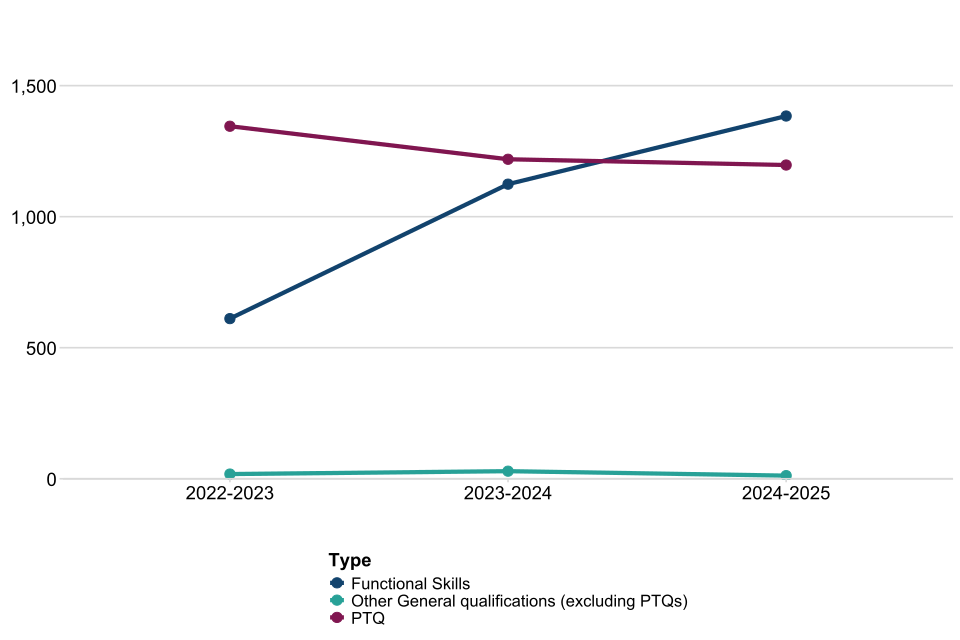
Table 1: Number of student malpractice cases by type of qualification, 2022 to 2025
| Type of qualification | Number of cases in 2022-2023 | Number of cases in 2023-2024 | Number of cases in 2024-2025 |
|---|---|---|---|
| Functional Skills | 610 | 1,125 | 1,385 |
| Other general qualifications (excluding PTQs) | 20 | 30 | 10 |
| PTQ | 1,345 | 1,220 | 1,195 |
Types of student malpractice (proportion of cases per offence type)
In 2024 to 2025, the most common type of student malpractice reported for PTQs was ‘mobile phones or other communication devices’, the same as in 2023 to 2024. This category accounted for 34.9% of student malpractice in PTQs (420 cases in 2024 to 2025, a decrease compared with 445 cases in 2023 to 2024).
For Functional Skills, the most common type of student malpractice reported was ‘breach of examination rules and regulations’. This category accounted for 35.6% of student malpractice in Functional Skills (495 cases in 2024 to 2025, a decrease compared with 595 cases in 2023 to 2024).
For other general qualifications (excluding PTQs), the most common type of student malpractice was ‘plagiarism’, accounting for 66.7% of student malpractice (10 cases in 2024 to 2025, the same as in 2023 to 2024).
Note that these figures include cases where multiple offence types took place. They therefore differ from the values reported in the chart and table below, where cases involving multiple malpractice types are categorised separately.
‘Mobile phones or other communication devices’ was the most common type of student malpractice in PTQs, ‘breach of examination rules and regulations’ in Functional Skills and ‘plagiarism’ in other general qualifications in 2024 to 2025
Figure 2: Percentage of student malpractice cases by type of offence and type of qualification, 2022 to 2025
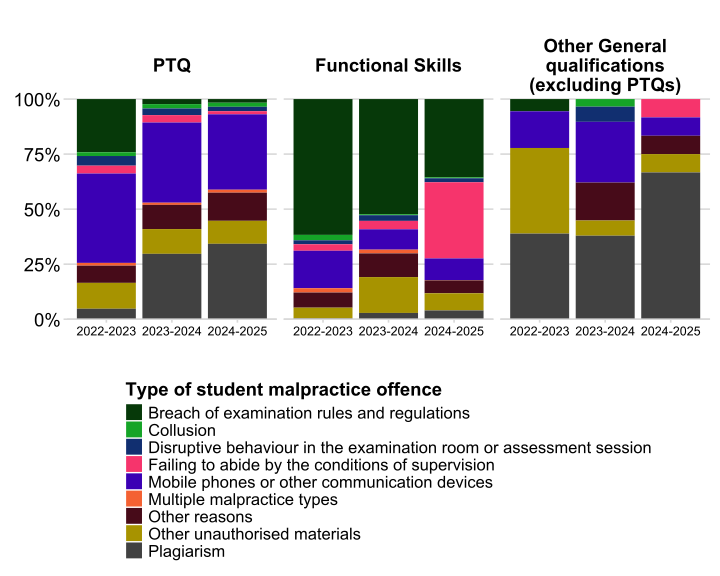
Table 2: Percentage of student malpractice cases by type of offence and type of qualification, 2022 to 2025
| Type of qualification | Type of student malpractice offence | Percentage of cases in 2022-2023 | Percentage of cases in 2023-2024 | Percentage of cases in 2024-2025 |
|---|---|---|---|---|
| Functional Skills | Breach of examination rules and regulations | 61.7% | 52.3% | 35.5% |
| Functional Skills | Collusion | 2.5% | 0.4% | 0.4% |
| Functional Skills | Disruptive behaviour in the examination room or assessment session | 1.8% | 2.6% | 1.8% |
| Functional Skills | Failing to abide by the conditions of supervision | 2.9% | 3.8% | 34.6% |
| Functional Skills | Mobile phones or other communication devices | 17.0% | 9.3% | 9.8% |
| Functional Skills | Multiple malpractice types | 2.0% | 1.7% | 0.1% |
| Functional Skills | Other reasons | 6.9% | 10.8% | 5.9% |
| Functional Skills | Other unauthorised materials | 4.9% | 16.3% | 7.8% |
| Functional Skills | Plagiarism | 0.3% | 2.8% | 4.0% |
| Other general qualifications (excluding PTQs) | Breach of examination rules and regulations | 5.6% | 0.0% | 0.0% |
| Other general qualifications (excluding PTQs) | Collusion | 0.0% | 3.4% | 0.0% |
| Other general qualifications (excluding PTQs) | Disruptive behaviour in the examination room or assessment session | 0.0% | 6.9% | 0.0% |
| Other general qualifications (excluding PTQs) | Failing to abide by the conditions of supervision | 0.0% | 0.0% | 8.3% |
| Other general qualifications (excluding PTQs) | Mobile phones or other communication devices | 16.7% | 27.6% | 8.3% |
| Other general qualifications (excluding PTQs) | Other reasons | 0.0% | 17.2% | 8.3% |
| Other general qualifications (excluding PTQs) | Other unauthorised materials | 38.9% | 6.9% | 8.3% |
| Other general qualifications (excluding PTQs) | Plagiarism | 38.9% | 37.9% | 66.7% |
| PTQ | Breach of examination rules and regulations | 24.2% | 2.3% | 1.7% |
| PTQ | Collusion | 1.7% | 2.0% | 1.8% |
| PTQ | Disruptive behaviour in the examination room or assessment session | 4.4% | 3.0% | 2.0% |
| PTQ | Failing to abide by the conditions of supervision | 3.6% | 3.4% | 1.4% |
| PTQ | Mobile phones or other communication devices | 40.6% | 36.4% | 34.3% |
| PTQ | Multiple malpractice types | 1.3% | 1.0% | 1.3% |
| PTQ | Other reasons | 7.8% | 11.0% | 12.8% |
| PTQ | Other unauthorised materials | 11.7% | 11.2% | 10.4% |
| PTQ | Plagiarism | 4.8% | 29.7% | 34.3% |
Note: Throughout this report, the ‘breach of examinations rules and regulations’ category may refer to a student not complying with instructions given by an invigilator, such as continuing to write after being told to stop. The ‘other unauthorised materials’ category includes non-smart watches, which were prohibited from being brought into the examination room from September 2021. The ‘other reasons’ category includes being in possession of confidential material in advance of the examination, copying from another candidate, misuse of or attempted misuse of examination material and resources, as well as other offences. The ‘plagiarism’ category includes plagiarism involving and not involving the misuse of artificial intelligence (AI).
Since May 2024, the reporting of plagiarism offences was split in our data for the first time into those involving the misuse of AI and those not involving the misuse of AI. Prior to May 2024, plagiarism including and excluding the misuse of AI were grouped together in a single category: “Plagiarism unacknowledged copying from published sources including the internet and incomplete referencing”.
In 2024 to 2025, for PTQs, plagiarism involving the misuse of AI accounted for 77.2% of all student plagiarism cases (320 cases) and 26.6% of all student malpractice cases.
For Functional Skills, plagiarism involving the misuse of AI accounted for 92.7% of all student plagiarism cases (50 cases) and 3.7% of all student malpractice cases.
For other general qualifications (excluding PTQs), plagiarism involving the misuse of AI accounted for 87.5% of all student plagiarism cases (5 cases) and 58.3% of all student malpractice cases.
Types of penalty issued to students (number of cases per penalty type)
In 2024 to 2025, the most common type of penalty issued to students in PTQs was ‘loss of marks’, accounting for 515 cases in 2024 to 2025 (42.1% of student malpractice cases in PTQs). This is a decrease from 525 cases in 2023 to 2024.
For Functional Skills, the most common type of penalty was ‘loss of aggregation or certification opportunity’, accounting for 735 cases in 2024 to 2025 (53.0% of student malpractice cases in Functional Skills). This is an increase from 590 cases in 2023 to 2024.
For other general qualifications (excluding PTQs), the most common type of penalty was ‘loss of marks’, accounting for 10 cases in 2024 to 2025 (66.7% of student malpractice cases in other general qualifications). This stayed the same as the number of cases in 2023 to 2024.
‘Loss of marks’ was the most common type of penalty issued to students in PTQs, while ‘Loss of aggregation or certification opportunity’ was the most common penalty for Functional Skills qualifications
Figure 3: Number of student malpractice cases leading to each type of penalty by type of qualification, 2022 to 2025
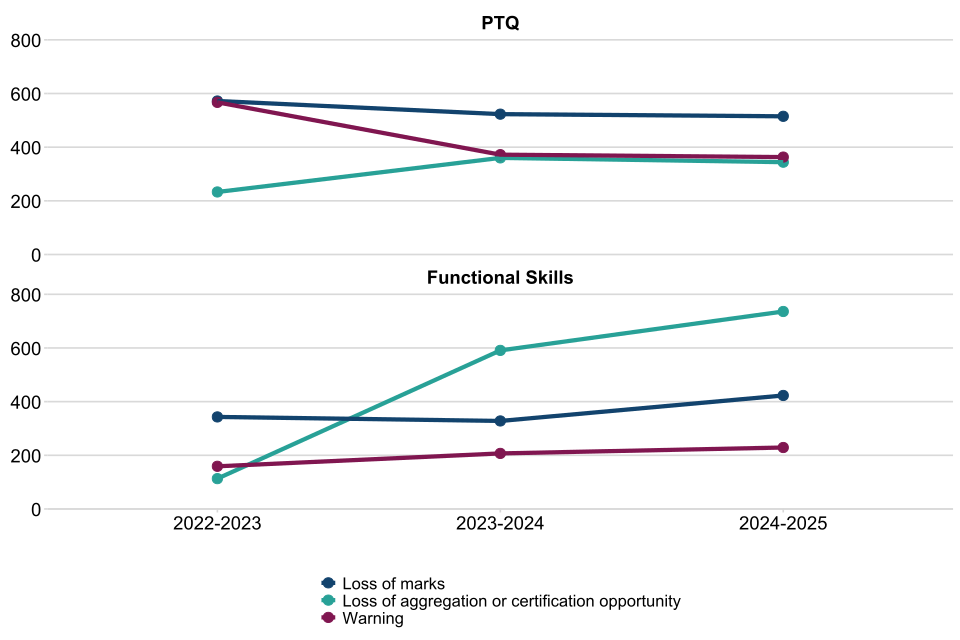
Note: Due to small numbers, other general qualifications (excluding PTQs) are not shown in Figure 3 above. Values can be found in Table 3 below.
Table 3: Number of student malpractice cases leading to each type of penalty by type of qualification, 2022 to 2025
| Type of qualification | Type of penalty | Number of cases in 2022-2023 | Number of cases in 2023-2024 | Number of cases in 2024-2025 |
|---|---|---|---|---|
| Functional Skills | Loss of aggregation or certification opportunity | 115 | 590 | 735 |
| Functional Skills | Loss of marks | 345 | 330 | 425 |
| Functional Skills | Warning | 160 | 205 | 230 |
| Other general qualifications (excluding PTQs) | Loss of aggregation or certification opportunity | Fewer than 5 | 5 | Fewer than 5 |
| Other general qualifications (excluding PTQs) | Loss of marks | 10 | 10 | 10 |
| Other general qualifications (excluding PTQs) | Warning | Fewer than 5 | 15 | Fewer than 5 |
| PTQ | Loss of aggregation or certification opportunity | 235 | 360 | 345 |
| PTQ | Loss of marks | 570 | 525 | 515 |
| PTQ | Warning | 565 | 370 | 365 |
Number of students per malpractice case
Individual students can be involved in multiple malpractice cases. Similarly, a single malpractice case can involve multiple students.
In 2024 to 2025, for PTQs, nearly all cases of student malpractice (92.2%) involved only one student, which is an increase compared with 2023 to 2024 (91.6%). The other cases involved more than one student.
For Functional Skills, 98.5% of cases involved only one student in 2024 to 2025, which is an increase compared with 97.1% in 2023 to 2024.
For other general qualifications (excluding PTQs), 100% of cases involved only one student in 2024 to 2025, which is an increase compared with 82.8% in 2023 to 2024.
In 2024 to 2025, for all types of qualification, nearly all cases involved only one student
Figure 4: Percentage of student malpractice cases, by number of students involved, 2022 to 2025
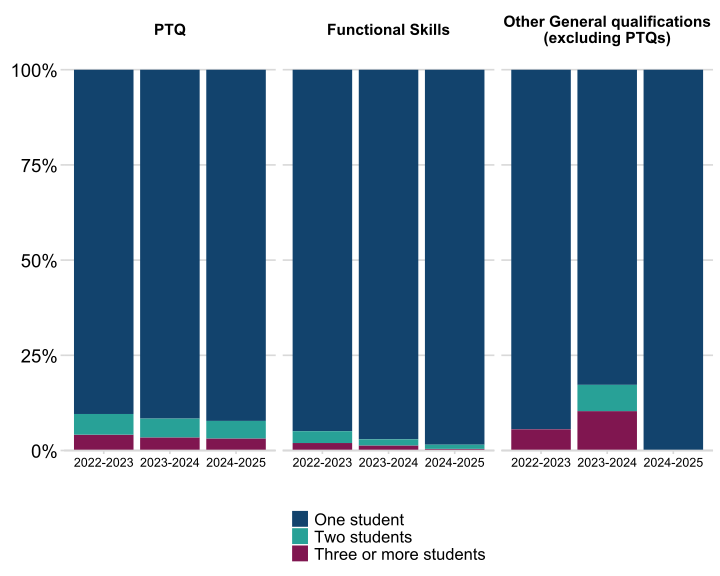
Table 4: Percentage of student malpractice cases, by number of students involved, 2022 to 2025
| Type of qualification | Number of students | Percentage of cases in 2022-2023 | Percentage of cases in 2023-2024 | Percentage of cases in 2024-2025 |
|---|---|---|---|---|
| PTQ | One student | 90.4% | 91.6% | 92.2% |
| PTQ | Two students | 5.4% | 4.9% | 4.6% |
| PTQ | Three or more students | 4.2% | 3.4% | 3.2% |
| Functional Skills | One student | 94.9% | 97.1% | 98.5% |
| Functional Skills | Two students | 3.1% | 1.6% | 1.1% |
| Functional Skills | Three or more students | 2.0% | 1.3% | 0.4% |
| Other general qualifications (excluding PTQs) | One student | 94.4% | 82.8% | 100.0% |
| Other general qualifications (excluding PTQs) | Two students | 0.0% | 6.9% | 0.0% |
| Other general qualifications (excluding PTQs) | Three or more students | 5.6% | 10.3% | 0.0% |
Note: This analysis includes only students with a known identifier, which is required to identify unique students within and across cases. Instances where the student identifier was not known (none in 2024 to 2025) are removed from the analysis.
Number of malpractice cases per student
Individual students can be involved in multiple malpractice cases. As unique identifiers for students are not always shared across awarding organisations, a breakdown of the number of malpractice cases per student cannot be provided.
Types of penalty issued to students, by type of malpractice
Penalties for cases of student malpractice vary depending on the type of offence. The categories presented here are broad and could cover a range of specific sanctions and transgressions. The precise penalty applied depends on the circumstances of the specific case.
The ‘multiple types of penalty’ category represents cases which resulted in more than one penalty type being applied. A full breakdown of penalty types, including those aggregated into the ‘multiple penalty’ category, for each student offence type is available in the data tables accompanying this report.
Charts and tables are only included in this section for offence and qualification type combinations that had 20 or more student malpractice cases in 2024 to 2025. If a type of qualification is not included in the chart or table, it is because that type of qualification had less than 20 malpractice cases for that offence in 2024 to 2025. Similarly, only penalty types that were issued for that type of offence in 2022 to 2025 are included in the charts and tables. If a penalty type was not issued in any year for the specified offence, it is not included.
Breach of examination rules and regulations
In 2024 to 2025, for PTQs, ‘warning’ and for Functional Skills, ‘loss of aggregation or certification opportunity’ was the most common type of penalty issued to students for breach of examination rules and regulations.
Figure 5: Percentage of student malpractice cases for breach of examination rules and regulations by type of penalty and type of qualification, 2022 to 2025
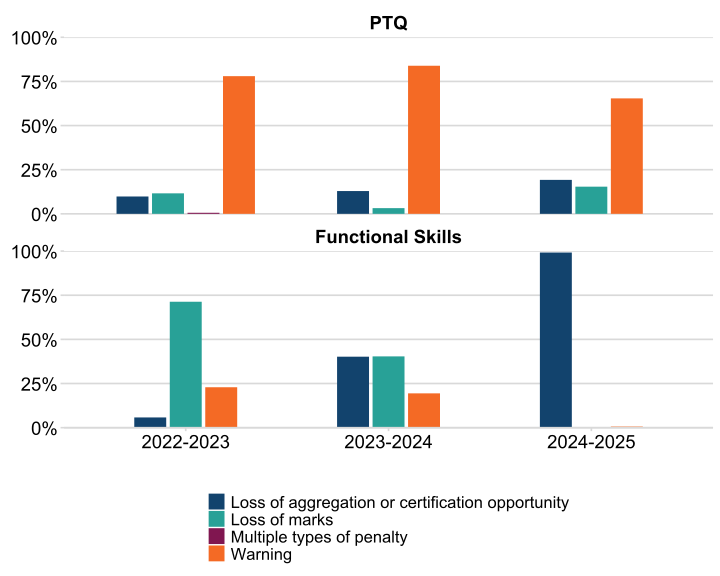
Table 5: Percentage of student malpractice cases for breach of examination rules and regulations by type of penalty and type of qualification, 2022 to 2025
| Type of qualification | Penalty type | Percentage of cases in 2022-2023 | Percentage of cases in 2023-2024 | Percentage of cases in 2024-2025 |
|---|---|---|---|---|
| Functional Skills | Loss of aggregation or certification opportunity | 5.8% | 40.2% | 99.2% |
| Functional Skills | Loss of marks | 71.3% | 40.4% | 0.2% |
| Functional Skills | Warning | 22.9% | 19.4% | 0.6% |
| PTQ | Loss of aggregation or certification opportunity | 9.8% | 12.9% | 19.2% |
| PTQ | Loss of marks | 11.6% | 3.2% | 15.4% |
| PTQ | Multiple types of penalty | 0.6% | 0.0% | 0.0% |
| PTQ | Warning | 78.0% | 83.9% | 65.4% |
Collusion
In 2024 to 2025, for PTQs, ‘loss of marks’ was the most common type of penalty issued to students for collusion.
Figure 6: Percentage of student malpractice cases for collusion by type of penalty and type of qualification, 2022 to 2025
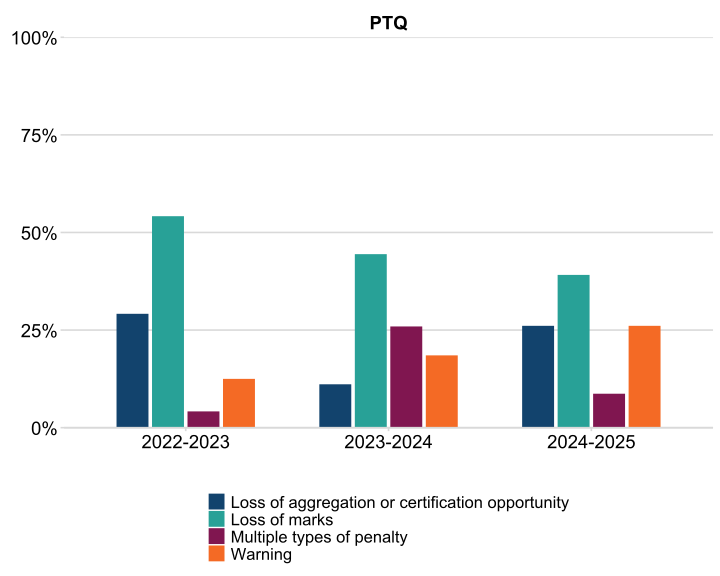
Table 6: Percentage of student malpractice cases for collusion by type of penalty and type of qualification, 2022 to 2025
| Type of qualification | Penalty type | Percentage of cases in 2022-2023 | Percentage of cases in 2023-2024 | Percentage of cases in 2024-2025 |
|---|---|---|---|---|
| PTQ | Loss of aggregation or certification opportunity | 29.2% | 11.1% | 26.1% |
| PTQ | Loss of marks | 54.2% | 44.4% | 39.1% |
| PTQ | Multiple types of penalty | 4.2% | 25.9% | 8.7% |
| PTQ | Warning | 12.5% | 18.5% | 26.1% |
Disruptive behaviour in the examination room or assessment session
In 2024 to 2025, for PTQs, ‘warning’ and for Functional Skills, ‘warning’ was the most common type of penalty issued to students for disruptive behaviour in the examination room or assessment session.
Figure 7: Percentage of student malpractice cases for disruptive behaviour in the examination room or assessment session by type of penalty and type of qualification, 2022 to 2025
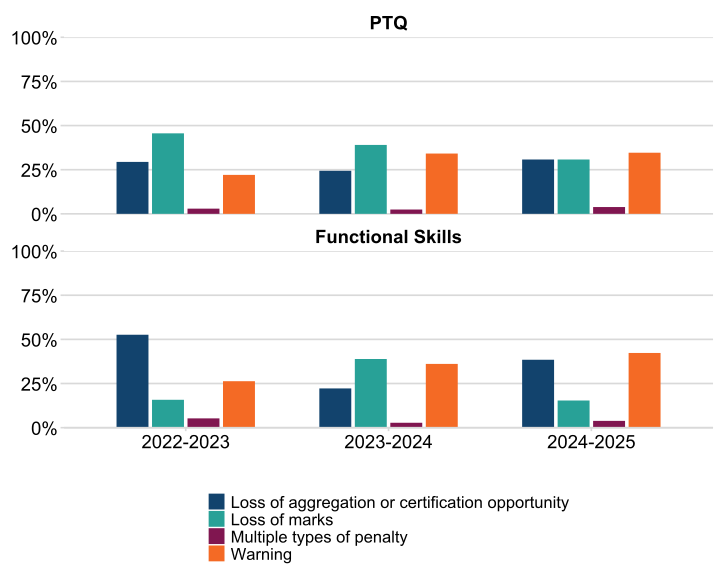
Table 7: Percentage of student malpractice cases for disruptive behaviour in the examination room or assessment session by type of penalty and type of qualification, 2022 to 2025
| Type of qualification | Penalty type | Percentage of cases in 2022-2023 | Percentage of cases in 2023-2024 | Percentage of cases in 2024-2025 |
|---|---|---|---|---|
| Functional Skills | Loss of aggregation or certification opportunity | 52.6% | 22.2% | 38.5% |
| Functional Skills | Loss of marks | 15.8% | 38.9% | 15.4% |
| Functional Skills | Multiple types of penalty | 5.3% | 2.8% | 3.8% |
| Functional Skills | Warning | 26.3% | 36.1% | 42.3% |
| PTQ | Loss of aggregation or certification opportunity | 29.4% | 24.4% | 30.8% |
| PTQ | Loss of marks | 45.6% | 39.0% | 30.8% |
| PTQ | Multiple types of penalty | 2.9% | 2.4% | 3.8% |
| PTQ | Warning | 22.1% | 34.1% | 34.6% |
Failing to abide by the conditions of supervision
In 2024 to 2025, for PTQs, ‘warning’ and for Functional Skills, ‘loss of marks’ was the most common type of penalty issued to students for failing to abide by the conditions of supervision.
Figure 8: Percentage of student malpractice cases for failing to abide by the conditions of supervision by type of penalty and type of qualification, 2022 to 2025
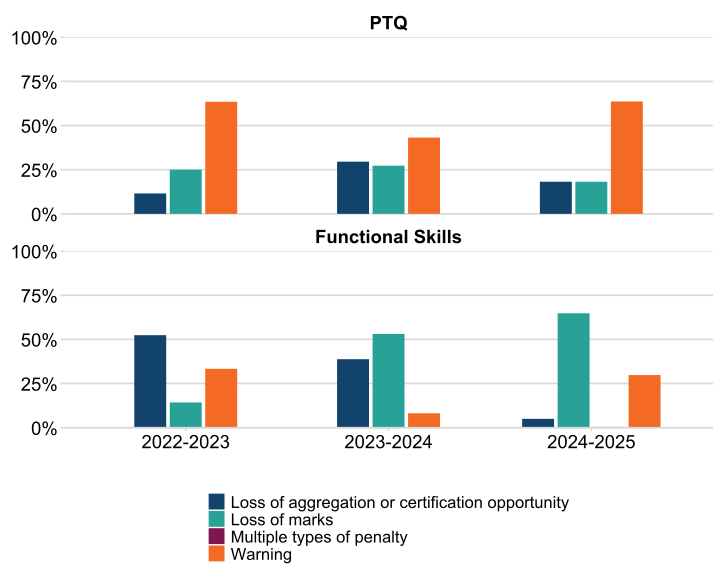
Table 8: Percentage of student malpractice cases for failing to abide by the conditions of supervision by type of penalty and type of qualification, 2022 to 2025
| Type of qualification | Penalty type | Percentage of cases in 2022-2023 | Percentage of cases in 2023-2024 | Percentage of cases in 2024-2025 |
|---|---|---|---|---|
| Functional Skills | Loss of aggregation or certification opportunity | 52.4% | 38.8% | 5.0% |
| Functional Skills | Loss of marks | 14.3% | 53.1% | 64.8% |
| Functional Skills | Multiple types of penalty | 0.0% | 0.0% | 0.4% |
| Functional Skills | Warning | 33.3% | 8.2% | 29.8% |
| PTQ | Loss of aggregation or certification opportunity | 11.5% | 29.5% | 18.2% |
| PTQ | Loss of marks | 25.0% | 27.3% | 18.2% |
| PTQ | Warning | 63.5% | 43.2% | 63.6% |
Mobile phones or other communication devices
In 2024 to 2025, for PTQs, ‘loss of marks’ and for Functional Skills, ‘loss of aggregation or certification opportunity’ was the most common type of penalty issued to students for mobile phones or other communication devices.
Figure 9: Percentage of student malpractice cases for mobile phones or other communication devices by type of penalty and type of qualification, 2022 to 2025
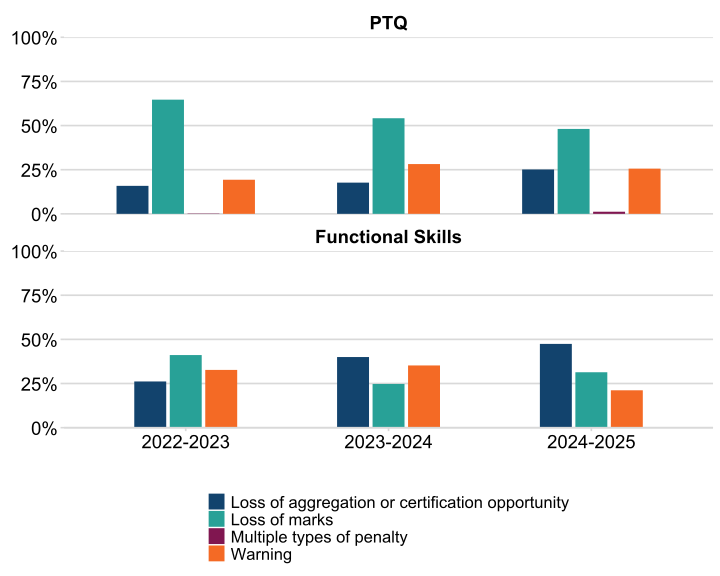
Table 9: Percentage of student malpractice cases for mobile phones or other communication devices by type of penalty and type of qualification, 2022 to 2025
| Type of qualification | Penalty type | Percentage of cases in 2022-2023 | Percentage of cases in 2023-2024 | Percentage of cases in 2024-2025 |
|---|---|---|---|---|
| Functional Skills | Loss of aggregation or certification opportunity | 26.2% | 40.0% | 47.4% |
| Functional Skills | Loss of marks | 41.1% | 24.8% | 31.4% |
| Functional Skills | Warning | 32.7% | 35.2% | 21.2% |
| PTQ | Loss of aggregation or certification opportunity | 15.8% | 17.7% | 25.1% |
| PTQ | Loss of marks | 64.7% | 54.1% | 48.1% |
| PTQ | Multiple types of penalty | 0.2% | 0.0% | 1.2% |
| PTQ | Warning | 19.3% | 28.2% | 25.6% |
Other unauthorised materials
In 2024 to 2025, for PTQs, ‘loss of marks’ and ‘warning’ and for Functional Skills, ‘loss of aggregation or certification opportunity’ were the most common type of penalty issued to students for other unauthorised materials.
Figure 10: Percentage of student malpractice cases for other unauthorised materials by type of penalty and type of qualification, 2022 to 2025
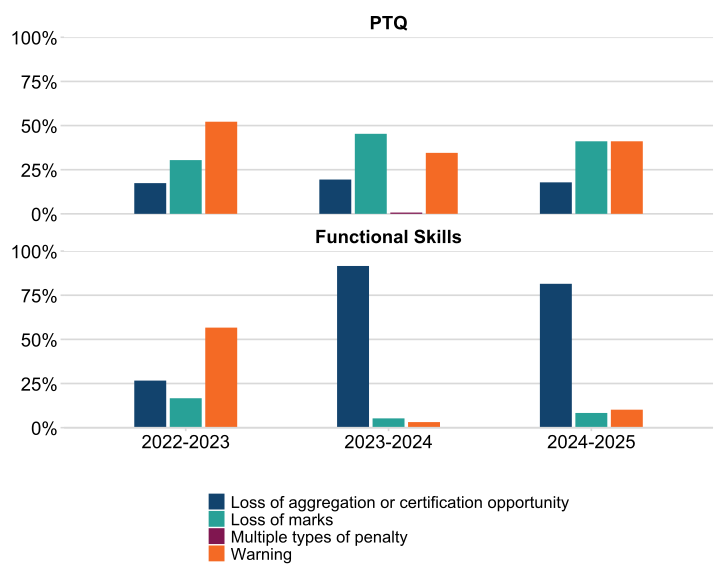
Table 10: Percentage of student malpractice cases for other unauthorised materials by type of penalty and type of qualification, 2022 to 2025
| Type of qualification | Penalty type | Percentage of cases in 2022-2023 | Percentage of cases in 2023-2024 | Percentage of cases in 2024-2025 |
|---|---|---|---|---|
| Functional Skills | Loss of aggregation or certification opportunity | 26.7% | 91.6% | 81.5% |
| Functional Skills | Loss of marks | 16.7% | 5.3% | 8.3% |
| Functional Skills | Warning | 56.7% | 3.2% | 10.2% |
| PTQ | Loss of aggregation or certification opportunity | 17.4% | 19.4% | 17.8% |
| PTQ | Loss of marks | 30.4% | 45.3% | 41.1% |
| PTQ | Multiple types of penalty | 0.0% | 0.7% | 0.0% |
| PTQ | Warning | 52.2% | 34.5% | 41.1% |
Plagiarism
In 2024 to 2025, for PTQs, ‘loss of marks’ and for Functional Skills, ‘loss of marks’ was the most common type of penalty issued to students for plagiarism.
Figure 11: Percentage of student malpractice cases for plagiarism by type of penalty and type of qualification, 2022 to 2025
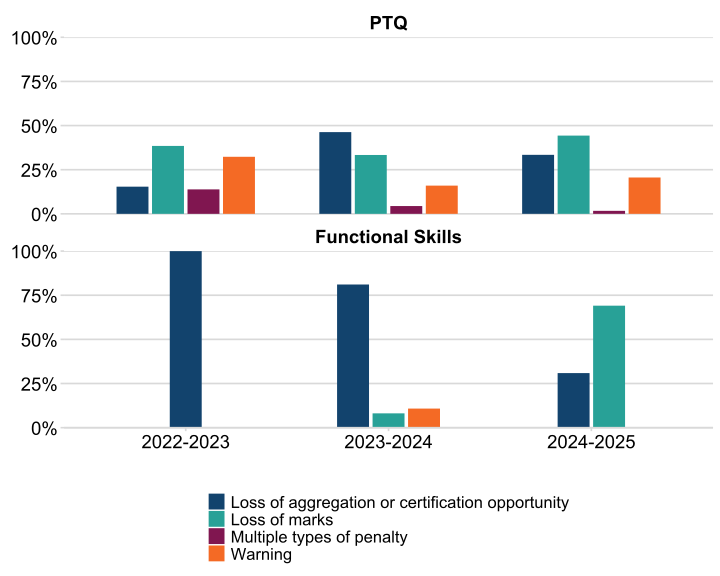
Table 11: Percentage of student malpractice cases for plagiarism by type of penalty and type of qualification, 2022 to 2025
| Type of qualification | Penalty type | Percentage of cases in 2022-2023 | Percentage of cases in 2023-2024 | Percentage of cases in 2024-2025 |
|---|---|---|---|---|
| Functional Skills | Loss of aggregation or certification opportunity | 100.0% | 81.1% | 30.9% |
| Functional Skills | Loss of marks | 0.0% | 8.1% | 69.1% |
| Functional Skills | Warning | 0.0% | 10.8% | 0.0% |
| PTQ | Loss of aggregation or certification opportunity | 15.4% | 46.3% | 33.4% |
| PTQ | Loss of marks | 38.5% | 33.3% | 44.3% |
| PTQ | Multiple types of penalty | 13.8% | 4.4% | 1.7% |
| PTQ | Warning | 32.3% | 16.0% | 20.6% |
Other reasons
In 2024 to 2025, for PTQs, ‘warning’ and for Functional Skills, ‘loss of aggregation or certification opportunity’ was the most common type of penalty issued to students for other reasons.
Figure 12: Percentage of student malpractice cases for other reasons by type of penalty and type of qualification, 2022 to 2025
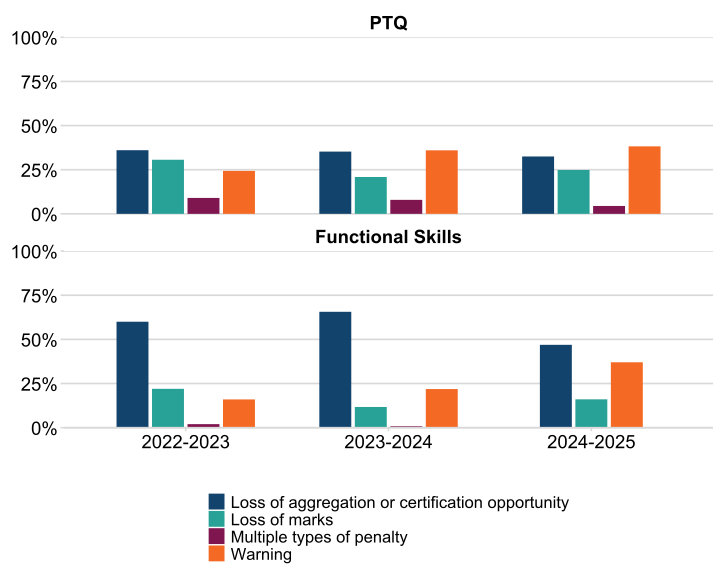
Table 12: Percentage of student malpractice cases for other reasons by type of penalty and type of qualification, 2022 to 2025
| Type of qualification | Penalty type | Percentage of cases in 2022-2023 | Percentage of cases in 2023-2024 | Percentage of cases in 2024-2025 |
|---|---|---|---|---|
| Functional Skills | Loss of aggregation or certification opportunity | 60.0% | 65.6% | 46.9% |
| Functional Skills | Loss of marks | 22.0% | 11.7% | 16.0% |
| Functional Skills | Multiple types of penalty | 2.0% | 0.8% | 0.0% |
| Functional Skills | Warning | 16.0% | 21.9% | 37.0% |
| PTQ | Loss of aggregation or certification opportunity | 36.0% | 35.3% | 32.5% |
| PTQ | Loss of marks | 30.6% | 20.9% | 24.8% |
| PTQ | Multiple types of penalty | 9.0% | 7.9% | 4.5% |
| PTQ | Warning | 24.3% | 36.0% | 38.2% |
Staff malpractice
Awarding organisations may impose penalties for malpractice committed by an individual member of staff at a centre, for example a teacher or an invigilator.
The term ‘malpractice’ here includes both ‘maladministration’, which generally constitutes mistakes or poor process where there has been no intention to do any harm, and ‘malpractice’ in its narrower sense, which generally involves some form of intent.
An individual member of staff can potentially be involved in multiple cases of malpractice, and a single malpractice case may involve more than one staff member. A staff member may also receive one penalty for multiple offences, or multiple penalties for a single offence.
Number of staff malpractice cases
In 2024 to 2025, for PTQs, there were 180 staff malpractice cases, this is a decrease compared with 280 staff malpractice cases in 2023 to 2024.
For Functional Skills qualifications, there were 50 staff malpractice cases in 2024 to 2025, an increase compared with 45 staff malpractice cases in 2023 to 2024.
For other general qualifications (excluding PTQs), there were 10 staff malpractice cases in 2024 to 2025, which is a decrease compared with 45 staff malpractice cases in 2023 to 2024.
The number of staff malpractice cases decreased in 2024 to 2025 for PTQs and other general qualifications but increased for Functional Skills qualifications in 2024 to 2025 compared with 2023 to 2024
Figure 13: Number of staff malpractice cases by type of qualification, 2022 to 2025
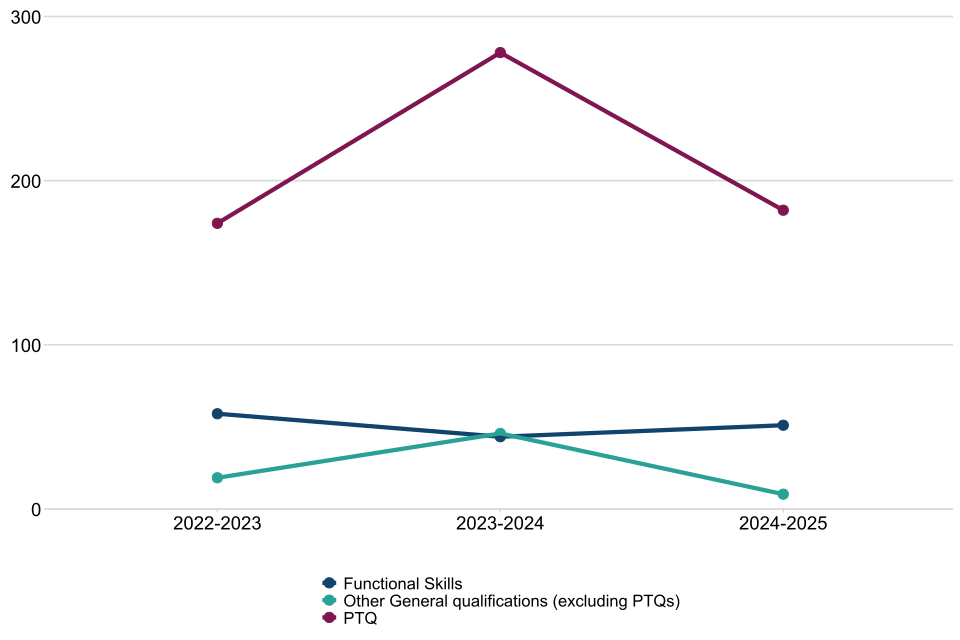
Table 13: Number of staff malpractice cases by type of qualification, 2022 to 2025
| Type of qualification | Number of cases in 2022-2023 | Number of cases in 2023-2024 | Number of cases in 2024-2025 |
|---|---|---|---|
| Functional Skills | 60 | 45 | 50 |
| Other general qualifications (excluding PTQs) | 20 | 45 | 10 |
| PTQ | 175 | 280 | 180 |
Types of staff malpractice
In 2024 to 2025, for PTQs, the most common type of staff malpractice was ‘maladministration’ with 120 cases (62.0% of staff malpractice cases). This is a decrease compared with 185 cases in 2023 to 2024.
‘Maladministration’ was also the most common type of staff malpractice for Functional Skills qualifications with 35 cases (72.5% of staff malpractice cases). This is a decrease compared with 40 cases in 2023 to 2024.
For other general qualifications (excluding PTQs), ‘maladministration’ was also the most common type of staff malpractice with 5 cases (77.8% of staff malpractice cases). This is a decrease compared with 15 cases in 2023 to 2024.
For detail on the other offences committed by centre staff see table 6 in the accompanying data tables.
Types of penalty issued to staff
In 2024 to 2025, the most common type of penalty issued to staff in PTQs was ‘written warning’, accounting for 125 cases in 2024 to 2025 (57.3% of staff malpractice cases in PTQs). This is a decrease from 205 cases in 2023 to 2024.
For Functional Skills, the most common type of penalty issued to staff was ‘written warning’, accounting for 35 cases in 2024 to 2025 (63.0% of staff malpractice cases in Functional Skills). This is an increase from 25 cases in 2023 to 2024.
For other general qualifications (excluding PTQs), the most common type of penalty issued to staff was ‘training’, accounting for 5 cases in 2024 to 2025 (50.0% of staff malpractice cases in other general qualifications). This is a decrease from 35 cases in 2023 to 2024.
For detail on the other penalties issued to staff members see table 7 in the data tables accompanying this report.
Number of staff members per malpractice case
For PTQs, 72.2% of staff malpractice cases involved one staff member, 20.6% involved 2 staff members, and 7.2% involved 3 or more staff members.
For Functional Skills, 84.0% of staff malpractice cases involved one staff member, 12.0% involved 2 staff members, and 4.0% involved 3 or more staff members.
In 2024 to 2025, for other general qualifications (excluding PTQs), 75.0% of staff malpractice cases involved one staff member, 12.5% involved 2 staff members, and 12.5% involved 3 or more staff members.
For all types of qualification, the majority of staff malpractice cases involved only one staff member.
Figure 14: Percentage of staff malpractice cases by number of staff members involved, 2022 to 2025
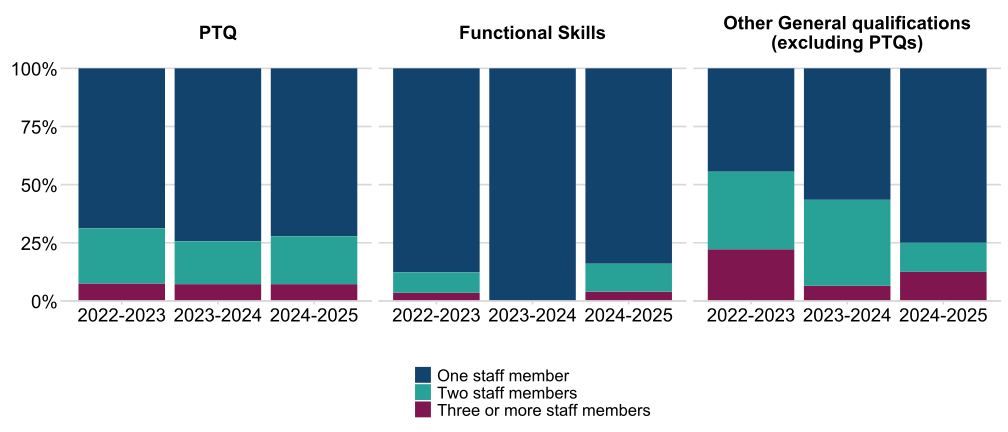
Table 14: Percentage of staff malpractice cases by number of staff members involved, 2022 to 2025
| Type of qualification | Number of staff members | Percentage of cases in 2022-2023 | Percentage of cases in 2023-2024 | Percentage of cases in 2024-2025 |
|---|---|---|---|---|
| PTQ | One staff member | 68.8% | 74.4% | 72.2% |
| PTQ | Two staff members | 23.7% | 18.4% | 20.6% |
| PTQ | Three or more staff members | 7.5% | 7.2% | 7.2% |
| Functional Skills | One staff member | 87.7% | 100.0% | 84.0% |
| Functional Skills | Two staff members | 8.8% | 0.0% | 12.0% |
| Functional Skills | Three or more staff members | 3.5% | 0.0% | 4.0% |
| Other general qualifications (excluding PTQs) | One staff member | 44.4% | 56.5% | 75.0% |
| Other general qualifications (excluding PTQs) | Two staff members | 33.3% | 37.0% | 12.5% |
| Other general qualifications (excluding PTQs) | Three or more staff members | 22.2% | 6.5% | 12.5% |
Note: This analysis includes only staff members with a known identifier, which is required to identify unique staff members within and across cases. Cases where the staff identifier was unknown (fewer than 5) have been excluded from the analysis.
Number of malpractice cases per member of staff
Individual members of school and college staff can be involved in multiple malpractice cases. As unique identifiers for staff members are not shared across awarding organisations, a breakdown of the number of malpractice cases per staff member cannot be provided.
Centre malpractice
‘Centres’ refers to schools, colleges and other training providers that undertake the delivery of assessment, training, or other related activities to students on behalf of an awarding organisation. Where there is evidence that malpractice is the result of a serious management failure, an awarding organisation may apply sanctions against a whole centre or whole department.
The term ‘malpractice’ here includes both ‘maladministration’, which generally constitutes mistakes or poor process where there has been no intention to do any harm, and ‘malpractice’ in its narrower sense, which generally involves some form of intent.
A single centre can potentially be involved in multiple cases of malpractice. A centre may also receive one penalty for multiple offences, or multiple penalties for a single offence.
Number of centre malpractice cases
In 2024 to 2025, for PTQs, there were 130 centre malpractice cases. This is a decrease compared with 155 centre malpractice cases in 2023 to 2024.
For Functional Skills qualifications, there were 45 centre malpractice cases in 2024 to 2025. This is an increase compared with 30 centre malpractice cases in 2023 to 2024.
For other general qualifications (excluding PTQs), there were 25 centre malpractice cases in 2024 to 2025. This is an increase compared with 20 centre malpractice cases in 2023 to 2024.
Cases of centre malpractice increased for other general qualifications and Functional Skills qualifications and decreased for PTQs in 2024 to 2025 compared with 2023 to 2024
Figure 15: Number of centre malpractice cases by type of qualification, 2022 to 2025
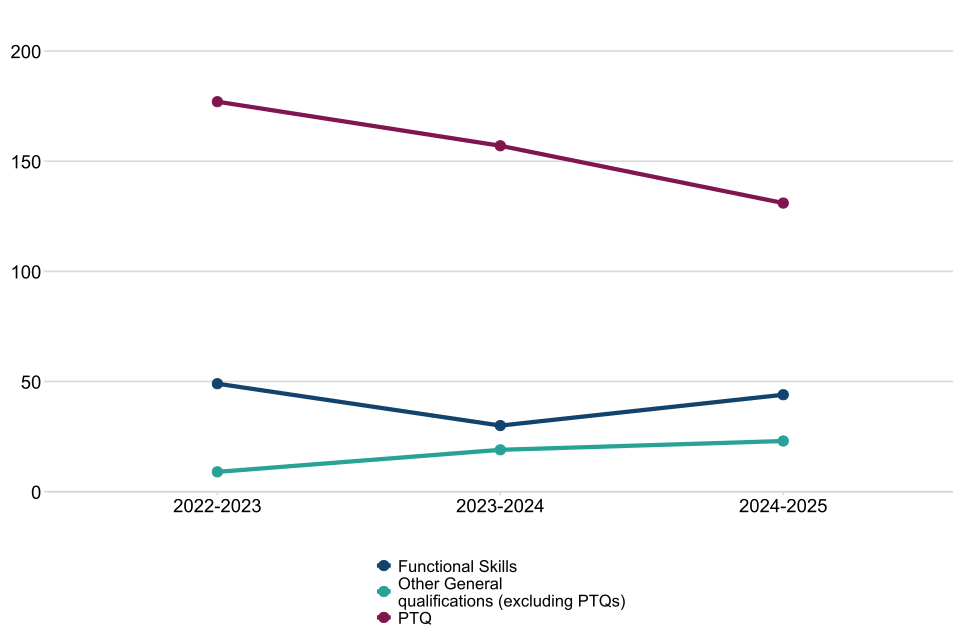
Table 15: Number of centre malpractice cases by type of qualification, 2022 to 2025
| Type of qualification | Number of cases in 2022-2023 | Number of cases in 2023-2024 | Number of cases in 2024-2025 |
|---|---|---|---|
| Functional Skills | 50 | 30 | 45 |
| Other general qualifications (excluding PTQs) | 10 | 20 | 25 |
| PTQ | 175 | 155 | 130 |
Types of centre malpractice
In 2024 to 2025, for PTQs, the most common type of Centre malpractice was ‘maladministration’ with 110 cases (83.5% of centre malpractice cases). This is a decrease compared with 130 cases in 2023 to 2024.
‘Maladministration’ was also the most common type of centre malpractice for Functional Skills qualifications with 30 cases (70.5% of centre malpractice cases). This is an increase compared with 20 cases in 2023 to 2024.
For other general qualifications (excluding PTQs), ‘maladministration’ was the most common type of centre malpractice with 20 cases (95.7% of centre malpractice cases). This is an increase compared with 15 cases in 2023 to 2024.
For detail on the other penalties issued to centres see table 8 in the data tables accompanying this report.
Types of penalty issued to centres
In 2024 to 2025, the most common type of penalty issued to centres in PTQs was ‘review and report’, accounting for 80 cases in 2024 to 2025 (60.4% of centre malpractice cases in PTQs). This is a decrease from 100 cases in 2023 to 2024.
For Functional Skills, the most common type of penalty issued to centres was ‘additional monitoring or inspection’, accounting for 25 cases in 2024 to 2025 (56.8% of centre malpractice cases in Functional Skills). This is an increase from 10 cases in 2023 to 2024.
For other general qualifications (excluding PTQs), the most common type of penalty issued to centres was ‘review and report’, accounting for 15 cases in 2024 to 2025 (69.6% of centre malpractice cases in other general qualifications). This stayed the same as the number of cases in 2023 to 2024.
For detail on the other penalties issued to centres see table 9 in the data tables accompanying this report.
Number of malpractice cases per centre
Individual centres can be involved in multiple malpractice cases. As unique identifiers for centres are not always shared across awarding organisations, a breakdown of the number of malpractice cases per centre cannot be provided.
Examiner malpractice
Examiner malpractice refers to malpractice committed by assessors of any kind who are not centre staff. In 2024 to 2025 there were fewer than 5 cases of examiner malpractice, the same as in 2023 to 2024 (fewer than 5 cases). Due to the small number of cases reported for examiner malpractice each year, further breakdowns are not reported.
Table 16: Number of examiner malpractice cases by type of qualification, 2022 to 2025
| Type of qualification | Number of cases in 2022-2023 | Number of cases in 2023-2024 | Number of cases in 2024-2025 |
|---|---|---|---|
| Functional Skills | 15 | Fewer than 5 | Fewer than 5 |
| Other general qualifications (excluding PTQs) | 0 | 0 | 0 |
| PTQ | 0 | 0 | 0 |
Note: We did not receive any examiner malpractice cases for PTQs and Other General qualifications (excluding PTQs) from 2022 to 2025.
Malpractice for different types of assessment delivery
Assessments in PTQs, Functional Skills and other general qualifications may vary in terms of their assessment type, method and schedule. Malpractice may occur in any form of assessment, and a single malpractice case may span more than one assessment. In this section, malpractice types have been grouped into 2 categories: ‘student’ and ‘staff, centre and examiner’ (which combines all non-student malpractice). For breakdowns relating to each specific type of non-student malpractice, see the underlying figures reported in tables 10, 11 and 12 in the data tables accompanying this report.
Assessment type
Assessment type refers to whether an assessment was internal (internally set or marked by centres) or external (externally set and marked by the awarding organisation).
Note that these figures only include cases where assessment type is reported. In 2024 to 2025, there were no student cases and 5 non-student cases where the assessment type was unknown (for example where a single malpractice incident spanned more than one assessment).
Student malpractice
In 2024 to 2025, for PTQs, external assessments accounted for 845 student cases (70.5%), a decrease compared with 875 student cases in 2023 to 2024. Internal assessments had 355 student cases (29.5%), an increase compared with 340 student cases in 2023 to 2024.
For Functional Skills in 2024 to 2025, external assessments accounted for 1,375 student cases (99.3%), an increase compared with 1,110 student cases in 2023 to 2024. Internal assessments had 10 student cases (0.7%), the same as 2023 to 2024.
For other general qualifications (excluding PTQs) in 2024 to 2025, external assessments accounted for 10 student cases (75.0%), a decrease compared with 20 student cases in 2023 to 2024. Internal assessments had fewer than 5 student cases (25.0%), a decrease compared with 10 student cases in 2023 to 2024.
Table 17a: Number of student malpractice cases per type of qualification, type of malpractice and assessment type, 2022 to 2025
| Academic year | Type of qualification | Student malpractice - external assessments | Student malpractice - internal assessments |
|---|---|---|---|
| 2022-2023 | Functional Skills | 605 | 10 |
| 2022-2023 | Other general qualifications (excluding PTQs) | 15 | Fewer than 5 |
| 2022-2023 | PTQ | 1,260 | 85 |
| 2023-2024 | Functional Skills | 1,110 | 10 |
| 2023-2024 | Other general qualifications (excluding PTQs) | 20 | 10 |
| 2023-2024 | PTQ | 875 | 340 |
| 2024-2025 | Functional Skills | 1,375 | 10 |
| 2024-2025 | Other general qualifications (excluding PTQs) | 10 | Fewer than 5 |
| 2024-2025 | PTQ | 845 | 355 |
Non-student malpractice
In 2024 to 2025, for PTQs, external assessments accounted for 115 non-student cases (43.6%), a decrease compared with 150 non-student cases in 2023 to 2024. Internal assessments had 150 non-student cases (56.4%), a decrease compared with 220 non-student cases in 2023 to 2024.
For Functional Skills in 2024 to 2025, external assessments accounted for 70 non-student cases (74.5%), an increase compared with 55 non-student cases in 2023 to 2024. Internal assessments had 25 non-student cases (25.5%), an increase compared with 15 non-student cases in 2023 to 2024.
For other general qualifications (excluding PTQs) in 2024 to 2025, external assessments accounted for no non-student cases, a decrease compared with fewer than 5 non-student cases in 2023 to 2024. Internal assessments had 25 non-student cases (100.0%), a decrease compared with 55 non-student cases in 2023 to 2024.
Table 17b: Number of student malpractice cases per type of qualification, type of malpractice and assessment type, 2022 to 2025
| Academic year | Type of qualification | Staff, centre and examiner malpractice - external assessments | Staff, centre and examiner malpractice - internal assessments |
|---|---|---|---|
| 2022-2023 | Functional Skills | 80 | 20 |
| 2022-2023 | Other general qualifications (excluding PTQs) | Fewer than 5 | 20 |
| 2022-2023 | PTQ | 185 | 105 |
| 2023-2024 | Functional Skills | 55 | 15 |
| 2023-2024 | Other general qualifications (excluding PTQs) | Fewer than 5 | 55 |
| 2023-2024 | PTQ | 150 | 220 |
| 2024-2025 | Functional Skills | 70 | 25 |
| 2024-2025 | Other general qualifications (excluding PTQs) | 0 | 25 |
| 2024-2025 | PTQ | 115 | 150 |
Assessment method
Assessment method refers to whether the assessment was an online exam, a paper-based exam or a performance task (any task that is not a written or online exam).
Note that this section only includes cases where assessment method is reported.
Student malpractice
In 2024 to 2025, for PTQs, paper-based exams accounted for 455 student cases (37.7%), a decrease compared with 525 student cases in 2023 to 2024. Online exams had 20 student cases (1.8%), a decrease compared with 30 student cases in 2023 to 2024. Performance tasks had 725 student cases (60.5%), an increase compared with 665 student cases in 2023 to 2024.
For Functional Skills in 2024 to 2025, paper-based exams accounted for 190 student cases (13.8%), an increase compared with 140 student cases in 2023 to 2024. Online exams had 1,190 student cases (86.1%), an increase compared with 980 student cases in 2023 to 2024. Performance tasks had fewer than 5 student cases (0.1%), the same as in 2023 to 2024.
For other general qualifications (excluding PTQs) in 2024 to 2025, paper-based exams accounted for fewer than 5 student cases (25.0%), a decrease compared with 15 student cases in 2023 to 2024. Online exams had no student cases, a decrease compared with fewer than 5 student cases in 2023 to 2024. Performance tasks had 10 student cases (75.0%), a decrease compared with 15 student cases in 2023 to 2024.
Table 18a: Number of student malpractice cases per type of qualification, type of malpractice and assessment method, 2022 to 2025
| Academic year | Type of qualification | Student malpractice - Online exam | Student malpractice - Paper-based exam | Student malpractice - Performance task |
|---|---|---|---|---|
| 2022-2023 | Functional Skills | 415 | 190 | Fewer than 5 |
| 2022-2023 | Other general qualifications (excluding PTQs) | Fewer than 5 | 10 | Fewer than 5 |
| 2022-2023 | PTQ | 280 | 575 | 480 |
| 2023-2024 | Functional Skills | 980 | 140 | Fewer than 5 |
| 2023-2024 | Other general qualifications (excluding PTQs) | Fewer than 5 | 15 | 15 |
| 2023-2024 | PTQ | 30 | 525 | 665 |
| 2024-2025 | Functional Skills | 1,190 | 190 | Fewer than 5 |
| 2024-2025 | Other general qualifications (excluding PTQs) | 0 | Fewer than 5 | 10 |
| 2024-2025 | PTQ | 20 | 455 | 725 |
Non-student malpractice
In 2024 to 2025, for PTQs, paper-based exams accounted for 45 non-student cases (16.9%), a decrease compared with 80 non-student cases in 2023 to 2024. Online exams had fewer than 5 non-student cases (1.1%), a decrease compared with 10 non-student cases in 2023 to 2024. Performance tasks had 220 non-student cases (82.0%), a decrease compared with 290 non-student cases in 2023 to 2024.
For Functional Skills in 2024 to 2025, paper-based exams accounted for 50 non-student cases (55.3%), an increase compared with 35 non-student cases in 2023 to 2024. Online exams had 25 non-student cases (28.7%), the same as in 2023 to 2024. Performance tasks had 15 non-student cases (16.0%), the same as in 2023 to 2024.
For other general qualifications (excluding PTQs) in 2024 to 2025, paper-based exams accounted for no non-student cases, a decrease compared with fewer than 5 non-student cases in 2023 to 2024. Online exams had no non-student cases, the same as in 2023 to 2024. Performance tasks had 25 non-student cases (100.0%), a decrease compared with 50 non-student cases in 2023 to 2024.
Table 18b: Number of non-student malpractice cases per type of qualification, type of malpractice and assessment method, 2022 to 2025
| Academic year | Type of qualification | Staff, centre and examiner malpractice - Online exam | Staff, centre and examiner malpractice - Paper-based exam | Staff, centre and examiner malpractice - Performance task |
|---|---|---|---|---|
| 2022-2023 | Functional Skills | 30 | 55 | 15 |
| 2022-2023 | Other general qualifications (excluding PTQs) | 0 | Fewer than 5 | 20 |
| 2022-2023 | PTQ | 40 | 70 | 175 |
| 2023-2024 | Functional Skills | 25 | 35 | 15 |
| 2023-2024 | Other general qualifications (excluding PTQs) | 0 | Fewer than 5 | 50 |
| 2023-2024 | PTQ | 10 | 80 | 290 |
| 2024-2025 | Functional Skills | 25 | 50 | 15 |
| 2024-2025 | Other general qualifications (excluding PTQs) | 0 | 0 | 25 |
| 2024-2025 | PTQ | Fewer than 5 | 45 | 220 |
Note that this only includes cases where assessment method is reported.
Assessment schedule
Assessment schedule is only included for external assessments and indicates whether the assessment was: timetabled (could only be taken on specified dates set by the awarding organisation), on-demand non-sessional (could be taken at any time during the year) or on-demand sessional (could be taken at any time within specific windows set by the awarding organisation).
Note that this only includes the schedule for external assessments and where the assessment schedule was reported. In 2024 to 2025, there were 5 student cases and 5 non-student cases where the assessment was external but the schedule was unknown.
Student malpractice
In 2024 to 2025, for PTQs, timetabled assessments accounted for 685 student cases (81.1%), a decrease compared with 830 student cases in 2023 to 2024. On-demand (non-sessional) assessments had fewer than 5 student cases (0.2%), a decrease compared with 20 student cases in 2023 to 2024. On-demand (sessional) had 160 student cases (18.7%), an increase compared with 20 student cases in 2023 to 2024.
For Functional Skills in 2024 to 2025, timetabled assessments accounted for 40 student cases (3.0%), an increase compared with 35 student cases in 2023 to 2024. On-demand (non-sessional) assessments had 1,335 student cases (97.0%), an increase compared with 1,075 student cases in 2023 to 2024. On-demand (sessional) had no student cases, a decrease compared with fewer than 5 student cases in 2023 to 2024.
For other general qualifications (excluding PTQs) in 2024 to 2025, timetabled assessments accounted for fewer than 5 student cases (100.0%), a decrease compared with 15 student cases in 2023 to 2024. On-demand (non-sessional) assessments had no student cases, a decrease compared with fewer than 5 student cases in 2023 to 2024. On-demand (sessional) had no student cases, the same as in 2023 to 2024.
Table 19a: Number of student malpractice cases per type of qualification, type of malpractice and assessment schedule, 2022 to 2025
| Academic year | Type of qualification | Student malpractice - On-demand (non-sessional) | Student malpractice - On-demand (sessional) | Student malpractice - Timetabled |
|---|---|---|---|---|
| 2022-2023 | Functional Skills | 540 | Fewer than 5 | 65 |
| 2022-2023 | Other general qualifications (excluding PTQs) | 0 | 0 | 10 |
| 2022-2023 | PTQ | 245 | 145 | 870 |
| 2023-2024 | Functional Skills | 1,075 | Fewer than 5 | 35 |
| 2023-2024 | Other general qualifications (excluding PTQs) | Fewer than 5 | 0 | 15 |
| 2023-2024 | PTQ | 20 | 20 | 830 |
| 2024-2025 | Functional Skills | 1,335 | 0 | 40 |
| 2024-2025 | Other general qualifications (excluding PTQs) | 0 | 0 | Fewer than 5 |
| 2024-2025 | PTQ | Fewer than 5 | 160 | 685 |
Non-student malpractice
In 2024 to 2025, for PTQs, timetabled assessments accounted for 65 non-student cases (59.5%), a decrease compared with 80 non-student cases in 2023 to 2024. On-demand (non-sessional) assessments had fewer than 5 non-student cases (0.9%), the same as in 2023 to 2024. On-demand (sessional) had 45 non-student cases (39.6%), a decrease compared with 60 non-student cases in 2023 to 2024.
For Functional Skills in 2024 to 2025, timetabled assessments accounted for fewer than 5 non-student cases (5.7%), the same as in 2023 to 2024. On-demand (non-sessional) assessments had 65 non-student cases (94.3%), an increase compared with 55 non-student cases in 2023 to 2024. On-demand (sessional) had no non-student cases, a decrease compared with fewer than 5 non-student cases in 2023 to 2024.
For other general qualifications (excluding PTQs) in 2024 to 2025, timetabled assessments accounted for no non-student cases, a decrease compared with fewer than 5 non-student cases in 2023 to 2024. On-demand (non-sessional) assessments had no non-student cases, the same as in 2023 to 2024. On-demand (sessional) had no non-student cases, the same as in 2023 to 2024.
Table 19b: Number of non-student malpractice cases per type of qualification, type of malpractice and assessment schedule, 2022 to 2025
| Academic year | Type of qualification | Staff, centre and examiner malpractice - On-demand (non-sessional) | Staff, centre and examiner malpractice - On-demand (sessional) | Staff, centre and examiner malpractice - Timetabled |
|---|---|---|---|---|
| 2022-2023 | Functional Skills | 65 | Fewer than 5 | 10 |
| 2022-2023 | Other general qualifications (excluding PTQs) | 0 | 0 | Fewer than 5 |
| 2022-2023 | PTQ | 30 | 60 | 95 |
| 2023-2024 | Functional Skills | 55 | Fewer than 5 | Fewer than 5 |
| 2023-2024 | Other general qualifications (excluding PTQs) | 0 | 0 | Fewer than 5 |
| 2023-2024 | PTQ | Fewer than 5 | 60 | 80 |
| 2024-2025 | Functional Skills | 65 | 0 | Fewer than 5 |
| 2024-2025 | Other general qualifications (excluding PTQs) | 0 | 0 | 0 |
| 2024-2025 | PTQ | Fewer than 5 | 45 | 65 |
Contextual information
The data reported in this release may not reflect the full extent of malpractice because these cases relate only to instances of reported malpractice where a penalty has been applied.
Malpractice poses a serious threat to the safe delivery of qualifications and public trust in them. Any breach of the awarding organisation’s regulations that might undermine the integrity of an assessment may constitute malpractice. This includes bringing into the exam room unauthorised material or mobile phones, and failures by school or college staff to comply with awarding organisation instructions. Ofqual requires awarding organisations to have procedures in place to prevent, investigate and act in relation to malpractice by students, centre staff, examiners, centres or others involved in the assessment of qualifications.
The figures reported throughout this release refer to the number of distinct cases of malpractice. We count distinct malpractice cases rather than the total number of penalties to reflect the fact that penalties are listed against each offence type in the source data, and therefore if the same penalty is reported for each type of offence, it may be unclear from the data whether the individuals involved in that case were penalised once for the case overall, or once for each offence type. For example, within a single case, an individual may have committed 2 types of offence, but, if a warning was listed against both offence types it is unclear in the data whether the individual was issued with one or 2 warnings. Likewise, if the penalty was a disqualification, this may only have been applied once, despite the student having committed multiple offence types as part of the case (and therefore having that penalty listed multiple times in the data). This is different from reports published previously, where the number of penalties applied were reported (more than one of which may have resulted from a single case).
Because a single malpractice case might span one or more assessment, type of qualification, type of malpractice, offence type and penalty category, a single malpractice case may be counted against one category, or more than one category, depending on the breakdown provided in this release. For example, if a malpractice case only included one student who committed a single offence in one qualification, but 2 different types of penalty were issued, this would be counted as one malpractice case in all breakdowns except for the breakdowns that count the number of malpractice cases per penalty type, where the case would be counted twice: once for each type of penalty issued.
A single malpractice case can also involve multiple students or members of centre staff. To determine the number of individual students or centre staff members involved in a single malpractice case, we count the number of distinct student or staff member identifiers contained within each case. We are able to count students and staff members here as student staff and identifiers should be unique within the data supplied by each awarding organisation and cases do not cover multiple awarding organisations. Note that if a single student was issued a penalty for more than one qualification within the same malpractice case, there may be instances where this student is allocated more than one identifier and therefore counted more than once within this count. However, these occurrences are expected to be rare.
There may be a small number of malpractice cases where the individual identifier is unknown, for example where a malpractice case was reported to an awarding organisation prior to an entry being made or where the malpractice case relates to a third party administrative staff member and a pseudonymised unique identifier is not available to the awarding organisation. These cases are not included in the counts of students or staff members involved in a single malpractice case. This is because a known identifier is necessary to identify unique individuals and schools or colleges within malpractice cases. These cases are however included in all other counts presented in this release.
In 2024, we provided awarding organisations with guidance on what is meant by ‘linked cases’ and when we would expect cases to be linked in the data they provide to us. We ask that acts of malpractice that are explicitly linked (for example, 2 students suspected of colluding together or committing disruptive acts together, or a centre staff member and student suspected of working together to commit malpractice) should be allocated the same malpractice case identifier. Acts of malpractice that are not explicitly linked should be allocated different malpractice case identifiers.
We are aware that it may not always possible for the awarding organisations to link cases, particularly those where a degree of judgement may be needed to decide whether or not cases should be linked. As such, there may be some underreporting of the number of linked cases, which would also result in some overcounting of the number of distinct cases.
Whilst the number of certificates issued for PTQs, Functional Skills qualifications and Other General qualifications (excluding PTQs) are provided for context, direct comparisons of the number of certificates with the number of malpractice cases should not be made. This is because a single malpractice case may involve multiple students, or cover more than one assessment or qualification, meaning that any direct comparisons are not valid. Data on the number of certificates issued comes from the vocational quarterly data submitted by the awarding organisations to Ofqual each quarter and the figures included in this release are accurate as of the data cutoff date (31 December 2025). As the data is collected quarterly, the number of certificates reported for each academic year refers to the certificates issued between 1st October and 30th September. This is different to the number of malpractice cases reported for each academic year which refers to the number of malpractice cases between 1st September and 31st August. The number of certificates only includes students who were awarded a certificating grade, and does not include unclassified or not awarded results.