Annual Report and Accounts 2025-26: Accountability Report (HTML)
Published 17 November 2026
Applies to England and Wales

© Crown copyright 2026
This publication is licensed under the terms of the Open Government Licence v3.0 except where otherwise stated. To view this licence, visit nationalarchives.gov.uk/doc/open-government-licence/version/3 or write to the Information Policy Team, The National Archives, Kew, London TW9 4DU, or email: psi@nationalarchives.gov.uk.
Where we have identified any third party copyright information you will need to obtain permission from the copyright holders concerned.
This publication is available at https://www.gov.uk/government/publications/legal-aid-agency-annual-report-and-accounts-2025-to-2026/annual-report-and-accounts-2025-26-accountability-report-html
Corporate governance report
The corporate governance report explains the composition and organisation of the Legal Aid Agency’s (LAA) governance structures and how these arrangements have supported the achievement of its objectives during the financial year 2025 to 2026.
Introduction
The LAA Framework Document sets out the arrangements for governance, accountability, financing, staffing and operations. This was revised to align to current Cabinet Office standards in 2024 to 2025 and can be viewed in full at: www.gov.uk/government/organisations/legal-aid-agency/about/our-governance
As Chief Executive and Accounting Officer for the LAA, I am responsible for the LAA’s use of resources in carrying out its functions as set out in the LAA Framework Document. Managing Public Money as issued by HM Treasury also sets out the responsibilities of an Accounting Officer.
As Accounting Officer, I am personally responsible for safeguarding the public funds for which I have charge, for ensuring propriety and regularity in the handling of public funds and for day-to-day operations and management of the LAA. In addition, I must ensure that the LAA as a whole is run in accordance with standards in terms of governance, decision-making and financial management.
My report outlines the governance arrangements in place to manage risks to the achievement of the LAA’s agreed objectives and targets and to provide effective oversight and control over its resources and assets. It includes:
- Directors’ report
- Statement of the Accounting Officer’s responsibilities
- Governance statement
Directors’ report
The composition of the LAA Board, the Audit and Risk Assurance Committee (ARAC) and the LAA Executive Committee (LExCo) are detailed on pages 46-48. Together they are responsible for setting the LAA’s strategic direction and monitoring performance against agreed objectives.
Statement of directors’ interests
Non-Executive Board Members (NEBM) conflicts of interest are considered as part of the appointment process and members are required to declare any directorships and conflicts of interest on appointment. Declarations of interest are requested before all meetings of board members. All board members are also required to declare any previously undisclosed conflicts of interest. There have been no conflicts of interest identified during 2025 to 2026.
Personal data incidents
Consideration was given to whether any incident involving personal data was likely to result in a risk to the rights and freedoms of individuals, such that it should be reported to the Information Commission’s Office (ICO). In 2025 to 2026 one incident was considered to meet the criteria and was reported to the ICO.
The governance statement on pages 44-64 considers further information assurance and data security practices in the LAA. Details of the reportable incident are set out on pages 16-18.
Statement of Accounting Officer’s responsibilities
Under the Government Resources and Accounts Act 2000, HM Treasury has directed the LAA to prepare for each financial year a statement of accounts in the form and on the basis set out in the Accounts Direction. The accounts are prepared on an accruals basis and must give a true and fair view of the state of affairs of the LAA and of its income and expenditure, Statement of Financial Position and cash flows for the financial year. In preparing the accounts, the Accounting Officer is required to comply with the requirements of the Government Financial Reporting Manual (FReM) and in particular to:
- observe the Accounts Direction issued by HM Treasury, including the relevant accounting and disclosure requirements and apply suitable accounting policies on a consistent basis;
- make judgements and estimates on a reasonable basis
- state whether applicable accounting standards as set out in the FReM have been followed and disclose and explain any material departures in the accounts
- prepare the accounts on a going concern basis
- confirm that the Annual Report and Accounts as a whole is fair, balanced and understandable and take personal responsibility for the Annual Report and Accounts and the judgements required for determining that it is fair, balanced and understandable.
The Principal Accounting Officer of Ministry of Justice (MOJ) has designated the Chief Executive as Accounting Officer of the LAA. The responsibilities of an Accounting Officer, including responsibility for the propriety and regularity of the public finances for which the Accounting Officer is answerable, for keeping proper records and for safeguarding the LAA’s assets, are set out in Managing Public Money published by HM Treasury.
As the Accounting Officer, I have taken all the steps that I ought to have taken to make myself aware of any relevant audit information and to establish that the LAA’s auditors are aware of that information. So far as I am aware, there is no relevant audit information of which the auditors are unaware.
Governance statement
The role of Chief Executive and Accounting Officer of the LAA transferred from Jane Harbottle CBE to Lucy Jones as Interim CEO on 31 July 2026. It then transferred from Lucy Jones to Helen Measures on 26 October 2026.
Introduction
This statement is my first, as both the Accounting Officer and Interim Chief Executive for the LAA. As the new LAA Accounting Officer I have sought assurances from the previous Interim Chief Executive. I am able to provide the assurances contained in the Governance statement based on my induction process, which included meetings with the previous Interim Chief Executive, the NEBMs, the Executive Team and key stakeholders within the MOJ and wider criminal justice system. I remain responsible for maintaining a robust system of internal control that supports the successful delivery of the LAA’s policies, aims and objectives, while safeguarding public funds and departmental assets. This is in accordance with the responsibilities assigned to me in HM Treasury’s publication Managing Public Money. As Accounting Officer, I have taken all appropriate steps to make myself aware of any relevant audit information and to establish that the National Audit Office (NAO) is aware of that information. To the best of my knowledge there is no relevant audit information of which the auditors are unaware. Additionally, I perform the role of Director of Legal Aid Casework (DLAC), which is designated to me by the Lord Chancellor. I undertake the DLAC role in practice by delegating decision-making to LAA caseworkers and providers. As DLAC, I am supported by the LAA’s Board in ensuring that robust practices are in place to maintain an independent decision-making process for granting legal aid. My DLAC Annual Report provides a summary of the work carried out on my behalf in that role.
Relationship with Parliament
The LAA is subject to scrutiny from Parliament. This includes the Public Accounts Committee, the Justice Select Committee and the Public Service Ombudsman (PSO). MOJ, and the LAA as an integral part of the department, have continued to work across the justice system to share best practice and identify and implement efficiencies that improve the service we provide to our users. On 23 October 2025, Jane Harbottle as LAA CEO at the time gave evidence to the Public Accounts Committee (PAC) as part of its Ministry of Justice follow-up: Autumn 2025 inquiry. The PAC published the findings from this inquiry on 7 January 2026. The LAA has also supported the Justice Select Committee with its Access to Justice inquiry, providing written evidence and attending the committee on 2 July 2026.
Public Service Ombudsman
The LAA has in place a two-tier complaints procedure providing a process for complaints to be reviewed objectively before a complainant decides whether to refer their matter to the PSO through their local MP. Where suitable the LAA will engage directly with the PSO liaison officer to:
- discuss progress on individual cases
- provide updates on changes: for example, policy changes and potential impacts for the PSO
- ensure two-way sharing of best practice and constructive feedback
- deliver training to PSO staff on various LAA topics and issues.
The LAA has quarterly meetings with an MOJ-wide complaints forum and the Cross-Government Complaints Forum. This provides an opportunity to work collaboratively to continually improve the complaints handling service.
During 2025 to 2026, the LAA was notified of five referrals to the PSO, which is consistent with the volume received in 2024 to 2025.
Of the referrals, zero cases were accepted for a formal investigation. The PSO discontinued two of the five complaint referrals at the pre-investigation stage. Formal outcomes are pending in respect of the remaining cases. A further two cases were referred back to the LAA from the PSO as the complainant had not utilised the LAA’s complaint process.
On conclusion of an investigation the LAA takes any necessary action to carry out the recommendations made by the PSO. This can inform changes to processes and ways of working, which will have a positive impact on the provision of public services in the future.
Governance framework
The governance structure reflects the principles of HM Treasury best practice guide Corporate Governance in Central Government Departments: Code of Good Practice, to the extent it applies to an executive agency. The governance structure has continued to work effectively and as intended, providing strong support to me as Accounting Officer and the wider Executive Leadership Team in discharging our responsibilities. to improve the alignment and delivery of policy change, service improvement and digital change, a new shared governance structure has been introduced. The single Legal Aid Transformation Portfolio oversees and supports the delivery of all MOJ change and improvement that relates to the delivery of legal aid. This is not formally part of the LAA governance structure.
Governance structure
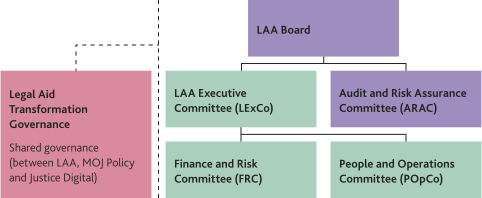
Figure 3. Governance structure organisational chart
This shows the governance structure of the Legal Aid Agency (LAA). At the top of the hierarchy is the LAA Board. Reporting into the Board are the LAA Executive Committee (LExCo) and the Audit and Risk Assurance Committee (ARAC). Reporting into LExCo are the Finance and Risk Committee (FRC) and the People and Operations Committee (PopCo). Alongside these committees is the Legal Aid Transformation Governance group, which is a shared governance arrangement between the LAA, Ministry of Justice Policy and Justice Digital.
Committee membership and attendance
This table details board members and standing invitees who have responsibility for the LAA throughout 2025 to 2026, their role and their attendance at LExCo and ARAC meetings.
Table 6. Committee membership and attendance for Board, LExCo and ARAC
| Name and role | Sex | LAA Board | ELT | ARAC |
| Board members | ||||
| Chief Executive, LAA | ||||
| Jane Harbottle CBE Number attended out of eligible meetings |
F | Member 6 of 6 |
Chair 9 of 10 |
Invitee 5 of 5 |
| Deputy Chief Executive and Director of Transformation, LAA |
||||
| Hitesh Patel from 1 April 2025 Number attended out of eligible meetings |
M | Invitee 2 of 3 Member 2 of 2[footnote 1] |
Member 9 of 10 |
Invitee 3 of 5 |
| Director of Finance | ||||
| Adrian Hannell Number attended out of eligible meetings |
M | Member 5 of 6 |
Member 3 of 10[footnote 2] |
Invitee 5 of 5 |
| Non-Executive Board Member – LAA Board Chair | ||||
| Nick Campsie Number attended out of eligible meetings |
M | Chair 6 of 6 |
||
| Non-Executive Board Member – Financial | ||||
| Kenneth Gill Number attended out of eligible meetings |
M | Member 6 of 6 |
Chair 5 of 5 |
|
| Non-Executive Board Member – Legal | ||||
| Professor Suzanne Rab to 31 December 2025 Number attended out of eligible meetings |
F | Member 4 of 4 |
Member 4 of 4 |
|
| Lisa Haythorne MBE from 1 January 2026 Number attended out of eligible meetings |
F | Member 2 of 2 |
Member 1 of 1 |
|
| Non-Executive Board Member – Digital Transformation | ||||
| José Luis Carrizo from 1 January 2026 Number attended out of eligible meetings |
M | Member 2 of 2 |
Member 1 of 1 |
|
| Invitees to Board | ||||
| People and Operations Committee Chair | ||||
| Alistair Adan – Deputy Director, Head of Civil and Crime Case Management Number attended out of eligible meetings |
M | Invitee 6 of 6 |
Member 9 of 10 |
Invitee 4 of 5 |
| Lucy Jones – Deputy Director, Head of Corporate Services Number attended out of eligible meetings |
F | Invitee 6 of 6 |
Member 9 of 10 |
Invitee 4 of 5 |
| LAA Finance and Risk Committee Chair | ||||
| David Thomas – Deputy Director, Head of Contract Management and Assurance Number attended out of eligible meetings |
M | Invitee 6 of 6 |
Member 8 of 10 |
Invitee 5 of 5 |
| LAA Transformation | ||||
| Hannah Payne, Deputy Director, Head of Transformation (job share) Number attended out of eligible meetings |
F | Invitee 2 of 6 |
Member 8 of 10 |
|
| Joanna Fiddian, Deputy Director, Head of Transformation (job share) to 18 December 2025 Number attended out of eligible meetings |
F | Invitee 3 of 5 |
Member 5 of 7 |
|
| Principal Legal Adviser to LAA | ||||
| Charlotte Hackett to 22 September 2025 Number attended out of eligible meetings |
F | Invitee 2 of 2 |
Member 4 of 5 |
|
| Director, MOJ Legal Advisers |
||||
| Kelby Harmes from 23 September 2025 | M | Invitee 3 of 3 |
||
| Deputy Director Service Development and Commissioning | ||||
| David Phillips Number attended out of eligible meetings |
M | Invitee 5 of 5 |
Member 9 of 10 |
|
| Deputy Director Public Defender Service | ||||
| Malcolm Bryant Number attended out of eligible meetings |
M | Member 10 of 10 |
||
| Deputy Director of Finance | ||||
| Joseph McHale Number attended out of eligible meetings |
M | Invitee 5 of 6 |
Member 9 of 10 |
Invitee 3 of 5 |
| Digital Director | ||||
| Kamal Bal Number attended out of eligible meetings |
M | Invitee 1 of 6 |
||
| Director Legal Aid, Legal Support and Dispute (job share) | ||||
| Farah Ziaulla Number attended out of eligible meetings |
F | Invitee 3 of 5 |
||
| Claire MacDonald Number attended out of eligible meetings |
F | Invitee 2 of 5 |
||
| Head of LAA Digital | ||||
|
Number attended out of eligible meetings |
F | Invitee 2 of 6 |
Member 2 of 10 |
|
| MOJ HR Director for LAA (Attended by MOJ Senior HR Business Partner for LAA) | ||||
| Number attended out of eligible meetings | F | Invitee 5 of 5 |
Member 8 of 10 |
|
| MOJ Legal Adviser | ||||
| Number attended out of eligible meetings | F |
|
Member 5 of 5 |
Committee roles and responsibilities
Legal Aid Agency Board
| Name of committee | Legal Aid Agency Board |
| Chair | Chair of LAA Board and Lead Non-Executive Board member |
| Frequency | Bi-monthly There were six meetings of the LAA Board during 2025 to 2026. |
| Role | The LAA Board supports the Accounting Officer and other senior officials in directing the business of the LAA. The Board is ultimately responsible for providing advice on the governance and strategic direction of the LAA. Some responsibilities of the Board are delegated to its committees, which are set out in the following tables. |
| Structure | The LAA Board is made up of: Members: • Chief Executive • Deputy Chief Executive and Director of Transformation (from 27 January 2026) • Non-Executive Board Members (NEBM) • Director of Finance Invitees: • Chairs of the two committees: – People and Operations Committee: Deputy Director for Case Management and Deputy Director for Corporate Services – Finance and Risk Committee: Deputy Director for Contract Management and Assurance • Deputy Director, Head of Transformation (job share) • Deputy Director for LAA Finance • Deputy Director Service Development and Commissioning • Principal Legal Adviser • Director of Digital • Deputy Director for LAA Digital • Director Legal Aid, Legal Support and Dispute Resolution (job share) • LAA HR Business Partner There have been changes to the individual Board members during the year. |
| Key activities this year | During the year the Board has supported the executive team to navigate the LAA through the cyber-attack system restoration towards service recovery. The Board has focused on the performance and wellbeing of staff during a difficult period. The Board has taken assurance from the business-as-usual work of the internal audit conducted while recovery and restoration has progressed. The Shadow Board has continued to be a successful forum for colleagues to learn about decision-making at Board level and has added an extra layer of challenge and support to the Board. New Shadow Board members have been recruited to allow more staff the opportunity to get involved. |
Audit and Risk Assurance Committee
| Name of committee | Audit and Risk Assurance Committee |
| Chair | Finance Non-Executive Board Member |
| Frequency | Quarterly There were five meetings of ARAC during 2025 to 2026, including an Extraordinary ARAC meeting to approve the Annual Report and Accounts 2024 to 2025 |
| Role | The ARAC advises the Board collectively on issues of risk control and governance using its professional expertise in financial, legal and commercial matters to challenge and support the LAA. |
| Structure | The committee is made up of NEBMs who are also members of the LAA Board. They do not have any executive responsibilities. |
| Key activities this year | During 2025 to 2026 the ARAC has continued to maintain oversight and challenge of the LAA’s financial statements, error rate, data security and business continuity arrangements, while supporting the recovery from the cyber-attack. The ARAC also received assurance reports from management and internal and external audit. In exercising their duties and accountabilities both the Board and ARAC have provided significant support, challenge and guidance to the business throughout the financial year. |
Executive Leadership Committee
| Name of committee | LAA Executive Committee |
| Chair | Chief Executive |
| Frequency | Monthly There were 10 meetings of the LExCo during 2025 to 2026. |
| Role | The LExCo is the LAA’s most senior executive committee and has overall management responsibility for the LAA. The LExCo takes decisions on the strategy for, and management of, the LAA, including the future capability and capacity of the LAA to meet departmental and government reform plans and the strategic management of corporate level risks. |
| Structure | The ELT is made up of: • Chief Executive • Director of Transformation and Deputy Chief Executive • Deputy Director for Corporate Services • Deputy Director for Case Management • Deputy Director for Contract Management and Assurance • Deputy Director for Commissioning and Service Development • Deputy Director Head of Transformation (job share) • Deputy Director for Public Defender Service • Deputy Director for LAA Finance • Deputy Director for LAA Digital • LAA HR Business Partner • Principal Legal Adviser The LExCo maintains high-level oversight of the operational running of the LAA and is supported in its responsibilities by three sub-committees. These committees were created to facilitate deeper, focused discussions on specific issues as well as completing tasks or taking decisions delegated from the LExCo. People and Operations Committee: To provide constructive business-focused input, decision-making and assurance to the Board and LExCo that LAA is delivering on both its People Strategy and operational priorities. The committee monitors the implementation and effectiveness of the People Strategy and People Plan and reviews and challenges LAA performance, via Key Performance Indicators (KPI) and risk reporting. It facilitates effective implementation of MOJ people policies, ensuring the LAA is making transparent and fair decisions regarding its people. Finance and Risk Committee: To support the LExCo and ARAC, particularly through scrutinising risk management and corporate assurance matters via risk deep-dives, reviews of corporate assurance activity and progress on Government Internal Audit Agency (GIAA) audit recommendations as well as focus sessions on topics such as provider risk management, the organisational budgeting cycle and the approach to ensuring proactive error risk assessment within the organisation’s transformation programme. |
| Key activities this year |
People and Operations Committee: The committee focused on supporting staff wellbeing and monitoring stress levels during the cyber-attack. The committee reviewed performance while contingency processes were in place and supported changes to performance reporting while data was limited. The committee reviewed the 2025 People Survey results which saw the LAA engagement index drop by one percentage point to 70% which is still ahead of the Civil Service benchmark for 2025 of 65%. Finance and Risk Committee: The committee focused on supporting the LAA during the cyber-attack with the review of risk management processes and continued insight from the Risk and Assurance Working Group. The committee supported the business-as-usual assurance activities which continued while contingency, recovery and restoration work progressed. Transformation and Change Committee (TCC): The committee met once to agree to the disbandment of TCC and the formation of a new formal joint governance process with LAA Digital to cover all transformation work. |
Internal control framework
The system of internal control is designed to manage risk to an acceptable level, rather than to eliminate all risk in relation to achieving its policies, aims and objectives. Based on the LAA’s assurance framework I am reasonably assured of the effectiveness of the system of internal control.
As explained in our operating model above, I am assisted in the stewardship of the LAA’s resources and management of its risks by the Board, LExCo and committee chairs. I receive written assurance from my deputy directors on the effectiveness of risk management and control in the form of annual assurance declarations.
In addition, MOJ as part of a functional leadership framework, provides us with a suite of digital, financial and HR systems, policies and expertise that are applied where relevant. Each function provides an MOJ-wide assessment against the relevant standard and frameworks. There are formal governance and assurance mechanisms in place across MOJ and between functions and the LAA.I also receive an internal audit service from the Government Internal Audit Agency (GIAA), which provides me with independent assurance over the effectiveness of my organisation’s governance, risk management and control environment.
Head of internal audit opinion
GIAA has provided an overall Moderate opinion on the framework of governance, risk management and control within the LAA for the year ended 31 March 2026. This reflects that some improvements are required to enhance the adequacy and effectiveness of the framework of governance, risk management and control.
The Moderate opinion reflects, that despite the exceptionally difficult operating environment in the LAA following the cyber-attack, the LAA responded well, developing contingency arrangements at speed and safely. LAA developed restoration and recovery plans and maintained a broadly effective core control framework. Although LAA faces significant short and medium-term risks, GIAA’s opinion is that these are a direct result of the cyber-attack incident rather than significant weaknesses in LAA’s framework of governance, risk management, and control. The Moderate opinion also reflects the fact that risks associated with LAA’s legacy technology estate were identified, logged and escalated, though with some lessons identified through GIAA’s work. Some funding was subsequently granted to stabilise those systems, which was intended to partially reduce the risk. The cyber-attack occurred while LAA and MOJ were part-way through the system stabilisation process.
Across the year, GIAA issued two Limited, and four Moderate opinions. GIAA also completed five advisory reviews, four pertaining directly to the incident and one involving Counter Fraud. Across all reviews, GIAA made four high-priority, 19 medium-priority, and 18 low-priority recommendations.
Risk management framework
Risk management is important for good governance; it aids the development and achievement of our strategy, our performance and our decision-making. As an executive agency of MOJ, we continue to align with the ‘Orange Book: Management of Risk – Principles and Concepts’, as well as MOJ’s risk management framework, which underpins how we manage risk across the department.
Risk management process
Risk and Resilience
Organisation
Each local senior management team has a risk log or register in place. Risks are identified, analysed and managed at team level, with links to our core operational objectives. Risks are escalated to the Agency’s Corporate Risk Register and assigned a Senior Risk Owner where they are assessed as requiring executive-level management.
Process
Our Risk and Assurance Working Group meets each month, comprising representatives from across the LAA. Their analysis of risk for their areas alongside horizon-scanning is considered in the context of the Corporate Risk Register. Outputs help inform the thinking and recommendations of our executive committees and ultimately our LExCo on emerging and established corporate level risks.
Reporting
We have continued to strengthen our reporting this year, building on existing processes of capturing and escalating risk to ensure effective and regular oversight at suitable levels within the LAA, as well as inputting to MOJ’s Executive Committee quarterly. Following the cyber-attack, we have carried out a full corporate risk refresh, and reported on the evolving risk profile through both contingency and formal governance.
Continuous Improvement
Considering best practice and seeking opportunities to improve our overall risk maturity is a continuing priority. We have engaged with our ARAC to seek feedback on existing processes and endorsement of proposed changes. During 2025 to 2026, we have focused on supporting the business in its understanding of corporate-level risks emerging from the cyber-attack, and refreshing the overall risk profile.
Significant risks and issues in 2025 to 2026
As an organisation we have continued to manage ongoing and inherent risks to the delivery of our Strategic Objectives, building on our existing risk management framework to strengthen processes and allow for the identification of emerging risks as well as the effective and thorough assessment and interrogation of existing risks and issues. The ARAC, LExCo and Board have continued to review and challenge the progress made to manage the risks documented in the LAA’s Corporate Risk Register, which focuses on the significant internal, external and strategic risks to the delivery of our objectives. Our headline corporate level risks across the year have been heavily influenced by the impacts of the cyber-attack, with certain risks emerging as a direct result and other, known risks evolving. Principal risks have included security, General Data Protection Regulation (GDPR) governance and compliance, regularity error, people (specifically around resource and wellbeing) and the sustainability of the legal aid market.
The table on the following pages sets out further detail on risks that have been managed at a corporate level over the last year, with accompanying narrative on key actions and links to our Strategic Objectives (SO).
Our strategic objectives:
SO1 Deliver access to justice through legal aid services that meet the needs of our users
SO2 Modernise our services, delivering value for money for taxpayers
SO3 Become a truly diverse and inclusive employer of choice
Key risk 1: Security and Information
Restoring systems impacted by the cyber-attack and reducing the risk of a further successful attack; improving the security posture of the LAA.
Strategic objectives: SO1, SO2, SO3
Risk severity and direction of trend: high risk assessment, no change in risk movement
Since restoration post the cyber-attack, significant work has been undertaken to move beyond simply recovering services and towards strengthening the overall security posture of the LAA. Critical systems and services were progressively restored, contingency processes reduced, and a programme of security improvement established to address vulnerabilities exposed by the cyber-attack. This has included baseline security reviews across key services and infrastructure, enhanced security governance, improved access and data management controls, and increased compliance. The organisation has also initiated further Infrastructure and Application Penetration Testing and risk assessments across legacy systems to better understand and remediate security weaknesses, alongside strengthening Secure by Design practices for new and existing services.
In parallel, monitoring, threat detection and incident response capabilities have been enhanced through greater use of the Ministry of Justice Security Operations Centre, providing increased visibility of security events and improved organisational resilience. While considerable progress has been made, the residual risk remains high due to the age, complexity and legacy nature of a number of core LAA systems and technology components. Although compensating controls continue to reduce exposure, the long-term resolution of this risk will require sustained transformation and modernisation of the underlying technology estate, reducing reliance on legacy platforms and embedding security, resilience and compliance into future service design.
Key risk 2: Digital and Transformation
Reducing the level of technical debt and improving resilience and flexibility of digital services.
Strategic objectives: SO1, SO2, SO3
Risk severity and direction of trend: high risk assessment, no change in risk movement
Since restoration, the LAA has established a transformation plan focused on stabilisation, security improvement, operational recovery and the delivery of key transformation priorities. In parallel, detailed planning is underway to provide a structured roadmap for modernising core services, reducing technical debt and improving the resilience, flexibility and maintainability of the digital estate. Alongside transformational activity, targeted investments are being made to strengthen security, address vulnerabilities and improve the reliability of existing systems. However, while these interventions reduce risk and improve resilience, a proportion of the underlying technical debt is rooted in legacy platforms and architecture. As a result, some areas of technical debt will remain until transformational changes are delivered and legacy services are replaced or substantially modernised. The overall trend is positive, with a clearer plan in place to progressively reduce technical debt over the next three years, while recognising that the full benefits will only be realised through sustained transformation and investment in the future digital estate.
Key risk 3: Finance
LAA Fund spend falling outside budget by year-end.
Strategic objectives: SO2
Risk severity and direction of trend: high risk assessment, increase in risk movement
Legal aid Fund expenditure is, by its demand-led nature, volatile and therefore difficult to forecast. The cyber-attack and subsequent implementation and unwinding of necessary contingencies, along with system outages creating a gap in standard data used for forecasting, has added to this challenge. There have also been pressures due to changes in Crown Court and family court behaviour, increasing uncertainty and making it more difficult to forecast accurately.
We have continued to use established governance processes to monitor spend, identify and analyse uncertainties as well as manage anticipated Fund variances. We have a comprehensive risk management process that assesses all legal aid Fund risks and opportunities on a monthly basis, and seeks to identify mitigations to those risks where possible.
Key risk 4: Provider Capacity
Maintaining sufficient provision within the legal aid provider base to meet an uncertain demand.
Strategic objectives: SO1
Risk severity and direction of trend: medium risk assessment, no change in risk movement
The LAA actively manages the provider base to address actual and potential gaps in provision. ‘Always on’ tendering for standard civil and crime contracts continues to support market entry and expansion, while market engagement activity helps identify and respond to emerging capacity pressures. Controlled work fee increases for Housing and Immigration became applicable from 22 December 2025, alongside criminal legal aid fee reforms, including police station fee reforms and increases to magistrates’ court and prison law fees. The LAA has also continued to strengthen its understanding of provider capacity, workforce sustainability and future market resilience through engagement with providers, representative bodies and market analysis.
Although overall coverage has remained relatively stable, localised and category-specific pressures remain. In some areas of Housing and Debt legal aid, long-standing challenges in attracting and sustaining provision continue despite ongoing market engagement and targeted measures to encourage supply. The LAA has continued to mitigate the impact of the cyber-attack through close engagement with providers and representative bodies, supporting contingency arrangements to maintain payments and access to justice. The LAA also continues to monitor longer-term workforce sustainability risks, including demographic trends and recruitment challenges within key professional groups, which may affect future market capacity and resilience.
Key risk 5: Regularity Error
The complexity of legal aid means there is an inherent risk of error because of incorrect eligibility assessments or inaccurate payments.
Strategic objectives: SO2
Risk severity and direction of trend: high risk assessment, increase in risk movement
We have seen a reduction in the gross regularity error rate for payment accuracy for legal help to 0.50% (from 1.54% in 2024 to 2025) and for Crime Lower claims to 0.74% (from 2.21% in 2024 to 2025).
While we are pleased to see that the improvements demonstrate the effectiveness of embedding assurance and control activities within our process changes, the reduction in gross error has exceeded our expectations. A potential driver of this is the work that our Contract Management, Assurance, Digital and Policy teams have done over the past year, working closely with our providers, to develop and deliver the new Submit a Bulk Claim (SaBC) system for Contract Work reporting. A key element of this work was the introduction of a new fee code designed to simplify claiming processes and improve the quality and accuracy of claim reporting. We have worked closely with providers to ensure that contingency processes and new claiming processes were developed with their input, and were well understood and prepared for.
We will undertake a programme of work throughout 2026 to 2027 to understand the impact that this has had on our regularity error position, and to ensure that we embed good practice to maintain the lower error position where we are able to demonstrate a clear causal link.
Key risk 6: People
Recruiting and retaining sufficient capable individuals to ensure continually effective service delivery.
Strategic objectives: SO1, SO3
Risk severity and direction of trend: high risk assessment, increase in risk movement
During 2025 to 2026, the LAA has taken a range of actions to support staff wellbeing and manage the increased people risks arising from the cyber-attack. The restoration of systems and ongoing use of some manual contingencies have placed sustained pressure on resource across multiple business areas, increasing risks linked to staff retention, wellbeing and stress. We have secured additional support through other government departments and agency staff, alongside activity to improve and streamline recruitment processes. The LAA has strengthened its wellbeing support offer through the introduction of work stress related absence reporting, line manager wellbeing training and wellbeing roadshows. Team stress risk assessments have taken place, and will continue, helping identify and mitigate local risks. Further targeted support has included Employee Assistance-led wellbeing sessions for the most impacted teams as well as financial wellbeing sessions. A workplace wellbeing group has built on the activity undertaken through team stress risk assessments to inform the organisational stress risk assessment and will support our forward plan to support the proactive identification, communication and management of stress-related risks.
Risk horizon
Our risk profile has been significantly impacted by the cyber-attack affecting our online digital services. Understanding our risks as we move towards full recovery of our services and transformation of our systems will be a focus during 2026 to 2027. In particular, ensuring the safe and secure delivery of services as we accelerate transformation will be a priority. We anticipate increased internal pressures in relation to resource as we process work generated during system downtime, which has not been processed in the regular way.
Error rate (subject to audit)
Maintaining a low level of error has remained a priority in 2025 to 2026. Our gross error rate was 0.73% in 2025 to 2026 compared to 1.11% in 2024 to 2025. Addressing overpayments has helped reduce the most likely level of error to a net position of £15.4 million (0.66%) of expenditure compared to £18.6 million (0.82%) of expenditure in 2024 to 2025. We use a statistical random sampling technique and based on this we have 95% confidence that the actual net level of error in 2025 to 2026 is between 0.61% and 0.86% of legal aid spend. To ensure a cost-effective focus of resource, this exercise identifies both error and potential fraud with appropriate cases being referred for fraud investigation. As well as identifying instances where providers have been paid more than is reasonably justified, our testing reviews also identify instances where there have been underpayments. In 2025 to 2026 our estimated underpayment was 0.07% of the total legal aid expenditure (compared to 0.07% in 2024 to 2025).
Specific issues to highlight this year
Net error rate category
Court Assessed claims 1.38%
2025 to 2026 saw a decrease in our gross error rate for Court Assessed claims (1.57% in 2024 to 2025), which providers can alternatively decide to be assessed by the LAA.
Legal Help claims 0.50%
This has reduced from 1.54% in 2024 to 2025 following an emphasis on improvements for assessments, training and guidance and our continuing work with providers to identify improvements through contract management activity. This will continue to be a focus area into 2026 to 2027.
Fraud, bribery and corruption
The LAA is committed to countering fraud, understanding fraud risks, strengthening fraud and error controls and to designing out fraud and error as the LAA continues to transform its digital infrastructure. Our culture is one of awareness, understanding and responsibility.
Counter-fraud continues to be a mainstay of corporate governance providing regular insights and updates in respect of fraud and error trends and incidents. We are members of the Public Sector Fraud Authority’s Community of Practice network and collaborate widely with other government departments and public sector bodies in the field to share best practice, explore opportunities to share information and support learning and development.
Where possible we engage with law enforcement agencies or prosecuting authorities to prosecute fraud against the legal aid Fund and we work closely with LAA colleagues and regulatory bodies to support disruption activity using sanctions if and where appropriate. We have an established Prevent function, which supports colleagues widely across policy and digital transformation programmes. This year the Prevent function has been involved in both the response and recovery phases of the cyber-attack, producing mandatory fraud risk assessment for contingency payment schemes and contributing to the development of effective security controls as systems and platforms were restored. Alongside supporting the effective recovery from the cyber-attack, the fraud function has also embedded a new case management system and continues to develop capability to become increasingly data and intelligence led.
The LAA’s counter-fraud activity during 2025 to 2026 was impacted by the cyber-attack while systems were unavailable. During this period the counter-fraud team focused on incident recovery workstreams and developing fraud preventative savings methodologies. This has seen a noticeable increase in combined fraud and error recoveries and preservations. The total recovery or preservation of public funds for 2025 to 2026 was £2,510,212 compared to £1,118,327 in 2024 to 2025.
In 2025 to 2026 the LAA continued to apply its risk-based approach to preventing, detecting and investigating suspected fraud, noting the limitations and constraints the cyber-attack brought.
Note: Annual figures for financial recoveries or preservations as a result of fraud investigations will vary from year to year. There are many variable factors with any fraud investigation, examples being the fund take of a provider, the available evidence and the identification of monies that can be attributed to fraud. The timeline for recoveries will also be influenced by a provider’s ability to repay or the outcome of civil and/or criminal proceedings. The significant factor impacting greater financial recoveries and preservations in 2025 to 2026 was the loss of system access.
Health and Safety
We are committed to protecting the safety and security of all LAA staff. We work closely with the Government Property Agency and apply the standards, advice and guidance from the Health and Safety Executive, Crown Premises Fire Safety Inspectorate and public health agencies.
In line with Health and Safety Executive expectations, we have been concentrating on work-related stress. Alongside that, we have been addressing our responsibilities for staff working long and unsocial hours and those who drive for work reasons.
The LAA health and safety committee meets quarterly and includes trade union representation. A report on health and safety is provided to LAA ARAC each quarter.
Whistleblowing
I can confirm that the MOJ policy and procedure for whistleblowing applies to all LAA staff.
The MOJ policy sets out effective routes and processes in place to enable an individual to raise a concern about suspected wrongdoing, risk or malpractice that affects a wider group of individuals in a supportive and protective environment. The policy is accessible to all staff on the intranet.
MOJ is part of a cross-government network of HR professionals working to enhance whistleblowing arrangements across government departments and improve the experience of whistleblowers.
In 2025 to 2026 the LAA received no whistleblowing concerns.
Information assurance and data security
The LAA processes high volumes of personal data, primarily belonging to legal aid clients. We take information security seriously and direct our people to complete mandatory training on their responsibilities for handling information and ensure data protection policies and procedures are in place. We work with Justice Digital on the protection of data held on digital systems.
All incidents are investigated to ensure that root causes are identified and strengthen our policies and systems. In addition, both MOJ Security and Information Directorate and the LAA ARAC challenge our performance on incident management providing direction and oversight.
In 2025 to 2026, there were 332 personal data incidents reported. This represents a decrease of 53 (14%) on the previous year. The LAA consistently reports low numbers of incidents considering the large volume of transactions and data that the LAA processes.
There has been one high impact incident detected in 2025 to 2026 that met the threshold for reporting and was reported to the ICO. The reportable incident was the cyber-attack detected in April 2025 and is detailed on pages 16-18.
Table 7. Data incident numbers by category for each year 2021-22 to 2025-26
| Category | Nature of incident | 2021-22 | 2022-23 | 2023-24 | 2024-25 | 2025-26 |
|---|---|---|---|---|---|---|
| I | Cyber Security | 5 | 7 | 12 | 21 | 15 |
| II | Personnel Security | 0 | 2 | 1 | 2 | 0 |
| III | Physical Security | 5 | 14 | 21 | 27 | 22 |
| IVa | Information Security – Loss or The | 7 | 21 | 8 | 14 | 11 |
| IVb | Information Security – Unauthorised Disclosure | 163 | 276 | 238 | 321 | 282 |
| IVc | Information Security – Other | 2 | 0 | 1 | 0 | 2 |
| Total | 182 | 320 | 281 | 385 | 332 |
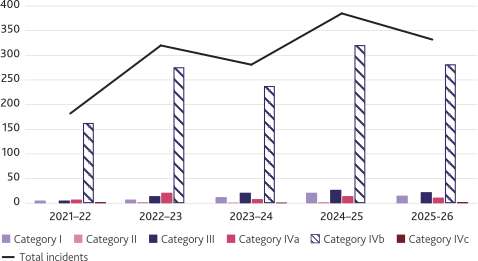
Figure 5. Personal data incidents by category: five-year period
Bar chart showing the number of personal data incidents by type for each year from 2021 to 2022 to 2025 to 2026. The chart also displays the total number of incidents per year, with a trend line indicating an overall increase in total incidents over time. Category IVb is the largest category each year, with a decrease between 2024 to 2025 and 2025 to 2026. The total trend line over the five years has increase, but has decreased in the last year. Data for each incident type and year is provided in the accompanying table.
Incident volumes have decreased this year and the impact of the cyber-attack detailed on pages 16-18 has resulted in a change in the nature of incidents experienced. Unauthorised disclosure incidents remained the most common incident type, but within this category the LAA experienced a significant decrease in incidents relating to disclosure involving LAA IT systems and a significant increase in disclosure incidents involving email. This reflects the move into sustained contingency processing arrangements during the year. The LAA will continue to develop appropriate remedial actions and process improvements to reduce the impact of incidents and the likelihood of incidents occurring.
In this reporting period, we responded to 245 Freedom of Information (FOI) requests, compared to 238 during 2024 to 2025. FOI requests require a response within 20 working days and we have a 100% target for compliance. This year, we have responded to 99% of FOI requests within 20 working days, a decrease on the 100% achieved during 2024 to 2025.
Conclusion
I am confident this statement provides a comprehensive account of the governance, risk management and control arrangements we have embedded within the LAA. I am pleased that the MOJ review of the LAA confirmed we were compliant with the majority of Cabinet Office good practice indicators and note that our Head of Internal Audit has provided a ‘Moderate’ opinion. We have taken steps to strengthen our risk management process and improve our alignment to MOJ risk reporting. The success of these arrangements is due to the people and processes in place, which have ensured the LAA has met its business objectives and continues to be a supportive and innovative place to work, as reflected in our Civil Service People Survey results.
The cyber-attack incident discovered at the beginning of the 2025 to 2026 financial year continues be a significant challenge for the LAA and will be a focus of our restoration and transformation work and our risk management and assurance activity for 2026 to 2027.
Signed for and on behalf of the Legal Aid Agency
Helen Measures
Chief Executive and Accounting Officer
Legal Aid Agency
10 November 2026
Remuneration and staff report
Members, NEBMs and staff. It also provides detail of actual costs and contractual arrangements. The remuneration and staff report has been prepared in accordance with the requirements of the FReM as issued by HM Treasury.
The Prime Minister sets the remuneration policy of senior civil servants (SCS) following independent advice from the Senior Salaries Review Body. The salaries of LAA Executive Board members were set following discussions between the Permanent Secretary of the MOJ and directors general in accordance with the rules of the Civil Service management code.
The LAA does not have a Remuneration Committee. The key functions of a Remuneration Committee are dealt with through the MOJ Workforce Committee. The MOJ Workforce Committee is chaired by the Permanent Secretary and attended by all directors general and chief executives of His Majesty’s Prison and Probation Service (HMPPS), His Majesty’s Courts and Tribunals Service (HMCTS) and the LAA. The committee meets on a monthly basis to manage talent, capability and people resources. In addition, the committee is responsible for ensuring the LAA has a workforce that is the right size, has the right skills, is well managed, properly motivated and correctly deployed.
The tables in this report have been subject to audit by the external auditor, the Comptroller and Auditor General (C&AG), appointed under the Government Resources and Accounts Act 2000.
Remuneration policy
Executive Board Members
Service contracts
The Constitutional Reform and Governance Act 2010 requires civil servant appointments to be made on merit on the basis of fair and open competition. The Recruitment Principles published by the Civil Service Commission specify the circumstances where appointments may be made otherwise. The Executive Board Members covered by this report hold appointments that are open-ended. Early termination, other than for misconduct, would result in the individual receiving compensation as set out in the Civil Service Compensation Scheme. Further information about the work of the Civil Service Commission can be found at: www.civilservicecommission.independent.gov.uk
Performance process
SCS follow the Cabinet Office guidelines that incorporate the SCS Performance Management Framework. There were two ‘formal’ Performance Management Review discussions in the year and then regular one-to-one meetings to monitor progress and ensure that all objectives were still relevant. The performance measures for each member of the Executive Board have been met.
Total amount of salary and fees
Salary and allowances cover both pensionable and non-pensionable amounts and include: gross salaries; overtime; reserved rights to London weighting or London allowances; recruitment and retention allowances; private office allowances; or other allowances to the extent that they are subject to UK taxation and any ex-gratia payments. It does not include amounts that are a reimbursement of expenses directly incurred in the performance of an individual’s duties.
All taxable benefits
Taxable benefits include all benefits in kind and taxable cash benefits. The monetary value of benefits in kind covers any benefits provided by the employer and treated by His Majesty’s Revenue and Customs (HMRC) as a taxable emolument. Benefits recognised relate to travel and subsistence.
Bonus payments
Bonuses are based on performance levels attained and are made as part of the appraisal process. Bonuses relate to the performance in the year in which they become payable to the individual. The bonuses reported in 2025 to 2026 relate to the performance in 2024 to 2025 and the bonuses reported in 2024 to 2025 relate to the performance in 2023 to 2024.
All pension related benefits
Section 229 of the Finance Act 2004 determines the maximum annual level of pension savings that can be accrued under a defined benefit arrangement before any taxation is charged. The amount of savings shown in Table 8 is the increase in the value of the individual’s promised benefits over the pension input period (which is the financial year for the LAA). Any increase is the difference between the value of the individual’s benefits at the start of the pension input period (1 April 2025) and the value of the individual’s benefits at the end of the pension input period (31 March 2026), this also incorporates any increase to pensionable pay. Regulations specify a modification to the HMRC rules for this purpose, to value the benefits HM Treasury has advised pension schemes to use a multiplier of 20.
Non-Executive Board Members
Two NEBMs remained in post for 2025 to 2026 as part of their fixed term appointments. One NEBM left on 31 December 2025 at the end of their tenure. Two NEBMs joined on 1 January 2026.
NEBMs are not members of the Principal Civil Service Pension Scheme (PCSPS) and were not entitled to any other benefits or remuneration.
If an NEBM appointment was terminated for reasons other than the expiry of their term, the Secretary of State for Justice could determine that compensation was payable based on the nature of the termination and the length of the term remaining.
Details in relation to NEBMs’ service terms, benefits or remuneration are included in tables 14 and 15 on page 73.
Table 8. Senior employees in post during 2025 to 2026 – employment costs (subject to audit)
| 2025-26 | 2024-25 | |||||||||
|---|---|---|---|---|---|---|---|---|---|---|
| Executive Board Members | Total amount of salary and fees | All taxable benefits (to nearest £100) | Bonus payments | Pensions related benefits (to nearest £1,000) | Total (to nearest £1,000) | Total amount of salary and fees | All taxable benefits (to nearest £100) | Bonus payments | Pensions related benefits (to nearest £1,000) | Total (to nearest £1,000) |
|
Jane Harbottle CBE[footnote 3] Chief Executive |
120-125 | 11 | 15-20 | 34 | 185-190 | 120-125 | 19.2 | 0-5 | 73 | 215-220 |
|
Adrian Hannell[footnote 4] Director of Finance |
130-135 | - | 10-15 | 51 | 190-195 | 5-10 (FYE 125-130) | - | - | 3 | 10-15 |
|
Hitesh Patel[footnote 5] Deputy Chief Executive and Director of Transformation |
20-25 (FYE 125-130) |
- | - | 9 | 30-35 | - | - | - | - | |
Note: FYE stands for full year equivalent.
Fair pay disclosure (subject to audit)
Reporting bodies are required to disclose the relationship between the salary of the highest paid Executive Board Members in their organisation and the median earnings of the organisation’s workforce.
Table 9. Annual percentage change from the previous year in total salary and bonus of highest paid director and employees
| 2025-26 | 2024-25 | |||
|---|---|---|---|---|
| Total amount of salary and fees | Bonus payments | Total amount of salary and fees | Bonus payments | |
| % | % | % | % | |
| Employees[footnote 6] | 4.2 | 54.3 | 3.0 | -0.8 |
| Highest paid director[footnote 7] | 0.0 | 600.0 | 4.3 | -80.0 |
Table 10. Ratio between highest paid director’s total remuneration and employees in the lower quartile, median and upper quartile
| Financial year | Lower quartile | Median | Upper quartile |
|---|---|---|---|
| 2025-26 | 5.6:1 | 4.9:1 | 3.7:1 |
| 2024-25 | 6.0:1 | 5.0:1 | 3.9:1 |
Table 11. Lower quartile, median and upper quartile for total staff remuneration
| Salary | 2026 | 2025 | 2026 | 2025 | 2026 | 2025 |
|---|---|---|---|---|---|---|
| Lower quartile | Median | Upper quartile | ||||
| £ | £ | £ | £ | £ | £ | |
| Salary component | 25,582 | 24,202 | 29,846 | 28,681 | 37,847 | 36,629 |
| Total staff remuneration | 27,153 | 24,702 | 31,061 | 29,281 | 40,859 | 38,162 |
The banded remuneration for the highest paid Executive Board Member in the LAA in the financial year 2025 to 2026 was £150-155,000 (2024 to 2025: £145-150,000). This was 4.9 times (2024 to 2025: 5.0) the median remuneration of the workforce, which was £31,061 (2024 to 2025: £29,281). The increase in median remuneration is mainly driven by the August 2025 pay award.
In 2025 to 2026, two staff members or contractors (2024 to 2025: two) received banded remuneration in excess of the highest paid Executive Board Member.
Staff remuneration ranged from £20-25,000 to £195-200,000 (2024 to 2025: £20-25,000 to £195-200,000).
Total remuneration included salary, non-consolidated performance related pay and benefits in kind. It did not include employer pension contributions and the Cash Equivalent Transfer Value (CETV) of pensions.
In August 2024 and August 2025, pay awards were implemented in accordance with the Cabinet Office’s Civil Service pay remit guidance, with departments permitted to make average pay awards of up to 5% and 3.25% respectively.
Pay ratios have reduced slightly due to a reduction in the non-salary total remuneration of the highest paid director.
Table 12. Executive Board Members – employment contracts
| Executive Board Members | Contract start date | Term served (years) | Notice period (months) |
|---|---|---|---|
| Jane Harbottle CBE | 1 April 2016 | 8 | 3 |
| Adrian Hannell | 10 March 2025 | 1 | 3 |
| Hitesh Patel | 27 January 2026 | 0 | 3 |
Civil Service pension benefits
Civil Service pensions
Pension benefits are provided through the Civil Service pension arrangements. Before 1 April 2015, the only scheme was the Principal Civil Service Pension Scheme (PCSPS), which is divided into a few different sections – classic, premium, and classic plus provide benefits on a final salary basis, while nuvos provides benefits on a career average basis. From 1 April 2015 a new pension scheme for civil servants was introduced – the Civil Servants and Others Pension Scheme or alpha, which provides benefits on a career average basis. All newly appointed civil servants, and the majority of those already in service, joined the new scheme.
The PCSPS and alpha are unfunded statutory schemes. Employees and employers make contributions (employee contributions range between 4.6% and 8.05%, depending on salary). The balance of the cost of benefits in payment is met by monies voted by Parliament each year. Pensions in payment are increased annually in line with the Pensions Increase legislation. Instead of the defined benefit arrangements, employees may opt for a defined contribution pension with an employer contribution, the partnership pension account.
In alpha, pension builds up at a rate of 2.32% of pensionable earnings each year, and the total amount accrued is adjusted annually in line with a rate set by HM Treasury. Members may opt to give up (commute) pension for a lump sum up to the limits set by the Finance Act 2004. All members who switched to alpha from the PCSPS had their PCSPS benefits ‘banked’, with those with earlier benefits in one of the final salary sections of the PCSPS having those benefits based on their final salary when they leave alpha.
The accrued pensions shown in this report are the pension the member is entitled to receive when they reach normal pension age, or immediately on ceasing to be an active member of the scheme if they are already at or over normal pension age. Normal pension age is 60 for members of classic, premium, and classic plus, 65 for members of nuvos, and the higher of 65 or State Pension Age for members of alpha. The pension figures in this report show pension earned in PCSPS or alpha – as appropriate. Where a member has benefits in both the PCSPS and alpha, the figures show the combined value of their benefits in the two schemes but note that the constituent parts of that pension may be payable from different ages.
When the Government introduced new public service pension schemes in 2015, there were transitional arrangements which treated existing scheme members differently based on their age. Older members of the PCSPS remained in that scheme, rather than moving to alpha. In 2018, the Court of Appeal found that the transitional arrangements in the public service pension schemes unlawfully discriminated against younger members (the ‘McCloud judgment’).
As a result, steps are being taken to remedy those 2015 reforms, making the pension scheme provisions fair to all members. The Public Service Pensions Remedy[footnote 8] is made up of two parts. The first part closed the PCSPS on 31 March 2022, with all active members becoming members of alpha from 1 April 2022. The second part removes the age discrimination for the remedy period, between 1 April 2015 and 31 March 2022, by moving the membership of eligible members during this period back into the PCSPS on 1 October 2023.
The accrued pension benefits, Cash Equivalent Transfer Value (CETV) and single total figure of remuneration reported for any individual affected by the Public Service Pensions Remedy have been calculated based on their inclusion in the PCSPS for the period between 1 April 2015 and 31 March 2022, following the McCloud judgment. The Public Service Pensions Remedy applies to individuals that were members, or eligible to be members, of a public service pension scheme on 31 March 2012 and were members of a public service pension scheme between 1 April 2015 and 31 March 2022. The basis for the calculation reflects the legal position that impacted members have been rolled back into the PCSPS for the remedy period and that this will apply unless the member actively exercises their entitlement on retirement to decide instead to receive benefits calculated under the terms of the alpha scheme for the period from 1 April 2015 to 31 March 2022.
The partnership pension account is an occupational defined contribution pension arrangement which is part of the Legal & General Mastertrust. The employer makes a basic contribution of between 8% and 14.75% (depending on the age of the member). The employee does not have to contribute but, where they do make contributions, the employer will match these up to a limit of 3% of pensionable salary (in addition to the employer’s basic contribution). Employers also contribute a further 0.5% of pensionable salary to cover the cost of centrally provided risk benefit cover (death in service and ill health retirement).
Further details about the Civil Service pension arrangements can be found at the website www.civilservicepensionscheme.org.uk
Table 13. Executive Board Members – pension costs for the year ended 31 March 2026 (subject to audit)
| Total accrued pension and related lump sum at pension age as at 31 March 2026 | Real movement in pension and related lump sum at pension age | CETV at 31 March 2026 | CETV at 31 March 2025 | Real increase in CETV | |
|---|---|---|---|---|---|
| £000 | £000 | £000 | £000 | £000 | |
| Jane Harbottle CBE | Pension 55-60 Lump sum nil |
Pension 0-2.5 Lump sum nil |
1,007 | 937 | 19 |
| Adrian Hannell | Pension 30-35 Lump sum nil |
Pension 2.5-5 Lump sum nil |
438 | 383 | 34 |
| Hitesh Patel | Pension 40-45 Lump sum nil |
Pension 0-2.5 Lump sum nil |
811 | 801 | 8 |
Cash Equivalent Transfer Value
A CETV is the actuarially assessed capitalised value of the pension scheme benefits accrued by a member at a particular point in time. The benefits valued are the member’s accrued benefits and any contingent spouse’s pension payable from the scheme. A CETV is a payment made by a pension scheme or arrangement to secure pension benefits in another pension scheme or arrangement when the member leaves a scheme and chooses to transfer the benefits accrued in their former scheme.
The pension figures shown relate to the benefits that the individual has accrued because of their total membership of the pension scheme, not just their service in a senior capacity to which disclosure applies.
The figures include the value of any pension benefit in another scheme or arrangement that the member has transferred to the Civil Service pension arrangements.
They also include any additional pension benefit accrued to the member as a result of their buying additional pension benefits at their own cost. CETVs are worked out in accordance with the Occupational Pension Schemes (Transfer Values) (Amendment) Regulations 2008 and do not take account of any actual or potential reduction to benefits resulting from Lifetime Allowance Tax, which may be due when pension benefits are taken.
Real increase in Cash Equivalent Transfer Value
This reflects the increase in CETV that is funded by the employer. It does not include the increase in accrued pension due to inflation, contributions paid by the employee (including the value of any benefits transferred from another pension scheme or arrangement) and uses common market valuation factors for the start and end of the period.
Non-Executive Board Members
NEBMs were part-time and their role involved a commitment of 20 days per year during 2025 to 2026.
They will hold office until the end of the period for which they were appointed.
Employment costs – NEBMs
Table 14. NEBMs in post at 31 March 2026 – employment costs (subject to audit)
| 2025-26 | 2024-25 | |||
|---|---|---|---|---|
| Non‑Executive Board Member | Total amount Total amount of fees | All taxable benefits | Total amount Total amount of fees | All taxable benefits |
| £000 | £000 | £000 | £000 | |
| Nick Campsie | 10-15 | - | 5-10 | - |
| Kenneth Gill[footnote 9] ARAC Chair | 10-15 | - | 5-10 | 1.6 |
| Suzanne Rab to 31 December 2025 |
5-10 | - | 5-10 | - |
| Lisa Haythorne MBE from 1 January 2026 |
0-5 (FYE 5-10) | - | - | - |
| José Luis Carrizo from 1 January 2026 |
0-5 (FYE 5-10) | - | - | - |
Employment contracts – NEBMs
Table 15. NEBMs – employment contracts
| Non‑Executive Board Member | Contract start date | Term served (years) |
|---|---|---|
| Nick Campsie | 22 June 2023 | 3 |
| Kenneth Gill | 12 June 2023 | 3 |
| Suzanne Rab to 31 December 2025 |
1 April 2019 | 7 |
| Lisa Haythorne MBE from 1 January 2026 |
1 January 2026 | 0 |
| José Luis Carrizo from 1 January 2026 |
1 January 2026 | 0 |
Staff report
Staff costs
Table 16. Staff costs for the year ended 31 March 2026 (subject to audit)
</tbody>| 2025-26 | 2024-25 | |||||
|---|---|---|---|---|---|---|
| Permanently employed staff | Other | Total | Permanently employed staff | Other | Total | |
| £000 | £000 | £000 | £000 | £000 | £000 | |
| Wages and salaries | 46,544 | 617 | 47,161 | 43,195 | 306 | 43,501 |
| Social security costs | 6,043 | - | 6,043 | 4,346 | - | 4,346 |
| Other pension costs | 12,372 | - | 12,372 | 11,443 | - | 11,443 |
| 64,959 | 617 | 65,576 | 58,984 | 306 | 59,290 | |
| Redundancy and early departures | 142 | - | 142 | - | - | - |
| Total | 65,101 | 617 | 65,718 | 58,984 | 306 | 59,290 |
The PCSPS is an unfunded multi-employer defined benefit scheme in which the LAA is unable to identify its share of underlying assets and liabilities. A full actuarial valuation was carried out as at 31 March 2020. Details can be found in the resource accounts of the Cabinet Office: Civil Superannuation: www.civilservicepensionscheme.org.uk
For 2025 to 2026, employer’s contributions of £12,245,000 were payable to the PCSPS (2024 to 2025: £9,730,000) at a flat rate of 28.97% (2024 to 2025: 28.97%) of pensionable pay. The scheme’s actuary reviews employer contributions every four years following the full scheme valuation. The salary bands and contribution rates were revised for 2024 to 2025 and will remain unchanged until 2026 to 2027. The contribution rates reflect benefits as they are accrued, not when costs are actually incurred, and reflect past experience of the scheme.
Employees can opt to open a partnership pension account, a stakeholder pension with an employer contribution. Employer’s contributions of £127,000 (2024 to 2025: £109,000) were paid to one or more of a panel of appointed stakeholder pension providers.
Two people (2024 to 2025: one) retired early on ill health grounds; the total additional accrued pension liabilities in the year was £15,000 (2024 to 2025: £12,000).
Staff numbers
Table 17. Average number of persons employed (subject to audit)
| 2025-26 | 2024-25 | |||||
|---|---|---|---|---|---|---|
| Permanently employed staff | Other | Total | Permanently employed staff | Other | Total | |
| Directly employed | 1,243 | - | 1,243 | 1,204 | - | 1,204 |
| Other | - | 7 | - | - | 2 | 2 |
| Total | 1,243 | 7 | 1,250 | 1,204 | 2 | 1,206 |
Table 18. Staff composition (not subject to audit)
| Male | Female | |
|---|---|---|
| Staff composition | 486 | 866 |
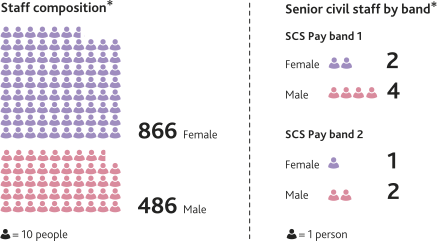
Figure 6. Directly employed staff composition and senior Civil Service staff by band
Pictograms displaying staff composition. Representing 866 female staff and 486 male staff. Senior civil service staff broken down by band. SCS pay band 1 has 2 female and 4 male staff members. SCS pay band 2 has 1 female and 2 male staff members. These numbers include the membership of the executive leadership and exclude functional leadership staff.
Note: these numbers include the membership of the executive leadership and exclude functional leadership staff.
Diversity and Inclusion
We continue to promote an inclusive environment, to attract and retain talent and build a high-performance culture that delivers for citizens. In the 2025 Civil Service People Survey, 88% of those who took part (83% of total staff numbers) gave a positive response on the theme of Inclusion and Fair Treatment.
Our diversity and inclusion initiatives include:
- Inclusive practices relating to recruitment and employment of people with diverse characteristics, such as supporting workplace adjustments, a development programme for ethnic minority staff and ongoing Disability Confident Leaders Accreditation
- A wellbeing programme which promotes awareness and signposts our people to support available, as well as enhanced training and data relating to workplace relations.
- Continuing to deliver against the Race Action Plan and Disability Action Plan, which have recently been developed into an overarching Inclusion Plan to further ensure that our diverse staff are engaged and supported to improve the service provided to citizens and legal aid providers.
Employment of disabled persons
In line with the LAA’s Disability Confident Leaders Accreditation we have continued to deliver against our commitment, ensuring our recruitment practices are inclusive for all, being open to learning from people’s experiences and ensuring our staff have access to the right workplace adjustments when they need them. We have reviewed our job adverts, updated our candidate information pack, increased the use and availability of reasonable adjustments during the recruitment process and encouraged the use of workplace passports.
Sickness absence data (not subject to audit)
Absence is a key area of focus for both our People and Operations Committee and for the LAA Workplace Wellbeing Group.
We continued to offer comprehensive wellbeing support, through clear and accessible information, events and initiatives. We also continued to embed our revised stress risk assessment process, enabling timely and focused wellbeing discussions for colleagues.
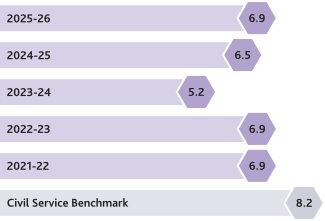
Figure 7. Sickness absence data (average number of sick days)
Bar chart displaying sickness absence data per year against the Civil Service Benchmark. 2025 to 2026 6.9 days. 2024 to 2025 6.5 days. 2023 to 2024 5.2 days. 2022 to 2023 6.9 days. 2021 to 2022 6.9 days. The Civil Service Benchmark is 8.2 days.
Staff turnover
The LAA continues to monitor turnover rates and support initiatives to maintain a healthy level of turnover as outlined in our LAA Retention Plan. The annual Civil Service People Survey helps us to understand our people’s experience of working in the LAA and take appropriate action to improve effectiveness, including where turnover becomes problematic. ‘Departmental Turnover’ includes transfers of staff within the Civil Service. These are excluded from ‘Turnover’.
Table 19. Staff turnover
| 2025-26 | 2024-25 | |||
|---|---|---|---|---|
| Turnover | Departmental turnover | Turnover | Departmental turnover | |
| LAA | 4.3% | 6.0% | 6.5% | 8.5% |
Table 20. Reporting of Civil Service and Other Compensation Schemes (subject to audit)
| 2025-26 | 2024-25 | |||||
| Compulsory redundancies | Other departures | Total exit packages | Compulsory redundancies | Other departures | Total exit packages | |
| Number | Number | Number | Number | Number | Number | |
| £10,000 | - | - | - | - | - | - |
| £10,000-£25,000 | - | 1 | 1 | - | - | - |
| £25,001-£50,000 | - | 3 | 3 | - | - | - |
| £50,001-£100,000 | - | - | - | - | - | - |
| Total number | - | 4 | 4 | - | - | - |
| Total cost (£000) | - | 142 | 142 | - | - | - |
Ill health retirement costs are met by the pension scheme and are not included in the table.
Consultancy costs
Expenditure on consultancy in 2025 to 2026 was nil (2024 to 2025: nil).
Off-payroll engagements
During the financial year 2025 to 2026, the LAA has reviewed off-payroll engagements where we are required to consider intermediaries, (IR35), legislation using HMRC guidance and online status indicator. We have advised our contracting body of the outcome of the status determinations so that, where appropriate, tax deductions are made at source from payments made in respect of the engagement with the LAA. Further details about off-payroll engagements are shown in the off-payroll tables in Annex A.
Parliamentary Accountability and Audit Report
The purpose of the parliamentary accountability and audit report is to meet Parliamentary accountability and audit requirements.
Parliamentary accountability disclosures
This section has been subject to audit.
Losses and special payments
Table 21. Losses and special payments
| 2025-26 | 2024-25 | |||
|---|---|---|---|---|
| Volume | £000 | Volume | £000 | |
| Cash losses | 19 | 31 | 1 | 1 |
| Write-offs | 9,827 | 20,133 | 3,335 | 15,988 |
| Special payments | 78 | 32 | 46 | 66 |
| Constructive loss | 6 | 1,944 | 1 | 2,808 |
| Total value of losses | 9,930 | 22,140 | 3,383 | 18,863 |
Constructive losses include impairment of digital assets that were made obsolete following the cyber-attack. Four of those assets have a value of over £300,000, those being: Application Programming Interface development (£538,600), Corporate Information System development (£394,810), Evidence Migration (£377,160) and Integrations (£364,541).
Write-offs include £20.1 million of irrecoverable historic inactive debt. The bulk of this debt had previously been impaired and was statute barred.
Potential loss
The LAA’s Counter Fraud and Intelligence (CFI) team lead on investigations into cases of suspected fraud by provider firms and individual clients. Cases of suspected criminal fraud will be reported to the police via Report Fraud. Client cases that relate to other benefits will be referred to the Department for Work and Pensions. Some cases may lead to a subsequent criminal prosecution in the courts, supported by CFI, but in many cases the CFI team will work with other internal stakeholders to take appropriate and proportionate enforcement action to recover monies assessed as being claimed fraudulently. Any monies that cannot be recovered will be classed as a loss in future Accounts.
Remote contingent liabilities
As required by Managing Public Money, in addition to contingent liabilities disclosed in accordance with International Accounting Standard (IAS) 37 in note 16 to the Accounts, the LAA is required to disclose, for parliamentary reporting and accountability purposes, certain statutory and non-statutory contingent liabilities where the likelihood of transfer of economic benefit is remote. As at 31 March 2026 there were no such remote contingent liabilities (31 March 2025: none).
Regularity of expenditure
We are a custodian of taxpayer funds and have a duty to Parliament to ensure the regularity and propriety of our activities and expenditure. We manage public funds in line with HM Treasury’s Managing Public Money. The importance of operating with regularity and the need for efficiency, economy, effectiveness and prudence in the administration of public resources to secure value for public money, is the responsibility of our Accounting Officer whose responsibilities are also set out in Managing Public Money. They include responsibility for the propriety and regularity of the public finances for which the Accounting Officer is answerable. As part of our stewardship arrangements, our Core Testing team assesses the level of error in Legal Aid payments and recoveries. Further details on their findings for 2025 to 2026 are available on page 60.
Signed for and on behalf of the Legal Aid Agency
Helen Measures
Chief Executive and Accounting Officer
Legal Aid Agency
10 November 2026
The certificate and report of the Comptroller and Auditor General to the House of Commons
Opinion on financial statements
I certify that I have audited the financial statements of the Legal Aid Agency for the year ended 31 March 2026 under the Government Resources and Accounts Act 2000.
The financial statements comprise the Legal Aid Agency’s:
- Statement of Financial Position as at 31 March 2026;
- Statement of Comprehensive Net Expenditure, Statement of Cash Flows and Statement of Changes in Taxpayers’ Equity for the year then ended; and
- the related notes including the significant accounting policies.
The financial reporting framework that has been applied in the preparation of the financial statements is applicable law and UK adopted international accounting standards.
In my opinion, the financial statements:
- give a true and fair view of the state of the Legal Aid Agency’s affairs as at 31 March 2026 and its net operating cost for the year then ended; and
- have been properly prepared in accordance with the Government Resources and Accounts Act 2000 and HM Treasury directions issued thereunder.
Emphasis of matter – cyber-attack litigation
I draw attention to the disclosures made in notes 1a and 16 of the financial statements concerning the estimate of claims for damages emanating from the recent cyber-attack. The Legal Aid Agency states that it is not possible to determine a reliable estimate for the potential legal claims disclosed as a contingent liability due to the significant uncertainty associated with them. My opinion is not modified in respect of this matter.
Opinion on regularity
In my opinion, in all material respects, the income and expenditure recorded in the financial statements have been applied to the purposes intended by Parliament and the financial transactions recorded in the financial statements conform to the authorities which govern them.
Basis for opinions
I conducted my audit in accordance with International Standards on Auditing (UK) (ISAs (UK)), applicable law and Practice Note 10 Audit of Financial Statements and Regularity of Public Sector Bodies in the United Kingdom (2024). My responsibilities under those standards are further described in the Auditor’s responsibilities for the audit of the financial statements section of my certificate.
Those standards require me and my staff to comply with the Financial Reporting Council’s Revised Ethical Standard 2024. I am independent of the Legal Aid Agency in accordance with the ethical requirements that are relevant to my audit of the financial statements in the UK. My staff and I have fulfilled our other ethical responsibilities in accordance with these requirements.
I believe that the audit evidence I have obtained is sufficient and appropriate to provide a basis for my opinion.
Conclusions relating to going concern
In auditing the financial statements, I have concluded that the Legal Aid Agency’s use of the going concern basis of accounting in the preparation of the financial statements is appropriate.
Based on the work I have performed, I have not identified any material uncertainties relating to events or conditions that, individually or collectively, may cast significant doubt on the Legal Aid Agency’s ability to continue as a going concern for a period of at least twelve months from when the financial statements are authorised for issue.
My responsibilities and the responsibilities of the Accounting Officer with respect to going concern are described in the relevant sections of this certificate.
The going concern basis of accounting for the Legal Aid Agency is adopted in consideration of the requirements set out in HM Treasury’s Government Financial Reporting Manual, which requires entities to adopt the going concern basis of accounting in the preparation of the financial statements where it is anticipated that the services which they provide will continue into the future.
Other Information
The other information comprises information included in the Annual Report, but does not include the financial statements and my auditor’s certificate and report thereon. The Accounting Officer is responsible for the other information.
My opinion on the financial statements does not cover the other information and, except to the extent otherwise explicitly stated in my certificate, I do not express any form of assurance conclusion thereon.
My responsibility is to read the other information and, in doing so, consider whether the other information is materially inconsistent with the financial statements or my knowledge obtained in the audit, or otherwise appears to be materially misstated.
If I identify such material inconsistencies or apparent material misstatements, I am required to determine whether this gives rise to a material misstatement in the financial statements themselves. If, based on the work I have performed, I conclude that there is a material misstatement of this other information, I am required to report that fact.
I have nothing to report in this regard.
Opinion on other matters
In my opinion the part of the Remuneration and Staff Report to be audited has been properly prepared in accordance with HM Treasury directions issued under the Government Resources and Accounts Act 2000.
In my opinion, based on the work undertaken in the course of the audit:
- the parts of the Accountability Report subject to audit have been properly prepared in accordance with HM Treasury directions issued under the Government Resources and Accounts Act 2000;
- the information given in the Performance and Accountability Reports for the financial year for which the financial statements are prepared is consistent with the financial statements and is in accordance with the applicable legal requirements.
Matters on which I report by exception
In the light of the knowledge and understanding of the Legal Aid Agency and its environment obtained in the course of the audit, I have not identified material misstatements in the Performance and Accountability Reports.
I have nothing to report in respect of the following matters which I report to you if, in my opinion:
- adequate accounting records have not been kept by the Legal Aid Agency or returns adequate for my audit have not been received from branches not visited by my staff; or
- I have not received all of the information and explanations I require for my audit; or
- the financial statements and the parts of the Accountability Report subject to audit are not in agreement with the accounting records and returns; or
- certain disclosures of remuneration specified by HM Treasury’s Government Financial Reporting Manual have not been made or parts of the Remuneration and Staff Report to be audited is not in agreement with the accounting records and returns; or
- the Governance Statement does not reflect compliance with HM Treasury’s guidance.
Responsibilities of the Accounting Officer for the financial statements
As explained more fully in the Statement of Accounting Officer’s Responsibilities, the Accounting Officer is responsible for:
- maintaining proper accounting records;
- providing the C&AG with access to all information of which management is aware that is relevant to the preparation of the financial statements such as records, documentation and other matters;
- providing the C&AG with additional information and explanations needed for his audit;
- providing the C&AG with unrestricted access to persons within the Legal Aid Agency from whom the auditor determines it necessary to obtain audit evidence;
- ensuring such internal controls are in place as deemed necessary to enable the preparation of financial statements to be free from material misstatement, whether due to fraud or error;
- preparing financial statements which give a true and fair view and are in accordance with HM Treasury directions issued under the Government Resources and Accounts Act 2000;
- preparing the annual report, which includes the Remuneration and Staff Report, in accordance with HM Treasury directions issued under the Government Resources and Accounts Act 2000; and
- assessing the Legal Aid Agency’s ability to continue as a going concern, disclosing, as applicable, matters related to going concern and using the going concern basis of accounting unless the Accounting Officer anticipates that the services provided by the Legal Aid Agency will not continue to be provided in the future.
Auditor’s responsibilities for the audit of the financial statements
My responsibility is to audit, certify and report on the financial statements in accordance with the Government Resources and Accounts Act 2000.
My objectives are to obtain reasonable assurance about whether the financial statements as a whole are free from material misstatement, whether due to fraud or error, and to issue a certificate that includes my opinion. Reasonable assurance is a high level of assurance but is not a guarantee that an audit conducted in accordance with ISAs (UK) will always detect a material misstatement when it exists. Misstatements can arise from fraud or error and are considered material if, individually or in the aggregate, they could reasonably be expected to influence the economic decisions of users taken on the basis of these financial statements.
Extent to which the audit was considered capable of detecting non-compliance with laws and regulations, including fraud
I design procedures in line with my responsibilities, outlined above, to detect material misstatements in respect of non-compliance with laws and regulations, including fraud. The extent to which my procedures are capable of detecting non-compliance with laws and regulations, including fraud is detailed below.
Identifying and assessing potential risks related to non-compliance with laws and regulations, including fraud
In identifying and assessing risks of material misstatement in respect of non-compliance with laws and regulations, including fraud, I:
- considered the nature of the sector, control environment and operational performance including the design of the Legal Aid Agency’s accounting policies, key performance indicators and performance incentives;
- inquired of management, the Legal Aid Agency’s head of internal audit and those charged with governance, including obtaining and reviewing supporting documentation relating to the Legal Aid Agency’s policies and procedures on:
- identifying, evaluating and complying with laws and regulations;
- detecting and responding to the risks of fraud;
- the internal controls established to mitigate risks related to fraud or non-compliance with laws and regulations including the Legal Aid Agency’s controls relating to the Legal Aid Agency's compliance with the Government Resources and Accounts Act 2000, Managing Public Money, Civil Legal Aid Regulations, Criminal Legal Aid Regulations and the Legal Aid, Sentencing and Punishment of Offenders Act 2012, and other relevant pieces of legislation stipulating legal aid fees;
- inquired of management, the Legal Aid Agency’s head of internal audit and those charged with governance whether:
- they were aware of any instances of non-compliance with laws and regulations;
- they had knowledge of any actual, suspected, or alleged fraud;
- discussed with the engagement team, regarding how and where fraud might occur in the financial statements and any potential indicators of fraud.
As a result of these procedures, I considered the opportunities and incentives that may exist within the Legal Aid Agency for fraud and identified the greatest potential for fraud in the following areas: revenue recognition, posting of unusual journals, complex transactions and bias in management estimates. In common with all audits under ISAs (UK), I am required to perform specific procedures to respond to the risk of management override.
I obtained an understanding of the Legal Aid Agency’s framework of authority and other legal and regulatory frameworks in which the Legal Aid Agency operates. I focused on those laws and regulations that had a direct effect on material amounts and disclosures in the financial statements or that had a fundamental effect on the operations of the Legal Aid Agency. The key laws and regulations I considered in this context included the Government Resources and Accounts Act 2000, Managing Public Money, employment law, tax legislation and the relevant pieces of legislation stipulating Legal Aid fees.
Audit response to identified risk
To respond to the identified risks resulting from the above procedures:
- I reviewed the financial statement disclosures and testing to supporting documentation to assess compliance with provisions of relevant laws and regulations described above as having direct effect on the financial statements;
- I enquired of management, the Audit and Risk Assurance Committee concerning actual and potential litigation and claims;
- I reviewed minutes of meetings of those charged with governance and the Board; and internal audit reports; and
- I addressed the risk of fraud through management override of controls by testing the appropriateness of journal entries and other adjustments; assessing whether the judgements on estimates are indicative of a potential bias; and evaluating the business rationale of any significant transactions that are unusual or outside the normal course of business.
I communicated relevant identified laws and regulations and potential risks to all engagement team members and remained alert to any indications of fraud or non‑compliance with laws and regulations throughout the audit.
A further description of my responsibilities for the audit of the financial statements is located on the Financial Reporting Council’s website at: www.frc.org.uk/auditorsresponsibilities. This description forms part of my certificate.
Other auditor’s responsibilities
I am required to obtain sufficient appropriate audit evidence to give reasonable assurance that the expenditure and income reported in the financial statements have been applied to the purposes intended by Parliament and the financial transactions recorded in the financial statements conform to the authorities which govern them.
I communicate with those charged with governance regarding, among other matters, the planned scope and timing of the audit and significant audit findings, including any significant deficiencies in internal control I identify during my audit.
Report
I have no observations to make on these financial statements.
Gareth Davies
12 November 2026
Comptroller and Auditor General
National Audit Office
157-197 Buckingham Palace Road
Victoria
London
SW1W 9SP
Footnotes
-
Hitesh Patel was an Invitee to LAA Board from 1 April 2025 to 26 January 2026 and a Member of LAA Board from 27 January 2026.↩
-
In addition, 9 of 10 LExCo meetings were attended by Deputy Director of Finance as official representative of the Director of Finance, see Invitees to Board below.↩
-
Jane Harbottle CBE has a dual workplace agreement, the costs illustrate the taxable benefit in kind for all travel to and from dual workplace locations.↩
-
Adrian Hannell is remunerated by the MOJ Core Department and is not an LAA staff member. He joined the LAA Board on 10 March 2025. ↩
-
Hitesh Patel joined LAA Board on 27 January 2026.↩
-
The percentage change is calculated using the total for all employees on an annualised basis, excluding the highest paid director, divided by the full time equivalent number of employees. ↩
-
The percentage change is calculated using the mid-point of the band of each of salary and allowances and bonus paid. ↩
-
For more information see: www.gov.uk/government/collections/how-the-public-service-pension-remedy-affects-your-pension ↩
-
The remuneration includes £2,400 (2024 to 2025: £2,400) as Chair of the LAA ARAC. ↩