International Climate Finance KPI 8 methodology: Ecosystem loss avoided as a result of International Climate Finance
Published 1 March 2024

© Crown copyright 2024
This publication is licensed under the terms of the Open Government Licence v3.0 except where otherwise stated. To view this licence, visit nationalarchives.gov.uk/doc/open-government-licence/version/3 or write to the Information Policy Team, The National Archives, Kew, London TW9 4DU, or email: psi@nationalarchives.gov.uk.
Where we have identified any third party copyright information you will need to obtain permission from the copyright holders concerned.
This publication is available at https://www.gov.uk/government/publications/international-climate-finance-kpi-8-methodology-ecosystem-loss-avoided/international-climate-finance-kpi-8-methodology-ecosystem-loss-avoided-as-a-result-of-international-climate-finance
Purpose of the document
International Climate Finance (ICF) is Official Development Assistance (ODA) from the UK to support developing countries to reduce poverty and respond to the causes and impacts of climate change. These investments help developing countries to:
- adapt and build resilience to the current and future effects of climate change
- pursue low-carbon economic growth and development
- protect, restore and sustainably manage nature
- accelerate the clean energy transition
ICF is spent by the Foreign, Commonwealth and Development Office (FCDO), the Department for Environment, Food and Rural Affairs (Defra), the Department for Energy Security and Net Zero (DESNZ) and the Department for Science, Innovation and Technology (DSIT).
This methodology note explains how to calculate one of the key performance indicators (KPI) that we use to measure the achievements of UK ICF. The intended audience is ICF programme teams, results leads, climate analysts and our programme implementing partners. Visit the International Climate Finance GOV.UK webpage to learn more about UK International Climate Finance, its results and read case studies.
Rationale
The UK’s international climate finance aims to tackle climate change through a combination of mitigation and adaptation measures. Protecting nature is key to reducing greenhouse gas emissions, preserving biodiversity and maintaining the flow of ecosystem services that support livelihoods. This indicator provides a broad measure of success against the headline outcome of reduced habitat and ecosystem loss, including forests and other essential ecosystems.
Summary table
Table 1: ICF KPI 8 reporting requirements
| Units | Hectares (for example, 100,000, not abbreviated as 100K) |
|---|---|
| Headline data to be reported | Annual difference in area of ecosystem coverage. |
| Disaggregation | Ecosystem type; Ecosystem condition; Ecosystem pressure removed; Countries (see Table 2 and Annex 2 for more details) |
| Revision history | December 2025: some figures converted to tables for improved accessibility. Revision of text in table 3 on qualitative+ counterfactual for clarity. February 2023: this indicator has been expanded to include other ecosystem types beyond forests, and to include an indicator of ecosystem condition. We have also added further disaggregation by ecosystem type, pressure removed and country affected, and the examples of counterfactual options have been expanded. |
| Timing | ICF programme teams will be commissioned to report ICF results in spring, according to department-specific processes. Report results for the most recent complete programming year. If reporting lags mean that results are only available more than a year after they were delivered, enter them under the relevant earlier year. In the case of reporting on ecosystem condition, annual assessments may not be feasible. A baseline and end-of-programme re-assessment must be conducted as a minimum. Programmes may report at set milestones within programme timeline or annually if they have capacity. Please set the frequency of this in your initial indicator set-up (see Annex 1). |
| Link to other ICF KPIs | ICF KPI 8 is closely linked to ICF KPI 6, ICF KPI 17 and ICF KPI 10. ICF KPI 6 (greenhouse gas emissions reduced or avoided): The area of ecosystem loss avoided may be used to calculate avoided greenhouse gas emissions, which can be reported under ICF KPI 6. This is likely to be particularly relevant for areas of forest habitats. ICF KPI 10 (value of ecosystem services): By avoiding ecosystem loss, it is likely that you would also be avoiding the loss of associated ecosystem services. Therefore, the area reported under ICF KPI 8 may be used to inform the value of ecosystem services reported under ICF KPI 10. ICF KPI 17 (area under sustainable management): ICF KPI 8 specifically looks at changes in the area covered by the ecosystem of interest, while ICF KPI 17 measures areas under sustainable management. In many cases, sustainable management will not change the size of the area covered, but may improve its condition. However, some types of sustainable management may affect the area covered, in which case it is possible to report the same areas under both ICF KPI 8 and 17. |
Technical definition
This indicator measures the difference in area of ecosystem coverage resulting from an ICF project, relative to the counterfactual of what would have happened in the absence of the intervention. This indicator therefore assesses the area where ecosystem loss has been avoided as a result of intervention. Additionally, this indicator also assesses if the condition of the habitat retained has been maintained in a functioning state and not degraded.
Methodological summary
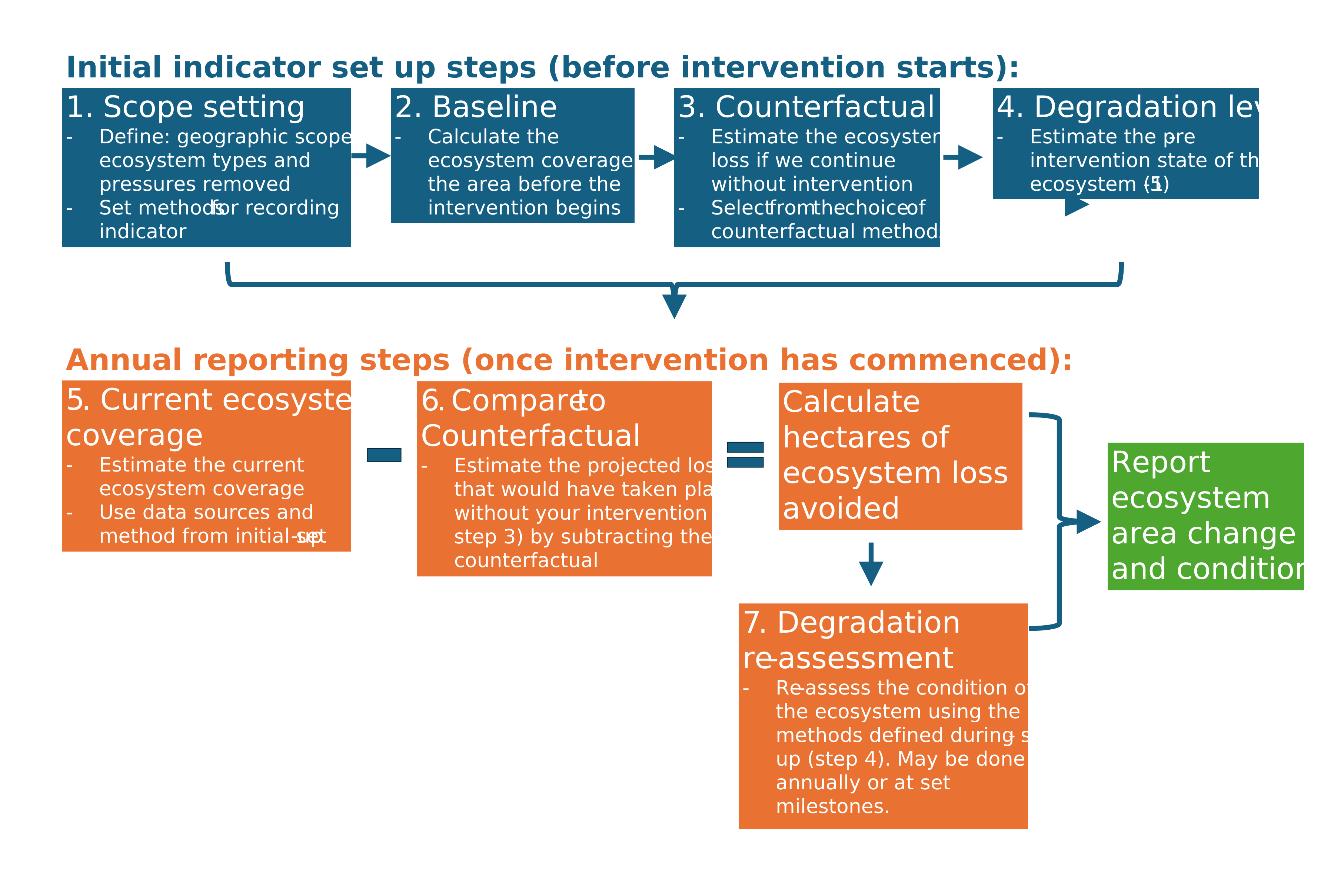
ICF KPI 8 reports the number of hectares where ecosystem loss has been avoided, as well as assessing the habitat condition to check that degradation has not occurred in that area. The main methodological steps are summarised in Figure 1 and expanded in the section below.
- Define the scope, methods and data sources to be used for your results: Define the geographic area affected by your intervention. Specify the countries where your intervention takes place. Identify the types of ecosystems present. Specify how you will measure the ecosystem coverage and condition. Identify the key pressures on those ecosystems that your intervention will address.
- Identify a baseline of the area and condition of each ecosystem type you will report on.
- Estimate the counterfactual of what would happen to the area of that ecosystem in the absence of your intervention.
- For annual reporting, calculate the current ecosystem coverage for each ecosystem type.
- Adjust for additionality: calculate the difference between the recorded ecosystem coverage compared to the counterfactual.
- Adjust for attribution if necessary.
- Estimate the current ecosystem condition (either annually or at defined intervals in your programme) and compare this to the counterfactual.
- Report disaggregated results: report change in ecosystem coverage and ecosystem condition, disaggregated by ecosystem type, country and pressure types removed.
Figure 1: ICF KPI 8 methodological summary
Methodology
Indicator set-up
This covers steps 1 to 4 from Figure 1. These steps only need to be followed the first time you set up this indicator. You will not need to repeat these steps for subsequent annual reporting.
Step 1: Initial scope setting
Programme teams should set the scope for this indicator. This step has 5 tasks:
1.1 Define the geographic extent of the impact area.
1.2 Identify the key ecosystem types(s) within your impact area from the categories in Annex 2.
1.3 Define the methods and source of data you will use to measure the difference in area of your ecosystem coverage, both for initial baseline, the counterfactual and subsequent annual re-measures.
1.4 Define the methods you will use to measure the condition of the ecosystem both for initial baseline, the counterfactual (if feasible) and subsequent re-measure.
1.5 Define the pressures removed through programme intervention.
1.1: Define the geographic extent of the impact area
The extent to which a programme’s geographic scope and ecosystem boundaries are defined within the business case may vary. Where political or geographic boundaries are not clearly defined, such as in a multilateral programme, you will need to define your programme’s impact area. This may require discussions with stakeholders to determine the area this indicator will focus on. Some programmes may cover multiple areas or countries, these should be recorded in the data.
1.2: Define the methods for measuring coverage of the different ecosystem types
Once the geographical scope has been defined, you should estimate the ecosystem composition within the area of impact. You should identify the most suitable data source for measuring ecosystem coverage for the chosen area. Some considerations when selecting a data source include:
- availability: does it cover your area and ecosystems of interest? is it open source or is there a cost? Are there any licensing restrictions? Will it continue to be available for the lifetime of the programme?
- timeliness: when was it published? Will data be updated regularly and in time for annual reporting?
- resolution: is the data of adequate resolution to accurately measure changes in the area at a scale relevant to your project?
The data source(s) selected should be recorded in your indicator set-up record (see Annex 1) as ‘Ecosystem Coverage Data Used’ so that the same source can be used for repeat measurements in future years (Step 4).
It may not be possible to report all ecosystem types within the target area (for example, because of limited data availability). In this case it is acceptable to focus on the dominant ecosystem type(s) over your intervention area. The possible ecosystem types to use in reporting are outlined in Annex 2.
Data on ecosystem coverage is available from a range of sources in a variety of formats, including satellite imagery and downloadable GIS data. These may vary in how far back the data goes, frequency of updates and their ability to identify small changes in coverage. Some examples of data sources that may be useful for your assessment include:
- Global Forest Watch: this online data tool allows policy makers to analyse forest loss using a web-based tool
- EcoOnline have developed an online tool that provides data on forest, biodiversity and water risks for supply chain monitoring. This may be useful for your programme but does have a financial cost
- FAO’s B-INTACT: the Biodiversity Integrated Assessment and Computation Tool has been designed to allow a thorough biodiversity assessment of project-level activities in the Agriculture, Forestry and Land Use (AFOLU) sectors. You need to register to download the tool but it is free to use
- Biodiversity Mapping: provides maps of the areas of biodiversity hotspots for different taxonomic groups, which may be useful for informing your areas of interest and key habitats
- the Biodiversity Intactness Index – A database of local biodiversity intactness under different shared socioeconomic pathways, predicting trends from 1970 to 2050
- GEO BON: brings together a range of sources of geographic information and guidance to support biodiversity observation and monitoring.
- depending on where you are working, there may be local data available through national records or geographic databases
Note that re-measuring ecosystem condition is not required for annual reporting if you do not have capacity. We ask as a minimum that condition is assessed at the beginning and end of your programme. Additional milestone measurement would be welcome where possible, possibly alongside planned evaluations.
1.3: Define methods for measuring condition of the ecosystem(s)
It is unlikely that a complete assessment of the condition of the ecosystems across an area will be within a programme’s capacity, but it is useful to capture a general picture of condition so that we can measure where the areas being measured are not becoming degraded.
For reporting purposes, the ecosystem condition should be recorded against a 5-point scale, from intact to habitat loss occurring, using the scale shown in Table 2.
Table 2: Ecosystem condition assessment scale
| Score | Description |
|---|---|
| 5 | Intact: no signs of degradation. Healthy ecosystem with no obvious signs of disturbance/pressures |
| 4 | Good: but some early signs of degradation. Ecosystem looks generally healthy and intact, but there is some evidence of disturbance/impacts. |
| 3 | Moderate: degradation apparent. Disturbance pressures visibly impacting ecosystem with other negative impacts expected on biodiversity and ecosystem function. |
| 2 | Highly degraded: high degradation apparent. Ecosystem visibly changed from healthy state, with impacts on biodiversity and ecosystem functions. |
| 1 | Habitat loss occurring. Ecosystem is no longer in a healthy or functioning state, with major impacts on biodiversity and ecosystem function in the area. |
| N/A | No data available. If unable to measure condition, input N/A. Similarly, if no re-measure of ecosystem’s condition has occurred that year, input N/A rather than recording a previous condition assessment score. |
The condition score should be supported by evidence to show how you have assessed the ecosystem condition which will vary depending on the ecosystem types and the programme’s capabilities. This evidence should be recorded in your results return, either on REX or in your departmental results template, alongside the score given. The method used must be clearly defined in advance and suited to repeat surveys to check the state of the ecosystem after intervention. Examples of methods that could be used include, but are not limited to:
- habitat intactness estimates (for example, from satellite data or vegetation surveys)
- indicator species abundance (for example, from eDNA or point surveys)
- species richness or composition (for example, from eDNA or point surveys)
- qualitative evidence from on-the-ground assessments (for example, evidence gathered from indigenous people and local communities (IPLC)
If it is not possible to fully assess the ecosystem condition or use the methods above then other methods not listed here are also permitted provided you can show that they reflect an acceptable level of accuracy within the context of your programme’s intervention (for example, area of deforestation avoided). Please consult with a suitable analyst.
1.4: Identify the ecosystem pressures removed
Identify the primary pressures your intervention aims to remove to reduce ecosystem loss. Please see Annex 2 for a list of pressure categories. Some examples of pressures that your intervention may be reducing or removing include:
- forests: reduced land conversion because of protection; reduced logging due to controls; reduced extraction due to support for alternative livelihoods or area protected through REDD+ benefit sharing
- mangroves: reduced deforestation due to removal of shrimp farming licences or the prevention of charcoal production
- grassland: reduced land conversion because of protection; reduction in grazing pressures due to control of cattle
- coral reef: reduced extraction/ habitat destruction due to ban of certain types of fishing; reduced pollution due to tourism restrictions; reduced poaching due to improved policing of protected areas
Step 2: Establish the baseline area covered by the ecosystem and the baseline ecosystem condition
Using the method selected in step 1.2, measure the area covered by your ecosystem type(s) before project activities begin. Using the method defined in step 1.3, determine the pre-intervention condition of the ecosystem within your impact area. If more than one ecosystem type is present, assess the dominant type (for example, largest % cover). If you want to submit data for multiple ecosystem types present, then this can also be added but is not a requirement.
Note: In the case of ecosystem condition, we only expect that you monitor the ecosystem condition compared with the pre-intervention baseline, as establishing a reliable counterfactual scenario may be unfeasible (but can be incorporated if your project allows).
Step 3: The counterfactual: estimate the coverage in the absence of the intervention
A counterfactual is an estimate of what is expected to occur in the absence of intervention (in other words, what would happen to the ecosystem coverage without this programme?). A baseline is NOT the same as a counterfactual. A baseline is a static starting point, whereas a counterfactual will estimate future loss in the absence of your programme. You will use the counterfactual to estimate the loss you have avoided with your programming intervention.
The counterfactual will be used to compare against the actual ecosystem coverage your programme records over the course of the intervention. This will then determine the area of ecosystem loss your intervention has been successful in avoiding. The counterfactual may vary over time (for example, expected forest loss over 10 years may be different to expected loss in 1 year). There are 5 suggested methods for estimating your counterfactual. These are summarised in Figure 3 to help identify the one most suited to your programming.
Table 3: Counterfactual method options
| Method | Requirements | Key assumption |
|---|---|---|
| Historical | Requires historical data of a minimum of five years | Assumes without intervention, the rate of ecosystem loss would continue to follow the same trend as previous years |
| Modelled | Requires modelling of key drivers and more analytical resource/skills than other methods | Assumes modelling key drivers will give accurate predictions on ecosystem loss |
| Control area comparison | Requires a control area similar to your intervention but without any programming | Assumes comparison to control area will reflect what would have occurred in your area in the absence of the intervention |
| Qualitative+ assessment | Requires use of qualitative data that may be corroborated by quantitative data sources when data quality or availability is poor | Assumes that qualitative data, such as interviews with local people, could provide an estimate of likely trajectory in absence of intervention. Smaller programmes or programmes working in data poor areas may consider this method but should consult a suitable analyst to support the design |
Note: The method selected for your counterfactual should be noted in your indicator set-up (See Annex 1). This will enable the results to be quality assured and the same sources used for repeat assessments.
1. Continued historical trend
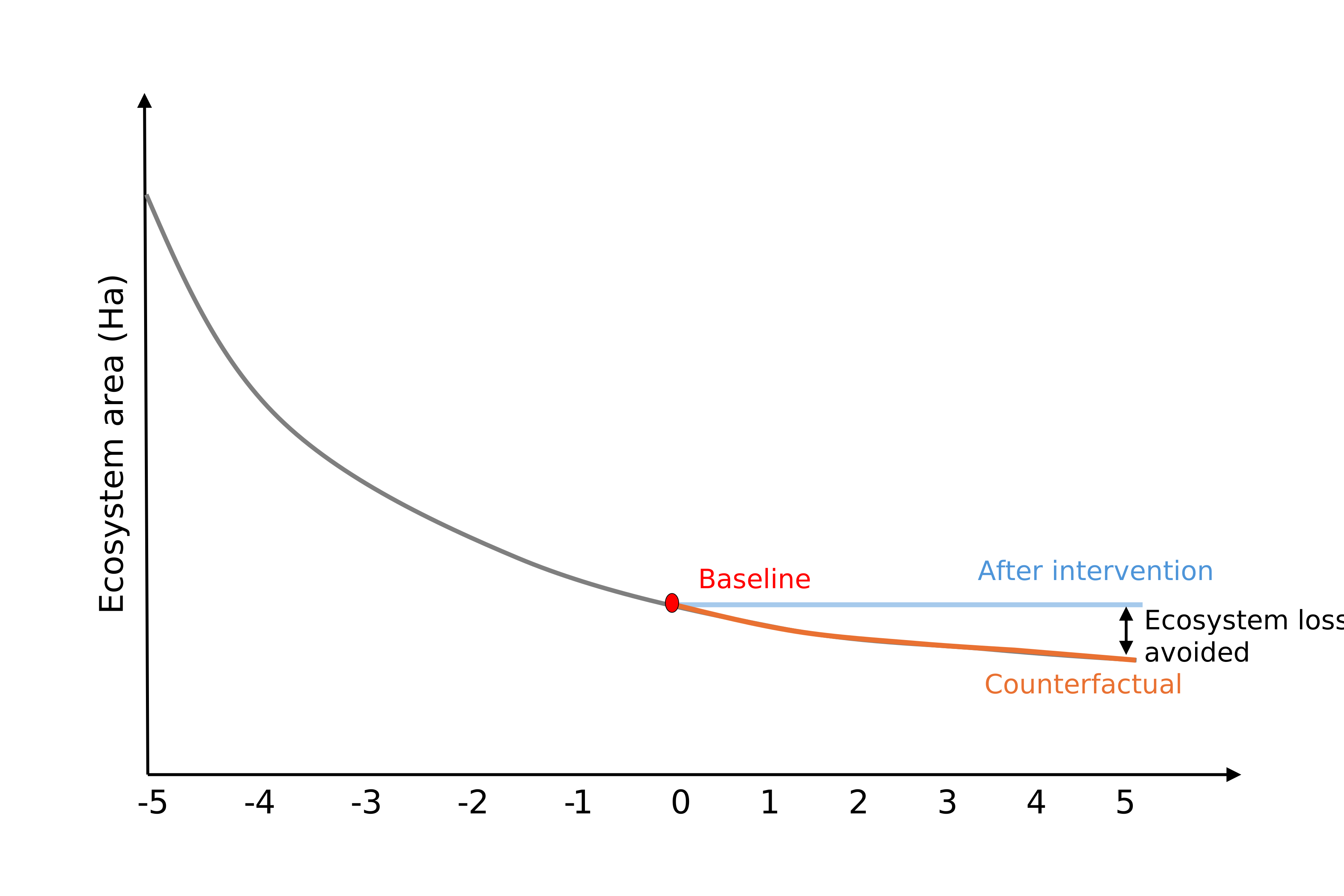
This method assumes the future will be like the past: for example, without the intervention the average rate of ecosystem loss would continue to follow the same trend as in previous years (Figure 2). This allows you to estimate what the ecosystem cover would be in 2 years without your intervention, compared to the actual forest cover measured 2 years into your project – the difference between these (the projection and the actual) is what you report for ICF KPI 8.
This approach may be selected if historical data are available for at least five years prior to the intervention (10 years is recommended). Particularly for forest programmes, this may be the simplest option as many countries or jurisdictions publish their own forest reference levels (FRELs) that may be appropriate to use, or at least provide a sense check.
Figure 2 Example of continued historical trend, showing baseline and counterfactual
2. Modelled future trajectory
A modelled trajectory seeks to predict future deforestation in the project area by modelling the key drivers of land use change, for example population, economic growth, and commodity prices. Observed land use change is compared with predicted land use change from the model. This may require more analytical resource than a simple historical trend, but may be a preferred approach where programmes have the data and capacity. Defra’s Blue Forests Programme uses a modelled trajectory.
3. Control area
Another approach is to have a comparison or control area, such as in a randomised control trial. In this approach an area similar in characteristics is compared over time to the intervention area[footnote 1]. This is typical in impact evaluation, but due to the extent of data collection and analysis required, it may only be feasible where a programme has built in a quantitative impact evaluation at the inception of the project.
4. Qualitative +
Qualitative data can be used in combination with historic/remote sensing data to estimate prior and future land use changes. Qualitative data could be collected from stakeholders as a proxy (for example, through interviews with local people), to gain a better understanding of how the land would likely be used if not for the programme intervention. This could include sharing maps with local groups and asking them to identify what areas they feel are most at risk, or where logging, hunting or agricultural conversion might be likely to take place. This could then be used to estimate the approximate area of habitat that is at risk of being lost or degraded.
If using this approach, teams should develop a specific approach to this methodology for their programme, including defining the survey questions to be used and any adjustments applied to correct for uncertainty. Please ensure you consult a suitable analyst to ensure the method designed is robust and meets minimum requirements for this indicator.
Leakage: When comparing your ecosystem coverage against a counterfactual, you should take into consideration if there is any risk of leakage occurring. This is where non-target areas could be either positively or negatively affected by activity displacement. For example, shutting down illegal logging in one region or country could simply displace companies to another area with weaker governance structures in place.
If you feel this is a risk, a discount can be made to the results to account for this - for conservativeness, ICF appraisal guidance suggests a 25% reduction in the absence of specific data. But this is flexible, so can be revised up or down by the programme team, depending on the evidence and mitigation measures put in place.
If the ICF programme is unable to estimate what the counterfactual is, it is suggested to use an ‘adjustment factor’. This adjustment factor should be applied after all other steps in the calculation process are completed. Please ensure you consult a suitable analyst to ensure the adjustment factor is appropriate.
Annual Indicator reporting
This covers steps 4 to 8 from Figure 1, to be repeated annually. Steps 1 to 3 do not need to be repeated as they are only needed for initial indicator set-up.
Step 4: Estimate actual ecosystem coverage
This step requires new data to reassess ecosystem coverage within your programme’s impact area, to understand what the current cover is at this point in your programme. The data source used should be the same as that chosen during step 1. Using your chosen method, measure the area covered by your ecosystem(s) of interest, following the methodology defined in step 1.
Step 5: Calculate ecosystem loss avoided
This is calculated by subtracting the current ecosystem coverage (step 4) from the counterfactual (step 3) to estimate what area is additional as a result of the ICF programme. An example of how to record the data is included in Table 3. For further information on additionality, please refer to the attribution and additionality supplementary guidance.
Step 6: Adjust for attribution if necessary
For multilateral programmes or programmes with multiple partners, report results in proportion to the UK’s donor share. For further information on attribution, refer to the attribution and additionality supplementary guidance.
Step 7: Assess ecosystem condition to check for degradation
This is calculated by re-assessing the condition of the ecosystem at the time of reporting and comparing this to the condition at the start of the programme. This may be done annually or at suitable milestones in your project. As a minimum we would expect an assessment of condition at the start and end of your programme. The same 1 to 5 scale should be used (Table 2) and N/A reported when a re-measure of condition did not occur during that reporting year.
If, upon re-assessment, the condition drops to ‘1: Habitat Loss’ then your area can no longer be reported under ICF KPI 8. If condition drops to ‘2: Highly degraded’ then this should be excluded from reporting unless clearly explained in the narrative of your indicator why this should remain when reporting. This is because, while the area coverage may remain, ecosystem function has been lost to a point where it would be misleading to suggest ecosystem loss was avoided.
If regeneration is a possibility, details on what measures you are taking to increase the condition/avoid complete habitat loss occurring will need to be provided. If natural hazards have occurred in your programme area, re-baselining may be needed for future reporting.
Make sure you collect the results in a format that shows your calculations, such as the results template example in Annex 1. This should be submitted alongside your results submission, to support quality assurance and reproducibility of the results.
Step 8: Report disaggregated results
Submit your results return using the REX data platform or your departmental results template. Including all disaggregations and supporting evidence, including calculations and data sources used.
Make sure you collect the results in a format that shows your calculations, such as the results template example in Annex 1. This should be submitted alongside your results submission, to support quality assurance and reproducibility of the results.
Data quality
Portfolio ICF results are published following the UK statistics authority Code of Practice for Statistics. This means that we make efforts to maximise the trustworthiness, quality and value of the statistics. To support ICF data quality, please:
- Review ICF KPI results provided by programme partners, ensuring that methodologies have been adhered to, and calculations are documented and correct.
- Ask a suitable analyst or climate adviser to quality assure ICF results before submission.
- Submit ICF results following the instructions specific to your department. Include supporting documentation of calculations and any concerns about data quality.
- A revision to historical results may be needed if programme monitoring systems or methodologies are improved, or historical data errors are found. Please update results for earlier years as necessary, and make a note in the return. ICF results are reported cumulatively, therefore it is important to make these corrections.
Questions about results reporting can be discussed with central ICF analysts, who undertake a further stage of quality assurance before publication.
Annex 1: Example data template and results format
Table 4 shows an example of how you may wish to set up your initial record for this indicator as you complete methodology steps 1 to 4. This will provide a record of what data were used to calculate the results and allow easier reproducibility in future years. This can be saved alongside your logframe and submitted together with your ICF results return. Table 5 shows how you may wish to collect the data in a format that makes it easy to calculate the results and enter the key information required for our database, as shown in Table 6.
Table 4: Template for documenting indicator reporting details to facilitate reproducibility in future years.
Replace the [guidance text in square brackets] to complete.
| Reporting frequency | [This indicator should be reported annually] |
|---|---|
| Attribution | [State the attribution your programme has used to calculate the ICF results for this indicator] |
| Disaggregation to be reported | Ecosystem type(s): [Report the dominant ecosystem type within your impact area and, if possible, list other ecosystem types that are also present (Annex 2: lists categories you should select from).] Ecosystem condition: [Report the condition of the ecosystem using the scale provided (1 to 5). If it has been re-measured this reporting year, report this using the scale along with supporting evidence. If it was not re-measured this reporting year put N/A.] Pressure(s) removed: [List the pressures that your intervention is removing to reduce ecosystem loss and degradation. See Annex 2 for categories.] Country: [Record the countries your interventions are taking place in.] |
| Data Sources used: | [Clearly state the data source(s) that have been used for: Ecosystem coverage data, Degradation/condition data] |
| Methodology Selected: | Briefly state the methods your programme has chosen to use for the following: Counterfactual area method: [how will you assess what the coverage of your ecosystem(s) of interest would be in the absence of the intervention?] Condition/degradation method: [how will you assess what the condition of your ecosystem(s) of interest would be in the absence of the intervention?] Clearly state any modifications your programme has made to the standard methodology when reporting this indicator. [Please ensure you confirm any methodology changes with an ODA/ICF analyst before implementing to ensure results are still reportable.] |
Baseline data:
| Country | Ecosystem Type | Ecosystem condition (1-5) or NA | Ecosystem coverage (Ha) |
|---|---|---|---|
Counterfactual ecosystem coverage (Ha) estimate
| Ecosystem type(s) (Biome level) | Year 1 | Year 2 | Year 3 | Year 4 | Year 5 | Year 6 | Year 7 | Year 8 | Year 9 | Year 10 |
|---|---|---|---|---|---|---|---|---|---|---|
Table 5: Example results format
To calculate your results, you should first collect the data in a format that allows you to calculate the change in area and condition for each ecosystem type. An example of how to record the changes in ecosystem coverage and condition for multiple habitat types is included below – you can use this template if useful. The values highlighted in blue are the results that should be entered into REX (or your departmental results form) to report progress on ICF KPI 8, based on a fictional example.
| Country | Ecosystem type | Counterfactual: Area covered in absence of intervention (HA) | Baseline: Ecosystem condition before intervention | Actual: Area covered - current year (HA) | Actual: Ecosystem condition (1-5 or N/A) | Pressure removed | Ecosystem loss avoided at time of reporting (HA) | Comments |
|---|---|---|---|---|---|---|---|---|
| Ecuador | Tropical-subtropical forests | 50 | 5: Intact | 100 | 5: Intact | Mining | 50 | Intervention: Expansion of protected area with limits on mining rights. Condition: assessed through habitat intactness survey and consultation of local community (link to report) |
| Ecuador | Tropical-subtropical forests | 200 | 4: Good | 200 | N/A: No Data Available | Logging | 0 | Intervention: Improved condition of forest due to reduced logging pressure. Condition: will not be re-assessed until end of programme reporting. |
| Ecuador | Lakes | 20 | 4: Good | 40 | 4: Good | Pollution | 20 | Intervention: reduced pollution through control at source from local factory. Condition: invertebrate survey conducted (link to report) |
| Ecuador | Shrublands and shrubby woodland | 40 | 3: Moderate | 55 | 2: Highly Degraded | Land conversion | 15 | Intervention: Control of burning for land conversion. Condition: habitat intactness survey (link to report). Though ecosystem loss has been avoided, degradation has occurred on the area due to fires. A management plan to improve this and reduce further degradation (link to report). |
Once you have calculated the results achieved, these should be entered into the REX database or submitted in your departmental results return. An example of how this should be presented is included in Table 6, including an example of additional comments on methods used etc.:
Table 6: example of data entry in REX
| ID | Country | Ecosystem Type | Ecosystem Condition | Ecosystem Pressure Removed | Planned | Actual | |
|---|---|---|---|---|---|---|---|
| 223851 | Ecuador | T1: Tropical-Subtropical forests | 5: Intact | Mining | 50 | 50 | |
| 223852 | Ecuador | T1: Tropical-Subtropical forests | N/A: No Data Available | Logging | 0 | 0 | |
| 223853 | Ecuador | F2: Lakes | 4: Good | Pollution | 20 | 20 | |
| 223854 | Ecuador | T3: Shrublands and shrubby woodland | 2: Heavily Degraded | Land Conversion | 15 | 15 |
COMMENTS: Ecosystem condition assessment: Lakes - invertebrate survey conducted (include link to report) Tropical forest and shrubland - habitat intactness survey and consultation of local community (include link to report). Functional Group: The functional group within this biome is ‘Tropical heath forests’ as stated in the IUCN Global Ecosystem list. Interventions applied/pressure removed: Forest protection status upgraded to National Park and logging permits withdrawn. Shrubland land conversion burning controls put in place, but unsuccessful. Lake pollution reduced through withdrawal of mining permits.
Annex 2: Disaggregation options
Ecosystem types
Please use the following biome categories for disaggregation of ecosystem type when reporting against this indicator. A list of functional groups that fit under each biome category can be found in the IUCN typology guidance to aid you in your selection. Please take the time to carefully review the functional groups before determining what biome to report for the ‘ecosystem type’ for this indicator.
Some biomes listed here may not be suitable for this indicator (for example, intensive land use is usually of negligible conservation value), please review your ecosystem type carefully before reporting under ICF KPI 8. If your area has low conservation value, it may be that loss avoided is not a suitable measure.
Terrestrial
- tropical-subtropical forests
- temperate-boreal forests and woodlands
- shrublands and shrubby woodland
- savannas and grasslands
- deserts and semi-deserts
- polar-alpine Intensive land-use
Marine
- marine shelf
- pelagic ocean waters
- deep sea floors
- anthropogenic marine
Freshwater
- rivers and streams
- lakes
- artificial wetlands
Subterranean
- subterranean lithic systems
- anthropogenic subterranean voids
Marine-Terrestrial
- shoreline systems
- supralittoral coastal systems
- anthropogenic shorelines
Subterranean-Freshwater
- subterranean freshwaters
- anthropogenic subterranean freshwaters
Freshwater-Marine
- semi-confined transitional waters
Marine-Freshwater-Terrestrial
- brackish tidal systems
Subterranean-marine
- subterranean tidal systems
Freshwater-Terrestrial
- palustrine wetlands
Pressure Types
Disaggregation options for ecosystem pressure reduced or removed:
- logging
- water extraction
- hunting/fishing
- mining
- other resource extraction
- invasive species
- pollution (specify in comments: nutrients, pesticides or other pollution types)
- land/sea conversion (detail in comments)
- illegal trade
- other (enter details in comments)
Annex 3: Definitions
Additionality: Results are additional if they are beyond the results that would have occurred in the absence of the ICF-supported intervention under a ‘business as usual’ counterfactual (see definition below and supplementary guidance on additionality and attribution).
Attribution: Attribution refers to allocating responsibility for results among all actors that have played a causal role in their delivery. This is commonly done based on share of financial contributions. However, there are situations where greater nuance is needed, as with ICF KPI 11 and ICF KPI 12 on public and private finance mobilised, where a broader range of factors is considered. See supplementary guidance on additionality and attribution.
Climate change[footnote 2][footnote 3]: A change of climate which is attributed directly or indirectly to human activity that alters the composition of the global atmosphere, and which is in addition to natural climate variability observed over comparable time periods.
Climate change adaptation[footnote 4]: The process of adjustment to actual or expected climate and its effects. In human systems, adaptation seeks to moderate or avoid harm or exploit beneficial opportunities. In some natural systems, human intervention may facilitate adjustment to expected climate and its effects.
Counterfactual: The situation one might expect to have prevailed at the point in time in which a programme is providing results, under different conditions. Commonly, this is used to refer to a ‘business-as-usual’ counterfactual case that would have been observed had the ICF-supported intervention not taken place.
Effects of climate change: Effects of both observed climate variability and expected impacts of future climate change on lives, livelihoods, health, ecosystems, economies, societies, cultures, services, and infrastructure.
Mitigation (of climate change)[footnote 5]: A human intervention to reduce the sources or enhance the sinks of greenhouse gases.
Public finance: Funding from governments, or organisations such as development banks where governments own more than 50% of equity.
Resilience[footnote 6]: The capacity of social, economic and environmental systems to cope with a hazardous event or trend or disturbance, responding or reorganising in ways that maintain their essential function, identity and structure, while also maintaining the capacity for adaptation, learning and transformation.
-
As an example, see Jayachandran et al (2017) ‘Cash for carbon: A randomized trial of payments for ecosystem services to reduce deforestation’ Science Jul 21;357(6348): 267-273 ↩
-
United Nations. (1992). United Nations Framework Convention on Climate Change, pp. 7. ↩
-
UNFCCC Glossary, Article I, Page 120 ↩
-
IPCC, 2014: Annex II: Glossary [Mach, K.J., S. Planton and C. von Stechow (eds.)]. In: Climate Change 2014: Synthesis Report. Contribution of Working Groups I, II and III to the Fifth Assessment Report of the Intergovernmental Panel on Climate Change [Core Writing Team, R.K. Pachauri and L.A. Meyer (eds.)]. IPCC, Geneva, Switzerland, p118. ↩
-
IPCC, 2014: Annex II: Glossary [Mach, K.J., S. Planton and C. von Stechow (eds.)]. In: Climate Change 2014: Synthesis Report. Contribution of Working Groups I, II and III to the Fifth Assessment Report of the Intergovernmental Panel on Climate Change [Core Writing Team, R.K. Pachauri and L.A. Meyer (eds.)]. IPCC, Geneva, Switzerland, p125. ↩
-
IPCC, 2014: Annex II: Glossary [Mach, K.J., S. Planton and C. von Stechow (eds.)]. In: Climate Change 2014: Synthesis Report. Contribution of Working Groups I, II and III to the Fifth Assessment Report of the Intergovernmental Panel on Climate Change [Core Writing Team, R.K. Pachauri and L.A. Meyer (eds.)]. IPCC, Geneva, Switzerland, p127. ↩