International Climate Finance KPI 17 methodology: area under sustainable management practices as a result of International Climate Finance
Published 1 March 2024

© Crown copyright 2024
This publication is licensed under the terms of the Open Government Licence v3.0 except where otherwise stated. To view this licence, visit nationalarchives.gov.uk/doc/open-government-licence/version/3 or write to the Information Policy Team, The National Archives, Kew, London TW9 4DU, or email: psi@nationalarchives.gov.uk.
Where we have identified any third party copyright information you will need to obtain permission from the copyright holders concerned.
This publication is available at https://www.gov.uk/government/publications/international-climate-finance-kpi-17-methodology-area-under-sustainable-management-practices/international-climate-finance-kpi-17-methodology-area-under-sustainable-management-practices-as-a-result-of-international-climate-finance
Purpose of the document
International Climate Finance (ICF) is Official Development Assistance (ODA) from the UK to support developing countries to reduce poverty and respond to the causes and impacts of climate change. These investments help developing countries to:
- adapt and build resilience to the current and future effects of climate change
- pursue low-carbon economic growth and development
- protect, restore and sustainably manage nature
- accelerate the clean energy transition
ICF is spent by the Foreign, Commonwealth and Development Office (FCDO), the Department for Environment, Food and Rural Affairs (Defra), the Department for Energy Security and Net Zero (DESNZ) and the Department for Science, Innovation and Technology (DSIT).
This methodology note explains how to calculate one of the key performance indicators (KPI) that we use to measure the achievements of UK ICF. The intended audience is ICF programme teams, results leads, climate analysts and our programme implementing partners. Visit www.gov.uk/guidance/international-climate-finance to learn more about UK International Climate Finance, its results and read case studies.
Rationale
The purpose of Key Performance Indicator (KPI) 17 is to monitor the total area (land, sea, freshwater) under Sustainable Management Practices (SMP) as a result of UK International Climate Finance (ICF) (see Technical Definition). Because of unsustainable use, ecosystem degradation is a global challenge that threatens the benefits people receive from natural resources, including contributions to their livelihoods, health and wellbeing, as well as other benefits provided by biodiversity and ecosystem services. This challenge is further exacerbated by climate change, driving biodiversity loss and reducing the ability of ecosystems to support our needs.
Sustainable Management Practices (SMPs) aim to support, maintain and/or enhance the functions and services provided by a healthy ecosystem, both now and into the future. As an output indicator, ICF KPI 17 is used to report on sustainable management practices that are spatially explicit and focuses on areas that are directly affected by ICF intervention.
Summary table
| Units | Number of hectares (ha) |
|---|---|
| Headline data to be reported | Annual increase of hectares receiving sustainable management practices, with all disaggregations included |
| Disaggregations | Sustainable management theme (Management, Restoration or Protection); Sustainable Management Practice (SMP) Group; Ecosystem type; Country; Type of support. See Annex 1 for details of disaggregation options |
| Revision history | January 2026: Updated to allow inclusion of land managed more sustainably through technical assistance. Results achieved through TA will be disaggregated to allow comparison with results before this change. This update will be reviewed after one reporting cycle to check it meets requirements January 2023: This indicator has been updated to allow clearer disaggregation on the main aim of an intervention and to include additional SMPs. This indicator can continue to be used to measure forest and water management practices but can now also be used to capture a broader suite of SMPs. Additional disaggregated data is also now required: Theme, Sustainable Management Practice, Ecosystem Type and Country. |
| Timing | ICF programme teams will be commissioned to report ICF results in spring, according to department-specific processes. Report results for the most recent complete programming year. If reporting lags mean that results are only available more than a year after they were delivered, enter them under the relevant earlier year. |
| Links across the ICF KPI portfolio | ICF KPI 17 and ICF KPI 8: ICF KPI 17 focuses on the output level, while ICF KPI 8 monitors reduced ecosystem loss at the outcome level. The implementation of a SMP may result in reduced loss of an ecosystem within the ICF programme’s area of interest or in the surrounding area. In these cases, ICF KPI 8 would report the change in ecosystem coverage at the outcome level, while the area under SMP would be counted under ICF KPI 17. This means that some or all of the same area could be counted under both ICF KPI 17 and ICF KPI 8 if the SMPs result in ecosystem loss being avoided. However, if SMPs are being implemented that do not result in a change in ecosystem cover, then these hectares would exclusively be reported under ICF KPI 17 and not reported under ICF KPI 8. ICF KPI 17 and ICF KPI 10: Sustainable Management of an area is likely to contribute to improved protection and generation of ecosystem services. This means that the area reported for ICF KPI 17 may be used to calculate the value of ecosystem services to be reported for the same programme under ICF KPI 10. These indicators measure 2 different things, so a programme can report against both with no risk of double counting. Technical assistance indicators: any support delivered through technical assistance reported under KPI 17 may also be reported under the specific technical assistance indicators (TA KPI 1, TA KPI 2, TA KPI 3 and TA KPI 5). However, a key difference is that the TA indicators take a contribution approach, whereas results reported under KPI 17 must still be attributed. |
Technical definition
The ICF definition of Sustainable Land Management (SLM) practice is aligned with the UN definition as: “the use of land resources, including soils, water, animals and plants, for the production of goods to meet changing human needs, while simultaneously ensuring the long-term productive potential of these resources and the maintenance of their environmental functions”[footnote 1].
For the purpose of this indicator this definition expands from land resources to include: marine, coastal, freshwater and other ecosystems. It is therefore referred to in this methodology as Sustainable Management Practices (SMP) to reflect the inclusion of non-terrestrial areas.
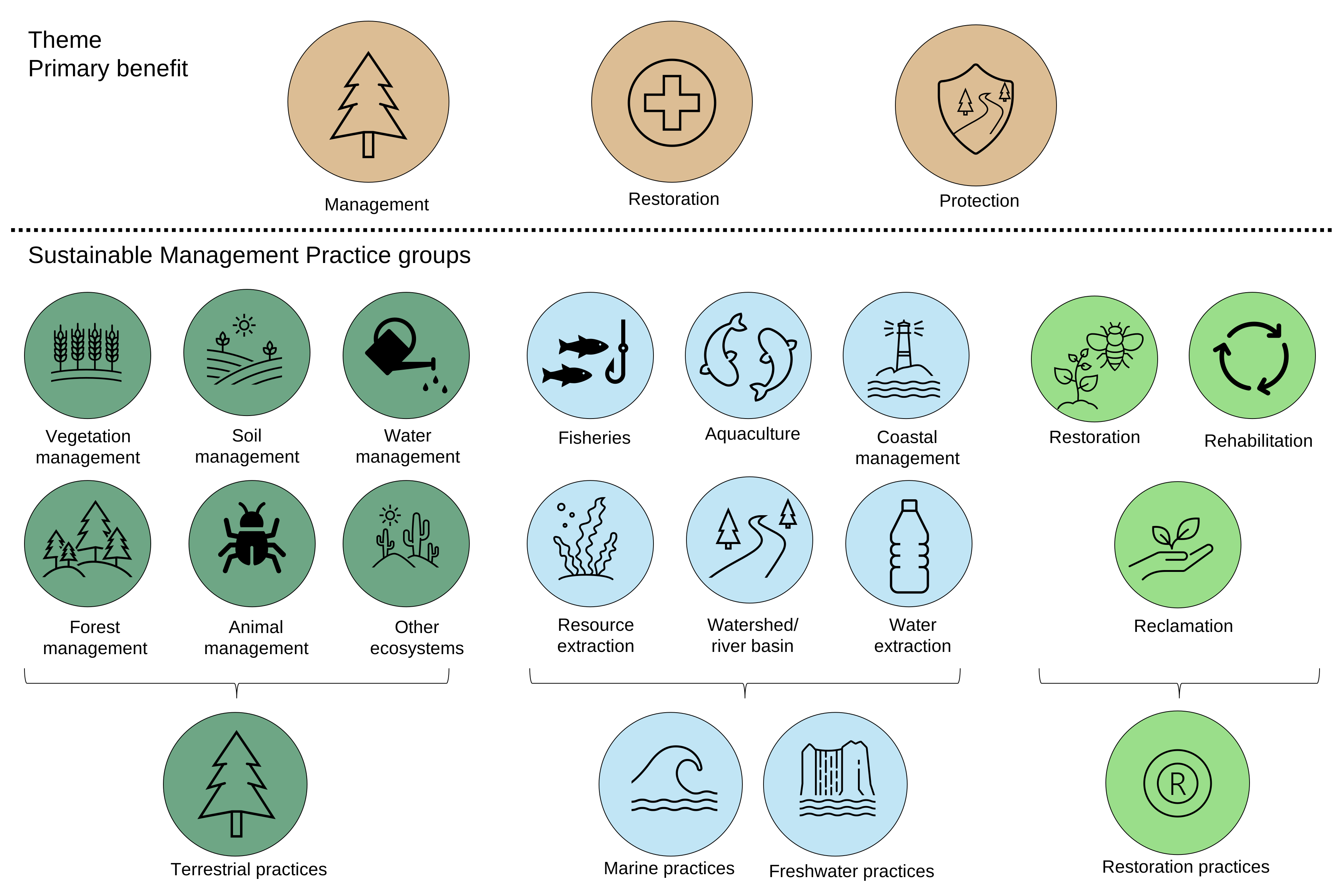
SMP aim to manage land and sea area to either prevent degradation or return degraded areas to a productive state in which they can continue to provide ecosystem services. SMPs can be categorised into overarching SMP groups, which consist of similar activities that look to manage a common resource. All ICF KPI 17 reporting must be assigned to one of the SMP groups shown in Figure 1. For further detail on the SMP Groups including their definitions see Annex 1.
The Kunming-Montreal Global Biodiversity Framework[footnote 2] agreed specific targets associated with the restoration and protection of natural ecosystems, so to help us track the contribution of ICF programmes to these targets, we have included an option to disaggregate by ‘Theme’.
There are 3 themes that the SMPs can be reported under: Restoration if the intervention aims to return the area towards its original state or condition (natural habitat); Protection if the area is under some form of protection for conservation purposes; and Management if the programme is not specifically targeting restoration or protection but aims to make the current use of the area more sustainable.
This indicator does not capture the long-term benefits received from implementing SMP, nor the quality of implementation for SMP in terms of meeting sustainable standards. The suitability of each type of SMP is place-specific, meaning a practice that is determined to be the ‘most’ sustainable practice in one area may not be the ‘most’ sustainable in another as a result of varying biophysical and socio-economic characteristics[footnote 3]. Thus, reporting the quality aspects of SMP cannot be aggregated at the portfolio leveI.
Industry sustainability standards and the place-specific sustainability of a selected management practice should be reviewed before implementation within a project area as part of programme design. This indicator therefore assumes that the SMP implemented is suitable for the project area.
ICF KPI 17 helps to provide evidence of how ICF programmes are contributing to the Sustainable Development Goals, including SDG 13 (climate action), SDGs 14 and 15 (biodiversity in water and on land), SDG 12 (sustainable consumption and production) and supporting better access to food (SDG 2), health (SDG 3) and water (SDG 6).
Figure 1: Sustainable Management Practice (SMP) groups under ICF KPI 17
There are 3 themes that can be reported under, which represent the primary reason that the area is receiving your intervention. These are 1) management, 2) restoration or 3) protection. Under the dotted line are the different SMP Groups that can be selected to show which type of practice you are implementing in your area. They outline practices within terrestrial, marine and freshwater areas as well as specific restoration practices.
Methodological summary
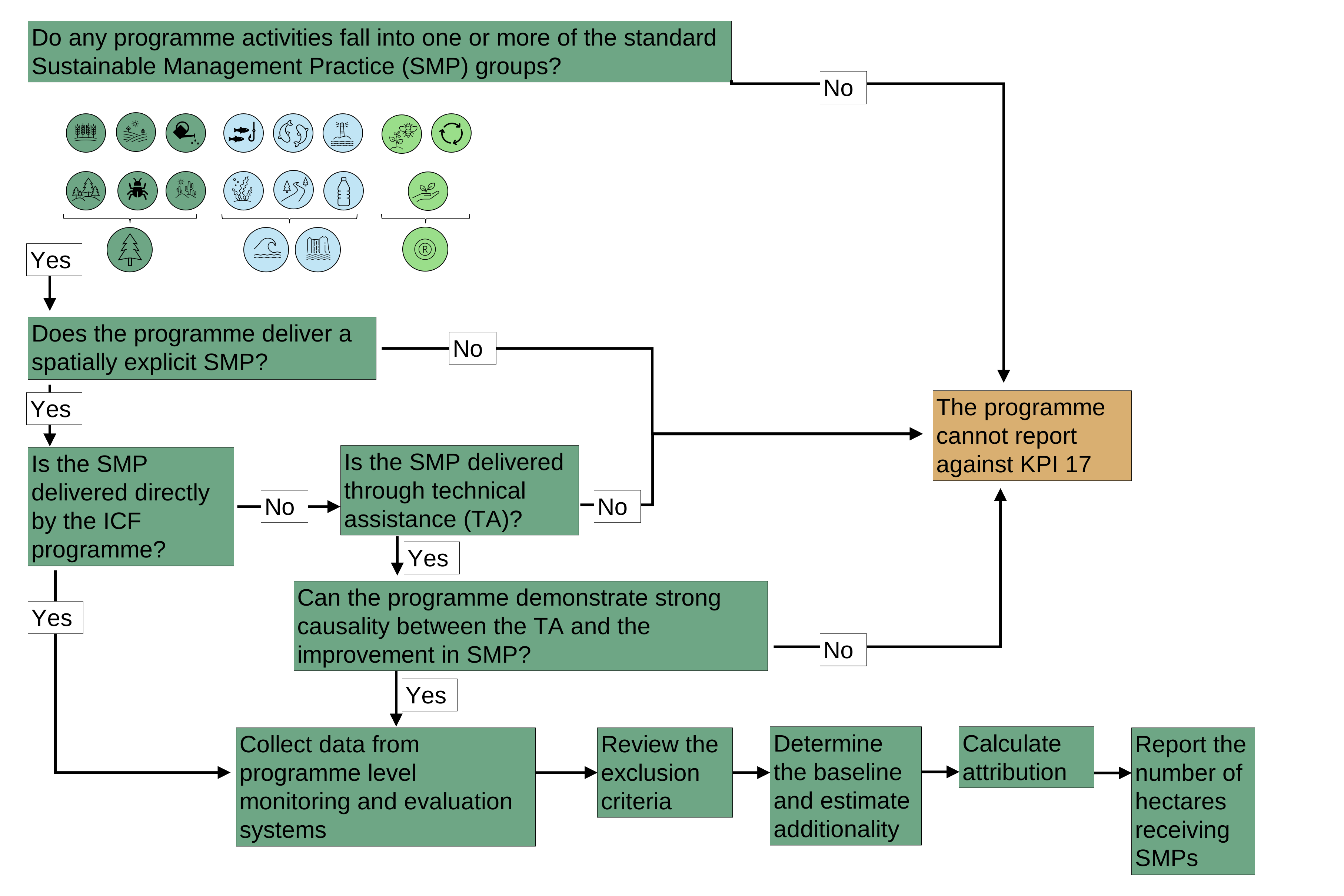
ICF KPI 17 reports the number of hectares that are receiving SMP according to the steps and criteria presented in full in the Methodology section below. The main methodological steps are summarised in Figure 2.
- Determine whether any programme activities fall into one or more of the Sustainable Management Practice (SMP) groups.
- Identify if the programme delivers a spatially explicit Sustainable Management Practice.
- Determine if the Sustainable Management Practice is directly delivered by the ICF programme.
- Collate the following data from programme level monitoring and evaluation systems: Achieved results to date: report annual achievements; Planned annual results for future years; Planned Total Programme Benefits; Disaggregate results by Sustainable Management Practice, Theme, Ecosystem type and Country. See Annex 1 for options.
- Check exclusion criteria to avoid double counting.
- If necessary, adjust for additionality.
- If necessary, adjust for attribution.
- Submit disaggregated results on REX or through your departmental results template. Ensure you provide supporting information, including evidence of how results were calculated and the data sources used.
Figure 2: ICF KPI 17 methodological steps
Methodology
1. Determine whether any programme activities fall into one or more of the Sustainable Management Practice (SMP) groups
Check that the programme has activities that fall into one or more of the SMP groups as shown in Figure 2. Further detail on the SMP groups is presented in Annex 1.
2. Identify if the programme delivers a spatially explicit SMP(s)
Identify if the programme intervention has a spatially explicit component. ‘Spatially explicit’ means that a SMP is implemented over a specific measurable area.
If multiple SMPs are implemented on the same area you will need to ensure only one practice is attributed to an area reported to avoid double counting. You should identify which is the lead SMP type for that area, referring to objectives in your business case.
Data sources: Examples of open-source datasets that may be useful for assessing areas include Copernicus Global Land Services of the European Commission[footnote 4] and Global Surface Water Explorer[footnote 5] , amongst others. You should record your data sources for quality assurance and reproducibility, and data should be spatially referenced where possible.
3. Determine if the Sustainable Management Practice is directly delivered by the ICF programme
ICF KPI 17 is an output indicator that measures the area (hectares) of land receiving SMP as a result of ICF intervention, and therefore the SMP must be directly delivered by the programme.
An example of a SMP directly delivered by the ICF would include an ICF programme planting trees across X number of hectares. The SMP (reforestation in this example) is directly delivered by the programme as it is implementing a physical intervention directly on the ground (see Worked Example I).
The SMP can also be directly delivered by an ICF programme where the programme finances a third-party body (for example, a fund) which implements a spatially explicit SMP. For example, if ICF resources are provided to support a regional fund that is directly delivering soil erosion control practices, then the hectares delivered by that fund can be included.
Technical Assistance: If an ICF programme is delivering an activity (for example, technical assistance or training) that may, in turn, indirectly lead to the implementation of SMP over an area, then these hectares should not be reported under ICF KPI 17. However, in the case of technical assistance, if the programme can demonstrate strong causality between the intervention and the improvement in sustainable management, then it may be counted. This should follow the same principles as set out in the OECD guidance on finance mobilised through technical assistance (provided as a separate attachment to the KPI 12 methodology note):
- can causality be clearly asserted; in other words, the improved in sustainable management practices would not have happened without this technical assistance?
- were improved sustainable management practices an explicit objective of the technical assistance?
- was technical assistance part of the financing stage of the project (as opposed to upstream capacity building or project preparation)?
- are other actors involved, and is there any risk of double claiming the results? Adjust attribution accordingly
Quantifying the area affected by improved sustainable management through TA may be more complicated than for direct interventions, and we advise using a conservative approach when estimating this figure. For example, if working with a government to improve national forest plans has improved sustainable management across the whole country, it is likely that the TA provided is one small part of broader factors that led to this change. Therefore, it would be appropriate to claim a small percentage of the overall forest area affected as the proportional results of the UK’s ICF programming.
We do not set out any specific recommendations of what percentage to apply in different contexts but we would expect that results reported as a result of TA are supported by a strong justification and clear explanation of how the area was calculated and any assumptions made.
If reporting any results achieved through technical assistance, make sure this is captured as ‘Technical assistance’ under the disaggregation ‘Type of support’.
4. Collate data from programme level monitoring and evaluation systems.
The collated data must include:
- achieved results: the total area that, at the time of reporting, has received sustainable management practices. This should be reported annually (not cumulatively), that is, the additional area that has come under sustainable management in that reporting year
- planned results: areas for which the ICF programme plans to implement SMP in future years
- planned total programme benefits: this is what is expected to be achieved as a result of the programme overall. This may be the sum of planned and achieved results over the lifetime of the programme, but can also include results delivered after the end of a programme in some cases (this is often the case for installed energy capacity programmes, but may be less common for ICF KPI 17). These figures should be updated in the annual ICF results return if they have changed since last reporting
- disaggregation: when reporting hectares for this indicator you should disaggregate the data by the following categories: sustainable management practice (See Table 2 in Annex); theme of the SMP (management, restoration or protection; see Table 3 in Annex); ecosystem type (see Table 4 in Annex); country; type of support. A full list of options and definitions for the disaggregations can be found in Annex 1
5. Review the exclusion criteria to determine if some or all of the hectares should be reported under ICF KPI 17
When determining if X number of hectares should be included, programme managers must consider the spatial overlap of multiple SMP being delivered within the area of interest. The permanence of hectares being delivered over the programme lifetime should also be considered; however, it is not the responsibility of the ICF programme manager to actively monitor the permanence of hectares being delivered. Both criteria are discussed in turn.
Multiple SMPs: Areas of land receiving a SMP can be validly counted and reported once. Where there are multiple SMP occurring on the same area, the lead SMP group should be identified for reporting purposes to avoid double counting. The lead SMP may be the one that covers the largest area or is expected to have the most significant impact. Other SMPs taking place in the same area in addition to the lead SMP can be noted in the comments.
Multiple SMPs can be recorded if they occur in separate areas with no spatial overlap. If reporting results achieved through technical assistance, take extra care results do not overlap with areas claimed by other projects, especially if operating at a country scale.
Permanence: There is no requirement for ICF programme managers to actively monitor the persistence of SMP areas between reporting years, though we would expect the likely persistence of the intervention to be considered in the assessment of a project’s sustainability in programme design. However, if a programme becomes aware that any hectares of SMP have not persisted between reporting years, the ICF programme manager should advise the central ICF analyst team and adjust the reported number of hectares accordingly.
Where hectares previously receiving SMP may have been lost, the programme manager should adjust or amend hectares reporting in previous years and provide commentary to explain the change. An area should only be counted in the first year it comes under sustainable management, to avoid double counting. Continued management of the same area in future years should not be counted again, even if different practices are used.
6. Determine the additionality of hectares receiving SMP as a result of the ICF programme
In some cases, some SMP practices may already be taking place in the area before the implementation of the ICF programme. Areas already receiving SMP prior to the implementation of the ICF programme cannot be reported under ICF KPI 17. To assess the additionality of the ICF KPI 17 results, it is necessary to determine both a baseline and a counterfactual.
The baseline should identify the activities present at the start of your intervention, in case any areas are already under SMPs. This will ensure there is no overlap in reporting of areas already receiving a SMP.
The counterfactual should determine whether the SMPs being delivered by the programme would have been undertaken in the absence of ICF support. Establishing the counterfactual may be challenging and will likely involve reviewing available documentation for other programmes operating within the ICF area of interest and undertaking discussions with relevant stakeholders to determine what other SMP interventions would be taking place in the area.
If the ICF programme is unable to estimate what the counterfactual is, it is suggested to use an ‘adjustment factor’. This adjustment factor should be applied after all other steps in the calculation process are completed.
You should determine:
- what areas were already receiving targeted SMP prior to your programming?
- what areas are receiving SMP as a result of ICF?
- what areas would have received SMPs anyway, without ICF?
- what areas are additional as a result of ICF (no overlap with areas that were already receiving SMP or that would have happened without ICF support) – this is what should be reported for ICF KPI 17
For further details on how to account for additionality, check the supplementary guidance.
7. Calculate attribution where UK Government has only funded part of a programme
If UK Government is the sole investor in a project or programme, it should assume all responsibility for any results where the results are assessed to be additional and where UK Government has a causal role. In many instances UK Government may be acting alongside one or more other development partners or multilateral bodies that also provide funding. In these cases, UK Government should only claim responsibility for the portion of results that can be attributed to its support.
KPI 17 results from technical assistance should also report an attributed share (unlike the contribution approach used for the TA-specific KPIs). See International Climate Finance supplementary guidance: additionality and attribution - GOV.UK on how to calculate attribution in different scenarios.
8. Report the number of hectares receiving Sustainable Management Practices
ICF KPI 17 requires ICF programmes to report the annual increase in area under SMPs in hectares. This should be submitted on the REX platform or in the results template provide by your ICF department.
Your annual results submission should include all the data specified in Step 4, including both achieved and planned results, as well as all disaggregations. Provide evidence of how your results were calculated alongside your results submission, including data sources used, corrections applied and any updates to historical results.
Data quality
Portfolio ICF results are published following the UK statistics authority Code of Practice for Statistics. This means that we make efforts to maximise the trustworthiness, quality and value of the statistics.
To support ICF data quality:
- Review ICF KPI results provided by programme partners, ensuring that methodologies have been adhered to, and calculations are documented and correct.
- Ask a suitable analyst or climate adviser to quality assure ICF results before submission.
- Submit ICF results following the instructions specific to your department. Include supporting documentation of calculations and any concerns about data quality.
- A revision to historical results may be needed if programme monitoring systems or methodologies are improved, or historical data errors are found. Update results for earlier years as necessary, and make a note in the return. ICF results are reported cumulatively, therefore it is important to make these corrections.
Questions about results reporting can be discussed with central ICF analysts, who undertake a further stage of quality assurance before publication.
Annex 1: Data disaggregation options
The following sections list the options for data disaggregation along with definitions and examples.
Sustainable Management Practice (SMP) Groups
Review the list below to determine what SMP group to report your area under for this indicator. SMPs are place specific and therefore the appropriateness of the technique being applied under the SMP groups will need to be considered to ensure the sustainability of the practice. For example, when reforesting an area, it will be important to consider the appropriateness of the type of species being implemented.
Vegetation management
Management of vegetation and food production ensuring that they do not degrade the biodiversity and ecosystem services on which they depend whilst working to improve its quality, quantity and diversity. A common type of sustainable vegetation management is sustainable agriculture. Other types of vegetation management not specific to agriculture may also be included.
Sustainable agriculture should be able to meet the current needs of society without compromising the ability of future generations to meet their own needs. It should take into account environmental, social, and economic sustainability. For definitions and detailed practices behind each of the 11 practice types outlined here see IUCN Approaches to sustainable agriculture.
Example practices:
- agroecology
- nature-inclusive agriculture
- permaculture
- biodynamic agriculture
- organic farming
- climate-smart agriculture
- high nature value farming
- low external input agriculture
- circular agriculture
- ecological intensification
- sustainable intensification
Soil management
This may include both agricultural and non-agricultural practices. Agricultural practices can aim to manage soil quality in 3 different ways:
Conservation agriculture: aims to maintain soil as a living ecosystem contributing to enhanced biodiversity within and above the soil and increased carbon capture.
Regenerative agriculture: through improving soil health this aims to increase agricultural yields and resilience.
Carbon farming: implementing practices that are known to improve the rate at which CO2 is removed from the atmosphere and converted to plant material and/or soil organic matter.
Soil management practices that aim to prevent soil degradation or erosion or for improving soil health and carbon storage. These examples may not be agriculture focused.
Erosion Control: Preventing or controlling wind or water erosion runoff velocities while also retaining the soil. Integrated soil fertility: managing nutrients and water use for example maximising organic fertiliser and minimising nutrient loss. Minimum soil disturbance: reducing the level of soil manipulation and disturbance to increase quality and fertility as well as providing co-benefits such as controlling soil erosion and compaction and improving the availability and retention of water.
Examples:
- conservation agriculture
- carbon farming
- regenerative agriculture
- erosion control
- integrated soil fertility
- minimum soil disturbance
Water management
Water management can result in increased productivity whilst also potentially reducing soil erosion. There is also a climate resilience aspect to water management, particularly in response to droughts, whilst also potentially mitigating contribution to climate change by decreasing soil carbon emissions. Economic benefits could also result from increased water efficiency and water savings.
Any practice that focuses on the following could be categorised as water management: Soil moisture management - improving soil’s capacity to accept, retain, release and transmit water. Improved water efficiency through reducing water requirements and evaporation. Water storage and flood moderation - to manage excessive or insufficient water supply. Improved water quality – through improving land and animal management practices.
Examples:
- soil moisture management
- flood management
Exclusions: Water management can result in reduced soil erosion and increased soil sequestration. Programmes with a focus on soil improvement should review SMP Group ‘Soil management’ before using water management as a lead SMP Group to report under.
Animal management
Sustainable animal management is the careful management of domestic and in some cases wildlife species to manage their impacts on ecosystems: Grazing pressure management determining the carrying capacity of the habitat or ecosystem and manages the timing and severity of grazing to ensure that the carrying capacity is not exceeded. Effectively managing animal waste increases the potential for improved soil fertility and productivity, reduced nutrient loss, improved water quality and can also mitigate climate change by preventing GHG emissions.
Pest and disease control are measures which prevent and manage the spread of diseases to avoid negative effects on soil, vegetation and ecosystems. Integrated pest management includes a combination of measures being implemented simultaneously to control weeds and pathogens to avoid negative impacts on soil, vegetation and ecosystems.
Examples:
- controlled grazing
- controlled hunting and harvesting
- animal waste management
- integrated pest/disease control
Forest management
Sustainable forest management includes policies and technical standards for the responsible management of natural and planted forests. Principles of forest management combine both forest productivity and forest conservation.
There is potential for sustainable forest management to reduce the vulnerability of forests and can therefore enhance carbon sequestration, biodiversity and water conservation. Sustainable forest management can also maintain forest productivity, providing socio-economic goods and services for forest dependent communities.
Examples:
- controlled timber harvesting
- timber thinning
- prescribed burning
- reforestation
- forest succession
Exclusions: interventions in mangrove forests should go under coastal management.
Fisheries management
The regulation or rules implemented which govern fisheries activities in order to ensure the continued productivity of the resources and accomplishment of other environmental objectives
A sustainable fishery has sufficient spawning fish to produce the next generation, while allowing fishing to take place. This ensures we can secure our fish and aquatic fish resources for the future while providing economic returns to support livelihoods.
Sustainable fisheries management should be found across 3 outcomes: ecological, economic and social. Successful fishery management ensures sustainability for fish stocks and associated habitats, food for consumers, and livelihood for those in the industry.
Examples:
- fishing gear restrictions
- catch limits (quotas; effort restrictions)
- area-based management / Territorial Use Rights for Fishing (TURF) / marine spatial planning
Aquaculture
Aquaculture is the controlled cultivation or farming of fish, shellfish, and aquatic plants. The purpose is to create a source of aquatic-sourced food and commercial products in a way that will increase availability while reducing environmental harm and protecting various aquatic species. There are 4 major approaches to aquaculture seen today: near-shore open pens, experimental offshore open pens, land-based ‘closed’ systems, and ‘ancient’ open systems.
Examples:
- sustainable aquaculture
- organic aquaculture
- land-based recirculating systems (aquaponics; re-circulatory aquaculture system (RAS)
- integrated multi-trophic aquaculture systems (IMTA)
Coastal management
For this methodology, the coastal environment is defined as the intertidal zone to cover the area between the extreme low and high tides which can then be classed as land. They also include brackish water, such as estuaries, mangroves and lagoons.
Examples
- soft engineering (beach nourishment; sand dune stabilisation)
- pollution control (plastics; heavy metals; coastal runoff)
- coastal habitat creation (non-restoration)
- wetland management
- mangrove management
Marine management
Inshore to Deepwater – non-fisheries. State what this SMP is when reporting.
Freshwater resource extraction
This applies to Freshwater ecosystems and refers to all inland waterbodies. They include rivers, streams, canals, lakes and reservoirs. Groundwater is also included because groundwater–surface water interactions are often a critical element in surface water ecosystem function; groundwater bodies also provide direct ecosystem services.
Examples:
- freshwater fisheries management
- freshwater aquaculture
- controlled mineral extraction
Exclusions: Interventions in Brackish water should be listed as coastal management. Freshwater extraction should be listed under water extraction controls.
Watershed / freshwater management
A watershed is the geographical area drained by a watercourse. This can be applied at various scales, for example, a farm drained by a creek (a “micro-watershed”) or a large river basin (or a lake basin). Watersheds perform the following important functions and services, among others: the provision of freshwater; the regulation of water flow; the maintenance of water quality; the provision and protection of natural resources for local livelihoods; protection against natural hazards (for example, local floods and landslides); the provision of energy (for example, hydropower); biodiversity conservation; and recreation[footnote 6].
Examples:
- water quality enhancement (pollution control, clean ups, flow management)
- controlled water movement (flow, storage)
- wetland management
Exceptions: interventions in Brackish water should be listed as coastal management.
Water extraction controls
This refers to the management of freshwater via the implementation of controls placed on extraction to limit the amount of water that can be removed. The over-extraction of water can lead to dry rivers or declining groundwater levels.
Examples:
- extraction pricing controls
- extraction limits
Restoration/Rehabilitation/Reclamation
An area that is receiving sustainable management that’s primary focus is ecological restoration. The intervention aims to improve the ability of that area to support an increased level of native biodiversity and ecosystem function.
Restoration for this methodology is broken down into 3 categories that have different goals:
- restoration: bringing an ecosystem back to its original state as close as possible, including original flora and fauna and productivity
- rehabilitation: bringing the environmental services of an ecosystem back to its original state, particularly in relation to the provisioning services for goods or services but not all the original biodiversity
- reclamation: where productivity or structure is regained but biodiversity is not
Examples:
- native species reintroduction (animal re/introduction, seeding, native pest control)
- non-native species removal
- hard engineering removal (dam, seawall/port, road)
- hydrological regeneration
- extraction cessation
- pollution cessation
Other
Any other sustainable management practice not listed above. State what this practice is when reporting this indicator so that it can be quality assured to ensure it doesn’t fit under another SMP group.
SMP themes
Review the list below to see what theme you should report for your SMP group.
Restoration
An intervention that aims to return the area towards its original state or condition (natural habitat). There may still be sustainable use, but the primary aim of the intervention is to restore the area towards a more natural state. There are 3 SMP groups that have a specific restoration focus, but other SMPs may also apply.
Includes: any SMP or one of the ‘Restoration Practices’ group (Restoration, Reclamation or Rehabilitation).
Protection
Any SMP to improve the management of existing protected areas and other effective area-based conservation methods (OECMs) on land, freshwater or sea, to better conserve biodiversity. If the creation of a new protected area/OECM is implemented to better manage the area then this may be reported as protection. For the purpose of this methodology any ecosystem type can be included that is under existing protection (marine, costal, freshwater, terrestrial). This can also include practices to reduce the conversion of natural ecosystems to other land/sea use.
Includes: Can apply to any SMP group excluding those within ‘Restoration Practices’ If your SMP is not listed, provide a description of your practice when reporting this indicator so that it’s correct designation can be confirmed during quality assurance.
Excludes: Restoration Practices: Restoration, Reclamation or Rehabilitation are excluded from protection. Whilst a restoration area might also be under some sort of protection, we ask that you do not count that here but instead under restoration. If another SMP Group is being implemented with management as its primary focus (for example, reforestation for timber), that will have downstream effects of improving the management of a protected areas/OECMs (for example, reduced coastal erosion / sediment runoff into the PA) do not report it under protection. Instead list it under management and then list the SMP Group being implemented.
Management
Any intervention taking place to make the areas current use more sustainable where the primary purpose is not restoration or protection.
Includes: Can apply to any SMP group excluding those within ‘Restoration Practices’.
Excludes: Restoration Practices: Restoration, Reclamation or Rehabilitation are all excluded from the management theme. If the management practice is primarily to improve the management of a protected area for conservation, then it should be classed under the ‘protection’ theme.
Ecosystem types
Use the following biome categories for disaggregation of ecosystem type when reporting against this indicator. A list of functional groups that fit under each biome category can be found in the IUCN typology guidance to aid you in your selection[footnote 7]. Take time to carefully review the functional groups before determining what biome to report for the ‘ecosystem type’ for this indicator.
Terrestrial
- tropical-subtropical forests
- temperate-boreal forests and woodlands
- shrublands and shrubby woodland
- savannas and grasslands
- deserts and semi-deserts
- polar-alpine Intensive land-use
Marine
- marine shelf
- pelagic ocean waters
- deep sea floors
- anthropogenic marine
Freshwater
- rivers and streams
- lakes
- artificial wetlands
Subterranean
- subterranean lithic systems
- anthropogenic subterranean voids
Marine-terrestrial
- shoreline systems
- supralittoral coastal systems
- anthropogenic shorelines
Subterranean-freshwater
- subterranean freshwaters
- anthropogenic subterranean freshwaters
Freshwater-marine
- semi-confined transitional waters
Marine-freshwater-terrestrial
- brackish tidal systems
Subterranean-marine
- subterranean tidal systems
Freshwater-terrestrial
- palustrine wetlands
Annex 2: Worked example
A fictitious programme, currently reporting results in Year 3, aiming to provide assistance to a local community by improving access to clean water through better environmental management of the river basin. The programme is set in Mexico, in an area of shrubby woodland.
1. Determine whether any programme activities fall into one or more of the SMP groups identified in Annex 1 of this Methodology Note
To avoid the impact of climate change on the local community, the programme focused on delivering environmental interventions. The environmental interventions included native species reforestation and soil erosion control. These are the SMP groups and sub-groups these interventions will be classed as for desegregated reporting:
- reforestation: theme ‘management’; SMP group ‘forest management’
- soil erosion control: theme ‘management’; SMP group ‘soil management’
1. Identify if the programme delivers a spatially explicit SM practice(s)
The intended delivery of a green corridor within the programme’s area of interest represents a spatially explicit practice, as it was a physical intervention implemented on-the-ground. The programme plans to establish 150 hectares (ha) of green corridor in the local community’s region over the programme lifetime. This will be delivered through 2 Sustainable Management Practices (Forest Management and Soil Management) in the same area.
The hectares reported each year will need to be attributable to a single SMP Group. If area cannot be distributed accurately to a single SMP Group (that is, more than one practice is active in the same area) then a Lead SMP Group will need to be identified to report the area under. In this case, the lead SMP in year 1 was identified as Forest Management.
2. Determine if the spatially explicit SMP(s) is directly delivered by the ICF programme
The newly established green corridor of 150 ha is a direct result of the ICF programme. Reforestation (planting new trees across a number of hectares) and soil erosion control practices (building terraces to prevent and control water erosion runoff velocities across a number of hectares) are considered to be directly delivered by the programme, as they were explicit output activities of the programme.
3. Collate data from programme level M&E systems
In Year 1, the programme planted trees covering a total area of 100ha therefore both the annual increase and cumulative net increase number of hectares receiving SMP was 100ha in the first year of reporting. The SMP group for year 1 is Forest Management (100ha).
In Year 2, the programme installed terracing to control soil erosion across a new and separate area of 25ha. Thus, in Year 2 the annual increase of additional hectares receiving SMP was 25ha, bringing the total area of the intervention up to 125ha. The ICF KPI 17 result reported for year 2 is Soil Management (25ha).
In the most recent year of reporting (in this case, Year 3), terracing and contour strips were planned across an additional area of 100ha, but only 75ha were installed. Therefore, in Year 3, the annual increase of hectares receiving SMP was 75ha (Soil Management).
Table 3: Number of hectares receiving SMP
| Year 1 | Year 2 | Year 3 | Total achieved for KPI 17 |
|---|---|---|---|
| Annual Increase: 100ha | Annual Increase: 25ha | Annual Increase: 75ha | 200ha |
| Theme: Management | Theme: Management | Theme: Management | n/a |
| SMP Group: Forest Management | SMP Group: Soil management | SMP Group: Soil management | n/a |
4. Review the exclusion criteria to determine if some or all of the hectares should be reported under KPI 17
There were zero (0) hectares of reforestation delivered in Year 3. Therefore, the ICF programme manager determines that there was no spatial overlap between hectares of reforestation and the hectares of soil management delivered in Year 3, so the total number of hectares gained can be counted under soil management.
Since the previous reporting year, that is Year 2, the ICF programme manager discovers that there were fifty (50) hectares of reforestation lost as a result of urban sprawl. The ICF programme manager reports the loss to the central ICF analyst team, who subsequently revises the results from the previous year. See how this was adjusted in Table 4.
Table 4: Number of hectares receiving SMP (corrected following loss of managed area)
| Year 1 | Year 2 | Year 3 | Total achieved for KPI 17 |
|---|---|---|---|
| Annual Increase: |
Annual Increase: 25ha | Annual Increase: 75ha |
|
| Theme: Management | Theme: Management | Theme: Management | n/a |
| SMP Group: Forest Management | SMP Group: Soil management | SMP Group: Soil management | n/a |
5. Determine the additionality of hectares receiving SM practices in the absence of the ICF programme
The ICF programme design documentation has outlined the area of interest for implementing SMP. Informal discussions with stakeholders were used to determine that no other programmes operating in the ICF area of interest are currently implementing reforestation or soil erosion control practices. The baseline area under sustainable management in the programme area is 0ha.
6. Calculate attribution
All hectares resulted directly from the ICF programme and no other programme or intervention. ICF was fully funding the programme, therefore, the total area can be attributed to ICF.
7. Report the number of hectares receiving SMP
The results for the latest year of data should be entered on REX (see Table 5) or submitted in your departmental results return template. This should include all disaggregations, and the planned and achieved area of the intervention. Data for the earlier years should already have been entered in the system in previous results commissions but, if not, please add them.
Table 5: Example of how the results return should look
| Country | Ecosystem Type | Primary Theme | SMP Group | Type of support | Planned | Achieved |
|---|---|---|---|---|---|---|
| Mexico | Shrublands and shrubby woodland | Management | Soil management | Capital investment | 100 | 75 |
Annex 3: Definitions of key methodological terms used across ICF KPIs
As different UK Government departments may use the same terminology to refer to different concepts, this section sets out definitions for key terms used across Methodology Notes for ICF KPIs. The terms used in these notes refer to the concepts as defined below, rather than to alternative, department-specific usages of these terms.
Additionality: Results are additional if they are beyond the results that would have occurred in the absence of the ICF-supported intervention under a ‘business as usual’ counterfactual (see definition below and supplementary guidance on additionality and attribution).
Attribution: Attribution refers to allocating responsibility for results among all actors that have played a causal role in their delivery. This is commonly done based on share of financial contributions. However, there are situations where greater nuance is needed, as with ICF KPI 11 and ICF KPI 12 on public and private finance mobilised, where a broader range of factors is considered. See supplementary guidance on additionality and attribution).
Climate change[footnote 8] : A change of climate which is attributed directly or indirectly to human activity that alters the composition of the global atmosphere, and which is in addition to natural climate variability observed over comparable time periods.
Climate change adaptation[footnote 9]: The process of adjustment to actual or expected climate and its effects. In human systems, adaptation seeks to moderate or avoid harm or exploit beneficial opportunities. In some natural systems, human intervention may facilitate adjustment to expected climate and its effects.
Counterfactual: The situation one might expect to have prevailed at the point in time in which a programme is providing results, under different conditions. Commonly, this is used to refer to a ‘business-as-usual’ counterfactual case that would have been observed had the ICF-supported intervention not taken place.
Effects of climate change: Effects of both observed climate variability and expected impacts of future climate change on lives, livelihoods, health, ecosystems, economies, societies, cultures, services, and infrastructure.
Mitigation (of climate change)[footnote 10]: A human intervention to reduce the sources or enhance the sinks of greenhouse gases.
Resilience[footnote 11]: The capacity of social, economic and environmental systems to cope with a hazardous event or trend or disturbance, responding or reorganising in ways that maintain their essential function, identity and structure, while also maintaining the capacity for adaptation, learning and transformation. Support: Assistance from an ICF programme towards climate change adaptation or mitigation, which, for the purposes of this KPI, takes the form of sustainable management of land, sea or freshwater ecosystems.
-
UN 1992 Rio Earth Summit ↩
-
Kunming-Montreal Global Biodiversity Framework (2022), 15th meeting of the Conference of Parties to the UN Convention on Biological Diversity CBD/COP/15/L25 ↩
-
UN (2017). Sustainable land management contribution to successful land-based climate change adaptation and mitigation ↩
-
Available at: https://land.copernicus.eu/global/products/lc ↩
-
Available at: https://global-surface-water.appspot.com ↩
-
IUCN (2022) Red List of Ecosystems Global Ecosystem Typology ↩
-
United Nations. (1992). United Nations Framework Convention on Climate Change, pp. 7. ↩
-
IPCC, 2014: Annex II: Glossary [Mach, K.J., S. Planton and C. von Stechow (eds.)]. In: Climate Change 2014: Synthesis Report. Contribution of Working Groups I, II and III to the Fifth Assessment Report of the Intergovernmental Panel on Climate Change [Core Writing Team, R.K. Pachauri and L.A. Meyer (eds.)]. IPCC, Geneva, Switzerland, p118. ↩
-
IPCC, 2014: Annex II: Glossary [Mach, K.J., S. Planton and C. von Stechow (eds.)]. In: Climate Change 2014: Synthesis Report. Contribution of Working Groups I, II and III to the Fifth Assessment Report of the Intergovernmental Panel on Climate Change [Core Writing Team, R.K. Pachauri and L.A. Meyer (eds.)]. IPCC, Geneva, Switzerland, p125. ↩
-
IPCC, 2014: Annex II: Glossary [Mach, K.J., S. Planton and C. von Stechow (eds.)]. In: Climate Change 2014: Synthesis Report. Contribution of Working Groups I, II and III to the Fifth Assessment Report of the Intergovernmental Panel on Climate Change [Core Writing Team, R.K. Pachauri and L.A. Meyer (eds.)]. IPCC, Geneva, Switzerland, p127 ↩