International Climate Finance KPI 15 methodology: extent to which ICF intervention is likely to lead to transformational change
Published 1 March 2024

© Crown copyright 2024
This publication is licensed under the terms of the Open Government Licence v3.0 except where otherwise stated. To view this licence, visit nationalarchives.gov.uk/doc/open-government-licence/version/3 or write to the Information Policy Team, The National Archives, Kew, London TW9 4DU, or email: psi@nationalarchives.gov.uk.
Where we have identified any third party copyright information you will need to obtain permission from the copyright holders concerned.
This publication is available at https://www.gov.uk/government/publications/international-climate-finance-kpi-15-methodology-extent-to-which-icf-intervention-is-likely-to-lead-to-transformational-change/international-climate-finance-kpi-15-methodology-extent-to-which-icf-intervention-is-likely-to-lead-to-transformational-change
Purpose of the document
International Climate Finance (ICF) is Official Development Assistance (ODA) from the UK to support developing countries to reduce poverty and respond to the causes and impacts of climate change. These investments help developing countries to:
- adapt and build resilience to the current and future effects of climate change
- pursue low-carbon economic growth and development
- protect, restore and sustainably manage nature
- accelerate the clean energy transition
ICF is spent by the Foreign, Commonwealth and Development Office (FCDO), the Department for Energy Security and Net Zero (DESNZ) the Department for Environment, Food and Rural Affairs (Defra) and the Department for Science, Innovation and Technology (DSIT). This methodology note explains how to calculate one of the ICF key performance indicators (KPI) that we use to measure the achievements of UK ICF. The intended audience is ICF programme teams, results leads, climate analysts and our programme implementing partners.
Visit the International Climate Finance - GOV.UK to learn more about UK ICF and its results and read case studies.
Rationale
International Climate Finance (ICF) resources dedicated to climate change actions only form a very small part of the financing required to help developing countries build resilience to climate impacts and shift to lower carbon patterns of development. The ICF will have greater impact if it can be ‘transformational’ by, for example, encouraging others to replicate and scale-up successful activities in the longer term and facilitating substantive institutional and policy change toward a low carbon and climate resilient future.
Without such change, it will be unlikely that we can limit global warming of the planet to 2 degrees Celsius, adapt to the impacts of climate change, or protect and expand our development gains. Therefore, all UK ICF programmes should contribute to transformational change.
This indicator recognises that ‘transformation’ is multi-dimensional, and that the indicator will not be able to capture everything that, in time, may contribute to transformational change. Rather, the objective is to capture enough evidence to form a reasonable descriptive picture of ICF effectiveness in this area. The transformations the ICF seeks to bring about will only be evident after a period of time.
Though it will be necessary to monitor these longer-term changes, in many cases they are unlikely to materialise within an ICF programmes lifetime. Therefore, this indicator tracks evidence demonstrating the likelihood ICF activities being transformational or contributing to wider transformations. It does so by using criteria for drivers of transformation, to assess the extent to which ICF support can be linked, if not attributed, to likely transformational change.
Value of assessment
Assessing the potential for transformational change within ICF interventions is critical to ensuring that climate finance delivers lasting and far-reaching impact. This assessment is integral to the objective that all UK ICF programmes should contribute to durable shifts, moving beyond short-term outputs to catalyse broader market, institutional and behavioural change.
KPI 15 provides a structured, evidence-led approach that strengthens decision-making, coherence across reporting, and accountability for results. By embedding this analysis into programme design and delivery, teams can better understand programme relevance and its capacity to drive systemic change, ensuring transformational intent is translated into demonstrable, long-term impact.
Criteria for assessing transformational change
ICF programmes are likely to be more transformational if several of the following criteria prevail, and if at least one criterion exists for each level of the Theory of Change for Transformational Change:
- political will and local ownership: Where the need for change is agreed locally, and the process is locally owned. Where high-level political buy-in and broad support from across societies, cultures, and interest groups enable widespread changes to patterns of development
- capacity and capability can be increased (see Annex 3 for definitions): Where a target country and target communities have the resources, skills and expertise necessary to bring about the change
- increased innovation: Where wider and sustained change comes from novel or innovative developments, such as new technologies, with the potential to demonstrate new ways of doing things
- evidence of effectiveness is shared: Where approaches which have proven successful in one location are disseminated widely, and lessons on their usefulness are credible
- leverage / create incentives for others to act: Where the costs of climate action are reduced to the point that acting on climate change risks and challenges is a sensible decision for public agencies, commercial firms, and private individuals. These cost reductions may need to be steep enough to overcome behavioural inertia
- replicability: Where good ideas piloted by the ICF are reproduced by others in the same country, and more widely
- scalability: Where interventions (such as national, sectoral or regional programmes) have sufficient reach to achieve progressive institutional and policy reform, or drive down the costs of technology deployment
- sustainability: Where activities are likely to be sustained once ICF support ends.
- critical mass: Ultimately, many truly transformational changes will require a critical mass, to overcome political, market and other sources of inertia. Critical mass can be defined as the threshold at which an intervention or set of actions reaches sufficient scale, influence, or momentum to overcome systemic barriers (political, market, or behavioural) and trigger self-sustaining transformational change.
The Theory of Change (ToC) for transformational change below (figure 1) groups criteria at 3 different levels (drivers, mechanism and enablers).
Figure 1: Theory of change for transformational change
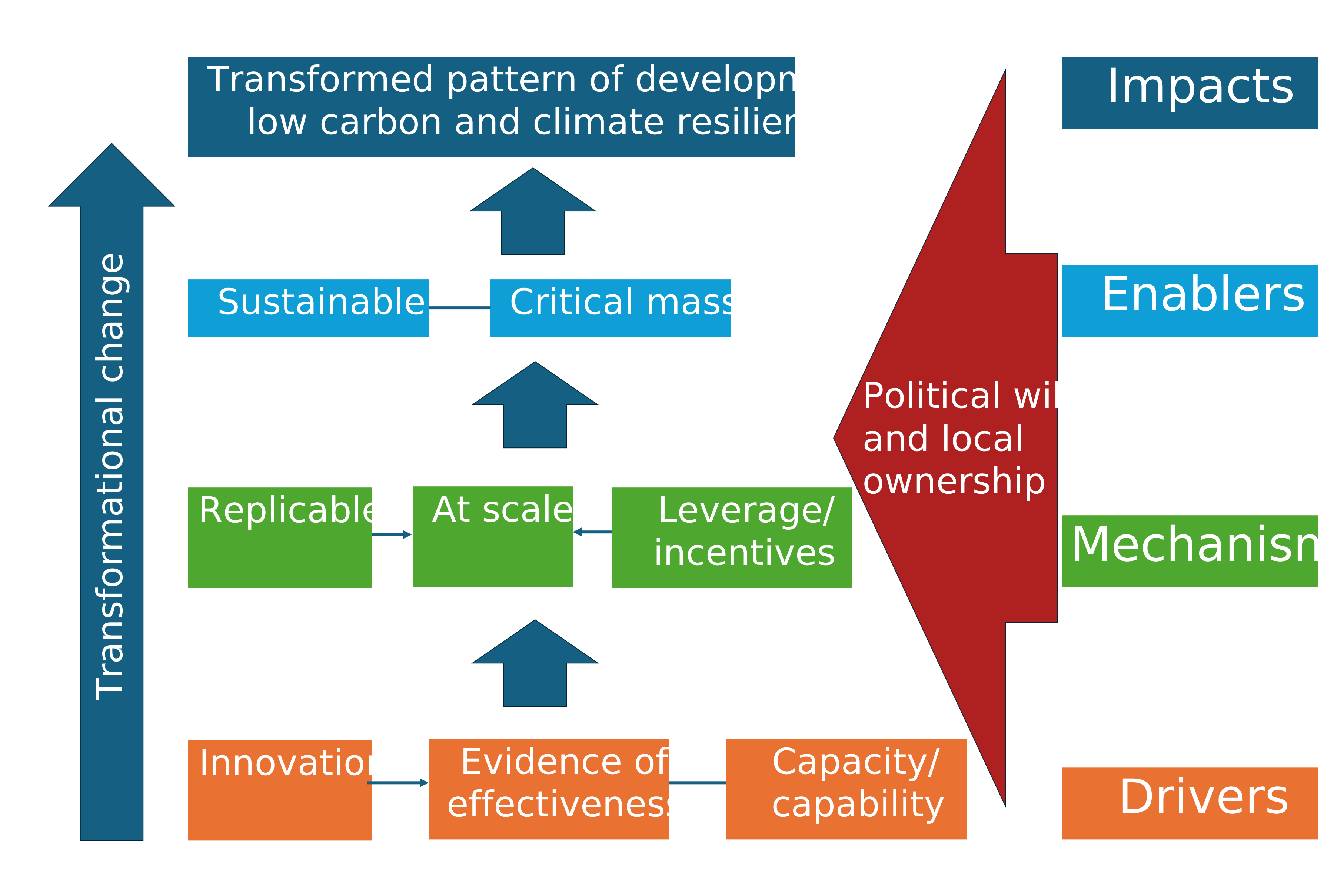
Table 1: ICF KPI 15 summary table
| Units | Score 1-5 |
|---|---|
| Headline data to be reported | Score 1-5 (1 being the lowest), representing the likelihood of transformational change |
| Disaggregations | Scale of intervention: international, national or sub-national |
| Revision history | January 2026: added disaggregation for scale of intervention; added a ‘value of assessment’ statement; improved definitions; clarified scoring levels; added further guidance on rounding, negative evidence, use of qualitative evidence, small vs large programmes, evolving programmes, transparency and proportionality; editorial changes for clarity, accuracy and consistency. December 2025: clarifications made. February 2023: The main revisions have been: An update to the score used, to allow for a clearer assessment of the strength of evidence, and equal consideration given to negative as well as positive outcomes; Editorial changes to improve clarity; Addition of Annex: Guide for converting original ICF KPI 15 scores to updated ICF KPI 15 scores. |
| Timing | ICF programme teams will be commissioned to report ICF results in spring, according to department-specific processes. Report results for the most recent complete programming year. If reporting lags mean that results are only available more than a year after they were delivered, enter them under the relevant earlier year. |
| Links across the ICF KPI portfolio | ICF KPI 15 complements all other ICF KPIs by measuring progress towards desired long-term impacts. Other ICF KPIs may be used as supporting evidence informing the KPI 15 assessment. |
Technical definition
Transformational Change is ‘change that catalyses further changes’, enabling either a shift from one state to another (for example, from conventional to lower carbon or more climate-resilient patterns of development), or faster change (for example, speeding up progress on cutting the rate of deforestation). However, it can entail a range of simultaneous transformations to political power, social relations, decision-making processes, equitable markets and technology.
Many of the transformations the ICF is seeking to bring about will only be evident after a period of time, and most are unlikely to materialise within the period of ICF support. This indicator therefore tracks evidence demonstrating the likelihood of ICF activities being transformational or contributing to wider transformations. It does so by considering evidence against context specific criteria, which act as proxies for drivers of transformational change, and using this evidence to assess if transformational change is judged likely or unlikely. These criteria are based on the Theory of Change for transformational change.
ICF programme managers should annually report an overall assessment score (between 1 and 5) indicating the likelihood of transformational change linked to the ICF support based on the following descriptions:
Table 2: Score and qualitative descriptions
| Score | Description |
|---|---|
| 1 | Substantial evidence that transformational change is unlikely or will not occur |
| 2 | Partial evidence that transformational change is unlikely |
| 3 | Not enough evidence yet to assess, or the balance of evidence is inconclusive |
| 4 | Partial evidence that transformational change is likely |
| 5 | Substantial evidence that transformational change is likely or already occurring |
Qualifiers used in score descriptions:
- substantial (1, 5): the bulk of the evidence is clear and conclusive
- partial (2, 4): some of the evidence is clear but not fully conclusive
- not enough (3): evidence is minimal or still emerging, and is not yet adequate to support a clear assessment in either direction.
Methodological summary
This KPI is a qualitative indicator. Programmes should provide:
- an overall assessment score (between 1 and 5), based on the score and qualitative descriptor table indicating the likelihood of transformational change linked to ICF support.
- a supporting narrative report against the relevant criteria of Transformational Change, setting out the supporting evidence of transformation in those criteria, using programme specific sub-indicators.
The methodology involves the following steps, which are described in more detail in the next section.
At the start of a programme:
-
Define what successful transformation looks like for the programme (including its Theory of Change)
-
Select which of the Transformational Change criteria (shown under rationale) are relevant to report against
-
Determine if the criteria are equally weighted or if different weightings apply
-
Identify programme-specific indicators relevant to each criteria, and set milestones
At each subsequent reporting round:
-
Collect data against each of the indicators
-
Based on the data collected, score each criterion individually
-
Document your scoring
-
Assign an overall score using the score and qualitative descriptor table
Rounding guidance
When calculating an average overall score, this should be rounded to a whole number (1-5), using the following threshold:
-
if the decimal portion of the overall score is 0.51 or above, round up (for example, 1.53 => 2).
-
if the decimal portion of the overall score is 0.50 or below, round down (for example, 3.50 => 3)
This threshold ensures a clear and consistent basis for rounding, avoiding upward rounding when evidence is equally balanced between 2 score bands. Setting the threshold at 0.51 provides a clearer and more transparent basis for determining when the evidence is strong enough to warrant rounding up.
However, as KPI 15 is a qualitative indicator, the rounded score should accurately reflect the overall balance of evidence. Programme teams should ensure that the supporting narrative clearly explains how the available evidence supports the rounded score. In some cases, this may warrant deviating from the rounding guidance set out above. See ‘Guidance on how and when to use qualitative evidence’ for further detail.
Methodology
At the start of a programme:
1. Define what successful transformation looks like for the programme (including its Theory of Change)
- list and briefly describe - at impact and outcome levels and noting monetary values – the projects or programmes. This may be wider than just ICF programmes and include other influencing activities.
- determine the baseline that transformational change is being assessed from. This should not require extra analysis beyond the Strategic Cases of the main interventions but may need amending if new projects are added to the portfolio. The baseline is based on a qualitative judgement assessment.
- describe the Theory of Change that links the programme activities and the expected transformation. This step will draw heavily on the ToC of the main interventions, and it may require additional work given that transformational change may sit above an intervention ToC.
- define the key stakeholders involved. This step contextualises the UK support and allows a political economy analysis of the change to be summarised. Other stakeholders could be considered: those whose engagement is a necessary precondition for change; those who have been (or need to be) engaged during implementation; those who are not essential, but whose engagement presents opportunities. This may need amending as additional key players are identified during programme implementation.
- describe what successful transformational change looks like for the programme and when is it expected to occur.
2. Select which of the transformational change criteria are relevant to report against
Decide on which Transformational Change criteria are relevant. The Transformational Change criteria are taken from the ToC for Transformational Change and are:
- political will and local ownership
- capacity and capability
- increased innovation
- evidence of effectiveness is shared
- leverage/incentives for others to act is created
- replicability
- scalability
- sustainability
- critical mass
Each criterion is described in more detail in the ‘Rationale’ section. At least one criterion should be included from each level of the ToC for transformational change.
The categories are not intended to be of equal importance and may not all be relevant in every case. However, an absence of some are likely to be major constraints on transformational change, notably ‘political will’ and ‘capability and capacity’. ‘Replication’, though clearly important, is likely to be a later stage indicator. In turn, ‘sustainability’ is likely to rely on changes to many of the other criteria to be a truly transformational change.
3. Determine if the criteria are equally weighted or if different weightings apply.
Weightings should be applied to the individual criteria depending on how many are present at each level of the Theory of Change (for example, apply a lower weighting if there are multiple criteria from the same level of the ToC). For example, a programme with 4 criteria relevant for ICF KPI 15 might have:
- one criteria weighted at 30% from the ToC level: Enabler (for example, sustainable)
- one criteria weighted at 30% from the ToC level: Mechanism (for example, at scale)
- two criteria weighted at 20% from the ToC level: Drivers (for example, innovation and evidence of effectiveness)
4. Identify programme-specific indicators relevant to each criteria, and set milestones
Indicators should be selected for each of the criteria. These should draw on the programme’s logframe, other ICF KPIs, and any planned evaluations if appropriate. New indicators may be developed if the above sources do not provide the necessary information. Examples of useful indicators for each criterion can be found in the table in Annex 2.
For each indicator, milestones should be set (or taken from the logframe). If milestones are not available, a qualitative description should be provided of how each indicator will be assessed to allocate a score to it (for example, what conditions would need to be present to score a 1-5).
Please be aware that although these types of evidence have been suggested, programme managers should treat these as a guide and think carefully about what types of evidence are most relevant to their particular programme and local circumstances. This is important given that the barriers to systemic change are often hierarchical or local, or specific to particular sectors.
Further practical guidance is provided in ‘Further Guidance on Applying the Methodology’ below, which sets out how programme teams can assess evidence proportionately, integrate qualitative sources, and adapt their approach to different programme contexts.”
At each subsequent reporting round:
1. Collect data against each of the indicators
Using the previously identified sources of evidence (for example, the programme’s logframe, other relevant ICF KPIs, and/or evaluation evidence) collect data against each of the indicators.
2. Based on the data collected, score each criterion individually
Present the data against each criterion and use the milestones or qualitative description to justify a score for each individually (for example, a programme may score of ‘4’ for ‘Political will and local ownership’, a ‘3’ for ‘Sustainability’ and a ‘2’ for ‘Scalability’.
3. Document your scoring
Document your scoring and rationale. The optional reporting template for ICF KPI 15 can be used (annex 5).
4. Assign an overall score using the qualitative descriptor table and specify the scale of the intervention
Assign an overall score, based on the weighted mean of the respective individual criteria and the rounding guidance (threshold for rounding up = 0.51).
For circumstances where rounding produces a score that does not accurately reflect the balance of evidence, see ‘Guidance on how and when to use qualitative evidence’ below.
The scale at which a programme operates can significantly shape our understanding of what constitutes successful transformational change. By capturing the scale of each programme as a disaggregation in the data, we ensure that assessments of transformational change are contextually relevant – recognising that expectations and measures of success will differ between large, international programmes and those focused on more localised issues. This approach allows us to more accurately interpret results in the programme’s operational context.
Report:
- achieved score for most recent year
- planned score for future years
- scale of the intervention: International, National or Sub-national
The concept of planned total programme benefits does not make sense for this indicator, therefore is not reported.
Consideration of contribution/attribution
While it may be possible to attribute change in some of the Transformational Change criteria to ICF activities, it is expected that in many cases it will only be possible to track contribution to a wider effort.
This indicator seeks to track the transformational impact of UK Government funded climate change ‘activities’. Though the bulk of these will involve bilateral funding through the ICF, it will be important to recognise the role of wider influencing and policy support provided by the UK Government.
The contributions of others to the likely transformational change – notably national and decentralised governments, but also other domestic and international donors and organisations – should also be recorded as part of expected and actual results.
The methodology acknowledges that some ICF activities may inadvertently have an adverse effect on transformational change (pilots might undermine the case for change; interventions may build capacity in one area by denuding it in another).
External conditions may also limit the extent to which ICF activities can achieve their transformational goals, or programmes may fail to deliver activities as expected. It will be important that the evidence presented is balanced, and that any such negative influences are reported on.
Data quality
Portfolio ICF results are ICF results are published annually following the UK statistics authority Code of Practice for Statistics. This means that we make efforts to maximise the trustworthiness, quality and value of the statistics. To support ICF data quality, please:
- Review ICF KPI results provided by programme partners, ensuring that methodologies have been adhered to, and calculations are documented and correct.
- Ask a suitable analyst or climate adviser to quality assure ICF results before submission.
- Submit ICF results following the instructions specific to your department. Include supporting documentation of calculations and any concerns about data quality.
- A revision to historical results may be needed if programme monitoring systems or methodologies are improved, or historical data errors are found. Please update results for earlier years as necessary, and make a note in the return. ICF results are reported cumulatively, therefore it is important to make these corrections.
Questions about results reporting can be discussed with central ICF analysts, who undertake a further stage of quality assurance before publication.
Annex 1: Worked example
Based on a fictitious programme that provides financing for energy efficiency and small-scale renewable energy projects in developing countries.
Prior to programme delivery the following steps were undertaken:
1. Define what successful transformation looks like for the programme (including its Theory of Change)
A paragraph was written explaining the programmes theory of change and what transformational change would looks like.
2. Select which Transformational Change criteria are relevant to report against
Based on stakeholder consultation, relevant criteria were selected which included: evidence of effectiveness shared; capacity & capability increased; replicability; scalability; sustainability.
3. Determine if the criteria are equally weighted or if different weightings apply
The selected Transformational Change criteria received equal weighting.
4. Identify Programme-specific indicators relevant to each criteria, and set milestones
Programme specific indicators were selected with milestones set as showed in Table 3.
Then for the current reporting round the following steps were carried out
The results of these steps are shown in Table 3.
- Collect data against each of the indicators
- Based on the data collected, score each criterion individually
- Document scoring (using the ICF KPI 15 reporting template)
- Assign overall ICF KPI 15 score
Table 3: Worked example using reporting template
Note: this is a fictional example Energy Efficiency and Renewable Energy for SMEs and Households (EERESH) Programme/Project summary
| Implementing years | 2012 to 2015 |
|---|---|
| Donors | UK, Germany |
| Reporting level | Programme |
| Total Programme/Portfolio/Fund Size | £100m |
| UK Contribution to Programme/Portfolio/Fund | £10m |
| ICF KPI 15 score | 5: Substantial evidence that suggests transformational change is likely or already occurring |
| Transformational Change criteria | The following 5 criteria were selected prior to implementation as relevant to assessing ICF KPI 15: evidence of effectiveness shared; capacity & capability increased; replicability; scalability; sustainability. The weighting, milestones, indicators, data and narrative for each criterion are described below. |
| Programme Description | Based on a fictitious programme that provides financing and technical assistance for energy efficiency and small-scale renewable energy projects in developing countries. The programme aims to increase the flow of finance to small and medium enterprises (SMEs) and households by creating a new partnership with the private sector, specifically investing into a fund to leverage greater amounts of private finance. The fund tackles the common barrier of institutional finance not being readily available to SMEs and home-based microenterprise for low carbon projects in developing economies. The fund would be transformational if it can increase the flow of funding from the private sector such that funding is likely to continue to increase without additional donor financing. |
Criteria 1: Evidence of effectiveness is shared [ToC Level: Drivers] weighting: 20%
| Indicator | Data | Milestone |
|---|---|---|
| Number of new annual website visitors | 1450 | 1500 |
| Number of activities (for example, workshops, key publications) delivered to disseminate programme information | 20 | 18 |
Indicator selection narrative: Number of new website visitors was chosen to measure of whether evidence of effectiveness is shared. Sign-up / log-in system helps track whether relevant users have accessed the website. Number of activities (for example, workshops, key publications) delivered to disseminate programme information is a standard measure of whether evidence of effectiveness is shared.
Justification of score: A score of 4 (Partial evidence that suggests transformational change is likely) was awarded, as based on slightly fewer visitors to a programme’s website and a slightly higher than expected number of activities to disseminate programme information for a programme of this size.
Criteria 2: Capacity and capability increased [ToC Level: Drivers] weighting: 20%
| Indicator | Data | Milestone |
|---|---|---|
| Total number of TA programmes approved since inception | 100 | 97 |
| Total amount of TA funding approved | $3.82m | $2m |
| Average number of people trained through the TA Fund per country | 300 | 500 |
Indicator selection narrative: Indicators relating to Technical Assistance (TA) selected as most relevant to capacity building.
Justification of score: A score of 4 (Partial evidence that suggests transformational change is likely) was awarded, as a good level of TA programmes were approved but the total funding for each TA programme was relatively low and more people could be trained via the TA fund.
Criteria 3: Replicable [ToC Level: Mechanism] weighting: 20%
| Indicator | Data | Milestone |
|---|---|---|
| Have the Financial Institutions developed low carbon loans beyond the programme? | Yes | Binary yes/no |
| Did the programme lead to increased institutional knowledge of low carbon investments? | Yes | Binary yes/no |
Indicator selection narrative: The potential for replicability assessed on whether low carbon loans were developed beyond the programme and whether the programme led to increased institutional knowledge of low carbon investments.
Justification of score: A score of 5 (Substantial evidence that suggests transformational change is likely or already occurring) was awarded, as the indicators have been met for Replicability.
Criteria 4: Scalability [ToC Level: Mechanism] Weighting: 20%
| Indicator | Data | Milestone |
|---|---|---|
| Total number of financial institutions receiving investment (loans and direct investments) | 30 | 20 |
| Total number of countries receiving investment | 25 | 15 |
| Total number of individual sub-loans disbursed | 20,000 | 10,000 |
Indicator selection narrative: The potential for scalability assessed not only via total number of individual sub-loans disbursed but also by geographic spread and total number of financial institutions receiving investment.
Justification of score: A score of 5 (Substantial evidence that suggests transformational change is likely or already occurring) was awarded, as the number of developing countries and financial institutions that were reached exceeded the set milestones.
Criteria 5: Sustainability [TOC Level: Enablers] Weighting: 20%
| Indicator | Data | Milestone |
|---|---|---|
| Total percentage of financial institutions expected to extend their programmes to new MSME recipients | 79% | 75% |
Indicators Selection Narrative: Total percentage of financial institutions expected to extend their programme to new MSME recipients was deemed the most appropriate proxy of EERESH’s sustainability.
Justification of score: A score of 5 (Substantial evidence that suggests transformational change is likely or already occurring) was awarded, as over 3/4 of the financial institutions are expected to extend their programme to new MSME recipients, thereby exceeding the set milestone.
Overall Score
A weighted average mean score calculation was conducted:
| Criteria | Score | Weighting | Weighted score |
|---|---|---|---|
| Effectiveness | 4 | 0.2 | 0.8 |
| Capacity | 4 | 0.2 | 0.8 |
| Replicable | 5 | 0.2 | 1 |
| At Scale | 5 | 0.2 | 1 |
| Sustainable | 5 | 0.2 | 1 |
| TOTAL | 1 | 4.6 |
Total Weighted Score / Total Weighting = 4.6 / 1 = 4.6
A whole number is needed so 4.6 rounds to a score of 5: Substantial evidence suggests transformational change is likely or already occurring. There is overwhelming evidence across 4 of 5 indicators that transformational change is likely or already occurring. While Effectiveness and Capacity show partial evidence at this time, only one indicator was significantly short of its milestone, therefore the bulk of the evidence for transformational change is substantial.
Annex 2: Examples of indicators against each of the Transformational Change criteria
Political will and local ownership
Partner government is acting on climate change, as evidenced by:
- the tracking of influencing activities by UK Government staff
- the quality of any national climate change strategy or similar, including whether this has been costed and included in the national budget, whether any proposals it contains for regulatory changes are being or likely to be implemented, whether the Ministry of Finance and key line ministries are actively tracking indicators of national change (via nationally formulated KPIs or similar), etc.
- research provided through ICF activities informing debates on climate change in national parliament or similar
- stakeholder engagement events organised by national or sub-regional governments on climate change issues
- civil society efforts to foster informed debate on climate change [as measured by mobile phone campaigns, newspaper column inches, twitter tweets, etc.]
- other [defined by programme or project]
Capacity and capability is increased
Evidence from ICF country offices and spending units of one or more of the following:
- number of Government Departments or Agencies undertaking own analysis of climate action following UK Government support
- number of sector, national, and decentralised government plans under implementation that mitigate risks and ensure adaptation to climate change by disadvantaged people and climate vulnerable communities
- key institutions addressing the new challenges climate change will pose are supported by UK Government, either to evolve or emerge
- UK Government support makes developing country negotiators more influential in international negotiations
- relevant capacities developed in the private sector [for example, creation of/support for effective trade associations supporting low carbon firms, building the capacity of financial intermediaries better to understand/assess the risk-reward profile of new technologies or energy efficiency, etc.]
- increase in number of peer reviewed climate change publications by UK-supported local research bodies
- other [defined by programme or project]
Increased innovation
Could include:
- number of domestic low carbon technologies supported
- number of domestic adaptation measures/technologies supported
- number and potential scope of new policy approaches tested, fostering climate risk management or low-carbon technologies
- number and potential scope of new business models being tested and adopted, supporting climate resilience or clean energy technologies/low carbon practices
- number of new market mechanisms promoting vulnerability assessments or achieving emissions reductions piloted
- other [defined by programme or project]
Evidence of effectiveness is shared
- number of activities (for example, workshops, key publications) delivered to disseminate climate resilience measures and low carbon pathways programme experience, with evidence of take-up
- other [defined by programme or project]
Leverage / create incentives for others to act
Could include:
- policy and regulatory reforms initiated through UK Government-supported activities cut costs for private investors [for example, introduction of low-cost subsidised adaptive flood and drought-resistant crop strains; or where the UK Government has supported the removal of regulations that hindered investment such as import tariffs on essential components for renewable energy]
- legislative changes that enable and encourage new market players, such as support to allow independent power providers to operate and sell electricity to the national grid
- development and introduction of policies and regulations supported which provide positive incentives for new approaches [for example, where the UK Government has supported public tenders highlighting climate adaptive redesign protocols for infrastructure; or the development and implementation of a Feed-In-Tariff (FiT)]
- evidence that public goods provision supported by ICF encourages investment by others (for example, new investments behind strengthened flood defences, private investment decisions informed by publicly available UK-supported climate projections, etc.)
- other [defined by programme or project]
Replicability
- number and value of UK-developed approaches being copied by others [tracked in initiating country or region]
- value of co-financing attracted into UK-initiated interventions
- volume of public finance leveraged [use public finance leveraged indicator][footnote 7]
- volume of private finance leveraged [use private finance leveraged indicator][footnote 7]
- other [defined by programme or project]
Scalability
Ideally this will be a quantitative assessment of resources mobilised relative to the assessed funding amount necessary to effect the desired change. It will be location and context specific. Such measures may well draw on other criteria and could include:
- proportion of population at risk whose climate adaptive resilience is judged to have been markedly improved [drawing on other relevant ICF KPIs]
- X% of infrastructure at risk built to higher standard [for example, X% of roads constructed or up-graded to cope with a climate-induced 1 in 5-10 year rain storm]
- a particular renewable technology accounts for X% of market share
- X% of potential farmers are able to access a particular improved seed variety, or Y% of farmers have been trained in new flood or drought-adaptive or lower carbon practices
- other [defined by programme or project]
Sustainability
A view on the likely sustainability of ICF-funded activities could comprise a synthesis of the evidence presented on each of the indicators listed above (and should certainly draw on the other criteria).
Where relevant, other evidence should be included in this assessment [defined by programme or project]. Such measures could include:
- local government representatives paid to continue promotion of climate risk management measures in farming practices/watershed management
- target community assumes responsibility for management of solar/wind projects for example, within a decentralised 5-year plan
- other [defined by programme or project]
Critical Mass
A view on whether programme-supported interventions have generated enough scale, momentum or influence for their impacts to persist without continued external support. This synthesis draws on evidence across relevant criteria to assess whether systemic barriers have been sufficiently overcome for progress to continue autonomously.
Such indicators could include the following, where the first 2 illustrate how Sustainability indicators translate into evidence of Critical Mass:
- local governments integrating climate‑resilient farming or watershed management practices into their routine extension or development planning processes, such that uptake continues without dedicated programme-supported staff or funding
- communities, local service providers or market actors independently expanding or replicating solar/wind systems—beyond the original project sites—because the technology has become established, affordable, and in demand, demonstrating that further uptake will continue without programme support
- market uptake or behaviour change reaching a point at which further adoption is occurring autonomously, for example through new commercial entrants or rapidly increasing local demand
- integration of programme-supported approaches into formal policy, regulatory or planning frameworks, signalling that continuation and expansion will be driven by national systems rather than external support
- domestic public or private finance being committed at scale to maintain or expand the intervention without programme facilitation (for example, government budget lines, new financial products, commercial replication)
- emergence of a supportive ecosystem of actors (for example, service providers, distributors, training institutions, data platforms) demonstrating that delivery and uptake can continue independently
- other [defined by programme or project]
Annex 3: Further guidance on applying the methodology
Determining and reporting on positive and negative evidence
KPI 15 assessments should recognise that programmes may generate negative evidence for some criteria or in some years. Negative evidence is not a failure; rather, it signals where programmes should reconsider assumptions, revisit their Theory of Change, or adapt delivery. Where negative evidence emerges, programme teams should briefly explain the cause, note any implications for the programme’s transformational pathway, and outline whether follow‑up action is planned.
- positive: There is evidence that transformational change is likely, and this can be attributed to the programme
- negative: There is evidence that transformational change is likely, but it cannot be attributed to the programme
- negative: There is either no evidence that transformational change is likely, or the evidence expected by this stage is not yet present
How and when to use qualitative evidence and alternative sources
KPI 15 is inherently a qualitative indicator, and qualitative evidence is therefore essential for interpreting scores and understanding how and why change is occurring. While quantitative data, such as logframe milestones, provide measurable performance information, it does not capture the full picture of transformational change on its own.
Where logframe indicators are insufficient to evidence a criterion, programme teams should draw on proportionate qualitative sources (for example, independent evaluations, case studies, local stakeholder assessments) to explain progress and justify the rounded score.
A good example is when applying the rounding guidance. A programme may generate a weighted average score of 3.6, which would ordinarily round up to 4 under the rounding guidance, yet the overall qualitative assessment may indicate that the evidence does not substantiate a 4. In such circumstances, rounding up would inaccurately imply partial evidence that transformational change is likely. Rounding down to a 3 would more accurately align with the qualitative descriptor table, where the balance of evidence is inconclusive.
Consequently, quantitative calculations should be interpreted alongside, rather than in place of, the qualitative assessment. Programme teams should therefore ensure that the supporting narrative provides a clear rationale substantiating the rounding decision in relation to the balance of evidence, whether it aligns with or deviates from the rounding guidance.
Where relevant, note briefly if qualitative evidence from alternative sources was used because logframe milestones were insufficient for the criterion being assessed. The rationale can be brief and based on the qualitative descriptions in Table 2 above, using the following questions as a guide.
- is the balance of evidence substantial, partial or not enough to assess?
- how does the evidence justify or fail to justify the rounded score?
Assessing small vs large and evolving programmes
Small vs large programmes
Programme size does not determine the ambition for transformational change, but it does influence the type, scope and granularity of evidence available for KPI 15.
- smaller programmes typically contribute through focused or enabling actions, such as piloting approaches, convening key actors, or building early capacity. Assessments should concentrate on the specific drivers of change the programme is well‑placed to influence, clearly explaining the programme’s sphere of influence and the context in which it operates
- larger programmes often operate across multiple levels of a system, with broader mandates, more complex delivery chains and greater potential to influence policy, markets or institutions. Their evidence base should therefore be correspondingly broader and demonstrate contributions across multiple relevant criteria
Disaggregation by scale
Programmes should indicate the scale of their KPI 15 score (for example, national, subnational, local). Please provide a brief explanation of the rationale and method, and clearly describe how disaggregated evidence informed the final overall score.
Cross‑reference: see ‘How and when to use qualitative evidence’ for guidance on how to integrate qualitative and quantitative sources when aggregating evidence across components.
Actionable items (small vs large)
- ensure evidence depth is proportionate to programme scale, with smaller programmes focusing on specific areas of influence and larger programmes demonstrating broader, system‑level contributions
- document the scale of the KPI 15 score and include the rationale
- provide a clear, concise narrative that situates the evidence within the programme’s sphere of influence and explains how it supports the rounded score
Evolving programmes
Evolving programmes are those where changes in scope, milestones, funding, methodology, delivery models, operating environment, or ambition significantly affect the KPI 15 assessment from previous years. In such circumstances, programme teams should revisit the programme’s Theory of Change (ToC) and confirm whether the original transformation pathway remains valid. If not, the selected criteria and indicators should be updated to ensure the KPI 15 assessment reflects the programme’s current trajectory rather than its initial design.
Revised milestones and transformational potential. When milestones are adjusted, performance against revised milestones should not be interpreted as evidence of transformational potential on its own. The KPI 15 narrative should distinguish between:
- achievement against revised milestones and
- the broader evidence across the transformational change criteria
Meeting revised milestones may indicate improved performance relative to current conditions but does not automatically strengthen the likelihood of transformational change. Where reduced ambition reflects diminished scope, weakened influence, or inability to progress key drivers of transformation, a score of 2 or 3 may remain appropriate even when revised milestones are met.
Conversely, where revisions establish a more credible and coherent transformation pathway, this should be clearly explained so the score accurately reflects the updated trajectory rather than penalising the programme for adaptive changes.
Programmes that deliver transformational change and successfully meet their revised milestones can be classified as transformational, provided there is sufficient evidence to support the outcome.
Transparency
For any material programme changes, teams should clearly document:
- what has changed
- why it has changed
- how the change affects the programme’s contribution to transformational change
- how the updated evidence aligns with the revised ToC and selected criteria
Cross‑reference: see How and when to use qualitative evidence for how such changes should be reflected in the balance of evidence and rounding decisions.
Actionable items (evolving programmes)
- revisit and document updates to the ToC, criteria, and indicators when material changes occur
- explain how contextual shifts influence the programme’s ability to progress relevant criteria and affect the strength of evidence
- differentiate clearly between milestone performance and transformational likelihood, ensuring the rounded score is supported by the balance of evidence
- provide a transparent narrative that sets out how revisions were made and how they influence the updated assessment
Proportionality and depth of assessment
KPI 15 assessments should be proportionate to programme size, scale, complexity and the amount of new evidence available.
- proportionate evidence collection. Focus on the most relevant criteria and provide only the evidence needed to justify the rounded score. Smaller programmes may draw on a narrow set of indicators; larger ones should use a broader evidence base
- proportionate narrative depth. Keep the narrative concise and limited to what explains the balance of evidence and the score. Avoid detailed activity descriptions unless they directly inform the assessment
- when more depth is needed. Provide additional explanation where the programme is large or multi‑component, where scope or ambition has changed, or where qualitative and quantitative evidence diverge (see Assessing small vs large and evolving programmes)
- when less depth is sufficient. Shorter narratives are appropriate for small or narrowly targeted programmes, or where the evidence clearly supports the rounded score. A light‑touch assessment may be used where there is no new evidence for the reporting year, or new evidence is minor or very limited in scope and does not materially affect the transformation assessment. In these cases, briefly confirm the absence of substantive change and restate the basis for maintaining the score
Annex 4: Definitions
Additionality: Results are additional if they are beyond the results that would have occurred in the absence of the ICF-supported intervention under a ‘business as usual’ counterfactual (see definition below and supplementary guidance on additionality and attribution).
Attribution: Attribution refers to allocating responsibility for results among all actors that have played a causal role in their delivery. This is commonly done based on share of financial contributions. However, there are situations where greater nuance is needed, as with ICF KPI 11 and ICF KPI 12 on public and private finance mobilised, where a broader range of factors is considered. See supplementary guidance on additionality and attribution).
Capability: the extent of ability, including skills, competence, potential, experience and expertise, that is available; increasing capability involves expanding the extent of abilities of individuals, teams and systems to affect more transformational change.
Capacity: the extent or amount of resource, including time, people and financial, that is available and accessible; building capacity involves expanding the extent of resource available to individuals, teams and systems to affect more transformational change.
Climate change[footnote 1][footnote 2] : A change of climate which is attributed directly or indirectly to human activity that alters the composition of the global atmosphere, and which is in addition to natural climate variability observed over comparable time periods.
Climate change adaptation[footnote 3] : The process of adjustment to actual or expected climate and its effects. In human systems, adaptation seeks to moderate or avoid harm or exploit beneficial opportunities. In some natural systems, human intervention may facilitate adjustment to expected climate and its effects.
Coping capacity[footnote 4] : The ability of people, organisations, and systems, using available skills, resources, and opportunities, to address, manage, and overcome adverse conditions.
Counterfactual: The situation one might expect to have prevailed at the point in time in which a programme is providing results, under different conditions. Commonly, this is used to refer to a ‘business-as-usual’ counterfactual case that would have been observed had the ICF-supported intervention not taken place.
Effects of climate change: Effects of both observed climate variability and expected impacts of future climate change on lives, livelihoods, health, ecosystems, economies, societies, cultures, services, and infrastructure.
Evidence: the available information and data that point to whether transformation is likely or unlikely to occur; this could be in the form of (but not limited to) evaluations of transformational change, management information, survey data, achievements stakeholder engagement reports etc.
Likelihood: the extent to which, or probability that, transformation will or will not occur
Likely / unlikely: there being a reasonable chance or expectation from the evidence that transformational change will / will not occur
Mitigation (of climate change)[footnote 5] : A human intervention to reduce the sources or enhance the sinks of greenhouse gases.
Partial (evidence): some evidence points to a reasonable likelihood that transformation will (4) or will not (2) occur. Where 3 is not enough evidence, partial means that the evidence of transformation is beginning to emerge in one direction or the other, but it is not fully conclusive.
Public finance: Funding from governments, or organisations such as development banks where governments own more than 50% of equity.
Resilience[footnote 6] : The capacity of social, economic and environmental systems to cope with a hazardous event or trend or disturbance, responding or reorganising in ways that maintain their essential function, identity and structure, while also maintaining the capacity for adaptation, learning and transformation.
Substantial (evidence): the bulk of the evidence points to a strong likelihood that transformation will occur / is already occurring (5) or will not occur (1). Where 4 and 2 mean that overall evidence is not fully conclusive, a 5 and 1 mean that the evidence is clear and unambiguous.
Support: Assistance from an ICF programme, with the explicit intention of helping people adapt to observed or predicted climate change impacts. Support could include: agricultural inputs, assets, capacity-building, communications (for example, climate risk and early warning systems), financial resources, information (for example, climate forecasting), institutional strengthening, or policy formulation. This definition requires that the ICF programme explicitly recognises and targets people to adapt to the effects of climate change.
Annex 5: Optional ICF KPI 15 reporting template
| Programme/project name | [insert name] |
|---|---|
| Programme/project summary | [insert summary] |
| Programme descriptions | [insert 1-2 paragraphs describing the ICF Programme] |
| Implementing years | [insert project years] |
| Donors | [insert donors] |
| Reporting level | [for example, Programme/Country/Region/Fund] |
| Total Programme/Portfolio/Fund Size | [insert financial size] |
| UK Contribution to Programme/Portfolio/Fund | [insert financial size] |
| ICF KPI 15 score | [insert score] |
| Transformational Change criteria | [insert Transformational Change criteria as found in Methodology (for example, innovation, evidence of effectiveness, etc). Multiple criteria can be mentioned.] |
Criteria relevant to ICF KPI 15, with indicators assigned:
The following criteria are deemed relevant to ICF KPI 15:
Criteria 1: [insert first relevant Transformational Change criteria, and the indicators which have been assigned to this]
| Indicator | Data | Milestone |
|---|---|---|
| [insert indicator] | [insert data] | [include milestones or description of how scores will be assessed to provide a score] |
| [insert indicator] | [insert data] | [include milestones…] |
| [insert indicator] | [insert data] | [include milestones…] |
| [add rows as needed depended on number of indicators] | [insert data] | [include milestones…] |
Indicator selection narrative: [provide an explanation as to why the indicators have been selected within the context of the programme/fund/country level intervention]
Justification of score: A score of [insert score] was awarded, as [insert narrative justifying score and a qualitative judgement on the strength of evidence].
Repeat for as many Transformational Change Criteria as are relevant.
Overall score
| Criteria | Score | Weighting | Weighted score |
|---|---|---|---|
| [Criteria used] | [score for criteria] | [weight of criteria] | [weighted score for criterion] |
| [New row for each criteria used] | [score for criteria] | [weight of criteria] | [weighted score for criteria] |
| [New row for each criteria used] | [score for criteria] | [weight of criteria] | [weighted score for criteria] |
| TOTAL | [sum of weights = 1] | [sum of weighted scores] |
Overall [insert programme name] scored a weighted mean score of [insert score].
Annex 6: Guide for converting original ICF KPI 15 scores to the updated ICF KPI 15 scores
During the 2023 update of ICF KPI methodological notes the ICF KPI 15 indicator moved from using scores of 0 to 4 to using score of 1 to 5 scorecard and changed some of the qualitative descriptions that each score signifies. This change makes it easier to distinguish between different scores on the scale, and allows for evidence showing where transformational change is unlikely to be recorded.
Many ICF activities will have already developed scoring approaches based on the original scoring approach. To support the transition between the original and new scoring approach, a guide has been developed to convert the original scores to the new scores (see Table 4). This should be used where needed as programmes transition to a new approach, but programmes are advised to update their scoring methodology to align with the new approach wherever possible. Note this change is only forward looking, historic results should not be amended.
Table 4: Guide for converting original ICF KPI 15 score to new ICF KPI 15 score
| Original score and descriptor | New score and descriptor |
|---|---|
| 0: Transformation judged unlikely | 1: Substantial evidence transformational change is unlikely or will not occur or 2: Partial evidence transformational change is unlikely |
| 1: No evidence yet available - too soon to revise assessment in business case | 3: Not enough evidence yet to assess, or the balance of evidence is inconclusive |
| 2: Some early evidence suggests transformation judged likely | 4: Partial evidence transformational change is likely. |
| 3: Tentative evidence of change – transformation judged likely | 4: Partial evidence transformational change is likely. |
| 4: Clear evidence of change - transformation judged very likely | 5: Substantial evidence transformational change is likely or already occurring. |
-
These measures could equally fit under the ‘leverage/ incentives for others to act’ criterion. Which one the programme manager chooses to put them under will depend on what elements of the generic theory of change are most relevant to the ICF activities in question. ↩ ↩2
-
United Nations. (1992). United Nations Framework Convention on Climate Change, pp. 7. ↩
-
UNFCCC Glossary, Article I, Page 120 ↩
-
IPCC, 2014: Annex II: Glossary [Mach, K.J., S. Planton and C. von Stechow (eds.)]. In: Climate Change 2014: Synthesis Report. Contribution of Working Groups I, II and III to the Fifth Assessment Report of the Intergovernmental Panel on Climate Change [Core Writing Team, R.K. Pachauri and L.A. Meyer (eds.)]. IPCC, Geneva, Switzerland, p118. ↩
-
IPCC, 2014: Annex II: Glossary [Mach, K.J., S. Planton and C. von Stechow (eds.)]. In: Climate Change 2014: Synthesis Report. Contribution of Working Groups I, II and III to the Fifth Assessment Report of the Intergovernmental Panel on Climate Change [Core Writing Team, R.K. Pachauri and L.A. Meyer (eds.)]. IPCC, Geneva, Switzerland, pp. 117-130 ↩
-
IPCC, 2014: Annex II: Glossary [Mach, K.J., S. Planton and C. von Stechow (eds.)]. In: Climate Change 2014: Synthesis Report. Contribution of Working Groups I, II and III to the Fifth Assessment Report of the Intergovernmental Panel on Climate Change [Core Writing Team, R.K. Pachauri and L.A. Meyer (eds.)]. IPCC, Geneva, Switzerland, p125. ↩
-
IPCC, 2014: Annex II: Glossary [Mach, K.J., S. Planton and C. von Stechow (eds.)]. In: Climate Change 2014: Synthesis Report. Contribution of Working Groups I, II and III to the Fifth Assessment Report of the Intergovernmental Panel on Climate Change [Core Writing Team, R.K. Pachauri and L.A. Meyer (eds.)]. IPCC, Geneva, Switzerland, p127. ↩