Infection prevention and control guidelines for adult prisons
Updated 28 January 2026
Applies to England

© Crown copyright 2026
This publication is licensed under the terms of the Open Government Licence v3.0 except where otherwise stated. To view this licence, visit nationalarchives.gov.uk/doc/open-government-licence/version/3 or write to the Information Policy Team, The National Archives, Kew, London TW9 4DU, or email: psi@nationalarchives.gov.uk.
Where we have identified any third party copyright information you will need to obtain permission from the copyright holders concerned.
This publication is available at https://www.gov.uk/government/publications/infection-control-in-prisons-and-places-of-detention/infection-prevention-and-control-guidelines-for-adult-prisons
1. Introduction
1.1 Who this guidance is for
This guidance is for governors, controllers, directors, managers, responsible individuals, providers of healthcare (including dental services) and prison staff in His Majesty’s Prisons (HMP) and non-HMP adult prison settings. The recommendations within the guidance will assist in preventing infection and reducing infection-related harms in these settings.
In this guidance, the terms ‘healthcare’ and ‘healthcare services’ covers all NHS commissioned services including dental services.
Staff working in services commissioned by the NHS within these settings should continue to adhere to the National Infection Prevention and Control Manual (NIPCM) and the National Standards of Healthcare Cleanliness 2025. In Wales the National Infection and Control Manual should be followed. It is recognised that these principles may need risk assessment and adaptation in secure settings due to the unique challenges of the environment.
Other places of detention, for example asylum centres/immigration removal centres and settings for children are not within the scope of these guidelines. Infection prevention and control (IPC) measures for high consequence infectious diseases are also not in scope. For further information see High consequence infectious diseases (HCID).
The aim of this publication is to help those working in prisons settings to control and manage infection related risks with the least operational disruption, providing clear guidance on the actions required.
1.2 What has changed
Learning from outbreaks and incidents of infectious diseases in the prison setting has demonstrated that the previous IPC guidelines were difficult to implement as they did not recognise the unique nature of the prison environment and the challenges of competing risks.
In developing the guidelines, a co-production approach has been used, and the feedback of people in prison and prison staff has been used to inform this guidance. Feedback requested a layout consistent with that of the National Infection Prevention and Control Manual (NIPCM) for England.
Given the absence of recent published evidence, the recommendations in this guidance are based on expert opinion and consensus, as well as learning from outbreaks and incidents. A range of expert stakeholders (see the Contributors section) co-developed the guidance or provided comments, ensuring expert opinion was used where there are evidence gaps, to ensure guidance is grounded in current best practice and expert opinion. Further research is needed to determine whether alternative approaches in specific settings may be more practicable and cost effective.
The UK Health Security Agency (UKHSA) will monitor published evidence and update these recommendations accordingly as part of a regular review.
1.3 The risk of infection in adult prisons
Prisons settings have varying sized populations of adults living in close proximity. People in prison may move between secure settings and in and out of the community. The Core20 PLUS5 framework includes all adults in contact with the criminal justice system as a priority inclusion health group. This is because they will often have more complex health and medical needs as well as being more socially vulnerable.
An at-risk population living in close contact with a range of staff, visitors (including children) and other professionals increases the chances of infectious diseases in the secure setting and contributes to community transmission of infections from prisons. In some adult settings, there may be opportunities for temporary release and working with employers externally which may increase the risk in these settings further. Some prisons will have specific risks, for example, children aged under 2 who are living in mother and baby units temporarily will have access to a community creche. Children will also be visiting from outside the prison for bonding and engagement.
Prison settings have specific challenges, and there may be risks associated with putting standard IPC measures in place. This requires training, risk assessment and planning to minimise harm and ensure that IPC measures are implemented in a risk balanced, equitable and proportional way, whilst preventing avoidable harms.
1.4 Roles and responsibilities
The governor, controller, director or manager responsible for the secure setting has a legal responsibility to ensure the health and safety of people in prison, as well as the volunteers, visitors and staff in their care. They also have a duty to cooperate with appropriate agencies to ensure that any risks to health are identified and effectively managed. The governor retains the right to make sure that third party providers deliver in accordance with their agreed contracted service delivery and performance measures.
The governor, controller, director or manager should work closely with their healthcare provider in reviewing the implementation of these guidelines, including the development of a local risk assessment that should inform standard operating procedures (SOPs) which are drafted and agreed locally. All prisons governors should ensure that there is regular liaison with nominated healthcare IPC leads to enable specific actions for the prison in relation to IPC. Therefore, enabling operational processes that allow for effective communication and advice from local NHS teams and UKHSA health protection teams as appropriate.
Access to, and the quality of, healthcare services in prisons should be equivalent to those experienced in the community. The NHS has detailed service specifications for primary care services in prisons.
1.5 The chain of infection
Figure 1. The chain of infection
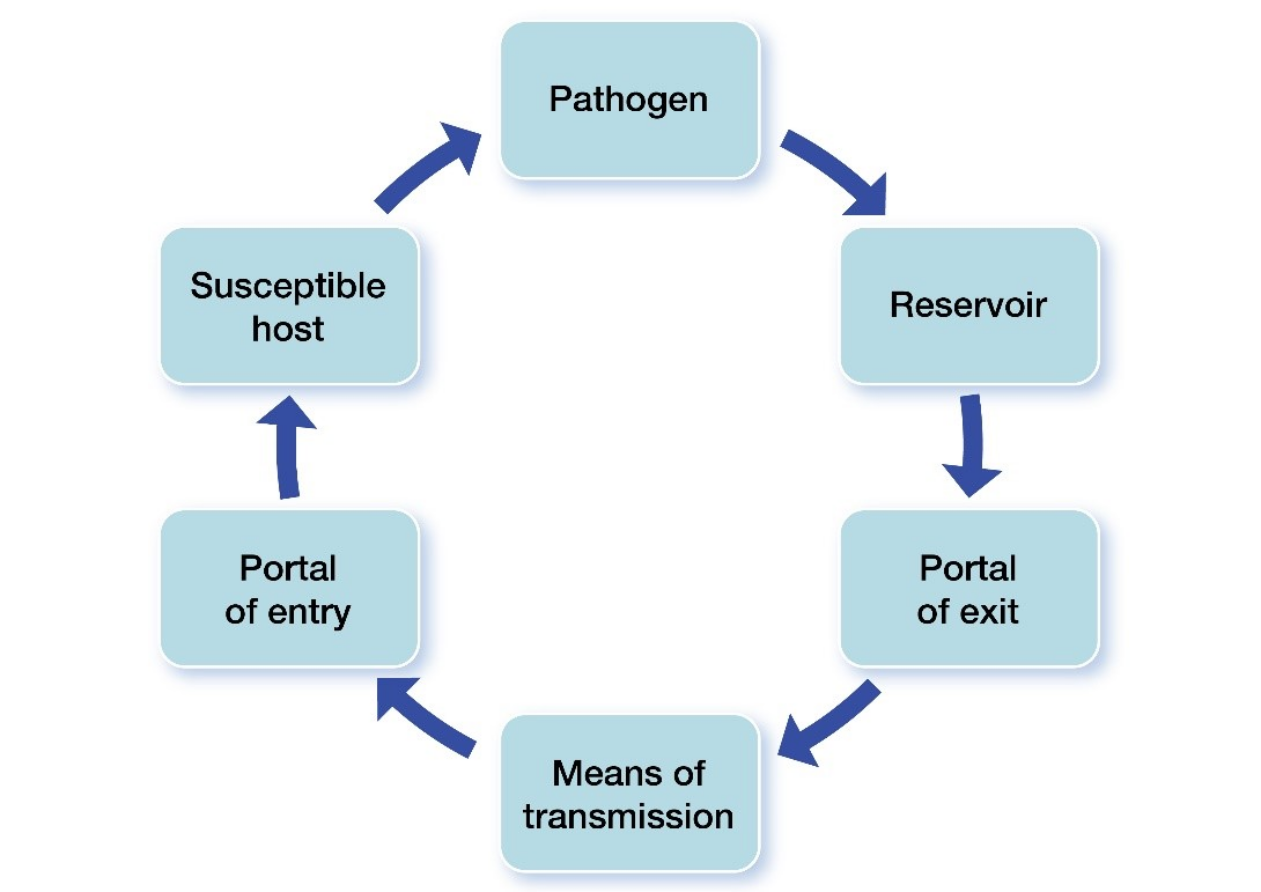
The chain of infection is a simple way to explain how a microorganism spreads from one person or place to another where it may cause infection and illness. If you break any part of the circle, the infection may be stopped.
-
Pathogen: pathogens are harmful micro-organisms (infectious agents) that cause infections. A micro-organism could be a virus, bacteria, parasite, or fungus. For example, the flu virus, scabies mites or tuberculosis-causing bacteria.
-
Reservoir or host: this is where the micro-organism is found It could be in a person or an animal; it could also be a contaminated object, for example frequently touched surfaces such as a tap or light switch.
-
Portal of exit: this is the way the micro-organism leaves the reservoir. It might be through saliva and mucus, a cut on the skin or faeces (poo).
-
Means of transmission: this is the way in which the micro-organisms move from the reservoir to a person who might be infected. This can happen when people touch each other; when someone coughs or sneezes, releasing infectious particles in the air and another person breathes them in; or when someone touches a surface with the micro-organism on it (a contaminated object) and then touches another surface.
-
Portal of entry: the part of the body where the micro-organism enters, often through the mouth, nose, eyes, or a cut on the skin.
-
Susceptible host: a person who can become infected. Some people will have a higher risk of becoming infected due to their age, sex or health status. People in prison, staff members or visitors who have a weakened immune system (having a medically diagnosed or suspected condition where the immune system does not work properly, and it therefore cannot fight infections as well as it should) or who haven’t had a vaccine that offers protection may be more likely to catch the infection.
2. Actions to prevent infection
2.1 Immunisation and vaccination
Primary prevention is an essential public health measure. All adults entering and residing in prisons should have their vaccination history checked by healthcare staff and be offered any vaccinations that they are eligible for in line with The Green Book.
Employers of all prison staff (and sub-contractors) must make provision for the appropriate pre-employment and ongoing immunisation needs of prison staff and prison healthcare staff as outlined in The Health and Safety at Work Act 1974. Micro-organisms are covered in the Control of Substances Hazardous to Health Regulations 2002 (COSHH) as biological agents, and therefore the health risk assessment for staff must include vaccination as a risk mitigation strategy as part of the hierarchy of controls.
2.2 Health risk assessment and screening on arrival and transfer
As per NICE guidance for the physical health of people in prison, when people enter prison, they should have an initial health screening at reception that includes a full assessment by a healthcare professional or trained healthcare assistant under the supervision of a registered nurse. The purpose of this initial assessment is to identify any health-related issues that may affect the person’s immediate health and identify any health needs that are a priority and need addressing urgently. This includes assessing and reviewing whether the person entering prison has any physical injuries or wounds, or a range of health conditions including long term conditions, hepatitis B or C virus, HIV or sexually transmitted infections. The healthcare professional should also screen people for tuberculosis within 48 hours of arrival, assess their vaccination status and manage those who have an incomplete vaccination history.
A second stage in-depth health assessment is carried out within 7 days of arrival. This is an assessment that includes reviewing any actions and outcomes from the first-stage health assessment. This also provides an opportunity to deliver opt out testing for blood borne viruses and ascertain the date of the person’s last sexual health screen. People in prison are offered onward referral and health advice based on their responses and the outcome of this assessment.
2.3 Introduction to standard infection control precautions (SICPs) and risk assessment
Standard infection control precautions (SICPs) should be used by all staff, in all settings, at all times, for all people in prison, regardless of whether an infection is suspected, present or not. Consistent use of these measures in the prison environment will help to protect people in prison and staff from the transmission of infectious agents in these settings.
The SICPs for use in prison settings are:
- hand hygiene
- personal protective equipment (PPE)
- respiratory and cough hygiene
- cleaning and disinfection
- safe management of blood and body fluid spillages
- safe disposal of waste (including sharps)
- management of linen
- personal hygiene items
Use of SICPs should be included in SOPs and used as part of a risk-assessed approach by both staff and people in prison. For example, in some prison settings it may not be possible to provide access to alcohol hand rub or sinks for hand hygiene due to the presence of other health and safety risks. Risk assessments should be reviewed by the residential custodial manager, health and safety, security and healthcare staff at least annually, or any time there is a change in the person in prisons health, to ensure that risks remain current and appropriately mitigated. Risk assessments may identify the need for a new or a review of an SOP.
Risk assessments and SOPs should consider the unique environments in prison. Consider other hazards where people may work in farms and gardens, paid external employment and other prison roles such as cleaning, domestic waste, catering, and healthcare support (for example, as orderlies). Staff should be aware of the risk they may pose to other people in prison through their activities if they do not declare illnesses such as diarrhoea and vomiting, skin lesions or coughs.
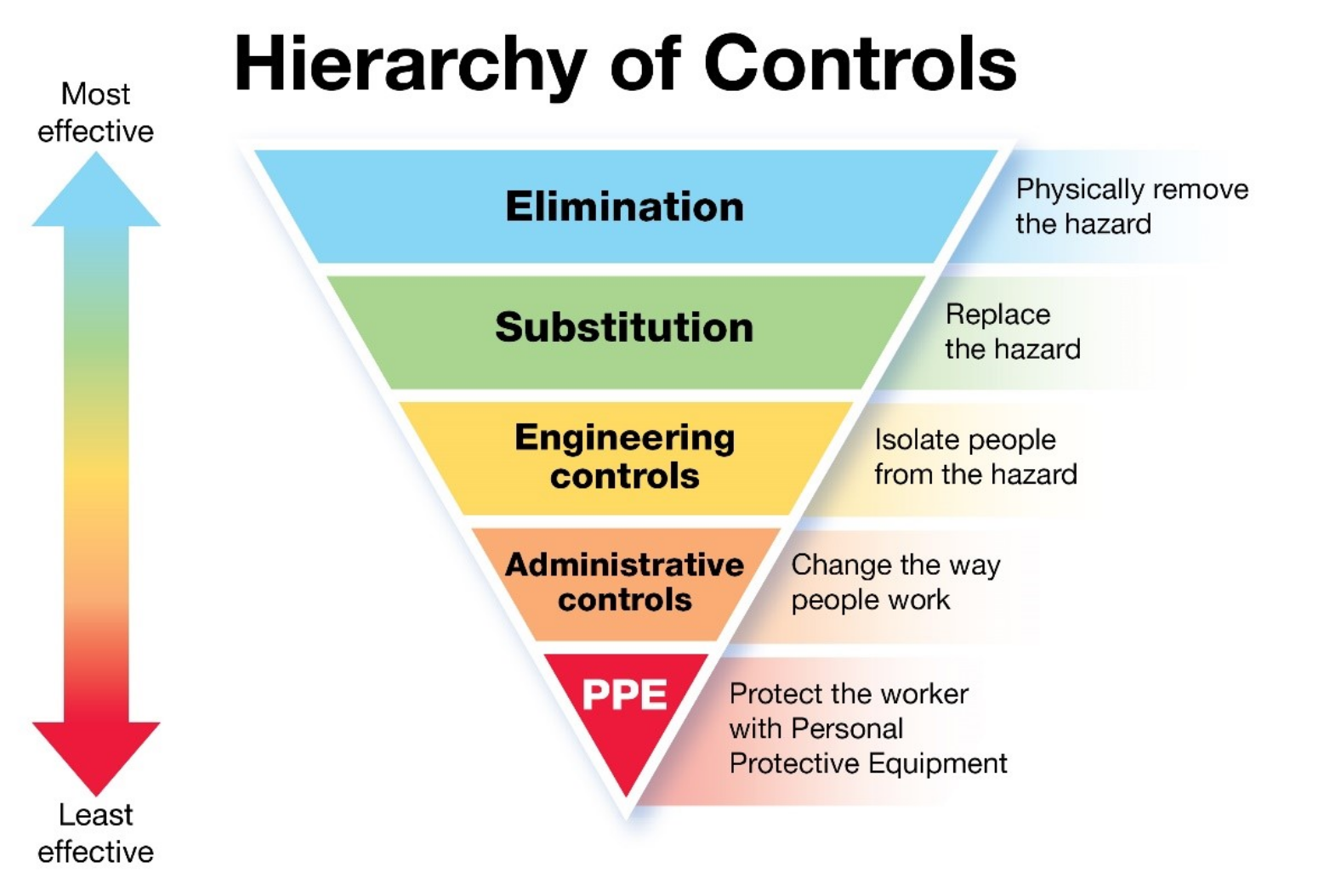
Use the hierarchy of controls when considering infection risk in the prison setting. Controls at the top of the list or pyramid are more effective than the those at the bottom in reducing the risk of infection. The hierarchy of controls in order of effectiveness are:
- elimination – physically remove the hazard
- substitution – replace the hazard
- engineering controls – isolate people from the hazard
- administrative controls – change the way people work
- PPE – protect the worker with equipment
Figure 2. Hierarchy of controls
Use of the hierarchy of controls in the secure setting
Examples:
Elimination – This includes vaccination or the management of the person in prison with the suspected or confirmed infection. For example, this could be observing the person in prison through a glass panel, asking the individual to move to the back of a cell or the staff not entering the cell. It also includes not carrying out certain activities when ill, for example a prison orderly with catering duties not carrying these out if they have diarrhoea or vomiting.
Substitution – Consider whether a task or activity with the individual is essential or if it can be delayed until they are no longer infectious.
Engineering controls – Carefully assessing the infection risks (alongside other secure environment risks) within the environment to help reduce the likelihood of infection spreading. This might include placing the person in prison in isolation in a single cell or for an outbreak of infection on a wing it might include restrictions on the normal activities on that wing or area for a period of time.
Administrative controls - Cleaning or organisation of cleaning in such a way to prevent contact or minimise contact with items or matter that may be infectious.
Personal protective equipment (PPE) – Use of PPE to protect the staff member, person in prison or visitor from the risk.
2.4 Hand hygiene
Hand hygiene is an important way to prevent micro-organisms from moving between people and to and from the environment.
2.4.1 When to undertake hand hygiene
Hand hygiene should be performed by staff, visitors and people in prison in the following situations:
- before and after touching another person
- before preparing or handling food and drink
- after coughing or sneezing if your hands have been contaminated
- after exposure to blood or body fluids, either your own or another person’s (section 2.5)
- before touching a new piece of equipment
- after touching frequently touched surfaces or equipment
- before moving to another area or task
- before and after using the toilet
- before working in the kitchen or preparing food
Hand hygiene should be reinforced if staff or people in prison take part in one of the following activities:
- work producing fresh vegetables, gardening or working with soil
- before and after touching livestock, any equipment used around the livestock, or excreta (poo or other waste) from livestock
- if domestic animals are being handled or cared for
- on removal of disposable gloves or personal protective clothing
- after undertaking cleaning
In the planning of all activities the need for hand hygiene should be risk assessed and appropriate facilities provided.
2.4.2 How and when to use disposable gloves
Disposable gloves are not a substitute for hand hygiene, as staff will contaminate hands taking them off. Disposable gloves only protect the user and cannot be cleaned between tasks which poses a risk for the people or surfaces next touched. For this reason, if disposable gloves are worn, staff will still need to undertake hand hygiene before they put them on and when they remove their gloves.
2.4.3 How to undertake hand hygiene
Jewellery such as watches and stoned rings will prevent the thorough cleaning of the hands and removal of microorganisms, therefore it is preferable to remove them before undertaking hand hygiene. Religious bangles or plain metal finger rings should be moved up the arm or the finger. Ensure fingernails are kept clean and short and do not wear nail extensions, false nails or nail polish to improve the effectiveness of hand hygiene. Cover all cuts and abrasions to prevent transfer of micro-organisms from person to person.
Wash your hands using either liquid soap and water or alcohol-based hand rub (ABHR). In most circumstances ABHR (60% alcohol concentration and conforming to BS EN1500:2013) is equally as effective as soap and water for hand hygiene. Do not use ABHR in the following situations as it is not effective:
- can see dirt or debris on your hands
- have had contact with faeces (poo)
- have been in contact with a person who has had diarrhoea and/or vomiting
- have worked with animals
- have worked with soil or in the garden
Carry out a risk assessment to determine the best locations for where to place soap dispensers, paper towels and waste bins. The ideal location for soap dispensers and paper towels is on the wall next to a sink, noting that in healthcare areas dispensers should always be wall mounted and next to a sink.
Liquid soaps that are not antimicrobial, coloured or scented are often tolerated better by staff and people in prison as they cause less hand irritation and allergies than non-coloured and non-scented soap. Do not use bar soap as it can become contaminated with micro-organisms and dirt from the hands of multiple users. Do not use nail brushes for any hand hygiene activity as they can damage the skin Do not support the purchase of nailbrushes or bar soap by people in prison.
ABHR dispensers can be wall-mounted, but this carries a risk of ingestion and unintended use by people in prison. Wall-mounted dispensers can be safely installed in some key areas following a risk assessment, for example in visitor entrance areas and locked office areas in the wings. Sufficient stock of ABHR should be readily available to support staff to frequently renew a personal supply. Staff may carry their own supply and are responsible for making use of the available stock, unless the risk assessment for that prison area or the individual prisoner suggests that it is unsafe to use or carry ABHR in that area. The risk assessment should be periodically reviewed and updated, especially during outbreaks of infection.
See the Handwash and Handrub posters for more information on how to undertake hand hygiene using liquid soap or alcohol hand rub here.
If ABHRs are not safe to use due to risk of misuse or diagnosed allergies, then alternative non-alcohol-based rubs may be considered. Those involved in purchasing hand hygiene products are advised to:
- complete a documented risk assessment approved by local governance
- confirm the product is effective and suitable for its intended use; this will mean checking with the manufacturer and checking the product meets EN (European Norm) standards, for example, BS EN 1500:2013
- identify any differences in use compared to alcohol-based hand rubs, such as amount needed, contact time, or disinfection method
- ensure users are aware of how to use the products safely and effectively; this will include providing guidance, training, and supporting materials to use the product
Use hand cleaning wipes if staff members and people in prison have no access to running water and the risk assessment does not allow the use of ABHR. Staff will need to consider the risks of ingestion, suffocation and self-harm if using a wipe in specific settings. If hand wipes are carried by staff, then a small personal supply is recommended as the packaging will easily become contaminated. The packaging should have a robust re-seal system in place to prevent the wipes from drying out and itself be wipeable, unless single packs are used.
Clean between the fingers, the thumbs, fingertips, and the backs of the hands when using cleaning wipes. Full instructions will be provided by the manufacturer.
Most wipes for hand hygiene are not flushable or may not be compatible with older plumbing systems. The risk assessment should include disposal into general domestic waste streams. The staff member or person in prison who uses the wipes is responsible for their safe disposal. Encourage or enable staff or the person in prison to wash their hands using soap and water at the earliest opportunity following hand hygiene with a hand wipe.
See the Antimicrobial hand wipes: instructions for use poster for more information on how to use hand cleaning wipes.
Personal protective equipment (PPE)
PPE is the last line of defence in the hierarchy of controls, to be used only after all other risk control measures have been implemented. PPE should be provided for and used by staff who are employed in healthcare and people in prison to protect them from exposure to blood, body fluids, and other people who are suspected or confirmed to have an infectious disease.
PPE is required when handling certain cleaning chemicals identified as hazardous under a control of substances hazardous to health (COSHH) risk assessment.
PPE should be provided for and used by staff and people in prison who are employed in cleaning, laundry and waste management roles. When designing systems of work, consider:
- access to and use of PPE
- training in the correct use and removal of PPE
- correct disposal facilities
- providing access to designated areas for changing and showering when needed to minimise risk
This may require allowing cleaning staff time to use these facilities outside of scheduled showering times.
The PPE required for a certain situation may include aprons, gloves, eye protection or visors, gowns, coveralls and facemasks including fluid-resistant surgical masks (FRSMs) or FFP3 respirator masks. In certain settings PPE may also include the use of powered specialist hoods or respirators.
There is no need for staff or people in prison to wear PPE if the task does not involve contact with blood, body fluids, contact with people with known or suspected infections or chemicals.
Single use PPE items should only be used once for a single task or by a single person in prison storage and use principles for single use PPE include:
- store PPE in clean dry areas
- check expiry dates on PPE and ensure that stock is rotated if not used frequently
- ensure that stock stored in communal areas that is used for multiple functions does not become contaminated. Where possible, use specialist dispensers or enclosed storage solutions
- single-use PPE that is not contaminated with blood and body fluids should be disposed of in the general waste stream
- single-use PPE that is contaminated with blood or body fluids should be disposed of in the offensive waste stream (yellow with black stripes bag)
- single-use PPE that has been used during the care of people with a known infection should be disposed in the infectious clinical waste (orange bag)
Reusable PPE such as visors, goggles or hoods must be cleaned and stored as per local SOPs and manufacturer’s instructions.
Table 1. Standard IPC PPE precautions
| Context | Disposable gloves | Disposable plastic apron | Fluid-resistant (type IIR) surgical mask | Eye or face protection |
|---|---|---|---|---|
| Tasks involving possible exposure to blood or body fluids (urine, faeces, vomit or sputum) | Yes | Yes, if risk of splashing onto uniform | Yes, if risk of splashing | Yes, if risk of splashing |
| When in the room during an aerosol-generating procedure (AGP) on a person in prison without a known or suspected infection, for example when escorting a person in prison during dental treatment. | Yes | Yes | Yes | Yes |
2.5 Respiratory and cough hygiene
Respiratory and cough hygiene helps to reduce the chance of micro-organisms that are spread through coughing or sneezing being spread through the air or onto hands, surfaces and equipment. This therefore helps to prevent other people from catching the infection.
Respiratory and cough hygiene includes:
- Catch it - cover the nose and mouth with a disposable tissue when sneezing or coughing or blowing your nose. Use the crook of your arm if you haven’t got a tissue to sneeze or cough into.
- Bin it - dispose of all used tissues in a bin or flush down a toilet if this prevents the build-up and possible misuse of tissues.
- Kill it - undertake hand hygiene as soon as possible afterwards.
A poster that promotes Catch it, bin it, kill it is available.
On arrival in the prison setting, the initial health assessment should include whether the person entering prison has a cough, and the duration of coughing if present. All prison staff should be alert to a cough in a person in prison that lasts longer than 21 days and ensure an appropriate health assessment takes place.
2.6 Cleaning and disinfection
People in prison are responsible for cleaning their own cells using equipment and products that are supplied by the prison and available in communal areas. Prison induction to residential areas should outline prisoner responsibilities. The cleanliness of cells should be subject to regular audits by senior prison staff. Any shortcomings identified should be addressed in a timely manner. For the cleaning standards for healthcare and dental settings refer to the National Standards for Environmental Cleanliness.
People in prison are employed to clean communal areas within the prison. Those employed should receive training appropriate to the role as well as dedicated time to clean that is appropriate for the task. They should be supported with time to shower and access a change of clothes following cleaning duties. The cleanliness of communal areas should be subject to regular audit by senior prison staff.
Healthcare, public and office areas may be cleaned by a cleaning contractor or people in prison employed to do this role. These areas should also be considered when auditing cleanliness in the prison setting.
Cleaning is the first step to remove visible dirt and reduce the number of micro-organisms in the environment. Cleaning requires the use of water with soap or detergent (for example, an all-purpose cleaner) and mechanical action such as wiping, scrubbing or brushing. Both dirty and visibly clean environments require regular cleaning to reduce the number of micro-organisms that can cause infection. A visibly clean environment can also contribute to the wellbeing of staff and people in prison.
Disinfection is the second step to undertake. Using a disinfectant (for example, a suitable chlorine-based product) further reduces the number of micro-organisms present on a surface or object to a level that is less likely to cause infection. The presence of dirt and organic material prevents the action of common disinfectants. It is therefore essential to clean surfaces thoroughly with a detergent before disinfecting. The disinfectant concentration and contact time are critical for effective disinfection. Disinfectant solutions should be prepared and used according to the manufacturer’s instructions.
2.6.1 Choice of cleaning and disinfectant products and equipment
Details about cleaning, disinfectant products and equipment can be found in the Prisons cleaning manual.
2.7 Safe management of blood and body fluid spillages
Local responsibilities for the management of blood and body fluid spills must be clear. Prison staff should follow the internal guidance on blood and body fluid spillages and dirty protests (available on the His Majesty’s Prison and Probation Service [HMPPS] intranet: Health and Safety Guidance Note 01/2008 - ‘Cleaning cells following dirty protests and cleaning up spillages of blood or body fluids’) and in line with the available Biohazard spillage poster.
Spillages of blood and body fluids (for example, faeces, urine, vomit and sputum) and dirty protests should be cleaned immediately by appropriately trained staff or contractors using appropriate safe systems of work, materials and PPE.
Use of a solution of 10,000 parts per million (ppm) available chlorine (av cl) to disinfect after blood spillages have been cleaned, due to the significantly higher prevalence of blood-borne viruses among people in prison compared to the general public (Health and Safety Executive guidance).
2.8 Safe disposal of waste including sharps
Correct waste categorisation in prisons ensures safety and compliance with environmental and dangerous goods legislation, reduces costs, and supports the Ministry of Justice’s climate change and sustainability strategy. Proper segregation of waste (for example, of recyclable and clinical waste) helps lower disposal costs by ensuring that waste is processed through the most efficient and cost-effective channels. By managing waste responsibly, prisons can improve operational efficiency while contributing to a more sustainable future.
Always dispose of waste:
- immediately and as close to the point of use as possible
- into the correct segregated, colour-coded container
- into a sharps box for all sharps waste (see Table 2 below)
Clinical waste bags must be no more than two-thirds full and securely tied using a plastic tie or secure knot using a ‘swan neck’ method to close. Mark waste bags with the source of the waste (for example, the name or postcode of the establishment that generated the waste).
Waste receptacles in public or communal areas should be lidded, foot operated (to support ease of access) and labelled with the appropriate waste category. There should be no manual sorting of waste items once it has been disposed of at source by the prisoner or staff member who has generated the waste. Waste collection and recycling facilities processing waste should have local training, procedures and risk assessments in place to ensure any waste related activity is undertaken safely and monitored.
Provide heavy duty reusable gloves for emptying waste in public and communal areas. Bags should be sealed at source and removed to outside or storage facilities.
Flatten cardboard boxes and other bulky items before disposal.
Store all waste in a designated, safe, lockable area while awaiting collection. Waste bags should not be stored or piled on the floor, but collected in dedicated collection bins, large wheelies bins or collection crates.
Do not overfill waste containers, including large wheelie bins at collection points; always close the lid after depositing waste bags. Avoid excessive build-up of waste containers by having regular collections.
Sharps containers should have a handle and a temporary closure mechanism, to be used when the container is not in use. Dispose of sharps containers when the manufacturer’s fill line is reached. Label containers with point of origin and date of assembly and disposal.
Outside of healthcare facilities, use an orange lidded bin for sharps waste such as razor blades. Use yellow lidded bins for sharps used for healthcare activities. Further information about the management of healthcare waste can be found in the Health Technical Memorandum (HTM 07-01).
Table 2. Management of waste
| Category | Segregation | Examples |
|---|---|---|
| General waste | Clear bag | All waste that does not belong to other categories. |
| Recyclable waste | Segregation in line with local agreement. Some sites may not separate recycling at the point of disposal but sort it at on on-site waste units. | Paper, cardboard, plastic, metal, glass. |
| Organic waste | Compostable bag. | Food waste |
| Offensive waste [note 1] | Yellow with black stripes bag. | It is not clinical waste nor infectious but may contain body fluids, secretions or excretions, for example disposable equipment used to clean spillages of body fluids, feminine hygiene waste, nappies, incontinence waste, used non-infectious PPE. |
| Infectious clinical waste [note 1] | Orange bag. | Waste from a healthcare activity on a known infectious patient, that is known or reliably believed to contain micro-organisms or their toxins. |
| Infectious clinical waste contaminated with medicines [note 1] | Yellow bag. | Waste contaminated with medicines from a healthcare activity on a known infectious patient. |
| Sharps [note 1] | Sharps box with orange lid (outside healthcare these may be available in secure supervised areas in the wings). | Sharps not contaminated with medicines, for example razors, scalpels and so on. |
| Sharps box with yellow lid. | Sharps contaminated with medicines, for example syringe needles used to draw up medications. | |
| Sharp box with purple lid. | Sharps contaminated with cytotoxic/cytostatic, for example used to prepare chemotherapy drugs. | |
| Liquid waste [note 1] | Orange lidded leak proof bin, if not contaminated with pharmaceuticals. Yellow lidded leak proof bin if contaminated by pharmaceuticals. Add a polymer gel or compound to the container prior to placing in the leak proof bin. | For example, suction canisters (healthcare only). |
| Special waste | Appropriate packaging as per local arrangements | Electronic cigarettes, batteries, dog waste, lighters, flammable products (deodorant cans, lighters and so on). |
| Body fluids-soaked mattresses that can’t be cleaned | Dedicated mattress bags and stacked in pallets. |
Note 1: for further info on clinical waste, including sharps management, refer to the Health Technical Memorandum 07-01 (Table 9) and the NHSE National IPC Manual.
2.9 Management of linen
The Prisons cleaning manual contains advice on management of linen, laundry and laundrettes in prisons.
2.10 Personal hygiene items
Sharing personal hygiene items such as toothbrushes, razors, nail clippers pose a potential risk for transmitting blood-borne viruses (BBVs), including hepatitis B (HBV), hepatitis C (HCV), and, to a lesser extent, HIV and therefore should be avoided. This is because these items can easily become contaminated with traces of blood that may be invisible to the naked eye. Prisons should provide access to these items to avoid the risk of sharing.
3. Managing infection and transmission-based precautions (TBPs)
When a person in prison has a known or suspected infection, prison staff and visitors may need to take additional transmission-based precautions (TBPs), as well as the SICPs listed above. These will vary depending on the type of infection and the agent causing the infection. Often TBPs will be put in place for a short period of time for specific individuals and only for the duration that they are infectious. The local HPT or specialist healthcare staff might also recommend TBPs in response to an outbreak of infectious disease.
The NHSE NIPCM A-Z lists a range of commonly occurring infections and information on infectivity and isolation requirements. However, implementation of these precautions in prison settings outside healthcare areas may require adaptations and individual risk assessment. Prison healthcare IPC leads, the local HPT and operational healthcare leads can provide some support with risk assessment. Table 3, below, provides information for infections commonly seen in adult prison settings. This table does not replace or remove the requirement for a prison to report suspected infections to the local healthcare and health protection teams for further advise and support.
Table 3. Management of infections
| Suspected or confirmed infection | Duration of precautions and need for isolation in a single cell | Single use disposable gloves | Single use disposable apron | Eye or face protection | Respiratory protection |
|---|---|---|---|---|---|
| Diarrhoeal diseases and or vomiting | Isolation and precautions whilst symptomatic and until 48 hours after last symptoms – unless advised differently by healthcare or health protection teams | Yes, when in close contact or when cleaning environment | If risk of splashing when in close contact or cleaning environment | If risk of splashing when in close contact or cleaning environment | No respiratory precautions needed but a fluid-resistant surgical mask (FRSM) may be needed if there is risk of splashing |
| Scabies and headlice | Isolation is not normally needed but if considered is should only be in place for the first 24 hours after treatment. After 24 hours no need for any precautions | Yes, for direct contact | Yes, for direct contact | No | No |
| Group A Streptococcus (GAS) | Isolation and precautions for the first 48 hours of treatment | Yes, if exposure to blood or body fluids | Yes, if exposure to blood or body fluids | Yes, if exposure to blood or body fluids | FRSM needed only with respiratory symptoms, not for other presentations. FRSM may be needed if risk of splashing |
| Acute respiratory infections for example influenza or COVID-19 (SARS-CoV-2) | Risk assessment as per guidelines | Risk assessment as per guidelines | Risk assessment as per guidelines | Risk assessment as per guidelines | Risk assessment as per guidelines |
| Tuberculosis (respiratory) | Isolation and precautions at least until 2 weeks of treatment has been given. ONLY move from single cell on advice of TB team | Yes, if exposure to blood or body fluids | Yes, if exposure to blood or body fluids | Yes, if exposure to blood or body fluids | FFP3 respirator or powered respirator or hood for all contact |
| Measles | Isolation and precautions until at least 4 days after the onset of the rash (day 0). Note further periods of solation may be needed for some people | Yes | Yes | Yes | FFP3 respirator or powered respirator or hood for all contact |
Note: the management of other infections, for example shingles and chickenpox, will require prison staff to seek urgent advice both out of hours and in hours from your local health care provider or health protection team.
Step down of TBPs should be approved by the local healthcare team or incident management team if in response to an incident or outbreak. Information leaflets to support people in prison should be made available via healthcare staff.
Place prisoners on a medical hold alone in their cell or a single cell while TBPs are being used. If a single cell cannot be provided due to operational capacity or security risk, then healthcare IPC lead staff must be consulted to support a local and individual risk assessment.
3.1 Discharge from providers of healthcare to adult prison settings
Providers of NHS care must ensure that infection status is included in any discharge planning or handover back to adult prison settings. NHS patients who are discharged to a prison with a known infection or colonisation caused by a multidrug-resistant organism will require a risk assessment led by healthcare in the prison setting. This is to determine the appropriate TBPs to put in place. Local HPTs may also support prison and healthcare staff with this risk assessment if required. An NHS patient with a known infection or a multidrug-resistant colonisation should not be discharged to a prison without a risk assessment being in place.
3.2 Isolation
If the person in prison is considered infectious, either due to suspected or confirmed infection, and isolation is recommended as per Table 2, they should ideally be isolated in a single cell. The door should be kept shut with only essential staff and visitors entering the room. A suitable means of communication and handover should be used to indicate that this patient is infectious. All contact with other people in prison should be avoided.
People in prison with suspected or confirmed respiratory infections should be asked to wear a fluid-resistant surgical mask (FRSM) when leaving an isolation cell during the infectious period. Wearing an FRSM should not compromise clinical care or cause distress. Health care staff and officers should implement transmission-based precautions that may include the use of a face filtering facepiece (FFP3 mask) or powered respiratory hood as respiratory protection.
The person in prison should have access to facilities for hand hygiene in the room they are isolating in.
If showering or toileting facilities are not available in the room, and the person in prison has a suspected or confirmed respiratory infection, then they should be transferred to the shower room wearing an FRSM and shower alone. They should remove the FRSM prior to entering the shower and replace with a clean FRSM after showering. Accompanying staff must wear appropriate PPE as below.
In some prisons, in-cell toilets may not be available. In these circumstances the risk assessment should detail how the person in prison will access the nearest facility with minimal contact with other people in prison or staff. If the confirmed or suspected infection is gastro-intestinal (stomach bug) and a communal shower or toilet is to be used, then this should be cleaned after each use with disinfectant and detergents as described in section 2.7.
As with all isolation protocols, the prisoner’s mental health and safeguarding needs must be considered as part of the risk assessment. The prison staff and prison healthcare must agree an action plan to reduce the risk to both the person in prison and in the general population. Staff must also work to protect the person in prison’s privacy and confidentiality of condition and diagnosis.
While in isolation the person in prison must be made ‘unfit for court’ but can attend via a video link if this is acceptable to the court and they are well enough.
3.3 Safe management of the environment and equipment used by a person with an infection
3.3.1 Showers and areas for washing
The cell and any showering and toileting facilities used should be kept visibly clean and in a good state of repair. Ensure there are no non-essential item in these areas, particularly those that are difficult to clean.
3.3.2 Cells used for isolation
If a person in prison is isolating, only essential items should be kept in their cell, noting that after the infectious period these items will require decontaminating or may need to be discarded, this should be discussed with the person in prison.
If shared items or equipment are brought into the cell of a person in prison who is isolating, these will require thorough decontamination before they can be used on or by another individual. See section 2.7 on cleaning and disinfection and the Prison cleaning manual.
No special precautions are required regarding crockery and eating utensils that have been used by a patient with a suspected or confirmed infection.
3.3.3 Cleaning of cells used by people who are isolating
Clean single isolation cells daily, using dedicated cleaning equipment and either general purpose detergent in warm water followed by a solution of 1,000 ppm available chlorine or a combined detergent and disinfectant solution at a dilution of 1,000 ppm available chlorine. Staff cleaning occupied isolation cells should have access to appropriate PPE. Reuseable cleaning cloths and mop heads should be changed or disposed of and changed daily.
3.3.4 Contaminated waste
Items contaminated with blood or body fluids which cannot be cleaned or sent to central laundry facilities should be managed as clinical waste. Healthcare providers can provide further advice.
3.4 Personal protective equipment (PPE) for staff and visitors
PPE should be provided to staff and visitors specific to the infection risks present in the setting.
A table of recommended PPE for staff in prisons and community offender accommodation: coronavirus (COVID-19) is available when respiratory infections are suspected or confirmed.
3.4.1 Respiratory protective equipment (RPE)
An FFP3 mask or powered respirator hood should be used when a staff member is in contact with a resident with an infection that transmits through the air.
FFP3 respirators must be:
- single use (disposable) and fluid-resistant (EN149)
- fit tested on all staff to ensure an adequate fit as per manufacturer’s instructions
- fit checked as per manufacturer’s instructions every time it is put on to ensure a good seal or fit (HSE guidelines for putting on respirators and performing a fit check (YouTube video)
- compatible with other facial protection used either for infection prevention or security purposes
Facial hair may impede the seal of the mask and must not interfere with the seal surface.
Further information regarding fitting and fit checking of respirators can be found on the HSE website.
Powered or respirator hoods have the advantage of being compatible with facial hair and do not require fit testing. Any power hoods that are used must comply with HSE guidance (HSG53) and have a decontamination schedule in place. They must be stored and maintained as per manufacturer’s instructions.
Putting on and removing RPE should be undertaken when outside the single cell or isolation cell, after the door is closed and after any security chain to the patient has been removed. Always carry out hand hygiene before putting on and removing RPE.
3.4.2 Other PPE
All other PPE for staff and visitors should be used as per SICPs.
This PPE should be put on and removed in the cell of the person in prison. This PPE may include aprons and gloves if required. However, prison staff should work with healthcare staff to ensure a risk assessment takes place to review the need for other items of PPE. For example, the staff member may need gloves if handling used tissues or equipment or furniture.
Always carry out hand hygiene after removing gloves as well as after leaving the cell of the person in prison.
Posters on personal protective equipment use for AGPs are available. Note that this guidance is of a general nature and that an employer should consider specific conditions of work and applicable legislation including the Health and Safety at Work Act 1974.
PPE should be disposed as outlined in the section covering safe disposal of waste.
3.5 Bed watch and transfers
Bed watch and transfers require consideration in any risk assessment or safe systems of work. In these scenarios, co-ordinate and communicate with healthcare providers and ambulance services to ensure all risks are appropriately mitigated.
The risk of measures such as bed watch in hospital rooms should be discussed with healthcare staff.
Officers should only conduct bed watch in the room of an infectious patient after conducting a risk assessment. The aim should be that, as far as practicable, bed watch is not undertaken by officers in the same room as the person in prison. Communicate any decisions regarding bed watch to the Governor and Prison Health and Safety Lead.
3.6 Care of the deceased
If there is a death in custody that occurs whilst a person in prison is in isolation due to an infectious agent, or suspected to have an infection, prison staff should follow the SICPs listed above if they are required to touch the deceased or enter their cell. Once death has been confirmed, the cell is sealed and legal investigations must have been concluded before staff can enter the cell. Washing or dressing of the deceased should be avoided if they were known or suspected of having a hazard group 4 infectious agent.
Deceased individuals known or suspected to have a hazard group 4 infectious agent should be placed in a sealed double plastic body bag with absorbent material placed between each bag.
The surface of the outer bag should be disinfected with 1,000 ppm available chlorine before being placed in a robust sealed coffin. Refer to HSG283 managing infectious risk when handling the deceased for more information.
4. Infection prevention and control in specific areas
4.1 Gyms
The following principles will support the prevention of infection in the gymnasium:
- keep accurate records of attendance and groupings of people in the prison, so that contacts of a person in prison who has an infection can be identified if required
- keep these records for 3 months
- only allow people in the prison into the gym if they are free from known infections or the signs and symptoms of infections (for example, diarrhoea, vomiting, unexplained rash or respiratory illness)
- people in prison reporting symptoms should not exercise until they are well
- staff should seek the support of healthcare staff for risk assessments
- clean equipment between use, using general purpose detergent solutions or wipes
- set up specific cleaning schedules for the gym equipment and general area
- set up safe systems of work for the area
- provide alcohol hand rub or hand hygiene facilities for people in prison and prison staff to use prior to entering and leaving the gym exercise areas
- clean sinks daily and carry out an additional clean if visibly contaminated
4.2 Prison industries
Prison industries support mental health and wellbeing as well as rehabilitation. During an outbreak or incident, the restriction of, or the use of control measures on, prison industries should be risk assessed with the wellbeing of the people in prison considered.
Control measures should be continually reviewed and lifted as soon as practicable. Control measures include:
- keeping accurate records of attendance and groupings of people in the prison, so that contacts of a person in prison who has an infection can be identified if required
- keeping these records for at least 3 months
- only allowing people in the prison into industries if they are free from known infections or the signs and symptoms of infections (for example, diarrhoea, vomiting or respiratory illness)
- people in prison reporting such symptoms should not work until they are well
- prison staff seeking the support of healthcare staff with risk assessment
- including specific food handling requirements for exception from work if staff or people in prison report with diarrhoea or vomiting illnesses
- providing workwear for people in prison where needed
- providing appropriate places to store and change into clothing or workwear
- providing hand hygiene facilities for use when entering and leaving the workplace
4.3 Mother and baby units
Mother and baby units (MBUs) support mothers in prison to care for their babies while serving their sentences. They aim to support maternal bonding and child development while addressing the needs of both mother and baby.
It is the prison service’s responsibility to ensure that standards of cleanliness and IPC are maintained in the MBUs. The prison staff should work closely with healthcare professionals, including NHS midwives and health visitors, who can provide guidance, for example on vaccinations, how to clean breast pumps, sterilise bottles, store and transport expressed breast milk, and prevent infections. The prison service is also responsible for ensuring that mothers have access to dedicated equipment in line with healthcare professionals’ recommendations.
4.4 Prisoner Escort Custody Services (PECS)
PECS is an HMPPS-contracted service with 2 external suppliers. The contract provides escort services between courts, police stations and prisons, manages court custody suites and moves prisoners to and from courtrooms. This includes off bail prisoners coming into the custody of HMPPS. PECS suppliers follow HMPPS policy frameworks and procedures.
Measures that are part of the PECS process which may assist later (for example if contract tracing is required) if someone is identified as having an infection include:
- booking all moves by PECS suppliers through the Book a Secure Move (BaSM) IT platform
- completing the Digital Person Escort Record (DPER) to transfer risk information between Criminal Justice System (CJS) stakeholders
- using DPER to provide a digital record of names, dates, times, locations and events of all moves
- ensuring that a healthcare practitioner, or a sergeant for a move from a police custody suite, completes the health section of the DPER
Infection control measures to be taken when transferring a prisoner:
- do not transfer prisoners with diagnosed communicable disease to courts or between prisons
- those with an infection needing to attend court should be managed through video remand hearings
- clean PECS vehicles at the end of each working day
- contract a specialist cleaning company to carry out a deep clean of vehicles once a week, or as required following a blood or body fluid spillage
- provide, or make sure there is access to hand washing facilities for staff, prisoners and visitors throughout the day in court custody suites
- provide, or make sure there is access to hand washing facilities for prisoners in prison reception before discharge to court or transfer to another prison
PECS suppliers are supported at court by NHS healthcare services who can provide additional advice as required.
4.5 Built environment and facilities management contracting
The physical environment of prison settings significantly influences the ability to maintain adequate standards of cleanliness. Facilities with limited ventilation, outdated materials, damp walls and hard-to-reach areas present additional challenges. Inadequate airflow can contribute to wet conditions, while worn or porous surfaces may harbour dirt and germs.
To support effective cleaning and hygiene management, regular maintenance, timely repairs, and infrastructure improvements should be prioritised to ensure that the built environment helps, rather than hinders, sanitation efforts.
The design of a prison supports the prevention of infection. It is important therefore that when new prisons are built or renovated the advice of specialist IPC practitioners should be sought. Advice will be required at all stages from initial design to building snagging and commissioning.
5. Further information on the management of specific infections
- Acute respiratory illness, including flu and COVID-19 in prisons
- Chickenpox: public health management and guidance
- Group A streptococcal disease: information for people in prison
- Management of incidents and outbreaks of communicable disease in secure settings in England
- Management of tuberculosis in secure settings in England
- Measles information for prisons and other secure settings
- Mpox: prisons and places of detention
- Scabies: management advice for health professionals
6. List of contributors
Editorial team
- Claudia Salvagno, Infection Prevention and Control Specialist, UKHSA
- Esther Taborn, Infection Prevention and Control Consultant nurse, UKHSA
- Ian Palmer, Public Health Manager, UKHSA
- James Adamson, Senior Manager- Mental Health Lead, HMPPS
Members of the IPC in prisons task and finish group
In addition to those above:
- Abi Hamoodi, Head of Public Health, HMPPS
- Jonathan Van Der Veen, Health and Wellbeing Services Manager, HMPPS
- Julie Kenney, Health and Safety Lead, HMPPS
- Laura Spowage, Health and Justice Public Health Lead, NHSE
- Michaela Mckie, Soft Services Director, GFSL
- Memona Paracha, Programme Delivery Support Officer, UKHSA
- Niamh Whittome, Head of Infection Prevention and Control, NHSE
- Rachel Campbell, Health and Justice Public Health Lead, NHSE
- Rosie Dixon, Regional Head of Infection Prevention and Control, NHSE
Contributors
With thanks to the governor, staff and people in prison at:
- HMP The Verne
- HMP Featherstone
- HMP Leicester
- HMP Leyhill
- HMP Eastwood Park
- HMP Maidstone
- HMP Swale
- HMP Wandsworth
- HMP Guys Marsh