Independent review into mental health conditions, ADHD and autism: executive summary
Published 9 October 2026

© Crown copyright 2026
This publication is licensed under the terms of the Open Government Licence v3.0 except where otherwise stated. To view this licence, visit nationalarchives.gov.uk/doc/open-government-licence/version/3 or write to the Information Policy Team, The National Archives, Kew, London TW9 4DU, or email: psi@nationalarchives.gov.uk.
Where we have identified any third party copyright information you will need to obtain permission from the copyright holders concerned.
This publication is available at https://www.gov.uk/government/publications/independent-review-into-mental-health-conditions-adhd-and-autism-final-report/independent-review-into-mental-health-conditions-adhd-and-autism-executive-summary
Our country is experiencing a profound change in the need for support for people with mental health problems and neurodevelopmental conditions.
Mental health is part of everyone’s health, not a diagnosis. Mental ill health includes conditions such as anxiety, depression and eating disorders, which are recognised patterns of thought, feeling or behaviour that cause significant distress or impairment. They can arise at any stage of life, may come and go, and often respond well to treatment and support.
Mental distress and common mental health conditions have increased substantially, particularly among children and young people. The consequences are felt in families, schools, workplaces, communities and the economy. The total annual cost of mental ill health in England has been estimated at around £300 billion (see reference 1).
Attention deficit hyperactivity disorder (ADHD) and autism are neurodevelopmental conditions, strongly genetically influenced and present from early life, influencing attention, communication, behaviour, learning and how people experience the world. With the right adjustments many people live full lives but some face substantial difficulties and lifelong high support needs.
Traits related to these conditions, including inattention, social difficulties and emotional regulation, occur to varying degrees across the population, but having some of these traits, or identifying as neurodivergent, is not the same as having a diagnosable neurodevelopmental condition. Diagnosis depends not simply on the early developmental presence of traits, but on their severity, persistence and impact on functioning.
Recognition of ADHD and autism has risen dramatically, leading to hundreds of thousands of people awaiting diagnostic assessment and many others struggling to access support. Many people also continue to face barriers to timely treatment, increasing the risk that difficulties escalate and become more severe.
Continuing as we are is not sustainable. Not for the people waiting weeks, months or years, becoming more distressed because help is locked behind waiting for a diagnosis. Not for those with the most severe needs who cannot access specialist care. And not for a society paying the human and economic price of failing to support people to participate in family, community, education and working life.
The opportunity now is not simply to manage rising demand. It is to build a better system:
- reducing unacceptable waits now, while reshaping both clinical and non-clinical support
- taking a serious approach to prevention and wellbeing
- improving mental health and neurodevelopmental care within and beyond the NHS, particularly in the community
There should be a fundamental shift from a ‘diagnosis-dependent’ system to a ‘needs-led plus diagnosis’ system. The heated debate about whether there is too much diagnosis or too little risks reinforcing the centrality of diagnosis rather than need and timely access to support and treatment. The government must address 2 failures at the same time:
- People wait far too long for support, diagnosis and treatment.
- Diagnosis has become the primary gateway to support that could and should be available earlier.
These failures sit alongside insufficient capacity for people with the most severe, enduring and complex needs.
Diagnosis matters but is not without risks. For many people it is clinically necessary, personally meaningful and essential to treatment. It can help explain and address difficulties that significantly impair a person’s functioning, participation and quality of life. People with significant functional impairment should be able to access diagnostic assessment within a reasonable timeframe and specialist care should reach those who need it most. Support should be available according to a person’s needs before, during and after assessment, and not be withheld while waiting for a diagnosis.
Diagnosis can also do harm when it is inaccurate or used poorly. It can direct someone towards the wrong treatment and obscure co-occurring conditions or the social and environmental causes of their difficulties. A diagnosis can inform practical support people need to remain in education, participate in work, sustain relationships and live well. But those same outcomes can also be delayed or denied if a diagnostic label defines a person by their difficulties rather than by their strengths, circumstances and potential.
Increasing participation in relationships, education, work, family and community life should be a central outcome and measure of success. These are core pillars of good mental health and wellbeing. Success should not be measured by assessments, diagnoses or waiting lists alone, but by increased participation and improved quality of life, recognising that the outcomes that matter most will differ from person to person. For example, the benefits of employment and the adverse consequences of lack of employment on mental health have been known for over a century. The vast majority of individuals with mental health and neurodevelopmental conditions want to work and go to school and are able to, if given appropriate support and reasonable adjustments.
It is the job of the NHS and other public services to recognise the importance of engagement in education and work for good health and their role in providing timely and comprehensive informed support and treatment to help people to participate. Work, when secure and well supported, offers purpose, structure, financial security and social connection, and can help people recover rather than simply following their recovery.
Change requires reform across mental health and neurodevelopmental care, increased capacity, transformation through digitally enabled care, clearer national standards and sustained investment. It also requires government to:
- tackle the social and economic conditions and the environmental context that shape mental health and neurodevelopmental conditions
- measure whether public services are improving people’s lives rather than simply moving them between waiting lists
Some changes can begin immediately through existing powers and programmes. Others require deliberate workforce growth, investment and implementation over time.
This executive summary sets out:
- how we have interpreted the evidence
- what we found about prevalence, need and demand across mental health conditions, ADHD and autism
- what is driving these changes
- how well the current system responds
- our recommendations for a fairer and more effective response
Our approach to interpreting the evidence
We set out to understand:
- how many people are affected and how this is changing
- what is driving these changes
- how they affect different groups
- the benefits and risks associated with diagnosis
- the growth of the independent sector
- the risks of medicalisation
- what works in treatment and prevention
The review distinguishes between population prevalence, administrative prevalence, demand for assessment and unmet need because these measures answer different questions and should not be treated as interchangeable.
In short:
- population prevalence is not administrative prevalence
- distress is not disorder
- diagnosis is not need
- support is broader than treatment
Our conclusions do not rest on any single source. We have drawn on population surveys, administrative and clinical data, systematic reviews and testimony from people with lived experience and those delivering services. Where evidence is incomplete, outdated or uncertain, we say so. This is particularly important for ADHD and autism, where population prevalence data remains limited and less up to date than for many other conditions.
Because the same words are often used to mean different things, we define clearly what we mean by distress, need, prevalence, demand, functioning and impairment. We are also candid about the limitations of the available data and what can currently be measured robustly. Functional impairment in particular is inconsistently defined and recorded, so trends in impairment should be interpreted with caution.
Chapters 1 to 4 provide more detail on the context for the review and the approach we have taken, and chapter 5 explores overdiagnosis, misdiagnosis and underdiagnosis in more detail.
Our assessment of the evidence on prevalence, need and service demand
Two kinds of data tell different stories. Population prevalence estimates how many people have a condition, whether or not it has been recognised or recorded. Administrative prevalence records those who have been seen and recorded by services and therefore reflects demand on the system, including waiting lists. Administrative data is essential for planning services but is not a measure of population prevalence. Some people who could benefit from support appear in neither.
Mental health conditions
Mental distress has increased substantially across the population. Both the population and administrative prevalence of common mental health conditions, particularly anxiety and depression, have risen significantly across all age groups, but at a substantially faster rate for young people.
The proportion of adults aged 16 to 64 years meeting criteria for a common mental disorder increased by almost half, from 15.5% in 1993 to 22.6% in 2024 (see reference 2). Among 16 to 24 year olds it increased from around 1 in 6 to 1 in 4, with young women now reporting the highest rates of any group. Self-harm and eating disorders have also increased among young adults (see references 3 and 4). The rise in mental health problems is real, is affecting everyday functioning and cannot be explained by greater awareness alone (chapter 6).
We are not seeing the same increase in severe mental illness. Population rates of schizophrenia and bipolar disorder, for example, have remained broadly stable (see references 5 and 6). However, too many people with severe, enduring illness still do not receive the treatment and care they need and continue to experience some of the poorest outcomes in society. Improving care for this group, while reducing the risk of harm to themselves and others, must remain a priority.
ADHD
The available evidence suggests that the population prevalence of ADHD has remained broadly stable or increased only modestly over recent decades, although uncertainty remains because England lacks up-to-date population prevalence data.
The most recent Mental Health of Children and Young People (MHCYP) survey estimated ADHD prevalence at 3% among 5 to 15 year olds in 2017 according to Diagnostic and Statistical Manual of Mental Disorders, 5th Edition (DSM-5) criteria (tables annex). We estimate by projecting from the existing MHCYP data points that the current prevalence among 5 to 15 year olds might be around 3.8%, but this is at best a rough estimate in the absence of contemporary data based on the modest rise between 2004 and 2017 continuing unchanged. No equivalent adult population survey has been undertaken.
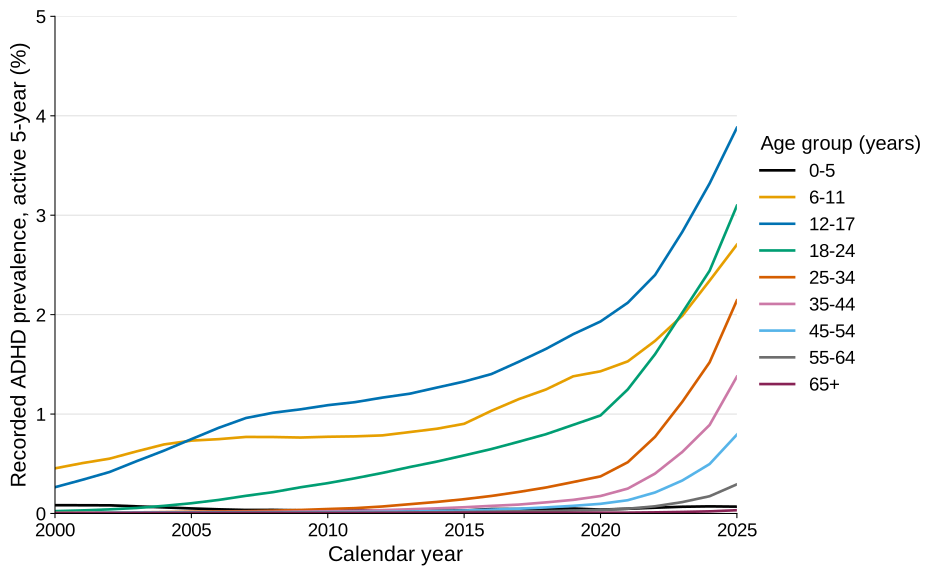
Administrative prevalence of ADHD has increased among children and young people aged 6 to 11 years by more than 6-fold (from 0.45% in 2000 to 2.70% in 2025) and among those aged 12 to 17 years by more than 15-fold (from 0.26% in 2000 to 3.88% in 2025) (see reference 7).
Socioeconomic disadvantage has long been associated with higher ADHD incidence and prevalence. However, more recent data shows the gap between the most and least deprived groups has narrowed (chapter 7).
Figure 1: ADHD recorded administrative prevalence by age band
Source: Clinical Practice Research Datalink (CPRD).
Description of figure 1: line chart showing the recorded administrative prevalence of ADHD between 2000 and 2025 in the following age bands:
- 0 to 5
- 6 to 11
- 12 to 17
- 18 to 24
- 25 to 34
- 35 to 44
- 45 to 54
- 55 to 64
- 65 and over
Prevalence increased in all age groups over the period, with the largest increases among adolescents aged 12 to 17 years and young adults aged 18 to 24 years. Rates increased most rapidly after 2020, particularly among people aged under 25 years.
Demand for ADHD assessment has increased dramatically. Monthly referrals more than tripled from around 5,000 in 2019 to around 17,000 in 2024. By the end of 2025, open referrals exceeded 560,000, more than 17 times the number recorded in 2019. Community paediatric waiting lists, the majority relating to ADHD assessment, reached approximately 173,000 (see reference 8). Waiting lists have grown rapidly, reflecting not only rising need but a system unable to keep pace with demand. Even when an appropriate diagnosis of ADHD is made, there are still unacceptable delays to support and treatment for those who need it (chapter 7).
Autism
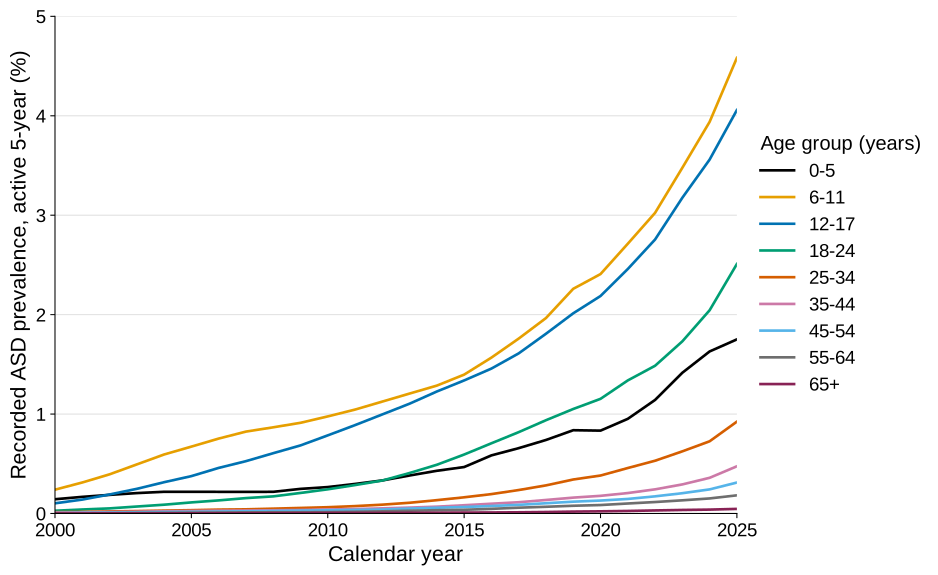
Similarly to ADHD, there is little evidence of a substantial change in underlying population prevalence, although uncertainty remains because there has been no recent England-wide prevalence study. The best available estimate remains around 1.2% among young people, based on the 2017 MHCYP survey. Again, there is no equivalent adult population survey data. The administrative prevalence of autism has increased among children and young people aged 6 to 11 years by more than 20-fold (0.24% in 2000 to 4.58% in 2025) and among those aged 12 to 17 by more than 40-fold (0.10% in 2000 to 4.06% in 2025) (see references 9 and 10).
Figure 2: autism recorded administrative prevalence by age band
Source: CPRD.
Description of figure 2: line chart showing the recorded administrative prevalence of autism between 2000 and 2025 in the following age bands:
- 0 to 5
- 6 to 11
- 12 to 17
- 18 to 24
- 25 to 34
- 35 to 44
- 45 to 54
- 55 to 64
- 65 and over
Prevalence increased in all age groups over the period, with the largest increases among children aged 6 to 11 years and adolescents aged 12 to 17 years. Rates increased most rapidly after 2020, particularly among people aged under 25 years.
Autism-related special educational needs and disabilities (SEND) rose from 1.5% of pupils in 2016 to 3.3% in 2024 (see reference 11). Demand for assessment has also risen sharply. By December 2025, more than 254,000 people had an open autism referral, with over 90% waiting longer than 13 weeks (see reference 12). Yet 40% of clinicians surveyed reported no ongoing post-diagnostic support and only 12.6% described support extending beyond a single session (see reference 13) (chapter 8). National data collection on people with lifelong support needs - autism with severe or profound intellectual disability, for example - is required so that broader recognition of autism does not make those requiring the most intensive support less visible.
ADHD and autism
As shown above, administrative prevalence for ADHD and autism among children and young people is now approaching and for some groups already exceeding population prevalence estimates, and is continuing to rise. The administrative prevalence figures also exclude some private-sector assessments that are not captured in routine data. If administrative prevalence were simply converging with underlying population prevalence, rates would be expected gradually to stabilise. Instead, both recorded diagnoses and demand for assessment continue to increase rapidly.
This does not, by itself, establish that overdiagnosis is currently occurring at scale. Population prevalence estimates are dated, use different methods and should not be treated as fixed biological ceilings. However, the evidence suggests we are entering a phase in which the balance of risks between underdiagnosis, misdiagnosis and overdiagnosis may be changing, with the risks of misdiagnosis and overdiagnosis becoming increasingly important considerations for policy and service delivery. To balance this concern, the evidence does not show that people presenting today are less impaired than those presenting previously. This point is explored in more detail below in the section ‘Underdiagnosis, misdiagnosis and overdiagnosis’.
One of the most important changes over recent decades has been the increased recognition of ADHD and autism among girls and women. Research suggests that at least part of the historical sex difference reflected lower rates of recognition rather than true differences in prevalence.
There has also been a marked growth in public awareness of neurodevelopmental differences or traits that can occur to varying degrees across the population on a continuum. This is accompanied by a far richer, more accepting public language for mental health and diversity, shared online and through social media. This is reflected in the term neurodiversity, the idea that variation in brain function, cognition and behaviour is part of natural human diversity rather than pathology or disorder. The expression emerged in the 1990s and is a social, not a clinical diagnostic term (chapter 4). However, the line between the social and the medical is beginning to blur. Neurodiversity describes the ordinary breadth of human variation rather than something to be diagnosed. Yet some providers now offer ‘neurodiversity assessments’, which risk turning a welcome recognition of difference into a formal diagnosis.
Self-identification in general and as neurodiverse in particular, usually based on the self-recognition of traits, is increasingly common. In the OxWell secondary school survey, around 1 in 5 pupils described themselves as neurodivergent (see reference 14) - well above the proportion with a formal neurodevelopmental diagnosis. Clinical diagnosis is determined not by the presence of traits alone, but by the extent to which they cause persistent difficulties in multiple settings and lead to functional impairment, including distress.
Multiple and increasing difficulties
More young people are experiencing multiple, interacting difficulties rather than a single condition. Co-occurrence is the rule rather than the exception. By 2024, among 16 to 24 year olds with a common mental disorder, 57% also screened positive for ADHD and 61% for autistic traits, although screening positive indicates increased likelihood rather than confirmed diagnosis (see reference 15).
Anxiety, depression, eating disorders, self-harm and suicidality are all substantially more common among autistic people than in the general population. ADHD likewise commonly co-occurs with autism and emotional disorders. Most people do not present with a single problem but with several interacting difficulties, and systems organised around single conditions cannot see the whole person (chapter 9).
The impact
The consequences are already being borne by individuals, families and carers, and by society as a whole: distress, impairment, withdrawal, and reduced participation in relationships, education and work. Around one million 16 to 24 year olds are not in education, employment or training (NEET). Between 2015 and 2025, the proportion of young people who were NEET and reported a work-limiting health condition increased from 26% to 44%, a rise of almost 70% over the decade (see reference 16). Mental health conditions and autism accounted for around 68% of these work-limiting health conditions. Children diagnosed with ADHD before the age of 17 are around 4 times more likely to be NEET in early adulthood than those without ADHD (see reference 17) - a risk comparable with autism and greater than that associated with many other long-term health conditions.
This is important and a growing challenge. Participation is not only an outcome of good health, it is one of the ways good health and wellbeing is built and sustained. Good work, when secure and well supported, offers purpose, structure, income and social connection and can itself aid recovery, while the conditions that help children stay and thrive in education are the same ones that protect their mental health. A system that helps people take part, rather than waiting until they have withdrawn, is fairer, more effective and less costly. Earlier participation supports wellbeing and reduces the need for more intensive support later, while wellbeing in turn sustains participation (chapters 13 and 16).
Drivers of increases in diagnosis and prevalence
Underdiagnosis, misdiagnosis and overdiagnosis
Public debate is often reduced to a single question: is there too much diagnosis or too little? Underdiagnosis, misdiagnosis and overdiagnosis are different problems, and all 3 can occur within the same system at the same time. They occur across many areas of medicine and are not unique to ADHD, autism or mental health conditions. Diagnosis is often complex, and in mental health and neurodevelopmental care there is no biological test that provides a simple ‘yes or no’ answer. What matters is:
- whether people receive an accurate and comprehensive assessment that identifies the causes of their difficulties and the degree of functional impairment they are experiencing
- appropriate diagnosis where needed and that this informs the right support that improves their functioning, participation and quality of life
Underdiagnosis occurs when someone has a condition but does not receive a diagnosis when they should, which can reduce opportunities to access appropriate treatment and support.
Misdiagnosis occurs when someone has a diagnosis, but it is either the wrong one or only partially correct, for example missing additional relevant diagnoses. Mental health conditions, ADHD, autism, trauma, sleep problems and adversity can produce overlapping symptoms, and very frequently people experience several conditions at once. The risk of misdiagnosis is more likely to occur where assessment is:
- brief
- not face to face
- fragmented
- made without access to informants or records
- focused on a single condition
Overdiagnosis is the labelling of a person with a disease or condition that either they do not have, or that would not have caused them harm or significant difficulties if left undiscovered. It also includes turning ordinary, healthy life experiences into medical problems (‘over-medicalisation’) by expanding disease definitions or lowering diagnostic thresholds without evidence of better health outcomes.
Overdiagnosis, misdiagnosis and underdiagnosis are all system failures.
Both misdiagnosis and overdiagnosis are harmful. They may delay appropriate support, lead to unnecessary or inappropriate treatment, or focus attention on the wrong solutions. People understandably ask whether ‘ordinary’ stress, worry and low mood are increasingly being classified as disorders. That may happen because the threshold between normal variation or having certain traits and having a clinical condition or disorder can be difficult to define in practice and is a clinical judgement. But over-medicalisation specifically occurs when every difficulty is assumed to require a medical response. For example, a young person who is lonely but not clinically depressed may benefit more from rebuilding social connection and participation than from antidepressant medication.
Misdiagnosis is an unwelcome but inescapable fact of modern medicine, including psychiatry and psychology. However, we are confident that the rapid increases in administrative prevalence and demand for diagnostic assessments, together with the system failures in responding to this, are creating the conditions for increasing risk of misdiagnoses. As was noted above, recorded diagnoses in some younger age groups are now exceeding older population prevalence estimates (chapters 7 and 8).
On the basis of evidence available to us we cannot conclude that overdiagnosis is occurring at scale, particularly given the gaps in population prevalence data and data reporting. However, if present trends continue we are clearly entering a phase in which the balance of risks is changing, from previous merited concerns with under recognition and underdiagnosis, towards an increased risk of misdiagnosis and overdiagnosis, which are becoming increasingly important considerations for policy and service delivery.
Under-recognition nevertheless continues for some groups. The increasing risk of overdiagnosis or misdiagnosis cannot mean neglecting those often overlooked. The requirement is for comprehensive, high-quality assessment and timely diagnosis where needed, while making practical and clinical support available according to need rather than diagnosis alone.
None of this should be taken to suggest that people’s distress or difficulties are not real. If anything, the evidence points the other way: the rising numbers coming forward for assessment have not been accompanied by any fall in severity or impairment - those now presenting are no less affected than those identified before. People are seeking answers and support for very real problems, and they are not the problem. The problem is a system that leans too heavily on diagnosis as the route to help and cannot keep pace.
Rising need, greater awareness and recognition, and the demand that follows are running up against limited capacity, fragmented pathways and uneven quality. As a result, need too often goes unmet - waiting lists have become unmanageable, thresholds for services keep rising, and evidence-based, National Institute for Health and Care Excellence (NICE) recommended support is frequently not provided.
We have been clear that current evidence cannot yet adequately quantify the scale of each of these problems at the population level. Regular prevalence surveys, together with better information on assessment quality and outcomes, are needed to monitor:
- how the diagnostic landscape changes over time
- the balance between underdiagnosis, misdiagnosis and overdiagnosis
- the effects of changing diagnostic concepts and thresholds
- the recognition of co-occurring conditions
- the relationship between population prevalence, administrative prevalence and demand for assessment
Social, cultural, environmental and system drivers of rising prevalence, need and demand
The wider drivers of rising prevalence, need and demand include social, cultural and environmental change, alongside socio-cultural changes in awareness, recognition and the organisation of services. No single cause explains the increases observed.
The context in which people live, and in which children and young people grow up, has changed. COVID-19 accelerated these trends but they began before the pandemic. Mental health and wellbeing are shaped not only by exposure to adversity and stress but by opportunities for connection with other people, increased participation and a sense of purpose. The drivers can broadly be categorised as follows:
- more uncertainty and insecurity: poverty, financial insecurity, unemployment and housing pressures have continued to affect mental health, compounded by uncertainty associated with the cost of living, climate change and wider political instability
- more evaluation and comparison: educational, work and social environments have become more continuously evaluative, increasing opportunities for comparison and scrutiny of performance, appearance and social standing. We find that education has become a more significant contributor to distress than for previous generations, but not that it is the principal cause of the rise. Social media can intensify these pressures, and can be a channel for bullying, contributing to greater distress and poorer mental health - particularly for those already living with anxiety, depression or eating disorders
- less belonging and more loneliness: reductions in youth and community provision have reduced opportunities to connect, while loneliness and social isolation have become increasingly important contributors to poor mental health
- reduced opportunities for rest and recovery: more of daily life is spent online, with less opportunity for physical activity, time in nature, play and uninterrupted sleep
Understanding has also changed. Greater awareness has reduced stigma for some and helped many people understand their own experiences, bringing previously unrecognised needs into view and increasing demand for support.
The risks of misdiagnosis and overdiagnosis increase where:
- an individual’s difficulties overlap
- assessment quality varies
- data is withheld
- thresholds are applied inconsistently
- diagnosis becomes the principal gateway to support
Diagnosis has increasingly become a requirement to access help through education, health and care plans (EHCPs), through Access to Work, and in parts of the welfare system. The review argues that support should be available according to identified need rather than depending solely on diagnosis (chapter 13).
Diagnostic concepts have also broadened, which has contributed to some increase in administrative prevalence but are not the sole factor in driving the increases. Changes introduced in DSM-5 and the International Classification of Diseases 11th Revision (ICD-11) changed the diagnostic criteria for ADHD and autism. This combined previously separate autism subtypes into a single spectrum diagnosis and, for the first time, formally recognised that ADHD and autism can co-occur. It also increased recognition of ADHD in adults. As a result, some people who would not previously have met diagnostic criteria, or who might previously have received a different diagnosis, are now eligible for diagnosis.
These changes are therefore likely to have contributed to increases in recorded prevalence and diagnostic rates, although they do not by themselves explain the full scale of the increases now being observed.
Many people experience several interacting difficulties that do not fit neatly within a single diagnosis. This increases the risk of misdiagnosis and reinforces the need for comprehensive assessment capable of identifying multiple interacting needs rather than directing people through separate single-condition pathways. Someone may be diagnosed with autism while clinically significant anxiety is overlooked. Equally, undiagnosed and untreated ADHD may be mistaken for anxiety or depression alone.
Across both mental health and neurodevelopmental conditions, traits are distributed across the population. Most people are sometimes inattentive, anxious or socially uncomfortable. There is no biological test. Diagnosis depends on the persistence of difficulties, their developmental history, their presence across different settings, and the degree of functional impairment they cause. Circumstances influence how these traits are expressed and how impairing they become.
Increasing psychological distress and environmental demands may interact with underlying neurodevelopmental vulnerabilities, making difficulties more impairing and more likely to come to clinical attention. Having ADHD-related or autism-related traits does not necessarily mean someone has a diagnosable condition. Diagnosis therefore remains a matter of informed clinical judgement, drawing together multiple sources of information and recognised diagnostic criteria.
Equally important, is that diagnosis and support needs are not the same. People may require support without meeting diagnostic thresholds, while people with the same diagnosis may require very different kinds of help. The aim is to provide the right support at the right time, rather than making diagnosis the only route to help.
There are strong concerns about the consistency and quality of ADHD and autism assessments being carried out by independent providers, and the financial incentives associated with assessment activity. Independent providers now carry out more than half of all NHS-funded ADHD assessments and more than a third of autism assessments. Spending on independent-sector ADHD provision has risen by around 252% in 3 years, with a projected overspend of £164 million across the areas analysed alone (see reference 18). Yet this large and fast-growing use of public money is running without consistent oversight, transparency or quality assurance - commissioners often cannot see what they are paying for (chapter 12). This is not acceptable.
It is no criticism of independent provision in principle - independent providers are often used successfully to cover gaps in service or reduce waiting lists. Nor is it a criticism of the people who turn to them after long NHS waits. But what has happened here is that a major, publicly funded activity has been allowed to grow faster than the arrangements meant to guarantee its quality and value. Public money must be properly commissioned, regulated, monitored and assured, and everyone deserves to trust that the assessment they receive is consistent and of high quality, wherever it is carried out.
How well the current system is set up to respond
The current system is not working for the people it is meant to serve, the patients or the professionals who work in it, and not for the public who fund it. Judged against what people actually need, it falls short (chapters 13 to 17). Incremental fixes will not close that gap: what is needed is a new model of care and radical reform.
Investment in mental health and neurodevelopmental support has not kept pace with need. The result is a system that too often responds late, and at greater human and economic cost. The consequences are already being felt across health, education, welfare, employment, local government and families.
Support across health, care, education, employment and welfare remains fragmented. This is not only distressing for the people caught within it, it is also inefficient. Some people are funnelled towards expensive specialist services after long delays, when earlier, simpler support would have been more appropriate. Others cannot access specialist care at all when they need it most.
Waiting lists are too long and delay itself causes harm. National evidence suggests that the proportion of people whose difficulties worsen while waiting rises almost 3-fold, from around 1 in 4 among those waiting less than 2 weeks to more than 7 in 10 among those waiting longer than 6 months (see reference 19) (chapter 12).
A diagnosis is not in itself an outcome. Too often diagnosis is followed by no timely offer of evidence-based treatment or support. At precisely the point where the system appears to have succeeded, it often fails the person it was intended to help (chapter 15).
Unfairness, inequality and unwarranted variation must be addressed. Rising need is not evenly distributed. It falls disproportionately on people experiencing deprivation, discrimination and disadvantage, and interacts with ethnicity, disability and geography. Those with the greatest need are often the least able to secure timely support. Nearly half of looked-after children[footnote 1] have a diagnosable mental health condition (see reference 20), and around 8 in 10 children cautioned or sentenced have identified special educational needs (see reference 21), yet these are among the groups least well served by existing pathways. Patterns of access also risk creating new inequalities, with services often responding most effectively to those best able to navigate complex systems or pay for alternatives (chapters 13 to 17).
Our call to action and the opportunity for government
This review recommends moving from a system that too often requires people to wait for diagnosis before receiving help to one that recognises need earlier and responds sooner, while protecting specialist capacity for those who need it most. Diagnosis remains essential, but it should sit within a broader system organised around need rather than acting as the principal gateway to support.
Our recommendations focus on intervening earlier, preventing avoidable distress and impairment, and strengthening the specialist services on which people with the most severe and complex needs depend. Resources should be used more effectively across the whole system so that support is proportionate to need and addresses the drivers of the substantial increases in distress, demand and disability described throughout this review.
Increasing participation in relationships, family life, communities, education and work should become a central measure of success, while recognising that the outcomes that matter most will differ from person to person. But participation is more than an outcome. It is essential to how health and wellbeing are created and sustained. Belonging, purpose, routine, learning and good work are the rewards of recovery as well as being the conditions that make recovery possible. A system that enables people to participate, rather than waiting until they have recovered before they can do so, is therefore fairer as well as being more likely to be effective. Participation and wellbeing reinforce one another.
For children and young people, this is a generational opportunity. The government should reduce avoidable distress and improve wellbeing while ensuring that children are not left to adapt to systems and environments that create or compound their difficulties. Neurodevelopmental difference is not a problem to be eliminated. The challenge is to create the conditions in which children, young people and adults are understood, supported, treated where treatment is needed, and able to learn, work, participate and flourish.
The recommendations that follow combine actions that can begin within the next 12 to 24 months with a longer-term programme of reform to build capacity, strengthen prevention and improve outcomes over the coming decade. They will require investment, national leadership and sustained partnership across government, public services, employers, education and the voluntary and community sector. It will also require public resources to be used more effectively, reducing fragmentation and duplication, and shifting the balance towards prevention and early intervention, which cost far less than the crises they are able to prevent. The potential return is substantial:
- improved wellbeing and participation
- better use of specialist services
- greater value from public investment
The government now has an opportunity to begin that transformation.
Recommendations for government and local systems
Chapter 18 explains how support can be organised around need, functioning and participation, including through shared descriptions of need. Chapter 19 sets out our vision for a new model of care and support, together with the evidence on what more effective support looks like for children and young people, and where the same principles can be applied across the life course. See chapter 20 for further detail on the 10 priority recommendations below.
Recommendation 1
Tackle the drivers of mental distress and ill health through an ambitious approach to prevention, early intervention and improving public mental health and wellbeing.
A range of specific actions is set out in chapter 20, focusing on creating the conditions, opportunities and communities that protect mental health and wellbeing. These actions should be underpinned by:
- stronger governance and accountability for public mental health within the Department of Health and Social Care (DHSC) and the Department for Education (DfE), across government and at local level
- long-term investment in youth, community and voluntary organisations
- meaningful partnership with people with lived experience
Recommendation 2
Move from a ‘diagnosis-dependent’ to a ‘needs-led plus diagnosis’ system by developing a digitally and AI-enabled shared needs assessment and prioritisation framework for people with mental health and neurodevelopmental needs.
This framework should be based on the ‘no wrong front door’ principle, with prioritisation according to each person’s needs, level of functional impairment and risk. There should also be a clinically led review of current ADHD and autism assessment waiting lists to:
- identify the primary presenting concern
- prioritise the most relevant existing pathway
- organise assessments for other potential co-existing conditions around this core assessment to determine the best course of action for each individual
- offer evidence-based support while waiting
The purpose is not to remove people from waiting lists, but to make sure each person is offered the right response to their needs. Crucially, no one should be taken off a waiting list without being connected to appropriate help, and alternative support should be actively arranged with the person, not simply signposted.
Recommendation 3
Commission and deliver integrated, digitally-enabled mental health and neurodevelopmental assessment and support that is age-appropriate and responds to the needs of local communities.
Support should be:
- easy to access
- as close to home as possible
- organised around people through multidisciplinary teams, following the ‘expert at hand’ principle
- joined up from childhood through to adulthood
There should be a focus on parity of access and supporting participation.
Integrated assessment of the possible reasons for mental health and neurodevelopmental problems should minimise misdiagnosis and ensure appropriate treatment.
Recommendation 4
Close treatment gaps while protecting, strengthening and investing in specialist services to improve access and outcomes for those with the most severe, complex and enduring needs, including specialist support delivered in the community, and crisis and inpatient services.
Actions include that:
- access to NICE-recommended and evidence-based interventions and therapies should be expanded
- specialist capacity should be focused where it adds greatest value
- timely medication reviews and safe deprescribing practices should be strengthened and standardised
- there should be a focus on improving social inclusion and quality of life for people with the highest support needs
Recommendation 5
Overhaul the commissioning, funding, oversight and regulation of mental health and neurodevelopmental services, including making all diagnostic assessments for ADHD and autism Care Quality Commission (CQC) regulated activity and banning direct-to-public advertising of NHS-funded ADHD and autism assessments.
Actions include to:
- move away from separately commissioned ADHD, autism and mental health assessment and support services towards outcome-based commissioning of integrated neurodevelopmental and mental health assessment and support
- ensure consistent quality standards and reporting
- shift from episodic specialist care for ADHD to long-term management in primary care where required
Recommendation 6
Build capacity and capability across the multidisciplinary workforce to deliver more integrated mental health and neurodevelopmental support, backed by investment in training, supervision and career development.
Actions include that:
- multidisciplinary workforce strategies should be co-produced with relevant professional bodies, practitioners and people with lived experience
- neighbourhood multidisciplinary teams (MDTs) should be built with representation across the health sector and beyond, including education, social care and the voluntary sector
- all staff should have a core competence in mental health and neurodevelopmental needs, supported by training and a nationally agreed competency framework
Recommendation 7
Take an ambitious approach to scaling up safe digital and AI-enabled tools within a digitally enabled and integrated care pathway, while sharing and using data to improve quality of care, efficiency and productivity.
Actions include to:
- build an integrated digital infrastructure platform for the organisation of care pathways, using AI to support delivery of the needs assessment and prioritisation framework
- extend regulated digital therapies safely and securely
- improve information and support available on the NHS app
- build interoperable data infrastructure
- preserve in-person care rather than replacing it
Recommendation 8
Improve data collection and evaluation for mental disorders, ADHD and autism, including through regular population prevalence studies, and update NICE guidelines to strengthen the evidence-base for policy development and implementation.
Invest in more regular national population prevalence surveys and improve the national data infrastructure with disaggregated data to better understand inequalities. Disaggregated data is data that has been broken down according to factors such as age, sex, ethnicity or region.
Recommendation 9
Commission a national public information and education campaign to help people better understand, support and accommodate neurodevelopmental conditions and manage their mental health, supported by a trusted digital platform providing evidence-based information, tools and support without requiring a diagnosis.
This campaign should be co-produced with people with lived experience and evaluated against mental health and wellbeing outcomes as well as awareness and knowledge.
Recommendation 10
Publish a cross-government mental health strategy this year setting out how this report’s recommendations will be implemented through immediate actions in the next 12 to 24 months and a 10-year reform plan.
This strategy should put improving mental health and wellbeing and improving participation at the centre of government decision-making, underpinned by transparent departmental accountability, investment and workforce requirements.
References
-
Cardoso F and McHayle Z. The economic and social costs of mental ill health. Centre for Mental Health, 2024.
-
Liubertiene G and others. Common mental health conditions. In ‘Adult Psychiatric Morbidity Survey: Survey of Mental Health and Wellbeing, England, 2023 to 2024’. NHS England, 2025.
-
McManus S and others. Prevalence of non-suicidal self-harm and service contact in England, 2000 to 2014: repeated cross-sectional surveys of the general population. Lancet Psychiatry 2019: volume 6, pages 573 to 581.
-
Faria C and others. The global prevalence of eating disorders in children and young people: a systematic review and meta-analysis. European Child and Adolescent Psychiatry 2026: volume 35, pages 1,093 to 1,106.
-
Brown A and others. Psychotic disorder. In ‘Adult Psychiatric Morbidity Survey: Survey of Mental Health and Wellbeing, England, 2023 to 2024’. NHS England, 2025.
-
Randall E and others. Bipolar disorder. In ‘Adult Psychiatric Morbidity Survey: Survey of Mental Health and Wellbeing, England, 2023 to 2024’. NHS England, 2025.
-
John A and others. Attention-deficit/hyperactivity disorder in children and adults in England, 2000 to 2025: recorded prevalence and diagnostic trends in a population-based observational study using routinely collected primary care data. Lancet Regional Health - Europe 2026: volume 67, page 101,740.
-
NHS England. ADHD management information - February 2026, 2026.
-
Frayman D and Mandy W. Growing administrative prevalence of autism spectrum disorder among English school pupils: heterogeneity and implications. PsyArXiv, 2025.
-
O’Nions E and others. Autism in England: assessing underdiagnosis in a population-based cohort study of prospectively collected primary care data. Lancet Regional Health - Europe 2023: volume 29, page 100,626.
-
Frayman D and Mandy W. Rising autism identification in England, 2016 to 2024: evidence from England’s school census. Journal of Child Psychology and Psychiatry 2026.
-
NHS England. Autism statistics, January 2025 to December 2025, 2026.
-
Mandy W. What is autism, now? (PDF, 931.2 KB). Zenodo, 2025.
-
Fazel M and Patel S. OxWell 2025: summary report (PDF, 3.6 MB). University of Oxford, 2025.
-
Morris S and others. Adult Psychiatric Morbidity Survey: Survey of Mental Health and Wellbeing, England, 2023 to 2024. NHS England, 2025.
-
Vriend M and Atwell S. Young people with mental health conditions are now more likely to be NEET. The Health Foundation, 2026.
-
Kelly DP and others. Adolescent health and not in education, employment or training (NEET) in young adulthood: evidence from a UK prospective longitudinal study. medRxiv, 2026.
-
Rowland D. Market failure. How the under-regulated market in NHS funded ADHD services impacts patients and the finances of the NHS. Centre for Health and the Public Interest, 2026.
-
Care Quality Commission. The state of health care and adult social care in England 2024 to 2025, 2025.
-
Meltzer H and others. The mental health of young people looked after by local authorities in England, 2002. Office for National Statistics, 2003.
-
Department for Education. Education, children’s social care and offending: local authority level dashboard. Academic year 2019 to 2020, 2023.
-
Under the Children Act 1989, a child is legally defined as ‘looked after’ by a local authority if he or she:
- gets accommodation from the local authority for a continuous period of more than 24 hours
- is subject to a care order (to put the child into the care of the local authority)
- is subject to a placement order (to put the child up for adoption)