Evaluation of the Listed Places of Worship Scheme - Final report
Published 22 January 2026

© Crown copyright 2026
This publication is licensed under the terms of the Open Government Licence v3.0 except where otherwise stated. To view this licence, visit nationalarchives.gov.uk/doc/open-government-licence/version/3 or write to the Information Policy Team, The National Archives, Kew, London TW9 4DU, or email: psi@nationalarchives.gov.uk.
Where we have identified any third party copyright information you will need to obtain permission from the copyright holders concerned.
This publication is available at https://www.gov.uk/government/publications/evaluation-of-the-listed-places-of-worship-scheme-final-report/evaluation-of-the-listed-places-of-worship-scheme-final-report
Executive summary
Background
The Listed Places of Worship Grant Scheme (LPOWGS) was introduced in 2001 to support the repair and maintenance of listed places of worship. Listed places of worship are those places of worship that have been formally recognised as possessing ‘special architectural or historic interest’ and subsequently entered into each home nation’s official ‘list’ of buildings and structures possessing such special interest. There are around 491,000 listed building entries for the UK; of these around 21,200 are believed to be places of worship, equating to around 4.4% of the total. Places of worship also represent a high proportion of the most significant listed structures - for example, around 45% of England’s and around 33% of Wales’s most highly listed (Grade I) structures are places of worship; in Scotland the equivalent figure for its highest listing classification, Category A, is around 15%.
The LPOWGS returns the VAT paid on most works of repair and maintenance to listed places of worship that meet certain eligibility criteria, principally being open for acts of public worship at least six times a year. The minimum invoice level is £1,000.[footnote 1] The Scheme was initially intended to be a fixed-term, interim measure while permission was sought from the European Union (EU) to introduce a reduced 5% rate of VAT on repairs to listed places of worship[footnote 2]. After the EU did not introduce further reduced rates, the Scheme was extended and expanded to cover all VAT. The Scheme has continued to operate as a fixed-term Scheme. It has been repeatedly renewed on expiry, albeit with various changes to the scope of works and proportion of subsidy available. Since 2012 it has been largely stable in scope and budget, with a maximum funding envelope of up to £42 million. Actual expenditure has generally lagged this maximum, with the amount expended on claims submitted during the ten financial years 2014/15 to 2023/24 averaging just over £29.7 million per year. In January 2025, the Scheme was extended until 31 March 2026, with an annual budget of £23 million. At the same time, it was announced that from 1 April 2025, an annual cap would apply, meaning a maximum of £25,000 per place of worship could be claimed in a twelve-month period.
The Scheme has not previously been formally evaluated. In late 2024 the Department of Culture, Media and Sport (DCMS) commissioned Harlow Consulting to evaluate the Scheme. The evaluation considered the Scheme in relation to the following themes:
-
Reach – the extent to which the Scheme has been accessed by potentially eligible listed places of worship
-
Building condition - the past, current and expected future condition of actual and potential beneficiary listed places of worship
-
Works supported - the types of repairs, maintenance and alteration works supported by the Scheme and the extent of support received
-
The additionality, proportionality, and appropriateness of the Scheme - the extent to which it may have facilitated additional works
-
The Scheme processes - the effectiveness of the way the Scheme is currently administered
-
The value for money offered by the Scheme - the extent of the benefit in relation to the resources expended, considered in relation to economy, efficiency, effectiveness, and equity
The key findings in relation to these themes are:
Reach
Our analysis of Scheme data suggests that, in the last 10 years, some 12,600 listed places of worship, around 60% of the UK total, have used the Scheme.
Christian groups receive by far the greatest proportion of funding distributed by the scheme, and the Church of England is the single largest beneficiary. This largely reflects the distribution of listed places of worship amongst faith groups. The Scheme has reached a range of faith groups and types of places of worship; smaller faith groups, including a number of non-Christian groups, have received some of the largest total amounts of grant per place of worship.
The Scheme has reached all parts of the UK; however, take-up is strongest in England and lower in Scotland, Northern Ireland and Wales. This partly reflects the greater number of listed places of worship in England. Nevertheless, there is clear evidence that participation rates among listed places of worship are also lower outside England, especially in Wales.
The main reasons for non-participation were reported to be lack of awareness of the Scheme and, secondarily, not undertaking eligible works. Where eligibility was the reason, in most cases this was reported to be because the total value of works undertaken did not meet the Scheme minimum. Data from the survey undertaken as part of this evaluation suggests that 53% of Scheme non-users did not use the Scheme due to lack of awareness, (equivalent to around 4,500 listed places of worship) while around a further 26% (equating to roughly 2,200) were ineligible because they did not carry out works of sufficient value, or that were in scope of the Scheme.
Building condition
Survey respondents (including users and non-users of the Scheme) reported that their buildings were, in most cases, in fair condition. A minority of 23% of respondents felt that their building was in the bottom two of the five condition categories used for this research - categories where there are actively worsening problems, which in the lowest category threaten the survival of the building. This was very close to the 22% who placed their building in the two highest categories, where there are only minor, or in the case of the highest category: no repair needs.
The trend over the last five years has been more negative than positive, with 38% reporting that their place of worship had deteriorated compared to 25% who felt that it was in better condition. Just over half (51%) expected their places of worship’s condition to improve further over the next five years, if they were able to spend the amount they expected on all works of repair and maintenance, conservation, and alteration.
Some 18% of all respondents felt that their place of worship was at risk of closure within the next five years due to difficulties funding repair and maintenance, and the corresponding figure was greater for non-users of the Scheme, at 24%.
Works supported
The research has found that the Scheme has primarily supported works on the parts of the building that keep it wind and watertight, often referred to as the ‘building envelope’, principally to roofs and rainwater goods. Other major areas of expenditure were building services and professional fees. Works of alteration and adaptation and the introduction of new facilities, though often individually costly, represented a relatively small proportion of the funds disbursed. In addition, where works have supported alteration or adaptation, there is evidence of this increasing the long-term sustainability of listed places of worship by permitting more flexible use, with associated social and, in some cases, economic benefit.
Additionality, proportionality, and appropriateness
Overall, the Scheme has consequently been found to be offering ‘additionality’, that is to say, securing benefits that would not have happened without the intervention. Of Scheme beneficiaries who responded to the survey, 11% reported that they would have been unable to carry out works at all without its support.
There was also evidence of deadweight, in the form of 15% of respondents who would have carried out the work at the same time and in the same way, with or without support from the LPOWGS.
In addition, 80% of respondents said that they would still have carried out the work without the rebate. However, the grant received from the LPOWGS was found to have increased the timeliness of repair among 51% of all Scheme users, by an average period of around 2.3 years. A smaller group of 31% of all users were enabled to carry out reworks, or works of a higher standard, than they would have been able to without the Scheme. In both cases, this is likely to lead to lower long-term repair liabilities than with more delayed patterns of repair.
The evidence suggests a high level of reinvestment of grant received in further repair and maintenance work, suggesting that in most cases the grant is contributing directly to securing more repair and maintenance to listed places of worship.
Some degree of deadweight is likely to be difficult to avoid in a scheme with broad and inclusive criteria (i.e. that the building is listed and that in-scope works have been carried out). This more inclusive approach has been shown to have countervailing benefits, particularly for places of worship with less access to financial and human resources. Respondents say that the Scheme’s non-conditionality increases the accessibility of the Scheme and offers assurance that time invested will secure financial support.
There is also evidence that the funding received from the LPOWGS has unlocked other sources of funding. In particular, it has provided a source of ‘match-funding’ when seeking support from the National Lottery Heritage Fund and some other grant funders. The amount of benefit cannot be accurately quantified, and it is uncertain how much would have been secured by alternative means, but 78% of respondents described the Scheme as important or very important at facilitating funding from other sources. Findings from interviews conducted for this research suggest that this is particularly important for listed places of worship that find it difficult to identify alternative sources of match-funding.
Processes
Users are positive about the structure and administration of the Scheme. The guidance and information offered, particularly via the telephone and email, the application process, and speed of payment were all praised highly by Scheme users in all aspects of the research. The current Scheme administrator is also compiling useful data as part of the grants process, though there may be opportunities for more extensive and consistent use of categorical data.
Comparison with other grant schemes implies that more targeted approaches may bring more benefits to some individual places of worship with greater than average needs but also shows evidence of intrinsic trade-offs between inclusivity and targeting/prioritisation. More targeted approaches can increase administrative burden and also risk directing funds at a small number of beneficiaries.
Value for money
Overall, the Scheme appears to offer good value for money. It effectively facilitates timelier and more appropriate repair by the majority of listed places of worship and has aided 11% of Scheme users to undertake works that would not otherwise have been carried out. Around £300 million was given in over 70,000 grants via the Scheme between 2014 and 2024, with additional social benefits which it has not been possible to quantify, but which have been described in case studies[footnote 3] accompanying this report. Examples include increased community use of listed places of worship, for example as an accessible warm space, or for serving warm meals to those in need, or for supporting activities with children. Costs of Scheme management and administration cannot be quantified comprehensively but do not appear excessive compared with the social benefits, contributions to sustainability and economic benefits generated.
1. Introduction
1.1 Research context
Places of worship collectively form an important component of the UK’s built heritage. While there is no definitive, current figure for the number of places of worship that have been listed as buildings of special architectural or historic interest[footnote 4], the best available figures suggest that it is around 21,000, equating to nearly 38% of all the UK’s places of worship[footnote 5] (Table 1). This in turn represents approximately 4% of all listed buildings. Places of worship are also disproportionately represented at the highest listing grades: for example, in England approximately 45% of buildings listed at Grade I, the highest category, are places of worship[footnote 6], and in Wales, the equivalent figure is around 33%.
Table 1: Approximate number of places of worship and listed places of worship in the UK
| Region | All places of worship | Listed places of worship |
|---|---|---|
| England and Wales | 42,859 | 14,797 (England) >3,000 (Wales) |
| Scotland | 11,000 | 2,470 |
| Northern Ireland | 2,500 | 941 |
| Total (all nations) | 56,359 | c. 21,208 |
Sources: ONS, Number of places of religious worship in local areas, England and Wales; Places of Worship in Scotland (POWIS) database; National Churches Trust, ‘Supporting Northern Ireland’s Churches and Chapels, https://www.nationalchurchestrust.org/news/supporting-northern-irelands-churches-and-chapels; Steven Grieve, Historic Environment Scotland, ‘Request for Information Under the Environmental Information (Scotland) Regulations 2004, Number and breakdown of listed places of worship in Scotland’ (20 June 2016); Cadw, ‘Historic Places of Worship’, https://cadw.gov.wales/advice-support/historic-assets/listed-buildings/historic-places-worship#section-historic-places-of-worship-in-wales; Historic Religious Buildings Alliance, ‘Number of listed places of worship’, https://www.hrballiance.org.uk/wp-content/uploads/2018/12/2025-01-31-number-of-listed-places-of-worship-in-UK.pdf; Historic England, listed places of worship listing and Heritage at Risk Register data for 2023 Heritage Counts, shared directly with the researchers.
Many places of worship are also important centres for their communities, providing a sense of focus and identity, while often providing charitable support, social services, and hosting events.
The UK government and its arm’s-length bodies have recognised the heritage value and social importance of listed places of worship. However, these buildings face financial challenges to maintain their buildings in a good state of repair[footnote 7]. Successive UK governments have put in place a variety of funding schemes to support them, of which the most enduring has been the Listed Places of Worship Grant Scheme (LPOWGS).
Established in 2001, the LPOWGS was originally intended to provide interim relief on the liability for VAT on certain works of repair and maintenance to listed places of worship while the government sought permission from the European Union (EU) to introduce a reduced 5% rate of VAT on repairs and maintenance of listed places of worship. The Scheme was directly funded by HM Treasury and there was no formal limit on the amount of funds that could be claimed, though there was a minimum amount for each individual claim.[footnote 8]
When it became clear in 2003 that the EU would not introduce a new reduced rate of this kind, the LPOWGS was renewed. The range of eligible works was increased in 2006 to include renovation and restoration works to clocks, pews, bells, organs and fees for some professional services.
The eligible works were reverted back to their original scope from January 2011. From the beginning of the 2011/12 financial year, the Scheme had a fixed budget, and for a brief period paid only a proportion of the VAT expended, on a pro rata basis. In July 2012, it was announced that VAT would once again be fully refunded, while the scope of works eligible would be enlarged to include specific types of alteration and improvement that had recently become subject to VAT, subsequently followed by the reintroduction of the internal works and professional fees included from 2006 until 2010. Since then, the scope of the Scheme has been largely stable.
The UK government announced that the available budget for the Scheme would be reduced from up to £42 million to £23 million in 2025/6 and claims would be capped at a maximum of £25,000 per place of worship per year.[footnote 9]
There has been one impact assessment of the LPOWGS (2010)[footnote 10] and no formal evaluation. Changes to funding for the Scheme have taken place in a wider context of budgetary constraint and significant change for places of worship. Following the Taylor Review[footnote 11], the Church of England is allocating substantial additional expertise and funding to parish church repair and maintenance. However, the impacts of declining congregations continue to be felt - particularly in Scotland - while availability of grants have declined since the pandemic, and corporate giving targeted more on social, rather than heritage, impacts.[footnote 12]
This evaluation has therefore been commissioned to understand the Scheme and its impacts, with a focus on the last 10 years (as data prior to this period are no longer accessible).
1.2 Research objectives
To understand the value of the Scheme, the evaluation will need to assess:
1. how far the Scheme is achieving its policy objectives (Scheme effectiveness), which may include:
-
reaching all potentially eligible listed places of worship
-
incentivising urgent repair works
-
sustaining overall condition of listed places of worship
2. the degree of ‘additionality’ generated by the Scheme maintenance (that is to say quantify the amount and type of repair and maintenance that would not have happened without the Scheme);
3. the ‘proportionality’ of the Scheme (establish whether or not the same level of maintenance and repair can be achieved by other means);
4. the ‘appropriateness’ of the Scheme (whether alternative forms of support would be better suited to incentivise repair and maintenance expenditure);
5. whether the Scheme offers value for money; and
6. whether the current process for administering the Scheme is appropriate, effective and efficient.
In order to fulfil these overarching evaluation requirements, the evaluation will need to establish:
1. the policy aims/objectives, critical success factors and Theory of Change that underpins the Scheme;
2. how and where funding has been allocated, in relation to:
-
the scope of eligible works and the policy objectives for the Scheme
-
the types and profiles of beneficiary places of worship, in relation to the eligibility criteria and the range of potentially eligible places of worship
3. Scheme users’ levels of satisfaction with the Scheme, both in principle and its actual implementation;
4. reasons why potentially eligible places of worship who are not using the Scheme have not engaged with the Scheme;
5. whether the Scheme has enabled works that would otherwise not have been carried out, or not have happened at the time they did;
6. the appropriateness and efficiency of the current administrative mechanisms; and
7. the comparative efficiency and effectiveness of this Scheme relative to other actual or potential approaches to supporting repair and maintenance of listed places of worship.
1.3 Methodology
The evaluation has made of use of a mixed method approach, combining desk research, stakeholder interviews, analysis of Scheme data, a survey of listed places of worship (including both Scheme users and non-users), and a series of case studies based on detailed interviews with individuals responsible for the repair and maintenance of listed places of worship and a review of associated financial data, information on building condition and details of works undertaken.
The planned approach comprised a series of four key workstreams:
- Workstream 1: Policy review:
Development of an agreed Theory of Change for the LPOWGS.
- Workstream 2: Assessment of Scheme impact:
Based on quantitative analysis and case studies.
- Workstream 3: Value-for-money analysis:
Based on Scheme data and meeting National Audit Office criteria and the equitability of the Scheme.
- Workstream 4: Process evaluation:
Assessing the implementation and delivery of the Scheme.
The finalised methodology[footnote 13] allowed for these workstreams to be undertaken in part contemporaneously through a series of distinct phases:
1. Finalisation of evaluation approach, initial desk research, workshop, scoping interviews and development of a Theory of Change
2. Review and cleaning of Scheme data, mapping of administrative process, development of survey questionnaire
3. Implementation and monitoring of a survey of listed places of worship, initial survey analysis, detailed Scheme data analysis
4. Case study selection and interviews, detailed survey and process analysis, impact (including additionality), and proportionality and value for money analyses
5. Final reporting, case study write-up, and presentation of findings.
Further detail on the methodology is included in Appendix 2: Research methodology and limitations. A separate research tools annex contains the Theory of Change. A further annex contains case studies.
1.4 Note on terminology
This report uses the phrase ‘faith group’ to refer to all cohesive, formally constituted religious groups. Where reference is made to an ‘average’, this means the arithmetic mean.
2. Effectiveness of the Listed Places of Worship Grant Scheme
2.1 Extent of reach
2.1.1 Overall value and penetration of the Scheme
The evidence suggests that over the ten-year study period (2014/15 to 2023/24) the Scheme has reached around 60% of listed places of worship in the UK. Analysis of Scheme data suggests that, in the last 10 years, around 12,800 individual listed places of worship have benefited from the Scheme. Though there are some challenges quantifying the number of listed places of worship to assess take-up accurately, the best evidence currently available suggests that there are in the region of 21,000 listed places of worship across the UK (as discussed in section 1.1).
Around £300 million was given in over 70,000 grants over the ten financial years between 2014/2015 and 2023/24, the period for which data on grants made through the Scheme were available to the researchers. Data prior to this period are no longer accessible.
The median grant size over this period was £1,764, and the average (arithmetic mean) grant size was £4,437.
Data for the most recent financial year for which information was available (2023/24) was analysed to understand more about the amount claimed by individual claimants, over the course of that year. The analysis shows a skewed distribution, with many smaller grants but a small number of relatively large grants. A total of 95% of claimants that financial year received £25,000 or less but together accounted for just less than half (49%) the total amount of funding distributed (Table 2).
Table 2: Number of claimants and total amounts disbursed by band amount, financial year 2023/24
| Claim size in banded amounts | Number of claimants | Percentage of all claimants in band | Total amount claimed in each band | Percentage of total amount by band |
|---|---|---|---|---|
| <£200 | 321 | 7% | £47,214 | <1% |
| >£200-£500 | 692 | 16% | £234,066 | <1% |
| >£500-£1,000 | 678 | 16% | £498,728 | 2% |
| >£1,000-£2,000 | 735 | 17% | £1,068,448 | 4% |
| >£2,000-£5,000 | 843 | 19% | £2,671,073 | 10% |
| >£5,000-£10,000 | 464 | 11% | £3,318,349 | 12% |
| >£10,000-£25,000 | 385 | 9% | £5,970,126 | 21% |
| >£25,000-£50,000 | 135 | 3% | £4,660,669 | 17% |
| >£50,000-£75,000 | 39 | <1% | £2,343,415 | 8% |
| >£75,000-£100,000 | 20 | <1% | £1,721,085 | 6% |
| £100,000+ | 25 | <1% | £5,590,968 | 20% |
| TOTAL | 4,337 | 100% | £28,124,141 | 100% |
Further analysis was undertaken to explore the reach of the Scheme in more detail, and to consider whether patterns of participation and non-participation could be related to any specific characteristics of potential applicants, considering place of worship type, faith group, and region.
2.1.2 Reach by place of worship type
Looking at place of worship type, it appears that larger places of worship - such as cathedrals and major parish churches - are more likely to use the Scheme and are also likely to receive larger amounts of grant per place of worship.
In the Scheme data, the place of worship type is not specifically identified. However, applicants were categorised by keyword into various basic types of places of worship. The analysis suggests that 84 individual cathedrals and basilicas have made use of the Scheme over the last ten years. To place this figure in context, there are probably in the region of 120 places of worship in the UK designated as cathedrals.[footnote 14] This suggests a participation rate of at least 75%. This is likely to be an understatement as some cathedrals are not listed buildings.
Comparing the proportions of different places of worship types in the user and non-user data obtained from the survey gives an indication of their relative likelihood of participating in the Scheme (Table 3).
Table 3: Scheme users and non-users by place of worship type, from survey data
| Which of the following best describes your place of worship? | % of users (n=1,685) | % of non-users (n=239) |
|---|---|---|
| Cathedral / basilica | 2% | <1% |
| Major parish church | 12% | 4% |
| Parish church | 79% | 84% |
| Chapel | 4% | 9% |
| Meeting house | 1% | 1% |
| Other | 2% | 1% |
Although most of the differences between individual equivalent data between users and non-users in most cases do not exceed the 95% confidence level, the overall pattern shown is clear and plausible. Amongst survey respondents, cathedrals and major parish churches are more highly represented in the user group than the non-user group. Parish churches are more highly represented amongst non-users than users. There was, moreover, only one cathedral amongst the non-users, and this specific case reported that it operated as a chargeable visitor attraction and was therefore able to recover from HMRC the bulk of VAT paid without recourse to the Scheme.
Building type was also the most important single factor relating to the level of grant received by an individual place of worship (Table 4). Cathedrals have received the largest individual average amount by a very considerable margin. This clearly represents a direct reflection of their size, architectural complexity, and the scale of the repair, maintenance, conservation and alteration projects in which they are engaged.
Table 4: Number and average amount of claims by place of worship type (2014-2024)
| Place of worship type | No. of claimants and proportion of all claimants | No. of claims made and proportion of all claims | Average no. of claims per place of worship | Average total value of claims per place of worship | Overall claim value | ||
|---|---|---|---|---|---|---|---|
| Church | 11,910 | 95% | 65,473 | 94% | 5.5 | £21,882 | £265,378,872 |
| Cathedral | 84 | <1% | 1,683 | 2% | 20.0 | £186,344 | £17,516,309 |
| Chapel | 435 | 4% | 1,709 | 3% | 3.9 | £19,961 | £8,842,904 |
| Hall | 20 | <1% | 112 | <1% | 5.6 | £69,152 | £1,521,335 |
| Meeting House | 68 | 1% | 257 | <1% | 3.8 | £17,873 | £1,251,132 |
| Synagogue | 19 | <1% | 138 | <1% | 7.3 | £60,768 | £1,154,591 |
| Mosque | 8 | <1% | 11 | <1% | 1.4 | £77,168 | £617,347 |
| Meditation Centre | 15 | <1% | 79 | <1% | 5.3 | £17,955 | £269,329 |
| Temple | 3 | <1% | 20 | <1% | 6.7 | £77,179 | £231,538 |
| Gurdwara | 2 | <1% | 13 | <1% | 6.5 | £25,054 | £50,109 |
| ALL | 12,564 | 100% | 69,495 | 100% | 5.5 | £23,168 | £296,833,466 |
The bulk of the remaining types of places of worship tend to receive average total grants of a similar amount (generally around £17,000 to £25,000), with some exceptions. The small numbers of listed mosques, synagogues, temples and ‘halls’ all received much larger average size grants, in the region of £60,000 to £77,000. The base numbers of such places of worship and applications made are very low, limiting the inferences that can be drawn about the significance of this difference. This is discussed further, below.
2.1.3 Reach by faith group
Scheme data from 2022 to 2024 includes information on the faith groups to which the applicants’ places of worship belong (Table 5). This shows that the Scheme is used by both majority and minority faith groups, even though the absolute number of applications from minority faith groups is comparatively very low.
This reflects a comparable disparity in the numbers of listed places of worship. Robust UK-wide figures on the number of listed places of worship possessed by different faith groups are not available. This is because listed building entries do not include specific categories of data on either their use, or their ownership. However, the Historic Religious Buildings Alliance (HRBA) has recently compiled data on the number of Listed Places of Worship that include, for England only, reasonably comprehensive data by faith group. This data is based on information provided to them by Historic England in January 2025.
In England, there is an estimated total of 58 non-Christian listed places of worship, of which 27 are Jewish, 15 Muslim, 7 Sikh, 5 Buddhist, and 4 non-specified.[footnote 15] These collectively represent around 0.4% of all listed places of worship in England. Since England represents some 70% of all listed places of worship in the UK, and we would not expect the proportions of Christian and non-Christian listed places of worship to be highly divergent in the four home nations, the overall UK figure is likely to be similar to this proportion.
The total value claimed by each faith group over the last two years (the only timeframe where this data is consistently available) shows that the major beneficiaries are the Anglicans and Roman Catholics, with the former accounting for 75% of the total amount of claims, and Catholics accounting for 13% (Table 5). This directly reflects their ownership of the majority of listed places of worship.
However, the average grant amount received by individual places of worship is much higher amongst mosques, synagogues, and temples. This could reflect minority faith groups being more likely to access the Scheme when they are undertaking a major capital project, when there is likely to be a more systematic search for funding sources than when undertaking routine repair and maintenance. The result is, nevertheless, that (at least in recent years) non-Christian faith groups have benefited from the Scheme, proportionally, more than Christian faith groups (based on average amounts received). The small absolute numbers and restricted period for which robust data on beneficiaries’ faith groups are available mean that this finding cannot be straightforwardly generalised.
Table 5: Total amount of money claimed by faith group, August 2022 to May 2024
| Faith group | Total amounts claimed | % total by faith group |
|---|---|---|
| Anglican | £38,050,163 | 75% |
| Catholic | £6,690,403 | 13% |
| Church of Scotland | £1,259,080 | 3% |
| Methodist | £1,062,258 | 2% |
| Baptist | £875,769 | 2% |
| United Reformed | £635,502 | 1% |
| Society of Friends | £320,901 | 1% |
| Islamic | £319,876 | 1% |
| Jewish | £203,281 | <1% |
| Hindu | £149,683 | <1% |
| Orthodox | £48,793 | <1% |
| Buddhist | £31,550 | <1% |
| Other | £1,452,341 | 3% |
| Total | £51,099,600 | 100% |
Although contact was made to promote the survey with organisations representing each of the five main non-Christian faiths (Muslim, Jewish, Sikh, Hindu, and Buddhist) and relevant interfaith forums for listed places of worship, the survey secured one response from a non-Christian faith group. The low response from non-Christian places of worship is not, however, unexpected given their relatively small numbers. As noted above, the evidence suggests that the overall proportion of non-Christian places of worship is around 0.4%; this is less than the expected margin of error for the survey of more than 1.5%.
The single non-Christian survey response means that the survey data cannot be used to make generalisations about reach within non-Christian faith groups.
Strong patterns in the survey data were evident for the various Christian faith groups that were represented in the survey data (Table 6). The survey responses suggest that Anglican churches are more likely to participate in the Scheme. This inference was supported by follow-up interview findings, where it was reported anecdotally by church architects who worked across different faith groups that Anglican churches tend to be better networked, better able to access skilled and experienced volunteers and professionals and are more confident and willing to engage with ‘official’ schemes than equivalents in other faith groups.
Table 6: Scheme users’ and non-users’ faith groups, from survey
| What best describes your faith group? | % of users (n=1,685) | % of non-users (n=239) |
|---|---|---|
| Anglican | 78% | 54% |
| Roman Catholic | 11% | 23% |
| Church of Scotland | 6% | 13% |
| Methodist | 3% | 5% |
| Baptist | 1% | 1% |
| United Reformed | 1% | 2% |
| Society of Friends | <1% | <1% |
| Other Christian | 1% | 2% |
| Jewish | <1% | 0% |
2.1.4 Reach by nation and region
Data on the number and amount of claims by nation and region are available for the Scheme grants made between August 2022 and May 2024. The resulting statistics have limitations, due to inconsistencies in the underlying source data. The overall pattern is clear, however, and shows that penetration is considerably greater in England than in the other home nations (Table 7).
Whereas England possesses 69% of UK listed places of worship, analysis of LPOWGS data shows that England accounts for 88% of claimants. At the other extreme, the lowest penetration appears to be in Wales, which accounts for around 14% of listed places of worship but only 4% of claimants. Northern Ireland accounts for 4% of listed places of worship and 2% of claimants, and Scotland, with 12% of places of worship and 6% of claimants.
Table 7: Proportion of grant claimants by nation, compared to the proportion of listed places of worship by region
| Nation | % of UK LPOW | % of claimants |
|---|---|---|
| Scotland | 12% | 6% |
| Wales | 14% | 4% |
| Northern Ireland | 4% | 2% |
| England | 69% | 88% |
Source: Harlow Consulting analysis of DCMS LPOW grant data
Findings from the survey reinforce the evidence of different levels of reach in the different nations (Table 8). There was a greater proportion of English respondents among users than non-users, whereas the converse was the case in Scotland, Wales and Northern Ireland. Although the low base of responses limits the statistical significance of these findings, they remain suggestive. The relative proportions of users and non-users in each of the four home nations also suggest that participation rates in Scotland and Wales as well are lower than in England.
Table 8: Scheme claimants and non-claimant national distributions, from survey data
| Nation | % of users (n=1685) | % of non-users (n=239) |
|---|---|---|
| Scotland | 8% | 15% |
| Wales | 4% | 10% |
| Northern Ireland | 0% | 2% |
| England | 88% | 74% |
Source: Harlow Consulting analysis of survey data
Data are available from Historic England on the distribution of listed places of worship by their six administrative regions, which combine (and do not precisely align with the boundaries of) the nine English regions used by the Office for National Statistics (ONS). Setting out the Scheme data for which regional variables are available alongside the known distribution of listed places of worship shows that there is some over-representation of claimants from London and the South East, slight over-representation of claimants from the East of England, and some under-representation of claimants from the South West, the Midlands and Yorkshire and the North East (Table 9).
Table 9: Proportions of claimants and grant claimed by Historic England region (August 2022 to May 2024) compared to proportions of listed places of worship, listed places of worship on the Heritage at Risk Register, and proportions of cathedrals and Anglican major churches, by Historic England region
| HE Region | % LPOWs | % of Scheme claimants | % of Scheme grant claimed | % of all LPOWS on HARR | % Cathedrals & Major Churches |
|---|---|---|---|---|---|
| South West | 20% | 18% | 13% | 16% | 13% |
| London and South East | 21% | 25% | 37% | 19% | 30% |
| East of England | 16% | 17% | 14% | 13% | 12% |
| Midlands | 23% | 20% | 18% | 28% | 22% |
| Yorkshire and North East | 12% | 11% | 9% | 9% | 15% |
| North West | 9% | 9% | 10% | 15% | 9% |
2.1.5 Amount claimed by nation and region
With the exception of London, most regions received a total grant amount approximately in line with the proportion of claimants (Table 10). The South East received the most of any region (17%), closely followed by London (15%). Some of the differential is likely to be accounted for by different scales of places of worship in different regions and by variations in labour costs for repair and maintenance works. Both London and the South East have unusually high proportions of cathedrals and Anglican major parish churches (as evident in Table 9, above).
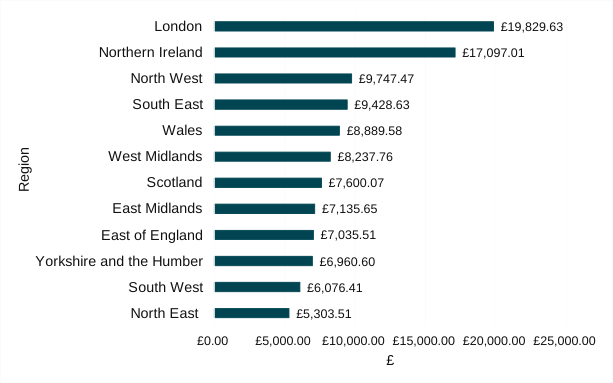
London nevertheless remains an outlier. This is made clearer when considering average total claims per claimant. At £19,829.63, the average claim was more than twice as high as that found in the English region with the next highest average claim, the North West at £9,747.47 (Figure 1). Thus, while penetration of the Scheme appears to be fairly consistent across England, the consumption of resource is more varied.
The South West receives much less grant (11%) in relation to its proportion of claimants (16%; Table 10) and listed places of worship (20%) but also has a smaller proportion of listed places of worship on Historic England’s Heritage at Risk Register (HARR) (16%; Table 9).
The Midlands have the highest proportion of listed places of worship on the HARR (28%; Table 9) but receive a somewhat smaller proportion than might be expected of total funding (8% in East and 7% in West Midlands; Table 10), in spite of having a rather high proportion of cathedrals and major churches (22%; Table 9), which might be expected to increase the region’s relative need for repair and maintenance expenditure.
Table 10: Total and proportion of grant received by region (2022-24), compared to the proportion of claimants in each region
| Region | Total amount of grant received | % of total amount of grant disbursed | % of claimants by region |
|---|---|---|---|
| South East | £8,806,337.79 | 17% | 16% |
| London | £7,515,428.53 | 15% | 6% |
| East of England | £6,064,607.63 | 12% | 15% |
| South West | £5,815,121.15 | 11% | 16% |
| North West | £4,503,331.61 | 9% | 8% |
| East Midlands | £4,017,369.84 | 8% | 10% |
| West Midlands | £3,805,844.82 | 7% | 8% |
| Yorkshire and the Humber | £3,041,780.05 | 6% | 7% |
| North East | £875,078.69 | 2% | 3% |
| (England) | (£44,444,900.11) | (87%) | (88%) |
| Scotland | £2,758,823.86 | 5% | 6% |
| Northern Ireland | £1,949,059.07 | 4% | 2% |
| Wales | £1,946,818.03 | 4% | 4% |
Source: Harlow Consulting analysis of DCMS LPOWGS data
The regional differences are depicted visually in the heatmap in Figure 1, while Figure 2 shows the average sum claimed by individual claimants by region.
Figure 1: Heatmap depicting total value of grant received by region, August 2022 to May 2024
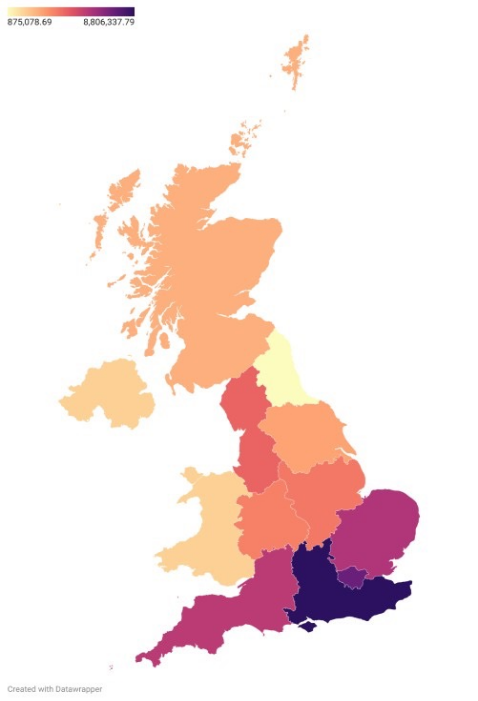
Figure 2: The average sum claimed by individual claimants by region (2022-24)
Source: Harlow Consulting analysis of DCMS LPOWGS data
There are 103 places of worship which have claimed over £250,000 between 2014 and 2024. Of these, roughly half (52) are in London, the South East, or the South West. Seven places of worship claimed over £1,000,000 between 2014 and 2024. Their profiles and locations are detailed in Table 11.
Table 11: Places of worship receiving the highest amounts of grant from the Scheme, 2014-2024
| Place of worship type | Region | Sum | No. of claims made | Earliest claim date | Latest claim date |
|---|---|---|---|---|---|
| Anglican cathedral | East Midlands | £1,986,667 | 42 | 06/10/2015 | 12/04/2024 |
| Anglican major parish church | London | £1,850,637 | 26 | 31/05/2014 | 15/04/2024 |
| Roman Catholic cathedral | North West | £1,259,411 | 42 | 20/12/2023 | 25/04/2024 |
| Independent Baptist church | London | £1,089,334 | 33 | 01/10/2017 | 05/06/2023 |
| Anglican parish church | London | £1,018,730 | 46 | 09/02/2015 | 28/03/2024 |
| Anglican major parish church | Yorkshire and the Humber | £1,017,863 | 32 | 09/03/2017 | 31/01/2024 |
| Anglican major parish church | South West | £1,010,161 | 34 | 26/03/2015 | 21/12/2023 |
There is therefore a pattern of a small number of claimants securing very large relative amounts of funding, with London churches figuring prominently amongst the highest claimants.
2.1.6 Non-user characteristics and reasons for non-participation
The 239 valid non-user respondents to the survey were asked to specify the reasons why they had not taken advantage of the Scheme. This gives insight into the reasons for the non-participation of around 40% of listed places of worship in the Scheme.
The most frequently cited reason for non-participation, mentioned by just over half (53%) of non-user respondents, was lack of awareness of the Scheme (Table 12).
The next most important reason cited was not carrying out eligible works, cited by 24% of non-user respondents (Table 12), increasing to 26% when relevant explanations by those who selected ‘other’ were analysed. A clear majority (65%) of those reporting ineligible works said that this was because they had not carried out works of sufficient value, while a further 6% had recently carried out works of sufficient value, or planned to do so but had yet to submit an application. These responses relate to the minimum claims permitted under the Scheme, which allows rebates only for works exceeding £1,000 in value, along with a single claim for works costing from £500 to £1,000.
A further 5% reported difficulties with applying to the Scheme (Table 12). Of these, by far the most challenging impediment to participation was finding people with the time and experience to complete the application process, reported to be ‘very difficult’ by half of these respondents and ‘difficult’ by a further third.
The last explanation specifically asked about was that the place of worship was ineligible, reported by only 0.4% of respondents (Table 12). However, among those who chose ‘other’, a further 2% explained that their place of worship had only recently been listed, meaning that it had previously been ineligible. This meant that in almost all cases (four out of five) where eligibility of the place of worship had prevented access to the Scheme, this was because it had not previously been listed.
Table 12: Survey respondents' reasons for not participating in the Scheme
| Reason for non-participation | Percentage |
|---|---|
| We were not aware of the Scheme | 53% |
| Our place of worship is eligible for the Scheme, but we have not carried out eligible works | 24% |
| We have carried out eligible works, but we find it difficult to apply to the Scheme | 5% |
| Our place of worship is not eligible for the Scheme | <1% |
| Not sure | 11% |
| Other | 7% |
Base: 239 (212 after excluding ‘not sure’)
The remainder were either ‘not sure’ or provided unclassifiable ‘other’ responses, representing 11% and 2.1% of non-user respondents, respectively. Removal of the ‘don’t knows’ results in more than 59% of those giving a clear explanation that linked non-participation to lack of awareness and 31%, to lack of eligible works.
We can make approximate estimates of the numbers of listed places of worship to which these reasons for non-participation apply, by multiplying these proportions by the number of non-user listed places of worship derived from the frame and the Scheme data and taking account of the maximum proportions implied by ‘not sure’ responses. Doing this implies that there are likely to be around 4,500 places where lack of awareness, and around 2,200 where lack of eligible works, have been the main reasons for non-participation. It should be borne in mind that the survey asked individual respondents only for the single main reason for non-participation. Some of those who reported lack of information as the main reason may also be ineligible for support.
In summary, the most important reason for non-participation was lack of awareness.
Of the respondents who said that lack of awareness was the reason for non-participation, 66% said that their primary source of information on grants and funding was their faith organisation. Smaller but still substantial proportions said that word-of-mouth and general internet searching were important sources of information, cited by 38% and 32% of the relevant respondents, respectively.
This suggests that the promotion of the Scheme is likely to be most effective when carried out through faith organisations, rather than through more general, more broadly targeted publicity and promotion, or through promotion targeted primarily at the heritage sector. The interview research suggested that most of the contact between individual listed places of worship and wider religious organisations takes place at regional or sub-regional level, principally at the level of the diocese in both the Anglican and Roman Catholic churches.
2.2 Sustaining the overall condition of listed places of worship
2.2.1 Building condition and trends over time
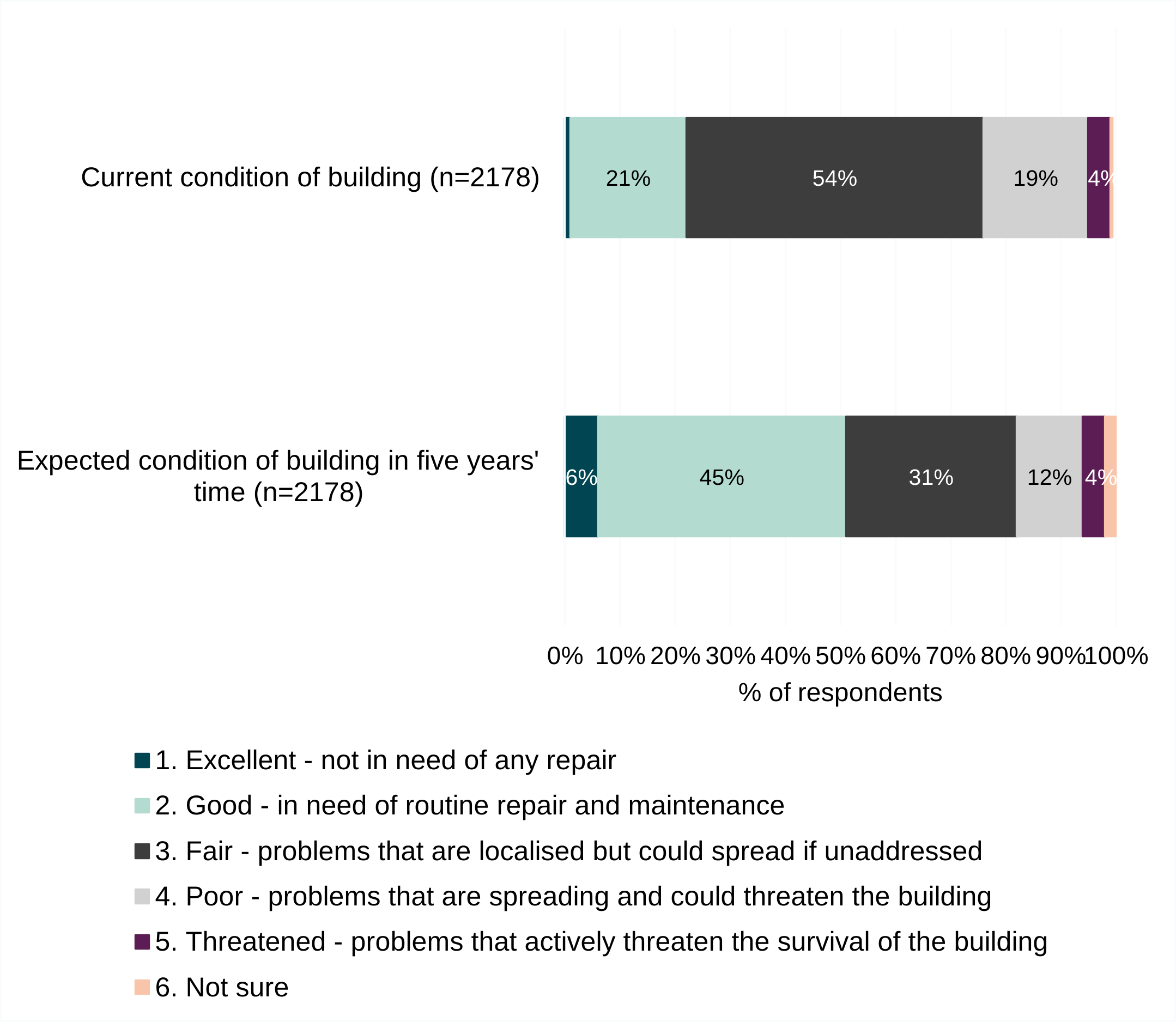
Respondents were asked to consider the current condition of their building and the condition they expected it to be in, in five years’ time, if they were able to spend as much as they realistically expected to be able to (Figure 3).
Overall, respondents reported that their buildings were currently in reasonably sound condition, with 76% stating that condition was ‘fair’ or better. Most of these responses were ‘fair’, meaning ‘generally structurally sound but with minor problems’, reported by 54% of respondents. A further 21% stated that the condition is ‘structurally sound and needing only minor or no repair and maintenance’. 23% stated that the building fabric was ‘poor’ (defined as having problems that are spreading) or ‘threatened’ (defined as having problems that actively threaten the survival of the building).
When looking to the future, most respondents predicted a stable or improved condition (Figure 3). Just over half (51%) expected their place of worship to be in ‘good’ or ‘excellent’ condition in five years’ time, as opposed to only 22% reporting that their place of worship was currently in those categories. Similarly, the proportion who reported expecting their building to be in ‘poor’ or ‘threatened’ condition was 16%, whereas 23% currently considered their place of worship to be in those categories.
Figure 3: Current and expected condition of building (in five years’ time)
When asked to compare the condition of their building now to how it was five years ago, the most common answer from survey respondents was that it was about the same, reported by 36% of respondents (36% amongst Scheme users and 34% amongst non-Scheme users). However, there were options to state whether condition had either improved or deteriorated ‘somewhat’ or ‘substantially’. When cumulating these, there were considerably more non-users who felt that the condition had deteriorated (57%), than Scheme users (33%). Amongst Scheme users, a similar number (30%) suggested that their place of worship was in better condition than five years ago.
A number of interviewees reported that they are currently seeing increased end-of-life failure of building elements from a) Victorian restorations and b) shorter lifespan building materials in more modern listed buildings, especially those from the wave of post-war church construction. There is some independent evidence from Historic England’s Heritage at Risk Register (HARR) to suggest that recent years have seen an increased number of places of worship being formally recognised as ‘at risk’, with the absolute number on the register rising from 919 in 2022 to 969 in 2024, a period that saw 117 listed places of worship leave the Register for positive reasons and 173 new entries added. As a result, the proportion of places of worship on the register increased over the same time period from 6.2% to 6.6%[footnote 16]. Interview evidence from sector experts suggests that the increase has taken place against a background of the application of more consistent and stringent criteria for inclusion on the Register.
It is difficult to explain these somewhat contradictory results, where there were some findings around decline in condition followed by expected future improvement. There was little evidence of expected increases in overall expenditure that could underpin a sustained improvement in condition of the kind respondents anticipated.
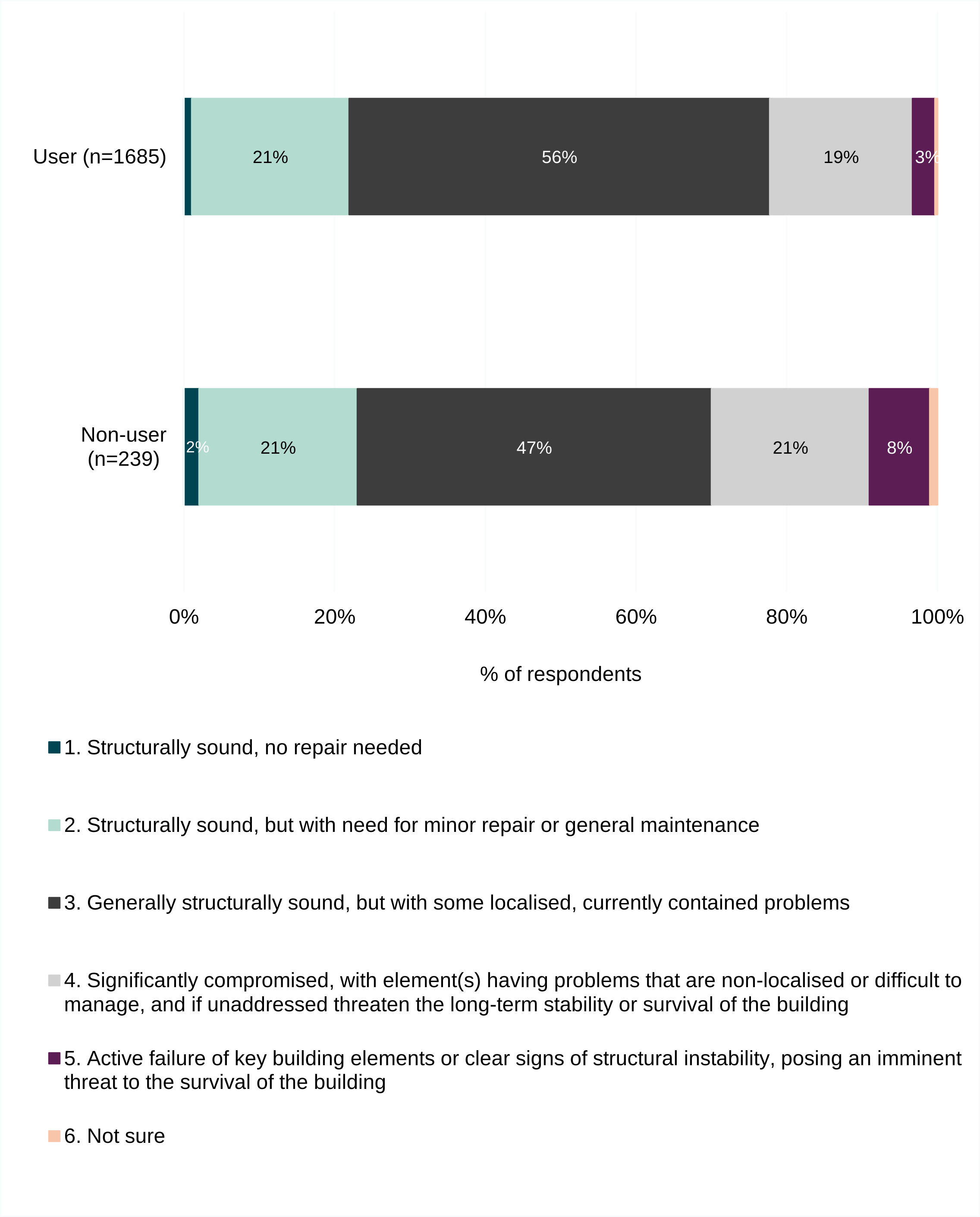
A comparison of building condition reported by Scheme user and non-user survey respondents suggests a higher proportion of non-user places of worship may be in very poor condition (Figure 4). The difference is, however, on the borderline of the margins of error. Overall, the building condition was reported to be similar among users and non-users of the Scheme.
Figure 4: Survey respondents’ estimates of Places of Worship condition (users and non-users)
2.2.2 Likelihood of closure
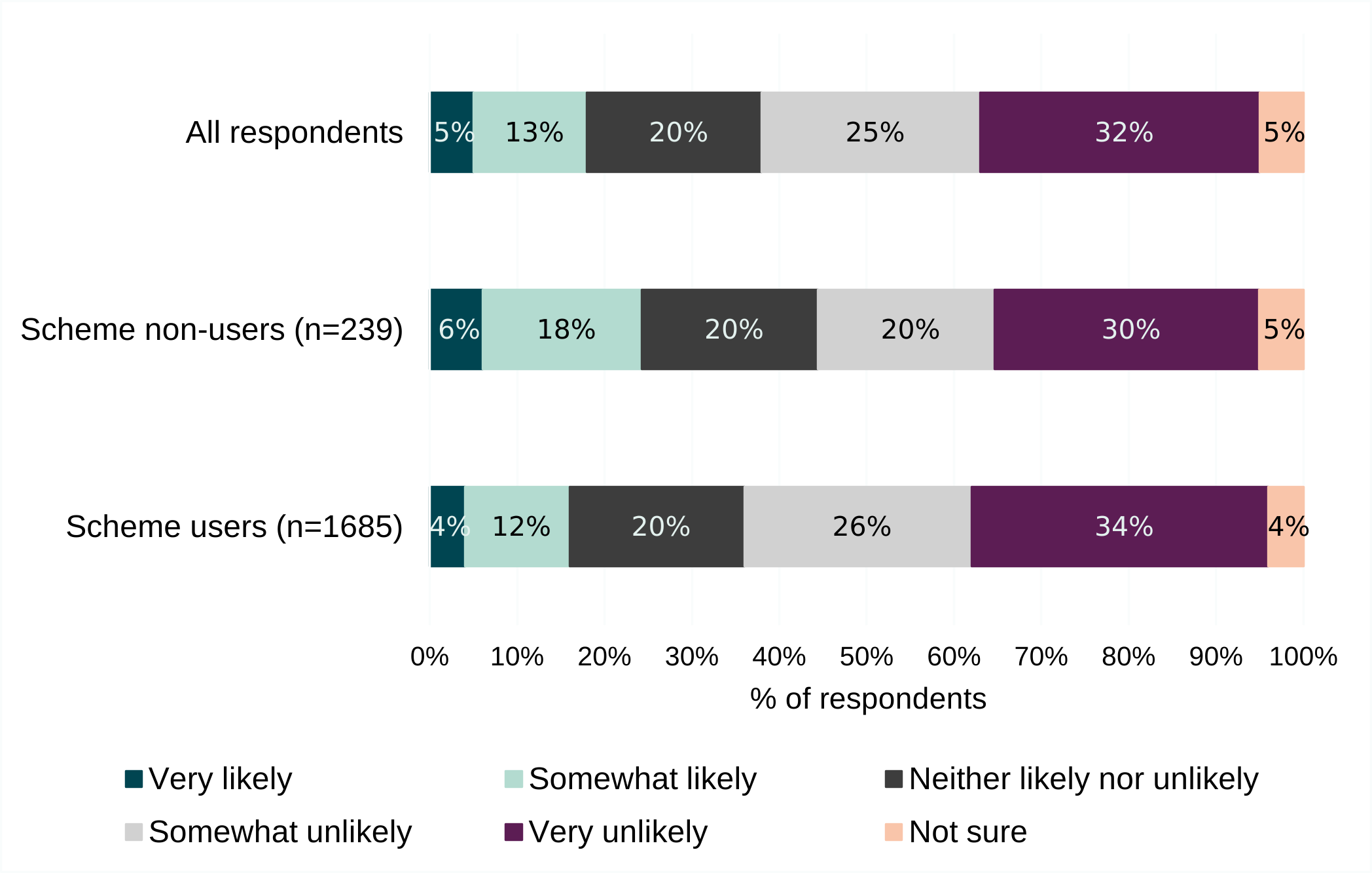
When asked whether their place of worship would be likely to close in five years’ time due to the cost of repairs and maintenance, 16% of Scheme users stated this was ‘very’ or ‘somewhat’ likely compared to 60% of Scheme users who said that this was ‘somewhat’ or ‘very’ unlikely, and a further 20% that it was ‘neither likely nor unlikely’. This compares to 18% of all respondents (users and non-users) who reported that closure was ‘somewhat likely’ or ‘very likely’ (Figure 5).
Specific analysis of those reporting a greater likelihood of closure showed certain possible distinctive characteristics. Those with the highest likelihood (‘very likely’) of closure reported having lower resources, with 64% being able to readily access less than £5,000 per year for repairs and maintenance as opposed to 39% of those least likely. They also have lower average backlogs of repair and maintenance than those most likely to remain open, at around £800,000 as opposed to around £2,400,000.
There was some evidence that certain building types may be at greater risk of closure. These differences are of limited statistical significance in themselves, as the bases are relatively low. Nevertheless, it is worth noting that major parish churches were heavily represented in the group that were least likely to close (73% stated they were either ‘somewhat unlikely’ or ‘very unlikely’ to close) and relatively under-represented in the group most likely to close (only 1% of parish churches said they were ‘very likely’ to close).
The converse was true of chapels, which represented 7% of both those most likely to close and those with a likelihood of closure, but only 3% of those least likely to close. Cathedrals and meeting houses were represented at similar proportions in both groups (15% of the former and 14% of the latter stated they were either ‘very likely’ or ‘somewhat likely’ to close and 61% and 60%, respectively, stated that they were either ‘very likely’ or ‘somewhat unlikely’ to close), though the bases were very low in these cases, limiting the robustness of this finding.
There is a slight difference in distribution of perceived likelihood of closure between users and non-users of the Scheme, with non-users reporting greater likelihood of closure than Scheme users (24% of non-users stated they are either ‘very’ or ‘somewhat’ likely to close, compared with 16% of Scheme users). The difference is on the borderline of statistical significance (using the standard 95% confidence level). This could be related to the reasons given for not making use of the Scheme, where the most frequently reported reasons, among those able to give a clear reason, were lack of awareness and not carrying out works of sufficient value to be eligible for grant. This may offer some evidence that (as would be expected) places of worship with relative deficits in skills and/or financial resources are at greater risk of closure.
Figure 5: Likelihood of closure
2.3 Role in enabling repair works
2.3.1 Types of works supported
Both the more recent Scheme data and the survey generated information about the kinds of works supported by the Scheme. The Scheme data is the more objective source. However, because the relevant data is a free text response, it poses considerable challenges to categorise and interpret. These challenges are exacerbated by the fact that many claims involve packages of works that include several different types of repairs, maintenance or alteration. There is no specific information gathered about the relative value of different components of work that enables robust data to be generated about the kinds of works that receive the most support.
On the basis of keyword analyses of the Scheme data, building services were the most common (63% of claims) followed by 31% of claims relating to roofs and rainwater goods. The value of claims varied by work type. Though the following findings are limited because they were based on the relatively small number of cases where a single type of work was claimed for, they suggest that some categories of expenditure generate more costly individual claims than others. The most expensive was professional fees, averaging over £7,000, followed by floors and floor coverings (£5,600), kitchens, toilets, showers and other user facilities (£5,500), and roofs and rainwater goods (£4,700). Claims related to security systems were, on average, the lowest (£2,850).
The total claims from August 2022 to May 2024 suggested that the highest expenditure from the Scheme was on packages of works that concerned building services (total £30.3 million), masonry and stonework (total £18.6 million) and roofs and rainwater goods (total £18.4 million). This was followed by a group of works ranging in value from around £5.6 to £7.8 million, comprising (in diminishing order) works involving surveys, external doors and windows, works to towers and spires, works to interior fittings, works to bells and clocks, and kitchen, toilets, showers and other user facilities. These categories are not, it should be noted, mutually exclusive, but give a sense of the types of works that are receiving the highest levels of support from the Scheme.
The survey asked Scheme users a series of questions about the types of works supported by the Scheme (Figure 6). The survey data is categorical and is therefore easier to interpret than the Scheme data. However, due to the need to ensure that survey questions were not unduly complex or numerous, it could only reasonably ask what kinds of works had been undertaken, but not their relative value or specific impacts.
Figure 6: Types of works reported by survey respondents as having been supported by the Listed Places of Worship Grant Scheme
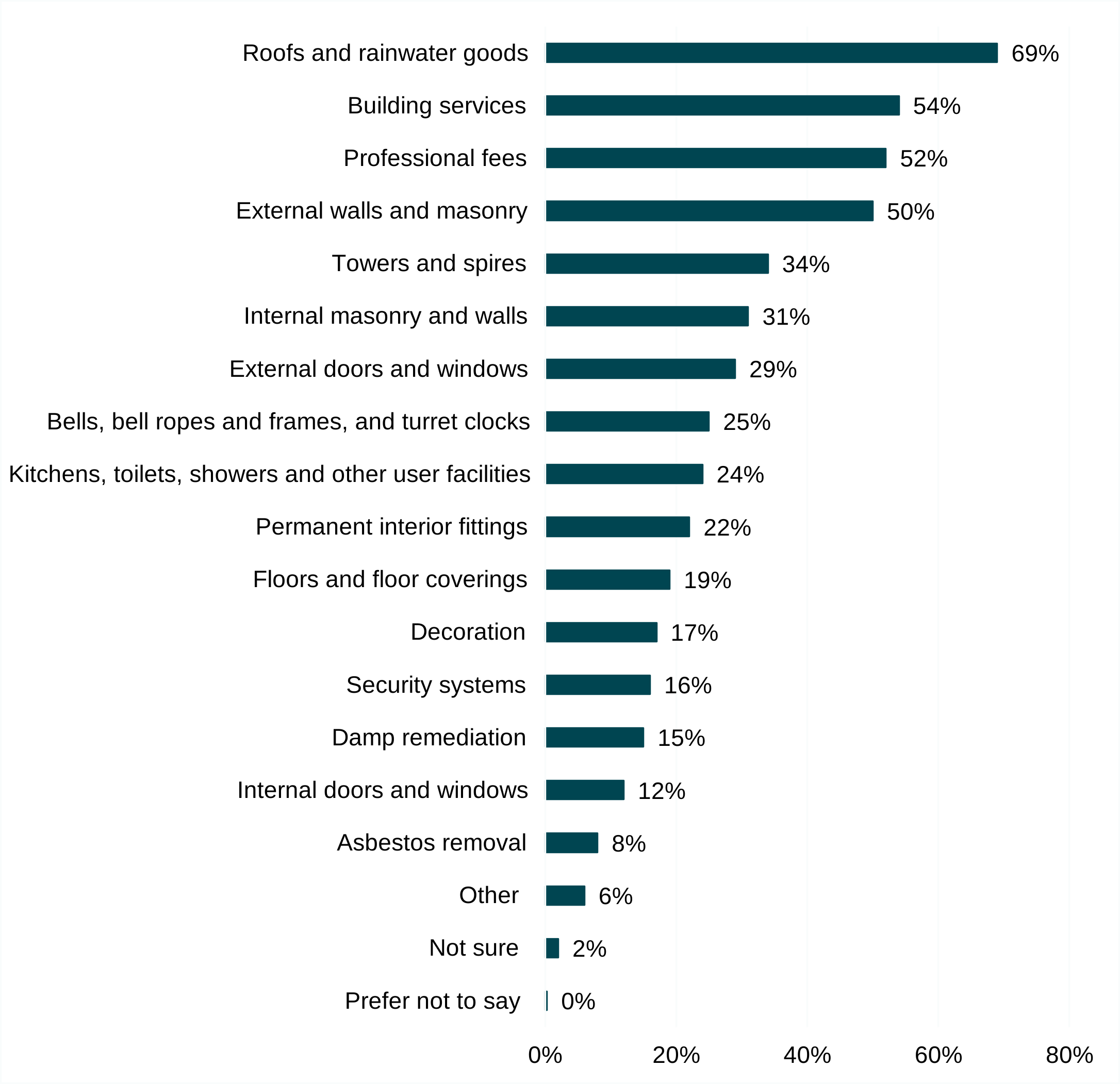
The most frequent type of works reported as having been supported, related to roofs and rainwater goods, mentioned by 69% of respondents (Figure 6). This was followed by three types of works all reported by approximately half of respondents: building services, professional fees, and external walls and masonry works. A further three types of works were reported by around a third of respondents: towers and spires, internal masonry and walls, and external doors and windows. All the most frequently reported types of works were focused on the parts of the building that serve to keep it wind and watertight, often referred to as the ‘building envelope’, with the exception of professional fees and building services. The frequent mention of professional fees is likely to reflect at least in part the eligibility of the cost of VAT charged on formal building condition assessments by appropriately qualified professional consultants.
The Inspection of Churches Measure 1955 makes it a statutory requirement for Church of England churches to have such inspections carried out by approved consultants at least once every five years. The assessments are accordingly known as quinquennial inspections. Similar condition assessments are written into the constitution of the Church in Wales and are also widely recognised as best practice by other faith groups. Building services are likely to primarily reflect the need to maintain and upgrade heating systems, which (based on the interview evidence) was considered fundamental to the usability of places of worship.
The Scheme data and survey findings therefore are broadly consistent in indicating that roofs and rainwater goods, building services and professional fees represent the most important categories of work and expenditure.
The works that non-users who responded to the survey would seek support for, if they were able to secure more grant funding, were very similar to those cited by Scheme users, with roofs and rainwater goods, building services and external walls and masonry featuring at the top of the list. The main difference was that professional fees were cited less frequently by Scheme non-users than users (39% vs 52%).
The overall picture, then, is that the Scheme is primarily supporting fundamental building envelope works, rather than alteration works.
2.3.2 Approaches to implementing works
To better understand the impacts of the Scheme, users were asked to select from a pre-determined list what would have happened had the rebate from the Scheme not been available (Figure 7).
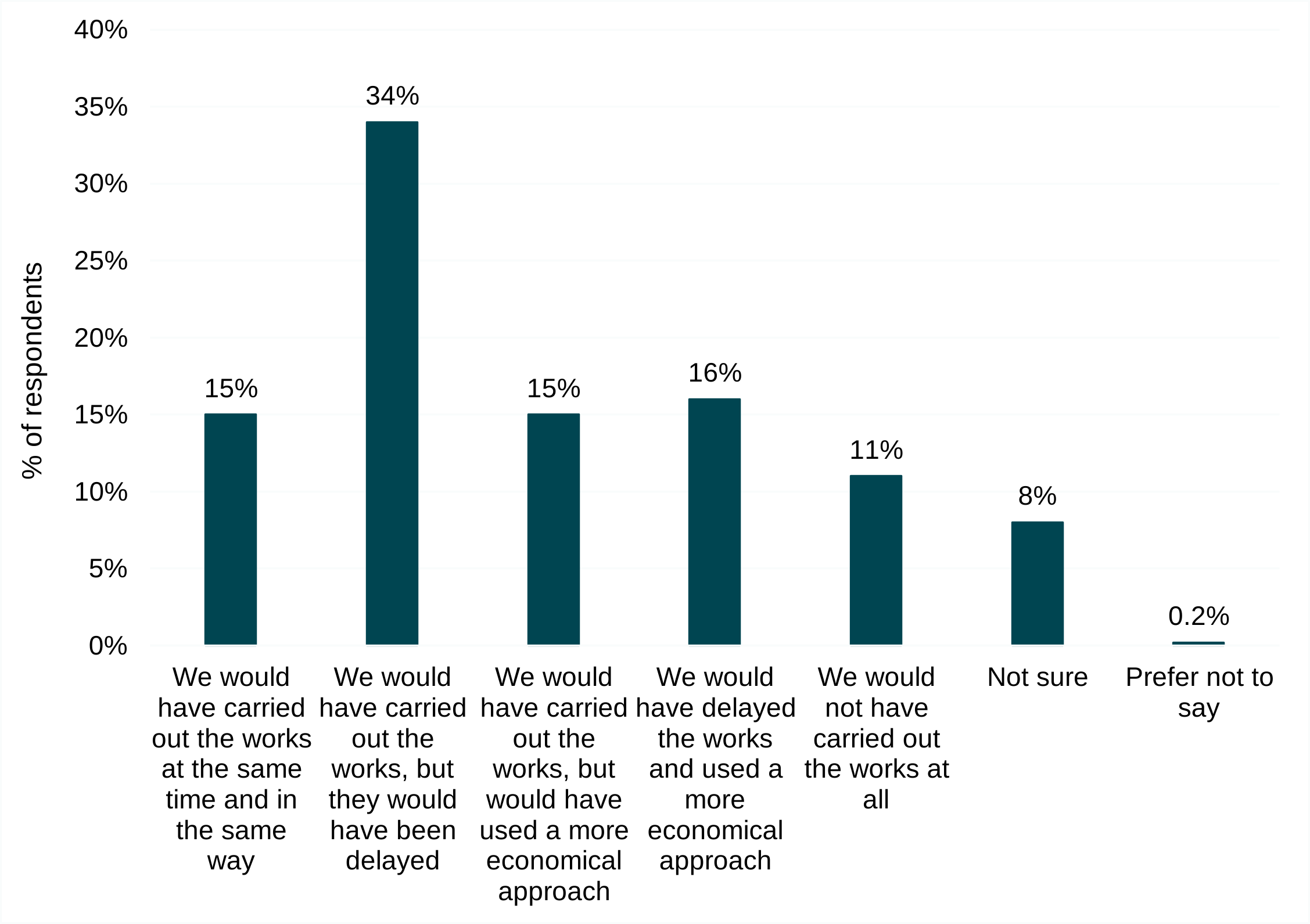
Overall, 80% of respondents who answered this question said that they would still have carried out the work; 15% would have carried out the works in the same way and at the same time and 11% would not have carried out the works at all.
Half of respondents indicated that they would have delayed carrying out the works (with 34% stating that they would have been delayed only and a further 16% stating that they would have been both delayed and carried out in a more economical way).
Figure 7: Survey respondents' views on what and how works would have been carried out had the funding from the Listed Places of Worship Grant Scheme not been available
Analysis of open responses to a further question asking about the length of the expected delay found that the modal period of delay would be in the region of one to two years. However, a considerable minority expected much longer delays, in some cases of ten ye
ars or more. The average delay from the 607 respondents who gave specific periods of delay (using the mid-value where a range was given) was reported to be around 2.3 years.
A further survey finding that reinforces these findings is that when asked to rate the importance of various potential impacts and benefits of the Scheme, 77% of respondents assigned the highest level of importance to ‘enabling repairs to be undertaken in a timelier way’, the second mostly highly rated of nine potential impacts or benefits the survey considered.
While delays in implementation were the most commonly reported effect had the rebate from the Scheme not been available, 31% of respondents said they would have changed the way the works were done to make them more economical (as an alternative (15%) or in addition (16%) to delaying the works). This could be done either by reducing their scope or by changing their specification to lower quality materials and techniques.
There were no statistically robust differences between those who would have carried out the works without the Scheme and those who would not have carried them out at all, in terms of region, building type, faith group, financial resources, and whether or not highly listed (Grade I, Grade II*, Category A, Grade A). There was nevertheless some evidence suggesting that Roman Catholic churches are over-represented in the group that would not have carried out the works at all, and that Church of Scotland and Society of Friends (Quakers) are over-represented among the respondents who would have carried the works at the same time and in the same way.
There was evidence of the places of worship where works would have been carried out at the same time and in the same way, being in better condition than average, and being less likely to close. Of the group of users who would not have carried out the works, 27% said that they were ‘very likely’ or ‘somewhat likely’ to close, compared to 16% of all Scheme users, with 40% saying that they were ‘very likely’ or ‘somewhat unlikely’ to close, as opposed to 60% of all Scheme users.
2.4 Summary
The Listed Places of Worship Grant Scheme has reached a large number of listed places of worship in the last ten years of its operation, reaching around 60% of the UK’s listed places of worship, equating to around 12,800 of the approximately 21,200 listed places of worship in the UK. It has been accessed relatively equitably by all major faith groups. However, lack of awareness has reduced its reach among around half of the remainder.
The repair works supported by the Scheme are principally concerned with the components of the building that keep it wind and watertight, with other major areas of expenditure being building services and professional fees. In general, Scheme resource has been targeted on the most necessary works, while also supporting improvement works with substantial additional benefits for social impact and the long-term sustainability of the beneficiary places of worship. The nature of the works supported, and the evidence of need lagging resources suggests that the additional support offered by the Scheme has had substantial benefits for maintaining building condition.
There has nevertheless been an overall decline in condition over the last five years. For many respondents, however, the outlook for the future was more positive, with predictions overall of a stable or improved condition over the next five years. There remains, however, 18% of listed places of worship (Scheme users and non-users) that report difficulties resourcing repair and maintenance are leading to the threat of closure.
3. Assessment of the Scheme processes
3.1 Guidance and support
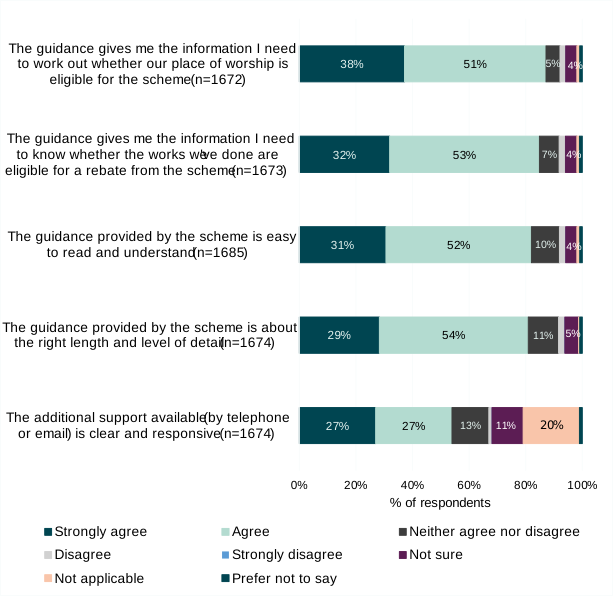
Respondents are overwhelmingly positive about the Scheme processes, guidance and support available to them. Nearly 90% of respondents agree that the guidance provides sufficient information to ascertain their eligibility for the Scheme, while 85% of respondents agree the information is effective in determining their eligibility to receive a rebate from the Scheme (Figure 8). Over 80% of respondents find Scheme guidance easy to read and understand. Of the 1,145 respondents who gave a specific view on the additional email or telephone support (excluding those to whom it was inapplicable, were unsure, or preferred not to say), only 13 (just over 1%) disagreed that the support was clear and only one respondent strongly disagreed.
Figure 8: Scheme users' agreement levels regarding statements about the guidance and support available to applicants
Respondents were asked an open-ended question in relation to providing any further information about the guidance and support available for applicants to the Scheme; 16% of respondents provided an answer to this question. Two-thirds of these responses were positive, providing further detail and emphasising their contentment with the way in which the Scheme is administered and its underpinning processes, guidance, information and support. There were a small number of responses from some people who found it difficult to negotiate the guidance, but they were very much in the minority. Analysis of this positive feedback is summarised in Figure 9, which identifies the communication and support from the Scheme administration team as being a key strength.
Figure 9: Analysis of positive feedback in relation to Scheme guidance and support available for applicants (open-ended question)
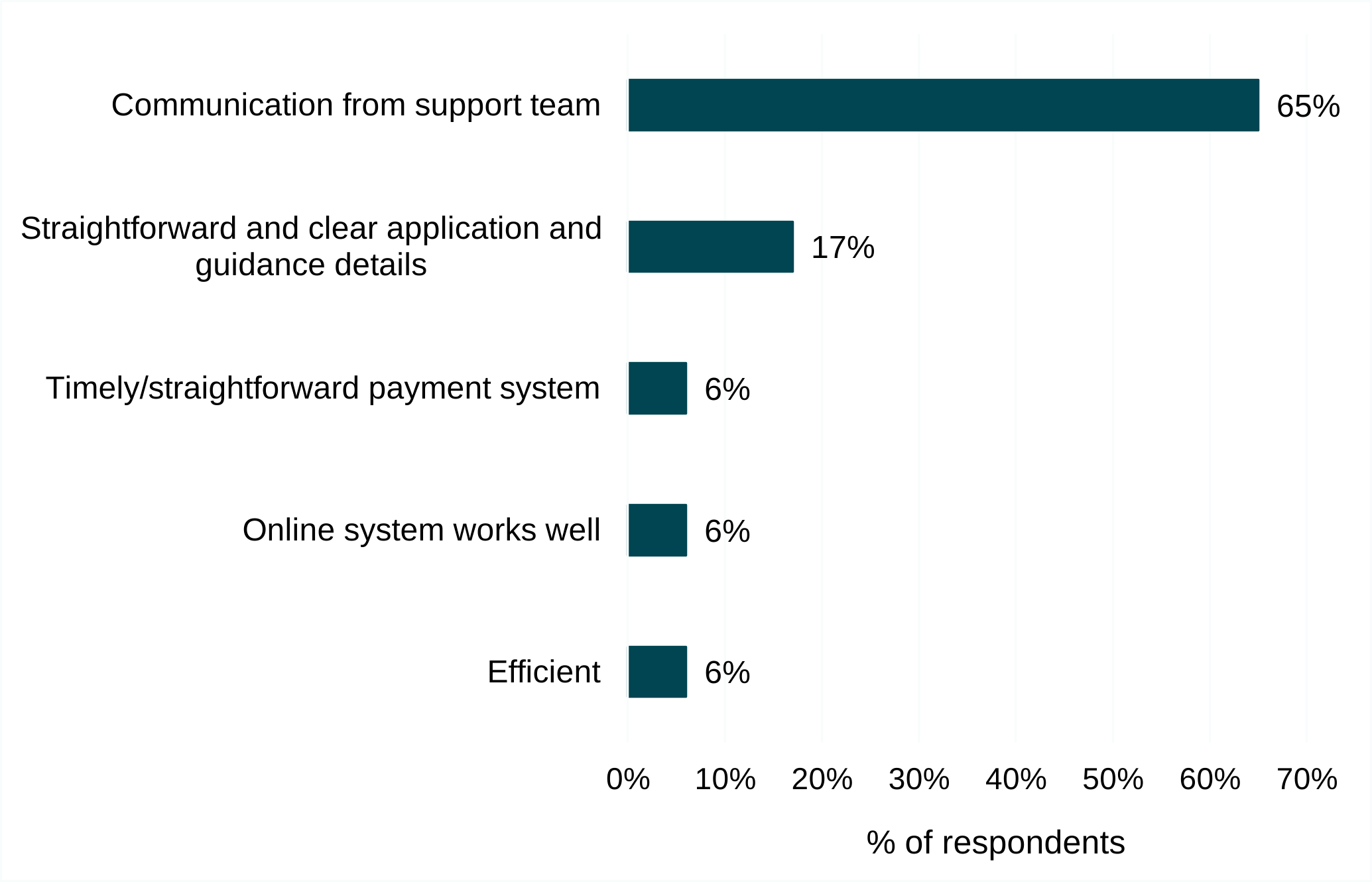
Base 201
The remaining feedback predominantly made suggestions about improving the clarity of the guidance in relation to:
-
what is and is not eligible for the Scheme, thinking specifically about different parts of buildings rather than the building as a whole;
-
submitting an application with multi-faceted types of work being undertaken to the building;
-
more information about options for recovery of professional fees associated with works; and
-
not assuming applicants have any prior knowledge of the Scheme; preferred use of ‘laymen’s terms’.
However, the consensus among respondents is that if they have queries requiring further clarification, the information and support provided via the telephone helpline is typically prompt, helpful, and effective.
3.2 Application and payment process
Respondents are also predominantly positive about the Scheme’s application and payment processes; over 80% of respondents are in agreement that applications are easy to complete, easy to receive support with the required documentation, receive timely decisions and are paid promptly (Figure 10). These figures are comparable to those found by research undertaken in 2010 on the Scheme, where 84% of respondents said they found the application process ‘easy’ or ‘very easy’.[footnote 17]
Figure 10: Scheme users’ agreement levels regarding statements about the application and payment process
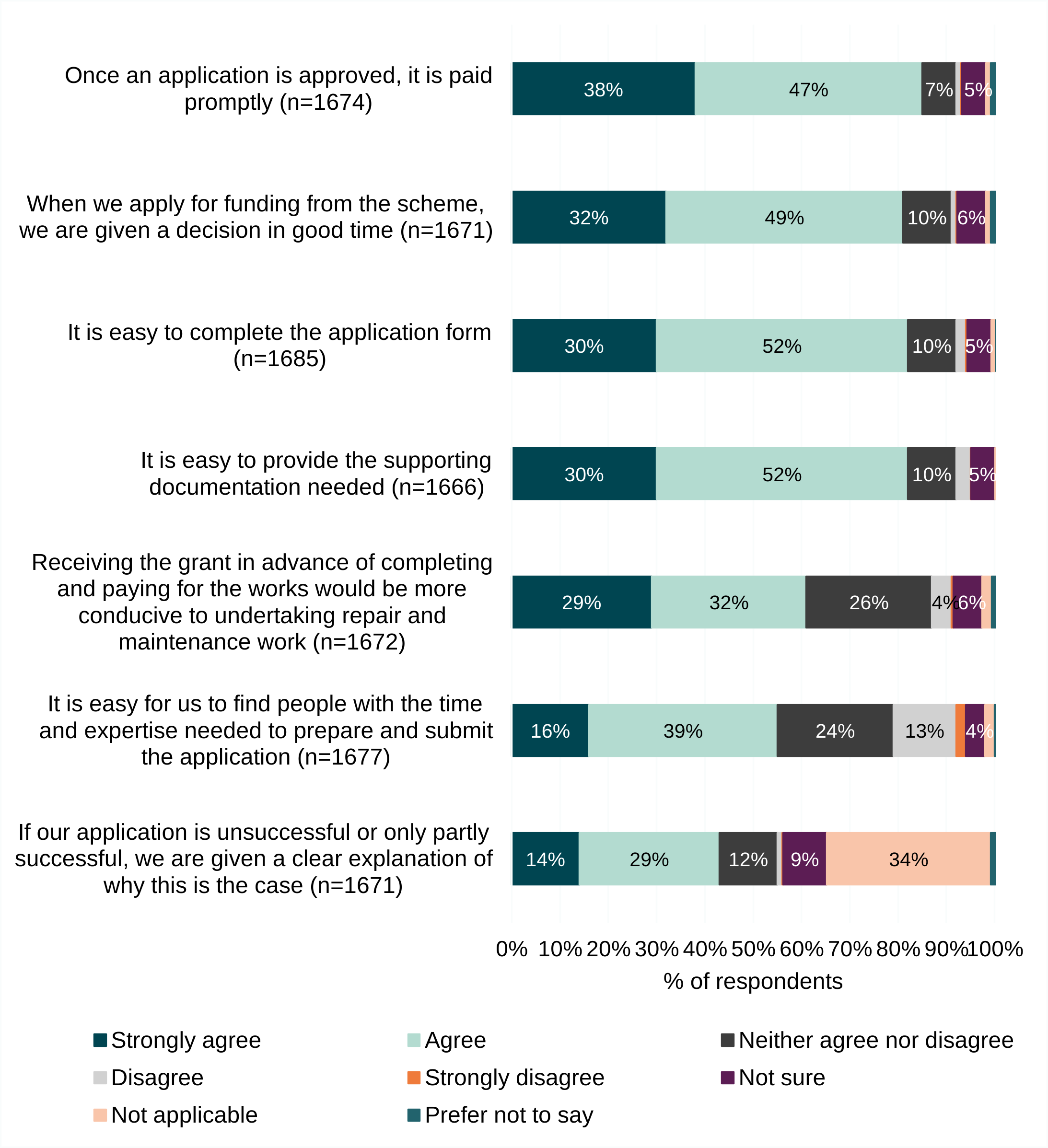
Supporting this strongly positive impression of the Scheme, amongst the already relatively small group of non-users, only small proportions (6% in England, 4% in Wales, and none in Scotland) reported difficulty applying to the Scheme as a reason for not participating.
The change to online applications has been welcomed by respondents. The telephone support is clearly very important to applicants and is highly valued in relation to individual support provided following applications, particularly when parts of a claim are refused. Respondents emphasise the speed with which applications are handled, with prompt payments enabling them to budget and manage projects efficiently with the assurance that repayment timescales will be met.
Very limited suggestions were made for improvement, which focused on:
-
having the ability to ‘save and return’ when completing applications and claims and
-
having the ability to save details from previous applications to streamline the process for new applications
Only small numbers of non-Scheme users provided feedback about making an application to the Scheme (reflective of their limited experience in doing so). The main barriers they encountered were in relation to understanding guidance (in terms of their eligibility) and finding information and guidance including how to apply.
3.3 Timing of payments
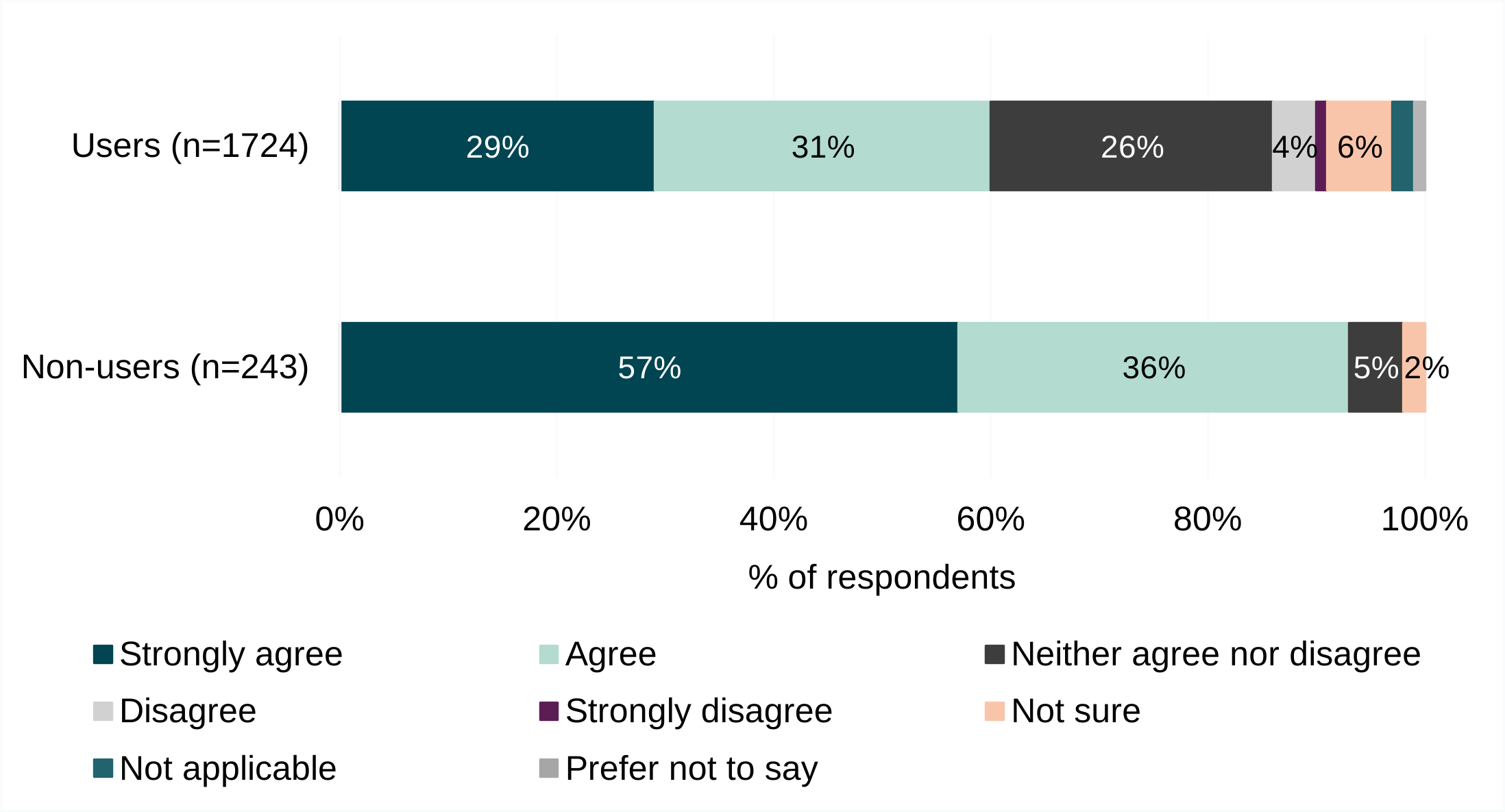
As a rebate, a key characteristic of the Scheme is that the grant can be confirmed and paid only after the completion and invoicing of works. The survey asked respondents how far they agreed that being able to receive the grant in advance of the works would be conducive to undertaking more repair and maintenance. There was a strong perception that upfront payments would be helpful, with 60% of Scheme user respondents agreeing or strongly agreeing, and fewer than 5% disagreeing or strongly disagreeing.
Non-Scheme users were also asked whether receiving the grant prior to completion and payment of works would be more conducive to undertaking repair and maintenance work. There was agreement, with 57% of respondents strongly agreeing and 36% of respondents agreeing (Figure 11).
Interview research revealed places of worship having recourse to loans to cover the VAT component of works, pending reimbursement by the Scheme. These loans were said not to be available on a commercial basis, as places of worship generally lack assets that can be offered as security. As a result, loans were reported as being provided by the faith organisations (reported to be the diocese by both Anglican and Roman Catholic interviewees) or by associated heritage organisations, which may be regional in focus, that specialise in supporting ecclesiastical heritage.
Figure 11: Whether receiving the grant in advance would be more conducive to undertaking repair and maintenance work
A small number of Scheme user respondents reported they would prefer payments upfront particularly in relation to larger projects; the 12-month payment timeline limit was flagged as an issue by a minority of respondents for large projects that require staged payments, as work must be completed before a claim can be made. Some respondents referred to borrowing from other sources to manage cashflow ahead of receipt of the grant.
However, a small number of respondents felt there is a risk, if the grant was to be received in advance of completing and paying for the works, if costs turn out to be higher than the original ‘ask’.
3.4 Summary
In summary, respondents are predominantly very positive about the processes of the Scheme, how it is administered, and the supporting information, advice and guidance. While a small number of suggestions have been made for improvement, there is general consensus that processes are fit for purpose and work effectively, with high levels of satisfaction expressed towards the Scheme administrator.
This corresponds directly with the findings from the qualitative interview research. Interviewees consistently described their experience of the current operation of the Scheme in terms of information, administration and support in strongly favourable terms - it was “perfect”, “immaculate”, “speedy, clear and efficient”, and the online form was “intuitive” and “the best I have ever used”. There was a clear consensus among those in a position to make comparisons that, in recent years, they had seen a considerable improvement in the effectiveness of Scheme administration, since EMB took over this role.
4. Additionality, proportionality and appropriateness of the Scheme
4.1 Additionality versus deadweight
Additionality in the context of the LPOWGS refers to works of repair, maintenance and alteration that would not have happened without the Scheme, and to the impacts that these lead to. Deadweight, by contrast, relates to works that would have been carried out regardless and therefore represent expenditures of public funds that have not directly supported the Scheme’s policy objectives.
Nearly two-thirds of Scheme users (61%) stated that, in the absence of the Scheme, planned repairs and maintenance would have been delayed, or not carried out. A further survey finding that reinforces this inference is that one of the most important benefits of the Scheme was that it enabled repairs to be undertaken in a timelier way, with 77% of respondents assigning it the highest level of importance. Some literal responses noted that delays in implementing works tended to imply greater long-term costs. This was reinforced by interviewees in the qualitative research: “delay the project, double the cost”, as one cathedral architect put it.
Two recent substantive pieces of research into the value of regular, timely repair and maintenance of places of worship provide further evidence that this is likely to be the case[footnote 18].
-
The first study was undertaken by BOP Consulting into the cost effectiveness of the Churches Conservation Trust’s previous and current approaches to the repair and maintenance of newly vested churches. The research found that the higher initial investment started to generate net savings after nine years.[footnote 19]
-
A subsequent, 2019 study looked at the total repair liability in contrasting groups of regularly maintained and minimally maintained churches. The overall finding was that deferred repair could be expected to add more than 40% to the overall cost of repair, where this had led to consequential damage.[footnote 20]
The case studies and qualitative interview research provide evidence of contractor choice being positively influenced by the availability of funding, by enabling and encouraging places of worship to choose the most suitable, rather than the cheapest, contractor. There were suggestions in some of the interviews that by easing the cost, the Scheme also made it easier to carry out works to a higher specification, and they also highlighted an expectation that this would enhance the durability and effectiveness of the repair.
The timelier pattern of repair facilitated by the Scheme is therefore likely to lower long-term liabilities and protect historic fabric, by reducing repair costs and consequential damage from deteriorating building fabric or inadequate repair. This implies that, although difficult to quantity, there will be substantial additional benefits that result from the systemic increases to the timeliness of repair.
Bringing together the evidence from all sources - Scheme data, the survey and the case studies - suggests that the Scheme is primarily enabling:
-
works that secure the fundamental building envelope
-
works to building services that facilitate use and
-
the professional fees that help ensure the works undertaken are identified, prioritised and implemented appropriately
There is relatively little evidence of heavy subsidy of upgrading or adaptation. The case studies provide a richer picture of works undertaken that go beyond repair and maintenance.[footnote 21] These suggest that such adaptation and upgrading works can be costly and are therefore likely to represent some of the larger individual grants. However, they are reported to yield benefits by increasing the use and sustainability of the building.
The survey has provided evidence of reinvestment of grants in additional repair and maintenance work. Scheme users overwhelmingly reported that the rebates received would be reinvested in the building, either by supporting further works of repair and maintenance (66%), or by contributing to running costs. A small proportion of respondents (3%) reported using the rebate from the Scheme to increase reserves, as opposed to spending on more repair and maintenance.
Amongst those who said that the rebate would contribute to further repair and maintenance works, the most frequently reported proportion of the rebate reinvested was, overwhelmingly, said to be 100%, chosen by 1,128 of the 1,633 (69%) respondents who provided valid responses to this question. The average proportion reported as being reinvested was 81%.[footnote 22] This reinforces the sense that repair and maintenance are regarded as a priority expenditure and that subsidy will not, in most cases, lead to diversion of resources for other purposes.
This implies that the bulk of expenditure is directly supporting the Scheme’s intended objectives, not only through the works for which the rebate is sought, but by providing funding towards additional works. There was also evidence from the interview research that the rebate has an incentivising effect, seen as a reward and formal recognition for taking care of the listed place of worship and a stimulus to undertake further repair. Nevertheless, there will be some reduction in potential impact where funds are not wholly used to support repair and maintenance.
In addition to promoting more timely and appropriate repair, and enabling some works that would not otherwise have happened, other benefits of the Scheme were keeping the place of worship in use - regarded as the most important by the highest proportion, at 82% - and ensuring that it enabled heritage value to be preserved, assigned the highest importance by 72% of respondents. The benefits regarded as least important related to comfort, aesthetics, and religious use. The implication is that fundamental physical fabric needs are the primary focus of the works supported by the Scheme.
There is, however, evidence of deadweight, in the form of subsidy to the 15% of users who report they would have carried out the works at the same time and in the same way, had the funding from the Scheme not been available.
Overall condition was also reported to be better by respondents from places of worship that would have carried out the works at the same time and in the same way. Of these, 65% reported that their places of worship were in the top two condition categories, compared to 44% among those who would not have carried out the works at all. The corresponding figures for the two worst condition categories were 8% among those who would have carried out the works at the same time and in the same way, and 28% among those who would not have carried out the works at all. Even given the low bases of respondents in the two extreme categories, these large divergences are statistically significant, and the overall pattern is clear and plausible: we would expect those who are in a position to be able to carry out works without subsidy to be in a better overall condition than those who cannot.
This would suggest an average of around £4.5 million a year is being expended to support works that would have happened regardless, to buildings that are more likely than average to be in good condition, though this figure should be treated with some caution, in light of the low bases of respondents in this category, as noted above.[footnote 23]
4.2 Proportionality of the Scheme
Assessing proportionality is essentially a matter of determining whether the same level of repair and maintenance could be achieved by other means. This means relating the Scheme’s outcomes to potential alternatives that might also be expected to promote repair and maintenance and assessing whether they would entail greater or lesser burden on the parties involved.
As shown in section 2.1 above, the Scheme has reached a majority of potentially eligible places of worship, with little evidence of significant differential reach by faith group.
Interview research suggests that the straightforward eligibility criteria and wide applicability of the Scheme are regarded as one of its most important benefits. There is assurance that effort invested in application will be rewarded by successful receipt of the grant, thus encouraging applications. The related straightforwardness of the application process means that it is accessible to a wide range of places of worship, including those with relatively socially and educationally disadvantaged groups of worshippers. This was felt across faith groups but was reported as being particularly important by interviewees representing Roman Catholic places of worship, which have large and diverse congregations that include many recent immigrants.
Almost half of the responses analysed in answer to a final question asking for any further comments about the Scheme emphasised its existence as being imperative to undertaking necessary works. Around a fifth of those who answered this question also raised concerns about the imposition of the cap, limiting the refund to £25,000 per annum, which some felt would risk hampering or preventing larger capital works and/or major repairs. The case studies and interview research identified specific examples of major projects that were being delayed, reduced in scope, or put at risk as a result.
Nevertheless, there remains a notable minority of around 40% of listed places of worship that appear not to have received grants from the Scheme in the last ten years. Overall, the reach of the Scheme has been greater in England, with clear evidence that it has not reached comparable proportions of places of worship in Scotland, Northern Ireland, and, especially, Wales.
The main reason for non-participation, as discussed above, seems to be lack of awareness of the Scheme’s existence. This is a potential barrier for almost any approach to disbursing funding that relies on beneficiaries applying for funding. However, this does imply that a method that incorporated a more sustained and targeted approach to marketing the Scheme might have yielded a greater level of repair and maintenance than was actually achieved, especially given that actual levels of spend were well below the maximum available budget in most years.
Most of the remaining Scheme non-users were ineligible because of lack of eligible works, in many cases due to insufficient expenditure (as discussed in section 2.1.6 above) - reflecting the need to have some minimum cut off to prevent the cost of administering an individual grant becoming disproportionate, relative to the amount of the grant.
As noted above, the Scheme is subject to some deadweight, while there is evidence that some places of worship continue to struggle to meet their repair and maintenance needs. The implication is that a more targeted approach to disbursing funds that prioritised those listed places of worship in greatest need might result in repair and maintenance with greater overall impact on the condition of listed places of worship as a whole, even if it did not lead to a greater total amount of additional repair and maintenance. While including some element of condition assessment within the eligibility criteria could help direct funds towards those in greater need, the challenge is to know whether doing so would yield a net benefit. It would almost certainly have the effect of excluding many churches that are in good condition, but which would not be able to carry out works in an equally timely or appropriate way without Scheme support. A possible unintended effect would be that their condition might deteriorate, and longer-term repair and maintenance liabilities would increase disproportionately.
Overall, the existing system directly and proportionately rewards investment in repair and maintenance, at the cost of some deadweight that may be difficult to eliminate while retaining the specific benefits of a broadly accessible Scheme.
4.3 Appropriateness of the delivery mechanisms
For the purposes of this evaluation, the Scheme’s degree of ‘appropriateness’ is the extent to which it represents a better approach than alternative forms of support to incentivising the repair and maintenance of listed places of worship.
The Scheme appears to be structured in a way that is highly accessible to users. Most user respondents felt that it was easy to meet the Scheme criteria (that their place of worship should belong to a formally constituted faith group and that at least six acts of public worship should take place there each year), and in most cases easy to determine - or find out from the Scheme administrator - whether their place of worship, or the works they were undertaking, were eligible. The criteria-based approach emerged repeatedly as a major positive: it gave assurance to respondents from the outset that effort invested in an application will lead to financial benefit. Equally, very few non-user respondents saw the Scheme’s structure or process as barriers to participation.
However, there are issues with lack of awareness among a substantial minority of listed places of worship, especially outside England, and amongst some faith groups. It was clear that DCMS and Historic England do maintain close contact with relevant faith groups, but this may not always have fully translated into structured transmission of information about the Scheme to relevant groups of worshippers at grassroots level.
There is also, however, an argument that relatively high levels of lack of awareness of a grant Scheme that has been operating for nearly 25 years and offers essentially guaranteed grants with relatively simple applications must also reflect a need within faith groups to enhance capacity at grassroots level.
The next most frequently reported reason for non-participation among survey respondents was the lack of eligible works, in most cases due to not completing works of sufficient value. The Scheme already operates with a fairly low threshold of invoices for any one application totalling at least £1,000 exclusive of VAT, equating to a maximum £200 VAT rebate. Moreover, there is an additional concession of a single application per year for works worth less than £500, with a maximum rebate value of £100. Reducing the already modest minimum claim amount further could well promote inclusivity but would likely result in a disproportionate increase in the number of claims to be processed and in the associated administrative costs. This is because the administrative cost per application, which is relatively fixed, will increase as a proportion of each individual grant as the size of the grant gets smaller. Clearly, as well, where the absolute amount of grant dispensed is small, the funding gap is intrinsically easier for places of worship to bridge themselves, in absolute terms.
It is therefore difficult to see that it would be appropriate to reduce the minimum grant further, with the resulting increase in administrative costs likely to bring little additional benefit in repair expenditure. Indeed, there is an argument that it could be more appropriate to increase the minimum grant threshold. Inflation has eroded the real value of the standard threshold amount: had the Scheme minimum of £1,000 been increasing in line with non-housing construction repair and maintenance inflation since 2014, it would now be around £1,267[footnote 24]. Increasing the threshold amount would reduce the overall administrative cost of the Scheme. It could also have the effect of incentivising listed places of worship to invest in larger, more cohesive work packages, which are generally more efficient to implement.
The impact of targeting support at the places of worship with the greatest need is more complex, though this could potentially reduce the deadweight noted in section 4.1 above.
There appears to be an intrinsic tension between targeting funds and accessibility. The burden of application tends to be greater when funders seek to prioritise or target funds.[footnote 25] The more complex the selective criteria, the greater the complexity of the application process, for both applicants and Scheme administrators. More complex application processes can be expected to disadvantage applicants with least access to financial and human resources, who might also be expected to be the neediest applicants. The interview and case study research found evidence that this was the case. Some interviewees - generally speaking from more professionalised contexts such as major churches or cathedrals - showed confidence in their ability to write grant applications with a high chance of success. Others spoke of the difficulty that smaller groups of worshippers experienced with grant applications and the demoralising effect that failure, in the face of increasing competition, brought with it.
The result is a reluctance to engage unless there is assurance that the considerable effort of applying will yield financial benefit.
An alternative to a general assessment of need is to target specific types of work that should arguably be prioritised. This is of particular relevance given the past changes in the scope of work. Since the original establishment of the Scheme, its scope has extended from an initial focus on repair to the fundamental structure and services of the building to include fixtures and fittings such as organs, pews, bells and bell frames, professional fees. These were taken back out of the Scheme - after discussion with relevant faith groups - during the period of straitened resources following the financial crisis. Approved alterations were included from 2012, and the excluded works reintroduced to the Scheme from 2013. Alongside this, a highly successful grant Scheme focused on roofs specifically, but demand for this far outstripped the allocated budget. This suggests that there could be targeting of resource at those elements of the building that are most crucial for its survival, though doing so also might reduce the support for alterations and improvements that may make the building more usable and sustainable for the future. In addition, more complex application processes are also likely to cost more to implement for Scheme administrators, reducing administrative efficiency.
The advantages of broader eligibility criteria are therefore that they tend to:
-
allow individual listed places of worship freedom to establish their own priorities
-
make it simpler to determine eligibility for both applicants and administrators
-
be easier to apply for and cost less to administer
There are alternative potential approaches to delivery that should be considered when assessing appropriateness. These may include a more informal, devolved model of direct grant-making. Some interview evidence suggests that this was the model used by the Repair Grants for Places of Worship Scheme funded and administered jointly by Historic England (then English Heritage) and the National Lottery Heritage Fund (then the Heritage Lottery Fund) between 2002 and 2012. This Scheme disbursed £249 million in grants.
This Scheme made use of informed regional staff from Historic England to help target funding to where it was likely to have the most impact. The impact assessment of the Scheme carried out in 2010 by BDRC Continental showed that this Scheme reached listed places of worship with very different characteristics from those that benefited from the LPOWGS. However, this research also showed that those who received the grants were especially dependent on the additional support from the LPOWGS, with 54% saying that they would not have been able to undertake the works without it, compared to 6% of those receiving the LPOWGS only.[footnote 26] Similarly, only 2% said that they would have been able to complete the works in the same time period without it, compared to 28% of those receiving the LPOWGS only.
While such an approach would therefore potentially allow resources to be targeted more specifically to where there is greatest need and potential benefit, there would be greater likelihood of some potential disadvantages. In particular, the dependence on the professional judgement of regional or local grant administrators has the potential to make it more difficult to be assured that funds were being distributed consistently and equitably.
The alternative to increased targeting is to seek to deploy funds in a way that leverages other forms of investment from non-government agents, either directly from faith groups, or their members, or from other potential external contributors. However, the Scheme is already - precisely because it is a fixed rebate on money expended - closely tied to local fundraising and expenditure. Moreover, this research has found good evidence that the Scheme is already regularly being used to leverage external funding, especially from the National Lottery Heritage Fund, but also other charitable funders who accept LPOWGS grants as match-funding.
Respondents were asked how important the Scheme is in facilitating applications to other funding sources. A large majority of 78% respondents said that the LPOWGS was important or very important for this and, of these respondents, 75% said it was very important.
The interviews and case studies suggested that this was especially valuable for listed places of worship with access to the least financial and human resources: these are the potential beneficiaries that find it difficult to raise even modest amounts of match-funding themselves while being most reluctant to invest time and effort in grant applications where there is perceived to be a low chance of success.
4.4 Summary
The evidence gathered suggests that the Scheme generates various forms of additionality. The Scheme is directly facilitating works by the 11% of beneficiaries who reported that they would have been unable to carry them out at all without it. A further 65% who would have carried out the works but at a later date, or in a different (more economical) way, or both. The more rapid and/or complete implementation of the works also generates additionality, over and above what would have happened without the Scheme. It is likely to reduce long-term repair costs while generating economic benefit in increased demand for high-quality heritage-related construction skills.
However, there is also evidence of deadweight, with 15% of users who would have carried out works in the same way without the LPOWGS funding. Those who would have carried out the works at the same time and in the same way also reported that their places of worship were in better overall condition than other respondents. Moreover, in as far as the works would have been carried out in some form or another by the majority users, together amounting to 80% of beneficiaries, there is additional deadweight that needs to be considered.
The Scheme does appear to be, in general terms, proportional. There seem to be few obvious alternative approaches that would have supported a greater total amount of repair and maintenance. However, the difficulties reaching some places of worship suggest that an approach that succeeded in raising awareness among those currently not participating would have promoted a greater amount of repair and maintenance. In addition, the evidence of deadweight implies that a more targeted scheme, while not necessarily supporting a greater total amount of additional repair and maintenance, may better support the objective of supporting the overall condition of listed places of worship and preventing their closure.
Overall, the Scheme delivery mechanisms seem to be appropriate. The way in which the Scheme is delivered provides benefits to a range of users, in large part due to its straightforward eligibility criteria, relative simplicity, and low risk of wasted effort by applicants. This implies that modifying the Scheme in ways that would enable the deadweight to be reduced would be likely to involve some trade-offs in terms of accessibility and reach and/or demonstrable equitability of the Scheme.
5. Value for Money
5.1 Overview
Assessment of Value for Money (VfM) is an important element of evaluation, which seeks to establish and understand the relationship between costs and benefits of a publicly funded intervention, such as a policy or programme.
Assessing VfM of the Listed Places of Worship Grant Scheme (LPOWGS) is not a straightforward task, due to multiple considerations:
-
The Scheme has operated for nearly 25 years and has evolved in scope during that time. The external landscape has inevitably changed since the Scheme’s establishment in 2001, with economic and political volatility; rising costs and inflation; and a global pandemic featuring in the last five years. Benefits of the LPOWGS have certainly been realised over the ten-year period, which is the scope of this study, but it would be challenging to try and disentangle a wide range of other influencing factors that have affected outcomes and impacts over this period of time.
-
It is not possible to fully quantify Scheme costs; Scheme data gives us an understanding of spend in the form of rebate monies issues to Scheme applicants, but there are limitations with this dataset (described in more detail in Appendix 2). Full details of the Scheme administration cost, in the form of DCMS staff and resources, and the costs of outsourcing Scheme management were not available.
-
Baseline data in terms of the amount of repair, maintenance and alteration works undertaken to listed places of worship is not available. Comparison of additional activities among users and non-users could provide a general sense of additional Scheme benefits, but this cannot be easily quantified.
-
Many of the benefits sought through the LPOWGS are not easy to quantify or monetise; qualitative descriptions of benefits have been obtained but are hard to measure. Beneficiaries of the LPOWGS are wide-ranging; there are different building types, ages, sizes and locations, as well as proximity to the right skills, knowledge and materials (and varied costs of these). They also experience different types of additional benefits (such as the social value to wider communities). It has not been feasible to seek to quantify or monetise all of these, in light of the length of time of the Scheme’s operation and the number of complex questions that would have been required, making it unlikely that robust data would have been obtained.
Green Book[footnote 27] guidance states: “Value for Money (VfM) is a balanced judgement about finding the best way to use public resources to deliver policy objectives”. It notes qualitative and quantitative evidence may be used in an overarching assessment of social, economic, and environmental benefits. The Green Book sets out a series of steps for appraisal; in light of the considerations listed above it has not been possible to follow this process.
5.2 Assessment of Value for Money (VfM)
We have therefore used Scheme data, supplemented with survey data and qualitative evidence to produce a high-level summary of VfM, using the four categories set out within the National Audit Office VfM framework, and defined by the Chartered Institute for Public Finance & Accountancy (CIPFA) as:
-
Economy: Spending less
-
Efficiency: Spending well
-
Effectiveness: Spending wisely
-
Equity: Spending fairly
5.2.1 Economy
We do not have fully quantified Scheme administration costs. However, we can point to factors to be taken into consideration that indicate spend has not been excessive:
-
The fully outsourced Scheme administration, managed by EMB, is judged by survey respondents to be highly effective, operating quickly and efficiently
-
DCMS time and resource has been invested in reviewing and cleaning Scheme data; it is clear that the quality of Scheme data has greatly improved over time and, moving forward, any similar interventions of this nature should ensure robust and comprehensive data is collected from the outset
-
While we do not have exact figures for spend on Scheme administration, the approximate data shared with us indicates cost on outsourcing Scheme administration (not including any other investment into time or resource or technology) accounts for less than 3% of the annual budget allocated to the Scheme in total
-
There is an annual budget of up to £42 million; around £300 million has been returned to listed places of worship in the ten-year period between 2014 and 2025
5.2.2 Efficiency
Thinking about the extent to which the optimum value has been achieved, out of the resources spent:
-
The Scheme has unlocked other sources of funding, in particular, as match funding for National Lottery Heritage Fund grants. It has not been possible to quantify the amount of additional funding enabled via the Scheme (which may have been leveraged from a range of sources over a long period of time and as such would have been an overly onerous ‘ask’ of respondents via the survey), or to know whether it would have been accessed regardless of the Scheme, however 78% of survey respondents describe the Scheme as very important or important, in terms of its role in facilitating other funding sources.
-
A wide range of different types of works have been supported by the Scheme, suggesting the broad scope of eligible works is fit for purpose; the most frequently cited works supported through the Scheme are roofs and rainwater goods, building services, and professional fees. Least cited works were internal doors and windows and asbestos removal.
5.2.3 Effectiveness
Thinking about the extent to which the Scheme has met its intended objectives:
-
It is clear the Scheme is a contributory factor in helping to maintain the UK’s heritage. However, there is also evidence of deadweight. In the absence of the Scheme, 15% of respondents would have carried out the works in exactly the same way and at the same time; a third of respondents reported their works would have gone ahead but in a more economical manner (i.e., reduced scope); 34% of respondents stated their planned works would have still gone ahead but would have been delayed, while a further 16% of respondents reported, without the Scheme, planned works would have been both delayed and undertaken in a different way. Such delays could, however, result in damage to historic fabric and higher costs for repair and maintenance as a result of issues building up over time. In addition, it was reported by 11% of survey respondents that without the Scheme, they would not have been able to undertake planned works at all.
-
The Scheme plays a role in keeping listed places of worship in use (cited by 82% of respondents as the most important factor, thinking about the Scheme benefits) and in preserving heritage value (cited by 72% as the most important factor).
-
While they cannot be quantified within the scope of this study, there are additional social benefits for the wider community when listed places of worship buildings are maintained (for example, their use as community spaces).
5.2.4 Equity
Assessing the reach of the Scheme (i.e. thinking about the extent to which the Scheme has been equitably distributed) finds:
-
Over the last ten years, the LPOWGS has been used by approximately 60% of all listed places of worship; therefore approximately 40% of listed places of worship have not used the Scheme
-
Approximately 11% of survey respondents had not used the Scheme
-
The Scheme has reached all UK nations and regions. However, reach is broader and deeper in England than in Scotland, Wales, and Northern Ireland
-
Survey respondents highlighted they feel the application process is straightforward, indicating a high degree of accessibility
5.3 Summary
A VfM assessment should question the extent to which benefits realised either outweigh, or are worth, the costs incurred. Around £300 million was given in over 70,000 grants via the Scheme between 2014 and 2024 (well within the defined budget of up to £42 million per year). Overall, the Scheme appears to offer good value for money. It effectively facilitates more timely and appropriate repair by the majority of listed places of worship, and aids around 11% of Scheme users to undertake works that would not otherwise have been possible. It does this while meeting requirements for economy, efficiency, and effectiveness, but also with a deadweight of approximately 15% and with some challenges in respect of equitable access by geographical location. Notably, there are lower participation rates in Scotland, Northern Ireland and, especially Wales; with some areas and specific places of worship, notably in London, receiving significantly larger grants and cumulative amounts of funding than elsewhere.
There are additional social benefits which it has not been possible to quantify. Costs incurred for Scheme management and administration cannot be quantified comprehensively but do not appear excessive compared with the overall benefits generated.
6. Conclusions
6.1 Key findings
6.1.1 Overview
The research for this evaluation has gathered evidence relevant to a series of questions related to the LPOWGS, focusing on the Scheme’s effectiveness; processes; additionality, proportionality and appropriateness; and value for money.
To assess the effectiveness of the Scheme it has looked at how far it has reached potential eligible places of worship, the extent to which it has incentivised required repair works, and how far it has sustained the condition of places of worship. Overall, the Scheme appears to have been effective in meeting its key policy objectives of supporting listed places of worship to undertake necessary repairs, with far more users (30%) than non-users (9%) stating that their place of worship is in a better condition than five years ago. There have, however, been some issues reaching potential eligible places of worship, especially outside England. There remains a minority of places of worship that are experiencing more serious problems with resourcing repairs and maintenance, threatening their ability to remain open.
The administrative and application processes for the Scheme have been assessed and found to be effective and well regarded by Scheme users.
The evaluation has found that the Scheme has generated additionality, that is to say benefits have been realised that would not have occurred without the Scheme, most notably through enabling works to be undertaken in a timelier manner or to a higher standard, or both. This has come, however, at the cost of some deadweight, as most works would have taken place without the support of the Scheme, albeit with some delay or reduction in scope or specification.
The Scheme appears to be proportional, in that it has generated widespread benefits for beneficiaries that would be difficult to secure by other means without associated trade-offs. In particular, the Scheme’s simple criteria and application process has made it accessible to listed places of worship that may otherwise find it difficult to secure grant support. It also appears to be supporting access to other forms of grant support, notably through being accepted as match-funding by other major funders.
The delivery mechanisms also appear to be appropriate, but awareness and penetration could have been higher.
The evaluation has considered the extent to which the Scheme offers value for money. Overall, it has been found to fulfil the key requirements of economy, efficiency, effectiveness, and equity, though with some deadweight and some issues with equitable access by region, suggesting overall value for money.
More specific key findings related to each major aspect of the research include the following:
6.1.2 Extent of reach
The combined evidence of Scheme data and survey responses suggests that the Scheme has reached almost all eligible faith groups (with the individual grant amount received by individual places of worship being much higher amongst mosques, synagogues and temples). Robust UK-wide figures on the number of listed places of worship possessed by some faith groups are not available, therefore it is not possible to assess the reach of the Scheme proportionally in this way.
The Scheme has sustained all main building types, and reached, over the last ten years, around 12,800 places of worship, 60% of the UK’s approximately 21,000 listed places of worship. The Scheme has reached a smaller proportion of listed places of worship in Scotland, Wales and Northern Ireland, than in England, with particularly low comparative take up in Wales and, to a slightly lesser degree, Northern Ireland. Within England, the available evidence suggests broadly similar take-up of the Scheme across the regions, when compared to the regional distribution of listed places of worship (with a slight over-representation in London and the South East). However, the average total amount claimed by individual places of worship varies substantially, with a small number of listed places of worship receiving very large grants.
Key reasons for non-participation are lack of awareness of the Scheme and lack of eligible works, the latter usually because otherwise eligible applicants have not undertaken works of sufficient value. Of these two factors, the more widespread is lack of awareness of the Scheme, which survey data implies is likely to have resulted in around 4,500 potentially eligible listed places of worship not using the Scheme, though it is likely that a proportion of these would not have undertaken eligible works.
Respondents who were not aware of the Scheme in most cases expressed a preference for receiving information through faith groups. In most cases these groups can be expected to have effective networks for communicating information to members. Therefore, the most effective promotion of the Scheme could be done at relatively low cost through engaging faith groups directly and encouraging them to remind members involved in the management of individual places of worship to make claims under the Scheme.
The survey showed that not undertaking eligible works was the next most common reason for non-participation. In most cases, ineligibility was reported to be the result of not undertaking works of sufficient value to meet the minimum threshold for receiving payment. This reflects a need to balance the (small) benefit that could be conferred on additional places of worship that would come from lowering the threshold of eligibility against the resulting disproportionate increase in the cost and burden of administering the Scheme.
6.1.3 Building condition
The evidence gathered from survey respondents suggests that there has been an overall deterioration in the condition of places of worship over the last five years, with more places of worship reporting that condition had declined than improved. The implication is that places of worship have been under pressure and that resources have not been sufficient to sustain their repair and maintenance. This in part may reflect the specific challenges of the 2020-21 pandemic and its aftermath.
Nevertheless, 51% of respondents expect the condition of their building to be in better condition in five years’ time. There is, however, a minority of places of worship that are at risk of closure within the next few years (18%). This likelihood was reported as being somewhat higher by non-users of the Scheme (24%). The greatest proportion of places of worship reporting a high likelihood of closure was found in Wales, which also reported much the lowest proportion rated very unlikely to close.
6.1.4 Role in enabling repair works
Overall, the evidence suggests that the works supported by the Scheme are, predominantly, works that keep the building weathertight and secure, notably to roofs and rainwater goods, with other major categories of expenditure being building services and professional fees.
The Scheme appears to be leading to timelier implementation of works, with 51% of survey respondents reporting that they would have delayed the works without the Scheme. Respondents who provided specific details on the extent of delay without the Scheme suggested, on average, that works would have taken around 2 to 2.5 more years to implement. It has also led to wider and higher quality scopes of works than would be the case without it, reported by 31% of survey respondents.
The accelerated implementation of works is likely to generate significant additionality. More speedily implemented and higher quality works tend to lead to lower long-term repair and maintenance liabilities than would otherwise be the case.
Moreover, most Scheme user respondents reported reinvesting the grant received in further repair and maintenance works. This was reinforced by qualitative data from open response survey questions and interview research. These suggested that the Scheme encourages further repair by boosting morale, giving a sense that the good condition of listed places of worship is valued by the public and the government, and providing seed money for the next round of repairs.
In addition, there is good evidence that the LPOWGS grant has successfully been used as match-funding when applying to other grant funders. This is particularly important for places of worship that would otherwise struggle to raise match funding from their own members or local communities.
6.1.5 Scheme processes
The administration process appears to be efficient, accessible, and well regarded by users. There is particularly high regard for the email and telephone support for queries. The main area where improvement was suggested - by a small minority of users - was for more flexible functionality in the online application form, in particular for a save-and-return and/or share option.
Recent years have also seen more effective data gathering by the Scheme administrators, enabling a far richer picture of the Scheme and its impacts to be built for the period from 2022 onwards than was the case previously. There remain some issues, however, with ensuring that there are unique identifiers for beneficiaries and with integrating earlier and more recent Scheme data.
Overall, however, the evidence suggests that the Scheme is delivered appropriately and highly effectively.
6.1.6 Additionality, proportionality, and appropriateness
The implication of the findings is that the Scheme is generating additionality. The Scheme is directly facilitating works by the 11% of beneficiaries who reported that they would have been unable to carry them out at all without it. A further 65% would have carried out the works but at a later date, or in a different way, or both. This is likely to generate benefits over and above what would have happened without the Scheme. In particular, more timely and thorough repairs are likely to prevent consequential damage from disrepair while ensuring that the repairs completed are likely to be more durable and effective, which is likely to reduce long-term repair costs. By supporting freer choice of specialist contractors, it is also likely to generate benefit through increasing demand for specialist heritage-related construction skills.
However, there is also evidence of deadweight in the form of 15% of users who would have carried out works in the same way and at the same time without the LPOWGS funding. Those also reported that their places of worship were in better overall condition than other respondents. Moreover, the great majority (together amounting to 80%) of beneficiaries of the Scheme would have carried out the supported repair or maintenance work, albeit in many cases with some delay or with reductions of scope and/or specification.
The Scheme does appear to be, in general terms, proportional. There are few obvious alternative approaches that would have generated a greater amount of repair and maintenance. However, the difficulties reaching some places of worship suggest that an approach that generated greater awareness among those currently not participating would have promoted a greater amount of repair and maintenance.
The Scheme seems to be appropriate. It provides benefits to a range of users, in large part due to its straightforward eligibility criteria, relative simplicity, and low risk of wasted effort by applicants. This implies that modifying the Scheme in ways that would enable the deadweight to be reduced would be likely to involve some trade-offs in terms of accessibility and reach and/or demonstrable equitability of the Scheme.
6.1.7 Value for money
Overall, the Scheme appears to offer good value for money. It effectively facilitates more timely and appropriate repair by the majority of listed places of worship and aids a minority to undertake works that would not otherwise be possible. In doing so, it also facilitates access to other forms of funding while generating wider social benefits by supporting places of worship in their community and charitable activities. It does this while meeting requirements for economy, efficiency, and effectiveness. The costs incurred for Scheme management and administration could not be quantified but did not appear to be excessive.
However, these benefits come alongside some deadweight and with some challenges in respect of equitable access by geographical location. Notably, there are lower participation rates in Scotland, Northern Ireland and, especially Wales. Whilst some areas and specific places of worship, notably in London, receive significantly larger grants and cumulative amounts of funding than elsewhere.
6.2 Implications
The particular strengths of the LPOWGS that have the potential to inform future intervention of this nature are therefore:
-
Straightforward, broadly applicable eligibility criteria, providing assurance that effort invested in application will secure benefit, and ensuring Scheme administration is relatively economic and effective
-
The related breadth and ease of access, ensuring that the Scheme is accessible to less well-resourced listed places of worship
-
The way that LPOWGS grant has tended to be regarded by other funders as assured match-funding, helping to unlock further funding, in some cases from non-government sources
-
As a result, the way that the LPOWGS has complemented and supported the wider funding ‘ecosystem’ for places of worship
There is evidence that in some cases the Scheme is particularly appreciated because it differs in many of these respects from other funding sources. In particular, the need from an increasing number of alternative sources of support to demonstrate social and community benefit can be extremely challenging for listed places of worship with fewer human and financial resources.
Other schemes that are more targeted appear to produce less deadweight and may be better at aligning the amounts of funding disbursed with individual need. However, more targeted schemes tend to be subject to high demand and consequently have low success rates for applicants which might discourage some applicants (particularly, less well-resourced listed places of worship) from applying in the first place.
Appendix 1: History and development of the Scheme
The section that follows is largely based on documentary evidence in the public domain; it has not been possible to find definitive evidence from official documentation describing policy intent.
The Listed Places of Worship Grant Scheme (LPOWGS) provides a rebate in respect of VAT paid on repair and maintenance, and in some cases, improvement works to all listed places of worship. Repairs and maintenance on all buildings are subject to VAT at the standard rate and have been since VAT was introduced in 1973 as a condition of the UK’s entry into the European Economic Community (EEC).[footnote 28]
The LPOWGS was introduced in 2001, allowing formally constituted religious organisations and faith groups to apply for a refund of VAT liabilities of more than £1,000 paid for eligible works of repair, maintenance, and restoration to listed places of worship in active use. This was in recognition, by the then government, that listed places of worship face specific challenges in addressing their repair and maintenance needs.[footnote 29]^,^[footnote 30] The Scheme was originally intended as an interim measure[footnote 31] to offer places of worship the same net financial benefit as a reduced rate of VAT (which was then provided for construction-related measures aimed at improving or enlarging the housing stock). When the European Commission published its review on the use of VAT reductions to support ‘labour intensive services’, it not only rejected the case for applying them to historic buildings but recommended that the UK’s existing concession for alterations to listed buildings should be discontinued.[footnote 32]
After the Commission rejected the proposal, the government decided to retain the LPOWGS and its scope was expanded to cover all VAT for eligible works, reducing the effective net VAT rate paid to 0%. In around 2006, the government reaffirmed its view that the Scheme was a second-best interim arrangement due to the continued challenge securing European consensus on the acceptability of a reduced VAT rate.[footnote 33]
It was announced in 2010 that the Scheme would be reduced back to its original scope of eligible works for the following financial year. The Scheme’s future beyond that would then be considered as part of the Comprehensive Spending Review (CSR).
In the event, the Scheme was renewed in 2011 and subsequently expanded in 2012 to include approved listed building alterations (following the abolition of the previous VAT concessions for such works), security and forensic systems, decoration, most plumbing and electrical works, works to pews, and works to toilets and kitchens, handrails and floor coverings. The remaining works excluded in 2010 were reintroduced to the Scheme from 1 October 2013, and at the same time a single claim for works incurring a smaller amount of VAT of between £500 and £1,000 could be made by each place of worship each year.[footnote 34]
The scope of the Scheme remained largely unchanged since. It has been renewed following each spending review period, the last time in 2022. With the renewal of the Scheme came the appointment of a new Scheme administrator, EMB. They have introduced a modernised grant application process with an updated Scheme website and online application form, the first time a fully online option had been made available to applicants.
The three-year spending review period meant that the Scheme was therefore guaranteed until the end of the 2024/25 financial year. In January 2025 it was announced that DCMS would continue the Scheme for the 2025/26 financial year but would introduce a cap of £25,000 on the amount of VAT that could be reclaimed by any individual place of worship in a single financial year. Based on previous scheme data DCMS expects 94% of claims to be unaffected.[footnote 35]
Appendix 2: Research methodology and limitations
Desk research
Desk research was undertaken into a wide range of reports[footnote 36] on grant schemes for places of worship and other historic buildings, including previous evaluation, and the financial and conservation implications of their repair and non-repair. This was used to frame both the primary research tools for data collection and the interpretation of the resulting data.
Development of Theory of Change
Developing a Theory of Change (ToC) for the Listed Places of Worship Grant Scheme required a different approach from that typical for a current government funded grant scheme. This was primarily because the original policy rationale and related advice to ministers for the Scheme was developed many years ago and was not accessible to this research. Additionally, the Scheme has undergone significant changes in scope and approach, especially in its earlier years of operation (2001-2013). The ToC was developed with current policy objectives in mind (rather than historical policy goals) and on the basis of a workshop with members of the DCMS Heritage Policy Team and external stakeholders – namely Historic England and the National Lottery Heritage Fund (NLHF) – with direct and/or long-term interests in the Scheme and its operation.
A separate research tools annex contains the Theory of Change and survey questionnaire.
Survey
Survey structure and implementation
The survey consisted of a total of 34 questions, including a combination of single response, multiple choice, rating scale, and open questions. After a screening question to exclude respondents from places of worship that were not listed buildings, all respondents were asked a series of common questions on the condition and financial resources of their listed place of worship. Routing was then used to ask an appropriate sequence of questions for users and non-users, while those who were not sure whether their place of worship had participated were asked a reduced range of questions on their general awareness and views of the Scheme.
The survey was planned to run for a period of four weeks from 25 February until 25 March 2025. This was extended very slightly until midday of 26 March 2025 to allow a small number of questionnaires that were still active, to be completed.
Sample profile
The survey received a strong response with 2,277 submitted responses. Of these, 32 related to unlisted buildings and were screened out of the main survey. There was little evidence of difficulty in completing the survey. Only one concern about the format, content or structure of the survey was raised, in the form of a request for larger text boxes for the open response questions. A very small number of respondents expressed concern that the questions did not appear to give scope to set out the implications of the cap on claims in the 2025/26 financial year. It was explained to these respondents that the evaluation concerned the Scheme as it has functioned until the end of the 2024/25 financial year, but that they could use the open response questions to detail their experience of the forthcoming changes if they wished to do so.
Data cleaning
A review found that the general quality of the data was high, with the majority of respondents providing complete responses. Common postcodes were used to identify potential duplicate cases and responses without postcodes were examined manually.
The data cleaning process is depicted in Figure 12.
Figure 12: The survey data cleaning process
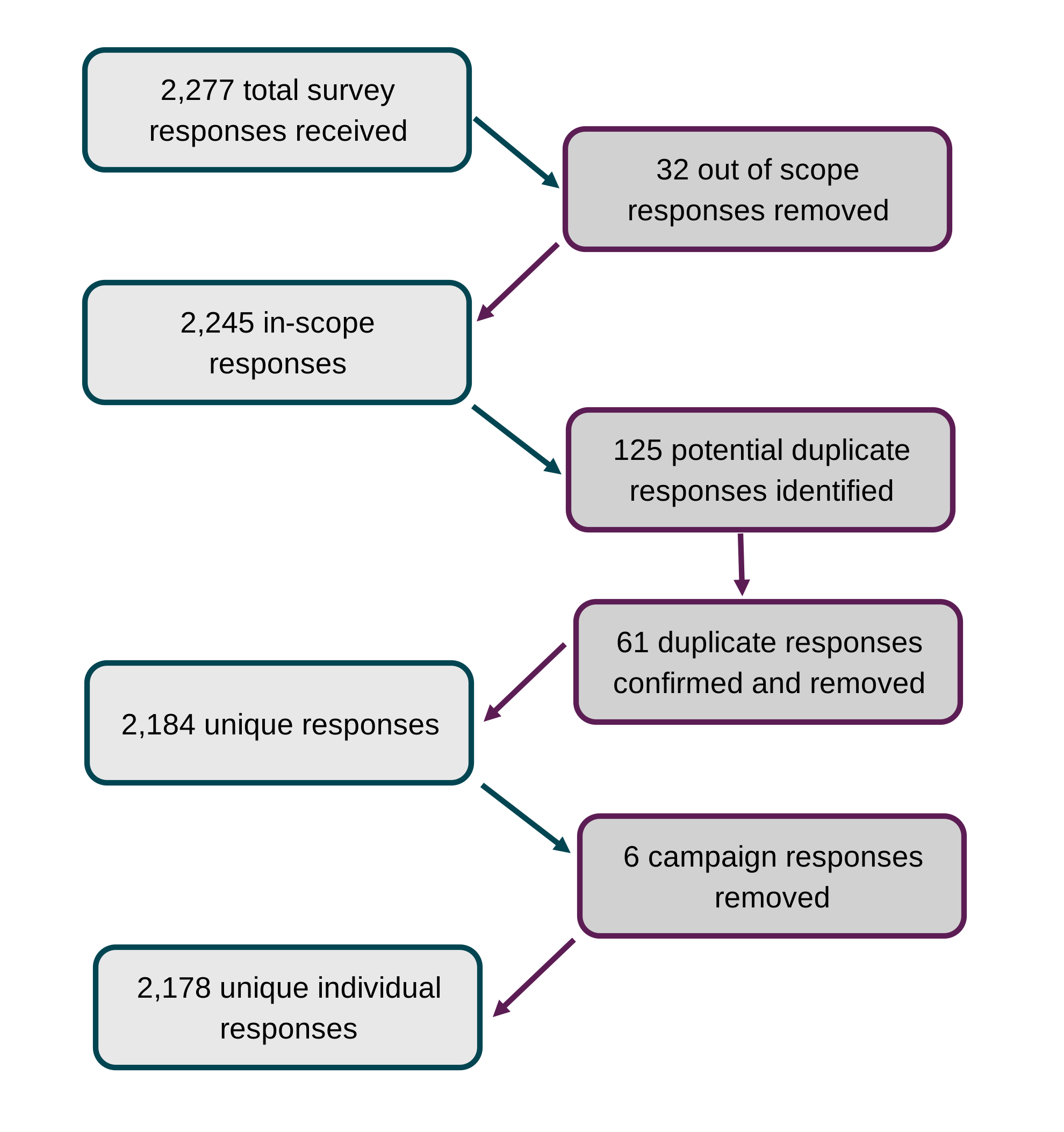
All responses to open questions were accepted as valid contributions to the qualitative analysis, to ensure that all viewpoints expressed by respondents were considered.
There was a good response from all UK nations and regions except Northern Ireland, which produced a total of only 7 responses (Figure 13).[footnote 37]
Figure 13: Survey respondents' Place of Worship by region
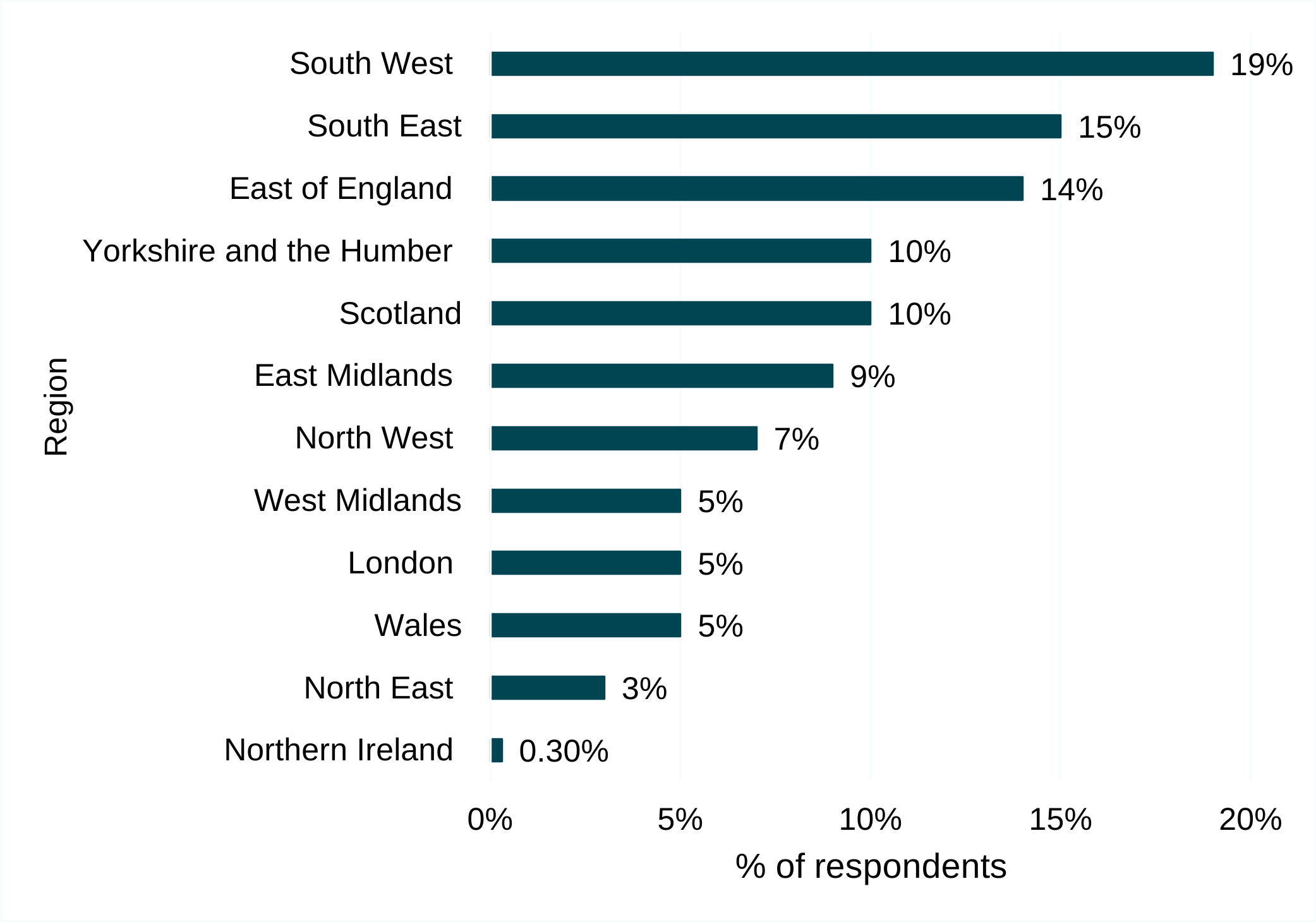
The majority of survey respondents were Anglican, at 73% of responses, followed by Roman Catholics at 14% and Church of Scotland at 7% and Methodist at 3% (Table 13). There is a lack of reliable and comprehensive figures to enable the representativeness of the sample to be assessed definitively, however, it appears that the sample is largely within expectation, except for over-representation of Roman Catholic places of worship. There also appears to be a corresponding relative under-representation of other denominations.[footnote 38]
The slight areas of over-representation and under-representation are likely to stem from the agreed dissemination strategy, where the survey was circulated through heritage and faith groups.
The challenges of identifying reliable UK-level frame data meant that there was no clear benefit from attempting to weight the faith group responses.
Table 13: Survey respondents by faith group
| Which of the following best describes the faith group that owns or uses this place of worship? | % of respondents |
|---|---|
| Anglican [i.e. Church of England, Scottish Episcopal Church, Church in Wales, Church of Ireland] | 73% |
| Roman Catholic | 14% |
| Church of Scotland | 7% |
| Methodist | 3% |
| Baptist | 1% |
| United Reformed | 1% |
| Society of Friends | <1% |
| Jewish | <1% |
| Other | 2% |
Base: 2178
Responses from ‘other’ faith groups not listed in the table above include 36 respondents who mainly described themselves in other ways but who were mainly of the Christian faith. One respondent stated they were answering on behalf of a non-denominational building conservation charity; and eighteen respondents who stated ‘not used for a faith group’.
The vast majority of respondents’ places of worship had made use of the Scheme, in most cases within the last two years (Figure 14). Nevertheless, 239 respondents (11% of the whole sample), reported that their place of worship had never benefited, providing a valuable basis for understanding reasons for non-participation in the Scheme.
Figure 14: The percentage of survey respondents’ places of worship reporting a refund of VAT from the Listed Places of Worship Grant Scheme
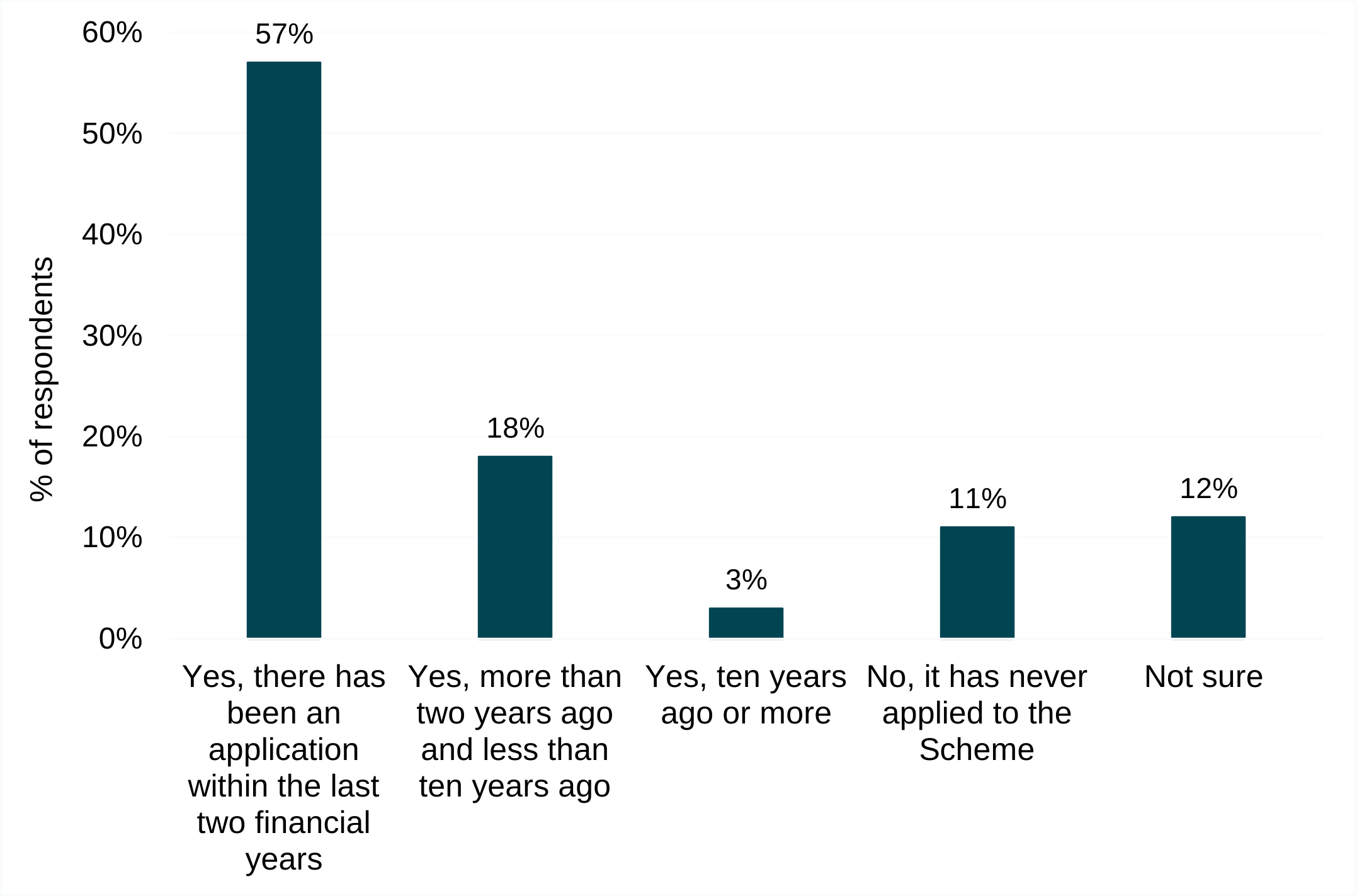
Base: 2178
Respondents were asked to specify the listing grade of their place of worship. There are challenges comparing listing grades in the different nations of the UK, as Scotland and Northern Ireland use somewhat different listing names and categories to those in England and Wales. In general, England and Wales’s two highest listing categories, Grade I and Grade II*, approximate to the highest listing category in Scotland (Category A) and Northern Ireland (Grade A). To give a unified overview of the heritage significance of the places of worship that responded to the survey, we have therefore made a distinction between ‘highly listed’ and ‘listed’ places of worship, with the former consisting of Grade I and II*, Category A and Grade A buildings, and the latter Grade II, Category B and C, and Grade B+, B1, B2 and B3 buildings. High listing categories were more numerous than the lower categories, largely because of the very high proportion of Church of England parish churches in the highest listing categories (Figure 15).
Figure 15: Percentage of highly listed buildings (Grade I, II*, Category A and Grade A) vs other listed buildings (Grade II, Category B, C and Grade B+, B, B1, B2)
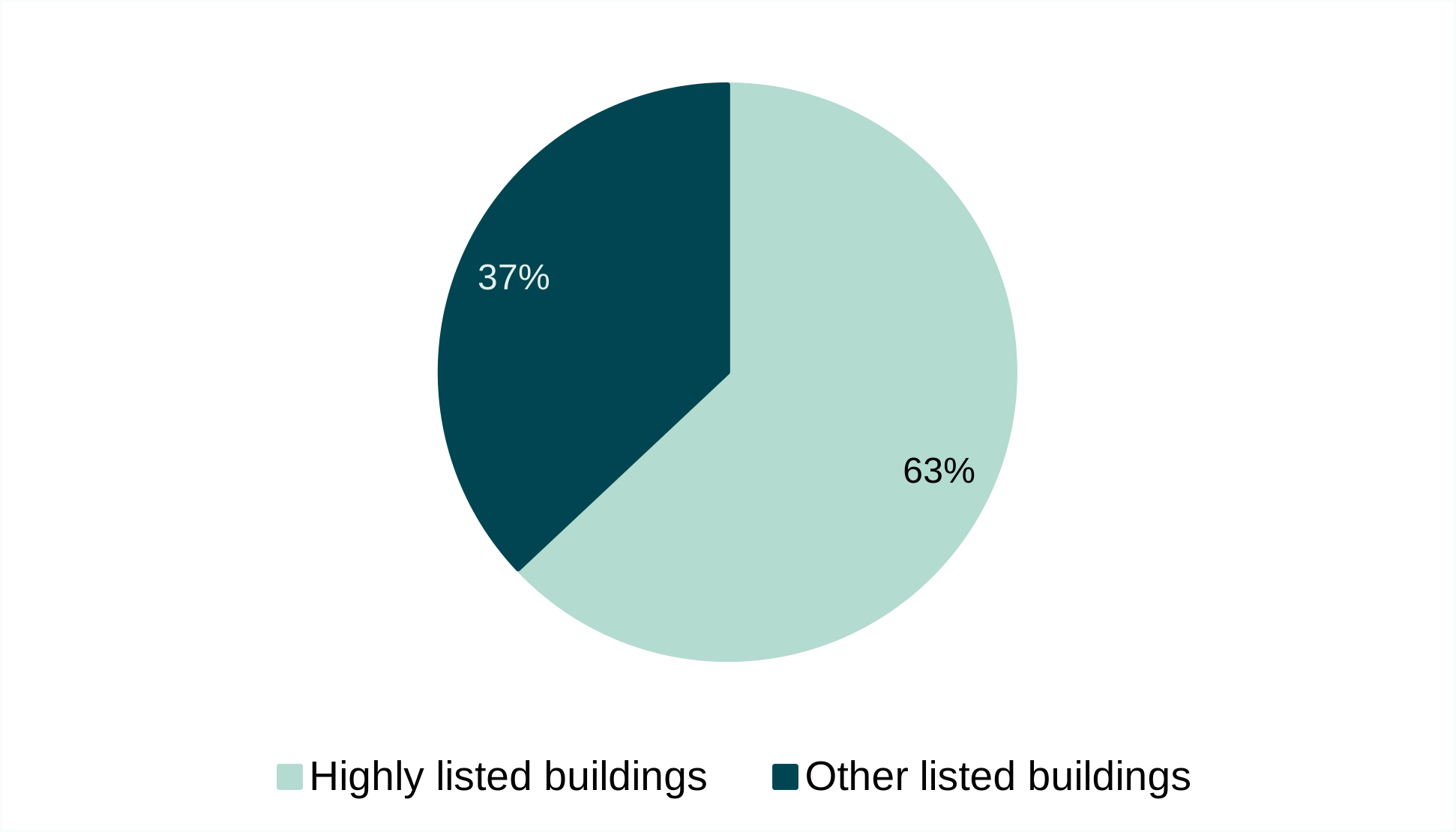
Base 2210
This distribution was extremely close to the distribution of listing grades and categories in the Scheme data for August 2022 to May 2024 (where the listing category was given). In these the overall distribution of highly listed buildings was 65% and of lesser 35%, suggesting that the survey proportions are within the expected (approximately 2%) margin of error for a survey receiving this many responses.
Overall, with the exceptions of the response bias in denominational distribution towards Roman Catholics and the under-representation of Northern Ireland, data appears to be adequately representative.
Scheme data
A dataset was provided by the Scheme administrator, EMB, detailing every individual grant made through the LPOWGS between April 2014 and early May 2024. The number of claims recorded was substantial, totalling 70,475 individual applications.
There were significant discontinuities in the scope and quality of data from before and after EMB’s takeover of the Scheme from the previous Scheme administrator, TMS, in August 2022. The earlier TMS data, relating to 57,846 applications, is thin by comparison, consisting of a proprietary unique identifier for each applicant place of worship, a non-standardised name and address of the recipient place of worship, its official listed building number (in some cases a non-current ‘legacy’ number), the grant amount requested and paid, the percentage of the amount claimed that was paid, the ‘outcome’ and ‘status’ of the application (in both cases simply reporting whether the application was paid or rejected) and an application closure date. In addition to comparable information about individual grant applications, the later EMB data, relating to 12,629 applications, includes categorised data for the faith group of the applicant place of worship, the postcode of the applicant, its local authority and region, and dates for a) when the works began and ended; b) the application was submitted; c) the approved payment was claimed by EMB from DCMS; and d) the payment was made to the applicant. There is also an open-text description of the works supported by the claim. The data about the works (dates undertaken and description) was not available for every application in the EMB dataset.
Data fields that were reliant on applicant information exhibit inaccuracies and inconsistencies in both datasets. In particular, in the TMS data, addresses for the same place of worship were often entered in inconsistent ways, while in both datasets, the listed building IDs are given in inconsistent formats. In the TMS data, moreover, there were many non-current ‘legacy’ IDs. The result is that the raw data did not contain a single unique identifier that could apply across both datasets. DCMS and EMB had undertaken some internal work to clean the data and enable integration of the information. This was based on postcode information. However, this poses challenges, as in some cases different listed places of worship share the same postcode, individual places of worship may be in more than one postcode area, some places of worship do not have a valid postcode, and some applicants did not include a postcode in their application.
A review of the data undertaken by Harlow Consulting found that the vast majority (more than 90%) of applications included a valid current or legacy listed building reference number. Internal data cleaning therefore focused on reconciling the listed building data by using automated lookups to populate a new, standardised listed building ID number. Though not perfect, this method was able to provide the best reasonably possible unique identifier for each application. Some cases could not be satisfactorily categorised and were therefore excluded from the analysis. A total of 69,945 (of the original 70,475) applications were included in the final dataset. In addition, given the scale and complexity of the data involved there are likely to be some residual errors. Overall, however, the excluded cases do not appear to display any strong internal commonalities and are not likely to have a statistically significant impact on the results of the data analysis.
Limitations
Certain aspects of the evaluation proved more challenging than expected by either the DCMS or Harlow project teams. In particular, challenges were identified at an early stage in the accuracy and consistency of historical Scheme data, meaning there was an unplanned requirement for complex data cleaning of historical Scheme data.
The Scheme data has been subject to extensive data cleaning by the Harlow project team, which was outside the scope of the tendered work, but necessary to understand key features of the Scheme reported on in earlier sections of this report (e.g. profile of users, penetration of the Scheme). Principally, the pre-2022 (older) data required extensive attention, however there were some inconsistencies (such as blank variables and errors in the later EMB data). Due to problematic aspects of the source dataset, some residual inaccuracies and inconsistencies should be expected. It is not believed that they will substantively affect the overall robustness of the findings. However, they will lead to a small understatement in the absolute amounts of expenditure given.
Appendix 3: Research tools annex
Theory of Change
1.1 Situation (need)
Many listed places of worship are deemed to be significant heritage assets, but these assets are expensive to maintain, with heavy reliance on volunteers for their on-going care and upkeep.
Repair, maintenance and alterations of these listed places of worship can be extremely complex, due to the need to understand the building pathology and the need to use traditional building materials and techniques. Such specialist heritage construction and conservation skills and knowledge are in short supply, increasing demand for them and making works costly to undertake.
Notable declines in congregation numbers have negatively impacted revenues, with many listed places of worship lacking sufficient funds to undertake basic repair and maintenance.[footnote 39] Places of Worship account for 45% of Grade I listed buildings. While listed places of worship account for approximately 7% of entries on the Heritage at Risk Register (HARR) in England[footnote 40] and substantial proportions of the other UK national registers of at-risk buildings.
Without funding and support, there is a significant risk that important heritage buildings fall into disrepair and subsequently, disuse, thus increasing the numbers of such buildings on the HARR.
The primary aim of the LPOWGS is - first and foremost - to protect and preserve heritage listed places of worship UK-wide, across all faiths and denominations. The LPOWGS provides a VAT rebate, helping to enable repair, maintenance and alteration to be undertaken. This in turn contributes to wider social and economic benefits.
| Inputs/activities | Outputs | Outcomes | Impacts |
|---|---|---|---|
| Administration fee to third party (EMB) to manage the LPOWGS. A retainer is paid for operating the system, with further fees paid per application, with different rates paid for processing applications of different levels of complexity (simple, moderate, complex) Time input from DCMS project team, including for regular audit of sample of applications, plus operational costs of website upgrade/ maintenance as required Scheme funding: historically £42m per annum since 2012[1], to be capped at £23m for 25/26[2] |
Increase in the amount of repair, maintenance and alteration works undertaken to listed places of worship relative to baseline Stabilise or reduce the number of listed places of worship buildings on the Heritage at Risk Register (HARR) and other equivalent registers Reduction in number of listed places of worship buildings (not listed on the HARR) that are in disrepair |
Easier for listed places of worship to undertake repair, maintenance and alteration works Prevention of long-term deterioration of listed places of worship Support of longer-term financial planning for listed places of worship Reduction of financial burden on faith groups responsible for listed places of worship Sustained demand for heritage construction and conservation skills Social benefits for wider community through preservation of spaces that can be used for community purposes Preservation of heritage construction and conservation skills Reduce closures of listed places of worship buildings solely due to repair and maintenance issues |
Maintenance of social and economic value contributed by UK places of worship by enabling them to remain in a state of good repair and operation (the National Churches Trust (NCT) estimated the social value of UK churches at £55bn per annum). Sustain pride in the UK’s heritage Safeguarding of listed places of worship as visitor destinations Increased and sustained employment of heritage trades and craftspeople (due to the need for heritage works) Safeguarding of valuable heritage construction and conservation skills and knowledge Heritage buildings remain in productive use rather than fall into a state of disrepair/disuse |
Assumptions
- The amount of funding and resource allocated to the scheme is sufficient to deliver the intervention as planned.
- Listed places of worship that benefit from the scheme are able to raise funds to undertake repair, maintenance and alterations in order to claim back the VAT rebate through the LPOWGS.
- There is sufficient skill and resource available within LPOWGS to make claims for eligible expenses.
- There is sufficient access to the right skills and knowledge within the heritage construction supply chain to be able to undertake repair, maintenance and alterations works.
- There is sufficient availability of traditional building materials with which to undertake repair, maintenance and alterations works.
- The costs of traditional building materials with which to undertake repair, maintenance and alterations works remain largely stable and are not subject to significant uplifts.
- Access to the appropriate skills and knowledge within the supply chain is consistent and uninterrupted (e.g. by another lockdown).
- The economic context remains largely stable and there is no other form of severe interruption to the economy such as recession or a pandemic.
- Applications are processed promptly, fairly and accurately.
- Appropriate due diligence is undertaken to prevent fraudulent applications being successful.
- All listed places of worship are aware of the scheme and understand how to submit applications.
- The scheme supports those in need and does not duplicate other sources of funding that could be used for the same purpose.
Listed Places of Worship Grant Scheme evaluation – survey
This questionnaire is aimed at people responsible for looking after any place of worship that occupies a listed building. It is being conducted by Harlow Consulting on behalf of the Department for Culture, Media and Sport, as part of an evaluation of the Listed Places of Worship Grant Scheme. This grant scheme is funded by DCMS and enables listed places of worship to reclaim VAT paid on certain kinds of repair, maintenance and alteration works.
The questionnaire will ask you some basic information about your place of worship, its finances and its condition, then about whether your place of worship has benefited from the Listed Places of Worship Grant Scheme. It may make it easier to complete the questionnaire if you have relevant information available. For example, we will ask for an approximate idea of recent expenditure on your building and about your experience (if applicable) of the scheme.
If you have this information to hand, we would expect it to take around 15-20 minutes to complete all the questions.
Please note that, as far as possible, we will only ask you questions that we think are relevant to you. If your place of worship has benefited from the scheme, we will ask more about how and what impacts it has had. If your place of worship hasn’t benefited, we’d like to understand more about why it hasn’t. For this reason, question numbers may not follow in direct sequence. In all cases, we will ask around twenty-five questions, of which the majority are short answer, multi-choice or rating-scale questions. We have also included some free text responses, so that can tell us any additional things you think we should know about the Listed Places of Worship Grant Scheme.
You will be able to 'save' and return to the survey, should you need to do so. The survey will be open for completion until the end of 25 March, so please ensure you submit your response by then.
Data security
The information you provide will be treated confidentially, in line with the Market Research Society (MRS) code of conduct and the General Data Protection Regulation (GDPR). The information provided will be aggregated into themes and reported to DCMS anonymously, unless you give permission for your views to be attributed to you personally, or to your organisation.
The Department for Culture, Media and Sport (DCMS) is the data controller for personal data collected through this survey. DCMS has appointed Harlow Consulting as a data processor to carry out this survey. DCMS will not directly receive your personal data and will only receive anonymised data in reports.
You can find information on how DCMS uses personal data in our Personal Information Charter (opens in a separate window).
Your place of worship
1. What is the name and address of the place of worship you are providing information for?
-
Place of worship name:
-
Street address 1:
-
Street address 1:
-
City / town / village:
-
County:
-
Postcode:
2. What area of the UK is your place of worship located in?
-
North East
-
North West
-
Yorkshire and the Humber
-
East Midlands
-
West Midlands
-
East of England
-
London
-
South East
-
South West
-
Scotland
-
Wales
-
Northern Ireland
3. Is this place of worship listed as a building of historic or architectural interest? [Screening question]
Route from region:
England and Wales
-
Yes – Grade I
-
Yes – Grade II*
-
Yes – Grade II
-
No
[if no route to statement ‘This survey is specifically for listed places of worship. Thank you for your interest.’ and end.]
4. Scotland
-
Yes – Category A
-
Yes – Category B
-
Yes – Category C
-
No
[if no route to statement ‘This survey is specifically for listed places of worship. Thank you for your interest.’ and end.]
5. Northern Ireland
-
Yes - Category A
-
Yes - Category B+
-
Yes - Category B, B1 or B2
-
No
[If no route to statement ‘This survey is specifically for listed places of worship. Thank you for your interest.’ and end]
6. Which of the following best describes your place of worship?
-
Cathedral / Basilica
-
Chapel
-
Parish church
-
Major parish church
-
Meeting House
-
Mosque
-
Synagogue
-
Gurdwara
-
Temple
-
Meditation centre
-
Other
-
Prefer not to say
If other, please specify:
7. Which of the following best describes the faith group that owns or uses this place of worship?
Anglican [i.e. Church of England, Scottish Episcopal Church, Church in Wales, Church of Ireland]
-
Baptist
-
Buddhist
-
Church of Scotland
-
Hindu
-
Islamic
-
Jewish
-
Methodist
-
Orthodox
-
Roman Catholic
-
Sikh
-
Society of Friends
-
United Reformed
-
Other
-
Prefer not to say
If other, please specify:
Repairing and maintaining your place of worship
8. Using the following five-point scale, which would you say best describes the condition of your building?
-
1 Structurally sound, no repair needed
-
2 Structurally sound, but with need for minor repair or general maintenance
-
3 Generally structurally sound, but with some localised, currently contained problems (e.g. minor rot, infestation, masonry deterioration, some minor, currently manageable roof leaks, minor issues with drainage of gutters and downpipes)
-
4 Significantly compromised, with element(s) having problems that are non-localised or difficult to manage, and if unaddressed threaten the long-term stability or survival of the building (e.g. significant rot, infestation; cracking/deflection of structural elements; extensive masonry deterioration; extensive and/or significant roof leaks or signs of roofing failure)
-
5 Active failure of key building elements or clear signs of structural instability, posing an imminent threat to the survival of the buildings (e.g. loss of areas of roofing, broken or collapsing windows and doors, failure of structural elements, active subsidence, major deterioration of the interior, extensive severe masonry erosion and/or spalling and/or widespread loss of integrity to jointing etc.)
-
Not sure
-
Prefer not to say
9. Would you say that the condition of your building is better or worse than it was five years ago?
-
Substantially worse
-
Somewhat worse
-
About the same
-
Somewhat better
-
Substantially better
-
Not sure
-
Prefer not to say
10. Using the banded ranges given below, what is your best estimate of the amount it would cost to address all your place of worship’s repair needs (including VAT and delivery costs)?
-
Less than £10,000
-
£10,000-£24,000
-
£25,000 - £49,000
-
£50,00-£99,000
-
£100,000-£249,000
-
£250,000-£499,000
-
£500,000-£999,000
-
£1 million - £2.4 million
-
£2.5 million £4.9 million
-
£5 million - £9.9 million
-
£10 million or more
If you are able to give a more precise figure, please include it here:
11. In a typical year and including VAT, how much would you say your place of worship can afford to spend (without special fundraising efforts) on repair, maintenance and restoration works?
-
Less than £1,000
-
£1,000-£4,999
-
£5,000-£9,999
-
£10,000-£24,000
-
£25,000-£49,999
-
£50,000-£99,000
-
£100,000-£249,999
-
£250,000-£499,999
-
£500,000-£999,999
-
£1 million or more
-
Not sure
-
Prefer not to say
If you are able to give a more precise figure, please include it here:
12. Over the next five years, do you expect this sum to increase, decrease, or stay about the same?
-
Increase significantly
-
Increase somewhat
-
Stay about the same
-
Decrease somewhat
-
Decrease substantially
-
Not sure
-
Prefer not to say
13. If you spend the amount you expect to be able to on all works of repair and maintenance, conservation and alteration to your place of worship, what do you expect its condition to be in five years’ time?
-
1 Structurally sound, no repair needed
-
2 Structurally sound, but with need for minor repair or general maintenance
-
3 Generally structurally sound, but with some localised, currently contained problems (e.g. minor rot, infestation, masonry deterioration, some minor, currently manageable roof leaks)
-
4 Significantly compromised, with element(s) having problems that are non-localised, or difficult to managed, and if unaddressed threaten the long-term stability or survival of the building (e.g. significant rot or infestation; cracking/deflection of structural elements; extensive masonry deterioration; extensive and/or significant roof leaks or signs of roofing failure)
-
5 Active failure of key building elements or clear signs of structural instability, posing an imminent threat to the survival of the buildings (e.g. loss of areas of roofing, broken or collapsing windows and doors, failure of structural elements, active subsidence, major deterioration of the interior, extensive severe masonry erosion and/or spalling and/or widespread loss of integrity to jointing etc.)
-
Not sure
-
Prefer not to say
14. If your place of worship’s future financial situation is in line with your expectations, how likely is it to have to close in the next five years due to difficulties paying for necessary repairs and maintenance?
-
Very likely
-
Somewhat likely
-
Neither likely nor unlikely
-
Somewhat unlikely
-
Very unlikely
-
Not sure
-
Prefer not to say
15. To the best of your knowledge, has your place of worship ever applied for a refund of VAT from the Listed Places of Worship Grant Scheme?
-
No, it has never applied to the scheme
-
Yes, there has been an application within the last two financial years
-
Yes, more than two years ago and less than ten years ago
-
Yes, ten years ago or more
-
Not sure
Scheme user questions
16. To the best of your knowledge, what kinds of works of repair, maintenance, restoration and alteration have received a VAT refund through the Listed Places of Worship Grant Scheme? [tick all that apply]
-
Towers and spires
-
Roofs and rainwater goods
-
External walls and masonry
-
External doors and windows
-
Bells, bell ropes and frames, and turret clocks
-
Internal masonry and walls, including repointing and replastering
-
Internal doors and windows
-
Permanent interior fittings (pews and organs, monuments, altars and altar rails, fonts etc.)
-
Floors and floor coverings
-
Decoration (including restoration of murals)
-
Building services (heating, electrical, lighting, water, drainage etc.)
-
Asbestos removal
-
Security systems
-
Kitchens, toilets, showers and other user facilities
-
Damp remediation
-
Professional fees
-
Other (please specify)
-
Not sure
-
Prefer not to say
If other, please specify
17. Thinking about the works you’ve carried out that received a VAT refund from the scheme, which of the following would best describe what would have happened had the funding from the Listed Places of Worship Grant Scheme [not]{.underline} been available?
-
We would have carried out the works at the same time and in the same way
-
We would have carried out the works, but they would have been delayed
-
We would have carried out the works, but would have used a more economical approach (such as using different contractors, materials, or doing a less complete job)
-
We would have delayed the works and used a more economical approach
-
We would not have carried out the works at all
-
Not sure
-
Prefer not to say
Approximately how long would the works have been delayed by?
In what ways would the works have been carried out differently?
18. What is your best estimate of the proportion, stated as a percentage, of the refund(s) you received from the Listed Places of Worship Grant Scheme which was (or you expect in due course will be) reinvested in further repair and maintenance works?
19. How did you spend any refund that was [not]{.underline} reinvested in more repair and maintenance (please tick all that apply)?
-
Faith-based activities
-
Community activities
-
Paying running costs for the building
-
Paying staff
-
Reducing the deficit
-
Increasing reserves
-
Other
-
Not applicable – we reinvested or intend to reinvest 100% of the rebate in further repairs and maintenance works
-
Not sure
-
Prefer not to say
If other, please specify
20. One a scale of 1 to 5, where 1 is least important and 5 is most important, please rate the importance of the following benefits of undertaking repairs and maintenance works to your place of worship that are supported by the grant scheme:
-
The place of worship is able to remain in use in the same way as it is currently
-
The place of worship can be opened to the public more often or more of the building can be open
-
The heritage value of the place of worship is preserved for the future
-
The place of worship is able to have more, and/or higher quality and/or larger acts of worship or congregational activities
-
The place of worship can be used for more and/or higher quality activities for the wider community
-
The place of worship is a more pleasing space to be in
-
The place of worship is a more comfortable place to be
-
We are able to undertake repairs and maintenance in a timely way, and so avoid more costly and/or difficult works in the future
-
The availability of this funding makes it easier to apply for and/or obtain other forms of funding for repair, maintenance and alteration
Are there any other benefits of the Listed Places of Worship Grant Scheme you would like to tell us about?
21. How far do you agree with the following statements about the guidance and support available to applicants? [strongly agree, agree, neither agree nor disagree, disagree, strongly disagree, not sure, not applicable, prefer not to say]:
-
The guidance provided by the scheme is easy to read and understand.
-
The guidance provided by the scheme is about the right length and level of detail.
-
The guidance gives me the information I need to work out whether our place of worship is eligible for the scheme.
-
The guidance gives me the information I need to know whether the works we’ve done are eligible for a rebate from the scheme.
-
The additional support available (by telephone or email) is clear and responsive.
Is there anything else you’d like to tell us about the guidance and support available for applicants to the scheme?
22. How far do you agree with the following statements about the application and payment process? [strongly agree, agree, neither agree nor disagree, disagree, strongly disagree, not sure, not applicable, prefer not to say]
-
It is easy to complete the application form.
-
It is easy to provide the supporting documentation needed.
-
It is easy for us to find people with the time and expertise needed to prepare and submit the application.
-
When we apply for funding from the scheme, we are given a decision in good time.
-
Once an application is approved, it is paid promptly.
-
If our application is unsuccessful or only partly successful, we are given a clear explanation of why this is the case.
-
Receiving the grant in advance of completing and paying for the works would be more conducive to undertaking repair and maintenance work.
Is there anything else you’d like to tell us about the application and payment process?
23. Is there anything else you’d like to tell us about the Listed Places of Worship Grant Scheme?
Scheme non-user questions
24. If your place of worship has not been benefiting from the scheme, why is this?
-
We were not aware of the scheme
-
Our place of worship is not eligible for the scheme
-
Our place of worship is eligible for the scheme, but we have not carried out eligible works
-
We have carried out eligible works, but we find it difficult to apply to the scheme
-
Not sure
-
Other
If other, please specify:
25. Where would you be likely to look for or find information about funding support for your place of worship (please tick all that apply)?
-
We do not specifically look for information about funding support
-
My faith organisation
-
Word of mouth / advice from other people within the faith community
-
General internet searching
-
Faith-based traditional media (such as magazines, newsletters, television programmes)
-
Faith-based digital media (such as websites or e-newsletters, videos and podcasts)
-
Other
-
Prefer not to say
If other, please specify:
26. Why is your place of worship not eligible for the Listed Places of Worship Grant scheme?
-
We do not hold enough public acts of worship each year (six or more) to be eligible
-
We are not a formally constituted faith organisation
-
Other
-
Not sure
-
Prefer not to say
If other, please specify:
27. Why are your works not eligible for the Listed Places of Worship Grant scheme? [please tick all that apply]
-
We haven’t carried out works of sufficient value to be eligible.
-
The works we have carried out are not within the scope of the scheme
-
We are able to recover or pay for the VAT by other means, so we do not need to / are not able to reclaim VAT through the scheme
-
Other
-
Not sure
-
Prefer not to say
What are the reasons you haven’t carried out works of sufficient value?
What kind of eligible works did you undertake?
Please explain how you were able to recover or pay for the VAT by other means:
If other, please specify:
28. Please could you tell us how easy or difficult you find the following factors related to accessing or making an application to the Listed Places of Worship Grant Scheme? [very easy, fairly easy, neither easy nor difficult, fairly difficult, very difficult, not sure, not applicable, prefer not to say]
-
Finding information and guidance on the scheme and how to apply
-
Understanding the guidance on whether we are eligible to apply and how to make an application
-
Finding people with the time and skills needed to make the application
-
Completing the application form
-
Providing the supporting documentation needed
-
Other
If other, please specify:
29. To what extent do you agree or disagree that receiving the grant in advance of completing and paying for the works would be more conducive to undertaking repair and maintenance work?
-
Strongly agree
-
Agree
-
Neither agree nor disagree
-
Disagree
-
Strongly disagree
-
Not sure
-
Not applicable
-
Prefer not to say
30. If you were able to secure more funding to support repair, maintenance and alteration works to your place of worship, which of the following building elements, activities and expenditures would you use the funding to support? [tick all that apply]
-
Towers and spires
-
Roofs and rainwater goods
-
External walls and masonry works
-
External door and window repairs
-
Bells, bell ropes and frames, and turret clocks
-
Internal wall and plastering works
-
Internal door and window works
-
Permanent interior fittings (pews and organs, monuments, altars and altar rails, fonts)
-
Floors and floor coverings
-
Decoration (including restoration of murals)
-
Building services (heating, electrical, lighting, water, drainage etc.)
-
Asbestos removal
-
Security systems
-
Kitchens, toilets, showers and other user facilities
-
Damp remediation
-
Professional fees
-
Other (please specify)
-
Not sure
-
Prefer not to say
If other, please specify:
31. Is there anything else you’d like to tell us about repairing and maintaining your listed place of worship and/or the Listed Places of Worship Grant Scheme?
Final questions (all respondents)
32. Can you tell us what you would consider to be most important or valuable about your listed place of worship and/or the activities it supports?
33. Would you be willing for us to contact you to find out more about your answers?
Y/N [If no route to final statement]
34. Please provide your name and contact details below:
Name:
Email address:
Telephone number:
Thank you for completing the survey questions. In order for your answers to be included in our analysis, please press submit below. Please note, that if you don’t press submit, we will not be able to make use of your responses.
-
Seely, A., (2025) VAT and Churches, House of Commons Library Research Briefing Number CBP0101501, pp. 21-22 ↩
-
See separate case studies annex. ↩
-
A listed building is defined as a building, object or structure that has been judged to be of national importance by virtue of its special architectural or historic interest. Listing, sometimes also referred to as 'designation', is the act of identifying nationally important heritage sites and affording them special protection through the planning system. The purpose of listing is to introduce a higher degree of protection. (Definition taken from www.spab.org.uk/advice/listed-buildings) ↩
-
There are no fully robust, up-to-date figures available for the number of listed places of worship in the UK, due to the nature of listed building entries, which do not include categorical data for building use. These figures are based on previous research by the Historic Religious Building Alliance available from https://www.hrballiance.org.uk/wp-content/uploads/2018/12/2025-01-31-number-of-listed-places-of-worship-in-UK.pdf, and collation of data from the following sources: ONS, Number of places of religious worship in local areas, England and Wales; Historic England (2025) Listing and Places of Worship Fact Sheet, https://historicengland.org.uk/content/docs/listing/listing-places-of-worship-fact-sheet/; Places of Worship in Scotland (POWIS) database; National Churches Trust, ‘Supporting Northern Ireland’s Churches and Chapels, https://www.nationalchurchestrust.org/news/supporting-northern-irelands-churches-and-chapels; Steven Grieve, Historic Environment Scotland, ‘Request for Information Under the Environmental Information (Scotland) Regulations 2004, Number and breakdown of listed places of worship in Scotland’ (20 June 2016); Cadw, ‘Historic Places of Worship’, https://cadw.gov.wales/advice-support/historic-assets/listed-buildings/historic-places-worship#section-historic-places-of-worship-in-wales ↩
-
https://historicengland.org.uk/advice/caring-for-heritage/places-of-worship/research/ ↩
-
HM Government and the Church of England (2009), Churches and Faith Buildings: Realising the potential, pp. 3-4. ↩
-
Comprehensive outline histories of the scheme are given in two iterations of House of Commons Library research briefing: Seely, A., (2019) VAT and Churches. House of Commons Research Briefing Number 1051; Seely, A., (2025) VAT and Churches. House of Commons Research Briefing Number CBP01051. ↩
-
https://historicengland.org.uk/content/docs/research/listed-places-of-worship-grant-impact-assessment-pdf/ ↩
-
https://assets.publishing.service.gov.uk/media/5a829d3840f0b62305b93708/Taylor_Review_Final.pdf ↩
-
The Heritage Alliance (2024), On the brink: Heritage in the cost-of-living crisis; Charities Aid Foundation (2024) Corporate Giving 2024, The FTSE 100 and Beyond ↩
-
The research tools annex to this report contains the Theory of Change and the survey questionnaire ↩
-
No census of all cathedrals in the UK is available, but collation of information from multiple sources suggests that there are 65 Anglican cathedrals, 35 Roman Catholic Cathedrals and 12 Orthodox cathedrals. ↩
-
HRBA (2025) ‘Number of Listed Buildings in the UK’, Historic Religious Building Alliance available from https://www.hrballiance.org.uk/wp-content/uploads/2018/12/2025-01-31-number-of-listed-places-of-worship-in-UK.pdf ↩
-
Historic England, annual registers, available for download from https://historicengland.org.uk/listing/heritage-at-risk/search-register/annual-heritage-at-risk-registers-and-maps/; Historic England, Heritage at Risk Indicator Data, available for download from https://historicengland.org.uk/research/heritage-counts/indicator-data/har/; Historic England (2024) 2024 Heritage at Risk, https://historicengland.org.uk/content/documents/har/har-statistics-2024/. ↩
-
BDRC Continental (2010), Impact Assessment ↩
-
Historic England (2017) Evaluating the Impact of the Churches Conservation Trust Model for Investment in Condition, Maintenance and Repair for Historic Places of Worship, https://historicengland.org.uk/research/results/reports/104-2015; Apec Architects (2019), The Value of Maintenance? Project Report, https://historicengland.org.uk/images-books/publications/value-of-maintenance/. ↩
-
BOP Consulting (2014), Evaluating the impact of the Churches Conservation Trust model for investment in Condition, Maintenance and Repair for historic places of worship https://www.hrballiance.org.uk/wp-content/uploads/2015/01/evaluating-impact-of-cct-model-for-investment-historic-pow.pdf ↩
-
Historic England (2019) Historic England commentary on The Value of Maintenance? Project Report, p.1, [historicengland.org.uk/content/docs/caring-for-heritage/he-commentary-value-of-maintenance/. ↩
-
See separate case studies annex. ↩
-
In spite of some probable under-reporting: a number of respondents selected 20% as the amount reinvested but stated in a subsequent question that all funds would be reinvested, so had evidently confused the proportion of the expenditure payable in VAT and eligible for the rebate for the proportion of the whole sum expended. ↩
-
This estimate assumes that expenditure patterns are on average similar for these places of worship to other users and that annual grant funding distributed is approximately £30 million, in line with average documented in the Scheme data. ↩
-
Using prices indices from the ONS non-housing repair and maintenance index, available for download from https://www.ons.gov.uk/businessindustryandtrade/constructionindustry/datasets/interimconstructionoutputpriceindices, ↩
-
Frontier Economics (2019) Enhancing the Sustainability of Listed Places of Worship: Synthesis of previous scheme evaluations, pp. 9-10. ↩
-
BDRC Continental (2010), Impact Assessment ↩
-
Guidance issued by HM Treasury on how to appraise policies, programmes and projects. https://www.gov.uk/government/publications/the-green-book-appraisal-and-evaluation-in-central-government/the-green-book-2020#shortlist-options-appraisal ↩
-
Finance Act (1973) section 12, schedule 4, Group 8, Note 2; VAT Act (1983), Schedule 5, Group 8; VAT Act (1994), Schedule 8, Group 5. ↩
-
Gordon Brown, 2001 (HC Deb 7 March 2001 c300, quoted Seely 2019, p. 19) ↩
-
Dawn Primarolo 2006 (HC Deb 31 October 2006 c321W, quote Seely 2019 p. 20) ↩
-
Budget 2004, quoted Seely 2019, p. 20 ↩
-
Quoted in Seely (2019), pp. 10-11. ↩
-
Budget 2004, quoted Seely 2019, p. 20 ↩
-
DCMS, ‘Listed Places of Worship Grant Scheme extended: Changes to help listed places of worship with the cost of repairs and alterations’ (20 September 2013), https://www.gov.uk/government/news/listed-places-of-worship-grant-scheme-extended ↩
-
Chris Bryant, Minister for Creative Industries, Arts and Tourism, ‘Future of the Listed Places of Worship Grant Scheme: Statement made on 22 January 2025’, https://questions-statements.parliament.uk/written-statements/detail/2025-01-22/hcws382. ↩
-
Key references include: Seely, A., (2019; updated 2025) VAT and Churches, House of Commons Library Research Briefing 1051 / CBP01051, https://researchbriefings.files.parliament.uk/documents/SN01051/SN01051.pdf; Seely, A., (2019) VAT: European Law on VAT Rates, House of Commons Library Research Briefing 2683, https://researchbriefings.files.parliament.uk/documents/SN02683/SN02683.pdf; Frontier Economics (2019) Enhancing the Sustainability of Places of Worship. Synthesis of Past Scheme Evaluations, https://assets.publishing.service.gov.uk/media/5dfcd80ae5274a3483e59944/TRP_Review_of_Past_Schemes.pdf; Charlotte Dodgeon (2022) Sustaining Historic Churches: What does recent research tell us?, Historic Religious Buildings Alliance, https://www.hrballiance.org.uk/wp-content/uploads/2020/01/Sustaining-historic-churches-research-edn-1.0.pdf; Cooper, T., (2024) Caring for churches and chapels in England: the long view, Historic Religious Buildings Alliance, https://www.hrballiance.org.uk/wp-content/uploads/2020/01/english-churches-chapels-long-view-lo-res-v8-A4.pdf; Apec Architects / Historic England (2019) The Value of Maintenance, https://historicengland.org.uk/images-books/publications/value-of-maintenance/value-of-maintenance-report/; BDRC Continental (2010) Listed Places of Worship Grant Impact Assessment, https://historicengland.org.uk/content/docs/research/listed-places-of-worship-grant-impact-assessment-pdf/; BOP Consulting (2015) Evaluating the impact of the Churches Conservation Trust model for investment in Condition, Maintenance, and Repair for historic places of worship, https://archaeologydataservice.ac.uk/archiveDS/archiveDownload?t=arch-1893-1/dissemination/pdf/englishh2-341174_1.pdf; HM Government and the Church of England (2009) Churches and Faith Buildings: Realising the Potential, https://www.ihbc.org.uk/recent_papers/docs/Churches%20and%20Faith%20Realising%20the%20potential%20-%20Buildings%202009.pdf. ↩
-
Responses from Northern Ireland account for 0.3% of all survey responses; this compares with 1.9% of all scheme applications since 2022 (data from 2022 onwards is more complete that scheme data recorded before 2022). ↩
-
It is not possible to provide a precise estimate of the level of over- or under-representation as the fields for reporting denomination in the scheme data are open text fields and have not been completed by applicants in a consistent manner, nor using pre-determined categories. There are also multiple spelling errors, meaning filtering the data is does not provide meaningful results. ↩
-
72% of survey respondents stated that they can afford to spend (without fundraising) less than £10,000 a year (incl. VAT) on repair, maintenance and restoration works. ↩
-
The Heritage at Risk Register (HARR) is maintained by Historic England and is an annual register of heritage sites most at risk of being lost because of neglect, decay or inappropriate development. In 2024, 969 listed places of worship were on the register. Historic England regularly reviews assessments of heritage sites. Members of the public can suggest a site for inclusion on the list, whereby it will be assessed against the register selection criteria. Historic England Reveals its Heritage at Risk Register 2024 | Historic England ↩