Evaluation of the County Lines Programme (updated) (January 2020 to January 2025)
Updated 30 December 2025
Applies to England and Wales

© Crown copyright 2025
This publication is licensed under the terms of the Open Government Licence v3.0 except where otherwise stated. To view this licence, visit nationalarchives.gov.uk/doc/open-government-licence/version/3 or write to the Information Policy Team, The National Archives, Kew, London TW9 4DU, or email: psi@nationalarchives.gov.uk.
Where we have identified any third party copyright information you will need to obtain permission from the copyright holders concerned.
This publication is available at https://www.gov.uk/government/publications/evaluation-of-the-county-lines-programme/evaluation-of-the-county-lines-programme-updated-january-2020-to-january-2025
Executive summary
This report provides an updated assessment of the effectiveness of the County Lines Programme in addressing its key crime outcomes, expanding on the previous evaluation conducted in 2024 by the London School of Economics (LSE, 2025). The previous evaluation examined the effectiveness of the County Lines Programme from the commencement of the Programme in November 2019 up to January 2024. This update includes at least an additional year of data across all variables, up to January 2025; the inclusion of police-recorded knife crime as an outcome variable; and additional analysis to help indicate whether the County Lines Programme’s effectiveness varies across different police force areas.
Key Findings:
The Programme is continuing to reduce serious knife-related harms.
The County Lines Programme has led to a 25% reduction in hospital admissions for stabbings in exporter areas. This is an increased impact compared to the 19% found in the 2024 evaluation. Therefore, the Programme has prevented approximately 672 hospitalisations due to stabbings per year, between its commencement in November 2019 and January 2025.
The County Lines Programme may be having a suppressive effect on police-recorded knife crime.
Despite improvements in recording and reporting of violent crime overall, the evaluation shows no substantive change to police-recorded knife crime following the introduction of the County Lines Programme.
Other police-recorded crimes are increasing as a result of the Programme.
This may be, in part, likely due to improved recording practices, and also heightened and targeted policing. This includes increases in police-recorded violent crime and drug trafficking, which is consistent with findings reported in the 2024 evaluation.
The Programme is having a persistent and pronounced effect on drug-related harms.
The County Lines Programme led to a 29% reduction in drug-misuse hospitalisations in the exporter forces; a more substantial impact than the 14% reported in the 2024 evaluation. This reduction is also observed on a smaller scale (12%) in the surrounding importer areas. Therefore, the Programme has prevented approximately 1,816 hospitalisations annually due to drug-misuse between its commencement in November 2019 and January 2025.
There is not enough evidence to fully evaluate the comparative effectiveness of the Programme in different police force areas.
However, the available evidence suggests there are unlikely to be statistically significant differences in how exporter forces are performing, based on the evaluation method and results. Further analysis is required to fully confirm this finding.
1. Introduction
1.1 Programme background
‘County lines’ is a term used to describe gangs and organised criminal networks involved in exporting illegal drugs (primarily crack cocaine and heroin) into one or more importing areas (within the United Kingdom), using dedicated mobile phone lines or other forms of “deal line”. They are likely to exploit children and vulnerable adults to move and store drugs and money. They will often use coercion, intimidation, violence (including sexual violence) and weapons. A key objective of His Majesty’s Government is to tackle county lines, which was identified in the Dame Carol Black review of drugs as ‘a major factor in increased drug-related violence in the UK’.
The County Lines Programme is a national initiative launched by the Home Office in 2019 to deliver a coordinated response to the exploitation and violence associated with county lines drug networks. Operating under the National County Lines Coordination Centre[footnote 1] (NCLCC), the programme brings together law enforcement agencies, safeguarding partners, and community organisations to disrupt organised criminal groups, protect vulnerable individuals, and reduce the harms linked to drug supply chains. It is underpinned by the Government’s 4P framework (Pursue, Prevent, Protect, and Prepare), and aligns with wider strategies to tackle serious violence, including ambitions to halve knife crime over the coming decade.
The Programme is funded at scale, with allocations exceeding £42 million annually, to support national coordination, regional taskforces, and specialist interventions. Delivery partners include the 4 major exporting forces (Metropolitan Police, Merseyside Police, West Midlands Police, and as of 2022, Greater Manchester Police). It also includes funding for British Transport Police, and organisations such as Catch22 and SafeCall, ensuring both enforcement and safeguarding objectives are met.
Activities including intelligence development and operational enforcement are central to the Programme. These enable the identification and closure of drug lines, and the dismantling of county lines drug networks, with over 5,000 lines closed and over 11,000 individuals charged since the start of the Programme. Individuals targeted by the Programme are those with close links to violent crime, with 3 out of 4 of offenders charged under the Programme having a history of violent crime and/or weapons offences (see County Lines Strategic Threat Risk Assessment - 2024/25).
Alongside this, safeguarding measures aim to protect children and vulnerable adults from exploitation, using referral pathways and multi-agency approaches to prevent criminalisation and long-term harm. Since the start of the Programme, over 13,000 vulnerable individuals have been referred to safeguarding services or the National Referral Mechanism (NRM).
The Programme also includes community resilience initiatives that seek to reduce recruitment into county lines networks, while technology-driven disruption (such as the use of automatic number plate recognition and targeted interventions on transport routes) limits the ability of offenders to operate. Strategic intelligence sharing across agencies strengthens national threat assessments and ensures best practice is embedded throughout policing and partner organisations.
These activities are expected to deliver tangible outcomes across several harm indicators, but this list is not exhaustive:
Serious violence including knife crime: Increased enforcement, including targeting the line holders who control the most harmful lines, and safeguarding of vulnerable individuals, reduce weapon-enabled assaults and territorial disputes.
Drug-related crime and health harms: Disrupting and closing county lines limits drug supply chains, while drug users are directed to specialist treatment services, reducing drug-related offending and drug-related health risks.
Linked acquisitive crime: Curtailing county lines operations reduces drug availability and encourages drug users to attend treatment services, which, in turn reduces associated crimes like shoplifting that are often driven by dependency.
Exploitation and safeguarding outcomes: Early identification and diversion of victims preventing criminalisation and long-term harm[footnote 2].
These aims serve as the basis for our outcomes and research questions, detailed in Sections 2.1 and 1.3, respectively.
1.2 Evaluation update
The Home Office commissioned the London School of Economics (LSE) to deliver an evaluation of the County Lines (CL) Programme from when the funding commenced in January 2020 up to January 2024. This evaluation was published this year, and can be found via the following link: The 2024 County Lines Evaluation. Throughout this report we will refer to this previous evaluation as the 2024 evaluation, and the current evaluation as the 2025 evaluation.
This report was commissioned to assess the impact of the Programme on the Safer Streets Mission to halve police-recorded knife crime, while also providing an updated evaluation of the Programme’s effectiveness in addressing its existing key outcomes.
We implement the same quantitative techniques as the 2024 evaluation, using a multi-tiered geographical approach to define intervention and control areas, splitting them between exporters, ‘top’ importers, and other areas. In this way, it can account for spillover effects[footnote 3] by using data and police intelligence to separate the ‘top’ importers where the largest spillover impacts may occur from the mostly unaffected areas as a pure comparison group.
In addition, this update incorporates the following:
- at least one year of additional data across each of the outcome and control variables
- the inclusion of police-recorded knife crime as an outcome variable
- sensitivity analysis to assess the robustness of the findings, possible influence of individual areas on the overall results and identify potential outliers
The research will provide an updated assessment of the County Lines Programme, align the evaluation further with the Safer Streets mission objectives, and contribute to shaping policy decisions concerning county lines.
1.3 Aim and research questions
The impact evaluation focuses on reviewing, updating, and expanding our understanding of the County Lines Programme. As with the 2024 evaluation, this update will assess the Programme’s impact on serious violence, drug misuse hospitalisations, law enforcement activities[footnote 4], acquisitive crime, and NRM referrals. It also covers the impact that the Programme is having on knife crime, as this has become a key focus of the Government since the original evaluation was conducted, and links to the Safer Streets mission and ambition to halve knife crime over the next decade.
As such, we expect our findings to be similar or follow similar trends to that of the 2024 evaluation. Given the extended time-series, we may also be able to observe further significant impacts.
The research questions for this evaluation are as follows:
- what is the impact of the County Lines Programme on serious violence, and specifically on knife crime?
- what is the impact of the County Lines Programme on drug misuse hospitalisations?
- what is the impact of the County Lines Programme on law enforcement activities[footnote 5]?
- what is the impact of the County Lines Programme on acquisitive crime?
- what is the impact of the County Lines Programme on safeguarding referrals?
- do these impacts vary across geographical areas impacted by the County Lines Programme?
2. Methodology
A comparable methodological approach using a difference-in-differences regression analysis was employed in this impact evaluation of the County Lines Programme, as was utilised in the previous 2024 evaluation. The objective was to replicate the methodology from the 2024 evaluation, using updated time series data to re-analyse the impact of the County Lines Programme on each outcome variable. While the 2024 evaluation examined the effects of the county lines initiative through to January 2024, the current study extends the analysis to include data up to January 2025.
This section provides an overview of the methodology used in this report. It first describes the data and variables utilised in the difference-in-differences analysis, and the process for constructing the dataset, noting any differences compared the previous evaluation. Full details of the difference-in-differences regression analysis, including the equations used, and assessment of the parallel trends assumption can be found in Annex 1.
Next, it outlines the additional sensitivity analyses which were conducted to assess how the impacts of the County Lines Programme vary amongst the Programme areas.
2.1 Data and variable definitions
Outcome variables
To answer research questions on the impact of the County Lines Programme on crime levels, the variables used to assess the impact of the Programme on each crime outcome are outlined below:
-
Serious violence. This crime outcome is assessed via 4 independent variables:
- police-recorded serious violence: sum of violence with injury, violence without injury, and violent disorder
- weapon-use hospitalisations
- drug-related homicides
- lethal barrel discharges
- Knife crime. This outcome variable is the sum of all types of police-recorded knife crime (assault with injury/harm, attempted murder, homicide, threats to kill, robbery, rape, sexual assault).
- Drug misuse hospitalisations. This outcome variable is defined as the total number of NHS recorded drug misuse hospitalisations.
- Law enforcement activities. This outcome variable is the sum of police-recorded possession of drugs, trafficking of drugs and possession of weapon offences.
- Acquisitive crime. This outcome variable is the sum of police-recorded domestic burglary, theft from person, robbery of personal property, shoplifting, theft from vehicle, theft or unauthorised taking of a motor vehicle, interfering with a motor vehicle.
- Safeguarding referrals. This outcome variable is defined as the total number of county lines-flagged NRM referrals.
These outcome variables are consistent with those used in the 2024 evaluation to address each research question with 2 exceptions. Firstly, for NRM referrals, the 2025 evaluation only assesses the impact on county lines-flagged NRM referrals, as opposed to the totality of NRM referrals used in the 2024 evaluation. Secondly, the 2025 evaluation includes the recorded knife crime variable, which was included to examine the County Lines Programme’s impact on recorded knife crime.
County Lines Programme metrics were excluded from the current analysis, as evaluating their impact was deemed uninformative due to a) the absence of relevant data for any control forces, and b) the absence of data preceding the start of the County Lines Programme. This is because these metrics only exist in exporter force areas after the start of the County Lines Programme.
Independent variables
Consistent with the 2024 evaluation, the independent variables used within the present analysis included the treatment variable (see below for the treatment definition), County lines funding as an additional regressor variable, and other funding data as control variables[footnote 6]. These control variables included funding for Violent Reduction Units (VRU) and Grip funding; an initiative which funds hot-spot policing and problem-oriented policing in areas with high levels of serious violence. These were chosen as these initiatives were assessed to have similar aims and outcome measures to the County Lines Programme.
Consistent with the 2024 evaluation, 3 population groups were defined within the present analysis: 2 treatment groups, and 1 control group.
- the first treatment group consisted of the exporter forces, defined as the police forces which received direct county lines funding from the start of the Programme up to January 2025: Metropolitan Police (MPS), West Midlands Police (WMP), Merseyside Police, Greater Manchester Police (GMP)
- the second treatment group consisted of the ‘top’ importer forces; these are defined as the police forces which are most likely to be impacted by spillover effects from the County Lines Programme (see Annex 1 for more details) and were consistent with those in the 2024 evaluation, including the following forces: Lancashire, Cheshire, West Yorkshire, Northumbria, Cumbria, Essex and Kent[footnote 7]
- the control group consisted of all other forces, which are believed to be unaffected by the County Lines Programme
Within the present analysis, no changes were made to the forces included in these population groups. This was partly due to time constraints, and partly because there was no intelligence to suggest these would have changed since the 2024 evaluation. However, since July 2025, the Programme has expanded with the addition of West Yorkshire as an exporter force, so future analysis should reassess the forces included as exporter and associated ‘top importer’ forces.
See Table A1.1 in Annex 1 for the definition of each outcome and independent variable, the data used to construct each dimension, the time series covered, and any changes in how each variable was computed compared to the previous 2024 evaluation. The time series for each independent and outcome variable is noted in calendar year quarters and varies slightly for each variable, as this depended on the raw data available. The cut off point between the pre- and post-treatment periods is, for all forces with the exception of Greater Manchester, April 2020, as Programme funding commenced in November 2019. However, Greater Manchester did not become a funded taskforce (exporter force) until January 2022 so the pre- and post-treatment periods were adjusted to reflect this.
Constructing the dataset
The dataset was created to replicate the master dataset from the previous analysis using the software R, as opposed to Stata in the previous analysis. Within the dataset, each observation unit is a police force (N=43), and time-frequency is a calendar year quarter for the period from the January 2016 to January 2025, giving an overall maximum sample size of 1,548.
When building the dataset, the same issues reported in the 2024 evaluation were encountered, along with an additional one. These are summarised as follows:
- PRC data from 2012 to 2015 showed negative values for some forces and quarters due to the way data on transferred and cancelled crimes are handled; due to this, we took a consistent approach to the 2024 evaluation and excluded years prior to 2016 from the analysis
- in the raw NHS hospitalisations data, values for hospitalisations where age or gender was unknown were not included in the breakdown by force; however, because the overall total was low across all forces, ‘unknown ages/gender’ was excluded from the final analysis; across all hospitalisation data, 535 observations were excluded due to unknown age or gender (322 for drug-misuse and 213 for sharps cases)
2.2 Sensitivity analyses
To address the novel research question regarding variations in the impacts of the County Lines Programme across different geographical areas, a sensitivity analysis was conducted. Sensitivity analysis aims to explore how changes to aspects of the analysis may affect the results. In this case, the sensitivity analysis involved systematically excluding one exporter or ‘top’ importer force from the dataset at a time - a ‘leave out’ analysis - to assess whether such exclusions meaningfully influence the results.
This approach was selected to examine the impact across various geographical areas, as it allows for the assessment of potential effects when one exporter or importer force is removed from the analysis without altering the treatment definition. This method can help identify which forces may influence observed trends. Including only one treated force at a time in the difference-in-difference model was considered impractical within the available timeframe due to challenges of establishing a reliable control group with parallel trends for each exporter and ‘top’ importer force area individually.
Additional sensitivity analyses were conducted when the main outcome result was significant to explore if any one of the components making up the main variable (see Table 1) were driving the significant result. This was a similar approach to that taken in the 2024 evaluation.
3. Results
This section presents the findings relating to the effect of the County Lines Programme on each crime outcome in both exporter and ‘top’ importer force areas. The first section (3.1) provides an overview of the results from the 2025 evaluation, in comparison to those reported in the 2024 evaluation. The next sections (3.2 to 3.7) provide more detailed insight into the effect of the County Lines Programme on each crime outcome with dynamic plots. Insights from the sensitivity analysis are also included in these sections to help understand potential differences in impacts on the key outcomes across the different areas.
All variables are defined clearly in Annex 1.
3.1 Comparison of the 2025 evaluation estimates with the 2024 evaluation estimates.
The following tables show the estimates from present 2025 evaluation, compared to the previous 2024 evaluation for all crime outcomes in exporter (Table 1) and importer (Table 2) forces (bolded findings are statistically significant). Please see Tables A2.7 and A2.8 in Annex 2 for all regression statistics (for example, standard errors (clustered at the force level), number of observations, baseline means).
Overall, the evidence suggests that in exporter areas (see Table 1), the County Lines Programme is continuing to have a positive impact on reducing weapon-assault hospitalisations (driven by sharp-object hospitalisations) and drug-misuse hospitalisations, consistent with findings from the 2024 evaluation.
There is also a continued effect on police-recorded violent crimes in exporter forces, showing a significant increase in these crimes, consistent with the 2024 evaluation. Whilst the aims of the County Lines Programme are to reduce crime levels, this measure of police-recorded crime is impacted by improvement in recording practices which coincided with Programme implementation. We also expect to see increases in recorded offences due to heightened and targeted policing in the key funded (exporter) areas.
The estimates in Table 2 do not show statistically significant spillover effects of the County Lines Programme in importer force areas across any key outcomes, with the exception of drug-misuse hospitalisations and law enforcement activities. These results may indicate some emerging spillover effects in importer forces, however the majority of the impacts on the exporter forces are localised and have relatively limited spillovers to top importers which is consistent with the 2024 evaluation.
Nonetheless, the results show that the signs (positive or negative) of the estimated effects are in line with what was expected from the 2024 evaluation.
Table 1: Impact estimates from difference-in-differences model for the exporter force areas compared to control forces from the 2024 evaluation and updated 2025 evaluation[footnote 8]
| Variable | 2024 Estimate[footnote 9] | 2024 % Change[footnote 10] | 2025 Estimate | 2025 % Change |
|---|---|---|---|---|
| Police recorded knife crime | N/A | N/A | 29.2 | 2% increase |
| Weapon-assault hospitalisations | -33.3*** | 21.6% decrease | -43.7*** | 24.5% decrease |
| Sharp object-assault hospitalisations | -25.6** | 18.9% decrease | -42.0*** | 24.6% decrease |
| Drug-misuse hospitalisations | -40.8** | 14.4% decrease | -92.1*** | 28.8% decrease |
| Police-recorded violent crime | 3,650.7* | 19.0% increase | 3,926.5** | 20.5% increase |
| Drug-related homicides | -0.8 | 10.5% decrease | -1.3 | 14.8% decrease |
| Lethal barrel discharges | -44.6 | 28.4% decrease | -53.4 | 31.3% decrease |
| County lines-flagged NRM referrals | 12.0 | 91.9% increase | 18.0* | 134.3% increase |
| Law enforcement | 1077.1*** | 25.1% increase | 1232.4*** | 27.5% increase |
| Acquisitive crime | -3,990.8 | 14.2% decrease | -872.9 | 3% decrease |
Notes:
* statistically significant 90% confidence level
** statistically significant 95% confidence level
*** statistically significant 99% confidence level
Table 2: Impact estimates from difference-in-differences model for the importer force areas compared to control forces from the 2024 evaluation and updated 2025 evaluation
| Variable | 2024 Estimate[footnote 11] | 2024 % Change[footnote 12] | 2025 Estimate | 2025 % Change |
|---|---|---|---|---|
| Police recorded knife crime | N/A | N/A | -13.1 | 4.7% decrease |
| Weapon-assault hospitalisations | -0.5 | 1.3% decrease | -2.5 | 6.7% decrease |
| Sharp object-assault hospitalisations | 0.3 | 1.1% increase | -2.1 | 5.9% decrease |
| Drug-misuse hospitalisations | -4.2 | 3.1% decrease | -21.4* | 14.7% decrease |
| Police-recorded violent crime | -77.8 | 0.9% decrease | -20.3 | 0.2% decrease |
| Drug-related homicides | -0.1 | 5.1% decrease | -0.2 | 10.6% decrease |
| Lethal barrel discharges | -0.8 | 4.1% decrease | -1.9 | 9.8% decrease |
| County lines-flagged NRM referrals | -0.2 | 7.0% decrease | 1.4 | 52.7% increase |
| Law enforcement | 38.9 | 3.7% increase | 140.7* | 13.8% increase |
| Acquisitive crime | -465.4 | 6.0% decrease | -471.7 | 6.2% decrease |
Notes:
* statistically significant 90% confidence level
** statistically significant 95% confidence level
*** statistically significant 99% confidence level
3.2 Dynamic estimates
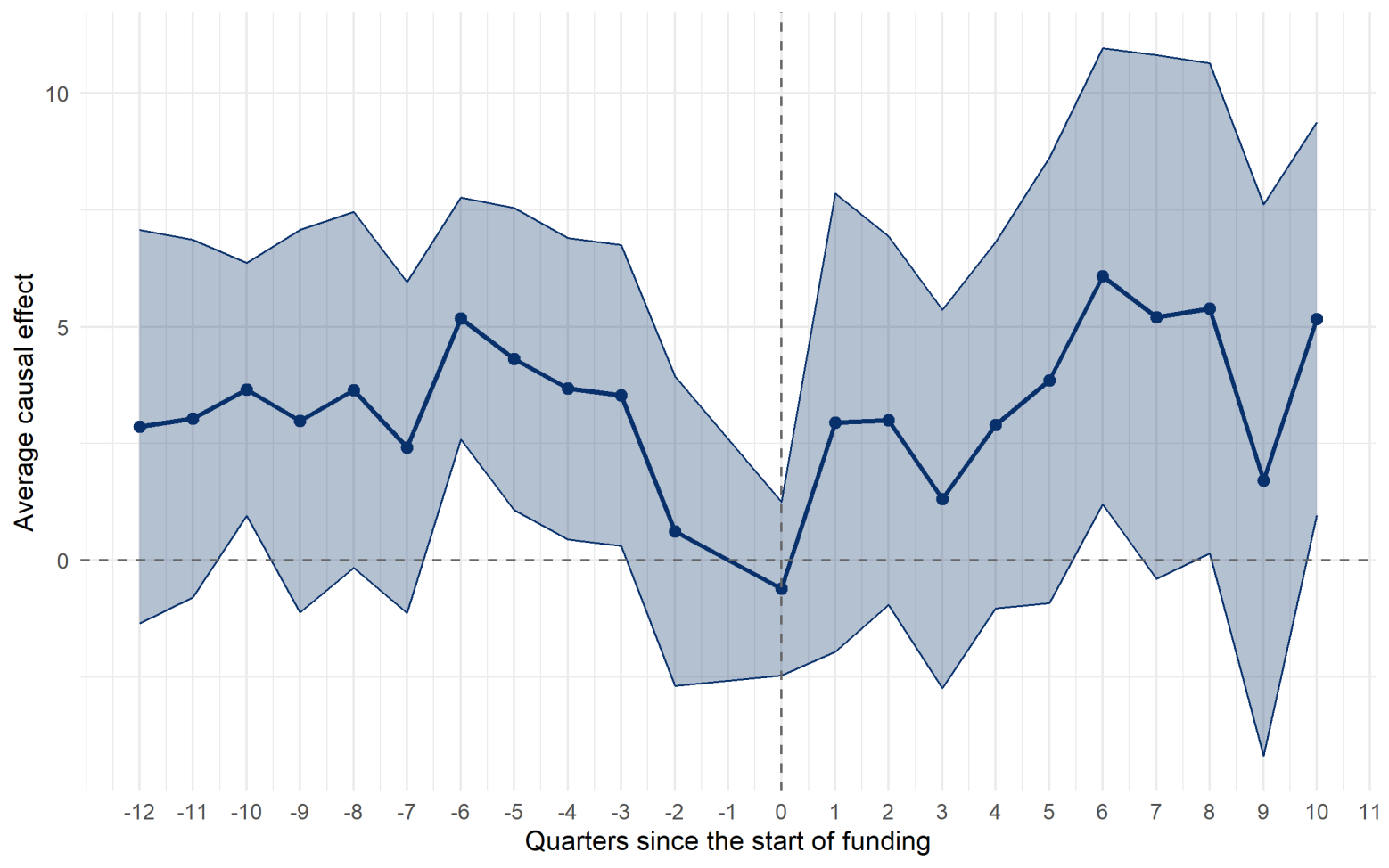
Figures 1 to 10 in the subsequent sections show dynamic estimates of the results for exporter and importer forces with respective to comparison forces for this 2025 evaluation. These graphs present a breakdown of the effects shown in the previous tables over time.
Their purpose is 2-fold:
- These figures allow us to assess the validity of the parallel trend assumption, which is crucial to the current research design. Please see Annex 1 for further details.
- The graphs show how the impacts of the Programme materialise over time across the different outcomes. This helps assess the speed by which the effects occur and whether effects are stable over time, if they fade, or if they increase with time.
Below are details on how these graphs should be interpreted:
- across all graphs, the horizontal axis indicates the time since the treatment, that is, quarters before and after the treatment, with zero (vertical dashed line) representing the time at which funding was received across exporter forces; the vertical axis measures the magnitude of the average effect in absolute values
- the navy dots represent the coefficient estimates from the regression; in general, if these points are close to zero (the dashed horizontal line), it means that the CL Programme did not have an effect on that particular outcome[footnote 13]
- the faded blue area represents the confidence intervals (that is, the upper and the lower bound) of the estimate; tighter/narrower confidence intervals indicate greater precision; if the confidence intervals contain the value of 0 (the dashed horizontal line), the estimated effects are not statistically significant at 95% levels
3.3 The effect of the County Lines Programme on serious violence and knife crime
To measure serious violence, the evaluation used 5 outcome variables. The primary measures were weapon-use hospitalisations (with a focus on stabbings to assess the impact on knife-related harms), police recorded violent crime and police recorded knife crime. These were selected to align the evaluation with Government and Programme priorities on tackling knife crime. Secondary measures used also included lethal-barrel discharges and drug-related homicides. All variables are detailed in Annex 1.
Weapon-use hospitalisations
Since the start of the intervention period, we see a continued decrease in weapon-use hospitalisations driven by a reduction of 25%, or 44 fewer sharp weapons hospitalisations on average per quarter in the exporter forces, compared to the pre-intervention period, as a result of the County Lines Programme.
This is a slightly larger effect than found by the 2024 evaluation which reported a decrease in sharp weapons hospitalisations of 19%, or 26 fewer instances, indicating that the Programme is having a continued (and increasing) impact on reducing stabbings.
The sensitivity analysis (Table A2.5, Annex 2) shows that West Midlands and Merseyside are perhaps performing slightly ‘better’ than London and Greater Manchester based on the estimated average percentage of hospitalisations prevented by the Programme. However, all estimates are based on relatively low volumes, remain very similar, and demonstrate a statistically significant reduction in sharps hospitalisations, so these differences are not substantial and very little can be drawn from them.
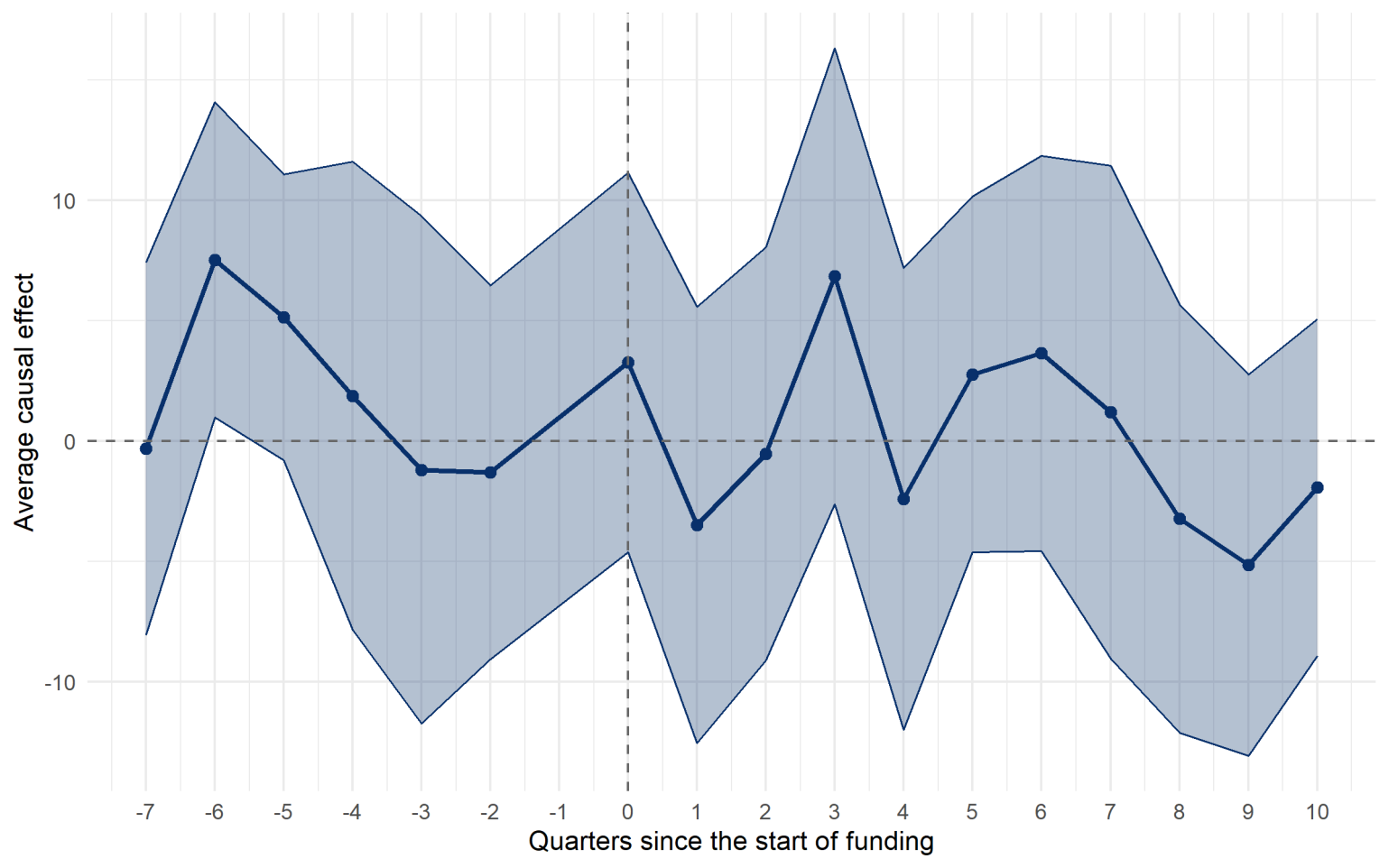
Figure 1 shows the effect of the County Lines Programme on weapon-assault hospitalisations over time. The data fluctuations are to be expected due to relatively low volumes, or perhaps due to seasonal differences. There is a downward trend seen over time in the exporter force areas which looks to be continuing.
Figure 1: Effect of the CL Programme on weapon-assault hospitalisations (April 2018 to January 2025) in exporter and importer forces
Figure 1(i): Exporter forces
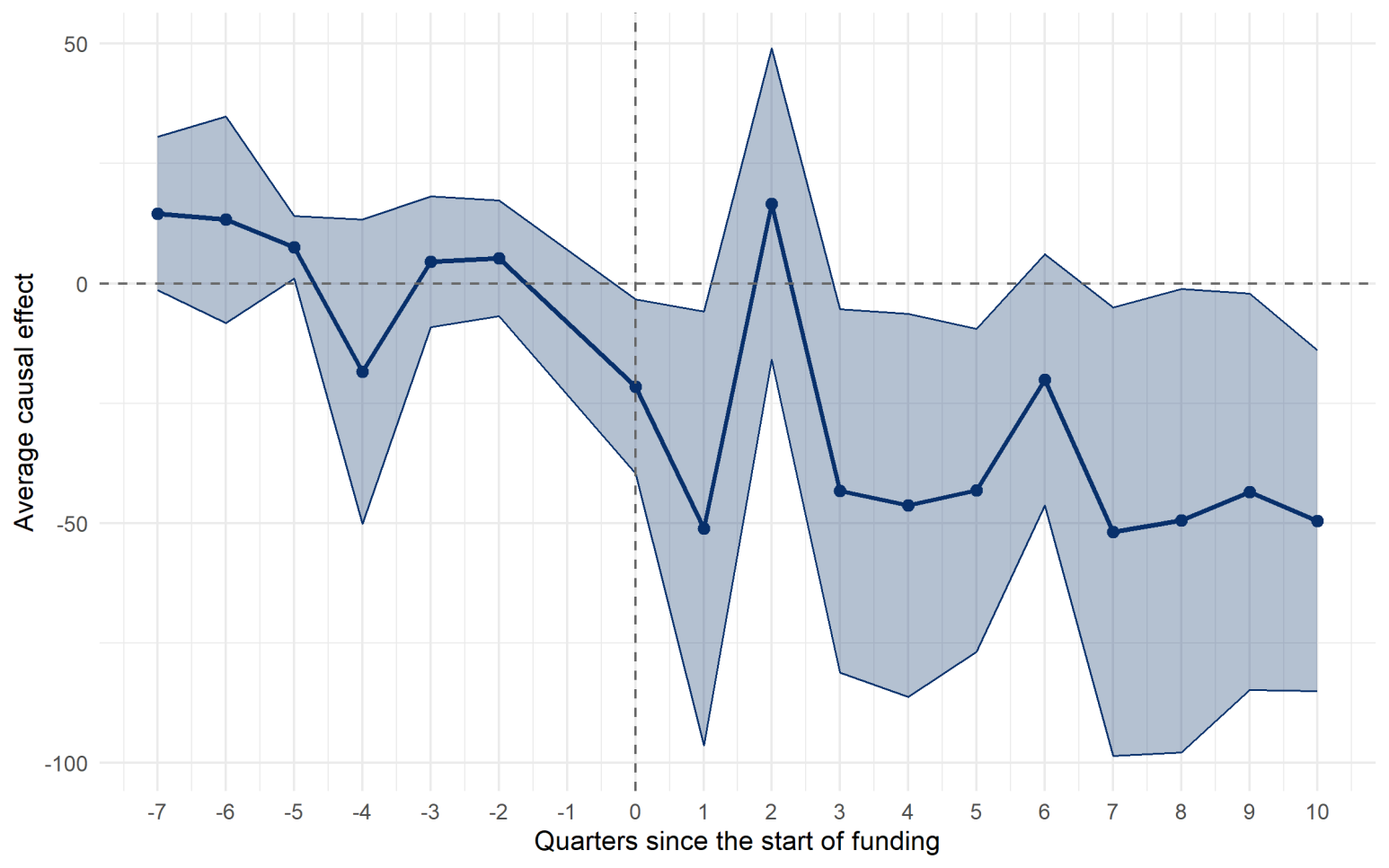
Figure 1(ii): Importer forces
Police-recorded violent crime
Overall police-recorded violent crime is found to be increasing at a statistically significant level in exporter forces, with 3,927 additional quarterly offences (21%) recorded on average in each exporter force area compared to the control group. However, the County Lines Programme did not significantly contribute to any changes in police-recorded crimes in importer forces.
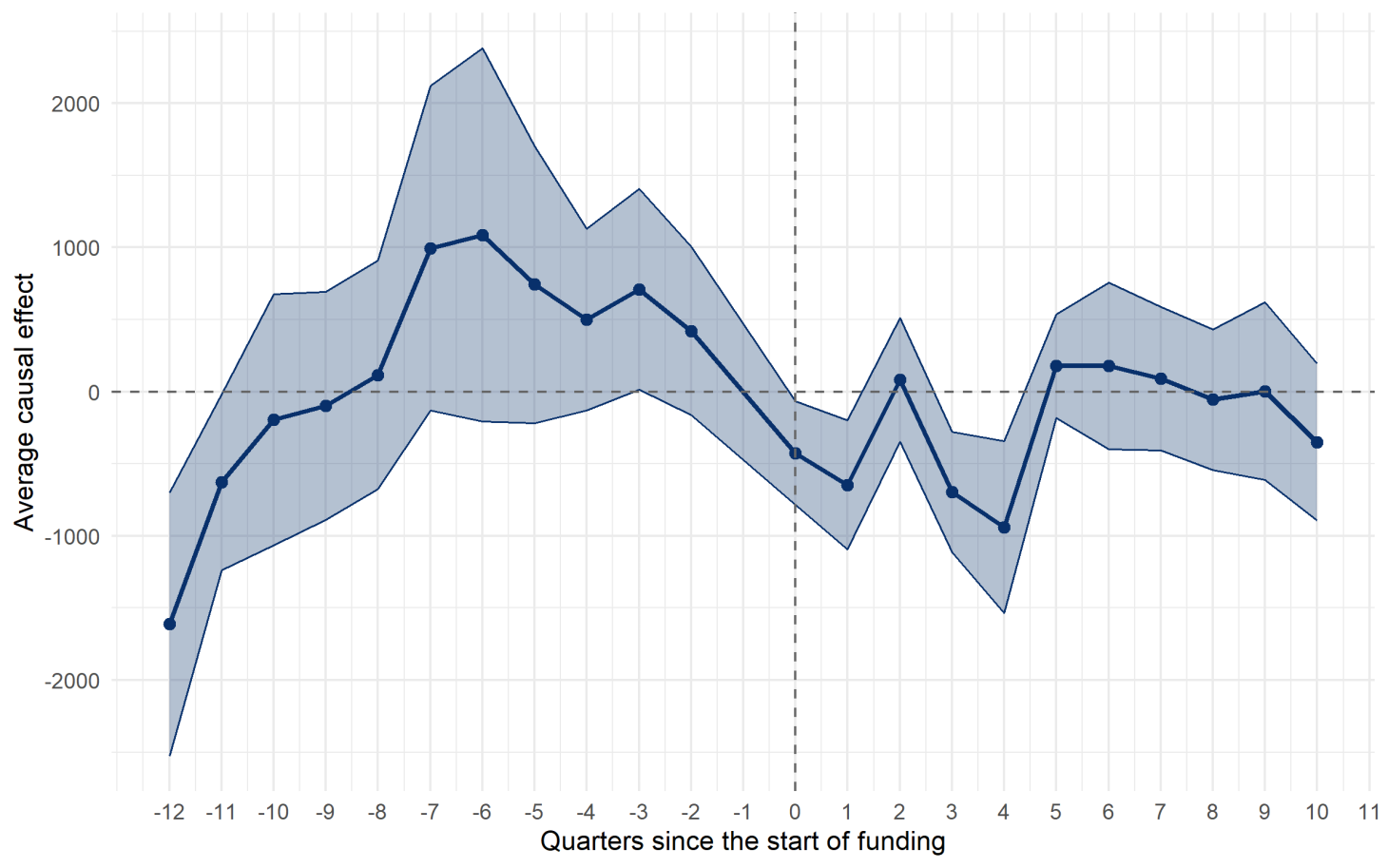
This is consistent with the findings of the 2024 evaluation (which estimated an additional 3,651 offences recorded per quarter in each exporter force area). These results contrast with the expectations of the Programme to reduce crime levels. However, it is important to note that increases in recorded crime are not necessarily an accurate indication of actual crime levels[footnote 14]. The increase seen in recorded crimes in exporter forces is likely, in part, to be due to changes in recording practices and heightened/targeted policing as a result of the Programme. See Figure 2 for plots showing the effect of the County Lines Programme on police-recorded crime in both exporter and importer areas.
Figure 2: Effect of the CL Programme on police recorded violent offences (January 2016 to October 2024) in exporter and importer forces
Figure 2(i): Exporter forces
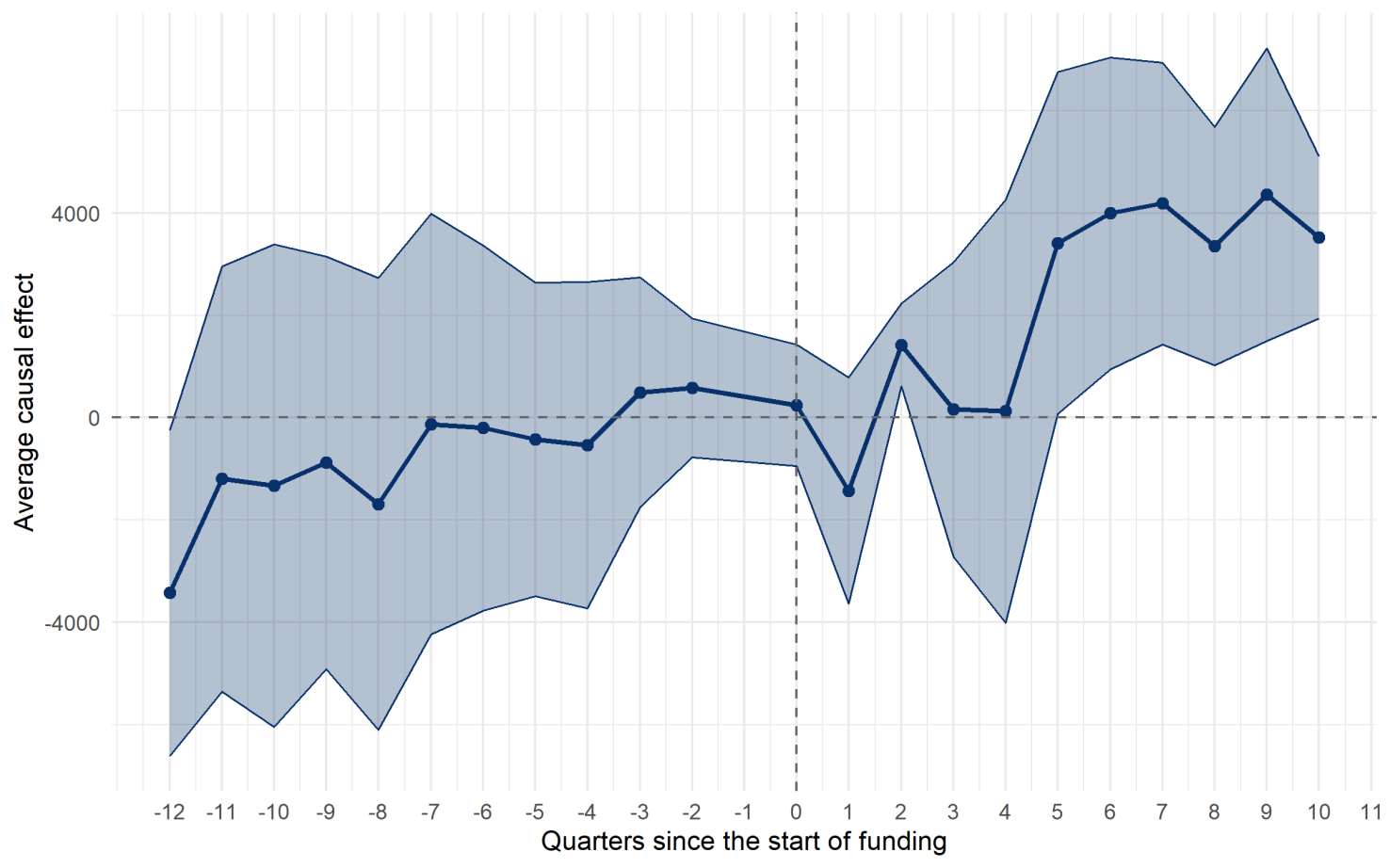
Figure 2(ii): Importer forces
The sensitivity analysis indicates that removing West Midlands from the dataset results in an 11% increase in police-recorded violent offences attributed to the Programme, compared to an average increase of 21% when it is included. Although the 11% increase remains statistically significant, this suggests that West Midlands may be contributing disproportionately to the overall increase in police-recorded violent offences attributed to the Programme. In contrast, excluding the Metropolitan Police leads to a 32% increase implying that, violence offences recorded in London may be contributing less to the overall observed effect than the other exporters forces.
Police-recorded knife crime
The evaluation re-run shows no statistically significant impact on police-recorded knife crime in the exporter force areas.
Although we observe a very small increase of 2%, equivalent to 29 additional quarterly offences in the exporter force areas in the period following the County Lines Programme when compared to the control group, this result cannot be attributed to the County Lines Programme. It is also important to note questions which have been raised regarding the reliability of this data, particularly pre-2019/20, given changes in recording practices[footnote 15].
Interestingly, this finding contrasts with the significant increase in police-recorded serious violence in exporter areas, as discussed above. As police recorded knife crime is a subset of police-recorded violence, we would expect to have found a similar impact for police-recorded knife crime. However, given the significant increase in recorded violence is not mirrored in recorded knife crime, we hypothesise that knife crime has been suppressed relative to overall serious violence. However, given the uncertainty around the link between recorded crime and actual crime levels, more evidence is required to validate this.
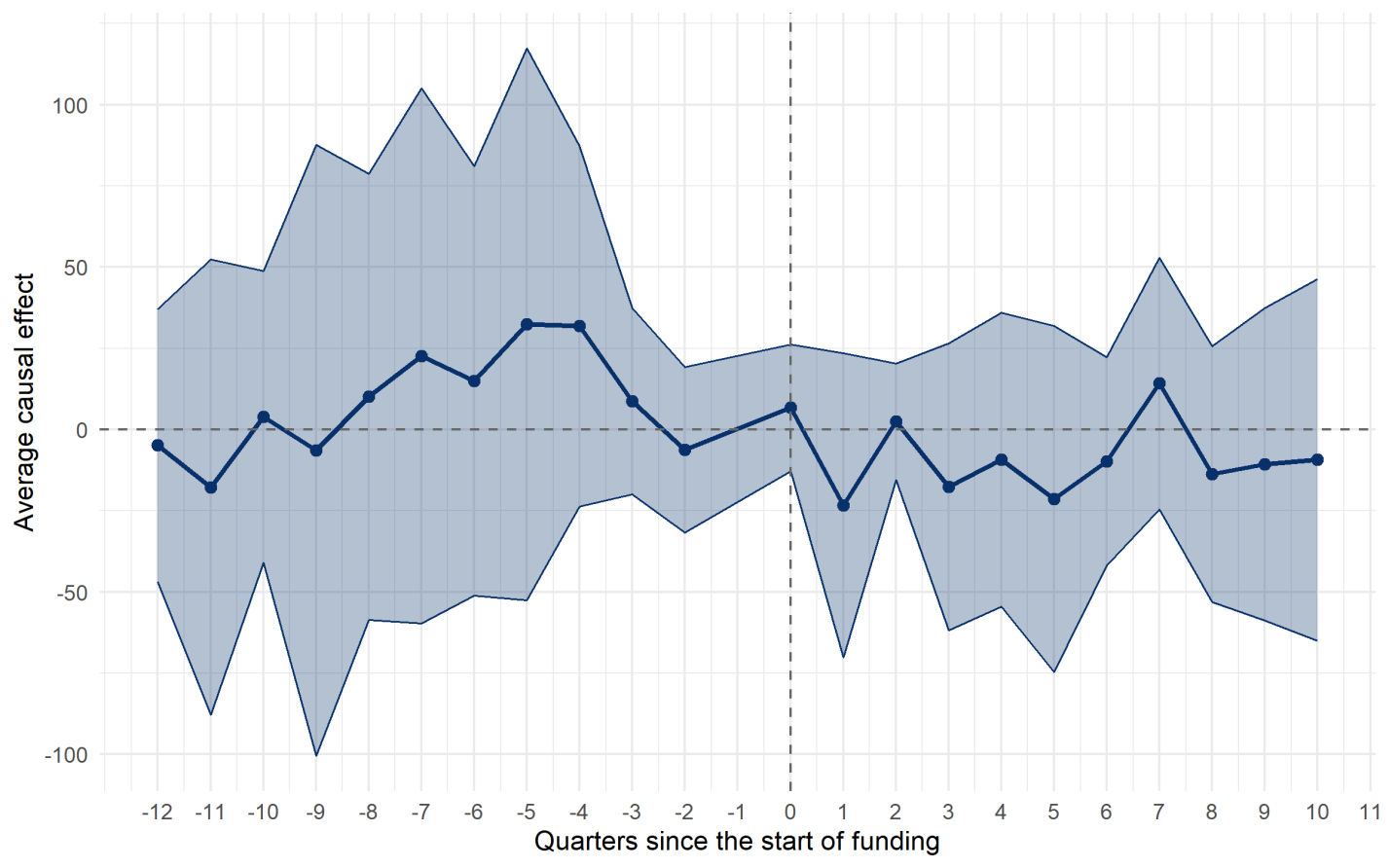
Similarly, in the ‘top’ importer force areas, the evaluation re-run shows no statistically significant impact on police-recorded knife crime.
A very small decrease of approximately 13 quarterly offences can be observed in the importer force areas in the period following the County Lines Programme when compared to the control group. However, this result is not associated with the Programme and the same data limitations apply.
Figure 3 shows the effect of the Programme on police-recorded knife crime offences. Given the fluctuations in the data over time, it is not clear how these trends will continue.
Figure 3: Effect of the CL Programme on police-recorded knife crime (January 2016 to October 2024) in exporter and importer forces
Figure 3(i): Exporter forces
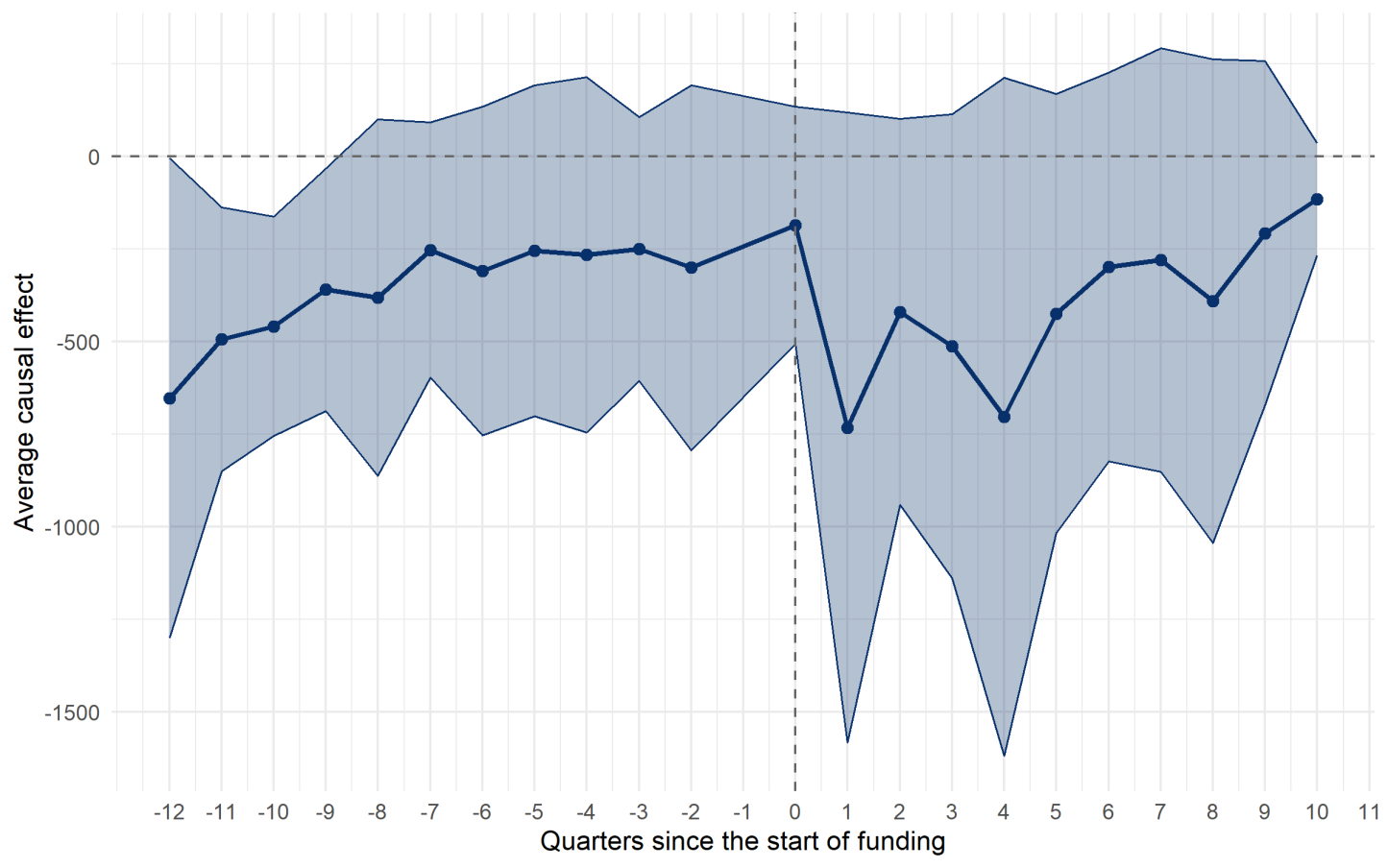
Figure 3(ii): Importer forces
Lethal-barrel discharges and drug-related homicides
This 2025 evaluation found no significant effects of the County Lines Programme on both lethal-barrel discharges and drug-related homicides, consistent with findings from the previous 2024 evaluation.
For lethal-barrel discharges[footnote 16], there has been a decrease of around 31% per quarter in each exporter force between the pre- and post-treatment periods when compared to the control areas. The observed trend remains steadily decreasing, however it is not statistically significant and therefore not attributable to the Programme. In the importer forces, there is no clear effect following Programme implementation compared to the control areas (See Figure 4).
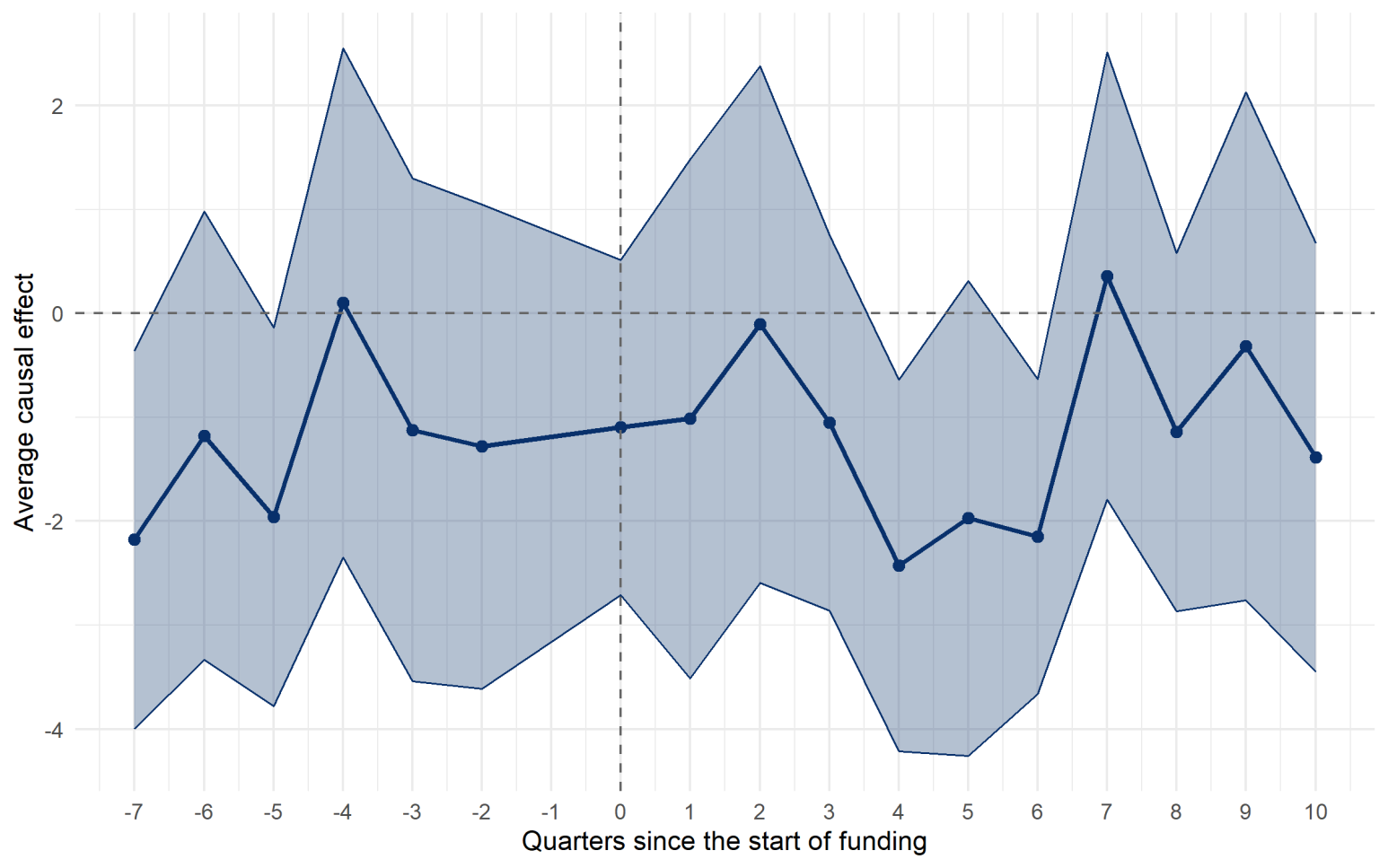
Drug-related homicides[footnote 17] have also decreased between the pre- and post-treatment periods in the exporter force areas when compared to the controls (See Figure 5), however the estimate is much lower in magnitude due to the low volumes seen in the data. There is also unlikely to be enough statistical power to demonstrate statistical significance, again due to low volumes and data volatility.
Figure 4: Effect of the CL Programme on lethal-barrel discharges (April 2016 to January 2025) in exporter and importer forces
Figure 4(i): Exporter forces
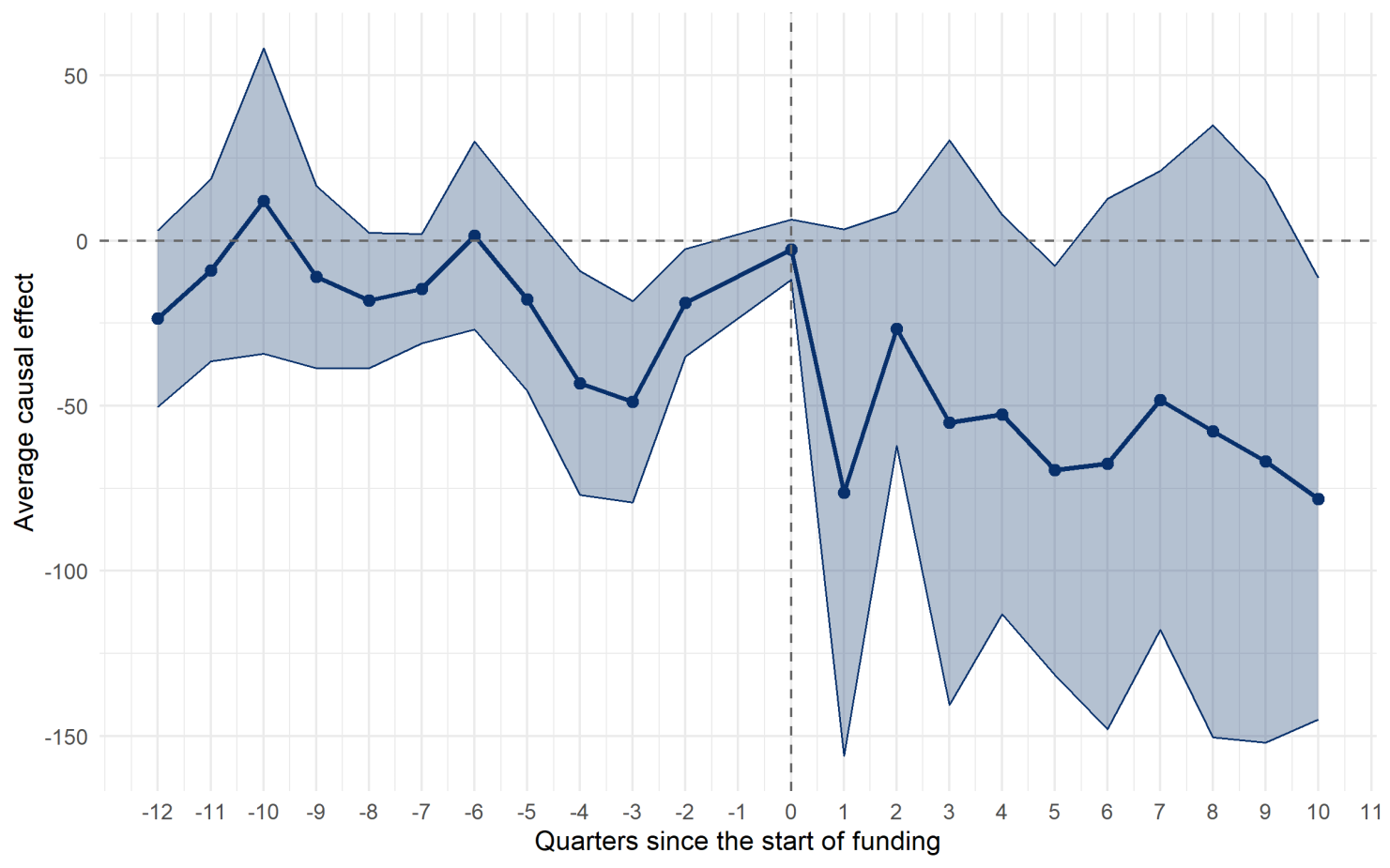
Figure 4(ii): Importer forces
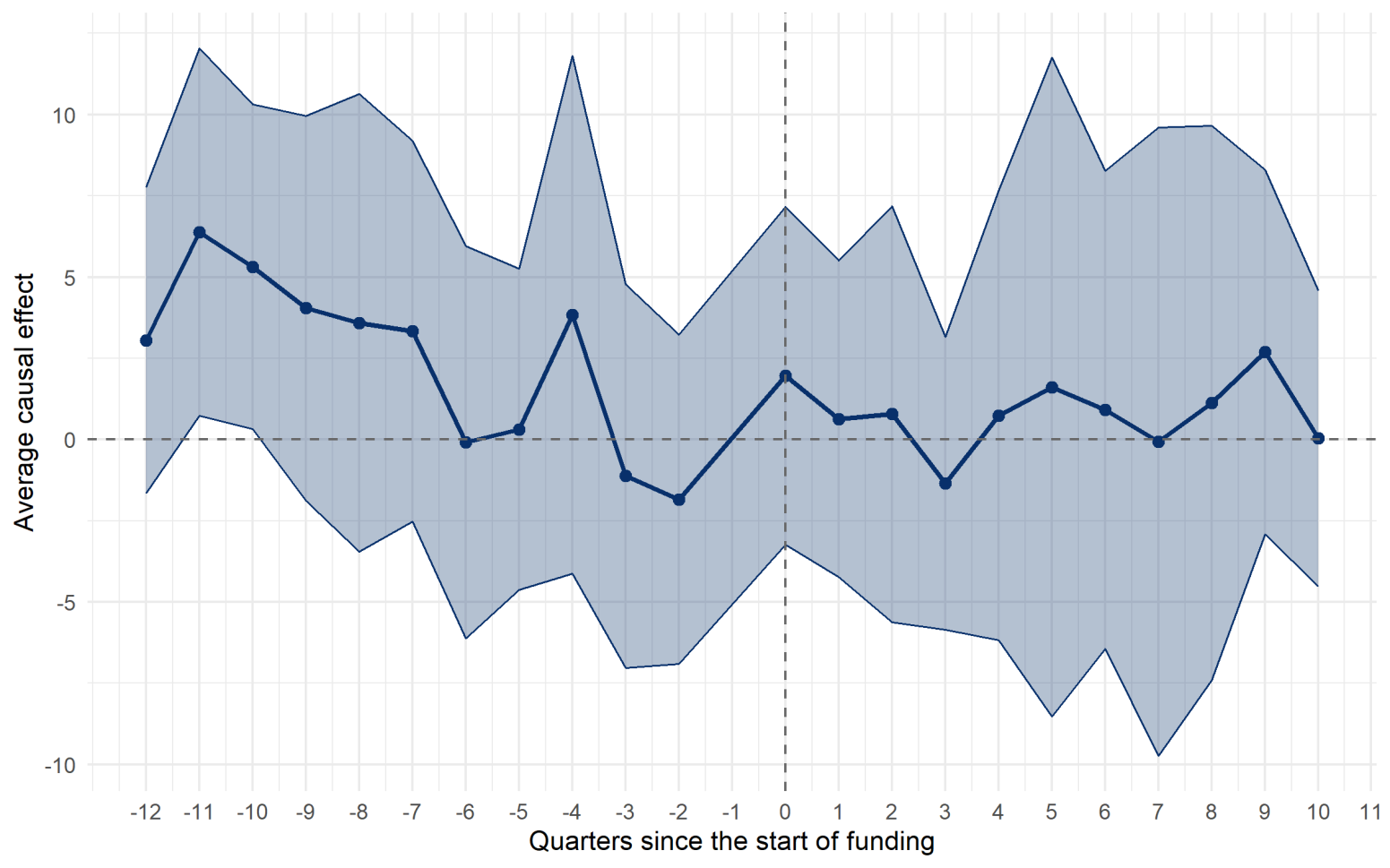
Figure 5: Effect of the CL Programme on drug-related homicides (April 2018 to January 2025) in exporter and importer forces
Figure 5(i): Exporter forces
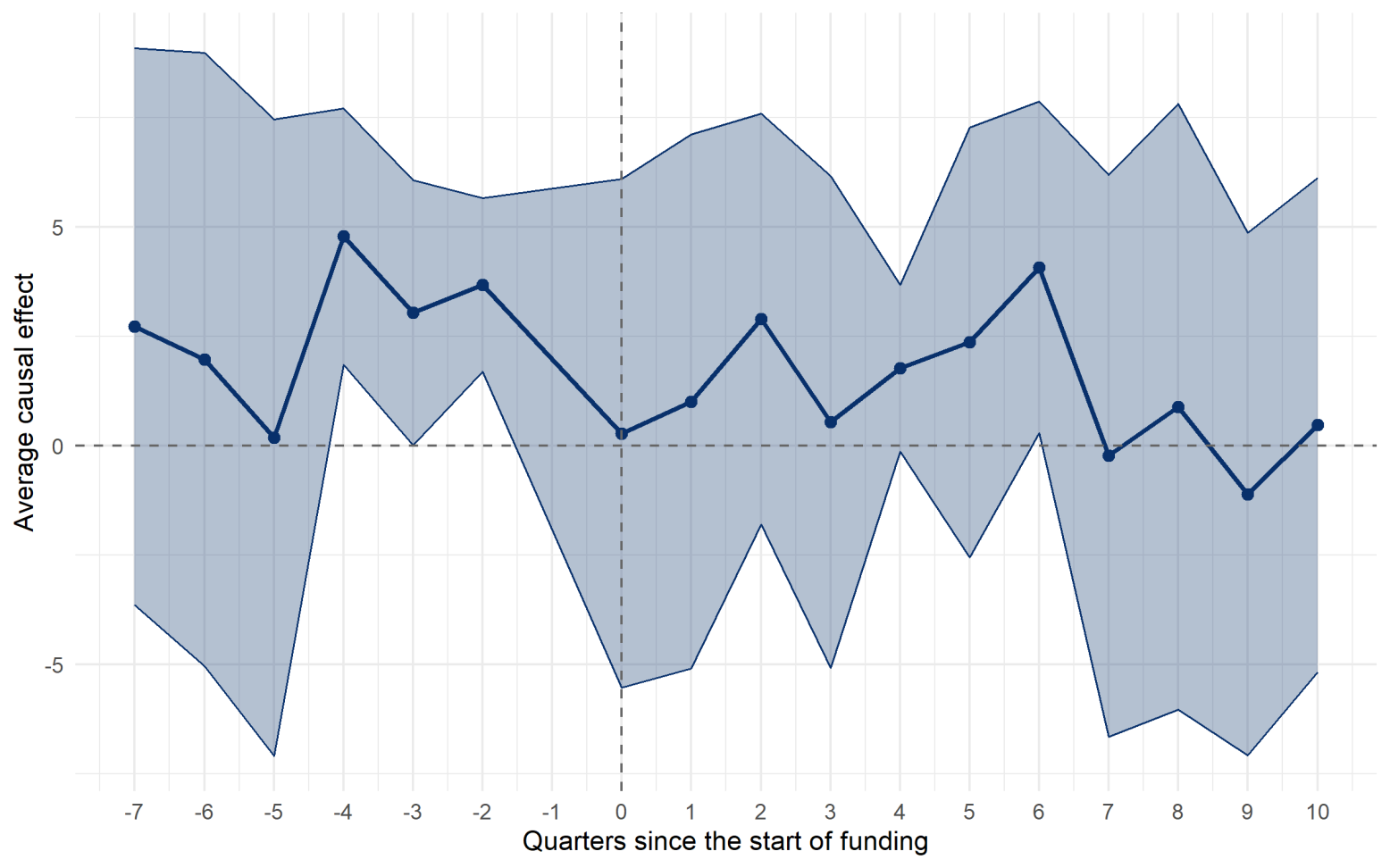
Figure 5(ii): Importer forces
3.4 The effect of the County Lines Programme on drug-misuse hospitalisations
Drug-misuse hospitalisations were found to have decreased by 29%, or 92 incidents per quarter in the exporter areas, as a result of the County Lines Programme when compared to the control group. This shows a continued and increasing impact on reducing drug-misuse hospitalisations.
The previous 2024 evaluation estimated a reduction of 41 drug-misuse hospitalisations (or 14.4%) on average per quarter in the exporter areas as a result of the Programme. The impact in the exporter force areas as seen from the graph in Figure 6(i) persists and is even more pronounced over time.
The sensitivity analysis shows that, looking at the estimated average percentage of drug-misuse hospitalisations prevented by the Programme, Greater Manchester are perhaps performing slightly ‘better’ than other exporters. However again, due to very low volumes and similar estimates all demonstrating statistically significant reductions in drug-misuse hospitalisations, these differences are not substantial.
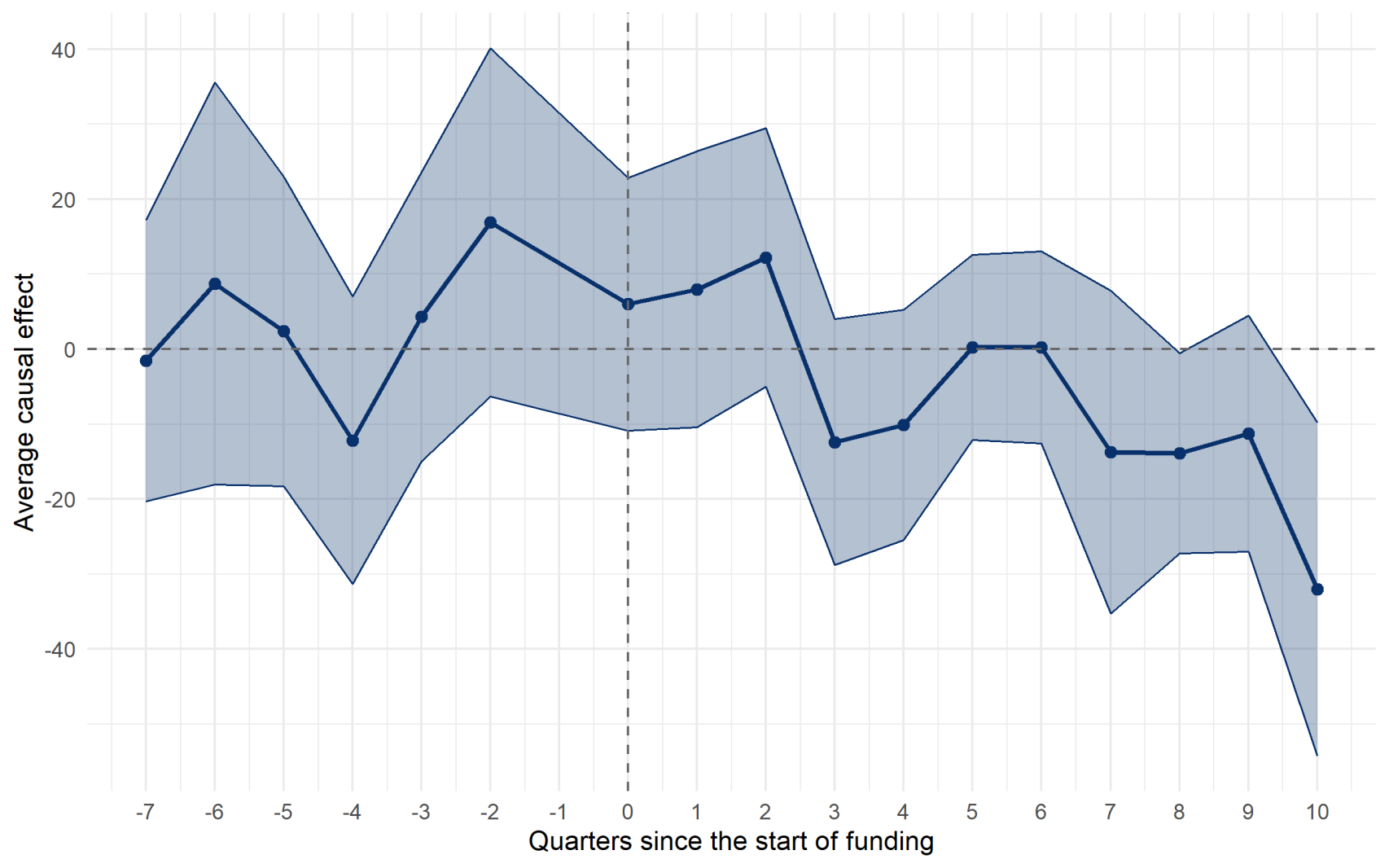
Simultaneously, since the intervention period, we also see a reduction in drug related hospitalisations of 15%, equivalent to 22 fewer hospitalisations on average per quarter in the importer forces compared to the pre-intervention period, as a result of the County Lines Programme.
This is now a statistically significant and larger effect, compared to that found in the 2024 evaluation, indicating that the Programme is having a continued (and increasing) impact on reducing drug related hospitalisations. However, the level of statistical significance is weaker than for exporter force areas, suggesting the causal link to the Programme is less certain. These trends are shown in Figure 6(ii).
The sensitivity analysis shows that a reduction of drug-misuse hospitalisations in Northumbria, West Yorkshire and Lancashire are perhaps driving this effect compared to the other ‘top’ importer forces. This conclusion is based on slight changes in the statistical significance and the estimated average percentage of hospitalisations prevented by the Programme when these forces are removed in turn from the analysis.
Figure 6: Effect of the CL Programme on drug-misuse hospitalisations (April 2018 to January 2025) in exporter and importer forces
Figure 6(i): Exporter forces
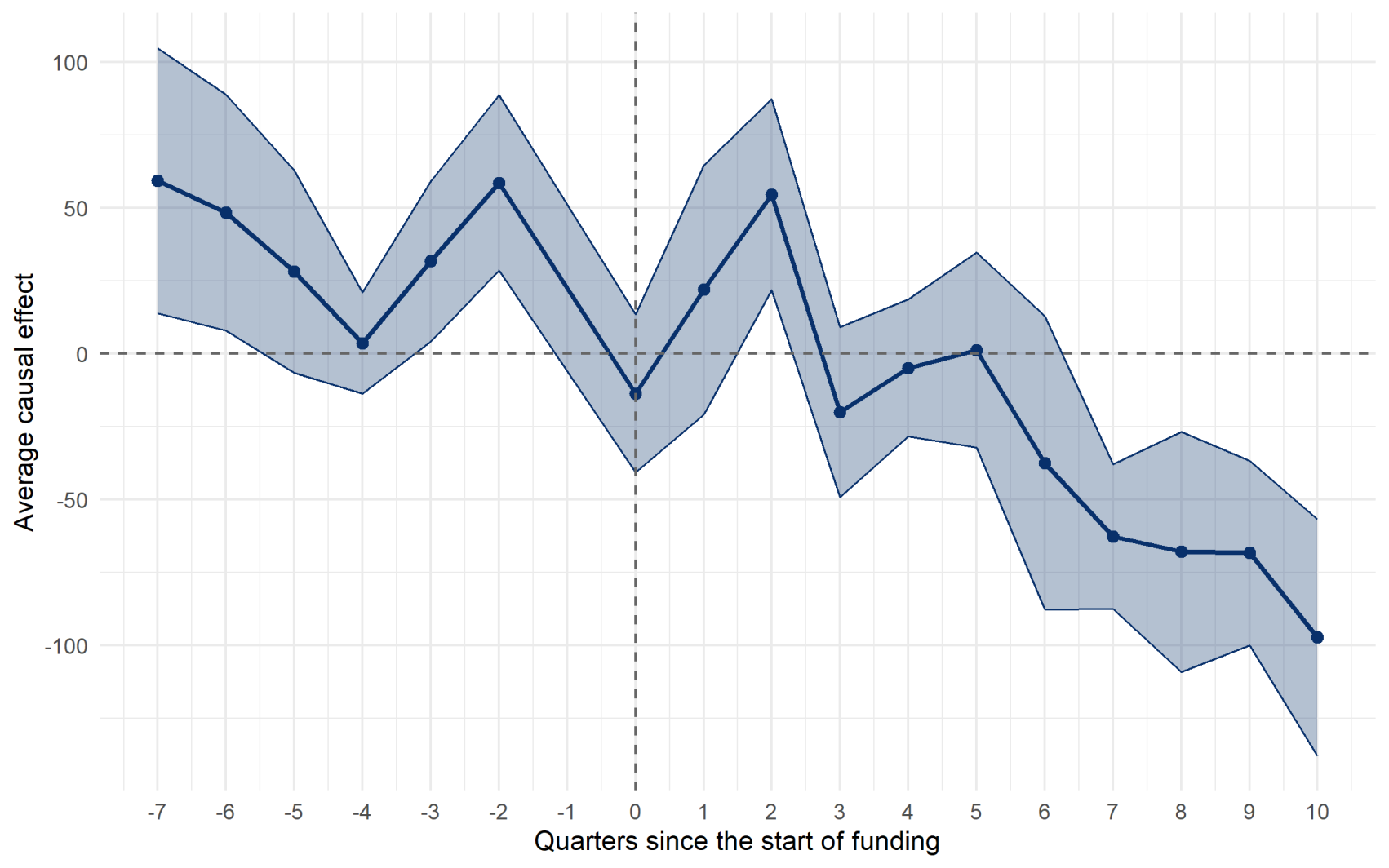
Figure 6(ii): Importer forces
3.5 The effect of the County Lines Programme on law enforcement activities
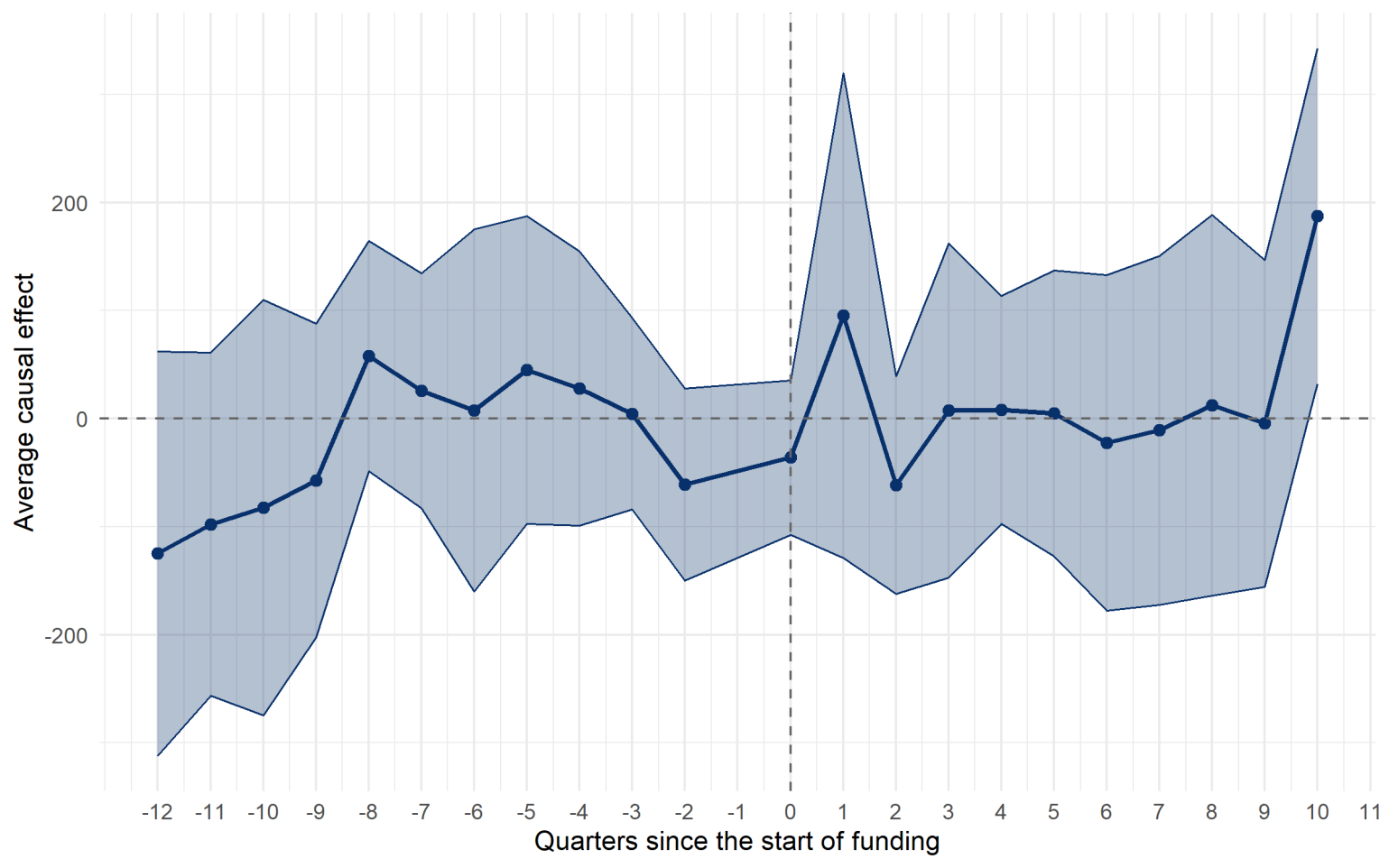
The 2025 re-run of the evaluation found a statistically significant increase across exporter force areas in law enforcement activities per quarter, of just under 1,232 offences on average, or 27%. In importer areas, there was also a statistically significant increase in law enforcement activities per quarter, of 141 (14%) additional offences recorded on average due to the programme.
The increase in law enforcement activities[footnote 18] seen in exporter areas is consistent with the previous 2024 evaluation findings, which reported an increase of just under 1,100 offences recorded quarterly across exporter forces. In contrast to the 2024 evaluation, this 2025 evaluation also found significant increases in law enforcement activity within ‘top’ importer areas, although the level of significance was relatively low, meaning some caution must be used in interpreting this result. Nonetheless, this suggests that in more recent years, there may be some spillover effects of the County Lines Programme on law enforcement activity in the ‘top’ importer areas. This may be due to an increase of Programme-funded “Surge” activity in importer areas.
These impacts, again, contrast with how we may anticipate the Programme to impact crime levels, as they show increases in recorded offences instead of decreases. However, it is important to reiterate that these increases seen in law enforcement activities across both exporter and ‘top’ importer areas are likely to be, in part, due to heighted and targeted policing as a result of the Programme, and not a reflection of the actual levels of crime.
Figure 7 shows the effect of the Programme on law enforcement efforts in the exporters and ‘top’ importers. The effect seems to be relatively stable in the exporter force areas and potentially plateauing. In the importer areas, the effect size seems to be very close to zero with the exception of the first and last quarter following Programme implementation (indicated by the dotted vertical line) which may be skewing the overall estimate. Given fluctuations in the data over time, it is not clear how these trends will continue.
Figure 7: Effect of the CL Programme on law enforcement activities (January 2016 to October 2024) in exporter and importer forces
Figure 7(i): Exporter forces
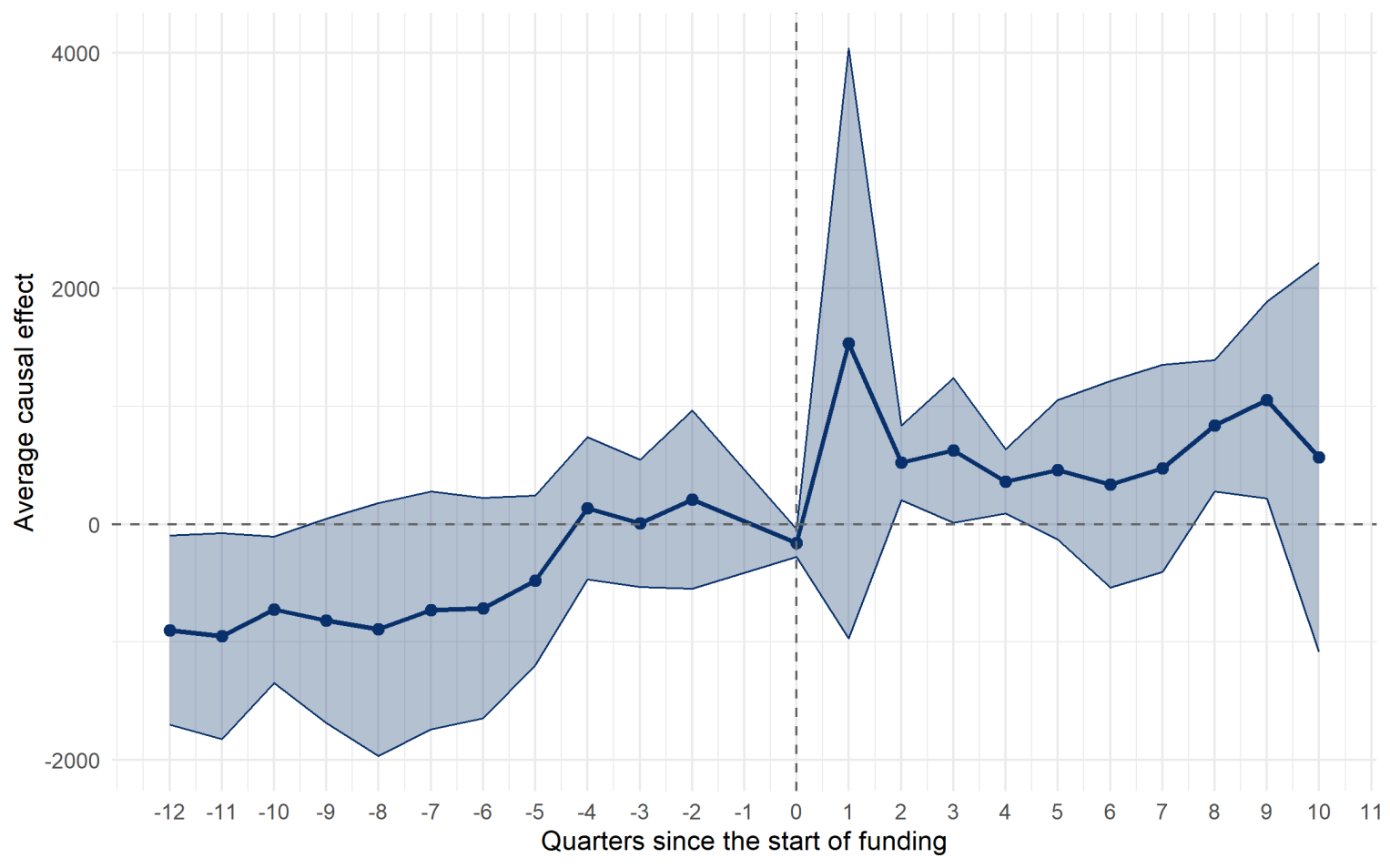
Figure 7(ii): Importer forces
Notably, the sensitivity analysis revealed that within exporter areas, police-recorded drug trafficking offences appear to be driving the overall effect on law enforcement activities, whereas in importer areas, police-recorded drug possession offences appear to be driving the overall effect (See Tables A2.3 and A2.4, Annex 2).
Furthermore, sensitivity analysis shows that, compared to the average increase of 27% in ‘law enforcement’ offences recorded in the exporter areas following the Programme, the impact in Greater Manchester is greater in magnitude, and in London the impact appears to be considerably lower (see Table A2.5, Annex 2). In importer forces, increases in law enforcement activities in Essex, Kent and West Yorkshire appear to be driving the significant effect, as when these forces are removed individually from the analysis, the estimate no longer remains significant (see Table A2.6, Annex 2).
3.6 The effect of the County Lines Programme on acquisitive crime
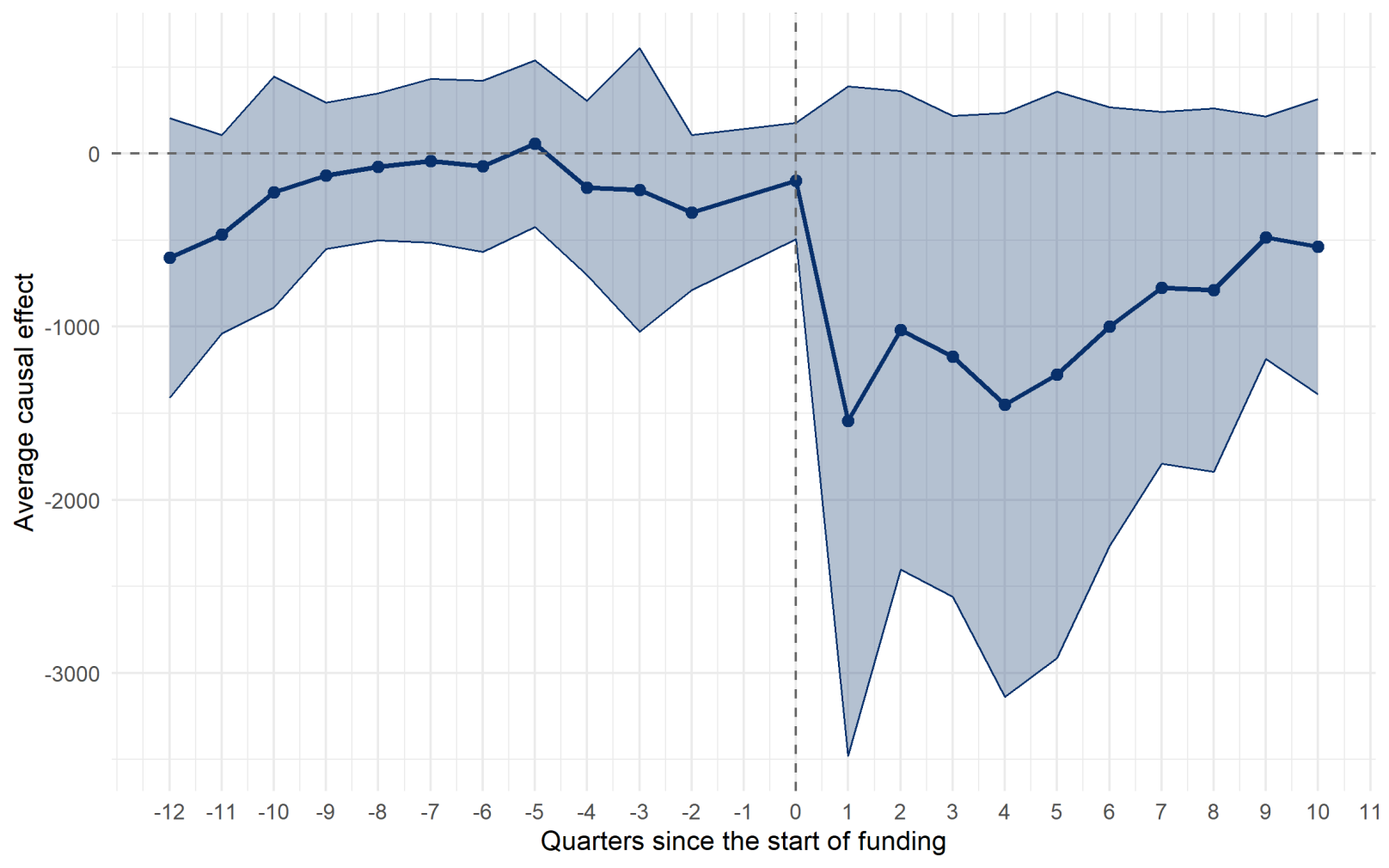
There is still a decrease observed in the number of acquisitive crime offences, however, as with the 2024 evaluation, this is not a statistically significant effect, and therefore not attributable to the Programme.
The evaluation included acquisitive crime as an outcome variable, given the known links between acquisitive crime and drug use[footnote 19]. The sub-crimes within acquisitive crime that were chosen to be included were only those with evidence of link between that crime and drug use. Therefore, if the County Lines Programme is impacting drug supply and potentially use, these crime types may be reduced as a result.
Whilst no statistically significant impact was found on acquisitive crime in either the 2024 evaluation or the updated 2025 evaluation, the reduction observed by in the 2024 evaluation of nearly 4,000 fewer offences per quarter in the exporters is much larger in magnitude compared to the latest estimate of nearly 1,000. This indicates that, independently of the County Lines Programme, police-recorded acquisitive crime offences are returning to pre-COVID levels following a large dip in 2020[footnote 20]. Please see Figure 8 for details.
The sensitivity analysis indicates that Greater Manchester may be driving much of this observed decrease despite estimates not demonstrating statistical significance.
Figure 8: Effect of the CL Programme on acquisitive crime (January 2016 to October 2024) in exporter and importer forces
Figure 8(i): Exporter forces
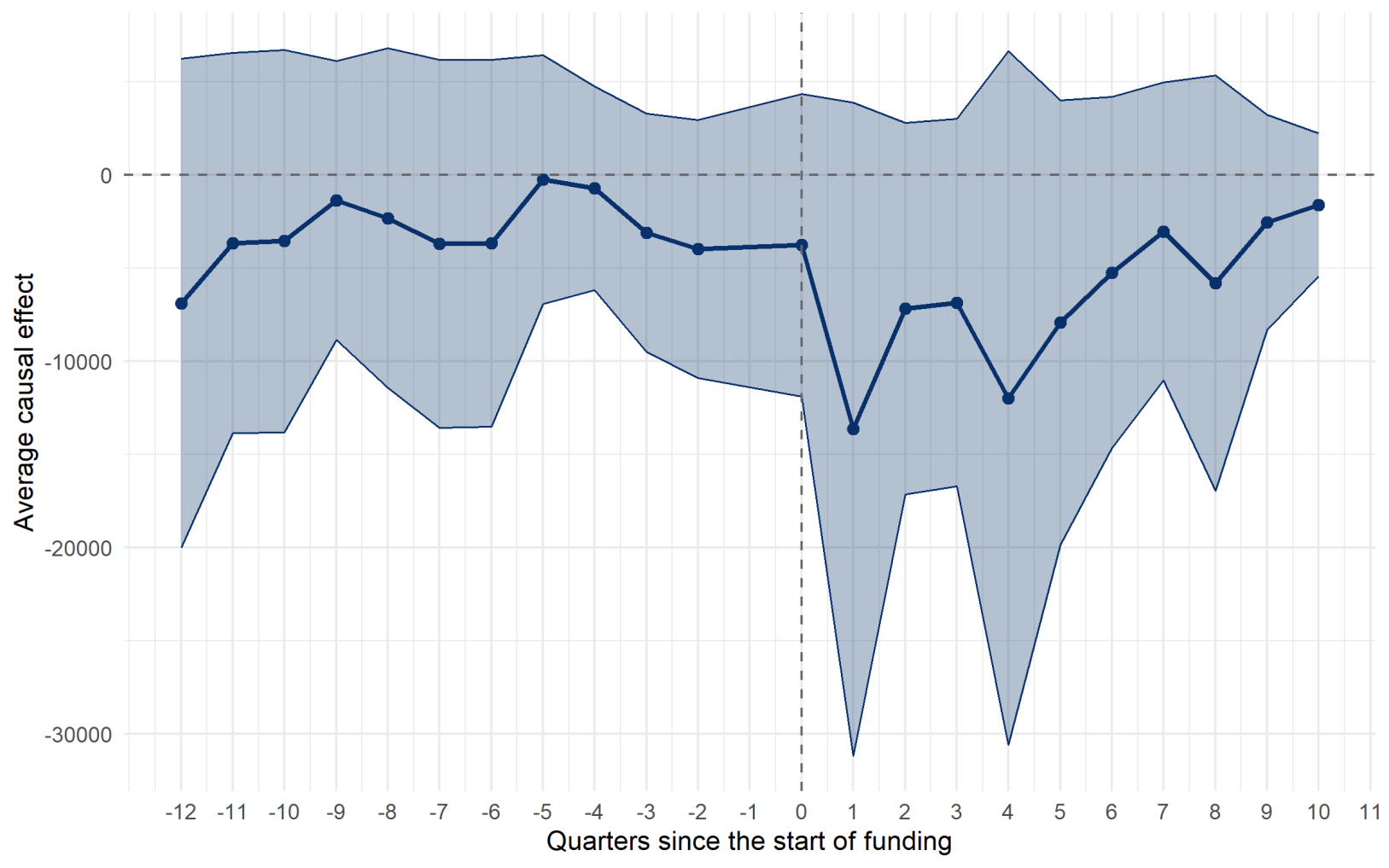
Figure 8(ii): Importer forces
3.7 The effect of the County Lines Programme on safeguarding referrals
The analysis shows an increase in county lines-flagged NRM referrals across each exporter force by approximately 18 additional referrals per quarter. This increase is statistically significant and can be attributed to the Programme. However, the pre-treatment analysis is not as clean as for other outcome variables, meaning we have less confidence in this result.
This updated estimate demonstrates additional increases in the numbers of referrals when compared to the previous analysis. In contrast, the 2024 evaluation reported no statistically significant increase county lines-flagged NRM referrals in either exporter or ‘top’ importer force areas. Nonetheless, the previous report observed that the estimates for county lines-flagged NRM referrals were positive and sizable in magnitude. The authors noted that increases that occurred in safeguarding referrals emerged around 18 months after Programme implementation but were likely ‘diluted’ into the average treatment effect estimate.
Therefore, it is reasonable to expect this statistically significant finding emerge over time in the areas where the County Lines Programme is operating (exporter areas). The 4P approach (Prevent, Protect, Prepare, Pursue) specifies a focus on safeguarding children and young people and addressing the exploitation which underpins the county lines model.
Although overall NRM referrals are increasing post-funding, this change is not attributable to the Programme in either evaluation.
Figures 9 and 10 show the effect of the County Lines Programme on NRM referrals, and county lines-flagged NRM referrals, respectively.
Sensitivity analyses indicate that a greater percentage change of referrals in Greater Manchester and West Midlands compared to prior the implementation of the CL Programme appear to be driving the significant effect in exporter forces.
Figure 9: Effect of the CL Programme on NRM referrals (April 2016 to January 2025) in exporter and importer forces
Figure 9(i): Exporter forces
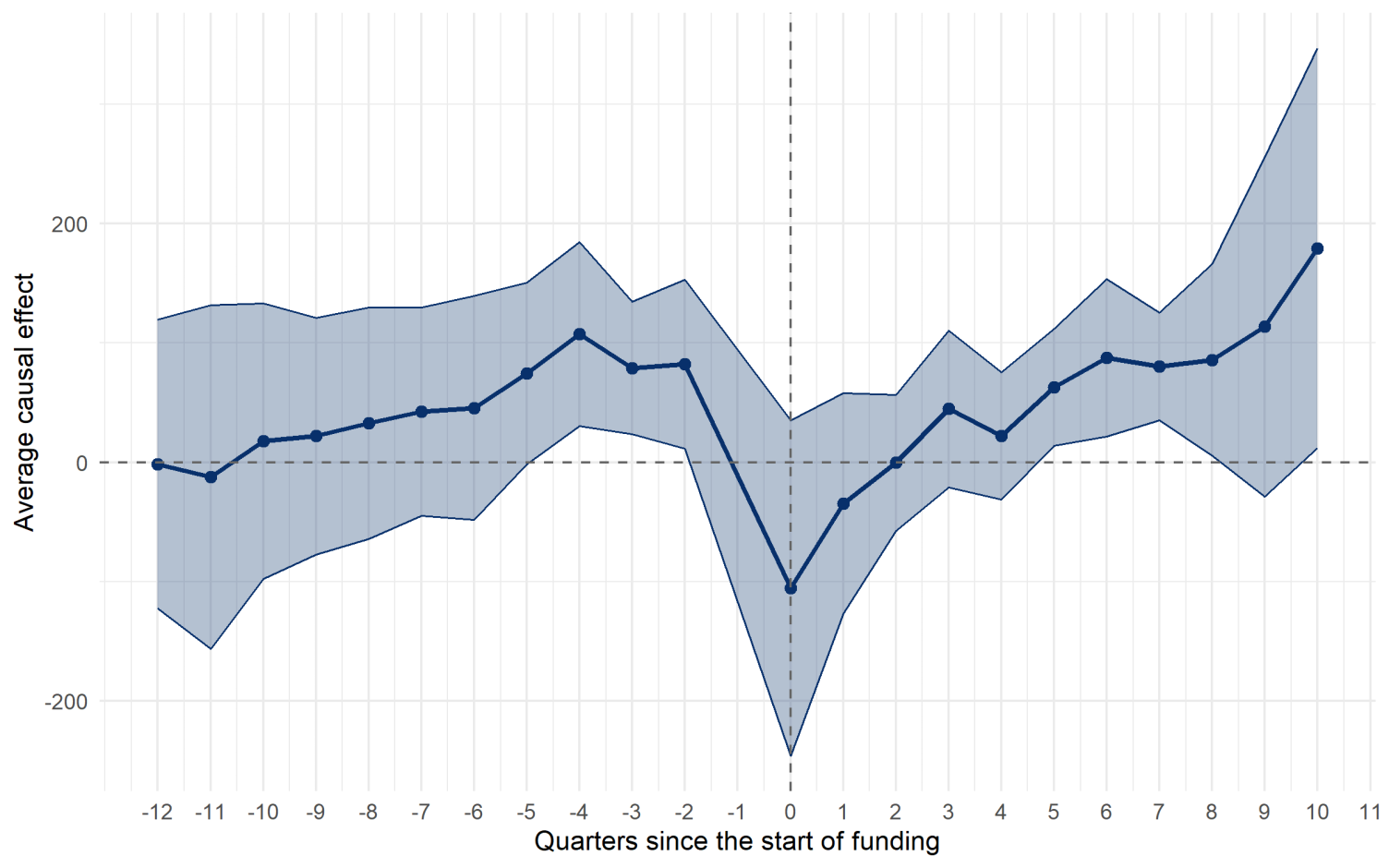
Figure 9(ii): Importer forces
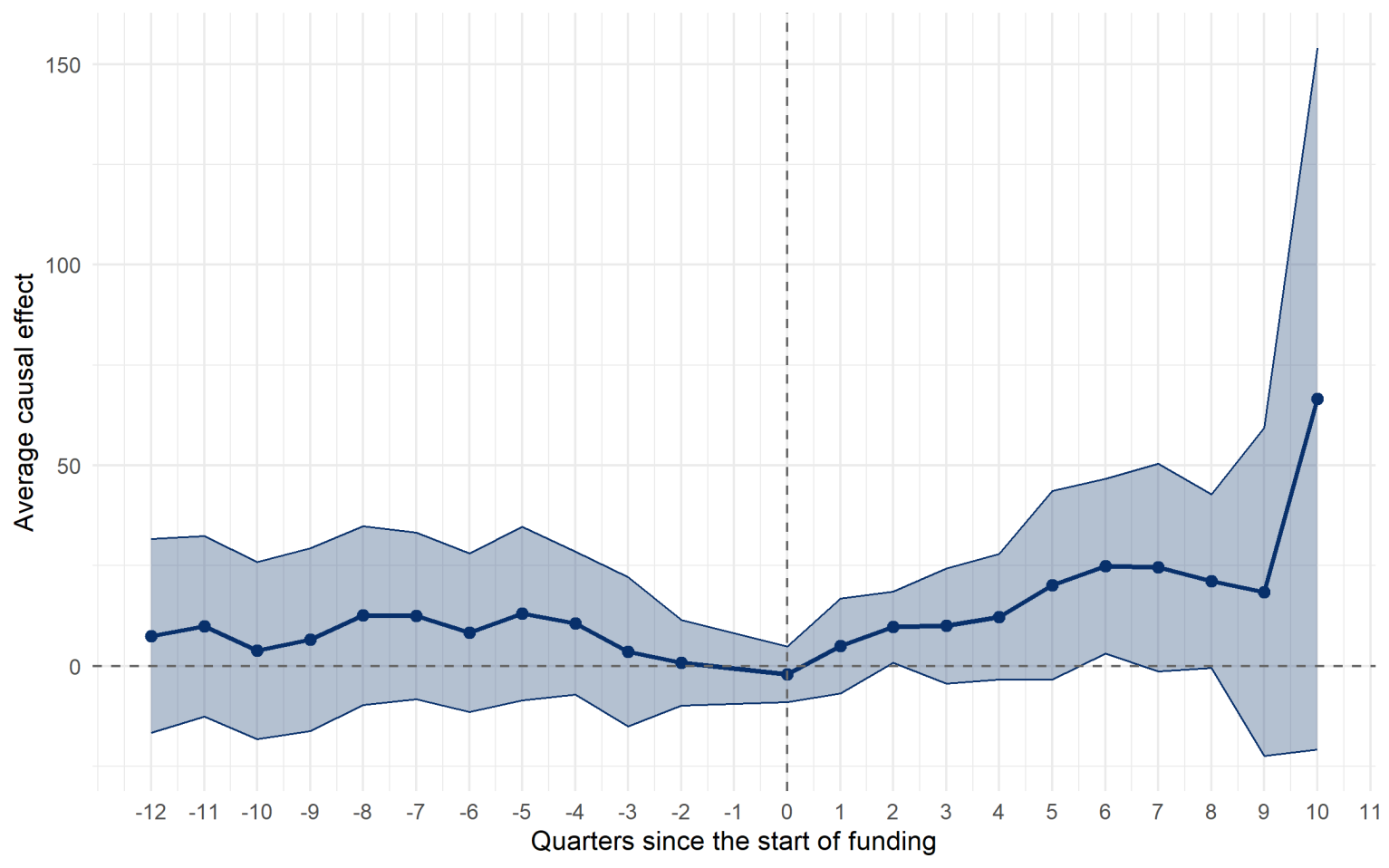
Figure 10: Effect of the CL Programme on county lines-flagged NRM referrals (April 2016 to January 2025) in exporter and importer forces
Figure 10(i): Exporter forces
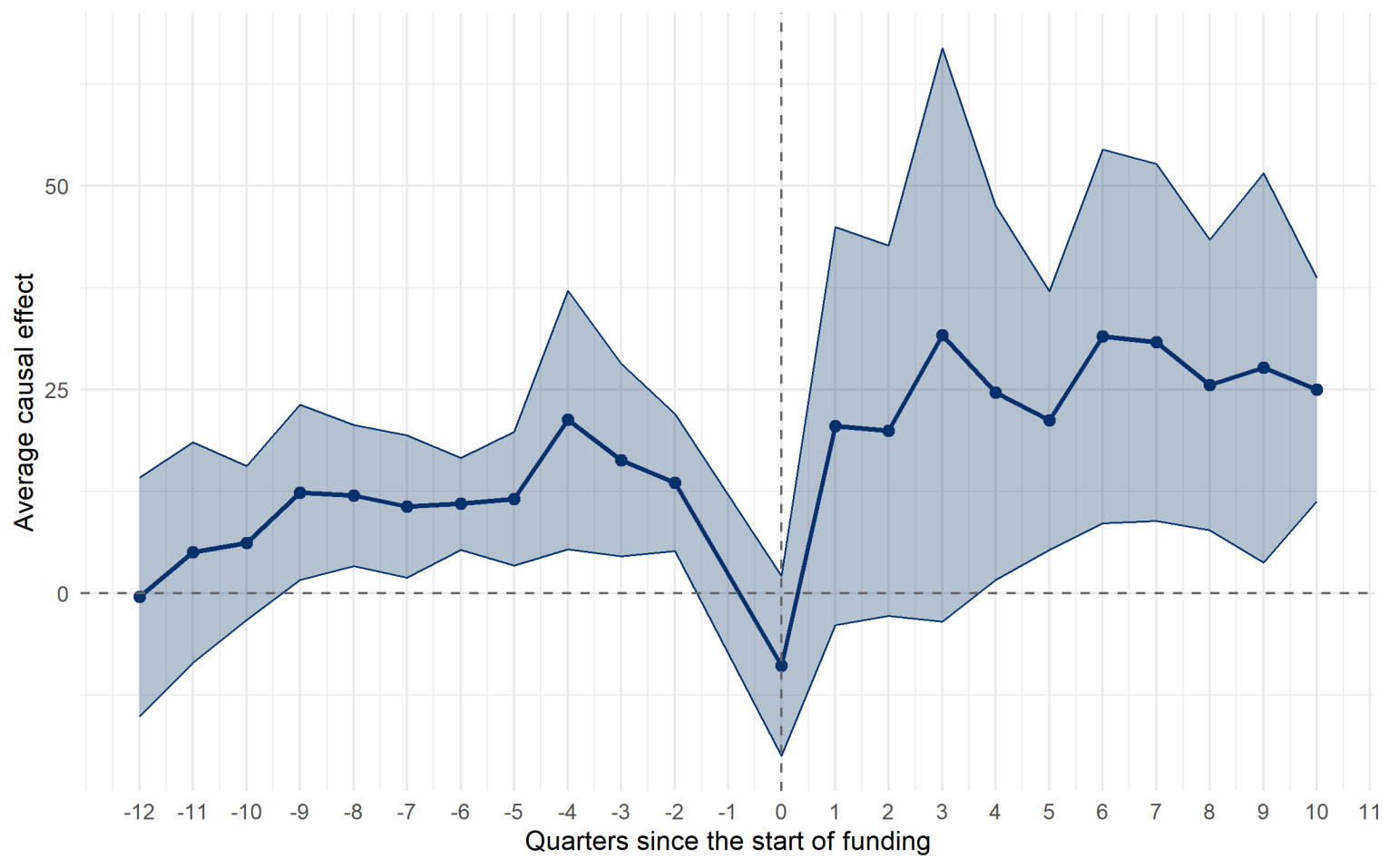
Figure 10(ii): Importer forces
4. Conclusion
This current 2025 evaluation and previous 2024 evaluation both indicate that the County Lines Programme leads to reductions in knife crime (measured through hospitalisations due to assault with a sharp object), and drug-related harms, as indicated by drug-misuse hospitalisations, within the exporter forces. Additionally, the evidence suggests that police-recorded crimes, such as violent offences and law enforcement efforts are increasing due to the County Lines Programme, also in line with findings from the 2024 evaluation. However, this likely reflects heightened and targeted policing and changes in recording practices. Taken together, this suggests that the County Lines Programme may have a greater impact on more serious and high-harm crimes that lead to hospitalisations. Additionally, these findings and data considerations suggest that NHS hospitalisations data may provide a more accurate assessment of the impact of the County Lines Programme on serious violent crimes (including serious knife crimes) than police-recorded crime data.
In contrast with the LSE report, there is some evidence that the County Lines Programme may increase safeguarding referrals, as measured by total county-lines flagged NRM referrals. There is also a suggestion of potential spillover effects emerging regarding drug-misuse hospitalisations and law enforcement efforts in the surrounding importer areas.
Finally, there is not enough evidence from this report to suggest any significant differences in the impact of the County Lines Programme across different geographical areas. This could be due to the County Lines Programme having a similar impact across exporter, and ‘top’ importer forces, or because the sensitivity analysis methodology employed cannot fully isolate significant differences in performance across forces.
Recommended opportunities for future research on this topic include:
Consider using the County Lines Programme metrics (that is, outputs on line closures, arrests, charges, for instance), to understand whether the intensity of the treatment has an impact on outcome levels: This could strengthen the link between activities and outputs to key Programme outcomes, providing more information on what the best ‘active ingredients’ of the Programme are to help with future policy development and targeting.
Reassess the forces included in the treatment groups exporter and ‘top’ importer forces, and the control group: For instance, West Yorkshire should be removed from the ‘top’ importers and treated as an exporter force in future iterations of the analysis, since they have received Programme funding from July 2025. Additionally, the ‘top importer’ forces should be reassessed based on up-to-date data on surge funding, Organised Crime Group Mapping (OCGM) data and intelligence provided by exporter forces.
Reassess whether all current crime outcome variables should be retained in future iterations of the analysis to accurately evaluate the impact of the County Lines Programme: For example, future analysis could focus more specifically on hospitalisations data, which may offer a more reliable measure of serious violence (for example, weapon-related hospitalisations), knife crime (for example, sharps-related hospitalisations), and drug-related harms (for example, drug misuse hospitalisations), compared to police-recorded crime data given the challenges posed by changed and improved recording practices.
Consider including adjustments for multiple testing to strengthen the robustness of the methodology: Another consideration is the potential for inflated Type I errors (that is, false positives or falsely claiming statistical significance) due to multiple hypothesis testing. With ten primary variables and additional subgroup analyses, some significant results may occur by chance. While some findings, including the key findings on weapons-related and drug-misuse hospitalisations, remain highly significant at the 99% confidence level, mitigating this concern, future work could apply formal adjustments (for example, Bonferroni, Holm, or false discovery rate) to further strengthen inference and transparency.
Annex 1: Methodological details
Further details of each variable included in analysis
Table A1.1 outlines all individual variables (outcome and independent) included in the analysis, including how each variable was computed, the raw data source (including the timeseries of data included in the present analysis) and the research question each variable is associated with.
Table A1.1: All variables (outcome, regressors, control) included in the present re-run of the County Lines Evaluation analysis
| Variable name | Type | Computation of variable | Data source (Time series | Associated research question |
|---|---|---|---|---|
| Knife crime | Outcome | Sum of police-recorded: 1. Assault with injury/harm 2. Attempted murder 3. Homicide 4. Threats to kill 5. Robbery 6. Rape 7. Sexual assault |
Home Office PRC data (Jan to March 2016 - Oct to Dec 2024) | What is the impact of the County Lines Programme on knife crime? |
| Weapon-use hospitalisations | Outcome | Sum of: 1. Sharp Hospitalisations*[footnote 21] (total of all age groups) 2. Firearms Hospitalisations* |
NHS England Digital (Apr to Jun 2018 - Jan to Mar 2025) | What is the impact of the County Lines Programme on serious violence? |
| Police-recorded violent crime | Outcome | Sum of: 1. Police recorded Violence with Injury 2. Police recorded Violence without injury[footnote 22] 3. Violent Disorder |
Home Office PRC Data (Jan to Mar 2016 - Oct to Dec 2024) | What is the impact of the County Lines Programme on serious violence? |
| Drug-related homicides | Outcome | Equal to Drug related homicides | Home Office (Apr to Jun 2018 - Jan to Mar 2025) | What is the impact of the County Lines Programme on serious violence? |
| Lethal barrel discharges | Outcome | Equal to Lethal barrelled firearms offence | Home Office (Apr to Jun 2016- Jan to Mar 2025) | What is the impact of the County Lines Programme on serious violence? |
| Safeguarding referrals (NRM) | Outcome | Total NRM referrals (including county lines referrals) | NRM Referrals (Apr to Jun 2016 - Jan to Mar 2025)[footnote 23] | What is the impact of the County Lines Programme on safeguarding referrals? |
| Law enforcement | Outcome | Sum of: 1. Possession of drugs 2. Trafficking of drugs 3. Possession of weapons |
Home Office PRC data (Jan to Mar 2016 - Oct to Dec 2024) | What is the impact of the County Lines Programme on law enforcement activities? |
| Acquisitive crime | Outcome | Sum of: 1. Domestic burglary 2. Theft from person 3. Robbery of personal property 4. Shoplifting 5. Theft from vehicle 6. Theft or unauthorised taking of a motor vehicle 7. Interfering with a motor vehicle |
Home Office PRC data (Jan to Mar 2016 - Oct to Dec 2024) | What is the impact of the County Lines Programme on acquisitive crime? |
| Drug misuse hospitalisations | Outcome | Sum of hospitalisations because of drug poisoning by illicit drugs (total of gender groups)*[footnote 24] | NHS England digital (Apr to Jun 2018 - Jan to Mar 2025) | What is the impact of the County Lines Programme on drug misuse hospitalisations? |
| GRIP | Control | Total GRIP funding which was spent (rather than allocated) | Internal Home Office (Apr to Jun 2019 - Oct to Dec2024) | All research questions |
| VRU | Control | Total VRU funding which was spent (rather than allocated). | Internal Home Office (Oct to Dec 2019 - Jan to Mar 2024) | All research questions |
| County Lines Programme funding | Regressor | Dummy variable (for example, 1 or 0) created, which utilises only whether forces received funding, not the amount of funding received[footnote 25]. | Internal Home Office (Jan to Mar 2020 - Jan to Mar 2025) | All research questions |
| Exporter/ Importer | Treatment | Treatment: Exporters (Metropolitan Police, West Midlands Police, Merseyside Police, and Greater Manchester) Treatment: ‘Top’ Importers (Lancashire, Cheshire, West Yorkshire, Northumbria, Cumbria, Essex and Kent) Control: All other forces |
No new data used to select these. Same as previous 2024 evaluation | All research questions |
Notes:
- Any cells with raw data marked * were rounded to 5.
- Dates are shown in calendar years and quarters.
The difference-in-differences approach
This section aims to provide a more detailed explanation of the difference-in-differences approach utilised within this evaluation, which was replicated from the previous 2024 evaluation of the County Lines Programme.
A difference-in-differences approach is used in quasi-experimental settings when it is not possible to randomly assign a programme or policy to different groups, such as when certain police force areas receive funding, but others do not. This approach works by comparing the changes over time between areas that do receive funding (the treatment group) and those that do not (the control group), before and after Programme implementation. This helps estimate the impact that the Programme has on the key outcomes measured.
The 2024 evaluation confirmed the credibility of the parallel trends assumption as all figures broadly showed no statistically significant estimates for the pre-period analysis (the confidence interval contains the value of 0 and p-values being above the threshold for significance). This indicates that the parallel trends assumption holds in this setting, validating the research design, that is, exporter forces (or ‘top’ importer forces) are comparable to the control areas.
It is, however, worth noting that crime studies are always constrained by data quality issues, including noise, missing values, reporting biases and difficulty in controlling for all external factors. This means there is a balance to be struck between statistical rigour and making effective use of real-world data. For the 2025 evaluation, we replicated event studies across all outcome variables (visualised in dynamic plots in sections 3.2 to 3.7 of the report) in case of retrospective changes to the data and produced time series graphs for each outcome. These studies broadly validate the parallel trends assumption, meaning causal claims can be made about the impacts of the Programme.
To assess the impact of the County Lines Programme on crime levels, 3 population groups were defined (2 treatment groups and 1 control group):
The first treatment group consists of the exporter forces, that receive specific county lines funding to conduct operations (Metropolitan Police, West Midlands Police, Merseyside Police, Greater Manchester Police).
The second treatment group consists of the ‘top’ importer forces, as defined in the previous 2024 evaluation as those with ‘the most significant amount of county lines activity, making them most likely to be impacted by spillover effects from the County Lines Programme’.
Within the 2024 evaluation, several sources were combined to assess the forces with the highest anticipated impacts. The first source was the OCGM data, which provides data on the number of organised crime groups in each police force area (PFA) and identifies drug lines moving between importer and exporter forces. The second source used was the Surge Funding data, which identifies which importer forces receive any county lines funding for police activity. Finally, the third source was intelligence information provided by the exporter forces. For more detail on the justification for using these sources, please see the previous evaluation (LSE, 2025).
It is important to note, that within this current analysis, these ‘top’ importer forces were not reassessed using up to date versions of these 3 sources, but instead, the same top importer forces were used for consistency. These included: Lancashire, Cheshire, West Yorkshire, Northumbria, Cumbria, Essex and Kent
The final population group consisted of all other 32 police forces, as the control group.
Estimating equations
The following 2 regression models were used to assess the impact of the County Lines Programme on the primary outcome of interest. They are consistent with those reported in the 2024 evaluation (LSE, 2025). In these models, the impact of the County Lines Programme is isolated first on the exporter force areas (1), and second on the importer force areas (2)[footnote 26].
(1) Crimeit = α + β1 Exporterit+ γXit + δi + λt + εit
(2) Crimeit = α + β2 Importerit+ γXit + δi + λt + εit
The following extract is taken directly from the previous evaluation, to help explain these equations:
Where i indicates the spatial unit (police force) and t indicates the time unit (quarter). The outcome variable, Crime, will be measured using a set of variables: serious violence, acquisitive crime, law enforcement activities, safeguarding referrals, drug substance use hospitalisations and CL Programme metrics.
The main independent variables, Exporter and Importer, will define the treated units. Exporterit is an indicator variable that takes value one in exporter forces after receiving the county lines funding. Additionally, Importerit is an indicator variable that takes value one in the top importer forces after the county lines funding was received in their main exporter force. In both specifications, Xit represents control variables including VRU and GRIP funding. δi and λt are fixed effects for police force and quarter respectively.
In equation 1, we keep populations groups 1 and 3, and β1 will reflect the causal effects of the County Lines Programme on the main outcomes of crime: serious violence, acquisitive crime, law enforcement, safeguarding referrals, and drug use hospitalisations for exporter forces. In equation 2, we keep populations groups 2 and 3, and β2 will reflect the causal effects of the County Lines Programme on the main outcomes of crime for the top importer forces.
Annex 2: Supplementary analytical information
Sensitivity analysis: Disaggregated estimates for police-recorded violent crime
Tables A2.1 and A2.2 below present the estimated impact of the County Lines Programme on police-recorded violent crime, broken down by offence type in exporter and ‘top’ importer areas, respectively.
In exporter areas, all offence types show an increase, but the most substantial and statistically significant contributor to the overall rise in police recorded violent crime is violence without injury, which increased by 37.5%. This category accounts for nearly the entire estimated increase in overall violent crime (20.5%), both in terms of magnitude and statistical significance.
In contrast, in importer areas, no statistically significant changes in police recorded violent crime can be directly attributed to the County Lines Programme. While there are small fluctuations across offence types, none reach conventional thresholds for significance.
Please note, ‘N’ in each of the results tables refers to the number of observations. Standard errors in square brackets are also clustered at force level.
Table A2.1: Estimated quarterly impact in exporter force areas for police-recorded violent crime, broken down by offence type
| Outcome | Estimate | Percentage | N | Baseline mean |
|---|---|---|---|---|
| Overall police recorded violent crime | 3926.5** [1497.8] |
20.5% increase | 1296 | 19116 |
| Violence without injury | 3751.6** [1166.2] |
37.5% increase | 1296 | 9995.6 |
| Violence with injury | 150.2 [524.9] |
1.6% increase | 1296 | 9103.1 |
| Violent disorder | 24.8 [14.9] |
142.5% increase | 1296 | 17.4 |
Notes:
* statistically significant 90% confidence level
** statistically significant 95% confidence level
*** statistically significant 99% confidence level
Table A2.2: Estimated quarterly impact in importer force areas for police-recorded violent crime, broken down by offence type
| Outcome | Estimate | Percentage | N | Baseline mean |
|---|---|---|---|---|
| Overall police recorded violent crime | -20.3 [256.9] |
-0.2% decrease | 1404 | 8474.9 |
| Violence without injury | 108.0 [241.9] |
2.3% increase | 1404 | 4803 |
| Violence with injury | -127.9 [129.3] |
-3.5% decrease | 1404 | 3667.7 |
| Violent disorder | -0.4 [0.9] |
-9.2% decrease | 1404 | 4.2 |
Notes:
* statistically significant 90% confidence level
** statistically significant 95% confidence level
*** statistically significant 99% confidence level
Sensitivity analysis: Disaggregated estimates for law enforcement activity
Tables A2.3 and A2.4 present the estimated quarterly impact of the County Lines Programme on law enforcement activity, broken down by offence type in the exporter and ‘top’ importer areas.
Table A2.3: Estimated quarterly impact in exporter force areas on law enforcement, broken down by offence type
| Outcome | Estimate | Percentage | N | Baseline mean |
|---|---|---|---|---|
| Law enforcement | 1232.37*** [277.1] |
27.5% increase | 1296 | 4481.5 |
| Possession of weapon | 217.10 [207.7] |
26.3% increase | 1296 | 826.7 |
| Trafficking of drugs | 627.24* [328.8] |
129.1% increase | 1296 | 486 |
| Possession of drugs | 388.02 [307.8] |
12.2% increase | 1296 | 3168.8 |
Notes:
* statistically significant 90% confidence level
** statistically significant 95% confidence level
*** statistically significant 99% confidence level
Table A2.4: Estimated quarterly impact in importer force areas on law enforcement, broken down by offence type
| Outcome | Estimate | Percentage | N | Baseline mean |
|---|---|---|---|---|
| Law enforcement | 140.7* [71.8] |
13.8% increase | 1404 | 1020.3 |
| Possession of weapon | 2.5 [28.3] |
1.0% increase | 1404 | 255.7 |
| Trafficking of drugs | 35.2 [37.0] |
17.4% increase | 1404 | 201.9 |
| Possession of drugs | 103.0 [52.2] |
18.3% increase | 1404 | 562.7 |
Notes:
* statistically significant 90% confidence level
** statistically significant 95% confidence level
*** statistically significant 99% confidence level
Sensitivity analysis: The impact of the County Lines Programme across different geographical areas
The tables below show all estimates for the sensitivity analysis which excluded one exporter force (Table A2.5) and one importer force (Table A2.6) at time to provide insights into how the effect of the County Lines Programme on all crime outcomes may vary in different locations.
Table A2.5: Sensitivity analysis Impact estimates for the exporter force areas
| Outcome | Force Excluded | Estimate | Percentage | N | Baseline mean |
|---|---|---|---|---|---|
| Acquisitive crime | Greater Manchester | -307 [529.4] |
0.9% decrease | 1260 | 32,584.4 |
| Acquisitive crime | Merseyside | -729.6 [725.5] |
2% decrease | 1260 | 36,716.9 |
| Acquisitive crime | Metropolitan Police | -1212.5 [411.0] |
7.7% decrease | 1260 | 15,786.6 |
| Acquisitive crime | West Midlands | -1041.7 [605.7] |
3.7% decrease | 1260 | 32,532.8 |
| Law enforcement | Greater Manchester | 904.2*** [147.1] |
17% increase | 1260 | 5,314.7 |
| Law enforcement | Merseyside | 1359.2*** [346.1] |
26% increase | 1260 | 5,234.1 |
| Law enforcement | Metropolitan Police | 1253.1*** [322.5] |
62.6% increase | 1260 | 2,000.6 |
| Law enforcement | West Midlands | 1238.8*** [395.4] |
23% increase | 1260 | 5,376.4 |
| Police recorded knife crime | Greater Manchester | 19.8 [20.5] |
1.3% increase | 1260 | 1,536.2 |
| Police recorded knife crime | Merseyside | 33.6 [26.2] |
2% increase | 1260 | 1,639.7 |
| Police recorded knife crime | Metropolitan Police | 5 [38.7] |
0.7% increase | 1260 | 650.4 |
| Police recorded knife crime | West Midlands | 50.4*** [17.0] |
3.7% increase | 1260 | 1,377.1 |
| County lines-flagged NRM referrals | Greater Manchester | 20.2 [13.8] |
121.1% increase | 1260 | 16.6 |
| County lines-flagged NRM referrals | Merseyside | 24.7** [12.3] |
154% increase | 1260 | 16.1 |
| County lines-flagged NRM referrals | Metropolitan Police | 8.9*** [2.7] |
147.7% increase | 1260 | 6.0 |
| County lines-flagged NRM referrals | West Midlands | 20.8 [13.8] |
138.7% increase | 1260 | 15.0 |
| NRM referrals | Greater Manchester | 118.3 [103.4] |
48.3% increase | 1260 | 245.2 |
| NRM referrals | Merseyside | 144.1 [93.8] |
57.7% increase | 1260 | 249.7 |
| NRM referrals | Metropolitan Police | 40.7** [16.4] |
46.6% increase | 1260 | 87.4 |
| NRM referrals | West Midlands | 119.4 [101.7] |
54.4% increase | 1260 | 219.6 |
| Police-recorded violent crime | Greater Manchester | 4493.2* [1934.4] |
22.4% increase | 1260 | 20,022.5 |
| Police-recorded violent crime | Merseyside | 4814.1** [1757.0] |
20.8% increase | 1260 | 23,149.0 |
| Police-recorded violent crime | Metropolitan Police | 3941.4* [1588.0] |
32.4% increase | 1260 | 12,159.2 |
| Police-recorded violent crime | West Midlands | 2218.4*** [303.4] |
10.5% increase | 1260 | 21,133.4 |
| Drug-related homicides | Greater Manchester | -1.3 [1.5] |
13.0% decrease | 980 | 10.0 |
| Drug-related homicides | Merseyside | -1.7 [1.2] |
15.5% decrease | 980 | 11.1 |
| Drug-related homicides | Metropolitan Police | -0.5 [0.6] |
10.4% decrease | 980 | 4.3 |
| Drug-related homicides | West Midlands | -1.9 [1.0] |
19.4% decrease | 980 | 10.0 |
| Weapon-assault hospitalisations | Greater Manchester | -56.6** [18.3] |
27.6% decrease | 980 | 205.0 |
| Weapon-assault hospitalisations | Merseyside | -48.0* [19.7] |
23.0% decrease | 980 | 208.8 |
| Weapon-assault hospitalisations | Metropolitan Police | -28.9*** [5.8] |
25.6% decrease | 980 | 112.9 |
| Weapon-assault hospitalisations | West Midlands | -45.1* [20.0] |
24.1% decrease | 980 | 186.9 |
| Sharp object-assault hospitalisations | Greater Manchester | -54.7** [17.7] |
27.8% decrease | 980 | 196.4 |
| Sharp object-assault hospitalisations | Merseyside | -46.6* [19.1] |
23.2% decrease | 980 | 200.7 |
| Sharp object-assault hospitalisations | Metropolitan Police | -27.6*** [6.1] |
25.7% decrease | 980 | 107.1 |
| Sharp object-assault hospitalisations | West Midlands | -42.7* [19.5] |
23.9% decrease | 980 | 178.6 |
| Drug-misuse hospitalisations | Greater Manchester | -72.8*** [6.7] |
23.9% decrease | 980 | 304.5 |
| Drug-misuse hospitalisations | Merseyside | -96.40*** [20.2] |
28.6% decrease | 980 | 337.6 |
| Drug-misuse hospitalisations | Metropolitan Police | -99.67*** [17.2] |
32.4% decrease | 980 | 307.9 |
| Drug-misuse hospitalisations | West Midlands | -96.6*** [20.2] |
29.5% decrease | 980 | 327.9 |
| Lethal barrel discharges | Greater Manchester | -66 [45.8] |
33.0% decrease | 1260 | 200.0 |
| Lethal barrel discharges | Merseyside | -69.6 [44.9] |
33.0% decrease | 1260 | 211.0 |
| Lethal barrel discharges | Metropolitan Police | -22.2*** [1.9] |
25.5% decrease | 1260 | 87.2 |
| Lethal barrel discharges | West Midlands | -67.2 [44.8] |
36.6% decrease | 1260 | 183.7 |
Notes:
* statistically significant 90% confidence level
** statistically significant 95% confidence level
*** statistically significant 99% confidence level
Table A2.6: Sensitivity analysis Impact estimates for the importer force areas
| Outcome | Force Excluded | Estimate | Percentage | N | Baseline mean |
|---|---|---|---|---|---|
| Acquisitive crime | Cheshire | -495.8 [379.4] |
6.0% decrease | 1368 | 8,229.7 |
| Acquisitive crime | Cumbria | -631.1 [345.2] |
7.3% decrease | 1368 | 8,615.5 |
| Acquisitive crime | Essex | -489.1 [369.8] |
6.6% decrease | 1368 | 7,358.2 |
| Acquisitive crime | Kent | -473.8 [369.1] |
6.4% decrease | 1368 | 7,398.4 |
| Acquisitive crime | Lancashire | -443.8 [368.4] |
5.8% decrease | 1368 | 7,625.6 |
| Acquisitive crime | Northumbria | -620.5 [336.0] |
8.1% decrease | 1368 | 7,656.4 |
| Acquisitive crime | West Yorkshire | -216.6 [201.7] |
3.6% decrease | 1368 | 6,090.5 |
| Law enforcement | Cheshire | 170.2** [79.9] |
15.8% increase | 1368 | 1,078.8 |
| Law enforcement | Cumbria | 163.2* [82.5] |
14.3% increase | 1368 | 1,142.7 |
| Law enforcement | Essex | 123.1 [78.2] |
12.9% increase | 1368 | 954.5 |
| Law enforcement | Kent | 104.1 [68.4] |
10.2% increase | 1368 | 1,018.3 |
| Law enforcement | Lancashire | 138.8* [80.6] |
13.0% increase | 1368 | 1,071.2 |
| Law enforcement | Northumbria | 177.0** [69.0] |
17.4% increase | 1368 | 1,017.7 |
| Law enforcement | West Yorkshire | 114.6 [72.8] |
13.3% increase | 1368 | 859.0 |
| Police recorded knife crime | Cheshire | -12.6 [30.4] |
4.2% decrease | 1368 | 302.4 |
| Police recorded knife crime | Cumbria | -15.8 [30.2] |
5.0% decrease | 1368 | 319.4 |
| Police recorded knife crime | Essex | -20.3 [28.0] |
7.6% decrease | 1368 | 268.4 |
| Police recorded knife crime | Kent | 10.0 [13.6] |
3.9% increase | 1368 | 253.7 |
| Police recorded knife crime | Lancashire | -21.4 [27.7] |
7.3% decrease | 1368 | 291.1 |
| Police recorded knife crime | Northumbria | -22.3 [26.9] |
7.5% decrease | 1368 | 294.8 |
| Police recorded knife crime | West Yorkshire | -10.0 [27.4] |
4.5% decrease | 1368 | 224.4 |
| County lines-flagged NRM referrals | Cheshire | 1.7 [2.5] |
59.9% increase | 1368 | 2.8 |
| County lines-flagged NRM referrals | Cumbria | 2.5 [2.1] |
85.0% increase | 1368 | 2.9 |
| County lines-flagged NRM referrals | Essex | -0.2 [1.5] |
10.0% decrease | 1368 | 1.8 |
| County lines-flagged NRM referrals | Kent | 1.2 [2.3] |
52.0% increase | 1368 | 2.2 |
| County lines-flagged NRM referrals | Lancashire | 1.8 [2.3] |
65.3% increase | 1368 | 2.7 |
| County lines-flagged NRM referrals | Northumbria | 1.9 [2.2] |
65.1% increase | 1368 | 3.0 |
| County lines-flagged NRM referrals | West Yorkshire | 0.6 [2.0] |
22.6% increase | 1368 | 2.8 |
| NRM referrals | Cheshire | 42.3 [39.1] |
135.7% increase | 1368 | 31.1 |
| NRM referrals | Cumbria | 46.3 [37.8] |
145.4% increase | 1368 | 31.8 |
| NRM referrals | Essex | 36.2 [37.6] |
141.1% increase | 1368 | 25.6 |
| NRM referrals | Kent | 2.3 [9.0] |
8.5% increase | 1368 | 26.8 |
| NRM referrals | Lancashire | 41.3 [36.8] |
140.2% increase | 1368 | 29.4 |
| NRM referrals | Northumbria | 41.4 [36.2] |
139.9% increase | 1368 | 29.6 |
| NRM referrals | West Yorkshire | 34 [36.0] |
163.9% increase | 1368 | 20.8 |
| Police-recorded violent crime | Cheshire | -16.1 [305.8] |
0.2% decrease | 1368 | 9,052.7 |
| Police-recorded violent crime | Cumbria | 36.5 [300.6] |
0.4% increase | 1368 | 9,520.4 |
| Police-recorded violent crime | Essex | -238.8 [154.8] |
2.8% decrease | 1368 | 8,527.8 |
| Police-recorded violent crime | Kent | 79.5 [273.8] |
1.0% increase | 1368 | 7,835.0 |
| Police-recorded violent crime | Lancashire | 40.6 [286.1] |
0.5% increase | 1368 | 8,450.2 |
| Police-recorded violent crime | Northumbria | 33.3 [283.3] |
0.4% increase | 1368 | 8,653.4 |
| Police-recorded violent crime | West Yorkshire | -49.7 [277.2] |
0.7% decrease | 1368 | 7,284.8 |
| Drug-related homicides | Cheshire | -0.1 [0.2] |
4.3% increase | 1064 | 1.9 |
| Drug-related homicides | Cumbria | -0.3 [0.2] |
12.2% increase | 1064 | 2.1 |
| Drug-related homicides | Essex | -0.1 [0.2] |
8.1% decrease | 1064 | 1.7 |
| Drug-related homicides | Kent | -0.3 [0.2] |
13.9% decrease | 1064 | 2.0 |
| Drug-related homicides | Lancashire | -0.1 [0.2] |
5.7% decrease | 1064 | 1.7 |
| Drug-related homicides | Northumbria | -0.2 [0.2] |
12.6% decrease | 1064 | 1.8 |
| Drug-related homicides | West Yorkshire | -0.3 [0.2] |
16.9% decrease | 1064 | 1.7 |
| Weapon-assault hospitalisations | Cheshire | -2.9 [2.6] |
7.2% decrease | 1064 | 40.2 |
| Weapon-assault hospitalisations | Cumbria | -2.4 [2.6] |
6.0% decrease | 1064 | 40.4 |
| Weapon-assault hospitalisations | Essex | -2.2 [2.6] |
5.9% decrease | 1064 | 36.8 |
| Weapon-assault hospitalisations | Kent | -3.2 [2.5] |
8.3% decrease | 1064 | 39.0 |
| Weapon-assault hospitalisations | Lancashire | -3.4 [2.5] |
9.1% decrease | 1064 | 37.3 |
| Weapon-assault hospitalisations | Northumbria | -3.0 [2.6] |
8.3% decrease | 1064 | 35.6 |
| Weapon-assault hospitalisations | West Yorkshire | -0.7 [1.5] |
2.3% decrease | 1064 | 30.0 |
| Sharp object-assault hospitalisations | Cheshire | -2.3 [2.5] |
6.1% decrease | 1064 | 38.0 |
| Sharp object-assault hospitalisations | Cumbria | -1.9 [2.5] |
5.1% decrease | 1064 | 38.2 |
| Sharp object-assault hospitalisations | Essex | -2.0 [2.5] |
5.8% decrease | 1064 | 35.0 |
| Sharp object-assault hospitalisations | Kent | -2.7 [2.4] |
7.3% decrease | 1064 | 36.9 |
| Sharp object-assault hospitalisations | Lancashire | -3.0 [2.3] |
8.5% decrease | 1064 | 35.2 |
| Sharp object-assault hospitalisations | Northumbria | -2.7 [2.4] |
7.9% decrease | 1064 | 33.8 |
| Sharp object-assault hospitalisations | West Yorkshire | -0.3 [1.4] |
1.1% decrease | 1064 | 28.6 |
| Lethal barrel discharges | Cheshire | -2.3 [2.8] |
11.1% decrease | 1368 | 21.1 |
| Lethal barrel discharges | Cumbria | -2.1 [2.8] |
9.5% decrease | 1368 | 22.1 |
| Lethal barrel discharges | Essex | -1.5 [2.6] |
8.5% decrease | 1368 | 17.6 |
| Lethal barrel discharges | Kent | -3.0 [2.6] |
14.2% decrease | 1368 | 20.8 |
| Lethal barrel discharges | Lancashire | -3.0 [2.6] |
14.2% decrease | 1368 | 21.4 |
| Lethal barrel discharges | Northumbria | -2.3 [2.7] |
11.0% decrease | 1368 | 20.6 |
| Lethal barrel discharges | West Yorkshire | -0.3 [1.5] |
1.8% decrease | 1368 | 14.0 |
| Drug-misuse hospitalisations | Cheshire | -23.3* [9.3] |
15.4% decrease | 1064 | 151.5 |
| Drug-misuse hospitalisations | Cumbria | -25.9** [8.2] |
16.4% decrease | 1064 | 158.3 |
| Drug-misuse hospitalisations | Essex | -22.5* [9.2] |
15.2% decrease | 1064 | 147.7 |
| Drug-misuse hospitalisations | Kent | -23.0* [9.0] |
15.9% decrease | 1064 | 144.6 |
| Drug-misuse hospitalisations | Lancashire | -20.3* [9.0] |
13.9% decrease | 1064 | 145.8 |
| Drug-misuse hospitalisations | Northumbria | -19.0* [8.6] |
14.1% decrease | 1064 | 134.5 |
| Drug-misuse hospitalisations | West Yorkshire | -15.5* [6.2] |
11.8% decrease | 1064 | 131.7 |
Notes:
* statistically significant 90% confidence level
** statistically significant 95% confidence level
*** statistically significant 99% confidence level
Tables showing all regression statistics for exporter and importer forces
Table A2.7: Impact estimates for the exporter force areas from the 2024 evaluation and updated 2025 evaluation with all statistics
| Outcome | Estimate (2024) | Percentage (2024) | N (2024) | Baseline mean (2024) | Estimate (2025) | Percentage (2025) | N (2025) | Baseline mean (2025) |
|---|---|---|---|---|---|---|---|---|
| Police recorded knife crime | N/A | N/A | NA | NA | 29.2 [21.2] |
2.0% | 1296 | 1,301 |
| Weapon-assault hospitalisations | -33.3*** [7.9] |
-21.6% | 828 | 154 | -43.69*** [15.3] |
-24.5% | 1008 | 178 |
| Sharp object-assault hospitalisations | -25.6** [4.6] |
-18.9% | 828 | 135 | -42.02*** [14.9] |
-24.6% | 1008 | 171 |
| Drug-misuse hospitalisations | -40.8** [18.4] |
-14.4% | 828 | 283 | -92.14*** [15.8] |
-28.8% | 1008 | 320 |
| Police-recorded violent crime | 3,650.7* [1,804.1] |
19.0% | 1,044 | 19,250 | 3926.50** [1,497] |
21.0% | 1296 | 19,116 |
| Drug-related homicides | -0.8 [0.9] |
-10.5% | 828 | 8 | -1.31 [1.0] |
-14.8% | 1008 | 9 |
| Lethal barrel discharges | -44.6 [30.4] |
28.4% | 1,116 | 157 | -53.39 [33.6] |
-31.3% | 1296 | 170 |
| NRM referrals | 41.3 [61.4] |
23.9% | 1,080 | 173 | 96.37 [71.3] |
48.1% | 1296 | 200 |
| CL-flagged NRM referrals | 12.0 [10.1] |
91.9% | 1,080 | 13 | 18.04* [9.9] |
134.3% | 1296 | 13 |
| Law enforcement | 1077.1*** [246.3] |
25.1% | 1,044 | 4,286 | 1232.40*** [277.1] |
27.0% | 1296 | 4,481 |
| Acquisitive crime | -3,990.8 [2,895.6] |
-14.2% | 1,044 | 28,072 | -872.90 [524.7] |
-3.0% | 1296 | 29,405 |
Notes:
* statistically significant 90% confidence level
** statistically significant 95% confidence level
*** statistically significant 99% confidence level
Table A2.8: Impact estimates for the importer force areas from the 2024 evaluation and updated 2025 evaluation with all statistics
| Outcome | Estimate (2024) | Percentage (2024) | N (2024) | Baseline mean (2024) | Estimate (2025) | Percentage (2025) | N (2025) | Baseline mean (2025) |
|---|---|---|---|---|---|---|---|---|
| Police recorded knife crime | NA | NA | NA | NA | -13.1 [25.1] |
-4.7% | 1404 | 279 |
| Weapon-assault hospitalisations | -0.5 [1.9] |
-1.3% | 897 | 34 | -2.5 [2.3] |
-6.7% | 1092 | 37 |
| Sharp object-assault hospitalisations | 0.3 [1.6] |
1.1% | 897 | 31 | -2.1 [2.2] |
-6.0% | 1092 | 35 |
| Drug-misuse hospitalisations | -4.2 [4.5] |
-3.1% | 897 | 134 | -21.4** [8.2] |
-14.8% | 1092 | 145 |
| Police-recorded violent crime | -77.8 [271.8] |
-0.9% | 1,131 | 8,664 | -20.3 [256.9] |
-0.2% | 1404 | 8,475 |
| Drug-related homicides | -0.1 [0.2] |
-5.10% | 897 | 2 | -0.2 [0.2] |
-10.60% | 1092 | 2 |
| Lethal barrel discharges | -0.8 [2.3] |
-4.10% | 1,209 | 20 | -1.9 [2.3] |
-9.80% | 1404 | 20 |
| NRM referrals | 5.2 [13.1] |
18.60% | 1,165 | 30 | 35.1 [32.7] |
125.90% | 1404 | 28 |
| CL-flagged NRM referrals | -0.2 [1.7] |
-7.00% | 1,165 | 3 | 1.4 [2.1] |
52.60% | 1404 | 3 |
| Law enforcement | 38.9 [67.5] |
3.70% | 1,131 | 1,034 | 140.7* [71.8] |
13.80% | 1404 | 1020 |
| Acquisitive crime | -465.4 [333.5] |
-6.00% | 1,131 | 7,696 | -471.7 [315.5] |
-6.20% | 1404 | 7568 |
Notes:
* statistically significant 90% confidence level
** statistically significant 95% confidence level
*** statistically significant 99% confidence level
© Crown copyright 2020
This publication is licensed under the terms of the Open Government Licence v3.0 except where otherwise stated. To view this licence, visit nationalarchives.gov.uk/doc/open-government-licence/version/3 where we have identified any third party copyright information you will need to obtain permission from the right holders concerned.
-
For further detail on the activities involved, see the NCLCC strategy for policing county lines here: MET10229_NPCC_Disrupting County Lines policy Strat. ↩
-
This evaluation has only measured this in terms of numbers of referrals to safeguarding services, as many safeguarding agencies sit outside of the Programme, and evidence on individual outcomes is beyond the scope of this analysis. ↩
-
Spillover effects in this evaluation refer to potential impacts of the Programme which occur in areas that do not receive direct funding, but where there is evidence that a large proportion of county lines operate. ↩
-
Law enforcement activities in this evaluation are defined as those crimes for which recorded offences are believed to rely heavily on the level of policing activity, that is, possession of drugs, drug trafficking and possession of weapons. ↩
-
Law enforcement activities in this evaluation are defined as those crimes for which recorded offences are believed to rely heavily on the level of policing activity, that is, possession of drugs, drug trafficking and possession of weapons. ↩
-
Note, within the 2024 evaluation, COVID data (that is, COVID-19 incidence per PFA and quarter as a control variable) was included as an additional control variable in a sensitivity analysis. However, within the present re-run, COVID data was excluded due to a) LSE finding that COVID did not impact the results in any meaningful way, and b) raw COVID-19 data being discontinued within the financial year 2024 to 2025. ↩
-
Within this report, the terms ‘top importer areas’ and ‘importer areas’ are used interchangeably. ↩
-
Due to very slight, retrospective changes to some past data between the 2 evaluations, these figures should not be seen to be a direct comparison but can help us explain trends and understand impacts over time. ↩
-
The estimate (coefficient) value reflects the approximate average number of incidents which have occurred relative to the control group, after the intervention began, controlling for other factors (for example, VRU, GRIP). This is an average number per quarter, per police force area. ↩
-
The percentage change value reflects the approximate percentage increase/decrease of incidents which have occurred relative to the control group, after the intervention began, controlling for other factors (for example, VRU, GRIP). This is an average percent change per quarter, per police force area. ↩
-
The estimate (coefficient) value reflects the approximate average number of incidents which have occurred relative to the control group, after the intervention began, controlling for other factors (for example, VRU, GRIP). This is an average number per quarter, per police force area. ↩
-
The percentage change value reflects the approximate percentage increase/decrease of incidents which have occurred relative to the control group, after the intervention began, controlling for other factors (for example, VRU, GRIP). This is an average percent change per quarter, per police force area. ↩
-
However, this may not always be the case when datasets contain very low volumes. ↩
-
The ONS reference recording improvements driving rises in violent crime recorded by the police since March 2013. This is in contrast to decreasing crime levels reported in the Crime Survey for England and Wale: The nature of violent crime in England and Wales - Office for National Statistics. ↩
-
Data is not reliable or comparable prior to 2019 to 2020 due to recording changes using a new methodology to identify whether an offence included a knife or sharp instrument or not (the National Data Quality Improvement Service). Data prior to 2014 was likely affected by an under-recording of offences and has since increased, partly as force recording improved, however this evaluation uses police-recorded crime data from 2016. (Police recorded crime and outcomes open data tables user guide - GOV.UK). ↩
-
Lethal barrel discharges are defined as offences involving lethal-barrelled firearms including unknown (excluding air weapons) where the weapon was fired. ↩
-
Drug-related homicides are defined as any homicide case involving a drug user or drug dealer, or that is related to drugs in any way. ↩
-
Law enforcement activities are defined as those crimes for which police-recorded offences are believed to rely heavily on the level of policing activity, that is, possession of drugs, drug trafficking and possession of weapons. ↩
-
The Dame Carol Black Review found that nearly half of acquisitive crimes (excluding fraud) are estimated to be associated with drug use. ↩
-
It is also worth noting that despite a significant change in this estimate with only one additional year of data, forces in the control group and importer treatment group both saw reductions in acquisitive crime offences recently while exporters have seen a continued increase. The standard errors included in the 2024 evaluation were also very sizable (almost 2,900 compared to the estimate of 3.990). Therefore, this updated estimate is not too far from the confidence interval. ↩
-
Note ‘unknown age’ for sharp hospitalisations was not included in totals because of the paucity of data available. ↩
-
Threats to kill not included separately in sum as it is already included in ‘Violence without injury’ subgroup. ↩
-
We included data from 2016 onwards rather than 2014 as in LSE report due to paucity of data during 2014 to 2016. ↩
-
Unknown gender for drug-misuse hospitalisations was not included due to paucity of data. ↩
-
The choice to use a binary variable for funding was due to timeliness inconsistencies in the distribution of grant funding. As the exporter force areas operate on a full-time basis, the level of operational activity is assumed to remain relatively consistent from the first point at which funding was secured, meaning a binary variable is sufficient to distinguish between forces which received funding, and those which didn’t. ↩
-
In these models, we use variables ‘Exporter’ and ‘Importer’ to show the effect of the County Lines Programme. These variables are set to 1 only after the programme starts and only for the police forces that are part of either treatment group. This means they already capture both the timing (before vs after the programme) and the group (who was affected). Because of this, there is no separate “before and after” variable or an extra interaction term. The effect of the programme is already built into these indicators. This is the same approach used in the previous 2024 evaluation. ↩