ESPAUR report 2025 to 2026: Extended summary
Published 12 November 2026

© Crown copyright 2026
This publication is licensed under the terms of the Open Government Licence v3.0 except where otherwise stated. To view this licence, visit nationalarchives.gov.uk/doc/open-government-licence/version/3 or write to the Information Policy Team, The National Archives, Kew, London TW9 4DU, or email: psi@nationalarchives.gov.uk.
Where we have identified any third party copyright information you will need to obtain permission from the copyright holders concerned.
This publication is available at https://www.gov.uk/government/publications/english-surveillance-programme-for-antimicrobial-utilisation-and-resistance-espaur/espaur-report-2025-to-2026-extended-summary
Introduction
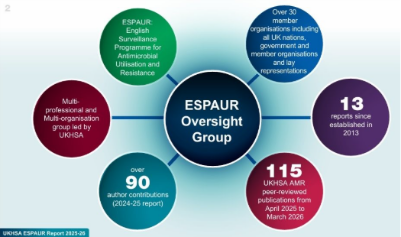
The English Surveillance Programme for Antimicrobial Utilisation and Resistance (ESPAUR) report is published annually (1, 2). The ESPAUR Oversight Group (OG) is comprised of over 30 stakeholder organisations including government agencies, national health services, public health authorities and professional bodies (3). The 2025 to 2026 edition of the report comprises 10 chapters, covering topics such as antimicrobial resistance and consumption, AMR and AMU spotlights, antimicrobial stewardship, NHS England improvement and assurance schemes, professional and public education, engagement and training, research, ESPAUR oversight group activities and actions to tackle AMR mapped to the UK AMR National Action Plan 2024 to 2029 as well as knowledge mobilisation and evaluation of the ESPAUR report.
Key findings from the ESPAUR 2025 to 2026 show that while overall antibiotic consumption has continued to decrease and remains below pre-pandemic levels, resistant infections are still increasing, although the pace of that increase slowed in the latest year. The report also highlights persistent inequalities in the burden of AMR across age group, ethnicity, deprivation levels, and geographical areas. Enterobacterales continued to be the predominant contributors to resistant bloodstream infections. Resistance increased across several key pathogens and antibiotic classes, including notable increases in piperacillin-tazobactam resistance in Klebsiella pneumoniae. Rates of fungal bloodstream infections also continued to rise, highlighting the growing importance of antifungal surveillance and stewardship.
The findings from the report demonstrate the urgent need for continued targeted interventions and surveillance as outlined in the UK National Action Plan 2024-29. Addressing antimicrobial resistance remains critical given its association with severe complications, such as sepsis, bacteraemia, and increased mortality. The ESPAUR report serves as a vital resource in guiding national efforts to preserve antimicrobial effectiveness and protect public health. UKHSA will continue to work with partners to better understand the factors driving these differences and develop targeted interventions to tackle them. Table 1 summarises key progress measures linked to the National Action Plan targets and the NHS England incentives schemes.
This short summary provides brief insight into the key findings from each of the 10 chapters and the overarching themes of ESPAUR 2025 to 2026 report. While the chapters can be read together, each is designed to stand alone with full details including the full set of infographics, lay summary, annexe of methods and data tables.
Figure 1. ESPAUR report 2025 to 2026: contents
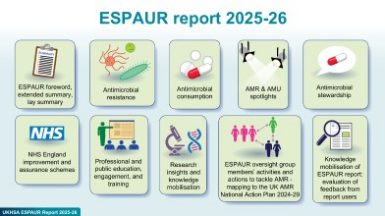
Figure 2. ESPAUR Oversight Group
Antimicrobial resistance (AMR)
In 2025, there were 187,254 reported bacteraemia episodes, representing a 1.6% increase compared with 2024, and a 22.9% increase since 2019. Almost half (44.6%) of the increase since 2019 was attributable to coagulase-negative staphylococci (CoNS). CoNS, E. coli, K. pneumoniae, and S. aureus remained the most frequently isolated organisms. The overall bacteraemia burden in 2025 exceeded pre-pandemic levels, following an initial decline during the COVID-19 pandemic and subsequent resurgence. Among priority pathogens, the largest increase was observed in K. pneumoniae which rose by 28% between 2019 and 2025.
The estimated AMR burden increased by 16.8% between 2019 and 2025, with Enterobacterales (E. coli, K. pneumoniae, and K. oxytoca) accounting for 85.5% of resistant bacteraemia episodes. While E. coli remained the predominant pathogen, accounting for around 70% of the burden over the past 7 years, the relative contribution of K. pneumoniae increased over time. Although the rate of resistance has increased, the pace of the increase slowed in the last year, cases rose by 3.2% between 2024 and 2025, from 20,468 to 21,129, compared with a 9.3% increase between 2023 and 2024, when cases rose from 18,732 to 20,468.
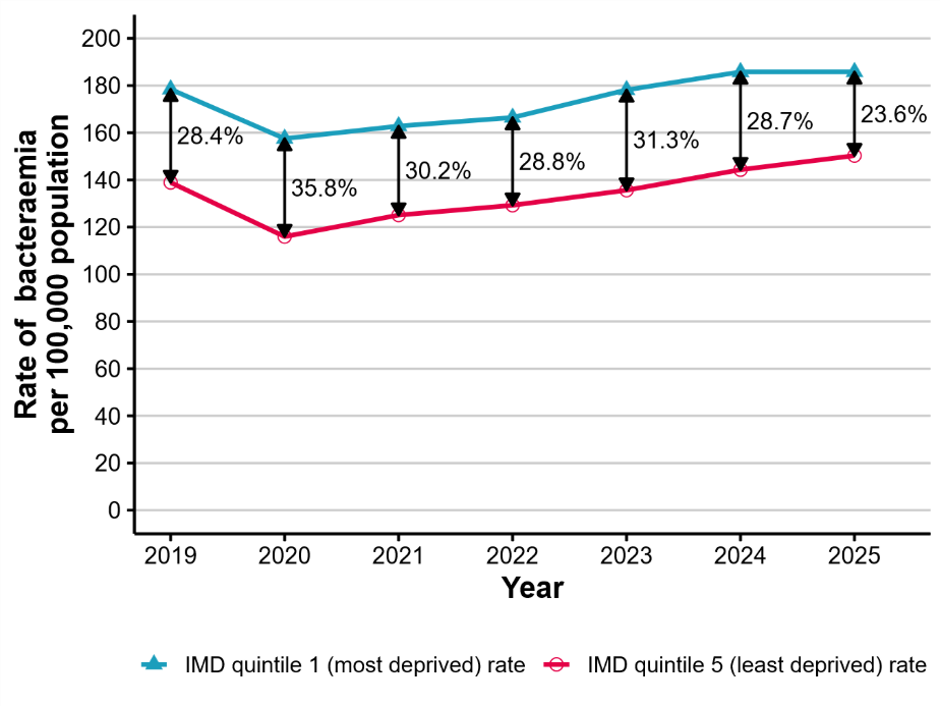
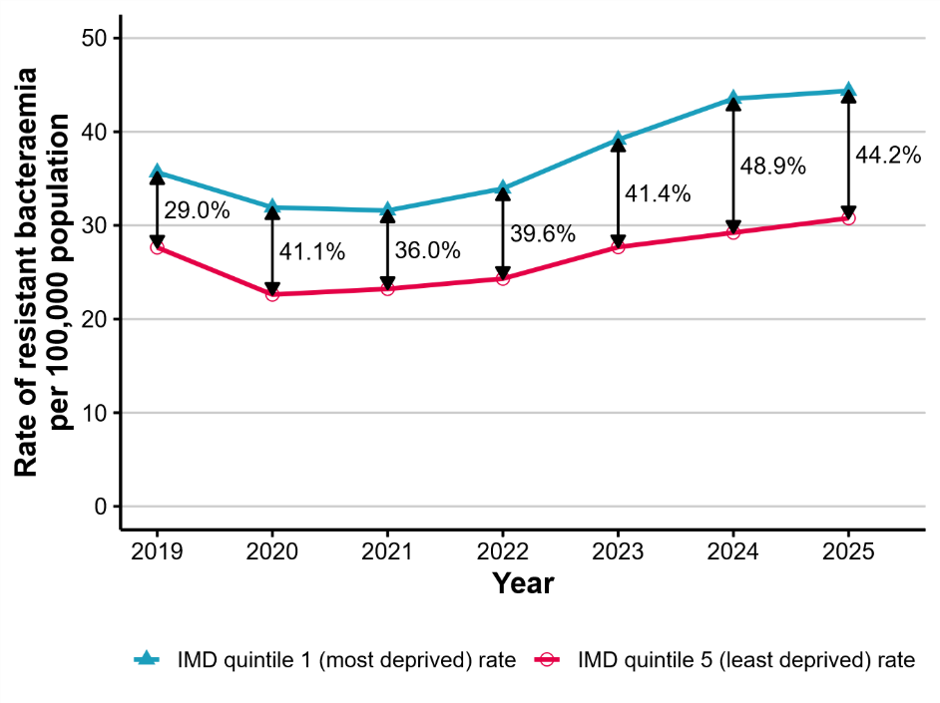
Marked inequalities in burden persisted across age, ethnicity, deprivation, and geography, particularly affecting older adults aged over 74 years old, infants aged <1 year, and Asian or Asian British ethnic groups, and those living in more deprived areas. AMR burden varied more markedly between Integrated Care Boards (ICBs) than between regions, highlighting substantial local variation that may be masked by regional averages. Rates of resistant bacteraemia remained consistently higher in the most deprived than the least deprived quintile across all age and sex groups. Overall, the rate of resistant bacteraemia in the most deprived quintile was 44.2% higher than in the least deprived quintile in 2025. While the gap in overall bacteraemia rates narrowed between 2019 and 2025 (from 28.4% to 23.6% – Figure 3a), the gap in resistant bacteraemia widened from 29.0% in 2019 to 44.2% in 2025 (Figure 3b).
Figure 3. Rate of bacteraemia (a) and resistant bacteraemia (b) per 100,000 population of most and least deprived IMD quintiles, 2019 to 2025
a)
b)
Compared with the FY 2019 to 2020 baseline for the UK National Action Plan (NAP), in England, specified drug-resistant infections increased by 25.7%, driven primarily by third-generation cephalosphorin-resistant Escherichia coli and Klebsiella pneumoniae, while Gram-negative bloodstream infections increased by 8%, largely driven by increases in bloodstream infections due to Klebsiella spp.
Resistance increased across most antibiotic classes in both E. coli and K. pneumoniae, with the largest increase observed for piperacillin with tazobactam resistance in K. pneumoniae, which rose from 15.1% in 2019 to 22.8% in 2025.
New Delhi metallo-beta-lactamase (NDM) and Oxacillinase-48-like (OXA-48-like) were the predominant carbapenemase mechanisms detected in England in 2025, with marked geographical variation in carbapenemase-producing organisms (CPO) rates and mechanisms observed across Integrated Care Boards (ICBs).
The overall rate for 30-day all-cause mortality in patients with selected Gram-negative bacteraemia (E. coli, K. pneumoniae, Pseudomonas spp., Acinetobacter spp.) was 14.9% in 2025, which is the lowest mortality rate since 2019. The overall rate for 30-day all-cause mortality remained highest among patients with a CPO isolated from a sterile site specimen, at 21.2% in 2025.
Resistance to key second line antibiotics remained a concern in both MSSA and MRSA bacteraemia, with increasing resistance observed across multiple antibiotic classes, particularly tetracyclines in MRSA.
Fungal bloodstream infections also continued to increase. Candida albicans remained the most frequently isolated yeast species, followed by Nakaseomyces glabratus (formerly Candida glabrata). Candidozyma auris continued to be an important cause of healthcare-associated infection in 2025, with hospital outbreaks remaining concentrated in London and the south-east of England.
Antiviral resistance among circulating influenza viruses remained rare during the 2025 to 2026 influenza season. Mutations associated with reduced susceptibility to neuraminidase inhibitors and baloxavir marboxil were detected in fewer than 1% of influenza A viruses and occurred predominantly in immunocompromised patients receiving antiviral treatment.
Artemisinin-based combination therapies (ACTs) remain highly effective against imported Plasmodium falciparum malaria in the UK. Markers associated with reduced susceptibility to artemisinin or lumefantrine were detected at low frequency. Most imported malaria cases occurred in travellers who did not take recommended chemoprophylaxis, highlighting the need for improved preventative measures and continued resistance surveillance.
Antimicrobial consumption
The UK AMR NAP 2024 to 2029 aims to reduce human antibiotic use by 5% from the 2019 to 2020 baseline. In England, antibiotic consumption in 2025 was 10.7% lower than the FY 2019 to 2020 baseline (Table 1). Continued delivery of AMS interventions and targeted actions across the healthcare system will be essential to ensure that these reductions are sustained.
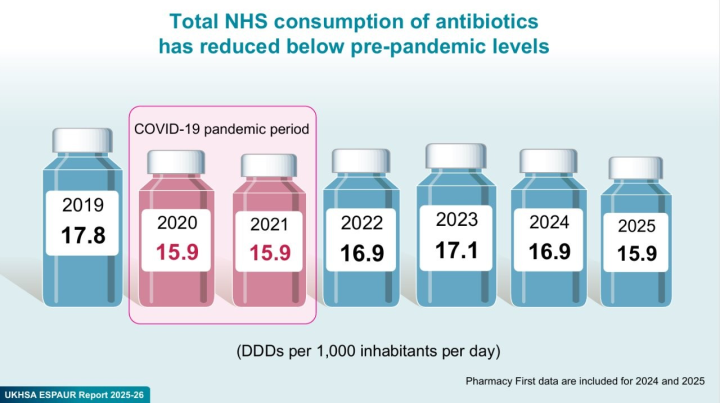
Total NHS antibiotic consumption in England was 15.9 DIDs (defined daily doses per 1,000 inhabitants per day) in 2025, a reduction of 6.1% compared with 2024 and 10.7% compared with 2019 (Figure 4). General practice remained the largest contributor to antibiotic use (65.4%) and the main driver of this reduction, with consumption 18.8% lower than in 2019. In contrast, hospital antibiotic consumption increased by 5.4% compared to 2019, highlighting the importance of targeted stewardship across healthcare settings.
Regional variation persisted in 2025, with the North East reporting the highest antibiotic consumption (18.2 DIDs) and South East the lowest (14.1 DIDs). When disaggregated by Integrated Care Boards (ICBs) (full data in Chapter 3 data tables), total antibiotic consumption in 2025 was highest in North East and North Cumbria (0.96 DIDs), followed by Greater Manchester (0.86 DIDs), and Cheshire and Merseyside (0.81) ICBs. The lowest levels of consumption were seen in NHS Somerset (0.14 DIDs), Shropshire, Telford and Wrekin (0.14 DIDs), and NHS Cornwall and the Isles of Scilly (0.15 DIDs) ICBs. Although all regions reported lower total consumption than in 2019 and 2024, driven by reductions in primary care use, variation in consumption patterns and AMR burden highlights the need for locally tailored antimicrobial stewardship and opportunities for shared learning.
Penicillins remained the most used antibiotic class, accounting for 30.9% of total consumption, despite an overall reduction in use between 2024 and 2025. Tetracyclines use declined mainly because of reduced lymecycline prescribing, potentially reflecting changes in acne management. The use of methenamine hippurate, an antibiotic-sparing agent, increased more than eightfold between 2019 and 2025, potentially reflecting increased uptake with NICE recommendations for preventing recurrent urinary tract infection.
The UK AMR NAP Target 4B aims for 70% of total antibiotic consumption (DDDs) to be from the Access category under the UK-adapted AWaRe classification. As shown in Table 1, the proportion of antibiotic consumption accounted for by Access antibiotics increased from 61% in 2019 to 65.6% in 2025, reflecting greater reductions in Watch than Access antibiotic use. This improvement was driven primarily by primary care, where Access antibiotics accounted for 68.9% of consumption compared with 55% in secondary care.
Primary care remained the largest contributor to antibiotic consumption in England in 2025, accounting for 75.8% of total use, with overall consumption decreasing by 7.2% compared with 2024. Antibiotic consumption remained highest in older adults and in more deprived populations, with persistent deprivation-related inequalities despite a narrowing of the gap since its post-pandemic peak. In 2025, NHS dental antibiotics consumption continued to decline, falling 27.7% from the 2020 peak and 11.7% below 2019 levels.
Antibiotic supply through the Pharmacy First service increased substantially in 2025, with rates 53.1% higher than during the first 11 months following service launch (February to December 2024). However, the proportion of consultations resulting in an antibiotic supply decreased over this period, suggesting that increased activity was accompanied by proportionally lower antibiotic use.
In secondary care, antibiotic consumption remained relatively stable in 2025 but continues to exceed pre-pandemic levels. Use of anti-Clostridioides difficile agents more than doubled since 2019, consistent with increased fidaxomicin use following updated treatment guidance.
Private (non-NHS) consumption declined for the first time since the pandemic between 2024 and 2025. This is driven mainly by reduced community pharmacy supply, which may reflect changes in healthcare-seeking behaviour, increased use of NHS services such as Pharmacy First and optimisation of antibiotic treatment durations in line with NICE guidance. Antibiotics supplied through private route (non-NHS) represented 4% of total primary care antibiotic consumption across both NHS and private sectors in England in 2025.
Systemic antifungal use in 2025 increased by 11% between 2019 and 2025. Terbinafine use increased by 13.5% between 2019 and 2025 in primary care, and by 68.9% between 2020 and 2025 in secondary care (terbinafine secondary care usage data was unavailable for 2019), warranting continued monitoring given the emergence of terbinafine-resistant Trichophyton indotineae in England.
Use of COVID-19 antivirals declined substantially in 2025, reflecting fewer cases reported. Among antiparasitics, quinine use declined since 2019, while ivermectin and albendazole use increased.
Figure 4. Total NHS consumption of antibiotics from 2019 to 2025
AMR and AMU spotlights
This new chapter highlights how surveillance data is being translated into action across the healthcare system. Examples include estimating health and economic burden of AMR, supporting improved antimicrobial use through diagnostics and awareness-raising activities, and identifying emerging pathogens, changing resistance patterns, and populations at increased risk of infection. Surveillance data highlighted the substantial burden of Gram-negative bloodstream infections, which were associated with around 53,400 hospital admissions and £800 million in NHS hospital costs between 2023 and 2024.
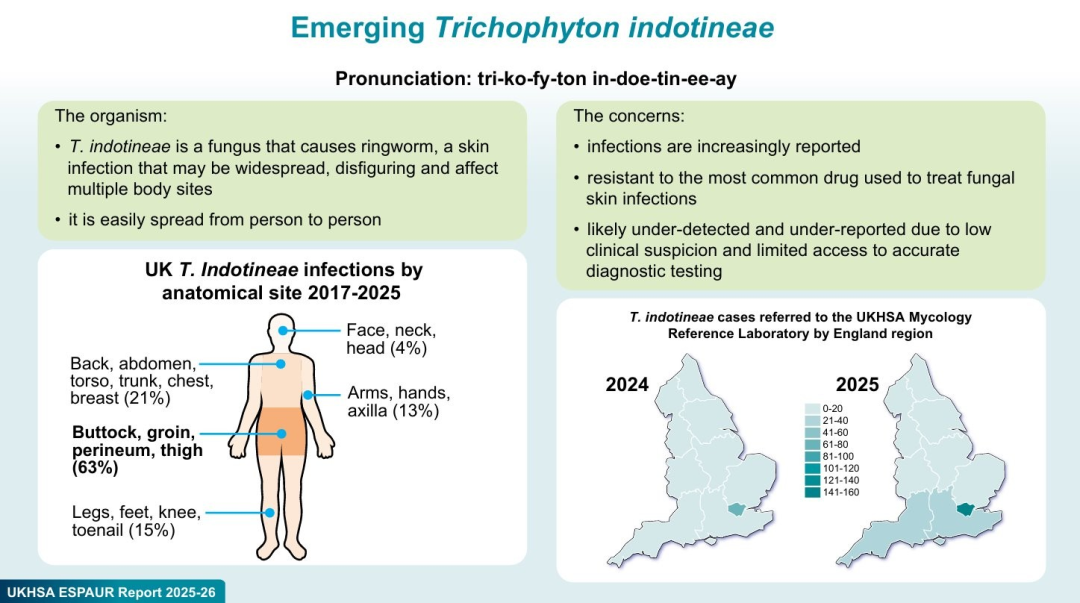
The chapter also highlights emerging public health concerns, including the spread of terbinafine-resistant Trichophyton indotineae (Figure 5). Cases in the UK have been concentrated in major urban centres, prompting enhanced surveillance activities to better understand transmission patterns and inform public health action. Increasing incidence of both methicillin-susceptible Staphylococcus aureus (MSSA) and methicillin-resistant S. aureus (MRSA) bacteraemia in England highlights the value of epidemiological and genomic surveillance for detecting changing patterns of infection and informing infection prevention and control measures. Evaluation of the Wales Sore Throat Test and Treat service highlighted potential value of point of care testing, as clinical prediction rules alone may not reliably identify Group A streptococcal infection.
Figure 5. Emergence of terbinafine-resistance Trichophyton indotineae in the UK
Antimicrobial stewardship (AMS)
The UK’s 5-year National Action Plan (NAP) prioritises AMS, aiming to reduce human antibiotic use by 5% from 2019 levels and ensure 70% of antibiotics used fall within the Access category. This year’s AMS chapter features multiple projects spanning both primary and secondary care.
During 2025 to 2026, TARGET (Treat antibiotic responsibly: Guidance, education and tools) published updated UTI diagnostic and patient communication resources and developed a decision aid to support parents of children with acute cough with the help of healthcare professionals and members of the public (Figure 6). In secondary care, UKHSA AMS tools, including the Start Smart Then Focus (SSTF) toolkit, IV-to-Oral Switch Criteria for Adults and the antimicrobial stewardship prescribing and stewardship competency framework, are undergoing planned review to ensure they remain current, evidence-based and fit for purpose, with updated versions planned for publication in 2027.
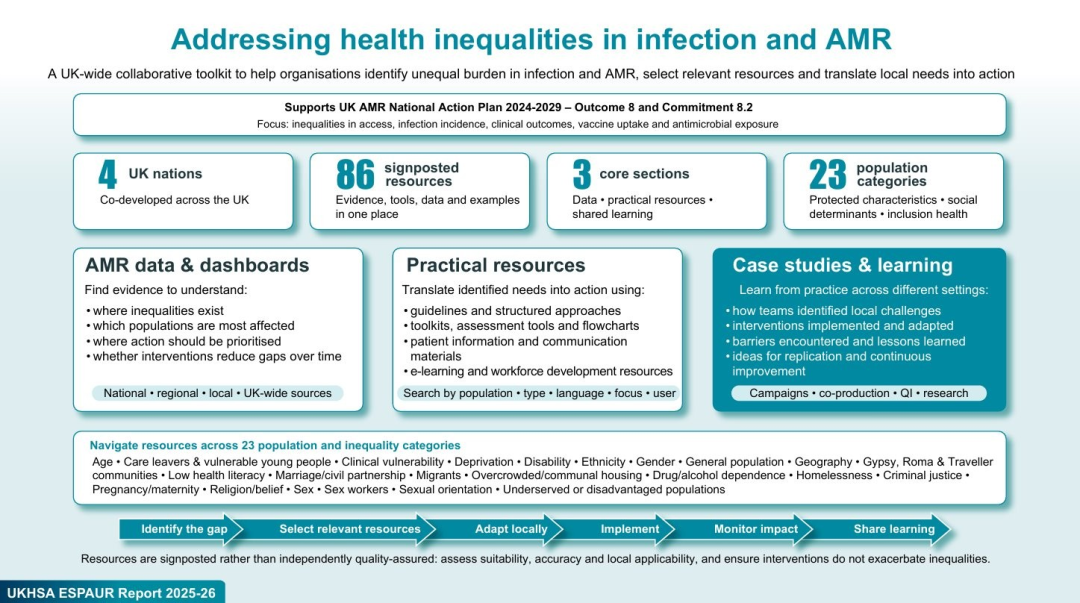
UKHSA, in collaboration with all 4 UK nations, developed and published a Health Inequalities Toolkit to support Commitment 8.2 of the UK AMR NAP. The toolkit signposts 86 resources across 23 population groups to support local adaptation and implementation (Figure 7).
A rapid scoping review highlighted the potential role of pharmacy professionals in addressing inequalities in infection management, antibiotic use, and AMR. However, evidence of their impact on reducing health inequalities remains limited, highlighting the need for further evaluation.
An umbrella review of behavioural interventions for AMR identified education, persuasion, training, and enablement as the most frequently used intervention components, highlighting the value of multifaceted approaches to support behaviour change and optimise antimicrobial use.
Priorities for future work include reviewing and updating TARGET resources, supporting implementation of newly developed stewardship tools, and evaluating their impact on prescribing practice and patient care. Enhanced surveillance, development of prescribing metrics and benchmarking, workforce development, and quality improvement initiatives will strengthen paediatric antimicrobial and antifungal stewardship. A pilot follow-up survey of paediatric antifungal stewardship practices will be undertaken by ESPAUR in collaboration with the UK Paediatric Antimicrobial Stewardship (UK-PAS) network to better understand current activities, identify barriers and priorities for improvement, and inform future recommendations and targeted interventions. Work to address inequalities associated with infections, antimicrobial use and AMR will continue through knowledge mobilisation activities to support implementation of the Health Inequalities Toolkit.
Figure 6. Target Activities completed activities between April 2025 and March 2026
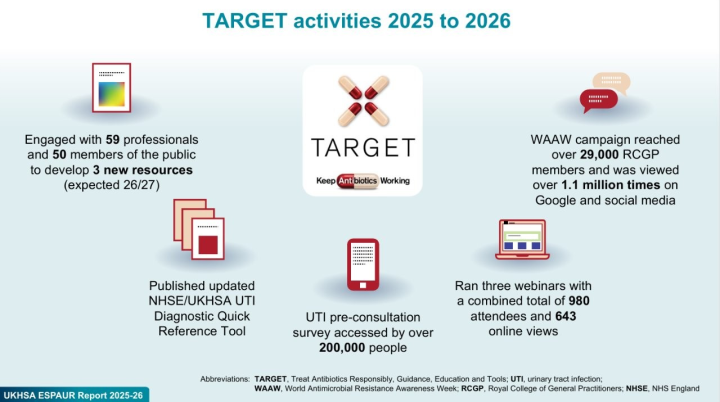
Figure 7. Introducing Health Inequalities Toolkit developed by UKHSA in collaboration across 4 nations
NHS England: Improvement and assurance schemes
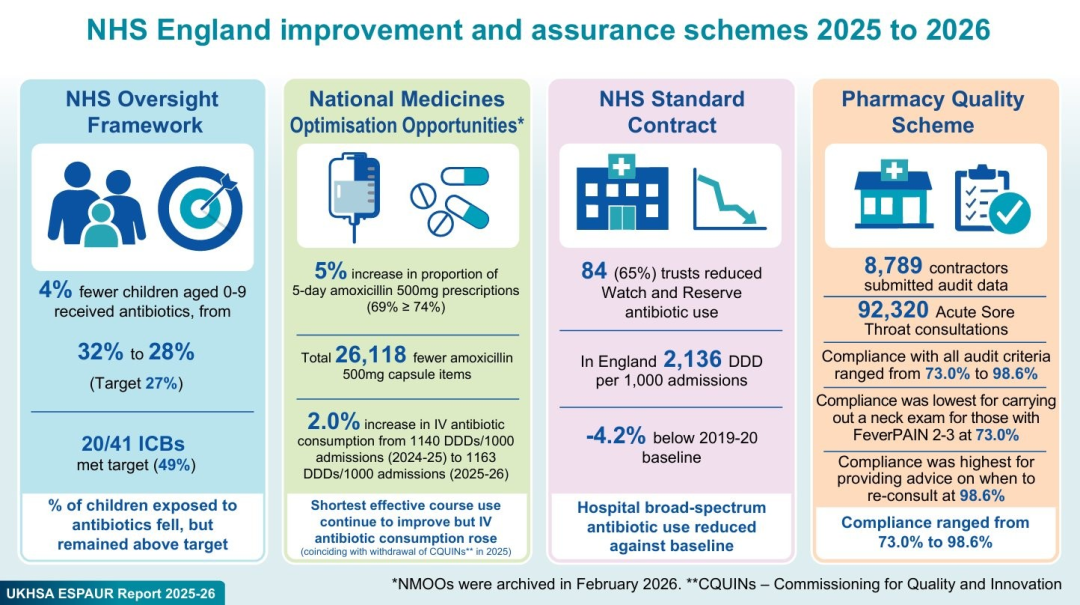
NHS England (NHSE) continued to drive AMS through improvement and assurance schemes across Integrated Care Systems. Under the NHS Oversight Framework in England, the proportion of children aged 0 to 9 years receiving one or more antibiotics decreased from 32% to 28% in 2025 to 2026, against a target of 27%, with 49% of Integrated Care Boards (ICBs) meeting the national target (Table 1). The proportion of shorter 5-day amoxicillin prescriptions increased by 5%, supporting the use of the shortest effective treatment duration. In contrast, intravenous (IV) antibiotic consumption increased by 2% coinciding with the withdrawal of the Commissioning for Quality and Innovation (CQUIN) scheme for IV to oral antibiotic switch in 2025 to 2026.
The Pharmacy First service continued to expand, delivering 3,328,445 infection consultations from April 2025 to March 2026, a 42% increase compared with the previous year. However, despite the increase in activity, the proportion of consultations resulting in antimicrobial supply was lower across all 7 infection pathways, ranging from 1% to 5% lower by pathway, compared with the previous year. An antimicrobial was supplied in 43% to 84% of consultations, including urinary tract infection (UTI). An antibiotic-sparing medicine was supplied in 22% to 32% of consultations in 3 relevant infection pathways. The Pharmacy Quality Scheme demonstrated some high compliance with antimicrobial stewardship standards during acute sore throat consultations in community pharmacies and highlighted specific areas for improvement.
Under the NHS Standard Contract, 84 trusts (65%) achieved reductions in ‘Watch’ and ‘Reserve’ antibiotic consumption compared with their 2019 to 2020 baseline, with national consumption remaining 4.2% below 2019 to 2020 baseline at 2,136 DDD per 1,000 admissions (Table 1).
NHS England also continued to support system-wide improvement through expansion of paediatric antimicrobial stewardship initiatives, strengthened AMR leadership within ICBs, introduction of a new dental prescribing dashboard, development of prescribing quality improvement resources, and optimisation of the blood culture pathway through national audit and quality improvement activities.
Figure 8. NHS England improvement and assurance schemes 2025 to 2026
Delivery of antimicrobial stewardship programmes in 2026 to 2027 will continue to be guided by the NHS 10 Year Health Plan and the UK AMR National Action Plan, with a continued focus on reducing antibiotic use, increasing the proportion of Access antibiotics and strengthening stewardship across healthcare settings. In 2026 to 2027, antibiotic prescribing in children will become an NHS Oversight Framework scoring metric for Integrated Care Boards, with a revised target of 25% to support further reductions in antibiotic exposure in this population.
Under the NHS Standard Contract, providers will continue to implement actions to reduce overall and broad-spectrum antibiotic use and increase the proportion of Access antibiotics. Service Development and Improvement Plan (SDIP) arrangements will focus on improving compliance with national testing guidance and strengthening the consistency of Clostridioides difficile infection ascertainment to support patient management, surveillance and benchmarking.
Community pharmacy stewardship activities will continue to expand through the Pharmacy First service, with up to 5 additional prescribing-only clinical pathways expected from autumn 2026. The Pharmacy Quality Scheme will support quality improvement through clinical audit of Pharmacy First consultations and development of local action plans. The AMR Infection Diagnostics Programme will continue national optimisation of the blood culture pathway through implementation of pathway key performance indicators, introduction of a monthly national audit through the Pathology Quality Assurance Dashboard, enhanced data collection and development of training resources.
Professional and public education, engagement and training
This chapter outlines the range of initiatives undertaken during the 2025 to 2026 FY to engage both public and professional to support the NAP target 2a: by 2029, we aim to increase UK public and healthcare professionals’ knowledge on AMR by 10%, using 2018 and 2019 baselines, respectively.
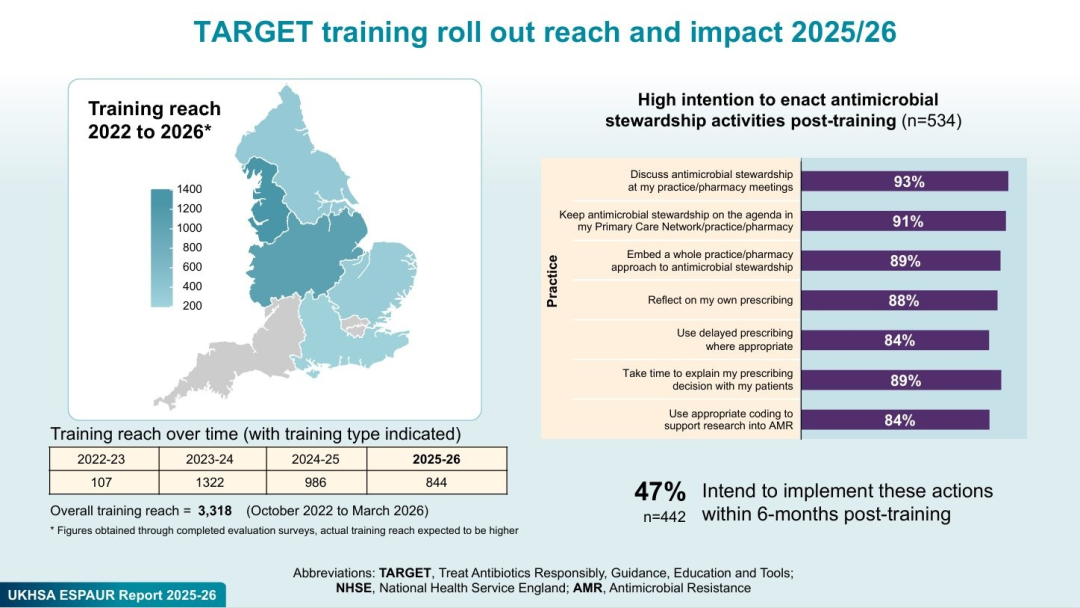
The TARGET (Treat Antibiotics Responsibly, Guidance, Education and Tools) and Royal College of General Practitioners collaborative webinar series and antimicrobial resistance (AMR) campaign continues to be a success, with total attendance of 980 across 3 webinars, 2 of the 3 webinars achieving the highest satisfaction scores since the start of the collaboration, and strong social media engagement. TARGET training reached over 3,000 primary care professionals across England since inception, with significant predicted impact on reducing antibiotic prescribing rates and cost savings (Figure 9).
Figure 9. TARGET Training roll out: reach and impact
A series of workshops were developed and delivered to pharmacy technicians in collaboration with Association of Pharmacy Technicians UK (APTUK) and NHS England. Pre- and post-webinar surveys demonstrated an improvement in participant knowledge. Only half of the participants (50.3%, 80 out of 159) answered all 7 knowledge questions correctly in the pre-webinar survey and this increased to 71.6% (48 out of 67) in the post-webinar survey.
e-Bug continues to achieve strong user engagement with its resources, with 198,979 page views (55% increase compared to previous year). Three resource development projects focusing on vector-borne diseases, out of school settings, and infection prevention and control training for early years and other educational contexts are currently in pilot. A curriculum mapping exercise identified key opportunities to embed IPC and AMR across the national curriculum. These initiatives shape the future direction of e-Bug.
Two survey studies with over 1,000 parents assessed parental role in managing childhood infections, knowledge about antibiotics and awareness of antibiotic side effects highlight common misconceptions about antibiotic effectiveness, limited awareness of potential harm, but strong understanding of infection prevention. Together, this suggests a need for stronger communication to improve understanding and dispel misconceptions.
In line with Commitment 2.3 in the AMR NAP, an engagement guide was co-designed with representatives from UK national human, animal and environmental health bodies, civil society organisations (including non-profits and NGOs), and local partners (Table 1). This guide provides practical resources and information to support the planning and delivery of effective AMR communication and engagement activities across sectors and settings.
Professional and public AMR campaigns undertaken during the 2025 to 2026 FY included the Antibiotic Guardian (AG) campaign, World Antimicrobial Resistance Awareness Week (WAAW) and the UKHSA Andi Biotic campaign. All themes were aligned with the updated NAP 2025 to 2029 for AMR.
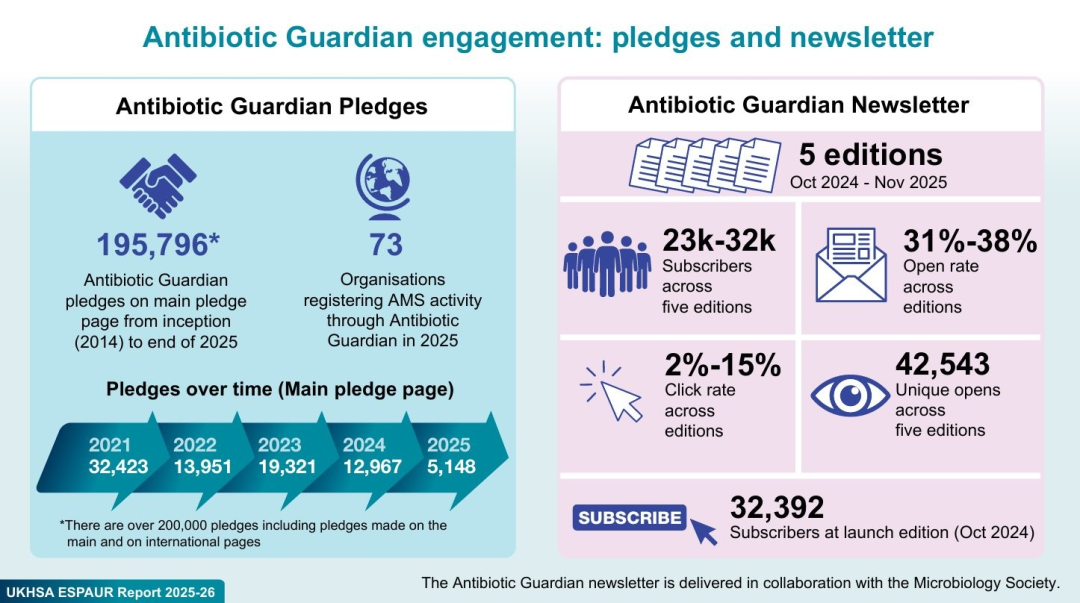
Following findings from the 2024 UKHSA AMR public survey, UKHSA delivered phase 2 of the Andi Biotic campaign targeting messaging around correct antibiotic behaviours and AMR awareness using humour-led content to younger adults. The campaign was a success reaching 10.35 million users, an 87% increase compared to Phase 1. The WAAW webpage hosting the toolkit of promotional resources was visited 4,849 times between its publication in September 2025 and 13 May 2026. The AG campaign website’s main page received 5,148 pledges in 2025, totalling 195,796 pledges made on the main page since inception of the campaign in 2014 (Figure 10). In 2025, the AG pledges were translated to Urdu, Punjabi, Mandarin, Polish, and Romanian, languages identified in the UK Census as among the most widely spoken (excluding English and Cymraeg). An evaluation of user feedback on the translated pages was conducted in collaboration with the University of Warwick. Feedback showed the translated pledges were well received with self-reported improved AMR knowledge.
Figure 10. Antibiotic Guardian engagement: pledges and newsletter
Future action will focus on strengthening professional and public education, engagement, and training. The TARGET programme will explore refresher training for previous learners, continue its collaborative webinar series with the RCGP with 3 new topics informed by primary care feedback, and further promote uptake of the TARGET toolkit. The e-Bug programme will prioritise national implementation of recently developed educational resources, including materials on vector-borne diseases, after-school and early years settings, while continuing to align learning resources with PSHE standards and expand international delivery.
Building on previous success, Phase 3 of the Andi Biotic campaign will deliver a geographically targeted autumn campaign in areas with higher AMR burden. The AMR Engagement Guide has been published in September 2026, with future work focusing on knowledge mobilisation to support its adoption and evaluation of its impact on communications and public understanding of AMR. The AG campaign will focus on recruiting more participants, particularly newly qualified healthcare professionals, increasing engagement through the Schools Ambassadors Scheme in areas of deprivation, launching a new public-facing newsletter, and hosting the eighth Shared Learning Awards in spring 2027. The 2026 WAAW campaign will retain existing themes while incorporating new resources, including the AMR Engagement Guide and Health Inequalities Toolkit. A WAAW webinar was held on September 2026 to share best practice and support HCP across the 4 nations in preparing for the WAAW.
Research insights and knowledge mobilisation
A wide range of new and ongoing research projects were undertaken in the fields of healthcare-associated infection (HCAI) and antimicrobial resistance (AMR) in the last year, with the publication of over 100 peer-reviewed papers from across the UKHSA. This chapter showcases key AMR and healthcare-associated infections (HCAI) research projects within the UKHSA and jointly with external stakeholders, undertaken from April 2025 to March 2026.
The chapter also introduces the latest National Institute for Health and Care Research (NIHR) Health Protection Research Unit (HPRU) in HCAI and AMR, led by the University of Oxford in partnership with UKHSA. Running from April 2025 to March 2030, the HPRU brings multidisciplinary expertise to 4 themes:
- optimising surveillance through automated, electronic health record-linked systems
- establishing population impact of interventions through health economic and modelling evidence
- advancing tailored stewardship approaches particularly considering underserved populations
- mitigating Gram-negative infections through genomic surveillance and diagnostics
Pandemic preparedness is embedded across all 4 themes, and the chapter closes with examples of the HPRU’s early impacts.
Forty-four research projects or abstracts across 7 categories are also featured in this chapter, namely:
- health disparities and inequalities (4)
- surveillance and epidemiology (5)
- optimising genomic and molecular characterisation (7)
- antimicrobial stewardship, prescribing and primary care (7)
- public engagement, behaviour and communication (6)
- modelling, health economics and policy evaluation (4)
- innovative solutions for the treatment and prevention of AMR infections (11)
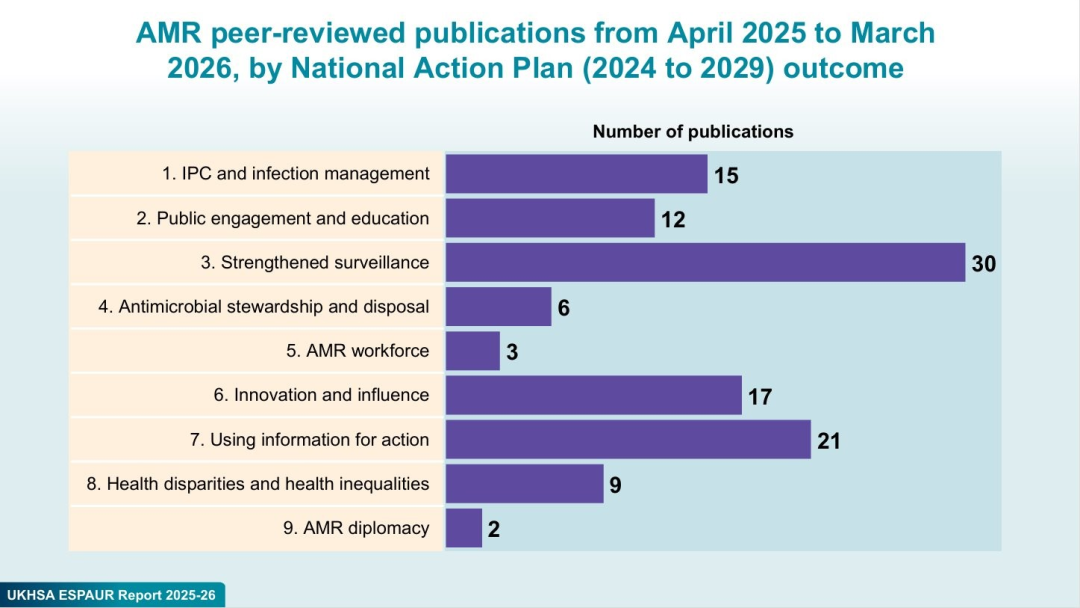
Within and in collaboration with the UKHSA, there are a wide range of new and ongoing AMR associated research projects with the publication of over 100 peer-reviewed papers from across the UKHSA. Figure 11 demonstrated the breadth of peer-reviewed publications resulting from research undertaken by the UKHSA against the 2024 to 2029 NAP outcomes and current research project by the UK NAP research priorities.
Figure 11. AMR peer-reviewed publication from April 2025 to March 2026, by National Action Plan (2024 to 2029) outcome
ESPAUR oversight group members’ activities and actions to tackle AMR-mapping to National Action Plan 2024 to 2029
The ESPAUR Oversight Group comprises over 30 stakeholder organisations including the UK nations and national organisations, professional and educational bodies, healthcare providers and regulators.
A total of 13 stakeholders have contributed to this year’s ESPAUR report comprising the British Dental Association (BDA), British Infection Association (BIA), British Society for Antimicrobial Chemotherapy (BSAC), College of General Dentistry (CGD), Microbiology Society, Royal College of General Practitioners (RCGP), Royal College of Nursing (RCN), Royal Pharmaceutical Society (RPS), UKCPA Pharmacy Infection Network (UKCPA-PIN), Veterinary Medicines Directorate (VMD), NHS England, Public Health Agency (Northern Ireland), Antimicrobial Resistance and Healthcare Associated Infection (ARHAI) Scotland.
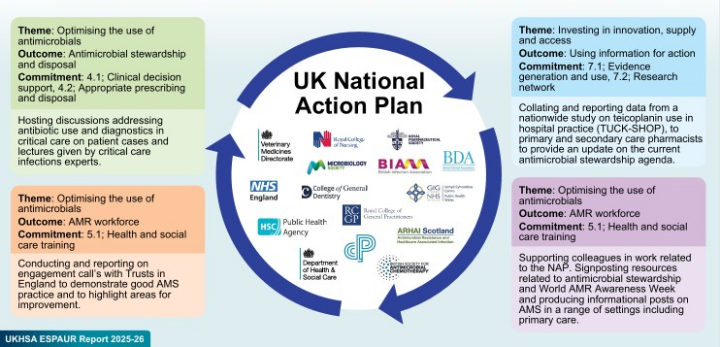
A total of 30 updates from 6 organisations, British Infection Association, UKCPA Pharmacy Infection Network (PIN), Royal Pharmaceutical Society Antimicrobial Expert Advice Group, British Society for Antimicrobial Chemotherapy, Care Quality Commission (CQC), Veterinary Medicines Directorate, in support of 14 commitments and 5 outcomes within the 2024 to 2029 National Action Plan (NAP) for Antimicrobial Resistance (AMR) have been reported to ESPAUR between April 2025 and March 2026. These include, but are not limited to:
- presenting national study findings to support antimicrobial stewardship (AMS) practice
- developing international Outpatient Parenteral Antimicrobial Therapy (OPAT) good practice recommendations and piloting an evidence‑based accreditation approach for OPAT services
- expanding national antimicrobial registries to strengthen AMR data and clinical engagement
- delivering targeted webinar series to enhance knowledge of emerging antimicrobial treatments and stewardship AMS practices
- contributing to international discussions on AMR, emphasising One Health and global representation
- engaging in political advocacy to raise the profile of AMR and promote diagnostic stewardship in national policy discussions (Figure 12)
Figure 12. Examples of activities undertaken by ESPAUR Oversight Group members to support the UK National Action Plan for AMR 2024 to 2029
Knowledge mobilisation of ESPAUR report: evaluation of feedback from report users
The annual ESPAUR report and its collation of surveillance and AMS efforts is used widely in the UK. To accompany the annual publication of the ESPAUR report, a webinar is hosted by the UKHSA to explore key insights and features of the new report to stakeholders.
A survey was disseminated as part of the 2024 to 2025 ESPAUR webinar registration to understand the usage of the ESPAUR report, the professional backgrounds of those who use the ESPAUR report, and to summarise their feedback based on data gathered.
A total of 533 respondents participated in the survey. The most reported job role of respondents was pharmacist, accounting for 31.3% (167 out of 533) of responses, doctor (15.9%, 85 out of 533), and public health professional (9.9%, 53 out of 533). Infographics, which are used to highlight key messages and statistics in the report, were found to be useful by the majority of respondents (85% (307 out of 360). The 3 most frequently used chapters in the report were the AMR (84.7%, 276 out of 326, AMS (69.3%, 226 out of 326), and antimicrobial consumption (55.8%, 182 out of 326), with some respondents reporting that they accessed 3 or more report chapters (56%, 181 out of 326). Respondents could select multiple responses.
Various activities have been undertaken to knowledge mobilise the ESPAUR report, these include an infection control matters podcast featuring the 2024 to 2025 report which received 543 downloads (data correct as of 31 March 2026). ESPAUR report abstracts on each chapter of the report were published in the JAC-Antimicrobial Resistance journal, the abstracts have received 518 views and downloads (data correct as of 4 June 2026). Social media assets which were shared on platforms Facebook, Instagram, X (Twitter) and LinkedIn were used for ESPAUR report engagement. Engagement metrics were evaluated and data showed 40,631 impressions, a reach of 13,280 for Facebook and Instagram (unavailable for X (Twitter) and LinkedIn), 3,263 engagements with an 8% engagement rate and a click-through-rate (CTR) average of 6.5% for Facebook, X and LinkedIn (unavailable for Instagram) (Figure 13).
Figure 13. ESPAUR report evaluation and knowledge mobilisation activities
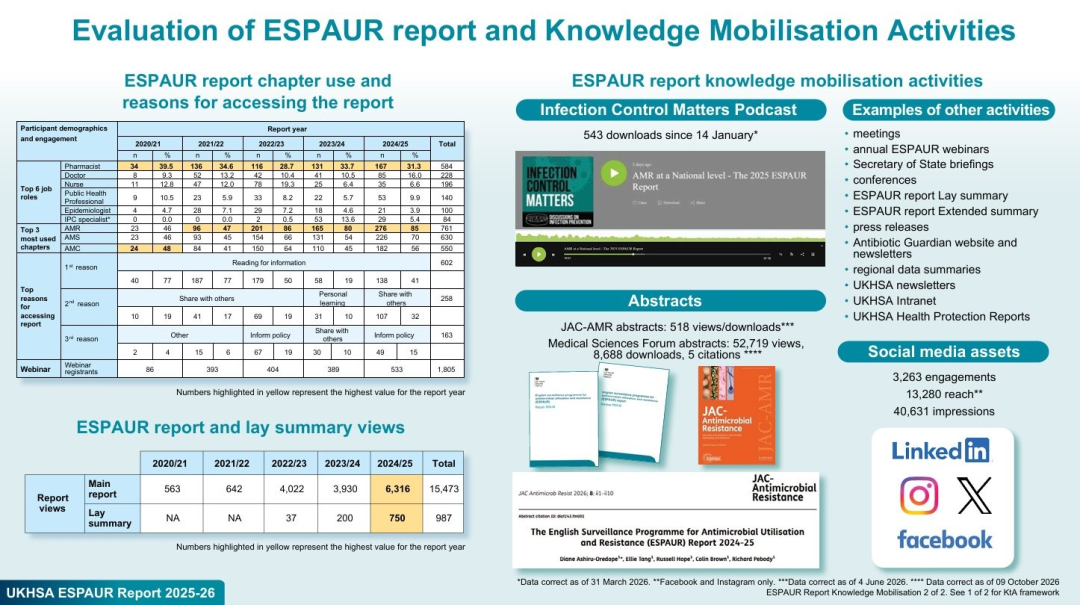
Table 1. 2025 to 2026 summary of key progress measures for England linked to the National Action Plan(NAP) 2024 to 2029 targets and NHS England (NHSE) improvement and assurance schemes
| Metric | National ambition | Actual outcome (2025) |
|---|---|---|
| AMR infections (NAP 2024-2029) | Prevent any increase in a specified set of drug-resistant infections in humans from the 2019 to 2020 FY baseline by 2029. | 25.7% increase in England in specified set of drug-resistant infection |
| AMR knowledge (NAP 2024-2029) | Increase UK public and healthcare professionals’ knowledge on AMR by 10%, using 2018 and 2019 baselines, respectively by 2029 | Activities are ongoing to support improvements in healthcare professionals’ knowledge including the hosting of webinars focused on AMR among healthcare professional groups identified as having lower knowledge of AMR and the development of AMS and AMR e-learning modules. Development of a UK AMR Communications Roadmap through 4 nations collaboration. Continued delivery of Andi Biotic, Antibiotic Guardian, TARGET/RCGP campaigns, and e-Bug resources. AMR engagement guide launched. |
| Antibiotic consumption (NAP 2024-2029) | To reduce total antibiotic use in human populations by 5% from the 2019 baseline by 2029 | In England, total antibiotic consumption in 2025 was 10.6% lower than the FY 2019 to 2020 baseline. |
| New UK adapted AWaRE category (NAP 2024-2029) | Achieve 70% of total use of antibiotics from the Access category (new UK category) across the human healthcare system by 2029 | Proportion of Access antibiotic was 65.6% |
| Primary care prescribing target (NHSE improvement and assurance scheme) | Percentage of children (aged 0 to 9) prescribed antibiotics in the last 12 months at or below 27% | 28% of children prescribed antibiotics in the last 12 months 20 out of 41 (49%) of ICBs meeting target |
| NHS standard contract Watch/Reserve (NHSE improvement and assurance scheme) | Reduction in use of ‘Watch’ and ‘Reserve’ antibiotics in hospitals with 2019 to 2020 as baseline | 65% (84/130) trusts achieved a reduction in their ‘Watch’ and ‘Reserve’ antibiotic DDD per 1,000 admissions from the 2019 baseline. Averaged across all acute provider trusts for England, ‘Watch’ and ‘Reserve’ antibiotic consumption reduced to 4.2% below the FY 2019 to 2020. |
Acknowledgements
Summary written by:
- Wan Ting Tee
- Bee Yean Ng
- Diane Ashiru-Oredope
ESPAUR report chapter leads
Emily Mason (Antimicrobial Resistance and Prescribing Team), Mariyam Mirfenderesky (Incidents, Outbreaks and Infection Advice and Guidance), Berit Muller-Pebody, Alicia Demirjian (Antimicrobial Resistance and Prescribing Team), Ellie Tang, Diane Ashiru-Oredope (AMR PROGRESS Section), Monsey McLeod, Kieran Hand (NHS England Antimicrobial Prescribing and Medicines Optimisation Workstream), Ming Xuan Lee, Donna Lecky (Primary Care and Interventions Unit), Emily Agnew (Modelling and Evaluations Team), Sreejith Radhakrishnan, Joanna Bacon (Discovery Group in Countermeasures Development, Evaluation, and Pandemic Preparedness), Julie Robotham (Modelling and Evaluations Team), Karina Micah (AMR PROGRESS Section), Russell, Hope (Gram-Negative Team), Colin Brown, Richard Pebody.
Contributing teams to ESPAUR report
Chapter 1. Introduction
AMR PROGRESS Section [note 1] and Gram-Negative Team.
Chapter 2. Antimicrobial resistance
Antimicrobial Resistance and Prescribing Team (AMRP) [note 1], Incidents, Outbreaks and Infection Advice and Guidance (IOIG) [note 1], Gastrointestinal Infections, Food Safety and One Health (GIFSOH), Tuberculosis Team (TB), Gonococcal Resistance to Antimicrobials Surveillance Programme (GRASP), Mycoplasma genitalium Antimicrobial Resistance Surveillance (MARS), Candidozyma auris Incident Management Group and Data, Epidemiology and Analytics cell, Respiratory Virus Unit, Antiviral Unit, Health Equity Team, Modelling and Evaluations.
Chapter 3. Antimicrobial consumption
Antimicrobial Resistance and Prescribing Team (AMRP) [note 1], Blood Safety, Hepatitis STIs and HIV (BSHSH), Chief Data Officer Group.
Chapter 4. AMR and AMU spotlights
Antimicrobial Resistance and Prescribing Team (AMRP), Gram-Negative Team, Incidents, Outbreaks and Infection Advice and Guidance (IOIG), National Mycology Reference Laboratory, UK Field Epidemiology Training Programme (UKFETP), Public Health Microbiology, AMR Modelling and Evaluation
Chapter 5 Antimicrobial stewardship
AMR PROGRESS Section [note 1], Primary Care and Interventions Unit (PCIU), Health Equity Team.
Chapter 6. NHS England: improvement and assurance schemes
NHS England Antimicrobial Prescribing and Medicines Optimisation Workstream (APMO) [note 1].
Chapter 7. Professional education and training and public engagement
Primary Care and Interventions Unit (PCIU) [note 1], AMR PROGRESS Section, Strategic Communications.
Chapter 8. Research insights and knowledge mobilisation
Modelling and Evaluations [note 1], Discovery Group in Countermeasures Development, Evaluation, and Pandemic Preparedness (CDEP).
Chapter 9. ESPAUR oversight group members’ activities and actions to tackle AMR – mapping to the National Action Plan
AMR PROGRESS Section [note 1].
Chapter 10. Knowledge mobilisation of ESPAUR report: evaluation of feedback from report users
AMR PROGRESS Section [note 1].
Note 1: UKHSA Chapter Lead team.
References
- Ashiru-Oredope D, Susan Hopkins on behalf of the English Surveillance Programme for Antimicrobial Utilization and Resistance Oversight Group, Kessel A, Hopkins S, Ashiru-Oredope D, Brown B and others. ‘Antimicrobial stewardship: English surveillance programme for antimicrobial utilization and resistance (ESPAUR)’ Journal of Antimicrobial Chemotherapy. 2013: volume 68, issue 11, pages 2,421 to 2,423
- Ashiru-Oredope D, Cunningham N, Casale E, Muller-Pebody B, Hope R, Brown CS and others. ‘Reporting England’s progress towards the ambitions in the UK action plan for antimicrobial resistance: The English surveillance programme for antimicrobial utilisation and resistance (ESPAUR)’ Journal of Antimicrobial Chemotherapy 2023: volume 78, issue 10, pages 2,387 to 2,391
- Ashiru-Oredope D, Tang E, Hope R, Brown C, Pebody R. ‘The English surveillance programme for antimicrobial utilisation and resistance (ESPAUR) report 2024-25’ JAC-Antimicrobial Resistance 2026: supplement 2