AMR engagement guide: supporting people to understand antimicrobial resistance
Published 3 September 2026

© Crown copyright 2026
This publication is licensed under the terms of the Open Government Licence v3.0 except where otherwise stated. To view this licence, visit nationalarchives.gov.uk/doc/open-government-licence/version/3 or write to the Information Policy Team, The National Archives, Kew, London TW9 4DU, or email: psi@nationalarchives.gov.uk.
Where we have identified any third party copyright information you will need to obtain permission from the copyright holders concerned.
This publication is available at https://www.gov.uk/government/publications/engagement-guide-for-infection-and-antimicrobial-resistance-amr/amr-engagement-guide-supporting-people-to-understand-antimicrobial-resistance
This section is designed to help people clearly understand what antimicrobial resistance (AMR) is, why it matters, and how it affects everyday life. It offers straightforward explanations, that can be used when talking to the public.
By breaking down important concepts, addressing common misconceptions and using real examples, this section supports anyone who needs to communicate about AMR. It also provides guidance on how to describe the scale of the problem, share meaningful stories, and explain how AMR develops and spreads.
Overall, this section acts as a practical resource to help people deliver consistent, clear and engaging messages about AMR, tailored to different audiences and situations.
What antimicrobial resistance is
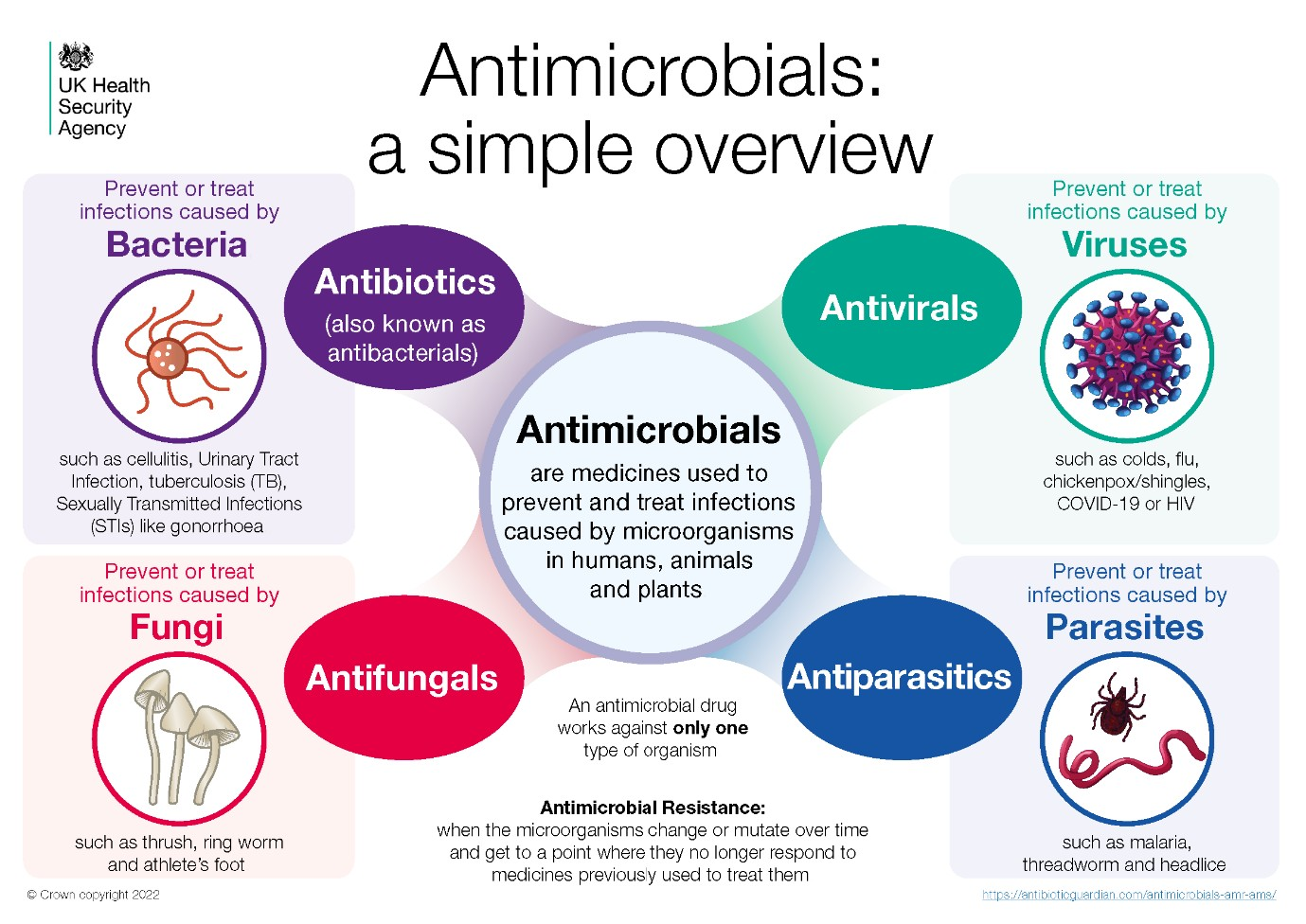
Antimicrobials are types of medicines used to treat infections in humans and animals (see Figure 2). These include:
- medicines that kill bacteria (antibiotics)
- medicines that kill viruses (antivirals)
- medicines that kill yeasts and fungi (antifungals)
- medicines that kill protozoa (antiprotozoals) and that kill parasites (antiparasitics)
Figure 2. Figure 2. Types of antimicrobials and the microorganisms they are used to treat
Source: Framework for understanding environmental antimicrobial resistance in England, Chief Scientist’s Group report, August 2020.
Text version of Figure 2
This infographic provides an overview of antimicrobial medicines. It shows that different antimicrobials are used to treat different types of microorganisms: antibiotics for bacteria, antivirals for viruses, antifungals for fungi and antiparasitics for parasites. The figure also explains that antimicrobial resistance occurs when microorganisms change over time and no longer respond to treatments that were previously effective.
End of text version of Figure 2
There are several commonly used terms associated with AMR, including:
- antimicrobial resistance occurs when the microbes that cause disease including bacteria, viruses, fungi and protozoa cease to be affected by the medicines we use to kill them and treat the disease
- antibiotic resistance occurs specifically in bacteria, making antibiotics less effective or ineffective, and is the most common and widely recognised form of antimicrobial resistance - often preferred in public communication because it is easier to understand
- superbugs are bacteria that are resistant to multiple antibiotics and are therefore harder to treat - a popular, non-scientific term often used in the media and public health campaigns, but now generally avoided in public messaging because it can be misleading, cause confusion, and create unintended positive connotations
- drug resistance refers to the reduced effectiveness of medicines such as antibiotics, antivirals, and antifungals because bacteria, viruses, and fungi no longer respond to antimicrobial treatments, and the term is often used interchangeably with antimicrobial resistance
The following video provides clear and engaging explanations of AMR, helping viewers understand what AMR is, why it matters, and its impact on individuals and healthcare worldwide.
Antimicrobial resistance (AMR) is invisible, I am not: videos by WHO’s Task Force of AMR survivors
This video is also a useful resource for explaining AMR – Antimicrobial Resistance (AMR) explained with magic: ABMU Pacesetter Project.
How antimicrobial resistance happens
AMR occurs when microbes such as bacteria, viruses, fungi, or parasites develop the ability to survive treatments that once killed them or stopped their growth.
AMR can occur naturally through evolution and has existed for millions of years. However, since the introduction of antimicrobial medicines into modern medicine, their misuse and overuse in people, animals, agriculture, and the environment have significantly accelerated this process.
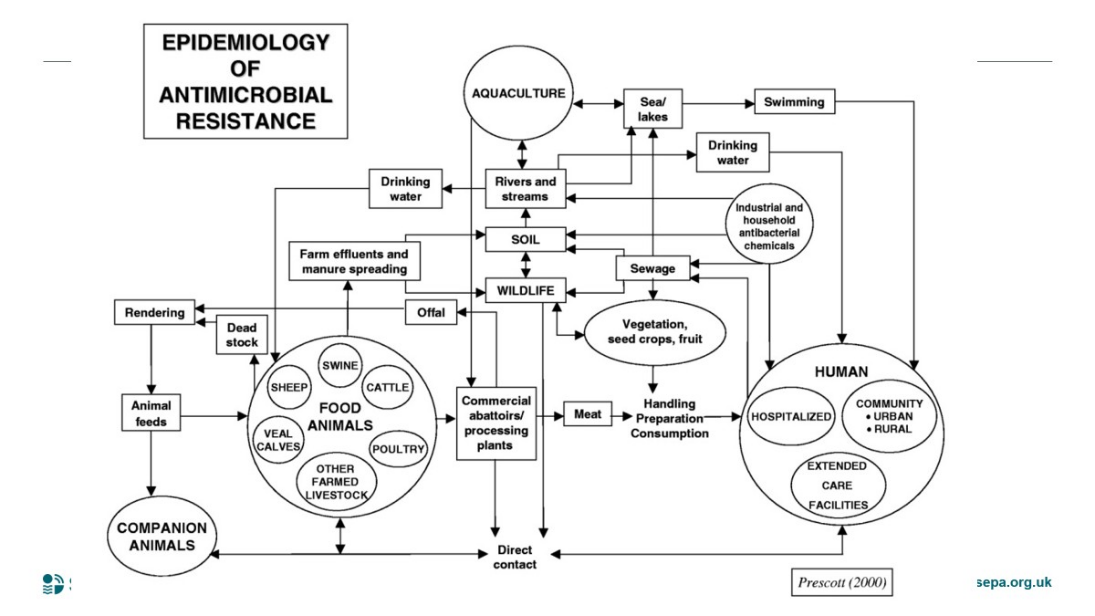
Microbes can share their resistance with each other by passing along pieces of their genetic material, and these resistant microbes can spread between people, animals, and the environment . This makes infections harder to treat, prolongs illness, and puts the effectiveness of modern healthcare at risk.
Figure 3 depicts the epidemiology of antimicrobial resistance and plausible pathways of spread between various environments.
Figure 3. The pathways of antimicrobial resistance transmission
Source: Third UK One Health Report, Veterinary Medicines Directors and UKHSA, November 2023.
While AMR cannot be completely prevented, it can be slowed and managed through careful use of antimicrobials in human and animal healthcare, infection prevention measures and coordinated global action (2).
The following videos provide helpful explanations of how AMR arises.
How antibiotic resistance arises 2019
Antimicrobial resistance (AMR): what does it mean and why it matters
Why antimicrobial resistance is a problem and why it matters
Antimicrobial medicines are essential for modern human and animal health.
When microbes become resistant, infections become harder and sometimes impossible to treat (3). In human health this causes longer illness durations, repeat consultations with healthcare providers and extended hospital admissions. In some cases, treatment failure can lead to admission to intensive care and, in other cases, death. In animal health, AMR can also lead to infections that are harder or sometimes impossible to treat, resulting in prolonged illness, more severe disease and an increased risk of death.
AMR places a substantial burden on health systems and economies, contributing to longer, more expensive hospital stays and affecting livelihoods. It also impacts animals and plants, reducing productivity, threatening food security, and increasing risks to animal health and welfare (3). Resistant infections can spread between people, animals, food and the environment, making AMR harder to control. Beyond individual infections, resistance determinants can circulate within and between microbes, enabling resistance to spread across different settings.
For many antimicrobials, few new treatment options are being developed, meaning it is increasingly important to protect the effectiveness of those we already have. Research into new antimicrobials, vaccines and diagnostic tests has not kept pace with the scale of the challenge (4).
In human health, this means we are losing effective treatment options faster than we are developing new ones, while continuing to rely on antibiotics to manage infections that could be prevented, better diagnosed, or treated more effectively.
In animal health, there is a strong emphasis on antimicrobial stewardship and disease prevention, including through the use of vaccination, to protect the antibiotics available for use in animals, as any new antibiotics developed are likely to be reserved for human use.
However, access to rapid, affordable diagnostic tests to support appropriate treatment decisions, remains a significant challenge.
Scale of the problem
Understanding the scale and complexity of the problem is essential for shaping meaningful action and ensuring that individuals and organisations recognise their role in tackling AMR. AMR is not confined to any single group and is a universal challenge that affects people from all backgrounds, ethnicities, and cultures worldwide. Patients, healthcare professionals, animal keepers, and the wider public all have a shared responsibility to reduce AMR and protect the effectiveness of antimicrobial medicines now and for future generations.
Globally, the 2024 GRAM Report highlighted that:
- AMR has caused over one million deaths each year between 1990 and 2021
- deaths from AMR in children under 5 have fallen by 50%, while deaths in adults aged 70 and over have increased by over 80% in the same period
- AMR could be attributable to 1.91 million deaths and associated with 8.22 million deaths globally by 2050
In England, the 2024 to 2025 ESPAUR Report found that:
- antibiotic resistant infections have increased by 13% in the last 5 years
- 2,379 people died with a resistant infection in 2024, 338 more than the previous year
- resistant bloodstream infection rates are 47% higher in the most deprived communities, a disparity that has widened by 18% since 2019
Nationally, the Chief Medical Officer’s Annual Report 2025 highlighted rising risks for older adults, including higher rates of severe illness, mortality, and complications such as stroke.
The 2024 UK VARSS report also found that despite a 57% reduction in antimicrobial use in livestock over the past decade, accompanied by an overall decline in AMR and multidrug resistance, high levels of resistance to some antibiotics, such as fluoroquinolones, are still being detected.
Contributing factors
The factors that drive AMR are complex and interconnected, affecting people, animals, food production, and the environment. Because these areas are closely linked, AMR must be understood through a One Health approach, recognising that the health of humans, animals, and the environment are deeply connected. The following sections outline the key contributing factors to AMR across each part of the One Health system (3).
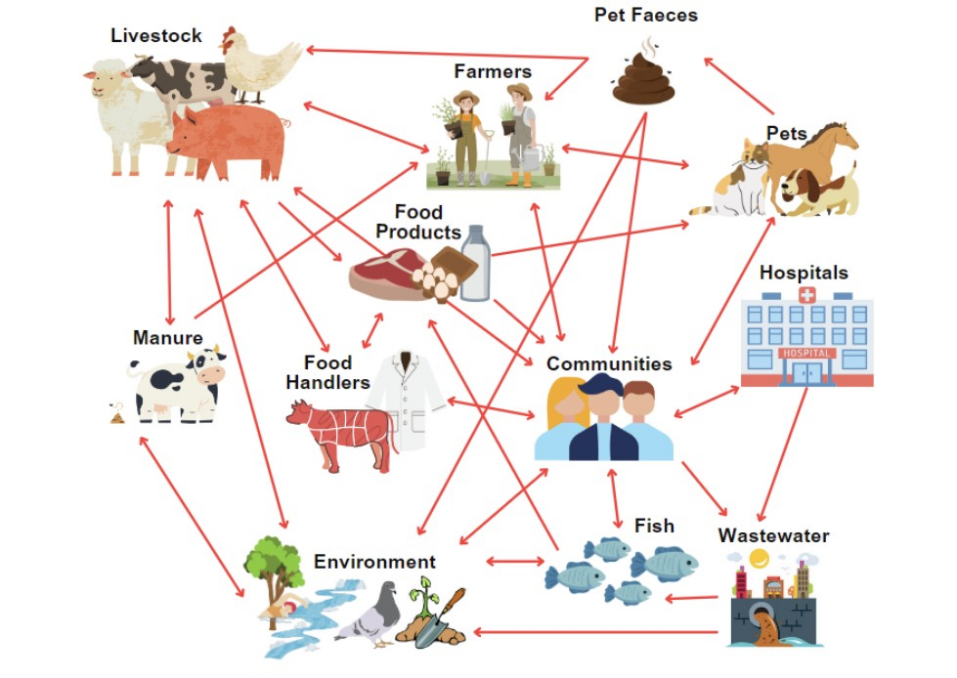
Figure 4 demonstrates the potential transmission pathways of antimicrobial resistance across a one health system.
Figure 4. Figure 4. Potential One Health transmission pathways of antimicrobial resistance
Text Version of Figure 4
This infographic shows a One Health model of antimicrobial resistance transmission. Arrows connect livestock, farmers, pets, pet faeces, food products, food handlers, communities, hospitals, manure, fish, wastewater, and the environment, illustrating how antimicrobial resistance can spread between humans, animals, food systems, healthcare settings, and environmental sources. The image emphasises that antimicrobial resistance is a shared challenge requiring coordinated action across all sectors.
End of Text version of Figure 4
Factors relating to human health include:
- misuse and overuse of antibiotics (for example, used for viral infections, broad‑spectrum use, and over‑the‑counter access without a prescription)
- poor or ineffective infection prevention and control (such as inadequate hygiene, cleaning, sanitation, ventilation, overcrowding and food hygiene)
- timely and effective diagnosis and treatment
- slow development of new antibiotics
- poor or ineffective antimicrobial stewardship (such as incorrect prescribing, dosing or duration)
- patient behaviours (such as not completing courses, saving leftover doses for later, incorrect disposal of antibiotics and sharing antibiotics)
- global travel spreading resistant organisms between countries
- rate of uptake of certain vaccinations
Factors relating to animal health include:
- inappropriate antibiotic use (such as for conditions where antibiotics are not needed)
- inadequate disease prevention measures on farms, including poor biosecurity, husbandry, cleaning and disinfection and/or lack of appropriate vaccination use
- the rise in popularity of raw pet food, which is more likely to be contaminated with resistant bacteria than non-raw pet food
Factors relating to food include:
- contamination with resistant bacteria occurring during slaughter or processing
- resistant bacteria in animal faeces used to fertilise land that can transfer to the environment
- food handled without the right hygiene practices that can spread resistant bacteria from one type of food to another or from the environment to food
- global food trade with cross‑border movement of livestock and produce spreading resistant bacteria and resistance genes
Factors relating to environment include:
- pollution from manufacturing creating high concentrations of antimicrobials in rivers and soil
- limitations and/or inappropriate management of sewage & wastewater leading to the introduction of antimicrobials, resistant organisms and many other AMR driving chemicals into water systems
- the use of wastewater, sewage and manure in crop production which can develop and spread AMR
- agricultural runoff carrying antibiotic residues and resistant bacteria into land and water
- shifts in temperatures and water patterns caused by climate change, affecting how infections and resistance spread
Case study: UKRI CLIMAR Network
The Climate Change Impacts on AMR Using a Planetary Health Framework (CLIMAR) Network examines the relationship between AMR, climate change, pollution, biodiversity, and other drivers captured by the planetary boundaries concept. It connects nature, health, equity and social justice to ensure a systems change covering human, animal and environmental health. The aim will be to find transdisciplinary solutions to reducing AMR infections while promoting innovations for alternative treatments.
Case study: Blue Adapt
BlueAdapt is a pan-European research project. We are investigating the impacts of climate change on risks to human health posed by pathogens and antimicrobial drug resistant bacteria in coastal waters. They aim to uncover how pathogens are changing across different climates and aquatic environments like rivers, estuaries, coastlines and the open sea. Findings will improve awareness of different health risks and improve the impact of policy initiatives to help Europe adapt to climate change.
Common misconceptions
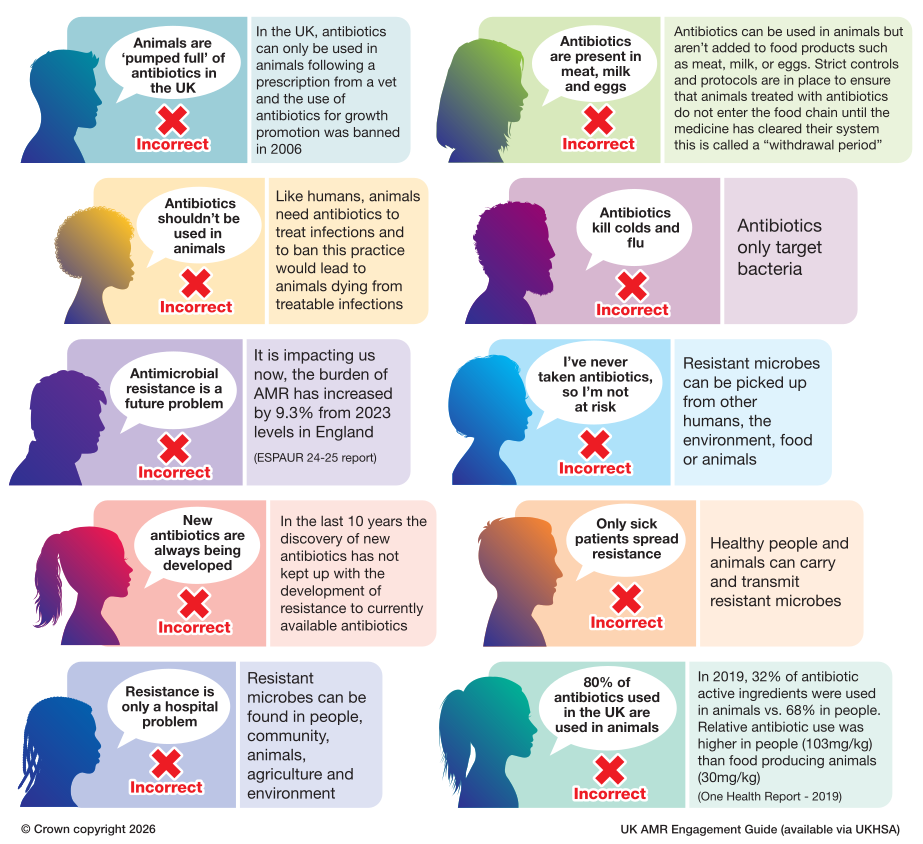
Myths about antibiotics and resistance can lead to their misuse. Figure 5 illustrates some common misconceptions of antimicrobial resistance in human and animal health.
Figure 5. Misconceptions about antimicrobials
Text version of Figure 5
This infographic addresses common misunderstandings about antibiotics and AMR. It explains that antibiotics do not treat colds or flu, AMR is a current and growing problem, resistant microbes can spread between people, animals, food, and the environment, and healthy individuals can carry and transmit resistance. It also highlights that AMR is not limited to hospitals, new antibiotics are not being developed fast enough to keep pace with resistance, antibiotic use in UK animals is tightly regulated, antibiotics are not added to meat, milk, or eggs and antibiotics remain essential for treating infections in both humans and animals.
End of text version of Figure 5
Back to home page
References
Numbers refer to the complete list of references found in the References section.
2. Holmes AH, Moore LSP, Sundsfjord A, Steinbakk M, Regmi S, Karkey A and others. ‘Understanding the mechanisms and drivers of antimicrobial resistance’ The Lancet 2016: volume 387, issue 10014, pages 176 to 187
3. UK Health Security Agency (UKHSA), Veterinary Medicines Directorate, Animal and Plant Health Agency, Food Standards Agency (2023). ‘Third UK One Health report: joint report on antibiotic use, antibiotic sales and antibiotic resistance, 2019’
4. World Health Organization, Global AMR R&D Hub (2024). ‘Progress in G7 countries in tackling the antibiotic pipeline crisis’