Energising Britain: Your voice in our Clean Energy Superpower Mission (accessible webpage)
Published 3 December 2025

© Crown copyright 2025
This publication is licensed under the terms of the Open Government Licence v3.0 except where otherwise stated. To view this licence, visit nationalarchives.gov.uk/doc/open-government-licence/version/3 or write to the Information Policy Team, The National Archives, Kew, London TW9 4DU, or email: psi@nationalarchives.gov.uk.
Where we have identified any third party copyright information you will need to obtain permission from the copyright holders concerned.
This publication is available at https://www.gov.uk/government/publications/energising-britain-your-voice-in-our-clean-energy-superpower-mission/energising-britain-your-voice-in-our-clean-energy-superpower-mission-accessible-webpage
Foreword from Minister for Climate, Katie White OBE MP
Communities across the country are already seeing the benefits of climate and nature action - lower bills, good jobs and cleaner air are creating better lives now and for generations to follow. This government is working both with and for people to deliver these benefits.
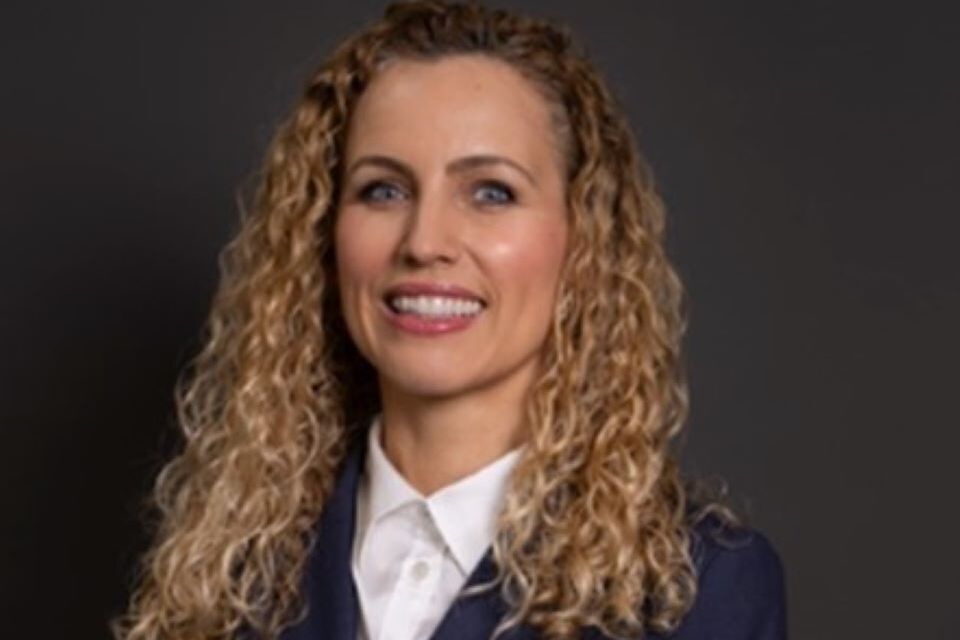
We are on a mission to make the UK a clean energy superpower. By swapping our dependence on unstable fossil fuel markets for clean, homegrown energy, we will protect British people from the kind of price shocks we’ve seen in recent years. We will also seize the opportunities for investment and the next generation of good, skilled jobs across the country. And we will safeguard our way of life and restore our natural environment for generations to come. The science shows that these are the decisive years for preventing climate breakdown, and the UK is determined to lead by example.
The good news is that we are making great progress. To meet our goal of clean power by 2030, we are delivering the biggest investment in clean, low-cost energy in British history, including record funding for renewables and nuclear. As a result, the clean energy sector is booming, growing three times faster than the economy as whole, with jobs that have higher than average wages.
However, we recognise that economic figures mean little to the millions of British people still gripped by the cost-of-living crisis. That’s why, this winter, an extra 2.7 million people on the lowest incomes will get £150 off their energy bills - over 6 million households in total. We’re also reforming the bills system, so that everyone’s bills will come down by an average of £150 per year from next April. And we are upgrading hundreds of thousands more homes, ensuring the most vulnerable people have somewhere secure that they can afford to heat. Money is also going back into frontline services at hundreds of schools and NHS sites thanks to Great British Energy’s solar panels cutting their bills.
As we have always said, our clean energy mission will only succeed if we take people with us. We want to make sure everyone can play their part and feel the benefits of a more sustainable, more prosperous society. I have been lucky to see first-hand how climate and nature action is improving lives and creating opportunities around the country. In Leeds, I learned how happy Maureen was with her district heating, thanks to lower bills and quicker access to a hot bath. In Manchester, I met Debbie and other members of the Southway Housing community, who volunteer to help grow and maintain green spaces around their housing associations, so children can eat fruit on the way to school and biodiversity can begin to thrive outside their door. And at London South East Colleges in Bromley, I spoke to Lenny, Ellis, Anis and Zain about the exciting careers ahead of them as clean energy technicians and electricians. “We are the future,” they said. They are right.
This public participation plan sets out how we are working together with businesses, trade unions and civil society, to ensure everyone can benefit from the opportunities created by our mission. It explains how we are involving people in policy design and delivery, highlighting some of the exciting and innovative work going on at a local level. As this plan makes clear, we will continue to support and champion these initiatives and do everything we can to protect future generations in a way which improves lives today.
Figure 1. Visiting the Green Flag Award-winning green space at Barlow Hall in Chorlton, Manchester in October and meeting the people involved in making it a success.
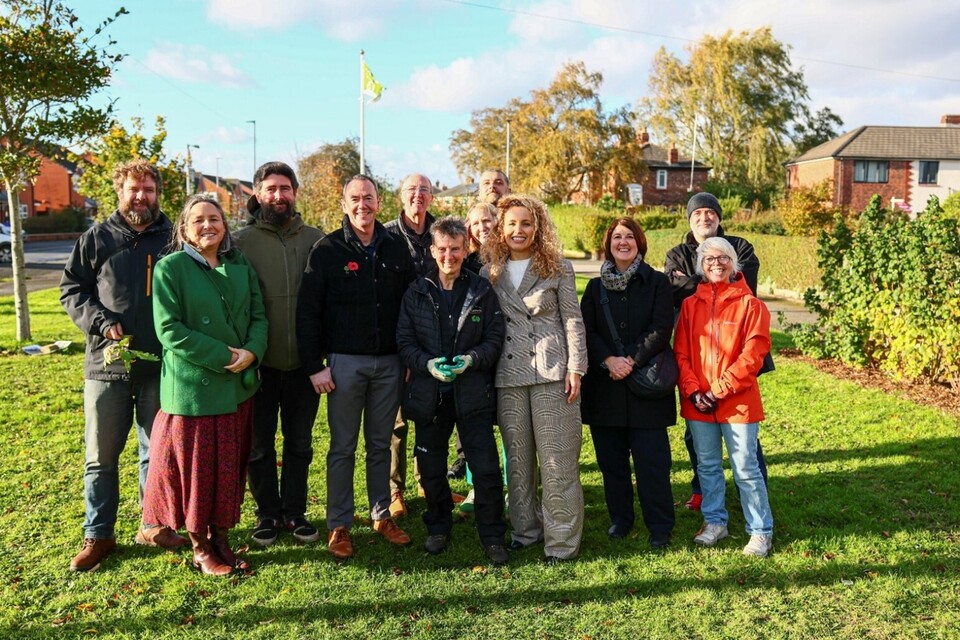
Photo provided by Paul Currie/Southway Housing Trust.
A mission that works for everyone
Our Clean Energy Superpower Mission will bring energy security, protect billpayers, create good jobs, and help to protect future generations from the cost of climate breakdown. By building a diverse low carbon energy system, we will make the most of our abundant natural resources to keep bills down for good and protect consumers from future price shocks. By doing this we can revive the strength of British manufacturing, bringing jobs and investment into our industrial heartlands - meaning more technological innovation, and bringing tens of billions of private investment into our country.
This plan sets out how we will involve and engage people and their communities in the policies and decisions that will help tackle climate change and deliver this mission. We are working across government departments to implement this approach when developing and delivering the policies that are improving people’s lives and helping to achieve our climate and nature goals. As well as being a signal of how government will act, it is intended to be a resource for any organisation wishing to engage the public on climate change or environmental issues.
Greater participation, including listening to and working in collaboration with people and their communities, can help make sure that they are involved and informed about changes affecting them and that the government can make policies that are more responsive to their needs.
This plan builds on a wide range of activities already taking place, both those led by the UK Government, and initiatives and projects being led by others, often within people’s local area. This includes seeking out views from local government and community groups, who have a unique understanding of local needs and opportunities and work in partnership with national and devolved governments to deliver climate and nature programmes.
We are working towards three goals:
- People have the facts and understand the scale, pace of change and benefits of climate and nature action, can see these benefits in their local communities, and want to be more engaged.
- Policies are responsive to people’s needs, are trusted, and are effective at bringing benefits today, whilst also reducing emissions to meet our climate targets and protect future generations.
- People have the information and resources that they need to access the full range of benefits that our mission is creating.
This work has already started. We will continuously review this approach to make sure it is effective and adapt it when and where needed.
Figure 2: Five principles set out how the UK Government is working with people, communities, organisations, businesses, trade unions, and education settings to make sure that the benefits of the transition can be accessed by all:
Communicate the action being taken that is improving people’s lives
Listen to people and communities so their voices guide what we do
Enable households to enjoy the benefits of climate and nature action
Grow people’s access to low carbon technologies and sustainable choices
Collaborate to inform and inspire climate and nature action
For people and communities, the principles show how they will be supported to access the benefits of the transition, like lower energy bills. They also set out how the UK Government will seek views as we design and implement policies to protect the British people and tackle climate change, recognising that this insight leads to better decision-making.
For organisations, like businesses, education settings, charities, scientific bodies and local government, they can be a resource to involve and engage people in their communities and local areas, or on the specific issues where they may be the trusted experts. For example, a business could apply some of these approaches to communicate with their customers or staff. We will continue to partner with these groups to develop tools and resources to help meet our collective goals.
As UK Government, the principles show how we will approach involving and engaging people when developing, implementing and evaluating policies. They are designed to be used in the way that is most appropriate and proportionate for the circumstances.
Delivering this plan
Communicate the action being taken that is improving people’s lives
We are sharing more information than ever before and making it easier for everyone to learn about, and take part in, our journey to a clean energy future through a new Clean Energy Mission website.
Setting a clear mission and plan
This government has a clear mission to make the UK a Clean Energy Superpower, protecting our British way of life by tackling the climate crisis in a way that makes people better off - with clean energy, lower bills, good jobs, cleaner air, and beautiful nature that we can be proud to pass on to our children and grandchildren. In 2008, we were the first country to establish a long-term legally-binding framework to cut emissions, through the Climate Change Act. We are already making good progress, with UK emissions falling by 44% between 2008 and 2024.
We recently published our Carbon Budget and Growth Delivery Plan, setting out how we will reduce emissions across all sectors of the economy over the coming 12 years up to 2037. Carbon budgets set a restriction on the total amount of greenhouse gases the UK can emit over a 5-year period, and this plan sets out the policies and proposals to meet our carbon budgets 4-6. Looking ahead, we will set the level of the seventh carbon budget (covering the period 2038 to 2042) in spring 2026.
Thanks to the investment decisions we have made, the green economy is booming, growing three times faster than the economy as whole, with higher average wages. We will continue to set out our long-term plan, including:
- Our recently published Clean Energy Jobs Plan sets out how the government will work in partnership with industry and trade unions to help workers in all parts of the country benefit from these opportunities - supporting our existing workforce to find new opportunities, training up the next generation, and helping young people into good, secure, unionised jobs. This is not just about new technologies, it’s about backing welders, engineers, fabricators and technicians across our industrial heartlands, as much as scientists and software developers.
- Our Clean Energy Industries Sector Plan, published in June, focuses on capitalising on our strengths in clean energy across the UK by encouraging investment, growth and good jobs in clean energy industries, as part of the UK Government’s Modern Industrial Strategy. The objective of this plan is that by 2035, the UK will be the most attractive place to invest in Clean Energy Industries in Europe, be a world-leading exporter of low-carbon products, services and innovation and have secured resilient and robust clean energy supply chains. This will create hundreds of thousands of good jobs at good wages across the country, supported by strong trade union recognition. From blade manufacturing in Hull to new nuclear in Somerset, Carbon Capture Utilisation and Storage in Scotland, floating wind off the coast of Scotland and in South Wales, and fusion in the East Midlands we will deliver the benefits of our mission to communities.
Nature is an essential part of this mission. When we restore natural areas like forests and wetlands they can absorb and store carbon, which helps to address climate change, support wildlife and give people beautiful spaces to enjoy. The UK Government has published a revised Environmental Improvement Plan for England, setting out how we will protect and restore our natural environment and ensure that everyone can benefit from increased access to natural spaces that boost physical and mental wellbeing.
We also have to make our homes, critical infrastructure, biodiversity, and natural resources - such as our water supply - more resilient to the extreme weather events becoming more frequent as our climate changes. This also means recognising where cross government priorities such as water demand reduction and planning can contribute towards our net zero ambitions. Climate adaptation - the actions that protect us against the impacts of climate change - must be done as well as reducing emissions. Recognising the need to invest for the long-term, this government has committed more than £10.5 billion into our flood and coastal erosion defences by March 2036, whilst our £30 million investment in the Big Nature Impact Fund, seeks to mobilise £90 million in investment to support woodland creation, peat restoration and biodiversity projects.
Climate and Nature Statement
Open and clear communication at the right moments is important in building confidence and trust in the decisions that government is taking and why they are needed. This is backed up by our research that shows that people expect the government to take a lead in informing people about what is being done to prevent climate change and adapt to its impacts, as well as working with other groups outside of government that communicate and engage with people on these issues.
This is why in July this year the Secretary of State for Energy Security and Net Zero, Ed Miliband MP, alongside the then Secretary of State for Environment, Food and Rural Affairs, Steve Reed MP, gave the first-ever statement on the State of Climate and Nature. The statement provided an honest appraisal of the state of climate and nature in the UK and the action being taken to benefit people now, as well as future generations, demonstrating how the choices we make as a country influence the course of global action. This is intended to be an annual statement to Parliament.
Clean Energy Mission campaigns
A new Clean Energy Mission website on GOV.UK launched in September 2025, providing households with clear, accessible and impartial information about the Clean Energy Superpower Mission and the everyday actions people can take to cut bills, reduce emissions, and protect the environment.
We have launched a second wave of the Warm & Fuzzy campaign providing information on the benefits of heat pumps and encouraging people to explore their eligibility for the Boiler Upgrade Scheme. We are working across government on a comprehensive Warm Homes Plan for households to cut energy bills for good and will publish more details soon. We have also launched an energy saving campaign, sharing the low and no cost steps households can take to improve energy efficiency and save money on their energy bills.
We know that access to free and impartial energy efficiency and clean heating advice is essential for people to navigate changes in the way they heat their homes. To help people to act we are strengthening government-led advice and information services. In 2026, the government will launch an enhanced, impartial digital-first advice and information service that will act as the ‘national spine’ for home retrofit advice. The service will inform consumers on energy efficiency and clean heating measures they can install in their homes, find sources of public funding and check their eligibility, identify trusted local installers, and point households towards green finance options. We will consider how to integrate this with local advice services, to better target harder to reach communities and homes. A national phoneline will continue to support householders that require additional assistance or more specialised help.
As we run these campaigns and services we will be working with partners outside of government, including local government, trade unions, businesses, influencers, and civil society organisations to make sure they reach as many people as possible. We work closely with the Scottish Government and Welsh Government, who respectively run their own Net Zero Nation and Climate Action Wales campaigns.
We are also encouraging campaigns led by industry that inform people about the changes that they may see taking place around them as part of the transition to clean energy. Some examples are the Energy Networks Association’s (ENA) Moving the Grid Forward campaign, which is raising awareness and understanding of the reasons why the UK is investing in new infrastructure to support the expansion of renewable energy, and RenewableUK’s upcoming campaign on the benefits of wind and solar to the UK economy and energy system.
Delivering the mission with communities and local government
Change often begins at the local level. Local government, community energy groups, and grassroots organisations play a vital role in driving local action towards decarbonisation, also delivering a range of shared benefits and boosting local economies. Local government has significant experience in working and engaging with communities on a range of subjects that can have local, national, and global impact. This includes schools and colleges, where they can promote educational opportunities.
Partnering with Mayoral Strategic Authorities
We work closely with Strategic Authorities - particularly Mayoral Strategic Authorities - to plan for a net zero future, recognising their vital role in engaging local communities. The English Devolution Framework outlines how they contribute to clean energy planning, including Regional Energy Strategic Plans, and shaping local jobs and skills through adult skills funding. Net zero strategy is co-developed through forums like the Local Net Zero Delivery Group and regular Mayoral Roundtables chaired by Department for Energy Security and Net Zero (DESNZ) ministers.
Great British Energy will put communities at the heart of clean power deployment, working with local energy groups, devolved governments and mayoral authorities to unlock funding and strategic support, and drive local empowerment across the UK.
As part of this, Great British Energy is already supporting the Mayoral Strategic Authorities in England with a shared £10 million pot to deliver renewable energy projects. This will see solar energy installed on a range of community buildings across the country - from schools, libraries, and leisure centres to community centres, police stations, fire and ambulance centres and care homes. In addition to solar PV, some projects will also include battery storage facilities and electric vehicle charging infrastructure. Collectively, these projects are expected to save regions around £35 million on lifetime energy bills, enabling local services to reinvest more into their communities, while improving energy security and supporting good jobs.
Powering schools and hospitals with solar
Great British Energy is already investing millions into local and community energy with the UK Government. For example, one of its first investments is a £255 million fund for Great British Energy Solar. This scheme will support around 250 schools, around 260 NHS sites (covering a third of NHS England sites) and 15 military sites in England to install rooftop solar panels and complementary technology including batteries. The scheme will allow millions of pounds to be invested back into frontline services with money saved on energy bills.
These projects can also demonstrate the benefits of this technology to the communities where they are based, including pupils, parents, and visitors to schools, and at hospitals for patients and staff.
Local Power Plan
The Local Power Plan (LPP) is a joint plan between Great British Energy and DESNZ, which will outline our shared vision for the local and community energy sector: to drive the growth of locally owned renewable energy projects and support efforts to unlock cleaner, cheaper and more resilient power at the community level. This will give communities a direct stake in the transition to net zero. We are continuing to develop the Local Power Plan and updates will be provided soon.
Listen to people and communities so their voices guide what we do
Engagement with people and communities is informing our climate policies. We are launching a new annual Energising Britain event to celebrate, support, and learn from the vital climate and nature action taking place across the country to ensure that everyone can have their say on the approach to the transition and access the benefits it is creating.
Engaging widely can enable better-informed decisions, building trust and legitimacy. This process includes having open and transparent discussions with organisations, industry, trade unions, communities and people, acknowledging their experience and expertise, and appreciating how this can contribute to better outcomes.
Taking this approach in climate policy is just one part of a broader move across government to put people at the heart of policymaking. Other examples include the Change NHS programme, launched in 2024 to shape the 10 Year Health Plan for England, and the 2025 ‘National Conversation’ on Land Use with farmers and landowners to discuss how to protect productive agricultural land and boost food security while restoring nature. In 2025, the UK Government also established the Local Net Zero Delivery Group to improve the participation of local government in climate issues and provide opportunities for their input into new policies. Our Clean Energy Jobs Plan promotes stronger voice at work, including through trade union recognition to ensure that workers have a say in the decisions that affect them.
Supporting and learning from engagement at a local level
Engagement can be especially effective when it is carried out at a local or regional level, involving people on issues that are most relevant to where they live, as well as ensuring that communities feel that they have been consulted and listened to. By utilising the data and insight that comes from local and community-led engagement, local and national governments can consider community and place-based views when making national policies. This can ensure that they are better designed for their local area, more trusted and therefore more likely to achieve their objectives. Zero Carbon Cumbria (see below) is just one example of this.
The UK100 Local Climate Engagement programme supports local authorities in England to plan, commission and deliver high-quality public engagement, in a way that benefits both them and local people. Led by UK100 the partnership includes Involve, and in previous phases Democratic Society, Shared Future and Climate Outreach.
As part of the UK Government’s delivery of the annual Climate and Nature Statement, we will convene a new Energising Britain event, bringing together community projects, local authorities and organisations, youth groups, and environmental champions from across the country, showcasing inspiring projects and highlighting the power of community-led climate and nature action. It is an opportunity to listen to the views that people have provided through local engagement exercises so they can inform our plans at a national government level.
Zero Carbon Cumbria is a partnership of voluntary and public sector organisations and businesses working to reduce emissions in Cumbria. An award winning online hub provides information about the initiative, the impact of climate change in the county and actions being taken locally to address it. Early in 2025 the Partnership commissioned the Cumbria Climate Assembly, funded by the National Lottery and facilitated by Shared Future. It brought together over 40 randomly selected people from different walks of life, meeting on six occasions, including face to face, to hear evidence, discuss and debate how citizens can influence decisionmakers to take meaningful action on the climate crisis.
The group developed a set of principles and recommendations for local and national governments and businesses. Since it concluded, many of the participants have continued to advocate for the Assembly - meeting organisations, councillors and MPs across the county to share their experience and gather support for action on its findings, including the setting up of a permanent assembly in Cumbria - a proposition which is gathering steam. You can find out more information and view the Assembly ‘Charter’, with over 200 signatories, on the Zero Carbon Cumbria website.
I started out a climate sceptic - now I understand how serious this is.’ Peter, Assembly member
A cross-section of society from all walks of life can listen, share experience and, together, solve problems in a common sense, practical way that can be difficult for politicians to do alone.
Lauren, Assembly member
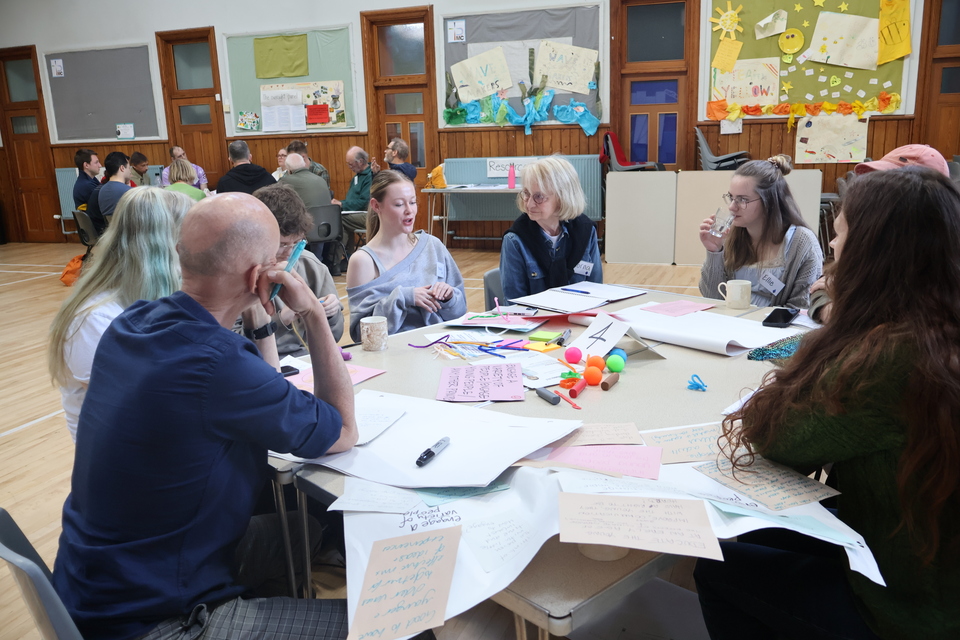
Figure 3. Assembly members during one of the sessions. Photo provided by Pete Bryant/Shared Future.
Promoting participatory engagement
Participatory policymaking describes ways of engaging a wide group of people, as well as expert groups and organisations, to enable better-informed decisions and outcomes, particularly for complex issues. It includes various methods, tools and techniques through which people can have greater influence and impact on policy decisions. Many of these methods involve deliberation, which gives people the time, information and conditions to understand, think through and discuss complex issues.
UK Government departments have run a number of these participatory engagement projects in recent years to inform decision making on a range of topical issues. A recent example is the development of the Good Food Cycle, where the Department for Environment, Food and Rural Affairs (Defra) has worked with the Food, Farming, and Countryside Commission (FFCC) and Food Foundation to involve people, alongside government and experts, in the development of a strategy to ensure that we have a food system that can feed the nation, realise its potential for economic growth, protect the planet, and nourish individuals, now and in the future. You can find further information about this engagement on the FFCC webpage.
Participatory engagement will be particularly important where significant changes are needed to the electricity grid to deliver clean power by 2030. The Government Office for Science has established a community of practice for people working on and researching the grid and has published a set of principles for navigating the social aspects of grid transformation. These highlight the need for early and transparent two-way engagement that recognises place specific knowledge and context. Following these principles offers a way to build consent, trust, and legitimacy and unlock the changes needed to the grid to achieve our mission.
Earlier this year we published guidance that sets out the government’s recommendations for how communities who host onshore electricity transmission infrastructure should benefit in a fairer and more consistent way. It also emphasises the need for network infrastructure developers to work collaboratively with communities from an early stage to deliver funding for local projects that reflect communities’ needs and priorities.
Enable households to enjoy the benefits of climate and nature action
We will make sure that everyone who wants to access the benefits of the transition can. To build capacity within government we will launch an internal Climate and Nature Participation Hub, providing information and resources on public engagement and social and behavioural research to help policymakers.
Through the Carbon Budget and Growth Delivery Plan we have set out low carbon policies that can help people realise a range of benefits, whilst also reducing carbon emissions. We are taking action to unlock these benefits and support households to access them by addressing some of the practical and information barriers that people might face. For example, as of November 2025 the £2 billion Electric Car Grant has supported over 35,000 drivers save money when transitioning to an electric vehicle. We are also helping to create new opportunities for households to save on their energy bills by building a more flexible electricity system that can also meet our future needs, set out in our recent Clean Flexibility Roadmap.
This action is helping people across the country like Rose (see below) reduce their energy bills and benefit from the transition to clean energy.
After 30 years of living in a draughty terraced house in the coastal village of Portreath, Rose decided to overhaul how her home was heated. She used government grants to insulate and switch to clean energy sources. She added internal wall, roof insulation and a solar thermal heating system. Her electricity bills have reduced by around a third.
Then energy prices started going up and I thought I need to reduce my bills. I’m on an extremely low fixed income. And if I can do it, anyone can do it.
Rose Lewis, Pensioner, Cornwall
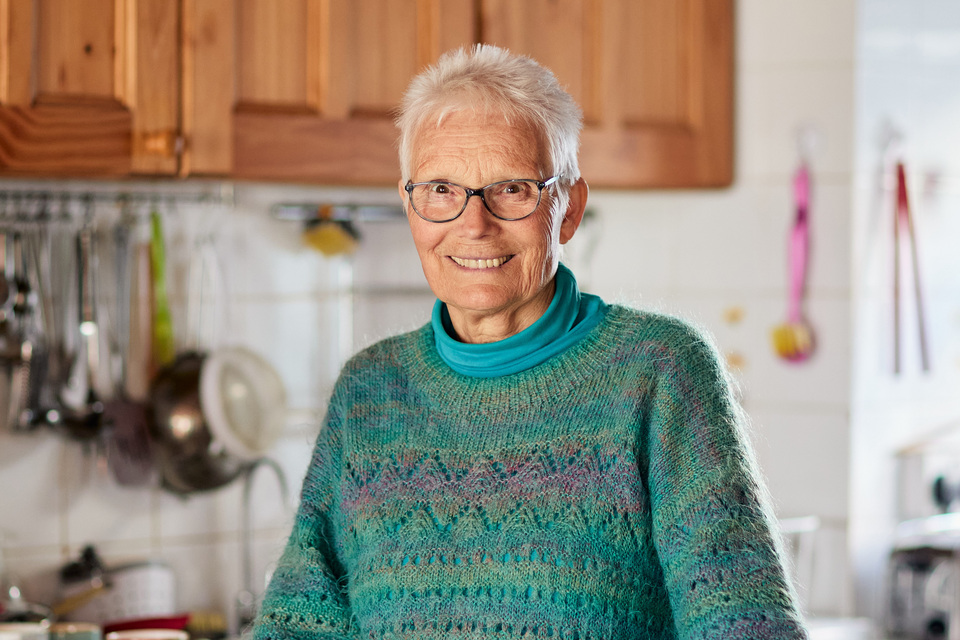
Figure 4. Rose in her home. Photo provided by Alex Leat/Local Storytelling Exchange.
Promoting the use of social and behavioural research
To support people to adopt new low carbon technologies and enjoy the benefits they offer, policymakers need to understand people’s lives and how they make decisions. Social and behavioural science can be used to make policy design better and fairer. It can do this through identifying the needs of different groups and developing policy that is responsive to people’s lives. It also informs policy design, by examining and testing what works in the real-world before rolling out at scale and then evaluating policies once they have been implemented.
Increasing the use of social and behavioural research across policy will also help deliver government’s ambition for a fair and affordable transition. To support this, we are undertaking research to explore public perceptions of fairness across a range of policy areas. We will continue to support the use of social and behavioural research and are developing new tools and resources for policy makers, embedding best practice within government teams. A new internal Climate and Nature Participation Hub will support policy makers to learn when and how they can apply these methods to improve climate and nature policies.
For example, the Boiler Upgrade Scheme provides a grant to support people to switch to low carbon heating. The scheme has received over 100,000 voucher applications since it was launched and continues to grow. Social and behavioural research played a pivotal role in shaping the scheme, providing valuable information about the factors that homeowners and installers said had prevented them from engaging with it and leading to changes aimed at increasing uptake. We continue to work to make the scheme as effective as possible and have published the government response to a recent consultation providing detail on amendments that will be implemented from next year that are designed to increase access, grow further demand and enhance existing consumer protections, making low carbon heating technologies more accessible to a wider range of property owners and small businesses.
We continue to consult on policy changes and consider how we can make it easier for people and businesses to provide their views. We are also equally committed to assessing the impact of our climate policies to ensure that benefits of the transition reach everyone.
Getting independent expert advice
We will engage and partner with experts and academic organisations in our work. This includes through the DESNZ Science and Technology Advisory Council (STAC), which provides the department with independent advice on science, engineering, technology, and analysis (including social and behavioural science). The STAC helps the department to access, interpret and understand a range of scientific information, and provides independent advice about its relevance, potential and application.
The British Academy is the UK’s national academy for the humanities and social sciences, providing independent, authoritative and objective insight on complex issues. During 2024 and 2025 the British Academy convened several roundtables with the Chief Scientific Adviser at DESNZ and experts, academics and policy makers to discuss research to help develop this strategy. We will continue to work with the British Academy as we deliver on the principles set out in this plan.
Grow people’s access to low carbon technologies and sustainable choices
We are working with businesses and experts, including the Net Zero Council, to support innovation and economic growth across the green economy.
The transition to net zero is the economic and industrial opportunity of the 21st century. The UK’s green economy is growing more than three times faster than the wider economy, and according to the CBI, jobs in this sector are 15% better paid and 40% more productive than the national average. Engaging customers, staff and supply chains can lead to improved access to the benefits of the net zero transition, increased uptake of related products and services, enhanced consumer and investor confidence, and a rise in low-carbon investments, positioning businesses to attract new markets, employees, and investment. There are several ways businesses can support and benefit from engagement with the public.
Innovate: Innovation is key to making the transition to net zero easier and more accessible. Businesses are taking a lead by developing low-carbon solutions that not only reduce emissions but also improve products and services, capturing new growth and market opportunities in the process.
Advocate: Businesses have strong incentives to promote the benefits of climate action, which offer new market opportunities, access to green finance, and lower energy bills. Climate action also supports broader societal goals like protecting the natural spaces that we enjoy, making our homes warm and comfortable, and improving the quality of the air that we breath. Businesses can influence customers, employees, and partners by modelling climate leadership and communicating the benefits of acting on climate change.
Eco-Pak is a fresh produce packaging business that has saved £30,000 per year and created 15 new jobs thanks to the support of a local community group, which helped it pull off a huge energy-saving project. As well as installing solar panels, Eco-Pak has gone further to cut energy use and is now lit by 100% LED bulbs, cutting lighting power usage by 60%.
The cost reduction has allowed us to stay competitive, which in turn has allowed us to gain more business, and maintain and increase the amount of jobs we can offer. We are much more optimistic than we were before.
Richard Hall, Operations Director, Eco-Pak
Cambridgeshire
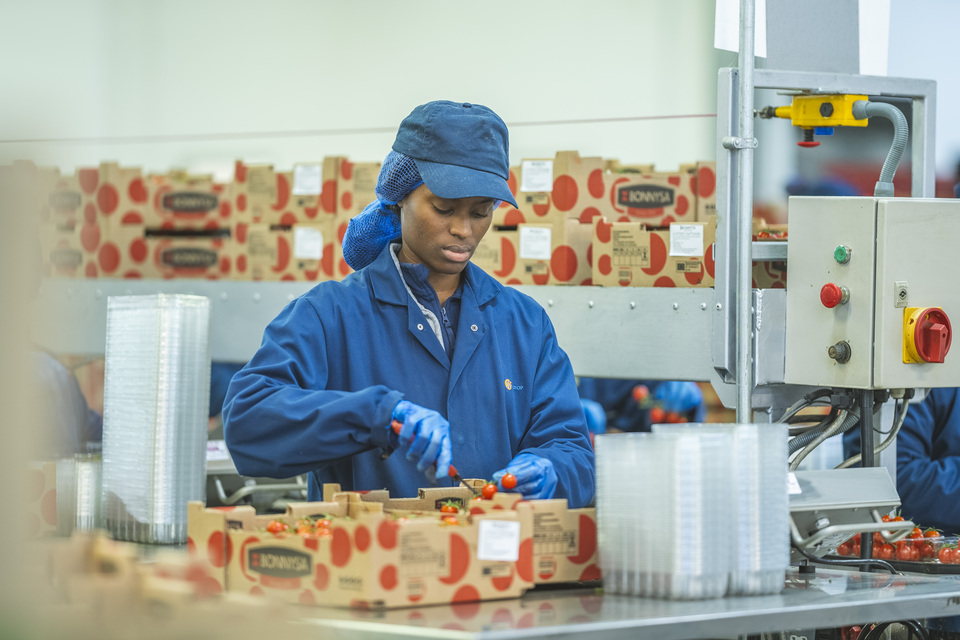
Figure 5. Photo provided by Eco-Pak
Inform: Every day, people interact with a wide range of businesses, products, and services, each offering an opportunity to raise awareness about climate change. By providing information through advertising, product packaging, energy bills, or ecolabels, businesses can inform people about the environmental impact of their products, operations or services and show the action that they are taking to reduce their emissions.
Incentivise: Businesses can make sustainable choices easier and more attractive by offering incentives and support, ranging from small initiatives like reducing drink prices when using reusable cups, to installing electric vehicle charging points for employees.
The Net Zero Council
The Net Zero Council is a partnership between government, the private sector, civil society, local government and trade unions. It provides advice to government to support policy development, co-ordinate action to address cross-economy challenges and maximise the many economic and societal opportunities offered by the net zero transition. We will continue to work with members across each of the Council’s constituencies to identify opportunities for new initiatives, drawing on representatives’ expertise and climate leadership to deliver the benefits of the transition.
We are working with the Council to develop resources and tools that can support businesses and promote innovation. Ensuring that small business owners and employees have access to the information and guidance they need is key. The UK Business Climate Hub provides free advice and guidance and is delivered in partnership with government and a coalition of organisations, with the Council supporting work to develop and amplify the site. The Council is also taking forward work to support sectors to develop their own sector-level transition plans, which consider the role of public engagement, how new technologies can be accessed, and jobs and skills.
Small and Medium-sized Enterprises (SMEs) make up 99% of businesses and the Council is supporting work led by the British Chambers of Commerce to look at the barriers to SME innovation and how they can be supported to bring new technologies to market which can benefit people. Taking action on climate can bring direct benefits to businesses – the independent, government-backed Willow Review found that 67% of those who took action reduced their operational costs.
Building a circular economy
Sharing, repairing and refurbishing, remanufacturing and recycling creates a closed loop - circular economy that gives products and materials a new life again and again, meaning less waste going to landfill and fewer greenhouse gas emissions. Defra will be publishing a Circular Economy Growth Plan, developed in close partnership with the Circular Economy Taskforce - a diverse group of experts appointed from a range of sectors.
Collaborate to inform and inspire climate and nature action
We are teaming up with people and organisations that inspire action and can help people understand and access the benefits of the clean energy transition. We are creating a new Youth Climate and Nature Panel to ensure the voice of younger people and intergenerational collaboration are at the heart of our climate policies. This follows the UK’s leadership at COP29, as the first national government to endorse the NDC Youth Clause, recognising the importance of youth voices in climate action.
By working with a range of individuals and organisations that people may trust - like scientists, heating engineers, teachers, trade unions, and local authorities - we can ensure that information about climate change and the support available to adopt low carbon technologies, are shared widely and provide the most useful information for different people. This collaboration can be particularly helpful to identify ways to engage with individuals and communities that may be more impacted by the effects of climate change to ensure that their views and needs are reflected in government policies and decisions. Innovative, creative and exciting projects are taking place across the country, inspiring people, communities and businesses to work together to take climate action.
Liverpool, the first UN Accelerator City for Climate Action
In November 2024, Liverpool was announced as the world’s first Accelerator City for Climate Action by the UNFCCC in recognition of the city’s commitment to exploring ways to rapidly decarbonise its film, TV and music sectors.

Figure 6. Photo shared by Stratus Imagery.
Partnerships with BBC Radio One Big Weekend to decarbonise a major music festival, BBC drama to implement best practice for location filming in Liverpool, Liverpool M&S Bank Arena to trial approaches around audience transport, power and waste to create super low emission arena shows, and with BAFTA, BFI and Screenskills on creating a National Occupational Standard for sustainability roles within TV and Film were all part of the programme. The city also brought together Film, TV and Music companies with cities and suppliers to sign a collaborative statement of intent. This noted the Creative Industry Transition to Clean Site Power by 2030 and released five new sets of ‘city guidelines’ across a range of areas which can be adopted and adapted by cities across the UK. More details can be found https://cultureliverpool.co.uk/accelerator-city/.
Youth Climate Participation
At COP29 in 2024, the Prime Minister announced the UK’s ambitious and credible Nationally Determined Contribution (NDC) target to reduce all greenhouse gas emissions by at least 81% by 2035, compared to 1990 levels. The UK was also the first national government to endorse the Universal Youth Clause in NDCs at COP29 - and we are working across government to ensure that a youth perspective informs our climate policies.
From July 2023 to June 2025, Jodie Bailey-Ho and Will Wale were appointed by the Department for Education as the first Youth Sustainability Champions, including representing the UK Government at COP28 and COP29.
“It’s been amazing to take young people’s views directly to decision-makers,” said Jodie. “I’ve seen how much impact youth voice can have when it’s truly listened to.”
The Department for Education now has three Youth Sustainability Champions serving two-year terms - Eliška, Naomi and Alfie. They work to ensure that youth voices are included in the refresh of the Department for Education’s Sustainability and Climate Change Strategy, due to be published in 2026. They also regularly visit schools and education settings across the country to encourage young people from all backgrounds to get involved in climate education. In addition, they are currently exploring links between green skills, school buildings and the curriculum, and are ensuring that the department is positioned to embed sustainability and climate change across relevant subjects.
“We want to make sure every learner, no matter where they are, understands the role they can play in tackling climate change - and that education gives them the skills to do it,” said Alfie.
Through our education and skills system, we are seeking to inspire young people to choose career paths in green industries. In response to the recommendations of the independent Curriculum and Assessment Review in November 2025, we will enhance the climate education content which is already present in the national curriculum in the subjects of geography, science and citizenship, and we will also include sustainability within the design and technology (D&T) programme of study. We will ensure that the relevant programmes of study introduce key concepts on climate education at primary level and we will make citizenship compulsory in key stages 1 and 2, ensuring primary aged children are introduced to key climate education content. Further, a new Natural History GCSE will help young people understand and respect the natural world and contribute to its protection and conservation.
We are also investing in improving the education estate, providing new naturally ventilated schools with better access to outdoors and well designed and planted grounds, as well as adapting schools at most risk to cope with flooding and overheating.
The Sustainability Support Programme has helped more than 9,000 nurseries, schools and colleges across England (making up over a third) to embed sustainability, climate awareness, and nature connection into education. The Sustainability Support for Education online service provides support in anything from setting up a sustainability team or embedding climate change in the curriculum, to carrying out an energy efficiency assessment or adapting for flooding and over-heating. The Climate Ambassador Programme matches volunteer climate ambassadors with schools, nurseries and colleges to help them develop and implement climate action plans, supported by Let’s Go Zero Climate Action Advisors. And the National Education Nature Park connects all children and young people with the natural world, regardless of where they live or their background.
In July Secretary of State for Energy Security and Net Zero, Ed Miliband MP and We Are Family Foundation convened a group of climate and nature youth leaders to listen to their views on how the UK can deliver on the ambition of the NDC Youth Clause.

Figure 7. A meeting in July 2025 between climate and nature youth leaders, Secretary of State Ed Miliband MP and We Are Family Foundation.
Through ongoing engagement and collaboration with young people - as important drivers of climate action and agents of change - we are working to ensure the benefits of the transition can be accessed by all. As part of this we are setting up a new Youth Climate and Nature Panel to provide expert insight to government as we develop net zero policies and strategies and to advocate for climate and nature action through engagement and outreach with young people. We intend to establish and run the panel in partnership with youth groups and external partners, such as We Are Family Foundation that launched an Intergenerational Coalition of youth leaders, organisations and businesses earlier this year. The panel will be appointed in 2026, with a work programme running over two years that will be co-developed with partners and panel members themselves once appointed. We intend for a core focus of the panel to be identifying and developing resources that can support both targeted engagement on climate change and nature issues, as well as collaboration between generations.
Annex: Developing our approach
To develop the approach set out in this document we sought a wide range of views and assessed evidence, including:
- Conducting social and behavioural research with the public, including on how and when people want to be engaged by government on climate policies, what they consider to be fair and who they go to for trusted information.
- Consulting experts in behavioural science and public engagement such as organisations, businesses, trade unions and academic institutions and listening to their advice. This has included, but is not limited to, establishing an expert group under the Net Zero Council; working with the Government Office for Science on roundtables, chaired by the government’s Chief Scientific Adviser, Professor Dame Angela McLean, and the then Minister for Climate, focused on public engagement on grid infrastructure and adopting green choices and behaviours; seeking views from leading experts convened by the British Academy; and working with the ACE Coalition, a group of experts in climate and public engagement convened by Climate Outreach.
- Reviewing recommendations made to government in recent research papers and reports, including those by the independent expert advisory Climate Change Committee.
- Considering recommendations from the 2020 UK Climate Assembly. This brought together over a hundred members of the public from different walks of life and with differing opinions on climate change and how it should be addressed. At the assembly these participants learnt about climate change, hearing from a range of experts and public figures, including Sir David Attenborough. They took time to discuss this and provide their views on what should be done, forming recommendations that were published in a report. We appreciate the time and consideration that participants put into this process and have considered the findings carefully.
- We are also learning from organisations like the Local Storytelling Exchange and Round Our Way that are making sure that stories about the impacts of climate change on our day to day lives, as well as the action that people are taking in their communities to address it, are part of the national discussion and news reporting. These stories can also highlight the benefits that can be realised, including for health and wellbeing and protecting the places that we care about. We thank the Local Storytelling Exchange for sharing Rose and Richard at Eco-Pak’s stories with us.
We have worked closely with the Scottish Government, Welsh Government and Northern Ireland Executive to learn about their approaches to public participation and share knowledge. The Scottish Government and the Welsh Government have published their own public engagement strategies in recent years and the Northern Ireland Executive is currently in the process of developing its own. We have sought to align our approach so that it is complementary to existing activities that are taking place across the UK. We will continue to work in partnership with the Scottish Government, Welsh Government and the Northern Ireland Executive to support work across the four nations and share both learning and resources.