Electricity Supply Emergency Code
Updated 13 April 2026

© Crown copyright 2026
This publication is licensed under the terms of the Open Government Licence v3.0 except where otherwise stated. To view this licence, visit nationalarchives.gov.uk/doc/open-government-licence/version/3 or write to the Information Policy Team, The National Archives, Kew, London TW9 4DU, or email: psi@nationalarchives.gov.uk.
Where we have identified any third party copyright information you will need to obtain permission from the copyright holders concerned.
This publication is available at https://www.gov.uk/government/publications/electricity-supply-emergency-code/electricity-supply-emergency-code
Revised April 2026
Introduction
1.1. The Electricity Supply Emergency Code (ESEC) describes steps which the UK Government could take to deal with:
- a ‘civil emergency’ as defined in section 96(7) of the Electricity Act 1989 - “any natural disaster or other emergency which, in the opinion of the Secretary of State, is or may be likely to disrupt electricity supplies”; or
- an electricity supply emergency of the kind envisaged in section 3(1)(b) of the Energy Act 1976 - “there exists or is imminent in the United Kingdom an actual or threatened emergency affecting fuel or electricity supplies which makes it necessary in His Majesty’s opinion that the government should temporarily have at its disposal exceptional powers for controlling the sources and availability of energy”.
1.2. It sets out the actions which companies in the electricity industry should plan to take and which may be required to deal with such emergencies.
1.3. In the event of an emergency, ESEC enables an equal distribution of electricity supply to customers as far as reasonably practicable, whilst ensuring that pre-designated Protected Sites maintain supplies for as long as possible.
1.4. Should these measures require to be introduced, it is likely there would be accompanying appeals to the public and industry to reduce electricity consumption.
1.5. The actions described in ESEC do not deal with day-to-day repair and recovery of faulty or damaged parts of the transmission and distribution networks. ESEC will also not be used to handle sudden shortfalls in generation where operational action must be taken at pace. Such matters are handled by the National Energy System Operator (NESO) in its role as operator of the National Electricity Transmission System in Great Britain using powers available to them in the Grid Code and/or in company emergency recovery plans. Distribution Network Operators (DNOs) manage this under instruction from NESO based on arrangements detailed in the Grid Code and/or Distribution Code. However, where technically feasible, the actions taken by network operators described in ESEC should be applied in industry led response procedures which also manage supply emergencies. For example, the Demand Control Rotation Protocol (DCRP) which has been developed by industry and Government to enable the benefits of ESEC to be used in a wider range of scenarios.
1.6. ESEC is subject to continuing development, review and testing. The Department for Business, Energy and Industrial Strategy (BEIS) in conjunction with the Energy Emergencies Executive Committee (E3C) are responsible for carrying out this work.
1.6. Long-term and significant damage to the system, or prolonged shortfalls in generation, could result in NESO and DNOs looking to the UK Government to implement the arrangements and powers described in ESEC. Likewise, if a problem is looming and might be solved or ameliorated by early action, then ESEC or aspects of it can be considered.
1.7. ESEC is subject to continuing development, review and testing. The Department for Energy Security and Net Zero (DESNZ) in conjunction with the Energy Resilience Group (ERG) are responsible for carrying out this work.
1.8. If the Secretary of State proposes to make any amendments to ESEC, DESNZ will first consult with ERG, NESO, Network Operators and Licensed Generators affected by the proposals. In consulting them, DESNZ will set out in detail the amendments proposed, together with an explanation for these, and take account of comments on the proposed modifications before deciding whether to amend ESEC.
1.9. A review of ESEC was carried out in 2023 as part of the DESNZ Electricity Shortfall Prioritisation Review, and changes to the policy have been reflected in this version.
Definitions of Terms
2.1. Activation Schedule(s) – schedule(s) for activating or deactivating each Load Block together with the detailed timing for Load Block switchovers, which are derived from the Implementation Rota Plan, issued by NESO and treated as a set of instructions for implementation by Network Operators.
2.2. Associated load – electricity which is unavoidably supplied to a site which is not a Protected Site, due to its connection to the same circuit as that of a Protected Site with no means of isolation.
2.3. Cabinet Office Briefing Rooms (COBR) – the locations from where a committee is set up to co-ordinate the actions required to be taken within the UK Government in response to instances of national or regional crisis, or during events abroad with major implications for the UK. The composition of a COBR meeting depends on the nature of the incident but is usually chaired by the Prime Minister or another senior minister.
2.4. Demand Control Rotation Protocol (DCRP) The process to respond to a short-term, in day electricity shortfall event by reducing demand through planned load disconnections, using a rota and protecting pre-defined critical sites as listed on the Protected Sites List, where reasonably practicable.
2.5. Department for Energy Security and Net Zero (DESNZ) - the Lead Government Department for emergencies affecting the energy sector.
2.6. DESNZ Emergency Response Team (DESNZ ERT) - the team within DESNZ which will, in the event of an emergency affecting the gas and/or electricity networks, provide the interface between industry and government. The ERT is responsible for:
- Primary liaison and briefing with ministers for COBR;
- Liaising with external stakeholders to build situational awareness and analysing the implications for public safety, energy supply, business and wider DESNZ/Government policy;
- Co-ordinating lines to take and the wider communications strategy;
- Handling Parliamentary interest;
- Maintaining an audit trail.
2.7. Discrete feeder - an electrical high voltage circuit, which is used solely to connect an individual site to a point of supply on the Network Operator’s system. This circuit must be capable of being protected from disconnection by the ability to switch the remaining circuits connected to the point of supply by either local or remote operation.
2.8. Electricity supply emergency - an emergency which is or may be likely to disrupt electricity supplies.
2.9. Energy Resilience Group (ERG) - a senior forum providing engagement and proactive information exchange between government, wider industry stakeholders, regulators and interested parties on energy resilience issues and priorities.
2.10. Grid Code – an industry code that specifies the technical requirements for connection to, and use of, the National Electricity Transmission System (NETS) in Great Britain. Compliance with the Grid Code is a requirement under the Connection and Use of System Code (CUSC). NESO is the code administrator for the Grid Code and maintains it. All material changes to the Grid Code are subject to industry consultation and approval by Ofgem.
2.11. Implementation Rota Plan - the rota finalised by NESO from the Indicative Rota Plan and which minimises the level of disconnection. It will be used by NESO to derive Activation Schedules and to communicate publicly the impact for the following day.
2.12. Indicative Rota Plan - the rota plan decided upon by NESO, in consultation with the DESNZ ERT on the day ahead of an electricity supply emergency and used to communicate publicly the potential impact on customers. The rota plan will be developed in line with this guidance. Depending on the expected duration of the emergency, this plan could be published up to a week ahead on a rolling basis.
2.13. Industry Emergency Response Team (Industry ERT) – Representatives from DESNZ, Ofgem, the National Energy System Operator (NESO), Distribution Network Operators (DNOs), independent Distribution Network Operators (iDNOs), Transmission Owners (TOs) National Gas, Gas System Operator (NGGSO) and the Energy Networks Association, the group is responsible for: - Presenting evidence as to why rota load disconnections are required, demonstrating why pre-emergency actions have not been or may not be sufficient. - Agreeing on the implementation of rota load disconnections. - Confirming network operators’ readiness to implement rota load disconnections - Confirming public messaging and signposting the public to available support. - Considering the need to obtain emergency powers to implement ESEC
2.14. Licensed Generator - any person who has been granted a generation licence under section 6(1)(a) of the Electricity Act 1989.
2.15. Load Blocks - each distribution network is divided into 18 load blocks of approximately 5% of demand, with a suffix letter (A, B, C, D, etc) attributed to each. All connected customers are assigned a block letter corresponding to the relevant point of connection on the network. Sites on the Protected Sites List will not be included in any block (to prevent disconnection of supplies).
2.16. Low-Level Rota Disconnection Plan: the plan used to establish the disconnection and reconnection of electricity supplies in an electricity supply emergency where disconnection of supplies is only expected for short periods (hours), for example over evening and morning electricity demand peak.
2.17. National Energy System Operator (NESO) - the system operator for the National Electricity Transmission System (NETS) in Great Britain.
2.18. Network Operator - any person who has been granted a transmission licence under section 6(1)(b) or a distribution licence under section 6(1)(c) of the Electricity Act 1989.
2.19. Protected Site - Protected sites remain supplied with electricity through being added to the Protected Sites List (PSL). The PSL is a compilation of sites that meet the Protected Site status. Sites on the PSL will maintain an electricity supply during the rota load disconnection of other customers but will still be asked to reduce electricity usage during the disconnection period.
2.20. Rota disconnection procedures - pre-prepared plans held and produced by each Network Operator. They take into account the local network configuration, physical characteristics and limitations, Load Blocks, Protected Sites and the control tools used to operate the network.
2.21. Rota Load Disconnections (RLD) - the pre-agreed approach between DESNZ and network operators for how power supplies will be disconnected in scheduled, rotating three-hour blocks to manage demand and balance the electricity grid until generation meets demand again.
2.22. Rota Plan - plans that set out the level and sequence of Load Block disconnections and reconnections. Rota Plans are another way of illustrating the content of the Variable Rota Disconnection Plan. A Rota Plan, once it has become the Indicative Rota Plan, is used by NESO to derive the Implementation Rota Plan and Activation Schedules.
2.23. Standby generation - electricity generation equipment which is capable of providing a supply of electricity adequate for the continuation of activities to avoid damage to plant, for the continuous operation of manufacturing processes, or for safety reasons.
2.24. Variable Rota Disconnection Plan (VRDP) - the core plan used to establish the disconnection and reconnection of electricity supplies in an electricity supply emergency where disconnections are required constantly over 24hr periods.
2.25. Party - refers to the owner/operator of site applying for PSL.
ESEC Event Process
Figure 1 - Overview of the emergency process from event indication to business as usual

Accessible version of the flow chart
-
Event: BEIS ERT Formed
-
Emergency Powers: BEIS SoS Decision
-
Variable Rota Plan & Indicative Rota Plan: BEIS ERT to determine level of load reduction and names indicative plan
-
Implementation of Rota Plan and Activation Schedules: NGESO Responsibility
-
Network Operatorsto Implement Rota Disconnections: DNO Responsibility
-
BAU: BEIS ERT Disbanded
From the Secretary of State’s decision to implementation of the Rota Plan and Activation Schedules should take no more than 48 hours.
Industry reporting should run from the Variable Rota Plan decision until the ERT is disbanded.
When and how ESEC will be used
3.1. In an electricity supply emergency it may be necessary to restrict customers’ consumption of electricity. Restrictions over the longer term can be achieved by one or more of the following methods:
- Public appeals by NESO or the UK Government for voluntary restraint. NESO and UK Government will take steps to align any public messaging during an electricity supply emergency;
- Orders or directions under the Energy Act 1976 requiring restrictions on consumption by industry, commerce and other undertakings;
- Industry led demand disconnections through the Demand Control Rotation Protocol which will implement rotating disconnections and the protection of certain pre-determined critical sites to deal with an immediate supply emergency.
- Directions under the Energy Act 1976 or the Electricity Act 1989 requiring rota disconnections (in accordance with ESEC) and associated restrictions over a prolonged period.
Demand Control Rotation Protocol
3.2. The Demand Control Rotation Protocol (DCRP) is an industry led process that responds to short-term, sudden impact events on the electricity network under powers set out in the Grid Code (Operating Code 6) and industry response plans. DCRP mirrors key aspects of ESEC and can be enacted where there is at least 8 hours advanced warning of an electricity shortfall and would be used for in-day responses where disconnection will need to be enacted within 24 hours of a shortfall being identified. DCRP does not require the use of emergency powers as it is only intended to be utilised for short term supply disruptions or the initial stages of a prolonged disruption. DCRP can be enacted ahead of obtaining emergency powers therefore allowing for implementation of rotating disconnections and the protection of certain customers ahead of ESEC being activated.
3.3. Upon activation of DCRP, NESO will share activation schedules for disconnections with the DESNZ ERT. Network Operators are responsible for enacting DCRP on their networks and will reduce demand through planned rota load disconnection (RLD) according to NESO’s activation schedules.
3.4. DESNZ will also consider the need to obtain the relevant emergency powers for ESEC if the electricity shortfall is expected to last for days/weeks.
Use of Emergency Powers
4.1. Orders and directions under the Energy Act 1976 or the Electricity Act 1989 to restrict consumption by industrial, commercial and other sites may contain a schedule exempting certain premises and purposes from the scope of the order or direction. The categories exempted in these schedules are likely to be more extensive than (and separate to) the categories of sites protected from rota disconnections. In order to use the powers under the Energy Act 1976 to their fullest extent, an Order in Council would need to be made and be in force before any order could be made or any directions could be given.
4.2. If the DESNZ ERT considers that rota disconnections are required over a prolonged period, the Secretary of State may on a case by case basis consider use of powers under section 96 Electricity Act 1989. These powers will be considered in consultation with direct holders of electricity licences or those authorised by an exemption to generate or supply electricity. The Secretary of State can give such persons a direction requiring them to take or refrain from specific action for the purpose of mitigating the effects of any emergency which is or may disrupt electricity supplies. The power to give a direction in accordance with this provision is exercisable by an administrative act. Alternatively, on a case-by-case basis, the Secretary of State may consider that wider powers are required using the emergency powers in the Energy Act 1976 exercisable by the granting of an Order in Council.
4.3. Under either legislative approach it would in principle be open to the Secretary of State to make a direction to all Network Operators affected to implement a schedule of rota disconnections across their licence area(s) throughout the period of the emergency. Under this direction and within the provisions of the Grid Code, NESO will instruct Network Operators to restrict the supply of electricity to sites, other than Protected Sites, by rota disconnections to achieve a specified level of reduced demand. The period over which the overall process of rota disconnections continues, together with the level(s) of disconnection, will be decided by the Secretary of State in light of advice from the Industry ERT and NESO. Subsequent changes to that period and/or level(s) of disconnection will be confirmed by the giving of an amended direction.
4.4. A shortfall in available generation (or interconnector flows) could initially be handled via the Demand Control Rotation Protocol (DCRP). If the shortfall were to worsen or be prolonged, this may make it necessary for the Secretary of State to invoke ESEC. Alternatively, the electricity supply emergency could dictate an orderly and planned move to rota disconnections under ESEC without utilising DCRP if, for example, the situation developed over the weekend and it is clear that there is likely to be a substantial difference between demand and available generation on the Monday.
4.5. One of the orders which could be made under the Energy Act 1976 to restrict the use of electricity in industrial, commercial and other premises would require consumption to be reduced by a certain percentage (This is to be distinguished from a direction instituting rota disconnections). If a percentage reduction order was made, it might also be necessary for directions to be given to suppliers requiring them to provide information showing sites whose consumption was above a certain level, so as to enable the UK Government to monitor observance of the order.
Protected Sites
5.1. Sites are protected from the effects of rota disconnection if they need to have their electricity supply maintained because of a:
- Critical need to maintain security of supply to the energy system and to protect the energy system from regional or national disruption, or from worsening an energy supply shortfall event; or
- Major and forthcoming risk to lives in a short timeframe that cannot be reasonably mitigated. Serious negative impact to public health, essential services or the security of the United Kingdom for an unacceptably prolonged period; or
- Repair or replacement costs to the site’s assets amounting to 10% or more of the Site Fixed Tangible Asset Value.
5.2. The sites’ details will be held on a list maintained by the Network Operator or NESO for their license area where appropriate. This will be known as the ‘Protected Sites List’ or PSL. For further details, see section 10.1 below. It is important to note that ESEC, and therefore the PSL, only applies during an electricity supply shortfall emergency. The PSL not a replacement for good power resilience in critical sectors. Sectors should continue to have their own business continuity arrangements for power outage resilience.
Rota Disconnection Plan
6.1. The Rota Disconnection Plan must be flexible to ensure it can fairly distribute available power in a range of shortfall scenarios (for example, shortfall over peak demand periods only, or disconnections over 24hr periods). This is why ESEC utilises a Low-Level Rota Disconnection Plan (LLDP) and a Variable Rota Disconnection Plan (VRDP). The LLDP and VRDP are intended to ensure that the available supplies of electricity in an electricity supply emergency are shared as equitably as possible amongst all non-protected sites, depending on how frequently disconnections are required.
6.2. The LLDP and VRDP divide non-protected sites in a Network Operator’s licence area into 18 groups of near equal demand (labelled alphabetically). For the purposes of ESEC, these groups are referred to as Load Blocks. Supply to these Load Blocks is sequenced for rota disconnections in the LLDP or VRDP. Both plans set out the nominal three-hour disconnection periods, i.e. eight periods in any 24-hour day, and respects the need for equality of treatment between non-protected sites as far as reasonably practicable. The rota level and level of disconnection will be based on the shortage of supply. During an emergency, if available supplies diminish, higher levels of disconnection will mean that an increasing number of Load Blocks are disconnected in any one period.
6.3. Low-Level Rota Disconnection Plan (LLDP): In most scenarios, it is expected that the LLDP will be used. The LLDP is designed to move sequentially through each block, starting at A, ensuring that each block is fairly impacted. Should not all blocks be disconnected in an event, disconnection in any future event will start at the next block in the order (i.e., if K was the last block to be disconnected during a supply emergency, the next incident will disconnect block L first). This rota approach has been designed to best manage the most likely scenario for supply disruption, where disconnection of supplies is most likely to occur over evening and morning electricity demand peak, rather than continuously over 24hrs. This rota design is more likely to be used in situations where there is a low (percentage) level reduction in demand that needs to be achieved, and this needed to be achieved over, perhaps, a one/two 3-hour period, for example over tea-time peak.
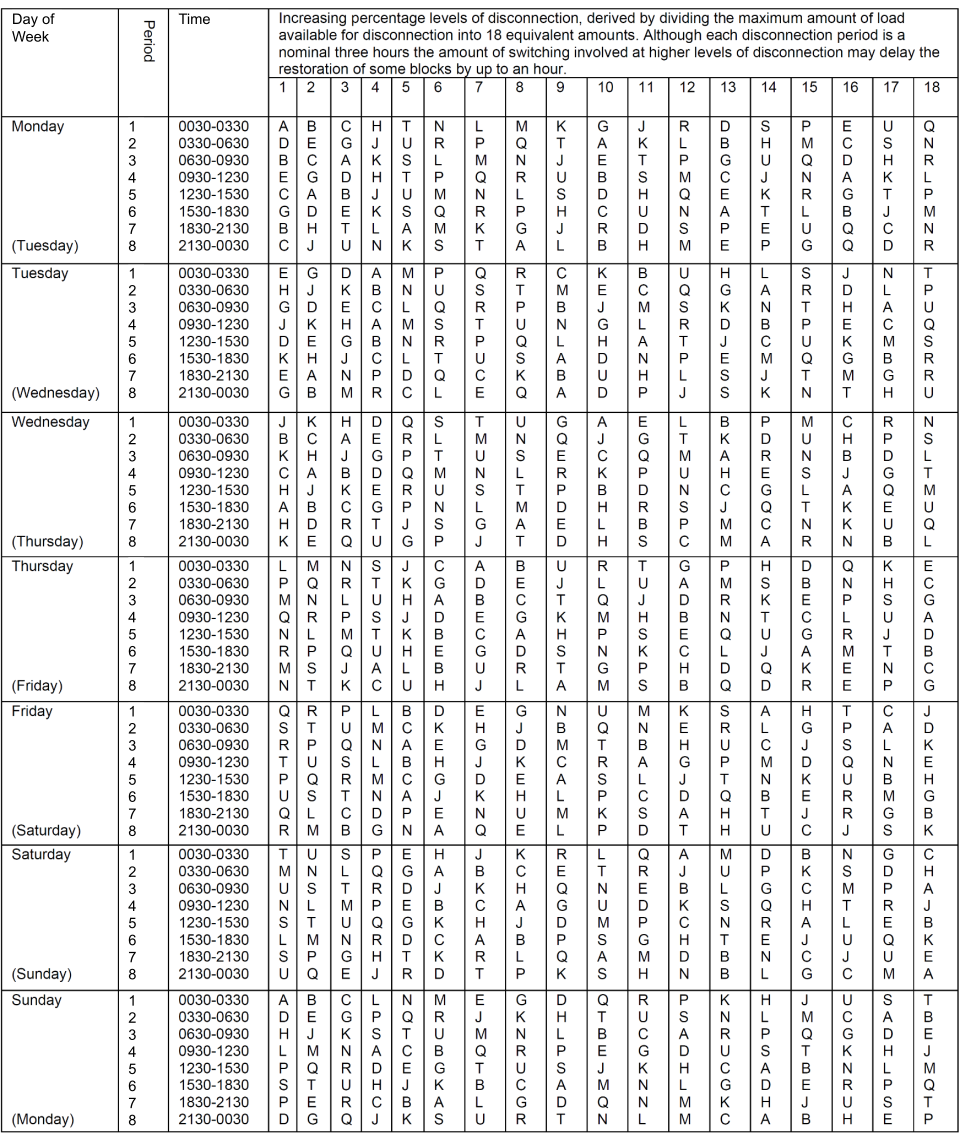
6.4. Variable Rota Disconnection Plan (VRDP): In the event that rota disconnections are required continuously over a 24hr period, the VRDP will be designed to concentrate disconnection periods on the three days (i.e., Monday, Tuesday and Wednesday or Thursday, Friday and Saturday), for any one Load Block, the format of which is set out in Annex 1. This format is likely to be used in situations where this is expected to be a longer term, higher (percentage) level of demand reduction required. Example Rota Plans for this scenario are set out in Annex 2.
6.5. The LLDP or VRDP may be altered during an event by NESO, with agreement from the DESNZ ERT, to better manage the disruption.
Sequencing of Load Blocks
7.1. NESO will regularly update the DESNZ and Industry ERT on the levels of disconnection considered necessary. NESO will normally advise the DESNZ ERT no later than 14.00 each day of the Rota Plan it considers necessary for the following 24-hour period, scheduled to commence at 00.30. When advising the DESNZ ERT of the Rota Plan required, NESO will take into account an optimum margin of remaining generation available and the level of flows on interconnections with neighbouring transmission systems. The DESNZ ERT will confirm the Indicative Rota Plan to be used, taking into account the national generation/demand position and shape of the load curve, no later than 15.00. NESO will seek to minimise the amount of rota disconnection for the following day and will produce an Implementation Rota Plan from the Indicative Rota Plan. Indicative and Implementation Rota Plans will be made available to the public on www.Powecut105.com in the event ESEC is enacted.
7.2. From the Implementation Rota Plan, NESO will derive a detailed Activation Schedule(s) of rota disconnections and issue these schedules to Network Operators by 17.30 the day before. The schedules will confirm detailed timings for the disconnection and reconnection of Load Blocks and shall be treated as a set of instructions for implementation by the Network Operators.
7.3. The detailed Activation Schedule(s) are required for individual Network Operators to stagger when Load Blocks are disconnected and reconnected to match the minute-by-minute demand for electricity to available generation and avoid excessive load swings. In the worst case, where nine Load Blocks may require disconnecting and nine different Load Blocks reconnecting, this changeover period could take up to 60 minutes.
7.4. NESO will continue to review the national demand/supply flow position and may re-issue modified Implementation Rota Plans and Activation Schedule(s) if necessary. NESO will keep the level of disconnection and choice of Rota Plan under continuous review throughout the emergency, in consultation with DESNZ ERT, and if necessary may change the Indicative Rota Plan at any time.
Severe shortages of power
8.1. In the event of a severe shortage of electrical power, it may not be possible to maintain equal distribution of available power supplies while protecting the industries and services on which the well-being of the nation depends. In this eventuality, the DESNZ ERT will advise the Secretary of State according to the circumstances.
8.2. It is considered impractical to enforce statutory restrictions on domestic customers. Therefore, it will be necessary to use the non-protected site Load Blocks set out in the VRDP in Annex 1 for as long as possible.
8.3. All Protected Sites are expected to, as far as is reasonably practicable, reduce load to the minimum required to continue to deliver the function they are protected from disconnection for. Tier 3 Protected Sites may be directed to reduce their consumption to the minimum load necessary for the avoidance of damage to major plant. Please see more details on Protected Sites and criteria in the section 10.
8.4. The needs of Protected Sites may vary daily or even by the hour in an extreme situation. In the event of electricity supplies being insufficient to meet the needs of all the Protected Sites within their licence area, Network Operators may need to exercise discretion in allocating the available electricity supplies. In such cases, priority should be given to the maintenance of life and to minimising the risk of disasters, which would involve loss of life or major damage to plant. It is recognised that the electricity industry’s own requirements need to be met, particularly those to maintain generating capacity and nuclear safety.
8.5. In the event of a partial or total system shutdown during an electricity supply emergency, Network Operators will implement the operating procedures set out in the Grid Code, so that affected demand may be restored in the shortest possible time.
Restoration of supplies
8.6. As supplies of electricity are restored, it may be necessary for the Secretary of State to give further directions on rota disconnections following advice from the DESNZ ERT. When supplies of electricity have been fully restored and stabilised, the DESNZ ERT should inform the industry of a formal stand down from ESEC.
Network Operator Responsibilities for Protected Sites
Rota disconnection procedures
3.20. Each Network Operator is obliged by ESEC to keep up to date procedures for the introduction of rota disconnections. These should be available for activation as soon as possible, and within 24 hours of the Secretary of State’s decision that ESEC must be implemented (noting DCRP may be implemented by NESO within that 24hr period). Except for Protected Sites, the procedures will apply equally, as far as is reasonably practicable, to all customers supplied through the networks of Network Operators. This includes non-embedded customers (i.e. customers, other than Network Operators, receiving electricity direct from the NETS).
9.1. Network Operators may identify areas of their network within a Load Block that contain one or more unlicensed generators. Depending on the circumstances at the time, these areas may provide a net output on to the network which is deemed sufficiently significant such that disconnection should be avoided if reasonably practicable. Consequently, some sites could find their supplies maintained despite the expectation they would be disconnected according to published information. Protection of unlicensed generators is not guaranteed and is at the discretion of the Distribution Network Operator at the time, considering advice from NESO.
Protected Sites
9.2. The Protected Site List (PSL) should contain the name, address, and business activity of each Protected Site and which Tier they have been added under, with Network Operators taking all reasonable steps to keep this up-to-date. Network Operators should write out to each site owner every two years to validate their eligibility for Protected Site status, removing sites which no longer carry out the service they were listed for. Should the Network Operator not receive a response from the site, they may inform the site that they will be removed from the list if a reply is not received in a prescribed time period.
9.3. Network Operators will provide an updated PSL to DESNZ annually, enabling DESNZ, NESO and relevant Government Departments/Devolved Administrations to review and ensure the criteria for listing are being applied consistently.
9.4. Section 10.2 below sets out the criteria for being designated as a Protected Site.
9.5. Network Operators are required to use reasonable endeavours to maintain supply to listed Protected Sites during an ESEC activation period and will give as much notice as possible if protection from disconnection is at risk.
9.6. Network Operators should inform successful applicants for Protected Site status that their sites have been listed. Unsuccessful applicants for Protected Site status, where the applicant has grounds for disputing the Network Operator’s decision, may seek a determination from the DESNZ Energy Resilience Team as to whether they should be given that status. DESNZ may make such a determination having discussed the matter with the Network Operator, the relevant Government Department/Devolved Administration and the applicant.
Commercial implications
9.7. A licence holder subject to a direction under section 96 Electricity Act 1989 will not be required to comply with other obligations imposed by the Electricity Act 1989 to the extent those obligations conflict with the direction (including licence conditions). If an Order in Council under the Energy Act 1976 is in force, the Secretary of State may, where appropriate, grant an authority under section 4(1) of that Act authorising persons supplying or using electricity to disregard or fall short of their statutory or contractual obligations to supply, to such extent as is necessary for them to comply with such direction.
9.8. Rota disconnections constitute a permitted discontinuation of supply under regulation 29 of the Electricity Safety, Quality and Continuity Regulations 2002 as amended. Network Operators should make reasonable efforts to give adequate notice of disconnections; there is no requirement under the regulations to report the effects of rota disconnections to the Secretary of State.
9.9. The DESNZ ERT would require, at the least, daily reporting by Network Operators regarding the ongoing situation in their licence area. Precise timings and other requirements of the reporting would be set by the DESNZ ERT at the time.
Protected Sites
Introduction
10.1. The criteria for receiving Protected Site status are set out below. Parties who consider that their site or sites meet these criteria can apply to their lead Government Department or Devolved Administration and Network Operator for the site(s) to be part of the Protected Sites List (PSL). By seeking and securing Protected Site status, those parties are also agreeing to certain obligations.
Criteria
10.2. The criteria consist of two main elements, both of which must be met. Firstly, a customer’s site must fall under one of four designated Tiers which set out the different categories that are eligible for protections. These Tiers are set out in Table 1. Within each Tier, sites must then fall into the list of approved designated services set out in Table 2, to be able to apply for the Protected Sites List.
10.3. Secondly, Protected Sites must also meet the additional criteria in section 10.5 below, and customers must agree to the obligations in section 10.10 below. By exception, sites which do not meet the above criteria may make a representation to the relevant Lead Government Department/Devolved Administration for consideration of Protected Site status, given that the criteria and obligations set out in sections 10.5 and 10.10 below are met, and the significant impact of not having Protected Site status can be demonstrated.
10.4. All sites should consider alternative mitigations to maintain their power resilience, such as installing standby generation. All sites applying for the PSL will be required to provide justification to either their Lead Government Department/Devolved Administration or the Network Operator as to why it is not possible to install standby generation. Tier 0 (Z) and 1 site may be exempt from this criterion.
Table 1 – Tiers that make up the Protected Sites List
| Tier | Definition | Application Requirements |
|---|---|---|
| 0 (Z) | Energy infrastructure critical to maintain security of supply to the energy system and to protect the energy system from regional or national disruption, or from worsening an energy supply shortfall event. | NESO is responsible for advising on additional energy infrastructure which is critical to whole system operation. |
| 1 | Relevant sites where a failure in the supply to their premises would create major and forthcoming risk to lives in a short time frame that cannot be reasonably mitigated. | Tier 1 and 2 applications must be sponsored by the relevant Lead Government Department or Devolved Administration before applications are made to the Network Operator. |
| 2 | Relevant sites for which the loss of electricity causes or threatens to cause serious negative impact to public health, essential services or the security of the United Kingdom for an unacceptably prolonged period | |
| 3 | Industrial sites with continuous operations, for which the recurring loss of electricity would result in repair or replacement costs amounting to 10% or more of the Site Fixed Tangible Asset Value or would take over 12 hours to return to service. | Tier 3 applicants will be required to provide an independent financial assessment of damage to site assets to the relevant Network Operator |
Table 2 - List of Approved Designated Services
| Tier | Designated Service | Lead Government Department/Devolved Administration |
|---|---|---|
| 0 (Z) | Licensed electricity generators, and licensed network operators’ key operational facilities | DESNZ |
| Gas reception terminals; storage installations including boosting and compression equipment; gas compressor stations and principal development and control sites for the control of gas supply systems and emergency procedures | DESNZ | |
| 1 | Hospitals as agreed with Department for Health/Scottish & Welsh Government. This includes major trauma centres, burns centres, acute hospitals with A&E and intensive care units | Department for Health and Social Care/Devolved Administration |
| 2 | Emergency services of regional significance, including: - Ambulance Control Centres - Fire Control Rooms - Critical Police sites - Coastguard rescue coordination centres |
Home Office, Ministry of Housing, Communities and Local Government, Department for Transport, Department for Health & Social Care/Devolved Administration |
| Vital Health Organisations as agreed with Department for Health and Scottish Government, which could include: - UKHSA - core laboratories - NHS blood and transplant manufacturing sites - Large residential care homes |
Department for Health and Social Care/Devolved Administration | |
| Sites, as agreed with the Ministry of Defence, where the security of the United Kingdom that cannot be reasonably mitigated (i.e., Atomic Weapons Establishment) | Ministry of Defence | |
| Digital and telecommunication services where there is a national need for continued operation, such as critical broadcast infrastructure | Department for Culture Media and Sport and Department of Science, Innovation and Technology | |
| Data centres which are vital to the operation of Essential Services | Department for Science Innovation and Technology | |
| Prisons as agreed with MoJ/Devolved Administration | Ministry of Justice/Devolved Administration | |
| Nuclear decommissioning, waste process sites and nucelar fuel manfacturers. | DESNZ | |
| Oil refineries and vital oil pumping stations import/storage/distribution terminals | DESNZ | |
| Essential drinking water (i.e., abstraction, treatment and distribution sites) and sewerage installations | Department for the Environment, Food & Rural Affairs/Devolved Administration | |
| A major location for essential food manufacture as agreed with the Department of Environment, Food and Rural Affairs | Department for the Environment, Food & Rural Affairs/Devolved Administration | |
| Critical transport sites as agreed with the Department of Transport, such as: - Major airports and associated control facilities - Significant railway operations - Ports which have a national infrastructure significance |
Department for Transport/Devolved Administration | |
| Financial services where there is a national need for continued operation | His Majesty’s Treasury | |
| Chemical suppliers as agreed with the Department of Business and Trade | Department for Business & Trade | |
| 3 | Energy intensive industries (i.e., ceramics, glass, paper, steel and metals) | Department for Business & Trade |
Additional Criteria
10.5. To ensure the total demand from the PSL remains at a manageable level, the following additional criteria will apply to Protected Sites: - the site does not have standby generation and has demonstrated that it is not possible to install standby generation or cannot continue to provide essential services on standby generation alone and:
- either
- (i) the site is connected to a discrete feeder; or
- (ii) in the opinion of the Network Operator, maintaining supply during rota disconnections would involve retention of not more than a marginal amount of associated load. What is considered a marginal amount of load will be pursuant to the tier under which the site is eligible to apply or
- (iii) the Network Operator has been required to list the site by DESNZ pursuant to section 10.9 below.
Process for listing Protected Sites
10.6. A Party shall only be listed in the PSL if:
- The Party has informed the Network Operator in writing that they consider the Site’s activities fall into one of the Tiers set out in Table 2;
- The Party has provided the Network Operator with a sponsorship letter from the Lead Government Department or Devolved Administration for Tiers 1 and 2 customers and an independent financial assessment for Tier 3 customers. Applications will not be considered by Network Operators without this evidence.
- The Party has also informed the Network Operator in writing, and the Network Operator agrees, that the Site meets the additional criteria (set out in 10.5).
10.7. If the Lead Government Department or Devolved Administration considers that the site’s activities fall into one of the designated services, but the Network Operator considers that the site does not meet the additional criteria (listed in 10.5), then the Network Operator will advise the customer that they should either pay for a new or modified connection by means of a discrete feeder or install standby generation.
10.8. If the site is not prepared to install standby generation and/or pay for a discrete feeder but wants to be reconsidered for protected status, the Network Operator may refer the matter to DESNZ with an estimate of the amount of associated load which would need to be kept on supply if the site were to be protected. DESNZ will consult with the Lead Government Department or Devolved Administration concerned, and with the Network Operator, and will instruct the latter whether the site should exceptionally be listed.
10.9. Only on DESNZ written instructions will the Network Operator include the site on the PSL. Pending resolution of the matter, the site shall not be listed.
Obligations for Protected Sites
10.10. By applying for, and being given, Protected Site status, each Protected Site agrees to meet certain obligations:
- In the event of the Network Operator being directed to make rota disconnections, each Protected Site will reduce their consumption so to only continue the critical function for which they were awarded protected status for or, if listed under T3, to prevent of damage to asset, as far as is reasonably practicable. The Protected Site must retain records of their consumption during periods where ESEC has been enacted and make these available to DESNZ for monitoring purposes if requested. For any Protected Site that is deemed to be of national or regional significance, and which cannot reduce the site consumption whilst still providing their service, they may agree an exemption from this obligation with DESNZ at the time of application.
- The Protected Site will notify the Network Operator immediately if their activities change and the site no longer meets the criteria set out in Table 1 and Table 2, and of any change to the Site’s contact details. +The Network Operator will also confirm with each Protected Site every two years that they still meet the criteria to qualify for Protected Site status. Failure to validate the site details with the Network Operator at this point will result in removal of that site from the PSL. As set out in 9.4, site details will be shared with DESNZ, relevant Lead Government Departments, Devolved Administrations and NESO for validation purposes and to enable DESNZ to monitor delivery of these obligations when ESEC has been enacted.
Annex 1 - Variable Rota Disconnection Plan
Order of Disconnection for Load Blocks A to U
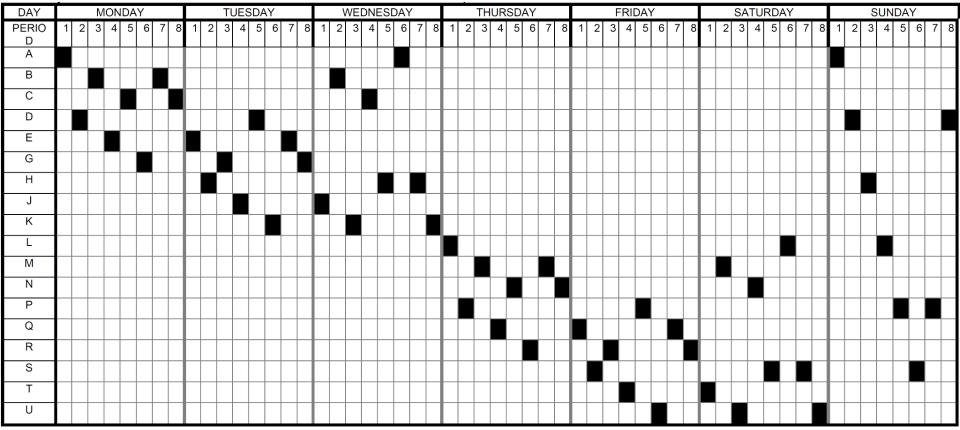
Annex 2 – Rota Plans
Level 1 Disconnection
Each period is of nominal 3 hours duration. Detailed timings of disconnections and reconnections will be confirmed by an Activation Schedule issued by the NGESO otherwise this is the default rota disconnection plan.
Level 2 Disconnection
Each period is of nominal 3 hours duration. Detailed timings of disconnections and reconnections will be confirmed by an Activation Schedule issued by the NGESO otherwise this is the default rota disconnection plan.

Level 3 Disconnection
Each period is of nominal 3 hours duration. Detailed timings of disconnections and reconnections will be confirmed by an Activation Schedule issued by the NGESO otherwise this is the default rota disconnection plan.
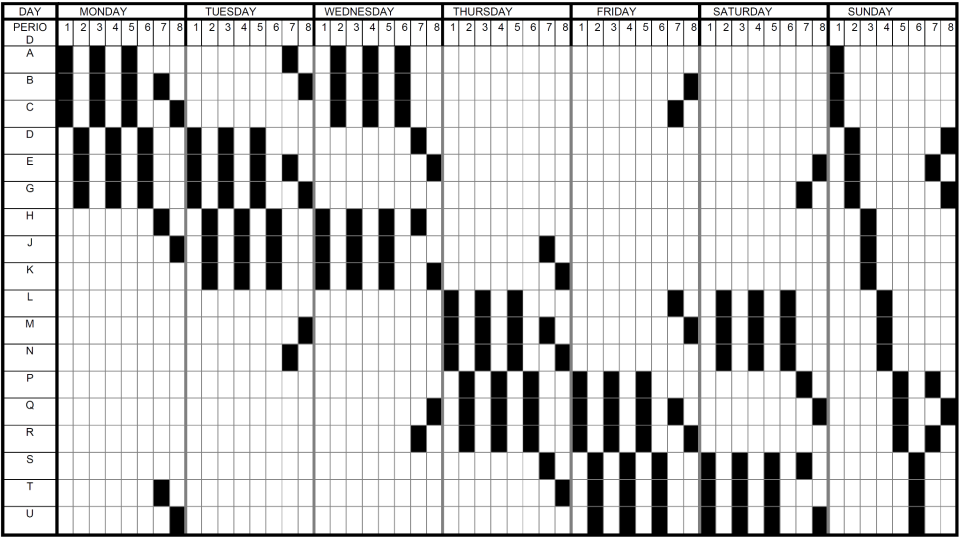
Level 4 Disconnection
Each period is of nominal 3 hours duration. Detailed timings of disconnections and reconnections will be confirmed by an Activation Schedule issued by the NESO otherwise this is the default rota disconnection plan.
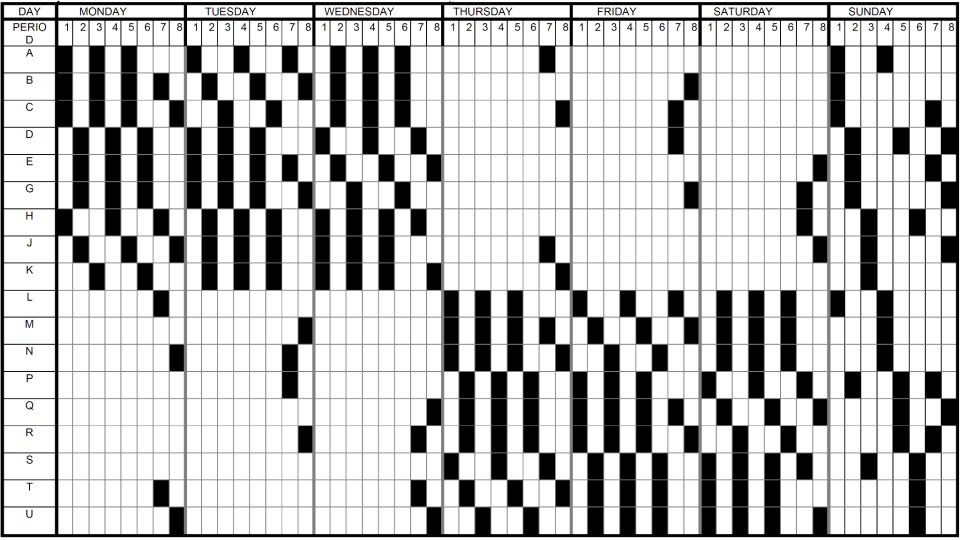
Level 5 Disconnection
Each period is of nominal 3 hours duration. Detailed timings of disconnections and reconnections will be confirmed by an Activation Schedule issued by the NGESO otherwise this is the default rota disconnection plan.

Level 6 Disconnection
Each period is of nominal 3 hours duration. Detailed timings of disconnections and reconnections will be confirmed by an Activation Schedule issued by the NGESO otherwise this is the default rota disconnection plan.

Level 7 Disconnection
Each period is of nominal 3 hours duration. Detailed timings of disconnections and reconnections will be confirmed by an Activation Schedule issued by the NGESO otherwise this is the default rota disconnection plan.
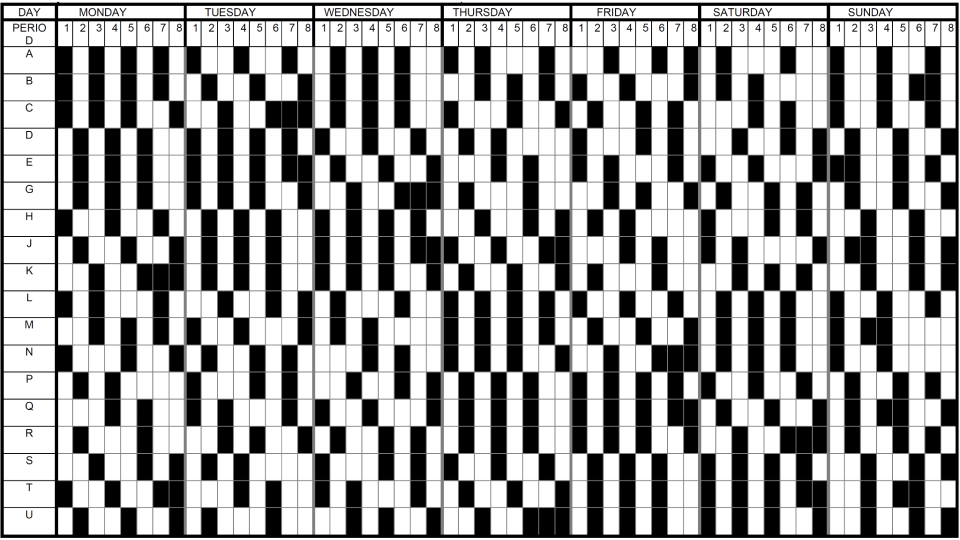
Level 8 Disconnection
Each period is of nominal 3 hours duration. Detailed timings of disconnections and reconnections will be confirmed by an Activation Schedule issued by the NGESO otherwise this is the default rota disconnection plan.

Level 9 Disconnection
Each period is of nominal 3 hours duration. Detailed timings of disconnections and reconnections will be confirmed by an Activation Schedule issued by the NGESO otherwise this is the default rota disconnection plan.

Level 10 Disconnection
Each period is of nominal 3 hours duration. Detailed timings of disconnections and reconnections will be confirmed by an Activation Schedule issued by the NGESO otherwise this is the default rota disconnection plan.
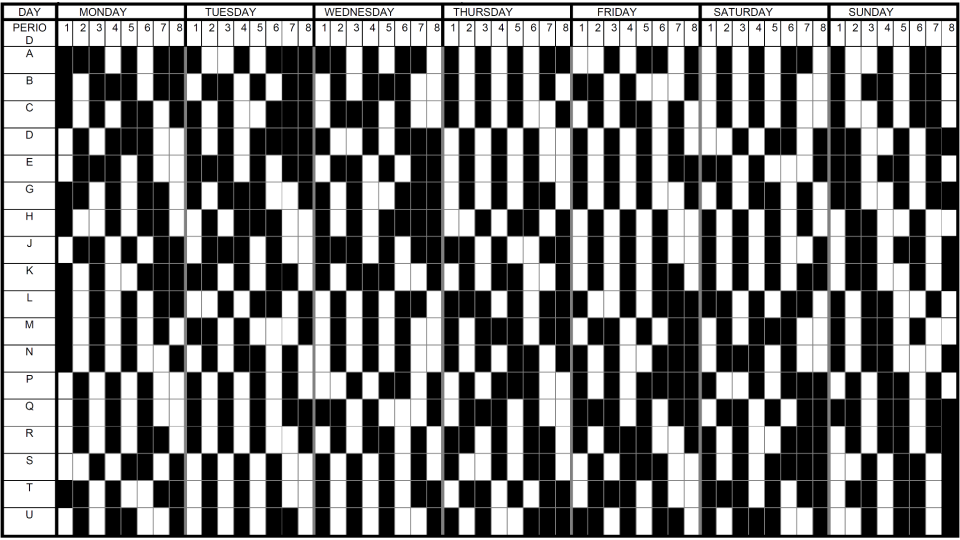
Level 11 Disconnection
Each period is of nominal 3 hours duration. Detailed timings of disconnections and reconnections will be confirmed by an Activation Schedule issued by the NGESO otherwise this is the default rota disconnection plan.
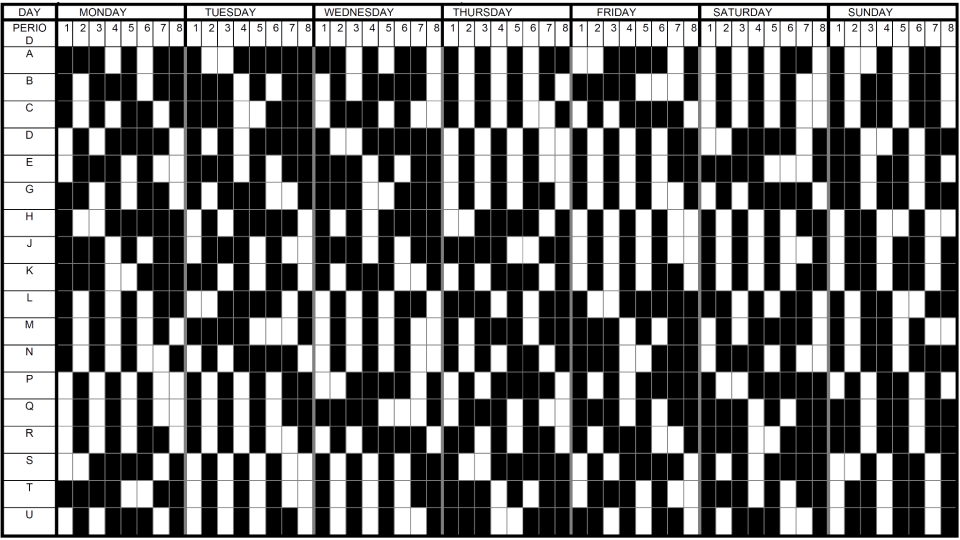
Level 12 Disconnection
Each period is of nominal 3 hours duration. Detailed timings of disconnections and reconnections will be confirmed by an Activation Schedule issued by the NGESO otherwise this is the default rota disconnection plan.
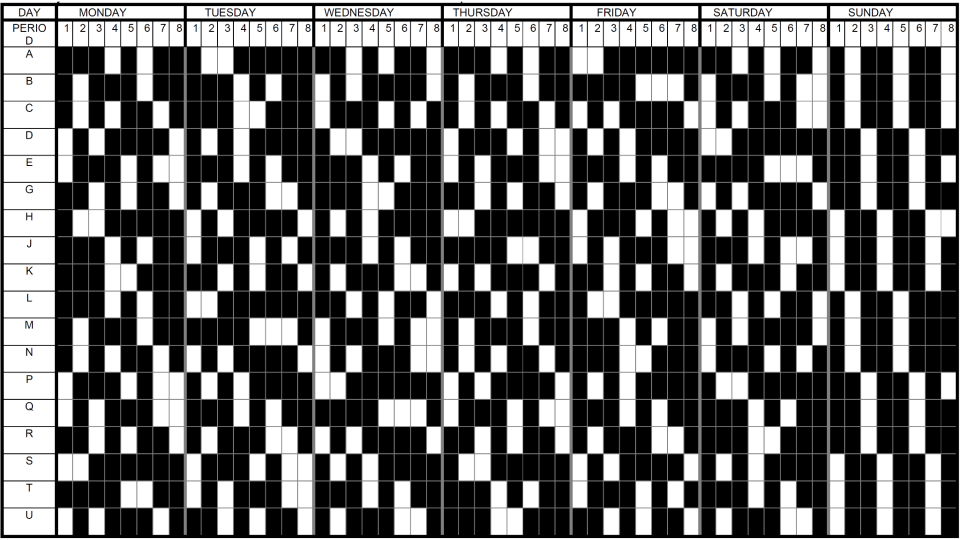
Level 13 Disconnection
Each period is of nominal 3 hours duration. Detailed timings of disconnections and reconnections will be confirmed by an Activation Schedule issued by the NGESO otherwise this is the default rota disconnection plan.
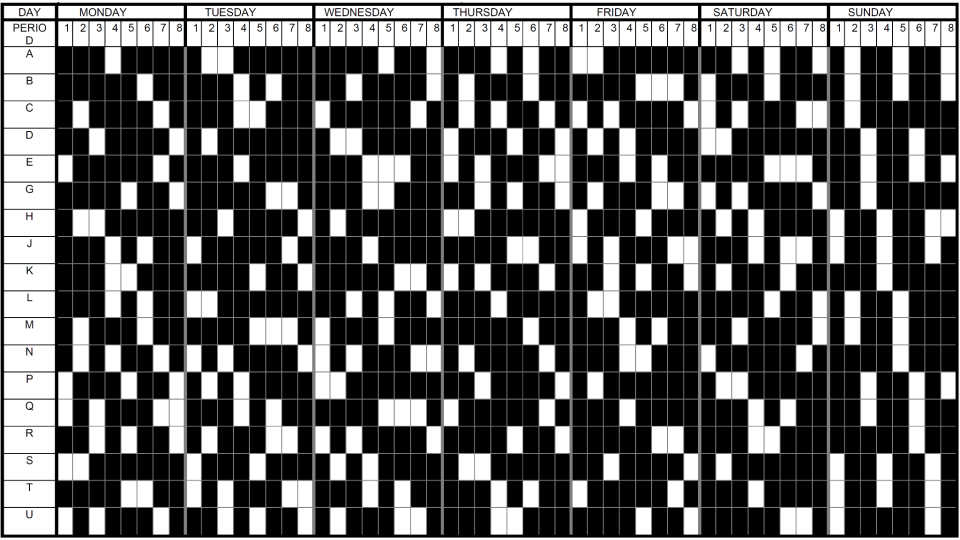
Level 14 Disconnection
Each period is of nominal 3 hours duration. Detailed timings of disconnections and reconnections will be confirmed by an Activation Schedule issued by the NGESO otherwise this is the default rota disconnection plan.
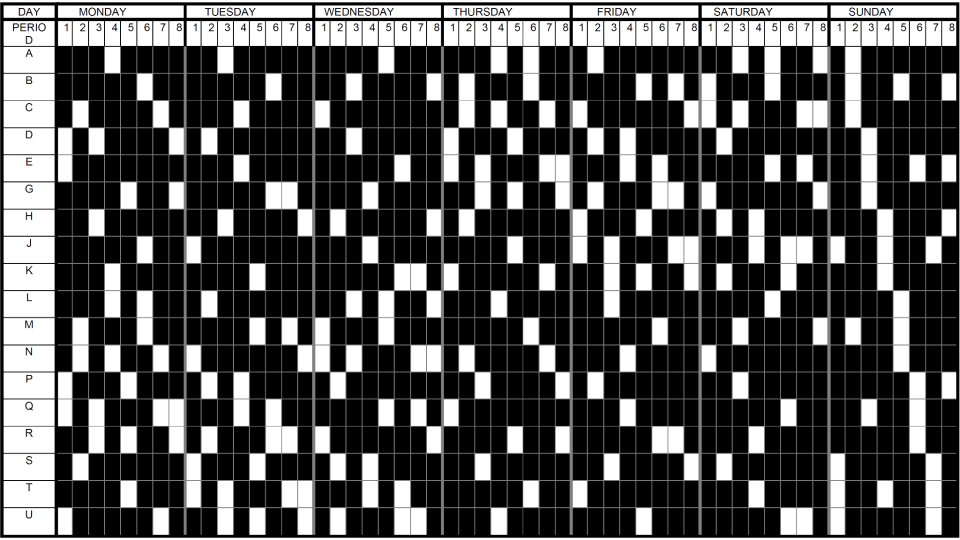
Level 15 Disconnection
Each period is of nominal 3 hours duration. Detailed timings of disconnections and reconnections will be confirmed by an Activation Schedule issued by the NGESO otherwise this is the default rota disconnection plan.
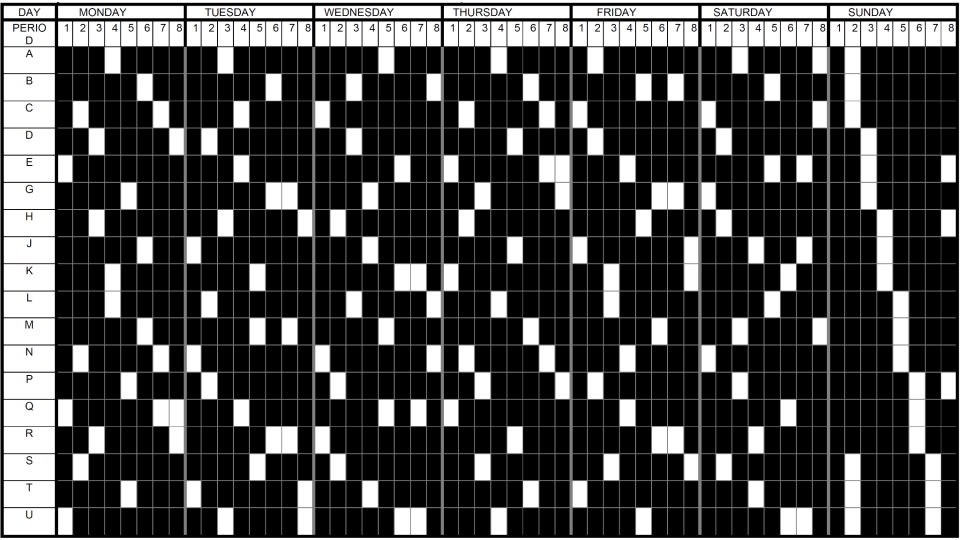
Level 16 Disconnection
Each period is of nominal 3 hours duration. Detailed timings of disconnections and reconnections will be confirmed by an Activation Schedule issued by the NGESO otherwise this is the default rota disconnection plan.

Level 17 Disconnection
Each period is of nominal 3 hours duration. Detailed timings of disconnections and reconnections will be confirmed by an Activation Schedule issued by the NGESO otherwise this is the default rota disconnection plan.

Level 18 Disconnection
Each period is of nominal 3 hours duration. Detailed timings of disconnections and reconnections will be confirmed by an Activation Schedule issued by the NGESO otherwise this is the default rota disconnection plan.