DESNZ gender pay gap report 2025
Published 16 December 2025

© Crown copyright 2025
This publication is licensed under the terms of the Open Government Licence v3.0 except where otherwise stated. To view this licence, visit nationalarchives.gov.uk/doc/open-government-licence/version/3 or write to the Information Policy Team, The National Archives, Kew, London TW9 4DU, or email: psi@nationalarchives.gov.uk.
Where we have identified any third party copyright information you will need to obtain permission from the copyright holders concerned.
This publication is available at https://www.gov.uk/government/publications/desnz-gender-pay-gap-report-and-data-2025/desnz-gender-pay-gap-report-2025
Summary
The Department for Energy Security and Net Zero (DESNZ) has prepared this report as part of the legal requirement for public authorities to publish their gender pay gap on an annual basis. DESNZ had a headcount of 4,781 as at 31 March 2025.
The 2025 DESNZ Gender Pay Gap (GPG) figures show a mixed picture:
- the mean GPG increased by 0.4 percentage points (ppt) to 4.0%
- the median GPG decreased by 0.8 ppt to 7.9%
- the mean bonus GPG increased by 6.5 ppt to 7.7%
- the median bonus GPG has not changed and remains at 0.0%
Although we remain in line with the overall mean GPG for the Civil Service (6.9% in 2025), the gap has widened slightly. The median gap is wider than the mean but has reduced since 2024. The mean bonus gap has grown considerably to 7.7%, but the median bonus gap remains at 0%.
We have made some progress in increasing female representation at the most senior grades. At SCS level, we now have 46.2% of roles populated by women which is an increase of 2.5 percentage points since 2024. This is reflected in the pay quartile data which shows the share of women in the top pay quartile has increased by 1.7 percentage points to 46.8%. However, there continues to be more women in grades EO, HEO and SEO, and slightly more men at Grade 7 and above.
Introduction
DESNZ was formed from machinery of government changes in February 2023, mainly drawing teams from the former Department for Business, Energy and Industrial Strategy (BEIS).
DESNZ supports the fair treatment and reward of all staff irrespective of gender. The Civil Service, including DESNZ, wants to create a diverse and representative workplace, supporting an inclusive, flexible, modern, and connected Civil Service. Encouraging openness, challenge, innovation, and excellence, in everything we do, in line with our ‘Departmental values’, ‘People strategy’ and ‘Equality, diversity and inclusion strategy’.
Gender Pay Gap report
The Gender Pay Gap figures show the difference in the average pay between all men and women in a workforce. If a workforce has a particularly high gender pay gap, this can indicate there may be several issues to deal with. The individual calculations may help to identify what those issues are.
The Gender Pay Gap is different to equal pay. Equal pay deals with the pay difference between men and women who carry out the same jobs, similar jobs, or work of equal value. It is unlawful to pay people differently because they are a man or a woman.
To ensure consistent methodology over time, the legislation uses full-time equivalent salaries and contracted weekly hours. Permanent and pensionable allowances, non-consolidated performance payments and salary sacrifice deductions are all included in the calculations.
The mean gap and median gap are 2 key metrics used to assess the difference in pay between men and women within an organisation.
The mean pay gap compares the average hourly earnings of men and women. The median pay gap focuses on the middle point of the pay distribution for men and women. Similarly, the mean bonus gap and median bonus gap compare the bonuses received by men and women in the organisation.
Headline data
The data below indicates that DESNZ maintains a relatively small mean pay gap and the median bonus gap has reduced. However, the median pay gap points to the disparity in grade mix by gender. While bonuses were distributed almost equally between men and women, the mean gap has widened, likely due to the composition of the department. The higher concentration of men in upper and upper-middle pay quartiles in 2025 compared to 2024 (see figure 2) where awards generally increase with seniority, may have contributed to the increased gap.
Table 1: DESNZ headline data
| 2025 | 2024 | |
|---|---|---|
| Mean gender pay gap | 4.0% | 3.6% |
| Median gender pay gap | 7.9% | 8.7% |
| Mean bonus gender pay gap | 7.7% | 1.2% |
| Median bonus gender pay gap | 0.0% | 0.0% |
Figure 1: Percentage of men and women receiving a bonus
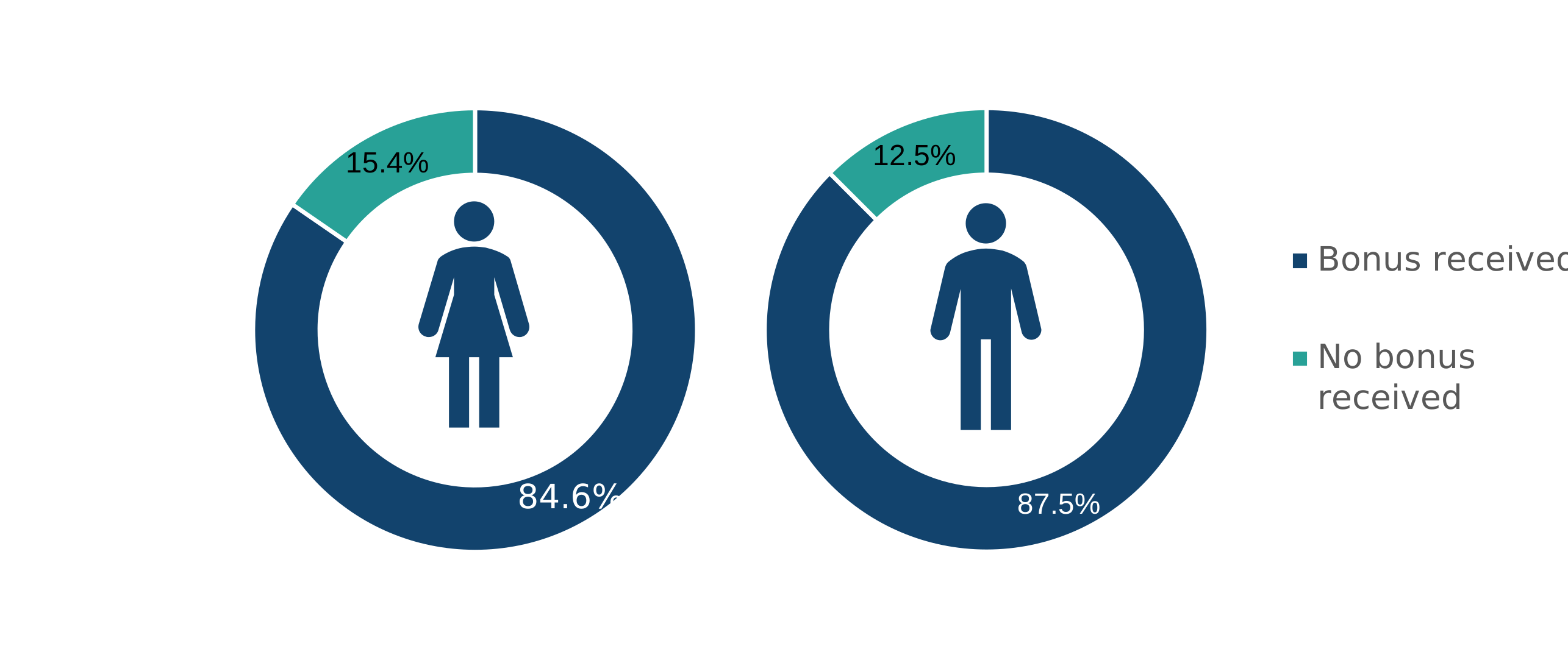
Chart showing 84.6% of women and 87.5% of men received a bonus.
Figure 2: Distribution of women through each pay quartile
| Quartile | Women | Men | Total |
|---|---|---|---|
| Upper | 46.8% | 53.2% | 100% |
| Upper middle | 47.0% | 53.0% | 100% |
| Lower middle | 53.5% | 46.5% | 100% |
| Lower | 54.1% | 45.9% | 100% |
Chart showing the breakdown of DESNZ staff by pay quartiles. There are more women in the lower 2 quartiles and more men in the higher 2 quartiles.
Figure 3: Shifts in distribution of women through each pay quartile
| Quartile | 2025 | 2024 |
|---|---|---|
| Upper | 46.8% | 45.1% |
| Upper middle | 47.0% | 47.2% |
| Lower middle | 53.5% | 53.7% |
| Lower | 54.1% | 51.7% |
Chart showing the distribution of women by pay quartiles in 2025, in comparison with 2024. The lower quartile increased by 2.4% points and the upper quartile has increased by 1.7% points. The upper and lower middle quartiles have a lower share of women than the previous year.
Analysis of pay gap
The headline 2025 GPG figures show a mean gap of 4.0% and a median gap of 7.9%.
DESNZ operates a structured pay band and grade system, assigning each role to a specific grade that reflects its level of responsibility, expertise, and seniority. This is reflected within the pay scales. Senior Civil Servants (SCS) are compensated under a separate pay framework, which is centrally managed by the Cabinet Office and governed by its own grading and pay band structure.
Changes resulting from the 2024 delegated pay award were:
- Pay range adjustments: Most pay ranges increased by 3.5% at both minimum and maximum. Grades EO, SEO, G7 and G6 increased by 4% at the minimum
- Individual pay increases: All eligible staff received a 4% pay rise, capped at the new maximum. If the increase was below 3.5%, a non-consolidated lump sum was paid to make up the difference
The changes resulting from the 2024 SCS pay award were:
- 5% uplift applied following an increase to the new pay band minimum
- non-consolidated payments awarded to those who did not receive a full 5% uplift due to exceeding band maximum
- pay bands revalorised to reflect updated minimum and maximums
- non-consolidated end-of-year awards were granted to high performers and those exceeding expectations.
Table 2 shows the composition of DESNZ staff. While the department maintains an almost equal numbers of men and women, their distribution across grades varies. The main factor contributing to the gender pay gap at DESNZ is the unequal distribution of men and women across different grades.
Whilst the AO grade is heavily male dominated (65.6%), this is a small population of 32 staff and an outlier in the general picture of more men in higher grades.
There are more women at EO grade (62.7%) and at HEO/SEO grade (52.9%). This trend reverses at more senior levels, where there are more men at Grade 7/6 (51.7%) and SCS level (53.8%). Encouragingly, the gender split at the most senior grades (SCS) has narrowed since 2024, reflecting an increase in the proportion of women in these roles.
The uneven distribution of men and women across grades is most evident in the median pay gap, which effectively compares an SEO woman to a Grade 7 man. Despite the disparity, the median pay gap has narrowed by 0.8 percentage points since 2024, indicating progress towards greater pay equity.
There is a correlation between increasing seniority and higher pay, as reflected in Figure 2. The data shows that women are more concentrated in the lower 2 pay quartiles, while men are more prevalent in the upper 2 quartiles.
This distribution highlights how grade determines pay and contributes to the overall gender pay gap.
Table 2: Gender make-up of the department
| Grade (increasing seniority) |
Number of men | Number of women | % of grade who are female | % of total male staff in this grade | % of total female staff in this grade |
|---|---|---|---|---|---|
| AO | 21 | 11 | 34.4% | 0.9% | 0.5% |
| EO | 76 | 128 | 62.7% | 3.2% | 5.3% |
| HEO/SEO | 958 | 1,074 | 52.9% | 40.6% | 44.4% |
| Grade 7/6 | 1,178 | 1,099 | 48.3% | 49.9% | 45.4% |
| SCS | 127 | 109 | 46.2% | 5.4% | 4.5% |
|
Total (including those with unknown grade) |
2,360 | 2,421 | 50.6% | - | - |
Figure 4: Staff Proportion in DESNZ by grade and gender
| Grade | Number of women | Number of men |
|---|---|---|
| AO | 11 | 21 |
| EO | 128 | 76 |
| HEO/SEO | 1,074 | 958 |
| Grade 7/6 | 1,099 | 1,178 |
| SCS | 109 | 127 |
Chart showing the distribution of men and women across grades within DESNZ. There are more men in higher grades (G7, G6 and SCS) and more women in lower and middle grades (EO, HEO and SEO).
Analysis of the bonus gap
The DESNZ In Year Award scheme (IYA) enables peers to recognise and reward individuals or teams. Nominations for In Year Awards may be made for a valuable contribution that furthers the aims and objectives of DESNZ or meets a strong short-term operational challenge or a corporate contribution. Colleagues can also be nominated for displaying the DESNZ values. In-year awards include:
- Love2Shop e-vouchers of £25, £50, £75 or £100 – the maximum that can be awarded as an e-voucher in any one award (thought more than one e-voucher award totaling more than £100 can be given at the same time for different achievements if merited); or
- cash awards of £150, £300, £500 or £800
The maximum amount any one individual can be awarded per year is £2,000. This includes both cash and e-voucher awards.
The bonus gap data is based on both cash payments and vouchers paid to DESNZ staff.
Mean Bonus Gender Pay Gap
The mean average bonus awarded to men is 7.7% higher than that awarded to women.
This represents a notable increase from the 1.4% gap reported in 2024. Analysis indicates that mean bonus values increase in line with seniority, and the greater proportion of men in the upper and upper-middle pay quartiles in 2025 compared to 2024 (see Figure 2) likely contributes to the widening gap. Additionally, there are more men in Senior Civil Service roles, where bonuses are larger. These differences affect the mean bonus gap, though they do not necessarily impact the median gap.
Median Bonus Gender Pay Gap
The median bonus paid to men and women is the same, reflecting complete parity in bonus distribution at the mid point.
Figure 5: Distribution of staff bonuses by gender
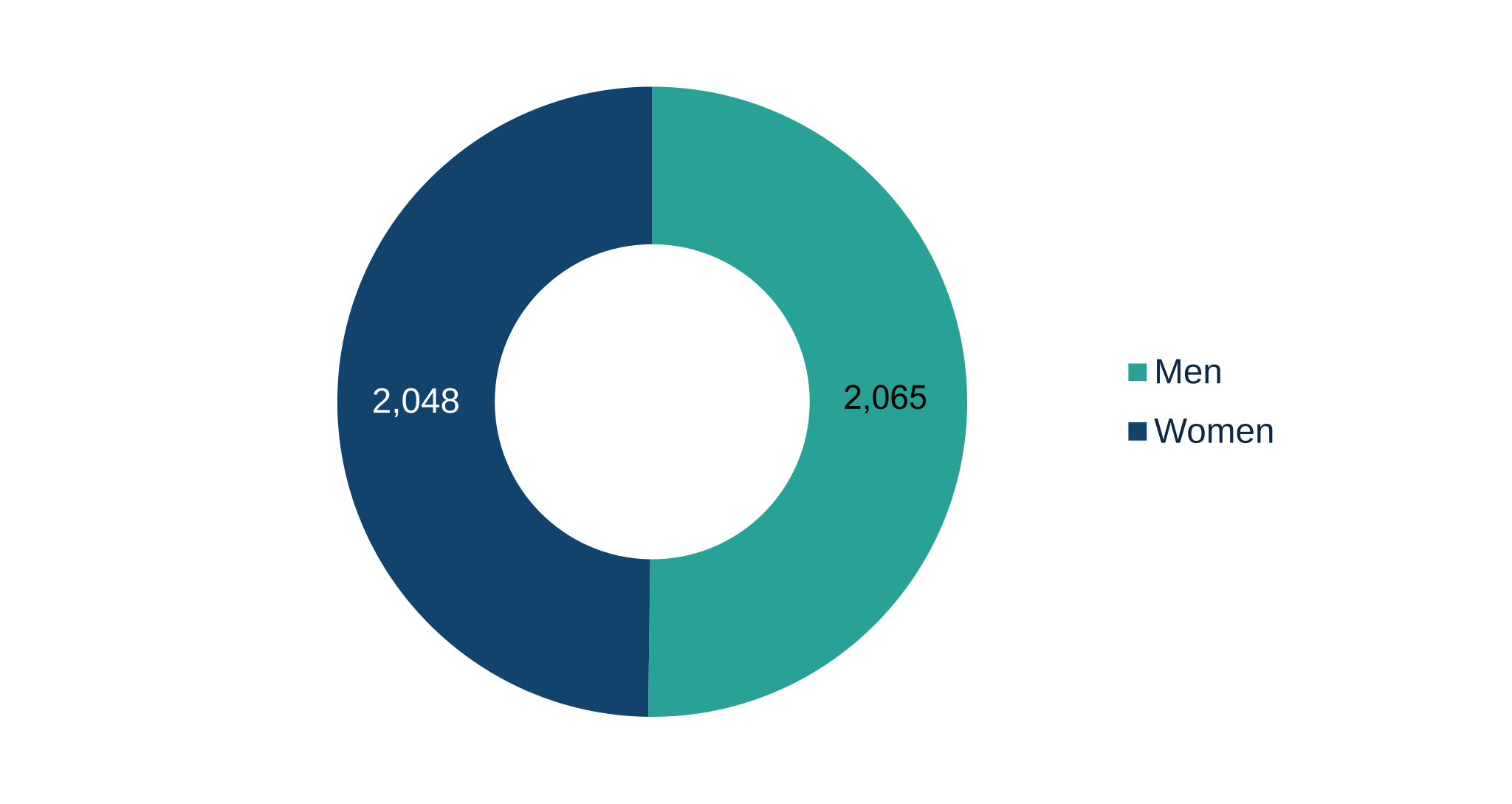
Chart showing 2,048 women and 2,065 men were paid a bonus.
Targeted action to reduce and close the Gender Pay Gap
DESNZ has taken the following targeted action to reduce and close the Gender Pay Gap.
Setting specific representation goals to improve the representation of Women at senior grades, addressing the finding that grade imbalances are contributing towards our gender pay gap.
Launching our first Equality, Diversity and Inclusion Strategy, setting out our ambitions to provide an equitable and inclusive working experience, in line with our DESNZ values.
Refreshing our employee offer, ensuring we attract and retain diverse colleagues and increase representation.
Operating mentoring, reverse mentoring and sponsorship schemes to address inequalities and encourage a talent pipeline that will contribute to addressing underrepresentation.
Increasing completion rates of diversity data and staff survey data to ensure that initiatives to build a diverse and inclusive workforce are underpinned by robust data.
Monitoring representation at all stages of the recruitment process and ensuring gender diversity on recruitment panels. We regularly analyse our recruitment data, to identify where there may be opportunities to improve the overall diversity of the department. Women have demonstrated greater success during the recruitment process, accounting for over half of those appointed over the recent quarter and increasing from the previous quarter.
Where women make up fewer than half of applicants, we review our attraction strategy to ensure DESNZ has an offer that appeals across diversity areas. One such activity was an online ‘how to apply’ session which myth busts the civil service application process, led by women at different grades, explaining the career and their development and the benefits of working in DESNZ. This activity received positive feedback.
Continually reviewing recruitment practice, to ensure that we are reaching out to a wide and diverse field. We believe that a range of backgrounds leads to diverse thinking and produces robust and strong policy, and as a result invested in our public-facing careers materials to emphasise the many benefits of joining DESNZ as an employer that champions diversity and inclusion and flexible-working practices.
Offering family-friendly policies and advertising all jobs as available for flexible working, full-time, job share or part-time unless there is a very strong business case not to.
Retaining our commitment to virtual recruitment processes, implemented during the pandemic, it is proving particularly useful in recruiting to various locations
Launching our DESNZ Talent Strategy, aligned to the Equality, Diversity and Inclusion (EDI) Strategy and committed to ensuring we have an inclusive, accessible and comprehensive talent offer and approach to succession planning and talent development.
Investing in talent interventions in support of our SCS representation goals and our commitment to enabling all our people to fulfil their potential. We work to ensure that all our staff have the best options for development, regardless of grade, gender or profession.
Having a coaching offer available to all colleagues, including London and Places for Growth. Dedicated coaching offer for high-potential SCS Women
Launching the new Civil Service Line Management Standards across the department, and supporting Line Manager Induction Programme (LMIP). LMIP is available to all via Civil Service Learning and is strongly recommended for new line managers and those who wish to refresh their knowledge. The standards include specific reference to building effective and inclusive team culture, and to making inclusive decisions.
Committing to launching the Leadership Standards, a new framework aimed at the Senior Civil Service (SCS) cohort. These clarify expectations for senior leaders and are designed to support effective, inclusive leadership across government. They will be embedded into performance frameworks, candidate packs and induction materials for SCS roles, and are aligned with broader efforts to strengthen leadership capability.
The DESNZ Women Empowered Network hosted inspiring sessions on women’s leadership journeys to provide insights into the varying career paths women can take and to encourage women to think about career progression within, for example, STEM-related policy roles such as nuclear and energy security. Arranged workshops to help with preparation for job applications and interviews to support the career development of women across DESNZ
The DESNZ Ethnic Minority Women’s Working Group have developed multiple initiatives to address barriers affecting Ethnic Minority women, including workshops on tackling imposter syndrome and events for Black History Month.
Support for colleagues going through the menopause
The Employment Rights Bill is expected to introduce reporting on actions to support colleagues going through menopause, this is expected to be voluntary in April 2026, and mandatory in 2027. DESNZ is voluntarily reporting actions taken to support colleagues going through menopause.
We have run a department-wide menopause awareness session hosted by our Permanent Secretary to promote inclusion and equity in relation to menopause.
We have department menopause guidance to support colleagues and managers in relation to menopause.
There is a menopause support group in place that all colleagues can join.
We promote specific menopause support resources as part of our Health and Wellbeing support offer.
We use ‘People Survey’ data to understand insights relating to colleague and manager experiences of menopause, peri-menopause and post-menopause.
Declaration
We confirm that data reported by The Department for Energy Security and Net Zero is accurate and has been calculated according to the requirements and methodology set out in the Equality Act 2010 (Specific Duties and Public Authorities) Regulations 2017.
Clive Maxwell,
DESNZ Interim Permanent Secretary