SARS-CoV-2 and influenza A+B antigen combo rapid tests for COVID-19 and 2 types of flu A and B during an outbreak of acute respiratory infection in adult social care residential and nursing homes: a pilot in some areas of England
Updated 24 September 2026

© Crown copyright 2026
This publication is licensed under the terms of the Open Government Licence v3.0 except where otherwise stated. To view this licence, visit nationalarchives.gov.uk/doc/open-government-licence/version/3 or write to the Information Policy Team, The National Archives, Kew, London TW9 4DU, or email: psi@nationalarchives.gov.uk.
Where we have identified any third party copyright information you will need to obtain permission from the copyright holders concerned.
This publication is available at https://www.gov.uk/government/publications/combined-covid-19-and-flu-tests-use-in-ari-outbreaks-in-adult-social-care-homes/sars-cov-2-and-influenza-ab-antigen-combo-rapid-tests-for-covid-19-and-2-types-of-flu-during-an-outbreak-of-acute-respiratory-infection-in-adult-soci
Who this guidance is for
Combo rapid lateral flow device (LFD) tests which test for COVID-19 and flu are being piloted for use in adult social care residential and nursing homes in the region(s) listed below:
- South East region of England
These tests are only for use during suspected acute respiratory outbreaks to test residents with symptoms.
Care home staff in the region(s) listed above should report acute respiratory outbreaks through the Report an outbreak webpage including their combo rapid LFD test results if residents have been tested. Reporting test results whether they are positive or negative will ensure a new set of tests is sent to your care home.
If you cannot use the combo rapid tests or you don’t have any tests, you should still report your outbreak through the Report an outbreak webpage.
This guidance explains how to test residents with respiratory symptoms using combo rapid tests if you think you have a suspected outbreak.
Purpose of using the combo rapid tests
We know that if actions are taken to control outbreaks quickly, the size and length of the outbreak is reduced. A quick result will also benefit residents as they can be put on the right treatment pathway straight away. If the outbreak is caused by flu, antivirals can be prescribed quickly when they are more effective for both the residents who are poorly and their close contacts.
Care homes that are using the tests
Combo rapid tests are only being sent to adult social care homes registered by the Care Quality Commission (CQC) in the region(s) listed above. Your care home should have received a supply of 10 tests.
You will already be familiar with NHS COVID-19 LFD tests which are used to test symptomatic residents who are eligible for COVID-19 treatments. Combo rapid tests should only be used to test for COVID-19 and flu A and B when an outbreak of acute respiratory infection (ARI) is likely in the care home.
Table 1. The difference between the 2 types of tests and when these tests should be used
| NHS COVID-19 LFD tests | SARS-CoV-2 and influenza A+B antigen combo rapid tests | |
|---|---|---|
| Respiratory infections that are included in the test | COVID-19 | COVID-19 Flu A Flu B |
| When to use the test | When residents who are eligible for COVID-19 treatments are showing symptoms of an ARI. If the resident tests positive, arrange an assessment for COVID-19 treatments. | This test should only be used when an ARI outbreak is suspected among adult residents in your care home, that is when 2 or more linked residents develop symptoms of a respiratory infection within 5 days of each other. |
What is an acute respiratory infection (ARI)
The UKHSA ARI case definition for use in care homes is acute onset of one or more of the respiratory symptoms listed and a clinician’s judgement that the illness is due to an ARI.
We are particularly concerned with identifying flu outbreaks and ensuring that residents have fast access to antiviral medication.
Symptoms of influenza-like illness
1. Oral or tympanic (ear) temperature of at least 37.8°C and acute onset of at least one of the following respiratory symptoms:
- cough (with or without sputum)
- sore throat
- coryza (nasal discharge or congestion)
- dyspnoea (shortness of breath)
- hoarseness
- sneezing
- wheezing
or
2. An acute deterioration in physical or mental ability without other known cause
How to identify an ARI outbreak
An ARI outbreak is when there are 2 or more linked cases of ARI within the same care home within a 5-day period. This means the cases have been in contact with each other and the infection may have spread within the care home.
If 2 or more care home residents develop symptoms of a respiratory infection within 5 days of each other, care home staff should undertake a risk assessment as soon as possible.
The risk assessment should find out whether the cases are likely to have picked up the infection within the care home and if cases are therefore linked. To find out if the cases are linked, the risk assessment should look at whether:
- there is a known source of infection
- there was contact between residents while one or more individuals had suspected or confirmed ARI
- there is a staff member in common for the resident cases
- the cases all live in the same area of the home (for example floor or unit) or if they are in separate areas and do not have other links
- the first identified case started in the care home, for example if the resident was in the care home up to 5 days prior to symptoms or a positive test
Cases would be less likely to be considered linked if:
- symptoms started more than 5 days apart
- the residents had no contact with each other in the last 5 days
The combo rapid tests should only be used if this risk assessment shows there is likely to be an outbreak.
How to be prepared for ARIs
The best way to reduce the spread and harm of ARIs is to combine:
- infection prevention and control precautions
- flu vaccination for both residents and staff
- COVID-19 vaccination for everyone who can have it
- RSV vaccination for those who are eligible (Your guide to the RSV vaccine for older adults)
- available medical treatments
- appropriate outbreak management (see guidance Infection prevention and control (IPC) in adult social care: acute respiratory infection (ARI))
NHS COVID-19 LFD tests
About NHS COVID-19 LFD tests
NHS COVID-19 LFD tests should be used when residents who are eligible for COVID-19 treatments are showing symptoms of ARI. The test should be taken as soon as possible after they develop symptoms.
There is information available on getting NHS COVID-19 LFD tests in the IPC guidance for managing acute respiratory infections in adult social care, section How to access tests for people eligible for COVID-19 treatments in a residential care setting. Tests for this purpose are supplied by the NHS and should be accessed from a participating local pharmacy. If you have difficulty getting test kits, contact your local integrated care board (ICB).
Providers should ensure there are at least 3 tests available for each resident who is eligible for COVID-19 treatments so they can be tested for 3 days in a row if they develop symptoms of ARI.
A list of groups eligible for COVID-19 treatments can be found on the NHS page for COVID-19 treatments and in the NICE guidance on COVID-19 treatments. Seek medical advice if necessary.
If a resident who is eligible for COVID-19 treatments gets a positive test result on the NHS COVID-19 LFD test, you should organise an assessment for COVID-19 treatments for them. If in doubt, contact your local ICB who can help you with this. See NHS guidance on COVID-19 treatments for more information.
SARS-CoV-2 and influenza A+B antigen combo rapid tests
About combo rapid tests
Combo rapid tests look for COVID-19, flu A and flu B in one test. These tests should only be used to test adult residents for COVID-19, flu A and flu B when an ARI outbreak is suspected among care home residents, that is when 2 or more linked residents develop symptoms of an ARI within 5 days of each other.
Combo rapid tests should have been sent to your care home. If you have not received your test kits and have an active outbreak, you should still report your outbreak through the Report an outbreak webpage.
Combo rapid tests must only be used to test residents if an outbreak is suspected. If these tests are used for other purposes, there will not be enough tests for suspected outbreaks. Do not use the tests beyond the expiry date.
Testing residents during a suspected outbreak of ARI
To use the test, follow the instructions inside the test kit. The test is taken in the same way as the NHS COVID-19 LFD tests and involves a nasal swab. If you have a suspected outbreak of ARI, test up to 5 of your residents who most recently developed symptoms using a combo rapid test. Report your outbreak and the results of any testing through the Report an outbreak webpage. If you have tested 4 or fewer unwell residents and the test results are negative, repeat the tests on these residents the next day and test any residents with new symptoms up to a maximum of 5 residents in total. There is no need to test further residents as the first 5 results will tell you if COVID-19 or flu are causing the outbreak. There are other causes of respiratory symptoms that are not tested for.
For all ARI outbreaks (regardless of what has caused it) implement the outbreak measures outlined in Infection prevention and control (IPC) in adult social care: acute respiratory infection (ARI).
Testing residents who are eligible for COVID-19 treatments with combo rapid tests
If you have an ARI outbreak that involves residents who are eligible for COVID-19 treatments as well as those who aren’t, you should use the combo rapid tests to test up to 5 residents who most recently developed symptoms. After you have used the 5 combo rapid tests, any residents who go on to develop respiratory symptoms and who are eligible for COVID-19 treatments should be tested using NHS COVID-19 LFD tests.
What to do with combo rapid test results
Suspected outbreak with all negative combo rapid test results
If all residents who have been tested with a combo rapid test have tested negative for COVID-19, flu A and flu B, you should do the following:
- seek medical advice as necessary.
- report your outbreak via the Report an outbreak webpage including any test results (both positive and negative) – follow the advice provided in the automated email you receive
- if you have tested 4 or fewer unwell residents and the test results are negative, repeat the test on these residents the next day and test any residents with new symptoms up to a maximum of 5 residents in total – you will have already reported the outbreak, so if you then get a positive flu test result on the second day, telephone your local health protection team (HPT) or local partner as per your locally agreed pathway – the Report an outbreak service is only to be used to report new outbreaks and not to provide updates to outbreaks that have already been reported
- check other residents for symptoms of ARI and continue to test residents with new symptoms who are eligible for COVID-19 treatments using NHS COVID-19 LFD tests
- support staff with symptoms to stay away from work until they no longer have a fever (if they had one) and feel well enough to work in line with support symptomatic staff to stay away from work guidance
Once you have reported your test results, your care home will automatically receive another 10 tests in 1 to 2 weeks.
Outbreak where one or more residents test positive for COVID-19 on combo rapid test (and all test negative for flu)
If one or more of the residents tested using the combo rapid tests gets a positive result for COVID-19, you should:
- seek medical advice as necessary and follow local NHS pathways to access COVID-19 treatment for those who are eligible
- report your outbreak through the Report an outbreak webpage including any test results (both positive and negative). Follow the advice in the automated email you receive
- check other residents for symptoms of ARI and continue to test residents with new symptoms who are eligible for COVID-19 treatments using NHS COVID-19 LFD tests – there is no need to test other residents with symptoms who are not eligible for COVID-19 treatments as the cause of the outbreak is known
- support staff with symptoms to stay away from work until they no longer have a fever (if they had one) and feel well enough to work in line with Support symptomatic staff to stay away from work guidance
Once you have reported your test results, your care home will automatically receive another 10 tests in 1 to 2 weeks.
Outbreak where one or more residents test positive for flu A or flu B on combo rapid test
If one or more of the residents tested using the combo rapid tests gets a positive result for flu A or flu B, you should:
- seek medical advice as necessary
- report your outbreak through the Report an outbreak webpage including any test results (both positive and negative) – follow the advice provided in the automated email you receive (your local HPT or other local partner will contact you to discuss antiviral medications for flu – antiviral medications for the treatment and prevention of flu work best when people start them within 2 days of becoming unwell or being in close contact with a person with flu)
- support staff with symptoms to stay away from work until they no longer have a fever (if they had one) and feel well enough to work in line with Support symptomatic staff to stay away from work guidance
- check residents for flu symptoms (for example fever and cough) – if you have a confirmed flu outbreak, any other residents who later develop symptoms will need to be assessed for antiviral medication by their healthcare provider (do not use further combo rapid tests as the cause of the outbreak has already been confirmed)
- continue to test residents with new symptoms using NHS COVID-19 tests if they are eligible for COVID-19 treatments
Once you have reported your test results, your care home will automatically receive another 10 tests in 1 to 2 weeks.
Outbreak where residents have tested positive for both COVID-19 and flu on combo rapid tests
If one or more residents have tested positive for COVID-19 and one or more residents have tested positive for flu A or flu B, or one resident has tested positive for both COVID-19 and flu A or flu B, you should:
- seek medical advice as necessary
- report your outbreak through the Report an outbreak webpage including any test results (both positive and negative). Follow the advice provided in the automated email you receive. Your local HPT or other local partner will contact you to discuss antiviral medications for flu – antiviral medications for treatment and prevention of flu work best when people start them within 2 days of becoming unwell or being in close contact with a person with flu
- arrange an assessment for the residents who are eligible for COVID-19 treatments and have tested positive for COVID-19
- support staff with symptoms to stay away from work until they no longer have a fever (if they had one) and feel well enough to work in line with Support symptomatic staff to stay away from work guidance
- check other residents for flu symptoms and COVID-19 symptoms (for example fever and cough) – residents can be changed to treatment dose flu antivirals and/or started on COVID-19 medications if eligible (if eligible for COVID-19 treatments, they should be tested using an NHS COVID-19 LFD test – treatment for flu and COVID-19 should be discussed with the healthcare provider for each resident)
Once you have reported your test results, your care home will automatically receive another 10 tests in 1 to 2 weeks.
Preventative treatment for flu during an outbreak
If you have a confirmed flu outbreak, UKHSA recommends prompt use of antiviral medication for treatment of residents with flu and preventative treatment for residents who may have been exposed or be at risk of being exposed to flu.
If a resident with flu has been in a shared area while they had symptoms, then a distance of up to 2 metres from that individual for 15 minutes or more can be used as a guide to identify exposed people for a risk assessment for antiviral preventative treatment.
Antiviral preventative treatment is most effective if it is started within 48 hours of being in most recent contact with a resident with flu but may be considered after this time following a risk assessment by the HPT or other local partner.
When combo rapid tests can be used again
Outbreak measures can stop 5 days after symptoms started in the resident who became unwell most recently. If more of your residents become unwell with respiratory symptoms after this time, and you think there is another outbreak because the residents with symptoms are linked, you can use the combo rapid tests to test again.
You may have had an outbreak on one unit or separate area of your care home. If you now think you have an outbreak in another area of your home, you can use your next set of combo rapid tests if the residents and staff across these 2 areas do not mix with each other and the infection is not likely to have spread from one area of your home to the other area.
What to do if you have not received your combo rapid LFD tests
Allow up to 2 weeks to receive your initial or new set of tests, as delivery may be delayed. If you have not received your LFD tests, please make sure you have:
- checked with your care home reception, main office and all staff who may accept deliveries
- asked colleagues who may work on alternative shifts, including night and weekend staff
- checked any designated delivery, storage or stock areas
- confirmed whether a delivery may have been accepted by another unit, department or building on the same site
If you have carried out all of the above and you still do not have any tests, email your local HPT, providing the name, address, postcode and CQC number for your care home and confirm that the above checks have been made. If you have an outbreak and urgently need tests, report your outbreak via the Report an outbreak webpage.
Flowchart for using combo rapid tests
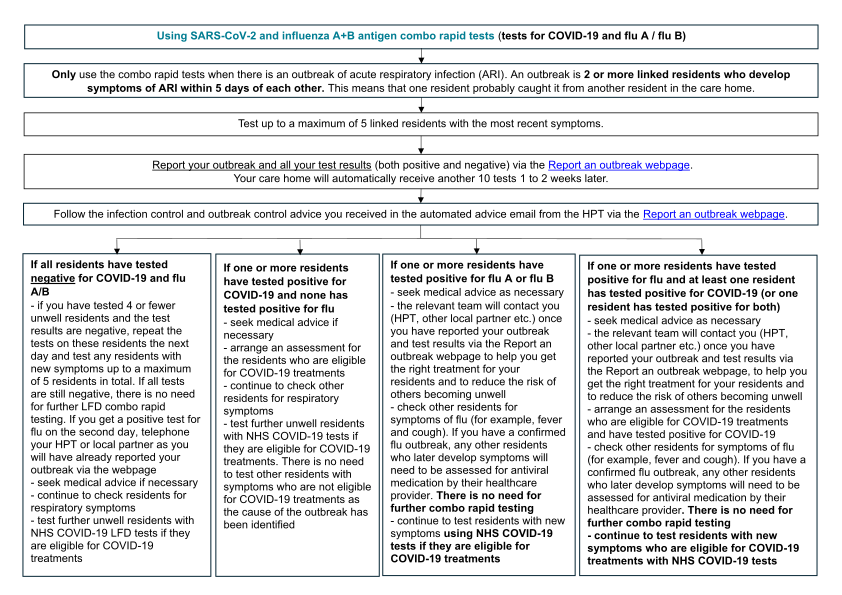
Text version of flowchart for using combo rapid tests
Only use the combo rapid tests when there is an outbreak of acute respiratory infection (ARI). An outbreak is 2 or more linked residents who develop symptoms of ARI within 5 days of each other. This means that one resident probably caught it from another resident in the care home.
Test up to a maximum of 5 linked residents with the most recent symptoms.
Report your outbreak and all your test results (both positive and negative) via the Report an outbreak webpage. Your care home will automatically receive another 10 tests 1 to 2 weeks later.
Follow the infection control and outbreak control advice you received in the automated advice email from the HPT through the Report an outbreak webpage.
If all residents have tested negative for COVID-19 and flu A/B
If you have tested 4 or fewer unwell residents and the test results are negative, repeat the tests on these residents the next day and test any residents with new symptoms up to a maximum of 5 residents in total.
If all tests are still negative, there is no need for further combo rapid testing. If you get a positive test for flu on the second day, telephone your HPT or local partner as you will have already reported your outbreak via the webpage.
Seek medical advice if necessary.
Continue to check residents for respiratory symptoms.
Test further unwell residents with NHS COVID-19 LFD tests if they are eligible for COVID-19 treatments.
If one or more residents have tested positive for COVID-19
Seek medical advice if necessary.
Arrange an assessment for the residents who are eligible for COVID-19 treatments.
Continue to check other residents for respiratory symptoms.
Test further unwell residents with NHS COVID-19 tests if they are eligible for COVID-19 treatments. There is no need to test other residents with symptoms who are not eligible for COVID-19 treatments as the cause of the outbreak has been identified.
If one or more residents have tested positive for flu A or flu B
Seek medical advice as necessary.
The relevant team will contact you (HPT, other local partner and so on) once you have reported your outbreak and test results via the Report an outbreak webpage to help you get the right treatment for your residents and to reduce the risk of others becoming unwell.
Check other residents for symptoms of flu (for example, fever and cough). If you have a confirmed flu outbreak, any other residents who later develop symptoms will need to be assessed for antiviral medication by their healthcare provider. There is no need for further combo rapid testing.
Continue to test residents with new symptoms using NHS COVID-19 tests if they are eligible for COVID-19 treatments.
If at least one resident has tested positive for flu and at least one resident has tested positive for COVID-19 (or one resident has tested positive for both)
Seek medical advice as necessary.
The relevant team will contact you (HPT, other local partner and so on) once you have reported your outbreak and test results via the Report an outbreak webpage, to help you get the right treatment for your residents and to reduce the risk of others becoming unwell.
Arrange an assessment for the residents who are eligible for COVID-19 treatments and have tested positive for COVID-19.
Check other residents for symptoms of flu (for example, fever and cough).
If you have a confirmed flu outbreak, any other residents who later develop symptoms will need to be assessed for antiviral medication by their healthcare provider. There is no need for further combo rapid testing.
Continue to test residents with new symptoms who are eligible for COVID-19 treatments with the NHS COVID-19 tests.
Reporting test results under Regulation 4A of the Health Protection (Notification) Regulations 2010
Under Regulation 4A of The Health Protection (Notification) Regulations 2010, care homes are still required to report positive, negative and void LFD test results where they have assisted residents to take an LFD.
To support care homes in being able to meet their Regulation 4A duty, the UKHSA record-keeping multiple registration spreadsheet for combo rapid LFD tests is available for care homes to report combo rapid LFD test results.
Note: filling in the multiple registration spreadsheet will not lead to your LFD tests being replaced. Tests will only be replaced by reporting your outbreak via the Report an outbreak webpage.
Resources
GOV.UK website
- Infection prevention and control (IPC) in adult social care: acute respiratory infection (ARI)
- Management of acute respiratory infection outbreaks in care homes
- People with symptoms of a respiratory infection including COVID-19
- Your guide to the RSV vaccine for older adults
- Influenza: treatment and prophylaxis using anti-viral agents
NHS
- Treatments for COVID-19
- Find a pharmacy that offers free COVID-19 rapid lateral flow tests
- Find your local integrated care board (ICB)
- COVID-19 vaccine
- Flu vaccine