Provisional childhood vaccine coverage: May 2026
Updated 24 September 2026
Applies to England

© Crown copyright 2026
This publication is licensed under the terms of the Open Government Licence v3.0 except where otherwise stated. To view this licence, visit nationalarchives.gov.uk/doc/open-government-licence/version/3 or write to the Information Policy Team, The National Archives, Kew, London TW9 4DU, or email: psi@nationalarchives.gov.uk.
Where we have identified any third party copyright information you will need to obtain permission from the copyright holders concerned.
This publication is available at https://www.gov.uk/government/publications/childhood-vaccine-coverage-provisional-monthly-data-england-2026/provisional-childhood-vaccine-coverage-may-2026
Introduction
This report presents provisional childhood vaccine coverage statistics for MMRV, rotavirus, MenB, the 6-in-1 vaccine and the dTaP/IPV booster for May 2026 in England.
Cover of vaccination evaluated rapidly (COVER) remains the official source for childhood vaccination coverage. The aim of this supplementary report is to provide more timely provisional estimates to support staff delivering the programme.
Coverage estimates in this report will differ from the official coverage figures published in COVER, as the reports use different data sources and methodology. This report is based on GP data meaning unregistered individuals are not included so figures do not capture the whole eligible population. For more details on both data sources and appropriate use cases please see the Methods section.
In this report coverage is measured in those turning each age within the survey month and estimates include vaccinations administered up to the end of the survey month. This methodology means that for each age band, coverage is measured in a different cohort of children each month.
Coverage by local authority is likely to be variable, as the number of eligible individuals in each cohort is often small. This should be taken into account when interpreting these coverage estimates.
Historic data has been excluded for rotavirus in September 2023; for the 6‑in‑1 vaccine between April 2022 and April 2023 and again in October 2025; and for MenB between September 2025 and December 2025. These periods are indicated by breaks in the line in the figures. In addition, all historic data has been excluded for MMR and the dTaP/IPV booster. Data from these periods were excluded after failing validation checks.
Sufficient data is not yet available to assess whether the introduction of the 18 month appointment has improved coverage of MMRV dose 1 and to assess coverage of MMRV dose 2 but this will be included in future publications.
Main points
The main findings are that:
-
MMRV dose 1 coverage in those aged 15 months (1 year 3 months) remained similar to coverage of MMR measured in children of the same age before the switch on the 1 January 2026, suggesting a successful transition to MMRV
-
MenB dose 2 coverage in those aged 6 months has increased, suggesting the change in schedule, with an earlier offer of dose 2, has had a positive impact on coverage
-
6-in-1 dose 3 coverage was coverage was 84.7% in those aged 6 months, 0.8 percentage points lower than in May 2025
-
MenB dose 3 coverage was 83.7% in those aged 18 months (1 year 6 months), 0.7 percentage points lower than in May 2025
-
rotavirus dose 2 coverage was 86.7% in those aged 6 months, 2.1 percentage points lower than in May 2025
-
dTaP/IPV booster coverage was 83.1% in those aged 60 months (5 years)
The MMRV vaccine: results
Summary of MMRV vaccine coverage
The MMRV vaccine provides protection against measles, mumps, rubella and varicella. From January 2026, the MMR vaccine was replaced with MMRV, offering children additional protection against varicella, which causes chickenpox. Children become eligible for the MMRV dose 1 at 12 months.
Although most individuals in the 15 month cohort should have received MMRV, a small number are recorded to have received MMR. These children may have received MMR in another country or had their vaccine type coded incorrectly.
MMRV coverage is evaluated for dose 1 in those aged 15 months (1 year 3 months). Those aged 15 months (1 year 3 months) were eligible for the first dose of MMRV at 12 months, meaning they had been eligible for 3 months when measured.
Sufficient data is not yet available to assess whether the introduction of the 18 month appointment has improved coverage of MMRV dose 1 and to assess coverage of MMRV dose 2 but this will be included in future publications.
Coverage of MMRV dose 1: cohort turning 15 months
The measurement of coverage for MMRV dose 1 at 15 months (1 year 3 months) provides an indicator of current coverage, as well as timeliness of vaccination (defined as those vaccinated within 3 months of becoming eligible).
The findings for MMRV dose 1 in those aged 15 months (1 year 3 months) are that:
-
coverage of MMR-containing (MMR or MMRV) dose 1 was 78.7% (33,260 out of 42,279), 99.0% of which were recorded as MMRV doses
-
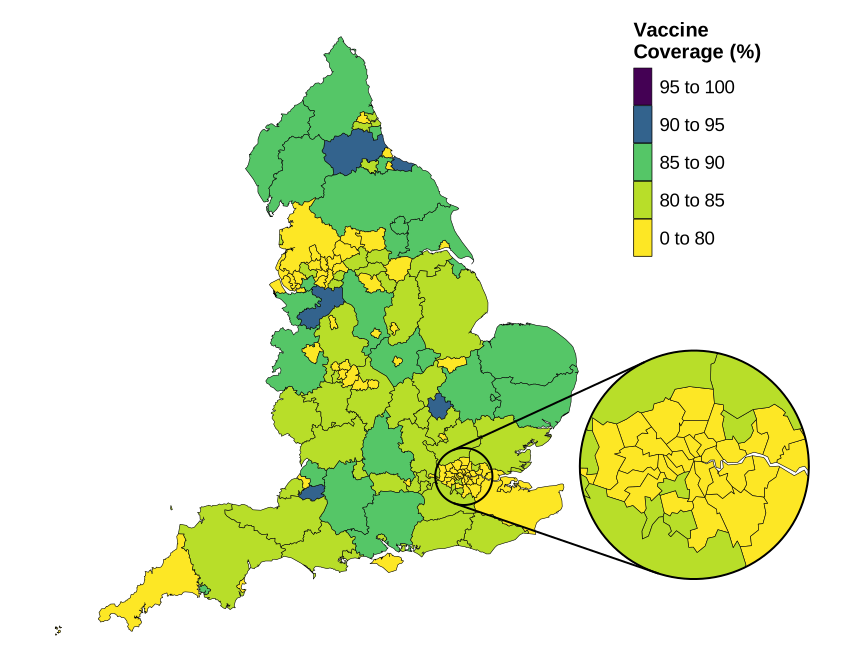
coverage by commissioning region differed by 11.9 percentage points, from 71.2% in London to 83.1% in the South West
-
coverage by local authority differed by 41.6 percentage points, from 51.7% in Hackney and City of London to 93.3% in County Durham
-
coverage by IMD 2025 decile differed by 14.0 percentage points, from 71.0% in the most deprived decile to 85.0% in the least deprived decile
Table 1. MMRV dose 1 coverage (%) in those aged 15 months (1 year 3 months) by commissioning region in May 2026
| Commissioning region | MMRV dose 1 coverage (%) |
|---|---|
| North East and Yorkshire | 81.5 |
| North West | 77.1 |
| Midlands | 77.5 |
| East of England | 82.2 |
| South East | 82.4 |
| London | 71.2 |
| South West | 83.1 |
| Total | 78.7 |
Figure 1a. MMRV dose 1 coverage for those aged 15 months (1 year 3 months) for May 2026 by local authority
The MenB vaccine: results
Summary of MenB coverage
The MenB vaccine provides protection against meningococcal group B (MenB) bacteria which causes meningitis and sepsis. Children are eligible for a primary course of dose 1 at 2 months (8 weeks) and dose 2 at 3 months (12 weeks) with an additional booster dose at 12 months. From July 2025 onwards, the second dose of MenB was moved forward from 4 months (16 weeks) to 3 months (12 weeks).
The main findings for the MenB vaccine are that:
-
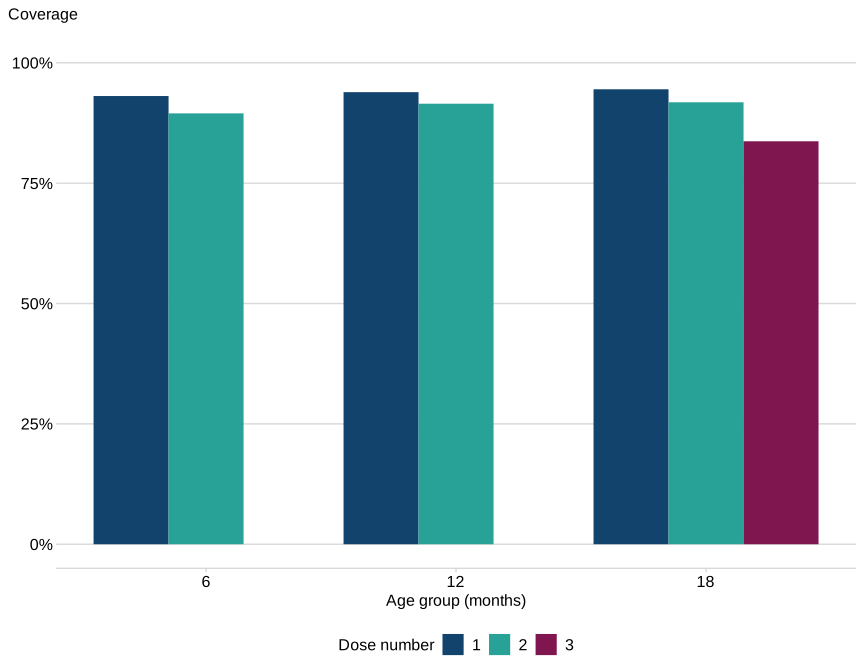
dose 1 coverage was 93.1% at 6 months, 93.9% at 12 months, 94.5% at 18 months (1 year 6 months)
-
dose 2 coverage was 89.5% at 6 months, 91.5% at 12 months, 91.8% at 18 months (1 year 6 months)
-
dose 3 coverage was 83.7% at 18 months (1 year 6 months)
-
dose 2 coverage in those aged 6 months has increased by 2.6 percentage points compared with May 2025, prior to the change in schedule, suggesting the change in schedule has had a positive impact on coverage
Note: Historic data has been excluded for the MenB vaccine between September 2025 and December 2025 after failing validation checks. This period is indicated by gaps in the graph lines in the figures below.
Figure 2a. MenB coverage by age group and dose for May 2026
Coverage of MenB dose 2
Measurement of coverage of MenB dose 2 in those aged 6 months gives an indicator of coverage of the primary course and allows us to evaluate the impact of the change in schedule.
Those aged 6 months in May 2026 had been eligible for the second dose of MenB at 3 months (12 weeks), under the new schedule. This means that they had been eligible for 3 months when measured.
The findings for MenB dose 2 in those aged 6 months are that:
-
coverage was 89.5%, which was 2.6 percentage points higher than in May 2025 prior to the change in schedule
-
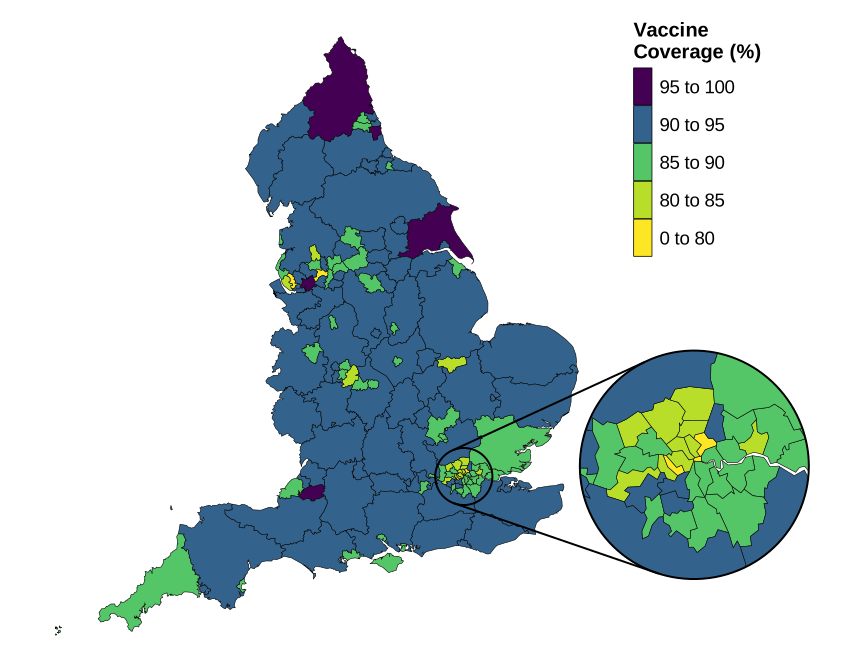
coverage by commissioning region differed by 6.6 percentage points, from 85.2% in London to 91.8% in the South West
-
coverage by local authority differed by 40.4 percentage points, from 56.7% in Hackney and City of London to 97.1% in Northumberland and Bath and North East Somerset
Figure 2b. MenB dose 2 coverage for those aged 6, 12 and 18 months (1 year 6 months) from May 2017 to May 2026
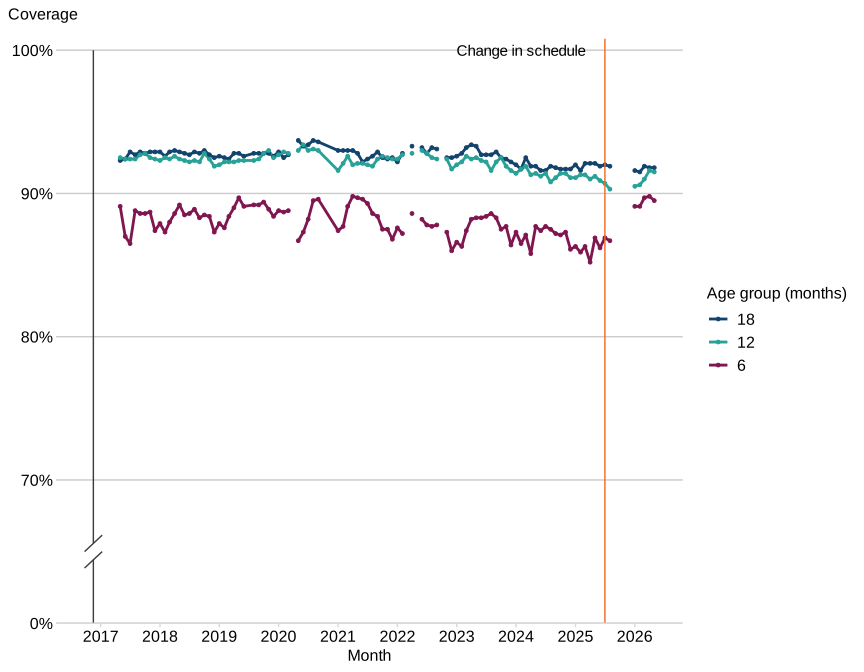
Notes: Gaps in the graph lines in the figure indicate periods for which data has been excluded after failing validation checks. The orange vertical line represents change in vaccination schedule from being eligible for the second dose at 4 months (16 weeks) to being eligible at 3 months (12 weeks).
Figure 2c. MenB dose 2 coverage for those aged 6 months from May 2017 to May 2026 by historic commissioning region
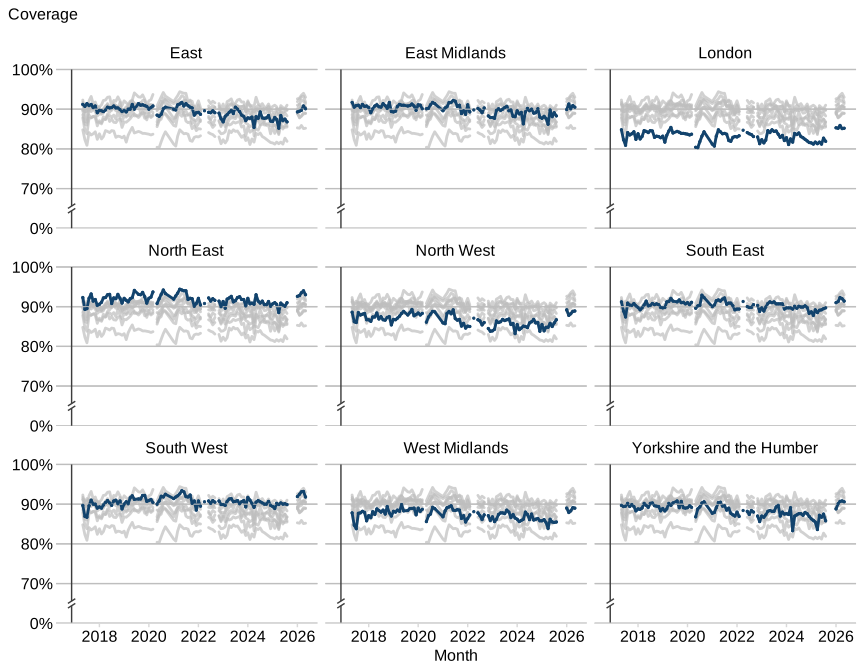
Note: Gaps in the graph lines in the figure indicate periods for which data has been excluded after failing validation checks.
Figure 2d. MenB dose 2 coverage for those aged 6 months for May 2026 by local authority
Coverage of MenB dose 3
The measurement of coverage of MenB dose 3 at 18 months (1 year 6 months) provides both an indicator of completion of the full course and levels of protection in the population.
Those aged 18 months (1 year 6 months) were eligible for the third booster dose of MenB at 12 months. This means that they had been eligible for 6 months when measured.
The findings for MenB dose 3 in those aged 18 months (1 year 6 months) are that:
-
coverage was 83.7%, 0.7 percentage points lower than in May 2025
-
coverage by commissioning region differed by 12.4 percentage points, from 75.9% in London to 88.3% in the South West
-
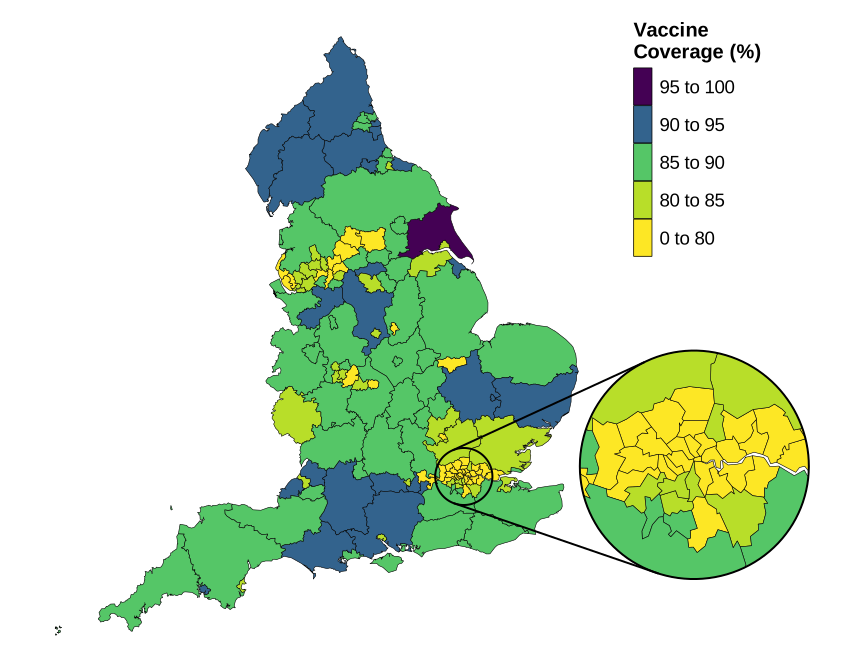
coverage by local authority differed by 44.1 percentage points, from 51.1% in Hackney and City of London to 95.2% in East Riding of Yorkshire
-
coverage by IMD 2025 decile differed by 12.6 percentage points, from 77.4% in the most deprived decile to 90.0% in the least deprived decile
-
coverage of dose 3 was 10.8 percentage points lower than dose 1 coverage in this cohort
Figure 2e. MenB dose 3 coverage for those aged 18 months (1 year 6 months) from May 2017 to May 2026
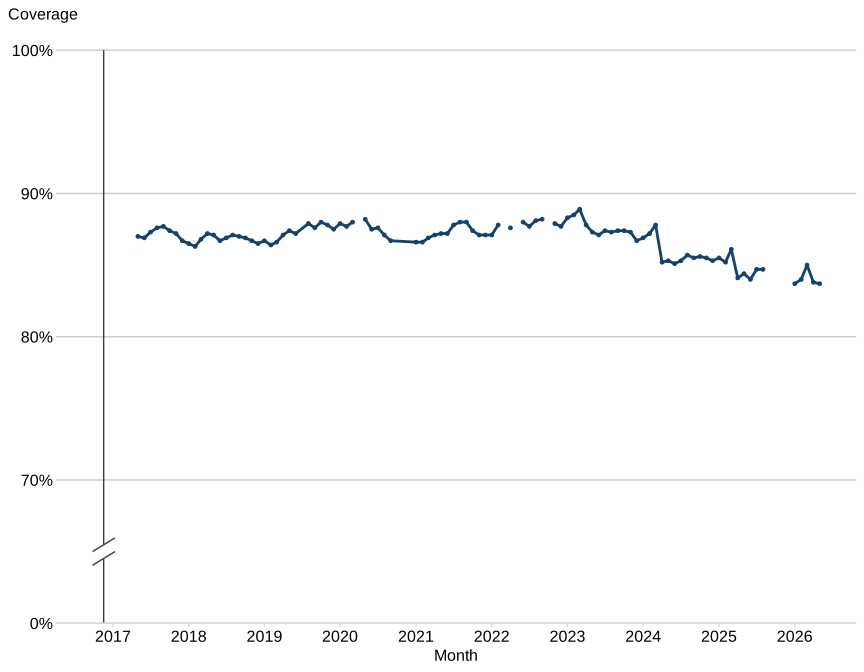
Note: Gaps in the graph lines in the figure indicate periods for which data has been excluded after failing validation checks.
Figure 2f. MenB dose 3 coverage for those aged 18 months (1 year 6 months) from May 2017 to May 2026 by historic commissioning region
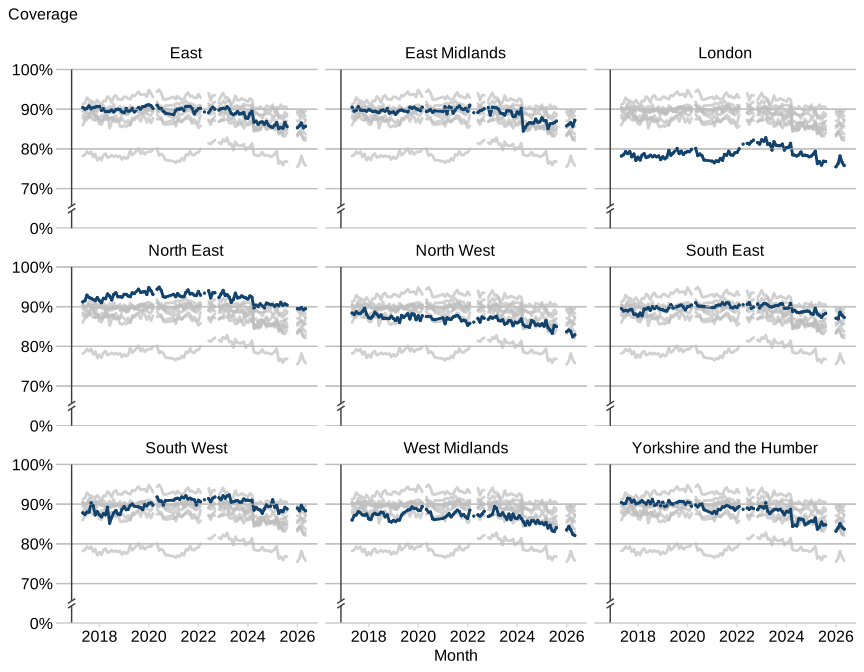
Note: Gaps in the graph lines in the figure indicate periods for which data has been excluded after failing validation checks.
Figure 2g. MenB dose 3 coverage for those aged 18 months (1 year 6 months) for May 2026 by local authority
The 6-in-1 vaccine: results
Summary of 6-in-1 coverage
The 6-in-1 vaccine provides protection against diphtheria, tetanus, pertussis, polio, Hib and hepatitis B. Children are eligible for dose 1 at 2 months (8 weeks), dose 2 at 3 months (12 weeks) and dose 3 at 4 months (16 weeks). From January 2026 a fourth booster dose has been added to the schedule at 18 months (1 year 6 months) [Note 4].
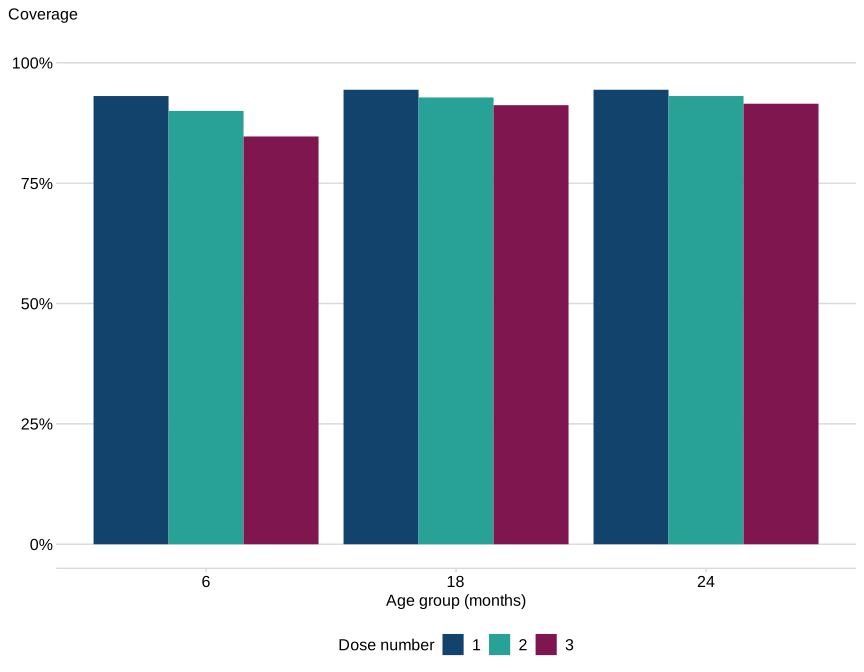
The main findings for the 6-in-1 vaccine are that:
-
dose 1 coverage was 93.1% at 6 months, 94.4% at 18 months (1 year 6 months), 94.4% at 24 months
-
dose 2 coverage was 90.0% at 6 months, 92.8% at 18 months (1 year 6 months), 93.1% at 24 months
-
dose 3 coverage was 84.7% at 6 months, 91.2% at 18 months (1 year 6 months), 91.5% at 24 months
-
dose 4 coverage was 22.2% at 18 months
Notes: Data is not yet available to assess coverage of the fourth dose of 6-in-1 and will be included in future publications. Historic data has been excluded for the 6-in-1 vaccine between April 2022 and April 2023 and for October 2025, after failing validation checks; this period is indicated by gaps in the graph lines in the figures below.
Figure 3a. 6-in-1 coverage by age group and dose for May 2026
Coverage of 6-in-1 dose 3
Measurement of coverage of 6-in-1 dose 3 in those aged 6 months provides both an indicator of completion of the primary course and levels of protection in the population.
Those aged 6 months were eligible for the third dose of 6-in-1 at 4 months (16 weeks). This means that they had been eligible for 2 months when measured.
The findings for 6-in-1 dose 3 in those aged 6 months are that:
-
coverage was 84.7%, which was 0.8 percentage points lower than in May 2025
-
coverage by commissioning region differed by 9.1 percentage points, from 79.1% in London to 88.2% in the South West
-
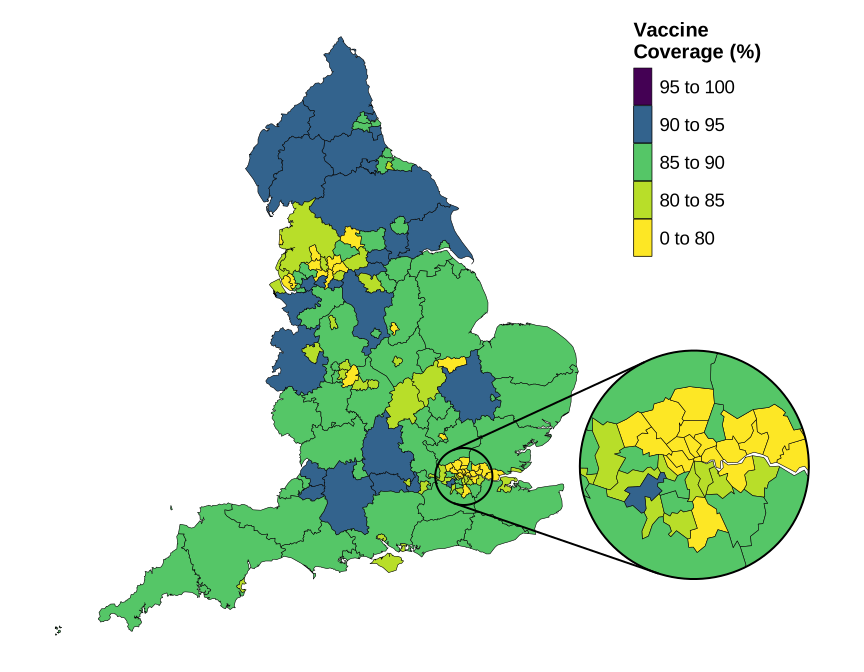
coverage by local authority differed by 43.0 percentage points, from 51.2% in Hackney and City of London to 94.2% in East Riding of Yorkshire
-
coverage by IMD 2025 decile differed by 12.1 percentage points, from 77.8% in the most deprived decile to 89.9% in the least deprived decile
-
coverage of dose 3 was 8.4 percentage points lower than dose 1 coverage in this cohort
Figure 3b. 6-in-1 dose 3 coverage for those aged 6, 18 and 24 months from February 2019 to May 2026
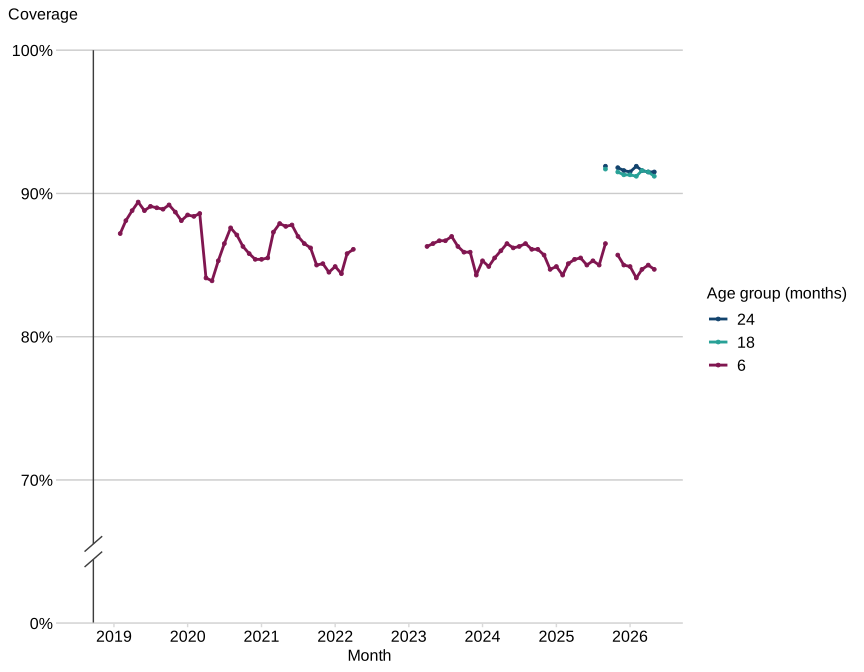
Notes: Gaps in the graph line in the figure indicate periods for which data has been excluded after failing validation checks.s. Data for those aged 18 and 24 months only available from September 2025.
Figure 3c. 6-in-1 dose 3 coverage for those aged 6 months from February 2019 to May 2026 by historic commissioning region
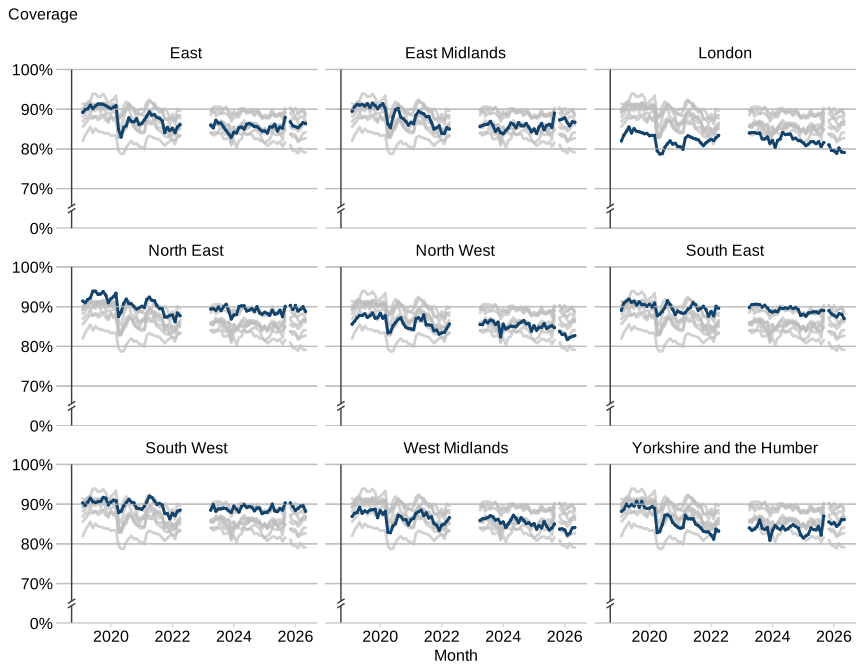
Note: Gaps in the graph lines in the figure indicate periods for which data has been excluded after failing validation checks.
Figure 3d. 6-in-1 dose 3 coverage for those aged 6 months for May 2026 by local authority
The rotavirus vaccine: results
Summary of rotavirus coverage
The rotavirus vaccine provides protection against rotavirus which can cause severe diarrhoea and vomiting. Children become eligible for the first dose of rotavirus at 2 months (8 weeks) and the second dose at 3 months (12 weeks).
The main findings for the rotavirus vaccine are that:
-
dose 1 coverage was 90.3% at 6 months
-
dose 2 coverage was 86.7% at 6 months
Note: Historic data has been excluded for the rotavirus vaccine for September 2023 after failing validation checks; this period is indicated by gaps in the graph lines in the figures below.
Coverage of rotavirus dose 2
The measurement of coverage of rotavirus dose 2 at 6 months provides both an indicator of completion of the full course and levels of protection in the population.
Those aged 6 months were eligible for the second dose of rotavirus at 3 months (12 weeks). This means that they had been eligible for 3 months when measured.
The findings for rotavirus dose 2 in those aged 6 months are that:
-
coverage was 86.7%, which was 2.1 percentage points lower than in May 2025
-
coverage by commissioning region differed by 6.6 percentage points, from 82.5% in London to 89.1% in the South West
-
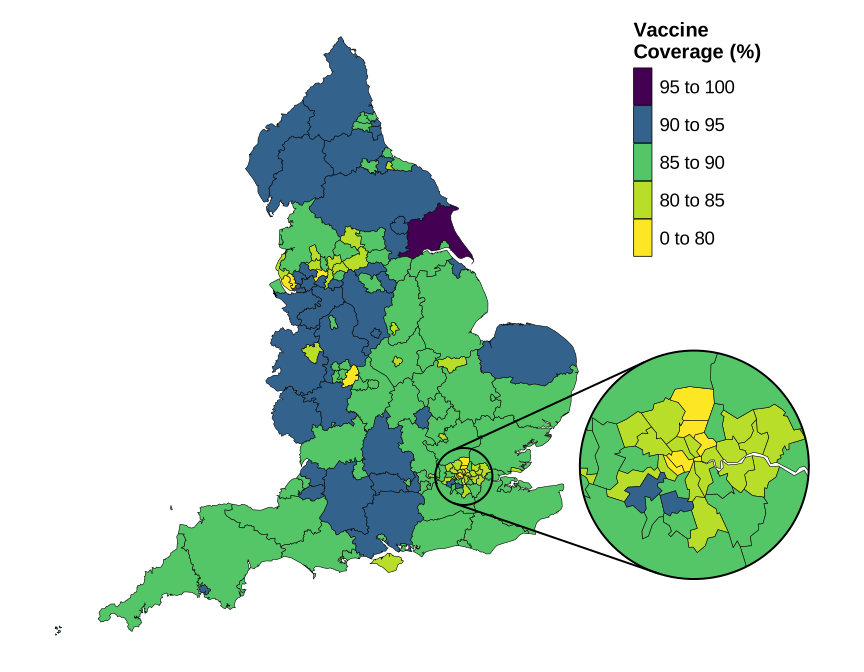
coverage by local authority differed by 40.9 percentage points, from 54.6% in Hackney and City of London to 95.5% in East Riding of Yorkshire
-
coverage by IMD 2025 decile differed by 8.5 percentage points, from 81.9% in the most deprived decile to 90.4% in the least deprived decile
-
coverage of dose 2 was 3.6 percentage points lower than dose 1 coverage in this cohort
Figure 4a. Rotavirus dose 2 coverage for those aged 6 months from January 2020 to May 2026
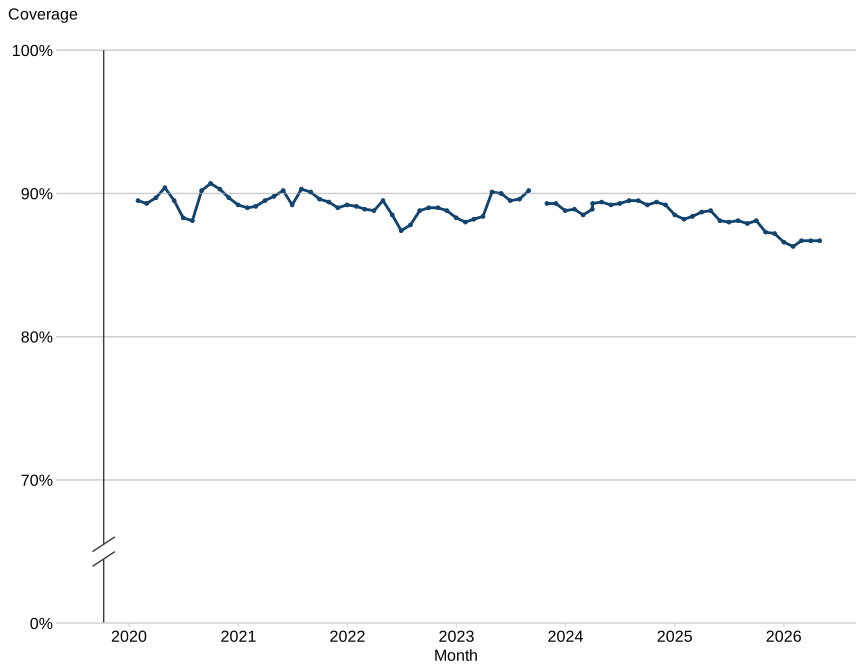
Note: Gaps in the graph line in the figure indicate periods for which data has been excluded after failing validation checks..
Figure 4b. Rotavirus dose 2 coverage for those aged 6 months from January 2020 to May 2026 by historic commissioning region
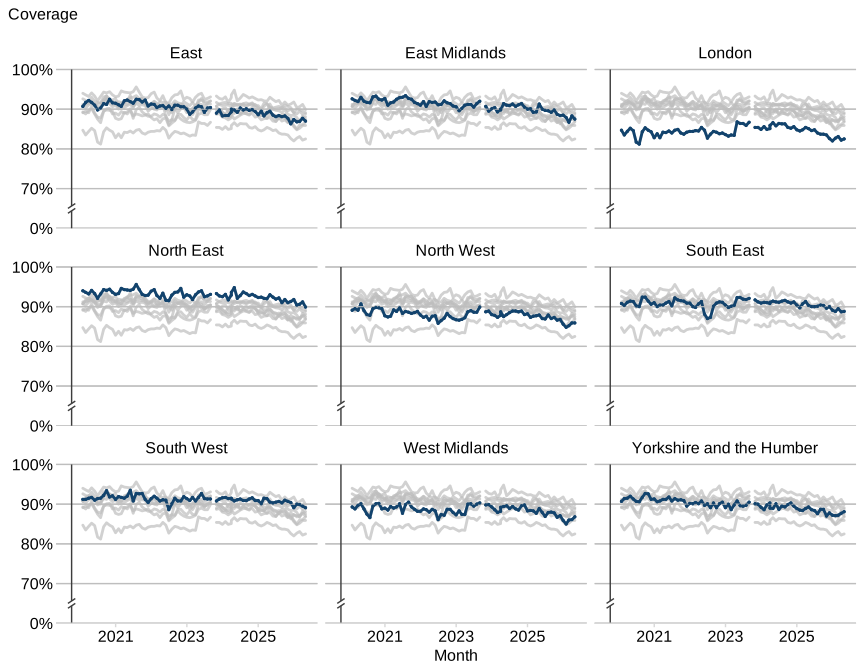
Note: Gaps in the graph lines in the figure indicate periods for which data has been excluded after failing validation checks.
Figure 4c. Rotavirus dose 2 coverage for those aged 6 months for May 2026 by local authority
The dTaP/IPV vaccine: results
Summary of dTaP/IPV booster coverage
The dTap/IPV booster (pre-school booster) protect against tetanus, diphtheria and polio. The booster dose provides additional protection following completion of the primary course. Children become eligible for the dTaP/IPV booster at around 40 months (3 years 4 months).
The measurement of coverage of the dTaP/IPV booster at 60 months (5 years) provides both an indicator of completion of the full course and levels of protection in the population.
Those aged 60 months (5 years) were eligible for the dTap/IPV booster around 40 months (3 years 4 months). This means that they had been eligible for 20 months when measured.
The findings for dTaP/IPV booster in those aged 60 months (5 years) are that:
-
coverage was 83.1% for the booster dose
-
coverage by commissioning region differed by 19.5 percentage points, from 69.8% in London to 89.3% in the South West
-
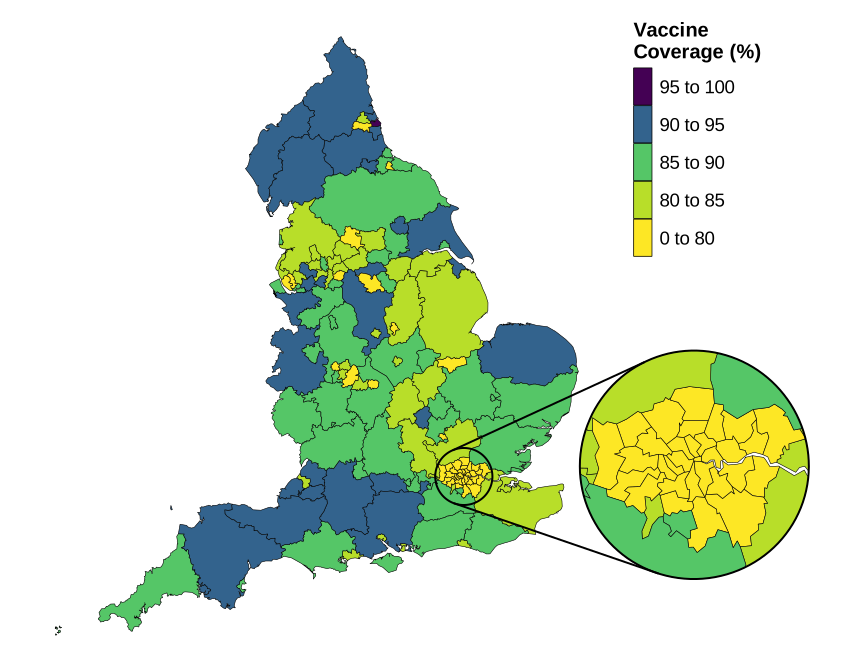
coverage by local authority differed by 43.3 percentage points, from 52.1% in Westminster to 95.4% in South Tyneside
-
coverage by IMD 2025 decile differed by 12.5 percentage points, from 77.2% in the most deprived decile to 89.7% in the least deprived decile
Note 8: All historic data for the dTaP/IPV booster has been excluded after failing validation checks.
Figure 5a. dTaP/IPV booster coverage for those aged 60 months for May 2026 by local authority
Background
Childhood schedule changes
In 2025, the cessation of the Hib/MenC (Menitorix) vaccine, prompted The Joint Committee on Vaccination and Immunisation (JCVI) to review the routine childhood immunisation schedule. This review led to the introduction of a new 18-month appointment offering a fourth dose of hexavalent (6-in-1) vaccine and bringing forward the second dose of MMR from the original 3-year 4 months appointment.
From 1 July 2025, the schedule was amended to offer the second dose of the meningococcal B (MenB) vaccine at 12 weeks of age, rather than 16 weeks, to provide earlier protection against invasive meningococcal disease.
From January 2026, the MMR vaccine was replaced with MMRV, offering children additional protection against varicella, the causative agent for chicken pox. Eligibility for MMR and MMRV differs depending on when a child was born. This phased rollout ensures that all children receive the required doses of MMR, as well as providing older children the opportunity to receive protection against varicella.
Data sources
Historically, childhood immunisation programmes have been monitored using the Cover of vaccination Evaluated Rapidly (‘COVER’) collection, which has been published since 1987. COVER is a quarterly collection which reports coverage in those aged 1 year (12 months), 2 years (24 months) and 5 years (60 months). The COVER collection provides a robust long-term view of coverage and remains the definitive source of data on childhood vaccination coverage for England.
The ImmForm Early Childhood Baseline collection was introduced to supplement the COVER collection by measuring coverage in additional age cohorts. Since the collection measures coverage shortly after the vaccine is recommended, it can be used to assess the uptake of vaccinations in a more timely way than COVER. The collection has been adapted over time to allow rapid assessment of coverage following changes to the routine immunisation schedule. This data is available to local teams through the ImmForm website and is used for provisional monitoring of the childhood vaccine programmes.
The main distinction in methodology between these data sources is that COVER data is based on data from Child Health Information Systems (CHIS) whereas ImmForm is based on data extracted by GP IT suppliers, from the GP record. This means that COVER is able to capture all eligible individuals, whereas ImmForm will only include those registered at a GP, meaning some eligible individuals will not be captured. This is likely to disproportionately affect highly transient individuals who are less likely to be registered with a GP.
While these systems provide an established and reliable source of coverage data, the COVID-19 pandemic highlighted the need for real-time individual-level vaccination data. In response to this, the National Immunisation Management system was introduced to provide rapid and granular data on COVID-19 vaccinations. This system has since transitioned into the Immunisation Information System (IIS), which has been expanding to include data on influenza, MMR and RSV.
This report presents data from the ImmForm Early Childhood Baseline collection which provides an earlier snapshot of coverage than is available through COVER. These provisional figures are intended to support those commissioning and administering the program, where timely data is crucial. For most use cases, COVER should be used, as it provides more accurate figures that include all eligible children.
In future, coverage data from IIS will also be available to monitor the childhood immunisation programme, however this data is currently under review.
Aims
The aim of this report is to provide provisional coverage estimates to monitor childhood immunisation programs.
This report will assess:
-
the impact of changes to the immunisation schedule, including the introduction of the MMRV vaccine and changes to the MenB schedule
-
completion of vaccination course in older cohorts
-
changes in coverage over time, to identify trends
-
variation in coverage by sociodemographic factors
Methods
Data completeness
The data presented in this report was collected at the GP practice level and was automatically uploaded via participating GP IT suppliers to ImmForm. Data was then validated and analysed by UKHSA to check data completeness, query any anomalous results and describe epidemiological trends.
A total of 6,083 out of 6,154 (98.8%) GP practices reported data for May 2026. Both main GP IT suppliers (Optum and TPP) provided data.
Definitions
The definitions used in this report are that:
-
dose 1 coverage was defined as the proportion of registered children who reached a specified age during the survey month and had received at least one dose of a vaccine at any time before the end of that month
-
dose 2 coverage was defined as the proportion of registered children who reached a specified age during the survey month and had received at least one dose of a vaccine at any time before the end of that month
-
dose 3 coverage was defined as the proportion of registered children who reached a specified age during the survey month and had received at least one dose of a vaccine at any time before the end of that month
Cohorts
This report presents childhood vaccine coverage data for the following vaccines and age groups:
-
MMR and MMRV dose 1 in those aged 15 months (1 year and 3 months)
-
6-in-1 doses 1, 2, and 3 in those aged 6, 18 (1 year and 6 months) and 24 months
-
MenB dose 1 and 2 in those aged 6 months, 12 months and 18 months (1 year and 6 months)
-
rotavirus dose 1 and 2 in those aged 6 months (25 weeks)
-
the dTaP/IPV booster in those aged 60 months (5 years)
Cohorts are defined based on the age they turned during the survey month. The birth cohorts from the current report are shown in Table 2.
Table 2. Birth dates by age cohort for May 2026
| Age (months) | Date of birth range |
|---|---|
| 6 months | 1 November 2025 to 30 November 2025 |
| 12 months | 1 May 2025 to 31 May 2025 |
| 18 months | 1 November 2024 to 30 November 2024 |
| 24 months | 1 May 2024 to 31 May 2024 |
| 38 months | 1 March 2023 to 31 March 2023 |
| 42 months | 1 November 2022 to 30 November 2022 |
| 60 months | 1 May 2021 to 31 May 2021 |
Summary of provisional childhood coverage
A summary of coverage for MenB, the 6-in-1 vaccine, rotavirus and the dTaP/IPV booster can be found in Table 3.
Table 3. Vaccine coverage (%) for MenB, the 6-in-1 vaccine and rotavirus for May 2026, compared with May 2025
| Vaccine | Dose | Age (months) | Coverage May 2026 (%) |
Coverage May 2025 (%) |
Change from previous year |
|---|---|---|---|---|---|
| 6-in-1 | 3 | 6 | 84.7 | 85.5 | -0.8 |
| MenB | 2 | 6 | 89.5 | 86.9 | 2.6 |
| MenB | 3 | 18 | 83.7 | 84.4 | -0.7 |
| Rotavirus | 2 | 6 | 86.7 | 88.8 | -2.1 |
Abbreviations
MMR - Measles, Mumps and Rubella
MMRV - Measles, Mumps, Rubella and Varicella
MenB - meningococcal group B
UKHSA - UK Health Security Agency
JCVI - The Joint Committee on Vaccination and Immunisation
6-in-1 - Hexavalent vaccine