Child maintenance calculation research
Published 4 June 2026

© Crown copyright 2026
This publication is licensed under the terms of the Open Government Licence v3.0 except where otherwise stated. To view this licence, visit nationalarchives.gov.uk/doc/open-government-licence/version/3 or write to the Information Policy Team, The National Archives, Kew, London TW9 4DU, or email: psi@nationalarchives.gov.uk.
Where we have identified any third party copyright information you will need to obtain permission from the copyright holders concerned.
This publication is available at https://www.gov.uk/government/publications/child-maintenance-calculation-research/child-maintenance-calculation-research
DWP ad hoc research report no. 1133.
A report of research carried out by Verian on behalf of the Department for Work and Pensions.
Crown copyright 2026.
You may re-use this information (not including logos) free of charge in any format or medium, under the terms of the Open Government Licence. To view this licence, visit National Archives, email psi@nationalarchives.gov.uk or write to the
Information Policy Team
The National Archives
Kew
London
TW9 4DU
This document/publication is also available on our website at Department for Work and Pensions.
If you would like to know more about DWP research, email socialresearch@dwp.gov.uk.
ISBN 978-1-78659-985-8
Views expressed in this report are not necessarily those of the Department for Work and Pensions or any other government department.
Executive summary
Research context
At the time of the research, the Department for Work and Pensions (DWP) was reviewing the calculation underpinning statutory child maintenance (CM) payments. The aim of the review was to consider whether changes could improve affordability, compliance and fairness between parents.
The research was commissioned by DWP to generate an understanding of how parents perceived the existing CM calculation. It also sought to explore how parents might respond to theoretical changes to this calculation. Additionally, the study aimed to examine the possible impacts of such changes on compliance with CM payments as well as on living standards and interparental behaviour to minimise undesirable outcomes for parents and children. Finally, the research was designed to investigate issues related to shared care arrangements between parents.
The findings from this research were published to contribute to the evidence base on parents’ experiences of the statutory child maintenance system.
Methodology
The study involved both quantitative and qualitative research methods, which were carried out simultaneously between July and August 2025.
The quantitative research is based on a total of 3,355 survey responses from 1,605 paying parents and 1,750 receiving parents. Fieldwork was conducted using a mixed-mode approach, with 2,863 responses received online and 492 interviews conducted over the telephone. The data were weighted to ensure that the achieved sample was representative of the overall population.
The qualitative research consisted of a total of 60 in-depth interviews with parents, including 34 with paying parents and 26 with receiving parents. Interviews were one hour in duration and conducted by telephone or Zoom. The interviews used stimuli with hypothetical financial circumstances and example CM liability changes to gauge participant reactions and encourage reflection on the potential impacts of liability changes.
Research findings
Factors shaping participants’ views and behaviours
Parents’ attitudes and behaviours regarding CM were shaped by a complex mix of individual, social and material factors. Individual factors included their personal beliefs and experiences, such as feeling the payment amount was unfair in relation to their personal circumstances. Social factors related to relationships and social expectations, including a sense of parental duty, interactions with the other parent, and shared care arrangements. Material factors were linked to financial circumstances, including affordability, reliance on CM, living costs, wider household responsibilities, and the impact of payments on personal finances (for example, income regularity).
Parents’ financial, work and relationship contexts
Most parents across both the quantitative and qualitative samples were employed, and most were not financially responsible for other children apart from those covered by their CM arrangements. Across the quantitative sample, income variability was common, with many parents experiencing income changes more than once per year.
Participants across both the quantitative and qualitative samples often described acrimonious relationships and limited communication with the other parent. This tended to shape parents’ views regarding both their current and potential CM arrangements and liabilities. Specifically, the quantitative data indicated that receiving parents were more likely to have a negative view of the other parent than amongst paying parents. In addition, paying parents in the qualitative sample often reported feeling disadvantaged compared to the receiving parent, both financially and emotionally, particularly when contact with their children was limited or denied.
Understanding and perceptions of the existing calculation
Across both the qualitative and quantitative research strands, parents’ understanding of the calculation was mixed and often limited. Communications from the Child Maintenance Service (CMS) were described by some parents in the qualitative sample as unclear, contributing to confusion and mistrust between parents.
Despite differing levels of understanding, both paying and receiving parents in the qualitative research typically viewed the calculation as inflexible, with many expressing a desire for a more tailored and transparent approach. Some felt the parameters used in the existing calculation were too limited and suggested the inclusion of a wider range of factors, such as the paying parent’s wider financial circumstances and the receiving parent’s income.
Across both the quantitative and qualitative samples, views about CM liabilities varied. The qualitative research identified that the flat and reduced rate liabilities were widely regarded as insufficient for children’s needs, whilst basic and basic plus rate liabilities were sometimes perceived as excessive by paying parents.
The quantitative research indicated that many paying and receiving parents viewed their current CM liabilities as ‘unfair’, and nearly half of parents felt the amount they currently paid or received was ‘very unfair’. However, perceived fairness varied across different parent groups and income bands. Specifically, receiving parents in the lowest income bands (nil, flat, and reduced) were most likely to feel that payments were unfair, whereas paying parents in the highest income bands (basic and basic plus) were most likely to feel they were unfair. Receiving parents largely attributed unfairness to underreporting of income by the paying parent or inadequate payment amounts in relation to the paying parent’s income. In contrast, paying parents primarily cited affordability issues and the failure of the calculation to account for other support they provided.
Perceived fairness was a key determinant of satisfaction with their existing CM arrangements. Receiving parents generally viewed fairness in terms of whether payments were adequate to meet their children’s needs, covered the costs of raising the children, and reflected the extent of their caring responsibilities. Amongst paying parents, fairness was equated with the affordability of payments and, again, the extent of their caring responsibilities. Beyond these individual perspectives, perceptions of fairness were also shaped by the quality of the interparental relationship and broader social values. The quantitative data highlights that parents in high-conflict situations were more likely to perceive the calculation as unfair, regardless of liability amount.
Shared care insights
The research explored the issue of shared care, where paying parents pay less for each night of the week that their children stay with them, to understand the actual variation in care arrangements beyond the overnight stays counted for CMS purposes. Nearly two thirds of receiving parents and just over a third of paying parents reported that no non-financial care was provided by the paying parent. Where it was provided, this type of care varied across parent groups but was mostly limited to one or two nights per week. Amongst parents who said the other parent provided overnight care, around 1 in 5 receiving parents said the paying parent provided less than one night per week, a smaller proportion of both receiving and paying parents reported 3 or more nights. In addition, while some parents had formal or informal agreements about non-financial aspects of care, the majority had no such agreements in place.
Across the overall interviewed sample, receiving and paying parents reported inconsistent levels of care. Paying parents were much more likely to report higher levels of overnight and daytime care, while receiving parents were much less likely to say the other parent provided night-time or daytime care. In some cases, these differing perceptions extended to attempts to adjust arrangements. Paying parents were more likely than receiving parents to say the paying parent had tried to increase the number of overnight stays, and paying parents were also more likely than receiving parents to say the receiving parent had tried to decrease the number of nights. As these findings come from 2 separate samples of receiving and paying parents, rather than matched pairs, these differences should be interpreted as differences in perception rather than direct contradictions between the same pair of parents.
Attitudes towards adjusting shared care arrangements were strongly influenced by financial and relational factors. For example, paying parents often reported seeking to increase overnight care to spend more time with their children, whereas receiving parents often felt this was an attempt to reduce the amount of CM paid. On the other hand, receiving parents often reported attempting to reduce overnight care due to concerns about child wellbeing, lack of support from the paying parent, or the child’s own preferences. Paying parents felt these attempts were financially motivated to increase CM payment amount or a manipulation of care due to relational issues.
Insights on hypothetical liability calculation changes
Participants’ reactions to hypothetical calculation changes
Reactions to the tested hypothetical changes varied considerably between paying and receiving parents and by calculation band. Paying and receiving parents often had opposing reactions to the hypothetical liability changes, reflecting the binary dynamic of liability increases or decreases. For example, increases were largely welcomed by receiving parents but resisted by paying parents.
Receiving parents tended to react consistently, particularly emphasising concerns about maintaining adequate support for children if liabilities were decreased. Paying parents responses varied with financial security and perceived fairness and adequacy of the liability being some key themes that emerged.
Paying parents with greater financial insecurity tended to have stronger reactions to liability increases and decreases. Whilst paying parents on the basic and basic plus rates, with a degree of financial security, tended to question the fairness of theoretical liability increases.
The qualitative research identified that social values regarding parental duty and responsibility influenced participants’ reactions to theoretical liability changes. For example, theoretical higher rate liability increases were often met with strong resistance and reluctance to pay amongst paying parents, because the arrangement was perceived to be inequitable. Whilst receiving parents expressed negative reactions to the hypothetical liability decreases, as these were seen to lessen the paying parents’ responsibilities.
Participants’ reactions to hypothetical liability decreases
Overall, the tested hypothetical decreases liabilities received a mixed response from paying parents on the reduced and basic (earning less than £350 per week) rates. Although, paying parents in the qualitative sample with shared care were more welcoming of a decrease and cited being able to spend more on the children when in their care. The tested hypothetical decreases in CM payments were generally received negatively by receiving parents on the reduced and basic (earning less than £350 per week) rates.
Participants’ reactions to hypothetical liability increases
The tested hypothetical increases to liabilities received a mixed response from paying parents on the flat, basic (earning over £350 per week) and basic plus rates. Generally paying parents were not keen to see hypothetical liability increases, for a range of reasons, but felt it was their obligation to pay what was required. Paying parents’ willingness to pay often hinged on trust between the parents or evidence that an increased payment would benefit the children.
Across the qualitative research, paying parents on the flat rate expressed mixed reactions to the hypothetical liability increase. However, paying parents on the flat rate also broadly reported a concern that a hypothetical increase to the liability would be financially difficult. In the quantitative research, when probed about theoretical changes to the flat rate, the majority of paying parents on the flat rate (68%) said that the liability should be kept at £7 per week. Just 12% felt the liability should be increased above £7, with a further 20% unsure about these theoretical changes.
On the other hand, receiving parents were welcoming of impactful increases, but responses were muted where increases were seen to be nominal. In the quantitative survey nearly 9 in 10 (87%) receiving parents said the flat rate should be increased above £7 per week. However, in the qualitative sample, the presented increase to liability for the flat rate was seen to be insignificant and evoked criticism amongst some receiving parents. It was seen as insufficient to adequately contribute to the cost of raising children or support their welfare in a meaningful way.
Paying parents on the basic rate (earning over £350) felt the hypothetical increase was unfair, whilst paying parents on the basic plus rate generally felt that the theoretical increase to liability was excessive and unreasonable. Receiving parents on the basic and basic plus rates tended to be more welcoming of the tested hypothetical increases, where the increased value was perceived to be impactful.
Perceived impacts of hypothetical liability changes
Participants perceptions of the potential impacts of the tested hypothetical liability changes were broadly consistent across parent type and calculation band. The qualitative research identified that perceptions of affordability and adequacy influenced participants reactions to theoretical liability changes. For example, participants who reported being financially insecure, expressed stronger negative impacts of theoretical increases or decreases (amongst paying parents and receiving parents respectively) to CM liabilities.
Perceived impacts of hypothetical liability decreases
Both paying and receiving parents on the reduced and basic (earning less than £350 per week) rates expressed concerns that decreased liabilities could have a negative impact on children’s welfare and wellbeing. Some paying parents with shared care arrangements reported that decreased liability would allow them to spend more on their children when in their care.
Decreased liabilities for reduced and basic rate parents were generally felt to moderately undermine household budgets for receiving parents’, with possible knock-on effects for the children and receiving parents’ employment. Amongst paying parents these decreases were seen to ease the paying parents’ financial burden and offer some significant improvements to their quality of life. Across the qualitative sample, parents highlighted that changes to liabilities were likely to cause friction in the relationships with the other parent.
Perceived impacts of hypothetical liability increases
The potential impact of hypothetical liability increases identified in the qualitative research were consistent with participants reactions to the hypothetical liability increases.
Both paying and receiving parents felt that the hypothetical flat rate increase would have little impact for the receiving parents, and felt the liability remained insufficient to contribute to the cost of raising children or support their welfare in a meaningful way. However, paying parents in the flat rate broadly reported a view that an increase to the liability would add to their financial struggles, and had the potential to push them into financial distress.
The more substantial increases to liabilities for basic and basic plus rate parents were seen to drive financial stress for paying parents, whilst offering significant improvements for basic rate receiving parents’ household budgets.
Paying parents on the basic (earning over £350) rate felt the hypothetical increase was unfair, disproportionate and would have serious financial impacts, with the potential to push them into financial distress, undermining their mental health in a significant way. Paying parents on the basic plus rate generally felt that the theoretical increase was excessive and unreasonable, and felt an increase would undermine their household financial security, their quality of life and mental health.
Receiving parents on the basic and basic plus rates tended to be more welcoming of the tested hypothetical increases, where the increased value was perceived to be impactful. Increases to liabilities for basic and basic plus rate parents were seen to offer moderate improvements for receiving parents’ household budgets.
Possible impacts of hypothetical calculation changes on compliance behaviour
The qualitative research identified affordability and willingness to pay as core components of compliance amongst paying parents in the sample. The data suggests that decreases to liabilities for the more financially insecure paying parents may promote compliance, whilst increases to liabilities for higher rate paying parents, such as those in basic and basic plus rates may undermine compliance.
Possible impacts of hypothetical liability decreases on compliance behaviour
The research findings suggest that theoretical decreases in liabilities may support paying parents by easing financial pressure, making the rates more affordable, and possibly increasing willingness to pay. As such, liability reductions may work to improve compliance amongst paying parents facing financial hardship. However, it is important to note that receiving parents highlighted that reductions to CM payments would likely impact their household finances with possible implications for both their children’s wellbeing and childcare arrangements. In turn, this might be a barrier to employment among receiving parents where they are unable to afford sufficient childcare. Furthermore, reductions in liabilities were unlikely to increase compliance among those who were persistently non-compliant.
Possible impacts of hypothetical liability increases on compliance behaviour
The qualitative research identified affordability and willingness to pay as key risks to compliance if liabilities were to increase. Affordability was a particular risk to compliance amongst financially vulnerable paying parents, whilst willingness to pay emerged as a key risk to compliance amongst paying parents on the higher rates.
Acknowledgements & authors
This report was written by Verian: Alice Coulter, Alex Davies, Alex Thornton and Samantha Outhwaite.
We would like to thank Louise Goulding, Jessica Mohan, Matthew Garlick, Clara Yates and Daniel Marsh for their analytical support for this research.
Glossary and abbreviations
Glossary
| Term | Definition |
|---|---|
| Paying parent | A paying parent is a non-resident parent. The non-resident parent is the parent who does not have sole or main day-to-day care of any relevant children and who may be required to pay child maintenance. |
| Receiving parent | A receiving parent is the parent who has sole or main day-to-day care of any relevant children and who may potentially be eligible to receive child maintenance. |
| Shared care | In the context of the CMS, this refers to an arrangement whereby a child stays overnight with the paying parent. If shared care occurs for an average of one night a week or more (at least 52 nights a year), this can affect the child maintenance calculation. Shared care of one night a week or more can lead to a reduction to child maintenance liability, the reduction is incremental and up to 50% for 175 nights or more. Daytime-only care, without an overnight stay, does not currently result in reduction to the liability calculation. However, if there is equal shared care (both parents providing half the day-to-day care and overnight stays), neither parent typically pays child maintenance. The CMS makes this assessment based on both overnight stays and daily responsibilities, such as school runs, appointments, and general care. |
| Collect and Pay | Service type whereby parents are supplied with a calculation and payment schedule, and the CMS collects and transfers payments from the paying parent to the receiving parent. Fees apply to both parents on Collect and Pay. Collect and Pay applies where either both parents agree, or the paying parent fails to pay or is considered unlikely to pay the maintenance due in full and on time. |
| Direct Pay | Service type whereby parents are supplied with a calculation and a payment schedule, but the paying parent pays the receiving parent directly. Direct Pay is free to use for both parents. |
Abbreviations
| Term | Abbreviation |
|---|---|
| Receiving parents | RP |
| Paying parents | PP |
| Child Maintenance | CM |
| Child Maintenance Service | CMS |
| Collect and Pay | C&P |
| Direct Pay | DP |
| Family-based arrangement | FBA |
| Universal Credit | UC |
Introduction
This chapter sets out the research background, policy aims and considerations and provides an overview of the existing calculation.
Research context
Research background
DWP commissioned this research to inform a review of the calculation underpinning statutory CM payments. Calculation rates and bands have remained unchanged since the CMS was introduced in 2012 and largely align with the calculation under the previous child maintenance scheme administered by the Child Support Agency, the predecessor to the CMS. In January 2023, the government committed to the Work and Pensions Select Committee to fundamentally review the calculation method and its parameters.
Policy aim and considerations
The key policy aims in reviewing the calculation were to understand whether changes to the calculation could improve affordability and compliance.
However, updating parameters such as income bands may leave some receiving parents (RP) worse off and increase liabilities for some paying parents (PP). DWP therefore commissioned research to explore the effects on living standards and interparental behaviour to minimise undesirable outcomes for parents and children.
DWP also lacks broader data on the shared care context for its customers. Anecdotal feedback identified various issues that needed further exploration to understand their prevalence and effects on children’s contact with parents.
The existing calculation
In the UK, CM is a financial arrangement to cover the everyday costs of raising children between a paying parent who is a non-resident of the child’s household and the receiving parent who lives with the child. Separated parents can arrange CM themselves under a ‘family-based arrangement’ (FBA) or through the CMS under ‘a statutory arrangement’ if they cannot agree an FBA.
The amount of CM a paying parent is liable to pay is dependent on their income. Depending (broadly) on the level of paying parent’s gross weekly income, one of the following rates is applied: nil, flat, reduced, basic and basic plus. The very lowest earners will either have a flat liability (a constant £7 a week payment), or a nil liability. Thereafter, liabilities are based on a percentage of the PP’s income, with the percentage varying depending on the number of qualifying children. In addition, liability may be reduced when there is a shared care arrangement in place. There is also an adjustment to the liability where the paying parent has other children that they are responsible for[footnote 1]. Table 1.1 outlines the existing calculation structure.
| Paying parent income thresholds | ||||
|---|---|---|---|---|
| (per week) | Rate band | 1 Child | 2 Children | 3+ Children |
| £0 - £7 | nil | £0 | £0 | £0 |
| £7 - £100 or on qualifying benefits | flat | £7 | £7 | £7 |
| £100.01 - £199.99 | reduced | flat rate of £7 plus 17% on income above £100 | flat rate of £7 plus 25% on income above £100 | flat rate of £7 plus 31% on income above £100 |
| £200 - £800 | basic | 12% of total income | 16% of total income | 19% of total income |
| £800.01 - £3,000 | basic plus | basic rate on income up to £800 then 9% on rest | basic rate on income up to £800 then 12% on rest | basic rate on income up to £800 then 15% on rest |
Table 1.1: existing calculation structure
Methodology
Research aims and objectives
The research aimed to understand how parents perceived the CM calculation and how they might respond to hypothetical changes. It also explored the possible impacts of these changes on compliance with CM payments. In addition, the study investigated issues related to shared care arrangements between parents. The findings contribute to the evidence base on parents’ experiences of the statutory child maintenance system.
Research questions
The research aimed to address the following research questions:
- what may paying parents do in response to an increase in their liability resulting from updating the calculation?
- what may be the implications for paying parent behaviour where they may have their liability reduced as a result of updating the calculation?
- how might paying parents feel after their liability has changed and how this might affect their future behaviour, particularly compliance?
- what may receiving parents do in response to decreases in CM payments resulting from changes to the calculation?
- what might be the implications for receiving parents who may receive higher awards as a result of updating the calculation?
- what are paying parents’ views about whether the resulting liabilities (of a hypothetical calculation) are fair, and how do receiving parents’ views compare?
- what are the key intrinsic and external factors shaping parents’ views and perceptions of CM?
- how might key intrinsic and external factors shape parents’ responses to changes in their liability/award?
- how might key intrinsic and external factors influence paying parents’ compliance behaviour?
- how do parents perceive calculation changes may affect their children, with regards to their wellbeing and material needs being met, and their relationship with the other parent?
- how might changes to liabilities impact both parents’ propensity to take up work and/or earn more?
- how might calculation changes affect co-parenting, specifically parent-child contact, interparental relationships and communication?
Research approach
The study involved both quantitative and qualitative research methods, which were carried out simultaneously between July and August 2025.
Strand 1: quantitative survey
The quantitative research is based on a total of 3,355 survey responses from 1,605 paying parents and 1,750 receiving parents. Fieldwork was conducted using a mixed-mode approach, with 2,863 responses received online and 492 interviews conducted over the telephone. A disproportionate sample design was used to boost the representation of smaller analytical groups while still ensuring overall robustness of the sample. The data were weighted to ensure that the achieved sample is representative of the overall population.
Strand 2: qualitative interviews
The qualitative research consisted of a total of 60 in-depth interviews with parents, including 34 with paying parents and 26 with receiving parents.
The paying parent sample included individuals paying CM directly via Direct Pay (DP) as well as parents using Collect and Pay (C&P). For the purposes of this research, DP was used as a proxy for compliance and C&P as a proxy for non-compliance, given that actual compliance could not be directly monitored. This is because arrangements are put into Collect and Pay in the event that a paying parent fails to pay, is deemed unlikely to pay or both parents request it.
Interviews were one hour in duration and conducted by telephone or Zoom. The interviews used stimuli with hypothetical financial circumstances and example liability changes to gauge participant reactions and encourage reflection on the potential impacts of liability changes.
Sample overview
The samples of paying and receiving parents for both strands of research are summarised in tables 1.2 and 1.3.
| Strand 1: quantitative survey respondents | N Size | |
|---|---|---|
| Parent | Paying parent (DP) | 566 |
| Parent | Paying parent (C&P) | 1039 |
| Parent | Receiving parent (DP) | 749 |
| Parent | Receiving parent (C&P) | 1001 |
| Rate band | flat rate (with/ without earnings) | 711 |
| Rate band | reduced rate | 605 |
| Rate band | basic rate | 1159 |
| Rate band | basic plus rate | 608 |
| Rate band | nil award due to shared care | 272 |
| Benefit status | Paying parent Universal Credit (UC) | 690 |
| Benefit status | Paying parent (non-UC) | 1060 |
| Benefit status | Receiving parent (UC) | 1243 |
| Benefit status | Receiving parent (non-UC) | 507 |
Table 1.2: overview of the quantitative sample
| Strand 2: qualitative interview participants | N Size | |
|---|---|---|
| Parent | Paying parent (DP) | 15 |
| Parent | Paying parent (C&P) | 19 |
| Parent | Receiving parent (DP) | 13 |
| Parent | Receiving parent (C&P) | 13 |
| Rate band | flat rate (with/ without earnings) | 12 |
| Rate band | reduced rate | 25 |
| Rate band | basic rate | 16 |
| Rate band | basic plus rate | 7 |
| No. children | 1 | 17 |
| No. children | 2 | 30 |
| No. children | 3 or more | 13 |
Table 1.3: overview of the qualitative sample
Example liability changes used in hypothetical scenarios
Table 1.4 summarises the example liability changes shown to qualitative participants in the interviews using hypothetical scenarios. The amounts were derived using an example calculation with uprated income thresholds and updated rates. These figures were incorporated into a fictional parent scenario tailored to each participant’s circumstances, including whether they were paying or receiving CM, their rates, income level, number of children, and whether they were in receipt of UC.
| Group | Existing liability £ | Hypothetical liability £ | Change £ |
|---|---|---|---|
| flat, with and without earnings | 7 | 11 | + 4 |
| reduced, 1 child | 17 | 7 / 11 | - 10 / -6 |
| reduced, 2+ children | 22 | 7 / 11 | - 15 /-11 |
| reduced, 3+ children | 26 | 7 / 11 | -19 / -15 |
| basic, 2+ children, £270pw income | 43 | 35 / 40 | - 8 / -3 |
| basic, 2+ children, £560pw income | 90 | 118 | + 28 |
| basic plus, 2+ children, £960pw income | 147 | 202 | +55 |
| basic plus, 2+ children, £1040pw income | 157 | 215 | +58 |
Table 1.4: summary of the qualitative interview stimulus
Interpreting the findings in this report
Throughout the report, qualitative and quantitative insights are presented thematically. Anonymised verbatim quotes and pseudonymised pen portraits are used to illustrate the qualitative findings. Quantitative findings are presented in aggregate form through anonymised charts and tables to illustrate overall trends and subgroup differences. Where there were sub-group variations in the findings, these have been explicitly outlined.
When reflecting on the qualitative insights presented here, it is important to consider the following 5 points:
- there is an overrepresentation of female paying parents (1 male receiving parent, 3 female paying parents) in the qualitative research sample
- many parents in the qualitative sample mentioned shared care, however it should be noted that the published statistics show that formal CMS adjustments for shared care (at least 1 child staying overnight at least once per week) were in place for 24% of the population[footnote 2]
- the stimulus used in the qualitative fieldwork, which presented hypothetical financial scenarios for paying parents and receiving parents, did not include shared care reductions
- for the purposes of this research, DP was used as a proxy for compliance and C&P for non-compliance in the absence of monitoring whether the DP arrangements are compliant
- the report includes pen portraits that reflect the circumstances described by parents and are not verified against DWP records. As such, the circumstances described do not necessarily reflect how the calculation may work for each individual situation outlined. For example, agreed overnight care of at least 1 night per week should result in a liability reduction, and payments towards receiving parent mortgages can also result in reductions to liabilities by applying for a special expense variation.
For the quantitative insights, the following points should be considered when reading this report:
- percentages for single-response questions do not always add up to exactly 100% because of rounding
- the sum of 2 or more percentages does not always equal the sum of the integers because of rounding
- all subgroup differences reported are statistically significant to the 95% confidence level, which means that we can be 95% confident that the differences observed are genuine differences and have not occurred by chance
- base sizes for each result reported are shown with the charts – any base sizes of fewer than 100 should be interpreted with caution and the findings viewed as indicative
Contextual insights
This chapter presents contextual findings to help frame the research results. It includes the financial circumstances and interparental dynamics of parents in the sample, as well as their understanding of and views about the fairness of the existing CM calculation.
Financial context of the population
This section outlines the financial circumstances of parents within the quantitative sample, providing important context for interpreting their views and behaviours in relation to CM. It explores key aspects such as employment status, living arrangements, financial responsibilities for other children, and the frequency and size of income changes over the year. Together, these factors help illustrate the varying financial pressures and stability experienced by both paying and receiving parents.
Employment and living circumstances characteristics
Parents were asked about their current employment status, selecting a response from the options outlined in Table 2.1. Most parents were in paid employment, with 64% of receiving parents and 61% of paying parents saying they were “working for an employer in paid employment”[footnote 3].
| Current employment status | Receiving parents | Paying parents |
|---|---|---|
| Working for an employer in paid employment including any temporary, part-time or zero-hour contract work | 64% | 61% |
| Self-employed – working as a freelancer or contractor | 4% | 7% |
| Self-employed – as owner / company director of own limited business | 4% | 6% |
| Not working in paid employment | 26% | 23% |
| Retired | 0% | 1% |
| Don’t know | 3% | 3% |
Source: QEMPLOYMENT Which of the following describes your current employment status? Base: All receiving parents (n=1,750) and all paying parents (n=1,605).
Table 2.1: current employment status
Employment status did vary by rate.
Paying parents by rate that selected “not working in paid employment”:
- flat (68%)
- reduced (14%)
- basic (3%)
- basic plus (2%)
Receiving parents by rate that selected “not working in paid employment”:
- flat (30%)
- reduced (29%)
- basic (27%)
- basic plus (16%)
Parents were asked which of the following best describes the adults you are currently living with, selecting a response provided to them in the questionnaire (Table 2.2). The majority of receiving parents (61%) were likely to say they were “not living with any other adults”, while paying parents were likely to say either “not living with any other adults” (36%) or “living with partner” (23%).
| Living circumstances | Receiving parents | Paying parents |
|---|---|---|
| Not living with any other adults | 61% | 36% |
| Living with partner | 14% | 23% |
| Living with spouse/civil partner | 10% | 17% |
| Living with friends/other adults/family | 7% | 9% |
| Living with parents | 5% | 12% |
| Prefer not to say | 3% | 6% |
| Living in military accommodation | 0% | 0% |
Source: QLIVINGCRICS Which of the following best describes the adults you are currently living with? Base: all receiving parents (n=1,750) and all paying parents (n=1,605)
Table 2.2: living circumstances
Living circumstances did vary by the CM rate of paying parents.
Paying parents by rate that selected “Not living with any other adults”:
- flat (52%)
- reduced (31%)
- basic (26%)
- basic plus (35%)
Receiving parents by rate that selected “Not living with any other adults”:
- flat (65%)
- reduced (64%)
- basic (60%)
- basic plus (59%)
Parents were also asked if they were financially responsible for any other children, apart from those covered by their current CMS arrangement(s). As shown in Table 2.3, most receiving (62%) and paying parents (57%) were not financially responsible for any other children.
| Financial responsibility for other children | Receiving parents | Paying parents |
|---|---|---|
| Yes – I have other children living with me that I am financially responsible for | 36% | 27% |
| Yes – I have other children not living with me that I am financially responsible for | 3% | 15% |
| No – I am not financially responsible for any other children | 62% | 57% |
| Don’t know | 0% | 2% |
Source: QOTHERCHILDREN Are you financially responsible for any other children, apart from those covered by your current CMS arrangement(s)? Base: all receiving parents (n=1,750) and all paying parents (n=1,605).
Table 2.3: financial responsibility for other children
To help understand the impact CM payments had in supporting employment needs, receiving parents were asked if the CM payments they receive helped them to work or stay in paid work. The majority (69%) of receiving parents stated they did not need the CM payments to help them work or stay in paid work. However, 1 in 5 (20%) did say they needed the CMS payments to work or stay in work and around 1 in 10 (11%) said they didn’t know.
Receiving parents who said CM payments helped them work or stay in paid employment were presented with a list of ways in which CM payments might help them and asked which of these applied. Table 2.4 illustrates that CM payments most commonly helped these receiving parents to work part-time (21%), pay for before or after school care (16%) and to cover essentials costs (15%).
| CM payments supporting receiving parents to work | Receiving parents |
|---|---|
| Work part-time | 21% |
| Pay for before or after school care | 16% |
| It covers essentials | 15% |
| Take a job which on its own would be too low paid | 12% |
| Pay travel costs (to get to and from work) | 12% |
| Pay for daytime childcare | 6% |
| Other | 10% |
| Don’t know | 8% |
Source: QWORKCALC4 In which of the following ways do the CM payments help? Base: Receiving parents who said CM payments helped them to stay in work (n=204).
Table 2.4: CM payments supporting receiving parents to work
Income characteristics
The quantitative research also explored the frequency of income change that parents experienced. Receiving and paying parents who were either employed or self-employed were asked to think about their regular income from employment, self-employment or pensions and say how often this varied per year. As shown in Table 2.5, frequency of income variation was mixed. However, a sizeable proportion of receiving (39%) and paying parents (46%) said they experienced frequent fluctuations in their income with it changing more than once per year.
| Frequency of income change per year | Receiving parents | Paying parents |
|---|---|---|
| Every month | 32% | 38% |
| Every 2 months | 2% | 2% |
| Every 3 months | 2% | 4% |
| Every 6 months | 2% | 3% |
| Only once a year | 17% | 15% |
| My income does not change | 38% | 29% |
| I do not have a regular income | 3% | 5% |
| Don’t know | 3% | 4% |
Source: QINCOMEFREQ Thinking about your regular income from employment, self-employment or pensions, how often does the amount you receive tend to vary during a year? Please only include income from current employment or self-employment. Base: Receiving parents who are employed or self-employed (n=1,250) and paying parents who are employed or self-employed (n=1,219).
Table 2.5: frequency of income change per year
The quantitative survey also captured average variations in monthly income. Parents who said their income varied once a year or more were asked to think about how much their regular monthly income tended to change (after tax and other deductions). Table 2.6 illustrates that the average variation in monthly income was mixed. Among those whose income varied, over half of receiving parents (59%) reported changes of up to £249, compared with 47% of paying parents. A further 22% of receiving parents and 35% of paying parents said their income changed by £250 or more.
| Average variation of change in monthly income | Receiving parents | Paying parents |
|---|---|---|
| By less than £50 | 17% | 8% |
| Between £50 and £99 | 20% | 14% |
| Between £100 and £249 | 21% | 25% |
| Between £250 and £499 | 10% | 18% |
| By £500 or more | 12% | 17% |
| Don’t know | 20% | 18% |
Source: QINCOMECHANGE Now thinking about when your regular monthly income from employment, self-employment or pensions changed over the last year, on average how much did the amount you received tend to change after tax and deductions are taken? Base: Receiving parents who said their income varies at least once per year (n=703) and paying parents who said their income varies at least once per year (n=754).
Table 2.6: average variation of change in monthly income
Interparental dynamics
Qualitative research participants generally reported acrimonious relationships with the other parent. Only a minority of participants indicated they had a ‘good’ or communicative relationship with the other parent.
Furthermore, paying parents in the qualitative sample often cited feeling like the ‘disadvantaged parent’ in multiple ways. These paying parents often described feeling that they had lost out on being with their children full time and then had little spare money to spend on, or to provide for, their children when they were in their care after paying CM. Participants who felt disadvantaged compared to the receiving parent, cited having no access to child benefits and feeling that the legal and CMS systems were set against them, and in favour of the receiving parent.
We just kind of fall out when the maintenance money goes up and then 2 days later the kids are asking me for money to buy clothes and stuff like that. And I’m like, well, I’ve just paid your mother maintenance for that.
(PP, basic plus, DP, 2 children)
The pen portrait illustrates one paying parent’s experience of feeling financially disadvantaged.
Parent: paying parent
Number of children: 2
Shared care: none
CM rate: basic plus (>£964 per week)
Compliance: DP
Employment: irregular with a commission-based income
This paying parent lives in a one-bedroom flat and regularly cares for his children during the day, with overnight stays every other week. He is frustrated that the CM calculation does not account for daytime care, and that the receiving parent has not declared the overnight stays. This has left him feeling financially disadvantaged by the CM calculation, with less money to spend on the children when he is caring for them. He has a variable income and pays both his rent and the mortgage on the home where the children and the receiving parent live. He cites these combined financial pressures as making it difficult for him to afford the CM payments and he feels he has very little money left to live on.
“Based on the CMS shared care situation, I should have a one seventh of my payments reduced, but it needs her to either contact them and say yes, there’s a shared care agreement in place and this is what it is, or to put it in writing so that I can send it to them, and she won’t do either.”
Figure 2.1: qualitative research pen portrait of a paying parent feeling disadvantaged
The acrimonious nature of relationships between parents was also evident in the quantitative research. Figure 2.2 outlines the perceived quality of relationship between receiving and paying parents. Parents were asked to think about how their relationship had been between them and their children’s other parent over the last 6 months. Perceptions of the interparental relationship were captured using 6 questions, 4 of which were taken from the Parental Acrimony Scale and 2 adapted from the Quality of Coparental Communication Scale[footnote 4] (asking parents to select a response on a five-point scale from “always” to “never”). Across all statements, receiving parents were more likely than paying parents to hold more negative views of the other parent, particularly on their role raising the children. For example, 70% of receiving parents selected “never” for “Is your children’s other parent helpful to you in raising your children?” compared with 43% for paying parents.
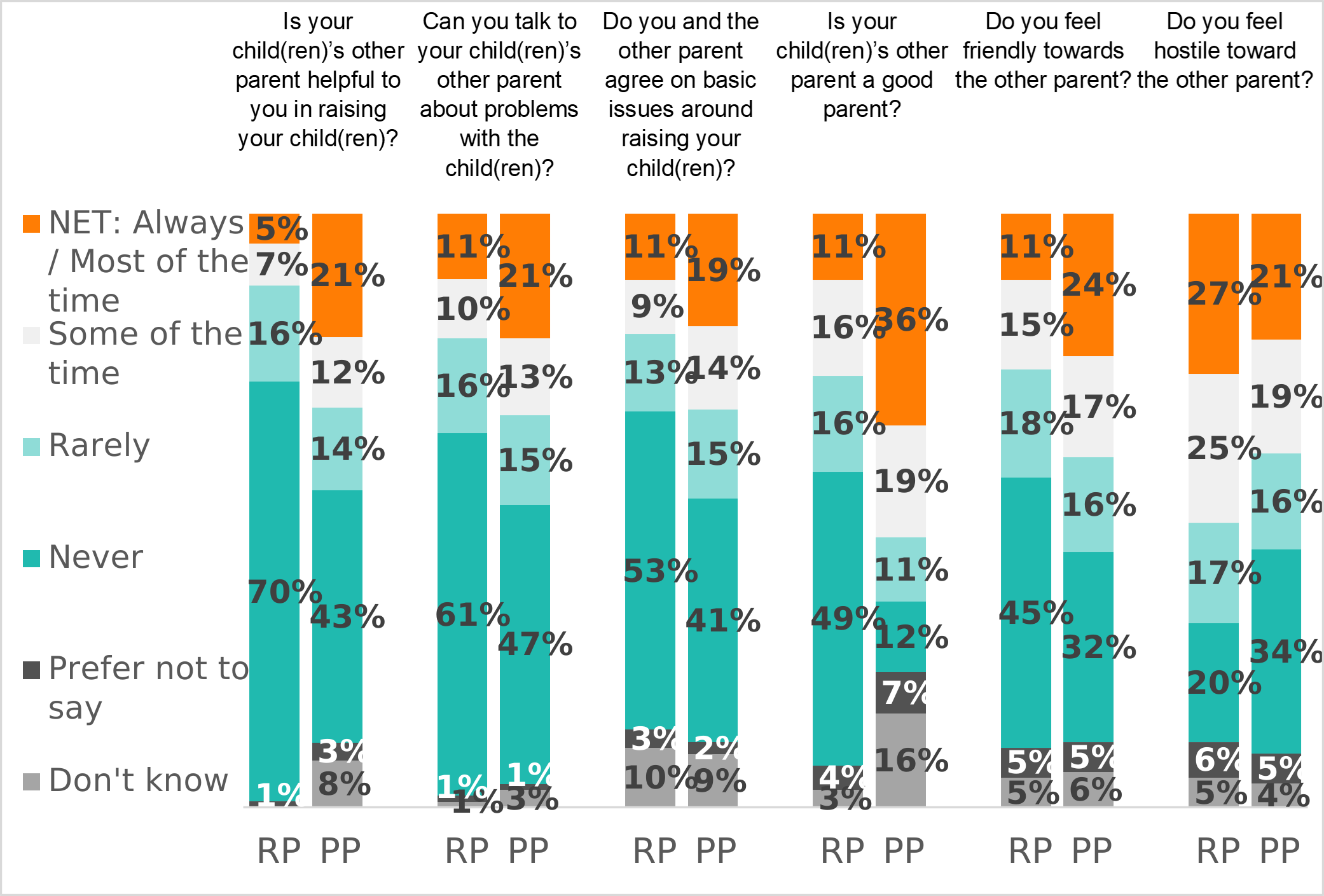
Source: QCONFLICT Thinking about how things have been between you and your children’s other parent over the last 6 months, on a scale where 1 is always and 5 is never: Base: All receiving parents (n=1,750) and all paying parents (n=1,605).
Figure 2.2: relationship between parents
Utilising responses to these questions, a parental acrimony score (PAS) was calculated. The question response scales were scored from 1 to 5, with “always” being 1 and “never” being 5 (with the scoring system inverted for the sixth and final statement). Parents who selected “prefer not to say” or “don’t know” to any statement were excluded from the PAS calculation. For parents who selected an option on the scale for all 6 statements, scores across the statements were added to create an overall score with a maximum of 30 and a minimum of 6. Higher scores indicated higher conflict/acrimony between parents.
As Figure 2.3 highlights, the average PAS was higher amongst receiving parents (23.4) compared to paying parents (19.4). Additionally, average PAS increased amongst paying parents as their income increased. In contrast, scores amongst receiving parents increased as the income of the paying parent decreased.
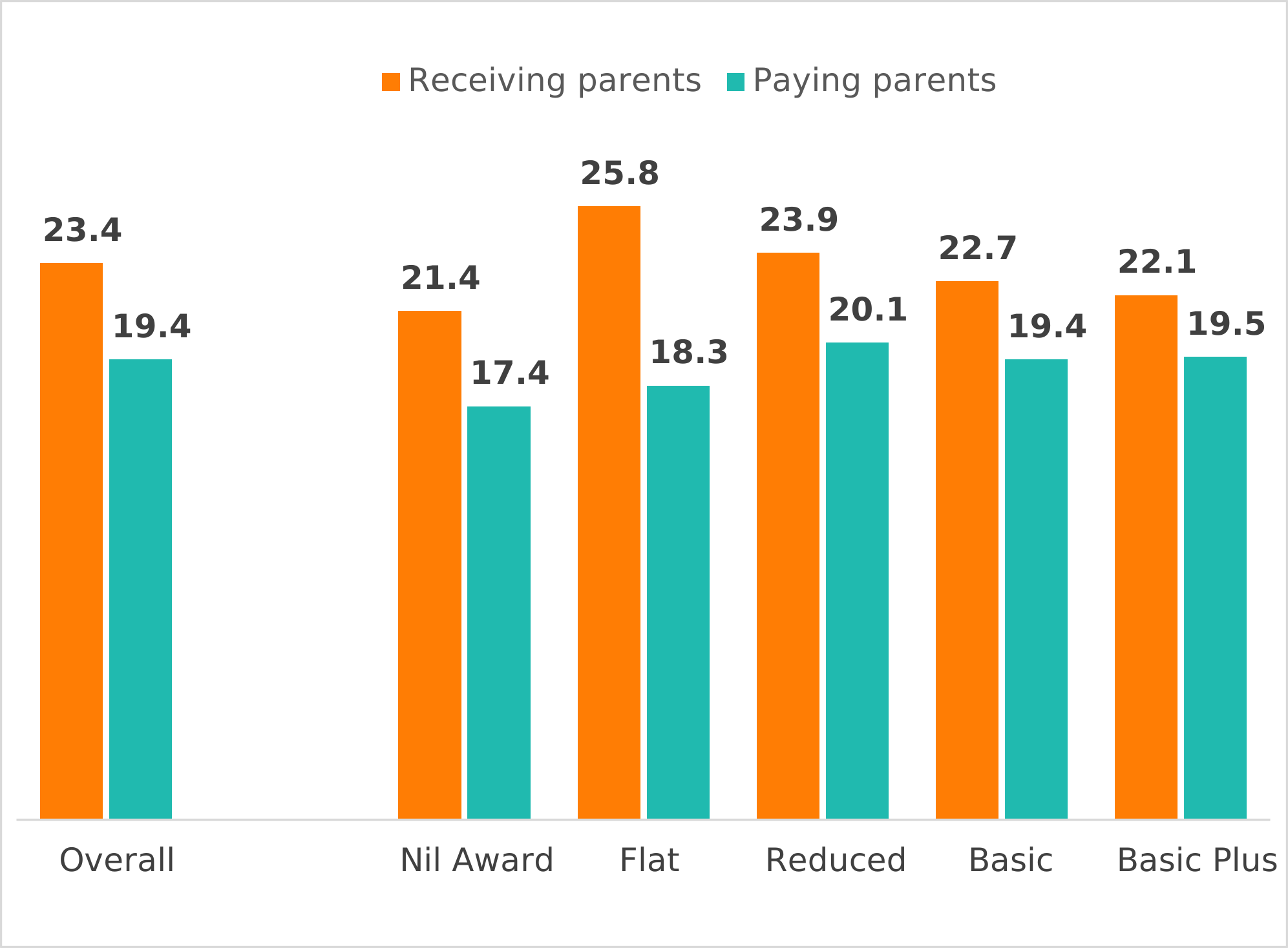
Source: QCONFLICT Thinking about how things have been between you and your children’s other parent over the last 6 months, on a scale where 1 is always and 5 is never? Base: All receiving parents (n=1,750) and all paying parents (n=1,605).
Figure 2.3: average parental acrimony score
Exploring PAS in further details, there were also marked differences by the service type parents used to make their CM payments. In general, parents who used C&P to make their CM payments were more likely than those using DP services to have a higher acrimony score. For receiving parents, the difference was statistically significant, whereas for paying parents the difference was not.
PAS for receiving parents by payment service type:
- C&P (25.7)
- DP (22.0)
PAS for paying parents by payment service type:
- C&P (19.6)
- DP (18.8)
Levels of conflict between parents also varied by the level of shared care that was in place. As Figure 2.4 illustrates, the average PAS amongst receiving and paying parents tended to decrease as shared care increased from no shared care (24.9 for RP and 19.4 for PP) to 2 nights per week (20 for RP and 17.9 for PP). However, beyond 2 nights of shared care per week, the pattern is more complex and small sample sizes add uncertainty to conclusions. In particular, levels of conflict tended to be higher again amongst paying and receiving parents where there were equal nights of shared care per week (20.6 and 21.6 respectively). For paying parents this may be because they felt their contributions of time and care were not being fully recognised. It is important to note that the base sizes of parents with equal nights of shared care were low (n=<100) and therefore results should be treated as directional only.
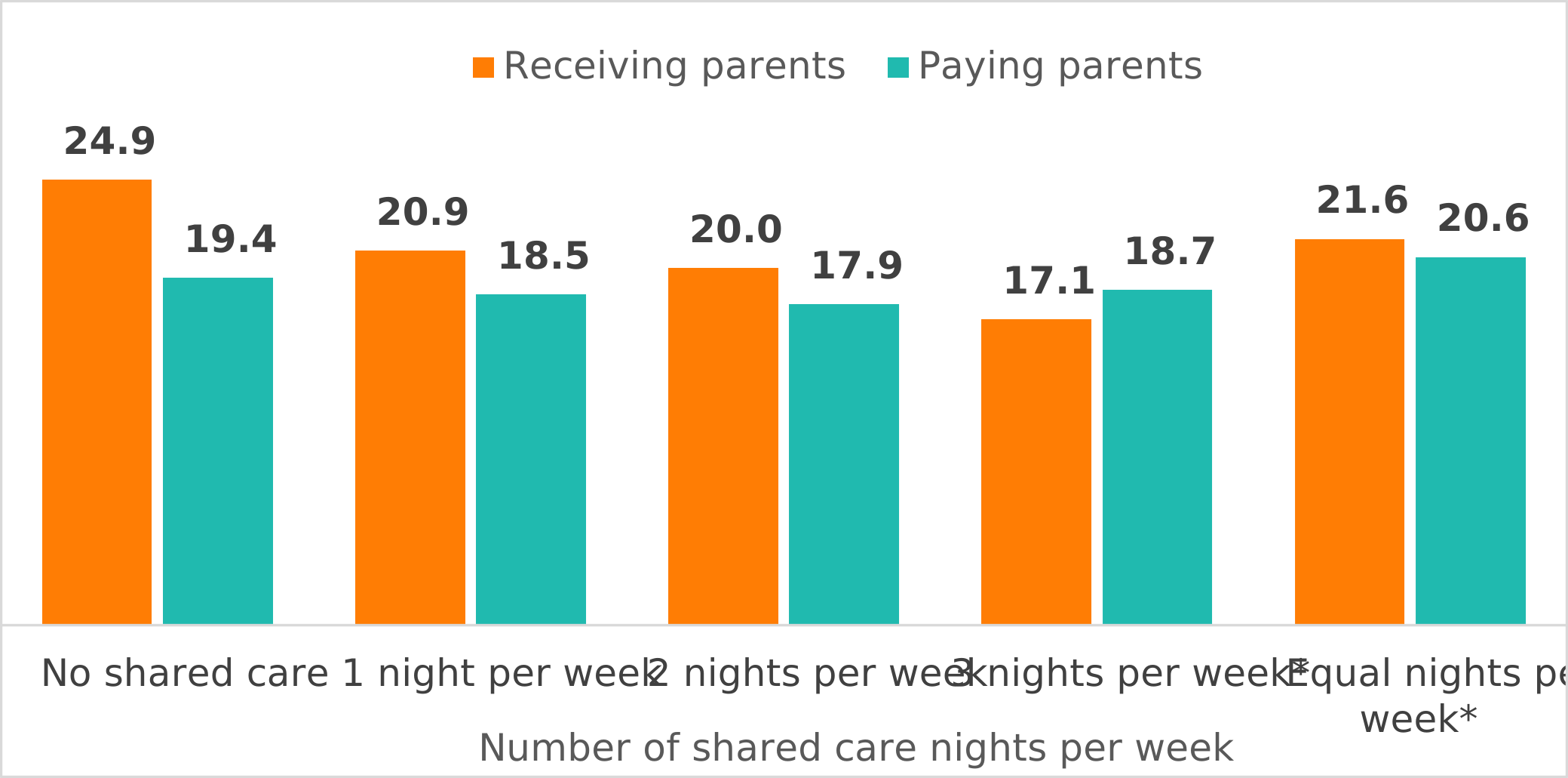
Source: QCONFLICT Thinking about how things have been between you and your children’s other parent over the last 6 months, on a scale where 1 is always and 5 is never? Base: DWP sample data on receiving parents with no shared care (n=1244), 1 night (n=283), 2 nights (n=152), 3 nights (n=41), and equal nights (n=26) per week of shared care with the paying parent and paying parents with no shared care (n=1073), 1 night (n=262), 2 nights (n=170), 3 nights (n=63), and equal nights (n=36) per week of shared care. *Note, base sizes are n=<100 and results should be treated as directional only.
Figure 2.4: average parental acrimony score by shared care nights per week
Challenging relationship dynamics were also evidenced by generally infrequent communication between parents. In the quantitative research, parents were asked to think about the last 6 to 12 months and rate how often they communicated directly with the other parent. Table 2.7 illustrates that communication tended to be infrequent, with around half of receiving (47%) and paying parents (42%) saying they communicated with the other parent once per year or less.
| Frequency of communication between parents | Receiving parents | Paying parents |
|---|---|---|
| Daily | 3% | 6% |
| Weekly | 15% | 20% |
| Monthly | 12% | 11% |
| Only a few times per year | 17% | 16% |
| Once a year | 3% | 2% |
| We haven’t spoken for more than a year | 47% | 42% |
| Don’t know | 3% | 3% |
Source: QRELATIONSHIPSTATUS3 Thinking about the last 6-12 months, how often do you communicate directly with the other parent? Base: All receiving parents (n=1,750) and all paying parents (n=1,605).
Table 2.7: frequency of communication between parents
When considering parents who said they hadn’t “[…] spoken for more than a year” specifically, levels of communication between parents increased as liability rate increased (as shown in Figure 2.4).
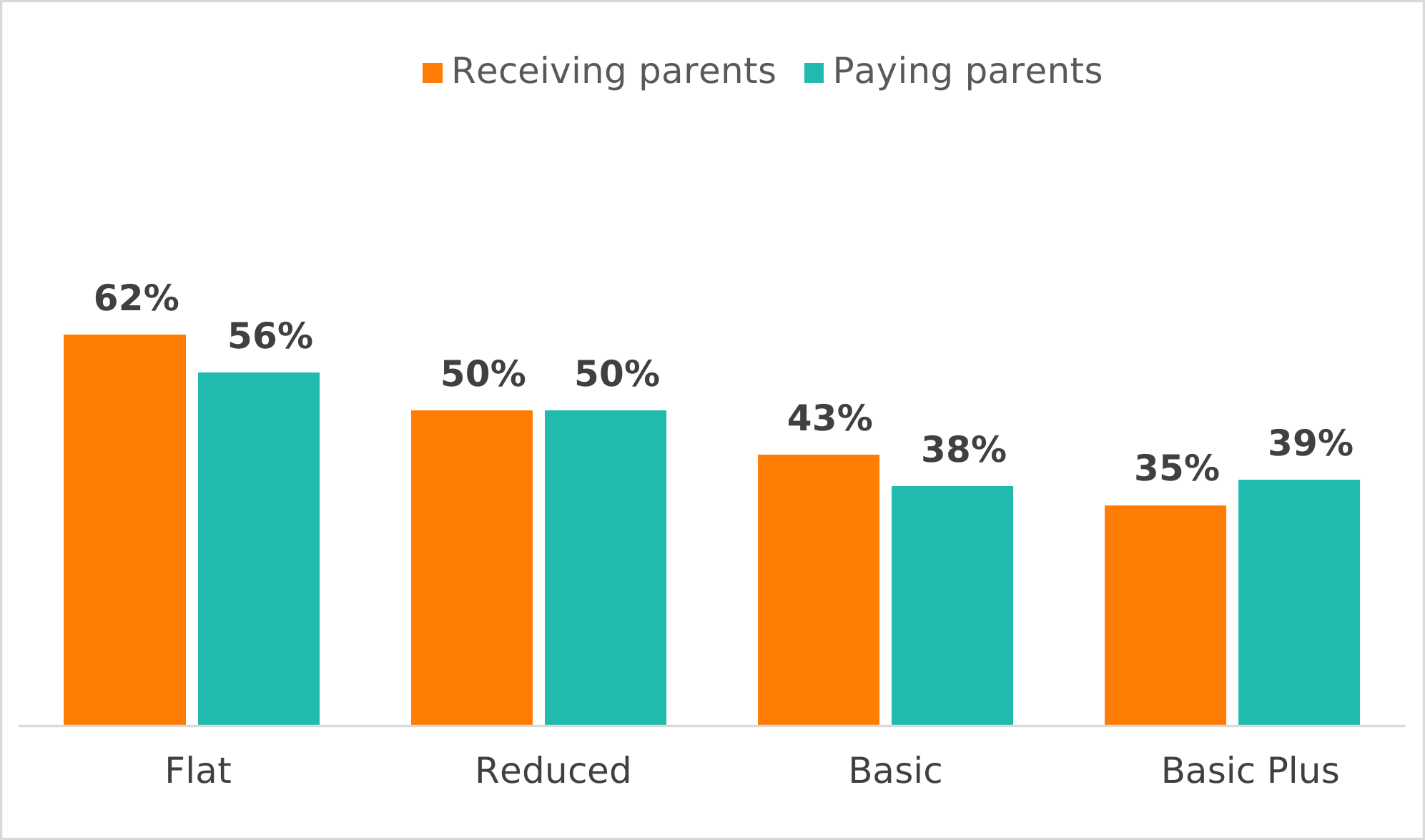
Source: QRELATIONSHIPSTATUS3 Thinking about the last 6-12 months, how often do you communicate directly with the other parent? Base: Receiving parents in the flat (n=402), reduced (n=336), basic (n=592), and basic plus (n=284) rates and paying parents in the flat (n=309), reduced (n=269), basic (n=567), and basic plus (n=324) rates.
Figure 2.5: proportion of parents by rate that selected “we haven’t spoken for more than a year”
There was also a connection between the frequency of communication between parents and the quality of the relationship between them. As Figure 2.5 outlines, parents who communicated less frequently tended to have a higher PAS (indicating higher levels of conflict in the relationship). For example, paying parents who said they communicated with the other parent daily had an average PAS score of 12.1. However, those that had not spoken for more than a year scored 24.0. This finding is consistent amongst receiving parents as well.
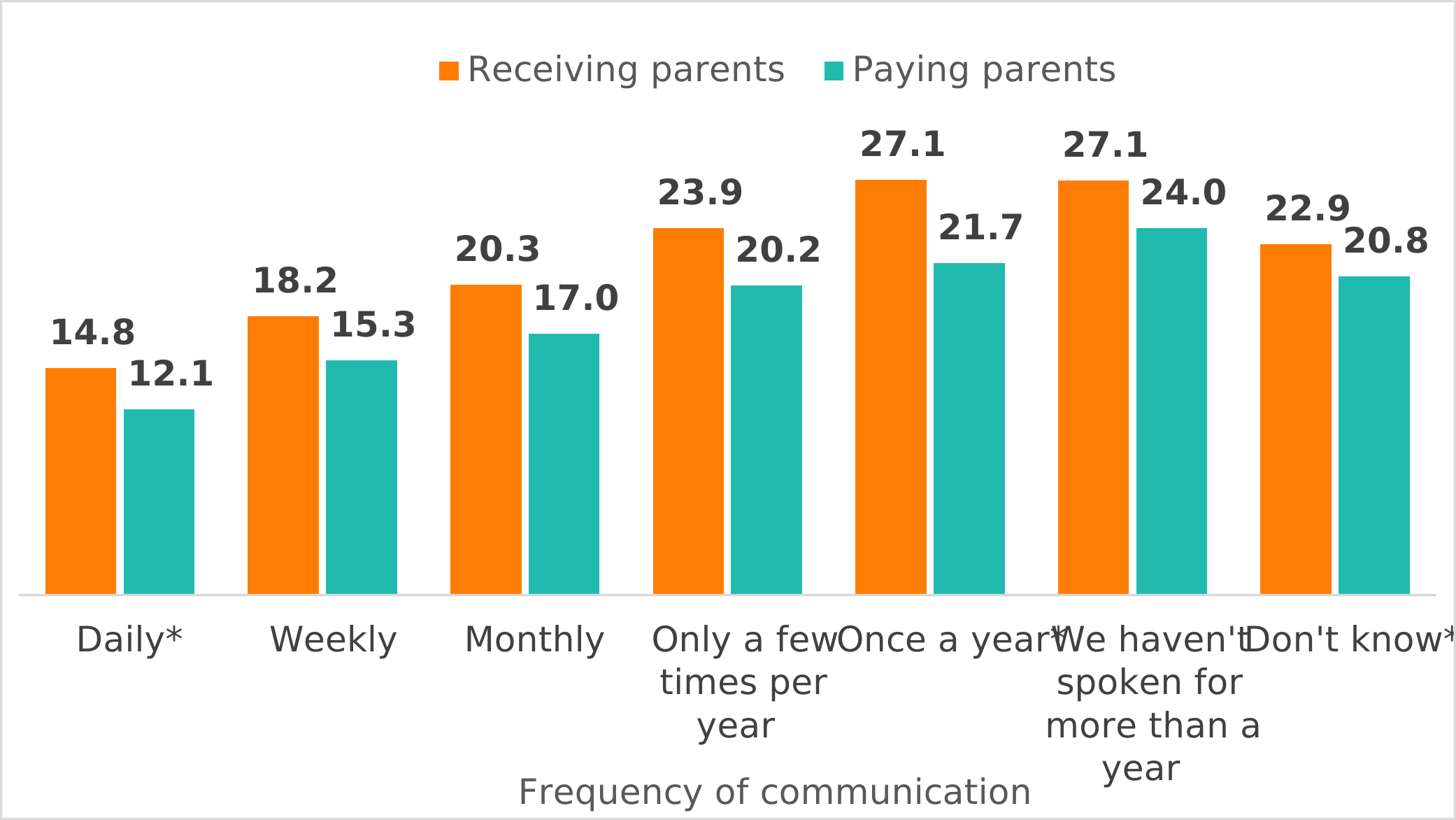
Source: QCONFLICT Thinking about how things have been between you and your children’s other parent over the last 6 months, on a scale where 1 is always and 5 is never? AND QRELATIONSHIPSTATUS3 Thinking about the last 6-12 months, how often do you communicate directly with the other parent? Base: All receiving parents (n=1,750) and all paying parents (n=1,605). *Note: low base sizes (n=<100). Results should be treated as directional only.
Figure 2.6: average parental acrimony score by frequency of communication between parents
Understanding of the calculation
Across the qualitative sample, understanding and perceived fairness of the calculation was mixed. Understanding was often limited or partial, for example participants knew the calculation was based on the paying parents’ income and the number of children, but few understood more of the detail.
I would say I find it clear [although] there have been times where I haven’t agreed with certain things, but I do understand how it’s calculated based on the information that they receive. But then I don’t know how they obtain additional information if it’s [the paying parent’s income] not declared.
(RP, flat rate, C&P, 2 children)
The research also identified that the information provided by the CMS through letters or online accounts regarding the calculation was not always read or understood. Participants who engaged with CMS communications reported feeling that the explanation of the calculation lacked clarity. In addition, some paying parents reported experiencing unexpected changes with little explanation from the CMS.
They’ve [CMS] not been forthcoming with the information. So basically, DWP like to calculate all the information themselves, and they don’t tell you how they do it. So, it’s not transparent. They tell you how much you should be paying but they don’t give you a breakdown as to how they come to this conclusion.
(PP, flat rate, C&P, 2 children)
The calculation and communication could be better. Just so that you can go into it more and you can explain things a bit better.
(PP, basic plus, DP, 2 children)
These experiences and a lack of understanding led to confusion and distrust of the other parent amongst participants in the qualitative sample. Whilst the perceived lack of transparency regarding the details of the calculation led to perceptions of unfairness, as well as feelings of resentment regarding the liability.
One of the letters that I got a long time ago… said about it takes into account his job. It was saying he [didn’t] work at the time [but] …and it said that he was on benefits, but I know full well that he works.
(RP, flat rate, C&P, 1 child)
These qualitative insights provide useful context for interpreting the quantitative findings, which also revealed wide variation in parents’ understanding of how CM payments were affected by changes in earnings. Table 2.8 outlines the level of understanding parents had regarding CM payments. Paying parents were asked if they felt they understood how their CM payment would change if they were to earn more or less in the future. Knowledge of how payments are impacted by changes in earnings was varied. Similar proportions of parents said they either fully understood (28%) or had a good understanding (30%), with a further quarter (23%) saying they had a limited understanding.
| Understanding of income impacts on CM payments | Paying parents |
|---|---|
| Yes – I understand this fully | 28% |
| Yes – I have a good understanding | 30% |
| Yes – I have a limited understanding | 23% |
| No – I do not understand how it would change | 15% |
| Don’t know | 4% |
Source: QWORKCALC2 Do you feel you understand how your CM payment would change were you to earn more or less in future? Base: All Paying parents (n=1,605)
Table 2.8: understanding of income impacts on CM payments
There were marked differences in levels of understanding by the service type through which parents make their CM payments. In general, paying parents who used C&P to make their CM payments were more likely than those using DP services to have a weaker understanding of how their payments would change if their income changed (52% C&P compared to 62% DP).
A similar trend was also evident when comparing levels of understanding by perceived fairness of the calculation. Paying parents that felt the calculation was either ‘very unfair’ or ‘unfair’ were more likely than those that said the calculation was ‘very fair’ or ‘fair’ to have a weaker understanding of how their payment would be impacted if their income changed (56% net unfair compared to 70% net fair).
However, there were limited differences in understanding across CM rates. Levels of at least ‘good understanding’ were consistent across nil award (62%), flat (55%), reduced (57%), basic (58%), and basic plus (62%) rates.
Perceived fairness of the calculation
Views regarding the fairness of the calculation also varied across the qualitative sample. Broadly, receiving parents with full care felt payments were not fair as they did not reflect the extent of their responsibilities, nor the financial burden of raising children. Similarly, paying parents with shared care felt their liabilities were disproportionately high in light of their caring responsibilities. In addition, paying parents who reported being refused access to their children felt that it was not fair to be limited or denied a relationship with the children and be expected to pay CM. Though these parents also felt it was their responsibility as a parent to pay CM.
Oh please, do you think it sits well with me that I get to see my kids for, you know, less than 72 hours, twice a month, and pay money to somebody that gets every benefit under the sun.
(PP, basic <£350, C&P, 2 children)
I don’t see why the partner who is separated from his children, which is a battle of traumas, is then [made] financially less capable than the other partner because of something that’s happened out of his control…it’s just unfair.
(PP, reduced rate, C&P, 2 children)
Specifically, both paying and receiving parents on the lower rates (flat and reduced – calculated on the PP income) felt the liability was unfair as it was inadequate to meet the needs of children, describing the liability as tokenistic.
[You’ve] got utilities to pay, but on the other side of it, that’s only £7. That child is going to get very little.
(PP, flat rate, C&P, 1 child)
The pen portraits illustrate parent’s perceived unfairness of the calculation.
Parent: paying parent
Number of children: 2
Shared care: none
CM rate: basic (> £350 per week)
Compliance: C&P
Employment: Employed
This paying parent lives with his new partner and her son. He left his previous marriage due to the controlling nature of the relationship. His children currently refuse to see him which he attributes to the influence of the receiving parent. He wants to challenge this legally but cannot afford to.
He feels the calculation is unfair because it does not account for the receiving parents’ stable financial position or his financial responsibilities for his partner’s son. A recent change in employment (from weekly to monthly pay) led CMS to classify him as non-compliant, further exacerbating his financial difficulties.
“I try to better myself by getting a better job, I explain my situation, and then they still punish me for it. I owe £7000 to CMS because of the charges they’ve put on”.
Figure 2.7: qualitative research pen portrait of a paying parent’s perceived unfairness of the calculation
Parent: receiving parent
Number of children: 2
Shared care: 1 overnight stay
CM rate: basic
Compliance: DP
Employment: Employed
This receiving parent experienced a significant reduction in CM after moving from a private arrangement to CMS. The receiving parent thinks that the paying parent is diverting income through his business to reduce his CM liability. The receiving parent has tried to have the CM liability increased by submitting evidence from the divorce proceedings that documented his total business income. However, the paying parent’s liability was unchanged, leaving her feeling financially disadvantaged.
“It’s completely inadequate. It’s not based on the actual amount of money he has coming in each month; it’s based on the profits of the business. If he wants to pay less, he will just put more expenses through his business to reduce his profits to pay even less”.
Figure 2.8: qualitative research pen portrait of a receiving parent’s perceived unfairness of the calculation
However, flat rate paying parents and a minority of receiving parents felt that the liability was fair in the context of the paying parent’s (low) income or if the paying parent was unemployed.
Well, obviously it’s not enough [to support a child], but if [the PP in the stimulus] is not earning a lot of money, then what? You can’t take off him what he hasn’t got[.]
(RP, flat rate, DP, 1 child)
I understand why it’s at that [rate] at the moment, but yeah, it’s not entirely fair. Not for myself and 3 children. [With] the weekly needs like clothing, food, transport (..) and childcare as well for the youngest.
(RP, reduced rate, DP, 3 children)
Basic and basic plus rates were seen as fair by many parents across the qualitative sample. However, some paying parents felt the rate was excessive. These participants also tended to report that the receiving parent was financially comfortable and cited the view that the calculation ought to consider the receiving parent’s income.
[I] thought that it just didn’t seem very fair, particularly because it didn’t take into account at all of the other parent’s circumstances, and, you know, she was completely unaffected financially as far as I could tell from the whole divorce, other than having the children, whereas it was sort of like starting from scratch
(PP, basic plus, DP, 2 children)
Some parents in the qualitative sample also expressed a view that the range of factors underpinning the calculation was too narrow. Some receiving parents said that the calculation should also account for children’s ages (as they felt younger children require more financial resources) and should not rely on declared taxable income where the paying parent is self-employed. Paying parents generally felt that the calculation ought to factor in both parents’ financial responsibilities and circumstances. In addition, participants highlighted issues such as the use of gross rather than net income, the inclusion of overtime and bonuses in the liability calculation and delays in reflecting changes underpinning the calculation.
The issue I have with the Child Maintenance Service is that they don’t take into account the fact that self-employed people can hide their money.
(RP, basic, C&P, 3 children)
Furthermore, paying parents in the qualitative sample felt they were caught in a financial trap with the CM calculation. Participants described wanting or needing to earn more to cover the CM payment alongside other expenses but then incurring liability changes on account of increased earnings. Subsequently, paying parents felt that the calculation unfairly discouraged working overtime or taking extra work. Some paying parents also described CM rates as excessive after divorce when trying to rebuild financial security.
When they put it up and then you need to be going out to work and try and work more hours to cover what they’re wanting off you. But then as soon as it goes up that bit, then they’re wanting more. So, it’s kind of like a never-ending cycle that you can’t get out of because you need to work more hours.
(PP, reduced rate, DP, 2 children)
I had a very well-paid job, and I just seemed to get penalised so much for working hard. I had to give up overtime.
(PP, basic rate, DP, 1 child)
These qualitative findings were also reflected in the quantitative data, which showed how perceptions of fairness of the calculation tend to vary by CM rate. Table 2.9 outlines the perceived fairness of CM payments in relation to the paying parent’s income. Parents were asked to only consider the income and any savings, assets or property that the paying parents had and rate how fair they thought the amount they currently pay or receive was. Among both receiving and paying parents, nearly half felt the amount being paid or received was “very unfair” (45% and 46%, respectively).
| Perceived fairness of CM payments in relation to the paying parent’s income | Receiving parents | Paying parents |
|---|---|---|
| Very fair | 5% | 6% |
| Fair | 13% | 15% |
| Neither fair nor unfair | 10% | 10% |
| Unfair | 21% | 19% |
| Very unfair | 46% | 45% |
| Prefer not to say | 2% | 1% |
| Don’t know | 4% | 5% |
Source: QCALCFAIR1 [IF PAYING PARENT] Thinking about your own situation, how fair would you say the amount you currently have to pay is, considering only your income and any savings or assets/property that you have? [IF RECEIVING PARENT] How fair would you say the amount the paying parent is asked to pay is, considering only their income and any savings or assets/property they have? Base: All receiving parents (n=1,750) and all paying parents (n=1,605)
Table 2.9: perceived fairness of CM payments in relation to the paying parent’s income
Examining perceptions of unfairness across CM rates, Figure 2.9 outlines how these perceptions varied by the level of income of the paying parent. For receiving parents, perceptions of unfairness decreased as the paying parent’s income increased, with those in the nil Award (76%), flat (80%) and reduced (75%) rates, more likely to feel payments were unfair. Comparatively, views of unfairness amongst paying parents increased as their income increased, with those in the basic (79%) and basic plus (84%) rates more likely to feel payments were unfair.
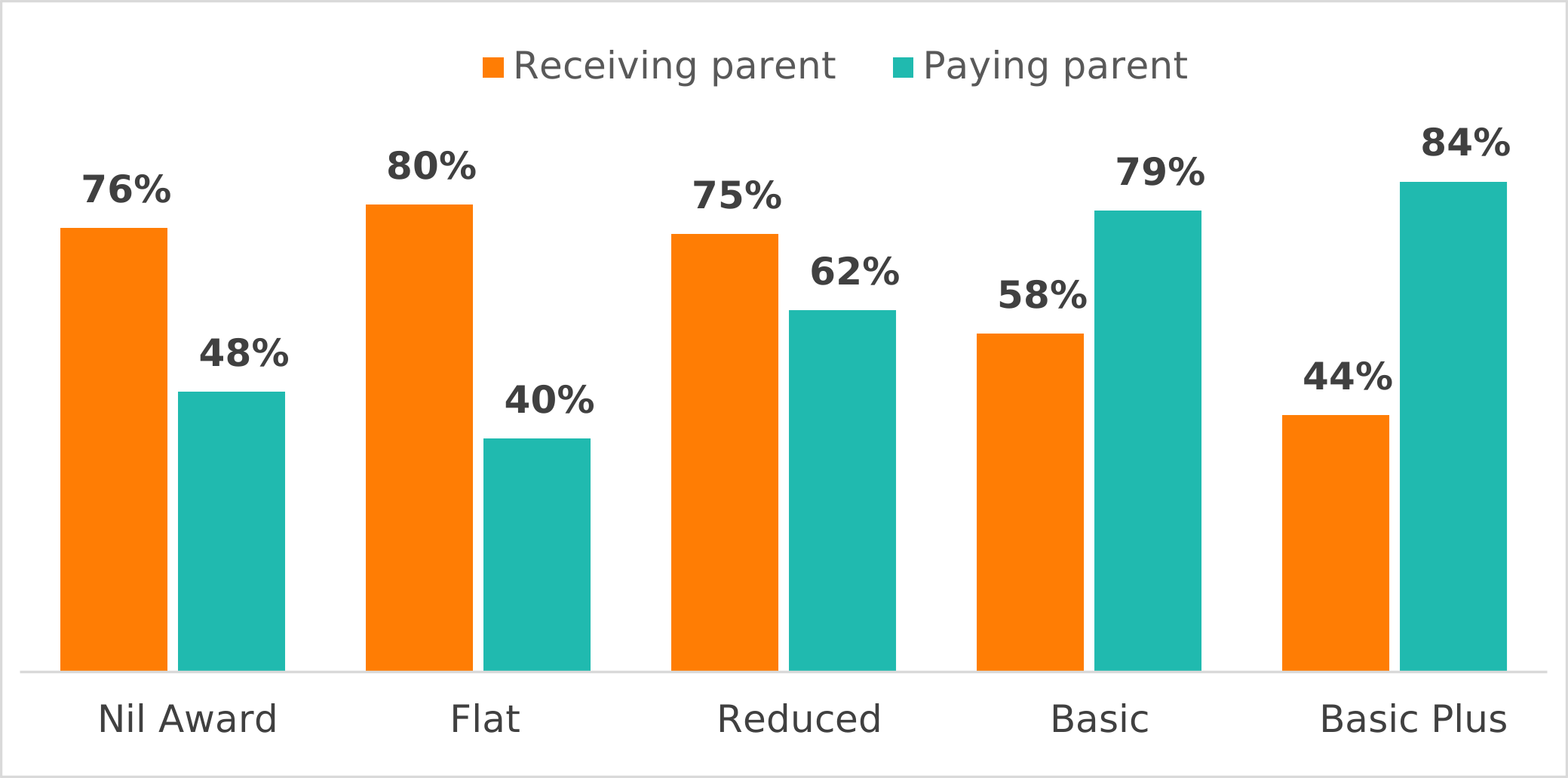
Source: QCALCFAIR1 [IF PAYING PARENT] Thinking about your own situation, how fair would you say the amount you currently have to pay is, considering only your income and any savings or assets/property that you have? [IF RECEIVING PARENT] How fair would you say the amount the paying parent is asked to pay is, considering only their income and any savings or assets/property they have? Base: Receiving parents in the nil Award (n=136), flat (n=402), reduced (n=336), basic (n=592), and basic plus (n=284) rates and paying parents in the nil Award (n=136), flat (n=309), reduced (n=269), basic (n=567), and basic plus (n=324) rates.
Figure 2.9: perceptions that CM payments in relation to the paying parent’s income were “very unfair” + “unfair” by rate
There were also marked differences in perceived fairness by the service type through which parents paid or received CM payments. In general, receiving parents in C&P were more likely than those in DP to view the amount they received as unfair (71% compared to 59%, respectively). In contrast, paying parents in C&P were less likely to view the amount they had to pay as unfair compared with paying parents in DP (63% compared to 69%, respectively).
Perceived fairness of the calculation also varied by the level of shared care that was in place. Figure 2.10 outlines how perceptions of fairness vary for both receiving and paying parents by the level of shared care provided by the paying parent. Receiving parents were more likely to perceive the CM payments as unfair where there was no shared care (66%), with perceived unfairness then declining as the number of shared care nights increased (down to 46% for 3 nights of shared care per week). However, it is important to note that receiving parents were most likely to perceive the payments as unfair where there were equal nights of shared care per week (79% reporting it to be unfair). This may reflect the reduction or even elimination of CM payments in cases where the paying parent is providing equal levels of shared care (both night-time and daytime care). In contrast, paying parents were more likely to view the payment as unfair as the number of nights of shared care increased (up to 85% for those who provided 3 nights or equal nights of shared care per week).
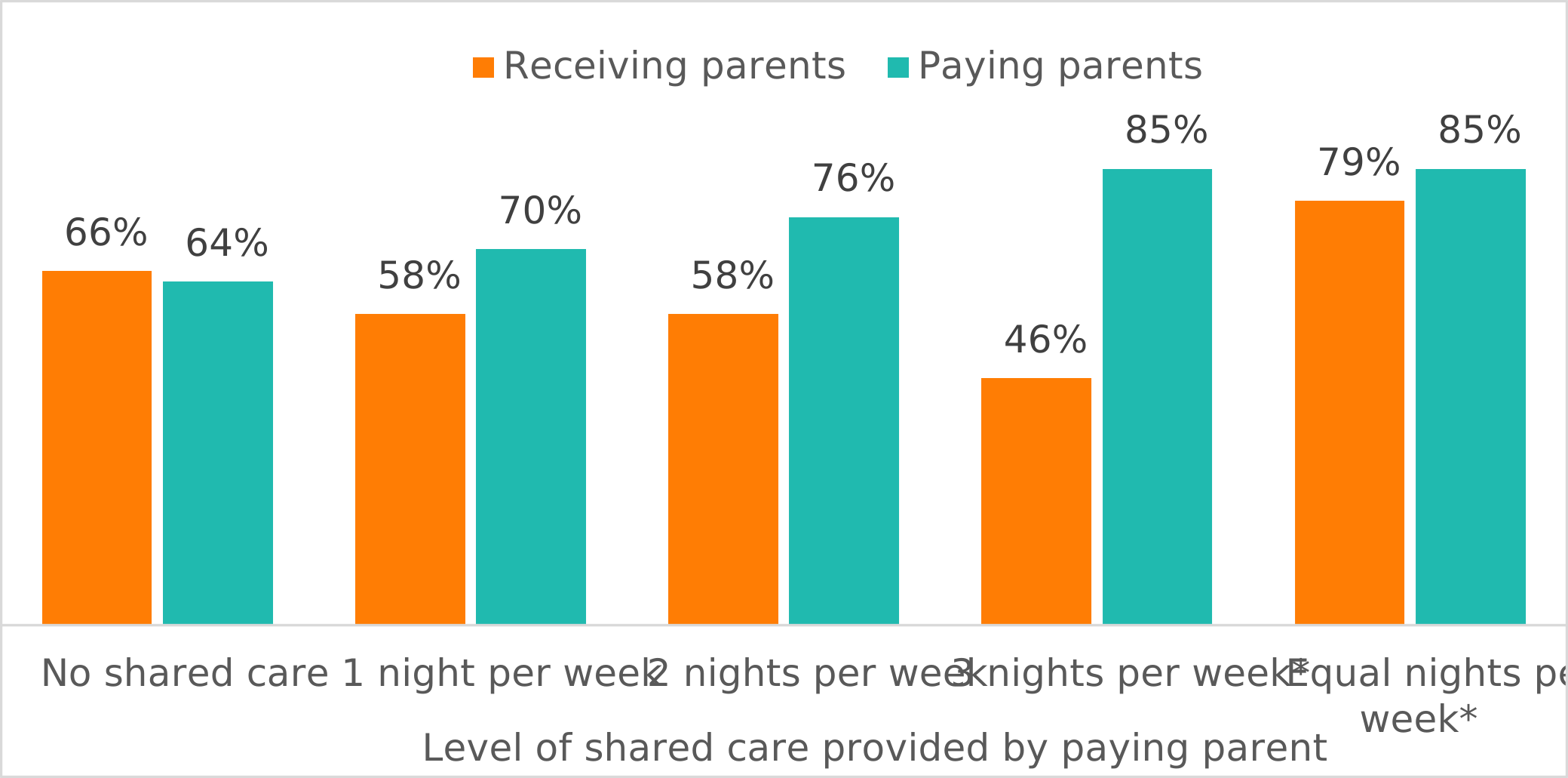
Source: QCALCFAIR1 [IF PAYING PARENT] Thinking about your own situation, how fair would you say the amount you currently have to pay is, considering only your income and any savings or assets/property that you have? [IF RECEIVING PARENT] How fair would you say the amount the paying parent is asked to pay is, considering only their income and any savings or assets/property they have? Base: DWP sample data on receiving parents with no shared care (n=1244), 1 night (n=283), 2 nights (n=152), 3 nights (n=41), and equal nights (n=26) per week of shared care with the paying parent and paying parents with no shared care (n=1073), 1 night (n=262), 2 nights (n=170), 3 nights (n=63), and equal nights (n=36) per week of shared care
Figure 2.10: perceptions that CM payments in relation to the paying parent’s income were “very unfair” + “unfair” by levels of shared care provided by the paying parent
Additional analysis also uncovered differences in perceived fairness by level of conflict between the parents. As shown in Figure 2.11, both paying and receiving parents were more likely to perceive the calculation as unfair as the level of conflict between paying and receiving parents increased. Illustrating this, parents with a PAS of 6-10 were far less likely to perceive the calculation as unfair (34% for receiving parents and 46% of paying parents) than those with a PAS of 26-30 (73% of receiving parents and 76% of paying parents).
Due to correlations between income, service type, sharing of care, and improved inter-parental relationships, it is important to interpret these findings with caution. Perceptions of fairness are likely shaped by multiple interconnected factors. Income level, service type (Direct Pay vs. Collect and Pay), extent of shared care, and the quality of the relationship between parents are all correlated to varying degrees. As this is the case, it is not possible to isolate which is the primary driver of perceived fairness within this analysis.
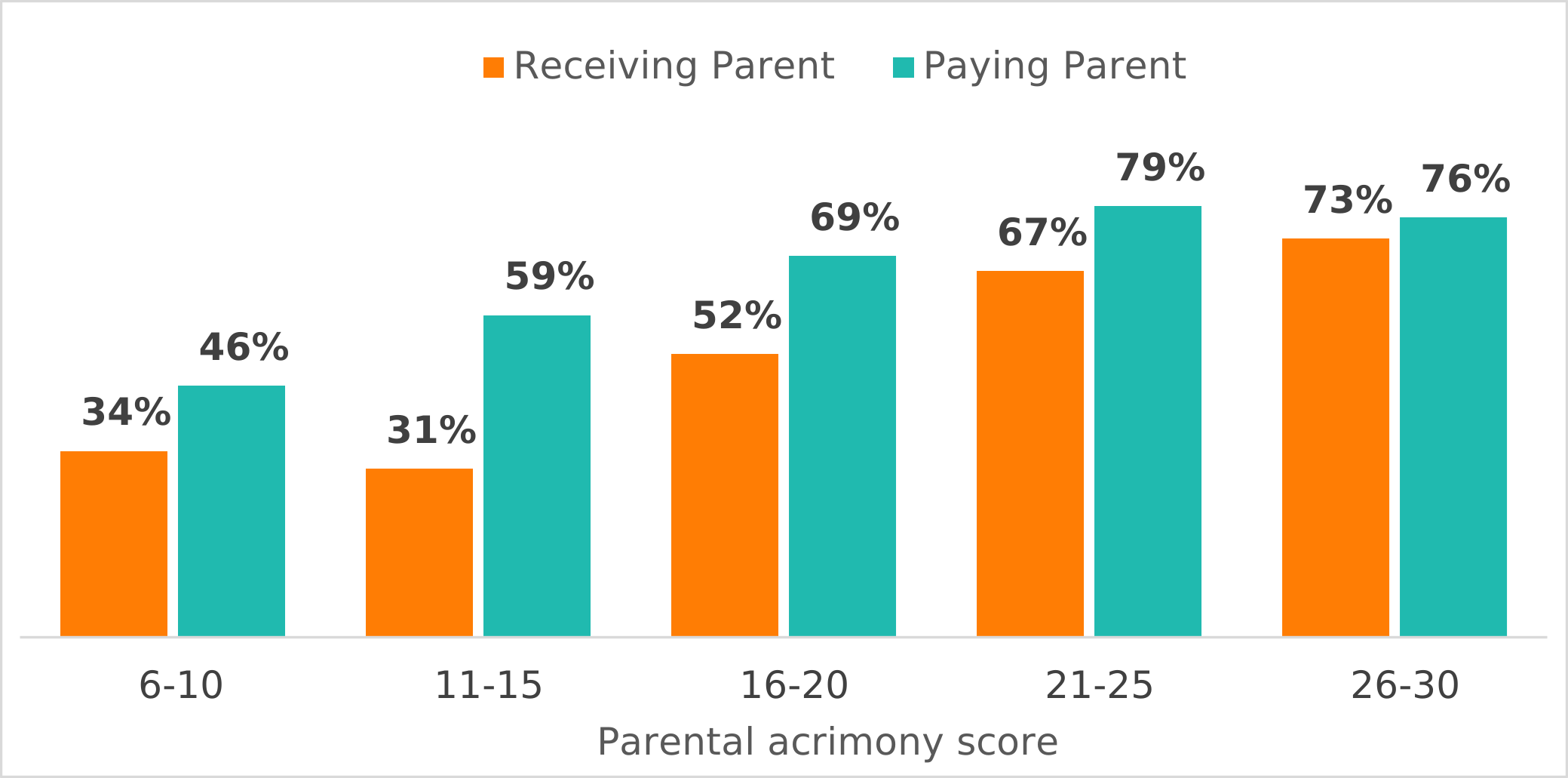
Source: QCALCFAIR1 [IF PAYING PARENT] Thinking about your own situation, how fair would you say the amount you currently have to pay is, considering only your income and any savings or assets/property that you have? [IF RECEIVING PARENT] How fair would you say the amount the paying parent is asked to pay is, considering only their income and any savings or assets/property they have? Base: Receiving parents with a PAS score of 6-10 (n=44), 11-15 (n=84), 16-20 (n=181), 21-25 (n=327), and 26-30 (n=610) and paying parents with a PAS score of 6-10 (n=133), 11-15 (n=168), 16-20 (n=228), 21-25 (n=284), and 26-30 (n=226).
Figure 2.11: perceptions that CM payments in relation to the paying parent’s income were “very unfair” + “unfair” by parental acrimony score
Reasons behind perceived unfairness varied widely between parent groups (as shown in Figure 2.12 and Figure 2.13). Among receiving parents who said the calculation was either “unfair” or “very unfair”, the main reasons given were financially focused, with 68% saying they thought the paying parent earned more than they said and 63% saying the paying parent could afford to and should pay more.
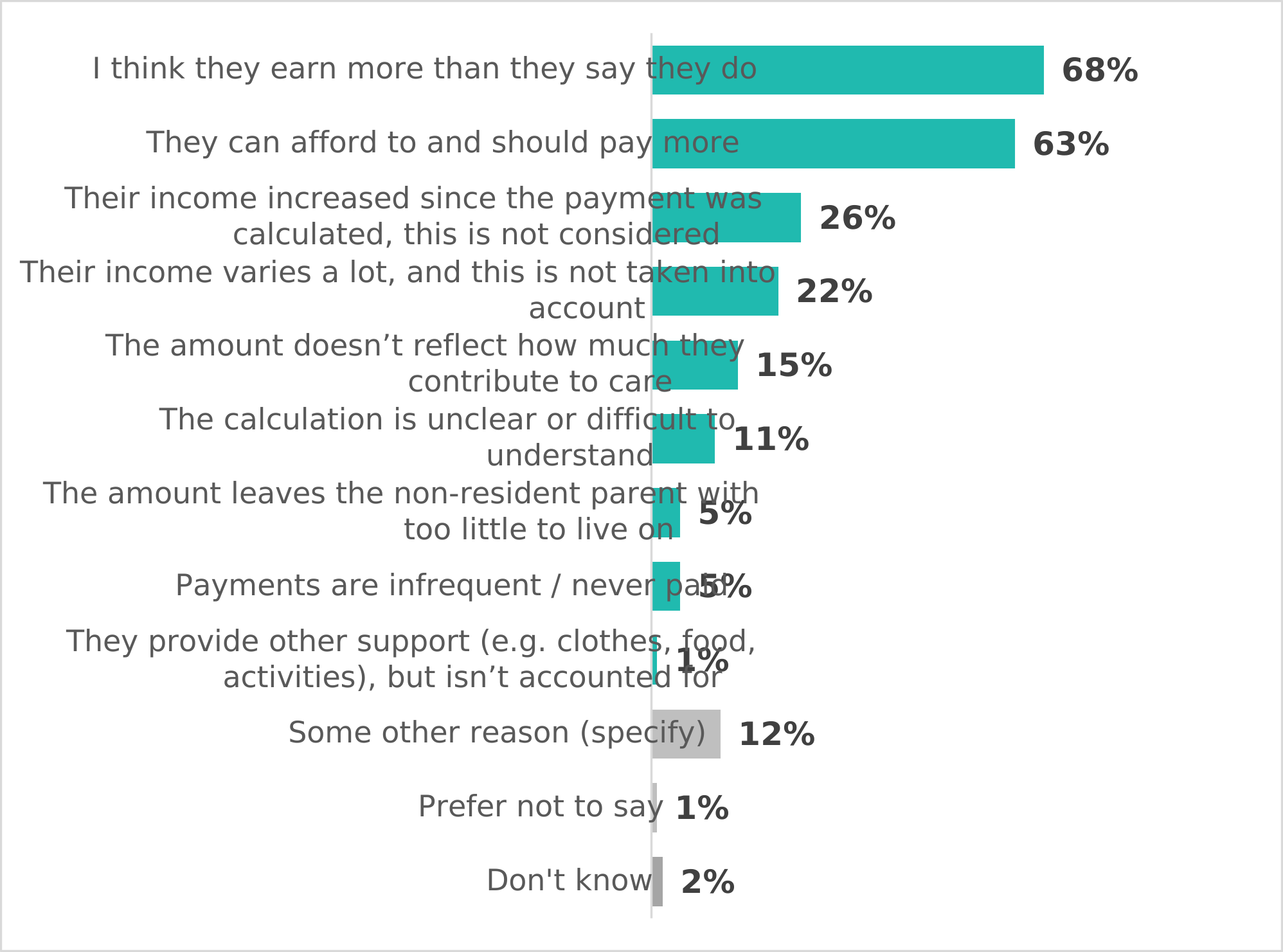
Source: QCALCNOTFAIR2 Why do you think it is not fair to the paying parent? Base: Receiving parents who said the amount the paying parent is asked to pay in “very unfair” or “unfair” (n=1,168)
Figure 2.12: reasons why receiving parents felt the calculation was unfair to paying parents
Among paying parents who said the calculation was either “unfair” or “very unfair”, the main reasons were more often due to affordability, with 67% saying payments leave them with too little money to get by, 60% saying they are left with too little money to save for the future, and 48% saying they provide other support, but the payments don’t take that into account (Figure 2.13).
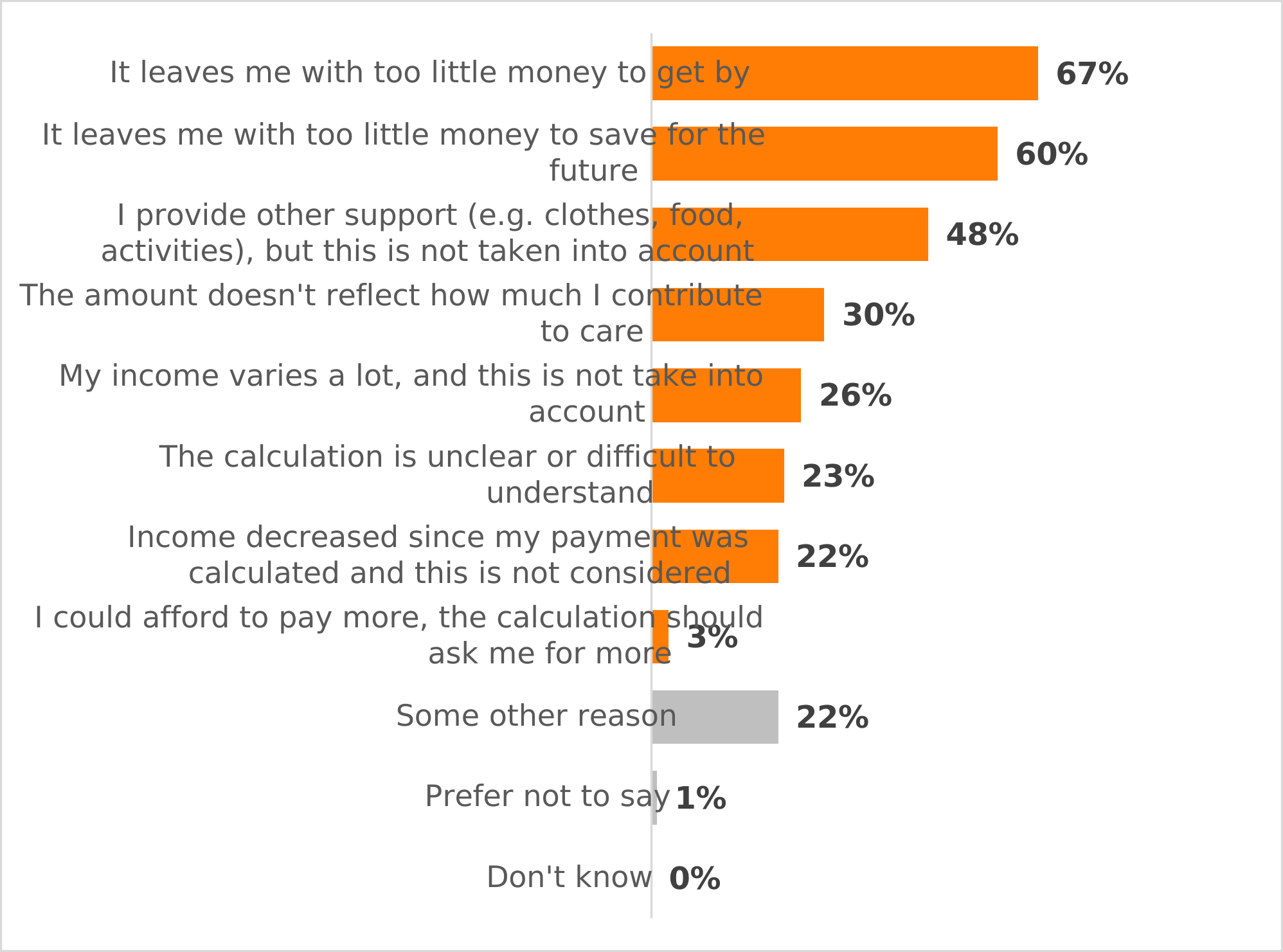
Source: QCALCNOTFAIR1 Why do you think it is not fair to you? Base: Paying parents who said the amount they are asked to pay in “very unfair” or “unfair” (n=1,076).
Figure 2.13: reasons why paying parents felt the calculation was unfair
Among paying parents who said they provide other support (e.g. clothes, food, activities) that is not considered, those on higher rates — and therefore with higher incomes — were more likely to do so.
Paying parents by CM rate that selected “I provide other support (for example, clothes, food, activities), but this isn’t taken into account”:
- flat (27%)
- reduced (46%)
- basic (50%)
- basic plus (57%)
Parents were also asked to think about the perceived fairness of CM payments in relation to the needs of the children (see Table 2.10). Parents were asked to only consider the needs of the children and rate how fair they thought the amount they currently pay or receive was on a five-point scale from “very fair” to “very unfair”. Overall, 73% of receiving parents and 53% of paying parents felt the payments were unfair.
| Perceived fairness of CM payments in relation to the receiving parent and children’s needs | Receiving parents | Paying parents |
|---|---|---|
| Very fair | 4% | 10% |
| Fair | 11% | 16% |
| Neither fair nor unfair | 8% | 12% |
| Unfair | 24% | 22% |
| Very unfair | 49% | 30% |
| Prefer not to say | 3% | 6% |
| Don’t know | 1% | 3% |
Source: QCALCFAIR2 [IF PAYING PARENT] Considering the needs of your children and their other parent, how fair would you say the amount you currently have to pay is? [IF RECEIVING PARENT] Considering your needs and those of your children, how fair would you say the amount the paying parent is asked to pay is? Base: All receiving parents (n=1,750) and all paying parents (n=1,605).
Table 2.10: perceived fairness of CM payments in relation to the receiving parent and children’s needs
Perceptions of unfairness increased amongst receiving parents who had 2 or more children that qualified for CM support.
Receiving parents by qualifying children that felt payments were unfair in relation to the needs of the children:
- 1 qualifying child (70%)
- 2 or more qualifying children (77%)
Paying parents by qualifying children that felt payments were unfair in relation to the needs of the children:
- 1 qualifying child (53%)
- 2 or more qualifying children (52%)
Reasons behind perceived views of unfairness varied widely between parent groups, as shown in Table 2.11. Amongst receiving parents who said the calculation was either “unfair” or “very unfair”, the main reasons were that the amount leaves the children and them with too little to live on (60%) or that the children had to miss out on some things, such as activities, gadgets, clothes (58%). Amongst paying parents who said the calculation was either “unfair” or “very unfair”, the main reason was that they felt the other parent had a large enough income and they did not need all the money they were currently being asked to pay (62%).
| Reasons driving perceptions that CM payments were unfair to the receiving parent and children | Receiving parents | Paying parents |
|---|---|---|
| Paying parent: the amount leaves the other parent and our children too little to live on Receiving parent: the amount leaves our children and me too little to live on |
60% | 14% |
| Our children have to miss out on some things (e.g. activities, gadgets, fashionable clothes) | 58% | 16% |
| Unhappy with the calculations / amount | 10% | 5% |
| Not paid anything / payments missed | 9% | 0% |
| Earnings are not being declared | 6% | 0% |
| Child maintenance system does not factor all situations | 2% | 7% |
| Receiving parent: my income is large enough, we do not need all of the money the paying parent is currently asked to pay Paying parent: the other parent’s income is large enough, they do not need all of the money I am currently asked to pay |
2% | 62% |
| Money is not spent on the children | 0% | 7% |
| Other (specify) | 14% | 3% |
| Prefer not to say | 2% | 3% |
| Don’t know | 1% | 3% |
Source: QCALCUNFAIR [PAYING PARENT] You said the amount of CM is unfair to your children and the other parent. Which of the following, if any, are reasons why you feel this way? [RECEIVING PARENT] You said the amount of CM is unfair to you and your children. Which of the following, if any, are reasons why you feel this way? Base: Receiving parents who said the calculation is “very unfair” or “unfair” to them and children (n=1,328) and paying parents who said the calculation is “very unfair” or “unfair” to the receiving parent and children (n=853).
Table 2.11: reasons driving perceptions that CM payments were unfair to the receiving parent and children
Parents were asked the extent to which they agreed that “a parent who does not usually live with their children should still pay CM, even if they have very low earnings or only receive benefits such as Universal Credit.” As shown in Table 2.12, responses varied considerably between receiving and paying parents. Nine in ten receiving parents (89%) agreed with the statement, including 78% who strongly agreed. Amongst paying parents, 45% agreed overall, with 25% strongly agreeing.
| Perceptions towards low-earning paying parents still paying CM | Receiving parents | Paying parents |
|---|---|---|
| Strongly agree | 78% | 25% |
| Somewhat agree | 11% | 23% |
| Neither agree nor disagree | 4% | 13% |
| Somewhat disagree | 2% | 12% |
| Strongly disagree | 4% | 23% |
| Don’t know | 1% | 4% |
Source: QLOWINCOMEPAY To what extent do you agree or disagree with the following statement: “A parent who does not usually live with their children should still pay CM, even if they have very low earnings or only receive benefits such as Universal Credit.” Base: All receiving parents (n=1,750) and all paying parents (n=1,605).
Table 2.12: perceptions towards low earning paying parents still paying CM
Agreement with the statement in Table 2.12 was consistently high amongst receiving parents across all CM rates. Amongst paying parents, agreement was higher in the upper rate bands.
Receiving parents by CM rate that said they “strongly agree” or “somewhat agree”:
- flat (91%)
- reduced (89%)
- basic (89%)
- basic plus (88%)
Paying parents by CM rate that said they “strongly agree” or “somewhat agree”:
- flat (44%)
- reduced (42%)
- basic (50%)
- basic plus (59%)
Shared care
Shared care is a key aspect of co-parenting arrangements, which can be taken into account when determining CM liabilities. This section explores how care is divided between parents, beginning with non-financial contributions and agreements around care responsibilities, before examining overnight and daytime care patterns in greater depth.
Shared care: non-financial care
Focusing particularly on the non-financial care provided by the paying parent, this would cover the practical and emotional support that paying parents may provide for their children outside of financial contributions through CM payments. In the quantitative research, parents were provided with a list of types of non-financial care that may be provided by the paying parent. As Table 2.13 highlights, paying parents claimed to be offering more non-financial care than receiving parents perceive they receive. For example, the most common types of care were “overnight stays / overnight care” (25% receiving parents and 44% paying parents) and “non-face-to-face contact” (15% receiving parents and 41% paying parents). However, receiving parents were much more likely to state that the other parent does not provide any of these types of non-financial care (64% receiving parents and 35% paying parents).
| Types of non-financial care provided by paying parents | Receiving parents | Paying parents |
|---|---|---|
| Overnight stays / Overnight care | 25% | 44% |
| Non-face-to-face contact | 15% | 41% |
| Daytime care | 9% | 30% |
| Drop-offs / pick-ups from school / clubs / activities | 8% | 36% |
| General support | 2% | 28% |
| Help with homework | 3% | 30% |
| None of these | 64% | 35% |
| Other | 2% | 6% |
| Don’t know | 0% | 3% |
Source: QSHARED2 What types of non-financial care [RECEIVING PARENT: does the paying parent] [PAYING PARENT: do you] provide? You can give more than one answer. Base: All receiving parents (n=1,750) and all paying parents (n=1,605).
Table 2.13: types of non-financial care provided by paying parents
Examining parents who selected “none of these” (indicating no non-financial care was provided), a clear pattern emerged with the prevalence of non-financial support increasing as the income of the paying parent increased. Figure 2.14 demonstrates this with parents on lower rates being much more likely than those on higher rates to say “none of these” types of non-financial care were provided.
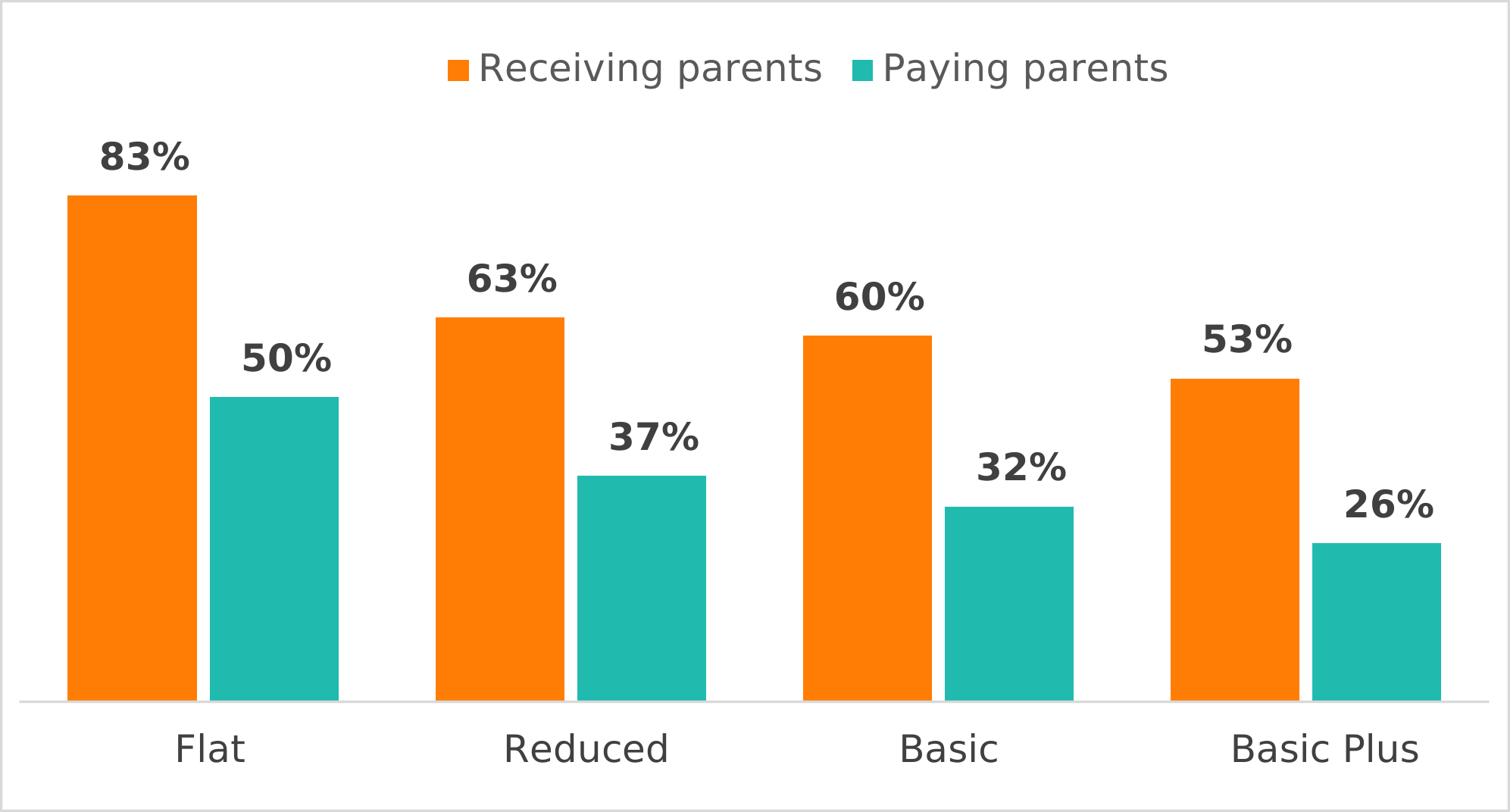
Source: QSHARED2 What types of non-financial care [RECEIVING PARENT: does the paying parent] [PAYING PARENT: do you] provide? Base: Receiving parents in the flat (n=402), reduced (n=336), basic (n=592), and basic plus (n=284) rates and paying parents in the flat (n=309), reduced (n=269), basic (n=567), and basic plus (n=324) rates.
Figure 2.14: proportion of parents who said the paying parent provides “none of these” types of non-financial care
There were also differences in the prevalence of non-financial support between parents with one qualifying child compared to those with 2 or more qualifying children.
Receiving parents by number of qualifying children that said the paying parent provides “none of these” types of non-financial care:
- one qualifying child (66%)
- two or more qualifying children (61%)
Paying parents by number of qualifying children that said the paying parent provides “none of these” types of non-financial care:
- one qualifying child (39%)
- two or more qualifying children (31%)
Additionally, the quantitative research also aimed to gauge the prevalence of formal or informal agreements regarding the provision of non-financial care. Parents were asked when it comes to the non-financial support provided to the children if there were any agreements or official instructions (e.g. a court order or solicitor’s letter) about what should be provided, or not. As shown in Table 2.14, a sizable minority had formal written agreements (28% receiving parents and 27% paying parents) or had an informal verbal or written agreement in place (12% receiving parents and 14% paying parents), but the majority of receiving (56%) and paying parents (53%) had not agreed anything formally or informally that stipulated the non-financial care that should be provided by the paying parent.
| Prevalence of formal or informal agreements about the provision of non-financial care by the paying parent | Receiving parents | Paying parents |
|---|---|---|
| Yes - There is a formal written agreement (e.g. court order, solicitor’s letter or CAFCASS agreement) | 28% | 27% |
| Yes - we have an informal verbal / written agreement | 12% | 14% |
| No - we have not agreed anything formally or informally | 56% | 53% |
| Other | 2% | 1% |
| Prefer not to say | 1% | 2% |
| Don’t know | 1% | 3% |
Source: QSHARED3 When it comes to the non-financial support that [RECEIVING PARENT: the paying parent provides] [PAYING PARENT: you provide], do you have any agreements or official instructions (e.g. a court order or solicitor’s letter) between you and the other parent about what will be provided, or not? Base: Receiving parents who said the paying parent provides non-financial care (n=578) and paying parents who said they provide non-financial care (n=992). Note: parents who selected non face-to-face contact only at QSHARED2 were included in this question, however, these were small sizes of receiving (n=81) and paying parents (n=82)
Table 2.14: prevalence of formal or informal agreements about the provision of non-financial care by the paying parent
Shared care: overnight and daytime care deep dive
Within the quantitative research, parents were asked the extent to which they agree on the number of nights the children stay with the paying parent each week or month. As shown in Table 2.15, amongst parents who said overnight care is provided by the paying parent, 56% of receiving parents said “we fully agree” or “we mostly agree” on the amount of overnight care, declining to 48% amongst paying parents.
| Level of agreement between parents on the amount of overnight care provided by the paying parent | Receiving parents | Paying parents |
|---|---|---|
| We fully agree | 26% | 18% |
| We mostly agree | 30% | 30% |
| We somewhat disagree | 16% | 15% |
| We strongly disagree | 9% | 21% |
| We have never discussed it | 12% | 10% |
| Don’t know | 6% | 6% |
Source: QCAREAGREE To what extent do you and the other parent agree on the number of nights the children stay with [RECEIVING PARENT: the paying parent] [PAYING PARENT: you] each week or month? Base: Receiving parents who said the paying parent provides overnight care (n=438) and paying parents who said they provide overnight care (n=735).
Table 2.15: level of agreement between parents on the amount of overnight care provided by the paying parent
Analysing levels of agreement across the CM rates, differing patterns emerged between receiving and paying parents. Amongst receiving parents, agreement levels were similar across all rates. In contrast, paying parents’ level of agreement was stronger amongst those on the rates below basic plus.
Receiving parents by CM rate that said “we fully agree” or “we mostly agree”:
- flat (base size is too low to report, n=27)[footnote 5]
- reduced (53%). Note, base size is n=78 and results should be treated as indicative only
- basic (59%)
- basic plus (60%)
Paying parents by CM rate that said “we fully agree” or “we mostly agree”:
- flat (50%) (note, base size is n=67 and results should be treated as indicative only[footnote 6])
- reduced (46%)
- basic (50%)
- basic plus (39%)
Table 2.16 outlines the number of reported overnight stays provided by paying parents in a normal week. Amongst receiving parents that said the paying parent provides night-time care, the amount of overnight care reported tended to be 1 (33%) or 2 (28%) nights in a normal week, with around a fifth (21%) stating that this type of care was less often than one night each week. In contrast, most paying parents that said they provided overnight care reported providing either 2 (27%) or 3 (20%) nights of care in a normal week. However, 14% also stated they had the children less often than one night per week.
| Amount of weekly overnight care provided by paying parents in a normal week | Receiving parents | Paying parents |
|---|---|---|
| 1 night | 33% | 16% |
| 2 nights | 28% | 27% |
| 3 nights | 10% | 20% |
| 4 nights | 4% | 8% |
| 5 nights | 0% | 2% |
| 6 nights | 1% | 1% |
| 7 nights | 0% | 3% |
| Less often than one night each week | 21% | 14% |
| Never | 2% | 2% |
| Prefer not to say | 0% | 2% |
| Don’t know | 0% | 3% |
Source: QSHARED2A How many overnight stays [RECEIVING PARENT: does the paying parent] [PAYING PARENT: do you] provide in a normal week? Base: Receiving parents who said the paying parent provides overnight care (n=438) and paying parents who said they provide overnight care (n=735).
Table 2.16: amount of weekly overnight care provided by paying parents in a normal week
Amongst parents who said that less than one night of care per week was provided by the paying parent, the top reasons given for this varied between parent groups. As shown in Table 2.17, receiving parents said the main reason was due to the children not wanting to stay with them (32%), yet paying parents said this was because the other parent didn’t want the children to stay overnight more often (32%).
| Reasons why paying parents provide less than one night per week of care | Receiving parents | Paying parents |
|---|---|---|
| The children don’t want to stay overnight | 32% | 16% |
| Live too far away | 26% | 29% |
| Paying parent: I don’t want more overnight contact Receiving parent: the other parent doesn’t want more overnight contact |
26% | 20% |
| Concerns about the children’s safety or wellbeing | 23% | 1% |
| Paying parent: my accommodation isn’t suitable for overnight stays Receiving parent: the other parent’s accommodation isn’t suitable for overnight stays |
17% | 5% |
| Paying parent: my job or working hours make it difficult Receiving parent: the other parent’s job or working hours make it difficult |
16% | 22% |
| Paying parent: the other parent doesn’t want them to stay overnight more often Receiving parent: I don’t want them to stay overnight more often |
15% | 32% |
| Paying parent: I don’t have regular contact with the children Receiving parent: the other parent doesn’t have regular contact with the children |
12% | 14% |
| Court order / written agreement in place | 10% | 3% |
| Paying parent: I can’t afford to have the children overnight Receiving parent: I cannot afford the reduction in child maintenance that would result from regular overnight stays |
1% | 4% |
| Other (please specify) | 6% | 18% |
| Prefer not to say | 3% | 1% |
| Don’t know | 3% | 3% |
Source: QLESSOVERNIGHTWHY Thinking about overnight stays with your children, what are the main reasons why your children currently stay overnight with [RECEIVING PARENT: the other parent] [PAYING PARENT: you] less than once a week, or not at all? Base: Receiving parents who said the paying parent provides less than one night of overnight care per week (n=124) and paying parents who said they provide less than one night of overnight care per week (n=129).
Table 2.17: reasons why paying parents provide less than one night per week of care
Parents were also asked whether paying parents had ever tried to increase the amount of overnight care they provided. As shown in Table 2.18, perceptions of attempts to increase overnight care differed widely between the 2 parent groups; 82% of receiving parents said that the paying parent had never attempted to increase the number of overnight stays, with just 14% saying that they had tried to. In contrast, 58% of paying parents said they had attempted to increase the amount of overnight care they provide, and 30% said this was something they had not tried. Of those paying parents who said yes, 39% stated that the other parent would not agree to the increase.
| Whether the paying parent had ever tried to increase the number of overnight stays they provide | Receiving parents | Paying parents |
|---|---|---|
| Yes - and the number of overnight stays did increase | 3% | 7% |
| Yes – but I / the other parent would not agree to it | 3% | 39% |
| Yes - but no changes were made in the end | 6% | 9% |
| Yes - but we have since reverted back to the previous level | 2% | 3% |
| No | 82% | 30% |
| Prefer not to say | 1% | 6% |
| Don’t know | 3% | 6% |
Source: QOVNIGHT1A [RECEIVING PARENT] Has the paying parent ever tried to increase the number of overnight stays they provide? [PAYING PARENT] Have you ever tried to increase the number of overnight stays you provide? Base: All receiving parents (n=1,750) and all paying parents (n=1,605).
Table 2.18: whether the paying parent had ever tried to increase the number of overnight stays they provide
Examining responses from parents who said there had been attempts to increase the number of overnight stays provided, the top reasons behind these attempts varied between parent groups. As Table 2.19 outlines, 63% of receiving parents stated that the paying parent had done this to reduce the amount of CM they paid. Comparatively, 82% of paying parents said the main motivation was to see the children more often.
| Whether the paying parent had ever tried to increase the number of overnight stays they provide | Receiving parents | Paying parents |
|---|---|---|
| Receiving parent: they wanted to reduce the amount of child maintenance to be paid Paying parent: I wanted to reduce the amount of child maintenance to be paid |
63% | 13% |
| Receiving parent: they wanted to see the children more often Paying parent: I wanted to see the children more often |
19% | 82% |
| The other parent suggested it | 17% | 2% |
| The children wanted to see [receiving parent: their other parent] / [paying parent: me] more often | 7% | 49% |
| Receiving parent: they changed jobs so were/was more able to have the children stay overnight Paying parent: I changed jobs so were/was more able to have the children stay overnight |
3% | 11% |
| Receiving parent: they changed accommodation, so were able to have the children over to stay more easily Paying parent: I changed accommodation, so was able to have the children over to stay more easily |
1% | 15% |
| Other (please specify) | 7% | 7% |
| Prefer not to say | 1% | 1% |
| Don’t know | 6% | 1% |
Source: QOVNIGHT1B Why did [RECEIVING PARENT: the paying parent] [PAYING PARENT: you] try to increase the number of overnight stays provided? Base: Receiving parents who said the paying parent has tried to increase the number of overnight stays they provide (n=240) and paying parents who said they had tried to increase the number of overnight stays they provide (n=968).
Table 2.19: whether the paying parent had ever tried to increase the number of overnight stays they provide
Table 2.20 outlines whether receiving parents had ever tried to decrease the amount of overnight care provided by the paying parent, with views differing considerably between parent groups. Over 4 in 5 (84%) receiving parents stated they had not made attempts to decrease the number of overnight stays, with just 15% saying that they had tried to do this. However, 39% of paying parents said the receiving parent had not attempted to decrease the amount of overnight care they provide, with 57% saying they had tried to do this. Of those paying parents who said the other parent had attempted to decrease the number of overnight stays they provided, 21% of parents stated they had reduced the number of overnight stays whilst a further 20% reported that they, or the other children’s parent or would not agree to the decrease in care.
| Whether the receiving parent had ever tried to decrease the number of overnight stays provided by the paying parent | Receiving parents | Paying parents |
|---|---|---|
| Yes - and the number of overnight stays did decrease | 7% | 21% |
| Yes – but I / the other parent would not agree to it | 3% | 20% |
| Yes - but no changes were made in the end | 3% | 11% |
| Yes - but we have since reverted back to the previous level | 2% | 5% |
| No | 84% | 39% |
| Prefer not to say | 2% | |
| Don’t know | 1% | 2% |
Source: QOVNIGHT1C [RECEIVING PARENT] And have you ever tried to decrease the number of overnight stays the other parent provides? [PAYING PARENT] And has the other parent ever tried to decrease the number of overnight stays you provide? Base: Receiving parents who said the paying parent provides overnight care (n=439) and paying parents who said they provide overnight care (n=736).
Table 2.20: whether the receiving parent had ever tried to decrease the number of overnight stays provided by the paying parent
When considering parents who said there had been attempts to decrease the number of overnight stays provided, the data indicates that the primary reasons underpinning these attempts varied between parent groups (Table 2.21). Receiving parents stated this was mainly for the children’s benefit. Around half had tried to reduce overnight care due to the paying parent not supporting the children adequately (56%), because the children didn’t want to stay with the paying parent (50%), or because they were concerned for the safety or wellbeing of the children (44%). In contrast, paying parents felt reductions to overnight care were mainly financially or relationally motivated. Around half felt the receiving parent was driven either by a desire to increase the amount of CM paid (54%) or to decrease overnight stays due to disagreement between the parents (45%).
| Whether the receiving parent had ever tried to decrease the number of overnight stays the paying parent provides | Receiving parents | Paying parents |
|---|---|---|
| Receiving parent: I felt the other parent wasn’t supporting the children adequately Paying parent: they felt that I wasn’t supporting the children adequately |
56% | 4% |
| The children didn’t want to stay overnight | 50% | 5% |
| Receiving parent: I was concerned about the children’s safety or wellbeing Paying parent: they were concerned about the children’s safety or wellbeing |
44% | 6% |
| Receiving parent: I felt the other parent’s home or circumstances were not suitable for overnight care Paying parent; they felt my home or circumstances were not suitable for overnight care |
25% | 4% |
| Receiving parent: the other parent’s living situation changed (e.g. moved further away, less space) Paying parent: my living situation changed (e.g. moved further away, less space) |
22% | 5% |
| Receiving parent: the other parent’s work or availability changed Paying parent: my work or availability changed |
12% | 3% |
| Receiving parent: I wanted to increase the amount of child maintenance paid Paying parent: they wanted to increase the amount of child maintenance paid |
10% | 54% |
| There was a disagreement between us | 9% | 45% |
| Receiving parent: I wanted to spend more time with the children Paying parent: they wanted to spend more time with the children |
5% | 3% |
| Other (please specify) | 6% | 7% |
| Prefer not to say | 0% | 0% |
| Don’t know | 2% | 5% |
Source: QOVNIGHT1D Why did [RECEIVING PARENT: you] [PAYING PARENT: the other parent] try to decrease the number of overnight stays provided? Base: receiving parents who said they tried to decrease the number of overnight stays the paying parent provided (n=59) and paying parents who said the receiving parent had tried to decrease the number of overnight stays they provide (n=426).
Table 2.21: whether the receiving parent had ever tried to decrease the number of overnight stays the paying parent provides
Table 2.22 illustrates the amount of daytime care provided by the paying parent in a normal week without an overnight stay. Compared to overnight care, the level of daytime care was more varied. Around half of receiving parents (45%) said the paying parent provided at least one day per week of daytime care, with a quarter (24%) stating daytime care was always provided with an overnight stay. However, a further quarter (25%) said that daytime care was provided less often than once per week. For paying parents, around two thirds (65%) said they provided at least one day of daytime care per week, with a further fifth (20%) stating that daytime care always accompanied an overnight stay. Just 1 in 10 (10%) said they provided less than one day of daytime care per week without an overnight stay.
| Amount of weekly daytime care provided by Paying parents in a normal week without an overnight stay attached | Receiving parents | Paying parents |
|---|---|---|
| 1 day | 25% | 16% |
| 2 days | 15% | 17% |
| 3 days | 4% | 13% |
| 4 days | 1% | 8% |
| 5 days | 1% | 4% |
| 6 days | - | 1% |
| 7 days | 1% | 5% |
| Less often than one day | 25% | 10% |
| Daytime care is always with an overnight | 24% | 20% |
| Prefer not to say | 2% | 2% |
| Don’t know | 3% | 3% |
Source: QSHARED2B Now thinking about daytime care for your children, on how many days [RECEIVING PARENT: does the paying parent] [PAYING PARENT: do you] provide daytime care for your children in a normal week without an overnight stay? Base: Receiving parents who said the paying parent provides daytime care (n=111) and paying parents who said they provide daytime care (n=492).
Table 2.22: amount of weekly daytime care provided by paying parents in a normal week without an overnight stay attached
Following this, the quantitative research also explored when daytime care was usually provided. Table 2.23 outlines the usual times paying parents provided care for their children during the day, when the children) did not stay overnight. Amongst both paying and receiving parents, daytime care was said to be mainly at weekends (54% and 61%, respectively), weekdays during school holidays (33% and 48%, respectively), and after school (29% and 47%, respectively).
| Most common times paying parents provide daytime care for their children | Receiving parents | Paying parents |
|---|---|---|
| Weekends | 54% | 61% |
| Weekdays during school holidays | 33% | 48% |
| After school | 29% | 47% |
| Daytime care is always accompanied by an overnight stay | 26% | 37% |
| Before school | 6% | 24% |
| Never | 7% | 0% |
| Other | 8% | 7% |
| Prefer not to say | 1% | 2% |
| Don’t know | 1% | 1% |
Source: QDAYTIMECARETIMING Which of the following best describes when [RECEIVING PARENT: the paying parent] [PAYING PARENT: you] usually provides care for your children during the day, when they don’t stay overnight? Base: Receiving parents who said the paying parent provides daytime care (n=111) and paying parents who said they provide daytime care (n=492).
Table 2.23: most common times paying parents provide daytime care for their children
Insights on liabilities and hypothetical changes
This chapter outlines the research findings regarding reported compliance and perceived affordability and adequacy of current liabilities. It further explores the potential impact of hypothetical changes to CM payments on compliance as well as parents’ reactions to and perceived impacts of hypothetical changes to maintenance liabilities.
Current liability: reported levels of compliance
A key objective of the quantitative research aimed to gauge perceived levels of compliance amongst parents. Table 3.1 outlines the perceived punctuality of CM payments. Parents were asked to think about when payments should be made and rate how often they were paid on time. Around a quarter of receiving parents (24%) felt that payments were “always on time”, with a further quarter (23%) stating that payments were “always late”. Whereas three quarters of paying parents (74%) felt their payments were “always on time”, with just 1% stating that they were “always late”.
| Punctuality of CM payments | Receiving parents | Paying parents |
|---|---|---|
| Always on time | 24% | 74% |
| Usually on time | 21% | 10% |
| It varies | 17% | 6% |
| Usually late | 9% | 1% |
| Always late | 23% | 1% |
| Don’t know | 6% | 8% |
Source: QPAYMENTONTIME [IF PAYING PARENT] Thinking about when you should pay the receiving parent, how often are the maintenance payments on time? [IF RECEIVING PARENT] Thinking about when you should be paid by the paying parent, how often are the maintenance payments on time? Base: All receiving parents (n=1,750) and all paying parents (n=1,605)
Table 3.1: punctuality of CM payments
The timeliness of CM payments varied significantly depending on the service used, with payments made via DP consistently reported as timelier by both parent groups compared to those using C&P. Among receiving parents, only 6% reported that payments were “always on time” when using the C&P service, compared to 35% for those using DP. Similarly, paying parents reported greater punctuality when using DP, with 85% saying payments were always on time, compared to 55% of paying parents using the C&P service.[footnote 7]
Examining parents who said payments were “always on time”, a pattern emerges with perceived compliance increasing as the income of the paying parent increases. For example, Figure 3.1 highlights that for both receiving and paying parents, those on the basic plus rate were more likely to say payments were “always on time” (43% and 90%, respectively) than those on the flat rate (12% and 61%, respectively).
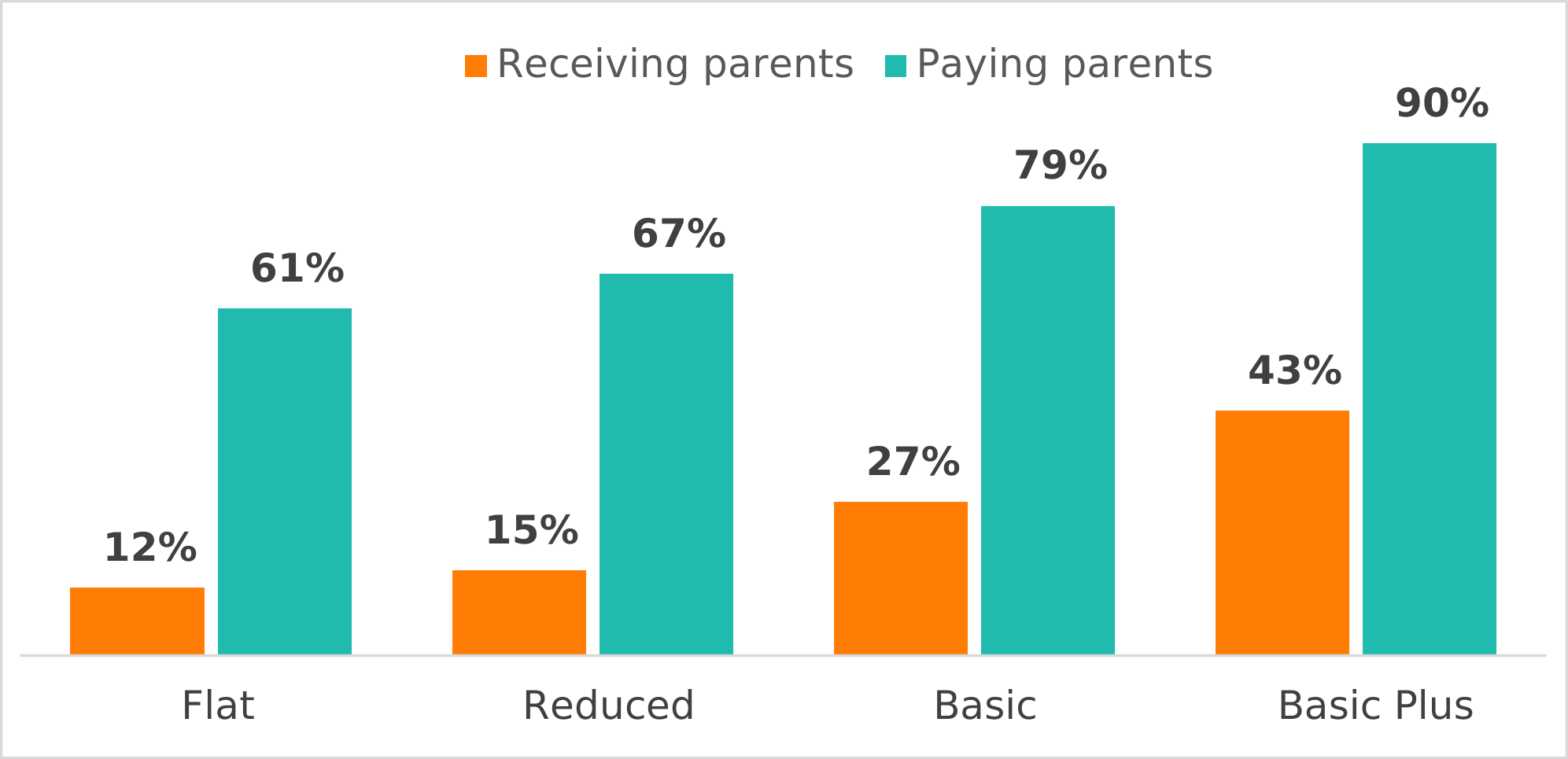
Source: QPAYMENTONTIME [IF PAYING PARENT] Thinking about when you should pay the receiving parent, how often are the maintenance payments on time? [IF RECEIVING PARENT] Thinking about when you should be paid by the paying parent, how often are the maintenance payments on time? Base: Receiving parents in the flat (n=402), reduced (n=336), basic (n=592), and basic plus (n=284) rates and paying parents in the flat (n=309), reduced (n=269), basic (n=567), and basic plus (n=324) rates.
Figure 3.1: proportion of parents on each rate that said CM payments were “always on time”
The quantitative research also examined perceptions towards the amount of CM usually received or paid. Parents were asked to think about the current required liability, and rate how much of this was usually paid. As shown in Table 3.2, fewer than half of receiving parents (45%) felt that they always received the total amount due, with a further fifth (20%) stating that they received “none of it”. Whereas nearly 9 in 10 paying parents (88%) felt they usually paid the total amount to the receiving parent, with just 2% stating they usually paid “none of it”.
| Amount of CM payments usually received or paid | Receiving parents | Paying parents |
|---|---|---|
| All of it | 45% | 88% |
| Most of it | 10% | 2% |
| Some of it | 11% | 1% |
| None of it | 20% | 2% |
| It varies | 12% | 2% |
| Don’t know | 3% | 5% |
Source: QPAYMENTONAMOUNT [IF PAYING PARENT] Thinking about the amount you are supposed to pay the other parent, do you usually pay…? [IF RECEIVING PARENT] Thinking about the amount you are supposed to receive from the other parent, do you usually receive…? Base: All receiving parents (n=1,750) and all paying parents (n=1,605)
Table 3.2: amount of CM payments usually received or paid
Reported compliance (where all of the CM payment was usually made) also varied by service type. Amongst both receiving and paying parents, reported compliance was higher in cases where payments were made via DP. For example, 16% of receiving parents on C&P said they usually received all of the payment they were supposed to receive, compared to 65% for those on DP. Likewise, 77% of paying parents using C&P said they usually pay the full amount of CM payments, compared to 94% for DP.[footnote 8]
Focusing on parents who said they usually received or paid the total amount of CM due by CM rate, reported compliance increases as the income of the paying parent increases. Figure 3.2 illustrates that for both receiving and paying parents, those on the basic plus rate were more likely to say that payments were usually for the full amount (73% and 96%, respectively) than those on the flat rate (24% and 77%, respectively).
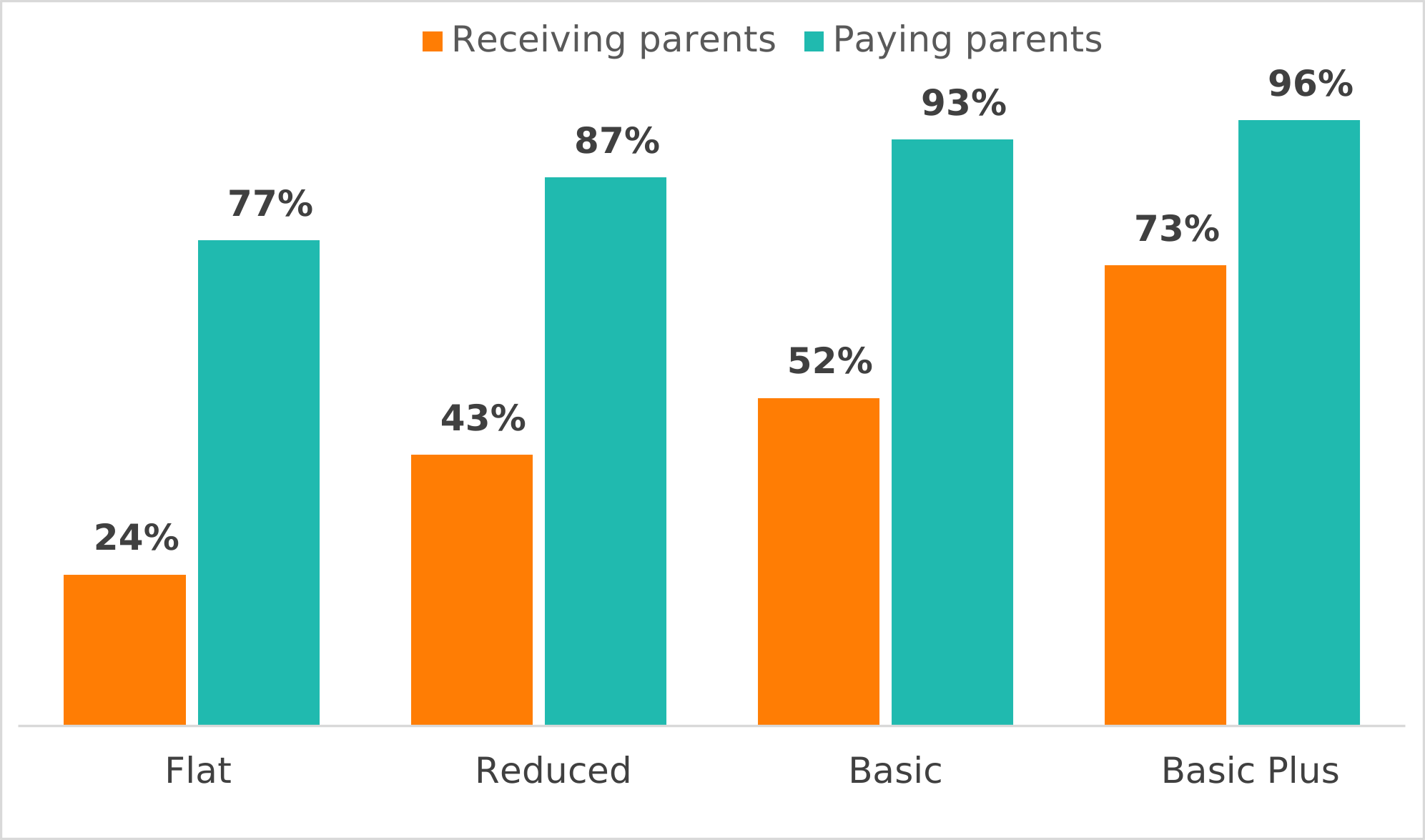
Source: QPAYMENTONAMOUNT [IF PAYING PARENT] Thinking about the amount you are supposed to pay the other parent, do you usually pay…? [IF RECEIVING PARENT] Thinking about the amount you are supposed to receive from the other parent, do you usually receive…? Base: Receiving parents in the flat (n=402), reduced (n=336), basic (n=592), and basic plus (n=284) rates and paying parents on the flat (n=309), reduced (n=269), basic (n=567), and basic plus (n=324) rates.
Figure 3.2: proportion of parents on each CM rate that said the usual amount of CM payments they received or paid was “all of it”
These findings highlight that financial pressures likely underpin payment challenges. The quantitative data further explored this issue by examining whether missed or partial payments were perceived to be intentional or unintentional. Table 3.3 summarises perceived intentionality of late or partial payments. Parents who stated payments were not always on time (Table 3.1) or for the full amount (Table 3.2) were asked if they thought missed or underpayments were mainly intentional, unintentional, or a mix of both. Views between parent groups varied widely. Three in five (61%) receiving parents felt the paying parent had intentionally not complied with CM payment requirements. Yet three quarters of paying parents stated non-compliance had been “unintentional (e.g. due to financial or administrative reasons)” (74%).
| Intentionality of partial or late payments | Receiving parents | Paying parents |
|---|---|---|
| Intentional | 61% | 4% |
| A mix of both | 20% | 12% |
| Unintentional | 7% | 74% |
| Don’t know | 12% | 10% |
Source: QPAYMENTINTENTION [IF PAYING PARENT:] When you have missed or underpaid a payment, was this mainly…? [IF RECEIVING PARENT:] When payments have been missed or underpaid, do you think this was mainly…? Base: Receiving parents who said they usually received partial or late CM payments (n=1,406) and paying parents they usually paid partial or late CM payments (n=373)
Table 3.3: intentionality of partial or late payments
Examining non-compliance, parents who stated payments were not always for the full amount (Table 3.2) were provided with a list of reasons for paying less and asked to select why they thought the paying parent may have paid less. Table 3.4 and Table 3.5 outlines the top 5 reasons. Table 3.4 outlines that receiving parents often felt that underpayments were mainly due to the paying parent not wanting to pay (68%) or a lack of desire to contact the other parent (53%). However, as Table 3.5 outlines, for paying parents the primary barrier to paying the full amount was said to be affordability (54%). While the base size for paying parents was too small to fully understand the findings by CM rate, the top 2 reasons were consistent for receiving parents across the CM rates.
| Top 10 reasons for receiving less than the CMS calculated | Receiving parents |
|---|---|
| The paying parent does not want to pay | 68% |
| I do not want contact with the other parent | 53% |
| I am worried about abusive behaviour from the paying parent (RP) | 40% |
| CMS advised they could not collect the full amount | 37% |
| The paying parent disagrees with the amount arranged | 21% |
| I do not know how to contact the other parent | 14% |
| The other parent’s circumstances have changed | 10% |
| We are having a disagreement about contact with the children | 8% |
| The paying parent cannot afford to pay | 7% |
| Payments are never chased up | 5% |
Source: QPAYMENTLESS Why do you receive less than the CMS said you should? Base: Receiving parents who said they usually received less than the full amount of CM payments (n=953)
Table 3.4: top 10 reasons for receiving less than the CMS calculated
| Top 10 reasons for paying less than the CMS calculated | Paying parents |
|---|---|
| I cannot afford to pay | 54% |
| We are having a disagreement about contact with the children | 34% |
| My circumstances have changed | 33% |
| I disagree with how the other parent spends the money | 32% |
| I contribute in other ways instead (e.g. with shared care / overnight stays, buying school uniform) | 32% |
| I do not want contact with the other parent | 28% |
| I disagree with the amount arranged | 27% |
| I do not know how to contact the other parent | 22% |
| I do not feel the other parent needs the money | 18% |
| CMS advised they could not collect the full amount (e.g. via deduction from earnings or bank) | 18% |
Source: QPAYMENTLESS Why do you pay less than the CMS said you should? Base: Receiving parents who said they usually received less than the full amount of CM payments (n=122).
Table 3.5: top 10 reasons for paying less than the CMS calculated
Current liability: affordability and adequacy
The qualitative findings relating to the affordability and adequacy of current liabilities varied across parent type and by CM rate. Paying parents on the lower rates (flat and reduced) often reported struggling to cover the CM payment and meet their own household needs. This was especially prevalent amongst flat rate paying parents. In addition, both paying and receiving parents felt that the lower rates were insufficient as they failed to reflect children’s needs, living costs, debts, or income changes.
Basic and basic plus rate liabilities were generally perceived as being manageable amongst paying parents in the qualitative sample, although some expressed the view that their liability was financially burdensome.
I just think now there’s quite a few people that are being sort of punished by the system with huge amounts of child support payments, you know, and not actually necessarily seeing even their children benefit from that money.
(PP, basic rate, C&P, 2 children)
Whilst most receiving parents within these higher rates felt the liability was at least adequate, some reported that payments did not always fully cover the needs of their children.
Well, when the holidays are in and the kids are at home my food and everything else practically doubles. The electric use goes up. And nothing else changes
(RP, basic rate, DP, 2 children)
Surveyed paying parents’ perceptions of affordability and adequacy of current liabilities
A key objective of the quantitative research was to measure perceived affordability of CM payments. Paying parents were asked to think about their regular income and rate how easy or difficult they felt it was for them to consistently make payments on a five-point scale from “very easy” to “very difficult”. As shown in Figure 3.3, nearly half (45%) said it was “very difficult” or “somewhat difficult” for them to consistently make payments, with around a third (30%) saying it was “very easy” or “somewhat easy”.
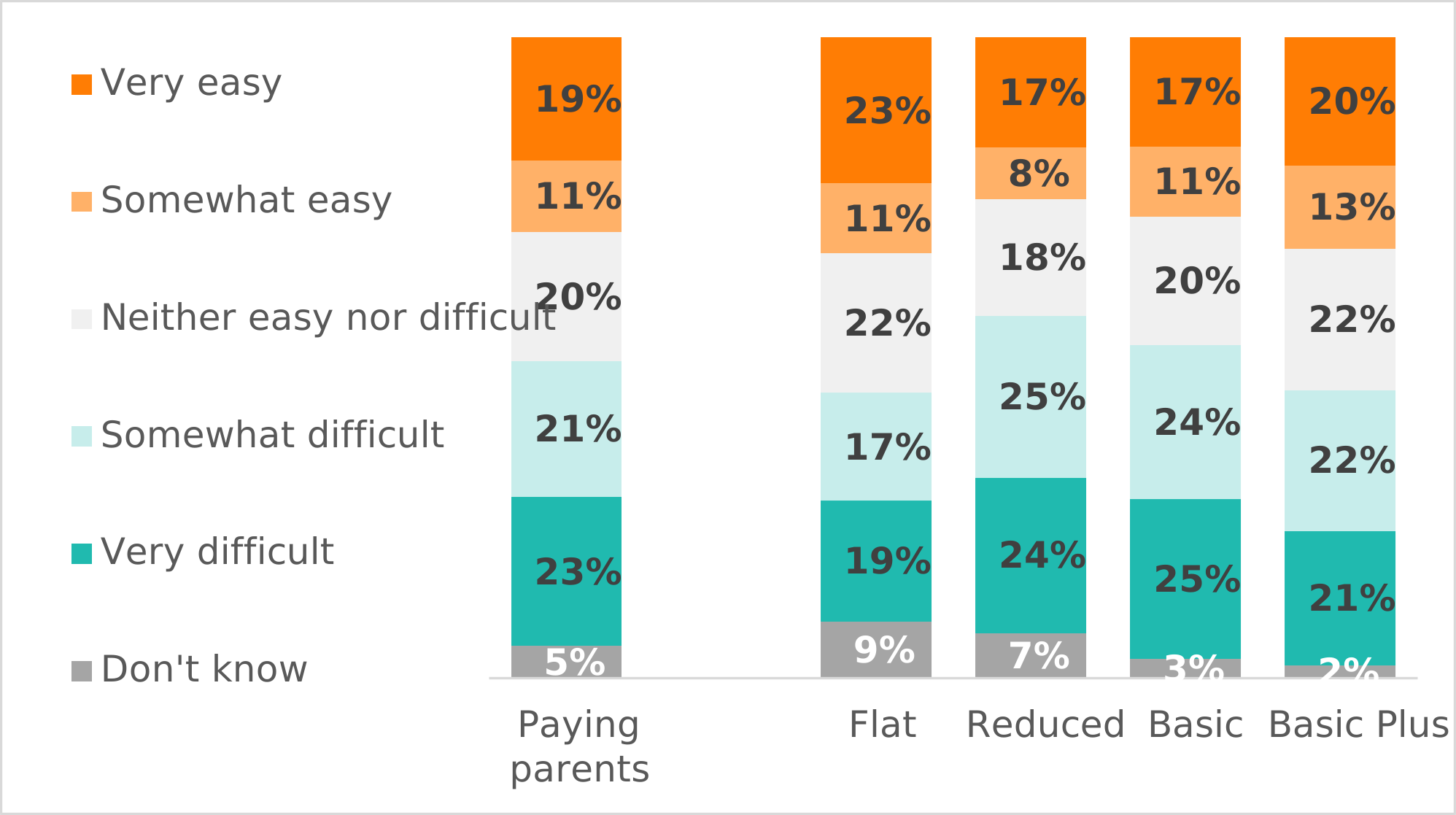
Source: QAFFORD Based on your regular income, how easy or difficult do you feel it is to consistently make your CM payments? Base: Paying parents on the flat (n=309), reduced (n=269), basic (n=567), and basic plus (n=324) rates.
Figure 3.3: paying parents perceived ease or difficulty to consistently make CM payments by rate
Examining how easy paying parents found it to consistently make payments, the findings varied across the CM rates. Figure 3.3 illustrates that perceived ease of making payments was consistently low, with around a third (30%) of paying parents across all rates saying it was easy to pay. Perceived difficulty of making payments varied slightly by CM rate, ranging from 50% for paying parents on the basic rate to 36% for those on the flat rate.
Surveyed receiving parents’ perceptions of affordability for paying parents and adequacy
Receiving parents were also asked to think about the other parent’s regular income and rate how easy or difficult they felt it was for them to consistently make payments on a five-point scale from “very easy” to “very difficult” (Figure 3.4). Around two thirds (63%) said it was “very easy” for the paying parent to consistently make payments, with a further 1 in 10 (10%) saying it was “somewhat easy”. Fewer than 1 in 10 (7%) receiving parents felt it was “very difficult” or “somewhat difficult” for the paying parent to always make the CM payments.
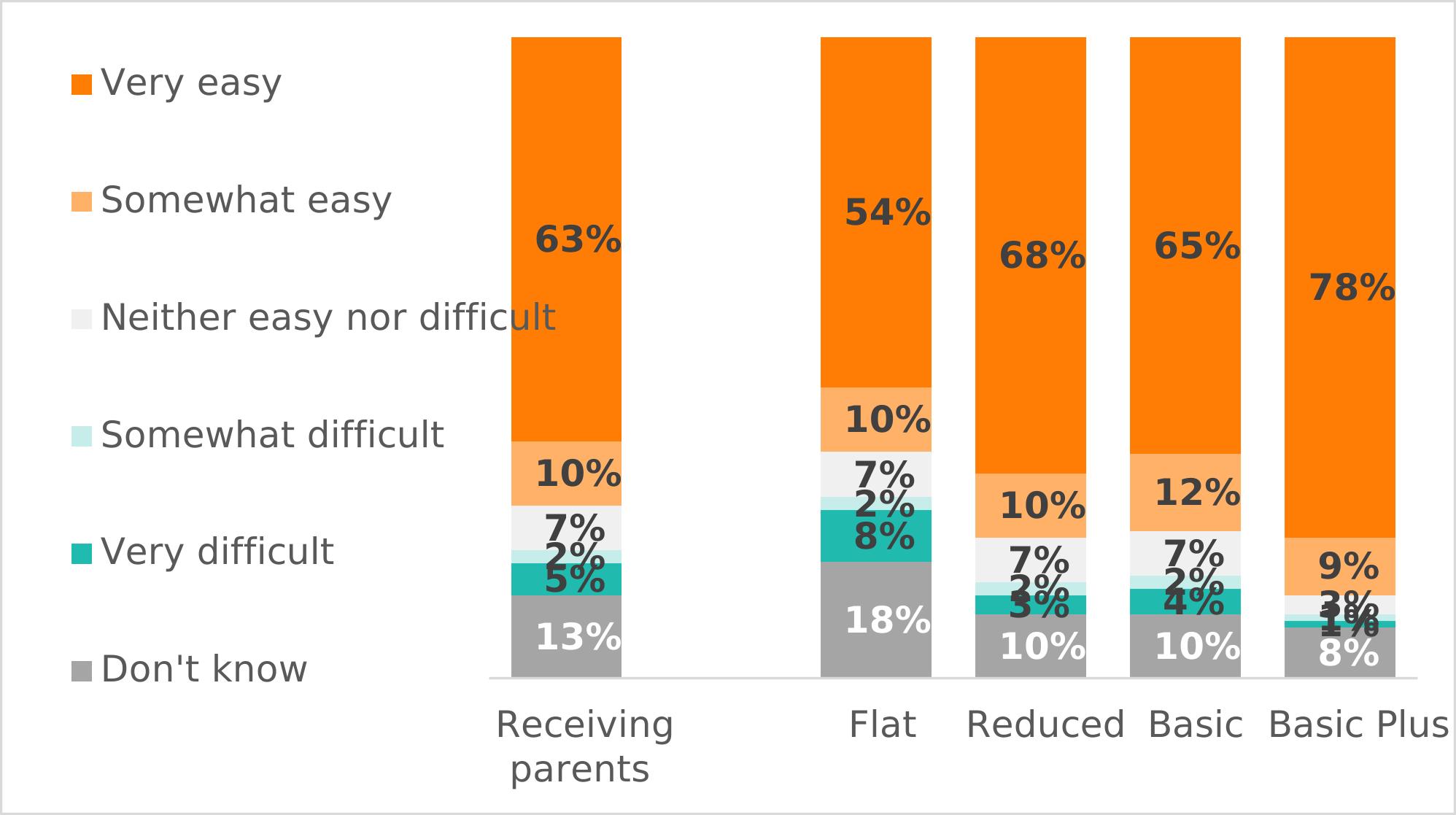
Source: QAFFORD Based on the other parent’s regular income, how easy or difficult do you feel it is for the other parent’s to consistently make your CM payments? Base: Receiving parents on the flat (n=402), reduced (n=336), basic (n=592), and basic plus (n=284) rates.
Figure 3.4: receiving parents perceived ease or difficulty for the paying parent to consistently make CM payments by rate
Analysis of receiving parents’ views by CM rate showed a clear pattern: perceptions of ease in making consistent payments increased as paying parents’ income rose. Figure 3.4 highlights nearly 4 in 5 (78%) receiving parents on the basic plus rate felt it was “very easy” for the other parent to consistently pay, whereas this declined to just over half (54%) amongst those on the flat rate. These findings contrast with paying parent feelings in Figure 3.3 which showed that perceived ease of making payments was consistently low across all the CM rates.
Hypothetical changes to the calculation process to support affordability
The quantitative research was also used to test parents’ views regarding hypothetical changes to the calculation process (summarised in Table 3.6). Parents were asked the extent to which they agreed with a range of statements that outlined various hypothetical changes to the calculation process. The findings show clear differences between receiving and paying parents in their views on income tolerance and review frequency. Receiving parents were more likely to favour regular reviews (78% vs. 53%) and for smaller income changes to be reflected in the calculation (63% vs. 44%).
| Proportion of parents who selected “strongly agree” or “agree” towards various statements regarding hypothetical changes to the calculation process | Receiving parents | Paying parents |
|---|---|---|
| The calculation should be reviewed more regularly, to make sure it remains fair over the year | 78% | 53% |
| Smaller changes in the paying parent’s income should be taken into account in the calculation (i.e. changes that are smaller than 25% | 63% | 44% |
| Keeping the amount payable stable, unless there are major changes, helps me to manage my budget | 55% | 60% |
Source: QCALCCHANGE1 At the moment, the calculation for CM payments is updated once a year, or when the paying parent’s income changes by 25% or more. To what extent do you agree with the following? Base: All receiving parents (n=1,750) and all paying parents (n=1,605).
Table 3.6: proportion of parents the selected “strongly agree” or “agree” towards various statements regarding hypothetical changes to the calculation process
Amongst paying parents, views differed depending on how often their income changed within a year. Those paying parents whose income varied more than once per year (Table 2.5) were more likely than those whose income only changed once per year or less frequently to support more frequent calculation reviews (57% compared with 49%) and the inclusion of smaller income changes in the calculation (51% compared with 38%).
Reactions to, and perceived impacts of, hypothetical changes to liabilities
The qualitative research used stimuli to explore participants’ reactions to, and perceived impacts of hypothetical liability changes. Within the qualitative sample, paying parents’ reactions to hypothetical changes were mixed, while receiving parents’ reactions were more consistent across the CM rates.
Generally, paying and receiving parents’ reactions to, and perceived impacts of hypothetical liability changes tended to be opposing, reflecting the binary dynamic of rate increases or decreases. For example, theoretical increases in CM payments were broadly received positively by receiving parents but negatively by paying parents. However, parents across the sample, highlighted that changes to CM rate may strain the inter-parental relationship, and communications with the other parent. Furthermore, both paying and receiving parents also felt that decreased liabilities were likely to have a negative impact on children’s welfare and wellbeing.
Both paying and receiving parents in the qualitative sample expressed a view that the lower rate liabilities (flat and reduced) were inadequate to meet the costs of raising children. Receiving parents in particular felt the lower rate liabilities were insufficient, as they did not cover school meals or groceries for example.
Figures 3.5 and 3.6 below provide an overview of participants reactions to, and perceived impacts of the tested hypothetical liability changes.
| - | Flat rate increase | Reduced rate (decrease) | Basic rate <£350 (decrease) | Basic rate >£350 (increase) | Basic plus rate (increase) |
|---|---|---|---|---|---|
| Receiving parents |
Dismissive. Makes little difference – amount remains insufficient to support children. May be meaningful to very low-income families. |
Concern. Already too low – a decrease was felt to be unfair and even insulting, However, some acknowledged it was fair in the context of the PPs earning. Reactions increased in intensity with number of children. |
Unethical. A decrease would be unfair – cost of raising children not decreasing – and unethical given its potential impacts. Questioned the need for a reduction. |
Welcoming. Lower income RPs welcomed the increase felt it was fair and ‘a step in the right direction’. Some acknowledged that it was hard to judge if it was fair on the PP. |
N/A |
| Paying parents |
Ambivalence. Mixed reactions, reflecting views about fairness/affordability. Some saw it as burdensome, others as justified by inflation, with willingness to pay hinging on trust it would benefit the children. |
Concern/dismissal. Mixed reactions. Some felt it was unfair to reduce the payment. For others it was more affordable and welcomed the reduction. Others felt the changed was not enough to raise concern. |
Concern. Paying parents expressed concern at reducing the rate and taking money away from the RP and the children. They noted that the reduction was not felt to not be significant enough to have benefits to them. |
Disproportionate. Paying parents felt that an increase would be unfair and more than would be required. Questioned why and what the need was for the increase. |
Excessive. Paying parents reported feeling the increase was excessive and unreasonable. Questioned why and what the need is for the increase. |
Figure 3.5: an overview of participants’ reactions to hypothetical changes in liabilities
| Flat rate increase | Reduced rate (decrease) | Basic rate <£350 (decrease) | Basic rate >£350 (increase) | Basic plus rate (increase) | |
|---|---|---|---|---|---|
| Receiving parents |
No impact. The increase would have no impact as it is insufficient to contribute to the cost of raising children in a meaningful or significant way. |
Further budgeting. A decrease would mean thinking about what and where to spend money. For example, rethinking household spending. This would include food and childcare – impacting children’s health and employment. |
Challenging. A decrease would be challenging and would require a reconfiguration of household spending – which would impact the whole household (specially activities for the children). |
Significant impact. The increase would have a significant impact – would improve children’s quality of life, provide financial security and allow for childcare (opening employment), However, may impact paying parent compliance and relationship with children and receiving parents. |
(impacts increased in perceived intensity of number of children). |
| Paying parents |
Added burden. The increase, though not much, would add to the PPs financial struggle and stress. They would need to re-evaluate and what they can afford and cut back on basics, and they may need to seek support. |
Ease burden. A decrease would ease financial burden and make the payment more affordable. However, is likely to have negative impact for the children (where there is no shared care) and on the relationships with the other parent. |
Improved quality of life. A decrease would not only be more affordable, but it would mean a better quality of life for the paying parent and would allow more activities with their children when they have care. |
Increased disadvantage. An increase would ‘further disadvantage the paying parent’ – would have serious financial impacts and would push them into financial distress. Would cause significant amount of distress and impact mental health. |
Serious impacts. Would undermine household financial security, quality of life (inc. other children in paying parent household and paying parent mental health). Would consider ways to reduce taxable income. |
Figure 3.6: an overview of participants’ perceived impacts of hypothetical changes in liabilities
Reactions to hypothetical decreased liabilities
Overall, hypothetical decreases in CM liabilities received a mixed response from paying parents, although those with shared care were more welcoming of a decrease. However, hypothetical decreases to CM liabilities were generally received negatively by receiving parents.
Reactions to hypothetical decreased liabilities for parents currently on the reduced rate
Hypothetical decreases to liabilities for those on the reduced rate raised alarm amongst receiving parents who felt that the reduced rate was already too low. A decrease was thought to be unfair and even insulting. However, some receiving parents acknowledged it seemed fair in the context of the paying parent’s earnings.
Paying parents on the reduced rate expressed a mix of concern and dismissal regarding a decrease to liabilities. Some paying parents felt it would be unethical and unfair on the other parent and their children to decrease the payment. Others felt the hypothetical decrease would make CM payments more affordable or that the change was not enough to raise any concerns. Paying parents with shared care were more welcoming of a hypothetical decrease and cited being able to spend more on the children when in their care.
Reactions to hypothetical decreased liabilities for parents currently on the basic rate (where PP is earning less than £350 per week)
Consistent with perceptions on reduced rate, the theoretical decrease in liabilities for those on the basic rate was seen to be unfair and unethical by receiving parents, given the costs of raising children. Receiving parents rarely expressed concern regarding affordability for the paying parent and questioned the need for a reduction to the rate.
Similarly, paying parents on the basic rate (earning less than £350 per week) tended to express concern that a decrease in liability might take money away from the receiving parent and their children, whilst providing little to no benefit to them as the paying parent. Paying parents felt that the hypothetical reduction was not significant enough to lead to financial benefits for them. However, paying parents with shared care were, again, more welcoming of the reduction to liabilities.
Perceived impacts of hypothetical decreased liabilities
Perceived impacts of a hypothetical reduction to CM payments
A key objective of the quantitative research was to test the level of decrease in CM payments paying parents felt they needed to make compliance easier. Figure 3.7 outlines the impact of hypothetically reducing CM payments on compliance amongst paying parents who were currently struggling to pay. Paying parents who said it was “very difficult” or “somewhat difficult” for them to consistently make payments, were presented with a follow up question (“By roughly how much would your payments need to be reduced per week to make it easier for you to make payments consistently?”). The hypothetical reductions presented to paying parents were shown in proportion to their current weekly liability. For example, a parent with £100 weekly liability would have seen options of “<£10 decrease per week”, “around a £10 decrease”, “around a £20 decrease”, and so on.
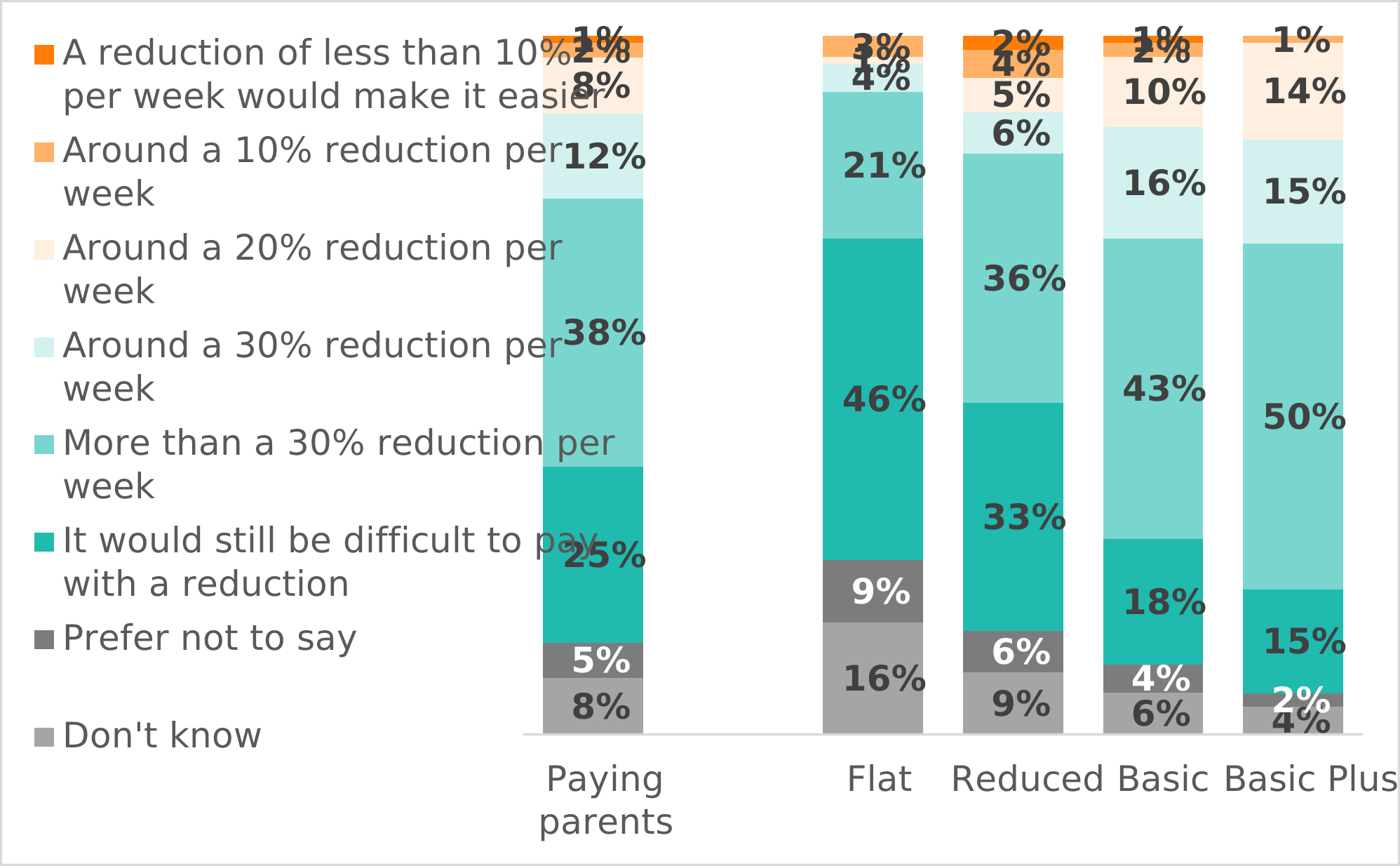
Source: QREDUCECOMFORT By roughly how much would your payments need to be reduced per week to make it easier for you to make payments consistently? Base: Paying parents who said they find it “very difficult” or “somewhat difficult” to consistently make CM payments (n=679) and by basic plus (n=141), basic (n=289), reduced (n=135), and flat (n=114) rates.
Figure 3.7: level of reduction to payments that would make it easier for a paying parent who was struggling to consistently to pay
As Figure 3.7 outlines, the majority of paying parents felt that even large reductions to their liability were unlikely to make paying consistently easier. Around a third (38%) said they would need “more than a 30% reduction per week” before it would become easier to make payments consistently. Paying parents on higher rates were more likely to say this (e.g. 50% basic plus) than those on lower rates (e.g. 21% flat). A further 25% of paying parents said that “it would still be difficult to pay with a reduction”. Paying parents on lower rates were more likely to say this (e.g. 46% for flat) than those on higher rates (e.g. 15% for basic plus).
Additional analysis was conducted to compare the reduction in payments that paying parents said they would need against a hypothetical change in their liability. Around 5% of paying parents who said they found it “very difficult” or “somewhat difficult” to make payments consistently would see a decrease in their weekly liability under the hypothetical changes, roughly aligning with the reduction they said they would need to make paying easier. Around 19% had a hypothetical reduction to their weekly payments that did not meet the reduction they said they would need to make paying easier. The remaining paying parents (76%) who answered this question either selected “prefer not to say”, “don’t know”, “it would still be difficult to pay with a reduction”, or may hypothetically receive no change or an increase to the weekly payments.
Figure 3.8 outlines the impact hypothetically reducing CM payments would have on receiving parents. Receiving parents who received more than £0 per week in CM, were asked “By roughly how much would the amount of maintenance you receive per week have to decrease before it became difficult to pay for bills and essential items?”. The hypothetical reductions presented to receiving parents were shown in proportion to the current weekly liability. For example, a parent with £100 weekly liability would have seen options “I could cope with a decrease of up to £10 per week”, “I could cope with a decrease of up to £20 per week”, “I could cope with a decrease of up to £30 per week”, and so on.
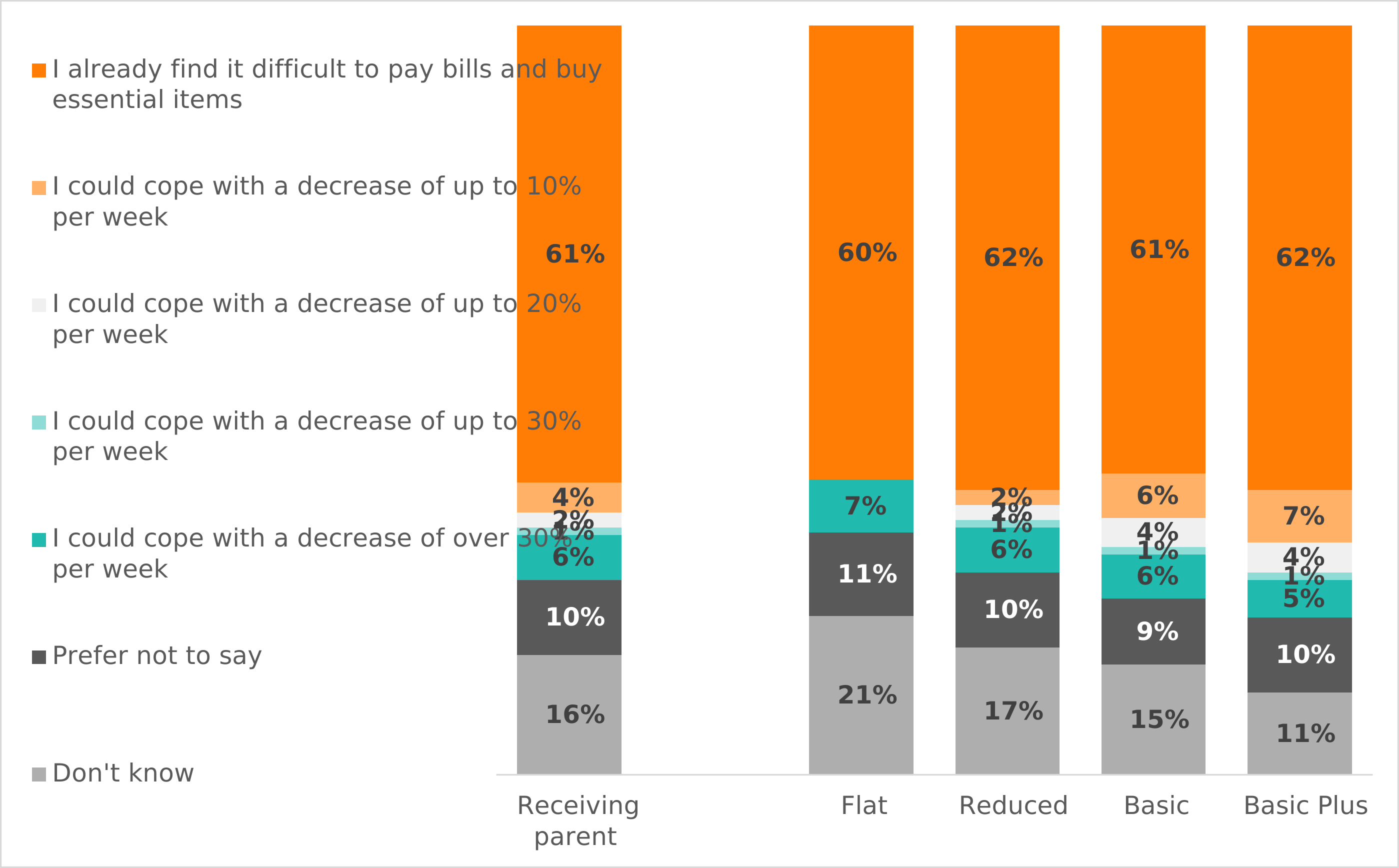
Source: QDECREASERISK By roughly how much would the amount of maintenance you receive per week have to decrease before it became difficult to pay for bills and essential items? Base: Receiving parents who receive more than £0 per week in CM payments (n=1612) and by basic plus (n=284), basic (n=592), reduced (n=336), and flat (n=400) rates.
Figure 3.8: impact hypothetical reductions in CM payments would have on creating financial difficulties for receiving parents
As Figure 3.8 outlines, the majority of receiving parents felt any reduction would cause them financial difficulties. Overall, around 3 in 5 (61%) said that the amount could reduce by “0 (zero): I already find it difficult to pay bills and buy essential items” and this was highly consistent for receiving parents across all the CM rates.
Additional analysis was conducted to compare the reduction in payments receiving parents stated they could cope with against a hypothetical change in liability. Around 3% of receiving parents had a hypothetical reduction in the weekly liability that roughly aligned with a reduction they said they could cope with (see Table 3.5). Around 22% had a hypothetical reduction to their weekly liability that exceeded the level of reduction they said they could cope with, and a further 50% hypothetically had no change or an increase to their weekly payments. The remaining receiving parents (26%) who answered this question either selected “prefer not to say” or “don’t know”.
Perceived impacts of hypothetical decreased liabilities for parents on the reduced rate
In the qualitative research, receiving parents generally felt that a decrease to the liabilities for those currently on the reduced rate would have a moderate impact on their household budget. Participants reported a decrease would mean thinking about how they spend their money, including food and childcare (particularly in low-income households). Participants also reported that, this in turn may have implications for the children, their wellbeing and potentially the receiving parents’ employment.
If [RP in the hypothetical scenario] can’t pay for the childcare…it’ll have a knock-on effect on everything else. If she can’t go to work, then she can’t pay for anything. And yeah, probably gets into debt.
(RP, reduced rate, DP,1 child)
Amongst paying parents on the reduced rate, a hypothetical decrease to the liability was seen to have the potential to ease their financial burden, making the CM payment slightly more affordable. However, these participants also felt that a decrease was likely have a negative impact for the children. Paying parents with little to no access to children or shared cared arrangements were particularly concerned that a reduction in their liability would impact their children. Paying parents on the reduced rate also felt that a decrease to the liability was likely to cause friction in the relationships with the other parent.
[A decrease] would make it a lot less stressful, and it would certainly improve my mental health no end.
(PP, reduced rate, C&P, 4 children)
Parent: receiving parent
number of children: 3
Shared care: 2 nights
CM rate: reduced rate
Compliance: DP
Employment: employed PT
This receiving parent, who works part-time and rents her home, felt a possible decrease in CM liability would have a severe negative impact on her financial stability. With 3 children (2 of whom stay with their father twice a week), she already budgets tightly and pays minimum amounts for other bills. A further reduction would force her to cut essential spending, particularly food. She described being prepared to skip meals herself to ensure her children were fed, which she felt would be necessary if liabilities were reduced.
“I guess [the impact would be] struggling to pay for things, do things or possibly buy as much food as needed, having to cut back and not eat as much so our children are fed. Actually, I’m forgetting about school dinners as well, and haven’t covered cost for that.”
Figure 3.9: qualitative research pen portrait of the negative impact of decreased liability for a receiving parent
Perceived impacts of hypothetical decreased liabilities for parents currently on the basic rate (where PP is earning less than £350 per week)
In the qualitative research, receiving parents on the basic rate (where PP is earning less than £350 per week) reported that a decrease to the liability could lead to challenging financial circumstances which would impact the whole household (especially amongst low-income households). Participants felt that a decrease would require a reconfiguration of household spending and expressed that ‘extras’ such as activities for the children were likely to be cut back on. In addition, participants cited that, as a result of changes to the household budget, a reduction in the CM liability may have a negative impact on the wellbeing of the children.
Paying parents on the basic rate (earning less than £350 per week) reported that a decrease to the liability would not only be more affordable, but it would also offer significant improvements to their quality of life. Furthermore, the paying parents with shared care or access to their children on this CM rate, cited that a decrease would allow them to pay for more activities with the children when they are in their care.
Notably, across both the reduced and basic rates, receiving parents reported the view that a reduction in liability was unlikely to improve paying parent compliance, where the paying parent was already non-compliant. Participants felt that the liability would either remain unaffordable for the paying parent, or it would not affect their willingness to comply.
The pen portraits below illustrate a range of perceived impacts amongst paying parent of a decrease to CM liability.
Parent: paying parent
Number of children: 4
Shared care: none
CM rate: reduced rate
compliance: C&P
Employment: employed
This paying parent has 4 children, 3 living with the receiving parent and one living with him. The child in his care has disabilities and requires regular hospital visits. Currently he struggles to manage both household costs and CM payments and is resentful that the other parent can afford lots of holidays. A decrease in CM liability would ease the financial pressure he faces, enabling him to afford taxis for hospital appointments and absorb lost wages from time off work, ultimately improving the quality of care for the child living with him.
“With [my son] being special needs and with delays, he has to visit hospitals quite often. [a decrease in CM liability] gives us money for me to stay in hospital with him and lose wages. If there was an incident at school, it would give me money to have in the bank to get a taxi up to his school to be there straight away, rather than having to wait for buses.”
Figure 3.10: qualitative research pen portrait of the positive impact of a decrease to CM liability for a paying parent
Parent: paying parent
Number of children: 2
Shared care: none
CM rate: reduced rate
Compliance: C&P
Employment: employed
This paying parent has a strained relationship with the other parent, involving ongoing court proceedings, and currently has no contact with his 2 children. Although a reduction in liability would ease his financial burden slightly, allowing him to save a small amount, the parent expressed concern that it could exacerbate tensions with the other parent. He fears she would manipulate the children and further alienate them from him.
“[I’m] dealing with a toxic ex that divulges everything to the kids. Kids might come out with sort of questions like, ‘why don’t you pay my money for this?’ and all that sort of shenanigans.”
Figure 3.11: qualitative research pen portrait of the mixed impact of decreased liability for a paying parent
Reactions to hypothetical increased liabilities
Hypothetical increases to CM liabilities received a mixed response from paying parents. Broadly, paying parents were not keen to see liability increases, for a range of reasons, but felt it was their obligation to pay what was required. However, willingness to pay often hinged on trust between the parents or evidence that an increased payment would benefit their children. Receiving parents were welcoming of impactful increases, but responses were muted where hypothetical increases were seen to be nominal.
Reactions to a hypothetical liability increase for parents on the flat rate
The tested hypothetical increase to liability for the flat rate was seen to be nominal and even evoked criticism amongst some receiving parents in the qualitative sample. Participants felt that the increased liability would remain insufficient to support the wellbeing of children.
For 2 kids, sorry, that’s 11 pounds. What can you get with that? It [doesn’t] even cover packed lunches.
(RP, flat rate, DP, 2 children)
Although, it was acknowledged by some participants that the increase may be meaningful to very low-income households. Paying parents on the flat rate expressed mixed reactions to a liability increase. Some participants felt that it was unfair, burdensome or unaffordable, however others felt it was justified by inflation. In addition, participants spontaneously expressed that their willingness to pay an increased liability was, in part, based on trust that it would benefit the children – for which some parents desired evidence. Willingness to pay an increased liability amongst flat rate paying parents was also underpinned by their view that it was their obligation, as a parent, to pay what was required of them.
The pen portrait below illustrates one flat rate receiving parent’s response to an increase to the liability.
Parent: Receiving parent
Number of children: 3 (1 she receives CM for)
Shared care: none
CM rate: flat rate
Compliance: C&P
Employment: employed
This receiving parent has 3 children and receives CM for one of them. The paying parent has no contact with the child. She felt the hypothetical increase in liability was too small to make any meaningful difference to her financial situation. She stressed that the payment would still remain far below the real cost of raising a child. She gave examples of how the additional amount might only cover minor expenses, like a portion of school lunches rather than significantly improving their child’s wellbeing.
“Yeah, it don’t really make any difference, does that? It’ll cost [the parent described in the stimulus example] over £100 in childcare a week alone. Never mind everything else, keeping the roof over the child’s head and feeding the child… I think she’d think it [the increase] were a joke.”
Figure 3.12: qualitative research pen portrait of a receiving parent’s perception of the hypothetical flat rate increase as inadequate
The quantitative research also highlighted varied reactions towards theoretical changes to the flat rate, as shown in Table 3.7. Parents were provided with the statement “paying parents earning below £100 per week, or on certain state benefits, currently pay a flat rate of £7 per week” and asked to comment if this should be changed or not. Receiving parents on the flat rate were overwhelmingly in favour of increasing the flat rate payment to above £7 per week (87%), whereas the majority of paying parents on the flat rate felt it should be kept at £7 per week. However, there was a sizeable minority of paying parents (20%) that were unsure about these theoretical changes to the flat rate threshold.
| Perceptions amongst parents in the flat rate band towards theoretical changes to the flat rate threshold | Receiving parents | Paying parents |
|---|---|---|
| Kept at £7 per week | 6% | 68% |
| Increased above £7 per week | 87% | 12% |
| Don’t know | 7% | 20% |
Source: QFLATRATE1 paying parents earning below £100 per week, or on certain state benefits, currently pay a flat rate of £7 per week. Do you think this flat rate should be…? Base: Receiving parents on the flat Rate (n=402) and paying parents on the flat Rate (n=309).
Table 3.7: perceptions amongst parents on the flat rate towards hypothetical changes to the flat rate threshold
Views towards the flat rate liability were linked to parents’ perceptions of fairness and affordability of the calculation. Most receiving parents on the flat rate (87%) felt that the payment should be increased and as discussed in Chapter 2, were also more likely than those on other rates to feel the amount they receive was unfair (as shown in Table 2.6). The majority (68%) of paying parents on the flat rate felt the payment rate should remain as it is, though a sizeable minority were undecided (20%), and some supported an increase (12%). As discussed in Chapter 2, paying parents on the flat rate were less likely than those on other rates to feel the amount they pay was unfair (as shown in Table 2.9), and they were also less likely to say it was difficult for them to consistently make CM payments (as shown in Figure 3.3).
Paying parents on the flat rate may perceive the calculation as fair and affordable partly because, by design, it is somewhat more transparent and straightforward relative to the other CM rates. The fixed £7 weekly payment also reflects their typically low-income circumstances. This interpretation is consistent with the evidence that flat rate paying parents tend to have lower and less stable incomes than those on higher rates. In line with this, this group are less likely than those on the other CM rates to feel that smaller changes in income should be considered or that calculations should be reviewed more regularly. This may reflect the relative stability of their flat rate compared with income-based rates. However, it may be likely that some parents move in and out of this CM rate due to employment or benefit changes.
Paying parents by CM rate who selected “strongly agree” towards “Smaller changes in the paying parents’ income should be taken into account in the calculation (for example, changes that are smaller than 25%”):
- flat (22%)
- reduced (24%)
- basic (25%)
- basic plus (37%)
Paying parents by CM rate who selected “strongly agree” towards “The calculation should be reviewed more regularly, to make sure it remains fair over the year”:
- flat (29%)
- reduced (29%)
- basic (32%)
- basic plus (35%)
Around two-thirds (68%) of flat rate paying parents reported that they were not in employment. They were also less likely to provide non-financial forms of care (see Figure 2.9) and to have contact with the other parent (see Figure 2.4). Despite finding the calculation more affordable and fairer than other groups, almost half (46%) said they would still find it difficult to pay even if their liability were reduced. Overall, the findings indicate that flat rate paying parents tend to have limited financial resources and less direct involvement in their children’s lives. In this context they tend to value the flat rate’s transparency and feel that the flat rate is fair given their financial circumstances.
Reactions to hypothetical liability increases for parents currently on basic rate (earning more than £350 per week) with 2 or more children
The theoretical increase to liabilities was welcomed by receiving parents on the basic rate within the qualitative sample. Participants with lower income were particularly positive about an increase to the liability, perceiving it to be fair and ‘a step in the right direction’. However, some receiving parents acknowledged that it was hard to judge if it is fair for the basic rate paying parent.
In contrast, paying parents on the basic rate felt the hypothetical increase was unfair and disproportionate. Participants felt the rate would be more than would be required by the other parent to support the children and questioned the need for an increase. Paying parents on this rate expressed reluctance to pay an increased rate. Nevertheless, many acknowledged that it was their parental obligation to meet the required payments. Their willingness to pay was often underpinned by the need to know that the CM payment would directly benefit their children.
Reactions to hypothetical liability increases for parents currently on basic plus rate with 2 or more children
Qualitative sample paying parents on the basic plus rate generally felt that the theoretical increase to liability was excessive and unreasonable. Participants also questioned the need for an increase and expressed a strong reluctance to pay an increased rate.
The pen portrait below illustrates one basic plus rate paying parent’s response to the hypothetical liability increase.
Parent: paying parent
Number of children: 2
Shared care: 2 plus overnight stays
CM rate: basic plus (>£964 per week)
Compliance: C&P
Employment: employed
This paying parent viewed his current CM liability as unfair and unaffordable, reporting that payments limited his ability to spend directly on his children during contact time. He believed the CM calculation overlooks the receiving parent’s higher income and felt financially disadvantaged as a result. In response to a theoretical increase, he suggested he might quit his current job and take a £20,000 pay cut, or even move abroad, in order to reduce or avoid payments. He framed these actions as a way to retain more resources to spend directly on his children and improve their quality of life when with him.
“It would be pointless me continuing in in my line of employment. I would then get to think about selling up.”
Figure 3.13: qualitative research pen portrait of a paying parent’s perception of unfairness and unaffordability of theoretical increased liabilities
Perceived impacts of theoretical increased liabilities
Perceived impact of a hypothetical increase to CM payments
A key objective of the quantitative research was to test the level of increase in CM payments paying parents felt they could manage before compliance became more difficult. Figure 3.14 outlines the impact of hypothetically increasing CM payments amongst paying parents who currently found payments easy to make. Those who said it was “very easy” or “somewhat easy” to pay consistently were asked a follow-up question: “By roughly how much would your child maintenance payments need to be increased per week before it became difficult to make payments consistently?”. The hypothetical increases were shown in proportion to each paying parent’s current weekly liability. For example, a parent with a £100 weekly liability would have seen options such as “an increase of less than £10 per week”, “around a £10 increase per week”, or “around a £20 increase per week”.
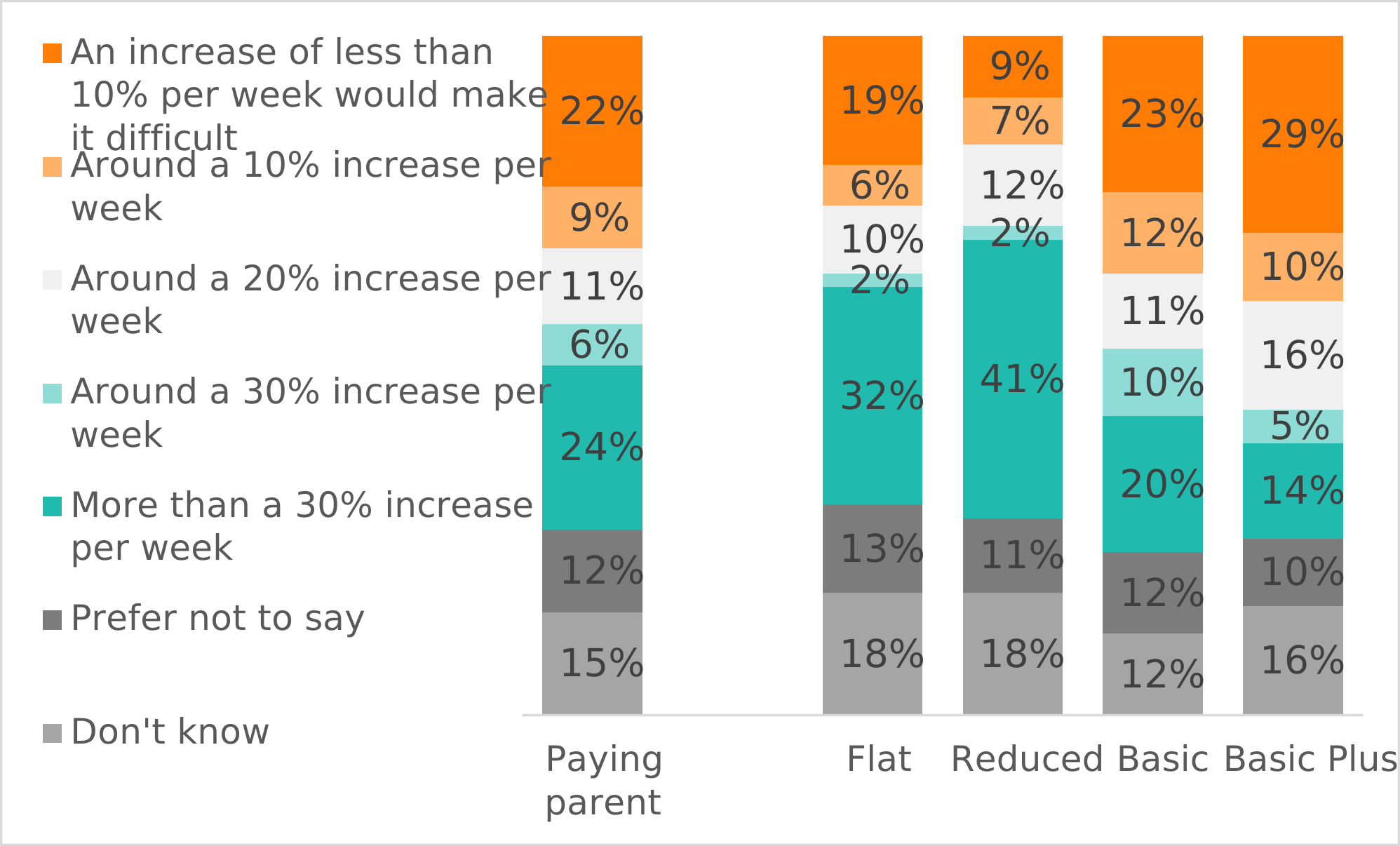
Source: QINCREASERISK By roughly how much would your CM payments need to be increased per week before it became difficult to make payments consistently? Base: Paying parents who said they find it “very easy” or “somewhat easy” to consistently make CM payments (n=431) and by basic plus (n=106), basic (n=151), reduced (n=69), and flat (n=105) rates.
Figure 3.14: impact hypothetical increases in CM payments would have on reducing compliance amongst paying parents who find it easy to consistently pay CM
As Figure 3.14 illustrates, a sizeable proportion of paying parents who currently find it easy to pay indicated that even small increases would make compliance difficult. Around 1 in 3 (31%) said that an increase of up to 10% would make consistent payment difficult. This view was more common amongst those on the higher rates (38% basic plus) compared with those on lower rates (25% flat).
Conversely, around 30% of paying parents who currently find it easy to pay said they could manage an increase of up to or greater than 30% before finding it difficult to pay consistently. This was more frequently reported by those on lower rates (34% flat) than those on the higher rates (20% basic plus).
Additional analysis assessed the alignment between the payment increases that paying parents reported they could manage and the hypothetical changes to their weekly liability presented in the test scenarios. Approximately 9% of paying parents who indicated payments were “very easy” or “somewhat easy” to make faced an increase under the hypothetical changes that was comparable to the amount they felt they could accommodate. For another 13%, the hypothetical increases tested in the research exceeded what they felt they could manage. The remaining 78% of respondents either selected “prefer not to say” or “don’t know”, or the hypothetical scenarios tested involved no change or a decrease in weekly liability.
Perceived impacts of a hypothetical liability increase for parents on the flat rate
Within the qualitative sample, receiving parents in the flat rate felt the hypothetical increase was insignificant and would have no impact, as it is insufficient to contribute to the cost of raising children in a meaningful or significant way.
Paying parents on the flat rate broadly reported a view that an increase to the liability would add to their financial struggle and stress. Participants reported that they would need to re-budget and re-evaluate what they could afford and would likely need to cut back on basics. Paying parents on the flat rate also highlighted that an increase to liabilities may mean that they need to seek out financial support.
You’ll literally burn yourself out [trying to cover increased liabilities] plus, you’re still going to be worried.
(PP, flat rate, DP, 1 child)
Perceived impacts of a hypothetical liability increase for parents currently on basic rate with 2 or more children
The hypothetical increase to the CM liability was seen to have the potential for significant positive impacts amongst receiving parents on the basic rate. Participants reported that an increase would provide financial security and improve their children’s quality of life, as well as their own. Participants with young children also highlighted that an increase to the liability may allow for (more) childcare, opening the opportunity to undertake employment or take on more work. However, receiving parents on the basic rate also acknowledged that an increase may impact the paying parents’ compliance and could cause friction in the inter-parental relationship.
The pen portrait below illustrates the perceived impacts of a hypothetical liability increase from one receiving parent on the basic rate.
Parent: receiving parent
Number of children: 3
Shared care: 2 plus nights
CM rate: basic rate (>£350)
Compliance: DP
Employment: employed
This receiving parent is an employed single mother, living with her 3 children. Her relationship with the other parent is amicable for the sake of the children but after they separated, she had to reduce her shifts at work to care for the 3 children. She explained that even a modest increase in liability would be seen as a positive and improve her ability to provide for her children’s needs. This was due to her being able to provide more in terms of school clothing, food, potentially going on holiday and her ability to pay for more childcare, allowing her to take up more shifts at work.
“It would mean that I wouldn’t struggle to buy the uniforms following returning back to school… so it would definitely be positive. In regard to paying for school meals, like that would cover the children’s school meals for the month.”
Figure 3.15: qualitative research pen portrait of the positive impact for a receiving parent of a hypothetical increase in maintenance liability
Paying parents on the basic rate felt that an increase to the liability would have serious financial impacts. Participants reported that an increase had the potential to push them into financial distress and cause substantial amount of stress, undermining their mental health. Paying parents on the basic rate also highlighted that an increase would put them at a ‘further disadvantage’, compared to that of the receiving parent, in terms of what they can provide the children outside of the CM payment.
That’s the sacrifices and the compromises for us guys that are paying a child maintenance that continues to increase and increase.
(PP, basic, C&P, 2 children)
In addition, participants also suggested that an increase to liabilities could encourage paying parents on the basic rate to find ways to reduce their taxable income.
Perceived impacts of an increase to liabilities for parents currently on basic plus rate with 2 or more children
Increases to liabilities for those currently on the basic plus rate were seen to have potential for serious impacts on paying parents. Participants reported that an increase would undermine their household financial security, their quality of life and the quality of the lives of the others in the household (including children) and would have negative impacts for the paying parents’ mental health.
Again, paying parents cited that an increase would likely lead them to consider reducing their taxable income. basic plus rate paying parents described looking to reduce their taxable income through, for example, contract reduction, a change in employment to reduce their salary, paying more into a pension. Some paying parents also reported that they would consider taking a second job without declaring their earnings.
I’d get a second job, but then you [have to] pay more maintenance, but you just get taxed more because obviously they take the calculation on your wages before tax, so you pay more tax and then pay more of that. So, some of these things are worth leaving off your file.
(PP, basic plus, DP, 2 children)
The pen portrait below illustrates 2 paying parents’ perceived impacts of the hypothetical liability increase in the basic plus rate.
Parent: paying parent
Number of children: 2
Shared care: 2 plus overnight stays
CM rate: basic plus (>£964/week)
Compliance: DP
Employment: employed
This paying parent viewed his current liability as unfair and unaffordable. He was managing outstanding court debts from custody proceedings and had increased his working days to meet repayments. However, this higher income led to an increase in his CM liability, pushing him to rely on payday loans to cover the difference. He became distressed during the interview at the (hypothetical) prospect of a further increase, fearing it would deepen his debt and financial instability. Already caught in a ‘spiral’ of loans and credit card interest, he had become resentful of the receiving parent and frustrated that his payments had not led to better access to his children. The situation had heightened his anxiety.
“When all you’re trying to do is you’re trying to pay the money, and then someone comes along and says, “well, yeah, no, you gotta pay more money,” right. OK. And you try and tell yourself that you’ll find a way. It doesn’t matter what, you’ll find a way. And you can’t. What do you do?”
Figure 3.16: qualitative research pen portrait of the affordability challenges for a paying parent of a hypothetical liability increase
Implications for policy
This chapter outlines the implications for policy identified through this research, including impacts for compliance, employment choices and interparental dynamics.
Potential implications of liability changes for compliance
Two main compliance risks emerged as a result of hypothetical increased liabilities; these were affordability and willingness to pay. In addition, the data indicates that liability reductions may ease financial pressure, making liabilities more affordable, which may lead to a greater willingness to pay. This has the potential to improve levels of compliance.
Affordability of liability changes may undermine compliance
Amongst the quantitative sample, 30% of paying parents said that their current liabilities were easy to pay consistently but further probing showed that compliance may become challenging for some of these even with small increases in CM payments. This suggests that affordability is a broad risk for paying parents. In addition, some flat and basic rate paying parents in the qualitative sample reported that they would struggle to cover higher liabilities. Furthermore, some receiving parents in the qualitative sample expressed doubt regarding the paying parents’ ability to afford a rate increase. Specifically, the qualitative research indicates that lower income, financially insecure paying parents were most at risk of missing or making CM payments late.
The pen portrait below illustrates the risk for non-compliance amongst paying parents in the qualitative sample.
Parent: paying parent
Number of children: 1
Shared care: 1 night
CM rate: flat rate
Compliance: DP
Employment: zero hours contract, leading to fluctuating income
The paying parent has arranged shared care for his child and has a good relationship with the receiving parent. He believes he has a duty to pay his CM liability and considers his current amount fair given his limited earnings. He also splits costs of school trips and uniforms with the receiving parent. He is concerned that an increase in liability would be difficult to afford. On a zero hours contract, his income is unpredictable, and he cannot guarantee additional work. If his liability increased, he would try to take on as many hours as possible, even if it meant risking burnout, but he would still worry about being able to afford CM and his essential bills.
“[…] it’s not a lot to live on a month if you’re paying rent, transport, food and all the other bills. It would be kind of a struggle.”
Figure 4.1: qualitative research pen portrait of the potential risk of non-compliance due to affordability
Willingness to pay may be undermined by increased liabilities, potentially impacting compliance
The data suggests resistance towards liability changes, and reluctance to pay liabilities in full amongst paying parents escalates with hypothetical increases in liabilities. As such, rate increases have the potential to impact compliance by undermining willingness to pay amongst paying parents. Specifically, basic and basic plus paying parents in the qualitative sample suggested that they might seek to reduce their taxable income to limit any increase in liability.
Improving compliance
The research indicates that affordability and willingness to pay underpin paying parents’ compliance with CM liabilities, and that a liability reduction may ease financial pressure. In turn, a reduction may make liabilities more affordable and may lead to a greater willingness to pay (with the potential to improve compliance). However, mixed reactions across compliant and non-compliant paying parents (DP and C&P) in the qualitative sample made it difficult to confidently gauge the likely impact on compliance. Though the findings suggest that a reduction to liabilities may support paying parents who struggle financially, decreasing liabilities seem unlikely to change intentional or entrenched non-compliance.
Indeed, receiving parents across both the reduced and basic rates presented with theoretical decreased liabilities did not feel that a reduction would improve the compliance of the paying parent. Typically, this was because receiving parents felt the rate would remain unaffordable or the decrease would not affect the paying parents’ willingness to pay.
If I’m honest, I just think he didn’t pay because he just wasn’t in the family home anymore. He didn’t have to help or support with the children, and he felt it was my responsibility. You know, he wasn’t here, so why should he pay it sort of thing.
(RP, reduced rate, C&P, 2 children)
Liability change risks for employment choices
The qualitative research suggests that a decrease in liabilities may make childcare unaffordable and limit or discourage employment amongst receiving parents, particularly those with young children. Whereas findings regarding paying parents highlight that increases to liabilities may discourage higher earnings amongst paying parents. Here participants suggested they may look for ways to reduce their taxable income or to take a second job without declaring the earnings.
These patterns were reflected in the quantitative findings, which showed that theoretical changes in CM payments would be a key consideration when paying parents made decisions about employment. Figure 4.3 demonstrates the impact of CM payments on future employment decisions. Paying parents were asked how much they would think about the amount of CM they would have to pay in future if they were considering any of these prompted changes in employment. Paying parents rated each statement on a five-point scale from “it would be the most important factor” to “I would not think about this at all”. Overall, the impact employment choices would have on CM payments was seen as an important factor to consider. Around 2 in 5 paying parents felt the amount of CM “would be the most important factor” or “would think about this a lot” when considering “applying for a (new) job” (45%), “increasing the hours you work” (43%), “reducing the hours you work or retiring early” (42%), or “looking for a promotion” (39%).
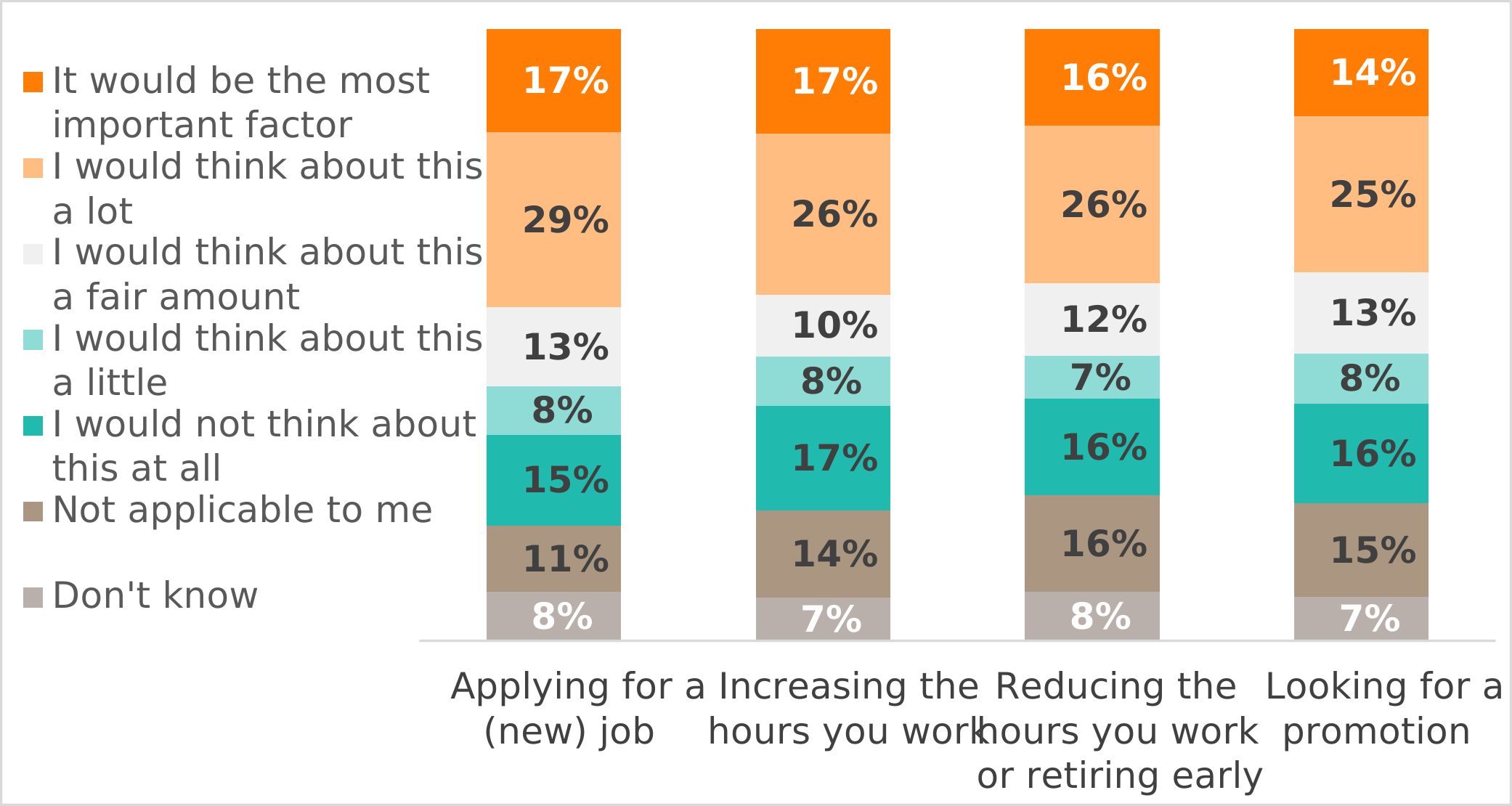
Source: QWORKCALC1 How much would you think about the amount of CM you would have to pay in future if you were considering any of the following? Base: All paying parents (n=1,605).
Figure 4.2: impact of CM payments on future employment decisions
The importance placed on the amount of CM required to pay increased as the paying parents income increased. As shown in Figure 4.4, those that selected “would be the most important factor” or “would think about this a lot” when considering “applying for a (new) job” was highest in the basic plus rate group (60%) and lowest in the flat (31%) rate group. This trend is consistent across all statements.
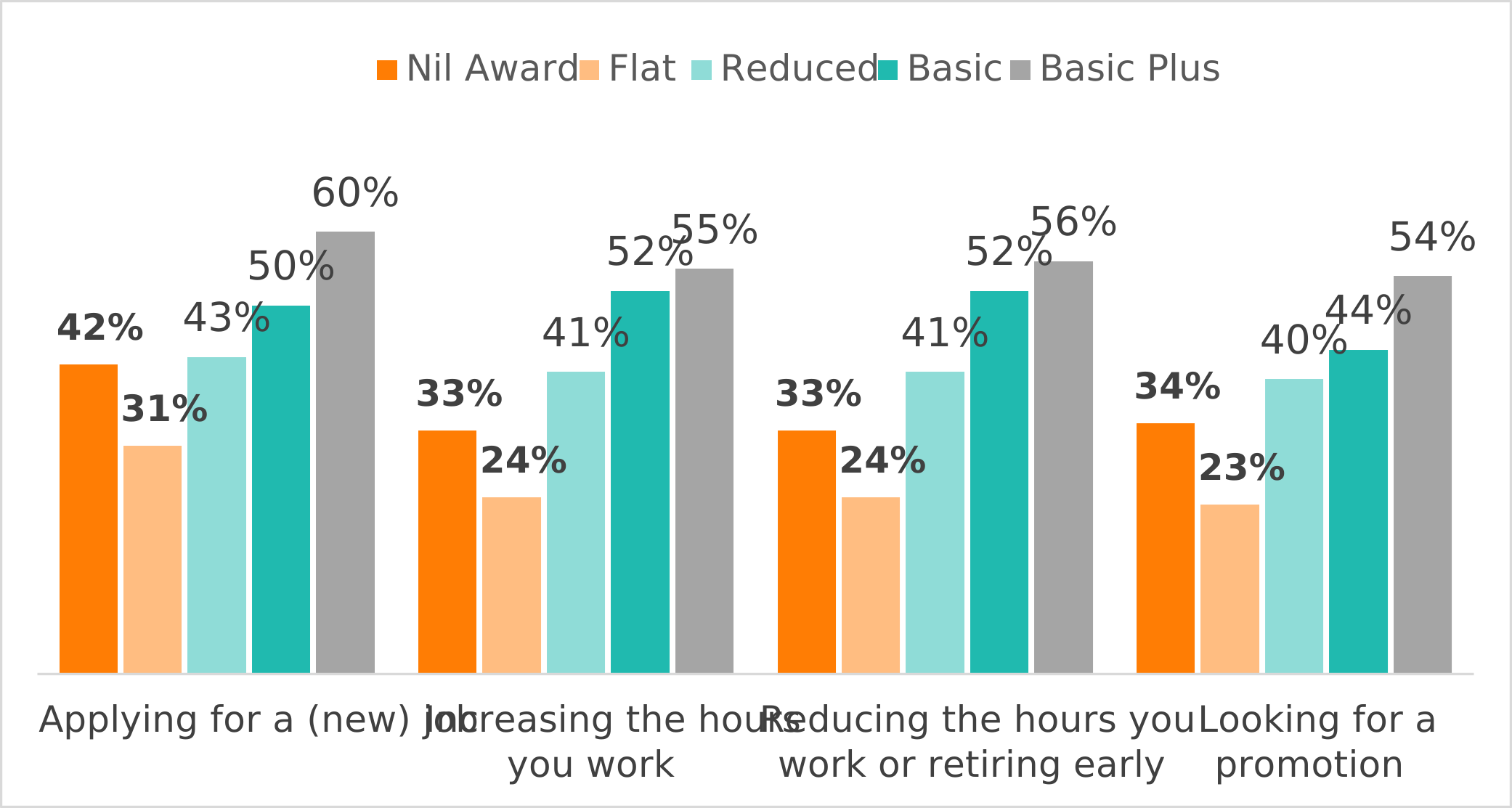
Source: QWORKCALC1 How much would you think about the amount of CM you would have to pay in future if you were considering any of the following? Base: Paying parents on the basic plus (n=324), basic (n=567), reduced (n=269), and flat (n=309) rates.
Figure 4. 3: proportions of paying parents by CM rate that stated the amount of CM they would have to pay in the future “would be the most important factor” or “would think about this a lot” when considering employment choices
Liability change risks for the interparental dynamics
The data highlights the depth of acrimony and lack of trust between parents with CM arrangements. Crucially, participants in the qualitative research feared that changes to the CM calculation could strain inter-parental relationships and communication. In addition, participants who perceived the calculations as unclear or poorly explained felt that this was a source of resentment and strain on interparental relationships. As such, both paying and receiving parents across the qualitative sample expressed concerns that theoretical changes to CM rates, if not clearly communicated, could damage cooperation, affect shared care (where this existed), and disrupt payments.
Suggestions to improve CMS communications
To mitigate the risks described above, some parents suggested improvements to CMS communications could be focused on providing timely and transparent communications. Participants spontaneously suggested that the CMS should provide timely, advance notice of any changes to liabilities or calculations to protect interparental relationships. Furthermore, the qualitative research findings highlighted that providing a transparent breakdown of how liabilities are calculated would facilitate trust and willingness to pay.
Paying parents also highlighted that reaching the CMS for support was often difficult. Participants described being unable to get through to the CMS on the phoneline and even encountering unhelpful attitudes from support staff. As such, paying parents in the qualitative sample felt that they would benefit from accessible and sympathetic support from the CMS.
There should be somebody there that you should be able to speak to.
(PP, basic plus, DP, 2 children)
Influencing factors and drivers
This chapter presents the range of influencing factors underpinning participants perceptions of CM, reactions to and perceived impacts of hypothetical liability changes together with the drivers of compliance.
Key influencing factors
The research identified a range of influencing factors shaping participants perceptions, reactions and CM related behaviours:
- individual factors included personal beliefs and experiences, such as feeling the payment amount was unfair
- social factors related to relationships and social expectations, including a sense of parental duty, interactions with the other parent, and shared care arrangements
- material factors were linked to financial circumstances, including affordability, reliance on CM, living costs, wider household responsibilities, and the impact of payments on personal finances (for example, income regularity)
Outlined below are the key factors influencing perceptions of CM arrangements and liability together with the key factors shaping reactions to, and perceptions of the potential impacts of, hypothetical liability changes.
Interparental relationships
Throughout the qualitative research, trauma from separation emerged as a key factor underpinning both paying and receiving parents’ perceptions of the CM arrangement and liability. This also impacted on willingness to pay amongst some paying parents. Across the sample, parents with cooperative relationships tended to be more content with their CM arrangement and liability, and these parents were less likely to view a liability change as a risk to the interparental relationship.
Participants with a poor or no relationship with the other parent tended to express mistrust and resentment. Indeed, receiving parents felt the other parent sought to minimise payments, whilst paying parent believed the other parent restricted shared care to maximise the liability due.
He was always going to try and get away with paying as little as possible, … but why should he get away with it? I mean, to make it fairer, he should be paying [their shared child] what he’s paying for his other children.
(RP, flat rate, C&P, 1 child)
In addition, paying parents with a poor or no relationship with the other parent tended to question whether payments were used for the children’s benefit, and often expressed reluctance to pay CM liabilities or a sense of unfairness. Furthermore, these participants, along with paying parents who felt ‘disadvantaged’, reacted most strongly when presented with theoretical liability increases.
The data also suggests that intentional non-compliance may be associated with resentment towards the other parent.
Social values
Across the qualitative sample, participants attitudes towards CM were rooted in a shared sense of parental responsibility. Both receiving and paying parents saw CM as a duty to support children and safeguard their wellbeing. Paying parents reported feeling that the CM payment was a key element of their parental responsibility – and it should always be paid even if payments felt burdensome (including C&P PP).
Obviously you have to pay. Everyone should pay. Anyone who disagrees in my eyes is wrong. But sometimes the amount you should be paying… I don’t think it’s fair sometimes.
(PP, reduced rate, DP, 3 children)
These shared values also partly informed receiving parents’ negative reactions to the hypothetical liability decreases, as a reduction was seen to lessen the other parents’ responsibilities. Whilst theoretical higher rate liability increases were often met with a strong resistance and reluctance to pay amongst paying parents, because the arrangement was perceived to be inequitable.
Affordability and adequacy of the CM liability
Perceptions of affordability and adequacy of the liability influenced participants’ views of current liabilities and theoretical changes to CM liabilities.
Paying and receiving parents who reported financial insecurity, expressed stronger negative impacts of theoretical changes to liabilities. Paying parents experiencing financial insecurity articulated more severe impacts resulting from increased liabilities than other paying parents. Equally, receiving parents experiencing financial insecurity perceived the impacts of a decrease to CM payments to be more severe than other receiving parents. However, for those with financial security (for example, having a high income, multiple incomes within the household, or access to other sources of support), this acted as a buffer to participants’ reactions to hypothetical liability changes. For example, paying parents who felt their liability was affordable, relative to income and household costs, tended to react more positively to theoretical changes than those who reported financial difficulties. Similarly, receiving parents who were less reliant on CM payments, tended to react less intensely to hypothetical changes. However, receiving parents’ reactions to, and perceived impacts of, hypothetical reduced liabilities, increased in intensity with the number of children they had.
Both paying and receiving parents expressed a view that the lower rates (flat and reduced) were inadequate to meet the costs of raising children. Consistent with this, parents typically had negative reactions to hypothetical liability changes that were seen to remain, or become, inadequate to meet the needs of the children.
Extent of caring responsibilities
The extent of caring responsibilities shaped both receiving and paying parents perceptions of the fairness CM arrangements and hypothetical liability changes. For example, receiving parents with full care (such as no formal nor informal shared care arrangements) often reported that the CM payment was an inadequate reflection of their caring responsibilities. However, receiving parents on the basic and basic plus rates with shared care arrangements tended to feel that CM payments made the overall arrangement fairer. In contrast, paying parents in the sample with shared care felt the hypothetical increases in liabilities were unfair and would deepen perceived financial inequities. In addition, paying parents who were denied access to their children, felt it was unfair to have to pay CM whilst being denied a relationship with their children.
I don’t mind paying it, but I just don’t feel like it’s fair that I have to pay, when I’m not allowed contact with her.
(PP, reduced, C&P, 1 child)
CM calculation and experiences with CMS
The research identified that the CM calculation and experiences of engaging with the CMS often affected participants’ overall perceptions of CM and reactions to hypothetical liability changes. Here, participants who felt the current parameters considered by the existing calculation were too narrow in scope (for example, not taking into account the paying parents’ wider financial circumstances, paying parents full income when self-employed, or the receiving parent’s income) tended to express stronger negative reactions to theoretical liability changes. In particular, paying parents who felt the calculation was too narrow tended to report an unwillingness to pay increases in liability.
In addition, paying parents in the sample that reported poor experiences with the CMS (such as difficulties in reaching CMS support, tone, attitude, delays in recalculation) felt that the CMS was set up to the advantage of the receiving parent. This perception led to broadly negative overall views of CM arrangements and liabilities.
I never contact them, you know, I mean, the stories you hear where you’re basically on hold for hours and all that, I would have no interest.
(PP, flat rate, DP, 1 child)
Compliance drivers
The research identified 4 key drivers of compliance and 2 primary drivers of non-compliance.
Drivers of compliance
The 4 key drivers of compliance identified by the research were: perceived duty or responsibility, conflict avoidance, access to the children and affordability of the liability.
The prevailing view amongst paying parents who CM payments were a core parental duty and a primary responsibility (including C&P paying parents), was a key driver of compliance. Indeed, almost all paying parents involved in the qualitative research said that they would pay the liability requested, even if burdensome, as they wanted to be compliant with CM requirements.
I’ll do what I have to do to pay it because I don’t want the hassle of them [CMS] on my back… it’s more hassle not to pay than what it is just to pay and shut them up.
(PP, flat rate, C&P, 1 child)
In addition, paying parents often expressed a desire to be compliant with CM requirements to avoid conflict with both the receiving parent and the CMS. Although this was not a universally held view, with some paying parents suggesting they would challenge an increased liability if they felt it was too high.
Furthermore, the data suggested that compliance was reinforced by having shared care arrangements, access or contact with the children, and a desire to maintain or improve current arrangements.
The affordability of a CM liability also emerged as a central driver of compliance. The data indicates that having stable and sufficient income (regular wages, continuous employment, disposable income, or dual-household resources) made paying liabilities easier, leading to greater reported likelihood of complying.
Drivers of non-compliance
The primary drivers of non-compliance identified in the qualitative research were willingness to pay and unaffordability. The research highlighted that willingness to pay was undermined in paying parents who felt ‘disadvantaged’ or who were denied access to their children as they often resented paying. Furthermore, paying parents who perceived the hypothetical liability increase as unfairly excessive also expressed an unwillingness to pay the increased liability in full. The findings also suggest that a lack of transparency over how payments were used by the other parent eroded trust and willingness to pay. This was particularly the case for paying parents who had little contact with the receiving parent (and children).
In addition, the research highlighted that affordability was undermined by financial insecurity, low or no income, and delays in CMS recalculations when circumstances changed. As such the findings suggest that unaffordability of CM may drive non-compliance particularly amongst paying parents with lower incomes or financial insecurity.
Non-compliance unrelated to affordability
The data suggests that intentional non-compliance may be associated with conflict and resentment towards the receiving parent.
Across the qualitative sample, receiving parents expressed a view that non-compliance amongst paying parents was often unrelated to affordability. Rather, receiving parents often reported the belief that noncompliant paying parents were simply unwilling to pay CM either at all, on time or in full.
In addition, paying parents, whilst citing a desire to be compliant and perceiving CM payments as a core responsibility, simultaneously expressed resentment towards paying CM liabilities. This resentment was often rooted in participants’ views that the CM payments were not going towards their children but were being mis-used by the receiving parent.
Furthermore, the quantitative data demonstrated that parents in DP reported higher degrees of shared care and lower levels of conflict with the other parent. In contrast, parents in C&P reported higher levels of conflict and lower levels of communication with the other parent. This suggests again that there is a link between non-compliance and relational factors.
As such, the data suggests that intentional non-compliance may be associated with resentment towards the receiving parent (rather than affordability). It is therefore less likely that any liability reductions would improve compliance amongst paying parents who are intentionally non-compliant.
Conclusions
This chapter summarises how parents viewed the existing calculation, their reactions to hypothetical liability changes and perceived impacts of those changes on compliance.
The research was commissioned by DWP to understand how parents perceived the existing CM calculation and explore how parents responded to theoretical changes to this calculation. Additionally, the study examined the possible impacts these hypothetical changes might have on compliance with CM payments, as well as on living standards and interparental behaviour to minimise undesirable outcomes for parents and children. Finally, the research investigated issues related to shared care arrangements between parents.
The study involved both quantitative and qualitative research methods. The quantitative research was based on a total of 3,355 survey responses from 1,605 paying parents and 1,750 receiving parents. The qualitative research consisted of a total of 60 in-depth interviews with parents, including 34 with paying parents and 26 with receiving parents. The interviews used stimuli with hypothetical financial circumstances and example liability changes to gauge participant reactions and encourage reflection on the potential impacts of liability changes.
Factors shaping participants’ views and reported behaviours
The research identified a range of individual, social and material influencing factors shaping participants’ perceptions, reactions and CM related behaviours. Individual factors included personal beliefs and experiences, such as feeling the payment amount was unfair. Social factors related to relationships and social expectations, including a sense of parental duty, interactions with the other parent, and shared care arrangements. Material factors were linked to financial circumstances, including affordability, reliance on CM, living costs, wider household responsibilities, and the impact of payments on personal finances (for example, income regularity).
Interparental dynamics
The research findings highlighted the often-acrimonious nature of relationships between parents using the CMS. The quantitative data indicated that levels of acrimony were linked to both the paying parent’s income and levels of communication between parents. Acrimony towards the other parent (as measured by 6 survey questions based on the PAS-25)[footnote 9] was highest from paying parents with larger incomes, whereas from receiving parents, acrimony was highest where the paying parent’s income was lower. Furthermore, although communication between surveyed parents was generally infrequent, less frequent communication was strongly associated with greater acrimony between paying and receiving parents.
Across the qualitative sample, parents with cooperative relationships tended to be more content with CM arrangements and liability, and these parents were less likely to view a theoretical liability change as a risk to the interparental relationship. Participants with poor or no relationship with the other parent tended to express mistrust and resentment. As such, the qualitative research identified trauma from separation as a key factor underpinning both paying and receiving parents’ perceptions of the CM arrangement and liability. This also impacted on willingness to pay amongst some paying parents and suggests that intentional non-compliance may be associated with resentment towards the other parent.
Parents’ understanding, and views of the existing calculation and liabilities
Understanding of the existing CM calculation was often limited or partial across the qualitative sample. The research identified that the information provided by the CMS was not always read or understood and that participants felt that the explanation of the calculation lacked clarity. Together this led to confusion and distrust of the other parent amongst participants in the qualitative sample. Furthermore, a perceived lack of transparency regarding the details of the calculation led to perceptions of unfairness as well as feelings of resentment regarding the liability.
These qualitative insights provided useful context for interpreting the quantitative findings, which also revealed wide variation in paying parents’ understanding of how CM payments were affected by changes in earnings. Similar proportions said they either fully understood, had a good understanding, or had limited understanding of how changes to income would impact their payments. Levels of understanding tended to be higher amongst paying parents who were paying via DP rather than C&P.
The research shows that many paying and receiving parents viewed their current CM liabilities as unfair, although there was variation in perceived fairness across different parent groups. The quantitative data showed that nearly half of both paying and receiving parents felt the amount they currently paid or received was very unfair. However, perceived fairness varied by the paying parent’s income band. Receiving parents in the lowest income bands (nil, flat, and reduced) were most likely to feel that payments were unfair, whereas paying parents in the highest income bands (basic and basic plus) were most likely to feel they were unfair. Receiving parents largely attributed unfairness to underreporting of income or a perception that the paying parent can afford to pay more. In contrast, paying parents primarily cited affordability issues and the failure of the calculation to account for other support they provided.
Building on these insights, the qualitative findings also outlined that participants felt that the range of factors underpinning the calculation was too narrow. Some receiving parents felt that the calculation should account for children’s ages and should not rely on declared taxable income where the paying parent was self-employed. Paying parents generally felt that the calculation ought to factor in both parents’ financial responsibilities and circumstances.
The quantitative findings highlighted that perceptions of the calculation being unfair also tended to correlate with no or equal shared care between parents and higher levels of conflict. In general, this was the case for both paying and receiving parents. However, it was complex for paying parents when examining the links between fairness perceptions, conflict and shared care. Acrimony reported by receiving and paying parents tended to decrease as shared care increased from no shared care to 2 nights per week. However, beyond 2 nights of shared care per week, where there were equal nights of shared care per week, acrimony tended to be stronger; most likely because parents were unhappy with the balance of care and financial contributions. These findings were also reflected in the qualitative findings, which suggested that this may be because paying parents with shared care felt the extent of their responsibilities were not fully recognised financially.
The qualitative research findings illustrated that reduced and flat rate liabilities were widely perceived as insufficient for children’s needs. Yet, basic and basic plus rate liabilities were sometimes perceived as excessive by paying parents.
Several factors were identified as shaping participants’ satisfaction with their existing CM arrangements including social values, the quality of the interparental relationship, the perceived fairness of the calculation or liability and perceptions of affordability and adequacy of the liability. Importantly, receiving parents were found to equate fairness with the adequacy of payments to meet the needs of the children, the costs of raising the children and the extent of their caring responsibilities. Amongst paying parents, fairness was found to be gauged by perceived affordability and, again, the extent of their caring responsibilities. The quantitative data also suggests that perceived fairness was in-part relational, with parents in high-conflict situations being more likely to feel the calculation was unfair, regardless of liability.
Insights on shared care
The research explored shared care arrangements, where paying parents receive a CM reduction for each night of the week that their children stay with them. This was to better understand the actual variation in care beyond the overnight stays officially counted by the CMS. Nearly two thirds of receiving parents and just over a third of paying parents reported that no non-financial care was provided by the paying parent. Where it was provided, this type of care varied across parent groups but was most often limited to one or two nights per week. Amongst parents who said the other parent provided overnight care, approximately 1 in 5 receiving parents reported that the paying parent provided less than one night per week, a smaller proportion of both parent groups reported 3 or more nights. Some parents had formal or informal agreements about non-financial aspects of care, but the majority had no such agreements in place.
A key finding was the divergence in care levels reported by receiving and paying parents. As a group, paying parents were much more likely to report higher levels of overnight and daytime care, while receiving parents were much less likely to say the other parent provided overnight or daytime care. In some cases, these differing perceptions extended to attempts to adjust care arrangements. Paying parents were more likely than receiving parents to say the paying parent had tried to increase the number of overnight stays. Paying parents were also more likely than receiving parents to say the receiving parent had tried to decrease the number of nights. As these findings come from 2 separate samples of receiving and paying parents rather than matched pairs, these differences should be interpreted as differences in perception rather than direct contradictions between 2 matched parents.
Attitudes toward adjusting care arrangements were strongly influenced by interwoven financial and relational factors. For instance, paying parents often reported seeking to increase overnight care to spend more time with their children, yet receiving parents frequently perceived this as an attempt to reduce the amount of CM paid. Conversely, receiving parents were more likely to report attempting to reduce overnight care due to concerns about the child’s well-being, lack of support from the paying parent, or the child’s own preferences. Paying parents often felt these concerns were financially motivated to increase the CM payment amount or represented a manipulation of care driven by relational issues. It is important to note that this research only reflects the stated perceptions and motivations of participants, and therefore it was not possible to fully validate parents’ contrasting views.
Further analysis indicated that higher liability paying parents were more likely to report non-financial shared care than those with lower liabilities. This indicates that many higher income paying parents feel heavily engaged, with many providing both financial and non-financial support. Of course, liability level alone may not fully determine engagement or compliance, but rather relationship quality and shared care may be key mediating factors. This suggests that increasing liabilities for paying parents who are already providing substantial shared care may risk increasing perceived unfairness and frustration (particularly for those parents who feel care arrangements were not adequately reflected in the calculation).
Additionally, for both paying and receiving parents in Direct Pay (DP) there tended to be higher levels of non-financial shared care and lower levels of parental conflict, compared with those in Collect and Pay (C&P). This finding may suggest that relational as well as financial factors are key in understanding non-compliance. For example, there may be a complex two-way relationship between conflict and non-compliance.
However, when examining the link between fairness perceptions and shared care, this was complex for paying parents. As mentioned above, the qualitative findings suggest that paying parents with shared care may be more likely to view the calculation as unfair because they feel the extent of their responsibilities are not fully recognised financially.
Reactions to the hypothetical liability changes
Participant reactions to the tested hypothetical changes varied substantially between paying and receiving parents and by CM rate. Receiving parents tended to respond more consistently, with particular concerns about maintaining adequate support for children if liabilities were decreased. Paying parents’ responses varied with financial security and perceived fairness and adequacy of the liability. Paying parents with greater financial insecurity tended to have stronger reactions to liability increases or decreases. In contrast, paying parents in the basic and basic plus rates, with a degree of financial security, tended to question the fairness of theoretical liability increases.
Generally, paying and receiving parents’ reactions to, and perceived impacts of, liability changes tended to be opposing, reflecting the binary dynamic of theoretical liability increases or decreases. For example, increased CM payments were broadly received positively by receiving parents but negatively by paying parents. Parents across the sample also highlighted that changes to CM liabilities may strain the inter-parental relationship, and communications with the other parent.
The qualitative research identified that perceptions of affordability and adequacy alongside shared social values influenced participants’ reactions to theoretical liability changes. For example, participants who reported financial insecurity, expressed stronger negative impacts of theoretical changes to CM liabilities. Participants’ shared values regarding parental responsibilities informed parents’ reactions to hypothetical liability changes. Receiving parents expressed negative reactions to the hypothetical liability decreases, as a reduction was seen to lessen the other parents’ responsibilities. Whilst theoretical higher rate liability increases were often met with strong resistance and reluctance to pay amongst paying parents, because the arrangement was perceived to be inequitable.
Reactions to hypothetical decreases to liabilities
Overall, in the qualitative research the tested hypothetical decreases in CM liabilities received a mixed response from paying parents, although those with shared care were more welcoming of a decrease and cited being able to spend more on the children when in their care. However, decreased liabilities were generally received negatively by receiving parents. Both paying and receiving parents felt that decreased liabilities were likely to have a negative impact on children’s welfare and wellbeing.
Hypothetical decreases to liabilities for those on the reduced rate raised alarm amongst receiving parents who felt that the reduced rate was already too low. Furthermore, receiving parents in the reduced and basic rates felt that a decrease was unfair and unethical, given the costs of raising children.
Paying parents in the reduced rate expressed a mix of concern, dismissal and welcome regarding a theoretical decrease to liabilities. Some paying parents felt it would be unethical, whilst others felt the tested hypothetical decrease would make CM payments more affordable. Similarly, paying parents on the basic rate (earning less than £350 per week) tended to express concern that a decrease in liability might take money away from the receiving parent and their children, whilst providing little to no benefit to them as the paying parent.
Reactions to hypothetical liability increases
Hypothetical increases to CM liabilities received a mixed response from paying parents. Generally paying parents were not keen to see liability increases, for a range of reasons. Specifically, the quantitative data highlighted that the majority of paying parents on the flat rate (68%) felt that the liability should not change. When presented with a hypothetical liability increase on the flat rate in the qualitative research, the majority expressed concern that an increase would be difficult to manage and would drive financial strain. Paying parents on the basic plus rate generally felt that the theoretical increase to liability was excessive and unreasonable. Despite a broad reluctance towards hypothetical liability increases, paying parents felt it was their obligation to pay what was required. However, paying parents’ willingness to pay often hinged on trust between the parents or evidence that an increased payment would benefit the children.
Receiving parents welcomed the notion of impactful increases, with nearly 9 in 10 (87%) saying the flat rate should be increased above £7 per week. However, responses were muted where hypothetical increases were seen to be nominal. The tested hypothetical increases to liability for the flat rate group were seen to be insignificant and evoked derision amongst some receiving parents in the qualitative sample.
Perceived impacts of hypothetical liability changes
Perceptions of the potential impacts of the tested liability changes were highly consistent across the basic and basic plus rates, though opposing for each parent type. Paying parents perceptions of the hypothetical flat rate increase in the qualitative research were mixed, but paying parents on the flat rate broadly reported a view that an increase to the liability would likely add to their financial struggle and stress. The hypothetical flat rate increase was seen to have little impact for the receiving parents. The more substantial hypothetical increases to liabilities tested with parents on the basic and basic plus rate were seen to drive likely financial stress for paying parents whilst offering significant improvements for basic rate receiving parents’ household budgets. Tested decreases in liabilities for reduced and basic rate parents were generally seen to moderately undermine household budgets for receiving parents’, with possible knock-on effects for the children and employment. Amongst paying parents these hypothetical decreases were seen to be likely to ease paying parents’ financial burden, offering (for some) significant improvements to their quality of life. Parents across the qualitative sample highlighted that changes to liabilities were likely to cause friction in their relationships with the other parent.
Perceived impacts of hypothetical liability decreases
The quantitative research also explored the potential impact of theoretically reducing CM payments on both paying and receiving parents. Amongst paying parents who reported difficulty making payments, most felt that even substantial reductions would not make paying consistently easier. In contrast, most receiving parents said any reduction would cause them financial hardship, highlighting the reliance of many households on this income. Across both paying and receiving parents, hypothetical liability changes rarely aligned with self-reported tolerance levels for decreases in payments.
The qualitative research found that the receiving parents who were interviewed generally felt that a decrease to the liabilities for those currently on the reduced rate would have a moderate impact on their household budget. Receiving parents on the basic rate reported that a decrease to the liability could lead to challenging financial circumstances which would impact the whole household. In both cases, participants suggested that a reduction to the household budget may, in turn, have implications for the children, their wellbeing and possibly the receiving parents’ employment.
Amongst paying parents on the reduced rate, the tested hypothetical decrease to the liability was seen to have the potential to ease their financial burden, making the CM payment slightly more affordable. However, these participants also felt that the theoretical decrease was likely to have a negative impact on their children. Paying parents on the basic rate that were interviewed reported that the tested hypothetical decrease to the liability would not only be more affordable, but it would also offer significant improvements to their quality of life and for the children when they were in their care.
The research suggests that decreased liabilities may support paying parents by easing financial pressure, making the rates more affordable, and possibly increasing willingness to pay. As such, although there are multiple influencing factors driving compliance, liability reductions may work to improve non-entrenched non-compliance amongst paying parents who struggle financially.
Perceived impacts of hypothetical liability increases
The quantitative research also explored by how much CM payments might be increased before affordability and compliance became more difficult for paying parents. Findings suggest that even modest increases in liability may make consistent payment challenging for many paying parents, particularly those in higher income bands. Although some paying parents reported that they might be able to cope with larger increases, this was most common amongst those with lower current liabilities. Overall, the findings suggest that even relatively small changes to CM payment levels may impact perceived affordability and the ability of some paying parents to remain compliant.
In the qualitative strand, both receiving and paying parents on the flat rate felt the hypothetical increase would have no meaningful impact for the receiving parent. The perceived impacts of the hypothetical increase to liabilities amongst flat rate paying parents varied. However, many flat rate paying parents reported that even a small increase to the liability would be challenging, and that larger increases would exacerbate financial pressures. Receiving parents on the basic rate felt that the hypothetical increase to the CM liability had the potential for significant positive impacts including for their children’s quality of life and for undertaking employment or taking on more work. However, paying parents on the basic and basic plus rates felt that an increase to the liability would have serious financial impacts for their households and this would undermine their mental health in a significant way.
Crucially, participants also suggested that an increase to liabilities could encourage paying parents on the basic and basic plus rates to find ways to reduce their taxable income. The research highlighted then that willingness to pay was undermined in paying parents who perceived the hypothetical liability increase as unfairly excessive.
Insights on (non-)compliance behaviour
Analysis indicates a complex relationship between liability, shared care, conflict, and compliance. Four key drivers of compliance were identified by the research - perceived duty or responsibility, conflict avoidance, access to the children and affordability of the liability. The primary drivers of non-compliance identified were willingness to pay and unaffordability. The data also suggested that intentional non-compliance may be associated with conflict and resentment towards the receiving parent.
The prevailing view amongst paying parents was that CM payments were a core parental duty, and ought to be paid even if burdensome (in part to avoid conflict). However, paying parents with lower incomes or financial insecurity were likely to be at higher risk of non-compliance, on account of affordability, particularly if liabilities were to increase beyond their means. Furthermore, receiving parents reported that liability reductions were unlikely to change non-compliance unrelated to affordability.
The qualitative data also suggested that compliance was reinforced by having shared care arrangements, access or contact with the children, and a desire to maintain or improve current arrangements. Yet, the findings also highlight that paying parents with shared care or daytime caring responsibilities often perceived liabilities to be unfair. Many felt that they don’t account for the extent of their caring responsibilities and undermine their financial capacity to provide when the children are in their care.
Reflecting on these drivers the data also suggests that CMS communication is important to minimise interparental conflict that could theoretically result from liability changes. Furthermore, the provision of more detailed information regarding the calculation may improve perceptions of fairness and willingness to pay amongst paying parents.
Finally, the data indicates that intentional non-compliance may be associated with resentment towards the receiving parent, as such liability reductions alone are unlikely to significantly reduce this type of non-compliant paying parent behaviour.
Technical annexe
This chapter presents key methodological information – a methodological description and sample for both the quantitative and qualitative research.
Methodological description
The research undertook both quantitative and qualitative research. The 2 strands of research were carried out simultaneously, due to time constraints, July-August 2025.
Strand 1: quantitative survey
The quantitative research consisted of a total of 3,355 interviews with parents, comprising 1,605 paying parents and 1,750 receiving parents. Fieldwork was conducted using a mixed-mode approach, with 2,863 interviews completed online and 492 conducted by telephone. The average duration of the survey was approximately 15 minutes for those who took part online (rising to approximately 26 minutes for those who took part in a telephone interview).
The data were weighted to ensure that the achieved sample was representative of the overall population. Weighting adjustments accounted for the intentional oversampling of key groups to enable more robust subgroup analysis. They also accounted for differences in response rates amongst sub-groups, to minimise potential non-response bias.
Descriptive statistical analysis was undertaken to explore overall patterns in the data and to identify significant differences between key subgroups, including those defined by CM rate, service type, and changes in income and liability.
Strand 2: qualitative interviews
To address the aims of the research the qualitative research consisted of a total of 60 in-depth interviews with CMS customers July-August 2025. The sample consisted of 34 with paying parents and 26 with receiving parents across the CM rates (flat, reduced, basic and basic plus). The sample also included a range in terms of the number of children, shared care arrangements, receiving parents’ income, gender, age and region. The paying parent sample also included parents paying CM directly and parents under C&P.
For the purposes of this research DP was used as a proxy for compliance and C&P for non-compliance in the absence of monitoring whether the DP arrangements are compliant. In addition, basic and basic plus rate parents with 1 child were excluded from the qualitative study because the hypothetical rates were largely not affected by calculation changes.
Interviews were one hour in duration and were conducted by telephone or Zoom. The interviews used stimuli with hypothetical financial circumstances and example liability changes to gauge participant reactions and encourage reflection on the potential impacts of liability changes.
Sub-group and thematic analysis, underpinned by the Individual Social Material (ISM) framework, was undertaken to draw out the key themes, influencing factors and drivers of (non)compliance.
Research sample
Quantitative sample
The quantitative strand included a total of 3,355 respondents. The profiles of the interviewed samples of paying and receiving parents are summarised in tables 7.1 and 7.2 below. Note income figures presented in the sample tables show gross income per week of the paying parent in the CMS arrangement.
| Total paying parents | N=1605 | ||
|---|---|---|---|
| Strata | Online completes | Telephone completes | Total completes |
| PAYING basic plus; 1 Child; Over £964 | 84 | 2 | 86 |
| PAYING basic plus; 1 Child; Under £964 | 68 | 4 | 72 |
| PAYING basic plus; 2+ Children; Over £964 | 86 | 1 | 87 |
| PAYING basic plus; 2+ Children; Under £964 | 77 | 2 | 79 |
| PAYING basic; 1 Child; Over £400; C&P | 43 | 2 | 45 |
| PAYING basic; 1 Child; Over £400; DP | 126 | 5 | 131 |
| PAYING basic; 1 Child; Under £400; C&P; no UC | 28 | 4 | 32 |
| PAYING basic; 1 Child; Under £400; C&P; UC | 38 | 2 | 40 |
| PAYING basic; 1 Child; Under £400; DP; no UC | 26 | 10 | 36 |
| PAYING basic; 1 Child; Under £400; DP; UC | 53 | 5 | 58 |
| PAYING basic; 2+ Children; Over £400; C&P | 33 | 0 | 33 |
| PAYING basic; 2+ Children; Over £400; DP | 86 | 4 | 90 |
| PAYING basic; 2+ Children; Under £400; C&P; no UC | 20 | 2 | 22 |
| PAYING basic; 2+ Children; Under £400; C&P; UC | 7 | 0 | 7 |
| PAYING basic; 2+ Children; Under £400; DP; no UC | 25 | 9 | 34 |
| PAYING basic; 2+ Children; Under £400; DP; UC | 35 | 4 | 39 |
| PAYING flat; with earnings | 62 | 25 | 87 |
| PAYING flat; without earnings | 131 | 91 | 222 |
| PAYING nil award (due to Shared Care reduction) | 86 | 50 | 136 |
| PAYING reduced Rate; 1 Child; C&P; no UC | 22 | 13 | 35 |
| PAYING reduced Rate; 1 Child; C&P; UC | 23 | 15 | 38 |
| PAYING reduced Rate; 1 Child; DP; no UC | 33 | 14 | 47 |
| PAYING reduced Rate; 1 Child; DP; UC | 27 | 9 | 36 |
| PAYING reduced Rate; 2+ Children; C&P; no UC | 18 | 4 | 22 |
| PAYING reduced Rate; 2+ Children; C&P; UC | 17 | 8 | 25 |
| PAYING reduced Rate; 2+ Children; DP; no UC | 27 | 11 | 38 |
| PAYING reduced Rate; 2+ Children; DP; UC | 22 | 6 | 28 |
Table 7.1: quantitative sample breakdown for paying parents
| Total receiving parents | N=1750 | ||
|---|---|---|---|
| Strata | Online completes | Telephone completes | Total completes |
| RECEIVING basic plus; 1 Child; Over £964 | 55 | 12 | 67 |
| RECEIVING basic plus; 1 Child; Under £964 | 63 | 2 | 65 |
| RECEIVING basic plus; 2+ Children; Over £964 | 75 | 1 | 76 |
| RECEIVING basic plus; 2+ Children; Under £964 | 72 | 4 | 76 |
| RECEIVING basic; 1 Child; Over £400; C&P | 43 | 2 | 45 |
| RECEIVING basic; 1 Child; Over £400; DP | 86 | 32 | 118 |
| RECEIVING basic; 1 Child; Under £400; C&P; no UC | 36 | 2 | 38 |
| RECEIVING basic; 1 Child; Under £400; C&P; UC | 34 | 10 | 44 |
| RECEIVING basic; 1 Child; Under £400; DP; no UC | 60 | 10 | 70 |
| RECEIVING basic; 1 Child; Under £400; DP; UC | 38 | 14 | 52 |
| RECEIVING basic; 2+ Children; Over £400; C&P | 31 | 0 | 31 |
| RECEIVING basic; 2+ Children; Over £400; DP | 57 | 20 | 77 |
| RECEIVING basic; 2+ Children; Under £400; C&P; no UC | 28 | 1 | 29 |
| RECEIVING basic; 2+ Children; Under £400; C&P; UC | 7 | 0 | 7 |
| RECEIVING basic; 2+ Children; Under £400; DP; no UC | 37 | 9 | 46 |
| RECEIVING basic; 2+ Children; Under £400; DP; UC | 34 | 1 | 35 |
| RECEIVING flat; with earnings | 133 | 8 | 141 |
| RECEIVING flat; without earnings | 253 | 8 | 261 |
| RECEIVING nil award (due to Shared Care reduction) | 117 | 19 | 136 |
| RECEIVING reduced Rate; 1 Child; C&P; no UC | 50 | 1 | 51 |
| RECEIVING reduced Rate; 1 Child; C&P; UC | 36 | 0 | 36 |
| RECEIVING reduced Rate; 1 Child; DP; no UC | 66 | 7 | 73 |
| RECEIVING reduced Rate; 1 Child; DP; UC | 25 | 8 | 33 |
| RECEIVING reduced Rate; 2+ Children; C&P; no UC | 32 | 1 | 33 |
| RECEIVING reduced Rate; 2+ Children; C&P; UC | 27 | 0 | 27 |
| RECEIVING reduced Rate; 2+ Children; DP; no UC | 41 | 11 | 52 |
| RECEIVING reduced Rate; 2+ Children; DP; UC | 24 | 7 | 31 |
Table 7.2: quantitative sample breakdown for receiving parents
| Response Rates | Sample issued | Completed interviews | Response rate |
|---|---|---|---|
| Overall | 45,000 | 3,355 | 7.5% |
| Receiving parents | 18,485 | 1,750 | 9.5% |
| Paying parents | 26,515 | 1,605 | 6.1% |
Table 7.3: quantitative response rates
Qualitative sample
The qualitative strand included a total of 60 participants. The sample for paying parents and receiving parents are set out in tables 7.3 and 7.4.
| Paying parents | N=34 |
|---|---|
| Compliant paying parent (DP) | |
| flat rate | 3 |
| reduced rate (1 child) | 1 |
| reduced rate (2 child) | 1 |
| reduced rate (3+ child) | 2 |
| basic rate (2+ children) | 3 |
| basic plus rate (2+ children) | 5 |
| Non-Compliant paying parent (C&P) | |
| flat rate | 3 |
| reduced rate (1 child) | 3 |
| reduced rate (2 child) | 3 |
| reduced rate (3+ child) | 3 |
| basic rate (2+ children) | 5 |
| basic plus rate (2+ children) | 2 |
| Number of children | |
| One child | 8 |
| Two children | 19 |
| Three of more children | 7 |
| Paying parent income | |
| With earnings | 3 |
| Without earnings | 3 |
| Below £350 a week | 5 |
| Above £350 a week | 3 |
| Below £964 a week | 3 |
| Above £964 a week | 4 |
| reduced rate 1,2,3+ children | 13 |
| Secondary criteria | |
| UC benefits | |
| reduced rate paying parent receiving UC | 6 |
| reduced rate paying parent not receiving UC | 3 |
| reduced rate paying parent receiving UC | 2 |
| reduced rate paying parent not receiving UC | 2 |
| flat, basic, basic plus rate paying parent receiving UC | 9 |
| flat, basic, basic plus rate paying parent not receiving UC | 12 |
| Shared care | |
| No shared care adjustment | 23 |
| 1 night of shared care adjustment | 7 |
| 2+ nights of shared care adjustment | 4 |
| Age | |
| 18-34 | 8 |
| 35-54 | 26 |
| Gender | |
| Male | 32 |
| Female | 2 |
| Location | |
| East Midlands | 4 |
| London | 2 |
| North West | 2 |
| South East | 4 |
| South West | 1 |
| West Midlands | 3 |
| Yorkshire and The Humber | 5 |
| East of England | 6 |
| Scotland | 5 |
| Wales | 2 |
| Ethnicity | |
| English/ Welsh/ Scottish/ Northern Irish/ British | 31 |
| Indian | 1 |
| Pakistani | 1 |
| Caribbean | 1 |
| Disabilities and impairments | |
| Disabled under the Equality Act | 1 |
| Has impairment(s) | 5 |
| No disabilities or impairments | 28 |
Table 7.4: qualitative sample breakdown for paying parents
| Receiving parents | N=26 |
|---|---|
| Receiving parent with a compliant paying parent (DP) | |
| flat rate | 3 |
| reduced rate (1 child) | 2 |
| reduced rate (2 child) | 2 |
| reduced rate (3+ child) | 2 |
| basic (2+ children) | 4 |
| Receiving parent with a non-compliant paying parent (C&P) | |
| flat rate | 3 |
| reduced rate (1 child) | 2 |
| reduced rate (2 child) | 2 |
| reduced rate (3+ child) | 2 |
| basic (2+ children) | 4 |
| Number of children | |
| One child | 9 |
| Two children | 11 |
| Three of more children | 6 |
| Receiving parent income | |
| £400 PW /£1,733.33 PCM or less | 9 |
| Between £401 PW/£1,737.66 PCM and £700 PW/£3,033.33 PCM | 13 |
| £701 PW/£3.037.66 PCM or more | 4 |
| Secondary criteria | |
| UC benefits | |
| Receiving parent receiving UC | 21 |
| Receiving parent not receiving UC | 5 |
| Shared care | |
| No shared care adjustment | 16 |
| 1 night of shared care adjustment | 6 |
| 2+ nights of shared care adjustment | 4 |
| Age | |
| 18-34 | 8 |
| 35-54 | 18 |
| Gender | |
| Male | 1 |
| Female | 25 |
| Location | |
| London | 4 |
| North East | 3 |
| North West | 3 |
| South East | 2 |
| South West | 4 |
| West Midlands | 1 |
| Yorkshire and The Humber | 3 |
| East of England | 2 |
| Scotland | 3 |
| Wales | 1 |
| Ethnicity | |
| English/ Welsh/ Scottish/ Northern Irish /British | 22 |
| Any other White background | 1 |
| White and Black African | 1 |
| Other Asian background | 1 |
| Caribbean | 1 |
| Disabilities and impairments | |
| Disabled under the Equality Act | 3 |
| Has impairment(s) | 3 |
| No disabilities or impairments | 20 |
Table 7.5: qualitative sample breakdown for receiving parents
-
For further information please see how the Child Maintenance Service works out child maintenance. ↩
-
Child Maintenance Service Statistics available on: Stat-Xplor ↩
-
These findings reflect the experiences of participants in this research and may differ from administrative data due to differences in data sources and sample characteristics. ↩
-
Ahrons, C. R. (1981) ‘The continuing coparental relationship between divorced spouses’, The American Journal of Orthospsychiatry, Vol 51, pp 415-428 ↩
-
For paying parents who are on the flat rate, caring for a child overnight for at least 1 night per week should reduce liability to nil if it has been reported to the CMS, leading them to classified in the nil band for the purpose of this analysis. Therefore, we expect the numbers reporting agreed care to be low for the flat rate group. ↩
-
For paying parents who are on the flat rate, caring for a child overnight for at least 1 night per week should reduce liability to nil if it has been reported to the CMS, leading them to classified in the nil band for the purpose of this analysis. Therefore, we expect the numbers reporting agreed care to be low for the flat rate group. ↩
-
These findings reflect the perceptions of participants in this research and may differ from other survey and administrative data due to differences in data sources and sample characteristics. ↩
-
These findings reflect the perceptions of participants in this research and may differ from other survey and administrative data due to differences in data sources and sample characteristics. ↩
-
Parental Acrimony Scale. ↩