Executive summary and recommendations (accessible version)
Published 4 November 2026

© Crown copyright 2026
This publication is licensed under the terms of the Open Government Licence v3.0 except where otherwise stated. To view this licence, visit nationalarchives.gov.uk/doc/open-government-licence/version/3 or write to the Information Policy Team, The National Archives, Kew, London TW9 4DU, or email: psi@nationalarchives.gov.uk.
Where we have identified any third party copyright information you will need to obtain permission from the copyright holders concerned.
This publication is available at https://www.gov.uk/government/publications/chief-medical-officers-annual-report-2026-health-in-rural-areas-and-small-towns/executive-summary-and-recommendations-accessible-version
Foreword
While most people in England live in cities, the great majority of the country’s landmass is rural, populated with people living in small towns or scattered communities. The urban majority depend on rural England, often without giving it much thought except as a very beautiful place for leisure - which it is. Some critical sectors rely on rural areas including agriculture and forestry, much of the armed forces, and several industries which need to be sited away from cities or require large amounts of land. Families associated with several of these sectors have particular health challenges.
Many people move from cities to small commuter towns when they start families, or retire to rural areas, while young adults often leave rural areas for cities to study or work. Due to this internal migration the rural population is significantly older on average than in the cities. The rural and small town population is therefore not an urban population more widely dispersed, but systematically different in a number of ways important for health and healthcare provision.
Rural poverty is often unseen, poorly measured, averaged out with more affluent areas or not registered in national statistics. Work in some important rural sectors including farming and tourism can be seasonal and low paid. Limited or non-existent public transport makes access to a car and being able to drive often essential for work.
The sparser population also means that healthcare is more spread out, with even primary care often distant, and secondary care a day’s round trip. There is also less capacity to sustain specialist services which are common in cities. The lack of regular public transport is one of the key challenges of providing health and social care in rural areas. Those who do not have a car or cannot drive due to illness may find accessing general practices difficult and secondary care (for example, outpatient clinics) even more so. Social care and health workers often rely on public transport. If people cannot drive safely, this can be much more isolating than in cities with dense public transport networks.
Set against these challenges, rural areas also have some significant inbuilt advantages for health. Communities are often stable and very supportive. Air pollution is usually minimal. There is the potential to access beautiful spaces for physical activity, although getting to the jumping-off point frequently requires a car, as walking and cycling safely on winding roads with fast traffic and no pavements is hard even for the young and fit.
General practice is even more clearly the bedrock of healthcare provision in rural and small town settings than in cities. Attracting healthcare staff can in some areas be very difficult, especially if they have young families. Rural and remote practice can require a wider range of skills and ability to work with minimal back-up from secondary care hospitals compared to city-based colleagues. Many GPs, nurses and others working in rural areas love the professional breadth and community-based care this brings, but current training often does not prepare them for this kind of medicine.
We have the opportunity to improve health and provision of care in rural areas and small towns for now. We also have to plan for the future, when the rural and small town population will be getting significantly older, while the major cities retain their current, younger demographic structure.
In the immediate future we must explore the potential for new opportunities, including telemedicine, to make the provision of some aspects of healthcare more accessible to those with limited transport a long way from secondary care. We also need to ensure we are training enough primary care medical and nursing staff to be able and want to provide care in rural and small town settings.
For national policymakers we need to recognise the ageing of the rural population makes this a national, not just a local, issue to solve, and find better ways to address the health impact of rural poverty.
For those leading the NHS and public health we must avoid assuming that models of healthcare that work in cities can simply be translated to a rural or small town setting. Training and systems need to reflect the different realities of providing healthcare in these settings.
For those undertaking the nationally important role of working in rural health we need to work together to harness new technologies, as well as ensure the voice of rural health is heard in decision-making.
Improving rural health is entirely possible and should be seen as a national investment in the future as well as the here and now.
Finally, I would like to thank the many people across the country who helped in the preparation of this report, and in particular the editor Dr Alex Thompson.
Prof Chris Whitty
Chief Medical Officer for England
Executive summary
1. Urban areas depend on rural areas and small towns, which make up most of the landmass of England. Challenges of rural and small town health should be seen as a national, not just a local, issue
Many key industries, including agriculture, forestry and military bases, need to be sited away from major cities. These include polluting and higher-risk industries and many forms of leisure, which all depend on rural areas. The permanently younger demographic shape of the major cities depends on the migration of older citizens to smaller towns. The health of rural and small town England is therefore a resource on which the rest of the country depends - and should be treated as a national issue, not just a local one.
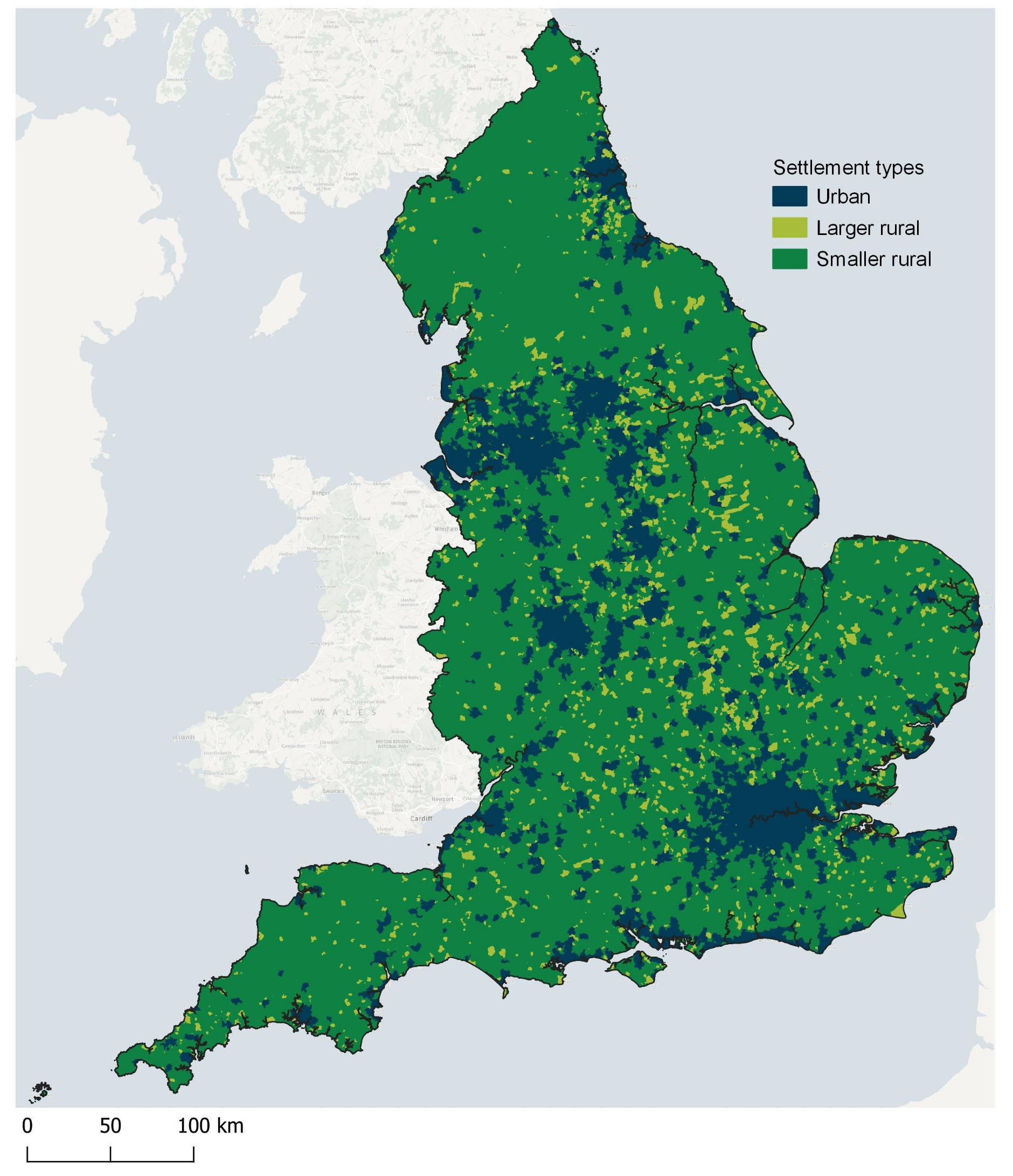
Figure 1: map of the 2021 Rural-Urban Classification (RUC) Output Area settlement type, England
Source: Office for National Statistics (ONS) licensed under the Open Government Licence v3.0. Contains Ordnance Survey (OS) data © Crown copyright and database right 2026.
Figure 1 shows that by geographical area most of England is classified as ‘Smaller rural’. Urban areas include the major towns and cities in the Midlands, South East, North West and North East. Larger rural areas appear as smaller pockets dispersed across England.
2. Rural populations are generally older and ageing more quickly than urban populations
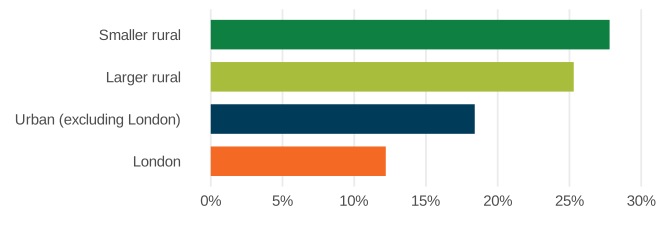
In England the geography of older age is highly skewed away from the large urban areas (figures 2 and 3), and this is likely to continue to skew further in the coming years. This process is driven by internal migration. Many people migrate away from cities before reaching older age, meaning that while metropolitan areas largely maintain their current demographic, small towns and rural settings are ageing at a much faster rate. In 2024 the percentage of adults aged 65 years and older in smaller rural settings was 28%, compared with only 12% in London (figure 4).
Different population age structures carry both significant implications for health and social care need. They also compound many of the health risks described in this report, such as challenges physically accessing healthcare services, and unsuitable housing for older people.
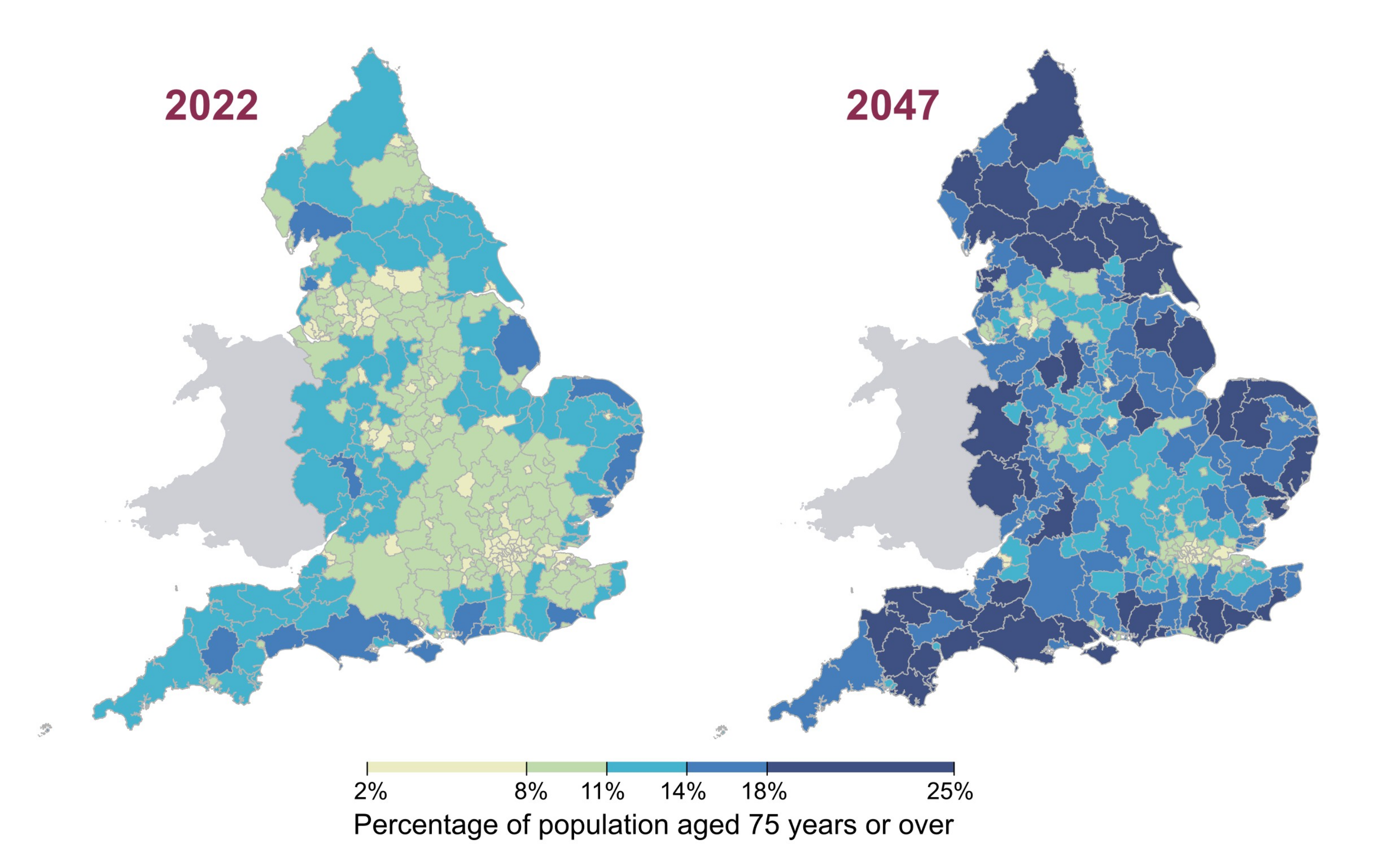
Figure 2: maps of England showing the projected change in the percentage of the population aged 75 years or over, by local authority
The data displayed is the 2022-based subnational population projections for England and does not reflect subsequent revisions to the mid-year population estimates for England.
Source: ONS licensed under the Open Government Licence v3.0. OS data © Crown copyright and database right 2026.
Figure 2 shows 2 maps of England. They present the percentage of the population aged 75 years or over in 2022, and projections for the population aged 75 years or over in 2047. In 2022, most areas have between 8% and 14% of their population aged 75 or over, with some higher percentages shown in coastal and rural settings. By 2047, percentages are projected to be higher across most of England, with many areas between 14% and 25%, particularly in coastal and rural settings.
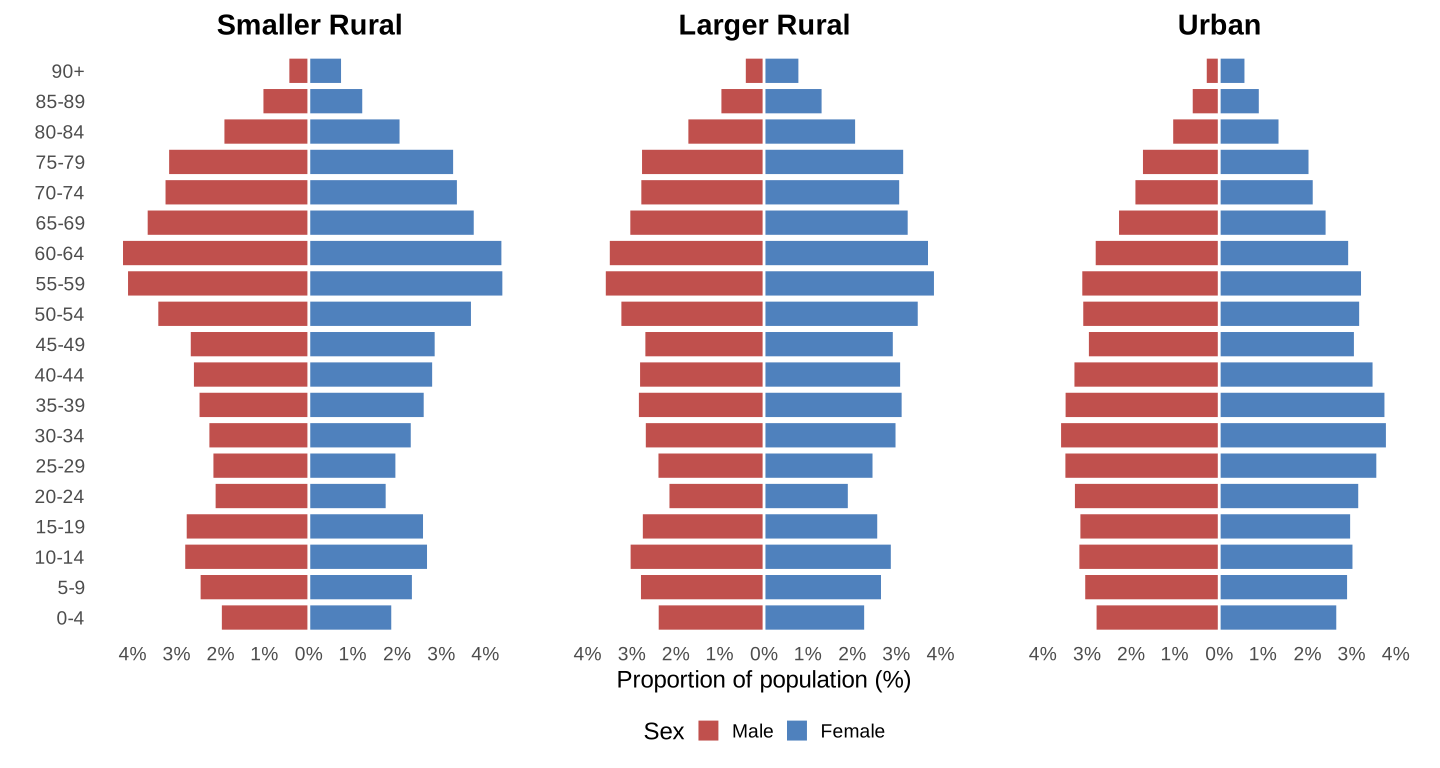
Figure 3: population pyramids for England by RUC 2021, 2024 mid-year population estimates
Source: ONS, mid-year population estimates, 2024.
Figure 3 shows 3 population pyramids comparing smaller rural, larger rural and urban areas by age and sex. Rural areas have higher proportions of older people, particularly those aged 55 to 79. Urban areas have higher proportions of younger and middle-aged people, particularly those aged 20 to 44.
Figure 4: proportion of the English population aged 65 and over, by 2021 RUC, England, based on 2024 mid-year estimates
Source: data taken from the Department for Environment, Food and Rural Affairs (Defra), Statistical Digest of Rural England - Population, 2026.
Figure 4 shows that smaller rural areas have the highest percentage of over 65s at around 28%, followed by larger rural at around 25%, urban areas excluding London at around 18%, and London at around 12%.
3. The ageing population in small towns and rural areas carries significant implications for health and social care need
As discussed in the previous Chief Medical Officer (CMO) report on health in an ageing society (2023), diseases, long-term conditions and disabilities are not an inevitable part of the ageing process. However, many medical conditions are more common in older adults, and their health and social care needs are predictably different from those of younger adults and children.
Since higher proportions of older adults reside in rural areas and many small towns, these differences in clinical need also cluster by geographical area (figure 5). Per head of population there is more need for healthcare in rural areas and small towns than in cities because of the older age group. Local provision of healthcare services must be informed by and reflect these differences in clinical need.
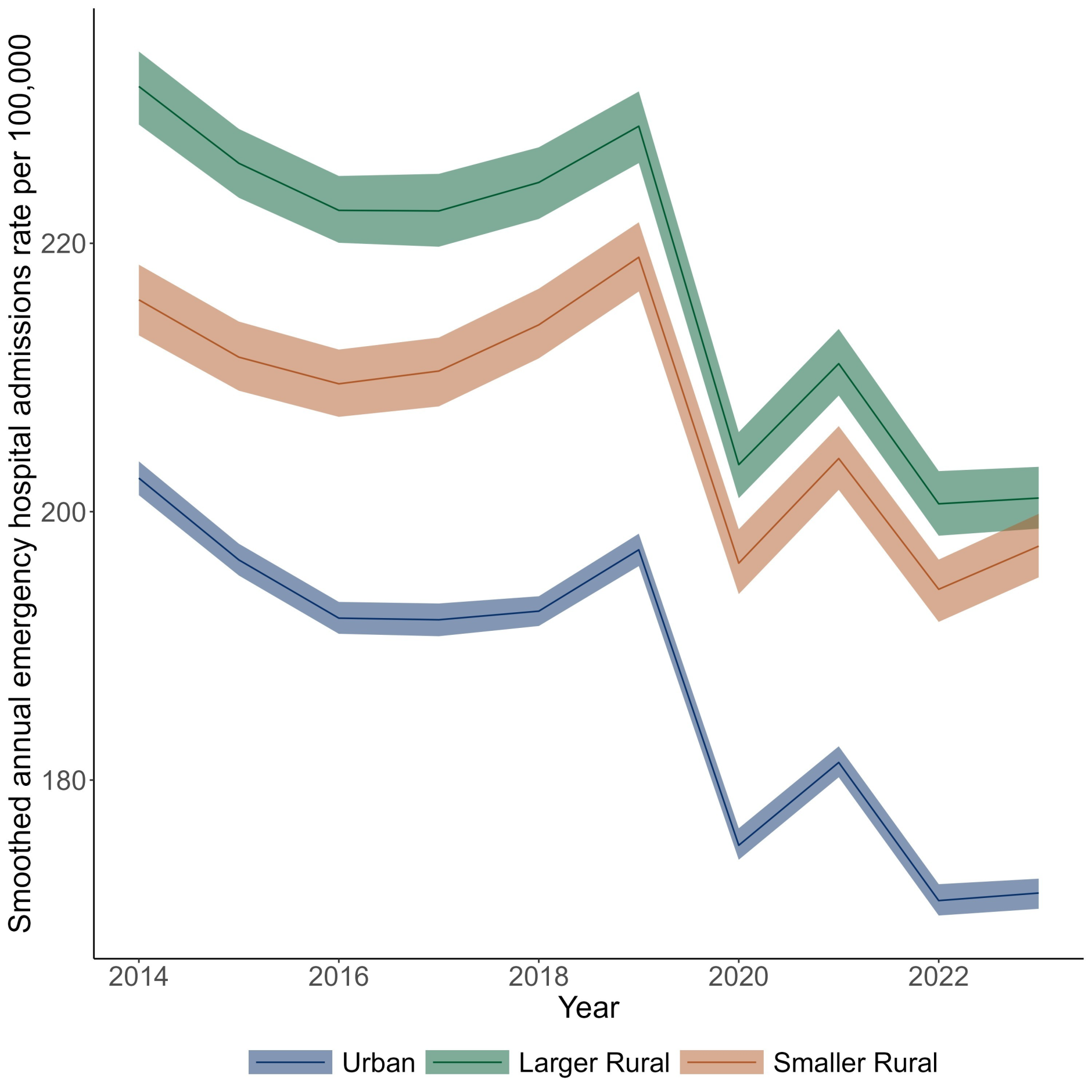
Figure 5: smoothed unadjusted annual emergency hospital admission rates for ischaemic heart disease (IHD) and 95% credible intervals per 100,000 population by geographical area, England, 2014 to 2023
Source: UK Small Area Health Statistics Unit.
Figure 5 shows that the smoothed unadjusted annual rates of emergency hospital admissions for IHD were highest in smaller and larger rural settings between 2014 to 2023. Rates in 2014 were:
- around 230 per 100,000 in larger rural areas
- around 220 per 100,000 in smaller rural areas
- around 200 per 100,000 in urban areas
Rates of emergency admissions reduced across all areas in 2019 to 2020 due to the effects of the COVID-19 pandemic.
4. Sparser populations in rural areas and many small towns face significant challenges physically accessing healthcare services, especially if reliant on public transport
Challenges physically accessing healthcare services relate both to the longer distances from residence to service (‘as the crow flies’), and the more limited local public transport infrastructure (‘as the bus drives’ - figure 6). Some of these challenges can either be overcome through careful planning (for example, organising a routine appointment around a trip into town for shopping), or mitigated through ownership of private transport.
However, the cost of maintaining private transport may be prohibitive for some residents of more deprived rural and small town communities, who already face additional barriers to healthcare access. The risks are particularly acute in medical emergencies, when even short delays can contribute to significantly poorer health outcomes.
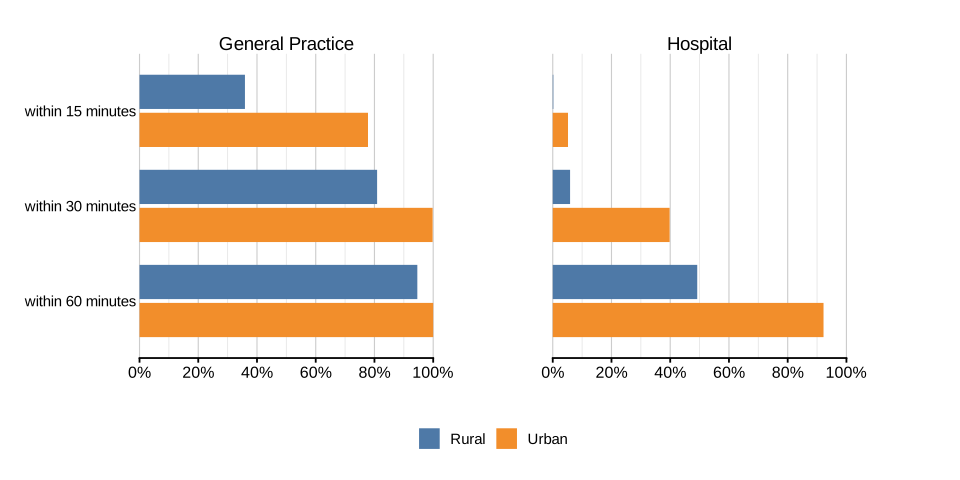
Figure 6: percentage of households able to access key health services within different journey times, by public transport or walking, by 2011 RUC, England, 2019
Source: data taken from the Defra Statistical Digest of Rural England: 5 - Connectivity and Accessibility.
Figure 6 shows the proportion of people in rural and urban areas who can reach a general practice or hospital by public transport or walking within 15, 30 and 60 minutes. Access to general practice by public transport or walking is better in urban areas at all 3 journey times, reaching 100% within 30 and 60 minutes, compared with around 80% (30 minutes) and 95% (60 minutes) in rural areas. Hospital access shows a larger difference. Around 90% of urban residents can reach a hospital within 60 minutes, compared with around 50% of rural residents.
5. Deprivation remains a significant determinant of health in rural settings but can look very different to deprivation in the major conurbations, and is often hidden in national statistics
Throughout England residents of more deprived communities have shorter life expectancies, and shorter healthy life expectancies, than populations in less deprived settings. However, there are important differences between urban and rural areas in how deprivation both manifests and appears in standard statistics. Geographical isolation, for instance, is a much more prominent factor in rural deprivation (figure 7), and this can have significant implications for young people in education and seeking employment opportunities.
Standard measures used to describe areas in terms of their relative deprivation, such as the Index of Multiple Deprivation, may not be reported down to a sufficiently granular level to capture deprivation in sparser rural settings, with concentrated pockets of more deprived neighbourhoods being averaged out. Challenges in sufficiently capturing and describing rural deprivation holds back public health progress in more deprived rural communities, as significant need is missed.
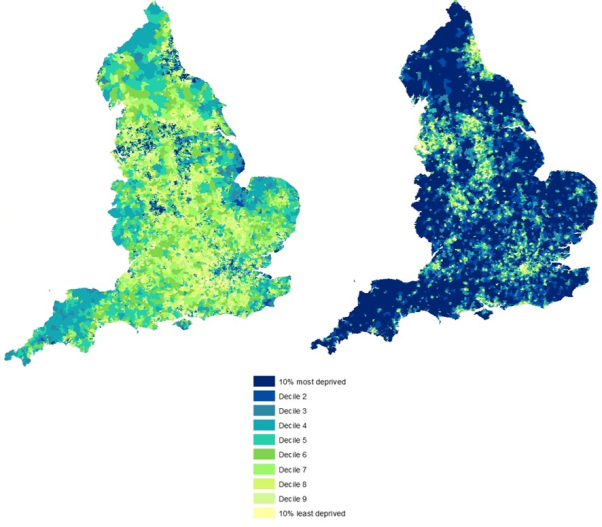
Figure 7: comparing the overall Index of Multiple Deprivation (left) and Barriers to Housing and Services Indices of Deprivation Domain (right), England, 2025
Source: data taken from the Ministry of Housing, Communities and Local Government, 2025. Maps produced by Hampshire Public Health Intelligence Team. © Crown copyright and database rights 2025 Ordnance Survey 100019180.
Figure 7 shows heatmaps of England with areas broken down into deprivation deciles for the overall Index of Multiple Deprivation, and the Barriers to Housing and Services domain. Rural areas are more commonly deprived on barriers to housing and services, with many areas in deciles 1 or 2 for this metric. However, rural areas are less likely to be deprived on the overall measure of the Index of Multiple Deprivation, with most rural areas scoring in the higher deciles (7 to 10) for this overall measure.
6. Agricultural communities have distinct patterns of health risk and face additional barriers to healthcare access
Agricultural workers face unique risks to their health and wellbeing. Working days are typically long and may involve exposure to powerful machinery, animals and chemical agents. The family nature of farming businesses means these risks may extend beyond individual workers to include their spouses, partners, parents and children. In addition to the physical health risks, poor mental health has been identified as an important and often hidden challenge in these communities. This may reflect some of the unique pressures on farmers, particularly in smaller, family-run farms, in which the farmer’s workplace, home and social and family life are all closely entwined.
Despite being at higher risk for multiple physical and mental health issues, these communities face significant barriers accessing healthcare services. They may struggle to adapt their working life around rigid provision of healthcare (for instance, taking time off for a routine appointment during lambing season), and have historically been poorly understood and supported by urban-centric healthcare provision models.
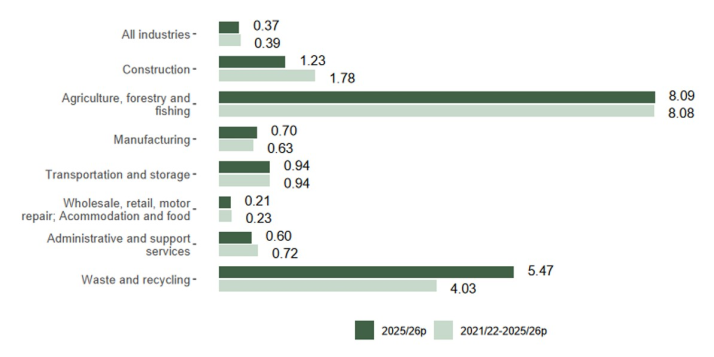
Figure 8: the rate of fatal injuries to workers per 100,000, by selected main industry group in Great Britain, 2025 to 2026 (provisional) and annual average for 2021 to 2022, to 2025 to 2026 (provisional)
‘p’ stands for provisional. Industry is defined using the 2007 Standard Industrial Classification (SIC). Agriculture, Forestry and Fishing is defined by Section A. Fatal injuries are those that the relevant enforcing authority (namely the Health and Safety Executive, local authorities, Office of Rail and Road or Office for Nuclear Regulation) have judged as reportable under the Reporting of Injuries, Diseases and Dangerous Occurrences Regulations (RIDDOR).
Source: image taken from the Health and Safety Executive, Work-related fatal injuries in Great Britain, 2026, figure 3.
Figure 8 shows that in Great Britain, the agriculture, forestry and fishing industry has the highest rate of work-related fatal injuries. The provisional rate in 2025 to 2026 was 8.09 fatal injuries per 100,000 workers. The industry with the second highest rate was waste and recycling, with 5.47 fatal injuries per 100,000 workers.
7. Military communities, often stationed in England’s rural areas, have unique healthcare needs and the highly mobile nature of their employment poses additional challenges to healthcare governance and clinical commissioning
The Armed Forces Covenant is a national commitment that service personnel, reservists, veterans and their families should not be disadvantaged because of service life. For instance, a member of the armed forces on a waiting list to see a specialist in one area should not be moved to the back of the queue if they relocate to another setting while awaiting review.
The frequent movement of personnel across administrative boundaries including national (that is, devolved administrations), local authority and integrated care board footprints, poses a logistical and administrative challenge to joined up healthcare provision for serving personnel. Interoperability challenges between Defence Primary Healthcare and NHS secondary care services also remain. Effective local partnership working and explicit consideration of military communities in NHS service design can help mitigate these challenges.
8. The geography and economy of small towns and rural areas has significant implications for the recruitment, training and practice of the health and social care workforce
Healthcare services in many of England’s small towns and rural settings face significant challenges in their workforce recruitment. This has left many services in a state of perpetual fragility, in which the loss of even one or two staff members could place the viability of the service under threat. Healthcare professionals practising in these areas also face unique challenges. These may include:
- a broader scope of clinical work arising from reduced local access to secondary care and specialist services
- greater travel requirements
- professional isolation
- more limited local opportunities for career progression
However, practitioners in rural settings also report greater opportunities to become embedded within local communities, while a less transient resident population facilitates greater continuity of care. Medical school and postgraduate training is often optimised for city practice with few or no rural or small town placements. The expansion of training rotations (figure 9) and medical student placements within small town and rural settings offers opportunities to start to address some of these challenges in the long term, although there is much work left to be done.
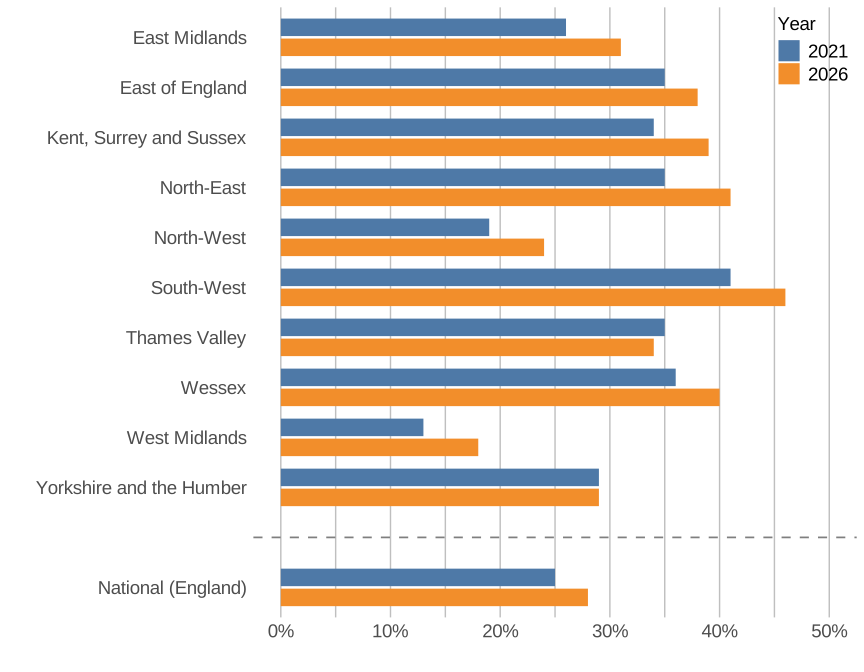
Figure 9: percentage of GP trainees undertaking a placement in a small town or rural setting by region, 2021 and 2026
Source: NHS England, 2026.
Figure 9 shows that the percentage of GP trainees experiencing a placement in a small town or rural setting has increased in most regions since 2021, and the national percentage has increased from around 25% in 2021 to around 28% in 2026. Across all regions the proportion is less than 50%, so most GPs currently in training do not undertake a placement in these settings.
9. Opportunities for digital healthcare and telemedicine are improving and are likely to continue improving in the future. However, rural populations - which have some of the greatest opportunities to benefit from these approaches - face the most significant challenges in accessing them
Because of the difficulties of physical access outlined above, telemedicine and digital services have the potential to have even greater impact in rural areas and small towns than large urban areas where physical access is easier. Telemedicine and digital services are increasingly a part of modern healthcare delivery. Improvements in the availability of high-quality broadband, and an increasing familiarity with digital service provision, mean that opportunities to deliver safe and high-quality digital healthcare are currently the greatest they have been and will likely continue to improve.
As telemedicine approaches are expanded in urban and rural settings, care must be taken to ensure patients needing or preferring in-person services in small towns and rural areas are still able to access these.
10. Current approaches to healthcare research often do not sufficiently account for rurality in their design, with evidence better describing urban populations
Geographical constraints, both real and perceived, have historically reduced meaningful engagement of rural populations in clinical research. This applies both to formal academic research undertaken by (usually city-based) universities and research institutions, and the piloting of services by the NHS and government.
Poorer engagement and participation of rural communities in clinical research results in evidence that better describes urban, rather than rural, populations. Consequently, policymakers and healthcare leaders may be poorly served in their efforts to make evidence-based decisions that best serve the health of both their urban and rural communities.
11. Community hospitals often have an important role in settings where large secondary care hospitals are distant
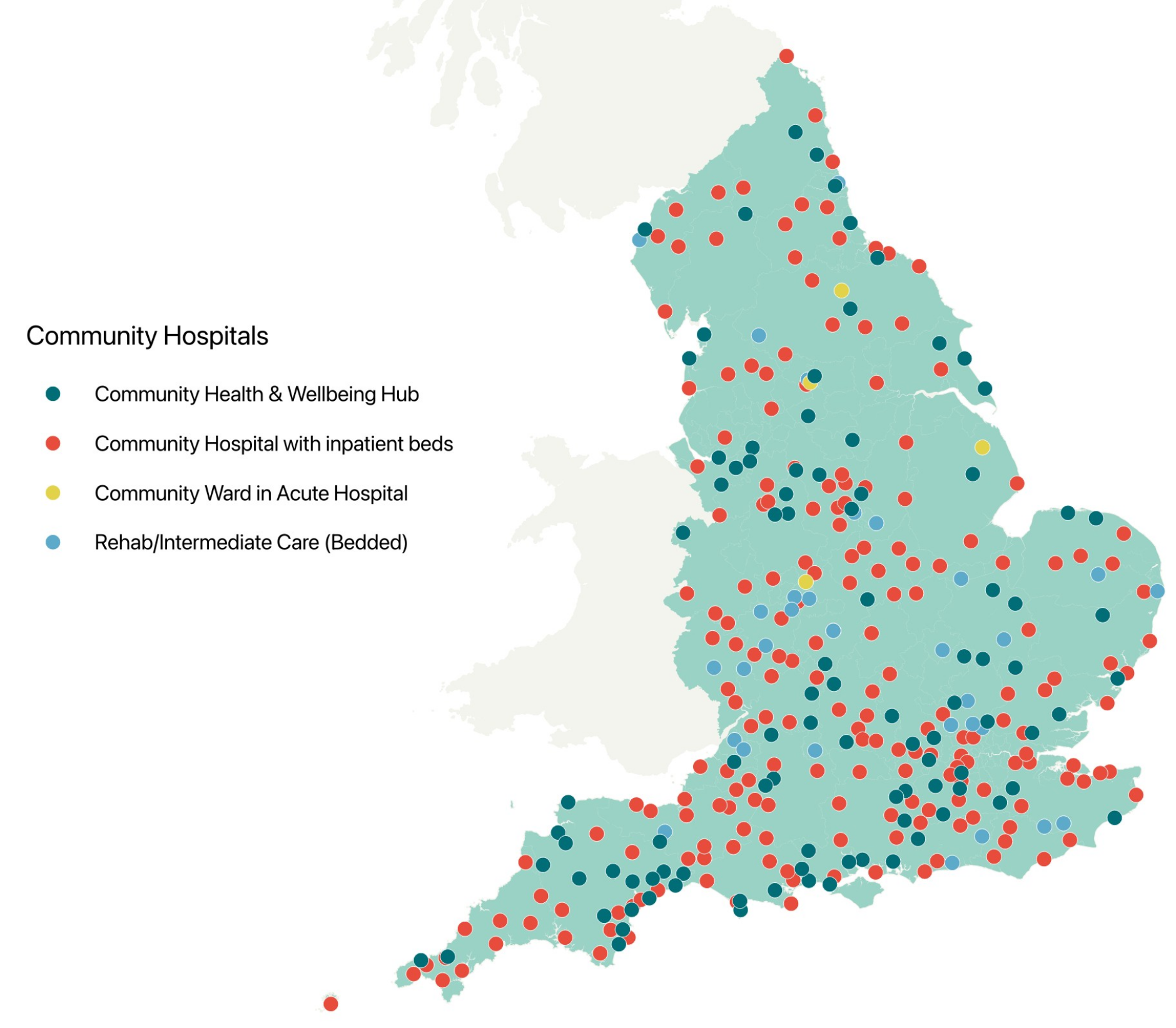
Community hospitals are small local hospitals that provide a range of services, which may include community beds, rehabilitation and intermediate care, outpatient clinics, minor injuries units, X-ray departments, maternity services and more. The community hospital network is an important way of delivering this outpatient and inpatient care in settings where transport difficulties make accessing large city-based hospitals difficult for patients, carers and relatives. They are often highly valued by their local communities.
Figure 10: map of different community hospital settings throughout England, March 2026, provisional data
Source: data provided by the Community Hospitals Association. Licensed under the Open Government Licence v3.0. Contains OS data © Crown copyright and database right 2024.
Figure 10 shows that there are a range of community hospital settings throughout England. These include community health and wellbeing hubs, community hospitals with inpatient beds, community wards in acute hospitals, and rehab or intermediate care settings.
Overall recommendations
This report makes a number of high-level recommendations intended for a range of local and national government departments, healthcare, public health and research institutions. Each has a role to play in supporting the health of communities in small towns and rural settings. More specific recommendations can be found within the individual chapters of this report which reflect the views of their respective chapter authors.
Recommendation 1
Healthcare services in rural areas and small towns must be planned and designed locally in alignment with the clinical need of their local populations, but central government and the NHS must recognise the particular challenges of rural areas and small towns as a national responsibility.
The increasing concentration of older adults in rural and small town England has, and increasingly will, lead to predictable patterns of increased healthcare need relative to major conurbations. The NHS must plan specifically for the current and projected health needs of their rural and small town populations, which are systematically different from cities.
Local decision-makers and commissioners, in partnership with their communities, are uniquely placed to tailor service provision to local needs, and they must be supported and empowered to do so as part of devolution. This does not, however, absolve national government of responsibility for planning for the predictable increasing future health challenges of rural areas and small towns.
Recommendation 2
Sparse populations and limited public transport infrastructure in rural areas pose significant challenges to equitable healthcare access. We can reduce, but not eliminate, these challenges, including through flexible appointments and telemedicine.
For the NHS, routine and planned healthcare services serving more remote areas should be flexible and adapt their appointment provision to reflect local needs. This may mean giving patients living a long way from secondary care later or more choice in their appointment scheduling, allowing them to align appointments with complex public transport availability. The health needs of agricultural workers should be met more flexibly (see ‘Specific recommendations’ below).
In many of England’s small towns and rural settings both formal and informal community transport provision is helping to meet this need, and these local approaches should be supported. For national and local government, initiatives that improve and strengthen local public transport infrastructure from rural areas and small towns to places where healthcare is provided offer a direct way of reducing inequity in healthcare access, but transport policy is beyond the scope of this report.
Recommendation 3
We should accelerate telemedicine and digital services in rural areas and small towns.
The increasing availability of high-quality broadband in many rural settings, alongside increasing public familiarity with digital-service provision, mean that telemedicine and digital care may offer a reasonable alternative to in-person appointments in many cases. Telemedicine is not a panacea, and the use of telemedicine must be clinically reasonable - delivered by appropriately trained clinical staff and in a context where physical examination is not required - and acceptable to the patient. Telemedicine to a local centre (such as GP surgery or library) where patients can be supported may be better than telemedicine to the home for many patients.
Recommendation 4
Improving our ability to identify and measure rural deprivation will help ensure public health resource is targeted towards those who will benefit most.
Current standard measures for describing areas by relative levels of deprivation are urban-optimised and reported at an insufficiently granular geographical level to capture many areas of localised rural deprivation due to sparser populations. In the short term, local public health teams can meet these gaps through careful use of local qualitative and quantitative insights, often gained through local partnerships and community engagement. In the longer term, improving statistical measures of rural deprivation should remain a priority for both government bodies such as ONS and the NHS, and academic partners.
Recommendation 5
Urban models for the recruitment, training and practice of health and social care staff sometimes translate poorly into rural settings and require adaptation for these environments.
National healthcare leaders need to plan to deliver workforces that facilitate service provision aligned with local clinical need. Healthcare professionals are more likely to work and settle near where they have trained, and so meeting this need will mean ongoing expansion of rural placements for both undergraduate and postgraduate medical and wider healthcare staff. For professional bodies and educational institutions, challenges to rural practice, including professional isolation and a perceived lack of training and career development opportunities, must be addressed. Advancing digital education technologies alongside the expansion of medical school locations to more semi-rural and rural settings should help mitigate these issues.
Specific additional recommendations
- The challenges of rural housing - often older, more poorly insulated properties - are compounded by a population that is generally older and so less resilient to the health risks associated with unsuitable housing. Home building projects in rural settings should align with the demographic projections for the local area, which are typically growth in older but not younger populations, and all homes in these areas should be capable of being adapted for older residents. Efforts to bring older rural properties up to modern health standards through retrofitting and insulation should continue and will offer public health benefits.
- General practices are the backbone of health service provision in rural areas and small towns. We must ensure that sufficient numbers of GP trainees receive appropriate training to practise in a rural area. Rural and small town GPs should be involved in commissioning decisions in their local area, as they know the needs of their local population.
- Agricultural communities have historically been poorly understood and underserved by healthcare services. A creative and flexible approach to engaging these communities, for instance flexibility in appointment times or outreach offers within local agricultural events such as marts, should help improve service access. The comparatively high rate of fatal and major injuries to agricultural workers in the workplace is a serious concern and addressing this should be a public health priority. Mental health outreach services to agricultural communities should be supported.
- A high proportion of military personnel and their families are based in rural areas and their needs must be planned for. Improving digital and clinical interoperability between defence and NHS systems will help ensure that the Armed Forces Covenant - committing that military personnel and their families are not disadvantaged as a result of their military service - is met. This could include establishing shared standards for medical records, results, clinical handover and referral tracking.
- For the general public, zoonotic diseases (infections caught directly or through vectors from animals) remain a small but real risk in England’s more rural settings. If you live in, or have been to, a rural area and have an infection serious enough to see a doctor, it is sensible to say you have been to a rural area as these infections are rare and may not otherwise be considered.
- For research funders and academic institutions, efforts to promote greater participation of rural communities in clinical research will help avoid urban-biased research evidence that translates poorly into rural settings.