Prevent Multi-Agency Panel Duty guidance: protecting people vulnerable to being drawn into terrorism (accessible)
Updated 14 October 2025

© Crown copyright 2025
This publication is licensed under the terms of the Open Government Licence v3.0 except where otherwise stated. To view this licence, visit nationalarchives.gov.uk/doc/open-government-licence/version/3 or write to the Information Policy Team, The National Archives, Kew, London TW9 4DU, or email: psi@nationalarchives.gov.uk.
Where we have identified any third party copyright information you will need to obtain permission from the copyright holders concerned.
This publication is available at https://www.gov.uk/government/publications/channel-and-prevent-multi-agency-panel-pmap-guidance/prevent-multi-agency-panel-duty-guidance-protecting-people-vulnerable-to-being-drawn-into-terrorism-accessible
© Crown copyright 2025
This publication is licensed under the terms of the Open Government Licence v3.0 except where otherwise stated. To view this licence, visit nationalarchives.gov.uk/doc/open-government-licence/version/3
Where we have identified any third party copyright information you will need to obtain permission from the copyright holders concerned.
This publication is available at www.gov.uk/official-documents
Any enquiries regarding this publication should be sent to us at: Home Office Press Office Telephone: 020 7035 3535
ISBN 978-1-916594-10-4
E03417985 05/25
Guidance for members of a panel and partners of local panels in Scotland on the duties under sections 36 and 38 Counter-Terrorism and Security Act 2015 and the provision of support for people at risk of radicalisation
Status and scope of the duty
1.This revised guidance replaces the guidance issued in February 2021. It is issued under sections 36(7) and 38(6) of the Counter-Terrorism and Security Act 2015 (the CTSA 2015) to support Prevent multi-agency panel (PMAP) members and partners of local panels. Panel members and partners of local panels must have regard to this guidance.
2. Section 36 of the CTSA 2015 sets out the duty for local authorities and partners of local panels to provide support for people vulnerable to being drawn into terrorism. In Scotland, this duty is met through Prevent multi-agency panels. For the purpose of this guidance, the term ‘Prevent multi- agency panels’ (or ‘PMAP’) refers to the local authority led support and the duty as set out in section 36 of the CTSA 2015. This is separate and distinct from police-led Prevent case management.
3. This guidance is specifically aimed at members and partners of local panels involved in the PMAP process. The list of authorities who are ‘partners’ of local panels can be found in Part 2 of Schedule 7 of the CTSA 2015 (and is replicated at Annex C of this guidance). Those authorities are required to co-operate with PMAP in the carrying out of its function under section 36 of the CTSA 2015.
The requirements of PMAP are statutory duties and it is recommended that they should be reflected in relevant local policy and guidance.
4. The purpose of this document is to:
a. provide guidance for PMAP
b. provide guidance for panel partners on PMAP delivery
c. explain why people may be susceptible to being radicalised into terrorism, committing acts of terrorism or supporting terrorism and describe indicators that suggest terrorism;
d. provide guidance on the support that can be provided to safeguard those at risk of being drawn into terrorism;
e. explain how a Prevent referral is assessed to ensure only those meeting the Prevent threshold, as met by the Prevent Assessment Framework (PAF) are progressed for support through PMAP.[footnote 1]
United Nations Conventions for Rights of the Child (UNCRC)
5. Section 6 of the UNCRC (Incorporation) (Scotland) Act 2024 makes it unlawful for a public authority to act, or to fail to act, in a way that is incompatible with the UNCRC requirements. This duty only applies in the context of a “relevant function”[footnote 2] which does not include functions conferred by Acts of Parliament. The prevent duty and duties on local authorities to set up PMAP are therefore not captured by the requirement to comply with the UNCRC.
Section 1: Prevent
6. The aim of Prevent is to reduce the threat to the UK from terrorism by stopping people becoming terrorists or supporting terrorism. Delivery of Prevent is grounded in early intervention and safeguarding.
7. The UK government remains absolutely committed to protecting freedom of expression, but preventing terrorism will mean challenging extremist ideas that are part of a terrorist ideology, including instances where there is an interest in extreme violence or mass casualty attacks. Prevent also facilitates interventions to stop people moving from extremist activity to terrorist- related activity.
8. Prevent addresses all forms of terrorism and we continue to prioritise our response according to the threat posed to our national security. The most significant of these threats is currently from terrorist activity associated with Islamist extremism. Extreme right–wing ideology is a growing threat. Other ideologies are less present, but still have the potential to motivate and/or be used to justify terrorism. The dominance of individuals or small groups acting without direction or material support from an organised terrorist group, the increasing diversity of terrorist groups overseas, and the societal impacts of technological change remain a concern.[footnote 3]
9. Prevent has three objectives in CONTEST:[footnote 4]
a. to tackle the ideological causes of terrorism;
b. to intervene early to support people to stop them from becoming terrorists or supporting terrorism; and
c. to rehabilitate those who have engaged in terrorist activity.
10. Prevent continues to monitor emerging radicalisation trends and ideologies to establish whether they represent a terrorism risk or play a role in radicalising people. Practitioners should not only be alert to extremism including certain divisive or intolerant narratives which can be reasonably linked to terrorist ideologies. Information and analysis on extremism and terrorist ideologies is available from the Commission for Countering Extremism.[footnote 5]
11\ Section 26 of the CTSA 2015 places a duty (“the Prevent duty”) on certain bodies in the exercise of their functions to have ‘due regard to the need to prevent people from being drawn into terrorism’. Separate guidance has been issued on the Prevent duty.[footnote 6]
12. Radicalisation is the process of a person legitimising support for, or use of, terrorist violence. Most people who commit terrorism offences do so of their own agency and dedication to an ideological cause.
13. There is no single pathway to being radicalised. There are many factors which can, either alone or combined, lead someone to subscribe to extremist ideology, and thereafter be drawn into or become an advocate of terrorism.
These factors often include exposure to radicalising influences, real and perceived grievances (often created or exacerbated through grievance narratives espoused by extremists), and a person’s own susceptibility.
14. One objective of Prevent is to intervene early to stop people from becoming terrorists or supporting terrorism. This means providing bespoke interventions for people who are susceptible to radicalisation. People might be susceptible to radicalisation due to a number of circumstances, needs, or other underlying factors. It should be noted that there is no single model of a person’s radicalisation journey or single profile of a radicalised person.
15. A person’s susceptibility to radicalisation may be linked to their specific vulnerabilities. A person can be vulnerable if they are in need of special care, support, or protection because of age, disability, risk of abuse or neglect. In many cases, these factors or characteristics are relevant to their susceptibility to radicalisation and to the early intervention approach that is required to divert them away from radicalisation.
16. In other cases, such specific vulnerabilities may not be present or be relevant to their general vulnerability, or susceptibility to being drawn into terrorism or to the early intervention approach required. Not all people susceptible to radicalisation will be a vulnerable person as a result of such factors, and there are other circumstances, needs, or other underlying factors that may make a person susceptible to radicalisation.
17. PMAP remains a cornerstone of Prevent in providing early intervention to those who meet the Prevent threshold. While there is no fixed profile of a terrorist, thresholds for accessing Prevent support should be applied to determine whether a person is on a pathway that could lead to becoming a terrorist or supporting terrorism. Only referrals that are subsequently assessed by police as meeting this threshold should be progressed to PMAP.
18. Prevent has adopted three pillars across the Prevent system to ensure consistency across the range of ideologies we deal with: firstly, ensuring that all activity is in support of Prevent objectives; secondly ensuring that activity takes account of the current threat picture; and finally, focussing on training and guidance for Prevent experts and practitioners. For PMAP, this means the adoption of strengthened safeguards at each stage of the Prevent pathway to ensure the application of thresholds is consistently applied. This includes:
- At referral stage - the provision of training for frontline professionals and promotion of the national referral form to raise awareness and understanding of what constitutes an appropriate quality referral and how to progress this. This form can be accessed via the Police Scotland Prevent Delivery Unit Contact.
-
At assessment – the PAF (detailed in paragraphs 97-99) will provide clear standards with routes for progression against which all referrals are assessed by Police Scotland, with training for case officers improving standards and consistent practice.
- At case management stage – The PAF extends through the life of PMAP case management so that those in receipt of PMAP support are routinely assessed to ensure they remain appropriate for PMAP or are signposted elsewhere for support where this is not the case.
19. At operational level, the PMAP quality assurance is incorporated into the overall framework for Prevent assessment in Scotland. The framework (detailed in paragraphs 28 to 33) will provide strengthened oversight in the consistent application of thresholds, with direction or targeted support deployed to address identified disparities in operational practice.[footnote 7]
20. To ensure all Prevent delivery and activity are guided by the threat, decision- making at the strategic leadership level within Homeland Security and Counter Terrorism Policing will be informed by the Security Threat Check (STC). The STC is a series of principles as set out below:
a. is this action mindful of the UK’s current terrorism and extremism threat picture?
b. is this action proportionate when placed against the UK’s current terrorism and extremism threat picture?
c. is this action likely to reduce the threat of terrorism or terrorist-adjacent narratives?[footnote 8]
21. In Scotland, the STC will be used to guide decisions made within the Prevent Sub Group, a multi-agency governance group providing strategic leadership for Scotland’s approach to diverting people at risk of becoming terrorists or supporting terrorism.
22. A Clear distinction should be made between people who present with a ‘terrorism susceptibility’ requiring PMAP support, and those who pose a ‘terrorism risk’ requiring management by the police. The process for undertaking assessments of risk and vulnerability informs this determination and is kept under review. Should there be an escalation of risk, the police may remove a case from PMAP if appropriate.
Practice example 1: ‘supporting those at risk of becoming terrorists or supporting terrorism’
The factors indicating that someone meets the threshold for Prevent and would benefit from PMAP support can be hugely variable. Whilst not exhaustive, this could include cases where people:
- are accessing extremist materials;
- are espousing scripted ideological narratives;
- are demonstrating acute and concerning behaviour changes;
- have had potentially traumatic exposure to conflict zones;
- are acutely intolerant towards people from different ethnic backgrounds, cultures or other protected traits as defined in the 2010 Equality Act.
Other complex needs can play a part in amplifying grievance narratives.
The gateway assessment undertaken by police will ultimately determine whether a person is appropriate for consideration by a PMAP.
Case study 1: interest in extreme violence or mass casualty attacks
- A young person is receiving treatment for depression, which has included suicidal thoughts.
- Child and adolescent mental health services support has identified concerns regarding an increasing interest with committing mass casualties at their school, which seems to have increased since receiving an exclusion for violent behaviour.
- The young person recently disclosed that they have been engaging in chat rooms where they have been receiving encouragement to carry out these acts.
- The desire to cause harm to self and others, interest in mass casualty attacks and potential external influences would make this a suitable case for referral into Prevent.
Section 2: Prevent multi-agency panels
23. The PMAP process was placed on a statutory footing by the CTSA 2015. It focuses on providing support at an early stage to people who are at risk of radicalisation, supporting terrorism or committing terrorist acts. Each local authority in Scotland must ensure that a PMAP is in place, having the specific functions as set out in section 36(4) of the CTSA 2015.[footnote 9] PMAP uses a multi-agency approach to:
- identify people at risk
- assess the nature and extent of that risk
- develop the most appropriate support plan for the person concerned
24. The PMAP process provides early support to anyone who is at risk of radicalisation, supporting terrorist organisations, or committing acts of terrorism regardless of age, faith, ethnicity or background. People can receive support before they begin on, or once they are on a trajectory towards participating in terrorist-related activity. Cases should not be adopted onto PMAP where no such terrorism concerns exist.[footnote 10]
25. The success of the PMAP process is dependent on the co-operation and coordinated activity of partners. It works best when the person and their families engage and are supported consistently. Further information relating to consent for PMAP support and engaging the individual can be found in Section 6 of this guidance.
26. The local authority and/or police coordinate activity by requesting relevant information from panel partners about a referred person. The police will use this information to make an initial assessment of the nature and extent of the concerns.
The information will then be presented to a PMAP once the Section 36 decision has been made.
27. The PMAP duty is intended to secure effective local co-operation and delivery of the PMAP process in all areas and to build on the good practice already operating in many areas. In practice this means:
- local authorities will have a PMAP in their area
- the local authority will appoint the PMAP chair and deputy chair
- the panel will develop a support plan for people accepted as PMAP cases
- there will be a need to ensure that the PMAP process is linked in with any safeguarding arrangements that the individual is being supported/ managed with
- where a child has been accepted as a PMAP case there must be a Child’s Plan in place to provide comprehensive support to them and their family, ensuring that any interventions delivered through PMAP are integrated into the Child’s Plan where appropriate. This should not extend to the storing of PMAP documentation (e.g. IP reports) on safeguarding systems
- where PMAP is not appropriate, the panel will consider alternative forms of support, including health and social work services (with reference to any arrangements that the individual is being supported/managed with, where in place)
- the panel will ensure that other public protection processes, such as, child protection or adult protection (which can run in parallel with, but not instead of, PMAP) are linked to the PMAP process where appropriate
- the panel will ensure accurate records are kept detailing the support plan, agreed actions, decision-making and outcomes and ensure these are securely stored according with local practices
- all partners of a panel (as specified in Part 2 of Schedule 7 of the CTSA 2015), as far as is appropriate and reasonably practicable, will co-operate with the police and the panel in the carrying out of their functions
Monitoring Prevent multi-agency panel duty compliance
28. Sections 36(7) and 38(6) of the CTSA 2015 require panels and partners to have regard to this guidance in both the exercising of panel functions and in cooperation with the panel and the police in carrying out their functions. Under section 30 of the CTSA 2015, where a specified authority has failed to discharge the duty imposed on it by section 26(1), (the Prevent duty) the Secretary of State has a power to give directions to that authority for the purpose of enforcing the performance of the duty.
29. National learning has highlighted the importance of compliance with PMAP processes to reduce the risks of people being radicalised or supporting terrorism. Monitoring and oversight responsibilities should sit as part of local governance arrangements within the local authority. These requirements are detailed further in Section 3 of this guidance.
30. Support and direction to panels and panel members will be provided by the UK and Scottish Governments to strengthen the consistency of operational practice across the UK. The framework for this support and direction includes:
- undertaking PMAP observations
- providing section 30 directions in exercising panel functions[footnote 11]
- providing advice and support
- panel member or chair training
- undertaking Prevent learning reviews to identify national learning and implement recommendations for improvement
31. Where Prevent activity has fallen short of the standards set out in this guidance, practitioners and the public may raise concerns through existing sector processes or the independent complaints function.[footnote 12]
32. Local authorities can be supported in establishing regional PMAP peer networks, to share good practice and provide an additional source of advice and mutual support.
33. Where a review is commissioned involving a person supported through PMAP, input from local Prevent practitioners, including the PMAP chair and Police Scotland should be sought to support the identification of practice improvements and shared learning. In these instances, the Home Office and Scottish government should be notified (via Police Scotland).[footnote 13] Report findings, detailing recommendations and any identified learning should also be forwarded.
Where terrorism offences or incidents of serious violence are committed by people with a Prevent history and the statutory review process is not triggered, a Prevent learning review may be undertaken by the Home Office to identify national learning and drive system improvement. Those leading on conducting the Prevent learning review should, as far as possible, ensure that it aligns with other reviews taking place and does not duplicate.
Practice example 2: monitoring compliance
- A newly appointed employee has adopted PMAP chair responsibilities in a local authority area and has observed that panel processes do not align with the national guidance.
- A self-assessment is completed with input from panel members and external input is sought from the Scottish Government and Home Office Quality Assurance team to observe the PMAP meeting.
- Recommendations for improvement are made which, along with identified areas for development within the assurance statement, are used to agree an improvement plan.
Practice example 3: monitoring compliance
An area has had no live PMAP cases for 10 months, although data checks highlight that referrals are in line with the national average. A member of the Home Office Channel Quality Assurance team attends a PMAP meeting to observe and identifies that the referrals presented for panel consideration generally met the threshold for accessing PMAP support, however, there is a reluctance from panel members to adopt cases due to perceived stigmatisation of people. Referrals are instead re-directed to alternative case management forums for discussion.
The Home Office observer makes recommendations for immediate application and suggests access to available training.
The progression of referrals is monitored at the Home Office for a period with a view to offering further support if needed. An audit of non-adopted referrals is undertaken where these did not progress to police management.
The Home Office works with Counter Terrorism Policing Headquarters to share any concerns and agree necessary steps for improvement in partnership with the local authority and police.
Disclosure and confidentiality
34. The PMAP process is a voluntary programme where the person consents to receive support to address their terrorism susceptibilities and reduce the risk to them. People should not be subject to any negative consequences as a result of their involvement in the PMAP process (unless criminality subsequently becomes apparent). Where a Prevent referral is adopted onto PMAP, insofar as possible, details of those interventions should remain confidential and should not be routinely disclosed outside the partners involved in the PMAP process.
35. While PMAP is a confidential and voluntary process, information shared for the purposes of PMAP may be subject to disclosure to a third party when it is legal and proportionate to do so, e.g. to a Sheriff court. This must be judged in the individual case.
36. Where a case also triggers safeguarding thresholds or where concerns arise involving people in positions of trust, the relevant onward referral to local safeguarding processes should be made.
For cases involving people in positions of trust, the chair will need to balance confidentiality with wider safeguarding concerns and may consider on a case- by-case basis whether there is a need to notify relevant contacts (including a person’s employer) when it is appropriate and necessary.
37. Information relating to a person’s PMAP support package, for example PMAP minutes or Intervention Provider (IP) reports, may be subject to disclosure where there is a legal requirement to do so or the law enables the disclosure to be made and the necessary conditions are met. Requests for disclosing PMAP documentation can come from several sources, including:
- courts and tribunals
- the Police Investigations & Review Commissioner
- the Procurator Fiscal
- the Scottish Children’s Reporter Administration (SCRA) Appropriate and relevant information can be shared with SCRA where it meets data protection requirements; consideration also needs to be taken in relation to confidentiality.
- individuals (as Subject Access Requests)
38. While documents such as the PAF will be controlled by the Counter Terrorism Case Officer (CTCO), members of the PMAP who receive this document may need to disclose it if required. Document disclosure should be with the agreement of the authoring organisation on advice from local information governance and legal teams. Local authorities should only hold a record of the PMAP minutes and safeguarding plan. The PAF, IP reports and all other relevant documents should not be stored on internal systems. These will all be stored securely by Police Scotland and when shared will be clearly marked that these must not be retained and stored by any other partner. The PMAP chair is responsible for ensuring that anything generated from a PMAP is managed and stored appropriately and securely and for ensuring this is clear to all panel members.
39. Where a request to disclose information is received, the purpose of the disclosure should be specified and recorded in all cases. Before disclosure is made, the request should be carefully considered to establish whether it is appropriate to disclose all or some of the information sought in all the circumstances. An informed decision should be made about how much information to disclose. In conjunction with local information governance and legal teams, consideration should be given as to what information would be lawful and appropriate to share. There should be a lawful basis for sharing information and it must be necessary and proportionate to do so. Further details are provided in Annex B.
40. PMAP partners should read a confidentiality declaration at the start of each meeting to ensure they understand and agree these principles of confidentiality. The minutes must reflect the panel members’ agreement to the confidentiality statement, which should include those partners inputting virtually.
Section 3: Requirements for Prevent multi-agency panels and partners of a panel
Requirements for panels
41. Section 36 of the CTSA 2015 places a duty on local authorities to ensure that a PMAP is in place for their area. This should constitute a single panel, with a single chair, and a single deputy chair covering the needs of both adults and children. In Scotland, panels are likely to be held in relation to one specific individual at a time, where this is manageable, and membership of the panel should be tailored accordingly.
The local authority PMAP chair and panel members should have confidence that their arrangements are appropriate to cater for the unique susceptibilities associated with those who may be at risk of supporting terrorism or committing terrorist acts.
42. As a minimum, the local authority should ensure these meetings are attended and administrated appropriately. The PMAP chair should have the contact details of relevant local partners within their area to aid their ability to call meetings at short notice if required.
43. Section 37(5) of the CTSA 2015 requires PMAP to be chaired by the responsible local authority (that is, the authority responsible for ensuring a panel is in place). Chairs and deputy chairs should therefore both be a senior local authority officer with the capacity to chair regular meetings as required. Members of the panel must include the responsible local authority and a police officer from a police area in whole or in any part of that local authority.[footnote 14] The local authority and the police have shared responsibility for the PMAP process in their area.
For these purposes, a local authority in Scotland is defined as a council constituted under section 2 of the Local Government etc. (Scotland) Act 1994.[footnote 15]
44. Section 38 of the CTSA 2015 places a duty on all partners of a panel, as far as is appropriate and reasonably practicable, to cooperate with the police and the panel in carrying out their functions under the CTSA 2015.[footnote 16] The local authority chair and the police must be present at each panel as will other members as determined by the responsible local authority (see section 37(4)). Part 2 of Schedule 7 of the CTSA 2015 lists the partners required to cooperate with the panel. If the responsible local authority chooses one of the Schedule 7 partners to be a member of the panel, there is an expectation that the partner will agree to sit on the panel if requested to do so.
45. A panel may also include such other persons as the local authority considers appropriate.[footnote 17] Depending on the nature of the referral, representatives from the following groups may be requested to sit on the panel (this is not exhaustive):
- Social work (including child and adult services and justice social work)[footnote 18]
- Local NHS Board
- Education, including schools, further education, higher education and independent schools
- Youth services
- Public Protection services (such as child protection and adult support and protection services)
- Local authority safeguarding managers[footnote 19]
- Local authority Early Intervention Services
- Home Office Border Force and Immigration Enforcement
- Housing
- Scottish Prison Service
- Secure accommodation providers
46. Organisations that are not panel partners or specified authorities under CTSA 2015 may also be expected to engage with the PMAP for the area if required.
47. Throughout the PMAP process, alignment and coordination with other safeguarding processes should be considered by the panel to address any wider safeguarding needs. Details of additional safeguarding processes are provided at Annex A of this guidance.
Determining the lead authority for PMAP
48. If a case involves two or more local authority areas (for example, if the person lives in one authority but works or attends education in another or, if a looked-after child,[footnote 20] is the responsibility of one authority but housed in another), it is expected that the lead authority for the purposes of PMAP is the authority in which the person is living, as the person will draw on services local to their place of residence. Policing responsibilities include managing risk in their respective policing area. However, there may be exceptions to this, where the child is in secure care accommodation, but has no connection to the local area so an element of discretion can be afforded in these instances.
49. This should not be affected by the person being temporarily absent from the area. Where people are temporarily placed outside of their normal place of residence, the placing authority should retain responsibility for convening the panel, including where the individual is in the prison estate outside of the area where they are ordinarily resident.[footnote 21] Where an adult is deemed to be of no settled residence, the lead authority for PMAP is then the authority where they are physically present.
Case study 2: residency and lead authority example
- A 12-year-old child is the subject of a Compulsory Supervision Order with the implementing authority named as area A, but has been placed in accommodation in area B.
- The accommodation provider has submitted a referral following concerns that the child is being influenced by radicalisers at school.
- The referral is progressed in area B, where the child now resides and is adopted by a PMAP. Social work services in area A provide consent for the child to receive PMAP support.
- The child’s social worker in area A attends or reports into the PMAP meetings and ensures the care plan is revised and updated, progressing any social work actions as needed.
- Other interventions, such as input from school and mental health support, are provided through area B.
- Area B can raise any concerns it has about the care plan direct with social work services in area A.
- Contact was made with the school to consider additional referrals and school support in relation to tackling the radicalising influences present there.
Governance
50. PMAPs are most effective when clear governance processes are in place to provide local oversight and ensure accountability. Each local authority area should determine the most appropriate governance arrangements for its PMAP.
51. Governance may include assessing compliance with PMAP duty requirements, overseeing implementation of development plans and assessing referral data and anonymised case studies to monitor performance. To ensure clear lines of accountability are maintained, it is recommended that the chair for strategic governance must not hold responsibility for elements of PMAP oversight or delivery. A process of escalation (usually to the local authority Chief Executive, who should have ultimate oversight of the functioning of PMAP), should also be agreed and disseminated to panel members, enabling concerns relating to the form or function of the PMAP in the area to be raised.
52. Details of how to raise Prevent concerns or refer someone for assessment and to receive support should be promoted locally by the local authority and partners. Where there are concerns that someone is either being radicalised or may be at risk of radicalisation, or there is a risk of them supporting terrorism or committing a terrorist act, a referral should be made to the police using the National Prevent Referral Form for assessment to determine whether support is required.[footnote 22] Questions or queries about Prevent- related concerns can be directed to the local authority Prevent Single Point of Contact (Prevent SPOC).
Section 4: Prevent multi-agency panel roles
The Counter Terrorism Case Officer
53. For the purpose of this guidance, any reference to the ‘Counter Terrorism Case Officer’ (CTCO) refers to a police officer from the Prevent Delivery Unit (PDU) within Police Scotland, who is responsible for the management of PMAP cases.
54. All CTCOs are responsible for:
- managing referrals and cases through the PMAP process in accordance with the PMAP guidance and case management principles
- ensuring that referrals are dealt with swiftly and, where appropriate, brought to the attention of the PMAP as soon as possible
- ensuring case information is kept up to date, accurately recorded and retained
- completing the initial PAF and sharing it with PMAP partners
- regularly reviewing and amending the PAF as a case progresses to accurately reflect all relevant Prevent concerns and terrorism risk.
- assessing any escalating risk associated with the person’s potential involvement in terror related activity and transferring cases to the police-led partnership or into Pursue, where appropriate[footnote 23]
55. The CTCO should attend every PMAP meeting. The chair should also consider the value of having local policing as standing members to add local context and provide local support and tactical options.
The local authority chair
56. Section 37(2) of the CTSA 2015 stipulates requirements relating to the local authority and police representatives. The local authority representative, the PMAP chair, should be a single designated officer within the responsible local authority.
57. The function of chairing a PMAP is a significant responsibility and as such the local authority chair should be a person that has the required skills and experience.[footnote 24] In practice, the local authority Chief Executive should be satisfied of this and ensure that the PMAP chair has sufficient capacity and resources to fulfil their functions. There is no expectation that the PMAP chair be a subject matter expert in child or adult protection, but they should be an officer with the appropriate authority to facilitate the engagement of multi-agency partners and the direction of their resources to help deliver the support plan. To build resilience into the process, a deputy chair role should also be designated to a local authority officer of similar standing to the chair. Assurance will be requested from the local authority via a process coordinated by the Home Office and Scottish Government. This process will seek to confirm who the local authority chair/deputy chair is and to confirm suitable arrangements are in place to meet the requirements set out in this guidance. Any changes to the officers fulfilling these roles should be notified to the Home Office and Scottish Government. Providing assurance may require the local authority PMAP lead to engage with different agencies to ensure appropriate awareness and capability to meet requirements of the duty.
58. To enable the chair and deputy chair to take full ownership of the PMAP process and apply appropriate challenge where necessary, neither role should hold line management responsibility for officers leading PMAP case management delivery, nor hold responsibility for strategic governance to which PMAP is accountable. As a minimum, when appointing the Chair and deputy Chair, the following core competencies should be applied to ensure PMAP and chair responsibilities are fulfilled to a consistently high standard:
- holding sufficient authority to direct multi-agency delivery
- having previous experience in chairing multi-agency meetings
- having a sound understanding of the PMAP process, within the context of Prevent and CONTEST
- not holding responsibility for PMAP strategic governance
- a commitment to complete training as required
- having capacity to hold regular meetings when required
59. While not mandatory, it is recommended that chairs and deputy chairs of PMAP acquire UK National Vetting clearance at ‘Security Check’ (SC) level to enable the police to share more sensitive information with them as part of their PMAP responsibilities and to strengthen local authority involvement in police-led partnership case management.
Requests for security clearance vetting should be directed to the Scottish Government, which will liaise with the Home Office regarding such requests.
60. The PMAP chair is responsible for:
- having oversight of all PMAP cases in their area
- ensuring that the appropriate representatives are invited to each meeting as panel members
- establishing effective relationships to ensure effective cooperation over information sharing, attendance at panel meetings and delivery of support[footnote 25]
- ensuring a person (independent of PMAP membership) is available at each panel meeting to take minutes
- establishing the appropriate support plan for identified people, which takes account of wider family context and needs by using the expertise of the panel
- ensuring that susceptibility of people at risk of radicalisation are assessed by the panel and accurately reflected in PMAP minutes
- putting an effective support plan in place and ensuring consent is sought from the person (or their representative) before PMAP support is accessed
- tasking the most appropriate panel member to update the person and families on progress, where appropriate;
- ensuring people and/or organisations on the panel carry out their elements of the support plan, holding partners to account where necessary through proactive management of actions, enquiries and interventions
- ensuring all panel discussions, decisions and the rationale for decisions are accurately reflected within the PMAP minutes
- ensuring draft minutes are circulated to all core panel members for review and are approved by the panel at the next scheduled meeting
- ensuring appropriate information exchange occurs where people transfer between services
- ensuring the panel functions effectively to address identified susceptibility
- actively addressing or escalating issues of non-engagement within partner organisations or concerns relating to local PMAP form or function through local governance arrangements where needed
- applying professional judgment and providing the casting vote on the adoption of cases and panel decisions where there is no consensus and no clear majority among panel members
- highlighting and requesting that identified gaps in local service provision are considered by Commissioners;
- putting information sharing arrangements in place for the panel in compliance with the Data Protection legislation, in partnership with local information governance and legal teams[footnote 26]
- liaising with other local authority teams (such as child and adult protection) if appropriate, to ensure that PMAP support is aligned and coordinated with other safeguarding processes
- where the PMAP chair is not the local authority Prevent SPOC, ensuring close liaison with the Prevent SPOC
61. The chair should be briefed by the CTCO before the panel to aid agenda setting, support meeting preparations and identify which panel members should be in attendance. The pre-brief must only be used to provide a summary of referrals for consideration at the panel. It should be concise, brief and must not be treated as a decision-making forum or a filter for considering PMAP referrals.
Panel members
62. Multi-agency involvement in the PMAP process is essential to ensure that people at risk of radicalisation have access to a wide range of support, from specialist services to diversionary activities. It also ensures the full range of information is accessible to the panel, so that ideological drivers, risk, vulnerabilities and support needs can be fully assessed.
63. Panel members have a responsibility to work collaboratively with the chair and panel partners to help mitigate identified risk and susceptibilities. This will include attending panel meetings as required, contributing towards the support plan, and sharing information as necessary and proportionate to the effective working of the panel (in line with the panel’s locally agreed information sharing agreement). Panel members should ascertain what other multi-agency involvement is already in place to support the person or their immediate family and ensure that these processes are coordinated. Where possible, membership of PMAP for a particular person should be consistent to ensure effective management of cases.
64. Panel members attend the local PMAP not as experts in counter-terrorism, but as experts in their respective profession and the local service and support provision. Membership should be tailored to the individual case.
65. Part 2 of Schedule 7 of the CTSA 2015 sets out the partners required to cooperate with local panels in Scotland (see Annex C), though membership of panels should be tailored to reflect local provision. Practitioners should draw on sector-based guidance where this exists.
66. Where the case involves a serving member of the armed forces, an appropriate representative from that service, familiar with the person’s circumstances, may be invited to attend. This would be subject to getting consent from the person receiving support. Where the case involves an individual convicted of a crime, and made subject to supervision the relevant Justice Social Worker should attend.
Section 5: The Prevent multi-agency panel process
Identifying people at risk of radicalisation
67. There is no single way of identifying who is at risk of being radicalised into terrorism or supporting terrorism. Factors may include:
- peer or family pressure
- influence to support an ideology from other people or via the internet
- bullying
- being a victim or perpetrator of crime
- anti-social behaviour
- family tensions
- hate crime
- lack of self-esteem or identity
- personal or political grievances
68. All CTCOs and local authorities should develop effective links between services, such as the education sector, social work services, health, children and youth services, justice services and credible community organisations, so services are well placed to identify and refer people at risk of being radicalised into committing terrorist acts or supporting terrorism.
69. CTCOs and local authorities should use their existing networks to highlight the importance of protecting those who are susceptible to radicalisation and raise awareness about how PMAP can offer support. Details of available training for practitioners are provided in section 7 of this guidance. It is not expected that panel members, or professionals making a referral, are experts in terrorism or radicalisation, however, they should be experienced practitioners in their own field.
70. When assessing terrorism susceptibility, consideration should be given to wider safeguarding principles, and the full range of relevant indicators, influencing factors and relationships that may have an impact on a person’s level of risk, individual agency and any associated vulnerabilities. This may include direct contact with extremists, community, family influences or the influence of wider networks, or materials sourced via online or social media platforms. The panel should consider alignment and coordination with other support structures available to address wider safeguarding needs.
71. PMAP can run in parallel with, but must not be replaced by, other safeguarding meetings if relevant safeguarding thresholds have been met. The PMAP chair should ensure that there is sufficient information available about the safeguarding process to ensure that the PMAP process is aligned with it. It is likely that in most cases this will be achieved by the PMAP chair ensuring that appropriate individuals involved in the safeguarding process attend the PMAP.[footnote 27] Details of additional safeguarding guidance are provided in Annex A.
Case study 3: wider safeguarding and variation in support package
- A 15-year-old pupil began receiving support through PMAP following a Prevent referral from their school.
- The pupil had disclosed making plans to travel to continental Europe after becoming fixated on an extreme right-wing group based there.
- Further discussions revealed the pupil was being influenced by a third party with known links to this group.
- Enquiries were ongoing with police to identify the third party.
- Initial support centred on reducing the immediate risk of travel with an emergency PMAP meeting convened between the PMAP chair, social work services and police to consider the necessary legal safeguards to do this.
- The resulting support plan accounts for changes in situation, with the sequencing of interventions informed by need and responsiveness to the support provided.[footnote 28]
- Parents were engaged with planned support and were updated on progress.
| Risk indicators/ protective factors | Intervention | Provider | Sequencing |
|---|---|---|---|
| Over-identification with group, cause or ideology | Travel restrictions put in place | Social work services/ police | First |
| Susceptibility to indoctrination | Ideological support provided | Home Office approved Intervention Provider (IP)[footnote 29] | Second |
| Strengthen parental protective factors | Parental training provided on internet awareness | Early Intervention Services | Third |
| Grievance/injustice | Advice on Further Education options | Education/ social work services | Fourth |
| Grievance/injustice | Pastoral support provided | School | Fifth |
| Susceptibility to indoctrination | IP sessions resumed for a short period to re-assess ideological drivers and identify potential disguised compliance after third party influence resumed | Home Office approved IP | Sixth |
Referral stage
72. Prevent referrals are often likely to be made by people who come into contact with those who appear to be at risk of radicalisation, usually following a degree of deliberation on the part of the referrer. Individuals making a referral should follow the ‘Notice, Check, Share’ procedure before making a referral to the police, and should use the national referral form[footnote 30], where possible.[footnote 31]
73. Where a Prevent referral is made, it is good practice for the referrer to be contacted by the CTCO where it is appropriate to do so. This may be in instances where clarification is needed on aspects of the referral or to be advised on the outcome of their referral.
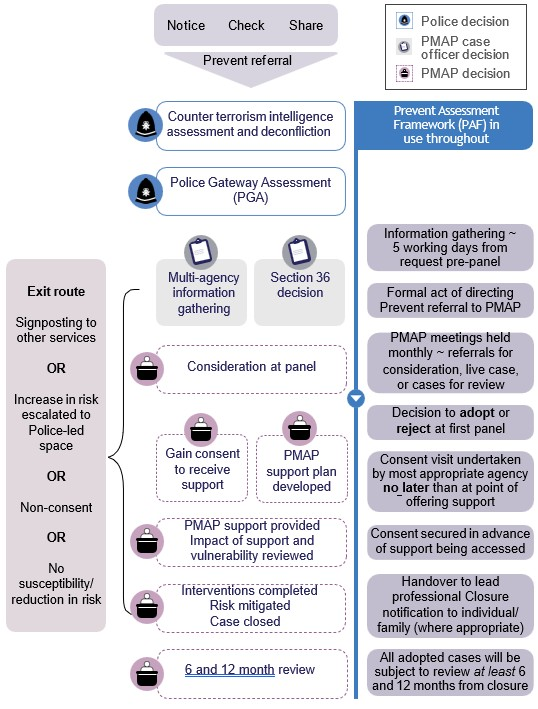
74. A Prevent referral can only be considered if it is progressed through the pathway detailed in diagram 1.0.
Diagram 1.0
Screening and information gathering stage
75. The primary route for individuals identified as having Prevent relevant concerns is support through PMAP.
76. All Prevent referrals are triaged in the first instance by specialist police officers. These officers determine whether there are reasonable grounds to suspect that a person is at risk of radicalisation, and therefore appropriate for support through Prevent. This ‘gateway assessment’ draws upon police databases and other information held by partners to determine the level of susceptibility and risk around the referred person, and whether the referral or case is appropriate for Prevent.
77. If the initial information received through the referral shows there is not a susceptibility that puts the person at risk of radicalisation or supporting terrorism, then the case is not suitable for PMAP. The CTCO will refer the person to other more appropriate support services.
The reasons for that referral and details of onward signposting must be recorded appropriately. This will ensure that only those referrals where there is a genuine concern of this kind are progressed to a PMAP.
78. Those whom the police reasonably suspect pose a serious or imminent risk of terrorism offending are unlikely to be recommended for support through PMAP. Depending upon the type and level of terrorism risk identified by police, these cases may be accepted for management in the police-led partnership or escalated into the Pursue space.
79. The gateway assessment should determine the most appropriate forum to discuss the referral. Those that are appropriate for consideration at PMAP are subject to a further, more detailed Prevent assessment led by the CTCO. The PAF is informed by information sharing with wider PMAP partners and must be circulated to PMAP members in advance of the meeting. As part of this more detailed assessment, the local authority should ascertain to what extent services are already involved with the person, including through immediate family, and liaise with relevant teams to ensure other public protection processes are aligned with the PMAP process, where appropriate.
80. If, following completion of the gateway assessment and multi-agency information gathering, the referral is deemed to be appropriate for consideration at PMAP, a decision under section 36(3) is made to refer the person to the panel (the ‘section 36 decision’).[footnote 32] Once the section 36 decision is made, the referral should be treated as a local authority led PMAP case and be recorded accordingly. The CTCO should be in receipt of, or as a minimum, sighted on, partner responses to the request for information. All minutes of PMAP meetings must be recorded appropriately. There will be an expectation that the local authority will cooperate with these requests.
Co-operation by partners of a panel
81. Partners of a panel may be requested to provide information about the person to the CTCO during the information gathering stage. It is considered good practice for the panel to draft a local information sharing agreement to expedite the appropriate sharing of information. A template for local adaptation is available on the Knowledge Hub. Membership of the Knowledge Hub can be requested through Scottish Government.
82. Section 38 CTSA 2015 requires the partners listed in Schedule 7 to co-operate with the panel and police including providing any relevant information so that they can determine whether a person is at risk of committing or supporting terrorism.[footnote 33] Partners are expected to respond to the CTCO within five working days of receipt of any information requests.
The PMAP process
83. The PMAP must decide whether or not to adopt the case for every referral presented for consideration. This should include adopting cases while an approach is made to source an individual’s consent for support or where further information gathering is undertaken. A decision on case adoption must be made. Decisions must not be deferred, nor referrals held for a period of ‘monitoring’ by panels without adoption.
84. Where a decision is made to adopt, the most appropriate agency should be identified to seek consent[footnote 34] to access PMAP support (as outlined in paragraphs 146 to 151), and the panel can begin considering the provision of support aligned with factors identified within the PAF. Where this involves under 18s, the consent of their parent or guardian is required.
85. Where consent is secured, the panel will develop a support plan (in line with requirements detailed within paragraphs 135 to 136), and sequence support interventions to reflect both need and risk. There is a clear expectation that PMAP cases remain open until either of the following:
- the panel deems that the terrorism susceptibility has sufficiently reduced to warrant exit
- the terrorism risk has increased, and the case is escalated to the police for consideration
- consent to access support is not secured or is withdrawn
86. The panel may also determine whether contact with the referee is needed during the provision of case support, to advise them on either the outcome of their referral or provided with advice on any continuing engagement with the person concerned. In these instances, the panel should determine which professionals are best placed to have those discussions. Assurances should be given that re- referrals can be made where concerns continue or escalate.
87. Every case adopted onto PMAP is kept under review and routinely re- assessed for any changes to identified susceptibilities and risks in relation to terrorism connected offending. If there is an escalation of risk, where deemed appropriate, the police may transfer a case from PMAP into the police-led partnership management or escalate it into Pursue.
88. Where consent is not secured within three months, the case will need to be closed to PMAP. Police will need to consider whether sufficient concerns remain for escalation to police-led partnership (see paragraph 121) or for an onward referral to appropriate services.
Information sharing
89. The partners of a panel must co-operate with the panel and the police in carrying out their functions for PMAP. The duty to co-operate extends only as far as is compatible with the partners’ functions provided by law. Compliance with the duty does not require or authorise the making of a disclosure that would contravene the data protection legislation and it is important to consult local organisational information governance leads and legal advisors as appropriate.
90. The data protection legislation is not a barrier to justified information sharing, but instead provides a framework for sharing personal data lawfully, securely and appropriately. Under the data protection legislation, there must be a lawful basis to process (e.g. share) personal data – for example, when fulfilling a statutory function such as that set out in section 36 CTSA 2015. The Information Commissioner’s Office (ICO) website provides guidance on the data protection legislation and, for convenience, a copy of its guidance on lawful basis can be found in Annex B.
91. When requesting information from or sharing information with partners, the basis for making the request should be stated clearly. When responding to a request to share information, the grounds for doing so must be legitimate and in accordance with the law (see Annex B). Information should only be used for a purpose compatible with the purpose for which it was processed originally.
92. Information shared for the purposes of PMAP will often include special category data. There are further requirements for the lawful processing of such data under the data protection legislation. Further information is detailed in Annex B.
93. Consent to share information is distinct from consent to receive support. These two issues should not be conflated or treated as a single consent. Even where it seems that consent to share personal data has been given, a public authority should consider whether it provides an appropriate lawful basis (see ICO’s guidance).
94. Processing authorities must be aware of the individual rights of the data subject and the data controller must take steps to ensure the subject’s individual rights are respected. More information on individual rights can be found on the ICO website and is detailed further in Annex B of this guidance.[footnote 35]
95. If a panel partner has any concerns about the appropriateness of sharing the requested information, they should consult with the CTCO, the local authority PMAP chair, legal advisers and their own information governance teams for assurance as to its lawfulness.
96. If panel partners have provided information for PMAP, it is highly likely that they will be invited to attend the meeting to discuss the individual case. Panel partners invited to meetings should attend to discuss the full range of a person’s susceptibilities and seek expert advice from attendees.
Practice example 4: cross-sector information sharing
- An employer referred an employee after Islamist extremist-materials were left on a work photocopier and staff had reported their increased intolerance towards non-Muslim colleagues.
- Following the Prevent referral, information was requested and the following responses were received from panel partners:
- Children, young people and families services: family had accessed domestic abuse and parenting advice but disengaged from services
- Mental Health: previously received services but case closed due to non-attendance
- Housing: individual is sole tenant and lives with spouse and two children
- Anti-social behaviour team: neighbours report as abusive; tenant is threatening to staff. Tenancy enforcement pending and individual is on the ‘potentially violent persons’ register
- Local policing: attended to reports of domestic abuse and previous conviction for violent disorder with use of a weapon linked to Islamist extremist group activity.
- An established PMAP panel information sharing agreement set out the appropriate lawful basis for sharing, with an appropriate framework ensuring compliance with the other data protection principles, to allow the swift exchange of relevant and proportionate information, once it was determined that the case met the necessary conditions.
- A comprehensive picture of the person and family circumstances was developed and context was provided for their spouse’s service disengagement and potential coercion.
- The panel identified the most appropriate agency to discuss the PMAP process with the person and seek consent for support.
- Risk to their spouse, children and staff was factored into these discussions and mitigating actions agreed. Support was reopened to the family.
- Actions, decision-making rationale, progress and outcomes were accurately recorded within the PMAP minutes.
Prevent assessment framework
97. PMAP will assess people using the PAF, which will provide an overview of a person’s susceptibility to radicalisation, and their risks of committing or supporting terrorism, from the police gateway assessment stage and throughout their time on PMAP.
98. The PAF will support the triaging of a person and ensure that their case is progressed appropriately based on the level of counter-terrorism concern.[footnote 36] When progressed into PMAP the PAF will provide a tiered approach to support and decision making based on the identification of any relevant counter- terrorism factors or susceptibilities and will require a corresponding support plan to be in place to address each identified factor.
99. There is no single route to terrorism, nor is there a simple profile of those who become involved. For this reason, any attempt to derive a ‘profile’ can be misleading. It must not be assumed that these characteristics and experiences will necessarily lead to people becoming terrorists, or that these indicators are the only source of information required to make an appropriate assessment. The PAF will serve as a live document that keeps each factor closely under review to monitor progress effectively, allowing for a change in approach to case management as necessary.
Transferring Prevent Multi-Agency Panel cases
100. Where a case has been adopted by a PMAP in one area and the person relocates to another area within Scotland, the case should be transferred to the PMAP of the new local authority (‘the receiving panel’). It should be assumed that the case would be automatically adopted at the receiving panel, or as a minimum, a panel discussion held to discuss closure and a rationale for the decision recorded in the minutes. Consent to access support will not be needed again. In these instances, the receiving panel will lead reviews post-case closure. Where a panel has closed a case, but the person has since relocated to a different area, the closing panel will conduct the review, but may contact agencies in the panel of relocation for any information to inform the review discussion.
101. The PMAP CTCO in the original local authority area (‘the transferring area’) should ensure that all the case information and documentation is passed over to the receiving panel. This should be accompanied by a notification by Police Scotland to the receiving PDU area (if this is different). The PMAP chair in the transferring area should request contact details for the PMAP chair of the receiving panel from the Scottish Government. The transferring PMAP chair, in partnership with the PMAP CTCO, should have a discussion with the receiving PMAP chair to provide some context and rationale to the case, and follow up in writing. The lead authority should always be the authority where the person lives; details relating to determining the lead authority are provided in paragraphs 48-49 of this guidance.
102. Where a case has been adopted by a PMAP in Scotland and the person relocates to England or Wales, the case should be transferred to the relevant local authority Channel panel. The transferring PMAP chair should request contact details for the receiving Channel chair from the Scottish Government and ensure that the receiving police force area is notified. In addition, where a person who has been adopted by Channel, relocates to Scotland, the relevant PMAP chair and CTCO will be notified.
103. Where the panel decides liaison with authorities abroad is required, these discussions will be led by police.
Case study 4: case transfer
- A 19-year-old had been receiving PMAP support for six months after being targeted by an Islamist extremist group.
- The person received support from an IP and a third-party organisation and has been exploring employment options.
- After being thrown out of the family home they began ‘sofa-surfing’ and eventually decided to move to a different location with their partner.
- As their risk of radicalisation remained, the case was transferred to the PMAP in their new location.
- The PMAP chair sent a secure email to the receiving PMAP chair with an overview of the person’s circumstances and support plan.
- A PMAP was arranged in the receiving local authority area to discuss the person, and the case was subsequently adopted. The decision and rationale were recorded in the minutes.
- After a review of the PAF and support plan housing and employment were identified as areas requiring particular focus.
Case closure
104. Where the panel has decided to close a case, the person receiving support should receive notification that their case is being closed and that they will no longer receive support through PMAP. This should include confirmation that ongoing support received through mainstream services will be unaffected by this decision.
105. Designating oversight to a lead professional at the point of case closure where ongoing support is being provided through mainstream services, provides continued assurance that a person can be brought back to panel attention quickly should concerns re-emerge. The panel is best placed to identify which agencies will be continuing to engage with the person beyond the point of PMAP case closure and to identify a lead professional to which ongoing oversight can be designated. Frontline practitioners involved in providing continuing support must be informed that PMAP no longer has case oversight and advised on how to re-refer the person in for Prevent re-assessment should concerns materialise.
106. In cases where family has been identified as a protective factor for the person, a letter will be sent to the designated family contact. For under 18s, this is likely to be a parent or guardian. For adults, permission to liaise with a family contact must be captured on the consent form at the point of getting consent to access PMAP support. Where no permission for an adult has been given to keep a family contact up to date, a letter cannot be issued. The family letter must include confirmation that the person is no longer being supported through PMAP, and that while some mainstream service provision will continue beyond this point, PMAP no longer has case oversight to monitor Prevent-related concerns. The letter must include advice on the steps to re-refer the person in for Prevent re-assessment where concerns continue, return, or escalate.
107. The appropriateness of engaging family members as part of the support plan and as part of the strengthened oversight following the end of PMAP support will need to be assessed on a case-by-case basis. This will, in part, be determined by the extent to which family are a protective factor. This will not be appropriate if there are concerns that family may be a radicalising influence.
Reviewing Prevent Multi-Agency cases
108. All cases which have been adopted by a PMAP must, as a minimum, be reviewed by the panel at least 6 months and 12 months from the point of case closure. At the point of closure, it is the responsibility of the CTCO to accurately record the closure on the relevant database to ensure review triggers are flagged at the appropriate time. This review process must be undertaken for all Prevent referrals that are adopted by the panel. This includes those PMAP cases that are adopted but are subsequently referred elsewhere or offered support under PMAP. The review process should be informed by relevant information from PMAP partners to the CTCO. Information should be submitted within five working days of the request being made and should include police checks, relevant service involvement, change of circumstances, current social work involvement, any concerns since case closure and contact with the initial referrer. Chairs have discretion to accept partner information updates as part of the panel meeting where these arrangements have been agreed in advance. The review should also include checking with the designated family contact (where appropriate) that Prevent concerns have not re-emerged.
109. Where new information that may have an impact on risk comes to light regarding a closed case pending review at 6 or 12 months, the PMAP chair will be notified and the case subject to reassessment by the police.
110. Panels will have discretion to undertake more frequent reviews within the 12-month period and to include a further review (at a specified period) beyond the 12-month period if there are still concerns that the person may be at risk of radicalising influences or is facing a life change which may place them at risk (e.g. bereavement, loss of employment, or relationship breakdown). This should be determined on a case-by-case basis.[footnote 37] CTSA 2015 makes provision for further panel assessments to be conducted under section 36 (4) (e).
Exit reviews
111. Panels should strive to improve their practice and effectiveness in reducing terrorism susceptibility and tailoring support plans to needs identified in the PAF. To enable panels to gain greater insight into their practice, consideration should be given to capturing the experience of individuals exiting the PMAP process, which could be used to highlight good practice or areas requiring improvement.
Targeted support and case management of people serving custodial sentences
Prisons
112. Individuals serving custodial sentences for non-terrorism offences who are referred as part of prison risk management processes will initially be managed by the prison CT case management process. At the pre-release stage where appropriate to support people at risk of committing or supporting terrorism as a consequence of radicalisation can be referred for consideration to PMAP as part of their community risk management plan. PMAP can only apply in cases where people are due to be released from prison and need some form of intervention or support before or following release to address identified terrorism susceptibilities. Scottish Prison Service (SPS), Police and Prison based Social Work will continue to have a role in assessing risk, vulnerability and the influence of potential radicalising sources.
TACT Offenders
113. Individuals serving custodial sentences in prison for offences under the Terrorism Act cannot be adopted into PMAP. These individuals should be considered for referral to MAPPA or other case management processes.
114. Where people who have been adopted onto PMAP are subsequently held on remand, the case can be retained on PMAP for the period of remand until it is determined that release back into the community is not a viable option. At this point, prison CT case management would provide oversight of the case until pre-release stage.
Children and young people
115. In cases involving a child/young person (under 18), where they are placed in secure accommodation services for criminal (both terrorism and non-terrorism related offences) or safeguarding purposes, PMAP can commence or continue. The local authority should establish engagement with the secure unit and with the relevant social work officer to allow for effective information sharing and awareness. These cases should also be considered on a case-by-case basis.
116. On release from secure accommodation the PMAP process can continue, and they can be re-referred to Prevent. Should they be transferred to prison on turning 18, the PMAP process should cease, as outlined above, and prison case management processes be established. Information should be shared with SPS on this transfer.
117. Should the secure accommodation services require further details, these can be requested from Police Scotland Prevent Delivery Unit.
Multi-agency public protection arrangements
118. Multi-Agency Public Protection Arrangements (MAPPA) are reserved for those who present the highest risk of harm in their local community. Most people are managed within MAPPA because of the nature of their offending. In some cases, agencies may determine that a person’s risk and vulnerability is so high that it is best managed through the MAPPA process.
119. Where this is the case, the multi-agency public protection panel can, if necessary, seek the advice of the CTCO. It should be noted that all offenders convicted of TACT offences will be managed through MAPPA and will not be suitable for PMAP. Where a registered terrorist offender is being considered for MAPPA, please refer to the Scottish MAPPA Guidance.[footnote 38]
Desistance and disengagement
120. The Scottish Government and partners are currently developing the Desistence and Disengagement Programme for Scotland. In the interim period, access to Home Office Intervention providers can be requested to support case management on a case-by-case basis.
Police-led partnerships
121. Police-led partnerships cover the management of people, groups or institutions that are not suitable for PMAP, but which have identified Prevent-relevant issues requiring support or mitigation. Police-led partnerships are led by police but working in partnership with other agencies and employ many of the same type of approaches used within the multi-agency processes of PMAP. Therefore, some of the options taken will likely be considered in consultation with partner agencies.
Police investigations
122. Circumstances may arise where a person receiving PMAP support is the subject of an investigation by police for a non-terrorism related offence. In this instance, the person is not prevented from accessing PMAP support. A PMAP can continue to provide support, with any information shared between PMAP partners used to assess a person’s susceptibilities, risk and support needs. However, where information is exchanged which suggests criminal activity, the police are duty bound to investigate.
123. Whilst access to PMAP support would ordinarily stop or be closed to people who are subject to a Terrorism Act investigation, there may be instances where continued support would be beneficial as long as it does not impede the ongoing investigation or affect the integrity of a person’s informed consent. The Home Office and Counter Terrorism Policing Headquarters are developing parameters to determine the suitability of PMAP support in these instances. Under no circumstances should cases subject to Pursue investigation for Terrorism Act offences be held on PMAP outside of these arrangements. Practitioners will be notified of any subsequent change in policy once agreed.
Justice social work and youth justice
124. People who are supervised in the community by justice social work or youth justice services and at risk of committing or supporting terrorism may be managed by both the appropriate social worker and a referral to Prevent. In those circumstances, the allocated Justice Social Worker should attend PMAP meetings.
125. There will also be circumstances where children under 18 will have involvement with social work services and/or be subject to supervision for reasons other than offending behaviour; and in such cases children’s social work should also attend PMAP meetings.
Links with extremist groups
126. Membership and inviting or expressing support for a proscribed group are criminal offences under Terrorism Act 2000.[footnote 39] It may be appropriate in some cases to refer someone on the periphery of proscribed organisations to Prevent for support. Professionals at a local level should contact the police where there are concerns that a proscription offence may have been committed. Where these concerns come to light within PMAP discussions, it is the role of the CTCO to escalate them.
127. If professionals at a local level determine that someone attracted to the ideology of proscribed groups also shows additional behavioural indicators that suggest they are moving towards terrorism, then it would be appropriate to make a referral. The presence of additional behavioural indicators would inform whether a referral should be made and considered for adoption at PMAP.
Section 6: Prevent multi-agency panel functions
Panel meetings
128. PMAP meetings must be held monthly where there are referrals forwarded to panel for consideration, where a live case is held or where cases are scheduled for review, though there may be occasions where meetings need to be held more frequently. As a minimum, there should be a minuted discussion between the chair, relevant partners and the CTCO to review progress and actions. In the absence of live cases, it is good practice to meet at least quarterly for learning and development. These meetings can be used to review practice, conduct audits, develop or monitor PMAP workplans of support as part of their assurance return, or plan and deliver panel training. It is good practice for panels to schedule an annual development day to inform improvement plans for the coming year.
129. The composition of the panel is a decision that should be made based on the nature of individual cases and time bound actions that may be required. The PMAP chair should keep the CTCO informed of any changes to panel membership.
130. Where partner input is required, the chair has discretion to allow the virtual input from partners through systems such as video- or tele-conferencing provision, though this should not be the default method of convening panel meetings. Where meetings are held via video or tele-conferencing, recording is not advised. While recording can aid the accuracy of panel minutes, it also raises issues concerning security and confidentiality, that should be borne in mind. The chair will need to be satisfied that the confidentiality and integrity of the meeting is maintained and that the minutes reflect the panel’s agreement to the confidentiality statement, which should include those partners inputting virtually. Persons under consideration for PMAP or receiving support, and their family members or representatives, must not attend PMAP meetings.
131. An anonymised PAF should be circulated in full to panel members relevant to the case by the CTCO before meetings so that all relevant panel members can contribute their knowledge, experience and expertise.[footnote 40] The CTCO will provide a verbal summary of the referral to the PMAP based on the information gathered from panel partners and the outcome of the Prevent assessment. Further detail on use of the PAF is provided in paragraphs 97 to 99.
132. Panel members should satisfy themselves of their compliance with the Public Sector Equality Duty and be sensitive in their considerations. The panel must fully consider all the information available to them to make an objective decision on the support to be offered, without discriminating against the person based on their protected characteristics and must make any reasonable adjustments to meet their needs.[footnote 41] The panel must first decide whether to adopt the referral at the first meeting. A decision to adopt will be made because the panel agrees there is a susceptibility to radicalisation or a risk of committing or supporting terrorism that may be reduced through PMAP support. This decision is often distinct from decisions on the nature of the support plan which do not always occur during a single panel meeting.
An auditable record of decision-making (including the rationale for decisions taken) should be kept for quality assurance purposes, as accurate and agreed minutes provide an important account of this process. Following case closure, PMAP minutes should be kept in line with the local authority’s agreed data retention period. The Police Scotland PMAP Data Privacy Information Notice and Retention schedule can be found on the Police Scotland webpage[footnote 42]
133. To help structure efficient practice for PMAP, standardised templates are available for local adaptation if appropriate. These include terms of reference, information sharing agreements, and consent forms. A bank of templates is available on the Knowledge hub site.[footnote 43]
134. The chair should aim to reach panel consensus on all decisions. Where this cannot be achieved, the decision should be based on the panel majority, with the chair holding the casting vote where no majority exists.[footnote 44] Local governance arrangements, which should include the process for escalating concerns regarding the form or function of PMAP, should be clearly communicated to panel members.
Support plans
135. Each case is handled separately. People deemed appropriate to receive support will have a tailored package developed for them, according to their identified needs. Using the Prevent assessment and their professional expertise, the panel should develop a package to support the needs of the person and use the information to inform the assessment and mitigation of any risk posed to potential support providers. The wider family context must be considered as part of this assessment, and the panel should agree on arrangements for updating families on progress where it is appropriate to do so.
136. Section 36(4) of CTSA 2015 requires panels to:
- prepare a plan for someone for the purpose of reducing their vulnerability to being drawn into terrorism (i.e. addressing identified radicalisation or terrorism susceptibility and concerns)
- make arrangements for support as described in the plan where consent is given
- keep the support given under review
- revise or withdraw a support plan if at any time the panel considers it appropriate
- carry out further assessments, after periods as the panel considers appropriate, of a person’s vulnerability to being drawn into terrorism where:
- the necessary consent to the provision of support is refused or withdrawn
- the panel has determined that support should be withdrawn
- prepare subsequent support plans if considered appropriate
Risk
137. Risk is a theme that runs through the entire PMAP process; risk to the person, risk to the public and risk to partners or organisations providing support to the person, including any IPs. The PMAP holds responsibility for the terrorism-related susceptibilities of a case, meaning the adequate provision and review of supportive interventions around the complex needs and causes of the terrorism-related concern. Statutory partners are responsible for safeguarding around a person’s intrinsic and contextual vulnerabilities that can be exploited by others, or that may exacerbate the complex needs of a person, to the extent that they may be drawn increasingly towards terrorism offending.
138. The police are responsible for identifying and mitigating imminent risks of people mobilising towards any terrorism offences, and the desistance of such high risk and criminal behaviours.
139. Support offered for some people could span several agencies and each agency involved will own the element of risk they are responsible for addressing through the support plan.
140. The risk of a person’s involvement in terrorism offending lies with the police. This is the risk posed by the person to themselves and to society through their escalating or potentially active involvement in terrorism-related offending. The police are the most appropriate agency throughout the entire life of each PMAP case to assess and manage this risk.
141. PMAP brings together a wider network of support available to reduce a person’s terrorism or radicalisation risk. The terrorism risk for the case is kept under review by police and the case may be removed from PMAP if the risk escalates to a level that police believe cannot be safely managed by the panel.
142. In assessing the terrorism susceptibility, consideration should be given to:
- the risk posed to the person of being radicalised and exploited
- the degree of individual agency and the extent to which ideology is a contributing factor
- the wider needs of the person
143. At this point, panel members in attendance at a meeting should collectively assess the risk and decide whether the person:
- is susceptible to radicalisation or at risk of committing or supporting terrorism and, therefore, appropriate for PMAP
- should be referred to a different support mechanism or
- should exit the process
144. There is a clear expectation that PMAP cases remain open until one of the following occurs:
- the panel deems that the terrorism susceptibility has sufficiently reduced to warrant exit
- the terrorism risk has increased, and the case is escalated to the police for consideration
- consent to access support is not secured or is withdrawn
145. If consent to receive support is not ultimately secured, or consent is withdrawn, the case will be closed to PMAP. Information sharing should also highlight any wider risks posed which professionals need to be aware of before any visits are undertaken.
This could include, but is not limited to, recording where there is a history of violence, threatening behaviour or use of weapons. Partners of the PMAP must satisfy themselves that their own processes for doing risk assessments to ensure the safety of staff and others are in place and adhered to while fulfilling their PMAP duty.
Practice example 5: risk-based, auditable decision-making
- A case had been supported through PMAP for three months and had a support plan in place aligned to the susceptibilities captured on the PAF. Action updates were provided at each meeting and all decisions relating to the support were accurately recorded in the minutes.
- The PAF and support plan were reviewed at each meeting by the panel.
- When the person established links to others who were part of an ongoing police investigation, it was deemed that the risk had increased, and the police decided to close the case to PMAP and manage it within the police-led partnership.
- The case was subject to review at 6-and 12-months following closure.
Consent for support
146. As support received through PMAP remains voluntary, consent is required from the person (or their parent or guardian, when aged under 18), subject to capacity considerations detailed below.[footnote 45] Everyone who receives support through PMAP must be made aware why they are receiving this support, what the aims of the programme are and what to expect.
147. Consent to receive support should take the form of a signed agreement to support the auditable decisions of the panel and received no later than at the point of accessing support. When seeking consent, consideration should always be given to who is the most appropriate professional to do so. Consent should be informed, explicit and freely given, without coercion or duress. The offer of support through PMAP should be fully explained alongside written information which details what provision is available and how their personal data will be used to determine vulnerabilities, risks and the support package. The circumstances around getting a person’s consent should be captured and recorded within the minutes. Where consent has been provided but there is no written record, the rationale must be captured and recorded within the panel minutes. We are keen to capture equalities monitoring data to better understand the cohort of people accessing PMAP support. An update to the PMAP consent template will include a voluntary survey on age, ethnicity, religion, and sex.
148. This communication should be in an appropriate language and explained in terms fitting to individual needs, to ensure the person understands the aims of the programme and gives informed consent. Paragraphs 152 - 153 provide further details on capacity to consent. Where someone does not wish to continue with the process, it may be appropriate to close the case to the PMAP but provide alternative support by signposting the referral to other mainstream services, such as children or adult social work services.
149. Where consent to receive support is initially refused or withdrawn, further assessments may be carried out by the panel, as is deemed appropriate.[footnote 46] Where a terrorism risk remains, this could be passed to the CTCO for management by the police.
150. Information discussed at PMAP may be sourced from a variety of partners but will be controlled and processed by the local authority as the lead agency for PMAP. Personal data will be processed for each person referred to PMAP. Local authorities, therefore, should comply with any responsibility under the data protection legislation to inform the person that their data is being processed as well as other requirements of that legislation. This notification will best form part of the informed consent required to access PMAP support as outlined above. An example consent form which incorporates this notification can be accessed on the Knowledge Hub.[footnote 47]
151. In instances where the person is not considered appropriate for support, is not adopted and is therefore not approached for consent, the right to be informed is met through the Police Scotland Data Protection Information Notice, which is available on the Police Scotland website. Local authorities may wish to consider the requisite level of notification on a case-by-case basis. The responsibility to inform does not apply to counter-terrorism police, who process data under Part 3 of the DPA 2018.
Capacity to provide consent
152. A person’s right and capacity to make decisions about issues that affect them is always assumed. Where the capacity of a person to make a specific decision is brought into question, the Adults with Incapacity (Scotland) Act 2000 provides safeguards within a statutory framework to protect the rights of those who may not be able to make their own decisions.[footnote 48] Where there is consideration of PMAP support for an adult who is deemed not to have capacity to make an informed decision regarding that support, that individual may have a guardian or welfare attorney who can consent on their behalf, but if not, then consent may be sought from the local authority.[footnote 49]
153. Where the consent to receive support from PMAP is being sought in relation to a person under 18, the consent of the parent or guardian will be needed in line with requirements under section 36(4)(b) and the meaning of “necessary consent” at section 41(1) CTSA 2015. Consent to continue receiving support should be sought after a person already in receipt of PMAP support reaches the age of 18.
When parental consent cannot be obtained
154. In the case of a child, there may be certain circumstances when a parent or guardian does not give consent for their child to be supported through PMAP. If the child is thought to be at risk from significant harm,[footnote 50] whether that is physical, emotional, mental, intellectual, social or behavioural harm, then social work services for the relevant local authority area must be involved in decisions made about the child. There may be circumstances where the PMAP and social work services determine that a child is in need.[footnote 51] In instances where compulsory intervention might be required, referral to the Children’s Reporter or Police Scotland should be considered. More information on protecting children can be found in the National Guidance for Child Protection.[footnote 52]
Support to address identified susceptibilities
155. The involvement of the correct panel partners ensures that those at risk have access to a wide range of support from mainstream services, such as health and education, through to specialist guidance from an IP to increase theological understanding and challenge the claims of violent ideologies. It can also include wider diversionary or developmental activities such as appropriate training courses. The partners involved should be tailored to the identified susceptibilities of the person getting support. When dealing with children, support considered must take account of any Compulsory Supervision Order and the terms of any Child’s Plan that may be in place.
Support to address identified susceptibilities
155. The involvement of the correct panel partners ensures that those at risk have access to a wide range of support from mainstream services, such as health and education, through to specialist guidance from an IP to increase theological understanding and challenge the claims of violent ideologies. It can also include wider diversionary or developmental activities such as appropriate training courses. The partners involved should be tailored to the identified susceptibilities of the person getting support. When dealing with children, support considered must take account of any Compulsory Supervision Order and the terms of any Child’s Plan that may be in place.
156. As part of agreeing a full wrap-around package of support, the panel must decide how to connect the person with the support providers. All decision-making should be clearly documented and aligned to identified susceptibilities.
157. The type of activities that are included in a support package will depend on risk factors, vulnerabilities, and local resource. To illustrate, a diversionary activity with lower-level support may be sufficient for someone who is in the early stages of radicalisation. The support offered should be directly aligned to needs and risks identified within the Prevent assessment, which should include consideration of wider contextual and transitional safeguarding needs.
The following kinds of support might be considered appropriate:
- theological/ideological support – structured sessions using a Home Office approved IP to understand, assess or challenge ideological, theological or fixated thinking, which must be considered for all cases
- life skills – work on life skills or social skills generally, such as dealing with peer pressure
- anger management sessions – formal or informal work dealing with anger
- cognitive/behavioural contact – cognitive behavioural therapies and general work on attitudes and behaviours
- constructive pursuits – supervised or managed constructive leisure activities
- education skills contact – activities focused on education or training
- careers contact – activities focused on employment
- family support contact – activities aimed at supporting family and personal relationships, including formal parenting programmes
- health awareness contact – work aimed at assessing or addressing any physical or mental health issues
- housing support contact – activities addressing living arrangements or accommodation provision
- drugs and alcohol awareness – substance misuse interventions
- mentoring – work with a suitable adult as a role model to provide personal guidance or pastoral care
158. The panel is collectively responsible for ensuring delivery of the overall package of support, but not for managing or funding the support providers. Where support is provided by a panel partner, they should be present at the panel meeting to provide an update on progress and are responsible for the delivery of that element of the overall support package. Support offered should be met from existing local services.
159. Providers of support to people at risk of committing or supporting terrorism (including providers who are not specified as panel partners), need to be credible with the person receiving support and to understand the local community. Given their important role, their reliability, suitability to work with people at risk of supporting terrorism or committing terrorist acts, and commitment to shared values need to be established. If non-public sector provision is being considered as part of PMAP support, Chairs and police must satisfy themselves that the potential support provider is suitable, and does not pose a risk, before commissioning them. Partners should conduct their own due diligence to establish suitability before appointment. Any concerns raised by panel members should be discussed at the panel.
Monitoring Prevent multi-agency panel support
160. The CTCO is responsible for regularly liaising with the support provider(s), updating the PAF and assessing progress. Where there is a live case or referrals presented for consideration, a PMAP should be held at least monthly but may be held more regularly if required to effectively manage and mitigate the risk and vulnerabilities. The PAF will run in parallel to assessment through the entire period of support. The CTCO should update the PAF every three months as a minimum, to capture the progress being made in supporting the person. Prevent assessments should be reassessed more frequently to inform a key panel meeting, where the provision of support has reached a particular milestone or there have been significant changes to circumstances or levels of risk.
161. If the panel is satisfied that the terrorism concerns have been successfully reduced or managed, they should recommend that the case then exits the process. The PAF should be completed by the CTCO as soon as possible, setting out the reason for the panel’s recommendations. The recommendations will need to be endorsed by the PMAP chair and the CTCO. If the panel is not satisfied that the terrorism concerns have been reduced to an acceptable level the case should be reconsidered. A new support plan should be developed and alternative support put in place. If the terrorism risk has increased, the CTCO must consider escalating the case through existing police mechanisms. The panel must determine whether the case remains suitable for PMAP.
162. The Prevent assessment captures changes in risk, situation and vulnerability while panel minutes must record agreed decisions and rationale aligned to this assessment. Together, they inform PMAP decision-making and risk management and must be retained for future reference. The PAF should only be retained by Police Scotland.
Accessing specialist support
Intervention providers
163. Intervention providers (IPs) are ideological and theological specialists. They are experienced in assessing ideological drivers and possess a high level of understanding of radicalising extremist narratives and have the ability to counter them. They receive comprehensive training to support their roles through the IP Professionalisation programme. IPs are also subject to a rigorous recruitment process and must receive ministerial approval to work on the programme.
164. Where the person has a need for theological/ideological support, to address extremist views, there are multiple ideologies or the ideological drivers are unclear, Home Office approved IPs must be commissioned. No other interventions must be commissioned as part of the support plan to address ideological concerns. The IP aims to increase theological understanding and challenge extremist ideas or fixated thinking where they are used to legitimise terrorism, or to otherwise understand the extent of concerns relating to ideology. Use of a Home Office IP must always be a consideration for live cases and kept under review where not commissioned. A record must be kept detailing the panel’s decision and its basis. Where the PMAP identifies that the person would benefit from an IP, the CTCO will be responsible for arranging the provision of that service. While it remains best practice for the CTCO to present three potential IPs to the panel for its consideration, this may not always be feasible. The priority will always be to match the specific IP skill sets to the requirements of the person receiving support.
165. Where a Home Office IP has been commissioned, written reports on progress will be prepared and returned to the CTCO within five working days of the intervention session being completed. The CTCO will use this report to provide a verbal update to the PMAP and update the PAF when needed. IP reports should be made available to the PMAP chair. Whilst standing panel members should not need routine access to IP reports, they may be viewed on request via the CTCO. The IP reports are produced for the specific purpose of informing PMAP of the risks of radicalisation and the susceptibilities present. Therefore, they should not be shared beyond standing panel members. Further details on disclosure are referenced in paragraphs 34 to 40. IP reports should only be stored by Police Scotland.
166. In Scotland, IPs must first have been approved by the Home Office. With all other non-public sector services provided as part of the support package, the chair and police must be satisfied that these providers are suitable to deliver the interventions. Individuals and organisations holding extremist views used to legitimise or support terrorist-related activity of any kind, or to radicalise others into terrorism, in this country or overseas, have no place in delivering support through PMAP, nor will they be given public funding to do so. This applies irrespective of the source of the funding: central government, local government, policing or other publicly funded bodies. Where support is through Home Office approved IPs, the CTCO is responsible for liaison with the support provider and for funding and monitoring the delivery of that element of the support package.
Intervention support fund
167. Most support available to PMAP is funded by the statutory bodies that provide it. The major exception to this is ideological and theological mentoring through IPs, which are funded by the Scottish Government through the CTCO.
168. Additional funding by way of the Channel Intervention Support Fund (also available for PMAP) can be used in instances where provision from statutory partners, IPs or third sector organisations is not appropriate to reduce identified Prevent susceptibility. These funds are intended to be used flexibly for activity or costs that take place alongside other PMAP interventions and should be linked to identified susceptibilities and should not be used to deliver services already provided by statutory partners. Use of these funds must be pre-approved by the Home Office to cover non-theological or non-ideological support, training or one-off purchases to support the effectiveness of an intervention. For details of eligibility and how this fund can be accessed please contact the Scottish Government.[footnote 53]
Immigration Enforcement Services
169. Specialist advice and support regarding immigration is available to PMAP for addressing queries, sourcing information and advice, and where appropriate, seeking immigration representation on PMAP. PMAP chairs will be notified by Police Scotland of arrangements for accessing this service.
Onward referrals to alternative forms of support
170. Information sharing between partners will sometimes reveal no evidence that the person is at risk of being drawn into terrorism. It may identify other personal vulnerabilities that need to be addressed, such as substance misuse or mental health issues. Under section 36(6) of the CTSA 2015, where it is determined that support via PMAP is not appropriate, the panel must consider whether someone should be referred to support from health providers or social work services and, if so, make such arrangements as the panel considers necessary. It is good practice for the PMAP chair to consider inviting these partners to panel meetings. Once a decision on non-adoption has been reached by the panel, the PMAP chair should confirm the recommendation and ensure that the decision is properly recorded, and that arrangements are made to refer the person.
Sharing good practice
171. Local authorities and the police may find it useful to form regional PMAP chair networks which should come together to share good practice in running PMAP, discuss case studies and provide mutual support and advice. These networks can be a useful resource for those local authority areas that have few PMAP cases in order to learn from more experienced areas, or for new PMAP chairs to observe practice. PMAP chairs also have the opportunity to attend regular national forums to share good practice more widely.
Practice example 6: sharing good practice
- Where PMAP chairs networks have formed they have found value in coming together to share practice and learning, provide mutual support and coordinate training.
- These networks provide an excellent platform to review anonymised cases, share good practice and understand ineffective practice across local authority areas.
Section 7: Training
172. The successful delivery of Prevent is dependent on the engagement of national, regional and local partners across multiple sectors, including the community and voluntary sector. Public sector frontline staff have been identified as a key group that can make an important contribution to identifying and referring people who may be at risk of committing or supporting terrorism as a consequence of radicalisation.
173. Alongside sector-specific training, panel members and partners should complete the GOV.UK Prevent duty training courses available at www.gov.uk/prevent-duty-training. Each course has specific learning outcomes to support awareness of Prevent and radicalisation; making a referral; and the PMAP programme. The PMAP course has tailored content for chairs and for those who are new to attending PMAP panels.
174. In addition to the GOV.UK Prevent duty training, as an introduction to Prevent, face-to-face training sessions may be made available. This is designed to help attendees understand what may make people susceptible to radicalisation and understand more about the local context. For more information, speak to Home Office Quality Assurance Lead or an equivalent.
175. The Home Office has commissioned a range of additional training to meet the needs of PMAP chairs, deputy chairs and panel members in fulfilling the requirements set out within this guidance and to understand the national risk and threat picture. PMAP chairs and deputy chairs are required to complete mandatory delivering PMAP locally training within six months of starting these roles. Information regarding available training will be sent directly to PMAP chairs and CTCOs.
Other local training
176. There may be other training available within local authority or regions that cater for the specific needs of sectors. Clarification on this should be sought in the first instance from local authority SPOC or through individual organisations. Panel members and panel partners are not expected to become experts in countering radicalisation however, all should have completed the relevant training to ensure they understand Prevent, PMAP, the radicalisation process and how to intervene to prevent someone from being drawn into terrorism. The Home Office and Scottish Government may commission additional training to meet the needs of PMAP nationally.
Section 8: Information requests
177. When considering information requests, it is important that local organisational information governance leads, and legal teams are consulted and are satisfied that there is compliance with legal requirements and organisational policy.
Freedom of Information (Scotland) Act requests
178. All recorded information held by a public authority is covered by the right to information under the Freedom of Information (Scotland) Act 2002 (FOISA). Within FOISA, there is a presumption in favour of disclosure to enhance greater openness in the public sector to enable members of the public to better understand the decisions of public authorities and ensure that services provided by the public sector are seen to be efficiently and properly delivered. We want, as far as possible, to be open and transparent about the PMAP process.
179. It is good practice to consider the implications of releasing information on third parties when complying with FOISA legislation. In the context of PMAP, third parties may include local and national delivery partners. The Codes of Practice of FOISA facilitate consideration by public authorities of the interests of third parties and stakeholders who may be affected by any decision to disclose information by setting standards for consultation. All public authority partners involved in PMAP may receive FOISA requests. If a FOISA request is made, all information will need to be assessed against FOISA legislation to see if it is disclosable or not in line with relevant exemptions (such as for personal data and health and safety). All requests for the release of information held must be assessed on a case-by-case basis.
180. To achieve a consistent approach in responding to FOISA requests relevant to PMAP and assessments of individuals, and to protect third parties, all local partners who receive such FOISA requests should bring them to the attention of their local panel. The chair should notify the CTCO and the Scottish Government, who will advise if any further consultation is necessary, for instance with other UK Government departments. Further information about FOISA is available from the Scottish Information Commissioner.[footnote 54]
Subject access requests
181. Under section 45 of the DPA 2018, individuals can also make a subject access request (SAR) to see data held about them, or children they have parental responsibility for.[footnote 55] The person can request information on any records held about them and any organisation holding personal data can be subject to these requests. The right to make a SAR is described in the UKGDPR Article 15,[footnote 56] Rights of Access by the data subject. Exemptions to these rights are found in the DPA 2018 Schedule 2 Part 4.[footnote 57]
182. There are a limited number of exemptions, and not all personal information needs to be released in all circumstances. Exemptions to these rights are listed and described in the DPA 2018 Schedule 2 Part 4.[footnote 58]
183. As with Freedom of Information Act requests, to achieve consistency in responses, any requests for SAR should be brought to the attention of the PMAP chair.
Other information requests
184. Other requests which an individual can make under data protection law include the right of rectification and the right to be forgotten. In addition, individuals have the right to be informed that their data is being processed, restrict processing and object to processing, in certain circumstances. They also have the right not be subject to automated decision-making.
185. All such requests must be recognised and formally responded to by the organisation holding their personal data. Any requests relating to data processed as part of the functioning of PMAP should be brought to the attention of the PMAP chair.
Enquiries
186. Please note that national, international and specialist media queries about PMAP are managed by the Home Office Press Office and the Scottish Government and should be referred to directly on the following contact details:
Home Office Press Office 020 7035 4848
Scottish Government SVT@gov.scot
187. It is also helpful if you can make the Home Office Press Office and the Scottish Government aware, at an early stage, of any local media interest you receive.
Participation in research
188. PMAP chairs and panel members do not participate in external research linked to their Prevent role, except in exceptional circumstances. This applies to Prevent policy staff, IPs, Prevent co-ordinators, Home Office and Scottish Government staff. In some cases, the Home Office may offer to provide written input to a research project instead of participating in interviews or other data collection methods. These written submissions will be coordinated by the Home Office and will be provided on the understanding that the content is likely to be published in any research output.
189. Exceptional circumstances are defined as those where the research would fill a priority evidence gap for the Home Office, where the research design is robust and high quality, and where the research team has a track record of producing high quality, published research. All new research requests must be considered by the Home Office.
Section 9: Annexes
Annex A: Safeguarding
1. Safeguarding and promoting the welfare of children, young people and adults is everyone’s responsibility. Whilst safeguarding thresholds do not need to be met to make a Prevent referral there will be occasions where the assessment and support provided through PMAP to prevent people at risk of supporting terrorism or committing terrorist acts will run alongside safeguarding processes.[footnote 59] A brief overview of the safeguarding frameworks for adults and children is outlined here for reference.
Child Protection
2. All agencies, professional and public bodies and services that deliver adult and/or child services have a responsibility to recognise and actively consider potential child abuse and neglect. They are required to identify and consider the person’s needs, share information where appropriate to do so, share concerns with other agencies and work collaboratively with other services to improve positive outcomes. They must all treat the need to safeguard and promote the wellbeing of the child as a primary consideration.
3. The Scottish approach to child protection is based upon children’s rights. Getting it right for every child (GIRFEC)[footnote 60] is the national approach in Scotland to improving outcomes for children through promoting, supporting, and safeguarding their wellbeing so that they can become confident individuals, effective contributors, successful learners, and responsible citizens. Safeguarding sits within a continuum which seeks to provide early support to prevent children from harm or the risk of harm. Where safeguarding is required, the GIRFEC approach is consistently applicable to those processes. Within this framework there will be range of support from universal, additional and intensive services which can work as single agencies or jointly through an integrated approach; whereby support should be proportionate within this continuum.
4. Child Protection refers to measures which protect a child from abuse, neglect, maltreatment and exploitation. Child protection is part of a continuum of collaborative duties upon agencies working with children. The GIRFEC approach promotes and supports planning for such services to be provided in the way which best safeguards, supports and promotes the wellbeing of children and ensures that any action to meet needs is taken at the earliest appropriate time to prevent acute needs arising.
5. Where children and adults are particularly vulnerable and/or have complex needs, services must work together to take a collective and coordinated approach. Any identified child protection concerns must be the subject of immediate response by reporting through documented formal procedures.[footnote 61] On the basis of the assessment of risk, social work services and police will decide whether any immediate action should be taken to protect the child and any others in the family or the wider community.
6. Where information is received that a child may have been abused or neglected and/or is suffering or is likely to suffer significant harm an Inter-agency (or Initial) Referral Discussion (IRD) must be convened as soon as reasonably practical. IRDs are required to ensure coordinated inter-agency child protection processes up until the point of a child protection case conference. An IRD discussion can be initiated by police, health or social work services.
7. A lead professional who will be a qualified social worker is required, within a child protection investigation, to ensure coordination of assessment and next steps within a developing but coherent single plan. They provide a point of contact for family/ carers/ advocates/ guardians and professionals who need support to gain sufficient understanding of what is happening stage by stage. They may provide a signpost for additional advice and support. The IRD record should identify this person before closure.
8\ . Consideration will always be given to the needs and potential risks to other children in the same household and children who are likely to become members of the same household.
9. The legal duty to investigate and report issues in relation to child protection is derived from two sources: the Police and Fire Reform (Scotland) Act 2012, which provides the mandate for police officers; and the Children’s Hearings (Scotland) Act 2011, which sets out the duties and powers of local authorities, constables, courts and other persons. In the case of the local authorities and the police, section 60 of the Children’s Hearings (Scotland) Act 2011 places a duty on them to refer to the Principal Reporter where it is likely that a child is in need of protection, guidance, treatment or control and that a compulsory supervision order is necessary.[footnote 62] This Act also requires that, if the Principal Reporter considers that a ground of referral applies and that compulsory measures of supervision are necessary, they must refer the case to a Children’s Hearing.
Adult Protection
10. Part 1 of the Adult Support and Protection (Scotland) Act 2007 provides measures to identify, and provide support and protection for those people, aged 16 and over, who are vulnerable to being harmed, whether as a result of their own or someone else’s conduct. These measures include placing a duty on local authorities to make necessary inquiries and investigations to establish whether or not an adult is at risk from harm and whether further action is required to protect the adult’s well-being, property or financial affairs. The 2007 Act places a duty on particular public bodies (i.e. the bodies listed in section 5(1) of the 2007 Act) to co-operate with local authorities and each other where harm is known or suspected. While local authorities have the lead role in adult protection, effective intervention will only come about as a result of productive cooperation and communication between a range of agencies and professionals. Good practice should be that all relevant public bodies would cooperate with assisting inquiries and investigations, not only those who have a duty to do so under the Act.
11. A Council Officer, who is an individual appointed by a local authority under section 64 of the Local Government (Scotland) Act 1973, is required for an adult protection investigation. Where it is known or believed that an adult is at risk from harm and the local authority might need to intervene, there is a duty on the local authority to make the necessary inquiries to establish whether or not action is required to stop or prevent harm occurring. Council Officers have rights of entry to places where adults are known or believed to be at risk of harm. If, following inquiries or investigations, a Council Officer believes that action is required, the local authority can apply to the sheriff for a Protection Order. The range of protection orders include Assessment Orders (which may be to carry out an interview or medical examination of a person), Removal Orders (removal of an adult at risk) and Banning Orders or Temporary Banning Orders (banning of the person causing, or likely to cause, the harm from being in a specified place). Where an adult experiences abuse or neglect, support can be provided at the same time as, or instead of, using court powers.
12. A public body or office holder authorising an intervention or carrying out a function under the 1973 Act must be satisfied that this will benefit the adult and is the least restrictive option available. They must take into account the adult’s wishes and feelings, past and present, insofar as these can be ascertained, and the views of the nearest relative, primary carer, or other relevant parties. They should provide information and support to enable the adult to participate as fully as possible.
13. It is essential that PMAP members, partners to local panels and other professionals ensure that children, young people and adults are protected from harm. While the PMAP provisions in Chapter 2 of Part 5 of the CTSA 2015 are counter-terrorism measures (since their ultimate objective is to prevent terrorism), the way in which PMAP will be delivered may often overlap with implementation of wider safeguarding duties, especially where vulnerabilities have been identified that require intervention from social services, or where the individual is already known to social services.
14. It is imperative that Prevent referrals are considered by the local authority and panel partners alongside their work to safeguard vulnerable people. Key links should be established with social services and other panel partners to ensure that an individual receives the most appropriate support available. Where a child or an adult is in receipt of PMAP support, the social worker relevant to that local authority should be present at the panel and be involved in all decisions. PMAP can run in parallel with safeguarding meetings where relevant safeguarding thresholds have been met.
Annex B: Sharing information with partners
1. The UK GDPR[footnote 63] and DPA 2018[footnote 64], and subordinate legislation under the latter, form the data protection legislation that governs the processing of personal data (i.e. information relating to an identified or identifiable living individual).
2. The ICO’s guide to the UK GDPR can be found on the ICO website.[footnote 65] Article 5 of the UK GDPR sets out six key principles which lie at the heart of the general data protection regime.
3. Article 5(1) requires that personal data[footnote 66] shall be:
a. processed lawfully, fairly and in a transparent manner in relation to individuals (‘lawfulness, fairness and transparency’)
b. collected for specified, explicit and legitimate purposes and not further processed in a manner that is incompatible with those purposes (‘purpose limitation’)
c. adequate, relevant and limited to what is necessary in relation to the purposes for which they are processed (‘data minimisation’)
d. accurate and, where necessary, kept up to date; every reasonable step must be taken to ensure that personal data that are inaccurate, having regard to the purposes for which they are processed, are erased or rectified without delay (‘accuracy’)
e. kept in a form which permits identification of data subjects for no longer than is necessary for the purposes for which the personal data are processed (‘storage limitation’)
f. processed in a manner that ensures appropriate security of the personal data, including protection against unauthorised or unlawful processing and against accidental loss, destruction or damage, using appropriate technical or organisational measures (‘integrity and confidentiality’)
4. The lawful bases for processing include (as replicated from the ICO website)[footnote 67]
a. Consent: the person has given clear consent for you to process their personal data for a specific purpose.
b. Contract: the processing is necessary for a contract you have with the person, or because they have asked you to take specific steps before entering into a contract.
c. Legal obligation: the processing is necessary for you to comply with the law (not including contractual obligations).
d. Vital interests: the processing is necessary to protect someone’s life.
e. Public task: the processing is necessary for you to perform a task in the public interest or for your official functions, and the task or function has a clear basis in law.
f. Legitimate interests: the processing is necessary for your legitimate interests or the legitimate interests of a third party, unless there is a good reason to protect the person’s personal data which overrides those legitimate interests. (This cannot apply if you are a public authority processing data to perform your official tasks.)
5. It is the responsibility of PMAP partners to consider their role in relation to data sharing as part of the PMAP process. Information governance and legal teams should be engaged where deemed appropriate to ensure data sharing is necessary, proportionate and lawful. Organisations should also document the nature, basis and agreement of data sharing in line with the UK GDPR principle of accountability (Article 6(2)). This will include having data sharing agreements in place among all the parties involved, that are regularly updated and signed off at the appropriate level.
Lawful bases for processing to consider
6. You must have a valid lawful basis to process personal data. The ICO website provides information on identifying and, importantly, documenting the lawful bases your panel identifies.[footnote 68] When processing special category data, you must identify both a lawful basis for general processing and an additional condition for processing that type of data. There are six available lawful bases for processing.
Article 6 UK GDPR, section 8 DPA 2018
7. Under Article 6(1)(e) UK GDPR and section 8 of the DPA 2018, personal data may be shared if it is necessary for the purpose of a statutory function. The PMAP process is a statutory function as per section 36 of the CTSA 2015.
Article 9 UK GDPR, Part 2 Schedule 1 DPA 2018
8. Under Article 9(2)(g) UK GDPR and paragraph 6 of Part 2, Schedule 1 DPA 2018, special category data may be shared where there are reasons of substantial public interest on the basis of domestic law, such as for the discharge of a statutory function as under section 36 of the CTSA 2015.
9. Your panel may deem it of substantial public interest to share special category data for the purposes of PMAP.
Special category data
10. Special category data is personal data that needs more protection because it is sensitive. It is listed at Article 9(1) UK GDPR, including – for example – information about an individual’s religious or philosophical beliefs. It is likely that PMAP will require certain special category data to make an informed decision regarding the nature of support required for people referred to PMAP. More information about special category data can be found on the ICO website.[footnote 69]
Annex C: Partners required co-operate with local panels
(Part 2 of Schedule 7 of the Act - Partners of local panels)
Criminal Justice
- The governor of a prison in Scotland (or, in the case of a contracted out prison, its director).
- The governor of a young offenders institution (or, in the case of a contracted out young offenders institution, its director).
Education, childcare, etc.
- The proprietor or governing body of an independent school within the meaning given by section 135(1) of the Education (Scotland) Act 1980.
- The proprietor or governing body of a grant-aided school within the meaning given by that section.
- The proprietor or governing body of a post-16 education body within the meaning of the Further and Higher Education (Scotland) Act 2005.
Health and social care
- A Health Board constituted under section 2(1)(a) of the National Health Service (Scotland) Act 1978.
- A Special Health Board constituted under section 2(1)(b) of that Act.
- Healthcare Improvement Scotland.
Annex D: Other relevant guidance
Counter terrorism strategy (Contest) 2023: https://www.gov.uk/government/publications/counter-terrorism-strategy-contest-2023
Prevent duty guidance for Scotland: Prevent duty guidance: for Scotland (accessible) - GOV.UK (www.gov.uk)
National Guidance for Child Protection in Scotland 2023: Supporting documents - National Guidance for Child Protection in Scotland 2021 - updated 2023 - gov.scot (www.gov.scot)
Adult Support and Protection Code of Practice 2022: Adult Support and Protection (Scotland) Act 2007: Code of Practice (www.gov.scot)
Adults with incapacity: code of practice for local authorities: https://www.gov.scot/publications/adults-incapacity-scotland-act-2000-code-practice-local-authorities-exercising-functions-under-2000-act/pages/5/
Information Commissioner’s Office Guide to Data Protection: https://ico.org.uk/media/for-organisations/guide-to-data-protection-1-1.pdf
Annex E: Glossary of Terms
| CTSA 2015 | Counter Terrorism and Security Act 2015 |
| CTCO | Counter Terrorism Case Officer |
| DDP | Desistance and Disengagement Programme |
| DPA 2018 | Data Protection Act 2018 |
| FOISA | Freedom of Information (Scotland) Act 2002 |
| HRA 1998 | Human Rights Act 1998 |
| ICO | Information Commissioner’s Office |
| IP | Intervention Provider |
| ISA | Information Sharing Agreement |
| MAPPA | Multi-Agency Public Protection Arrangements |
| PAF | Prevent Assessment Framework |
| PDU | Prevent Delivery Unit, Police Scotland |
| PMAP | Prevent multi-agency panel |
| SAR | Subject Access Request |
| SC | Security Check |
| SPOC | Single Point of Contact |
| TACT | Terrorism Act |
| UK GDPR | UK General Data Protection Regulation |
-
The PAF is a new tool used to assess a person’s risk and susceptibilities to radicalisation, their risks of supporting terrorism or committing a terrorist act and their suitability to access Prevent support. ↩
-
Under section 6(2) of the UNCRC (Incorporation) (Scotland) Act 2024, a “relevant function” means a function that is within the competence of the Scottish Parliament to confer on a public authority, which is conferred by an Act of the Scottish Parliament, a Scottish statutory instrument made wholly or (in certain circumstances) partly, under a relevant enabling power or a rule of law not created by an enactment. ↩
-
This list is not exhaustive. Risk and threat to the UK is subject to constant review and updated accordingly. ↩
-
Counter-terrorism strategy (Contest) 2023 https://www.gov.uk/government/publications/counter-terrorism-strategy-contest-2023. ↩
-
https://www.gov.uk/government/organisations/commission-for-countering-extremism/about. ↩
-
https://www.gov.uk/government/publications/prevent-duty-guidance-for-specified-authorities-in-scotland/prevent-duty-guidance-for-scotland-accessible. ↩
-
A recently commissioned Channel and PMAP outcome evaluation, set to report in 2025 will provide clear evidence of the effectiveness of Channel and PMAP and identify recommendations for improvement. ↩
-
While the Security Threat Check is recommended for Strategic Prevent Boards in the Home Office’s Homeland Security Group (HSG) and for Counter Terrorism Policing, HSG believe that the adoption of these principles could be helpful to inform the decision making of other strategic Prevent Boards, such as, when developing action plans in response to local risk assessments or Counter Terrorism Local Profiles. See guidance on counter-terrorism local profiles – https://www.gov.uk/government/publications/counter-terrorism-local-profiles-ctlps ↩
-
See requirement set out in sections 36(1)(a) and (b), and 36(4) of the CTSA 2015. ↩
-
Terrorism relates to any terrorism connected offending, as per the breadth of UK terrorism legislation (including, but not limited to, the CTSA 2015, the Terrorism Act 2000 and amendments, the Terrorism Prevention and Investigation Measures Act 2011 and the Counter Terrorism and Border Security Act 2019) ↩
-
The establishment of a Prevent standards and compliance unit was recommended in the Independent Review of Prevent. This recommendation was accepted and the new complaints function – now live. Make a complaint about Prevent - GOV.UK (www.gov.uk) ↩
-
Pathways for commissioning can include: Significant Case Review, Child or Adult Protection Committees undertaking learning reviews, serious incident review, serious adverse events review for health etc. ↩
-
See section 37(1) of the CTSA 2015. ↩
-
See section 41(1) of the CTSA 2015. ↩
-
Partners required to co-operate with the panel are set out in Part 2 of Schedule 7 of the CTSA 2015 and replicated at Annex C of this guidance. ↩
-
Section 37(4) of the CTSA 2015. ↩
-
Where a child or an adult is in receipt of PMAP support, a social worker from the relevant local authority should be present at the PMAP and be involved in all decision-making. ↩
-
In the case of child protection, the Lead Professional should perform the coordination role between any child protection process and PMAP. ↩
-
Looked-after children includes those children and young people on Compulsory Supervision Orders who may reside at home. ↩
-
Temporary or accidental absences, including for example holidays or hospital visits in another area, or if the person is accommodated in another area (including within the prison estate), do not necessarily break the continuity of ordinary residence, and local authorities should take this into account. ↩
-
Additional information can also be found on the ACT website (www.actearly.uk) and Get help for radicalisation concerns – GOV.UK: www.gov.uk/guidance/get-help-if-youre-worried-about-someone-being-radicalised. ↩
-
Pursue is a strand of CONTEST 2023 aimed at stopping terrorist attacks in this country and against UK interests overseas. Further information on police-led partnerships is detailed in paragraph 121. ↩
-
See section 37(2) of the CTSA 2015, which stipulates that both the local authority and police must be represented on the PMAP by an individual with the required skills and experience. ↩
-
This includes ensuring that where the person is in education, the education setting is invited to be a participant in the PMAP process. Additionally, when a participant is involved in education and then changes education setting, the new education setting is invited to join the panel and contribute to the support. ↩
-
The UK GDPR and DPA 2018 are the principal pieces of legislation governing the processing of data relating to individuals. Further details can be found in Annex B of this guidance. ↩
-
For Child Protection issues, the individual attending PMAP would be the allocated social worker and team lead. ↩
-
There is no time limit linked to the provision of PMAP support. Cases should remain open until the panel is satisfied that the terrorism concerns have been sufficiently reduced or managed. ↩
-
Information about Home Office Intervention Providers (IPs) are detailed in paragraphs 163 to 166. ↩
-
The National Referral Form can be accessed on the Scottish Knowledge Hub Page. ↩
-
‘Notice, Check, Share’ is the initial procedure applied when there is a concern that someone might be at risk of radicalisation. Details are provided in the Home Office training accessed via https://www.elearning.prevent,homeoffice.gov.uk/ ↩
-
The Section 36 decision is normally delegated to a designated officer. ↩
-
See section 38 of the CTSA and Part 2 of Schedule 7 for the list of statutory partners. ↩
-
Further information on consent is detailed in paragraphs 146-154. ↩
-
https://ico.org.uk/for-organisations/uk-gdpr-guidance-and-resources/individual-rights/individual-rights/ ↩
-
Counter terrorism concern includes an assessment of harm to self, others or the wider public. It incorporates escalation towards non-violent terrorism-related offences (as per the breadth of the UK’s terrorism legislation), in addition to plans or attempts to commit any relevant acts of violence. ↩
-
Where panel determines the need for reviews beyond the initial 12-month period, these should not exceed a further 12 months. Where concerns remain 24 months following case closure, a re-referral into Prevent must be made. ↩
-
MAPPA Guidance, Scotland, Multi-Agency Public Protection Arrangements (MAPPA): national guidance - gov.scot (www.gov.scot). ↩
-
A list of proscribed groups can be found at: https://www.gov.uk/government/publications/proscribed-terror-groups-or-organisations–2 ↩
-
Where possible, it is preferable for the PAF to be issued 48 hours in advance of panel meetings to allow partners to review documents. ↩
-
Section 149 of the Equality Act 2010 places a responsibility on public authorities to have due regard to the need to eliminate discrimination and promote equality of opportunity and foster good relations. This applies generally, but also to the assessment of need and risk faced. ↩
-
Privacy Notice – prevent-multi-agency-panels-for-safeguarding-and-wellbeing-purposes/ ↩
-
See section 37(6) of the CTSA 2015. ↩
-
See section 36(4)(b) of the CTSA 2015. ↩
-
See section 36(4)(e) of the CTSA 2015. ↩
-
https://ico.org.uk/for-organisations/uk-gdpr-guidance-and-resources/individual-rights/individual-rights/right-to-be-informed/ ↩
-
Codes of practice for the Adults with Incapacity Act are available at https://www.gov.scot/collections/adults-with-incapacity-forms-and-guidance/ ↩
-
https://www.gov.scot/publications/adults-incapacity-scotland-act-2000-code-practice-local-authorities-exercising-functions-under-2000-act/pages/5/ ↩
-
See paragraphs 40 – 45 of the National Guidance for Child Protection 2014. ↩
-
A child in need will be determined using the definitions within section 93(4) of the Children (Scotland) Act 1995. ↩
-
https://www.gov.scot/publications/national-guidance-child-protection-scotland/ ↩
-
Contact SVT@gov.scot ↩
-
Available here: http://www.itspublicknowledge.info/home/ScottishInformationCommissioner.aspx ↩
-
The cut-off age for requests such as this in Scotland is 12 years old. ↩
-
https://ico.org.uk/for-organisations/uk-gdpr-guidance-and-resources/individual-rights/individual-rights/right-of-access/ ↩
-
Guidance on exemptions can be found here: https://ico.org.uk/for-organisations/uk-gdpr-guidance-and-resources/exemptions/a-guide-to-the-data-protection-exemptions/ ↩
-
http://www.legislation.gov.uk/ukpga/2018/12/schedule/2/part/4/enacted ↩
-
In Scotland these are more commonly known as Child and Adult Protection processes. ↩
-
See National Guidance for Child Protection in Scotland 2014 and https://www.gov.scot/policies/girfec/ ↩
-
Scottish Children’s Reporters’ Administration ↩
-
GDPR – https://gdpr-info.eu/ ↩
-
DPA 2018 – http://www.legislation.gov.uk/ukpga/2018/12/contents/enacted ↩
-
ICO guide to UK GDPR – https://ico.org.uk/for-organisations/uk-gdpr-guidance-and-resources/lawful-basis/special-category-data/what-are-the-rules-on-special-category-data/ ↩
-
Personal data is defined by the UK GDPR as ‘any information relating to an identified or identifiable natural (living) person’ ↩
-
https://ico.org.uk/for-organisations/uk-gdpr-guidance-and-resources/lawful-basis/a-guide-to-lawful-basis/ ↩
-
68 ICO guide to lawful basis for processing – https://ico.org.uk/for-organisations/uk-gdpr-guidance-and-resources/lawful-basis/special-category-data/what-are-the-rules-on-special-category-data/ ↩
-
https://ico.org.uk/for-organisations/uk-gdpr-guidance-and-resources/lawful-basis/special-category-data/what-are-the-rules-on-special-category-data/ ↩