Business data use and productivity study (wave 2): statistical report
Updated 28 January 2026

© Crown copyright 2026
This publication is licensed under the terms of the Open Government Licence v3.0 except where otherwise stated. To view this licence, visit nationalarchives.gov.uk/doc/open-government-licence/version/3 or write to the Information Policy Team, The National Archives, Kew, London TW9 4DU, or email: psi@nationalarchives.gov.uk.
Where we have identified any third party copyright information you will need to obtain permission from the copyright holders concerned.
This publication is available at https://www.gov.uk/government/publications/business-data-use-and-productivity-study-wave-2/business-data-use-and-productivity-study-wave-2-statistical-report
1. Summary
This report examines the relationship between UK businesses’ data investments, data-related activities, and their labour productivity performance. We draw on the second wave of data from the business data use and productivity study (DUPS), a survey that has been specifically designed to capture a range of data activities undertaken by UK businesses and how these are linked to business outcomes. The second wave of the survey was carried out on a representative sample of UK businesses between late 2024 and early 2025 and was conducted by Ipsos UK, on behalf of on behalf of the Department for Science, Innovation and Technology (DSIT). For more information on the first wave please visit business data use and productivity study (wave 1).
The DUPS survey investigates the impacts of data investments and data-related activities on productivity in the UK and builds on findings presented in the UK business data survey (UKBDS, 2024), which shows most UK businesses handle some form of digital data.
This report presents descriptive statistics on the use of and investment in data in UK businesses, based on the second wave of the business data use and productivity study. The evidence suggests that data-driven practices are associated with higher productivity and innovation, but these advantages are not evenly distributed.
Digital data use and analytical practices
- Around 83% of UK businesses handle some form of digital data, with nearly all businesses employing 10 or more staff doing so, consistent with the previous wave of research
- 72% of these businesses analyse their data and 4% engage with big data, which may indicate a gap between basic and advanced data practices, or less familiarity with the term ‘big data’
- Businesses that analyse data engage with a wider variety of data types, and are more likely to use strategic data sets such as financial, sales, and market research data
Workforce capability and data skills
- Large businesses (94%) are most likely to analyse data
- Large businesses are also most likely to employ staff in analytical roles (91%)
- Analytical activity is also linked to public sector data use, with 44% of businesses that analyse data using public sector data, compared to 16% of those that do not
Artificial intelligence (AI) adoption and data sharing
- 27% of businesses that handle digital data use AI-based technologies
- The Professional, Scientific and Technical (M) sector (56%) and large businesses (53%) are most likely to AI
- Data sharing is similarly concentrated, with 61% of large businesses sharing or selling data, compared to just 15% overall
- Larger businesses are more likely to both use public sector data and share their own data with public bodies (44% among those doing both), which may reflect deeper collaboration or higher compliance requirements for these businesses
Investment in data and innovation outcomes
- Investment in data assets varies, with 39% of businesses investing in computer software or database management systems while only 6% investing in raw data and databases
- Businesses investing in research and development (R&D) and product design report higher innovation rates, suggesting a link between data investment and business outcomes
- Only 7% of businesses report benefiting across all key outcomes (product / service improvement, internal efficiency, and commercialisation), with most seeing benefits in just one or two areas
Differences in capability and realised benefits
- Large businesses are more likely to report access to analytical findings and perceive data as supporting innovation and efficiency
- The distribution of data capability and benefits appears uneven, with smaller businesses possibly facing greater barriers to skills, investment, and realising tangible benefits
2. Background and methodology
2.1. Background
The purpose of this study is to better understand the relationship between data use and productivity in UK businesses and the wider economy. A growing body of research suggests that effective use of data and data-driven tools is associated with higher productivity and business growth. For example, the then Department for Digital, Culture, Media & Sport (DCMS) found that “data-active” companies tend to be more productive than those less engaged with data, and that the most productive businesses are often early adopters of big data analytics (DCMS, 2021). Similarly, analysis by the Office for National Statistics (ONS) also showed that businesses adopting advanced digital technologies, such as artificial intelligence (AI) and cloud computing, achieved around 19% higher turnover per worker, even after accounting for management practices and businesses characteristics (ONS, 2025).
Research also shows companies that invest early in data capabilities and digital tools outperform peers in productivity (Coyle and others, 2024), highlighting how data-driven decision-making and technologies like analytics and AI enable businesses to optimise operations, meet customer needs, and innovate for greater efficiency and competitiveness. Evidence from UK small-medium enterprises (SMEs) highlights that data science and digital tools can help optimise production, anticipate customer needs, and improve service delivery, although challenges such as skills gaps and investment barriers remain (Tawil and others, 2024).
While these findings underscore the importance of data for productivity, this report does not seek to establish causality. Instead, it takes a statistical approach, focusing on describing the data collected and presenting the survey’s findings on how businesses use data, rather than explaining why such use might enhance productivity.
2.2. Methodology
DSIT commissioned Ipsos UK to conduct a second wave of research into business data use and productivity through a longitudinal survey of UK businesses. The second wave of the survey was updated and implemented by Ipsos UK in collaboration with DSIT. This report focuses on statistical insights from business level information from wave 2 of this data use and productivity longitudinal survey. For more information on the first wave please visit business data use and productivity study (wave 1).
The survey collects information for 3,796 businesses in the UK. Fieldwork was conducted using both online and CATI (Computer-Assisted Telephone Interviewing) methods between 3 December 2024 and 28 February 2025. The samples were selected to provide robust coverage by UK region, business size (number of employees) and sector. See the accompanying technical report for more information about the survey methodology and sample composition.
The survey collected information such as:
- type of data collected by the business
- the type of activities undertaken to use data
- the resources allocated to data management and exploitation
- financial information of the business
- other business characteristics
Data tables of the aggregate results from the survey accompany the publication of this report. For further details see the survey methodology in appendix A, or the accompanying technical report. Unless otherwise stated, comparisons between category means are only reported when the difference is judged to be statistically significant using the overlapping confidence intervals method (see Appendix A.2 for an explanation of statistical significance).
3. Survey results
3.1. Types of data used
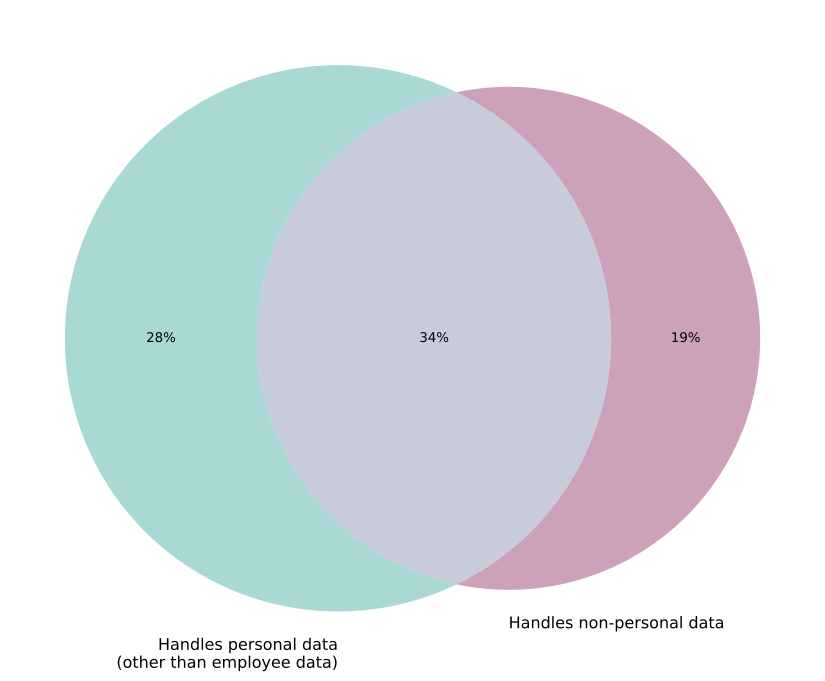
The survey found that around 83% of UK businesses handled some form of digital data, with almost all businesses with 10 or more employees doing so. This reflects findings from wave 1, where 86% of UK businesses reported handling digital data. Handling data includes collecting, processing or storing any data in a digital form. These results are broadly consistent with the UK business data survey (UKBDS, 2024). When looking at the types of data handled, 28% of businesses said they solely handle digital personal data (other than employee data), while 19% solely handle non-personal data, consistent with the UKBDS (2024). Around one in three (34%) said that they handle both personal and non-personal data (Figure 1).
Figure 1: Percentage of businesses handling personal and non-personal data (other than employee data)
Base: 3,796 UK businesses
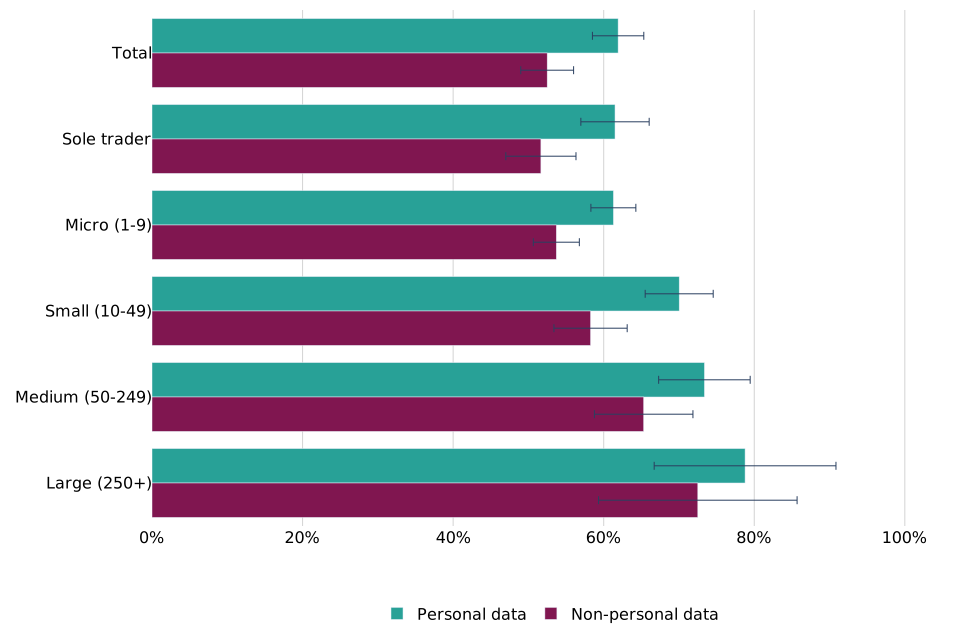
Handling of these data types differed across business size, with personal data handling (other than employee data) ranging from 62% of sole traders to 79% of large businesses (Figure 2). Large businesses were more likely to handle non-personal data compared with sole traders and smaller businesses. These findings are reflective of the UKBDS (2024) where 58% of UK businesses reported handling personal data (other than employee data) and 47% reported handling non-personal data.
Figure 2: Percentage of businesses handling personal and non-personal data (other than employee data), by size
Base: 3,796 UK businesses
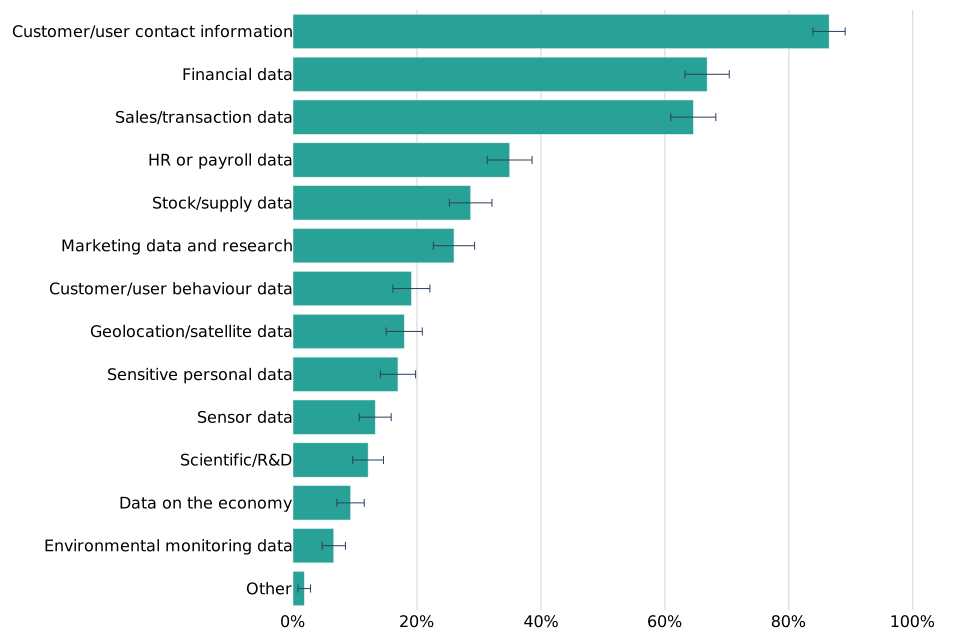
Businesses that handle digital data were asked what types of data they work with. The most common type of data was customer data, with 86% of businesses saying they worked with this data type (Figure 3). Most businesses that handle digital data also worked with financial or accounting data (67%) or sales data (65%). For some of the less commonly used data types, there was greater variation between business sizes. For example, 26% of businesses that handle digital data work with market research data, but this ranges from 23% of sole traders to 39% of medium businesses and 73% of large businesses. Fewer businesses use specialised data types such as sensor data (13%), for example from machinery or CCTV, or scientific and research and development (R&D) data (12%).
Figure 3: Percentage of businesses that handle digital data that work with each type of data
Base: 3,380 UK businesses that handle digital data
Use of geolocation and satellite data rose to 18%, up from 8% in wave 1, particularly among sole traders (17%, previously 8%) and micro businesses (20%, previously 7%). This increase in geolocation data use may reflect broader industry trends, as highlighted in the Geospatial Sector Market Report (2024), which found over 2,600 UK companies now consider geospatial data central to their operations. Some businesses may also be including location-based advertising in this category. The larger sample size in the latest wave could also explain the rise. Future research might help determine if this is a lasting trend.
There were also sectoral differences in data use. Geolocation data was most commonly used by businesses in Transport and Storage (H) and Agriculture, Forestry and Fishing (A), with 48% and 43% respectively reporting its use, both considerably higher than other sectors. Businesses in the Financial and Insurance (K) sector were the most likely to use sensitive personal data (65%), follow by those in Human Health and Social Work (Q) at 48%. Stock and supply data was most likely to be used in the Wholesale and Retail, Repair of Motor Vehicles (G) sector (64%), with high usage also observed in Agriculture, Forestry and Fishing (A) (57%) and Manufacturing (C) (50%).
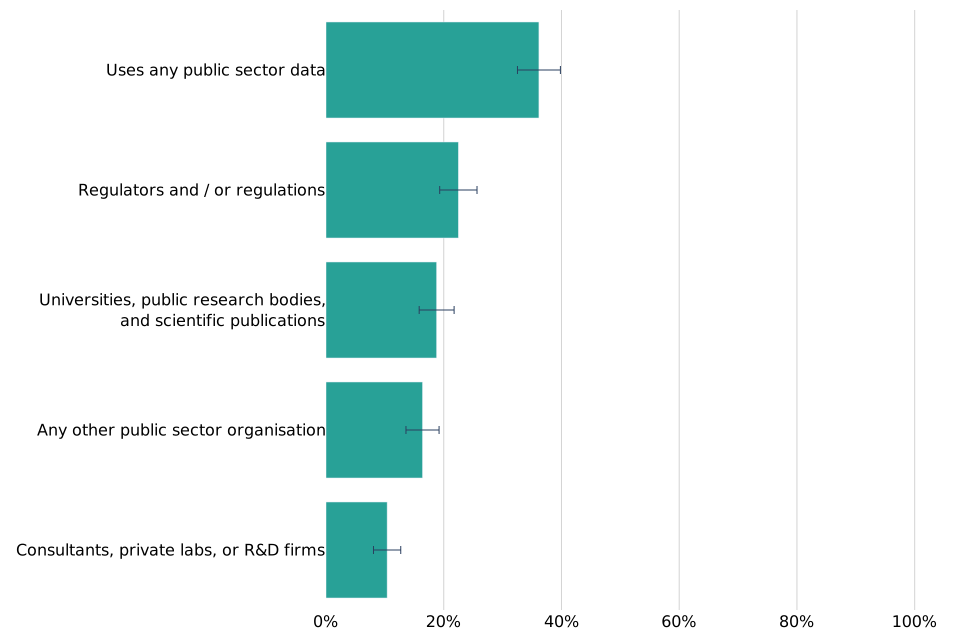
Of UK businesses that handle digital data, 36% draw on public data sources. Many UK businesses turn to regulatory data (22%), while others look to academic and scientific sources (19%), including universities and public research bodies, shown in Figure 4 (below). Large businesses were the most likely to use public sector data (82%) with usage gradually declining as business size decreased, down to just one-third (33%) of sole traders making use of these data sources. This pattern likely reflects the greater capacity of larger firms to process and apply public sector data, and their incentives to ensure compliance and support long-term strategic planning.
Figure 4: Percentage of businesses that handle digital data that work with each source of public sector data
Base: 3,380 UK businesses that handle digital data
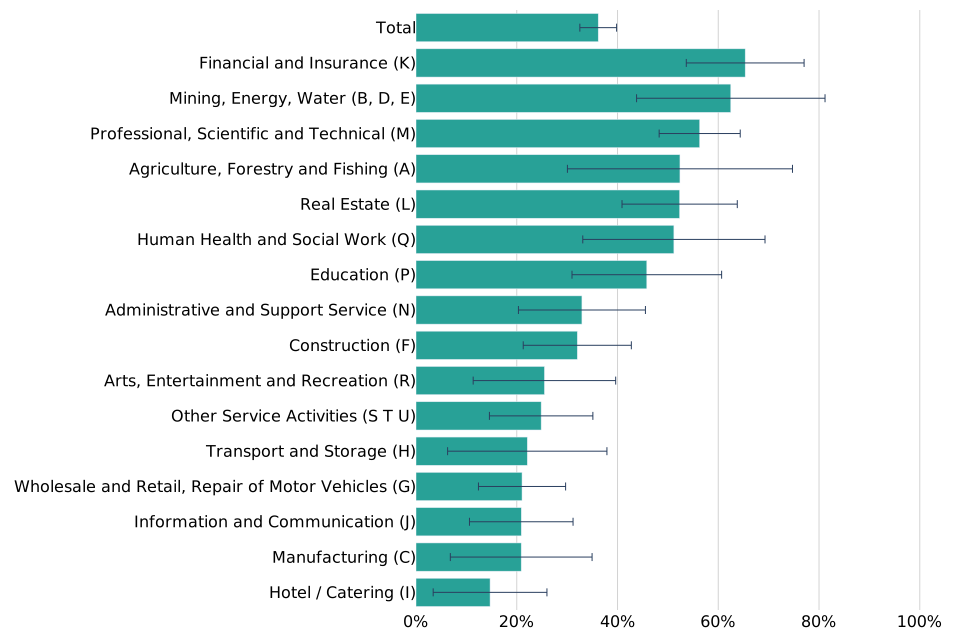
Use of public sector data varied across industry sectors. The Financial and Insurance sector (K) reported the highest usage, with 65% of businesses indicating they had used public sector data. Mining, Energy and Water (B, D, E) and Professional, Scientific and Technical sector (M) also showed relatively high usage rates, at 62% and 56% respectively. In contrast, sectors such as Information and Communication (J), Manufacturing (C), and Hotel and Catering (I) were among the least likely to report using public sector data (see Figure 5). While overall data usage does not appear strongly correlated with public sector data use, the pattern suggests that more regulated industries may rely on public datasets to meet compliance or operational needs.
Figure 5: Percentage of businesses that use any public sector data, by sector
Base: 3,380 UK businesses that handle digital data
Of businesses that analyse data, 44% use public sector data, while only 16% of those that do not analyse data do so, indicating that analytical activity is a key driver of public sector data usage. This relationship extends to investment behaviour, with 10% of businesses that use public sector data invest in raw data and databases compared to 3% of non-users, and among businesses that invest in raw data, 63% use public sector data compared to 34% of those that do not (additional insights on data analysis and investment be found later on in the report). Taken together, these findings highlight that data maturity, particularly analytical engagement and investment in raw data, may be associated with public sector data use. Taken together, these findings suggest that mature data users, those actively engaged in analysis and investment, are more likely to also use public sector data.
3.2. Use of artificial intelligence-based technologies
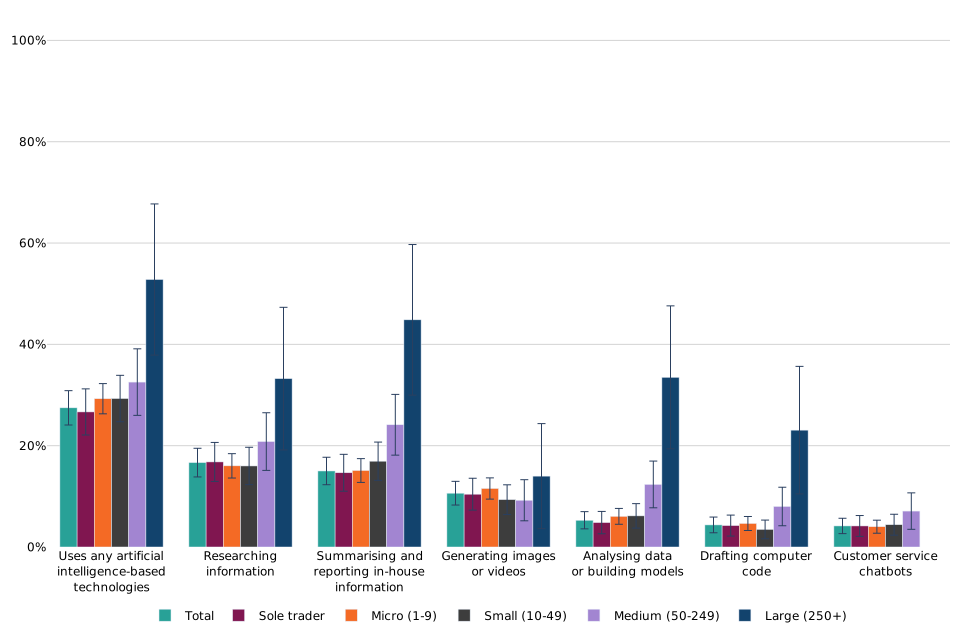
Among UK businesses that handle digital data, 27% use artificial intelligence-based (AI) technologies. The primary use case for AI technologies was for handling data, with 17% using AI for research purposes and 15% using AI to summarise or collate information (Figure 6). More than half (56%) of UK businesses in the Professional, Scientific and Technical sector (M) reported using AI technologies, making it the sector with the highest reported usage. The Information and Communication sector (J) followed at 42%, with both sectors showing greater uptake than most others.
Figure 6: Percentage of businesses that use artificial intelligence-based technologies for these purposes
Base: 3,380 UK businesses that handle digital data
Figure 6 also shows that large businesses that handle digital data are the most active users of AI technologies (53%), especially for complex tasks like analysing or building models (33%) and drafting computer code (23%). In contrast, sole traders report minimal use for these tasks, at just 5% and 4% respectively, and instead reported use of AI primarily for summarisation or gathering of information. According to the Business Insights and Conditions Survey (BICS, Oct 2024), around 15% of UK businesses use some form of AI technology (regardless of whether the handle digital data or not), with adoption highest among large businesses at 30%. This suggests that larger businesses are better positioned to adopt AI due to greater resources and technical capacity.
UK businesses that handle digital data and use AI tools tend to work with certain types of data than those that do not use AI tools. These include customer and user behaviour data (90%), marketing data and research (47%), economic data (16%), and scientific, analytical or R&D data (21%). This pattern may reflect sectoral differences, with higher AI adoption seen in industries such as Professional, Scientific and Technical (M) and Information and Communication (J). It may also suggest that AI is being used for more advanced and specialised data tasks. Businesses that use AI tools were more likely to analyse data (82%) compared to those that do not (68%), indicating a link between AI adoption and data-driven practices (additional insights on data analysis are provided in section 3.3 Analysis of data). Overall, these businesses appear to be positioning themselves for more sophisticated and evidence-based strategies.
Geographic location also appears to play a role in AI adoption. Businesses in London that handle digital data were more likely to report using AI tools (42%) than those elsewhere in the UK (26%). A similar pattern was observed among businesses collectively based in London, the South East or the East, compared to those based elsewhere. This variation may reflect regional differences in access to digital infrastructure, talent and investment, as well as the concentration of data-intensive sectors and larger firms in the capital. This aligns with findings from the Artificial Intelligence Sector Study (2024), which highlights London as an important hub for AI activity, with strong sectoral and regional variation across the UK.
3.3. Analysis of data
Of all businesses that handle digital data, 72% said they analyse the data they work with, either internally or externally, consistent with wave 1. Most UK businesses (64%) said they analysed this data internally (for example, through in-house software engineers), while 8% reported doing so both internally and externally, such as via business intelligence specialists. However, no businesses reported relying solely on the external analysis of their data, consistent with the previous wave’s findings.
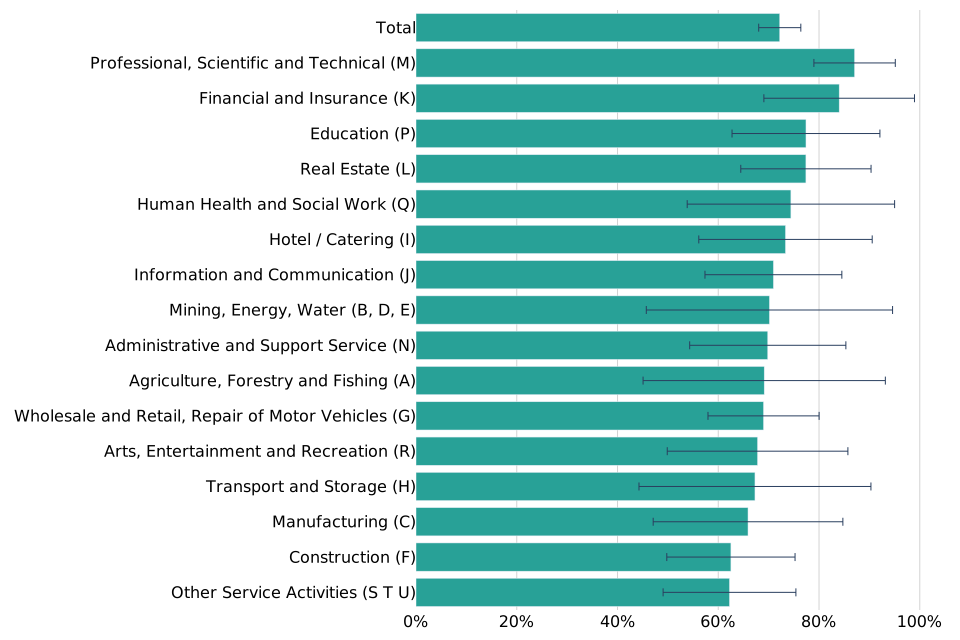
Among large businesses, 94% said they analyse any of these data types (either internally or externally), compared with 70% of sole traders. The Professional, Scientific and Technical sector (M) was the most likely to analyse data, either internally or externally, with 87% of businesses reporting this activity, followed by the Financial and Insurance sector (K) at 84% (Figure 7). The Professional, Scientific and Technical sector (M) also had the highest proportion of businesses that exclusively analysed data internally at 78%. Other sectors with high levels of internal data analysis included Financial and Insurance (K) and Education (P).
Businesses that analyse data tend to work with a broader range of data types, with a mean of 4.6 types and a standard deviation of 2.2, compared to a mean of 2.6 types with a standard deviation of 1.8 among those that do not analyse data. This pattern indicates a link between data diversity and analytical maturity, suggesting that businesses which analyse data tend to engage with a wider variety of data sources than those who do not. These businesses also appear to make greater use of strategic and specialised datasets, with the largest differences in financial data (74% compared to 48%), sales data (71% compared to 47%), and marketing research data (33% compared to 8%). These businesses are also more likely to work with behavioural and sensitive personal data, as well as niche sources such as environmental monitoring and geolocation data.
Figure 7: Percentage of businesses that analyse data (either internally or externally), by sector
Base: 3,380 UK businesses that handle digital data
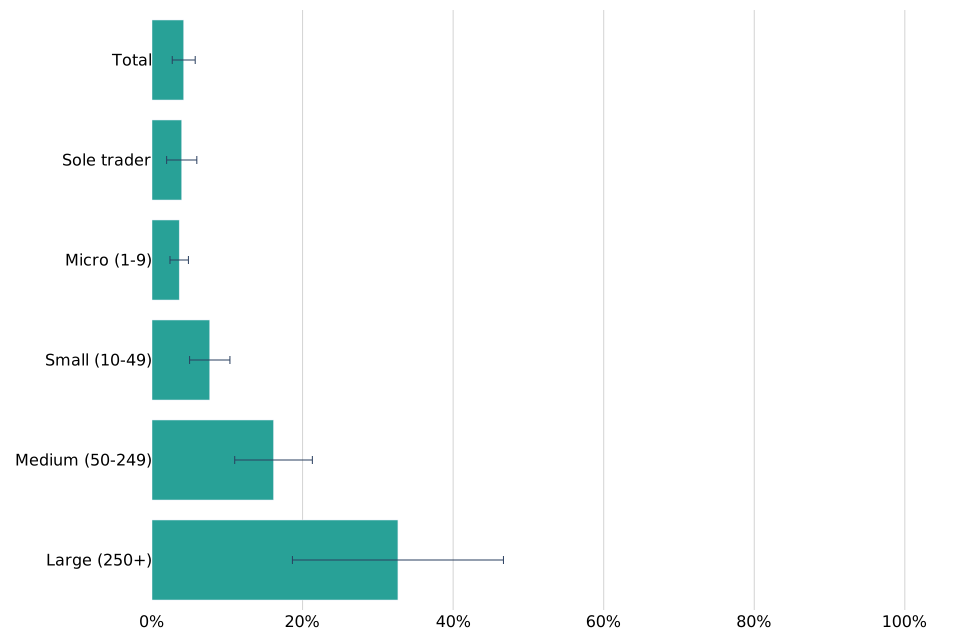
Just 4% of UK businesses that handle digital data report analysing big data, defined as high-volume or high-variety datasets. Usage varies by size: 4% of sole traders and micro firms, 16% of medium businesses, and 33% of large businesses (Figure 8). This likely reflects the larger datasets held by bigger firms, often over 100,000 individuals’ data, and their greater capacity to support big data analysis, as evidenced in the UKBDS (2022).
Figure 8: Percentage of businesses that analyse big data, by size
Base: 3,380 UK businesses that handle digital data
3.4. Data collection and sharing
Most businesses that handle digital data reported collecting data (80%), down 12 percentage points compared to the first wave of research (92%). Among those handling digital data, most collect data internally (60%), such as through primary research. This represents a 9 percentage point drop compared to the previous wave and was most notable among micro (62%) and small businesses (58%), which saw respective drops of 11 and 14 percentage points (Figure 9). Only 5% rely exclusively on external sources, while 15% use a combination of internal and external collection, with large businesses (46%) being the most likely to use this combined approach.
These changes should be interpreted cautiously. Questionnaire wording and the position of this question in the survey were revised between waves, which may have influenced responses. For example, the updated phrasing aimed to improve clarity but could have led to fewer businesses recognising activities they already undertake. A larger and more diverse sample in the second wave may also have contributed to this variation. Therefore, the decline may reflect differences in interpretation rather than a substantiative shift in behaviour (see section 4. Limitations for further detail).
That said, it may also indicate a gradual move towards external support for data-related tasks. The UKBDS (2024) found that large businesses are more likely than smaller ones to outsource IT services for storing and processing data. This may suggest a growing reliance on third-party providers for data tasks, possibly driven by cost considerations, infrastructure constraints, and the complexity of managing large data volumes.
Figure 9: Percentage of business sizes that exclusively collect data internally, by wave
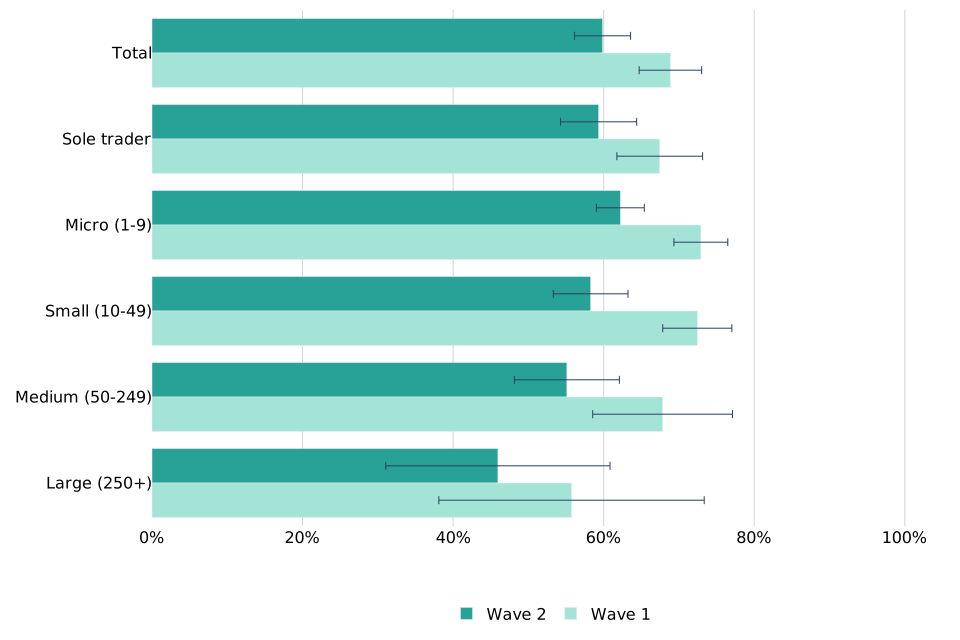
Base: 3,380 UK businesses that handle digital data (wave 2), 1,820 UK businesses that handle digital data (wave 1)
UK businesses were asked whether they share or sell digital data, including summaries or analysis, with other organisations. Compared to the previous wave of research, the proportion of UK businesses reporting that they do so fell by 8 percentage points, down to 15% (Figure 10). This decline was most notable among sole traders, micro and small businesses. Larger businesses were more likely to engage in data sharing or selling, with 61% reporting that they do so. While data sharing is not uncommon, it indicates that it is mostly carried out by a limited number of businesses.
The decline in reported data sharing may have been influenced by the fall in businesses sharing data with public bodies, which dropped from 12% in wave 1 to 6% wave 2. It may also reflect structural changes in the questionnaire. In wave 1, businesses reported separately on whether they shared or sold data with employees, customers, or other individuals, and other businesses. In wave 2, these were combined into a single category: “customers or suppliers (e.g. businesses or individuals)”. This difference in wording may have influenced how respondents interpreted the question, which in turn may have affected their answers.
Figure 10: Percentage of business sizes that share or sell data with other organisations, by wave
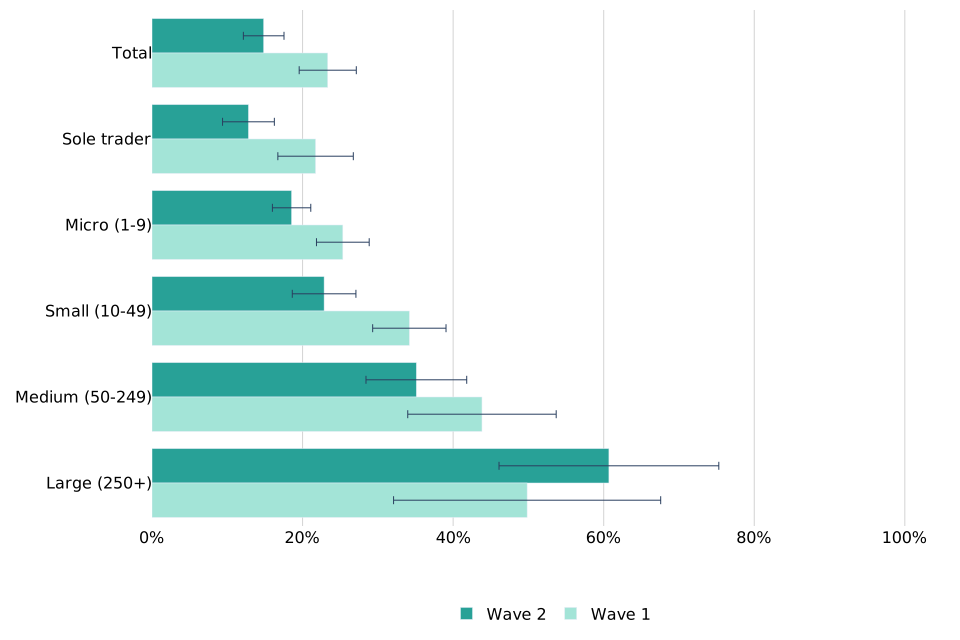
Base: 3,380 UK businesses that handle digital data (wave 2), 1,820 UK businesses that handle digital data (wave 1)
Among UK businesses that handle digital data, only 6% report sharing or selling data with public bodies. However, among businesses that also use public sector data, 12% share or sell their own data with public bodies. This suggests that businesses engaged in using public sector data are more likely to also participate in data sharing with public bodies.
Among the 36% of UK businesses that use public sector data, only 4% both utilise this data and actively share or sell their own data to public bodies, ranging from 3% of sole traders to 44% of large businesses (Figure 11). These figures suggest a more reciprocal data relationship between larger businesses and the public sector. Overall, these findings highlight a growing divide in data-sharing practices. Larger businesses are more engaged with public bodies, while smaller businesses show limited involvement - likely due to resource constraints, regulatory uncertainty, or perceived risks. Larger firms may also be better positioned or motivated to share data, due to factors such as clearer incentives or more established data infrastructure.
Figure 11: Percentage of businesses that use public sector data and share or sell data with public bodies
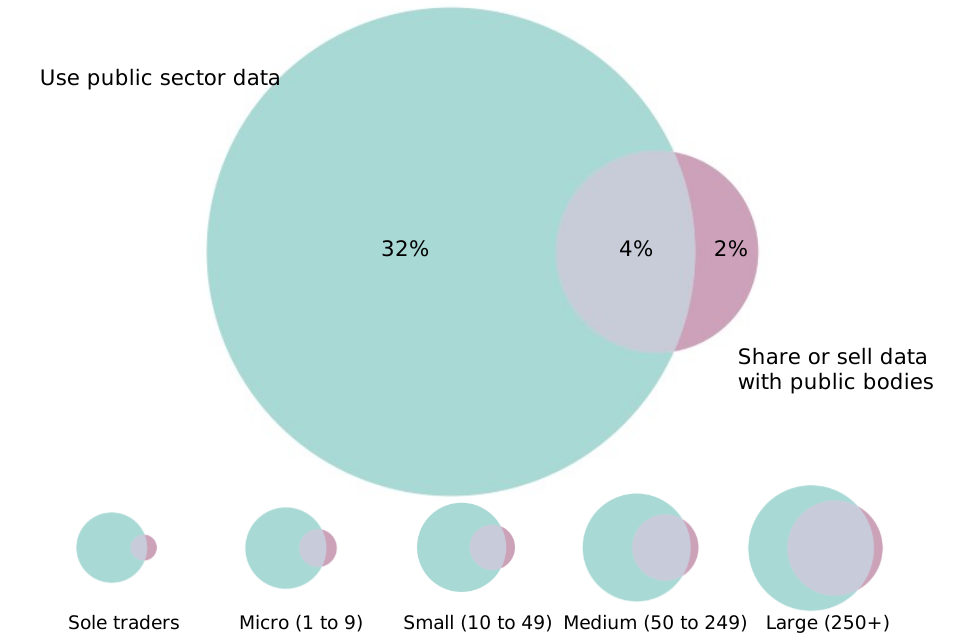
Base: 3,380 UK businesses that handle digital data
3.5. Data assets and investment
UK businesses were asked to estimate the amount spent on various assets as a percentage of turnover. From this, estimates were calculated for the mean and median investments in GBP (£) that are representative of the UK business population. The mean investment as a share of turnover in plants, machines, IT and other equipment, was 9% compared to a median of 5%, suggesting a skew caused by a few high-investing businesses. These figures include the 25% of businesses that did not invest in plants, machines, IT or other equipment in the last 12 months. For investment in IT alone, the mean was 4% against a median of 1%. Investment in personnel (among businesses with employees) was notably higher, with a mean of 33% against a median of 30%.
Businesses handling digital data were asked whether they had invested in intangible assets (that don’t have financial or physical form) in the last year. Unlike the above figures, which are represented as a share of turnover, the following data reflects the proportion of businesses reporting any level of expenditure on these assets. Branding (40%) and computer software / database systems (39%) were the most common investments, while fewer invested in R&D (11%) and raw data or databases (6%) (Figure 12). These trends align with previous findings, suggesting continued prioritisation of branding and software, while lower investment in data assets and R&D may reflect sector-specific needs or reduced focus on long-term innovation.
Figure 12: Percentage of businesses investing in each intangible asset in the last 12 months
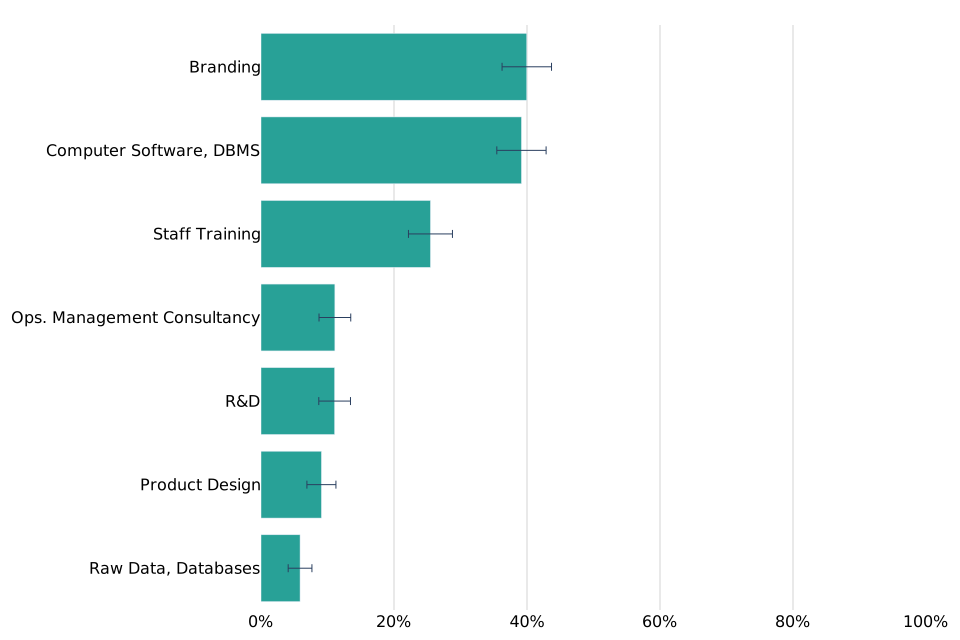
Base: 3,380 UK businesses that handle digital data
As shown in Figure 13, there was an increase in the number of businesses reporting no investment in staff training over the last 12 months, rising from 58% to 70% in the most recent wave of research. This increase was largely driven by sole traders, 80% of whom reported no training investment, up from 65% in the previous wave. This group may face different priorities or resource constraints compared to larger businesses with employees, which may help explain this difference. The rise may also reflect the doubling of the sample size between waves.
Figure 13: Percentage of businesses not investing in staff training in the last 12 months, by wave
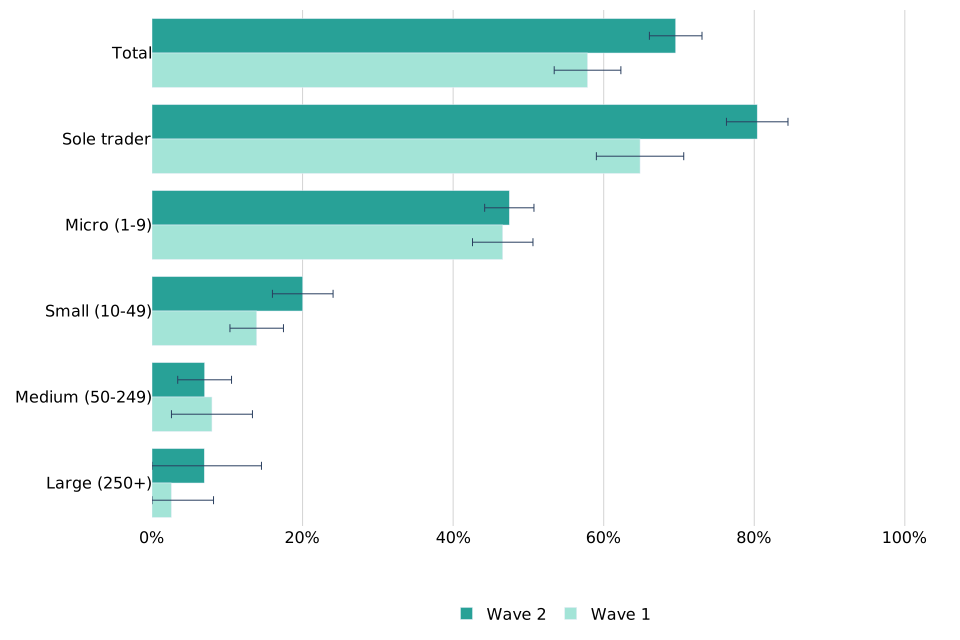
Base: 3,380 UK businesses that handle digital data (wave 2), 1,820 UK businesses that handle digital data (wave 1)
Over the last 12 months, businesses that handle digital data invested an average of £2,359 in “data intangible assets”, computed as the sum of reported investments on raw data and databases, and computer software and database management systems (DBMS). However, like businesses’ capital tangible investment, this spending is unevenly distributed. Shown in Figure 14, more than half of these businesses (excluding those who responded “don’t know”) invested less than £500, while fewer than 10% reported investing over £5,000. These findings are consistent with the previous wave of research.
Figure 14: Distribution of business investments in data intangible assets
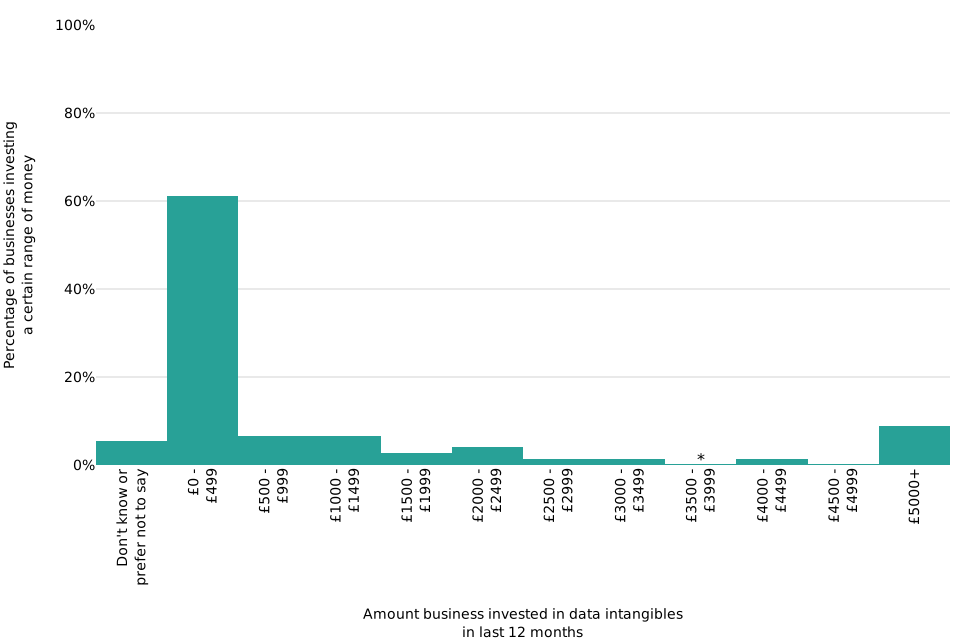
Base: 3,380 UK businesses that handle digital data.
Note: *suppressed due to small numbers
Businesses that invest in data-related assets appear to engage with different types of data. Those investing in raw data or databases were more likely to use geolocation data or satellite imagery (21% compared with 5%). Businesses investing in computer software or database management systems (DBMS) were more likely to work with operational and analytical data such as sales or transaction records (73% compared with 60%), HR or payroll data (40% compared with 29%), scientific or R&D data (19% compared with 7%), and economic data (14% compared with 6%). Businesses investing in both types of assets were more likely to use customer behaviour, market research, and environmental monitoring data, than those not investing, suggesting that investment choices may be linked to the type of data businesses use.
3.6. Employment of analytical roles
Businesses that handle digital data and employ at least one person were asked whether they have staff in analytical roles. Shown in Figure 15, nearly half (48%) of UK businesses reported employing at least one individual in such a role. More than one in four businesses (28%) reported employing business and administration analysts, followed by marketing or survey experts (20%), IT or software developers (15%) and scientists and engineers (13%).
Large businesses were more likely to employ staff in analytical roles (91%) compared to all other business sizes: medium (61%), small (56%) and micro (45%). Among the various analytical roles, business and administration analysts were the most employed (28%). More specialised roles, such as IT and software developers (15%) and scientists and engineers (13%), were found in a smaller share of businesses.
Figure 15: Analytical roles employed by businesses that handle digital data
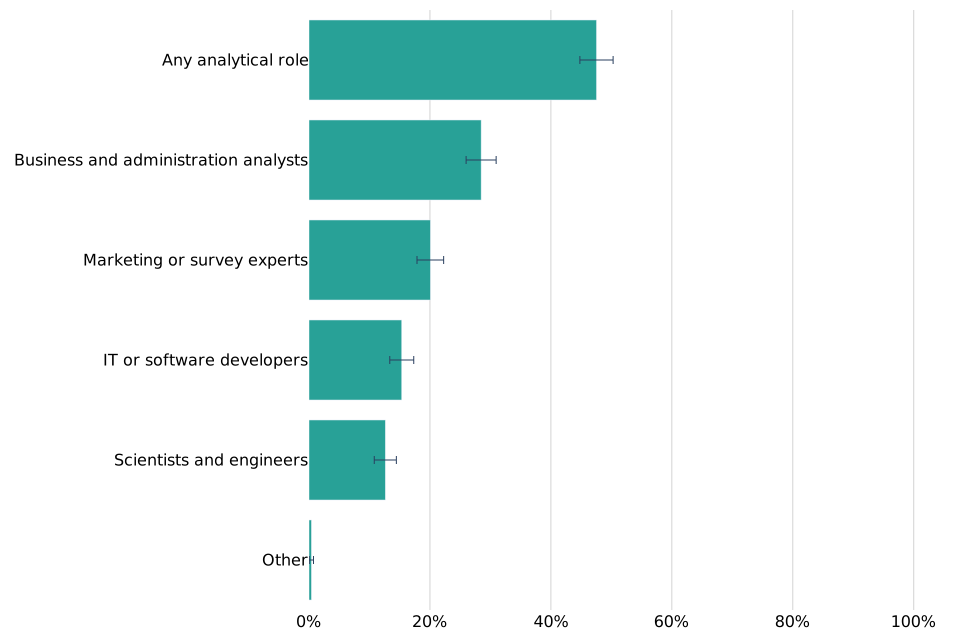
Base: 2,740 UK businesses with employees that handle digital data
Employment of analytical roles also varied by sector (Figure 16). The Information and Communications sector (J) was the most likely to employ these roles (74%), followed by the Professional, Scientific and Technical (M) and Real Estate (L) sectors (Figure 18). Within specific analytical roles, IT or software developers were most commonly employed in the Information and Communications (J) sector (59%). Scientists and engineers were most prevalent in Manufacturing (C) at 30%, Professional, Scientific and Technical (M) at 28%, Mining, Energy, Water (B, D, E) at 27%, and Information and Communications (J) at 26%. Business and administration analysts were most employed in the Financial and Insurance (K) sector at 37%, while marketing or survey experts were most common in the Arts, Entertainment and Recreation (R) sector at 40%.
These findings highlight the uneven distribution of analytical roles across UK businesses, influenced by both size and sector. They suggest that access to analytical expertise tends to be concentrated in larger, data-intensive sectors, with varying needs for expertise depending on the industry.
Figure 16: Percentage of businesses that handle digital data and employ analytical roles, by sector
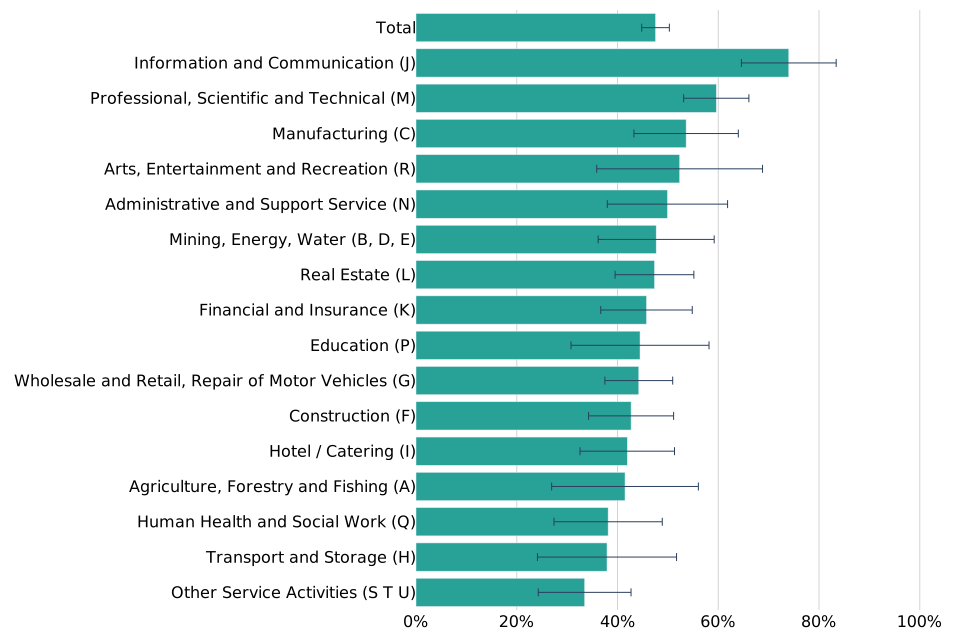
Base: 2,740 UK businesses with employees that handle digital data
3.7. Data skills
Changes in question wording and sample composition between waves may have influenced the patterns observed in this data (see section 4. Limitations). In particular, the larger sample size and revised phrasing could affect how businesses interpreted and responded to questions about data skills, therefore any apparent differences between waves should be interpreted with caution.
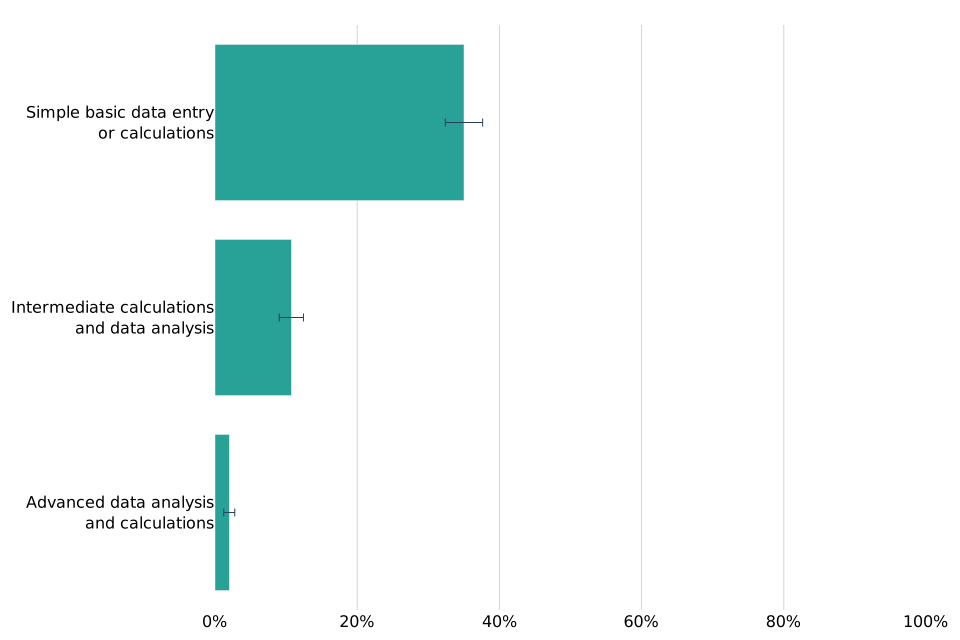
Businesses that handle digital data and employ staff were asked to estimate how many of their roles require specific data skills. Businesses were most likely to report that at least half of their roles required basic skills (35%), such as simple data entry and calculations (Figure 17). Large businesses were the most likely to need these skills, with 50% stating that at least half of their roles require them. Intermediate skills, such as data analysis and calculation, were required in at least half of roles by 11% of businesses. Among large businesses, only a small proportion reported needing these skills in more than half of roles. Advanced data skills were even less common, with just 2% of businesses indicating that more than half of their roles required them.
Figure 17: Data skills required in at least half of roles by businesses that employ staff and handle digital data, by wave
Base: 2,740 UK businesses that handle digital data, with employees (wave 2)
Among businesses that employ staff, handle digital data, and require advanced skills, 72% have employees in analytical roles. This was particularly evident in larger businesses, where almost all (95%) businesses that reported requiring advanced data skills also reported employed any analytical role. These findings suggest that while advanced data capabilities remain relatively rare across the broader workforce, they are concentrated within specific professional domains where data-driven decision-making and technical proficiency are core to the role.
Sole traders that handle digital data showed a similar pattern to businesses with employees when reporting the need for data skills, reflecting trends observed in both groups from the previous wave. A large majority (80%) said they regularly require basic data skills, such as simple data entry or calculations, in their roles. This figure dropped to 35% among those who reported regularly needing intermediate skills, such as data analysis and more complex calculations. Only a small proportion (8%) indicated that they require advanced data analysis and calculation skills.
3.8. Data assets
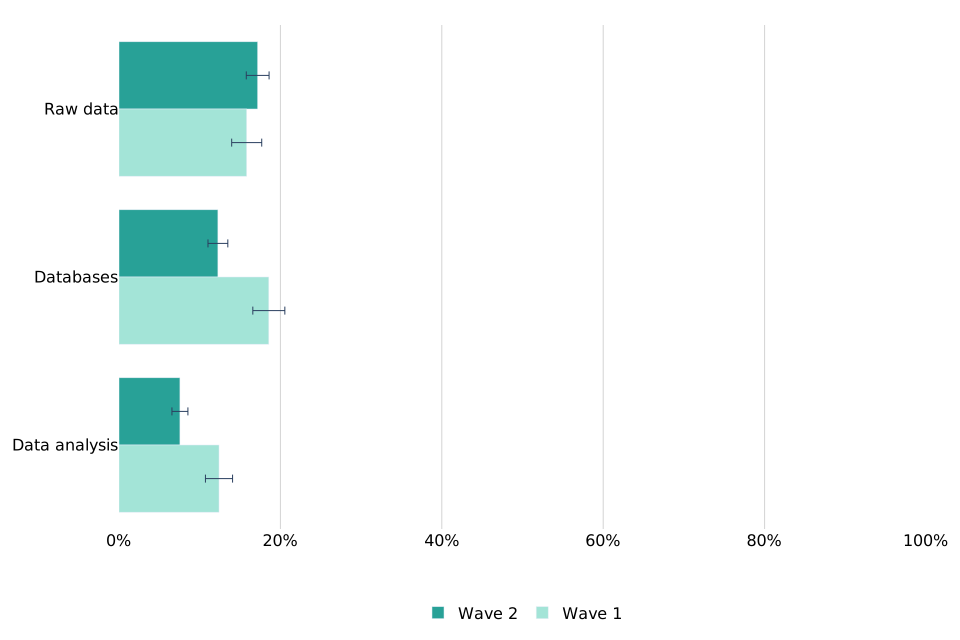
Among businesses that handle digital data, 17% had more than half of their staff involved in production of raw data (data that hasn’t been cleaned or organised), consistent with the previous wave (Figure 18). Large businesses saw the greatest increase in this area, with 25% reporting that more than half of their staff were involved in raw data production, compared to very few previously. As explored in the report, large businesses also appear to carry out data analysis internally and use a combination of internal and external data collection methods, suggesting a more integrated and data-driven approach.
However, the proportion of UK businesses producing databases (data that has been structured so it is suitable for analysis or visualisation) fell by 7 percentage points to 12%, and those conducting data analysis dropped by 4 percentage points to 8%. These declines were primarily observed among micro businesses, whose sample size nearly doubled in the latest wave. These differences in staff involvement across business sizes may therefore reflect a broader range of responses rather than a genuine change in practice (see section 4: Limitations).
Changes to question wording should be considered when interpreting the scale of change. The combined percentage of businesses producing either raw data or databases was 21%, like the 25% reported in the previous wave. This suggests that differences in how respondents interpret these terms may be influencing results. Therefore, while there may be a broader trend of raw data becoming more embedded in businesses operations, this would be premature to say.
Figure 18: Percentage of businesses requiring the production of different types of data assets in more than half their job roles, by wave
Base: 2,740 UK businesses that handle digital data, with employees (wave 2), 1,480 UK businesses that handle digital data, with employees (wave 1)
Among businesses where staff were engaged in producing digital data assets, respondents estimated mean time spent as 20% on raw data, 18% on databases, and 17% on data analysis, representative of the UK business population. In contrast, across all UK businesses that handle digital data, the mean time spent on these activities was lower: 8% on raw data, 6% on databases, and 8% on data analysis. These figures are consistent with the previous wave of research and suggest that, while data asset creation is more prominent in businesses with high staff involvement, most data-related activities tend to stay within individual firms and remain relatively small in scale, rather than becoming a widespread, collaborative effort across industries.
3.9. Innovation
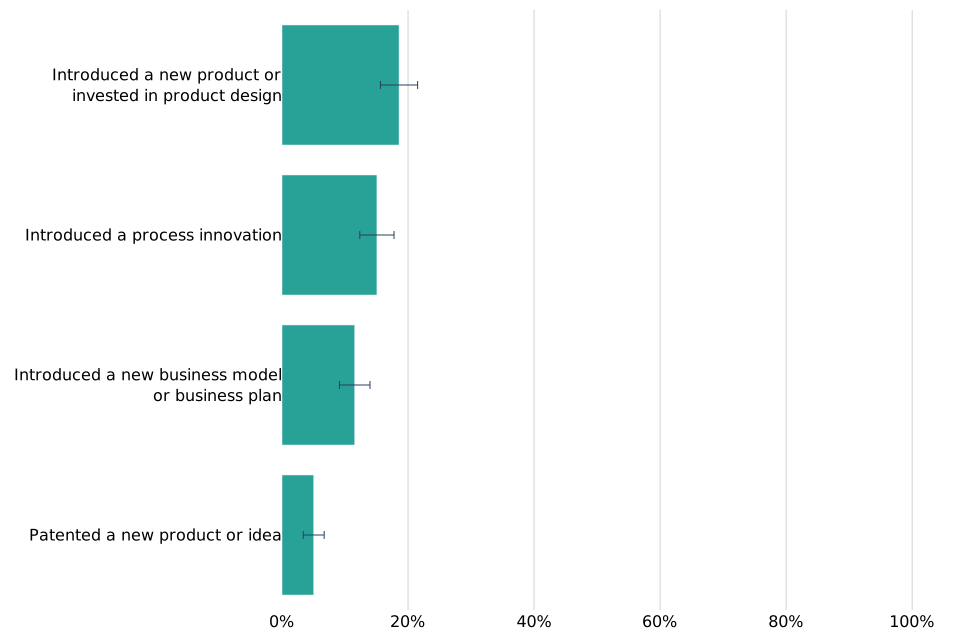
In the last 12 months, nearly one in five businesses that handle digital data (19%) have launched a new product or invested in product design (Figure 19). Additionally, 15% introduced process innovations, defined as new or improved methods for producing goods or delivering services, with large businesses (63%) being particularly active in this area. These patterns are consistent with findings from the previous wave.
Large businesses also stood out for intellectual property activity, with 26% reporting having patented a new product or idea, an increase compared to the previous wave, where very few had done so. The proportion of businesses introducing product innovations reflects broader trends observed in the UK Innovation Survey (UKIS, 2023), which found that rates of product innovation among large businesses have remained relatively stable over time (22% in 2016 to 2018, rising to 27% in both 2018 to 2020, and 2020 to 2022), suggesting that Wave 1 may have been an anomaly rather than indicative of a wider shift and may reflect changes in the sample composition between waves (see 4. Limitations).
Figure 19: Activities undertaken by businesses in the last 12 months
Base: 3,380 UK businesses that handle digital data
Businesses that handle digital data and use artificial intelligence (AI) technologies were also more likely to have innovated in the last 12 months than those not using these tools. Among those using AI tools, 33% introduced a new product or invested in product design, 32% introduced a process innovation and 24% introduced a new business model or business plan, with these activities skewed towards large businesses. This may suggest an emerging divide in innovation by business size, with larger businesses, equipped with greater resources and infrastructure, appearing to engage more actively than sole traders and smaller businesses.
Businesses employing analytical roles were also more likely to report higher rates of innovation activity compared with those that do not. Among businesses handling digital data and employing analytical roles, 31% introduced a new product and 31% implemented a process innovation, while 9% reported patenting a new product or idea and 27% adopted a new business model. In contrast, businesses without analytical roles reported lower rates of innovation, with 16% introducing a new product, 12% implementing a process innovation, 4% patenting a product or idea, and 12% adopting a new business model. These figures indicate an association between the presence of analytical roles and innovation capacity across multiple dimensions.
Investment in digital and data-related assets also appears to be associated with higher innovation outcomes. Among businesses investing in computer software and database management systems (DBMS), 25% introduced a new product or invested in product design compared with 13% of non-investors. Investment in raw data or databases was more closely linked with strategic change, with 26% introducing a new business model compared with 10% of businesses not investing.
Research and development (R&D) showed the highest reported differences between investment, with nearly half (46%) of firms investing in R&D introducing a new product or investing in product design compared with only 14% of non-investors, and 38% implementing process innovations compared with 11%. Investment in product design itself appears to be linked with the highest innovation rates, with 64% introducing a new product compared with 13% and 23% securing patents compared with 3%.
Other areas also show differences, including operations management consultancy where 32% of investing businesses also introduced new products compared with 17%, while branding and staff training appear more targeted, with branding associated with new business models and training linked to similar strategic changes. Overall, these findings suggest that R&D and product design are most strongly associated with innovation outcomes, while digital infrastructure and data capabilities are consistently linked to broader innovation strategies.
3.10. Data access and benefits
The survey indicates mixed experiences among businesses regarding access to data and the outcomes of using it. Among those handling digital data, 42% of respondents agreed, either strongly or somewhat, that their business has access to findings from data analysis or processing. Similarly, 46% agreed that data analysis or processing supports their business decisions. Agreement with both statements increased with business size, with large businesses most likely to agree, suggesting that scale may afford greater access to analytical resources or infrastructure.
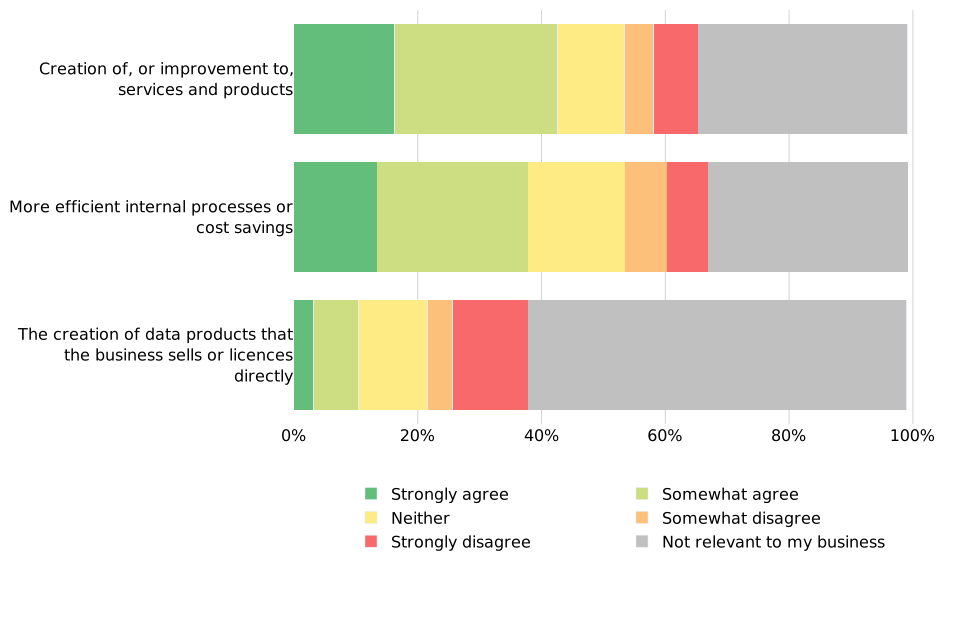
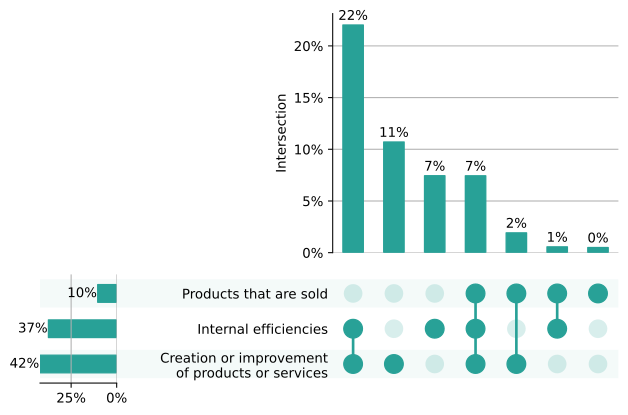
Businesses that handle digital data were also asked about the perceived benefits of data use and analysis, in the last 24 months. As shown in Figure 20, 43% agreed that acquiring, collecting, or analysing data contributes to the creation or improvement of services and products. Additionally, 38% agreed that data use leads to more efficient internal processes or cost savings. In contrast, only 10% agreed that data use results in the development of data products that their business sells or licenses directly. Again, large businesses were most likely to agree, reinforcing the trend that larger organisations may be better positioned to realise tangible benefits from data use.
Agreement with each of these three statements declined compared to the previous wave, by 13, 16, and 8 percentage points, respectively. These shifts are likely influenced by changes to the question wording and a broader sample in the latest wave, particularly among larger businesses (see section 4. Limitations).
Figure 20: Outcomes of data use for businesses
Base: 3,380 UK businesses that handle digital data
Note: some data are suppressed due to small numbers, which is why not all categories sum to 100%
There is some overlap in the benefits businesses report from using digital data. Among those handling digital data, 7% agreed that it contributed to all three outcomes: improving or creating products and services, developing data-driven products for sale or licensing, and improving internal efficiency or reducing costs (Figure 21). A further 22% of businesses agreed that data use supported both the creation or improvement of products / services and internal efficiencies.
This suggests that while only a small number of businesses are seeing all these three benefits of using digital data, a larger group is starting to see two main advantages – particularly in innovation and operational improvement. Overall, the findings suggest that data has the potential to deliver value in different ways, but many businesses may still be in the early stages of unlocking its full potential.
Figure 21: Outcomes of data use for businesses
Base: 3,380 UK businesses that handle digital data
UK businesses that collect or analyse digital data were more likely to report operational and product-related benefits, than those who do not. For example, 51% of businesses that analyse data agreed that the use of data, in the last 24 months, led to the creation or improvement of services and products, compared to 19% among those that do not analyse data. Similarly, 47% reported more efficient internal processes or cost savings, compared to 14% of non-analysers.
A similar pattern appears for businesses that collect data, with 47% reporting that data use led to improved services or products, compared to 22% among those that do not. In addition, 43% reported greater efficiency or cost savings, compared to 17% of non-collectors. However, far fewer businesses reported creating data products for sale or licensing, with only 13% of those that analyse data, and 11% of those that collect data, agreeing with this statement. Overall, the findings suggest that businesses investing in data practices are better positioned to innovate and streamline operations, even if direct commercialisation remains limited.
4. Limitations
4.1. Financial reporting issues
This study has several important limitations. Firstly, the reliability of self-reported financial data. Some businesses provided turnover figures that appeared unusually high for UK-only operations, especially when compared to their reported staff numbers. These inconsistencies were confirmed by checking against other sources such as the Office for National Statistics’ (ONS) Inter-Departmental Business Register (IDBR) data.
More broadly, continuous variables such as turnover, and derived metrics like capital investment as a percentage of turnover or spending on raw data and databases, may be affected by measurement errors due to misreporting or misunderstanding. These issues highlight the challenges of relying on self-reported data, where respondents may interpret questions differently or lack access to precise figures. To improve data quality, the wording of relevant survey questions will be reviewed and refined ahead of the next wave.
4.2. Limitations in measuring time spent
There were also challenges in how some respondents interpreted time-related questions in the first survey wave. For instance, several businesses, both large and small, reported that staff in certain roles spent more than 100% of their time producing different types of data assets. These responses were excluded from the wave 1 dataset and the survey was updated for wave 2 to avoid this. After this change, no significant differences were found between time spent of staff in creation of data assets. It’s plausible that some participants interpreted it as asking about time spent using data assets, where overlap is more likely. In larger businesses, even when the question was understood, estimating time spent producing data assets in specific roles may have been difficult, particularly in decentralised teams where such activities are spread across departments.
4.3. Questionnaire changes between waves
When comparing results across survey waves, subtle changes in questionnaire design may have influenced how respondents answered certain questions. For example, in wave 1, the statement agreement questions (Q13 and Q14) included “Don’t know” as a visible response option. In wave 2, however, “Not relevant to my business” was introduced, while “Don’t know” and “Prefer not to say” were moved to hidden options that were provided only if respondents provided certain responses.
Although these changes may seem minor, they can influence how people respond by offering different ways for participants to express uncertainty or disengagement. In some cases, this may have led to fewer respondents choosing to agree or disagree, not necessarily because their views changed, but because they were not required to take a clear stance. For example, disagreement in wave 1 may have reflected a lack of relevance, which was more accurately captured in wave 2 through the updated response options. Agreement with each of the three business outcomes statements declined between waves. These shifts are likely influenced by both the revised question wording and a broader sample in wave 2. While it is reassuring that the overall ranking of agreement remained consistent between waves, it is important to consider how changes in response structure may affect how trends are interpreted over time. A summary of the questionnaire changes is available in Appendix B.
4.4. Sample size increases between waves
The sample size for wave 2 of the survey was significantly larger than in wave 1, effectively doubling the number of responses. While this improves the statistical robustness of the findings and allows for more detailed subgroup analysis, it can also affect the overall results. A larger sample tends to capture a broader and more diverse range of business experiences, perspectives, and levels of engagement with data. As a result, the average response given may appear more moderate, reflecting input from a wider cross-section of UK businesses. It is important to consider that differences between waves may partly reflect this expanded diversity of respondents, rather than a direct change in behaviour or sentiment.
Headline results between comparable questions from the wave 1 and wave 2 publications of the data use and productivity survey (DUPS) can be found in Appendix C.
5. Conclusion
This report provides an updated, descriptive account of how UK businesses invest in and use data, and the ways these activities relate to productivity. Evidence from the second wave of the business data use and productivity study (DUPS) shows that most UK businesses handle digital data, with larger businesses being more likely to engage in a broader range of data activities and to invest in both tangible and intangible data assets. Businesses that handle digital data appear to be more likely to use artificial intelligence (AI) technologies, particularly among larger businesses and those in more data-intensive sectors such as Professional, Scientific and Technical (M) services and Information and Communications (J). However, the uptake of advanced data skills and analytical roles remains concentrated in larger businesses, while smaller businesses are less likely to employ staff with these capabilities or to invest in staff training. This suggests a growing divide in data-driven capacity and innovation between larger and smaller businesses.
The report also highlights a shift in data collection and sharing practices. Fewer businesses now collect data exclusively through internal channels, possibly reflecting a broader move towards integrating external sources. Overall, there has been a decline in the proportion of businesses that share or sell data with other organisations, particularly among sole traders, micro, and small businesses. However, this trend does not extend to larger businesses, where data sharing appears to be increasing. Concerning public sector data, larger businesses are more likely to use it and share their own data with public bodies. This suggests a more reciprocal relationship with the public sector, potentially driven by factors such as regulatory obligations, compliance requirements, and strategic partnerships that incentivise or necessitate data exchange.
Investment patterns show that while many businesses continue to prioritise spending on branding and software, investment in raw data, databases, and research and development remains limited. Most businesses report that data use supports the creation or improvement of products and services and leads to more efficient internal processes, but only a small proportion see direct commercial benefits from selling data-driven products.
The findings also point to several limitations, including challenges with self-reported financial data, changes in questionnaire design between survey waves, and the impact of a larger and more diverse sample in the latest wave. These factors should be considered when interpreting trends over time.
Overall, the evidence suggests that while data use and investment are widespread among UK businesses, the benefits and capabilities associated with these activities are not evenly distributed. Larger businesses appear better positioned to leverage data for innovation and productivity gains, while smaller firms may face greater barriers.
Appendix
A. Survey methodology
It was helpful to define what is meant by ‘digital data’ for the purposes of this research, and the definition given to respondents at the beginning of the interviews was as follows: Digital information that your organisation may hold, for example things such as financial records and names and addresses of employees and customers. All businesses use data in some form, and we are interested in speaking with all businesses even if you only deal with a small amount of digital data.
The survey focused on digital data since the concepts that underpin how data use in businesses, through the data value chain, can lead to productivity gains effectively assume digital data use.
Descriptive statistics were weighted by both business size and sector to reflect the UK business population more accurately. However, this does not negate the need to report whether differences between two statistics are statistically significant in Section 3. Some questions were asked to a subsection of the overall sample based on their responses to previous questions. Where this is the case, it has been indicated in the supporting text.
More technical details and a copy of the questionnaire are available in the technical report published separately.
A.1. Subgroup definitions and conventions
In this publication, businesses are categorised by sector according to their Standard Industrial Classification (SIC) 2007 codes. For more information about these codes, please see the Office for National Statistics’ (ONS) web page.
Like in the wave 1 DUPS publication, businesses are grouped by size into the following categories:
- Sole traders (0 employees)
- Micro businesses (1 to 9 employees)
- Small businesses (10 to 49 employees)
- Medium businesses (50 to 249 employees)
- Large businesses (250 employees or more)
Regional categories are determined using International Territorial Level (ITL) classification. Every business is assigned one of the 12 ITL 1 subdivisions. For more information about these codes, please see the ONS’ web page on International Geographies.
A.2. How to interpret the data
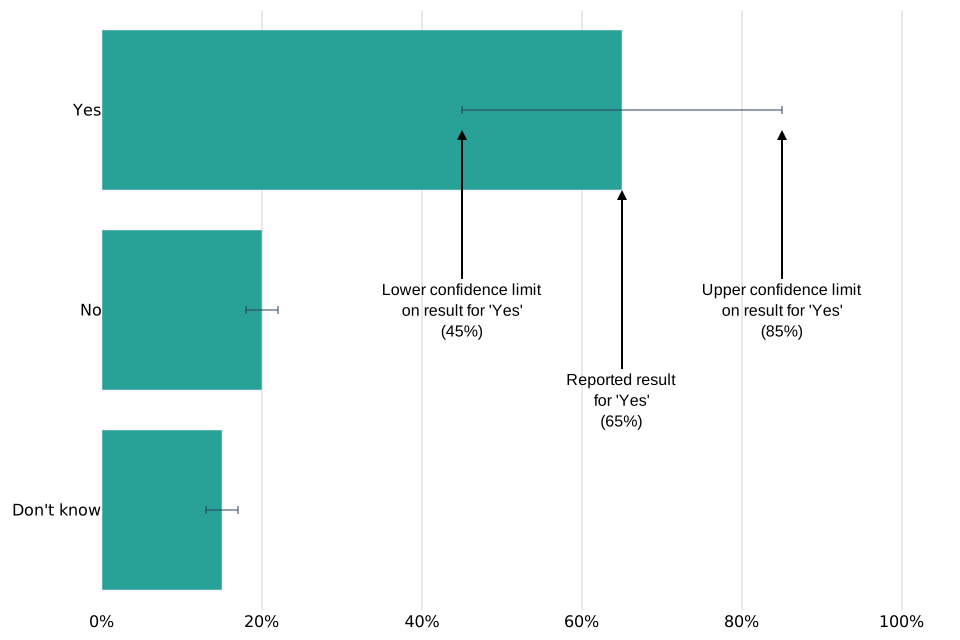
The sample of businesses that responded to the survey is only a fraction of all UK businesses. This means it is not possible to say for certain whether the statistics reported in this publication are representative of the ‘true’ values in the UK business population. However, it is possible to calculate the probability that the true value lies within a given range, or “confidence interval” of the sample statistic. This is calculated using the number of respondents or ‘observations’ in the sample and the percentage of observations that give each response to a question. Confidence intervals are expressed in percentage terms: there is a 95% probability that a figure’s true value lies in the 95% confidence interval of its sample statistic.
Confidence intervals can be depicted using ‘error bars’ on bar charts of the responses to a question, which are demonstrated below in an example. 65% of respondents in a hypothetical sample were reported as saying ‘Yes’, but there is a 95% probability the true population figure lies between 45% and 85%.
Figure: An example showing how to interpret confidence intervals on a bar chart
A.3. Reporting differences between groups
Throughout this report, there are comparisons between the percentage of businesses in two different groups that gave each response to a particular question. Such comparisons are only highlighted if the difference between two estimates is statistically significant. The reporting threshold in this publication is the 5% significance level, meaning the probability two different estimates are really the same value is less than 5%.
A.4. Treatment of small samples
If there are too few responses to a question, sample percentages can be misleading estimates of the true population figure. For this reason and to prevent the disclosure of individual results, some figures in the attached output tables are suppressed. Note that each time the number of respondents to a question is reported (including in the attached output tables and the charts contained in this report), this has also been rounded to prevent the disclosure of individual results.
B. Questionnaire changes
Table 1: Areas where the question has changed between wave 2 and wave 1 of the data use and productivity survey
| Question | Notes |
|---|---|
| Trading | |
| Businesses’ revenue / investments in the last financial year | There was a change in question wording across revenue and investment questions from wave 1 to wave 2 to reference total revenue in the last financial year, rather than annual turnover in the last year. There was also a change in question wording to reference IT rather than ICT, and staff costs rather than personnel costs. |
| Data collection and use | |
| Types of data business works with | There were minor changes to the answer options from wave 1 to wave 2 to provide additional detail and clarity for the data types. |
| Data collection | There were minor changes to the question wording and answer options from wave 1 to wave 2. |
| Data analysis | There were minor changes to the question wording from wave 1 to wave 2. |
| Data sharing | The routing was updated to be asked of businesses that handle digitised data in wave 2 (rather than all UK businesses in wave 1). The ordering was also updated with this question now asked after the newly artificial intelligence based (AI) technologies question. There were also minor changes to the question wording and answer options from wave 1 to wave 2. |
| Labour inputs | |
| Job roles requiring data-related skills (businesses with employees and sole traders) | The fourth option, “sector-specific software” was removed between wave 1 and wave 2. |
| Percentage of staff producing data assets | The fourth option, “software that has been developed, programmed, or modified internally” was removed between wave 1 and wave 2. |
| Time spent by staff producing data assets | The routing was updated between waves to be asked of all businesses that handle digital data and produce at least one of the data assets. The fourth option, “software that has been developed, programmed, or modified internally” was also removed between wave 1 and wave 2. |
| Outcomes and purpose of data use | |
| Decision making with data | An additional option of “Not relevant to my business” was added in wave 2. The following statement was removed: “I / we have the data I need to make decisions”. |
| Outputs from data use | An additional option of “Not relevant to my business” was added in wave 2. The following statements were removed: “A better customer experience”, “Better pricing, advertising or branding strategies”. |
| Recontact and close | |
| Incentives | The incentive for large businesses (with 250 or more employees) taking part in the survey was changed from £10 in wave 1 to £15 in wave 2. |
Table 2: New question areas in the wave 2 survey
| Question | |
| Trading | |
| Investments in IT only as a proportion of total revenue | |
| Data collection and use | |
| Use of Customer Relationship Management (CRM) software | |
| Use of public sector data | |
| Use of Artificial Intelligence-based (AI) technologies | |
| Data production and delivery | |
| Labour inputs | |
| Analytical roles employed |
C. Inter-year comparisons
The following table summarises the main comparisons between the wave 1 and wave 2 data use and productivity publications. For more detail, such as confidence intervals or additional answer options, please review the data tables for each wave. Differences are reported only where the question wording and structure are consistent across years. Figures should only be interpreted as a statistically significant difference between waves if an arrow is shown: an upwards arrow (↑) indicates a significant increase, and a downwards arrow (↓) indicates a significant decrease, in the most recent wave. Answer options not asked in a given wave are marked as ‘Not asked’.
| Differences in: | Wave 1 total | Wave 2 total |
|---|---|---|
| Data collection and use | ||
| Percentage of businesses that handle digitised personal data (other than employee data) | 60% | 62% |
| Percentage of businesses that handle any digitised non-personal data | 59% | 52% |
| Percentage of businesses that handle any digitised data | 86% | 83% |
| Percentage of businesses that work with customers’ / users’ contact information | 87% | 86% |
| Percentage of businesses that work with financial / accounting data | 71% | 67% |
| Percentage of businesses that work with sales or transaction data | 64% | 65% |
| Percentage of businesses that work with customer / user behaviour data | 23% | 19% |
| Percentage of businesses that work with HR or payroll data | 42% | 35% |
| Percentage of businesses that work with stock and supply data | 34% | 29% |
| Percentage of businesses that work with environmental monitoring data | 9% | 7% |
| Percentage of businesses that work with marketing data and research | 29% | 26% |
| Percentage of businesses that work with data on the economy | 10% | 9% |
| Percentage of businesses that work with scientific, analytical, R&D or results data | 14% | 12% |
| Percentage of businesses that work with sensor data | 12% | 13% |
| Percentage of businesses that work with geolocation data or satellite monitoring and imagery | 8% | 18% ↑ |
| Percentage of businesses that work with sensitive personal data | 18% | 17% |
| Percentage of businesses that collect data internally | 69% | 60% ↓ |
| Percentage of businesses that collect data externally | 7% | 5% |
| Percentage of businesses that collect data both internally and externally | 16% | 15% |
| Percentage of businesses that analyse data internally | 70% | 64% |
| Percentage of businesses that analyse data externally | 1% | 0% |
| Percentage of businesses that analyse data both internally and externally | 8% | 8% |
| Percentage of businesses that analyse big data | 3% | 4% |
| Percentage of businesses that share or sell data with employees, customers, or other individuals | 9% | Not asked |
| Percentage of businesses that share or sell data with other branches of your own business or corporate group | 3% | 2% |
| Percentage of businesses that share or sell data with other businesses | 7% | Not asked |
| Percentage of businesses that share or sell data with customers or suppliers | Not asked | 9% |
| Percentage of businesses that share or sell data with public bodies | 12% | 6% ↓ |
| Percentage of businesses that share or sell data with charities or non-profit organisations | 5% | 3% |
| Investment and costs | ||
| Percentage of businesses that introduced a new product or invested in product design in the last year | 20% | 19% |
| Percentage of businesses that introduced a process innovation in the last year | 20% | 15% |
| Percentage of businesses that patented a new product or idea in the last year | 3% | 5% |
| Percentage of businesses that introduced a new business model or business plan in the last year | 15% | 12% |
| Percentage of businesses that invested in computer software and database management systems (DBMS) | 40% | 39% |
| Percentage of businesses that invested in raw data and databases | 6% | 6% |
| Percentage of businesses that invested in research and development | 10% | 11% |
| Percentage of businesses that invested in branding (advertising and marketing) | 45% | 40% |
| Percentage of businesses that invested in operations management consultancy services | 7% | 11% |
| Percentage of businesses that invested in product design | 10% | 9% |
| Percentage of businesses that invested in staff training | 31% | 25% |
| Labour inputs | ||
| Percentage of businesses that require simple basic data entry or calculations skills, among staff | 90% | 90% |
| Percentage of businesses that require intermediate calculations and data analysis skills, among staff | 63% | 58% |
| Percentage of businesses that require advanced data analysis and calculations skills, among staff | 22% | 21% |
| Percentage of businesses that require knowledge of sector-specific software, among staff | 39% | Not asked |
| Percentage of sole traders that require simple basic data entry or calculations skills | 78% | 80% |
| Percentage of sole traders that require intermediate calculations and data analysis skills | 39% | 35% |
| Percentage of sole traders that require advanced data analysis and calculations skills | 8% | 8% |
| Percentage of sole traders that require knowledge of sector-specific software | 24% | Not asked |
| Outcomes and the purpose of data use | ||
| Percentage of businesses that strongly or somewhat agree that: “Findings from data processing or analysis are available to my business” |
51% | 42% |
| Percentage of businesses that strongly or somewhat agree that: “Data processing or analysis supports or informs the decisions made by my business” |
55% | 46% |
| Percentage of businesses that strongly or somewhat agree that: “I have the data I need to make decisions” |
83% | Not asked |
| Percentage of businesses that strongly or somewhat agree that the acquisition, collection or analysis of data leads to creation of, or improvement to, services and products | 55% | 43%↓ |
| Percentage of businesses that strongly or somewhat agree that the acquisition, collection or analysis of data leads to the creation of data products that the business sells or licences directly | 18% | 10%↓ |
| Percentage of businesses that strongly or somewhat agree that the acquisition, collection or analysis of data leads to more efficient internal processes or cost savings | 54% | 38%↓ |
| Percentage of businesses that strongly or somewhat agree that the acquisition, collection or analysis of data leads to a better customer experience | 60% | Not asked |
| Percentage of businesses that strongly or somewhat agree that the acquisition, collection or analysis of data leads to better pricing, advertising or branding strategies | 51% | Not asked |
Note: Wave 1 and wave 2 figures which are statistically significantly different are denoted by either an upwards arrow (↑), indicating a significant increase, or a downwards arrow (↓), indicating a significant decrease, in the most recent wave. Answer options which were not asked in a wave are flagged as ‘Not asked’.