Clinical guidance for breast cancer screening assessment
Updated 22 January 2026
Applies to England

© Crown copyright 2026
This publication is licensed under the terms of the Open Government Licence v3.0 except where otherwise stated. To view this licence, visit nationalarchives.gov.uk/doc/open-government-licence/version/3 or write to the Information Policy Team, The National Archives, Kew, London TW9 4DU, or email: psi@nationalarchives.gov.uk.
Where we have identified any third party copyright information you will need to obtain permission from the copyright holders concerned.
This publication is available at https://www.gov.uk/government/publications/breast-screening-clinical-guidelines-for-screening-management/clinical-guidance-for-breast-cancer-screening-assessment
Revision changes and rationale
| Description of change from existing guidance | Rationale |
|---|---|
| Improved description of pathway | Clarity of screening and assessment as the 2 stages |
| Addition of requirement to complete NBSS data entry in assessment clinic | To ensure accurate data entry |
| Addition of ensuring women leave assessment clinic with a results appointment | To ensure women are given results in a timely manner |
| Includes use of Contrast Enhanced Mammography (CEM) where it is available | To allow the additional use of CEM in assessment clinic in certain cases |
| Rewrite/reorder of the further imaging section and inclusion of CEM | To clarify when to consider each assessment tool |
| Statement of clarity to use core biopsy in preference to fine needle aspiration (FNA) where technically possible | Improved diagnostic accuracy |
| Guidance on cases with multiple foci of abnormality | To ensure that adequate investigation is undertaken to guide both the MDT and the patient in their decisions about surgery and to give enough evidence to justify recommending mastectomy, for example support by tissue diagnosis |
| Masses, asymmetries and architectural distortions should have a shorter recall interval of 6 months | There is likely to be a size change in 6 months for significant abnormalities and hence shorter interval recall period than for calcifications |
| All women with a diagnosis of breast cancer should receive their results from a clinician and a clinical nurse specialist in breast care (replaces “in the presence of”) | To clarify that results need to be given by a clinician and qualified breast care nurse |
| Inclusion of responsible assessor review before return to routine recall | Figures updated to match guidance |
| Change to the management of B3 lesions – all women diagnosed with B3 lesions that show no malignancy at VAE can now be returned to routine screening rather than some being followed up with surveillance mammography | Many atypias analysed in the Sloane project represent risk factors for developing subsequent cancers rather than precursor to cancer. The analysis demonstrated that women diagnosed with atypia during assessment of NHS BSP screen detected abnormalities since 2013 do not have an increased risk of developing breast cancer in the next 3 years when compared with women who are screened but not found to have atypia or malignancy. Annual mammography did not improve early detection. |
Introduction
The aim of assessment is to obtain a definitive and timely diagnosis of all potential abnormalities detected during breast screening. This is best achieved by using ‘triple assessment’, comprising imaging (usually mammography and ultrasound), clinical examination and image guided needle biopsy for histological examination if indicated. Cytology should no longer be used alone to obtain a non-operative diagnosis of breast cancer.
This guidance should be read in conjunction with other breast screening programme guidance, which includes specific guidance and information on:
- NHS BSP pathway requirements specification
- radiology and advanced radiographic practice in the NHS BSP
- use of tomosynthesis in assessment within the NHS BSP
- how to record vacuum-assisted excisions
- interval cancers (in relation to PARFs)
- higher risk technical magnetic resonance imaging (MRI) guidance (in relation to MRI biopsies)
The assessment process
Breast screening is a two-stage process. The first stage is the screening test with the majority of women being sent a normal screening result. Others will be recalled to assessment either to confirm the presence of breast cancer (or a high risk lesion) or to be reassured that they have a normal result after the second stage and can be discharged back to screening. Figure 1 shows the assessment process in further detail including the possible start and end points.*
The director of breast screening is accountable for verifying that failsafe mechanisms are in place to ensure that decisions to recall for assessment are actioned.1 If a recalled woman fails to attend there should be processes in place for issuing a second recall appointment. If she fails to attend a second a time, there should be processes for contacting the woman and her primary care team to agree on appropriate further management.
The role of ‘responsible assessor’ (RA) is the person taking clinical responsibility for the assessment of individual cases. The purpose of designating an RA is to accurately monitor assessment performance. This is to support governance, training and improve quality; as well as providing clear leadership during clinics. RAs should therefore ensure that data entry accurately represents their clinical activity.
Organisation of assessment clinics
Assessment should take place at the same screening service as the initial screening test. This also applies where women opt to be screened out of area, meaning assessment should take place at the receiving “out of area” service and be managed in accordance with https://www.gov.uk/government/publications/breast-screening-women-wanting-to-attend-service-out-of-area.
There should be adequate capacity to ensure assessment takes place in a timely fashion following the decision to recall to assessment and ensure the service meets NHS BSP screening standards. In addition, screening units should utilise existing translation services to support assessment appointments for services users where requested whose functional language is not English.
Prior to assessment, the RA is responsible for confirming the area of interest to be assessed and ensuring that the planned assessment investigations are clear, appropriate and comprehensive. This may be done by holding a pre-assessment briefing with the whole team.
Method and timing of recall
Most women who take part in the breast screening programme have no breast symptoms. The expectations and needs of these ‘well women’ recalled for assessment of a screen- detected abnormality are very different from those of women referred to symptomatic breast clinics.+2 Recall for assessment is associated with significant anxiety, particularly as most women have had no previous indication of a breast problem.+3 For this reason, invitation to assessment should be made within expected timescales and in a sensitive manner, taking into account that most women recalled will not have breast cancer.
Recall to assessment by letter is currently the recommended method. Any written communication (electronic or otherwise) should convey the basic minimum information, and state that women can contact a clinical nurse specialist for further information and support. Invitations to assessment should be timed to arrive when the breast service team can be contacted with the minimum of delay and avoid receiving invitations on Fridays or at the weekend. The primary care team should be informed about the outcome of the assessment process.
Phoning women to invite them for assessment may increase their anxiety. If it is unavoidable, the telephone call must be made only by suitably trained individuals and must comply with written local guidelines.
Number of assessment visits
The number of diagnostic assessment visits needed to achieve a definitive primary diagnosis should be as low as possible. Appointments and facilities should be arranged so that X-ray (stereotactic or tomosynthesis) guided biopsy is routinely available on the same day as assessment.
No more than two visits for needle biopsy procedures should normally be needed to achieve an initial non-operative diagnosis as referenced in the NHSBSP screening standards. This does not include further visits where women have additional workup following a cancer diagnosis to aid surgical planning (such as upgrade to invasive cancer).
Personnel for the assessment clinic
Individuals with the appropriate skills in radiography, radiology, breast care nursing and clinical examination should be present as core members of the assessment team. Other support staff will also be required.
Professionals involved in screening assessment are expected to fulfil the requirements for individual professional training and for their continuing professional development (CPD). They should carry out assessments and procedures regularly, so they can maintain their skills and competence.
All image readers should also participate regularly in screening assessment.
The service should ensure all women who are recalled for assessment receive information, advice and support appropriate to their needs. A clinical nurse specialist in breast care should be available in the clinic to provide this as referenced in the Guidance for Clinical Nurse Specialists in the NHSBSP.
Responsible assessor
The RA must be an accredited breast radiologist, consultant radiographer or breast clinician experienced in the full range of triple assessment. They must have the required range of qualifications, abilities, experience and current CPD to decide the outcome of assessments. An assessment can only be considered complete when the RA is satisfied that all appropriate investigations have been adequately performed, whether undertaken by themselves or others. The RA should request any additional investigation they believe necessary. Each individual case requires sign off in this way. There may be more than one RA working in a single clinic. The RA should complete the assessment entry on NBSS during the assessment clinic and ensure that the woman leaves the assessment clinic with a booked results appointment where appropriate.
The director of breast screening is responsible for ensuring that the assessment process is appropriately carried out by all RAs. This should be confirmed by audits of individual RA assessment performance, including:
- number of assessments performed
- quality of data entry
- adherence to unit and national protocols
These audits should be regularly repeated at not less than yearly intervals and the results disseminated to ensure learning. This should be in a supportive environment with a view to improving quality wherever possible. If difficulties are encountered that cannot be dealt with in the unit, the assistance of the screening Quality Assurance (QA) service should be sought. These audits will be reviewed at QA visits.
Before final sign-off, in cases where a biopsy has not been taken, a second responsible assessor should review the case. The outcome and decision makers should be documented on the NBSS system. This should ideally be during the assessment clinic so that the patient can be given a definitive outcome immediately.
The RA makes the final decision regarding assessment cases but should work collaboratively with colleagues during clinics to improve consistency, quality and outcomes.
Equipment for assessment
The equipment for breast assessment includes:
- digital mammography equipment which should be capable of:
- magnification mammography
- spot compression views
- small field digital stereotactic or tomosynthesis x-ray guided biopsy
- undertaking specimen radiography during a core biopsy procedure
- tomosynthesis (may be used where available)
- Contrast Enhanced Mammography (CEM) may be used where available
- ultrasound equipment
- consumables and devices necessary for core biopsy and vacuum biopsy, including biopsy site markers
All equipment should meet standards within national guidance. Biopsy systems should be tested in accordance with NHSBSP guidance.
Indications for assessment following screening
Assessment is indicated in the following circumstances:
- significant mammographic abnormality
- significant breast symptoms or signs identified at screening
- review of short term recall
- significant MRI abnormality in women at very high risk
Mechanisms must be in place to identify and record significant signs and symptoms of breast problems in women attending for screening. This information must be made available at the time of image reading.
Significant symptoms and signs noted by the patient or the mammographer at screening should be documented and recalled. These might include:
- a lump
- distortion of the breast
- suspicious nipple or skin change including fixed nipple inversion
- a bloody discharge
Mammographers should be trained to recognise clinical signs of breast cancer at the time of screening. Recall for assessment of signs and symptoms may be appropriate even if the screening mammograms appear normal. Mammographers may instigate recall for assessment where local protocols dictate, but ultimate responsibility for this rests with the image readers.
Screen detected mammographic and MRI abnormalities should be clearly documented at image reading, so the radiological feature and location in the breast is clearly identifiable to those undertaking the assessment.
Assessment procedures
Assessment protocols
Each assessment clinic should have at least one RA and should follow the triple assessment model:
- appropriate further imaging with mammography
- ultrasound
- clinical examination
- needle sampling when indicated
Each assessment unit should have written protocols for triple assessment based on this document, but take local circumstances into account, for example the availability of vacuum-assisted biopsy (VAB), tomosynthesis and CEM. Protocols should be agreed by all members of the local breast assessment team. The protocols should clearly define the assessment methods to be used and the diagnostic and referral pathways appropriate to each possible assessment outcome. These should include responsible assessor identification, pre-assessment briefings, second opinion, management of signs and symptoms, recording of outcomes and arrangements for multidisciplinary discussion. The standard process for most radiological abnormalities (including clinical sign/symptoms, architectural distortion, asymmetric density and calcifications) is shown in the flow chart below.
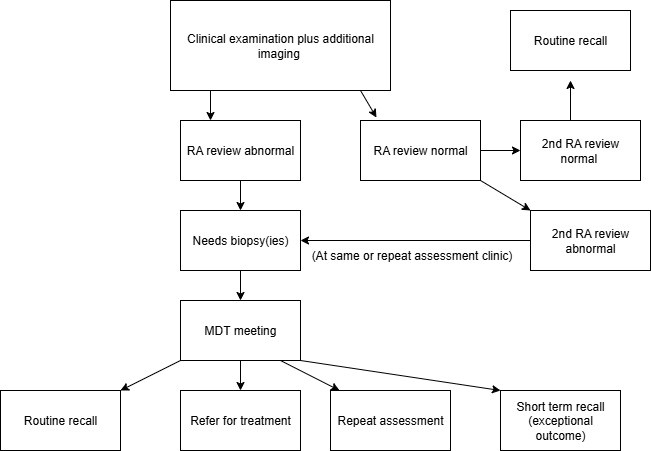
Figure 1. Process for screening assessment (incorporating both routine and the VHR screening programmes)
Further imaging
Most women are recalled as a result of a mammographic abnormality. In most cases further imaging is carried out to clarify the nature and extent of the lesion.
This assessment should include the minimum imaging required to confirm or exclude an abnormality. This may include ultrasound, repeat mammographic views, magnification or spot compression views, digital breast tomosynthesis (DBT) in 2 planes and CEM. Depending on the nature of the breast abnormality, some women will not need further imaging. This should be directed by the RA for each case.
If available, DBT can be helpful in the examination of suspected breast malignancies. Technology is now available that uses advanced image-processing algorithms to generate thick slices automatically, replacing the thin slices and reducing the number of slices that need to be reviewed without loss of information. It differs from conventional slabbing, where slice thickness is adjusted manually by widening the slab thickness control on a workstation. In a clinical screening assessment study, readers found that the accuracy of standard DBT thin slices and the generated thick slices was comparable, and that use of the thick slices did not have a detrimental effect on workflow. Where this type of technology is utilised, it is important that mammography readers should remain aware that it is their responsibility to review all images obtained, before reaching their final conclusion on case management.
Where available, CEM may have a role as a problem-solving tool in screening assessment. CEM may be helpful in downgrading false positive recalls and could be of value in reducing the number of biopsies for low suspicion masses and asymmetries when no enhancement is demonstrated on CEM. It also may provide a more efficient workflow in screening assessment in terms of the number of examinations needed to establish a final diagnosis, the identification of additional foci and provide more accurate staging information at the first assessment clinic visit.
Ultrasound should be used in most assessment cases, even if the recalled abnormality appears to have resolved on further mammogram views and in all cases where the original abnormality involved a soft tissue density.
If a cancer is suspected, ultrasound should be extended to cover at least the affected quadrant. For dense breasts, consider the whole breast as well as the ipsilateral axilla. Extended breast ultrasound reduces the risk of a second unexpected lesion being identified at localisation, or inadvertently missing the index lesion, in particular when MRI or CEM staging will not be performed. There is evidence from small studies on staging screen detected breast cancers and screening trials that a small number of additional foci are found but at a risk of additional benign biopsies.
Clinical examination
Clinical examination of women recalled for assessment should be carried out by an individual who has the necessary clinical skills.
Needle biopsy of breast
Significant breast abnormalities should be assessed by core biopsy or vacuum- assisted biopsy (VAB). Wide bore needle biopsy provides information on invasive status, tumour subtype, histological grade and receptor status. It also aids the definitive diagnosis of benign lesions and reduces repeat procedures. If a service has access to high quality cytology with immediate reporting, then fine needle aspiration cytology (FNAC) may be used in addition to core biopsy, but not instead of it. In exceptional cases FNAC may be used alone if core biopsy is not possible.
Ultrasound is the technique of choice for guided needle sampling. A permanent record of images showing the biopsy needle in the target lesion should be made.
Marker insertion is advised to confirm the correct area has been sampled for example when changes are difficult to perceive, or if there is any doubt that the lesion seen on ultrasound corresponds to the mammographic changes. Marker placing is particularly important to facilitate treatment planning/surgical localisation when there are multiple lesions or when there is any risk that the area of concern could be removed or rendered difficult to see by the biopsy.
A marker with confirmed mammographic documentation of its position, is the safest way to facilitate communication within and between teams and to ensure the correct lesion is removed at surgery or to facilitate follow-up. Where more than 1 marker has been inserted, the position and type of marker in each lesion should be accurately documented and visualised on post clip mammograms.
All needle biopsies carried out as part of screening assessment must be reviewed at the multi-disciplinary meeting (MDM), where further management of each case should be agreed and documented.
Investigation of B3 lesions
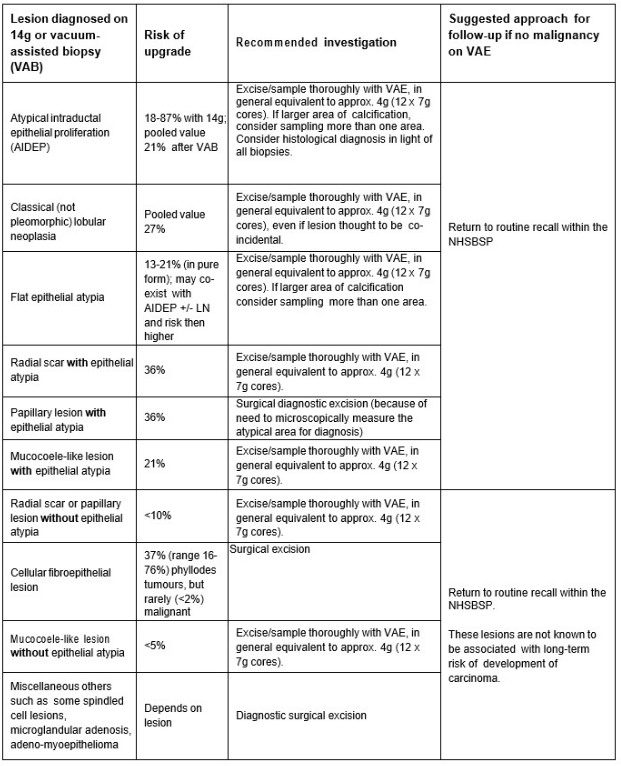
Lesions categorised as B3 (of uncertain malignant potential) may be associated with co-existing adjacent malignancy (upgrade), and some are also associated with a longer term increased risk of developing cancer.
The flow chart below provides guidance on the standardisation of clinical management for B3 lesions. Generally, B3 lesions present as a range of radiological abnormalities and it is essential that management decisions are made and documented at an MDM. Review of current literature on upgrade rates for each type of B3 lesion shows that all types warrant further histological examination whether a lesion is seemingly coincidental or interpreted as the cause of radiological abnormality.
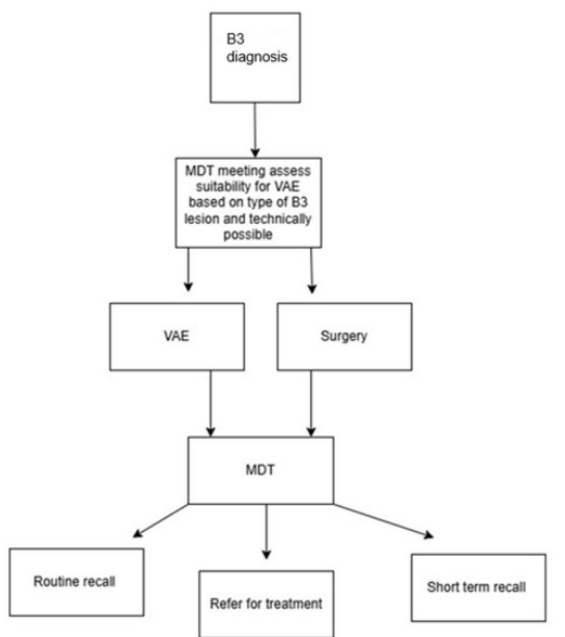
Figure 2. Process for the assessment of B3 lesions
When deciding whether to undertake vacuum-assisted excision (VAE) or diagnostic surgery, the multi-disciplinary team (MDT) should specifically consider how representative the sampling is and the degree of pathology concern.
Observational studies show that many of the B3 lesions with epithelial atypia are associated with a moderate risk of developing breast cancer in the longer term; in general this is regarded as a relative risk of 4x that of the general population for atypical ductal hyperplasia (ADH) and atypical lobular hyperplasia (ALH). The risk is not restricted to the breast where the biopsy or excision of the benign condition occurred, and surveillance programmes must not focus on one breast only.
A recent analysis of NHS BSP outcomes https://doi.org/10.1136/bmj-2023-077039 indicated that many atypias analysed in the Sloane project represent risk factors for developing subsequent cancers rather than precursor to cancer. The analysis demonstrated that women diagnosed with atypia during assessment of NHS BSP screen detected abnormalities since 2013 do not have an increased risk of developing breast cancer in the next 3 years when compared with women who are screened but not found to have atypia or malignancy. Annual mammography did not improve early detection and a multidisciplinary consensus meeting concluded that women diagnosed with B3 lesions that are not upgraded at vacuum excision can be returned to routine screening in the NHSBSP.
Needle biopsy of the axilla
All patients with a non-operative diagnosis of invasive breast cancer should have ipsilateral axillary ultrasound performed, preferably at the time of initial assessment. If this was not performed initially, it should be done as soon as possible following core biopsy diagnosis of the breast cancer. The number and morphology of any abnormal nodes should be documented.
If an abnormal node(s) is identified, the most suspicious one should be sampled by either FNA or core biopsy. Where technically possible and can be performed safely, a core biopsy should be performed preferentially due to improved diagnostic accuracy. The evidence around what cortical thickness can be considered to be abnormal is not clear so the criteria and procedure for sampling should be agreed locally and subject to audit. FNAC and core biopsy of axillary nodes are recognised techniques and staff involved in assessment should have the necessary skills to carry these out under ultrasound guidance. It cannot be assumed that an ultrasonically abnormal node is malignant, even when a breast cancer is present. If the breasts are normal and other nodal pathology is suspected, then local protocols should be followed to obtain a tissue diagnosis.
Occasionally the sentinel node is situated in a very low position, well into the breast, and there are reported cases of these unusually-placed nodes being missed at surgery. In these circumstances care should be taken in documenting the position of the node and consideration given to pre-operative marking following MDM discussion.
Assessment of mammographic abnormalities
Masses
Ultrasound is the preferred imaging method for establishing the nature of a breast mass. Further mammography, including focal compression views or tomosynthesis, may be needed to confirm the presence, morphology and site of the mass. All solitary and/or new masses recalled for assessment that are confirmed as solid on ultrasound and that do not have the typical features of a
hamartoma, lipoma, fat necrosis or normal lymph node should undergo needle core biopsy. This should normally be performed under ultrasound guidance. For low suspicion masses, CEM may be useful to downgrade false positive recalls and avoid biopsy.
Cysts with atypical features require further evaluation, including aspiration and core biopsy of any residual internal or mural solid component. If a mass is confirmed on mammography but is not visible on ultrasound, it should be managed according to its mammographic features and not assumed to be insignificant. Unless the mammographic features are definitively benign, X-ray guided biopsy should be performed.
If a B1, B3 or B4 result is reported at initial core biopsy of a solid lesion then either a second core biopsy or VAB/VAE should be considered in order to reach a more definitive diagnosis. A further biopsy should also be performed if B2 histology is not thought to be concordant with the imaging opinion. The flow chart below shows the assessment pathway for the assessment of breast masses.
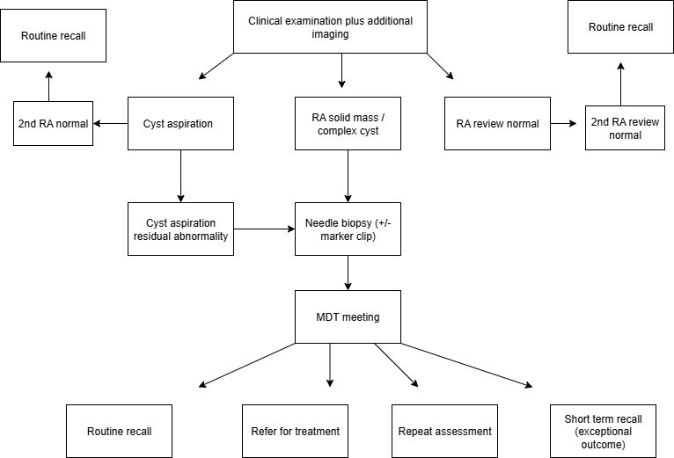
Figure 3. Process for the assessment of breast masses
Architectural distortion
Possible architectural distortion found during screening mammography requires imaging work-up in the first instance. This could comprise standard mammography views, localised compression/magnification views, tomosynthesis, CEM as well as ultrasound, to establish whether there is a persistent localised abnormality. The initial assessment should also include clinical examination to check for relevant clinical findings such as a mass or scarring from previous surgery. If surgical scarring is ruled out, architectural distortion may indicate malignancy and needle biopsy should always be performed.
Asymmetric density
Asymmetric densities considered significant enough to warrant recall require further investigation. This could comprise standard mammography views, localised compression/magnification views, tomosynthesis, CEM as well as ultrasound, to establish whether there is a persistent localised abnormality. CEM may be particularly useful to downgrade low suspicion asymmetric densities to avoid biopsy. Core biopsy should be performed on all significant asymmetrical densities found on imaging which could not be accounted for as normal glandular tissue after these tests.
Calcifications
It is difficult to distinguish between benign and malignant calcifications from their mammographic appearance alone. Cranio-caudal and lateral magnification views aid further characterisation, delineate extent of calcification and provide additional information on likelihood of malignancy. There is conflicting evidence on the value of tomosynthesis and CEM for both detection and characterisation of calcifications , so this should not be routinely used until further evidence is available.
Ultrasound assessment of calcification may identify focal areas of altered echotexture, indicating possible invasive foci within DCIS.
Calcifications with definitively benign features do not require needle biopsy. When malignancy is possible or suspected, image guided core biopsy with immediate specimen radiography should be performed. If representative calcification is not obtained, the procedure should be repeated, ideally with mammogram guided VAB. If calcification can not be obtained on image guided biopsy and there is no malignancy, MDM discussion with a view to surgical biopsy is recommended.
Pathology request forms should document the presence or absence of representative calcification and the pathologist should be able to access the specimen x-rays. Histological calcification is a common incidental finding and may be present when there is no calcification visible on mammography. Identification of calcification on histology is not a reliable indicator of adequate sampling when specimen radiograph des not confirm calcification. If representative calcification is seen on both specimen radiograph and microscopy with a benign cause on histology, no further investigations are required even if the calcification appeared suspicious initially.
A biopsy marker with a metal component may be useful to mark the site after needle biopsy. This is especially the case for:
- small lesions which might be removed by biopsy
- lesions which could be difficult to identify if subsequent excision biopsy is required
- when multiple areas have been biopsied to mark the relevant sites
Multi-disciplinary team meetings
Effective MDT meetings are patient centered, although their format and the composition of their attendance will vary between different screening units. It is an important principle, however, that each patient having had a needle biopsy should be discussed at an MDT meeting.
Careful consideration needs to be given to cases with multiple foci of abnormality (particularly extensive calcifications). It is important to ensure that all recalled abnormalities have been adequately assessed prior to referral.
The outcome of assessment should be decided according to agreed MDT written protocols. A provisional opinion as to the nature of the problem and its possible management may be discussed with the woman at the time of her assessment.
Clear documentation is required at assessment and at the MDT meeting of the area(s) biopsied, and any unbiopsied area(s) that may need additional sampling as a result of the initial pathology and MDT discussion.
An MDT meeting to discuss the results of screening assessment should occur at least weekly. It is important that correlation between imaging, clinical findings and pathology is checked as part of the triple assessment process. If there is discordance between the imaging and pathology outcomes then further action should be taken, such as a repeat biopsy, depending on the disagreement.
Outcomes of assessment
There are four possible outcomes of assessment:
- Return to routine recall
- Referral for treatment
- Referral for diagnostic biopsy or VAE
- Short-term recall
Documenting assessment outcome
A minimum data set is required at completion of the NHSBSP assessment process, to inform surgical referral, localisation and treatment planning of patients. It is imperative that appropriate information is recorded for onward referral for surgery in a prompt and seamless way (appendix 1).
Short-term recall
A short-term recall is defined as a further invitation to assessment. Short-term recall must not be considered a routine outcome of assessment. The use of triple assessment makes it possible to reach a definitive conclusion in the majority of cases. For a small number of patients however, assessment may not yield a definitive decision and the MDT may consider surgical biopsy inappropriate. In such exceptional cases, short-term recall is required. A woman should only be placed on short-term recall only if:
- there is clear justification
- all the options have been discussed with the woman
- the decision has been discussed in detail at the MDT meeting, agreed and documented
This option should not be used as an alternative to definitive assessment.
All assessment processes should normally be completed within two months of the first assessment attendance and the episode closed. Short-term recall is classed as a new screening episode in NBSS and is reported in table D on the KC62 statutory return. It is not a delayed screening assessment follow-up. Women placed on short-term recall should not be recalled at a time interval of more than 12 months. Masses, asymmetries and architectural distortions should have a shorter recall interval of 6 months. Short-term recall should be performed in the screening assessment clinic and should include bilateral two-view mammography and results given immediately. They should not be given a routine mammography screening appointment. Short-term recall cases should be the subject of regular clinical audit and discussed during SQAS data review and quality assurance visits.
Specific guidelines are available for short term recall of very high risk women in the “Surveillance of women in the very high risk screening programme“
Results after assessment
All women with a diagnosis of breast cancer should receive their results from a clinician and a nurse specialist in breast care. Enough time should be allocated to provide the necessary counselling and support.
Even for a normal result, the provisional and final results of assessment should be given to the patient by a clinician. All women who have been assessed and do not have a diagnosis of cancer should receive written confirmation of the outcome of their assessment.
Primary care teams must therefore be informed without delay of the assessment outcome.
Appendix 1: minimum dataset for referral from assessment
This includes patients diagnosed with breast cancer, certain non-breast cancers (such as lymphoma), and certain benign conditions (such as phyllodes tumour), that need further treatment at the end of assessment.
The transfer of information from a named clinical lead in the breast screening service should include:
- full patient details – name, address, date of birth (DOB), screening number, NHS number
- the name of the referring service
- the screening lead name and address
- the service contact details including email and telephone numbers
- the patient’s GP and contact details
- the key worker name (if allocated)
- information on how imaging and all other documentation will be forwarded, for example via image exchange portal (IEP) link, secure email
A proforma generated for referral to surgeon or treating centre should clearly state:
- patient details on every sheet of the referral – full name, DOB, screening and NHS number – (preferably at the top and the bottom)
- date screened
- date of first assessment
- 62-day target date for treatment
- MDT meeting discussion dates
- details of all lesions assessed and biopsy result(s) at each location – including method of guidance, type of biopsy/gauge needle, if marker placed, & type of localisation advised
- ultrasound of axilla
- list of any additional investigations – why performed and result such breast MRI, CEM and second look ultrasound
- clinical findings
- comments on patient’s general health and any other important patient factors (for example, a frozen shoulder, which would be problematic for radiotherapy positioning, recent myocardial infarction and anticoagulated)
- very high risk screening patient Y/N; if Yes, reason such as proven gene variant or previous radiotherapy treatment involving breast tissue
- details of any previous breast surgery or treatment and side/site of this (for example previous wide local excision (WLE) and radiotherapy (DXT) to breast)
- any trials the patient has been offered or may be suitable for
An example proforma for the clinical components may look like this:
- assessed lesions:
- Left upper outer ,15mm calcifications, stereo 14g core, B3 with AIDEP, 9g stereo VAB – B5a, intermediate grade DCIS, marker placed, calcs excised.
- Left lower inner – 20 mm spiculate mass, US core B5b invasive carcinoma of no special type, provisional grade 2, no marker.
- Left axilla – indeterminate node, US FNA – no malignant cells, lymphocytes present. Accepted.
- additional investigations: none
- patient’s general health: well
- Previous breast history: right WLE, DXT to breast 10 yrs ago with 5 years of tamoxifen
- MDT summary: Advise left mastectomy and sentinel lymph node biopsy, as multiple foci. Refer for surgical treatment. Note previous contralateral breast cancer 10 years ago (If one lesion – specify if clinical, US skin marker, US wire or x-ray guided localisation advised)
Acknowledgements
Jonathan James Kesthra Satchithananda Nisha Sharma William Teh Kirsty Dare