Lynch syndrome colonoscopy surveillance care pathway
Updated 6 March 2026
Applies to England

© Crown copyright 2026
This publication is licensed under the terms of the Open Government Licence v3.0 except where otherwise stated. To view this licence, visit nationalarchives.gov.uk/doc/open-government-licence/version/3 or write to the Information Policy Team, The National Archives, Kew, London TW9 4DU, or email: psi@nationalarchives.gov.uk.
Where we have identified any third party copyright information you will need to obtain permission from the copyright holders concerned.
This publication is available at https://www.gov.uk/government/publications/bowel-cancer-screening-care-pathway/lynch-syndrome-colonoscopy-surveillance-care-pathway
This flowchart (illustration and text description below) describes the NHS screening pathway for Lynch syndrome colonoscopy surveillance.
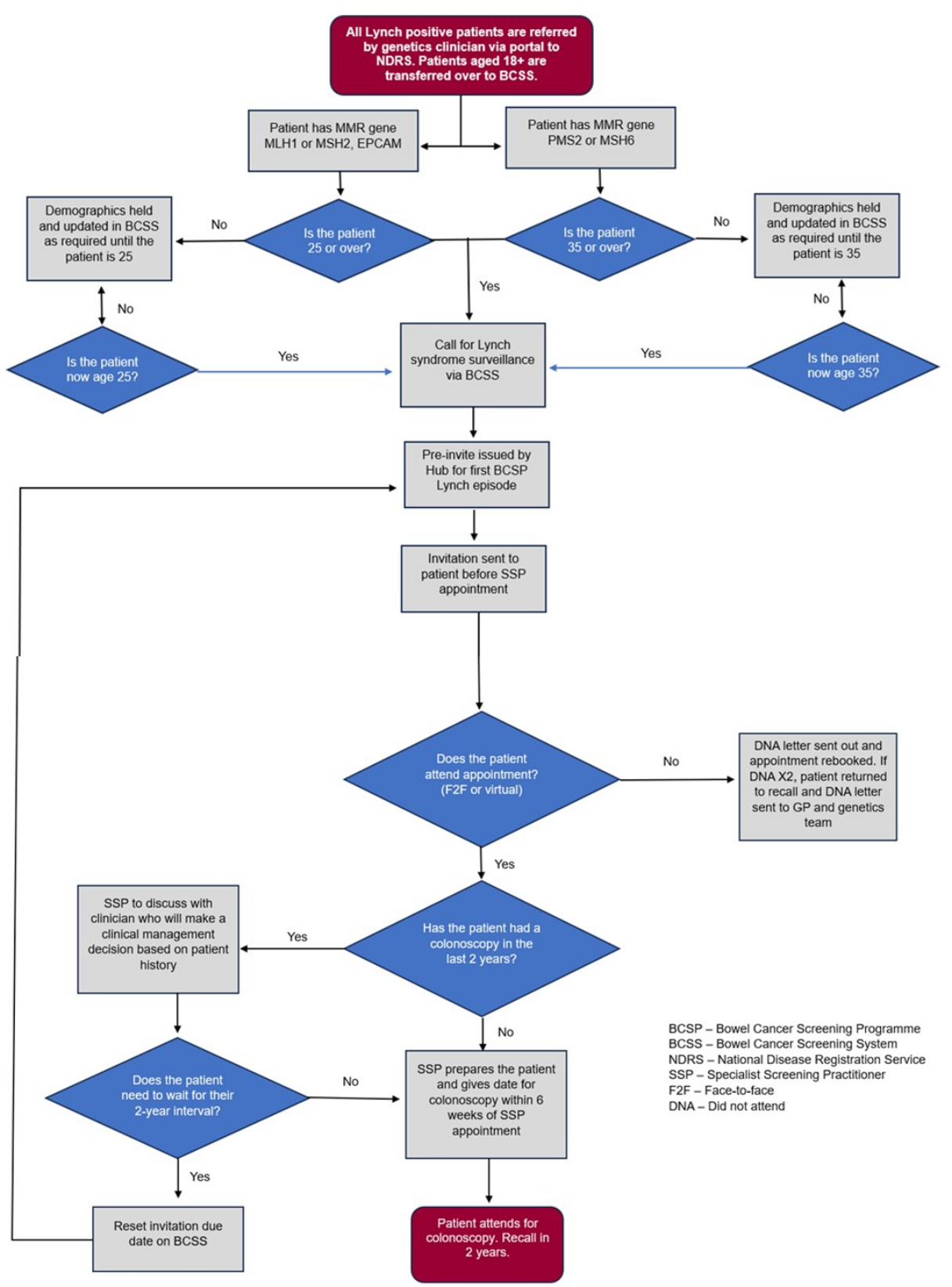
1. Referral from genetics
All people with genetically confirmed Lynch syndrome are referred to NDRS by a genetics service via the Lynch syndrome portal.
2. Invitation for colonoscopy surveillance
Dependent on which gene the participant has, they are invited for Lynch syndrome colonoscopy surveillance from age 25 or 35 years.
3. Does the individual attend the SSP appointment?
Yes: Go to question 4.
No: Offer a second SSP appointment:
- if the second SSP appointment is attended, go to question 6
- if the second appointment is not attended, return the individual to routine colonoscopy surveillance. End of pathway.
4. Is the individual medically suitable for a diagnostic test?
Yes: Offer the diagnostic test (usually colonoscopy). Go to question 5.
No: Screening episode ends. The person may be:
- returned to routine colonoscopy surveillance, or
- ceased or withdrawn from colonoscopy surveillance if it is not appropriate for them or they do not want further invitations for Lynch syndrome surveillance, or
- ceased from the whole of bowel cancer screening programme if they do not want to participate in Lynch surveillance or FOBt screening, or
- referred to secondary care.
End of pathway.
5. Does the individual attend the diagnostic test?
Yes: Go to question 6.
No: Offer a second appointment for a diagnostic test:
- if the second diagnostic appointment is attended, go to question 6
- if the second diagnostic appointment is not attended, return the individual to routine colonoscopy surveillance. End of pathway.
6. Is cancer detected?
Yes: Refer the individual to the cancer multidisciplinary team (MDT) for discussion and treatment. Return the individual to routine colonoscopy surveillance. End of pathway.
No: Go to question 7.
7. Is surveillance required?
Yes: Follow British Society of Gastroenterology (BSG) guidance on polyp surveillance or invite for colonoscopy in 2 years depending on the required pathway. End of pathway.
No: Return to routine colonoscopy surveillance. End of pathway.