Assessing the evidence base of domestic corruption in the UK
Published 8 December 2025

© Crown copyright 2025
This publication is licensed under the terms of the Open Government Licence v3.0 except where otherwise stated. To view this licence, visit nationalarchives.gov.uk/doc/open-government-licence/version/3 or write to the Information Policy Team, The National Archives, Kew, London TW9 4DU, or email: psi@nationalarchives.gov.uk.
Where we have identified any third party copyright information you will need to obtain permission from the copyright holders concerned.
This publication is available at https://www.gov.uk/government/publications/assessing-the-evidence-base-of-domestic-corruption-in-the-uk/assessing-the-evidence-base-of-domestic-corruption-in-the-uk
Preface
In 2018 the Home Office commissioned RAND Europe to conduct a study to evaluate the existing research and evidence base on domestic corruption in the UK. The views expressed in this report are those of the authors and not necessarily those of the Home Office, and they do not represent government policy.
The study, completed in December 2018, aimed to strengthen understanding of corruption at that time by identifying evidence gaps, assessing the sectors likely to be affected by corruption and establishing factors that may lead to corrupt activity. The report focused on existing published research and media reports with some additional focus groups in specific sectors. The findings reflected the views of the individuals who took part, and as such the examples provided have not been externally verified – they were intended to be indicative only and to provide details of areas where further research would be beneficial. The content takes no account of information that would be available after December 2018.
The study was conducted independently by RAND Europe to investigate the existing research published between January 2008 and January 2018 on domestic corruption in the UK and news reporting on alleged corruption. The scope of the study did not directly focus on considerations of what the UK had done to mitigate the risks of corruption, and this was discussed only where it arose in the literature or focus groups, and from the perspectives of research participants. The report was completed in December 2018 and the findings do not therefore account for more recent developments.
Since the completion of the study, the UK government has introduced a number of levers to address domestic corruption across various sectors. While contextual and policy developments have occurred since the report was completed and will have resulted in changes to the wider landscape, the report’s contents will have relevance to policymakers responsible for policies relating to corruption in the United Kingdom, as well as to researchers working in this field. The report is also relevant to businesses and organisations across UK sectors that may be affected by corruption. Finally, where evidence gaps identified in the 2018 analysis persist, the report may also be of relevance to funding providers, in order to help prioritise funding for future areas of research.
Executive summary
In December 2017, the UK government published its Anti-Corruption Strategy, which established a long-term framework to guide its efforts to tackle corruption at home and abroad in the period up to 2022. The strategy sets out different areas of focus and high-risk sectors such as the global business community, borders and ports, the financial sector, and public procurement and grants. The UK is ranked at number 8 of 180 countries on the 2017 Transparency International (TI) Corruption Perception Index (CPI), indicating a low level of perceived domestic corruption in the UK public sector. While, and perhaps because corruption in the UK is not perceived to be as widespread compared to some other jurisdictions; the existing evidence base on domestic corruption and its effects on specific sectors is limited.
In addition, the research landscape is currently dominated by advocacy organisations such as TI and Corruption Watch. The majority of the reviewed sources therefore focused on highlighting and addressing the potential impact of corrupt activity, rather than forming an objective understanding of the phenomenon. As demonstrated in this report, existing research may lead to incomplete or skewed conclusions, highlighting the need for additional research to inform policy options.
In this 2018 Home Office-commissioned study, RAND Europe evaluates the existing evidence on domestic corruption in the UK and proposes potential research opportunities that could help address gaps in the evidence emerging from this evaluation. This study was carried out in 3 phases:
- A rapid evidence assessment (REA) of existing literature on the topic of domestic corruption in the UK.
- Key informant interviews and an expert workshop to validate the findings of the REA and to obtain insights from leading policy experts and academics.
- Four sector-specific focus groups that brought together practitioners from law enforcement, defence, construction and finance and property sectors, which were assessed to be particularly vulnerable to corruption risk on the basis of the REA and expert engagement.
In addition to systematically assessing existing evidence on domestic corruption in the UK, this study also includes views of policy and academic experts, previously under-researched primary data and analysis of detail on manifestations of corruption in multiple sectors, and the mapping of areas of risk and factors that may lead to corruption.
Recognising the absence of a universally accepted definition of corruption, the study team focused on building a conceptual understanding of what activities and behaviours are perceived to constitute corruption and how it differs across the sectors.
The research identified cross-cutting factors that may potentially facilitate corruption across a range of industries in the private and public sector
The REA, expert interviews and focus groups highlighted that there is no uniform understanding of what constitutes corruption in the UK context. Nor any reliable evidence on the scale, frequency or extent of corruption. However, the research identified a number of key themes on the risk factors that may facilitate corruption in the UK, including:
- legal loopholes that can potentially enable corrupt activity to be masked ‘underneath’ legitimate transactions, such as classing higher education organisations as charities, or corporate legal structures that obscure the identity of owners
- complex supply chains in some sectors, which can create additional layers of bureaucracy which provide opportunities for corruption
- ambiguity in oversight responsibilities and insufficient coordination amongst counter- corruption entities and programmes, which can make it difficult to scrutinise corrupt activity
- poor record keeping, inadequate regulation and weak accountability mechanisms in some sectors, which could empower individuals to engage in corrupt activity and discourage individuals from reporting corruption
- inherent proximity of some sectors, such as law enforcement, to organised crime, which can rely on bribery or other inducements to by-pass legal oversight
- complex contracting arrangements, organisational culture and cronyism networks within specific sectors can create an incentive structure and environment that is favourable to corruption
- reluctance or a lack of resources to investigate reported incidents of corrupt behaviour
The research team also drew out conditions that can contribute to an environment in which corruption can propagate, including:
- policy and regulatory capture, when regulatory agencies become dominated by the actors they are intended to regulate, can contribute to an environment in which individuals engaging in corruption-related activity can operate with impunity
- although built-in mechanisms that favour particular contractors (such as single-source contracting) are accepted features of sectors like defence, they can also provide a screen under which corruption can occur
- challenging financial environments could create incentives to engage in corruption- related activity
- economic and legislative uncertainty relating to upcoming changes of the UK leaving the EU could heighten corruption risk as the period of transition can provide an opportunity for corrupt activity due to disruption in regulatory regimes
- tendency to selectively focus on corruption in some sectors can focus regulatory activity on these areas at the expense of addressing misdoing in other sectors
There are significant gaps in the data available on corruption in the UK
In addition, the stakeholders agreed that while pockets of relevant data and information on corruption and its related activities do exist within monitoring organisations and sector-specific bodies, there is a lack of data and systematic studies on the nature, mechanisms and scale of corruption in the UK. As a result, the existing research may lead to incomplete or skewed conclusions. The major gaps in existing research which the study team identified include:
- a lack of systematic, recent studies of the processes by which corruption happens in specific sectors, including which actors and areas may be particularly vulnerable to corruption and how prevalent corruption is within these sectors
- findings reflect existing limited research and not necessarily the scale of corruption in each sector - although a sector may appear prominently in identified evidence, this does not mean other sectors are less corrupt but that there may simply be less available information on these sectors
- a lack of comprehensive set of indicators of corruption in different sectors that could guide data-gathering activities on corruption
- lack of studies assessing the scale of corruption nationwide
- lack of consolidated datasets corresponding to different aspects and indicators of corruption
- lack of a consensus on what activities constitute corruption which can underpin the corruption studies
The research revealed a number of sector-specific findings on the nature and processes of corruption
The study has also found that, due to the differences in the forms which corruption takes and in how it arises and spreads across various sectors, a sector-specific focus and sector- specific studies are essential to understanding and evaluating domestic corruption.
There are different characteristics of corruption across the 4 sectors analysed – law enforcement, defence, construction and financial services – which makes it challenging to provide a ‘one-size fits-all’ solution to UK corruption and requires additional sector-specific research to target policy interventions appropriately. The research team held a series of focus groups with representatives from these sectors, to shed light on specificities and understanding of corruption within each sector. It is important to note that the findings of this exercise represent a limited sample based on a small number of representatives from each sector. Key cross-cutting and sector specific findings are outlined below.
Sector cross-cutting themes on nature and processes of corruption:
- hierarchies and close-knit teams within sectors such as law enforcement and defence can enable and propagate corruption throughout the organisation
- ‘revolving door’ movement between the senior positions in the public and private spheres within sectors like finance, police and defence can provide opportunities to influence decision-making improperly
- in sectors with dispersed manufacturing sites such as construction and defence, lack of monitoring of activities on production and construction sites can enable corruption
- lack of information sharing amongst organisations regarding red flags, breaches and risks
- ways of identifying risks, monitoring suspicious activity and designing counter-measures, such as tailored gifting and hospitality policies and technology-enabled activity tracking, have been developed in a siloed way within sectors and organisations
Boxes 1 to 4 present a summary of the key characteristics, manifestations and vulnerabilities of corruption that may occur in 4 selected sectors, as identified by focus group participants. There was no reliable evidence available regarding the scale, frequency or extent of these potential occurrences.
Box 1: Key characteristics, manifestations and vulnerabilities of corruption in law enforcement
Key characteristics
Any abuse of position, power and public trust.
Key types
- corruption through the abuse of relationships, for example sharing access to police information with family members, criminal acquaintances
- abuse of power for financial and performance gain, with the example of a custody guard swiping convicted persons’ credit cards in order to reduce his growing gambling debt
- an extreme version of ‘revolving door’ involving retired police officers misusing their skills to assist organised crime
- co-option of law enforcement by infiltrated criminal groups seeking to gain information and assistance
Key points of risk
Officers placed on covert operations, ‘beat cops’ with close local ties, those with access to privileged information, chief officers or senior managers who, if engaging in wrongdoing, can affect the entire force.
Source: RAND Europe
Box 2: Key characteristics, manifestations and vulnerabilities of corruption in defence
Key characteristics
The abuse of power for personal gain.
Key types
- bribes to win contracts, including the practice of offering goods or hospitality when participating in a bidding process
- misuse of the ‘revolving door’, such as the recruitment of ex-military officials into senior positions within defence companies , in order to influence decision-making
- abuse of power and relationships, for example by senior ranking military officials abusing their positions to unduly influence lower ranking personnel
Key points of risk
Business development representatives, procurement managers and those with decision-making authority, such as the ability to authorise payments.
Source: RAND Europe
Box 3: Key characteristics, manifestations and vulnerabilities of corruption in construction
Key characteristics
Closely associated with incompetence and inefficiency, with a number of different manifestations.
Key types
- collusion between planners, developers and contractors, between construction companies and subcontractors and on-site between construction workers and managers, in order to procure planning permissions or falsify safety certificates
- ‘hidden percentages’ as a result of collusion between construction companies and subcontractors who agree on hidden discounts on open-book contracts
- patronage and nepotism, using job or offers to influence procurement
Key points of risk
Professional services such as consultants and lawyers, planners and developers and companies’ supply chains.
Source: RAND Europe
Box 4: Key characteristics, manifestations and vulnerabilities of corruption in finance and property
Key characteristics
Linked to monetary gain, money laundering and holding illicit funds.
Key types
- fraud, such as the manipulation of documented financial transactions in the finance sector, or letting agents in the property sector using their pooled accounts for inappropriate expenses, bribery and ‘risk-based decisions’, such as the use of hospitality and gift-giving as part of business development activities
- collusion between lawyers, property firms and organised crime to facilitate property sales
- money laundering enabled by non-disclosure of beneficial ownership in the property sector, particularly in central London
Key points of risk
Professionals in private banking, wealth managers, tax managers and those with oversight responsibility of international transactions.
Source: RAND Europe
The research team considered future research that could fill the gaps
It is crucial that future policy interventions seeking to reduce corruption in the UK are informed by a robust and impartially assessed evidence base. Taking into account the evidence gaps identified during this study, the research team proposed several potential research projects that can help close them.
Table 1: Evidence gaps for further research
| Evidence gap | Research to close gap | Benefit of proposed research |
|---|---|---|
| Processes, actors and levels of corruption in specific sectors identified in existing research as vulnerable to corruption: Police, Construction, Defence, Public procurement, Finance, Property, Prison service, borders, and Professional services | • establish baseline of knowledge by collating and analysing data held by oversight organisations, companies and public authorities in each sector • establish baseline of knowledge through interviews and surveys with range of representatives of regulatory organisations, companies and public authorities in each sector |
High: allows for granular study of domestic corruption by examining specificities of each sector. |
| Corruption-relevant datasets and assessment of the scale of UK corruption nationwide. | • collating and analysing existing publicly available and internal data held by oversight organisations • generating and analysing data through interviews, surveys and focus groups with range of experts and stakeholders from oversight organisations |
High: establishes baseline body of knowledge on corruption, based systematic data. |
| Corruption indicators and methodologies for gathering data on corruption. | • identify required data sets and develop indicators of corruption by engaging with agencies and programmes tasked with monitoring and countering corruption and the data they hold | Medium: lays the foundation and establishes methodology for follow-on systematic studies on nature and level of corruption in the UK. |
| Lack of consensus of what activities constitute corruption in UK context. | • UK-specific conceptual framework for corruption and sector-specific corruption ‘process maps’ | Medium: lays the foundation and establishes methodology for follow-on systematic studies on nature and level of corruption in the UK. |
Source: RAND Europe
This and future research into corruption in the UK has important policy implications
Although this study was conducted to evaluate the existing evidence base on domestic corruption rather than propose policy recommendations, the research team can propose the following preliminary implications for policy of the research that it has undertaken. These include:
- encouraging information sharing and exchange of lessons and experience between representatives of different sectors on the means and mechanisms of tackling corruption
- encouraging further robust research in the area to inform policy choices
- promoting the implementation and use of whistleblowing structures to help mitigate the potentially harmful impact of organisational and sectoral hierarchies and structures on propagating corruption
- supporting adequately-resourced and sufficiently-trained internal anti-corruption teams
- to identify and address potential corruption
- encouraging the use of technology-enabled oversight mechanisms to help sectors with dispersed industrial activities and long supply chains exercise effective monitoring of activity
1. Introduction
1.1 Policy context
1.2 Purpose of the study
1.3 Methods
1.4 Structure of this report
1.1 Policy context
The 2014 UK Anti-Corruption Plan identified corruption as a threat to the UK’s national security, economic prosperity and international reputation (HM Government, 2014). Corruption has also been found to reduce public confidence in government institutions and undermine the rule of law (HM Government, 2017).
In December 2017, the UK government published the Anti-Corruption Strategy 2017 to 2022, which emphasises the need to better understand the landscape of domestic corruption across different sectors in the UK, highlighting borders, ports, prisons, policing and defence as priority areas. In addition, referencing the National Economic Crime Centre hosted in the National Crime Agency (NCA), this cross-government strategy sets out 6 high-level priorities to:
- reduce the insider threat in high-risk domestic sectors
- strengthen the integrity of the UK as a centre of global finance
- promote integrity across the public and private sectors
- reduce corruption in public procurement and grants
- improve the business environment globally
- work with other countries to combat corruption
Despite this growing focus on domestic corruption, it is important to recognise that the UK is ranked at number 8 of 180 countries on the 2017 Transparency International (TI) Corruption Perception Index (CPI), indicating a low level of perceived domestic corruption in the UK public sector[footnote 1].
On the other hand there has been considerable media attention and significant public interest on the issue of domestic corruption. Yet, despite the high volume of media coverage, comprehensive and systematic research on this subject is limited due to the overwhelming focus on international corruption and the absence of consolidated domestic initiatives.
This gap is compounded by the lack of an established legal definition of the term ‘corruption’ or the activities that it entails. The most widely used definition is that of TI, which describes corruption as “the abuse of entrusted power for private gain” (Transparency International, 2017). However, there are considerable discrepancies in understandings of corruption within and across different UK sectors, which further complicates the challenge of understanding the extent of corruption in the UK and the forms it may take.
Corruption is not perceived to be as widespread in the UK as in other countries. Because of this, the existing evidence base on where domestic corruption is taking place across sectors is limited. In addition, the majority of research to date focuses on perceptions, rather than empirical evidence of corruption. Further research is therefore required to expand the evidence base, address major research gaps and inform future policymaking.
It is crucial that future policy interventions seeking to target corruption in the UK are informed by a robust and impartially assessed evidence base. Such an evidence base will be required in order to target further research and policy measures as precisely and effectively as possible, particularly given the limitations on resources. For these reasons, it is also important to achieve a clearer understanding of the types of activity that constitute corruption in the UK.
1.2 Purpose of the study
The overarching objective of this study is to build an understanding of the nature and manifestations of corruption in the UK and to identify and evaluate future research requirements. This study addresses 7 research questions (RQs) in support of this aim:
RQ1: What is the current evidence on domestic corruption in the UK?
RQ2: Which sectors are affected by corruption and what factors may lead to corruption?
RQ3: What are the evidence gaps and how do they relate to policy priorities?
RQ4: Who are the leading funding bodies and researchers on corruption in the UK?
RQ5: What is the nature of domestic corruption in specific sectors and what are the attitudes towards it?
RQ6: What is the relative feasibility of filling evidence gaps on domestic corruption?
RQ7: What is the feasibility of assessing the scale of domestic corruption in the UK, on a national level?
Table 2 illustrates below how the above research questions fit within the chapters of this report and indicates the methods used to answer each of the research questions.
Table 2: Research structure
| Research questions | Report chapters | Methods |
|---|---|---|
| RQ1 | Chapter 2 | REA, key informant interviews, expert workshop |
| RQ2 | Chapter 2 | REA, key informant interviews, expert workshop |
| RQ3 | Chapter 3 | REA, key informant interviews, expert workshop |
| RQ4 | Chapter 3 | REA, key informant interviews, expert workshop |
| RQ5 | Chapter 4 | Focus groups |
| RQ6 | Chapter 5 | Feasibility assessment |
| RQ7 | Chapter 5 | Feasibility assessment |
1.3 Methods
The research team used a variety of methods in order to help answer the above research questions. Different methods were used to ensure that different stages of the project were researched and implemented in the most suitable and effective way.
1.3.1 Rapid evidence assessment
The research team examined 19 academic and 24 ‘grey’ literature sources focusing on domestic corruption in the UK in order to establish an understanding of how corruption in the UK is currently conceptualised within existing studies. Grey literature is defined as literature that is not published in peer-reviewed academic journals, and includes policy papers, research reports, government white papers, doctoral theses, workshop transcripts, evaluation reports, and other forms of substantive work (see Cornell University Library, 2017). A secondary scoping review was also conducted to identify relevant organisations that are working on the issues of corruption.
The scope and the timeframes of the search were dictated, in part, by the structured methodology of the REA and also by the fast-evolving anti-corruption policy landscape in the UK. Looking at the literature of the past 10 years provided a sufficient oversight to contextualise the issue of domestic corruption, but also remained relevant with the issues of corruption being largely informed by the Bribery Act 2010 and other more recent regulatory initiatives.
Existing corruption research was examined in order to:
- identify and synthesise the existing evidence and to analyse the major gaps within it
- validate the representativeness of the data used to support current analyses of UK corruption
- examine the suitability of the research methods or indicators currently used to assess the extent and nature of corruption in the UK
Appendix B summarises the REA approach with further detail on each of the steps, including the inclusion/exclusion criteria, the search string and the quality assessment method.
1.3.2 Key informant interviews
The research team conducted 4 semi-structured interviews to maximise academic and policy expert engagement, given the time constraints and other external anti-corruption events that conflicted with the RAND Europe-organised expert workshop. The purpose of the interviews was to:
- validate REA findings
- guide expert workshop and focus group protocols
- identify specific sector and corruption indicator examples
Insights obtained during these interviews are integrated to support the REA findings (Chapter 2) together with the discussions of the expert workshop. The interview protocol including a full list of interviewees can be found in Appendix E.
1.3.3 Expert workshop
The research team also facilitated a workshop with 8 internal and external experts, placing particular importance on experts who have experience collecting primary data on corruption in the UK. The objectives of the workshop align with those of key informant interviews above and the insights obtained from the experts inform the overall analysis of Chapter 2. Workshop participants were selected to ensure a balanced representation of policy and academic views on corruption in the UK. Additional detail on workshop methodology, including a full list of participants, is presented in Appendix D.
1.3.4 Focus groups
The final element of stakeholder engagement for this study involved a series of focus groups. The purpose of the focus groups was to gather primary evidence in 4 sectors, namely law enforcement, defence, construction, and finance and property, and to discuss and validate the research findings with key representatives from these sectors.
From 231 contacted organisations and 22 additional individuals, a total of 28 respondents provided sector-specific insights (24 stakeholders attended the focus groups with the additional 4 individuals providing their responses via email or phone conversation). The focus groups were divided into 2 main sessions addressing a distinct topic area, with a short concluding exercise whereby participants were asked to indicate what activities, in their view, constituted corruption.
A more detailed methodology and an overview of the focus group protocol are provided in Appendix F. Findings from respective sectors are analysed in Chapter 4. The information obtained through the focus groups also informed the feasibility assessment presented in Chapter 5, in order to develop high-level recommendations to inform possible next steps for future research and policy priorities.
1.3.5 Feasibility assessment
Inspired by the Payback research evaluation framework,[footnote 2], the feasibility assessment is applied in Chapter 5.
The feasibility assessment is based on the logic model which draws on the findings of the REA, interviews, workshop and focus groups captured in previous sections of this report to derive a research programme and a series of research projects that could be deployed to assess the scale and other evidence of domestic corruption in the UK. The studies set out below have a national and a sector-based dimension, but are designed to be conducted in parallel or as part of one overarching research effort.
1.3.6 Participant attribution
In some cases statements and given examples from expert interviews and focus groups have been attributed to specific individuals to provide clarity and context for the reader. In these instances the research team used participants’ preferred attribution.
It is also important to note that the findings of interviews and focus groups represented limited samples based on a small number of representatives from each sector.
1.4 Structure of this report
Chapter 2 considers how domestic corruption in the UK is defined, conceptualised and measured within the existing literature on the topic. The REA outputs are supplemented by the insights obtained through key informant interviews and the expert workshop.
Also building on the above methods, Chapter 3 assesses the current evidence and the gaps that exist on domestic corruption in the UK.
Chapter 4 analyses the nature of and the attitudes to domestic corruption in selected UK sectors – namely law enforcement, defence, construction, and finance and property – by considering the data obtained through focus groups. Sector selection for the focus groups was informed by the literature and agreed with the Home Office following the completion of the REA.
Finally, Chapter 5 assesses the feasibility of filling evidence gaps, identified through REA and expert and practitioner engagement. This chapter outlines the feasibility of deriving a research programme and a series of research projects that could be deployed to assess the scale of domestic corruption in the UK.
2. Domestic corruption landscape in the UK
2.1 What is the current evidence on domestic corruption in the UK?
2.2 Which sectors are affected by corruption and what factors may lead to corruption?
2.3 Conclusions emerging from the REA and stakeholder engagement
This chapter presents the combined analysis of the REA, interviews and the workshop to outline the current major features and trends in the domestic corruption landscape in the UK. This analysis places a particular focus on the conceptualisation of corruption and how well it is understood across the research and policy communities. It also demonstrates how different sectors are vulnerable to corruption risks and in what ways. This chapter aims to address the following research questions:
RQ1: What is the current evidence on domestic corruption in the UK?
RQ2: Which sectors are affected by corruption and the factors that may lead to corruption?
2.1 What is the current evidence on domestic corruption in the UK?
2.1.1 Conceptualising corruption
In a 2015 speech, UK Prime Minister David Cameron described corruption as “the cancer at the heart of so many of the world’s problems”. While corruption is a widely accepted and used term, there is no universally accepted definition that would bind the scope of corruption and its associated activities.
Box 5: Definitions of corruption
Transparency International: “Corruption is the abuse of entrusted power for private gain.” (Krishnan & Barrington, 2011)
The World Bank : “Corruption is a practice of offering, giving, receiving or soliciting, directly or indirectly, anything of value to influence improperly the actions of another party.” (World Bank, n.d.)
The United Nations: “Grand corruption is corruption that pervades the highest levels of a national government, leading to a broad erosion of confidence in good governance, the rule of law and economic stability.’’ (UN Office on Drugs and Crime, 2004)
Source: RAND Europe
Corruption can instead be conceptualised in various ways. Building on the TI definition, workshop participants suggested that corruption could be conceptualised as unethical or immoral conduct for personal benefit. However, neither the reviewed literature nor the participating experts were able to agree on a term that encapsulates all activities associated with corruption. The term ‘abuse’ is too broad and private gain is sometimes not solely private.
According to one interviewee, Professor Carr, corruption does not represent a transaction between 2 parties with equal bargaining power as one party is always in a more dominant position (RAND Europe interview with Prof Indira Carr, University of Surrey, 27 February 2018). In her view, the 2 core components that constitute corruption are imbalance and benefit, which may not always be immediate or strictly private.
Conceptualising corruption as unethical behaviour by individuals in public office does not take corrupt activity between private organisations or individuals into account. Heidenheimer and Johnston (2002)[footnote 3], considered the notion of ‘black’, ‘white’ and ‘grey’ corruption by, defining ‘black’ corruption as activity for personal gain that a “majority consensus of both elite and mass opinion would condemn, and would want to see punished, as a matter of [ethical] principle.” Under this concept, ‘white’ corruption was considered activity that the majority of both elite and public masses would not want to see punished, since they regard the activity as wrong, but tolerable.
Finally, ‘grey’ corruption was that activity towards which elites or the public may be ambivalent. Arguably, ethical and moral conceptualisations of corruption could not become workable definitions for measuring corruption since ethical norms are fundamentally subjective[footnote 4].
Corruption could also be based on the concept of rule-bending in favour of a transaction
One workshop participant felt that the UK government spends more on private sector contracting than on delivering public services, which meant potential implications for how public services are held to account and could contribute to a blurring of the distinction between the public and private sector (Workshop participant - a business transparency representative in public procurement).
Procurement was highlighted as a potential key area of concern in the Ministry of Defence (MOD), linking it to private corruption in the past, particularly when overseas defence contracts came to a close (Workshop participant from the MOD Fraud Defence Risk department). The workshop also revealed there are varying degrees of public acceptability when it comes to corrupt transactions in the public, as opposed to the private sphere.
While, for example, corruption is seen as particularly unacceptable in the public sector, standard practices in the private sector (for example wining and dining of the clients for business development purposes) can sometimes blur the lines. Dr David-Barrett, Deputy Director of the Sussex Centre for the Study of Corruption (SCSC), posited that corrupt practices in the public sector bear higher perceived significance as these represent an abuse of the public’s trust by those in a position of public service (RAND Europe interview with Dr Elizabeth David-Barrett, Deputy Director of the SCSC, University of Sussex on 1 March 2018).
This view was also echoed in Beetham (2013) who offered an alternative ‘conceptualisation’ whereby corruption was understood as “the distortion and subversion of the public realm in the service of private interests”. This included a wide range of activities, namely:
- ‘capture’ of regulators and public officials by the corporate sector[footnote 5]
- the promotion of a ‘revolving door’ between government and business employees[footnote 6]
- preferential access to ministers and officials by privileged individuals
- corporate funding of political parties and politicians in return for favours
- the use of tax havens, depriving the public purse of revenue
- cover-up of wrongdoings by officials
- police collusion
Distinct from the subjective nature of ethical definitions is the strict delimitation of corruption through criminal law. Academic literature sources (Tombs, 2013; Levi & Burrows, 2008; Arewa & Farrell, 2015; Brannan, 2017; Campbell, 2016) and the participating experts explored potential conceptualisations that have more concrete boundaries and that could generate tangible metrics for corruption.
Regulatory and law enforcement agencies that deal with corruption are able to conduct their work, despite a lack of consensus on a perfect definition of corruption, because these institutions treat activities as corruption based on legal definitions for other specific issues such as fraud and embezzlement (Workshop Serious Fraud Office (SFO) participant)[footnote 7]. Such an approach could allow research to quantify prosecutions or convictions, although it was acknowledged that prosecutions are predominantly based upon pragmatic decisions.
Box 6: Strengths and weaknesses of conceptualising corruption through law
On the one hand, criminal law is an insufficient criterion as it does not cover non-illegal forms of corruption that are nevertheless problematic and could cause legitimate harm (Workshop participant, Prof Levi).
Example: with the UK leaving the EU there is pressure to fill positions quickly in public procurement; the high number of posts that need to be filled increases the risk of by- passing processes and failing the due diligence. Although these activities are not technically corrupt under criminal law, there may be ethical issues involved that need to be explored and captured.
On the other hand, legal definitions can help overcome the issue of ambiguity and over- inclusion of certain activities into the scope of ‘corruption’.
Example: TI definition and most academic sources consider fraud as the main form of corruption in the UK financial services sector. While fraud and money laundering can be facilitated by corruption, and vice versa, these fall into a separate category of financial crime and both are prosecuted in the UK under the Fraud Act 2006, as well as the Proceeds of Crime Act 2002 and Money Laundering Regulations 2007 respectively.
Source: RAND Europe
Box 7: Other conceptualisations of corruption in the literature
Corruption was also associated with:
- bribery of public officials (Marique, 2015; Hunter, 2011; Engle, 2010; Campbell, 2016; Cropp, 2009) employing the UK Bribery Act 2010 definition[footnote 8]
- having a passive (corrupted) and an active (the corruptor) dimension, while being distinct from such activities as collusion and complicity (Campbell, 2016a)
- an act which takes place in the form of providing or soliciting illicit benefits (Arewa & Farrell, 2015)
- scalable activity ranging from sporadic acts of bribery to wholesale state capture in the context of organised crime (Campbell, 2016b)
- activities such as patronage, nepotism, bribery, embezzlement, breach of judiciary duty, immoral conduct, betrayal of public trust, political corruption, extortion, influence peddling, unlawful gratuity, favour, commission and illegal payments; (Engle, 2010; Arewa & Farrell, 2015; Krishnan & Barrington, 2011)
- the ‘offence of personation’ [footnote 9] as per the Representation of the People Act 1983 (Burton, 2007)
Source: RAND Europe
Finally, some literature sources and the workshop participants considered how corruption could be conceptualised into sector-specific activities. For example, in the police services, corruption constitutes ‘any form of deviant, dishonest, improper, unethical or criminal behaviour by a police officer’ (Porter & Warrender, 2009), while in the construction sector it can include bribery, embezzlement, extortion, influence peddling, unlawful gratuity, favour, commission, nepotism and illegal payments (Arewa & Farrell, 2015).
This reflects the differing powers, roles and responsibilities of public and private actors across the 2 sectors, as well as the incentives and drivers of corrupt actors. The task of identifying a perfect definition of corruption could be both impossible and unhelpful when quantifying and measuring corruption, as it would vary by sector and industry (Workshop participant, Prof Heywood).
Instead, a more pragmatic approach to conceptualising corruption could be to pursue a broader definition and then to break down corruption-related activities and problems based on 4 categories: activity (for example fraud and embezzlement), sector, national vs transnational, and top-down vs bottom-up corruption. This conceptualisation aims to identify tailored definitions for the main issues related to corruption to specific sectors. Furthermore, workshop participants identified a number of illustrative activities that could be categorised as constituting corruption, noting that the perception of these activities as corruption could vary by sector or by country context (see Table 3 below).
Table 3: Illustrative examples of activities that could constitute corruption, identified by workshop participants
| Activity | Illustrative examples |
|---|---|
| Procurement fraud | Suppliers for contracts could be informed of upcoming contracts or gain favours in questionable ways; this was identified by a representative from the MOD’s Fraud Defence Risk to be the main corruption-related risk associated with the sector. |
| Bribery/buying reputation | Money from the tobacco industry is used to fund an international centre for corporate social responsibility; corrupt individuals use their money and influence to buy places for their children in elite higher education institutions. |
| Cronyism | Healthcare maintenance contracts awarded on the basis of previous partnerships or relationships, rather than on merit |
| Collusion | A journalist’s involvement with police for media access to information. |
| Revolving door | Movement of personnel between private and public sector for senior civil service appointments, undermining the integrity of decisions made in office. |
| Money laundering | Money generated through illicit means provided in donations to educational institutions . |
Source: RAND Europe
While there was a lack of consensus on the definition of corruption, the reviewed sources identified and explored corrupt practices across various public and private sectors in the UK. This enabled the research team to broadly conceptualise corruption in the UK context, underpinning its definition and scope. The reviewed sources and expert inputs demonstrated that corruption:
- can occur both in public and private sectors (Heywood, 2012; Greer & McLaughlin, 2016)
- involves the abuse of trust or power for private gain (Campbell, 2016a; Engle, 2010)
- occurs as an interaction between 2 parties (‘corruptor’ and ‘corrupted’) (Porter & Warrender, 2009; Campbell, 2016b)
The following section explores the extent to which domestic corruption is understood in the UK.
2.1.2 How well is domestic corruption in the UK understood?
The UK ranks high on the 2017 TI CPI, coming in joint eighth place out of 180 countries assessed, signalling a healthy perceived level of transparency and integrity at all levels and across the public sector.
According to the Organisation of Economic Cooperation and Development (OECD), the UK has improved its international cooperation efforts in dealing with corruption cases over the past decade (OECD, 2017), compared to its previous reputation of acting slower than other countries in executing mutual legal assistance (MLA)[footnote 10] (OECD, n.d.) requests a decade ago (Financial Action Task Force review 2007 in Rose, Hawley et al. 2017).
Although corruption may not be seen as being as widespread in the UK as in other jurisdictions scoring lower in the CPI, a number of sources noted a lack of awareness about the scale of the problem in key UK institutions and sectors, which suggests potential complacency or underestimation of the level of threat (Krishnan & Barrington, 2011; Barrington, 2016a; Barrington & Maxwell, 2013; Barnes, 2013).
However, with the adoption of the Anti-Corruption Plan in 2014 and several high-profile policy statements on prioritising domestic corruption, the government signalled that corruption affects the UK and is not simply constrained to other countries and jurisdictions (Hough, 2016).
Perception of domestic corruption risk has also reportedly been heightened by the combination of past reports of malfeasance in connection to high-profile defence export contracts and the governmental prerogative to prevent or limit the investigation on national security grounds.
More recently, in the 2017 phase 4 monitoring report on the implementation and enforcement of the OECD Bribery convention, the OECD called on the UK to further improve inter-agency cooperation and to ensure the independence of bribery investigations and prosecutions.
A number of common themes emerged regarding general trends of corruption, and perceptions of corruption, in the UK.
Corruption in the UK has been subject to considerable media coverage
Greer and McLaughlin (2016) specifically examined the presence of corruption ‘scandals’ in the media. Increasing public interest in corruption was also reflected in the responses to TI’s UK National Integrity System report which could also signal a potential increase in broader awareness of the issue (MaCaulay & Mulcahy, 2017).
The reviewed sources suggested that corruption can occur both at an individual and an organisational level. In the organised crime context, Campbell (2016) suggested that organised criminals in the UK are more likely to engage in select or ‘one-off’ corrupt activities, as systemic corruption would risk detection in a country with comparatively strict rule of law and oversight.
Conversely, Greer and McLauglin (2016) addressed the wider issue of public sector corruption as comprising both individual and systemic corruption, with the latter being the subject of greater media attention and involving more significant repercussions.
There are pockets of sector-specific knowledge on corruption, but there is otherwise little awareness of the extent of corruption in the UK
In line with REA findings, there was a consensus amongst workshop participants over the majority of corruption-related activity remaining unknown in wider circles beyond each sector and specialist knowledge. Allegations of corruption are made and sometimes documented on a case-by-case basis, but there is otherwise little knowledge of how often corruption-related incidents happen and there is no clear estimation of ‘unknown unknowns’. Dr David-Barrett pointed out that, depending on the sector, there are numerous practices that may be seen as ‘normal’ (RAND Europe interview with Dr Elizabeth David-Barrett, Deputy Director of the SCSC, 1 March 2018.). Such examples may include favour exchange and information sharing in construction industry which, in fact, falls under collusion. On the other hand, Dr David-Barrett suggested there could be a strong perception of corruption in certain sectors and practices (prisons, for example); however, it would not be possible to assess the actual level of corruption that takes place (Dr David-Barrett, in a RAND Europe interview on 1 March 2018).
Finally, it has been argued that corruption is enabled by vulnerabilities in bureaucratic structures and processes in the UK
As an example, regulatory agencies consider certain sectors to be more susceptible to corruption than others (Workshop participant from the Serious Fraud Office (SFO)). These sectors tend to have several layers of bureaucracy and red tape such as pharmaceuticals, construction, defence, sports, health and public procurement. While levels of bureaucracy may create additional points of vulnerability where corruption may occur, some literature sources argued that the lack of monitoring and effective regulation can equally create corruption risks Barrington & Maxwell, 2011).
Participants offered a number of reasons for the lack of awareness in the UK of the extent of corruption:
- existing corruption indices inadequately reflect the extent and nature of corruption in sectors prone to corruption
- problematic sectors are often pervaded by a culture of under-reporting activities related to corruption – both by individual employees within organisations and by the organisations themselves
- under-reporting can in part be explained through the fact that, in the UK, corruption is mainly reported as fraud (RAND Europe interview with Dr Elizabeth David-Barrett, Deputy Director of the SCSC, 1 March 2018); fraud is easier to identify and prosecute as only one guilty party needs to be identified as opposed to 2 parties that ought to be found guilty of corruption (RAND Europe Interview with a senior SFO official, 12 February 2018)
- data collection activities on corruption are disconnected, which results in a lack of information sharing between various stakeholders and the duplication of efforts
- there can be a lack of communication and collaboration between those responsible for different data sets on corruption collected by researchers, the criminal justice system and counter-fraud regulatory agencies[footnote 11]; datasets from these disjointed initiatives could be consolidated; however, a barrier to data and knowledge exchange is the fear of reputational risk; many institutions who know of corrupt activity occurring in their sector may be apprehensive about sharing information as it would cause reputational damage and potentially reduce their work if public disapproval were high
- furthermore, the quality and granularity of data varies across sectors, given that data is not collected in a systematic and coordinated manner
Nevertheless, it was expressed that despite a lack of collaboration between parallel efforts at empirical data collection, corruption being a widespread activity in the UK remains a common perception with the public – despite the findings of the CPI and other data. The following section focuses on different sectors that were considered particularly vulnerable to corruption risks and explores the factors which may lead to these vulnerabilities.
2.2 Which sectors are affected by corruption and what factors may lead to corruption?
The REA and expert engagement identified a number of industries across the public and the private sector in the UK that are viewed as being particularly susceptible to a heightened risk of corruption. Amongst the highlighted areas were:
- the NHS (Barrington & Maxwell, 2013)
- social housing (Krishnan & Barrington, 2011; Barrington & Maxwell, 2013)
- sport (Krishnan & Barrington, 2011; Barrington, 2014)
- legal and audit professions (Rose, 2017; Krishnan & Barrington, 2011)
- border control (Krishnan & Barrington, 2011)
- police (Gilmore & Tufail, 2013)
- prison management (Campbell, 2016b; Marique, 2015; Hoarder, 2011; Barrington, 2014)
- the intelligence services (Hoarder, 2011)
Corruption in the UK public sector received particular attention in the literature with several studies noting that the wider and long-term consequences of public sector corruption include the undermining of the moral legitimacy of the state, the rule of law and the erosion of trust in public institutions (Porter & Warrender, 2009; Greer & McLaughlin, 2016; Hoarder, 2011). This section explores the different vulnerabilities that may be exploited and factors that may lead to corruption. This chapter also identifies sectors that have been highlighted within the reviewed literature as particularly vulnerable to corruption in the UK context.
2.2.1 Factors leading to corruption
A range of vulnerabilities that could be exploited by individuals engaging in corruption-related activity were identified by the REA and expert engagement. These do not examine potential existing mitigations of these risks.
- legal loopholes such as:
- higher education organisations being classed as charities, which means that accounting regulations are less stringent
- corporate legal structures that obscure owners’ identity and facilitate money laundering in the UK property sector (de Simone, 2015)
- embedded cultural practices that lead to bribery, such as collusion in the construction industry (Barnes, 2013; Beetham, 2013)
- ineffectively regulated environment coupled with secrecy and significant sums of money at play (in sectors like defence, sport and construction, for example) can lead to an increased risk of irregular payments, avoidance of proper procedure and collusion (Krishnan & Barrington, 2011)
- long supply chains can create layers of bureaucracy that could obfuscate corrupt activity
- ambiguous division of responsibilities can make it difficult to scrutinise corrupt activity; self-governance and the absence of external accountability bodies can contribute to avoiding responsibility and cutting corners (Barrington, 2016a, 2014)
- changes in governance styles and informal relationships between some government ministers and civil servants are seen as having increased the UK corruption risk by undermining constitutional safeguards such as formal consultation and appropriate record keeping of decisions and processes (Heywood, 2012)[footnote 12]
- poor record keeping could empower individuals to conduct illicit or questionable activity and could discourage individuals with knowledge on corruption from reporting it
- conflict of resource allocation between private and public providers can make practices such as healthcare and social care (where public and private operate side by side) more vulnerable to corruption (RAND Europe interview with Dr Elizabeth David-Barrett, Deputy Director of the SCSC, 1 March 2018)
- proximity to organised crime and a high level of discretion can potentially put pressure on prison officers who are vulnerable to bribes in the form of information sharing in exchange for financial benefits
Beyond these structures, a number of dynamics that can potentially create the enabling conditions for corruption were considered. These include but are not exclusive to:
- policy and regulatory capture, when regulatory agencies become dominated by the actors they are intended to regulate, can contribute to an environment where individuals engaging in corruption-related activity can operate with impunity
- single-source contracting, particularly for contracts requiring secrecy such as the defence sector
- challenging financial environments could create incentives to engage in corruption- related activity; socio-economic inequality and the lack of transparency are seen to create an environment prone to corruption (Heinrich, 2017; de Simone, 2015)
- economic and legislative uncertainty relating to upcoming changes of the UK leaving the EU could heighten corruption risk as the referendum revealed popular concerns about vested interests and the lack of trust in politics and government institutions – something that an anti-corruption strategy might help to mitigate domestically (Corruption Watch, 2016; Hough, 2016; Salmon, 2016; Barrington, 2016a)
- tendency to selectively focus on corruption in some sectors means that some sectors, such as police for instance, are held in more scrutiny than in others and can lead to the underestimation and perpetuation of corruption-related activity in other sectors
- lack of awareness of complicity could occur when questionable practices are considered conventional business practice
Table 4 below summarises the overall findings of the REA and expert engagement and gives suggestions of sector-specific factors that may lead to corruption. There was no reliable evidence for the scale, frequency or extent of these potential factors. Further detail on the sectors is provided in Section 2.2.2 of this report.
Table 4: Selected factors that may lead to corruption, by sector
| Sector | Factors that may lead to corruption |
|---|---|
| Police | • lack of anti-corruption controls in the creation of Association of Police & Crime Commissioners (Barrington, 2016a) • inadequate regulation and weak accountability mechanisms (Krishnan & Barrington, 2011; Gilmore & Tufail, 2013) • opportunity for personal gain resulting from repeated interaction with criminal elements (informant handling and undercover work) (Porter & Warrender, 2009) |
| Construction | • lack of monitoring, underdeveloped transparency and system of checks and balances, disincentives for whistleblowing (Krishnan & Barrington, 2011) • networks of cronyism, unfavourable economic climate and embedded cultural practices (Marique, 2015) • tight tender margins, reduced workloads and high-value contacts increase incentives for corruption (Arewa & Farrell, 2015; Barnes, 2013) • long supply chains and reliance on subcontractors can give rise to the risk of bribery, collusion and other corrupt behaviours (Arewa & Farrell, 2015; Marique, 2015) • involvement of public bodies in construction contracts can increase the risk of corruption, as in they may act as both regulator and client (Arewa & Farrell, 2015) |
| Defence | • insufficient transparency of accountability mechanisms, including due to national security exemptions • links between politics and defence can potentially create a risk of corruption (for example influencing, bribery, cronyism) (Horder, 2011) • desire to pursue a strategic and export relationship with international partners who may potentially be prone to corruption (Horder, 2011) • requirement for specialist knowledge and link to armed forces may potentially lead to a‘revolving door’ (Barrington, 2014). |
| Public procurement | • desire to pursue strategic relationships with international partners and pressure to promote trade in post-Brexit environment • disproportionate influence of powerful individuals or companies within the private sector over public officials and institutions (Heywood, 2012) • conditions of discretionary/decision-making authority vested in specific functions/individuals (Heywood, 2012) • existence of a ‘revolving door’ between the government and business (Barrington & Maxwell, 2013; Beetham, 2013) • high levels of bureaucracy combined with closer interactions at the point of service delivery (Greer & McLaughlin, 2012) |
| Finance | • the UK’s financial services and anonymous companies provide mechanisms for money laundering (Hirst, 2017; Tombs, 2013) • de-regulation of the corporate financial services sector (the 1986 Financial Services Act enabled mis-selling) (Brannan, 2017; Goodrich & Cowdock, 2016) • incentives to exploit the UK’s Tier 1 (Investor) visa system to secure residency in the UK (The Economist, 2017) • London’s reputation of a credible international financial centre attracts both legitimate and corrupt investment (The Economist, 2017) • incentives resulting from perceptions of benefits experienced by the bribing party (Brannan, 2017; Binkovitz, 2013) |
| Property | • ‘anonymous companies’ and the scope to set up shell companies (de Simone, 2015) • Use of third parties and nominee agents, potentially acting on behalf of the corrupt (The Economist, 2017) • loopholes in the UK’s anti money-laundering (AML) regime in respect of property (for example reliance on lawyers and estate agencies who are registered offshore and are not required to carry out checks on the buyers) (de Simone, 2015) • both legitimate and corrupt large-scale investments stemming from increasing property prices (de Simone, 2015) |
| Local government | • potential impact of de-regulation and increasing self-governance (for example abolition of external monitoring bodies) (Barrington, 2016a; Beetham, 2013) • insufficiently clear delineation of authority and responsibility (Krishnan & Barrington, 2011) • increased outsourcing of local government services, increasing potential points of risk between corruptor and corrupted (Barrington and Maxwell, 2013) • reluctance or lack of resource to investigate reported incidents of corrupt behaviour (Barrington 2014) |
| Sport | • lack of coordination amongst different agents that claim to tackle corruption (Krishnan & Barrington, 2011) • bribery arising from match fixing, player transfer and other touch points where significant sums of money are involved (Krishnan & Barrington, 2011) |
| Prison service, borders | • underdeveloped system of checks and balances; lack of coordination amongst different agents that claim to tackle corruption (Krishnan & Barrington, 2011) • insufficient training and support to prison officers (Krishnan & Barrington, 2011) • perverse incentives for performance management regimes (Krishnan & Barrington, 2011) • a reduction in capacity for corruption prevention work (Krishnan & Barrington, 2011) |
| Professional services (legal, audit) | • exposure of judges to the risk of tolerating or facilitating corruption due to their roles in enforcing contractual performance (Marique, 2015) • high risk on contracts involving overseas operations, where potentially there is a greater chance that these may have been procured through corrupt means (Rose, 2017; Campbell, 2016b) |
2.2.2 Sectors vulnerable to corruption threats
The reviewed literature demonstrated that different sectors may be vulnerable to corruption for different reasons. For example, individuals working in border control, prisons and prosecution services could potentially be vulnerable to corruption as a result of proximity to organised crime (Campbell, 2016b). Individuals in political decision-making roles – such as special advisors to ministers, senior civil servants and other actors such as those responsible for procurement – have all been identified as particularly vulnerable to corruption (Campbell, 2016b; Arewa & Farrell, 2015; Heywood, 2012).
Certain sectors were highlighted as ‘inherently’ at risk due to the instilled culture of the specific industry or the limitations associated with the operational and monitoring structures. For example, local government was seen to be exposed to a large number of corruption risks due to low levels of transparency and poor external scrutiny, relative to the financial and political power corrupt officials can wield (Barrington & Maxwell, 2013). A 2013 TI report identified 16 areas of local government (such as procurement, social housing and planning) that are susceptible to corruption, as indicated by high-profile corruption cases, levels of public concern and anecdotal evidence (Barrington & Maxwell, 2013).
However, this reflects existing research and not necessarily the scale of corruption in each sector. Although a sector may appear prominently in the research, this does not mean other sectors are less corrupt but that there is less available information on those.
The legal system and its principal actors, such as the judiciary, witnesses and jury may similarly be vulnerable to corruption risks due to their roles in scrutinising and enforcing contractual performance (Campbell, 2016b; Marique, 2015). Several other sectors featured frequently and were discussed in greater depth across both the academic and grey literature. These sectors were characterised either as economically significant (for example finance, real estate, construction, defence) or having a high impact on public safety and other sectors (public procurement, police and local government). The significance of these sectors, as well as their risks and vulnerabilities to corruption, are discussed in more detail below.
Police
UK police services were also discussed in the literature as being a sector exposed to heightened corruption risk. Police officers involved in drug enforcement, undercover work or informant handling were identified as being particularly vulnerable to corruption, as these roles may present exposure to opportunities for bribery and exchange of favours (Porter & Warrender, 2009). This sector is also exposed to risk as a consequence of overseas corruption connected with the UK, in cases where the police are involved in the enforcement of bribery law (Porter & Warrender, 2009). Individuals operating as detectives and investigators, as well as the decision-makers with the discretion to decide which cases to pursue, are similarly exposed to the risk of bribery (Marique, 2015).
Porter and Warrender (2009) examined the nature and the extent of police corruption, framing it within discussion of ‘police deviance’. Police corruption was also considered by Campbell (2016a) as a possible consequence of organised crime, and by McCaulay and Mulcahy (2017) as a key sector that has been subject to previous major investigations by TI. The study team identified one academic literature source as particularly valuable in providing an in-depth analysis of the types and causes of corruption in the UK police sector. It is also one of few quantitative studies identified in the REA. This source is examined in more detail in Table 5.
Table 5: Example study of corruption in the police sector
| Police sector | Corruption studies |
|---|---|
| Study | Porter, L. and Warrender, C. (2009) ‘A multivariate model of police deviance: Examining the nature of corruption, crime and misconduct’. Policing and Society, vol. 19(1), pp. 79-99. |
| Objective | The purpose of this study is to explore the multivariate nature of police deviance in order to identify a descriptive model of explanations of corrupt behaviour to inform possible approaches to prevention. |
| Methodology | Multivariate analysis Sample: 50 summary court transcripts of cases of corruption collected from an electronic UK law database[footnote 13]. |
| Identified touchpoints of corruption risk | 54% of the cases examined identified corruption occurring as a response to a specific situation, while proactive corruption (corrupt practices initiated by the officer) was present in 36% of cases. Reactive corruption (reactive to offers to commit corruption, such as accepting an unsolicited bribe) was only found to occur in 5 of the cases examined (10%). Police officers involved in enforcing laws against drugs and undercover work/informant handling are particularly exposed to opportunities for corruption. High-ranking officers were involved in 40% of cases, while constables were involved in 34%; higher-ranking officers are found to be more likely to engage in ongoing corrupt behaviour. Police corruption is most likely to involve constables proactively engaging in corruption for personal gain. |
| Factors that may lead to corruption | Organisational culture and learned behaviours. Social culture and customs between police officers. Corruption in order to obtain a conviction (‘noble cause’ corruption) was the driving factor behind 32% of cases. Opportunity/personal gain (34% of cases). Ineffective investigation and consequences of corrupt practices. |
| Perceived level of corruption | Analysis of the 50 selected cases is supported by previous studies citing prevalence of corruption in the UK police service. |
| Significance of the sector | The presence of corrupt practices in the police service can affect the outcome of the cases involved. Even minor misconduct within the police service has serious negative impacts both within the force and between the police and public. High-profile incidents of police corruption undermine the integrity of the policing system and erode public trust in the rule of law. |
Source: Porter and Warrender (2009)
Construction
The construction sector has been the subject of a lot of attention in both academic and grey literature for its vulnerability to corruption (Krishnan and Barrington, 2011; Barrington and Maxwell, 2013; Barnes, 2013; Beetham, 2013; Campbell, 2016b; Marique, 2015; Arewa & Farrell, 2015). The sector was found to be high-risk due to the organisational culture of construction companies and exposure to vulnerabilities in public procurement, along with the long supply chains and high-value contracts that characterise the industry (Arewa & Farrell, 2015).
Government’s position as both regulator and client and the preferential treatment opportunities presented by the ‘revolving door’ of key personnel, was suggested as potentially increasing the likelihood of corrupt practices in construction organisations and by individuals within government (Barrington and Maxwell, 2013). Corruption in these cases was identified as largely driven by individuals, with public officials extracting bribes for personal gain or political ends (Arewa & Farrell, 2015). Table 6 presents an example of a methodologically strong grey literature study on corruption in the construction sector. It is the only quantitative study that was conducted by the industry regulating body, as opposed to advocacy organisation.
Table 6: Example of study on corruption in construction sector
| Construction sector | Corruption studies |
|---|---|
| Study | Barnes, D. (2013) A report exploring corruption in the UK Construction Industry. The Chartered Institute of Building (CIOB). |
| Objective | The purpose of this research is to investigate whether industry professionals see corruption as a problem for the UK construction industry and to raise awareness about the issues relating to corruption with industry, government, the public and the CIOB members. |
| Methodology | Survey Sample: 701 construction professionals |
| Identified touchpoints of corruption risk | 43% of the sample stated that corruption can occur at all stages of the construction process. 35% of the sample stated that the pre-qualification and tendering phase is the most susceptible to corruption in the form of bribery and collusion. The sector is at risk of other corrupt practices, such as certificate forgery, ignoring health and safety standards, or employing illegal labour. |
| Factors that may lead to corruption | Embedded cultural practices and the economic climate. Tight tender margins and reduced workloads may force some professionals to engage in corruption as a means to survive. |
| Perceived level of corruption | 49% of respondents believed that corruption in the UK construction industry is either fairly or extremely common. |
| Significance of the sector | A large proportion of the industry may not be implementing adequate measures to predict and prevent fraud before it happens, running the risk of making substantial losses without contingency planning. Corruption affects all levels of social and economic development. |
Source: Barnes (2013)
Defence
The UK is the third biggest defence exporter in the world, with an estimated 12% share of the global defence export market (UKTI, 2015). As noted in the 2014 Anti-Corruption Plan, corruption in the defence industry represents a strategic, political and economic risk and can undermine the integrity of major contracts, with knock-on effects also for the UK’s influence and standing abroad. The reviewed literature similarly referred to defence as a high-risk sector (Yeoh, 2011; Horder, 2011).
The 2014 Anti-Corruption Plan also suggests that the desire to pursue a strategic relationship with international partners and securing high-profile contracts for equipment or services is a key factor which might lead to corruption in defence. While providing support to industrial exports does not automatically give rise to corruption, the risk can increase under a particular set of conditions. These include weak compliance and monitoring mechanisms, a lack of proper procedure for whistleblowers and even conflicting views on the culture of gifting (especially in foreign markets), all of which can be found to a certain extent in the defence industry.
Horder (2011) suggested that UK defence companies which trade overseas are particularly vulnerable to corruption, suggesting that engaging in bribery may make ‘economic sense’ for defence companies because of the way they operate and engage in foreign trade, particularly in markets with lower regulatory or ethical standards than the UK or EU.
Horder (2011), and Marque (2015) go on to state that connections between politics and defence could also potentially encourage further corruption in the UK public sector, as the involvement of ministers, civil servants and military officers in this industry may lead to an environment where low-level bribery is more permissible. Corruption in the defence sector has further domestic consequences for the UK, as corrupt activities by UK companies may have subsequent impact on other government agencies and the judiciary by precipitating the toleration or encouragement of bribery (Horder, 2011; Marque, 2015).
Public procurement
The risk of corruption in public procurement can arise at various stages of the procurement process, starting from the initial needs assessment and bid design stage, through to the award stage and contract implementation (Barrington & Maxwell, 2013). Greer and McLaughlin (2012) discussed public procurement corruption in the civil service as a consequence of fragmentation and reduced accountability resulting from privatisation processes.
The authors suggested that privatisation processes involving the outsourcing of public services have decentralised (or fragmented) government control mechanisms, reducing oversight and accountability. When it comes to outsourcing, vulnerabilities can be found in the rigour of control and accountability over outsourced services.
In addition, the prevalence of the ‘revolving door’ dynamic between personnel from local authorities and private companies bidding to provide services is also high in many areas, potentially leading to conflicts of interest and preferential treatment of bidders (Barrington & Maxwell, 2013). Notably, the procurement of government construction (Arewa & Farrell, 2015) and defence contracts were considered to be at particularly high risk due to the significance of these industries. The potential for high rewards from cronyism and the abuse of position can be a strong motivator for engaging in these types of corrupt activity (Campbell, 2016b).
Corruption of public procurement processes can potentially have a significant impact on public safety, especially if corrupt actors develop witting or unwitting links with organised crime (Campbell, 2016b). High levels of bureaucracy in public procurement, combined with close interactions at the point of service delivery, can provide opportunities for corruption, bribery and extortion at the point of each of the multiple sign-offs that tend to characterise the procurement process (Barrington & Maxwell, 2013; Engle, 2011).
Despite widespread discussion in the literature of the corruption risks and vulnerabilities associated with public procurement, there is limited evidence of attempts to quantify the precise level or impact of corruption in this sector. According to Heywood (2012), a lack of clear separation between constitutional, policy and operational relationships within the UK’s government institutions poses difficulties in using the National Integrity System to measure corruption or integrity in these organisations, suggesting that this limits the extent to which corruption in the UK can be mapped using this method.
This article mentioned Global Integrity’s Public Integrity Index (PII) as an alternative means for mapping integrity in public institutions. The PII measures the relative stringency of accountability mechanisms in different sectors. Rather than ascribing scores, the PII aggregates its findings into a range of indicators across 6 broad areas:
- civil society and the media
- electoral systems and parties
- executive, legislative and judicial accountability
- civil service oversight
- national audit systems
- counter-corruption measures
Heywood (2012) suggested that the UK would perform strongly in local government and the civil service, but less so with regards to ministers and Members of Parliament (MPs). However, the author noted that the PII does not specifically measure corruption and, at the time of writing, had not been used to analyse the UK.
Finance
As the world’s leading financial services centre, the UK accounts for 17% of the total global value of international bank lending and 41% of global foreign exchange trading[footnote 14]. There are over 1,400 financial services firms in the UK – the majority of which are foreign-owned – and over 250 foreign banks, more than in any other country in the world (de Simone, 2015).
Due to the UK’s status as a financial hub, corrupt practices within the financial sector could have far- reaching economic, reputational and security impacts on the UK as well as internationally including, for example, the use of financial fraud to facilitate terrorism or electoral fraud (Levi & Burrows, 2008). Corrupt practices within financial services organisations are commonly seen to be driven by organisational culture, a lack of regulation (Brannan, 2017), and the existence of strong financial incentives due to perceptions of benefit experienced by the bribing party and the person receiving the bribe (Binkovitz, 2013).
The misuse of corporate mechanisms, trusts and foundations registered in the Crown Dependencies (CDs) and UK’s Overseas Territories (OTs) provide further mechanisms for money laundering (Hirst, 2017), often enabled by estate agents and legal professionals (OECD, 2017). In fact, most money-laundering systems are enabled by professional services (lawyers, accountants and company-formation agents known as Trust and Company Service Providers) who assist in the layering and integration phases (Goodrich & Cowdock, 2016)[footnote 15]. Meanwhile, the main high street providers of financial services have been identified as those most likely to commit fraud, although the sources do not examine the possible reasons behind this (Tombs, 2013).
While it is difficult to provide an accurate calculation of financial impact of corruption, the NCA assess that tens or hundreds of billions of pounds’ worth of corrupt and illicit funds are laundered through the UK each year (Moshinsky, 2016). Figures estimated by the Financial Services Authority (FSA) in 2014 range between £23 to £57 billion annually.
Although there is no strict categorisation of corruption risk, the government and various law enforcement agencies therefore recognise that the UK is at significant risk from corrupt individuals seeking to launder their wealth (Goodrich & Cowdock, 2016). Money laundering and fraud are the 2 lenses through which corruption in the UK financial sector is most commonly analysed, as demonstrated by a number of reviewed sources (see for example Brannan, 2017; Levi & Burrows, 2008; Binkovitz, 2013). Due to the emphasis on fraud as a key constituent part of corruption in the literature, the perceived level of corruption in this sector was conditioned by that definition. Although the UK Bribery Act identified the financial sector as likely to be affected by corruption, the REA identified only limited study into the presence of corruption in this sector through bribery (Binkovitz, 2013).
Property
The UK property market was one of the most discussed sectors in the selected grey literature sources on corruption in the UK (de Simone, 2015; Rose, Hawley et al., 2017; Cowdock, 2016; Fontana, 2011; The Economist, 2017; Transparency International, 2017). The UK attracts the greatest foreign investment volumes amongst all European real-estate markets, securing an estimated £24 billion just in the first half of 2014 (KPMG, 2018). In the 10 months following the Brexit vote in 2016, investors from the US, China and Europe invested approximately £6.93 billion in the UK’s land and property sector, totalling over 35% of the UK’s total foreign direct investment (FDI) (Dettoni, 2017). Evidence available suggests corruption in the property sector takes place primarily in the form of money laundering, whereby proceeds obtained corruptly are legitimised through the purchasing of real estate in the UK.
In March 2017, TI research identified London properties worth a total of £4.2 billion that had been bought by individuals with suspicious wealth (The Economist, 2017). When this corrupt money enters the property market, it has the potential to inflate house prices, increase inequality and affect communities, public institutions and all those who have contact with illicit funds (Goodrich & Cowdock, 2016). The wider economic significance of the sector increases its vulnerability and increases the impact caused by corrupt practices.
Money laundering through high-end real-estate investments can occur at the level of estate agents and legal professionals, and by the way of using anonymous companies, often based offshore. These actors within the UK property sector enable money laundering by not disclosing the true property owners (de Simone, 2015)[footnote 16].
On a policy level, the AML supervisory regime is viewed in some literature as fragmented and inconsistent as there are 25 different AML supervisors (regulatory authorities) for overseeing businesses’ AML compliance (Rose, Hawley et al., 2017). To provide oversight and consistency, the Office for Professional Body Anti-Money Laundering Supervision (OPBAS) was established in January 2018. At least £122 billion worth of property in England and Wales is now owned by companies registered offshore (de Simone, 2015). As of 2015, 75% of UK properties that were being investigated for corruption had overseas offshore corporate owners (de Simone, 2015).
Given its inherently secretive nature, it is difficult to calculate the scale of money laundering; however, even conservative estimates indicate the substantial scale of the problem (de Simone, 2015)[footnote 17]. Corruption threats associated with the UK property market carry a broader impact that stretches beyond the sector. Corruption and money laundering in the UK property sector ultimately drives rising property prices, while also creating ‘ghost’ communities with unoccupied properties and their absent owners (de Simone, 2015). This, in turn, drives the decline in local tax revenue, affecting local businesses and community life (de Simone, 2015).
Although strong regulatory steps have been taken to demonstrate the government’s commitment to better understand and therefore more effectively tackle corruption, these steps have been undermined by insufficient legal basis in certain fields. One such area where legal ambiguity can lead to corruption is property ownership, where neither the Land Registry nor the real-estate agents involved in sales deals are required to identify the owners of companies buying UK property, making it possible for individuals to hide behind corporate legal structures.
The UK has also had limited success (Goodrich & Cowdock, 2016; Rose, Hawley et al., 2017; Transparency International, 2017; Cowdock, 2016; Fontana, 2011). Amongst successful cases are: Chiluba, 2007; Saadi Gaddafi, 2012; Ao Man Long, 2015) in returning corrupt assets despite the indication of potentially corrupt funds being held on the UK territory (Rose, Hawley et al., 2017).
Local government
Local government in the UK controls around one quarter of public spending, contracts out an increasing amount of services to private providers and is responsible for making decisions about a wide number of policy areas where the interests of private actors or companies may be in tension with the wishes of the electorate, such as social housing (Barrington & Maxwell, 2013). Although there is disagreement amongst the experts as to the scale of corruption in local government in the UK, conditions in which local authorities operate, such as low levels of transparency or poor external scrutiny, can lead to vulnerabilities and the threat of corruption (Barrington & Maxwell, 2013).
Beyond the economic considerations of the sector, sources draw attention to the reputational impact that corruption may have on the integrity of UK democracy and its institutions (Beetham, 2013). Corruption in local authorities can have a knock-on effect and negatively impact:
- vulnerable individuals, such as a family in need of housing, which might be pushed down a waiting list following a manipulation of a particular interest group
- public interest, if a public amenity playground gets earmarked for building development when an influential member of the planning committee has a financial interest in the development
- safety, in the event of an organised criminal group corruptly obtaining contracts for local services (Barrington & Maxwell, 2013)
Amongst the factors that are suggested in the literature as potentially leading to corruption in local government are the recent changes in the public sector, such as the abolition of the Audit Commission (Barrington, 2016a), as well as the perceived lack of monitoring and underdeveloped system of checks and balances which obstructs transparency (Krishnan & Barrington, 2011).
Inadequate checks and balances and reduced monitoring have resulted from changes such as the withdrawal of the universal national code of conduct and removal of independent public audit (Krishnan & Barrington, 2011). Furthermore, according to Beetham (2013), Brexit may have a number of implications for government-business relations, such as the restructuring of government departments and possible increased outsourcing, which may increase the risk of corruption.
2.3 Conclusions emerging from the REA and stakeholder engagement
The workshop discussions produced a number of insightful conclusions which also mirrored the findings of the REA.
The participants agreed that domestic corruption is poorly understood in the UK
Whereas there have been significant efforts on a global scale to understand how corruption manifests itself in lower middle-income countries, there have been no comparable substantive initiatives to map corruption in the UK. There is little widespread awareness regarding how corruption takes place beyond pockets of sectoral knowledge. Participants expressed that there was a need for more publicly accessible research that could aid transparency and improve coordination between different agencies working on parallel initiatives with regard to domestic corruption.
To measure corruption in the UK, an understanding of sector-specific corruption is required
Although participants identified isolated activities that could be classified as corruption, there was no agreement on a single definition for all forms of corruption; however, some ideas were generated on how to measure corruption on a sectoral basis. The activity of identifying metrics for corruption was seen as an enterprise that would require an understanding of sector-specific corruption-related activities, followed by an analysis of potential proxies and indicators that could be used to measure corruption. In line with the REA, participants validated defence, law enforcement, construction, finance, real estate and public procurement as sectors often linked to corruption, along with others, such as healthcare, higher education and local governments.
Finally, databases on corruption in the UK are fragmented and there has been no systematic and comprehensive effort to measure the extent of corruption in the UK to date
There is a strong need to ensure that the policy geared at tackling corruption is informed by evidence-based research. However, data on domestic corruption in the UK has not been consolidated and therefore makes it problematic to assess the level of domestic corruption.
At present, various sources of data are collected through parallel initiatives, such as TI’s Bribe Payers Index, or the British Academy (BA) and Department for International Development (DFID) Anti-Corruption Evidence Programme, resulting in siloed databases and a lack of coordination amongst the various stakeholders. In consequence, there is little awareness and understanding on the way that domestic corruption manifests itself in the UK and how it can be measured.
Participants noted that there is some scope for complementary initiatives in this space to result in collaborations to make more efficient use of existing funding and human and data resources. Although there is significant interest from various stakeholders for a project aimed at measuring the extent of corruption in the UK, researchers have been limited by funders’ lack of appetite for an area of inquiry characterised by inconsistent and patchy data. Participants also expressed the view that research seeking to understand the domestic angle of corruption ought to be spearheaded by government institutions.
3. Identified gaps and sector selection
3.1 What are the evidence gaps and existing tools for measuring corruption?
3.2 How do these evidence gaps relate to policy priorities?
This chapter considers evidence and research gaps of existing research on domestic corruption and considers how these gaps are understood. It also explores existing methods of measuring the level of corruption risk and their methodological advantages and limitations. It then illustrates the rationale for selecting 4 broad sectors for further analysis, based on a number of criteria, including relevance to policy priorities. In addition to the REA results and the research team analysis, this section includes insights obtained from expert engagement in order to support the analysis of existing gaps. This chapter aims to address the following research question:
RQ3: What are the evidence gaps and how do they relate to policy priorities[footnote 18]?
3.1 What are the evidence gaps and existing tools for measuring corruption?
3.1.1 Evidence and research gaps
Overall, the research on corruption in the UK is limited by the scarcity of available data indicating corrupt activity that can be interrogated by researchers. Therefore, building an accurate picture of how extensively corruption affects the UK is challenging. In order to inform further research into corruption in the UK, it will first be necessary to understand what type of data is needed to measure corruption and associated risks.
While Barrington and Maxwell (2013) suggested that there was an issue with centralised corruption data collection and a lack of its subsequent analysis in the UK, the source did not explicitly state what data would be useful to gather and what could be achieved by analysing it. Instead, the source referred to ‘fraud and corruption data’ that ought to be collected nationwide in order to ‘trace patterns and trends’. Examining the issue of data availability in this field quickly runs into 2 inter-linked challenges – one posed by the divergent conceptualisation of corruption across sectors and oversight bodies, and another presented by insufficient regulatory coordination.
Evidence and research gaps
The REA and expert engagement revealed the following evidence and research gaps:
- lack of systematic studies and evaluation tools to measure corruption
- lack of shared understanding and manifestations of corruption across sectors
- lack of analysis looking at the impact of corruption in one sector on others
- lack of definition or agreed scope of corruption
- absence of a single central institution responsible for the collection and analysis of UK corruption data
- lack of transparency and coordination in several sectors
- lack of analysis exploring the potential impact of Brexit on corruption
- lack of specification on what type of data is needed to measure corruption and associated risks
Expert engagement also highlighted potential indicators and proxies that could be used to measure corruption, for instance:
- records of whistleblowing structures/organisations (for example Cabinet Office data on whistleblowing in the civil service)
- public and regulatory institutions’ databases for prosecutions/sanctions and investigations (although the proportion of reported, investigated and subsequently prosecuted activities is small and it may be challenging to obtain non-public data)
- open data initiatives, which could be used to facilitate information sharing
- data on integrity and transparency structures within organisations (though it was noted that transparency and integrity measures function primarily as a deterrent as opposed to an accurate metric of levels of corruption in any given sector)
- procurement databases such as the EU TED tendering portal, which could be scrutinised for potential red flags
- ‘mystery shopper’ data used by journalists to test the propensity of bribery can illustrate isolated cases (though bias and sample size-related issues are a limitation)
- competition law cases that could be systematically analysed as, in one expert’s view, this is where most of the collusion happens. Cases are publicly available and can be accessed for review (RAND Europe interview with Prof Indira Carr, University of Surrey, 27 February 2018)
- examining ‘vulnerable’ industries, which may unveil sector-specific indicators which could be helpful in building a better understanding of levels of corruption (RAND Europe Interview with a senior SFO official, 12 February 2018); examples provided included efforts by the Italian government to identify corruption risks by analysing public procurement contracts and spotting irregularities in the bidders
Barrington (2016a) suggested that the UK domestic corruption research landscape would benefit from information-gathering on bribery and the impact of the anti-corruption programmes, such as the approach used by DFID and BA, for example. In its effort to address existing evidence gaps, DFID is also working with the U4 Anti-Corruption Resource Centre to identify proxy (or indirect) indicators of corruption focused on measuring organisational integrity and assessing anti-corruption evidence. While these studies do not concern the UK and focus on measuring impact of anti-corruption programmes rather than corrupt activity, they may offer useful methodological approaches in evaluating the extent of domestic corruption (ICAI, 2014).
The study also identified a lack of analysis exploring the possible impact of Brexit on corruption in the UK. This research gap was present within both the academic and grey literature examined in the REA. The REA did not identify any articles attempting to theorise or quantify the impact of Brexit on levels of corruption within specific UK sectors or at the national level, beyond acknowledging the upcoming uncertainty and outlining possible risks.
A further area that remains underexplored is the cascading impact of corruption in one sector on another. Several sector-specific articles cited additional sectors that may be impacted by corruption, but no study drew out specific linkages (Such as Marique, 2015; Arewa & Farrell, 2015). While the literature mentioned the relationship between public procurement and the construction sector, it did not specify how exactly corrupt activity in these 2 sectors can intersect[footnote 19].
A key methodological gap relating to data issues is the lack of systematic evaluation tools to measure corruption. The TI CPI is the most widespread tool used to indicate corruption levels (Transparency International, 2018); however, it is a perception index only and is limited to measuring corruption involving public sector actors as the beneficiaries[footnote 20].
The REA revealed that there are limited quantitative academic studies attempting to measure corruption at the national level. This limits any meaningful analysis of the levels or types of corruption in the UK (Greer & McLaughlin, 2016; Levi & Burrows, 2008). In addition, including data on criminal offences, such as fraud, when measuring ‘corrupt’ activity could mislead the conclusions, as corruption-related fraud is grouped with other types of fraud (such as credit card fraud) and cannot always be isolated.
According to one senior SFO official interviewed by the RAND Europe research team on 12 February 2018, criminal cases involving corruption are generally prosecuted as fraud due to the procedural difficulties of obtaining convictions for corruption[footnote 21].
Challenges associated with collecting relevant data may result in a tendency to report patterns of corruption that reflect the level of ease of collection, rather than the accurate levels of corruption (Levi & Burrows, 2011). In addition, many studies into UK corruption are based on outdated evidence which could lose its relevance in the context of the current policy environment.
For example, while Levi and Burrows (2008) provided significant research into the impact of corruption in the financial sector, the analysis was mostly based on economic data collected in 2005 (before the financial crash in 2008) and the source itself is now a decade old, highlighting a need for more up-to-date evidence in this area.
Finally, the research landscape is currently dominated by advocacy organisations, such as TI and Corruption Watch. The majority of the reviewed sources therefore focused on highlighting and addressing the potential impact of corrupt activity, rather than achieving an objective understanding of the phenomenon. While consequences of corruption were widely discussed, few sources provided a fulsome landscape of specific sectors (value and significance of the sector) which makes it difficult for the reader to contextualise both the impact and the level of corruption.
Therefore, due to the emotive nature of the topic, the blurred lines of existing definitions and the lack of data on specific sectors, there is an absence of analytical and systematic studies providing a substantial assessment of the level of corruption, individual threats, risks and enablers specific to each sector. The small sample sizes and lack of comprehensive data within the literature means that the subsequent conclusions have limited wider applicability both to individual sectors and to shaping the understanding of domestic corruption in the UK (Levi & Burrows, 2008). As demonstrated in this report, existing research may lead to incomplete or skewed conclusions, highlighting the need for additional research to inform policy options.
3.1.2 Measuring corruption in the UK
Literature sources discussed existing indicators and tools for measuring corruption
Most of the reviewed literature sources commented on the level of corruption within selected sectors mainly in qualitative terms, describing corruption risk as ‘significant’ (Goodrich & Cowdock, 2016), or the sector to be perceived at ‘high risk’ of corruption (Krishnan & Barrington, 2011)[footnote 22]. It is, however, not clear how exactly these corruption risks were measured or what constitutes a ‘high’ or a ‘significant’ risk in either relative or absolute terms.
Box 8: Indicators for measuring corruption, discussed in academic and grey literature
Costs incurred as a result of fraud and mis-selling could be used as a proxy indicator of the economic impact of corruption in the UK financial sector (Levi & Burrows, 2008; Brannan, 2017).
Court cases of police corruption[footnote 23] can be gathered from an electronic UK legal database and analysed to extract variables describing features, outcomes and behaviours of corruption to establish how frequently each of these variables occurred (Porter & Warrender, 2009). The rising number of cases may not necessarily indicate an increase of corruption; it could indicate higher transparency and better record keeping.
TI National Integrity System (NIS) assessment could be used as a method for measuring corruption (MacCaulay & Mulcahy, 2017); however, this method needs to be adapted to the UK’s governmental structures to generate quantifiable findings (Heywood, 2012).
Media coverage of corruption scandals can be used to indicate the existence of corruption; however, this cannot be used as a systematic and rigorous method for measuring the level of corruption (Greer & McLaughlin, 2016).
Sector-specific case studies can be used as examples to indicate wider systemic corruption, such as the recent ‘string of political scandals (see Greer & McLaughlin, 2011; Arewa & Farrell, 2015; Brannan, 2017; and Porter & Warrender, 2017)
TI indices, such as the CPI, the Defence Companies Anti-Corruption Index (CI) and the Government Defence Anti-Corruption Index (GI) are widely used but based on perception only.
Source: RAND Europe
Other issues with indicators and measures
It is also unclear if the terms used are applicable in the same way across geographies, or if these are nationally- and sector-specific, indicating that corruption risk in certain sectors is ‘high’ relative to others in the UK or relative to overall corruption levels across the country. By applying a loose categorisation, and in the absence of more detailed qualification of the way in which corruption levels are measured, existing sources make it difficult to reach firm or objective conclusions about the scale of corruption in the UK beyond resorting to case studies or perception indices.
A number of articles pointed to difficulties in ascertaining the extent and nature of corruption, due to a lack of publicly available data on identified corruption cases and the limited investigatory powers of enforcement bodies such as SFO and NCA (see Levi & Burrows, 2008; Hunter, 2011; Cropp, 2009; Campbell, 2016b). For example, the SFO is only able to use its investigatory powers once a case has been formally accepted for investigation (see Levi & Burrows, 2008; Hunter, 2011; and Cropp, 2009)
Heywood (2012) suggested that the TI NIS is not an appropriate approach for measuring corruption in the UK, due to its reliance on the analogy of Greek temple ‘pillars’ with clearly differentiated constitutional, policy and operations relationships. The lack of clear constitutional structures in the UK’s integrity management strategies limited the extent to which the NIS could be usefully applied in the UK, limiting its utility as a tool for estimating the true costs of corruption nationally (Heywood, 2012).
Indicators, such as collusion fines, can be drawn from sectors like construction to assess the level of corruption. For instance, the UK Office of Fair Trading fined 103 construction companies for collusion in 2009, implying that corruption in this sector was widespread (Arewa & Farrell, 2015). Other examples include an ethnographic account of corrupt activities through covert fieldwork in one financial organisation, to examine the factors influencing employee behaviour (Brannan, 2017). The study concluded that elements of organisational culture can compel employees to engage in activities such as mis-selling.
The CPI aggregates data from a number of international surveys and assessments of corruption, including evaluations provided by business people and country experts on the level of corruption (see Corruption Perceptions Index 2016 Short Methodology Note). While the CPI is the most widely cited corruption measurement tool, it has several limitations, namely:
- it is focused on perception and not objective incidence of corruption
- it is limited to the public sector only
- the indicator is also sector-agnostic, meaning it cannot provide a detailed breakdown and identify specific areas for concern on a country-by-country basis
Another TI-designed tool, the GI, assesses the existence, effectiveness and enforcement of institutional and informal controls to manage the risk of corruption in government defence and security institutions (Government Defence Index, 2018c). The risk is assessed on the scale from A (very low) to F (critical), with the parameters driven by 77 indicators examining the maturity of anti-corruption measures across 5 areas – political, financial, personnel, operational and procurement (Government Defence Index, 2018a).
Despite the ‘A to F scale’ representing corruption risk, this tool is not designed to measure corruption in the sector. Instead, the GI is set out to evaluate anti-corruption systems and policies that are in place in defence institutions, providing at best a proxy indicator for the sector.
The CI operates in a similar way to the GI, using publicly available data to evaluate the anti- corruption processes and structures within the defence industry (Government Defence Index, 2018d). This TI index assesses the ethics and anti-corruption programmes of 163 companies from 47 countries (Fish et al., 2015). A 41-question questionnaire is used to gather and assess information across 5 pillars (Government Defence Index, 2018d)[footnote 24]. Recent results revealed none of the 10 UK companies included in the survey scored in the bottom D and F bands, but were mostly clustered in band B, indicating a high level of transparency (Government Defence Index, 2018b)[footnote 25].
Participating experts also considered the usability of existing indices
While a number of indices on corruption already exist, it is not always clear what empirical basis these indices have and whether they can meaningfully illustrate the extent of corruption in the UK. The stratification of corruption-related data collection activities means that there is currently no substantive dataset to be analysed.
Box 9: Indicators for measuring corruption, discussed in academic literature
- TI indices: CPI, Bribe Payers Index, CI and GI
- World Bank’s CPI
- judicial records: court cases, appeals, hearing transcripts
- ministerial registers: Department for Business, Energy & Industrial Strategy’s Beneficial Ownership Register, MOD’s whistleblowing hotline data
- publicly available datasets: the Open Data Charter repository of open datasets on corruption
- industry-specific data: Businesses’ corporate transparency reports
Source: RAND Europe
Given the difficulty of establishing a definition for corruption, it was posited by Professor Heywood that an approach towards measuring corruption in the UK ought to begin by generating a baseline on the level of corruption-related activity in sectors of concern. This would capture all activity that is considered to be corrupt by practitioners and employees within the sector. Following this baseline-setting step, it will be necessary to isolate corrupt activity that is punishable by law, as well as other forms of malpractice that may fall in the ‘unethical, but not necessarily illegal’ category. The types of activity captured will likely differ across sectors.
3.2 How do these evidence gaps relate to policy priorities?
Since corruption can encompass a range of illegal but also unethical activities depending on the definition, it can affect a wide range of sectors to varying degrees. As noted throughout this report, neither the private nor the public sphere in the UK is immune to corrupt activities.
Corruption can manifest itself through a number of activities that are sector-agnostic. Nepotism, collusion, bribery, abuse of authority, conflict of interest and money laundering could occur systematically in any sector, from social housing (Krishnan & Barrington, 2011) to sport (Barrington, 2014) and could involve various groups of enabling and participating actors, such as auditors, lawyers and contractors.
In addition, corruption is rarely confined to just one sector or one area of economic and public life. Rather, it can spill over into other sectors and impact public safety and wellbeing. For example, malfeasance in public procurement can impact contracts in high-risk areas such as defence and construction.
Corruption in UK policing (Gilmore & Tufail, 2013) and prisons (Krishnan & Barrington, 2011) can undermine the rule of law, reduce public trust in the police and criminal justice system, and create additional opportunities for organised crime. Corruption in the UK property sector and the financial services absorbs some of the resources governments can use to provide social services and invest in infrastructure and economic development (de Simone, 2015).
Based on expert engagement and the REA results, the research team designed selection criteria to incorporate aspects of corruption impact, beyond just financial impact or the perceived level of corruption in the sector (see Table 7 below). The ranking of ‘low’, ‘medium’ and ‘high’ is based on the research team’s assessment of the reviewed literature and validated with the external experts.
Table 7: Sector selection criteria
| Sector criteria | Finance and property | Law enforcement | Construction | Public procurement [footnote 26] | Defence |
|---|---|---|---|---|---|
| of studies identified risk of corruption (of 43) | 13 | 10 | 7 | 8 | 5 |
| Perceived level of corruption risk | High | High | High | High | High |
| Economic significance of sector | High | Medium | High | Medium/High | High |
| Knock-on effects on other sectors/links to organised crime | Yes – links to criminal activity; facilitation of corruption across sectors | Yes – links to organised crime and terrorism | Yes – links to public procurement and funding | Yes – cross- sector activity; welfare services impact | Yes – links to public procurement; overseas- domestic links |
| Upcoming legislative transition due to Brexit | Yes – financial regulation | Yes – security cooperation; impact on border security | Yes – procurement regulation; health and safety regulation | Yes – public procurement legislation | Some – defence procurement directive |
| Aligns with UK government policy objectives | Strengthen UK integrity as financial centre | Increase law enforcement sector resilience against corruption | Reduce corruption in public procurement | Reduce corruption in public procurement | Increase defence sector resilience against corruption |
| Risk to public safety/welfare | High | High | High | High | Medium |
Source: RAND Europe
4. What is the nature of domestic corruption in specific sectors and what are the attitudes towards it?
4.1 Cross-cutting themes from the focus groups
4.2 Manifestations of corruption by sector
In order to understand the nature of domestic corruption in selected sectors and to consider the attitudes to corruption in these sectors, the research team conducted a series of focus groups. Key sectors identified at the stage of the REA (Chapter 2 and Chapter 3) were law enforcement, defence, construction, and finance and property[footnote 27].
The purpose of the focus groups was to engage key representatives from these sectors in the selected sectors in order to obtain insights and examples[footnote 28], from practitioners whose day-to-day work either intersects with corruption risks (for example business development, procurement, police) or relates to implementing anti-corruption measures (such as ethics officers, anti-corruption functions).
The research team contacted 231 organisations requesting delegates for the focus groups, and an additional 22 individuals were contacted by referral. A total of 24 stakeholders attended the focus groups with the additional 4 individuals providing their responses via email or phone conversation. The discussions followed the focus group protocol guided by questions outlined in Appendix F with any emerging significant themes and findings highlighted throughout. To ensure greater participation and facilitate a secure discussion, all focus group outputs have been anonymised and aggregated.
Where the statements and given examples have been attributed to specific individuals to provide clarity and context for the reader, the research team used participants’ preferred attribution.
This chapter provides a short summary of the overarching themes that emerged from the focus groups with a full summary provided in Appendix G. This chapter analyses the findings from respective sectors, answering the following research question:
RQ5: What is the nature of domestic corruption in specific sectors and what are the attitudes towards it?
It is important to note that the findings of this exercise represent a limited sample based on a small number of representatives from each sector. A greater level of insight could be gained from repeating this exercise with a larger number of representatives from each sector.
However, the findings from this exercise do provide insights on general and sectoral understandings of corruption within the remit of the focus group participant sample.
4.1 Cross-cutting themes from the focus groups
Inconsistent policies for reporting corruption and different cultural interpretations of what corruption entails amongst global partners means that there are varying policies on how to report corruption. These slight differences in conceptualising corruption and associated activities emerged during the focus group discussions. The research team captured the key common themes by sector in Box 10 below.
Box 10: Conceptualisations of corruption, by sector
Law enforcement
Focus group participants viewed corruption as representing abuse of position, power and public trust, with abuse of position or professional relationships to provide access to information named as the most common manifestation.
Defence
Corruption represents abuse of power for personal gain. The focus group perceived the most common potential forms of corruption in the defence industry to be the use of agents, bribery within the procurement process and the ‘revolving door’ to influence decision-making.
Construction
Corruption was described by some participants as inherent to the industry, with collusion, bribery, hidden percentages and patronage characterising the landscape. In the context of public procurement, participants conceptualised corruption as receipt of benefits in return for influencing the award of a contract, or choosing to ignore red flags in the awarding or implementation of the contract.
Finance and property
Although these sectors distinguish corruption from fraud and money laundering, these activities were viewed by the focus group as the most common facilitators of corruption in finance and property, with use of agents creating corruption risks.
Source: RAND Europe
4.1.1 How could corruption exhibit itself in your sector?
A number of common themes emerged across several sectors.
Hierarchical structures and close-knit teams can create an environment that facilitates corruption through the abuse of power and relationships. The abuse of position of power to subordinates has been identified in respect of senior ranking officials in the defence and law enforcement sectors (police and also the military).
The ‘revolving door’ phenomenon involving movement between senior positions in the public and private spheres was also seen to be widespread activity in a number of sectors. This was considered to be a potential area of risk as misuse of this could influence decision-making processes improperly. Participants from the finance sector also described the common recurrence of competing financial institutions effectively exchanging personnel and carrying over intelligence of financial institutions’ processes and pricing to their competitors. In police, the ‘revolving door’ could involve retired police officers misusing their skills to assist organised crime.
Another common activity that construction and defence participants associated with corruption was timesheet falsification. This activity was described to be particularly prevalent due to the lack of physical boundaries and gated entries at construction sites and as a potential red flag when irregularities occur in defence companies.
Differences amongst the sectors emerged in the local management of information. For example, in police, locally-held data could help evaluate and ultimately reduce corruption risk, whereas locally-held information, or the failure to share this information, was noted as a risk by construction sector participants. The example was given of site equipment going missing or being stolen due to central management’s lack of information over the units of equipment and vehicles and the number of personnel working on construction sites at any given time.
4.1.2 What areas, stages of process and types of positions in your sector are most susceptible to corruption risks, and why?
The focus groups generated some similarities on the areas, stages of process and types of positions amongst selected sectors that would be most susceptible to corruption risks.
Law enforcement and defence participants noted that corruption may occur at any level within an organisation, from lower-level employees to high-level executives with differing incentives and types of corruption at each level. While corruption in junior employees was considered more likely for certain ‘vulnerable’ groups (for example low-salaried employees, those struggling with performance objectives, individuals suffering a recent emotional trauma), the high status of senior officials tends to afford them a different behaviour to their subordinates, introducing the culture of excessive gifting and hospitality.
Similarly, business development activities in defence, finance and property involve an inherent hospitality and gift-giving culture that makes it difficult to draw a line between business-appropriate and unethical activity. However, both groups noted a strong company policy presence on these matters that help regulate the issue.
Both defence and construction groups suggested that ‘speedy’ turnaround of completing contracts (defence) or granting of planning permissions (construction) could be stimulated by inappropriate incentives relating to corruption.
Focus groups also revealed some differences amongst the sectors. For example, while procurement emerged as a common theme with participants considering the risks and vulnerabilities, some sectors like finance and defence appear to have better developed mechanisms in place (such as digital technology-facilitated methods of gathering data) than construction, in which poor oversight and ineffective prevention strategies were seen to exacerbate the issue of corruption.
4.1.3 What type of information and data would be needed to ‘measure’ domestic corruption in your sector and what are the barriers in obtaining it?
Focus group participants identified access to and quality of information as common barriers to effectively assessing the level of corruption across the selected sectors.
Type of information
Due to the differences in defining the scope of corrupt activities, these data points would differ across the sectors. In case of police, the scope of corruption would even differ across UK counties with different police units deviating from the NCA definition due to local particularities.
Quality of information
Data from internal whistleblowing hotlines and complaints to compliance officers is also assembled by the ethics committees in several companies, from which it may be possible to separate out corruption allegations, although the quality of information would not be consistent nationwide.
Accessibility of datasets
While local authorities hold centralised databases on planning permissions (construction) and internal incident records (finance, policing, defence), the accessibility, format and accuracy of existing databases varies between authorities. In addition, there is no centralised UK database, with each one being held by individual departments and agencies.
4.1.4 Survey exercise
As part of the focus groups, each participant was provided a list of practices that could be considered corrupt and asked to indicate which of these activities they viewed constitute a form of corruption. The purpose of this survey was to quantify a general and sectoral understanding of corruption. The exercise was conducted immediately following the main focus group discussions. Therefore, while each participant completed the worksheet independently, the responses were directly informed by the content of the focus group discussions. Although the wider focus group findings were supplemented with additional written input from individuals who were unable to attend in person, the findings of this survey exercise only take into account the input from physical attendees. Based on the data collected – while conscious of its limitations – the research team identified a number of high-level trends that are present across the focus group participants regardless of their sector. A visual representation based on absolute percentage of responses by sector is presented in Figure 1 below.
All participants from all sectors considered bribery to constitute a form of corruption. This is in line with more general understandings of corruption identified in earlier stages of the study, with bribery being the form of corruption most commonly addressed within existing literature and UK law. The majority of participants also identified embezzlement as a corrupt activity.
Lobbying and the ‘revolving door’ were least widely identified as a form of corruption. Abuse of authority, nepotism and vote-rigging were also not widely recognised as corrupt, with around half of participants categorising each of these activities as corruption.
Figure 1: What constitutes corruption, by sector?
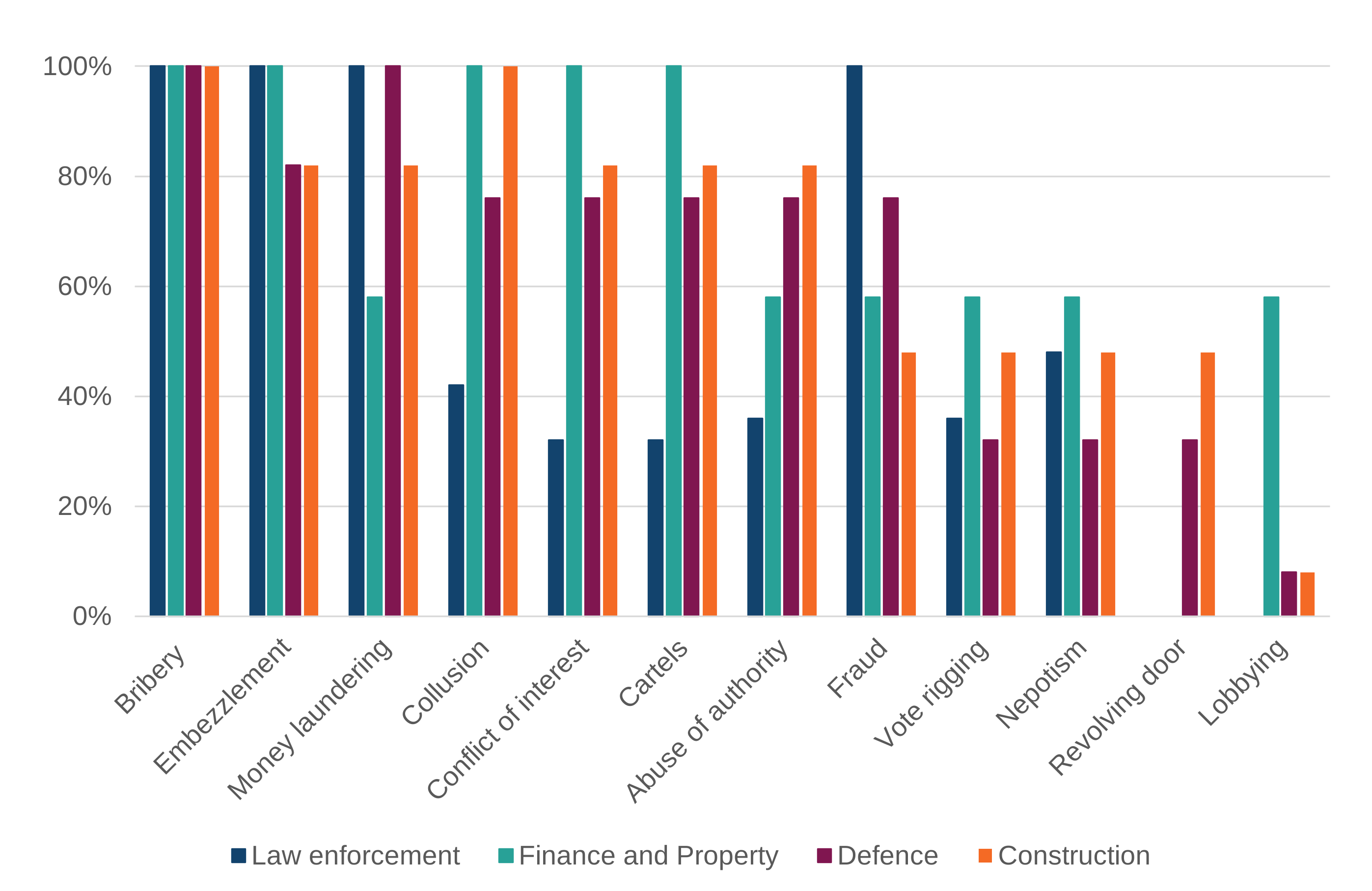
Source: RAND Europe
Views on the inclusion of money laundering, collusion, conflict of interest, cartels and fraud in the scope of corrupt activities varied amongst sectors. For example, both finance and property and construction focus group participants unanimously agreed that collusion constitutes corruption while only 42% of law enforcement representatives included collusion in the scope. This figure might suggest that corruption manifests itself less frequently through collusion in the context of police and law enforcement. These findings, within the remit of a limited sample, also demonstrate that some activities are more widely accepted to constitute corruption while others vary between sectors.
The research team also identified trends when analysing the views of participants on what constitutes corruption within individual sectors. The views of participants from the police and finance and property were highly correlated within their sectors. In the police sector, the activities receiving the highest score were bribery, money laundering, embezzlement and fraud. Law enforcement sector representatives also agreed in their understandings of lobbying and the ‘revolving door’, with no participants identifying either activity as corruption. This could be a result of institutional training and accepted definitions or may reflect police priorities for dealing with corruption. Representatives from the finance and property sector unanimously agreed that bribery, collusion, conflict of interest, embezzlement and cartels are all corrupt activities. No participants from this sector included the ‘revolving door’ in their definition of corruption and money laundering recorded a low score. This may reflect the activities that participants in these sectors are trained to look for as corrupt. For example, as a result of internal training, employees from the finance sector will certainly view money laundering as a crime, but not strictly as corrupt.
Lower levels of correlation were identified within the defence sector. While the majority of defence participants regarded bribery and money laundering as corruption and only one of the 7 defence representatives included lobbying in their definition of corruption, a greater variance was present in the sector’s view of collusion, conflict of interest, nepotism, fraud, abuse of authority and the ‘revolving door’.
In the construction sector, all participants considered bribery and collusion to constitute corruption. The majority were also in agreement that conflict of interest, abuse of authority, money laundering, embezzlement and cartels fall within the definition of corruption. Lobbying, fraud, nepotism and the ‘revolving door’ were not widely regarded as corrupt activities within the construction sector.
4.2 Manifestations of corruption by sector
This section provides an overview of the main focus group findings from each sector.
4.2.1 Law enforcement
How could corruption exhibit itself in the law enforcement sector?
The reviewed literature (see Section 2.2.2) identified the police service as being at risk of heightened exposure to corruption, particularly officers involved in undercover work, those with access to sensitive information and higher-ranking officers. Porter & Warrender (2009) suggested that some of the factors that may lead to corruption included organisational culture and the desire to achieve a conviction.
Focus group participants in the law enforcement sector found corruption to represent abuse of position, power and public trust leading to reduced integrity. Such abuse can manifest itself through activities such as bribery and the exchanging of information, collusion, interference with investigation and the ‘revolving door’.
Box 11: Manifestations of corruption in the law enforcement sector
In the law enforcement sector corruption represents abuse of position, power and public trust. Focus group participants provided the following examples of corruption that they encountered in their day-to-day work:
- corruption through the abuse of relationships, for example a police officer forming a friendship with a criminal and sharing access to police information
- abuse of power for financial gain, such as the example of a custody guard who began swiping convicted persons’ credit cards in order to reduce his growing gambling debt
- abuse of power for performance gain, for example by striking a deal with a convicted criminal whereby the latter agrees to admit other crimes in order to reduce their ultimate sentence in court
- abuse of power for ‘noble cause’ such as using covert or illicit means to obtain evidence
- corruption through covert police operations, including the practice of undercover officers revealing themselves to the subjects of investigation, accepting bribes or exchanging favours
- the ‘revolving door’ practices such as retired police officers misusing their skills to assist organised crime
- infiltration into police organisation by groups such as terrorist organisations, who seek to gain information and assistance to facilitate a more immediate attack
Source: RAND Europe
What areas, stages of process and types of positions in your sector are most susceptible to corruption risks, and why
Although corruption could occur at any level within law enforcement organisations, the specific risks differ between levels. Participants agreed that those with access to knowledge and power are most vulnerable to corruption, meaning that the risk of corruption is particularly high at the senior level (such as senior managers or chief officers). Hierarchical culture, strained resources and high work pressures associated with more senior positions were put forward as possible causes of corruption at the more senior levels. Corruption could also occur at the lower levels (for example officers placed on covert operations, detention officers), and more junior staff are able to avoid detection when engaging in corrupt activities and may be targeted for their information and access to investigations. Falling wages, social pressures within the organisation, or pressure to meet targets compounded by a lack of managerial oversight could all create vulnerabilities for corruption to occur.
What type of information and data would be needed to ‘measure’ domestic corruption in the law enforcement sector?
Attempts to measure corruption in the law enforcement sector are limited by a lack of shared understanding of corruption or the activities that it might involve. However, parts of law enforcement organisations such as police anti-corruption units have developed frameworks that are used to recognise and address corruption at the local, organisation-specific level.
Focus group participants highlighted 3 types of data that could be used in order to try to measure the risk of corruption in the law enforcement sector:
- internal data collection in law enforcement organisations that may not be publicly available
- data collected in the police and public sectors that is available publicly, either freely or through Freedom of Information (FOI) requests
- publicly available information such as prosecution data
What are some of the challenges in obtaining this type of data?
The main challenge to measure corruption in the law enforcement sector is the inconsistent definition of corruption across the sector. Given the lack of consensus, the scope of gathered data would be overly broad, making it difficult to combine and analyse. In addition, internal corruption cases are not generally recorded on the databases of some law enforcement organisations in order to avoid tipping off the offender. Prosecution is likely to be easily accessible, however it holds limited value due to issues surrounding detection and investigation. Whistleblowing and reporting data is also limited due to lack of ability to recognise corruption in the sector, as well as limited awareness of reporting mechanisms.
4.2.2 Defence
How could corruption exhibit itself in the defence sector?
The literature review found that some of the risk factors for corruption in the defence sector included weak compliance and monitoring mechanisms, and conflicting views on the culture of gift-giving when working with international partners. Horder (2011) believes that UK defence companies trading overseas were considered vulnerable to corruption and strong connections between the public and private sectors broadened the scope for corrupt activities.
Focus group participants from the defence sector understood corruption as the abuse of power for personal gain, involving activities such as bribery, illicit information sharing and the ‘revolving door’.
Box 12: Manifestations of corruption in the defence sector
In the defence sector, corruption represents abuse of power for personal gain. Focus group participants provided the following examples of corruption they encountered in their day-to-day work:
- bribes to win contracts, including the practice of offering goods or hospitality when participating in a bidding process
- ‘revolving door practices’, such as the recruitment of ex-military officials into senior positions within defence companies, and vice versa, in order to influence decision-making
- abuse of power and relationships, for example by senior ranking military officials in the military who been found to abuse their positions of power to unduly influence lower ranking personnel
- infiltration into the armed forces by adversarial actors
- selling on of military-issued equipment within online marketplaces by serving personnel
Source: RAND Europe
What areas, stages of process and types of positions in your sector are most susceptible to corruption risks, and why?
Although corruption could occur at any level within defence organisations, the incentives and types of corruption may vary at each level. Across both the public sector and private defence industry, the areas highlighted to be at particularly high risk of corruption were business development (sales, client liaison) and procurement (decision-making authority such as the ability to authorise payments). Those most vulnerable to corruption in this area are employees and teams who are subject to pressures to meet difficult sales targets, as these pressures may incentivise individuals to use illicit practices in order to secure business deals.
The risk of corruption in procurement processes is heightened by the regular interactions between contractors and buyers, where conflicts of interest and incentives for malpractice may occur. Sub-tiers of the defence supply chain are also vulnerable to corruption, particularly at the pre-contract phase. Limited oversight of supply chains within larger defence companies was cited as one factor that exacerbates this risk.
What type of information and data would be needed to ‘measure’ domestic corruption in the defence sector?
Participants identified a range of sources that may be used to measure corruption. Private defence companies use various internal mechanisms to identify possible corruption risks such as unexplained activities on company credit cards, unusual timesheet information, authorised payments without purchase orders, and notable absence of gift and hospitality records. Other proposed sources included:
- data from whistleblowing hotlines
- complaints to compliance officers assembled by ethics committees
- company records of dismissal on the grounds of corruption
- FOI requests
- court proceedings on corruption cases
Additional open-source indicators might include cost slippage on agreed contracts, reports of bullying and intimidation, and unusually fast procurement decision-making on particular contracts.
What are some of the challenges in obtaining this type of data?
Gathering information on corruption in the defence sector is constrained by commercial sensitivities which lead to under-reporting and limited availability of detection mechanisms. Incidents of corruption that occur outside the Bribery Act legislation are generally addressed internally by companies further contributing to a lack of awareness within the sector of the types of activities that constitute corruption.
4.2.3 Construction
How could corruption exhibit itself in the construction sector?
The literature on corruption in the construction sector suggested that the sector is high-risk due to the organisational culture of construction companies, long supply chains and high-value contracts. Research identified specific areas with increased risks, such the pre-qualification and tendering phase of projects (Arewa & Farrell, 2015; Marique, 2015). Construction focus group participants characterised corruption through activities such as bribery, collusion, theft, false record keeping and patronage.
Box 13: Manifestations of corruption in the construction sector
Corruption manifests itself in a variety of forms in the construction sector. Focus group participants highlighted the following activities as examples of corruption they encountered in their day-to-day work:
- collusion between planners, developers and contractors, between construction companies and subcontractors and on-site between construction workers and managers, in order to procure planning permissions or falsify safety certificates
- ‘hidden percentages’ as a result of collusion between construction companies and subcontractors who agree on hidden discounts on open-book contracts
- patronage/‘cover pricing’ involving collusion between groups of construction companies prior to a bid submission in order to avoid or guarantee winning certain contracts
- nepotism, using job or promotion offers to induce individuals to influence procurement processes
- worker exploitation, for example the practice of major construction companies obtaining payment for work undertaken by subcontractors but failing to provide the subcontractors with remuneration
- lost or stolen equipment, involving the disappearance of materials and equipment belonging to a construction firm
- timesheet falsification, such as employees booking an entire day on a timesheet in cases where they did not in reality work the full day
Source: RAND Europe
What areas, stages of process and types of positions in your sector are most susceptible to corruption risks, and why?
Within the construction sector, corruption can emerge at any stage along the supply chain. Planning stages of construction contracts and within the supply chain on agreed open-book contracts were identified as particular points of risk. The construction industry is characterised by lengthy supply chains, with corruption risk present at every transaction point and layer of bureaucracy.
Participants identified a number of positions commonly vulnerable to corruption, including developers, domestic contractors, planning committees and procurement officers. Participants suggested that corruption could occur both as a result of individual ‘bad apples’ and as a cultural issue inherent within the industry. Many potentially corrupt activities within the construction sector were perceived as ‘common practice’, creating a high level of tolerance for corruption.
What type of information and data would be needed to ‘measure’ domestic corruption in the construction sector?
Possible indicators of corruption included:
- ‘speedy’ granting of planning permissions
- lower delivery of affordable housing that originally agreed
- contracts awarded for particularly low prices
- patterns of planning permissions granted
In addition, participants highlighted digital data-gathering methods such photo or video-graphic evidence of activities on construction sites, algorithms to detect contracting patterns, and sensors installed on construction equipment. Finally, industry-specific key performance indicators could be developed to measure on-site scrutiny, overruns or the length of time required for different scales of construction projects. These indicators would enable data collection to measure indicators of possibly corrupt activities occurring on-site.
What are some of the challenges in obtaining this type of data?
Due to the nature of construction working site arrangements, central management is not equipped with the data-gathering tools needed to measure on-site working practices. Supply chain indicators are also particularly difficult to access due to limited documented evidence of informal activities, and the inherently covert nature of such activities means that they are difficult to detect. There is also an absence of any centralised UK database from which existing evidence could be gathered.
4.2.4 Finance and property
How could corruption exhibit itself in the finance and property sector?
The literature found that corrupt practices within financial services organisations are commonly seen to be driven by organisational culture or lack of regulation, and the existence of strong financial incentives. This was also characterised through the misuse of corporate mechanisms registered in CDs and OTs. The literature on this sector emphasised fraud as a key constituent part of corruption and this defined the perceptions of the level of corruption in the financial sector. The property sector was discussed in the literature in terms of money laundering through high-end real-estate investment and the impact this may have on increasing property prices and reduced local tax revenue. The finance and property focus group identified fraud, bribery, collusion, money laundering and the ‘revolving door’ as common forms of corruption within both sectors.
Box 14: Manifestations of corruption in the finance and property sector
In the finance and property sector, corruption manifests itself in a variety of forms as identified by the focus group participants:
- fraud, such as the manipulation of documented financial transactions in the finance sector, or letting agents in the property sector using their pooled accounts for inappropriate expenses
- bribery and ‘risk-based decisions’, such as the use of hospitality and gift-giving as part of business development activities
- collusion between lawyers, property firms and organised crime to facilitate property sales
- money laundering in the property sector, particularly in central London
- ‘revolving door’ practices, such as former employees of financial institutions moving to competitor organisations and sharing intelligence of their former employer’s processes and pricing
Source: RAND Europe
What areas, stages of process and types of positions in your sector are most susceptible to corruption risks, and why?
In both sectors, close proximity to extreme wealth heightens risks for corruption-related activity to occur. In finance, for example, this could be observed in areas such as private banking, wealth management and tax management. In the property sector, corruption can occur as a result of close proximity to organised crime syndicates, with letting agents identified as particularly susceptible to risk. Corruption risk is heightened by the international dimension of both the finance and property sectors due to inconsistent laws, cultural perceptions of corruption and limited oversight by UK-based institutions. Participants suggested that cross- border payments, trade finance and foreign exchange are areas of particular risk.
What type of information and data would be needed to ‘measure’ domestic corruption in the finance and property sector?
The finance and property sectors are subject to a high degree of regulation and scrutiny. As a result, a number of fragmented data sources and indices could be used to measure or indicate corrupt activities. Participants suggested that possible financial sector indicators could include number of refusals for suspect activity regarding financial compliance, receipts from business development expenses and documentation of end-of-week transactions. In the property sector, information could be gathered from the UK government’s forthcoming beneficial ownership register and the Home Office’s unexplained wealth orders (UWO). Other datasets include information gathered by civil society organisations, the FATF Corruption Index and the Global Terrorism Index. To measure undocumented corruption, a perception-based survey may provide an enhanced understanding of corruption in these sectors.
What are some of the challenges in obtaining this type of data?
Despite the high volume of data on transactions in the finance industry, this sector is characterised by a lack of transparency. The competitive nature of the industry places pressure on industry actors to conceal business processes, and information sharing between financial institutions is limited. The possibility of developing a centralised data set is limited due to inconsistent reporting mechanisms that result from differing policies and culturally varied interpretations of what corruption entails. This challenge is compounded by the absence of a regulatory authority tasked with gathering data in these sectors.
5. Recommendations for filling evidence gaps and further research
5.1 Closing evidence gaps on domestic corruption: feasibility assessment of data existence gaps
5.2 Closing evidence gaps on domestic corruption: feasibility assessment of sector-specific gaps
5.3 Closing evidence gaps on domestic corruption: feasibility assessment of conceptual gaps
5.4 Closing evidence gaps on domestic corruption: feasibility assessment of corruption indicator gaps
This chapter focuses on the 2 final research questions:
RQ6: What is the relative feasibility of filling evidence gaps on domestic corruption?
RQ7: What is the feasibility of assessing the scale of domestic corruption in the UK, on a national level?
This feasibility assessment is inspired by the Payback research evaluation framework and a logic model which underpins it. In order to formulate the proposals for these studies, RAND Europe has drawn on the findings of the REA, interviews, workshop and focus groups captured in previous sections of this report. The research team has highlighted cases in which a particular study is able to address more than one gap. Following the logic model approach, the research team has then identified indicative resource requirements and challenges for each proposed study, including the level and type of researcher expertise.
RAND Europe has provided an indication of the feasibility of undertaking each proposed research study, which indicates, at a high level, the ease with which research challenges can be overcome. The study team designed a feasibility scale based on its analysis of each identified research gap and the relative importance of closing it to the overall evidence landscape as evaluated for this study. The feasibility indication is based on a high-medium-low scale.
In addition, the team consulted RAND feasibility assessment methodologies and aligned with the Home Office to ensure the ease of guidance and implementation for the policy audience. The feasibility scale is thus relative – for instance, although conducting a large enough sample of expert interviews and soliciting the requisite number of survey responses poses challenges of respondent identification and engagement, obtaining internally-held data from a variety of organisations is more difficult, due to reluctance to share sensitive information and the disparate formats in which data is collected and stored.
The evaluation of impact presented below is based on the magnitude of the impact which each proposed study is expected to exert on the quality of the overall evidence landscape in the UK. For instance, although generating datasets on corruption within specific sectors and on a national level will radically improve the quality of evidence on domestic corruption and allow for a rigorous evaluation of its scale, this approach poses significant data access and collation challenges, resulting in low feasibility but high impact.
At the same time, the study team has proposed an alternative approach to gathering corruption-relevant data to underpin both sector-specific and national-level studies – a combination of survey-based consultation and interviews and focus groups with representatives of each sector, as well as relevant central government bodies. This can be triangulated with existing publicly available data, such as public records of judgements and prosecutions, contract awards database and reports of monitoring bodies like the Advisory Committee on Business Appointments (ACOBA).
Since these pathways constitute alternative approaches within the same study, a separate feasibility/impact ranking has been assigned, indicating that while not without its challenges, the data generation approach can mitigate data access challenges and is therefore more feasible.
The feasibility assessment is subject to several caveats. Firstly, the data required for each proposed study has not been generated or collated, and the selection of stakeholders and experts not yet identified. Therefore, the assessment of feasibility, research inputs and challenges is notional and not definitive. The feasibility evaluation also does not take into account the resource or timeline constraints of the commissioning authority.
5.1 Closing evidence gaps on domestic corruption: feasibility assessment of data existence gaps
Gaps addressed
Corruption - relevant datasets and assessment of the scale of UK corruption nationwide. Lack of comprehensive quantitative and qualitative datasets on corruption.
Objective
Generate datasets on corruption to underpin evaluation of scale of corruption on a national level
Task: Collating and analysing existing data
Step 1: Request and collate both the ‘criminal justice’ (for example prosecutions) and ‘informal’ data (investigations), including from judicial bodies (such as Crown Court, Supreme Court). This will require transferring data into a format and database(s) that can be analysed, including supporting longitudinal analysis over time.
Step 2: Using the conceptual framework, examine each judgement/ infringement record and extricate activities and processes related to corruption (for example how fraud and money laundering intersects with corruption). Isolate instances of corruption from instances of incompetence and inefficiency.
Task: Generating and analysing new data
Conduct interviews and surveys with representatives of all national agencies and programmes tasked with countering and monitoring corruption to obtain their assessment of the prevalence of activities they consider to be corruption. Isolate corruption from other types of misconduct.
Methods
Database building (precise methodology dependent on format and completeness of data).
Interviews and surveys, with questions capturing activities considered to be corruption and their frequency.
Interviewees to include: representatives of regulatory/supervisory functions in each sector, sector employees who have been exposed to corruption and if possible, sanctioned for corruption, company/organisation representatives familiar with internal corruption monitoring structures and their content.
Data analysis (such as coding, statistical analysis); may be possible to undertake via data analysis software.
Indicative resource requirement
Estimated minimum team size 5 to 7, but will depend on format, completeness and volume of data and on level of data analysis automation.
Team will need to include researchers with data analysis skills (qualitative and potentially statistical), survey design skills, legal understanding and understanding of corruption.
Challenges
Variability of data quality and quantity across sectors and organisations.
Willingness of organisations to share data.
Difficulty and labour intensiveness of collating raw data from disparate sources and isolating indicators of corruption.
Identifying and engaging sufficient number of representative and suitable interviewees and survey respondents.
Willingness of interviewees to engage and disclose information, for example on the prevalence of corruption.
Securing sufficient volume of survey responses.
Benefits of proposed research
High: establishes baseline body of knowledge on corruption, based on systematic data.
Feasibility and impact
Collating and analysing existing data – feasibility is low.
Generating and analysing new data – feasibility is medium.
Impact is high.
5.2 Closing evidence gaps on domestic corruption: feasibility assessment of sector-specific gaps
Gaps addressed
Processes, actors and levels of corruption in specific sectors identified in existing research as vulnerable to corruption:
- police
- construction
- defence
- public procurement
- finance
- property
- prison service, borders
- professional services
- healthcare
- local government
- sport
Investigation of impact of Brexit on corruption.
Objective
Establish baseline on the level of corruption- related activity in sectors of concern and how it might be impacted by Brexit:
Task: Collating and analysing existing data
Step 1: Within each sector, identify regulatory bodies, industry associations/forums dealing with corruption and ethics, public authorities, and a representative sample of companies/businesses to investigate what corruption data each might hold.
Step 2: Request and collate the data; this will require entering data into a database that can be analysed, also over time.
Step 3: Analyse the data to isolate corruption from other breaches or unethical behaviour, incompetence and inefficiency.
Step 4: Triangulate analysis with publicly available data (such as contracts data) to highlight sector-specific red flags.
Task: Generating and analysing new data
Conduct interviews and surveys with representatives of sector-specific regulatory organisations, industry associations, national agencies and programmes tasked with countering and monitoring corruption to obtain their assessment of the prevalence of activities they consider to be corruption.
Isolate corruption from other types of misconduct.
Methods
Desk-based research including literature review and expert interviews.
Process mapping.
Stakeholder consultation to validate and build support for framework.
Indicative resource requirement
Estimated minimum team size 7 to 9 per sector, but will depend on format, completeness and volume of data and on level of data analysis automation.
Team will need to include researchers with data analysis skills (qualitative and potentially statistical), survey design skills, specialisation in corruption, sector knowledge and corporate reporting understanding.
Challenges
Constructing a framework that is sufficiently representative (breadth), but also rigorous (depth).
Benefits of the proposed research.
High: allows for granular study of domestic corruption by examining specificities of each sector.
Feasibility and impact
Collating and analysing existing data - feasibility is low.
Generating and analysing new data – feasibility is medium.
Impact: high.
5.3 Closing evidence gaps on domestic corruption: feasibility assessment of conceptual gaps
Gaps addressed
What activities constitute corruption in UK context.
Objective
Develop a UK-specific conceptual framework for understanding and analysing corruption which combines legal aspects with academic understanding and expert assessment to provide a taxonomy of corrupt activities.
Task: Draw up a ‘process map’
Draw up a ‘process map’ of corruption within each sector, outlining vulnerabilities, mechanisms and actors.
Methods
Desk-based research including literature review and expert interviews.
Process mapping.
Stakeholder consultation to validate and build support for framework.
Indicative resource requirement
Interdisciplinary team of 3 to 5 researchers (with legal understanding), depending on amount of interviews conducted and sectors covered.
Challenges
Constructing a framework that is sufficiently representative (breadth), but also rigorous (depth).
Feasibility and impact
Feasibility is high.
Impact is medium.
5.4 Closing evidence gaps on domestic corruption: feasibility assessment of corruption indicator gaps
Gaps addressed
Corruption indicators and methodologies for gathering data on corruption.
Objective
Identify required data sets and develop indicators of corruption.
Task: Identify required data sets and develop indicators of corruption:
Step 1: Map all UK agencies and programmes concerned with corruption and associated activities (such as SFO, NCA, Cabinet Office, City of London Police).
Step 2: Investigate manifestations/aspects of corruption which the agencies and programmes cover (for example embezzlement, bribery, fraud).
Step 3: Understand the corrupted and corruptor dimension and understand the process by which the exchange of benefit and abuse of authority/position happens.
Step 4: Investigate which activity covered by each organisation is subject to criminal justice and what additional data captures offences related to corruption (such as record of complaints, internal investigations, internal sanctions); relate to conceptual map (above).
Step 5: Examine how corruption has been evaluated in the context of studies focusing on other countries (such as the DFID anti-corruption evidence project) and adopt any methodological approaches applicable to UK.
Methods
Desk-based research, expert interviews, process mapping.
Interviewees to include: corruption and associated activities experts/academics, researchers conducting research on corruption in other countries; representatives of various organisations identified.
Indicative resource requirement
Large enough team for each researcher to cover 2 agencies/ programmes each, and including general researchers, those with corruption specialisation and those with basic legal understanding
Challenges
Identifying and engaging the appropriate profile and sufficient number of interviewees.
Eliciting required level of detail from interviewees.
Benefits of the proposed research
Medium: lays the foundation and establishes methodology for follow-on systematic studies on nature and level of corruption in the UK.
Feasibility and impact
Feasibility is high.
Impact is medium.
6. Conclusions and preliminary policy recommendations
6.1 Preliminary policy recommendations
This Home Office-funded project began by conducting a REA to identify and evaluate the current evidence landscape on domestic corruption in the UK, as captured in selected grey and academic research. In general, the examined literature as well as the experts and stakeholders coalesced around the need for a sector-specific approach to evaluating and addressing corruption, as its mechanisms and manifestations differ across sectors.
The research reviewed as part of the REA and, to a lesser extent, expert engagement through interviews and the workshop identified specific factors within each sectors that led to corruption occurring within it. However, it was the focus groups which the research team held with participants and stakeholders within each sector that brought out the key detail regarding enablers and mechanisms of corruption.
In addition, considering the significant data access challenges identified by the feasibility assessment, the research team believes that focusing on data generation through primary research, triangulated with the analysis of publicly available data, constitutes the more feasible but still impactful research pathway. While pockets of relevant data and information on corruption and its related activities do exist within monitoring organisations and sector-specific bodies, there is a lack of data and systematic studies on the nature, mechanisms and scale of corruption in the UK.
6.1 Preliminary policy recommendations
At the same time, a number of overarching themes regarding the factors that can engender and propagate corruption also emerged, and these underpin the preliminary policy recommendations presented in this chapter, keeping in mind their tentative nature, as the objective of this study was to evaluate the evidence on domestic corruption and to recommend further research.
Firstly, as it is important to promote the implementation and use of whistleblowing structures that are sufficiently resourced and properly ‘firewalled’. This can provide an ‘escape valve’ from the strong hierarchical structures and close team bonds that have been highlighted as corruption-enabling factors within particular sectors and organisations and may help prevent corrupt activity from propagating throughout the organisational ranks. Implementing structures to enable corruption allegations to be followed up promptly is an important component of such a measure.
Secondly, adequately resourced and trained internal anti-corruption teams are another key mechanism of addressing the top- bottom organisational structures that can be abused by corrupt individuals. In addition, providing the opportunity to leverage digital and automated oversight mechanisms can help sectors with dispersed industrial activities and long supply chains – additional aspects held up as potentially conducive to corruption – to strengthen and centralise monitoring functions to deter misconduct.
Thirdly, the relatively simple, but impactful policy initiative can revolve around encouraging information sharing and exchange of learnings and experience between representatives of different sectors on the means and mechanisms of tackling corruption. This can help disseminate good practice, as particular sectors, like police for instance, have developed effective methods of monitoring and addressing corruption. An associated measure can consist of encouraging organisations to share their experience of encountering and countering corruption. Championing organisations willing to disclose their vulnerabilities in this area can help dispel some of the stigma that prevents information sharing and thus serve as a powerful reinforcement mechanism for corruption deterrence and prevention structures.
Finally, these and other anti-corruption initiatives should be followed up with regular rigorous evaluations to assess their impact and inform policymakers on any necessary adjustments in approach. This will enable the Home Office and other actors to make most efficient and targeted use of finite organisational, human and financial resources, as well as to understand ‘what works’ in anti-corruption and share this learning with private and international partners – both bolstering the effectiveness of wider anti-corruption efforts and demonstrating UK thought leadership in this policy area.
These evaluations should be conducted by an independent team or challenge function – either within the public sector (for example the National Audit Office) or through contracted support – and enabled through the inclusion of appropriate milestones, metrics and key performance indicators in the initial design of any given anti-corruption initiative’s approach.
Appendix A: Study work package structure
To address these research questions, the research team designed the following work package (WP) structure, using a mixed methods approach as depicted in Figure 2.
The following sections present a summary of each of these WPs and their contributions to the analysis of each of the 7 respective RQs.
Figure 2: Study work package structure
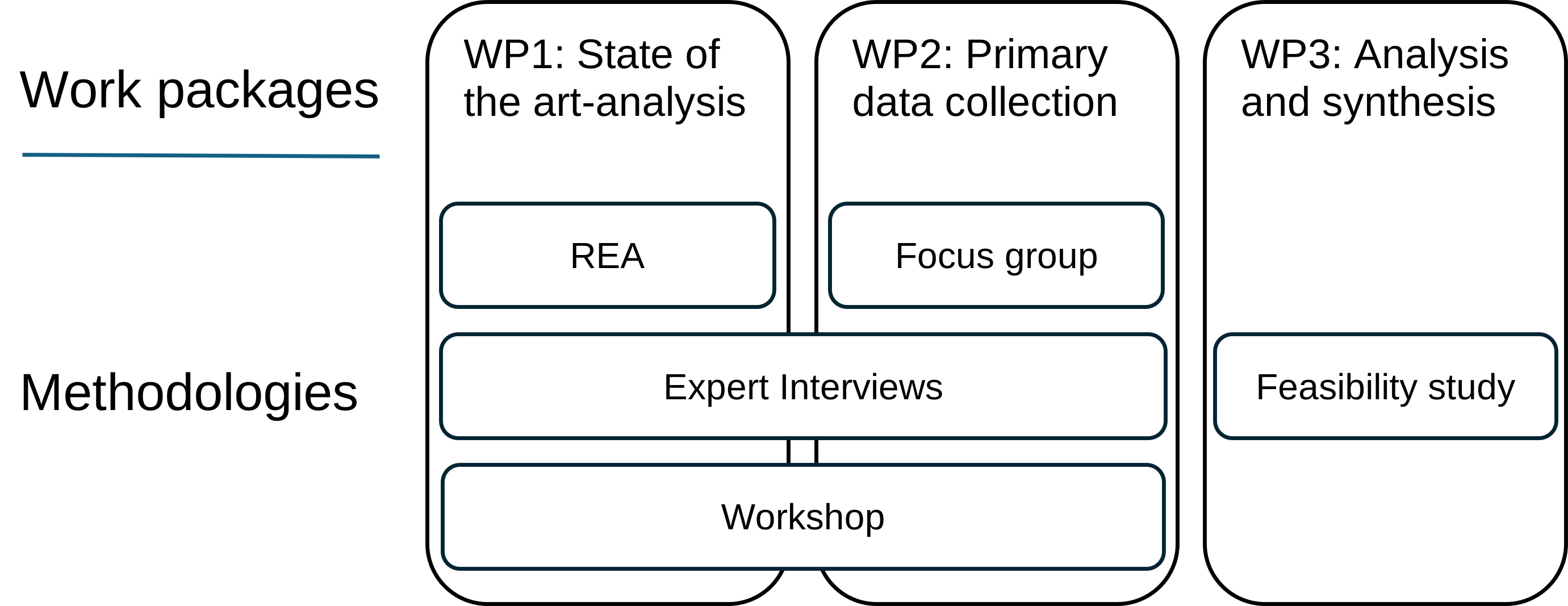
A.1 WP1 state-of-the-art analysis
In the first phase of research, WP1 focused on the state-of-the-art analysis by conducting a REA of existing academic and grey literature on the topic of domestic corruption in the UK and identified sectors for focus groups. WP1 addressed the first 3 research questions (RQs 1 to 3). In parallel, the research team conducted 5 key informant interviews (KII) to validate the findings of the REA and to inform the next 2 WPs of this study.
A.2 WP2 Primary data collection
WP2 consisted of primary data collection. In addition to the expert interviews, the research team also held an expert workshop to obtain insights from leading policy experts and academics in the field on the nature of domestic corruption in the UK and associated evidence gaps. The workshop also helped the research team to map out the leading funding bodies and researchers on corruption in the UK, which are detailed in Appendix H.
In addition, the research team carried out primary research on sectors identified in WP1 by assembling 4 focus groups that brought together practitioners from financial and property sectors, defence, construction and law enforcement. The purpose of the focus groups was to gather insights regarding the manifestation and processes of domestic corruption in specific sectors and understand the attitudes to corruption within these sectors.
A.3 WP3 Analysis and synthesis
WP3 analysed the evidence gaps on domestic corruption in the UK revealed by secondary and primary data obtained though WP1 and WP2, respectively. The research team conducted a logic model-based feasibility study, inspired by the Payback framework[footnote 29], to prioritise the evidence gaps and to explore the feasibility of addressing these gaps through future research endeavours. These 2 RQs feed into the overall task of the feasibility by filling the identified evidence gaps.
A.4 WP0 Project management and quality assurance
Finally, WP0 consisted of ongoing project management and quality assurance (QA) that enabled an effective coordination of the study and allowed for the timely delivery of research outputs.
Appendix B: Rapid Evidence Assessment (REA) search strategy
The principal characteristics of the REA approach are depicted in Figure 3 and can be summarised as follows:
Breadth of search scope
The REA search strategy has been designed to capture a selection of studies and, within the parameters of the search strategy, to provide a broad overview of all existing research on corruption in the UK (see Figure 3).
Type of literature
The REA was conducted in 2 stages:
The first involved searching for academic papers (including meta-reviews, systematic reviews, randomised control trials, longitudinal studies and independent evaluations).
The second, and parallel stage, involved examining grey literature (including government documents, reports by advocacy organisations, policy papers, research reports and conference transcripts). This scoping report covers the overarching findings derived from both literature types.
Review activities
The REA of academic literature entailed activities that were not part of the grey literature review. Such activities include screening titles and abstracts of identified records when selecting studies for full-text review (see ‘Step 2’ description below) and undertaking a quality assessment of shortlisted sources before extracting data (see Table 9).
Figure 3: REA approach
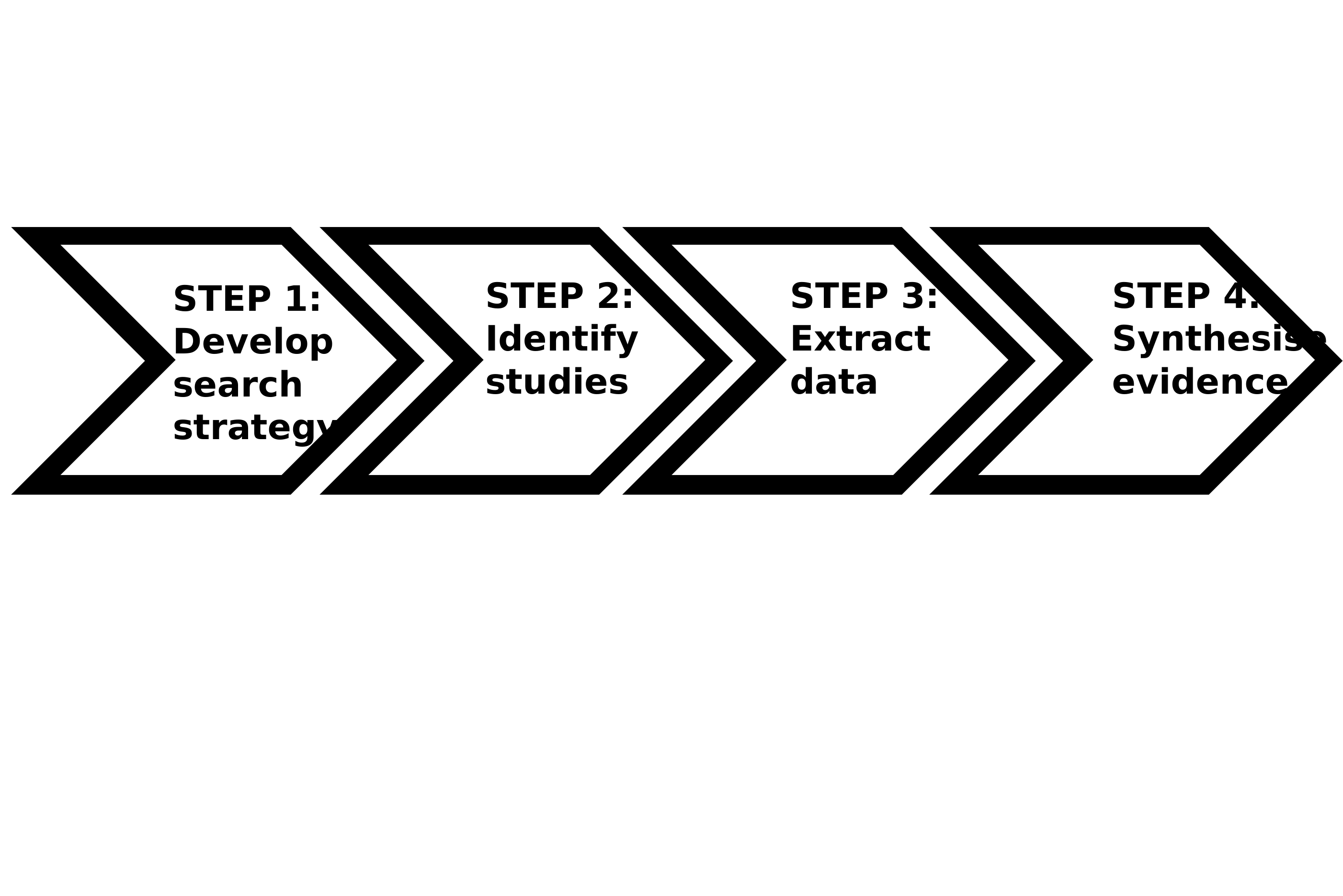
B.1 Step 1: Search strategy of academic and grey literature
The first task involved developing a search strategy in order to set out the parameters of the REA in advance. This was developed based on the Home Office Stage 1 questions (Research Questions 1 and 2). The protocol provides an outline of the search strategy (including selected databases and search terms) and of the inclusion and exclusion criteria applied.
In order to develop the search strategy, a number of indicative search terms were piloted and relevant databases were identified. Pilot testing of search terms was conducted to help ensure that the terms were broad enough to include a range of relevant studies, but also narrow enough that the search citation numbers were manageable. Following this pilot testing, the final search terms were: ‘corrupt*’ OR ‘corrupt activit*’ OR ‘anti-corruption’ combined with ‘UK’ OR ‘United Kingdom’ combined with ‘sector*’ OR ‘risk*’ OR ‘threat*’ OR ‘insider threat’ OR ‘scale’. The literature search was conducted in January 2018 in the following search engines and databases:
- Google (first 40 hits)
- Google Scholar (first 40 hits for academic search only)
- Web of Science (academic search only)
The scope and the timeframes of the search were dictated, in part, by the structured methodology of the REA and also by the fast evolving anti-corruption policy landscape in the UK. Looking at the literature of the past 10 years provided a sufficient oversight to contextualise the issue of domestic corruption, but also remained relevant with the issues of corruption being largely informed by the Bribery Act 2010 and other more recent regulatory initiatives. Additional sources were identified through searching the reference lists and citations of academic papers identified though the searches described above.
A set of inclusion and exclusion criteria was developed and applied to both the academic and grey REA, following refinement in consultation with RAND internal experts and QA reviewers. Table 8 presents these criteria.
Table 8: Inclusion exclusion criteria
| Inclusion criteria | Exclusion criteria | |
|---|---|---|
| Research focus | Literature that explicitly explains the landscape of domestic corruption in the UK: Identifies the threats of corruption. Analyses the scale of corruption across different sectors. | Research not concerned with the thematic area specified in the inclusion criteria. |
| Sectors | All sectors with a particular focus on the sectors outlined in the UK Anti-Corruption Strategy 2017 to 2022 (policing, prisons, local government and procurement, border security and defence). These were included to enhance the general search. | No sectors were excluded from the search at this stage. |
| Country | UK, or comparative studies in which the UK is one of the main focus countries. | Studies that focused on international corruption and did not have a UK focus were excluded from the review. |
| Language | English | All, except for English. |
| Source type | Meta-reviews, systematic reviews, longitudinal studies, independent evaluations, government documents and policy papers. | Media articles, documents without clear organisational authorship, letters, editorials, comments, book reviews and news articles. |
| Publication date | 2008 to January 2018 | Research published before 2008. |
Source: RAND Europe
B.2 Step 2: Study selection
B.2.1 Selection of academic literature
For the selection of academic literature, an initial ‘scan the universe’ exercise was conducted. The purpose of this exercise was to provide an overview of the current research landscape on corruption in the UK. While the study selection process was confined by the inclusion/exclusion criteria (Table 9), the research team took notice of the broader literature in order to enhance the research team’s understanding of the volume of research on corruption and the general themes within it.
The academic study selection involved conducting a search of key terms using the search strings detailed in Appendix A and taking note of the number of results generated by each search and the types of topics covered. The study team then proceeded to screen the search results in order to identify sources for selection. The search strings detailed in Appendix A were applied to both Google and Google Scholar, and the first 40 sources identified from each search were considered from each of the 2 databases. In addition, the research team also searched the Web of Science database.
The search string applied to this database was ‘corruption’ and ‘UK’ for all articles published between 2008 and 2018. This search generated 71 results. All academic search results from the 3 databases were then loaded into EndNote bibliographic software, before titles and abstracts of these records were screened for relevance against the criteria specified in Table 9 in Appendix A and any duplicates removed.
When screening the titles and abstracts of records, a researcher coded as to whether records should be included or excluded from the full-text review (see Step 3). Articles were excluded if the titles and abstracts did not meet the specified research focus, country, sector, language and publication date inclusion criteria (see Table 9) The articles were also screened for relevance to both the research questions and to the current legislative or policy context.
Articles that did not address the question of corruption in the UK, with meaningful rationale or evidence, or those that were outside of the proposed timeline (2008 to 2018), were excluded at this stage. Borderline cases were discussed with a second researcher before the decision was made to include or exclude these papers.
Focusing on the papers shortlisted for full-text review following this screening process, a quality assessment of the shortlisted articles was conducted to ensure that only high- and medium-quality peer-reviewed articles were included in the full-text review, with low-quality and/or articles that had not been peer-reviewed excluded from the review. This quality assessment involved scanning the full-text of shortlisted papers. At this stage, 9 articles were excluded from the full-text review based on quality. As Table 9 shows, this assessment was designed to examine quality of methodology, analysis, relevance, research ethics and impact on policy and/or theory. Shortlisted articles meeting the quality threshold were then reviewed in full by a researcher.
The research team designed the quality assessment method to help assess the standard of sources identified in the academic review in relation to the 4 areas of assessment (see Table 9), and to exclude those that did not meet these quality standards. This quality assessment approach was devised by the RAND research team on the basis of: (i) an internal discussion focused on developing clear and straightforward assessment criteria, consistent with RAND’s standards of quality and objectivity; and (ii) adapting the ‘quality factors’ presented in Quality in Qualitative Evaluation: A Framework for Assessing Research Evidence (Spencer et al., 2003, p.71). Assessing quality of sources is recognised as good practice in methodological design for REA studies to ensure that the research team excludes any studies of low quality from the assessment.
Table 9: Quality assessment methods
| High | Medium | Low | |
|---|---|---|---|
| Methodology | Explicitly states and develops methodology | Provides limited explanation of methodology | Methodology poorly developed and/or described |
| Analysis | Presents a balanced and evidence-based analysis | Presents a somewhat balanced and evidence- based analysis | Presents an unbalanced analysis not grounded in empirical evidence |
| Relevance | Is timely and relevant | Is somewhat timely and relevant | Lacks relevance |
| Impact | Makes a strong contribution to policy/theory (for example presents a novel finding or method, or directly contributes to design and implementation of new policy) | Somewhat contributes to policy/theory (such as builds on an existing finding or method, or supports implementation of an existing policy) | Makes no substantive contribution to policy/theory |
Source: RAND Europe
B.2.2 Selection of grey literature
To select grey literature, the RAND study team applied the search approaches described in Step 1, with the study team selecting papers that appeared particularly relevant for full-text review. Studies focusing on domestic corruption in the UK or foreign corrupt wealth laundered through UK institutions were included, while studies that had a purely international corruption focus were excluded from the final reviews. Given that these sources were not academic, a formal quality assessment was not applied beyond the researcher’s assessment of the sources’ rigour and relevance to the aims of the study.
B.3 Step 3: Data extraction of academic and grey literature
For the data extraction of literature, 43 sources were identified and shortlisted through the ‘scan the universe’ and selection exercises (detailed in Section B.2.1 for full-text review). The full-text review involved extracting data from 19 academic articles and 24 grey literature sources and categorising these in a data extraction form. Following identification of relevant studies, data was extracted for each paper on:
- bibliographic information
- definition of corruption in the UK context
- the landscape of corruption in the UK
- factors that may enable corruption
- sectors of focus
- policy responses to corruption
- methodological limitations and research gaps
- quality assessment (peer review / quality of methodology)
B.4 Step 4: Synthesis
In order to collate and summarise the findings from the studies included in both reviews, findings were analysed according to the following themes:
- conceptualising corruption in the UK context
- corruption trends in the UK
- gaps and limitations
A quantitative overview of reviewed studies was also provided through an analysis of included and excluded studies at the initial searching, screening and data extraction stages. The REA concluded with recommendations for sector selection based on key findings from the literature.
B.5 Methodological strengths and limitations
Several strengths and limitations of the methodological approach applied in this study should be noted in considering the findings presented. These are set out below.
Strengths
- the targeted and structured review searches are designed to minimise the probability that relevant research was missed
- the decision to supplement database searches of published research with targeted grey literature searches helped to ensure that policy, programming and other non-academic perspectives could also be captured in the analysis
- given that the study team did not exclude studies on the basis of publication language (language capability permitting), this form of publication bias was avoided
Limitations:
While the REA was designed to capture all relevant literature on corruption in the UK, there is always a possibility that some sources will be missed due to the inherent limitations of databases and the search strings used to delimit the scope of searches.
Due to the large numbers of studies identified during the search stage, there is a limited risk of human error when selecting the studies for full-text review. However, the involvement of a second researcher in reviewing the shortlisted articles and discussing borderline cases mitigates this risk to some extent.
Papers focused on corruption outside the UK were excluded from the search. It is possible that some of these sources may make indirect links to corruption in the UK, but were excluded from the final shortlist of sources.
Appendix C: Overview of reviewed literature
This section provides an overview of the thematic focus and methodological approach of the academic and grey literature sources that were selected for the REA. For academic literature, this chapter also places the selected sources in the context of the wider body of literature on corruption. The purpose of this section is to explore the quality and breadth of the existing research on domestic corruption in the UK, both in the academic and grey literature that was selected for the REA, as well as to obtain a better understanding of the broader themes that surround the topic of corruption in the UK based on the selected search terms.
C.1 ‘Scanning the universe’
The research team conducted an initial ‘scan the universe’ exercise to identify relevant academic sources. From this exercise, a number of general trends regarding the current academic literature were identified. The subject of overseas corruption is considerably more widely covered than corruption in the UK. In fact, articles on the extent or nature of domestic corruption are a minority within the current literature, indicating a research gap – as defined by the aims of this study. The UK is featured in a number of comparative studies, most notably involving the US, in order to compare the respective anti-bribery legislative instruments of both countries (see Carr & Outhwaite, 2009; Carr, 2009; Carr, 2012; David-Barrett, 2014; Lord & Levi, 2017).
The US is a comparator country of focus due to the parallels that can be drawn between the Foreign Corrupt Practices Act and UK Bribery Act. Within the research that did focus specifically and solely on the UK context, a large proportion of articles were written in the years surrounding the introduction of the UK Bribery Act 2010. During this period, anti-bribery and anti-corruption legislation was the focus of particular attention in the literature (Carr & Outhwaite, 2009; Carr, 2009; Carr, 2012; David-Barrett, 2014; Lord & Levi, 2017).
Journals within the fields of law and criminology were the most common sources of academic literature on corruption. The connection between organised crime and corruption is the subject of a number of books as well as academic articles, although books were not included in the REA (Levi & Lord, 2011; King, 2013; King 2015).
The REA methodology is built on a ‘rapid’ and structured review within a short timeline, therefore books were excluded from this research method. However, in order to mitigate the loss of possible findings, the research team noted relevant books revealed by the search and identified articles by the same authors, such as Corruption, Anti-Corruption and Governance by Dan Hough. Financial crime and fraud, often conflated with corruption, are also explored widely in the literature, but have been excluded from the study if no explicit link between fraud and corruption was made (Levi, 2010).
Whistleblowing, or passing on information concerning wrongdoing, was also the subject of a number of articles examined within studies on business integrity and corruption in the workplace (Carr & Lewis, 2009; Carr, 2012; Carr & Outhwaite, 2009).
C.2 REA of academic literature
Figure 4 below presents the total number of records identified through the initial academic search (132 sources), the number of records excluded (112 sources), and the number of remaining sources reviewed and included in the academic REA (19 sources).
Figure 4: Academic literature study selection
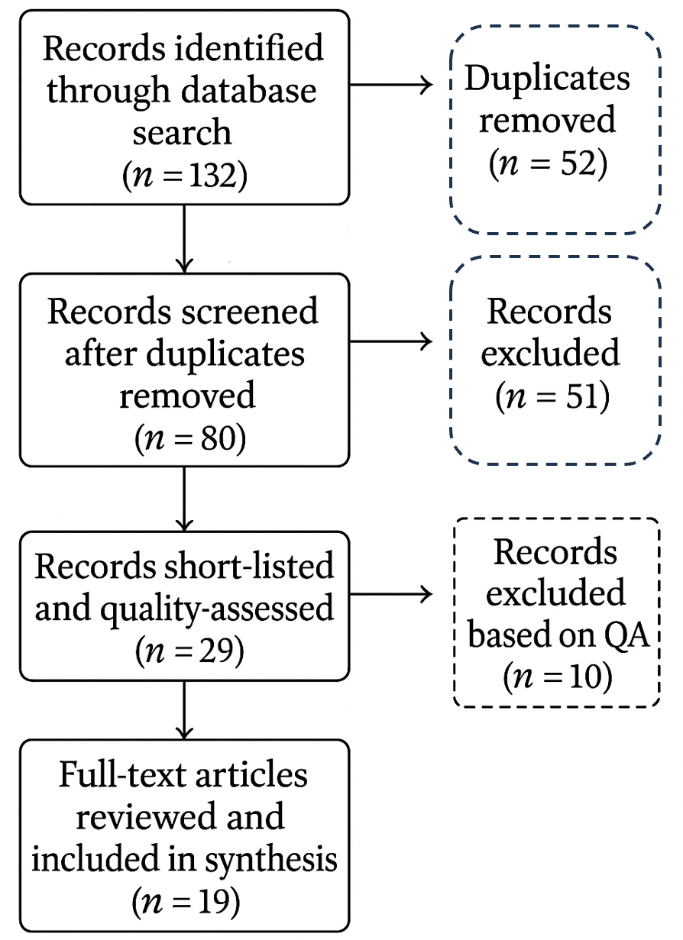
Of the 19 articles reviewed, 15 were qualitative in nature and 4 used a mixed-methodology approach based on a combination of quantitative and qualitative research methods. Within the examined literature, the study team did not identify any systematic literature reviews on corruption in the UK. A systematic literature review answers a particular research question by identifying, evaluating and synthesising the entire body of evidence that meets specifically designed eligibility criteria.
Data sources used in the studies included interviews (5 sources), surveys (2 sources) and secondary data, such as review of existing research (6 sources). Based on the quality assessment, 7 of the 19 articles were found to be high quality, while the remaining 12 were deemed medium quality.
The thematic focus of the examined literature broadly fell into 2 categories: sector-specific studies (Heywood, 2012; Porter & Warrender, 2009; Arewa & Farrell, 2015; Brannan, 2017; Burrows, 2008) and analysis of current relevant UK legislation, policy or enforcement (Binkovitz, 2013; Marique, 2015; Cropp, 2009; Engle, 2010; Gutternman, 2017; Hunter, 2011; Yeoh, 2011; Lord, 2015; MaCaulay & Mulcahy, 2017). The majority of literature fell into the latter category, while only 5 studies were explicitly focused on specific sectors (Heywood, 2012; Porter & Warrender, 2009; Arewa & Farrell, 2015; Brannan, 2017; Burrows, 2008). Within these parameters, topics examined included the impact of corruption both on the general public and specific sectors, interactions between organised crime and corruption, and policy responses (Campbell, 2016a; Gutterman, 2017).
Additional areas of discussion included the policy impact of existing corruption research, and measuring the impact of corruption in the UK – each addressed by one source respectively (Levi & Burrows, 2008; MaCaulay & Mulcahy, 2017). Bribery was the form of corruption most commonly addressed in the literature. However, corrupt activity was also conflated with fraud and ‘mis- selling’ by 2 articles in the literature (Levi & Burrows, 2008; Brannan, 2017). Though they are related, these types of activity are, in fact, distinct from corruption – representing instead the deliberate deception of an individual or individuals for the purpose of unlawful gain. The prominence of fraud as a topic within the academic corruption literature highlights current discrepancies regarding how corruption is conceptualised, which is discussed in Chapter 3.
The 2010 UK Bribery Act was a common focal point within the examined literature. Discussions on this topic ranged from the act’s role in establishing a legal definition of corruption to its potential impact on UK businesses and issues of compliance (Campbell, 2016a; Hunter, 2011; Binkovitz, 2013). While some articles focused on the subject of the UK bribery overseas, these also contained discussion of the general UK corruption landscape and sectors most acutely vulnerable to fraud, such as public procurement (Engle, 2010), finance (Cropp, 2009) and the legal system (Marique, 2015).
These sources considered the impact of overseas bribery on the abovementioned sectors and discussed the ability of UK authorities to monitor and prevent such activities at the national or regional level (Cropp, 2009; Lord, 2015). The relatively high level of focus on overseas bribery within the academic literature implies that overseas corruption is currently regarded as a more significant concern than domestic corruption risks within the UK, with some suggesting that domestic corruption is a ‘low priority’ in the UK policy context (Gutterman, 2017). Nevertheless, MaCaulay and Mulcahy (2017) highlighted the policy impact of TI research, suggesting that this research has raised awareness of issues such as corruption in institutions, for example in local government or the prison services.
The literature also included 6 comparative studies. Four articles compared the UK with the US in order to evaluate their respective anti-corruption legislation (Binkovitz, 2013; Cropp, 2009; Engle, 2010; Hunter, 2011). These sources deemed the UK Bribery Act to be more stringent and wider in scope than the US Foreign Corrupt Practices Act (FCPA), as it applies to any UK registered companies that conduct business in the UK or overseas (Binkovitz, 2013; Cropp, 2009; Engle, 2010; Hunter, 2011). Comparisons were also drawn with Germany to evaluate the UK’s anti-corruption enforcement (Lord, 2015). One notable finding of this study was that the UK’s enforcement system is characterised by higher levels of discretion by decision-makers than the comparator jurisdiction.
One outcome of this level of discretion is that the UK is more likely to prosecute ‘major’ bribery cases, with low levels of enforcement on smaller and less high-profile cases (Binkovitz, 2013; Cropp, 2009; Engle, 2010; Hunter, 2011). Comparisons were also drawn between the UK and New Zealand to examine the impact of TI research initiatives on UK corruption policy (MaCaulay & Mulcahy, 2017).
Recommendations resulting from these research initiatives had a tangible impact on UK corruption policy, for example by contributing to the development of the 2017 Anti-Corruption Strategy (Binkovitz, 2013; Cropp, 2009; Engle, 2010; Hunter, 2011).
There was a lack of comprehensive data collection underpinning most of the identified and reviewed academic studies. Within the examined literature, analyses of domestic UK corruption were based on limited sector-specific data, or anecdotal case studies. The reviewed sources identified the lack of relevant empirical evidence on the extent of corruption in the UK, either within or across sectors. Furthermore, there was a lack of a consensus on the definition of ‘corruption’, which complicates existing and future analysis by blurring the lines between activities such as fraud, embezzlement or collusion, which may or may not be considered as corruption.
C.3 REA of grey literature
By applying the search strategy described in Appendix B Section B.1, the REA initially identified 21 grey literature sources that were relevant to domestic corruption in the UK. This initial approach combined the Google search with the review of identified organisations’ publications concerned with researching corruption, such as Transparency International UK, Corruption Watch UK, and Global Witness. In order to narrow down the search results to those that were most relevant to the research question, legal and policy documents and news articles on corruption were excluded from the selection. While these types of sources dominated the grey literature landscape on the topic of domestic corruption in the UK, the research team excluded these from review.
The research team recognised that the purpose of legal and policy documents is to codify behaviour and explain the mandate concerning the corruption matter. As such, these types of sources do not provide empirical evidence of corruption, nor do they assess the effectiveness of policy initiatives. News articles were excluded on the basis of rigour, as most are based primarily on anecdotal evidence.
Figure 5: Grey literature study selection
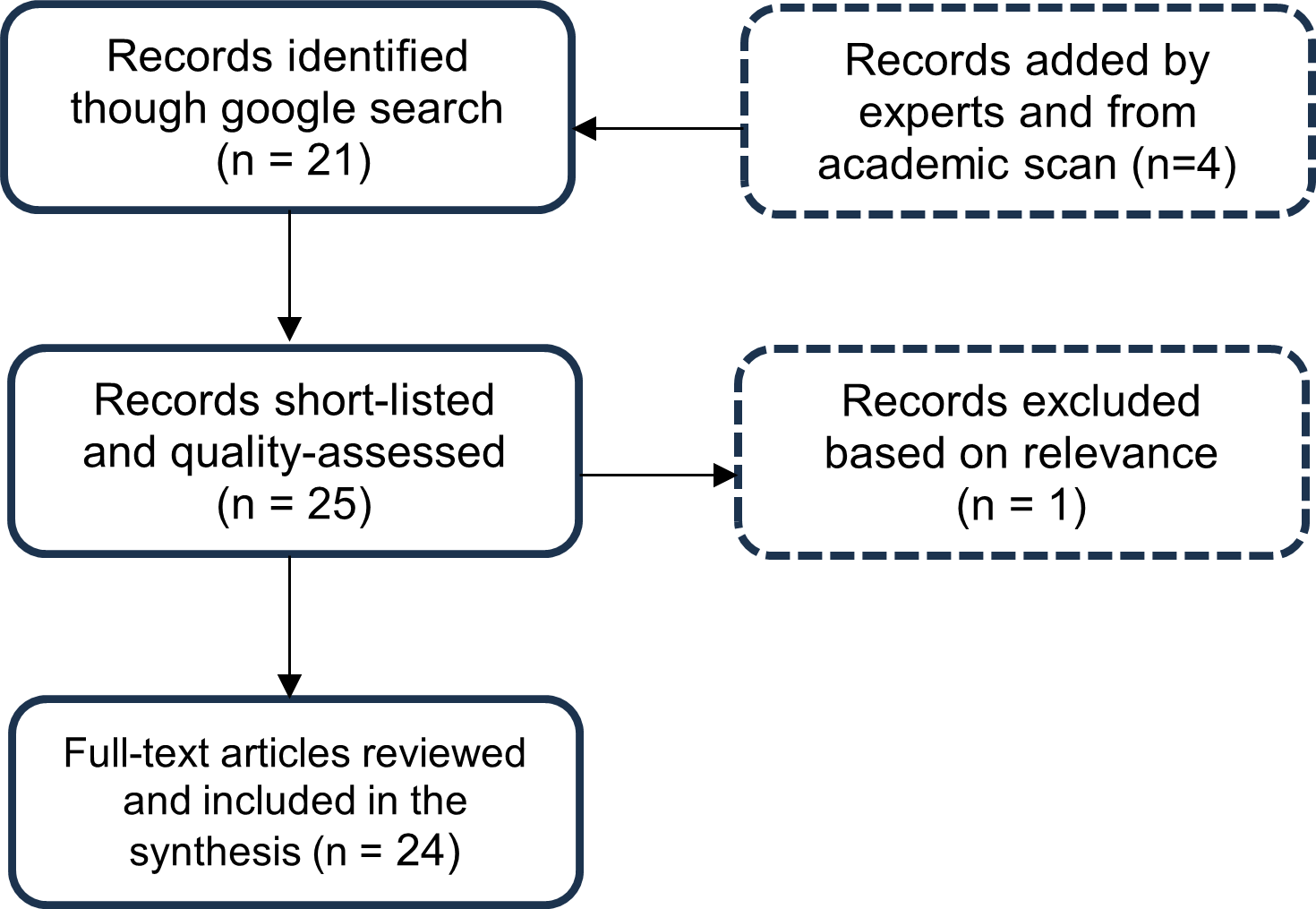
As the academic review was being conducted in parallel to grey literature, RAND researchers identified 3 relevant sources that were identified through the academic search but which were in fact grey literature sources (Beetham, 2013; Gilmore and Tufail, 2013; Tombs, 2013). In addition, as part of the search strategy, RAND internal experts suggested one additional source (Muravska, 2014) for consideration that had not been captured by the search criteria[footnote 30].
This article was not initially identified through the strict search criteria as it focused on developing the typology of bribes and bribe-giving which, for the purpose of the source, was synonymous with ‘corruption’. The search string designed by the research team intentionally did not include terms such as ‘bribery’ and ‘collusion’ to ensure that the search results were not guided by assumption of inclusion or exclusion of specific activities within the scope of corruption.
These additional sources were then included in the grey literature selection for full-text review. At the short-listing stage, 25 sources were reviewed; one source (Cowdock, 2016) was excluded based on relevance. While this latter source discussed asset return, which is one of the broader themes identified when researching the topic of corruption, its primary focus is on the overseas corruption and its effects on developing countries and expression of rights, rather than on the UK context.
The remaining articles were identified as offering an analysis of factors and activities relating to domestic corruption in the UK. The majority of all sources (14) were published by advocacy organisations, of which:
- almost half of the articles (10) were produced by TI UK (Barrington, 2016a; Barrington, 2014; Heinrich, 2017; Krishnan and Barrington, 2011; de Simone, 2015; Barrington and Maxwell, 2013; Goodrich and Cowdock, 2016; Transparency International, 2017; Barrington, 2016b; Muravska, 2014)
- the second highest number (3) were authored by Corruption Watch (Rose, Hawley et al., 2017; Rose, 2017; Corruption Watch, 2016)
- followed by a Global Witness source (Hirst, 2017)
The remaining 7 articles were published by other types of organisations, including:
- specialist journals and magazines:
- Criminal Justice Matters (Beetham, 2013; Gilmore and Tufail, 2013; Tombs, 2013)
- European Politics and Policy (Hough, 2016)
- The Economist (2017)
- sector regulators – Chartered Institute of Building (Barnes, 2013)
- anti-corruption resource centres – U4 Practice Insight (Fontana, 2011)
In terms of topical focus, 8 sources discussed general corruption trends and associated risk factors across a number of sectors in the UK (Krishnan and Barrington, 2011; de Simone, 2015; Barrington and Maxwell, 2013; Goodrich and Cowdock, 2016; Barnes,2013; Gilmore and Tufail, 2013; Tombs, 2013; Beetham, 2013). Five sources provided a commentary on the effectiveness and potential loopholes of the UK government’s anti-corruption tools, such as the Bribery Act, the Anti-Corruption Plan, the Criminal Finances Act and the 2017 Anti-Corruption Strategy (Barrington, 2016a; Hirst, 2017; Barrington, 2014; The Economist, 2017; Transparency International, 2017).
While the impacts of the UK’s decision to leave the EU (Brexit) were not analysed in any depth in any of the reviewed sources, a number of articles raised concerns about potential links between upcoming regulatory changes and heightened corruption threats, as well as the risk of de-prioritisation of anti-corruption efforts during the wider political distractions of Brexit (Barrington, 2016b; Hough, 2016; Corruption Watch, 2016; Beetham, 2013). Other sources analysed topics more peripheral to the study focus, such as asset recovery (Rose, Hawley et al., 2017) and different modes of bribery (Muravska, 2014).
The research team identified some differences between academic and grey literature in terms of focus and content. Academic sources placed greater emphasis on addressing the challenges associated with defining corruption (Campbell, 2016a; Campbell, 2016b). Grey literature sources were predominantly authored by advocacy organisations aimed at exposing corruption and influencing policy decisions. Amongst the 24 sources selected for full review, the study team did not identify any systematic literature reviews on domestic corruption in the UK. In total, 22 of the grey literature sources used qualitative techniques, focusing on non- primary data such as literature reviews and analysis of existing evidence (15 sources), case studies (6 sources) and interviews (one source)[footnote 31].
A total of 2 articles used quantitative techniques, both drawing on survey analysis (Krishnan & Barrington, 2011; Barnes, 2013). The majority of articles reviewed (13) were published between 2016 and 2017, with the earliest article published in 2011 and the most recent published in 2017. The timeline of publications is aligned with the adoption of major legislative measures, such as the Anti-Corruption Plan (2014) and the discussions around the Anti-Corruption Strategy (2017), as well as significant policy changes such as the UK’s referendum on EU membership in June 2016.
Appendix D: Expert workshop
The research team conducted an expert workshop which focused on 4 key objectives:
- To compare and validate the findings of the REA with existing research and data collected on domestic corruption in the UK.
- To gain an understanding of how corruption is defined.
- To identify existing data sources and indicators used to measure domestic corruption.
- To map existing leading individuals and institutions, and identify possible funding sources for research on domestic corruption in the UK.
The sessions were structured to maximise opportunities to discuss research and data collection activities that cover the domestic realm, regardless of sector. The study team facilitated interaction between participants from various backgrounds and in various roles in order to capture insights on how cross-sectoral corruption may manifest itself in the UK context. Although the design of the workshop was sector-agnostic, the participants were encouraged to use sector-specific examples to support their assertions throughout the discussion.
Table 10: Expert workshop participants
| Organisation | Preferred attribution |
|---|---|
| Academic | Professor Paul Heywood, University of Nottingham |
| Academic | Anonymous, conducted relevant projects for European Commission, Europol, the Council of Europe, amongst others. |
| Policy | Representative for fraud and corruption in the defence sector |
| Policy | Representative for fraud and corruption in the defence sector |
| Policy | Serious Fraud Office representative |
| Policy | Business transparency representative, public procurement |
| Civil Society | Anti-corruption advocacy representative |
| RAND Europe | Dr Emma Disley, law enforcement |
| RAND Europe | Marco Hafner, economist |
In order to fulfil the objectives of the workshop, the study team facilitated semi-structured discussions that sought to unpack some of the gaps that could not be answered by the REA. The workshop was split into 3 sessions. The first session took place in the form of a plenary discussion with all participants on the question of conceptualising corruption. The second and third sessions then divided participants into mixed-background (namely academic, policy expert, practitioner or advocacy) sub-groups of 3 people, which focused on understanding corruption in the UK and how to measure corruption in the UK, respectively (see Figure 6).
Figure 6: Workshop sub-groups
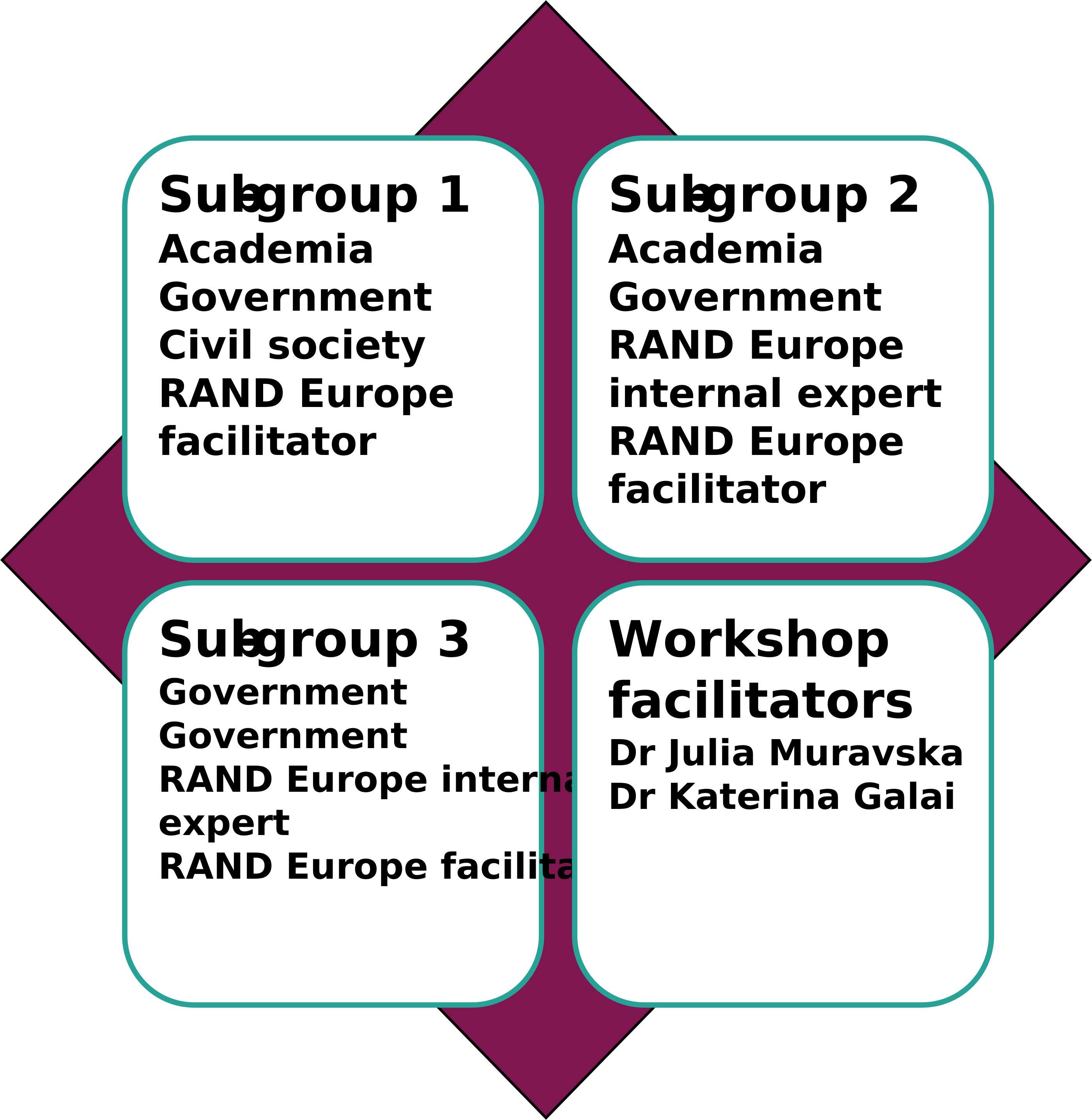
Source: RAND Europe
Following the break-out sessions, the workshop participants engaged in a brief plenary discussion highlighting the outcomes of their sub-group’s discussion, and all the participants were invited to react to each sub-group’s discussion outcomes with their own questions and reflections. The guiding questions for each of the 3 sessions are presented in Table 11.
Table 11: Guiding questions for the workshop discussion
| Session | Subject | Guiding questions |
|---|---|---|
| 1 | Conceptualising corruption | What constitutes corruption in the UK context and how is it conceptualised? What is the core element of corruption (such as abuse of public power, benefit to gain unlawful advantage?) What kinds of activities constitute corruption (such as fraud, money laundering, party financing) and how do they ‘intersect’ with corruption? |
| 2 | Understanding corruption in the UK | How well is the extent/level of corruption in the UK understood? What are the corruption risks / areas of vulnerability in sectors which you study / focus on / represent? |
| 3 | ‘Measuring corruption’ in the UK | What is your view on the type of information and data we would need to ‘measure’ corruption in the UK? What are some of the challenges in obtaining this type of data? Which institutions and individuals are currently conducting research into corruption in the UK? What are the main sources of current and future funding? |
It should be noted that the analysis provided through these discussions was subject to a number of caveats, including:
- the workshop participants did not cover all the sectors shortlisted by the REA and institutions involved in collecting data on corruption in the UK
- time constraints, due to the entire duration of the project being limited to 3 months, meant that there was little flexibility to work around participant availability
- parallel forums and conferences on domestic corruption created conflicts with potential participants’ schedules, so not all intended participants could attend
- while combining academics and practitioners in one workshop was a desired requirement to ensure a wide range of perspectives was obtained, at certain points the contrasting perspectives of participants approaching questions from the theoretical perspective and from the implementation perspective interrupted the coherent flow of the workshop discussions
The workshop was not intended to provide a comprehensive overview of all the previous and current initiatives aimed at understanding and measuring domestic corruption. Instead, the workshop sought to validate the findings of the REA, as well as identify data source nodes in the stakeholder architecture of UK corruption research, which could be used to inform the design of a study to measure corruption in the UK.
Appendix E: Interview protocol
“UK Corruption Research”.
A RAND Europe Study for the Home Office.
Interview Protocol.
E.1 Introduction
Our team has been commissioned by the Home Office to undertake the evaluation of existing research on corruption in the UK to inform further policy and research initiatives. The aim of the project is to understand how corruption in the UK can be measured, what data is required and what the existing evidence gaps are.
Questions
- What constitutes corruption in the UK context and how is it conceptualised?
- What is the core element of corruption (for example abuse of public power, benefit to gain unlawful advantage)?
- What kinds of activities constitute corruption (such as fraud, money laundering, party financing)?
- How might fraud and money laundering intersect with corruption?
- In the UK, which sectors are particularly affected by corruption or are particularly vulnerable to corruption?
- How well is the extent/level and nature of corruption in the UK understood?
- What are the key challenges in understanding and evaluating the extent to which corruption is prevalent in the UK?
- Existing research often cites ‘lack of data’, however researchers/academics rarely specify what kind of data and information would actually be needed to adequately assess the level of corruption in the UK. What is your view on the type of information and data we would need to ‘measure’ corruption in the UK?
- What are some of the challenges in obtaining this type of data?
- Which institutions and individuals are currently conducting research into corruption in the UK? What are the main sources of current and future funding?
Table 12 lists the interviewed policy and academic experts, whose attribution is stated based on their preference as indicated in the consent form.
Table 12: Policy and academic interviewees
| Organisation | Interviewee preferred attribution |
|---|---|
| Policy | Serious Fraud Office senior official |
| Policy | Police Integrity Unit, Crime Policing and Fire Group |
| Academic | Professor Indira Carr, University of Surrey |
| Academic | Dr Elizabeth David-Barrett, Deputy Director of the Sussex Centre for the Study of Corruption, University of Sussex |
These semi-structured interviews are not intended to give a full set of all expert views but they give a flavour and add depth to the findings from the literature, and ensure a more granular validation of the REA results through more nuanced discussions with selected experts.
Appendix F: Focus groups methodology
F.1 Method
Informed by the preceding secondary evidence assessment and gap analysis, the focus groups were held to collect primary evidence from stakeholders in key identified sectors.
F.1.1 Focus sector selection
The focus groups were designed to provide additional evidence on 5 UK sectors that are particularly vulnerable to corruption and subject to additional risk due to legislative and policy changes resulting from the UK’s forthcoming departure from the European Union. In order to identify these focus sectors, the research team developed a set of 6 indicators present within the academic literature. These indicators were:
- perceived level of corruption risk
- economic significance
- interaction with other sectors and organised crime
- possible impact of upcoming legislative transition
- alignment with government policy objectives
- risks to the UK public
Based on these indicators, the final sectors selected for the focus groups were: finance, construction, defence, law enforcement (including the police, border control and prisons) and public procurement. The study team identified key organisations that would provide insight into the way corruption may manifest itself within each of these sectors. Types of organisations contacted included private companies, industry associations, regulatory bodies and organisations specifically concerned with corruption in each sector, such as investigative bodies.
F.1.2 Selection of focus group participants
The focus group participants were drawn from a range of organisations within each of the identified sectors and comprised a mix of direct stakeholders. Representatives were identified from organisations within each sector who may encounter corruption within their work, or those who work directly on corruption-related matters within their sector. Types of individuals contacted included procurement or operations managers, as well as those in senior leadership positions who may be exposed to the risk of corruption. The study team also targeted compliance officers and individuals with investigatory or oversight responsibilities who would be likely to have an understanding of the level of corruption present within their sectors.
In order to identify and engage relevant potential participants, the research team identified relevant stakeholders from the secondary data gathered during the literature review, as well as wider desk research into relevant organisations and internal expert recommendations. These stakeholders were then contacted by phone, email or LinkedIn, where appropriate. Invitees were also provided with a letter of sponsorship from the Home Office, in order to provide additional verification.
The team also used a ‘snowballing’ method to identify and engage participants, by asking that responsive stakeholders provide suggestions for additional candidates from their own industry contacts or knowledge. The sensitive nature of the topic of corruption meant that there was a risk of low response rates from the contacted stakeholders. To mitigate this risk, the study team reached out to as many appropriate organisations as possible during the 3 weeks between the interim meeting with the Home Office Project team (where the focus group sectors were agreed upon) and the focus groups taking place in London during the week of 5 March 2018. This approach ensured that a representative and diverse sample of stakeholders were present within each sector focus group. A total of 231 organisations were contacted initially, with an additional 22 participants contacted individually by referral or through the ‘snowballing’ approach. A total of 22 stakeholders attended the focus groups, with an additional 4 providing their responses via email or phone.
Once participants had confirmed their interest in attending the focus groups, they were asked to complete an anonymous online poll in order to indicate their availability on a number of proposed dates and times. To ensure maximum attendance, the research team accommodated all participants that indicated availability by combining some of the sectors in one focus group. Despite best intentions, some of the participants dropped out at the last minute due to unexpected commitments – in which case the research team followed up with them separately by sending out the focus group questions by email.
F.1.3 Focus group execution
In order to facilitate a meaningful discussion, it was important to create a secure and confidential environment in which individuals could comfortably participate. The study team achieved this by applying a number of measures. First, attendees were provided with a consent form in which they could select their preferred level of anonymity. All focus group outputs were anonymised and were not attributed to specific individuals within the report.
Participants were advised to use only their first names, or an alternative pseudonym, during the focus groups in order to uphold confidentiality. Details of individual participants were also not passed on to the Home Office or any other actors outside the research team. Prior to commencing the focus groups, the research team provided participants with an information sheet outlining what the focus group would entail, how its outputs would be used and how personal information would be protected.
The focus groups were facilitated by RAND Europe researchers. During the focus groups, participants were asked to provide their views on a series of high-level questions aimed at addressing the wider research questions of the study. In order to guide discussion to address the main research questions, the study team designed a structured focus group protocol. The focus groups were divided into 2 main sessions addressing a distinct topic area, with a short concluding exercise whereby participants were asked to indicate what activities, in their opinion, constituted corruption.
The 2 core sessions involved a number of targeted questions designed to address specific elements of the research questions, while the exercise was built on a tick-box list with an opportunity for participants to also add other activities they considered constituted corruption but were not already on the list.
The third session also involved a written activity in which participants indicated the activities they understood to constitute corruption. An overview of the focus group protocol is provided below.
Session One: Sector Focus
- How could corruption exhibit itself in your sector?
- What areas/stages of process/types of positions in your sector would you consider to be most susceptible to corruption risks and why?
Session 2: Measuring Corruption in the UK
- What is your view on the type of information and data we would need to ‘measure’ domestic corruption in your sector?
- What are some of the challenges in obtaining this type of data?
Session 3: What is Corruption?
- Written exercise: what activities constitute corruption?
F.1.4 Methodological caveats and considerations
It is important to note that the findings of the focus groups are subject to a number of caveats that should be taken into consideration.
By necessity, the contributions of focus group participants were based on their individual views. These perspectives may be subject to individual bias and therefore should not be understood as either comprehensive or definitive. Rather, the views expressed within the focus groups should be interpreted as an indicative, initial set of data points, which will need to be complemented by additional secondary and primary research in a future research programme.
Focus group participants were asked to contribute based on their individual experiences and expertise in their specific sectors. As a result, the views expressed by these individuals do not necessarily reflect those of their organisations or employers.
Due to the timeline and resource constraints of this project, the focus groups represent a limited sample of stakeholders within each study sector. Therefore, the views expressed within the focus groups do not represent the totality of attitudes, understandings and viewpoints within the sectors in question. Furthermore, the research team did not have the opportunity to challenge and validate the views expressed in these discussions through additional independent research such as literature review or further interviews.
Appendix G: Focus group findings
G.1 Law enforcement
Based on the focus group discussions, corruption in the law enforcement sector was broadly understood to involve the abuse of power or relationships that lead to reduced integrity. Such abuse can manifest itself through bribery and the exchanging of information, collusion and interference with investigation. The ‘revolving door’ is also understood to be problematic and, possibly, a contributor to organised crime.
Focus group discussions revealed a number of conclusions. On the one hand, the law enforcement sector is limited by a lack of consolidated understanding of corruption or the scope of activities corruption involves. On the other hand, parts of law enforcement organisations, such as police anti-corruption units, have developed bespoke frameworks that help them recognise and address the issue on a local scale.
Corruption is understood to manifest itself across all levels within the law enforcement sector. While the risk of corruption is more prevalent at the senior level, more junior staff are able to avoid detection and may engage in corrupt activities due to social pressure within the forces, or pressure to meet targets, as well as a lack of managerial oversight. Key points of risk for corruption are senior managers, or chief officers and officers placed on covert operations.
The following analysis contains combined insights of 2law enforcement-oriented focus groups which predominantly covered corruption issues within police and, to a lesser extent, within borders and prisons. The summary below is based on the inputs from 8 participants, either current or former practitioners, and whose preferred attribution is stated in Table 13.
Table 13: Law enforcement focus group participants
| Preferred attribution | |
|---|---|
| 1 | Representative, Police Oversight Organisation |
| 2 | Police professional standards expert |
| 3 | Former police counter-terrorism and military |
| 4 | Police representative, Border Security |
| 5 | Counter-corruption intelligence, police |
| 6 | Law enforcement counter-corruption |
| 7 | Former law enforcement representative |
| 8 | Detective sergeant, Police Anti-Corruption Unit |
G.1.1 How could corruption exhibit itself in the law enforcement sector?
Participants began by discussing the types of activities that they would define as corruption in the police service. Historically depicted as criminal actors passing a ‘brown envelope’ with cash inducements to police officers, corruption brings a lot more activity under its umbrella today.
Participants generally agreed that corruption represents general abuse of position, power and public trust, and it can include anything from taking money out of the tea fund in the office, to receiving money from criminal networks, to using access to proprietary databases to gain information about a former spouse or even using sick leave to engage in ‘side’ business activities.
It was also noted that the opportunity for corruption in the police service stems from its position of power and trust in society; police officers have the power of arrest, as well as access to secured information and systems and vulnerable victims of crime, coupled with proximity to individual criminal actors and organised criminal networks. One border security police representative also highlighted internal cultures within the law enforcement sector which can create a permissive environment that may enable corrupt activity. The abuse of access to information systems, the illicit disclosure of information on investigations and the practice of ‘brown envelopes’ were given as examples of corruption that continue to persist in environments where employees either do not recognise or do not report corrupt behaviours.
According to a participating detective sergeant representing a police anti-corruption unit, this abuse of power always requires a ‘trigger’ that motivates an individual to exploit an opportunity. The border security representative pointed to the existence of ‘predators’ within the sector who exploit vulnerable individuals and abuse access to systems in a predatory fashion. This abuse of information and power has the potential to collapse investigations and may not necessarily be aligned with rank as often the lowest-level officials are able to slip below the radar and evade detection.
A range of different motivations exist, including financial gain, sexual gratification, community loyalties and the desire to meet performance targets. Corruption can occur when these motivations combine with the opportunities of abuse of power that exist in the police service.
The following section highlights a number of specific practices that focus group participants suggested as examples of the ways in which corruption manifests itself in the law enforcement sector.
Corruption through the abuse of relationships was defined by police representatives as any relationship that prevents individuals from doing their job with integrity or transparency. For example, individuals may feel obliged to collude in order to protect an acquaintance, a former or an existing colleague, or a family member. The latter is more widespread amongst communities where family ties are strong and can sometimes prevail over professional duties.
A law enforcement representative specialising in counter-corruption gave an example of an ethnic minority officer in an area with little ethnic diversity whose ties to their community outweighs their professional expectations and who may, for example, feel it is their prerogative to look up police records to help out their community or family interests. Another manifestation of cultural values taking precedent over duty that may result in corruption is the example of London police, where there is an increased tendency to recruit officers locally.
While such an approach may have its advantages, it also raises the risk of corruption due to the high level of familiarity between police officers and the members of the community who may want to exploit this relationship. Another example of personal relationships taking precedence over professional duties was of a recently divorced police officer forming a friendship with a criminal. Initiated through the sale of the officer’s house, their friendship evolved to a stage whereby the police officer valued the friendship and did not perceive their sharing access to information in the police service with this individual as inappropriate or corrupt.
Some senior police officers can also receive special treatment by their subordinates who fall in line with the culture of ‘treating the boss like a boss’, and which often entails the wining and dining of those select top police officers and anyone in their professional circle. Such behaviour introduces vulnerability, as inappropriate and less professional relationships may be formed which may cloud judgement and could give rise to favouritism and other forms of corrupt conduct.
Another source of corruption was seen to be originating from the media seeking out relationships in the police, or offering large amounts of money to obtain information. This is often conducted under the guise of ‘whistle blowing’, with reporters seeking to find and expose corruption within the public sector. It was, however, the view of one participant working in police counter-corruption that the actions of reporters are typically less altruistic, with ‘whistle blowing’ often presented as a means of legitimising the actions of reporters.
Finally, exploitation of one’s position to pursue sexual relationships was noted as a widespread manifestation of corruption in the police, with specific examples given of police officers targeting vulnerable victims of crime as well as abusing their position of power internally within the police service for sexual gain.
Abuse of power for financial gain is a common way in which corruption may manifest itself in police and prison services. Those experiencing financial difficulties are considered to be at heightened risk of corruption, with financial wellbeing recognised as one of the ‘profiling’ criteria within police anti-corruption units. Two examples emerged to help illustrate this statement. One was an example of a financially vulnerable custody guard who started swiping convicted persons’ credit cards to try to rectify his growing gambling debt.
The second example was that of prison officers who often operate within the parameters of low paid positions coupled with the temptation of helping out convicted criminals with various favours, such as obtaining phones, smuggling drugs, or sharing information, in exchange for substantial sums of money. The participants felt that such forms of corruption are made possible by the vetting procedure of police and prison officers, which takes place upon joining but not subsequently updated and monitored on a rolling basis.
In the police, corruption could arise from the pressure to deliver results, therefore giving rise to the abuse power for performance gain. For example, a police office could strike a deal with a convicted criminal, whereby the latter agrees to admit other crimes as it may help them to ultimately soften the sentence in court. With police officers under pressure to hit a certain target in detection figures, a risk arises of officers inducing criminals to admit to crimes they have not committed and thus be able to close the case, benefitting both parties.
Similarly, abuse of power for ‘noble cause’ was discussed as a form of corruption that occurs within the police service and which can manifest itself in the form of ‘corner cutting’, such as doing covert work outside standard investigatory procedure in order to gain evidence. ‘Embedded’ corruption was also cited as present within some police services, emerging as a result of close team relationships and social cultures that impose corruption pressures upon officers.
Officers placed on covert police operations were identified to be at particular risk of corruption. Examples of corrupt practice in these cases included undercover officers revealing themselves to the subjects of investigation, accepting bribes or exchanging favours. A representative from a police oversight organisation stated that regular and close exposure to criminal actors increases the risk of corruption in these cases, as often officers operate within their own communities which increases the risk (as highlighted above).
This is common practice within the police service due to the perceived benefits of local knowledge in these operations. Some participants suggested that this risk may be especially pronounced amongst rural police services operating within their close-knit home communities. Officers placed on covert operations and within their own communities were stated to receive very little training on recognising or responding to corruption, which only exacerbates their vulnerability.
Besides criminals, the focus group also highlighted relationships between some senior police chiefs and consultants as a potential risk of abuse of relationships within the private sector.
Senior police chiefs who transfer between organisations in order to conceal corrupt practices have been observed to take their consultants or advisors with them, raising questions about the involvement of the consultants in these cases.
The group discussed the example of licensing (alcohol, gambling) as a potential conduit for corruption risks, specifically recalling a police investigation from some time ago where local business owners were bribing police officers, sometimes by treating them to meals, in order to secure alcohol and gambling licences. Participants agreed this constitutes a clear example of corruption.
An important point was made – small issues like licensing may often feed into very serious elements of crime, of which police officers may not be conscious. What could be perceived as minor corruption, such as providing a licence, may feed into serious crimes, such as a platform for human or drug trafficking. In a similar vein, participants discussed the abuse of skills and knowledge, which could occur as a result of the ‘revolving door’ in the police. One example given was the practice of retired police officers misusing their skills to assist organised crime. This might include using inside knowledge of police processes to assist criminal groups in evading detection. The police oversight organisation representative reported that such incidents have undercut a number of police cases.
A ‘softer’ type of ‘revolving door’ was also discussed, with participants noting that former police officers have been known to use skills or expertise such as surveillance or weapons transfer to sell skills to private companies. In these cases, the lines between misuse of power and corruption were unclear.
The intentional placement of people to infiltrate into the police often requires corrupt parties to turn a blind eye or to intentionally share information or accesses. For organised crime, this was described as a ‘long game’ which can take several years to come to fruition and, according to one participant (a former law enforcement representative), the counter-terrorism angle makes this more significant.
Whereas a criminal organisation may place an individual in order to gain both information and influence over a longer period, a terrorist organisation may infiltrate the police service in order to provide information and assistance to facilitate a more immediate attack. Depending on their motive, people will place themselves in different sectors of the organisation so that they gain access to the required information, people or systems. While participants did not provide specific examples of such incidents, they suggested that it was a likely occurrence.
G.1.2 What areas, stages of process and types of positions in your sector are most susceptible to corruption risks, and why?
Corruption can occur at any level of service within law enforcement organisations, but the risks vary at different levels. Participants agreed that individuals with access to knowledge and power within the sector are the most vulnerable to corruption. This can involve activities that collapse or undermine the integrity of an investigation. It was noted that this is not necessarily aligned with rank, as often officers at the lower levels are able to act undetected.
Furthermore, junior staff often experience financial, resourcing and performance pressures, making them vulnerable to accepting bribes, cutting corners and exchanging unwarranted favours. However, a border security police representative suggested that corruption risk is generally magnified at the higher levels. This was attributed in part to the hierarchal structure of organisations within the sector, as senior personnel are unlikely to be challenged by their subordinates. This can also be conceptualised as distinct to police culture, with different rules applying to senior officers, leading to different kinds of corruption outcomes.
Corruption by higher-ranking officials, such as chief officers, was stated to involve activities such as turning a blind eye to corruption within their organisations. Loneliness and high work pressures associated with higher-ranking positions were put forward as contributing factors for such behaviour. In addition, participants referred to inadequate oversight and management due to strained resources as factors that may lead to malpractice. This example was given in the context of police cutbacks which naturally limit the extent to which managers are able to balance their roles and apply necessary oversight.
A detective sergeant from a police anti- corruption unit referred to the tendency for chief constables to instruct subordinates to get the job done ‘no matter what’, incentivising corruption amongst officers in order to meet objectives. Such behaviour reflects the risk of abuse of power for performance gain, described above as one of the manifestations of corruption in the police service. Furthermore, at the top of the police service, there can also be a culture of ‘do as I say and not as I do’, where higher-ranking officers believe that different rules apply to them because of their level of seniority. If someone was to demonstrate a similar behaviour at a lower rank, they would be criticised by their superiors.
There is a degree of double standards and acceptance at a particular level which, according to one police counter-corruption representative, stems from a degree of arrogance on the part of the senior personnel within and outside of the police services who believe different rules should apply to them. He drew parallels with cases he had brought against other high-ranking public sector officials and with the MP expenses scandal to highlight the nature of the issue.
Nonetheless, corruption can also occur at lower levels of the police service, with officers being targeted for information and access. Falling wages create additional pressures in an already high-risk environment of prison and police officers. At the same time, London police officers are required to live within the M25, with the cost of living, therefore, being very high. A counter- corruption law enforcement representative suggested that job cuts limit the resources available to ‘police ourselves’, with over a thousand positions recently eliminated. In order to counter this, police anti-corruption units employ different levels of vetting and scrutiny to try to counter different vulnerabilities at different levels. They also look at the propensity to commit criminal acts and use a risk matrix that combines various factors such as debt, repeated complaints or grievances, and professional underperformance, and flag occasions when this may indicate a high propensity for corrupt activity.
The size and composition of police services also plays a role in how corruption manifests itself and how it can be countered. The variable ability of different police services to respond to corruption issues could be one of the factors that make police officers more susceptible or likely to carry out corrupt activities. For example, the Metropolitan Police has access to sizeable resources, while in a smaller force there may be only one officer responsible for certain monitoring tasks. Internal systems within police services, such as gift and hospitality tracking tools, also influence personnel’s susceptibility to corruption.
An example given by the border security representative was of the changing expenses policy, whereby any expense under £50 does not need to be approved by the line manager. The participant suggested this would be a significant corruption risk as the new procedure creates an opportunity for the trust to be abused and for any expenses, work-related or not, to be entered into the system without validation or sign-off.
More widely, there is a trend in the police to move from local organisational structures to more centralised ones. Whereas previously information would be more closely guarded, every officer now has a shared understanding of organised crime and access to significant information around the criminality they are seeking to fight. Increased access to information gives greater opportunity to potentially corrupt police officers to exploit their position, and therefore further exacerbates the risk of corruption.
G.1.3 What type of information and data would be needed to ‘measure’ domestic corruption in the law enforcement sector?
Focus group participants outlined 3 types of data that could be obtained in order to try to measure corruption risk in the law enforcement sector:
- Internal data collection in law enforcement organisations that may not be publicly available.
- Data collected in the police and the public sector that is available publicly, either freely or through FOI requests.
- Publicly available information.
Participants suggested that as part of the efforts to identify the ‘internal threat’ of corruption within police services, different data sets are collected and analysed internally. For example, audit trails could serve as potential data sources for measuring corruption. Given that police services are subject to heavy audit, the information could be readily accessible internally. Law enforcement anti-corruption representatives revealed that in their daily work they use a range of flags or indicators of potential misdoing, such as mobile phone billings. For example, they analyse the top ten mobile phone bills and, as a result, any individuals whose mobile phone activity shows any irregularities or poses suspicion are then investigated further.
Nationally, the NCA requires police services to report metrics on their counter-corruption definitions. The issue that the participants pointed out is that the NCA definitions cannot be applied at a local level, as they do not capture the particularities of the local activity. Thus, different police services are likely to rely on different understandings of corruption. One former law enforcement representative cited his team capturing corruption data in a manner that does not align with the NCA framework but is more relevant to his region. His team splits the data into 8 headings for biggest elements of corruption (such as expenses and misuse of computers), then gathers the relevant data. In addition to the variance in understanding of corruption between the NCA and local police, participants highlighted the issue of personal interpretation, with the officer in a given police station relying on his or her judgement when entering data as indicative of corruption. These nuances of process discrepancy should be taken into account, as they complicate the task of assessing the levels of corruption in the police sector UK-wide.
In addition, certain data that is collected in the police and public sector is available publicly, either freely or through FOI requests. Such data sets may include outcomes of hearings in fraud and corruption cases. The value of reviewing this information is in trying to assess where the opportunities for corruption were and why the crimes were committed. Published police reports from police anti-corruption units could similarly serve as a source of data.
Police units are required to conduct annual integrity health checks in order to provide officers with refresher training on issues such as gifts and hospitality. While these health checks are required by policy and are expected as a form of good practice, they are not always executed. Several participants suggested that gathering data on compliance with these exercises, as well as any issues raised by those conducted, could highlight possible red flags. Other organisations that conduct investigations into police crime may also hold data, such as the NCA’s Border Threat Sub-Group.
There is also publicly available information such as the quarterly Ernst and Young Bribery Digest, which lists ongoing bribery cases including domestic ones. Furthermore, participants suggested a number of indicators that may highlight when individuals exhibit a higher risk of corruption, which could potentially be measured at the systemic level. These indicators include repeated complaints and grievances against individual officers, their professional underperformance and debt. A police professional standards expert mentioned the traffic light weighted systems used by anti-corruption units.
These systems identify patterns within indicators that may highlight an individual potentially vulnerable to corruption. Indicators used include the numbers of public complaints over a certain period of time, internal grievances filed, gifts and hospitalities received, and debt. While this could be a valuable tool for measuring the level of corruption risk, it is only meaningful when used in combination with other evidence which may not be publicly available or easily compatible in format.
Prosecution databases and whistleblowing channels were also put forward as potential sources of relevant indicator data. ‘Crimestoppers’ was mentioned as one such hotline that facilitates a 2-way flow of anonymous information. It was also noted that databases of reported misdoing and whistleblowing may prove to be useful data sources, as police officers appear to be increasingly more willing to report unacceptable behaviour.
G.1.4 What are some of the challenges in obtaining this type of data?
Participants agreed that the main challenge of attempting to ascertain ‘corruption data’ from across police services would stem from the differences in defining corruption. The scope of the data would range from cases of misconduct all the way through to ‘corruption proper’, making it very difficult to combine and analyse this information holistically.
Attempting to query the NCA database would also pose challenges, as internal corruption cases are usually not recorded there. When an internal corruption case is opened, it cannot be recorded on the database, as it needs to remain hidden to avoid alerting the potential offender. However, after the case has been resolved and closed, database users often forget to record it so the information does not get picked up.
While data from annual integrity health checks may potentially highlight patterns of misconduct or lack of awareness amongst officers, these exercises are not conducted consistently across police services, thus limiting the accuracy of the data set that could be systematically analysed. Similarly, data gathered from the internal audit is only as reliable as the processes used to gather the information. Participants suggested that there are likely to be variations between organisations regarding how audit procedures are applied and how effective they are.
Access to prosecution data is likely to be relatively easy. However, the data can only serve as a reliable indicator if detection and investigation resources are capable and well-funded. At the same time, the funding provided by senior management is generally limited. Another limitation of using prosecution metrics is that ‘corruption offences’ are rarely prosecuted.
Instead, activities involving elements of corruption are more often prosecuted under different criminal offences such as fraud, embezzlement and money laundering. While the new police corruption offence is in place, this is already under review and cannot be relied upon as a future indicator. The police border security representative suggested there is a reluctance amongst jurors to charge police officers, which further distorts prosecution figures.
Whistleblowing and reporting data was described as limited due to a lack of understanding or ability to recognise corruption within the sector. Perceptions of data protection laws pose a further obstacle as it creates reluctance to share information in case this may be in breach of any elements of data protection regulations. The third generation of UK data protection laws which commenced on 25th May 2018 (Data Protection Bill 2018) may serve to further escalate this confusion and subsequently exacerbate challenges associated with information sharing. Participants observed that a lack of understanding of data protection has led to forces refusing to share information on officers with other forces, meaning that red flags are often missed.
Lack of information sharing partially explains the absence of any centralised sources from which the data on police misconduct can be obtained.
G.2. Defence
Based on the focus group discussions, corruption in the defence sector is understood to involve abuse of position with activities such as bribery, illicit sharing of information and the revolving door dominating the landscape. The participants felt the general attitudes towards corruption in the defence sector are increasingly less permissive, with stricter regulations being imposed for misconduct in the private sector.
However, outside of the Bribery Act, companies generally address issues of corruption internally and reporting remains limited. Participants agreed that although domestic corruption in the defence sector is limited, it is most likely to occur at the pre-contract tendering stages. Participants suggested that roles most vulnerable to corruption risk in the defence industry are business development representatives, procurement managers and those with a decision-making authority – such as the ability to authorise payments or make procurement decisions.
The following section contains insights combined from 2 focus groups which focused on the defence industry and defence procurement. The summary below is based on input from 6 participants representing different areas of the defence industry, with their preferred attribution stated in Table 14.
Table 14: Defence focus group participants
| Preferred attribution | |
|---|---|
| 1 | Ethics and compliance officer, defence |
| 2 | Lawyer in defence sector |
| 3 | Director, overseas and exports, defence |
| 4 | Sales and commercial management expert, defence sector |
| 5 | Ethics and compliance expert, defence sector |
| 6 | Representative, corruption management company |
G.2.1 How could corruption exhibit itself in the defence sector?
Before addressing the specific research question assigned to the focus group, participants were keen to discuss the initial scope and definition of ‘domestic defence sector’ in the context of corruption. It was noted that corruption in the domestic defence sector should not only refer to the private defence industry and commercial arm of the MOD but also include actively serving military personnel. It was also noted that the vast amount of corruption occurs internationally, referring explicitly to the export and import of defence equipment to and from the UK.
This international element was excluded from the discussion, with participants also acknowledging the existence of corruption, albeit to a lesser degree, in a strictly domestic defence environment. The most common forms of corruption discussed by defence stakeholders were bribery, the abuse of power by those in senior positions, the ‘revolving door’, and the illicit sharing of information. The use of agency intermediaries was also mentioned as a corruption concern in the defence industry. Common themes included the abuse of access to information, knowledge and power. In the course of the discussions, most participants agreed that fraud is an offence separate from corruption.
There was initial uncertainty amongst some of the focus group participants as to the precise set of activities that would constitute corruption in the domestic defence sector. Areas of ambiguity included whether or not corruption requires the abuse of public – as opposed to private – office, whether corruption can be carried out by a lone individual or required a transaction between 2 parties, and whether specific types of criminal activities (such as bribery and fraud) would be better defined under corruption or should be removed from the scope of ‘corruption’ as separate types of crime.
One participant suggested that TI’s definition of corruption as “abuse of power for personal gain” is a good starting point, and it is used in some private sector defence companies as the basis for their anti-corruption policies. It was noted that this includes both individual abuse of power such as falsifying invoices for personal financial gain, and transactional abuse of power such as the use of bribery to secure contracts with external parties.
Participants agreed that corruption can be carried out by an individual, as well as collectively by more than one person. A lawyer within the defence sector suggested that corruption in defence procurement was most commonly exhibited through the payment of bribes to win contracts. Similarly, an ethics and compliance officer from the defence sector noted that the practice of offering goods or hospitality is prevalent in bidding processes.
Participants also agreed that the ‘revolving door’ is a phenomenon that continues to occur, with defence companies commonly employing ex-military officials in senior positions. These employees are often highly valuable to defence companies due to their knowledge of and relationships within the public sector, which in turn can provide a greater degree of influence in public sector procurement processes.
Participants also noted that the revolving door can occur in the opposite direction, with the knowledge of ex-private sector employees being used by both military and public sector bodies to influence decision-making processes and procurement contracts. The ‘revolving door’ phenomenon is also linked to a risk of proprietary information leakage, which ranges from disgruntled employees downloading high volumes of information before joining a competitor company, to state-level espionage where individuals infiltrate defence organisations and systematically leak information to foreign governments.
Regulations and advisory bodies do exist to try to mitigate the risk of revolving doors, including ACOBA, and currently a 2-year hiatus is required before ex-military personnel can work in private sector defence companies.
Within the military, several participants noted the way in which hierarchical structures and close-knit teams can create an environment that facilitates corruption through the abuse of power and relationships. Senior ranking officials in the military, for example, have been found to abuse their positions of power to unduly influence lower ranking officers and recruits. The phrase ‘rank has its privileges’ was highlighted as an archaic, but nonetheless relevant, attitude that is sometimes exhibited by individuals within more senior military ranks. Other risks in the military were also identified, such as infiltration into the armed forces by adversarial actors and the online sale of military-issued equipment by serving personnel.
Participants also noted that difficulties exist in drawing a clear distinction between acceptable and corrupt activities. The example of client relationships was highlighted; participants acknowledged difficulties in defining the point at which professional relationships with clients ‘overstep the mark’ and begin to unduly influence the decision-making and outcomes of business activity. It was suggested that professional client relationships may be defined as corrupt if they are disproportionate or conducted at an inappropriate time.
G.2.2 What areas, stages of process and types of positions in your sector are most susceptible to corruption risks, and why?
Assuming a broad definition of corruption, the participants of the focus groups identified a number of different types of activities that they would consider as ‘corrupt’, including bribery, the abuse of power by those in senior positions, ‘revolving doors’, fraud and the illicit sharing of information.
Across both the public sector and defence industry, one area highlighted as particularly vulnerable to corruption was the business development and procurement process. Corruption was acknowledged to exist through the payment of bribes or ‘back handers’, as well as through offering hospitality or gifts to influence a bidding process or gain additional competitive information. Employees and teams who face significant pressures to meet difficult sales targets were identified as particular areas of vulnerability, as these pressures may incentivise individuals to use illicit practices in order to secure business deals.
The regular contact between contractors and buyers in this area further increases the risk of corruption, as it naturally facilitates relationship building that may create future conflicts of interest and incentives for malpractice. Although more common in international trade, individuals who work in procurement may also spend significant amounts of time away from home; seemingly innocuous factors, such as the desire to return home and see one’s family, may incentivise an employee to find ways to speed up the signing of a contract.
Sub-sectors with a limited number of suppliers were also identified as particularly vulnerable to corruption, as the small number of competitors can create opportunities for companies to take advantage of a stronger bargaining position. It was also recognised, however, that there are strict bidding rules when working with public sector bodies in the UK and the opportunities for domestic corruption are relatively small in comparison to the international market.
Other areas of vulnerability identified by participants in the defence industry included the sub- tiers of a supply chain and the use of agents and consultants. With regards to the defence supply chain, it was suggested that the pre-contract phase represents a particular area of vulnerability, with corruption occurring through both collaboration between competitors and through privileged access to information on upcoming or existing tenders.
Both bribery and the use of gifts and hospitality were identified as mechanisms for corruption in the supply chain, as were existing relationships within the defence sector that allow information to be shared through informal conversations. Participants also noted the limited oversight of supply chains within larger defence companies, as most organisations do not have the capacity to fully scrutinise supply chain processes beyond the first or second tier.
This risk of limited oversight also extends to the use of agents and consultants who work on behalf of defence companies to win procurement contracts. Although strict compliance rules are applied by defence companies, several participants acknowledged that difficulties exist in ensuring full compliance and ethical behaviour amongst contractors.
Participants noted that corruption may occur at any level within an organisation – from lower- level employees to high-level executives – but the incentives and types of corruption at each level may differ. Bribery in defence procurement, for example, was seen by one participant as a largely top-down process that is either carried out by senior management, or driven by senior management through a culture of corruption.
The revolving door phenomenon was also considered more likely at senior levels in the defence industry, as senior ex-military personnel are more valuable than lower ranked personnel due to their knowledge and influence in the public sector. Similarly, the theft and dissemination of commercial information was seen as particularly problematic at senior levels, as senior members of staff typically have greater access to more sensitive information that is highly valued by external actors.
On the other hand, it was also acknowledged that more junior-level employees often have access to and understand more precisely the processes required to carrying out corrupt activities. Although a senior employee may wish to carry out fraud, for example, the act itself may only be possible with the support of a lower-level employee who is able to process the payment.
The knowledge and experience of junior staff also provide an opportunity to identify the ways in which corruption could be used for personal gain and hidden from any corruption checks in place. Corruption in junior employees was considered more likely for certain ‘vulnerable’ groups, such as individuals on low salaries, individuals who had suffered a recent traumatic event (such as divorce or bereavement) and individuals who were struggling to reach their performance objectives.
Different incentives and types of corruption were also acknowledged between companies of different sizes and sectors. In small companies, for example, even lower-level employees may have access to high volumes of sensitive information, as it is too expensive for small companies to implement strict cybersecurity measures. Small companies often rely on internal self-regulating processes, which can place them at high risk of corruption through, for example, information leakage by more junior employees. In larger companies, this type of sensitive information may be harder to access, but it may also be harder for the company itself to detect the activity due to the high volume of data that is accessed and shared on a daily basis.
Differences were also identified between public and private sector organisations, with the Bribery Act particularly highlighted as a strong incentive for private sector defence companies to limit the opportunities for corruption. Defence industry sales and commercial management experts noted that the Bribery Act is starting to influence the behaviour of the private sector, but also acknowledged that the same disincentives do not currently exist in the public sector.
G.2.3 What type of information and data would be needed to ‘measure’ domestic corruption in the defence sector?
Participants discussed a range of different sources of information that may inform a ‘measure’ of corruption in the domestic defence sector. A number of internal mechanisms within private defence companies are used to identify and record possible corrupt behaviour by employees, but this information is typically unavailable more widely due to commercial sensitivities. This includes unusual or unexplained activity on company credit cards, unusual timesheet information and computer usage, the presence of authorised payments without purchase orders, and the conspicuous absence of gift and hospitality reporting on particular contracts.
Data from internal whistleblowing hotlines and complaints to compliance officers are also assembled by the ethics committees in several companies, from which it may be possible to separate out corruption allegations (although the quality of information would not be consistent nationwide).
Dismissal on the grounds of corruption was also identified as an increasingly common form of dismissal in the defence industry, which may indicate the extent of corruption in the industry if it were collated across a number of companies. Participants also noted that companies often maintain a blacklist of suppliers whom they believe to be corrupt. These lists, however, are typically based on subjective and personal evidence and are too commercially sensitive to be shared publicly.
For public sector organisations, some of this information, if recorded, may be available through FOI requests. Information from court proceedings on corruption cases was also suggested as a possible publicly available data source that may be used to estimate the extent of corruption more widely. Participants also discussed a number of open source or publicly available indicators that may be used to identify possible corrupt activity in the defence sector.
Suggestions included instances of significant cost slippage on agreed contracts, reports of bullying and intimidation at senior levels, and contracts where the speed of procurement decision-making is unusually fast. One lawyer from the defence sector emphasised that defence procurement is generally a lengthy process, with decisions usually taking a minimum of 6 months, and any decisions that are made under this time could indicate malpractice.
G.2.4 What are some of the challenges in obtaining this type of data?
The commercial sensitivities limit the availability of corruption data in the private defence sector, but even if this information were available to researchers, it would likely suffer from under-reporting and the limitations of detection. It was noted that many forms of corruption, such as personal relationships and informal conversations, are extremely hard to detect without the support of a whistleblower, and that the most prolific perpetrators of corruption are often the most difficult to identify as they are typically well-practiced and deeply embedded in a system. More concrete data points, such as employee dismissals for corruption and whistleblowing reports, are often limited due to a lack of reporting in the defence sector.
Participants attributed this to 2 main factors:
- The preference in the defence industry to address corruption internally to avoid reputational damage.
- A lack of awareness amongst employees of the types of activities that constitute corruption, as well as the available reporting mechanisms.
G.3 Construction
Corruption in the construction industry is characterised by activities such as bribery or ‘benefits’, collusion, theft, false record keeping and patronage. Corruption can occur in areas such as procurement, planning, standards compliance certification and within supply chains. Much corruption is seen to occur in the domestic sector, an area that is not closely regulated. While practices such as bribery and cover pricing have been made more difficult by new legislation, there is evidence that companies have found ways to continue such activities.
Moreover, open book or construction management contracts are key points of risk for corruption, with the use of hidden percentage being perceived as widespread. This risk is exacerbated by a lack of local authority expertise on procurement processes and contract scrutiny.
In the construction sector, many potentially corrupt activities are perceived to be common business practice, ‘victimless’ and tolerated by managers, so are not perceived to be problematic. This includes practices such as ‘hidden percentages’ and patronage. Notably, client tolerance of corruption-related activities that result in their own costs contributes to the lack of accountability mechanisms and, ultimately, the prevalence of corruption-related activity in the industry.
There also appears to be little recognition of corruption by ‘professionals’ such as planners and developers, although these professions were identified in the focus groups as key points of risk. A lack of data-gathering tools and mechanisms contribute to central management’s lack of understanding of corruption-related activities on the ground. This prevents central management’s ability to justify action against corruption-related activities or to identify the appropriate preventative policies to tackle these activities.
The summary below is based on the inputs from 8 participants who represent different areas of expertise within the sector such as procurement, ethics, regulation and policy, industry and legal expertise. Participants’ preferred attributions are stated in Table 15 below.
Table 15: Construction focus group participants
| Preferred attribution | |
|---|---|
| 1 | Representative, Confederation of Construction Specialists |
| 2 [footnote 32] | Global infrastructure anti-corruption centre representative* |
| 3 | Director, Policy, Research and Public Affairs, construction |
| 4 | Construction legal expert |
| 5 | Representative, Engineers Against Poverty |
| 6 | Group head of business integrity, construction |
| 7 [footnote 32] | Consultant and policy expert, public procurement* |
| 8 [footnote 32] | Lecturer in Construction Law, University of Reading* |
G.3.1 How could corruption exhibit itself in the construction sector?
Participants put forward a rationale for (perceived) high levels of corruption in the construction sector. First of all, they noted that the construction industry is pervaded by low margins of profit (1.8%), with the sector performing under a lot of pressure to make bespoke, grand infrastructure projects at low cost. This generates perverse incentives in the business model to generate revenue where possible, and to falsify the time and cost required to complete construction projects. Substandard work then generates more cause to falsify records to conceal the costs generated by cheap labour.
Focus group participants agreed that corruption in the UK construction sector predominantly occurs on a ‘low level’, but is also very frequent and common. A representative from business integrity in construction suggested that corruption in the construction industry is a cultural issue as much as driven by the pressure created by the low-profit margins and tight budgets.
Examples of low-level corruption might include the use of single-source contracts in order to gain ‘kickbacks’ from their preferred subcontractors. Participants suggested that this type of conduct most frequently occurs in the so-called ‘domestic sector’, which broadly describes small-scale construction contracts such as extensions, repairs and refurbishments on the property of domestic clients (HSE, n.d). A consultant and policy expert in public procurement conceptualised corruption as “receipt of benefits in return for influencing the award of a contract, or choosing to ignore red flags in the awarding or implementation of the contract”. He viewed corrupt activities in this sector as those that distort contracting processes.
Participants noted that corruption occurs at senior organisational levels through activities such as bribery, collusion and patronage. While the Bribery Act has made such practices more difficult, it was reported that companies continue to find other ways of bribing, for example by offering ‘benefits in kind’, such as various forms of hospitality.
As revealed during the focus group, collusion is a major manifestation of corruption, occurring between planners, developers and contractors; between construction companies and subcontractors; and on-site between construction workers and managers. Construction managers may replace a subcontractor for his own advantage or financial compensation.
Developers may collude with local council members to procure planning permissions or falsify safety certificates. One head of business integrity within a construction organisation described how legitimate contracts and certificates in editable format are reused simply by editing the dates or text of the digital document. Partially as a result of camaraderie on-site and partially as a result of so-called ‘brown envelope’ exchanges, construction site managers also allow practices such as timesheet falsification and on-site theft of IT and other construction equipment to occur unreported. The notion of reciprocal benefit between managers and workers generates the sentiment that such common business practices are generally victimless and therefore cause no harm.
For example, construction companies and subcontractors can agree on hidden discounts or hidden percentages on open-book contracts[footnote 33] in order to reduce costs and increase profit margins. Hidden percentages can also be used as a result of the formal ‘lowest bid’ contracting system[footnote 34]. The pressure to win work at the lowest possible cost could then lead to cutting corners and inflating the numbers in order not to run at a loss.
Participants highlighted patronage as a common feature of UK construction. According to a representative from Engineers Against Poverty (EAP), the entire construction industry is ‘reliant’ on patronage, with planners leaking information to construction companies on the upcoming contracts and companies agreeing on ‘cover pricing’. According to a consultant and policy expert in procurement, nepotism is particularly prevalent on the public procurement side, with job or promotion offers used to induce individuals to influence procurement processes – although such activities are subtle and therefore difficult to prove.
Participants also discussed the practice of worker exploitation in the construction sector, which occurs when companies deliberately go into liquidation to avoid paying workers. While bankruptcy is not illegal and the practice is facilitated by lax UK insolvency laws, deliberate and repeated use of this mechanism suggests an abuse of position by construction companies.
Participants suggested that foreign workers in the domestic sector are most likely to fall victim to this form of corruption, as this sector is not heavily regulated. However, this mode of corruption in the construction sector has much broader impacts, touching upon human rights and modern slavery. While larger construction sites are frequently visited by border agencies, this is less common on smaller sites and in the domestic sector. In these areas, the participants noted that foreign workers are often employed illegally and therefore likely to be exploited. A head of business integrity in construction shared an example of major construction companies obtaining payment for work undertaken by subcontractors without providing subcontractors with remuneration.
Another practice associated with corruption was false invoicing, which involves the establishment of a false company to acquire financial compensation for goods and services not delivered. Typically, a complicit employee of a construction company will process an invoice from a company that does not exist, in exchange for a fee.
Provided that the materials or equipment on the invoice appear to be plausibly construction-related, most construction firms’ systems do not detect the scam. Depending on the agreement between the complicit parties, this transaction may involve what is colloquially referred to as a ‘pain-gain’ share, which indicates the sharing of risks and rewards. Another manifestation of false invoicing could also involve one company deceptively using well-known industry names to order goods or services that do not belong to the company
Another way that this activity unfolds is when construction workers are contracted to work on a remote site. Construction companies see overstrained workers as a matter of reputational risk, therefore often a budget is set aside for workers to travel to the remote work site early and for accommodation to be arranged the night before the job. The funding set aside for these purposes are sometimes instead appropriated by workers, who arrive on the site on the morning of the job, having charged the construction firm for the cost of accommodation on the evening before.
Due to central management’s lack of information over the units of equipment and vehicles, and the number of personnel working on construction sites at any given time, lost or stolen equipment can become commonplace. Given that construction sites tend to be mobile workplaces and given that construction sites tend to operate without technological surveillance, there tends to be a lack of transparency over materials, equipment and vehicles belonging to the construction firm. This opens opportunities for these goods to disappear. In addition, participants described a lack of information-sharing mechanisms that further obfuscate day-to- day working processes on construction sites. In addition, theft of company property is seen as accepted business practice by construction workers and managers.
A related activity that participants associated with corruption is timesheet falsification. This activity was described to be particularly prevalent due to the lack of physical boundaries and gated entries at construction sites. At the grassroots level, there is a widespread sentiment amongst those who work in the industry that since construction workers cannot accept other potential jobs (although they may not work the entire day), it is considered acceptable to book the entire day on timesheets. Workers on the ground typically pay their overseers. At times, the client may be complicit in timesheet falsification, although participants could not identify a benefit to the client.
G.3.2 What areas, stages of process and types of positions in your sector are most susceptible to corruption risks, and why?
Participants highlighted time indicators for corruption-risk vulnerabilities. Several participants from this sector stated that corruption or malpractice is likely to emerge during the planning stages of construction contracts. Many construction projects can take years to plan before construction begins, with each stage leading up to this, creating opportunity for corruption across different parts of the construction industry including architects, planners, buyers and viability assessors. This can involve collusion and cover pricing, consultants or planners exaggerating the benefits of work and downplaying costs or agreeing on a fixed price that they intend to reduce through hidden percentages. In addition, corruption-related risks are heightened at stages of projects when one contractor or supplier is set to be substituted for another.
Open-book construction contracts were identified as a key point of risk by participants in the focus group, due to the common practice of using hidden percentages by construction companies, with the majority of contracts issued by the local government. In these cases, while construction companies arrange certain discounts with suppliers and contractors in order to reduce their own costs, they do not declare these discounts to the buyer, therefore increasing their own profit margins at a cost to the buyer. Such practices typically take place following the award of the contract, when the cost of the work has already been agreed upon. Participants highlighted that such practices are common in the construction industry to the extent that it is widely perceived to be standard practice.
Corruption through hidden percentages can occur through inadequate procurement processes, contract knowledge and audit on the part of the contracting authorities. When prompted, participants suggested that this can occur as much from the lack of trained staff and effective monitoring tools as it would intentionally as abuse of position for private gain. When discussing the causes of corruption in public procurement, one participant emphasised the roles of poor oversight and prevention strategies by organisations as being factors that exacerbate corruption risk. The participant stated that organisations often rely heavily on controls that have proved ineffective such as internal and external audits.
The long supply chains associated with the construction industry create vulnerability risks at every layer of bureaucracy and point of transaction. Most personnel in this sector are not employed directly and there are no databases to verify the integrity of suppliers contracted at every stage of a large infrastructure project. The head of business integrity participant expressed the need for comparable databases, such as Cifas, which facilitate information- sharing on fraud and financial crime.
Participants discussed different types of positions vulnerable to corruption in the construction sector. Developers and domestic contractors were deemed as commonly susceptible to corruption risk. Two participants suggested that, based on their own experiences, corruption was most likely to occur as a result of individual ‘bad apples’, while the Business Ethics in Construction representative described it as an industry-inherent and cultural issue. Local authorities were identified as likely to be affected by corruption in the construction industry, particularly planning committees, who may be offered bribes or benefits in kind in exchange for funding or planning permission. In addition, local authorities were discussed as victims affected by corrupt practices such as hidden percentages and cover pricing, due to a lack of skilled procurement and audit staff.
Land agents involved in the acquisition and development of land for construction are also associated with questionable dealings with local councils. Participants described a tendency for personal relationships between land agents and local authorities to have a correlated effect on the speed at which planning permissions are approved, or with an increase in the value of the land, so that land agents receive higher commissions.
Procurement officers were described by participants to sometimes be guilty of over-ordering materials, which could be sold at the expense of the construction company.
G.3.3 What type of information and data would be needed to ‘measure’ domestic corruption in the construction sector?
Corruption indicators in construction could include the timeframe in which a planning permission is granted, as particularly ‘speedy’ permissions would normally be stimulated by inappropriate incentives that could point to corruption. Typically, planning permission decisions are subject to time extensions due to a lack of local authority resources. When these decisions proceed unusually quickly, this suggests that illicit practices may have been involved.
Another data source could be the percentage of affordable housing agreed at the initial contract stage of a development, versus the actual number of houses signed off at the end of the build. Here the ‘red flags’ emerge in cases where the number of affordable houses built is significantly lower than initially agreed by the local authority, as this percentage is formally agreed.
Participants also discussed the merit in using central databases of planning permissions refused and granted by local authorities. They suggested that incidents where a planning permission has been denied multiple times before ultimately being granted could be a proxy for identifying corruption.
Contracts awarded for a particularly low price were also discussed as a red flag. Lower contract budgets imply that contractors are more likely to engage in corrupt practices, such as hidden percentages, in order to reduce costs.
Similarly, the participants thought that to obtain corruption data, studying contracting patterns could be a potential indicator of single-source contracts. For instance, contracts that are recurring or exclusively accepted from a single supplier, or contracts that are rapidly treated through procurement processes, could be indicators for malpractice. While having preferred contractors in common practice, a closer review of contracting patters may reveal possible presence of kickbacks, collusion, bribery or patronage amongst contractors and suppliers.
However, participants agreed that this could not be a particularly reliable indicator.
Digital technology-facilitated methods of gathering data were highlighted by a number of participants employed in this sector; suggestions included photo or video evidence of daily occurrences and processes on construction sites, installing sensors on construction equipment and equipping vehicles with telematics. Using algorithms to detect contracting patterns and to identify anti-competitive behaviour was also put forward.
Finally, in order to understand how the construction industry is faring against its competitors in terms of the prevalence of corruption-related activity, one participant suggested it would be useful to have industry- specific key performance indicators to measure on-site scrutiny, overruns or the length of time required for various scales of infrastructure projects, to allow construction firms to collect data that can measure indicators of questionable activity occurring on site.
G.3.4 What are some of the challenges in obtaining this type of data?
The nature of construction working site arrangements means that central management is not equipped with the tools they need to gather on-site data on the working practices of workers and managers on the ground. Without these tools, central management is unable to produce a baseline level of understanding on what materials or equipment belong to the company, and to compare photographic, telematics and other technologically facilitated evidence to match worker behaviour with billed hours.
Supply chain indicators are particularly difficult to access, as much internal procurement occurs after the main contract is signed. There is therefore little written evidence of activities such as kickbacks or informal agreements, and no existing evidence would be centralised in any system. The inherently covert and subtle nature of such arrangements means that they are difficult to detect. While local authorities hold centralised databases on planning permissions, the accessibility, format and accuracy of existing databases varies between authorities.
In addition, there is no centralised UK database, with each one being held by individual planning departments. These databases are often difficult to interpret and are subject to variation in the level of detail provided. Prosecution data was not seen to be a useful indicator of the presence of corruption, due to the low levels of prosecutions that occur within the construction industry.
G.4 Finance and property
Corrupt activities that the finance and property sectors have in common include fraud, bribery, collusion and the ‘revolving door’ phenomenon. Close proximity to organised crime syndicates makes activities such as money laundering a particular issue in the property sector, although money laundering also manifests itself in the finance sector’s money service businesses.
Specifically for the finance sector, close proximity to extreme wealth heightens risks for corruption-related activity to occur in areas such as private banking, wealth management and tax management. The close proximity to extreme wealth also contributes to expectations of common business practices that could be linked with corruption-related activity – particularly with regard to business development activities. The international dimension of transactions in the finance and property sectors brings corruption-related risks.
Corruption-related activity is facilitated by inconsistent laws, regulations, cultural perceptions of corruption, and UK-based institutions’ limited control and oversight over the processes and mechanisms of foreign institutions. For this reason, areas of activity such as cross-border payments, trade finance and foreign exchange tend to be more vulnerable to corruption. The high degree of regulation and scrutiny that the finance and property sectors are subjected to means that there are a number of fragmented data sources and indices that could be used to provide metrics and indicators of corruption-related activity. To measure undocumented activity, the focus group was unable to identify a method of measuring corruption, although it was suggested that a perceptions-based survey might be able to contribute towards a better understanding of corruption in these sectors.
In this section, corruption in the finance and property sectors is discussed together, given the combined format of this focus group and building on the synergies between the manifestations of corruption in these adjacent sectors. Corruption in finance and property manifests itself in similar ways through fraud, money laundering and similar patterns in the use of agents to execute transactions that facilitate corruption-related activities. The analysis below is based on the inputs from 4 participants; their areas of expertise and preferred attribution are stated in Table 16 below.
Table 16: Finance and property focus group participants
| Preferred attribution | |
|---|---|
| 1 | Senior manager, financial crime, banking |
| 2 | Financial services director |
| 3 | Representative for foreign banks operating in the UK |
| 4 | Chief executive, property sector, sales and listing |
Participant 3 provided their answers to the focus group questions in writing.
G.4.1 How could corruption exhibit itself in the finance and property sector?
Fraud was an area that several participants from finance and property highlighted as particularly prominent in their sectors. In the property sector, it was highlighted during the discussion that it is considered common business practice in this sector to let agents commit fraud by using their pooled accounts for unplanned and excessive expenses. This was expressed by one participant to be particularly relevant to small operators in the property sector.
In the finance sector, fraud manifests itself in a unique way. Specifically, in contrast to other sectors where questionable corruption-related activities are partially empowered by the concealment of illicit or questionable activity, transactions in the finance sector are highly regulated and therefore visible. One participant described routinised processes involving the manipulation of documented financial transactions. The participant described the ease with which it is possible for managers to move funds allocated to projects from one year to another, or to claim that projects are on multi-year frameworks agreed with the client, in order to stack revenue and to obtain a bigger bonus. Although the finance sector is subject to a highly regulated legal framework, it is acknowledged by professionals who work in the industry that these laws are open to various interpretations.
Participants identified bribery as being particularly prevalent in the finance sector. One participant, a Business Development Director at a major bank, highlighted the prevalence of highly visible excessive company card expenses. Company credit card expenses are subject to the approval of direct leaders, who are well aware that business development activities involve an inherent hospitality and gift-giving culture, thus making it difficult to draw a distinction when hospitality and gift-giving verges on inappropriate and unethical activity.
In addition, there is corporate acceptance of the notion of making ‘risk-based decisions’ over potentially problematic corruption-related activities. This essentially means that the people who could be criminally liable for the activity make the decision on whether to proceed with the activity, and sometimes the decision is made to proceed if the business case is strong and the risk-based decision in the room is weighted in its favour, despite the activity potentially being regarded by public opinion as corrupt activity. Thus, although there is oversight over the activity, it is nevertheless treated as an acceptable course of action based on an assessment of the risk, and no effort is made to prevent the activity from taking place.
In addition, hospitality and gift-giving are not always conducted for personal gain. Even when activities are recognised to potentially constitute corruption, there are no clear incentives or mechanisms to relay information on malpractice, which consequently makes reporting difficult. From the perspective of a participant working in the financial crime unit of a major bank, informal rules for financial firms’ engagement with public – as opposed to private – sector clients were distinct. Specifically, when financial institutions engage with public officials, adherence to the rules are scrutinised more than when financial institutions engage with private sector clients.
In the property sector, collusion was described to take place between lawyers, property firms and organised crime to facilitate property sales. One participant elaborated on a NCA report from 2 years ago, which was cited by a real-estate association participant to have accurately described how organised crime has infiltrated law and property firms in the UK.
The close links between these organised crime syndicates, the legal sector and property sector facilitate the common recurrence of money laundering. One participant from a real-estate association stressed that it is extraordinarily difficult to pin down specific statistics, but that within the industry it is acknowledged that the UK is a ‘safe haven’ and the ‘destination du jour’ for money laundering. In particular, prime central London is perceived by many professionals in the industry to be a hub for illegal funds. In the finance sector, money service businesses were also identified to be linked with high money-laundering risks.
The ‘revolving door’ phenomenon was also seen to be widespread activity in the finance and property sectors. Participants from the finance sector also described the common recurrence of competing financial institutions effectively exchanging personnel and carrying over intelligence of financial institutions’ processes and pricing to their competitors.
G.4.2 What areas, stages of process and types of positions in your sector are most susceptible to corruption risks, and why?
International transactions in the financial sector were described by participants to be vulnerable to corruption. Cross-border payments, trade finance and foreign exchange were seen to be areas that could create corruption vulnerabilities, since domestic financial regulatory agencies are less able to control international transactions and processes in non-UK financial institutions.
One participant from an association of international financial institutions underscored how the internationalisation of the finance sector means that there is a diverse range of cultural and working practices between partners that can ultimately lead to a lack of standardised practice, which creates risks that corrupt practices condoned in some countries are undertaken in the UK and vice versa. In foreign exchange, one participant described corruption to be linked with transmitting remittances from OECD nations into niche currencies that may not be traded as commonly as global currencies.
In addition, participants noted several areas of activity within financial institutions that could be more vulnerable to corruption. Due to the prominence of the revolving door phenomenon, recruitment can be an area of vulnerability that can be exploited by individuals planning to engage in collusion. The small number of actors working in the financial sector overall further exacerbates this risk. Participants described occurrences where individuals known to commit malpractice in one financial institution are hired by another financial institution, creating the risk that dishonest individuals carry on with dishonest behaviour for their new employer. The prominence of hospitality and gift-giving culture in the finance sector also makes business development an area that could be considered vulnerable to corruption risks. Other areas of activity in this sector that are particularly at risk of corruption were identified to be private banking, wealth management and tax management.
In the property sector, roles associated to be linked with corruption-related risks were letting agents, who use their accounts for unplanned expenses. This was described to be particularly prevalent for letting agents in smaller real-estate businesses.
G.4.3 What type of information and data would be needed to ‘measure’ domestic corruption in the defence sector?
As mentioned previously, there is a high volume of data collected on transactions in this sector, but participants were not certain how unknown transactions could be measured. Nevertheless, participants identified data sources and proxy indicators that could give a more nuanced understanding of how much corruption-related activity is taking place in the finance and property sectors.
Participants discussed potential indicators that might aid in measuring corruption in the finance sector. One idea put forward by a participant, whose role is to investigate financial crime compliance, was to collect the number of refusals for suspect activity[footnote 35].
Additionally, given the prevalence of corruption-related risks in business development activities in the finance sector, receipts from business development expenses could provide an indication of the prevalence of corruption risk and could generate a value for the cost of business development. However, due to the ambiguity related to the ‘ethical line’, where business development expenses could be considered inappropriate, it was flagged that it may be difficult to determine what value of expenses constitutes an indicator of corrupt activity. One participant suggested that expense receipts could be used to identify whether there is a correlation between the partners that financial institutions’ work with the most often and the value of business development expenses spent on them.
In the property sector, it was flagged that government-mandated data collection activities could generate potentially useful foundations to build a dataset on corruption in the finance sector. A participant highlighted that data could be drawn from the government’s forthcoming initiative to establish a beneficial ownership register for overseas legal entities (OLEs). The register was announced in April 2017 and is envisaged to increase transparency and accountability in the property sector by requiring OLEs holding or purchasing UK property to fulfil registration and filing requirements. Another data source could be the UK Home Office’s UWOs.
The Home Office recently released Circular 003/2018: unexplained wealth orders (UWO), which is an investigation order that can be used as a tool to require individuals suspected of involvement in serious crime to explain the nature and extent of their interest in acquiring a particular property. An individual can be prevented from obtaining property if their income is found to have been obtained through illicit means. One participant proposed that open data sources on the net worth of individuals who have purchased or are interested in purchasing property in the UK could be systematically compared to the value of the properties they occupy through UWOs.
It was suggested that this approach would expose discrepancies in the net worth and value of the properties, which could indicate wealth generated through illicit or dishonest means. Civil society organisations such as TI have also conducted research on corruption in both the property and finance spheres. Indices of relevance to the finance sector include the FATF Corruption Index and the Global Terrorism Index.
It was also noted that there are certain times when corruption-related activity could become more visible. In the finance sector, the ending phase of contracts tends to make dubious transactions and discrepancies more apparent. The beginning phases of procurement processes in the finance sector can also provide indicators for corruption-related activities. One participant stressed that it is unusual for contracts to be closed immediately after contract awards, which could be a signifier of malpractice. In the property sector, ‘Friday Fraud’ is a phenomenon where the pressure to close deals before the next week means there is less scrutiny on transactions at the end of the week.
There is a higher risk of fraudulent transactions going through the system after 3pm on a Friday, as there is pressure to close the deal and complete the transaction by the end of the week. As a result, any dubious transactions may not be picked up by the monitoring mechanisms due to the sheer volume of traffic. A participant indicated that documentation on end-of-week transactions could be a useful place to look for researchers seeking to find discrepancies that could be tied to corruption-related activity.
Given the subjectivity of defining ‘ethical lines’ for when gift-giving and hospitality constitutes bribery, some participants also suggested survey data on perceptions of corruption in specific sectors could generate useful datasets.
G.4.4 What are some of the challenges in obtaining this type of data?
The volume of data on transactions in the finance sector can lead to the false conclusion of transparency within this sector. However, as one participant investigating financial crime highlighted, these transparency data sources function as a deterrent and cannot be treated as a full picture of the ways of working in the industry. In reality, this sector was characterised by several participants as operating in an environment where lack of transparency tends to be the norm. In the finance sector, information sharing between financial institutions is inhibited by forces of competition, so there is pressure on the industry to conceal information on business practices.
According to a participant from an association of international financial institutions, inconsistent policies for reporting corruption and different cultural interpretations of what corruption entails amongst global partners means that there are varying policies on how to report corruption.
This makes it difficult to acquire consistent and reliable data that can be consolidated into a single dataset.
In addition, a lack of reporting mechanisms for corruption-related activity in the absence of a regulatory authority that works with the support of governments to gather data on corruption is a barrier to the development of a harmonised database on corruption in the finance sector.
Appendix H: Who are the leading funding bodies and researchers on corruption in the UK? (RQ4)
The research team asked expert workshop participants to consider which organisations are currently working on the questions of domestic corruption in the UK, as well as potential funding bodies that would be interested in studying the question further. The range of institutions and individuals identified by participants and the research team to be potential data sources were as follows.
Government
- UK treasury
- Financial Services Authority
- Cabinet Office
- European Commission
Charities and civil society organisations
- Transparency International UK
- British Academy
- Bond Group
- Corruption Watch UK
- Global Witness
Consultancies and law firms
- PWC
- Ernst & Young
- Norton Rose Fullbright
Whistleblowers and investigative journalist
- Richard Brooks (Private Eye)
- Oliver Bullough (The Guardian)
- Richard Peake (The Times)
Academia
- The Sussex Centre for Study on Corruption
- University College London ANTICORP
- Indira Carr (University of Surrey)
- Elizabeth David-Barrett
Current and possible funding sources for a potential comprehensive study on corruption in the UK were also identified by the participants and have included.
EU and UK government bodies such as the European Commission and DFID, with a core focus on international corruption[footnote 36].
Academic funding institutions
The Institute of Advanced Studies sponsored a 2016 UCL talk on the history of corruption and race in the East India Company.
The Institute of Advanced Legal Studies hosted an anti-corruption working group in 2000, researching the legal issues surrounding the proceeds of corruption in the UK.
Charities and research institutes
Chatham House’s research mainly focuses on international corruption; recent projects include Corruption in Nigeria and The Relationship between Corruption and Instability in Ukraine. The organisation also hosted relevant events: ‘Combating Global Corruption’ conference in 2014 and ‘Combating Corruption: An IMF Perspective’ event in 2018.
The David and Elaine Potter Foundation funds UK-based organisations conducting research into anti-corruption in the global context, such as TI UK and Global Witness.
The Joffe Charitable Trust funds research into corruption as it relates to development, particularly in sub-Saharan Africa. Previously funded Corruption Watch, TI, and Finance Uncovered which focuses on corruption in global financial flows.
Tinsley Charitable Trust focuses on international development in Africa.
The Joseph Rowntree Foundation has previously conducted work into UK corruption, such as corruption in UK local government.
The Omidyar Network has funded research into international corruption, with a particular focus on government corruption in Nigeria.
Sigrid Rausing Trust has provided funding to organisations researching corruption, such as Corruption Watch research into fighting corruption in South Africa.
Research councils
The Economic and Social Research Council (ESRC) has funded a Doctoral Studentship, in partnership with TI UK and the University of Nottingham, focusing on corruption in the UK banking sector. The majority of ESRC funding has supported research into international corruption such as global comparative analysis, and stability and development, often in partnership with TI.
The British Academy has partnered with DFID to conduct research into addressing corruption in developing countries. In 2017, it also launched a call for proposals for research into reducing corruption in developing countries as part of its *Anti-Corruption Evidence Programme.
The Engineering and Physical Sciences Research Council (EPSRC) mainly focuses on funding research in physical sciences but is part of UK Research and Innovation (formerly Research Councils UK).
The experts expressed that if substantive information on the extent of corruption in the UK is valued by the government, then it needs to commission and fund this research. However, participants also acknowledged that in order to secure funding, a common barrier that participants from academia have encountered is the complexity of identifying the precise shape in which the dataset and deliverables would take form. Proposing research based on gaps and lack of data was reported to be challenging.
Appendix I: Overview of anti-corruption programmes
The REA highlighted a number of past and present initiatives designed to address corruption in the UK. These policies and programmes are detailed below in Table 17 below.
Table 17: UK anti-corruption programmes
| Initiative | Year | Objectives | Focus |
|---|---|---|---|
| Creation of a new Minister for Economic Crime in the Home Office (Barrington, 2016a) | 2017 | To oversee implementation of the Anti- Corruption Strategy 2017 to 2022. | Economic crime |
| Criminal Finances Act 2017 (Rose, Hawley et al., 2017) | 2017 | To address criminal tax evasion in the UK, making companies criminally liable if they fail to prevent tax evasion by a member of staff or external agent. | All UK companies |
| ‘Unexplained wealth orders’ (UWO) provision of the Criminal Finance Bill (Transparency International, 2017) | 2017 | An investigation tool designed to investigate individuals whose declared income and assets appear disproportionate to the high cost of the property, jewellery, collectibles, and other things that they had purchased. | Individuals (connection to serious crime) |
| UK Anti-Corruption Plan 2014 (Barrington, 2014) | 2014 | To address key structural problems such as lack of coordination, data, and public and institutional awareness. | General corruption across the UK |
| Northern Police Monitoring Project (NPMP) (Gilmore & Tufail, 2013) | 2013 | An independent forum for collective monitoring and challenging of corrupt policing practices, in order to change the public narrative on police corruption. | UK police |
| SFO Confidential (Lord, 2015) | 2011 | A hotline launched to encourage and provide protection to whistleblowers reporting serious fraud and bribery in the workplace. | Service provided for employees of any UK organisation |
| Localism Act 2011 (Barrington and Maxwell, 2013) | 2011 | To facilitate the devolution of decision-making powers from central government to individuals and communities. Requires local authorities to publish details of all spending activity over £500. | Local government |
| UK Bribery Act 2010 (Binkovitz, 2010; Cropp, 2009; Engle, 2010; Hunter, 2011; Yeoh, 2011; Barnes, 2013; Hough, 2016) | 2010 | To create a new offence under which commercial organisations failing to prevent persons associated with them from committing bribery can be convicted. | All commercial organisations |
| Sports Betting Integrity Unit (Krishnan and Barrington, 2011) | 2010 | To develop intelligence on potentially corrupt betting involving sport to tackle corruption in the UK gambling industry. | Individuals and organisations (sports, gambling industry) |
| The Money Laundering Regulations (MLR) (de Simone, 2015) [footnote 37] | 2007 | To address money laundering in the UK. | Individuals and organisations |
| The Fraud Act (Levi & Burrows, 2008) | 2006 | To provide a statutory definition of the criminal offence of fraud. | UK individuals and companies |
| UN Convention Against Corruption (Krishnan and Barrington, 2011) | 2005 | Obliges signatory countries to take measures to respond to corruption, in order to develop a comprehensive response to global corruption. | Signatory countries (UK included) |
| TI’s UK NIS assessments (Heywood, 2012) | 2004 | To assess the NIS through an analysis of the capacities of its main institutions; assess the extent to which the roles relating to anti- corruption, promotion of transparency, accountability and governance are undertaken. | All UK government institutions |
Source: RAND Europe
References
Arewa, A. and Farrell, P. (2015) ‘The Culture of Construction Organisations: the Epitome of Institutionalised Corruption’, Construction Economics and Building, vol. 15(3). Available online [accessed 08/09/2018].
Barnes, D. (2013) ‘A report exploring corruption in the UK Construction Industry’, The Chartered Institute of Building. Available online \ [accessed 08/09/2018].
Barrington, R. (2014) ‘Interpreting the UK Government’s anti-corruption plan’, Transparency International UK. No longer available online \ [accessed 08/09/2018]; original link.
Barrington, R. (2016a) ‘Why do we need a world class anti-corruption strategy?’ Transparency International UK. Available online \ [accessed 08/09/2018].
Barrington, R. (2016b) ‘What does Brexit mean for the UK’s fight against corruption?’ Transparency International UK. Available online \ [accessed 08/09/2018].
Barrington, R. and Maxwell N. (2013) ‘Corruption in UK local government: The mounting risks’. Transparency International UK. Available online \ [accessed 08/09/2018].
Beetham, D. (2013) ‘How widely should we define ‘corruption’?’’ Centre for Crime and Justice Studies. Available online \ [accessed 08/09/2018].
Binkovitz, I. (2013) ‘Recent Changes in US and UK Overseas Anti-Corruption Enforcement Under the FCPA and the UK Bribery Law: Private Equity Compliance’. Michigan Business & Entrepreneurial Law Review, vol. 3(1). Available online \ [accessed 08/09/2018].
Brannan, M. (2016) ‘Power, corruption and lies: Mis-selling and the production of culture in financial services’, Human Relations, vol. 70(6), 2017. Available online \ [accessed 16/09/2018].
Burton, W. (2007) ‘Personate’, Burton’s Legal Thesaurus, (4th Edition). Available online \ [accessed 16/09/2018].
Cabinet Office (2016) ‘UK hosts international anti-corruption summit’. Available online \ [accessed 16/09/2018].
Cameron, D. (2015) ‘Tackling Corruption: PM Speech in Singapore’. Accessed online \ [accessed 16/09/2018].
Campbell, L. (2016a) ‘Corruption by organised crime: A matter of definition’. Current Legal Problems, vol. 69(1). Available online \ [accessed 16/09/2018].
Campbell, L. (2016b) ‘Organised crime and corruption in the UK: responding through law’. Criminal Law Review, vol. 1, pp. 20-34. Available from Durham University Research Online \ [accessed 16/09/2018].
Carr, I. (2009) ‘Corruption and Business Integrity: Law, Policy and Company Practices’, Manchester Journal of International Economic Law, vol. 6(3) pp. 16-64. Available online \ [accessed 16/09/2018].
Carr, I. (2012) ‘The UK Bribery Act: Business Integrity and Whistleblower’, Financial Fraud Law Report, vol. 4(4) pp. 361-384. Available online \ [accessed 16/09/2018].
Carr, I. and Outhwaite, O. (2009) ‘Investigating the impact of anti-corruption strategies on international business: An interim report’ (submitted manuscript under review). University of Surrey. Available online \ [accessed 16/09/2018].
Carr, I. and Lewis, D. (2009) Corruption in the work place: Employment Law, Whistleblower Protection and the United Nations Convention Against Corruption. Available online \ [accessed 16/09/2018].
Corruption Watch, Brexit: What next for the anti-corruption movement in the UK? Online article dated 5 July 2016, Available online \ [accessed 16/09/2018].
Cornell University Library, Gray Literature: Gray Literature, dated Feb 6, 2017. Available online \ [accessed 16/09/2018].
Cowdock, B. (2016) ‘Spring Cleaning: How Unexplained Wealth Orders could have helped address the UK’s role in laundering corrupt wealth from Arab Spring states’. Transparency International UK. Available online \ [accessed 16/09/2018].
Cropp, N. (2011) ‘The Bribery Act 2010: Part 4: A comparison with the Foreign Corrupt Practices Act: nuance v nous’. Criminal Law Review. Available online \ [accessed 16/09/2018].
David-Barrett, E. (2014) ‘Are some bribes more harmful than others? Exploring the ethics behind anti-bribery laws’. Journal of Interdisciplinary Economics, vol. 26(1-2). Available online \ [accessed 16/09/2018].
de Simone, M. (2015) ‘Corruption on your doorstep. How Corrupt Capital is Used to Buy Property in the UK’, Transparency International UK. Available online \ [accessed 16/09/2018].
Dettoni, J. (2017) ‘Brexit, the UK and FDI: One year on’. FDI Magazine, dated 15 June 2017. Available online \ [accessed 16/09/2018].
Engle, E. (2010) ‘I get by with a little help from my friends? Understanding the UK Anti-Bribery Statute, by reference to the OECD Convention and Foreign Corrupt Practices Act’. The International Lawyer, vol. 44(4), pp. 1173-1188. Available online \ [accessed 16/09/2018].
Ernst and Young (EY). UK Bribery Digest, Edition 12, dated March 2018. No longer available online \ [accessed 16/09/2018]; original link.
Financial Services Authority (FSA), Frequently Asked Questions, last updated 14 June 2014. Available online \ [accessed 16/09/2018].
Fish, K., Man, M., Petkov, M. and Pyman, M. (2015) ‘Defence Companies Anti-Corruption Index 2015’. Transparency International UK. Available online \ [accessed 16/09/2018].
Fontana, A. (2011) ‘Making development assistance work at home: DfID’s approach to clamping down on international bribery and money laundering in the UK’. U4 Practice Insight 2011:5. Available online \ [accessed 16/09/2018].
Gilmore, J. and Tufail, W. (2013) ‘Police Corruption and Community Resistance’, Criminal Justice Matters, vol. 94(1), pp. 8-9. Available online \ [accessed 16/09/2018].
Goodrich, S. and Cowdock, B. (2016) ‘Paradise lost: Ending the UK’s role as a safe haven for corrupt individuals, their allies and assets’. Transparency International UK. Available online \ [accessed 16/09/2018].
Government Defence Index (2018a) United Kingdom. Available online \ [accessed 16/09/2018].
Government Defence Index (2018b) Defence Companies Anti-Corruption Index. Available online \ [accessed 16/09/2018].
Government Defence Index (2018c) Government Defence Anti-Corruption Index: Intro. Available online \ [accessed 16/09/2018].
Government Defence Index (2018d) Government Defence Anti-Corruption Index: Methodology. Available online \ [accessed 16/09/2018].
Greer, C. and McLaughlin, E. (2016) ‘Theorizing institutional scandal and the regulatory state’, Theoretical Criminology, vol. 21 (2). Available online \ [accessed 16/09/2018].
Gutterman, E. (2017) ‘Poverty, corruption, trade or terrorism? Strategic framing in the politics of UK bribery’. The British Journal of Politics and International Relations, vol 19(1), pp. 152-171. Available online \ [accessed 16/09/2018].
Health and Safety Executive (HSE) (n.d.) Are you a small builder? Construction (Design and Management) Regulations 2015 (CDM 2015) – What you need to know. Available online \ [accessed 16/09/2018].
Heidenheimer, A. and Johnston, M. (2002) Political corruption: Concepts and contexts (Third Edition). New Brunswick, New Jersey: Transaction Publishers. Available online \ [accessed 16/09/2018].
Henrich, F. (2017) ‘Corruption and inequality: how populists mislead people’. Transparency International. Available online \ [accessed 16/09/2018].
Heywood, P. (2012) ‘Integrity Management and the public service ethos in the UK: patchwork quilt or threadbare blanket?’ International Review of Administrative Sciences, vol. 78(3). Available online \ [accessed 16/09/2018].
Hirst, N. (2017) ‘UK’s anti-corruption strategy – Global Witness response’, Global Witness. No longer available online \ [accessed 16/09/2018]; original link.
HM Government (2014) UK Anti-Corruption Plan. Available online \ [accessed 16/09/2018].
HM Government (2017) Anti-Corruption Strategy 2017 to 2022. Available online.
Hough, D. (2016) ‘Anti-Corruption after Brexit: What is left of David Cameron’s legacy?’ The London School of Economics and Political Science. Available online \ [accessed 16/09/2018].
Horder, J. (2011) ‘On Her Majesty’s Commercial Service: Bribery, Public Officials and the UK Intelligence Services’, The Modern Law Review, vol. 74(6) pp. 911-931. Available online \ [accessed 16/09/2018].
Hunter, S. (2012) ‘A comparative analysis of the Foreign Corrupt Practices Act and the UK Bribery Act, and the practical implications of both on international business’, ILSA Journal of International and Comparative Law, vol. 18. Available online \ [accessed 16/09/2018].
Independent Commission for Aid Impact (ICAI) (2014) DFID’s Approach to Anti-Corruption and its Impact on the Poor, Report 37. Available online \ [accessed 16/09/2018].
King, C. (2012) ‘Follow the money trail: ‘civil’ forfeiture of ‘criminal’ assets in Ireland’, Human Dimensions in Organised Crime, Money Laundering, and Corruption. Edited by van Duyne, P. et al., pp. 265-291. Nijmegen: Wolf Legal Publishers. Available online \ [accessed 16/09/2018].
King, C. and Hendry, J. (2015) ‘How far is too far? Theorising non-conviction-based asset forfeiture’, International Journal of Law in Context, vol. 11(4), pp. 398-411. Available online \ [accessed 16/09/2018].
KPMG (2018) ‘Insights’. Available online \ [accessed 16/09/2018].
Krishnan, C. and Barrington, R. (2011) ‘Corruption in the UK: Overview and policy recommendations’, Transparency International UK. Available online \ [accessed 16/09/2018].
Levi, M. (2010) ‘Public and Private Policing of Financial Crimes: the Struggle for Coordination’. Journal of Criminal Justice and Security, vol. 12(4), pp. 343-354. Available online \ [accessed 16/09/2018].
Levi, M. and Burrows, J. (2008) ‘Measuring the impact of fraud in the UK: A conceptual and empirical journey’, British Journal of Criminology, vol. 48(3), pp. 292-318. Available online \ [accessed 16/09/2018].
Levi, M. and Lord, N. (2011) ‘Links between Corruption and Organised Crime, and Research Gaps’, Non-State Actors in Asset Recovery. Edited by Thelesklafm, D. and Pereira P. G., pp. 39-61. Bern, Switzerland: Peter Lang. Available online \ [accessed 16/09/2018].
Lord, N. (2015) ‘Detecting and investigating transnational corporate bribery in centralised and decentralised enforcement systems: discretion and (de-)prioritisation in the UK and Germany’, Policing and Society, vol. 25(6), pp 579-595. Available online \ [accessed 16/09/2018].
Lord, N. and Levi, M. (2017) ‘Organising the finances from transnational corporate bribery’, European Journal of Criminology, vol. 14(3). Available online \ [accessed 16/09/2018].
Macaulay, M. and Mulcahy, S. (2017) ‘Exploring the impact of National Integrity System assessments: Experience from the UK and New Zealand’, Crime, Law and Social Change, vol. 68(3), pp. 293-308. Available online \ [accessed 16/09/2018].
Marique, Y. (2015) ‘English Judges: Little Mice in the Big Business of Corruption?’ In: Bonell M. & Meyer O. (eds) The Impact of Corruption on International Commercial Contracts. Ius Comparatum – Global Studies in Comparative Law, vol 11, Springer, Cham. Available online \ [accessed 16/09/2018].
Ministry of Justice (2010) ‘The Bribery Act 2010: Guidance’. Available online \ [accessed 16/09/2018].
Moshinsky, B. (2016) ‘The National Crime Agency has literally no idea how much money is being laundered in London’. Business Insider, dated 28 January 2016. Available online \ [accessed 16/09/2018].
Muravska, J. (2014) ‘How to bribe: A Typology of Bribe Paying and How to Stop It’. Transparency International UK. Available online \ [accessed 16/09/2018].
National Crime Agency (NCA) (2017) ‘ International partners join forces to tackle global grand corruption’. National Crime Agency. No longer available online \ [accessed 16/09/2018]; original link.
Organisation for Economic Cooperation and Development (OECD) (2011) Convention on Combating Bribery of Foreign Public Officials in International Business Transactions. Available online \ [accessed 16/09/2018].
Organisation for Economic Cooperation and Development (OECD) (2017) Implementing the OECD Anti-Bribery Convention. Phase 4 Report: United Kingdom. Available online \ [accessed 16/09/2018].
Organisation for Economic Cooperation and Development (OECD) (n.d.) G20 High-Level Principles on Mutual Legal Assistance. Available online \ [accessed 16/09/2018].
Porter, L. and Warrender, C. (2009) ‘A multivariate model of police deviance: Examining the nature of corruption, crime and misconduct’, Policing and Society, vol. 19(1), pp. 79-99. Available online \ [accessed 16/09/2018].
Practical Law Financial Services (2018) Money Laundering Regulations 2007: implications for financial institutions. Available online \ [accessed 16/09/2018].
Rose, R. (2017) ‘It’s time for the UK’s audit regulator to start taking corruption seriously’. Corruption Watch. No longer available online \ [accessed 16/09/2018]; original link.
Rose, R., Hawley, S., Goodrich, S. and Davies Teka, R. (2017) ‘Accountable Asset Return’. Corruption Watch and Transparency International. Available online \ [accessed 16/09/2018].
Salmon, B. (2016) ‘Brexit and business crime’. Lexology. Available online \ [accessed 16/09/2018].
Spencer, L., Ritchie, J., Lewis, J. and Dillon, L. (2003) ‘Quality in Qualitative Evaluation: A Framework for Assessing Research Evidence’. National Centre for Social Research. Available online \ [accessed 16/09/2018].
The Economist (2017) ‘British police get a new weapon to fight corruption’. The Economist. Available online \ [accessed 16/09/2018].
Tombs, S. (2013) ‘Corporate theft and fraud: business as usual?’ Criminal Justice Matters, vol. 94(1), pp. 14-15. Available online \ [accessed 16/09/2018].
Transparency International (2016) ‘Corruption Perception Index: United Kingdom’. Available online \ [accessed 16/09/2018].
Transparency International (2017) Unexplained wealth orders: how to catch the corrupt and corrupt money in the UK. Available online \ [accessed 16/09/2018].
Transparency International (2018) Corruption Perceptions Index Overview. Available online \ [accessed 16/09/2018].
UN Office on Drugs and Crime (2004) ‘UN Anti-Corruption Toolkit’, United Nations. Available online \ [accessed 17/09/2018].
UK Trade and Investment (UKTI) (2015) ‘Official Statistics’. Available online \ [accessed 17/09/2018].
World Bank (n.d.) ‘Fraud and Corruption Awareness Handbook’. Available online \ [accessed 17/09/2018].
Yeoh, P. (2011) ‘UK Bribery Act 2010: Contents and Implications’, Journal of Financial Crime, vol. 19(1), pp. 37-53. Available online \ [accessed 17/09/2018].
-
The CPI does not include the private sector. ↩
-
Developed by the Health Economics Research Group at Brunel University and subsequently refined in collaboration with RAND Europe, the Payback framework has principally been used to evaluate existing research. For the purposes of this research project some elements of the Payback model are adapted and used to assess the feasibility and impacts of future research. ↩
-
Cited in the workshop. ↩
-
Highlighted by several workshop participants. ↩
-
Also known as ‘state capture’ – a form of influencing of state decision-making processes by private companies or individuals to further their agenda. ↩
-
TI defined the ‘revolving door’ as “the movement of individuals between positions of public office and jobs in the same sector in the private or voluntary sector, in either direction. ↩
-
The SFO representative advised that it is more important to prosecute an offence than to establish whether it falls under corruption or fraud, for example. ↩
-
The UK Bribery Act (2010) describes bribery as ‘an offer, promise or gift of a financial or other advantage [involving] the understanding by the defendant that the advantage given will induce, or constitute, the improper performance of a duty’. ↩
-
‘Personation’ is a legal term referring to the practice of impersonation (Burton, 2007). ↩
-
MLA is a process by which countries seek and provide information that may be used as evidence in investigating and prosecuting cases. MLA could be employed in transnational corruption cases, as well as the recovery of assets derived from such wrong-doing ↩
-
Based on the views of workshop participants. ↩
-
The source characterised changes in governance style as a shift towards ‘sofa government,’ involving a growth in political- appointee special advisors who are loyal to certain ministers and not constrained by the civil service code of impartiality or objectivity. ↩
-
Prosecuting corruption can be challenging due to scope and definition and so this may not represent all cases of corruption. ↩
-
UK Action Plan for anti-money laundering and counter-terrorist finance of April 2016. ↩
-
There are 3 recognised phases of money laundering: placement, layering and integration. ↩
-
They are not legally obliged to do so. ↩
-
The United Nations Office for Drugs and Crime (UNODC) assesses the total amount of money and assets laundered worldwide in one year to be between US $800 billion and US $2 trillion. ↩
-
This chapter also considers RQ4: Who are the leading funding bodies and researchers on corruption in the UK? Please see Appendix H for detail. ↩
-
For example, Marique (2015) suggests that actors responsible for enforcing the UK’s anti-bribery laws within the domestic legal system are more likely to act in a way that accommodates certain transnational bribery cases ↩
-
The limitations of the CPI are discussed further in Section 3.1.2. ↩
-
A mal-practice must involve 2 parties to be classified as corruption, and both of these parties must be identified and demonstrated to have knowingly engaged in the lawful solicitation of benefit. ↩
-
The government and law enforcement agencies recognise that the UK is at significant risk from corrupt individuals seeking to launder their wealth. ↩
-
The study focuses on police corruption but this method could be applied to other sectors. ↩
-
Five pillars are (1) leadership, governance, and organisation; (2) risk assessment; (3) company codes and policies; (4) training; (5) personnel and helplines. ↩
-
But only in this very small sample. ↩
-
Due to the difficulty in securing participants that self-identify strictly within public procurement, it was agreed to be absorbed within other sectors. To ensure public procurement corruption risks and indicators are captured, all procurement examples highlighted by focus group participants are presented in the respective sector summaries below. ↩
-
Public procurement was initially selected as a discrete sector, due to the significance accorded to it by the reviewed literature. Due to the difficulty in securing participants that self-identify strictly within public procurement, it was agreed to be absorbed within other sectors. To accommodate this variation and ensure public procurement corruption risks and indicators are captured, all procurement examples highlighted by focus group participants are presented in the respective sector summaries below. ↩
-
All examples of corruption and associated activities provided by participants reflect participants own conceptualisations of corruption ↩
-
The Payback research evaluation framework was developed by the Health Economics Research Group at Brunel University and subsequently refined in collaboration with RAND Europe including for use in social science research. ↩
-
The REA search had not captured this source as the title did not contain any of the search terms; however, the source covered the topic of bribe typology and was therefore relevant to the study scope. ↩
-
As the figures indicate, in some cases the studies drew on a range of these research methods and approaches. ↩
-
These 3 participants provided their views on the focus group questions via email, while the remaining 5 attended the focus groups in person. ↩ ↩2 ↩3
-
Open-book contracts refer to construction contracts that are awarded to companies for a fixed price. The buyer and supplier agree on 1) the remunerable cost of doing the work, and 2) the margin that the supplier can add to these costs in order to make a profit. ↩
-
The formal contracting system in the UK is characterised by open tendering, with winning bids selected on the basis of ‘value for money’, which typically mean simply the lowest price. ↩
-
Transactions can be refused by financial crime compliance units in financial institutions if they are reported to be ‘suspect’. ↩
-
This list does not include this research project, commissioned by the Home Office, on domestic corruption research in the UK and possible future initiatives. ↩
-
The MLRs were repealed in June 2017 and replaced by the Money Laundering, Terrorist Financing and Transfer of Funds Regulations 2017. See Practical Law (2018) ↩