AI Skills for Life and Work: Drivers analysis
Published 28 January 2026

© Crown copyright 2026
This publication is licensed under the terms of the Open Government Licence v3.0 except where otherwise stated. To view this licence, visit nationalarchives.gov.uk/doc/open-government-licence/version/3 or write to the Information Policy Team, The National Archives, Kew, London TW9 4DU, or email: psi@nationalarchives.gov.uk.
Where we have identified any third party copyright information you will need to obtain permission from the copyright holders concerned.
This publication is available at https://www.gov.uk/government/publications/ai-skills-for-life-and-work-drivers-analysis/ai-skills-for-life-and-work-drivers-analysis--2
This report was authored by James Wickett-Whyte, Joe Tulasiewicz, Reema Patel, Oliver Fenton, and Eva Radukic at Ipsos, and Dr Matthew Forshaw at The Alan Turing Institute.
This research was supported by the Department for Science, Innovation and Technology (DSIT) and the R&D Science and Analysis Programme at the Department for Culture, Media and Sport (DCMS). It was developed and produced according to the research team’s hypotheses and methods between November 2023 and March 2025. Any primary research, subsequent findings or recommendations do not represent UK Government views or policy.
Acknowledgements
Ipsos UK would like to thank the expert partners who gave their time to contribute to this research programme: Dr Matthew Forshaw and Sarah Nietopski at the Alan Turing Institute, Professor Rob Procter at the University of Warwick and the Alan Turing Institute, Professor Derek Bosworth and Dr Jeisson Cardenas-Rubio at the Warwick Institute for Employment and Sam Donaldson at Perspective Economics.
1. Executive summary
1.1. Methodology
This drivers’ analysis report synthesises the findings of a mixed methods, quantitative and qualitative research project. It is informed by a literature review, patent analysis, a quantitative public attitudes survey, job vacancies analysis, labour market and skills projections and a Delphi study of AI specialists. It presents the results of an evidence-based analysis of current trends in AI skills, identifying and prioritising key trends and patterns and different drivers of change. Identified drivers were presented to key government stakeholders at a workshop hosted at the Alan Turing Institute. Feedback/input from that workshop has also been woven into the analysis.
1.2. Key findings
Drivers that emerged during the analysis have been categorised into four key themes: impacts on everyday life, economic and workplace changes, technological developments, and sociological trends.
AI is likely to significantly affect how people live their everyday lives, making some aspects of life more productive and efficient. It will require the development of a range of transferrable skills across society – particularly related to critical thinking – to effectively incorporate the evolving technology into everyday lives. However, the results of this study suggest that most of the general public do not yet have the digital comprehension levels required for these transferrable skills. The frequency of AI usage in day-to-day life has started to plateau as a consequence of this.
Workplaces are already experiencing the impact of AI. This includes both workplaces working directly with AI and those which employ roles that relate to, or are impacted by, AI usage. While the majority of UK employers still do not plan to use AI in their businesses, the democratisation of AI, such as ChatGPT, leads to the potential for employee-driven use. This highlights the importance of governance over misuse of AI technologies even in organisations where AI use is not currently widely adopted. For those organisations which have adopted AI, there exists evidence of labour shortages for technical AI roles. It is expected that these shortages will only persist considering the expected increase in number of AI roles. The Working Futures model used in the skills forecast predicted that jobs directly involving AI activities would rise from 158,000 in 2024 to 3.9 million in 2035, according to projections. This represents a dual challenge for AI skills. First, how to educate employees at different levels of experience on the benefits, limitations and variety of use cases for AI (including those with limited technical knowledge)? Secondly, how to facilitate more inclusive and diverse career pathways into AI roles, which do not overly rely on traditional educational routes?
Growth in the number of patents shows that AI development is continuing at pace, meaning existing skills gaps are likely to grow. It is also probable that innovations will continue to make AI more easily accessible. However, this will bring into sharp focus the need for the public to be critical consumers of AI-generated recommendations. It is thus unlikely to address the gap between skill levels and technological advancement on its own. It is likely that rapid AI growth may also deepen existing socioeconomic and regional differences in terms of who has access the level of education required. Such growth must therefore be matched by comprehensive AI education and upskilling at work to deal with the growing complexity of AI. Our jobs vacancies analysis and employee survey illustrated that there already exists an ‘AI divide’. Examples include the level of adoption of AI across different business sectors and in the varying presence of AI in job vacancy competency descriptions when looking across UK regions. The general public survey also highlighted that some demographic groups are more AI literate than others, evidencing a need for digital inclusion and the growth of broadly available support across all digital competencies.
These areas all evidence a crucial need to address a skills gap existent among the majority of the population. Workshop discussions called for a more joined-up approach to AI upskilling, including this from young ages in education, and tailoring this to the specific need and use for each type of AI tool. However, the evidence suggests that education is required from school level through to adult education - including among adults and employers - if the full range of benefits of using AI are to be understood and enacted.
2. Background
2.1. Introduction
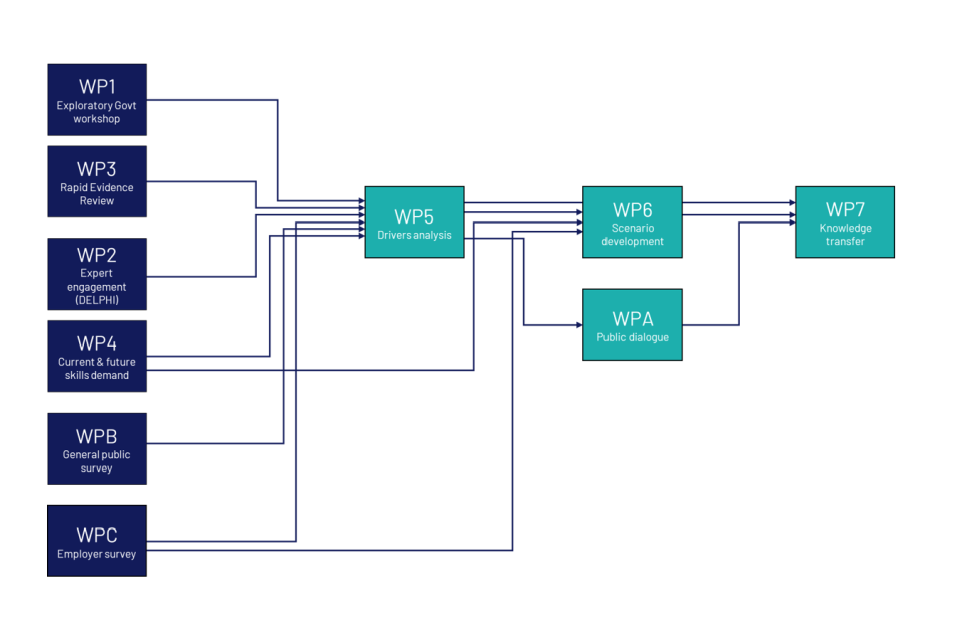
AI will transform the UK’s society and workforce. It is critical that essential AI skills for life and work are identified and diffused across the UK. This research aims to identify the skills needed now and in the future to work and live with AI technology as it advances. The research project consists of a total of ten Work Packages (shortened to WP throughout), which employ a variety of research techniques to explore which skills will be required for using AI in life and at work in the future. It comprises engagement with experts, a rapid evidence review, quantitative forecasting of skills demand, the development of a set of scenarios about the future development of AI, surveys of the general public and employers, and deliberative engagement with the general public, experts, employers and employees in a range of industries. We recognise that much has changed (and continues to change) in AI since this research was commissioned. This report provides a synthesis of findings from this work and unpacks the drivers that will determine how AI skills will develop in the future. The structure of the work packages is shown below.
Figure 1.1: Diagram showing how each work package contributes to the research and the order in which they are carried out.
2.2. Research context
The project opened with WP1, which was an exploratory phase centred on conducting a workshop attended by stakeholders from industry and government. The purpose of the workshop was to shape the research by discussing views on the research questions and what would be in and out of scope, as well as discussing what outputs from the research will be most useful. This was followed by WP2, the two-tier Delphi study of experts, which included 22 one-hour in-depth interviews to identify eight key issues relevant for the next 5-10 years. This was followed by a survey sent back to these experts aiming to gather their feedback on these identified issues. The subsequent work package was WP3, a rapid evidence review of existing literature on AI, using a shortlist of 139 articles and grey literature documents, conducted by Professor Rob Proctor of the University of Warwick. WP4, carried out by the Institute for Employment Research and Perspective Economics, was a quantitative forecast of skills demand with a two-pronged approach, using analysis of job vacancies and patent trends to understand what demand for future skills might be. A general public survey was conducted for WPB, which explored how, and in what context, people currently use AI. WPC was the employers survey, aiming to understand how businesses use AI, and its role in training and recruitment.
An earlier version of these findings was presented to key stakeholders during a workshop on 15th May 2024. This version also includes themes raised in discussions during this workshop.
2.3. Methodology
Equipped with the insights generated by the rapid evidence review, the quantitative modelling identifying key drivers, and the consensus generated by the expert-led Delphi study, we have conducted a trends and foresight drivers analysis. This has been a rigorous and evidence-based analysis of current trends in AI skills, identifying and prioritising different drivers of change and therefore opportunities for government policy to impact. We have explored the implications for individuals, educational institutions, governments, and businesses.
We have also convened a cross-governmental stakeholder workshop. This takes the key themes from the drivers analysis as a starting point to brainstorm potential scenarios – as well as the likely/potential pathways leading to them in relation to the use of different emergent AI technologies.
3. Work package summaries
3.1. Delphi study (WP2)
3.1.1. Methodology
Ipsos conducted a series of 22 hour-long interviews with Artificial Intelligence (AI) specialists who were selected for their range of skills and perspectives. They came from a diverse group of organisations, including international bodies, academic institutions, tech companies, professional societies, telecommunications, professional services firms, trade unions, financial services, pharmaceuticals, online learning platforms, and policy research organisations. These interviews allowed us to explore areas of disagreement and consensus amongst the expert group about the current and future impacts of AI on life and work. From the expert interview findings, we were able to draw preliminary issues relevant for the next 10 years related to the impact of AI in life and work.
After gathering these preliminary findings, we sent a quantitative survey to experts, which aimed to gather their feedback on these issues and their future development. In the survey, experts were presented with different hypotheses for the future relating to AI skills for life and work. They were asked to assess how likely these hypotheses are to occur.
3.1.2. Executive summary
Recognising that basic digital skills are a prerequisite for AI literacy, experts agreed that improving fundamental digital competencies is key to increasing the currently low levels of AI literacy, particularly for digitally excluded communities. Experts highlighted that, while there is a significant advantage to freely available AI tools and frameworks in the way that they create a “public library” accessible to many, the barriers which limit Essential Digital skill readiness among the public will still remain. Therefore, a digital divide is still a significant threat to AI literacy and skills development even in this ‘free-to-use’ space. Experts agreed that incorporating basic AI understanding into the UK education system is crucial to improve AI literacy and equip all segments of the population with skills for interacting with AI. Experts agreed that improving the public’s understanding of AI could help raise awareness about potential biases in AI outputs, enabling them to better identify and assess these biases before they become problematic.
Experts agreed that AI professionals will need to hone their technical skills and keep abreast of the latest developments in AI technology and opportunities for transitioning to new roles as AI automates certain tasks. For non-AI professionals, experts agreed they should develop a solid understanding of AI principles, as well as learn how to use applications relevant to their field of work. These principles would involve the basic logic of how AI works (as a data driven system) and so help non-AI professionals to effectively communicate with AI, translate outputs into practical applications, and monitor outputs for validity and trustworthiness. Recognising the importance of adaptability, critical thinking and creativity as core competencies in an AI-driven world will be particularly crucial in the workplace. Alongside this, language skills – for written communication with LLMs, supplemented by additional knowledge on prompt engineering – are particularly relevant today in the context of generative AI.
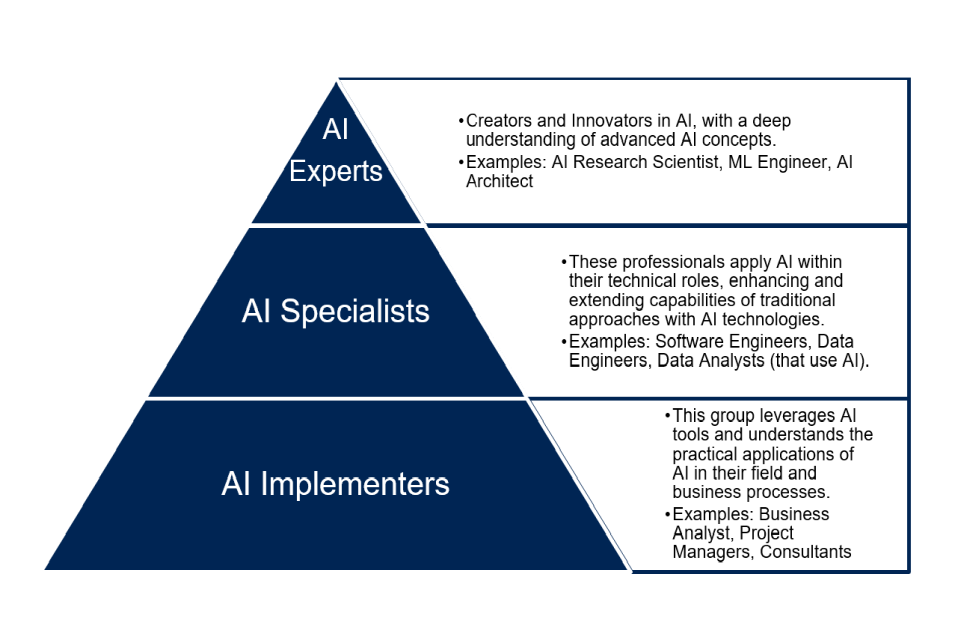
A triangular diagram, vertically divided into 3 category segments. Bottom is “AI Implementers”, Middle is “AI Specialists”, and Top is “AI Experts”. Information on these categories can be found in Section 4 where the diagram is featured again.
Figure 2.1: Diagram, developed as part of Work Package 4 (vacancies analysis) depicting the three categories of AI roles for work; AI Experts, AI Specialists and AI Implementers
Since experts highlighted the importance of ‘learning by doing’ when it comes to enhancing AI skills, more opportunities for practical learning need to be created. Employers should also encourage the use of AI in the workplace to build employee confidence. Experts are concerned that misinformation and disinformation risk eroding public trust in AI, which would hinder the adoption of AI in work and life. They agreed that transparency in AI use is needed to combat this issue, but there was a lack of consensus about how transparency could be achieved.
3.2. Rapid evidence review (WP3)
3.2.1. Methodology
This WP reviewed 139 pieces of literature on AI skills in work and life to identify any major gaps in the definitions of AI skills for life and work agreed in WP1. Literature included academic publications as well as grey literature, such as working papers and government documents. This included a synthesis of existing competency frameworks and standards for AI skills in work. It summarised the various approaches (e.g., survey questions) used to measure skills gaps and shortages and the statistics on the proliferation of AI tools in life and work contexts. Evidence on international approaches was also reviewed. The aim was to identify high-quality and authoritative sources and synthesise their findings. As part of this, the RER examined the relationship between AI skills and the more general concept of digital skills, but did not attempt to provide an in-depth review of the latter.
3.2.2. Executive summary
A significant proportion of the UK population have only partial Essential Digital Skills (EDS) for life and work. Levels of attainment are influenced by a range of demographic factors, including age, education, income, region, etc. These will need to be addressed if existing regional economic inequalities are not to be reinforced by the adoption of AI by businesses. The UK’s focus to date has largely been on increasing the supply of AI skills for work through investment in tertiary education. While this is important, the UK must increase efforts to introduce education curricula in AI skills at primary and secondary levels.
In May 2024, the Department for Science, Innovation and Technology (DSIT) launched the AI Skills for Business Competency Framework. The framework development, led by The Alan Turing Institute as part of the Innovate UK BridgeAI programme, defines the high-level competencies required to enable responsible and safe AI adoption. A taxonomy of AI skills for work is now under review in the UK, but its development will require a better understanding of the role of STEM skills. It may not be possible to meet the future demand for AI skills for work by increasing the take up of STEM subjects at GCSE and A level. In this case a relevant subset of STEM subject matter will need to be introduced into other subjects at secondary and tertiary levels.
Significant gaps between the supply and demand for AI skills for work have been evident for several years in the UK and globally, and demand is expected to rise dramatically over the next five years. Businesses and public sector organisations may find it increasingly difficult to recruit and then retain employees. If this gap is to be closed, support for the AI skills pipeline at secondary and tertiary levels will need to be expanded alongside investment in the provision of lifelong learning opportunities.
As AI technologies continue to advance and find new applications, education programmes will need to be alert to the impact of the kinds of AI skills required to exploit them. In particular, skills in understanding how businesses can employ AI strategically while ensuring AI-based products and services are compliant with ethics regulations are likely to be in high demand. The average skill will only be of use for those employing AI for less than three years, meaning new skills will be in constant demand. As such, employers will need to take increasing responsibility to create a learning culture that will enable employees to adapt and upskill now and in the foreseeable future. To build this culture, employers will need to actively offer training which may exist internally or provide access to these opportunities externally.
3.3. Skills forecasting (WP4)
3.3.1. Vacancy analysis
Methodology
This work package examined the demand for AI skills in the UK labour market from January 2021 to December 2023 using job vacancy data from the Lightcast platform, finding 448,484 postings in scope, and in particular, 118,017 AI specialist roles and 54,805 AI expert roles. It explored trends, geographic distribution, job titles, sectors, skills, qualifications, experience, and salaries associated with AI-related roles. Lightcast data was chosen for its volume, granularity, real-time updates, and broad coverage of online job postings. This method provides insights into employer demand and trends in AI skills. Vacancy analysis does not capture the use of AI skills in existing jobs, only in new postings. There are also interpretation challenges in the keywords, job titles and descriptions used on job sites.
Executive summary
The analysis suggested strong demand for AI skills in the UK, particularly for highly skilled experts. However, the 2023 reduction in vacancies may reflect wider tech sector trends. Higher education requirements emphasise the importance of advanced degree pathways in AI. There may also be potential to explore alternative routes like apprenticeships further (not covered by this vacancy analysis). Substantial salary premiums exist for AI professionals across all regions.
3.3.2. Patent Analysis
Methodology
The information published in patent specifications offers insights into the evolution of new technical developments in artificial intelligence (AI) and their application to practical uses, across a wide range of activities from healthcare to financial services. Patent statistics, therefore, act as a leading indicator of the emergence of new AI technologies, and changes in absolute and relative terms.
This work package explored patent statistics and trends from the United States Patent and Trademark Office (USPTO) dataset from 2014 to 2023, employing 41 keywords to identify 438,500 AI-related patents over this period. This dataset was used due to the US’ position as a major, if not the major, mover in AI, and because the USPTO makes its data readily available. By identifying and monitoring the knowledge and skill sets associated with particular types of AI technologies, patent statistics also act as an indicator of the absolute and relative importance of different knowledge and skill sets in the labour market to develop and deploy these new AI technologies.
Executive summary
The analysis revealed concentrations of AI activity in five key areas of application. The two most developed areas are around computing arrangements based on specific computational models, and telecommunications. The remaining three are smaller groupings, covering surgery and medical applications, vehicles and various forms of manipulators, such as robotic arms, used to assemble objects or pick and place items, and measuring or testing processes in chemistry and metallurgy. These findings suggest that these sectors or subsectors are where future demand for AI knowledge and skills is likely to be. The findings also highlight the importance of combining core AI skills with more sector-specific skills to deploy AI technologies in these areas.
AI-related patents grew significantly as a proportion of the total number of patents, rising from 5.2% in 2014 to 20.3% in 2023. This includes inventions relating to the development of AI itself and the application of AI to other areas of activity, such as surgery, vehicles, and robotics. This confirms the increasing importance of AI and associated knowledge and skills for successfully developing and deploying future inventions.
3.3.3. Labour market and skills projections
Methodology
This work strand used the Working Futures model, developed by the Institute for Employment Research, as a baseline. This model anticipates how the sectoral structure of the economy will evolve between 2020 and 2035 and what this means for employment projections. The study integrates technological trends from patent and vacancy data with these projections to estimate the potential effects of AI on different sectors and occupations.
Executive summary
The baseline Working Futures model research indicates that nearly all the projected 2.5 million job increases from 2020 to 2035 will be in skilled, white-collar, non-manual work. Jobs directly involving AI activities could rise from 158,000 in 2024 to 3.9 million by 2035 according to projections. That would be about 12% of the current UK workforce of 30.4 million (ONS as of November 2024 ). A broader group of 9.7 million people may be in AI-related occupations by 2035, but not all will be directly working with AI. This larger figure represents occupations associated with AI, such as in industries heavily adopting the technologies. In the adjusted Technological Opportunities scenario, AI occupations may see 12.4% growth from 2024 to 2035, with Experts increasing most at 12.6%.
3.4. General public survey (WPB)
3.4.1. Methodology
The general public survey was an online survey conducted via random probability sampling using the Ipsos Knowledge Panel between 29 February and 7 March 2024. The sample size was 1,189 adults aged 18+, of which 1,155 had heard of AI. Its main objectives were to provide more coverage of exploring AI usage in day-to-day life, looking at which tools were used, the level of confidence in using AI, which AI skills are viewed as most important, future usage frequency and the potential impact of AI. Respondents were also asked similar questions about AI in work, although this was not the primary focus of this workstream.
3.4.2. Executive summary
Awareness of AI was found to be high, with 97% of respondents having heard of AI before. However, AI literacy levels are low, as only 17% could explain what it is in detail. 73% of the public had used AI in their day-to-day life at least once in the past month, but the majority of these uses of AI were ‘passive’, including predictive text (72%), virtual assistants (57%) and online recommendation algorithms (53%). More creative applications of AI were used significantly less, with generative AI chatbots used by 35% and AI image generators used by 17%.
In terms of future use of AI, respondents expected similar trends to what they reported to be their current use. A similar minority of 38% expect to use generative AI chatbots in the next 12 months, with ‘passive’ uses remaining more popular for future use. So, there is evidence that usage levels have plateaued.
Less than a third (28%) of the public felt confident in their ability to use AI in daily life. This is linked to low confidence in most skills, but especially in keeping information safe and private (15%). When asked which skills were most important when using AI in day-to-day life, ‘being able to keep my information safe and private’ was found to be most important, at 62%, followed by ‘understanding the risks and threats associated with using AI systems’, at 60%. Not only are the public most concerned about safety and privacy when using AI in life, but these are also the AI skills with which they have the least confidence.
Work-related questions yielded similar results; skills found to be most important for using AI in the workplace revolved around the risks of AI. Confidence in using AI in the workplace was even lower (at 21%) than it was in day-to-day life (28%). This could be linked to limited training opportunities, with a substantial majority of 84% having not undertaken any training related to the use of AI. However, the majority of those in work did not feel AI has made a significant impact on their productivity or quality of work, with over half claiming it has neither increased nor decreased these areas. Despite this, over half of those in work (51%) expect to use AI in the workplace in the next 12 months. This is a substantial increase from the 36% who said they had used it for work in the last month.
Opinions on the future impact of AI varied significantly by topic area, but over half (54%) felt it would have a positive impact on how they learn. 44% also felt it would have a positive impact on the UK overall. However, opinions were mixed, as 24% felt it would have a negative impact on the UK overall. There was an even split between those who felt it would positively or negatively impact workers’ skills (34% for each). Overall, this survey has found that the public is not confident with AI. Many do not expect to use it themselves in a significant way in the future, but they do recognise its value in helping them to learn.
3.5. Employer survey (WPC)
3.5.1. Methodology
The employer survey was a telephone survey conducted among UK employers supplied from the Market Location business database. The sample covered all economic sectors apart from public sector organisations and 801 employers were interviewed altogether between 19 March to 7 June 2024. Its main objectives were to understand current levels of AI knowledge and skill, both overall and across different AI types and business functions, what training they have accessed and would interest them, and the impact of AI on recruitment and retention of staff.
3.5.2. Executive summary
One in three (31%) UK employers said that they currently use AI in some form, including 55% of IT businesses, 43% of professional, scientific and technical businesses and 49% of other services businesses. However, less than one in 10 (9%) employers plan to use AI in future and the majority of those surveyed (60%) said they do not plan to use AI within their business. Employers in the distribution and manufacturing sectors were most likely not to be planning to use AI (73% and 69% respectively) but still 61% of those in education, and 59% of those in finance and insurance said they do not plan to. Thus, it is not just blue-collar sectors who do not consider there to be an incentive to incorporate AI into their businesses now or in the near future.
Nevertheless, AI does appear to be being used for a variety of business functions among those that do use it. Four in 10 of current users say they are using AI for IT functions. Marketing and sales are close behind (32% of current users using AI for this), followed by product and service development. The most used type of AI is real-time conversational AI such as ChatGPT – 39% of employers currently using AI say that they are using it. This suggests that generative AI has helped broaden the types of business and types of use case associated with the technology.
However, skill levels are generally still quite low. 74% of employers rate the AI skill level of their employees as either beginner (defined to them as having a basic understanding of AI but not using it very much) or novice (defined as having limited or no experience with the technology). Only those in IT were likely to have a skill level of intermediate, defined as being comfortable using AI for routine tasks, or above (70% of employers said this). 61% of businesses say they do not have any staff that currently work with AI, with only 5% having staff with the technical skills required to develop AI models, 8% with staff that can apply AI models and one in three (34%) with staff that can work with or use existing AI tools.
The low level of skill extends to the leadership team – only 34% of employees say that their senior leadership team has the ability to identify new opportunities to use AI with their business. A similar level (36%) say they understand how AI is being used with their industry generally. The reason for this is that AI is generally seen as a ‘nice to have’ rather than a necessary part of the business. 94% of employers that use AI say they ‘use, but do not rely on it’ and the majority (71%) of AI-using businesses say that lacking staff with the skill to work with AI has not been a problem for their business.
This has knock-on effects both for recruitment – only 4% of UK employers have tried to recruit anyone with the skill to work with AI models, tools or tech in the last three years – and upskilling of the current workforce – only 1 in 10 businesses have undertaken some form of AI training. Therefore, educating employers about the benefit and wide range of use cases that AI provides will be crucial to increasing uptake, as well as ensuring the workforce has the skill level to be able to effectively use AI.
There is interest in growing AI’s role in business, with productivity seen as the biggest opportunity for AI, followed by growing sales and competitiveness. At the same time, 36% of businesses would be interested in some form of AI training in future, suggesting a need for skills to be developed throughout the business hierarchy to enable this to happen.
4. Impacts on everyday life
AI is likely to significantly affect how people live their everyday lives. This will make some aspects of life more efficient but also require a skillset which is currently only held by a minority of the public, and which is not expected to increase in the next year. It is also likely to require us to develop a range of non-technical skills related to critical thinking and flexibility to allow us to adapt to the evolving technology. This impact on our non-technical skills will contribute to how we interact with people in our daily relationships.
4.1. AI assistance with life admin and chores
Findings from several work packages indicate that AI is already somewhat integrated into day-to-day life, with many using AI to help them at home. In the general public survey, it was found that ‘passive’ use of AI is already quite common, with 72% of respondents using predictive text in the last month and 57% using virtual assistants. Additionally, 30% of respondents had used AI tools to assist with the home they live in at least once in the past month, and one fifth for their hobbies.
It is possible that future use of AI to assist with life admin and chores will grow, to help them better plan their lives in an efficient way. However, when asked which AI tools they expected to use in their day-to-day life in the next 12 months, ‘passive’ use tools were again more strongly identified. 75% expect to use predictive text at least once a month and 62% expecting to use virtual assistants at least once a month. Evidence suggests the skill set for using AI in the home is apparent among a minority only and not expected to increase next year. More needs to be done to communicate the benefits and use cases of AI at home, so that people have an incentive to develop the skills required. It will also be crucial to communicate the risks, so the public is aware of how to manage them to arrive at an educated and pragmatic outlook on AI’s usefulness in this context.
What this means for AI skills: It is clear that increased usage of AI tools in the home will require the public to develop a skillset to ensure they are able to make the most of this and appropriately and safely employ these tools in their day-to-day lives.
4.2. “Sociotechnical” skills develop – or wane
As AI tools become used more frequently and more widely in daily lives as well as at work, people will either adapt existing “sociotechnical” skills or develop a new skillset relating to the ability to navigate the interactions between AI technologies and society. They will apply AI technologies for societal, public and economic purposes. Skills expected to become crucial are those that relate to understanding the context, use, and application of AI and what can be expected of it in different situations. The initial workshop with stakeholders from industry and across government (WP1) revealed that ‘non-technical’ and ‘meta’ skills, such as critical thinking and flexibility, would become crucial for adapting to evolving technology.
Expert engagement (WP2) revealed a strong consensus that critical thinking is a vital skill for people to have now and in the future to ensure basic literacy in AI:
[The important questions to be able to ask are] how does this work? Can I trust, or do I know how this document, this output, originated? Do I know what impact there will be for me using this tool and what impact it will have on other people?’ I think all of that has to be rooted in critical thinking and a certain amount of data literacy or AI literacy.
As referenced by this professional body interviewee (WP2), a crucial aspect of this literacy should be the ability to identify when and how AI is being used to generate materials. The increase in use of AI to generate text, images, video, and other content will require that the public are able to employ critical thinking to recognise when and where there has been AI input. If the public are unable to identify where AI has been used, they are unlikely to trust it. To fully facilitate public trust in AI systems, this development of AI literacy must be complemented by tighter regulation on the acceptable use cases for AI.
The drivers analysis workshop (WP5) with government stakeholders also discussed the need for transferrable skills as AI grows further. Stakeholders raised the idea that the progression of AI will mean that it will be more important for the public to be able to creatively come up with a prompt than to understand the complexities of how AI tools function.
You know enough to be able to understand how it’s processing the information, but you don’t have the skills to build it, but you have the knowledge of how it works.
Stakeholders at this workshop (WP5) also raised the issue that it is not a skills challenge but a knowledge challenge, with the need to help people understand AI being the core focus. This limited knowledge was also a key area raised in the public survey where, despite 97% of respondents having heard of AI, only 17% could explain what it is in detail. The rapid evidence review (WP3) also found that future aims should be focused on understanding AI in a technical, applied sense, as well as the broader implications of using AI, whether that be in work or in everyday life.
What this means for AI skills: As such, the ability of the public to develop the sociotechnical skills required to handle and effectively employ AI tools will determine the success or failure of AI use in daily life and work.
4.3. AI impacts how people maintain relationships
The role of AI in managing and impacting relationships has been raised in several workstreams. The general public survey (WPB) found that a small minority (14%) currently use AI to assist with their relationships, for example, to give guidance on conversations or provide counselling. Digital technology has already adversely affected people’s relationships in different ways – AI is likely to bring a new layer of complexity. The rapid evidence review (WP3) further explored the idea of human-oriented AI competencies, which centre on the uniqueness of AI and its social impact. The focus here is on how AI is not just a technical tool but requires human-oriented competencies that will naturally adapt as AI becomes more ingrained into our lives and impacts how we navigate our relationships.
WP3 also placed an emphasis on supporting young people after they exit formal education programmes, and older citizens, given they are less digitally literate, and ensuring that curricula and learning opportunities match their abilities and also the rapid pace of innovation in AI.
Expert engagement (WP2) also noted that the transferrable skills needed for interacting effectively with AI are not new. Instead, they are focused on language skills, creativity, and leadership. As such skills derive from relationship building, the necessity of building strong skills to use AI will simultaneously improve relationship-related abilities. These skills could include strong communication and leadership, which will contribute to the safe and fair implementation of AI into society, alongside other requirements such as advancements in regulation and the development of the public to become highly skilled critical consumers of AI. As such, in order for AI to be used more in managing relationships, there will need to be more trust in AI, familiarity with tools, and a cultural shift in perceptions.
What this means for AI skills: As AI becomes more ingrained into our daily lives, it will likely affect how we go about managing our relationships. This may occur both in the literal sense of using AI to draft messages and deal with conversations and also in how it will encourage us to develop interpersonal skills which we will employ as we interact with others.
5. Economic and workplace changes
AI is likely to have a large impact on work, both for those working directly with AI, and those in other careers. The growth of roles related to development and maintaining AI systems is visible, along with the growth in AI use for daily routine tasks in many non-AI specific roles. However, the impact of AI on the workplace so far is currently mixed: 6 in 10 of UK employers do not use AI in their workplace and do not plan to. Elsewhere among AI specialist businesses there are labour shortages for several of roles relating to AI. It is clear therefore that there are skills gaps across all levels of the UK workforce – from senior leadership teams to recent graduates. There is also a need to create new career pathways into AI roles, aside from traditional educational routes to address these skills gaps.
5.1. Low levels of AI usage among UK businesses
The employer survey highlighted that while a significant minority of UK businesses – one in three – say they currently use AI. This usage is predominantly focused among specialist businesses in the IT sector and the majority (6 in 10) of UK employers do not use AI and do not have any plans to incorporate it.
These issues with take-up do appear to stem from the top, as only 34% of employers say that their senior leadership team can identify new opportunities to use AI in the business. AI usage is seen as a ‘nice-to-have’ as 94% of employers say they ‘use, but do not rely on’ the technology. Only 1 in 10 have undertaken any training, and only 4% of employers have tried to actively recruit anyone with the skill to work with AI models, tools, or technologies in the last three years.
However, skill levels overall are also perceived to be quite low. 74% of employers rate the AI skill level of their employees as either beginner or novice. 61% of businesses say they do not have any staff that currently work with AI.
Nevertheless, the impact of GenAI is clear to see. 39% of employers say that real-time conversational AI is currently being used in their business. This has had an impact on the opportunity, with 36% of businesses identifying productivity as being a beneficiary from increased usage of AI. 36% of employers would also be interested in undertaking AI-related training in their business in future. However, it is clear that more needs to be done to educate workers at all levels of a business on how to use AI if a majority of UK employers are to take this technology up.
5.2. Labour shortages among specialist AI businesses
Significant gaps between the supply and demand for AI skills for work have been evident for several years in the UK and globally, as found in the rapid evidence review. Demand is expected to rise dramatically over the next five years. Therefore, businesses and public sector organisations may find it increasingly difficult to recruit, develop and retain employees who meet their needs in this area. Indeed, as the Working Futures projections indicate, using the Technological Opportunities scenario, AI occupations are projected to see 12.4% growth from 2024-2035.
In order to maximise the opportunities of artificial intelligence, data and expert insights indicate that it is essential to develop a robust AI skills base across the workforce, from leadership, data professionals, workers and end-users. This is likely to enable a workforce that can identify the opportunities for AI while mitigating the potential negative societal impacts. Similarly, these need to represent a diverse group of individuals, with different life experiences governing the development and use of these technologies.
As the initial workshop (WP1) discussed, the speed of AI development is so fast that the necessary skills required to use AI safely and effectively may change faster than people and the education system are able to adapt. Due to this, having the appropriate skills to work with AI would continue to be a significant challenge in the labour market. Expert engagement (WP2) concurred with this idea, discussing how data and AI professionals are particularly likely to see a great deal of change. The rapidly evolving nature of this field means that their skill sets will be highly important, and the need for them to keep upskilling was highlighted. Because of this high demand and lack of supply, businesses and public sector organisations may find it increasingly difficult to recruit and retain employees.
To close this gap, the rapid evidence review (WP3) found that increased focus within education should be placed on the primary and secondary, and not just tertiary, levels. Expanding support for the AI skills pipeline at all levels and investing in the provision of lifelong learning opportunities would be most productive in upskilling an AI generation. WP3 further explored how it may not be possible to meet the future demand for AI skills for work by just increasing the take up of STEM subjects at GCSE and A level. Instead, threading relevant subject matter related to AI currently existent in STEM subjects into other subject areas at secondary and tertiary levels would be necessary.
In the workplace, considering the average skills lifespan is now less than 3 years, and likely to fall further, employers will need to upskill their workers proactively. This should involve the creation of a learning culture that will enable employees to adapt and upskill now and in the future.
What this means for AI skills:The current lack of those with the skills in demand in the labour market is due to the speed of AI development. A need for progress in education and training in the workplace to upskill and prepare for future upskilling needs is essential to address current labour shortages in AI skills for work.
5.3. Professionalisation of AI-related work
Several workstreams found that new career paths and pathways will develop and become open for future workers. Currently, university education remains the most significant pathway into AI careers. Over a fifth of ‘specialist’ and ‘implementer’ roles and 37% of ‘expert’ roles require a PhD. The vacancies analysis (WP4) further found that almost all roles require at least a bachelor’s degree, being 99% for experts, 93% for specialists, and 91% for implementers. In terms of skills and experience, there was the highest demand for technical knowledge of Python (68%) in job advertisements, followed by the broader areas of Data Science (64%) and Machine Learning (63%). In circumstances where specialist roles are hard to fill, it is possible that some organisations may reduce their typical requirements to successfully hire into the role. 67% of expert vacancies requested less than 3 years of experience (where known). This could suggest that organisations facing a skills gap and struggling to hire may be more permissive than usual with what they are requesting from applicants. This may also result in increased need for on-the-job upskilling for new hires to reach occupational competence. Similarly, looking ahead, the Working Futures model found that nearly all of the projected 2.5 million job increase from 2020 to 2035 will be for skilled, white-collar, non-manual workers in Professional and Associate roles.
Whilst this data evidence that employers view degree-level pathways as the main entry route into AI roles, many may consider the role of degree-level apprenticeships or alternative routes. Despite employers remaining focused on certification-based qualifications like degrees, stakeholder workshops (WP5) argued for the importance of bootcamps and online courses. They raised the question of whether this is simply a case of businesses being delayed in asking for PhDs rather than specific skillsets, and that this trend may change in a few years’ time. This change is only likely to occur when companies come to understand AI and the high-level competencies required to enable responsible and safe AI adoption. Once this is understood, and once training is articulated in terms of the competencies it teaches, alternative training opportunities such as bootcamps and online courses will gain currency with employers.
At the drivers analysis workshop (WP5), stakeholders discussed how AI skills must be built into all subjects and all domains moving forward. They also noted a disconnect between the approaches of higher education and industry towards the skills needed to use and work with AI. They felt that the government should be more focused on building new resources for training to help bridge this issue.
Participants argued that most businesses do not understand whether these options generate the skills they require, so they use university qualifications as a proxy. The primacy of university qualifications may be a consequence of them providing a clear pathway through training topics, which is otherwise rarely available across training materials. Employers may also lack confidence in training materials or feel ill-equipped to appraise its quality and suitability for the target audience. This could suggest a need for some kind of kite-marking of training materials to ensure quality and consistency. As discussed in the rapid evidence review (WP3), given the pace of growth of AI products and services, the issue around ensuring that training materials remain accessible and consistent for each AI need is prevalent. As such, the need for both businesses and government to scale up their training efforts is necessary for employers and employees alike to feel confidence in these training materials and so using AI. This will involve the government expanding its support for the AI skills pipeline at secondary and tertiary level and investing in the provision of lifelong learning opportunities.
Alongside this technical development, the space of AI ethics, regulation, and governance will also develop. This is likely to comprise industry bodies and accreditations. Stakeholder workshops found that there is a disconnect between workplace application and trust, and that tackling the basic privacy issue should be the first port of call to ensure that people feel comfortable using AI. Similar themes emerged in WP2 expert engagement, raising the idea that a fundamental overhaul of AI regulation will soon be required to avoid the onus being solely placed on individuals to recognise AI use:
The point of AI is to be able to convince you that something is real or produced by a human, so I think it’s less a question of people needing those skills [the recognise AI generated content]. There needs to be legislation or regulation which makes it possible for people to do that.
Additionally, whilst threats to democratic processes and institutional structures are seen as impacts of misinformation created by factually incorrect or misleading AI-generated outputs, experts highlight the role appropriate regulation would play towards mitigating this. In fact, effective regulation is seen as key to dealing with many of the impacts that AI will have in life and work. This is seen as crucial in supporting the introduction and management of AI in the workplace. To complement regulation, the need was highlighted for individuals to be educated and empowered as critical consumers of artificial intelligence and to possess an awareness of the capabilities of these technologies as well as a pragmatic outlook on their utility.
What this means for AI skills: To effectively engage and maintain AI use in the workplace, there should be two key actions developing in the future; a technical development where employers should embrace new pathways in AI roles and become more aware of the skillsets and experience they require, and a regulatory movement to become more effective in supporting this development to ensure AI is a safe tool to use for work.
5.4. New kinds of jobs emerge
While many jobs will be automated, a new class of business, consulting, and engineering jobs will emerge. These roles will be focused on the highly technical, specialist technical, and implementation areas of AI. Each will require different ranges of skills in relation to AI, with a distinct business function related to AI and their industry. Vacancy analysis conducted on WP4 found that more than half of job vacancies found were advertised in London and the South East. This industry dominance which is likely to become intensified as the preference for in-person work returns. However, Location Quotient analysis, which considers regional hotspots relative to the size of the local labour market, highlights significant relatively strong demand in areas such as Cambridge, Bristol, Oxford, Manchester and Reading.
Computer programming and consultancy experienced the largest growth of these roles advertised, but there is still substantial hiring in the fields of education, financial services, and management consultancy. Patent analysis (WP4) further revealed that new AI inventions will necessitate high levels of expertise in their application. We anticipate these specialised roles will be based either within employers or concentrated within high-tech providers of AI services to other organisations. Particularly in the case of SMEs, we do not anticipate this specialist capability to be employed in-house. This presents a challenge of supporting organisations to be critical consumers and empowering them with the knowledge and skill to fulfil governance responsibilities and evaluate the merits of AI services, even when their own AI maturity is limited. The range of expertise needed will also increase hugely, and it is likely that as experts become specialised, an expert in one field may have a very different set of skills from another. We believe the profile of such specialists will combine a rich strand of sector or specialism expertise, complemented by cross-cutting competencies which support them to work effectively at disciplinary and sector boundaries as part of interdisciplinary teams.
Figure 4.1: Diagram depicting the three categories of AI roles for work; AI Experts, AI Specialists and AI Implementers
Delving into the growth of AI roles by category, the diagram above depicts the three core categories of AI roles. These three categorisations map within the “AI Professional” persona of the DSIT-sponsored AI Skills for Business Competency Framework. The smallest and most technical group is that of ‘AI Experts’. The vacancies analysis (WP4) found that this growing group made up 0.21% of job vacancy postings between 2021-2023. These roles require a profound understanding of AI architecture and algorithm design, and titles would include ‘Machine Learning Engineer’ or ‘Research Scientist’.
Following this is the category of specialist technical roles, which could be classed as ‘AI Specialists. Similarly, WP4 found that this category of AI roles made up 0.45% of job vacancy postings between 2021-2023. Whilst these specialists require excellent technical skills, they don’t need the deeper expertise in AI architecture or theory that is required by ‘expert’ roles. Job titles in this area including the words ‘Software Engineer’ or ‘Data Analyst’.
A third evolving category of AI-related careers is that of ‘AI Implementers’. These made up 1.7% of job postings between 2021-2023, making this the largest, but least specialised group of jobs being created by AI. These roles require basic but industry-specific knowledge of how to implement tools into business, including titles such as ‘Project Manager’ or ‘Consultant’.
Across all three of these categories, the Working Futures Baseline Scenario indicates that there will be a steady increase in job numbers, suggesting a balanced growth driven by existing economic and technological trends. This scenario reflects a stable growth environment where the current trends continue without major disruptions. Alternative scenarios in the model found different rates of growth for the three roles, but the findings suggest there is demand for skilled AI workers nonetheless, especially when considering the possibility of replacement demand (the creation of roles by workers leaving the workforce).
The employers survey (WPC) found that 5% of businesses currently have AI specialists and 8% have AI implementers. As expected, the IT sector contains more businesses with AI specialists and implementers, with 20% of the former and 30% of the latter. The Primary/Manufacturing sector also contains a higher-than-average proportion of businesses of AI specialists, with 9%, whilst the Professional, scientific and technical contains a higher-than-average proportion of businesses with AI implementers, with 13%. Distribution and finance and insurance sectors contain the least businesses with AI specialists and implementers, with less than 5% of businesses for each containing these roles.
For the majority of the population, using AI at work will not involve new kinds of jobs. Instead, they will use AI in their current roles for simple, routine or repetitive tasks. The general public survey (WPB) found that, at that time, AI is more often used at work to automate simple tasks, such as summarising meeting notes or analysing documents, rather than engaging in complex ones. However, it is likely that this situation will change in the future as AI becomes more embedded in our working lives. This will likely be quite far in future, and the employer survey (WPC) shows only a small minority of businesses are currently engaging with AI. Those who do are only using it for very simple or basic tasks. For these roles, a ‘baseline’ selection of skills would be required amongst the vast majority of workers, which would be based on the ‘sociotechnical’ or non-technical skills referenced by experts in the Delphi study (WP2).
What this means for AI skills: The overall growth of AI roles and development of new roles, as well as development of non-AI focused roles in employing AI for tasks, evidences a future shift in the job market that will incorporate AI holistically across industries and professions.
6. Technological development
As AI technological innovations continue at pace, and as AI grows in complexity, the existent skills gap is expected to widen. Such growth must be matched by comprehensive AI education and readily available opportunities to upskill and reskill for the current workforce. It is expected that the growth of AI will further democratise access to AI-based systems for the general public, with integration of AI in areas of life and work. This further increases the need for proactive interventions to ensure the general public possess sufficient understanding of AI to be able to engage meaningfully and critically with AI in life and livelihood.
6.1. Rapid and unpredictable growth
The analysis of patent data in WP4 found that AI-related patents have been growing significantly as a percentage of overall patents, rising from 5.2% in 2014 to 20.3% in 2023. These patents relate not only to the development of AI itself, but from many separate areas of activity, like surgery and manufacturing. The survey found that there is already a period of significant invention in fields that is not always easily anticipated. Different areas of AI knowledge, represented by 41 keywords searched in patent data, showed varying growth patterns – some emerging later, some growing rapidly, with relative importance shifting over time.
This suggests growing complexity and a need to map these evolutions to skills needed for AI developers, including the ability to effectively and responsibly communicate the outputs of increasingly complex systems to end users. For the users of AI, maintaining a current awareness of the capabilities of AI and its underpinning technologies will be necessary to effectively identify opportunities as well as their risks, and to maintain a pragmatic outlook on AI’s utility for their use cases.
AI patenting activity linked different areas of underlying knowledge (like machine learning and neural networks) to various fields of application and technology areas (like robotics and surgery). Concentrations of inventive AI activity were identified around certain patent classes, but each featured different mixes of relevant knowledge types and areas. This has implications for tailoring training programs. For example, considering that the knowledge base for Machine Learning and Neural Networks can be similar, it may be counterproductive to teach them separately, as the skills required for one may depend on the skills gained from the other. Differences in AI knowledge mixes and growth rates across technology areas affect overall skill demands over time.
Experts interviewed in the Delphi study (WP2) also raised concerns over the rapid evolution of AI, which presents significant risks around AI adoption and skills development. Three-fifths of experts ranked it as an urgent need for AI professionals to continually upgrade their skills to keep pace with these advancements. The rapid pace of patent growth shows that the skills among AI developers are the hardest to predict, beyond being across a variety of different areas. However, for AI users (90% of the population), we have already seen a significant development through the introduction of conversational AI (e.g. ChatGPT and LLMs). The need for AI users to develop strategies to effectively ‘prompt’ AI systems to provide useful responses represents a significant shift in skillset. While we anticipate further advancements of AI into new modalities (e.g. voice and audio reasoning with GPT-4o and Sora), we expect this need to effectively prompt AI systems and to critically evaluate the efficacy of their outputs to be a stable guideline for the skills required for the next three to five years.
What this means for AI skills: Tracking and projecting the changing landscape of AI will be important to ensure the related knowledge and skills match up with the progression of AI as it continues to develop rapidly and unpredictably.
6.2. Growing complexity and variation
WP4’s survey of patents found that new AI technologies come from a wide range of industries and functions – from agriculture to manufacturing to life sciences. They will be embedded differently across different sectors and geographical clusters. As these technologies progress, the knowledge mixes needed by workers are changing and becoming more complex. AI inventions will necessitate higher levels of expertise in their application. The range of expertise needed between different technologies will also increase, leading to specialisation to the degree that an expert in one field may have a very different set of skills to another.
The Working Futures Technological Opportunities Scenario projects the most pronounced growth for all job categories between 2024 and 2035. This is based upon a future where technological advancements create new opportunities, leading to a surge in demand for highly skilled professionals. As such, this scenario reflects a context whereby the transformative potential of technological breakthroughs drives significant job creation within AI-related occupations, particularly for roles requiring advanced expertise. Additionally, this skills projection found that the importance of combining AI skills with sector-specific knowledge was a key theme, as AI skills development will not be consistent between sectors.
Experts interviewed for WP2 expressed concern that the UK may not have the necessary skill pipelines to help people adapt to AI. It is hard for people outside higher education to access help. The survey of the general public for WPB found that only one in five believe they can access AI services or training. This highlights the need for specialised training to respond to sector- and use-case-specific needs, as well as increased signposting towards currently available training, and increased clarity in training development pathways.
What this means for AI skills: The growing complexity and variation of AI technologies highlights the need to provide more tailored training for each specified usage area of AI. To deal with the growing complexity, training will need to become more specially targeting for each field of AI.
6.3. Eventual increase in accessibility
Over time, we are likely to see development of more intuitive and user-friendly interfaces for AI tool, making it easier for non-experts to utilise AI. For example, we will see AI embedded deeply within common productivity tools such as Microsoft Office, and the continued development of ‘conversational’ interfaces to AI spanning modalities including text, audio and video. These open up clear potential for increased productivity and expanded use cases for AI. However, the ability for individuals to be able to make use of these tools will depend on broader work on digital inclusion to avoid amplification of the digital divide in more complex applications such as AI.
These developments will have skills implications for end users. According to the survey of the general public in WPB, as of June 2024, AI is more often used at work to automate simple jobs rather than engage in complex ones. End users will be required to scrutinise the use of AI in situations where it is embedded.
For AI professionals, skills surrounding the responsible development of AI tools will become increasingly important, enabling them to effectively and proactively engage with end user groups throughout the design and implementation of AI solutions. The expanded user base of AI will grow to include people with additional needs, and those with lower AI literacy. We anticipate the need for enhanced guidance for the profession to make AI systems more accessible to people with disabilities.
What this means for AI skills: AI will become more accessible as it develops, being more available to the general user rather than just the expert. The public will require skills to effectively use these technologies, and AI experts will require the skill to design equitable AI solutions which cater for the diverse needs of this expanded user group.
7. Sociological trends
Rapid AI growth may also deepen existent socioeconomic and regional differences. There exists already an ‘AI divide’ with some areas far more advanced than others in terms of AI skills and the job market, whilst some demographic groups are more AI literate than others. These trends evidence the need for new regulatory frameworks to address the biases which may be worsened by AI and to control misuse.
7.1. The AI divide
Unequal starting points may lead to an “AI divide” that deepens disparities existent in the digital divide, whereby various demographic groups experience different barriers to digital inclusion, based on factors like age and region (Read the Government report on COVID-19 and the digital divide). Analysis of the Essential Digital Skills (EDS) framework in WP3 found that London and the South East are more advanced in terms of AI demands and skills than other areas of the country. By contrast, the North East, Yorkshire and Humber, and the South West and West Midlands have the lowest proportions of EDS.
The vacancies analysis (WP4) similarly found that in 2023, the majority of AI-related vacancies were mainly split between London (46%) and the South East (10%). Very few were found in the North East (1%) or East Midlands (2%). However, the vacancies analysis did identify some growth in areas like the North West (6% to 8%) and Yorkshire and the Humber (3% to 5%). Levels of digital literacy (essential to the development of AI skills) are influenced by a range of demographic factors – like age, education, income and region. If these are not addressed, existing regional and economic inequalities could be reinforced or exacerbated by the development of AI.
People in the Southeast are going to benefit more rapidly from AI than people everywhere else because of the massive regional inequality of the UK. […] Just like any other expensive technology that comes along, it will aggravate inequality, unless some action is taken. [Industry Interviewee (WP2)]
Beyond more complex workplace AI Skills, there is also a concerning divide in basic AI literacy and understanding. The Rapid Evidence Review (WP3) found that 33% of adults reported that they can hardly ever or never recognise when they are using AI. Men (21%), adults aged 16-29 (31%), and adults in mixed or multiple ethnic groups were more likely to report they can always or often recognise when they are using AI. In contrast, adults aged 70 years and over (55%) and 39% of those without a degree reported they can hardly ever or never recognise when they are using AI.
What this means for AI skills: Continued rapid AI growth in London and the South East may increase the regional divide in AI skills and experience. Differences in skills are also emerging between genders, age groups and between those of different backgrounds, emphasising the need to universalise access to AI training.
7.2. Social discord
Concerns over incorrect or inaccurate information were felt by the majority of the public in the general public survey (WPB) – particularly in relation to AI safety and the impact of AI on society. More people who work in businesses are concerned about the risks posed by AI to their work – in particular, privacy, hacking, and inaccuracy – than excited about the positive possibilities for transformation. 62% of people felt that keeping their information safe and private while using AI was important. However, only 15% were confident they knew how to do so. Only 26% of respondents said they are confident in understanding the risks and threats associated with using AI systems.
Misinformation, and efforts to handle it over the next decade, was a topic of relevance for all experts interviewed. Experts (WP2) believed that AI could pose a threat to democratic processes, social cohesiveness, and institutional structures by producing incendiary, factually incorrect, or misleading content. However, experts did believe that AI could instead have a positive impact on biases. By exposing biases, it makes it impossible to ignore them and presents an opportunity to address these actively.
AI amplifying bias is a very serious concern that I think we will deal with […], but what I love is that, suddenly, we’re having to deal with it. It’s like the issue of biases having to be addressed very directly because of AI. The issue of bias has always existed. It’s just now we’ve got it in a box and we can say, you know, it’s really just not right to do this this way. That is a positive outcome. [Industry interviewee (WP2)]
What this means for AI skills: Findings suggest that the general public will need to be better equipped to deal with the social threats that AI poses and adeptly recognise the misinformation and inaccuracy present in AI systems. Biases may be amplified by AI, but, if handled sensitively, AI may instead offer an opportunity to address those embedded in society buy exposing them for us.
7.3. New regulatory frameworks
AI regulation may be necessary to protect democracy and consumers. Among experts interviewed in WP2, effective regulation is seen as key to dealing with many of the impacts that AI will have in life and work and specifically crucial in supporting the introduction and management of AI in the workplace. They raised the idea that regulation needs to focus on controlling the use of AI. This, combined with the responsibility of the end user to be a critical consumer of AI, would facilitate trust in AI as a safe and effective tool. As such, experts were interested in what regulatory frameworks would look like in the next 5-10 years and how they would shape the development of AI technology.
A bad version of the future is one where people don’t trust anything that has been created by AI. That could happen if we don’t control the misuse of the technology. So, we urgently need regulation, and we need control. [Telecommunications Industry Expert]
The survey of job openings and patents in WP4 found that developments in regulation will likely create a new category of career opportunities. One example of this is compliance consultants, who will be brought in to help businesses demonstrate compliance with the growing range of regulations and standards that have or will come into force in the near future on AI ethics and safety.
8. Key skills
A surprisingly large number of jobs created by AI will not be technical roles, and only a small minority of the UK workforce are not technical specialists. WP4 found that 1.7% of AI-related job vacancies are for implementers, whereas 0.45% are for AI specialists. This shows that technical skills in AI are only the tip of the iceberg. The country will benefit from general AI education and training in non-technical roles. It will be important that training courses are tailored to recipients as all members of the general public - from primary school aged children to employers appear to need a greater understanding of how to use AI and why. BBC Bitesize videos for children, for example, could encourage safe use, while six-month part-time courses for adults could enable AI certification. Training days for CEOs and Directors could also offer AI leadership training.
8.1. Types of roles
Figure 7.1: Diagram to show the types of skills required to use AI – these categories are not either/or; a person can have and use different skills in different contexts.

Technical roles employ design and development, and so necessitate an advanced knowledge of sophisticated AI models. They may also require a deep understanding of complex fields of data science, machine learning, and language models. Sociotechnical roles, which require a working knowledge of AI, but not technical expertise, will focus on implementation and governance. They will help to embed AI use across workflows and systems across different sectors. Their work will include ethics, oversight and regulation, especially in highly regulated industries and sectors. Social roles created by AI will usually revolve around ensuring responsible access to, and use of, AI. Their skills and ways of thinking will be more humanistic and intuitive. They will include teachers and communicators, and their function will be to bring AI to life in the public imagination.
8.2. Implications for skills
8.2.1. Types of users of AI
A triangular diagram split into 5 segments arranged vertically. From base to peak these are labelled: “AI stakeholders and public”, “AI users”, AI implementers”, AI specialists, and “AI experts.” Coloured bands to the right indicate that the top 2 categories are “Technical skills, the top 3 categories are Socio-technical skills, and the top 4 categories are “Social Skills”.
Figure 7.2: Diagram depicting five categorisations for roles in relation to AI
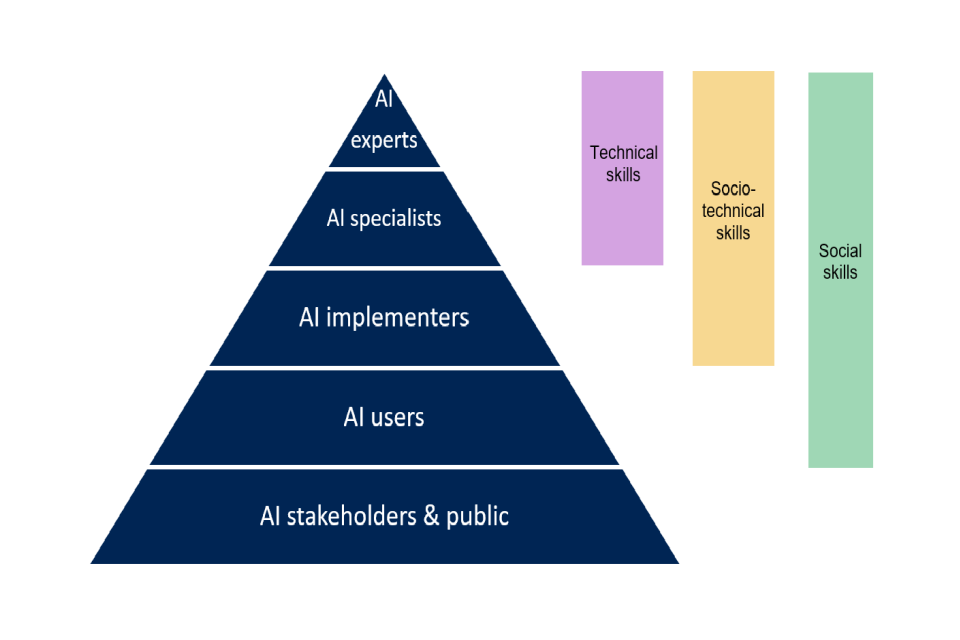
The categories identified in the WP4 vacancies analysis do not account for the vast majority of people and employers in the UK. Therefore, the framework requires development if it is to cover all possible relationships with AI. Our suggestion is the addition of two new groups. The first group is AI users, which includes members of the public who actively use AI. They possess sufficient understanding of AI to be able to engage with AI in their daily lives, as well as an awareness of the opportunities as well as risks of AI. This group has grown significantly in the past few years as generative AI has become more accessible to the public. As a result, more people have started to intentionally engage with these forms of AI.
The second group is AI stakeholders and the public, which is not a homogenous group, but instead may involve members of the public but also CEOs of AI-using companies. Whilst this group does not actively use AI, they may either benefit or disbenefit from other people’s use, as would a CEO of an AI using company. Alternatively, other members of this group might not intentionally use AI in life or work, but they may be passive users, even if this may be unknowingly through automated AI recommendation algorithms.
8.2.2. Skills gaps
One implication of the development of these social groups is regional disparity. It is important to understand what impact local differences could have on broader geographic inequality. We saw, for instance, that while London and South East lead all other areas of the UK in the sheer number of job vacancies, clusters were emerging where skills and job vacancies were lacking where AI upskilling is not as active a process. This was true of the North West, South West, Scotland, and Yorkshire and the Humber.
Another implication is the difference in need by sector, and where skills will be needed. The answer is that gaps will likely exist on all levels of the pyramid, but it will be important to identify the most pressing gaps. Our research has identified that some of the biggest will be among AI users and stakeholders – the two bottom categories in the pyramid. Among these groups, skills related to AI identified to be most valuable to them were not about active use but instead related to understanding what AI is and ensuring safety and privacy when using AI.
Drivers workshops (WP5) yielded similar ideas, calling for a need to simplify AI to enable the general public to trust that it works, instead of knowing how it works themselves. They discussed how AI would need to be brought in earlier in education to ensure that future generations grow up with the necessary skills and knowledge to employ AI in life and work effectively. Stakeholders raised the idea that skills have to be built into all subjects and all domains, and so that AI should be used in education for different subjects. However, they noted that for these skills to be taught, there is a need for people who can deliver these skills.
However, very few people actually need to understand how AI works. The majority of people will simply disengage or not see the benefit of viewing a technical video. There is a need to understand the amount of information that is sufficient. This depends on who the skills policy or training material is for and what it is trying to do. Plotting where the audience sits on the above type of user diagram will go some way to achieving this. Next, we will decide what skill we are trying to generate.
9. Next steps and implications for scenario development
The forthcoming phase of our research in Work Package 6: Scenario development (WP6) aims to build on the comprehensive driver analysis conducted in WP5. This will be done by the creation of a wide range of scenarios that will be explored, developed, and refined through public and workforce deliberations. Using scenario planning techniques and aided by the insights from the research undertaken to date and from the deliberations with the public and workforce, we will develop comprehensive, plausible scenarios that illustrate different potential futures of AI in life and work. These scenarios will be accompanied by:
- Rich Picture Illustrations: Visual representations to help stakeholders better understand and engage with the scenarios.
- Personas: Build on the AI Skills for Business Framework to create detailed personas and prototypes to demonstrate the practical application of AI skills in various contexts and likely impacts for government stakeholders to consider. These will be built through the deliberative process of the WP6 workshops and demonstrate the direction stakeholders that expect AI to go in in the coming years.
We will also work with the public by engaging diverse groups through deliberative methodologies. This approach will allow us to explore future scenarios related to AI in life and work. This should ensure a structured decision-making process that prioritises informed discussion and reasoned debate among stakeholders. These will include employers, employees and a microcosm of the general public through deep dive dialogues.
The public deliberation will explore AI skills in life (WPA) and identify policy levers to affect a step change for AI skills. We will engage with the following issues for everyday life.
- AI Literacy and Public Confidence: understanding and improving the public’s digital competencies and AI literacy.
- AI skills, education and life-long learning: understanding how education, work, and life may need to be redesigned to support sociotechnical learning about AI.
- Developing non-technical and sociotechnical skills: engaging with the importance of critical thinking, flexibility, and other non-technical skills in adapting to AI technologies, as well as identifying how best to develop them in the context of AI technology use and development (investing in creating sociotechnical skills, as well as non-technical social skills).
- AI in Daily Life: Assessing the practical use of AI in life administration, chores, and relationships, through the home, across the education system and through lifelong learning - through a range of potential future scenarios and identifying barriers to adoption through the use of these.
This dialogue will produce refined scenarios to serve as a foundation for further discussions with stakeholders in WP6. These will reflect people’s aspirations and hopes for the future of AI skills in the context of everyday life, in a wide range of different settings.
9.1. Workforce stakeholder engagement
We will develop scenarios reflecting the feedback from the WPA public dialogue. Then we will extend our focus to AI skills in the workplace through targeted stakeholder engagement with workforces and employers. This phase will involve:
- Identifying and recruiting stakeholders from a range of sectors, industries and contexts: engaging a diverse range of stakeholders from various sectors impacted by AI, including industry experts, employers and a broad range of participants using AI in different ways across different sectors (AI users, implementers and specialists)
- Deliberative Workshops: Conducting deep-dive deliberative workshops that present the issues that surfaced through this research for wider discussions. Stakeholders will explore the implications of AI on work skills, with a focus on:
Legal and Regulatory Frameworks: What legal and regulatory frameworks are needed for use and uptake? Where are the barriers? This will aim to understand the need for regulatory measures to ensure ethical AI use and address the AI divide.
Technical and Industrial Levers: What are the key technological developments and industrial strategies required to support AI skills? What is the role of government, industry, and workers in realising these levers?
Educational and Policy Interventions: Here, we will present some of the insights from WPA – the Public Dialogue, as it relates to AI skills for work (particularly around education and lifelong learning). We will seek to explore and identify, from the perspective of employers and employees, the key educational reforms and lifelong learning opportunities needed to bridge the skills gap to ensure equitable AI use, uptake and development
The AI Divide, Levelling Up and Equity issues: Here, we will focus on some of the issues that relate to the ‘AI Divide’. We will ask employers and employees for their views on how best to address and tackle some of the key inequities emerging. What are the key redistributive and levelling up strategies necessary for workers, workforces and employers to benefit fairly? With regard to disrupted industries impacted by automation and AI, what does a ‘just transition’ look like?
Workshops that focus on different sectors across the UK will enable us to generate sector-specific insights and cross-cutting insights applicable to a wide range of different contexts and settings in the UK.
By following these steps, we aim to foster a comprehensive understanding of the future of AI skills in life and work, ensuring that all segments of the population are prepared to engage with and benefit from the evolving AI landscape
9.2. Future research aims using deliberative engagement
Research which will follow the drivers analysis conducted here in WP5 will aim to engage with a diverse range of groups to explore future scenarios related to AI in life and work, using a structured approach to decision-making that prioritises informed discussion and reasoned debate among identified groups. The general public deliberative engagement, WPA, will convene a sample of the general public from across the UK to explore public attitudes and perspectives on potential AI skills for life and work scenarios, with a focus on life scenarios given what we have uncovered from the other work packages. The resulting scenarios refined from WPA will be employed when focusing on AI skills for work in WP6 when we engage with stakeholders. This will form the basis for a wider discussion with stakeholders in a range of sectors impacted by AI skills. We will work with the stakeholders using a deliberative public engagement methodology to explore these scenarios, and understand the key legal, technical, industrial and policy levers they feel will help advance the future of AI skills in life, work, jobs and other broader contexts.
Using scenario planning techniques, we will develop ideas for different potential, plausible uses of AI, as well as their implications for life and work skills in a range of different sectors and contexts. These scenarios will be accompanied by ‘rich picture illustrations’ as well as ‘prototypes and personas’ to encourage people to understand scenarios and immerse themselves in the potential implications.