A guide to the Meningococcal B vaccines that help to protect against meningitis and septicaemia
Updated 10 August 2026
Applies to England

© Crown copyright 2026
This publication is licensed under the terms of the Open Government Licence v3.0 except where otherwise stated. To view this licence, visit nationalarchives.gov.uk/doc/open-government-licence/version/3 or write to the Information Policy Team, The National Archives, Kew, London TW9 4DU, or email: psi@nationalarchives.gov.uk.
Where we have identified any third party copyright information you will need to obtain permission from the copyright holders concerned.
This publication is available at https://www.gov.uk/government/publications/a-guide-to-meningococcal-b-vaccination-for-eligible-young-people/a-guide-to-the-meningococcal-b-vaccines-that-help-to-protect-against-meningitis-and-septicaemia
Meningococcal disease is a rare but serious condition that requires urgent hospital treatment. It can present as meningitis (an infection of the lining of the brain and spinal cord) or septicaemia (blood poisoning).
They can lead to life-changing disabilities such as amputations, hearing loss, brain damage, and skin scarring and is fatal in around 10% of cases. It is caused by the Neisseria meningitidis bacteria, also known as the meningococcus, which is divided into several groups (including groups A, B, C, W, and Y).
The MenB vaccines help to protect against most strains of group B, which is now the most common cause of meningococcal disease in the UK.
Who is eligible for the MenB vaccines?
- young people in the school year 13 age group (born between 1 September 2007 and 31 August 2008)
- young people born on or after 21 July 2001 and starting as undergraduates at university for the first time in autumn 2026
- young people born on or after 21 July 2001 living in further education accommodation or halls of residence for the first time in autumn 2026
The MenB vaccines
There are two vaccines approved for use in the UK, Bexsero and Trumenba. Both vaccines have a good safety record and produce a good immune response to the meningococcal group B bacteria.
What is Bexsero?
Bexsero is a vaccine that helps protect against most strains of Neisseria meningitidis group B (MenB) bacteria. It contains four different proteins chosen to provide as broad protection as possible. It has been given to millions of babies in the UK routine immunisation programme since 2015 and has led to a 75% reduction in MenB disease in vaccinated age groups.
You can read about Bexsero vaccine from the manufacturer.
What is Trumenba?
Trumenba is another vaccine that helps to protect against MenB. It has been given to over 3 million teenagers and young adults in the US and some other countries. It contains two different forms of a protein present on the surface of most meningococcal bacteria.
You can read about the Trumenba vaccine from the manufacturer.
How many doses of MenB vaccine do I need?
The vaccine used in this programme will be Bexsero. Older children and young adults need 2 doses of the vaccine. Bexsero is normally given at least four weeks apart to provide protection. The vaccines are given by injection, usually in the upper arm.
Common side effects
It is common to get some swelling, redness or tenderness where you have the injection. You may also get a headache or feel generally a bit unwell but these symptoms should disappear after one or two days.
You can take over the counter pain medication such as paracetamol to manage these symptoms if needed. More serious side effects are rare.
If you are worried about any symptoms speak to your GP or call the free NHS helpline 111.
Reporting side effects
Suspected side effects can be reported to the Yellow Card scheme:
- online at Yellow Card Scheme
- downloading and using the Yellow Card app for Apple devices or Android devices
- by calling the Yellow Card scheme on 0800 731 6789 (9am to 5pm)
How soon will I be protected?
It takes at least 2 weeks from your second dose of vaccine for your body to produce antibodies to give you a good level of protection. It is important that you try to get both doses in before the autumn, particularly if you are starting university.
Are there any other vaccines for meningococcal disease?
Cases of meningococcal disease due to other groups of the bacteria are now rare in the UK, thanks to effective vaccination.
Teenagers in the UK are offered a vaccine against groups A, C, W and Y at school, but this vaccine does not protect you against MenB. If you think you have missed out on the MenACWY vaccine you can check and catch-up with your GP.
What if I have already had a meningococcal vaccine?
Students coming from overseas should try and start the MenB vaccine course before coming to the UK. If you are offered a MenB vaccine, you should let the healthcare professional know if you think you have had one before. They will recommend the right vaccine for you and the number of doses required.
Will it stop me getting meningitis and septicaemia?
Meningitis and septicaemia are rare but severe diseases that can kill or leave people with life changing disabilities and health problems. The vaccine protects against most strains of MenB bacteria but there are other causes of meningitis and septicaemia so you should still be aware of the signs and symptoms and should seek urgent medical advice if you or someone else has these symptoms. Don’t forget to also look out for your friends if they are feeling unwell.
Book your MenB vaccination
Please visit this link to find out where to have your MenB vaccinations: nhs.uk/book-menb
Signs and Symptoms
Initially meningococcal disease can be like a bad case of flu. But anyone affected will usually become seriously ill within a few hours. Early treatment can save your life so it is sensible to be aware of some main signs and symptoms.
One or more of these symptoms may develop and they can appear in any order and be mixed between the two illnesses. It is important to seek early medical advice if you or a friend have symptoms of concern or a condition that is getting rapidly worse. Don’t wait for a rash to appear – get medical help quickly.
- severe headache
- stiff neck
- high temperature
- seizures/fits
- drowsy or difficult to wake
- confusion and/or irritability
- cold hands and feet
- dislike of bright light
- rapid breathing
- vomiting/diarrhoea
- stomach cramps
- pale blotchy skin
- rash/bruising rash (see Do the glass test for more information)
- joint or muscle pain
A full description of the signs and symptoms of meningitis and septicaemia including images and videos can be found online at:
- www.meningitis.org
- www.meningitisnow.org
- and from the NHS
Do the glass test
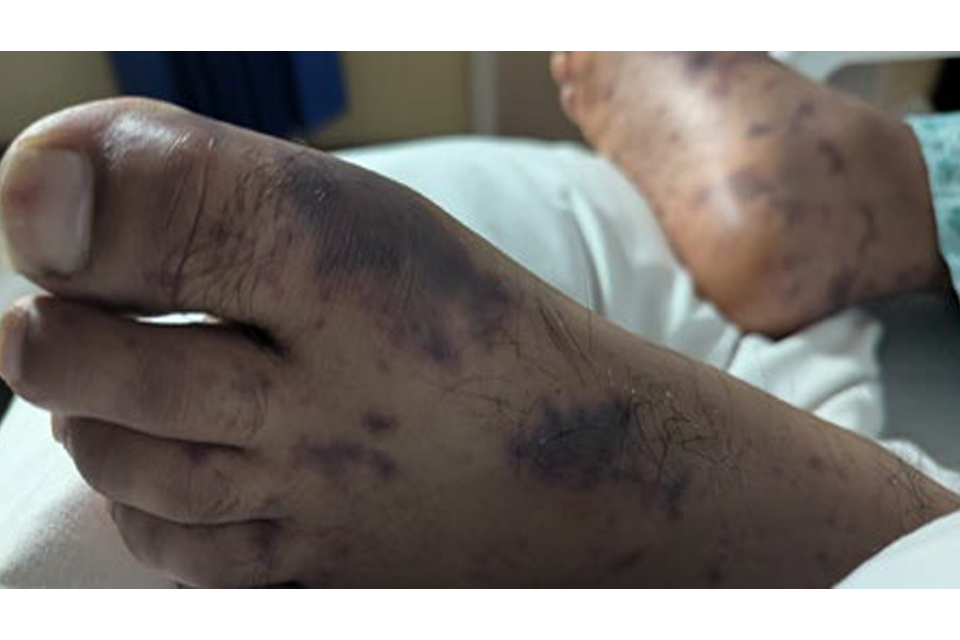
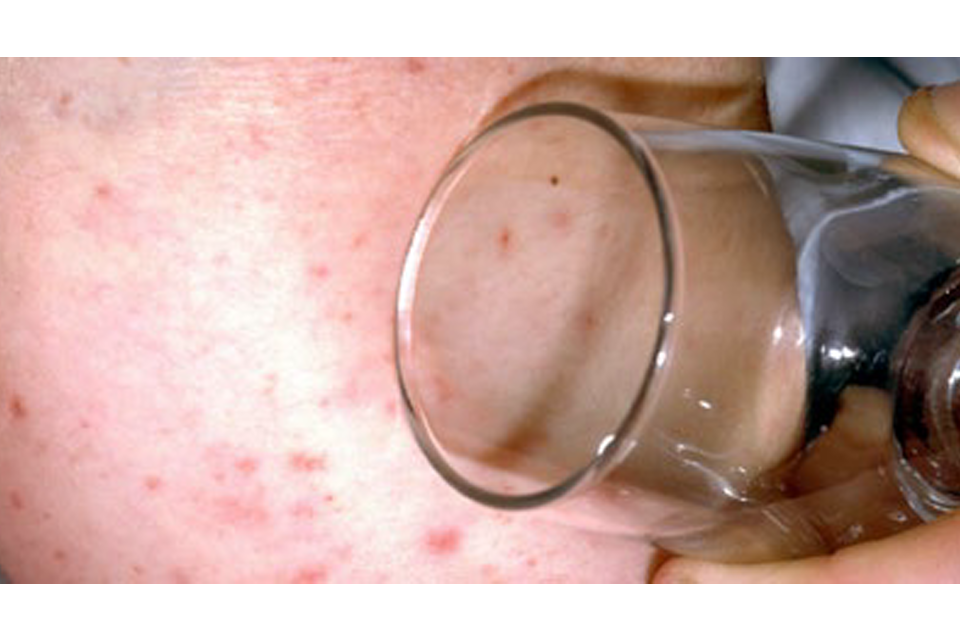
Someone with septicaemia may develop a few red or purple pin-prick spots with fever. Later on the rash can develop into purple blotches that do not fade under pressure.
You can test for this by pressing the side of a drinking glass against the rash.
If you have a fever and are developing spots or blotches that do not fade under pressure, get medical help immediately by calling 999 or getting someone to take you to the nearest hospital emergency department.
Never wait for a rash. It can be a late sign or may not appear at all. If someone is ill and getting worse get medical help immediately.
On dark skin, check inside the eyelids or roof of the mouth where the spots may be more visible.
Don’t forget your MenB record card
The MenB vaccination programme consists of 2 doses.
You will need a second dose at least 4 weeks after the first dose to give you protection against meningococcal group B.
More information
- a guide to the MenACWY vaccine
- information on the MenB vaccine from NHS.UK
- The Meningitis Research Foundation, including the free helpline: 0808 800 3344
- Meningitis Now, including the free 24 hour helpline: 0808 801 0388
If you have any questions speak to your practice nurse, GP or pharmacist. You can also call NHS 111 if you are concerned.
Translations and accessible versions of this information
This leaflet is available in the following languages: Albanian, Arabic, Bengali, Bulgarian, Chinese (Simplified), Chinese (Traditional), Estonian, Farsi, French, Greek, Hindi, Italian, Kurdish Sorani, [Latvian]https://find-public-health-resources.service.gov.uk/A%20guide%20to%20the%20meningococcal%20B%20vaccines%20leaflet/13347LV001), Lithuanian, Portuguese, Punjabi, Romanian, Romany, Somali, Spanish, Urdu, Yiddish and Yoruba.
This leaflet is also available in the following accessible formats: audio, Braille, BSL and large print.