UKHSA and partners publish first One Health annual Vector-Borne Disease surveillance report
The first UKHSA One Health report tracks vector-borne diseases in England, with Lyme disease remaining the most common infection in 2025.
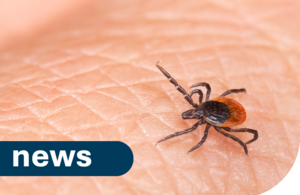
The UK Health Security Agency (UKHSA), the Department for Environment, Food and Rural Affairs (Defra) and the Animal and Plant Health Agency (APHA), have today published the first annual One Health Vector-Borne Disease Surveillance report.
The report emphasises the importance of a One Health approach bringing together human, animal and vector data from 2025 to give a comprehensive picture of the changing risk of vector-borne diseases in England. Alongside this, the agency has also updated its National contingency plans for invasive Aedes mosquitoes in England and for West Nile virus with Defra.
Figures published in the annual report show that Lyme disease remains the most common locally acquired vector-borne infection in England, with 1,168 laboratory-confirmed acute cases reported in 2025.
This figure is higher than numbers reported in 2024 (959 cases), and very similar to case numbers from 2023 (1,151 cases). In recent years the agency has seen rates of Lyme disease vary substantially, but trends in 2025 were consistent with what we have previously seen.
While we have seen an increasing distribution of ticks across the UK, tick numbers vary from year to year due to changes in weather conditions, climate trends, habitat changes, and shifting host populations. Tick bites can occur year-round, but continue to follow a seasonal distribution, increasing in late Spring and peaking in June, and reports of acute Lyme disease follow a similar trend with cases peaking during late summer.
These figures demonstrate the importance of the public taking simple precautions such as avoiding tick bites and being aware of signs and symptoms after spending time outdoors. If you have been bitten by a tick, remove it as soon as possible using a tick removal device, following its instructions, or a pair of fine-tipped tweezers.
The report also confirms 2 unrelated probable cases of tick-borne encephalitis (TBE) complex identified in 2025. Both cases did not have a history of international travel, bringing the total number of locally acquired human cases to 6 since the virus was first identified in the UK in 2019. TBE complex is diagnosed when tests cannot distinguish between TBE and louping ill virus (LIV), two very closely related viruses.
While no locally acquired mosquito-borne infections were reported in England, the report highlights a growing risk from mosquito-borne viruses, particularly West Nile virus and Usutu virus. West Nile virus was detected for the first time in UK mosquitoes in samples collected in 2023, as previously detailed by UKHSA, while Usutu virus is now considered endemic in mosquitoes and birds in south-east England and was detected in wild birds in Scotland for the first time in 2025.
Trends across Europe show a growing risk of transmission of a number of different mosquito-borne infections. During 2025, France reported their largest outbreaks of West Nile virus to date, including outbreaks in northern areas of the country and urban Paris.
The Aedes albopictus mosquito, which transmits dengue and chikungunya viruses, is now established in 16 European countries, and during 2025, a record number of locally acquired chikungunya cases were reported in Europe, following a record number of locally acquired cases of dengue fever in 2024.
Professor Lea BerrangFord, Deputy Director, Centre for Climate & Health Security, at UKHSA said:
The overall risk to the public from vector-borne diseases in England remains low, but the findings of this report demonstrate how that risk picture is changing due to factors including climate change, urbanisation and the globalisation of trade and travel.
We are now seeing cases of mosquito-borne infections regularly reported across Europe, while we continue to detect incursions of invasive mosquitoes at points of entry in the UK, and it is therefore vital to maintain robust surveillance to protect the biosecurity.
The publication of this inaugural One Health report along with Defra and APHA alongside our invasive mosquito and West Nile virus plans demonstrates how we are working closely with partners across human, animal and environmental health to monitor emerging threats and ensure the UK remains well prepared to respond.
Dr Arran Folly, APHA Head of the Vector-Borne RADAR project, said:
Mosquitoes and ticks are more than just seasonal nuisances, they can act as early warning signals for emerging disease threats. APHA’s surveillance work helps us understand how these risks are changing across Great Britain and where new hotspots may be developing.
By combining expertise from animal, environmental and public health sectors through a One Health approach, we can spot threats sooner, strengthen preparedness, and help protect both people and animals from emerging vector-borne diseases.
The updated invasive National contingency plan for invasive Aedes mosquitoes in England supersedes the 2020 plan and is expanded to include actions to manage established invasive Aedes populations and local transmission of dengue and chikungunya virus.
With temperatures in the south-east of England already high enough for these mosquitoes to survive, this plan aims to help Local Authorities and partners to identify and carry out their role in vector management to suppress invasive Aedes mosquito activity as far as possible. The plan sets out environmental and public health interventions required at risk levels from 0 to 4.
The updated West Nile Virus plan, which supersedes a previous plan published in 2004, aims to minimise the risk of the virus in both animals and humans in England, while setting out proposed actions if it is detected in either.