New design guidance to raise the bar for new build developments
The government has published updated new build design guidance today.
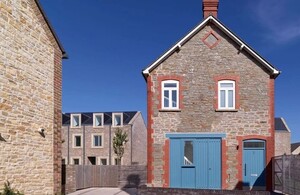
Temple Gardens, North Somerset. ©Historic England
- Government publishes updated new build design guidance to focus on design quality, creating places of lasting value, that are climate change resilient
- Councils and developers given clear rulebook to build better designed, safer and healthier neighbourhoods that complement local areas
- Part of the biggest planning rewrite in a decade to speed up local planning decisions and build 1.5 million quality homes
Updated national design guidance published today (Wednesday 21 January) sets a clear benchmark for well-designed neighbourhoods, ensuring new developments are well-connected to local shops and services.
Aimed at shaping how the next generation of neighbourhoods are built, the guidance sets out how new homes should reflect modern life – from space to work from home to flexible layouts that adapt as families grow and cater for every stage of life.
Working together, councils and developers will use the guidance to make visible improvements for residents, including calmer streets with less traffic to improved green spaces. New builds will be expected to address and adapt to climate change, creating adequate shade and minimising potential flood risk.
Now in its second iteration, the guidance encourages all parties to support local jobs and amenities by design – ensuring local shops and services like GP surgeries are within walking distance.
As part of its approach to support smaller developers bringing forward much needed homes and to set realistic expectations on larger developments, the government is intending to create model design codes – set to be launched later this year - with clear rules to create successful places.
Local authorities will set the vision for their areas through local plans, ensuring clear design expectations using masterplans, local design codes and guides. Part of the biggest planning rewrite in over a decade, the new design guidance aims to provide clarity early in the process to avoid costly delays to schemes and ramp up housebuilding and help deliver 1.5 million high-quality homes this Parliament.
Housing and Planning Minister Matthew Pennycook said:
“Exemplary development should be the norm not the exception so that more communities feel the benefits of new development and welcome it.
“As we act to boost housing supply, we are also taking steps to improve the design and quality of the homes and neighbourhoods being built.
“These standards will help ensure new homes and neighbourhoods are attractive, well-connected, sustainable, and built to last.”
Today’s guidance supports the government’s revamp of the National Planning Policy Framework, currently out for consultation. Putting people at the centre of planning, the principles clearly set out new homes must be climate resilient and boost nature recovery.
Building on wider planning reforms, the guidance forms part of the new rules-based system where developers meeting clear standards can move quickly from plans on paper to spades in the ground.
The seven features of well-designed places are:
-
Liveability: Homes close to amenities, designed for all stages of life, with communal and private space.
-
Climate: Buildings that cope with climate change, green spaces to reduce overheating, solar panels, green and brown roofs, and EV charging stations.
-
Nature: Hedgehog highways, swift bricks, green spaces and parks, and protection for existing natural features.
-
Movement: Safe streets, accessible public transport, and good parking without car dominated design.
-
Built Form: Rooms sized to promote health and wellbeing, with good storage, minimising outside noise, privacy and security, sunlight, and good ventilation.
-
Public Space: well-located spaces that encourage social interaction, with natural surveillance from windows and balconies.
-
Identity: Character shaped by local history, culture, and landscape, reflected in building types, and architectural details.
Case studies
Kings Cross, London
Kings Cross in London shows what’s possible when great design and people are put first. Once a neglected industrial site, now a thriving neighbourhood with new streets, shops, restaurants, schools and a university - all woven around the canal and historic Victorian buildings. This well-connected, characterful place, rooted in local history but designed for modern life, is the kind of neighbourhood the government aims to replicate across the country.
It backs walkable neighbourhoods with green space, homes closer to everyday amenities such as schools, leisure facilities, care homes, shops, cafes, and streets designed around people. This will support local economies and cut travel costs.
Essex
Beechwood in Essex shows what this looks like in practice. Family homes to suit different needs through a mixture of affordable rent and private sales. Green spaces run through the development, connecting residents to nearby parks, encouraging healthy living and building community.
Temple Gardens, North Somerset
Near Bath, this approach is already in action. A vacant Grade II listed pub was restored and reopened alongside new homes, protecting local character, creating jobs, and showing the kind of community-focused development, these reforms will deliver. Bath shows how neighbourhood identity, shaped by local history, culture and landscape is reflected in building types, facades and architectural details. This allows people to connect to their local heritage.
Further information
Today’s draft guidance has been published for consultation and will run until Tuesday 10 March.
This supports the government’s consultation on a revamped National Planning Policy Framework.
Stakeholder comments
RIBA President, Chris Williamson said:
“Today’s updates to national design guidance should have a positive impact on our future homes and neighbourhoods.
“It’s encouraging to see the guidance taking a holistic approach to good design, emphasising the importance of accessible amenities and green, high-quality spaces, while acknowledging the vital role of local context and culture.
“The unique skills of architects will be crucial in bringing this guidance to life. We look forward to continuing to work alongside the Government and sector to shape places that truly meet people’s needs.”
Deputy Chief Medical Officer for England, Dr Jeanelle de Gruchy said:
“Well-designed neighbourhoods make it easier for people to live healthier lives.
“Good‑quality homes, nearby green spaces, and safe places to walk, cycle and play all help children and adults stay active, build healthier habits, and reduce risks that contribute to ill‑health. They also enable older people to remain independent for longer.
“By building these features into new developments, we can create communities that support people’s health at every age.”
Head of the Planning Advisory Service, Anna Rose said:
“This updated guidance provides a clear and welcome benchmark for good design. Through our work supporting councils and regional design advocates, PAS sees how strong local design leadership can raise standards and deliver more liveable neighbourhoods. This guidance will be an invaluable tool in helping local authorities embed quality early in the planning process and support the delivery of high-quality homes and places.”
Founding Director at Barefoot Architects, Sam Goss said:
“This new national design guidance is a welcome step in raising expectations for the quality of new neighbourhoods. At Hazelmead, the UK’s largest community-led cohousing project, we’ve seen how clear principles around walkability, shared green space, climate resilience and adaptable homes create places that genuinely improve people’s lives. The focus on liveability, identity and public space is crucial. Community-led housing has long shown that when residents help shape places from the outset, the result is healthier, more sociable and more resilient neighbourhoods. With the right support, this guidance can help unlock high-quality, people-centred housing at scale.”
Head of Urban Design at Barratt Redrow, Joe Stenson said:
“We know that strong, thoughtful design is essential to creating great places to live over the long term. We therefore support the ambition of government’s proposed update to national design guidance, putting people at the heart of placemaking and creating a consistent approach that will help to speed up local decision-making.”
Director Tibbalds and Co-chair of Design South East, Hilary Satchwell said:
“This important guidance is there to help everyone involved in the built environment focus on the principles, tools and processes needed to make well-designed places that work for all those that will use them.
“It’s great that this new and updated guidance is about placemaking as well as design, an emphasis that reminds us that places are made up of buildings, landscape, streets, and a wide range of land uses, activities and infrastructure - and that it is the combination of how these elements are put together well that makes somewhere truly successful.”
Chief Executive at United St. Saviour’s Charity, Martyn Craddock said:
“We welcome this guidance wholeheartedly. Appleby Blue’s Stirling Prize and Housing Design Award wins prove that high-quality social housing can lead the way in design excellence. The principles outlined here, liveability, climate resilience, nature integration, and social connectivity, are exactly what we embedded at Appleby Blue, and we’ve seen the transformative impact on residents’ health and wellbeing. As the government works with housing providers and developers to deliver 1.5 million homes, we cannot accept subpar design for social housing. Well-designed, light-filled homes in the heart of our cities that prioritise accessibility and reflect their local context are essential for creating lasting value and thriving communities.”
Partner at Howells, Dav Bansal said:
“We welcome the new design guidance which focuses on the creation of high-quality neighbourhoods that are safe, healthy and sustainable. Our project at Paradise is a blueprint for local integrated urban planning, restitching the city core and reconnecting Birmingham’s centre with the west and north to unlock future growth. It has reimagined a defining place — celebrating the historic assets that once shaped the city’s civic pride — while delivering generous public realm, thousands of jobs and vibrant city living to support economic prosperity.
“It also demonstrates the importance of partnership - working alongside Birmingham City Council and Federated Hermes / MEPC, this exemplary public-private partnership has created a world-class destination for the city.”
Founding Partner at Feilden Clegg Bradley Studios, Keith Bradley said:
“Good design is not an optional extra; it is fundamental to creating places where people want to live, stay and invest in. Developments like Accordia, Cambridge set a new benchmark for high-density housing in the UK, representing a paradigm shift in housing quality and design and winning the 2008 Stirling Prize. It is widely acknowledged as an exemplary neighbourhood, with integrated landscaping that responds to place, quintessentially Cambridge.”