How the government has gripped the migration system in 6 charts
Six charts showing the government’s progress over 2 years in reducing migration, small boat crossings and asylum pressures, while increasing returns.
When this government came into office, the migration system was far from fair. Net migration had soared to record levels, abuse of the visa system was rife and criminal gangs decided who entered the country.
Asylum decisions had all but stopped. Tens of thousands of people were being accommodated in hotels at public expense. Those with no right to be here had little reason to think they would ever have to leave.
Two years on, while much more remains to be done, the progress is clear.
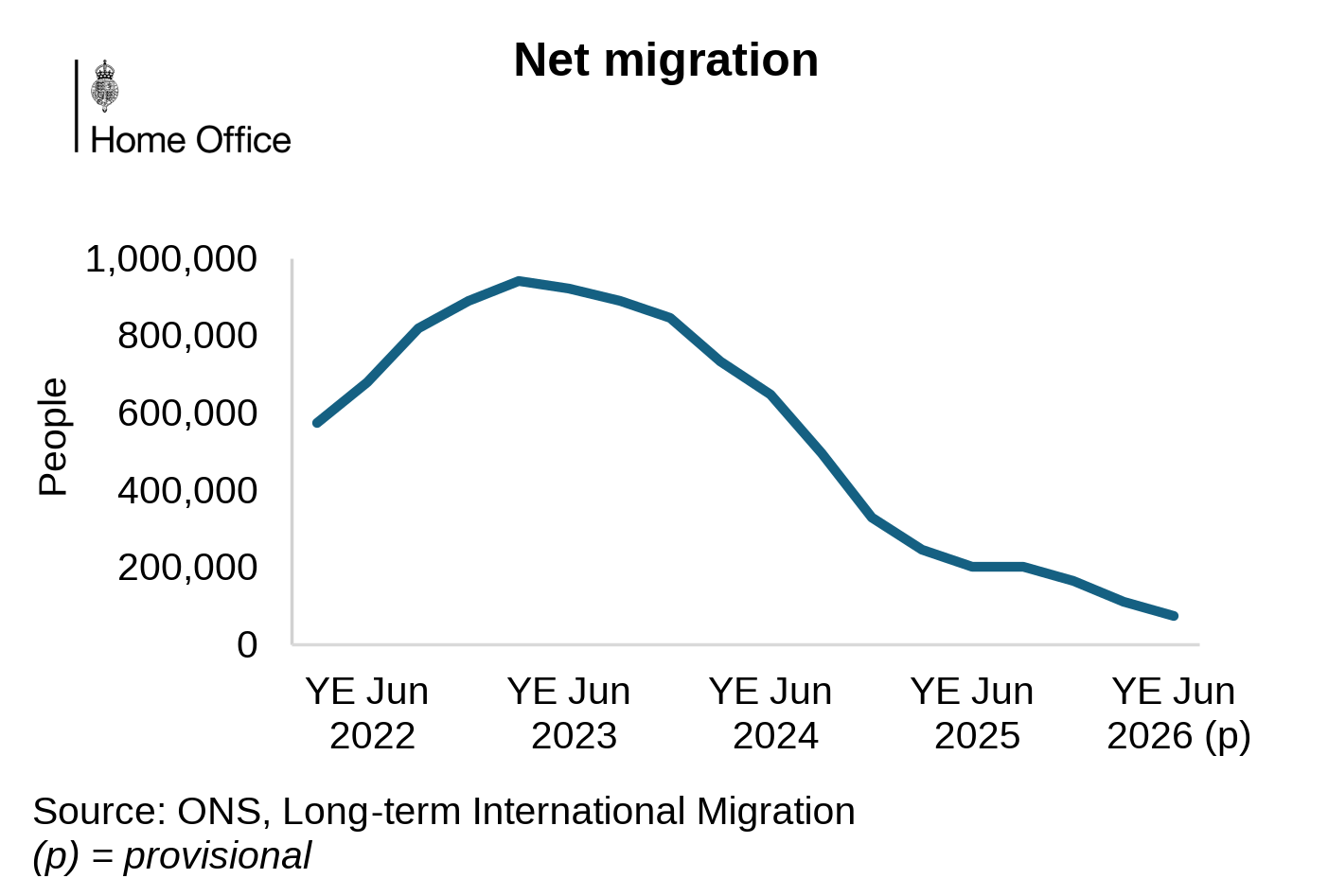
Net migration is down 92% from its 2023 peak, and the lowest since 1997, excluding the pandemic. Small boat arrivals are falling, the numbers in hotels and in asylum accommodation overall have fallen and returns are up. This did not happen by accident. This government took action.
Legal migration
Between 2021 and 2024, the UK experienced net migration of 2.5 million – 1 in 30 of everyone living here today. This followed the public repeatedly being told migration numbers would come down.
Employers were using overseas recruitment as a substitute for investing in domestic skills and training, and a free-for-all was instituted in sponsoring foreign workers.
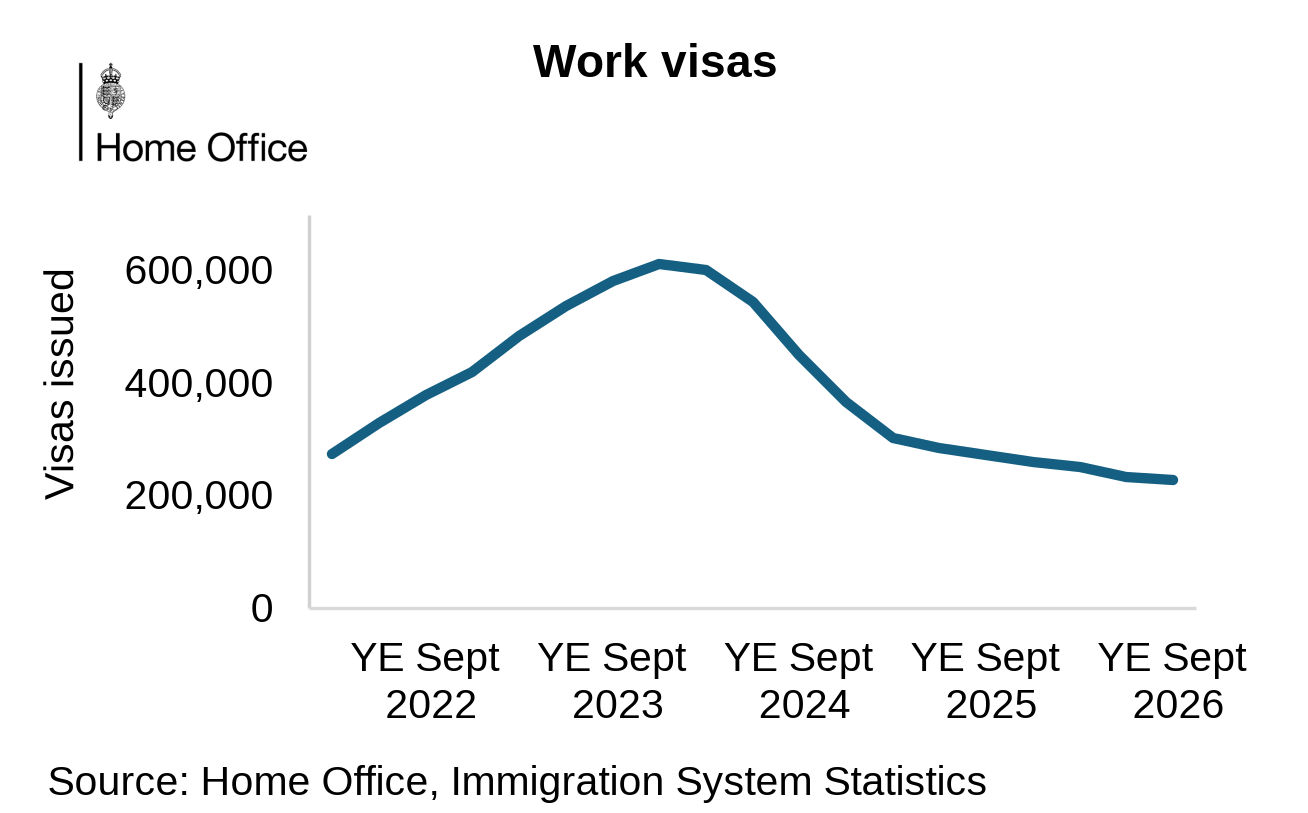
Under this government, that model has been reformed and control has been restored. Net migration now stands at 77,000 – a fall of 92% from its peak and the lowest level since 1997, excluding the pandemic. The number of work visas issued to foreign nationals has fallen by 63%.
Now a simple principle underpins all legal migration: it must serve the country’s economic and skills needs. Employers are expected to invest in British workers before they look overseas, and the visa system is reserved for the brightest and best.
Action taken
The government has:
-
raised minimum salary for skilled work visa to £41,700, skills threshold to degree level and ended overseas recruitment of care workers
-
raised the English language requirement to A-level equivalent standard
-
cut more than 100 occupations from access to overseas recruitment and made access to immigration dependent on investing in British skills and training
-
doubled the standard qualifying period for permanent settlement from 5 years to 10 – meaning 500,000 people will need to wait longer
Small boats and organisations immigration crime
People-smuggling is a criminal enterprise that spans continents. This government has invested significant resource in disrupting the gangs at every stage – from Iraq, through the Balkans, to the beaches of northern France.
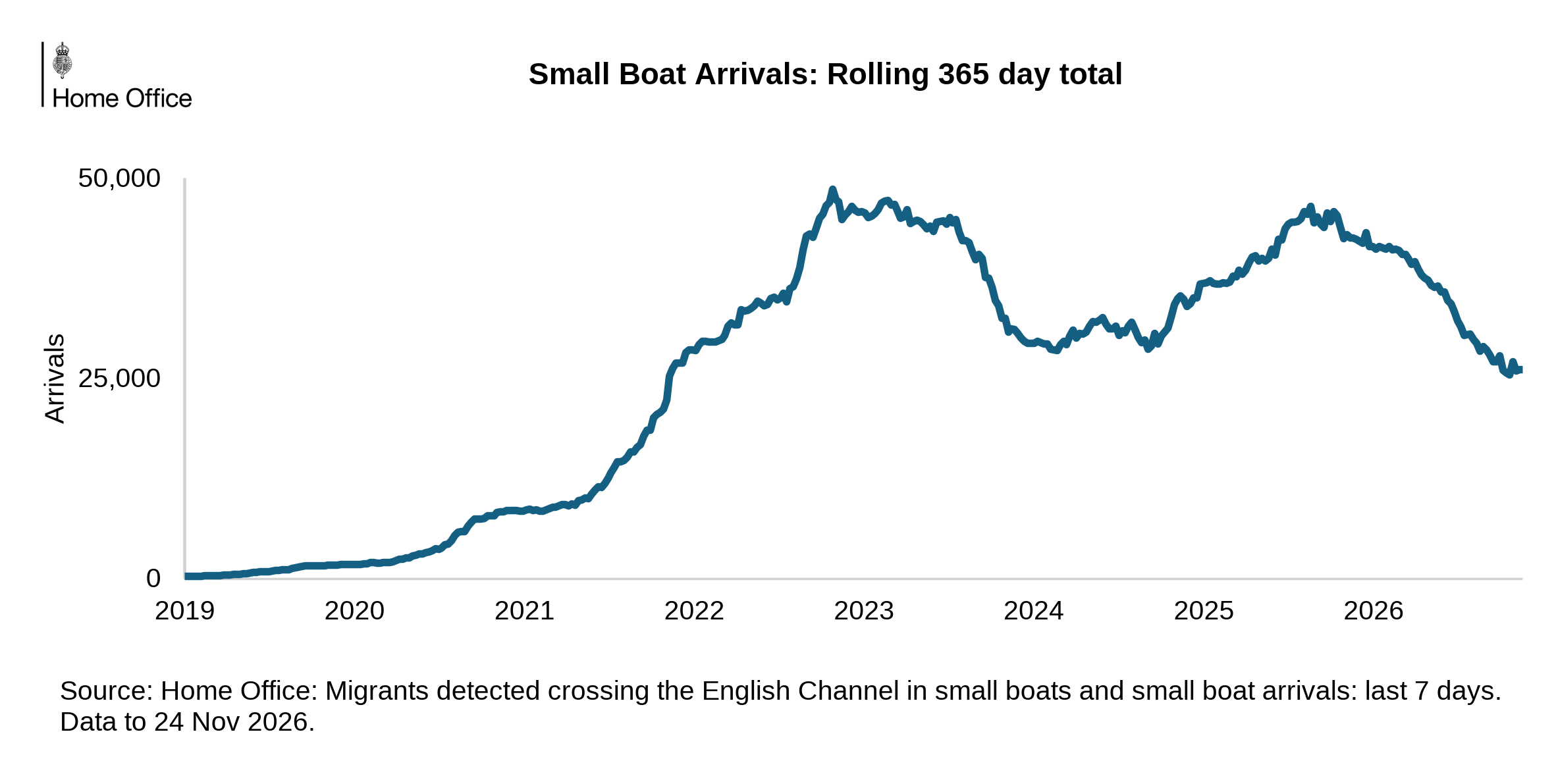
The results are now showing. Crossings are down significantly and this summer saw the fewest arrivals since 2020.
Joint work with France has prevented more than 50,000 crossing attempts since the election. Smuggling networks have been disrupted on almost 7,500 occasions and over 1,100 boats and engines have been seized.
Action taken
The government has:
-
established the Border Security Command (BSC) to co-ordinate disruptions of people smugglers and reduce small boat crossings
-
agreed a new ‘payment-by-results’ partnership with France in April 2026, putting more boots on the ground on French beaches than ever before to prevent crossing attempts
-
signed new agreements with Belgium, Germany, Iraq and the Western Balkans to expand intelligence and surveillance capabilities, curb the flow of illegal migration and seize shipments of small boats before they can reach French beaches
-
doubled the number of dedicated NCA officers investigating immigration crime since the start of 2025
Asylum and returns
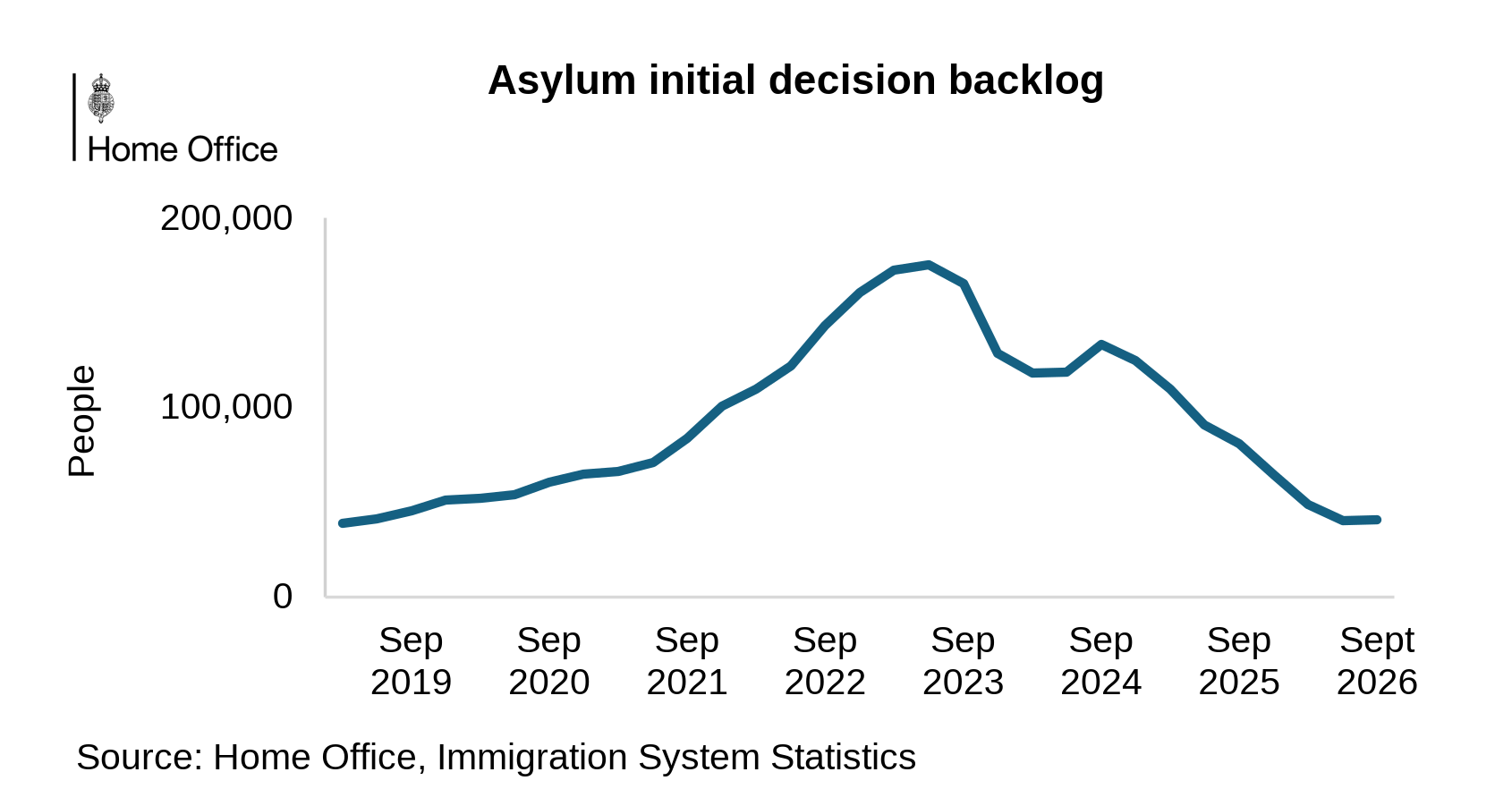
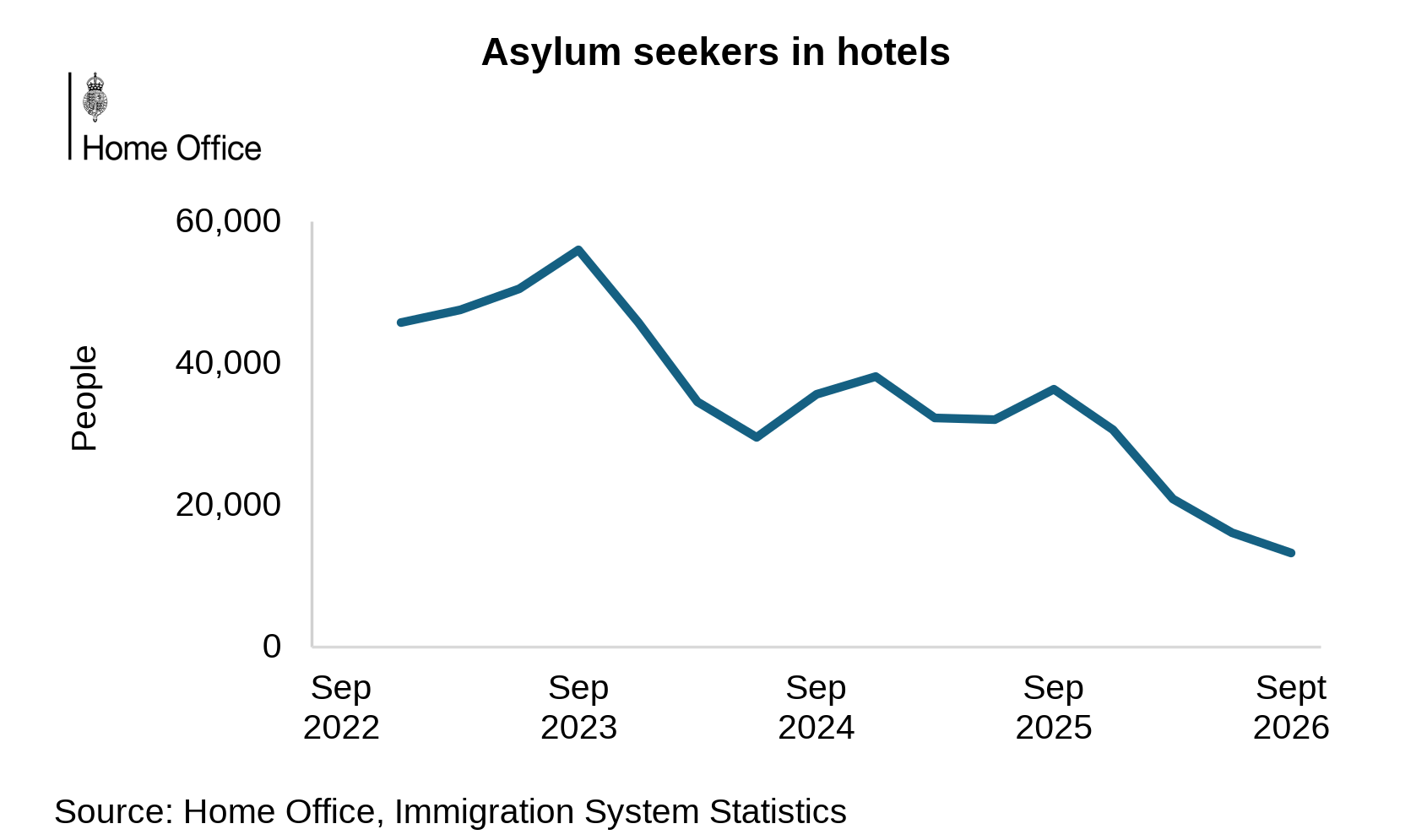
By July 2024, the asylum system had ground to a halt. Decisions on claims had almost stopped – with nearly 119,000 people awaiting the initial outcome of their application, and nearly 30,000 people living in taxpayer-funded hotels at a cost of £9 million a day at its peak.
That is now changing. The queue for an initial decision is down to 41,000, similar to levels seen in 2019, and £1 billion has been cut from the asylum bill.
Fewer claims are succeeding, with the grant rate falling to 38% from a peak of 77% in 2023 – the lowest since 2018.
The number of asylum seekers in hotels has fallen to 13,000, 55% lower than at the election, and the number in asylum accommodation overall has fallen by 8% to 89,000.
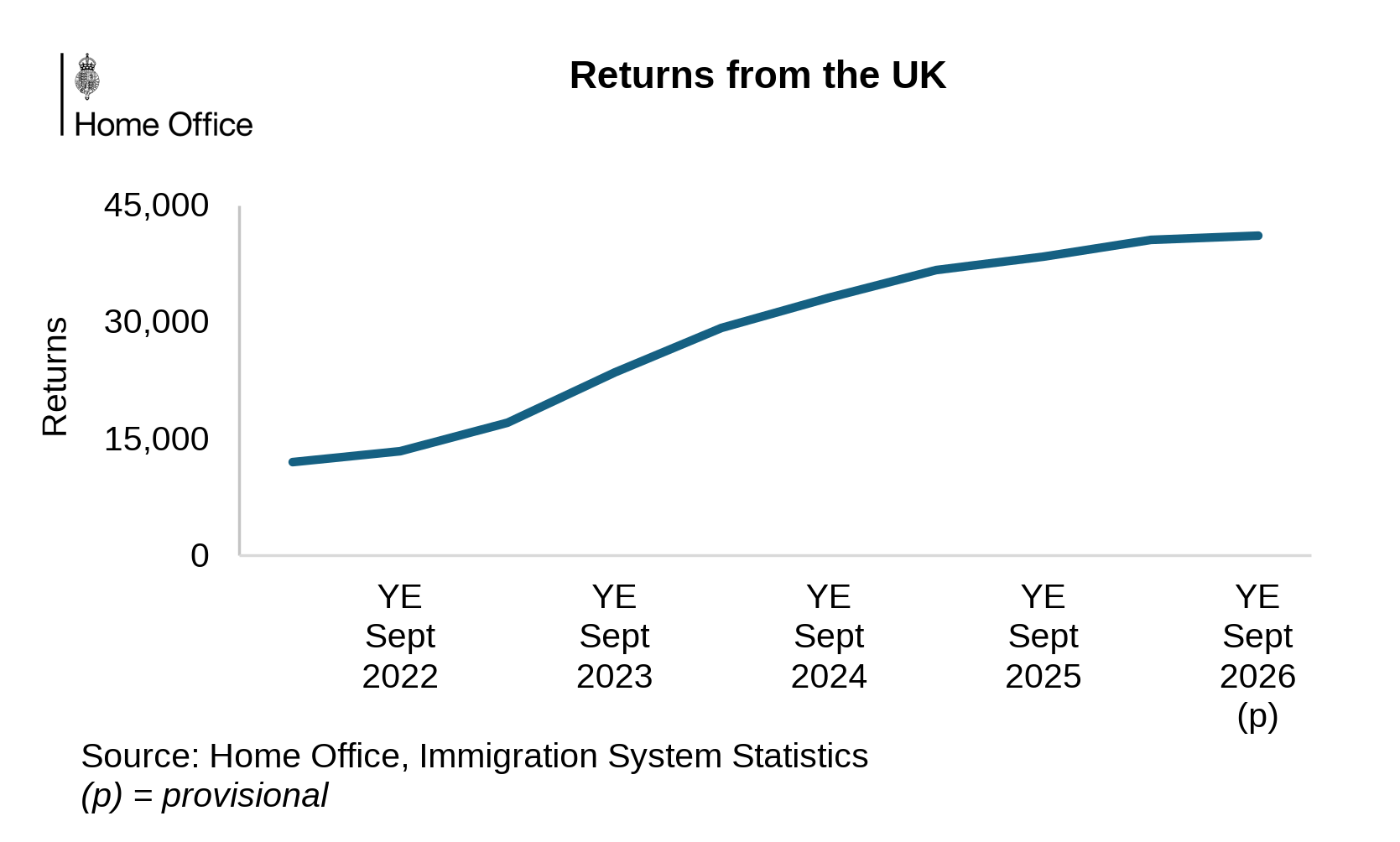
Almost 90,000 people with no right to be here have been returned since July 2024 – with the latest year representing an increase of 32% compared with the final year of the previous government.
Action taken
The government has:
-
closed around 70 asylum hotels, leaving around 140 in use, down from 400 at the 2023 peak
-
restarted asylum-decision making, with 96,000 claims decided in the last year – moving people faster out of taxpayer-funded accommodation
-
imposed visa brakes on nationals with high rates of asylum claims via legal routes and threatened to block visas for countries refusing to take back their citizens
-
made refugee status temporary, subject to review every 30 months, and paused refugee family reunion
But we must go further. The Immigration and Asylum Bill (IAB), which has just passed its third reading, will eventually replace the first-tier tribunal with an independent appeals body. This will create a single route and end the merry-go-round of repeated appeals.
The government will also step up efforts to remove failed asylum seekers and foreign criminals, with reforms to the European Convention on Human Rights and modern slavery laws introduced via the IAB.
And the legal visa system will be tightened further, as earned settlement takes effect and more routes are closed to overseas recruitment.