Grant helps landowners survey thousands of hectares of spruce woodland
The Spruce Site Assessment (SSA) grant has helped 41 landowners survey over 2,450 hectares of woodland to tackle the threat of Ips typographus.
Landowners have surveyed more than 2,450 hectares of spruce woodland in the first year of a grant scheme designed to tackle the threat of a destructive tree pest.
The Spruce Site Assessment launched in October 2025. It helps woodland owners to assess their spruce trees and take proactive steps to address the threat posed by Ips typographus, also known as the eight-toothed spruce bark beetle. The grant forms part of the government’s wider approach to tree health.
Ips typographus is a significant threat to spruce trees across Great Britain and could have devastating effects on our forestry sector if it becomes established.
The £2,000 grant helps landowners better understand the extent and condition of their spruce and identify opportunities for proactive management. This means woodland owners can take the first steps to reduce the risk of infestation and protect the health of their woodland.
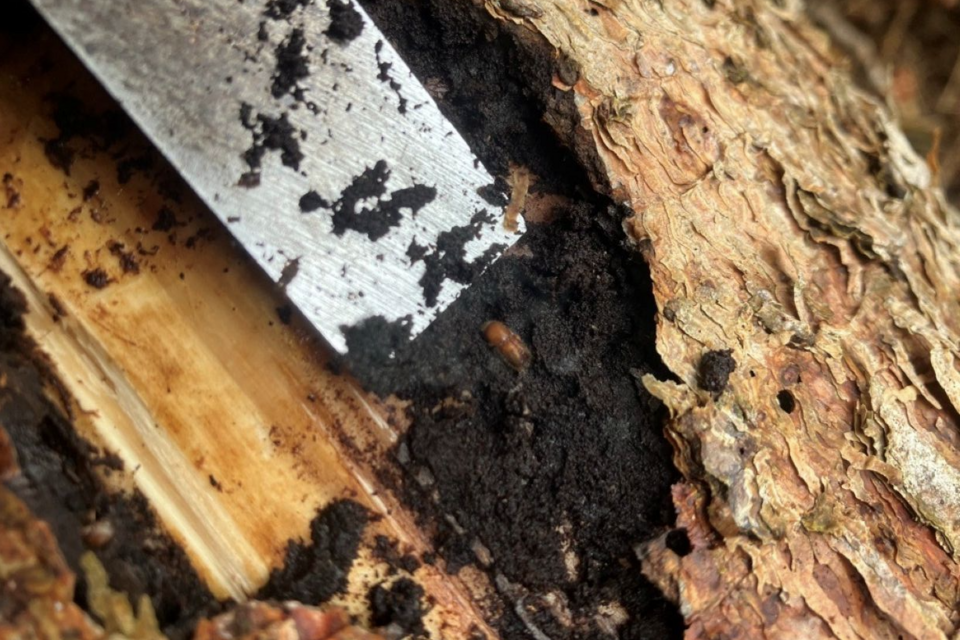
Ips typographus, the eight-toothed spruce bark beetle.
Building a stronger evidence base for management decisions
The SSA can complement existing woodland management plans through condition scoring and location mapping, giving landowners a stronger evidence base for management decisions.
The assessment also identifies operational requirements and constraints at an early stage, including access and harvesting considerations. This helps landowners and contractors plan operations and reduces uncertainty around future felling operations to support smoother project delivery.
By collecting detailed data including timber volumes and stocking density, the SSA helps landowners understand both the potential value of timber and the likely costs associated with felling. As a result, they are less likely to face unexpected costs or delays later on.
The SSA can also identify wider improvements for a woodland. For example, landowners have identified improvements to permanent infrastructure and access, which will facilitate proactive spruce removal and support future woodland management.
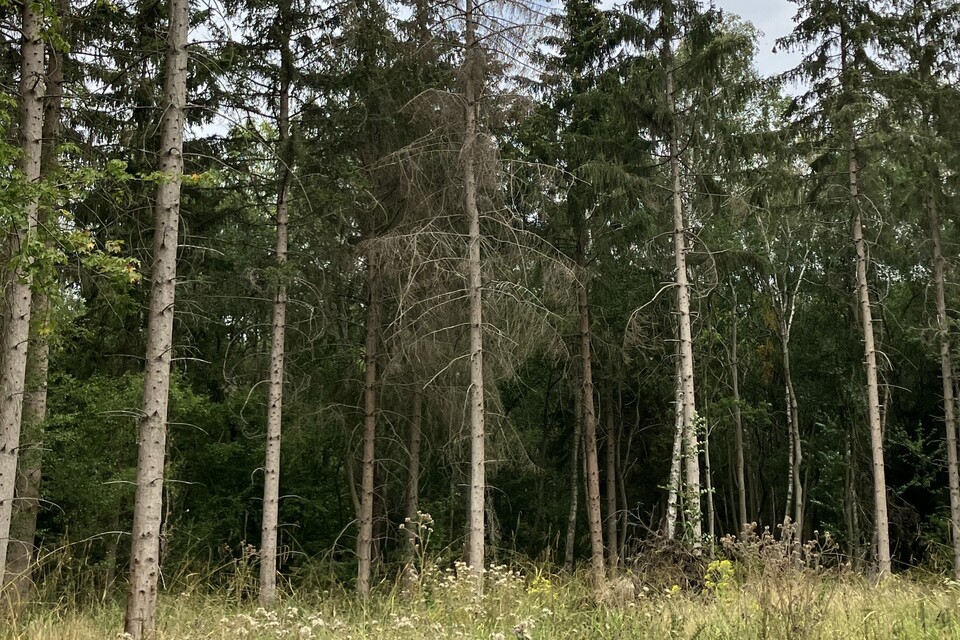
A mixed species stand with spruce trees in the foreground.
Supporting proactive spruce management
Since the launch, the SSA has delivered a successful first year, with woodland owners across a diverse range of sites accessing support. The surveys have recorded vital information and provided statistics to help inform future tree health initiatives.
The scheme has supported a wide range of woodland types and ownership, with sites ranging from 0.5 hectares to large-scale woodlands exceeding 400 hectares.
In the first year, 41 agreements have been approved. Through these, landowners and their agents have surveyed more than 2,450 hectares of spruce woodland, with high risk spruce material identified in every agreement. This highlights the value of early assessment and proactive management.
Collectively, the surveys have identified an estimated 26,000 tonnes of spruce that could be removed. Landowners plan to remove 60% of surveyed spruce within 12 months of the survey date. This is a significant contribution to reducing the quantity of high risk spruce material available to the beetle, building resilience against Ips typographus infestations.
The SSA is open for applications, with a limited number of spaces available.
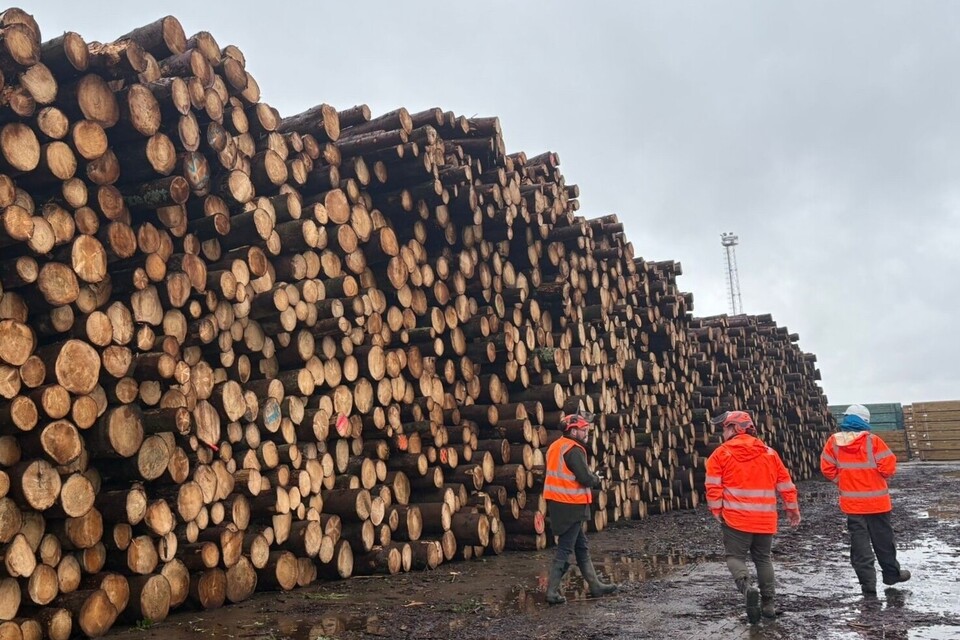
Timber merchants next to timber that is waiting to be processed.
From the Spruce Site Assessment to the tree health pilot (THP)
Landowners who complete an SSA may also benefit from enhanced funding rates for felling through the tree Health pilot, depending on location. This year, 17 sites that completed an SSA have gone on to access funding for proactive felling through THP.
The THP grant provides funding for woodlands within the Ips typographus demarcated area, which is made up of the proactive spruce removal area and, within it, the smaller priority spruce removal area.
Applicants in the priority spruce removal area are eligible to apply for funding for 80% of actual felling costs, whether or not they have completed an SSA.
Applicants in the wider proactive spruce removal area (but outside the priority area) can also access funding for 80% of actual felling costs, if an SSA has identified susceptible spruce and a Woodland Officer has confirmed this.
Applicants in the wider proactive spruce removal area who haven’t completed an SSA may only be eligible for 40% of actual felling costs.
Find out more about the funding available through the tree health pilot.
Find detailed Spruce Site Assessment guidance and email the Forestry Commission for support at: SSAenquiries@forestrycommission.gov.uk.
Learn about how Whiligh Estate has used the SSA to reduce the risk of an Ips typographus infestation.
Read more about the eight-toothed spruce bark beetle (Ips typographus) and find out if your land is within the proactive spruce removal area.