Expansion of Meningitis B vaccination offer to Kent Students
The Meningitis B vaccine will now be offered to everyone who has been offered preventative antibiotic treatment as part of this outbreak.
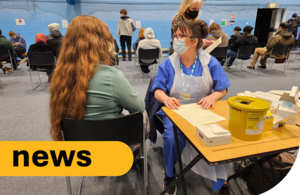
- Vaccination will now be extended to everyone who has been offered preventative antibiotic treatment as part of this outbreak.
- Preventative antibiotics – and vaccination – will also now be offered to the 6th form students (years 12 and 13) in schools and colleges in Kent where confirmed or probable cases are identified.
- On a case-by-case basis, future risk assessment may also support use in other year groups or settings.
- Students can, and should, continue to attend schools and colleges as normal.
- The NHS Kent and Medway website will be updated shortly with vaccination sites for those eligible.
- The key intervention to protect people and halt the spread remains for people to come forward for antibiotic treatment. A single course of antibiotics is highly effective in preventing the contraction and spread of this disease in 90% of cases.
- As a further precautionary measure, we are extending the offer of antibiotic prophylaxis and vaccine to any individuals who attended Club Chemistry from the 5 March until it closed voluntarily on 15 March.
- 20,000 vaccines from the NHS supply will be made available to the private market, to ease current demand experienced by pharmacies. These will enter the private market within around 48 hours.
In response to the ongoing Meningitis B (MenB) outbreak in Kent, the UK Health Security Agency (UKHSA) is expanding the offer of preventative antibiotic treatment and vaccination to control the outbreak.
Preventative antibiotic treatment and vaccination will now be offered to 6th sixth form students (years 12 and 13) in schools and colleges in Kent with confirmed or probable cases. On a case-by-case basis, following risk assessment by the local health protection team, antibiotics and vaccination may also be made available to additional year groups. Students can, and should, continue to attend schools and colleges as normal.
In addition to the approximately 5,000 students who were initially contacted, vaccination will now be extended to everyone who has been offered preventative antibiotic treatment as part of this outbreak. This includes University of Kent students who live on the Canterbury Campus and other relevant halls of residence; close contacts of confirmed or suspected cases, and students in four education settings in Kent where cases have been confirmed. Anyone who visited Club Chemistry in Canterbury between 5 and 15 March will also be offered a vaccine and antibiotics as a precaution after one suspected case revisited the nightclub before it shut voluntarily.
This extension ensures that those most likely to have been in close contact with confirmed or suspected cases are offered longer term protection as early as possible.
The NHS Kent and Medway website will be updated shortly with vaccination sites for those eligible.
Patients eligible for antibiotics will now be able to request a vaccination and antibiotics from their local GP immediately – wherever they are in England.
While preventative antibiotics remain the key intervention to protect people and halt the spread of infection, vaccination is being offered as an additional measure to provide longer term protection for those at increased risk.
Given current demand on the private MenB vaccine market, 20,000 doses will also be released from NHS supply to support continuity of private provision, enabling up to 2,000 pharmacies to receive vaccines in the next 48 hours.
Professor Susan Hopkins, Chief Executive of the UK Health Security Agency, said:
By extending the vaccination programme to everyone who has been offered preventative antibiotics, we are taking an important additional step to protect those most likely to have been exposed. The message is simple: if you have had the antibiotic, you are also eligible for the vaccination.
People are reminded to remain alert to the signs and symptoms of invasive meningococcal disease and to seek urgent medical attention if they or someone they know becomes unwell.
Background
Meningococcal disease (meningitis and sepsis) is an uncommon but serious disease caused by meningococcal bacteria. Very occasionally, the meningococcal bacteria can cause serious illness, (inflammation of the lining of the brain) and sepsis (blood poisoning), which can rapidly lead to sepsis.
The onset of illness is often sudden and early diagnosis and treatment with antibiotics are vital.
Early symptoms, which may not always be present, include:
- a rash that doesn’t fade when pressed with a glass
- sudden onset of high fever
- severe and worsening headache
- stiff neck
- vomiting and diarrhoea
- joint and muscle pain
- dislike of bright lights
- very cold hands and feet
- seizures
- confusion/delirium
- extreme sleepiness/difficulty waking
Young people going on to university or college for the first time are particularly at risk of meningitis because they newly mix with so many other students, some of whom are unknowingly carrying the bacteria at the back of their nose and throat.
There are numerous strains of the meningococcal infection.
There are numerous strains of the meningococcal infection. The MenACWY vaccination gives good protection against MenA, MenC, MenW, and MenY and is routinely offered to teenagers in school Years 9 and 10. However, this vaccine does not protect against all forms of meningococcal infection. Other strains such as MenB can circulate in young adults, which is why it’s important to know how to spot the symptoms of meningitis and sepsis as early detection and treatment can save lives.
Further information on meningococcal disease
- Meningitis
-
The Meningitis Research Foundation
Monday to Friday, 9am to 5pm
UK: 080 8800 3344
Republic of Ireland: 1800 41 33 44 -
Meningitis Now
0808 80 10 388
(9am to 4pm Monday to Thursday and 9am to 1pm Friday)