Brain cancer patients to see faster development of new treatments
Prime Minister and Health Secretary met campaigner Archie Goodburn, following his emotional plea on BBC Breakfast.
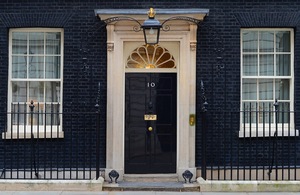
- Prime Minister and Health Secretary met campaigner Archie Goodburn, following his emotional plea on BBC Breakfast
- Expert review of brain cancer progress to report within three months, followed by a national action plan
- Faster review of the rules on rare cancer medicines
People living with brain cancer will get a faster route from research to treatment, under four steps set out by the Prime Minister today.
This follows the Prime Minister and Health Secretary’s meeting in Downing Street with Archie Goodburn today, the 25-year-old swimmer with inoperable brain cancer who made an emotional plea to the Prime Minister on BBC Breakfast.
Archie has campaigned for faster progress on brain cancer, and today’s steps build on the issues raised.
The steps announced today:
- An immediate expert review, led by Professor Anthony Chalmers, Chair of the Brain Tumour Group within the UK Collaborative for Cancer Clinical Research, reporting within three months. Leading brain cancer experts will assess what has changed for patients since a 2018 government review, and what is still holding progress back.
- A national action plan to follow. The review’s findings will shape a plan to get new treatments out of the lab and to patients faster.
- A new national brain cancer clinical lead to drive this work forward, appointed by the Department of Health and Social Care.
- The Prime Minister has asked the MHRA to complete its review of the rules for medicines that treat rare conditions - known as orphan drugs - in two years rather than three. Bringing forward any changes to these rules could help patients get promising new treatments sooner.
Alongside this, patients, families and charities will help design a drive to get more people onto clinical trials.
This will be led by the Health and Social Care Secretary, who will host a roundtable with researchers, clinicians and charities to find new ways to boost participation.
Ministers will work with researchers and industry to make the UK a better place to run clinical trials in the UK, giving patients more opportunities to access promising new treatments. And next year, the Department of Health and Social Care will partner with Cancer Research UK to bring together global experts and promote Britain as a world leader in cutting-edge brain cancer study.
Prime Minister Andy Burnham said:
Archie is an inspiration to us all, and I am determined to deliver the change patients and their families deserve.
He has spoken passionately about the need for change on brain cancer, and he’s right: progress hasn’t been good enough, here or anywhere else. Families facing this disease can’t afford to wait.
That is why today we’re committing to appoint a dedicated national lead and setting out how we’ll get new treatments to patients faster. I strongly support this work and was delighted to welcome Archie to Downing Street to discuss it with him in person.
Health and Social Care Secretary Yvette Cooper said:
Archie has shown extraordinary courage in speaking out and fighting for everyone affected by brain cancer.
We owe it to every family facing this devastating disease to do better. We’re acting to get more trials under way, new treatments to patients faster and make the UK a leader in tackling brain cancer.
The National Institute for Health and Care Research is supporting 59 brain tumour studies across the country, including 35 clinical trials testing new treatments. These studies need people with different types of brain tumours to take part and could help improve therapies for patients now and in the future.
The brain cancer community – including charities and campaigners like Archie – play a huge role in recruiting patients to these trials, working at local and national level to raise awareness, point people towards opportunities to take part, and helping researchers find the right people for their studies.
Brainstrust, Brain Tumour Research, Brain Tumour Support, The Brain Tumour Charity and The Tessa Jowell Foundation, along with The Tessa Jowell Brain Cancer Mission:
On behalf of brain tumour patients and their families, both today and in the future, we would like to thank Archie for his determination and to Government for listening to the voices of the community and recognising the urgent need for change.
We applaud the commitment from the Prime Minister today, which will give a platform for significant improvements in the months and years ahead.
We collectively remain committed to building on the momentum that has grown over the last year and to working with Government to ensure these welcome initiatives deliver meaningful change for patients and their families.
Michelle Mitchell, Chief Executive of Cancer Research UK, said:
We’re so grateful to Archie Goodburn for the work he does on behalf of people living with brain tumours, and his meeting with the Prime Minister today is a critical moment for people affected by this type of cancer. Today’s announcements are an important step towards accelerating progress. We look forward to working with partners to deliver the 2027 Cancer Research UK Brain Tumour Conference, and support the new national brain tumour leadership group and work involving people affected by cancer to improve clinical trial access.
Too many people, including young people, are losing their lives to brain tumours, which is why we’ve invested over £116m in brain tumour research over the last decade. Hearing directly from those affected is vital to helping policymakers understand the urgent need for better ways to prevent, diagnose and treat these diseases.
Additional information:
- The Department for Health will announce the appointment of the clinical lead in due course
- The expert review is led by Professor Anthony Chalmers, Chair of the Brain Tumour Group within the UK Collaborative for Cancer Clinical Research. It will look at progress since the government’s 2018 review of brain tumour research. Findings will be shared with the All-Party Parliamentary Group on Brain Tumours and brain cancer charities.
- The rare cancer medicines review is required by the Rare Cancers Act 2026 and led by the Medicines and Healthcare products Regulatory Agency (MHRA).
- In January 2026, the government announced £25 million for the NIHR Brain Tumour Research Consortium (with a big focus on closing the gap between the laboratory and clinical practice).
- The MHRA has today published its new 5-year strategy, setting out its plans to position the UK as a leading place to develop, launch and use new medicines and technologies safely, with patients to benefit from quicker access.
Number of deaths in England from malignant brain cancer, by age group, 2023 :
| Age | Malignant neoplasm of brain (C71) | All malignant cancers (excluding non-melanoma skin cancer) |
|---|---|---|
| Under 40 | 278 | 1,711 |
| Over 40 | 3,514 | 136,867 |
| All ages | 3,792 | 138,578 |