Local transport authorities and the licensing of taxis and private hire vehicles
Published 8 January 2026
Applies to England

© Crown copyright 2026
This publication is licensed under the terms of the Open Government Licence v3.0 except where otherwise stated. To view this licence, visit nationalarchives.gov.uk/doc/open-government-licence/version/3 or write to the Information Policy Team, The National Archives, Kew, London TW9 4DU, or email: psi@nationalarchives.gov.uk.
Where we have identified any third party copyright information you will need to obtain permission from the copyright holders concerned.
This publication is available at https://www.gov.uk/government/consultations/local-transport-authorities-and-the-licensing-of-taxis-and-private-hire-vehicles/local-transport-authorities-and-the-licensing-of-taxis-and-private-hire-vehicles
Foreword
Taxis and private hire vehicles (PHVs) are an integral part of local transport networks. They are used by everyone in our communities, but especially low-income young women and those with mobility difficulties. Taxis and PHVs enable people to access the businesses, schools and hospitals in their area, provide the important ‘first-and-last mile’ of longer journeys on other modes and are often vital for late-night travel or reaching places not served by public transport.
People today do not live their lives within the boundaries of local authorities, they cross these invisible borders frequently, living in one area but working and socialising in others.
With evolving technology, people now book services more flexibly, but safety and reliability remain key priorities. All authorities must only grant licences to those who are fit and proper to hold one, or if the vehicle is safe to carry the public. Despite this, out-of-area working, where drivers license in one area but work elsewhere, is a major challenge. While most drivers are law-abiding and simply seeking efficient entry into the sector, this practice complicates enforcement and raises concerns about inconsistent licensing standards across local authorities.
There have been longstanding calls for reform of the legislation that regulates the sector, and we are keen to make progress. Since coming into government, we have been carefully considering how to improve the regulation of the sector.
We previously committed to consulting on giving all local transport authorities responsibility for taxi and PHV licensing, as outlined in the English Devolution White Paper. This could help to reduce the occurrence of out-of-area working, reduce the factors that induce it, and better match enforcement resources, though we recognise it may be controversial particularly for those already holding this role who work tirelessly to make the existing system succeed.
Baroness Casey’s recommendation reaffirmed our view that robust standards in safety must be applied by all licensing authorities. We committed to legislate to tackle the inconsistent standards of taxi and PHV driver licensing and have introduced an amendment to the English Devolution and Community Empowerment Bill to enable the setting of national minimum standards. We will continue to consider a range of other options, including out-of-area working and enforcement, seeking the best overall outcomes for passenger safety.
This consultation is seeking views on just one potential, but incredibly significant, option to identify the right level of regulating this form of transport. Our work continues to explore how best to change the underlying legislation to move towards a modern, consistent and passenger-focused licensing framework that supports both public safety and the needs of the sector.
Lilian Greenwood
Parliamentary Under-Secretary of State, Minister for Local Transport
Introduction
Taxis and private hire vehicles play a vital part in local transport, connecting residents to the local economy and enabling businesses and residents to reach wider transport networks. All social groups use taxis and PHVs. Groups that use them the most are low-income young women, amongst whom car ownership is low, and those with mobility difficulties.
Both taxis and PHVs are vital parts of local transport. The most notable difference between taxis and PHVs is that taxis can ‘ply for hire’ (stand at a taxi rank or be hailed in the street) and are available for immediate hire, while PHVs must be booked in advance through a licensed PHV operator. PHVs include a range of vehicles such as minicabs, executive cars and limousines.
The way in which taxis are regulated is rooted in the Town Police Clauses Act 1847. As well as providing the powers to regulate taxis, it defined ‘who’ should do this. The regulation of private hire vehicles (PHVs) has naturally followed the same path.
In most parts of England, councils are currently responsible for regulating the taxi and PHV sector, apart from in London, where the Mayor and Transport for London (TfL) are responsible for licensing. In areas where there is a single tier of local government, the responsibility lies with the relevant unitary council, while in areas where there are 2 tiers of local government, the responsibility lies with district councils. This means there are currently 263 licensing authorities in England.
Though more modern legislation has followed the 1847 act and changed ‘how’ the sector is regulated, it has not considered ‘who’ in local government should regulate the sector. The lives of people who use taxis and PHVs, the vehicles used and the way people engage services could not have been envisaged nearly 200 years ago. While little may have substantively changed for much of this period, the adoption of new technology by passengers and the sector in the last 10 years, particularly for PHVs, has changed immeasurably. The appropriate level of ‘local’ licensing does not appear to have been considered in detail since its inception.
As outlined in the English devolution white paper (EDWP), there are concerns about the challenges caused by out-of-area working, where people license away from the area in which they intend to work. These concerns were shared by Baroness Casey in her National audit on group-based child sexual exploitation and abuse report.
The government is exploring options for reforming taxi and PHV legislation to address the challenges caused by out-of-area working. As part of this, the EDWP included a commitment to consult on whether to make all local transport authorities (LTAs), including strategic authorities – who are the bodies that oversee local transport planning – responsible for taxi and PHV licensing. The government’s response to the Casey Report reaffirmed this commitment. The term ‘strategic authority’ is used throughout this consultation to refer to current and future combined authorities and combined county authorities.
The EDWP also set out the government’s devolution ambitions for England. Over time, those proposals could lead to changes in many parts of England, excluding London, in terms of which local government body is the LTA. Given this, the consultation document focuses on the principle of whether LTAs, as the body responsible for producing and delivering local transport plans, should be responsible for taxi and PHV licensing. This document presents the benefits and challenges that the Department for Transport (DfT) has identified in making LTAs responsible for taxi and PHV licensing.
As outlined in the white paper, the department believes that administering taxi and PHV licensing across the larger footprint of LTAs would simplify the way the PHV sector provides the services that passengers demand and enhance compliance and safety. This should increase the consistency of standards and enable more effective use of enforcement powers across a whole functional economic area. Greater economies of scale should also enable improvements to the efficiency of taxi and PHV licensing. Together, these benefits should reduce the factors that induce people to license out of their usual working area.
This is a public consultation, and we encourage responses from everyone with an interest in taxis and PHVs, including:
- passengers
- safety groups
- local authorities
- the taxi and PHV sector and representative bodies
As taxi and PHV licensing is devolved in all UK nations, this proposal would only apply in England. The proposal does not extend to London, where TfL is the LTA and is already responsible for taxi and PHV licensing.
Local transport authorities and local transport plans
Outside of London, local transport authorities (LTAs) are currently county councils and unitary authorities, except in areas where a strategic authority sits above them. There are currently 70 LTAs in England (see map 1), this number may change as a result of the local government reorganisation and English devolution programmes.
Under the Transport Act 2000, LTAs are responsible for formulating transport policies and publishing them as a local transport plan. These statutory plans enable an LTA to make strategic planning decisions on local transport provision by setting out their strategy for transport in their area (including transport to and from the area) and how they plan to achieve it. LTAs’ policies must promote ‘safe, integrated, efficient and economic transport’ and must have regard in particular to the needs of:
- disabled people
- older people
- people with mobility problems
LTA areas are intended to reflect the public’s travel patterns in those areas.
The role LTAs should have in regulating local transport in their areas was acknowledged in the English devolution white paper, which also included a commitment to empower LTAs to regulate on-street micromobility schemes (like hire bikes), so local areas can shape them around their needs.
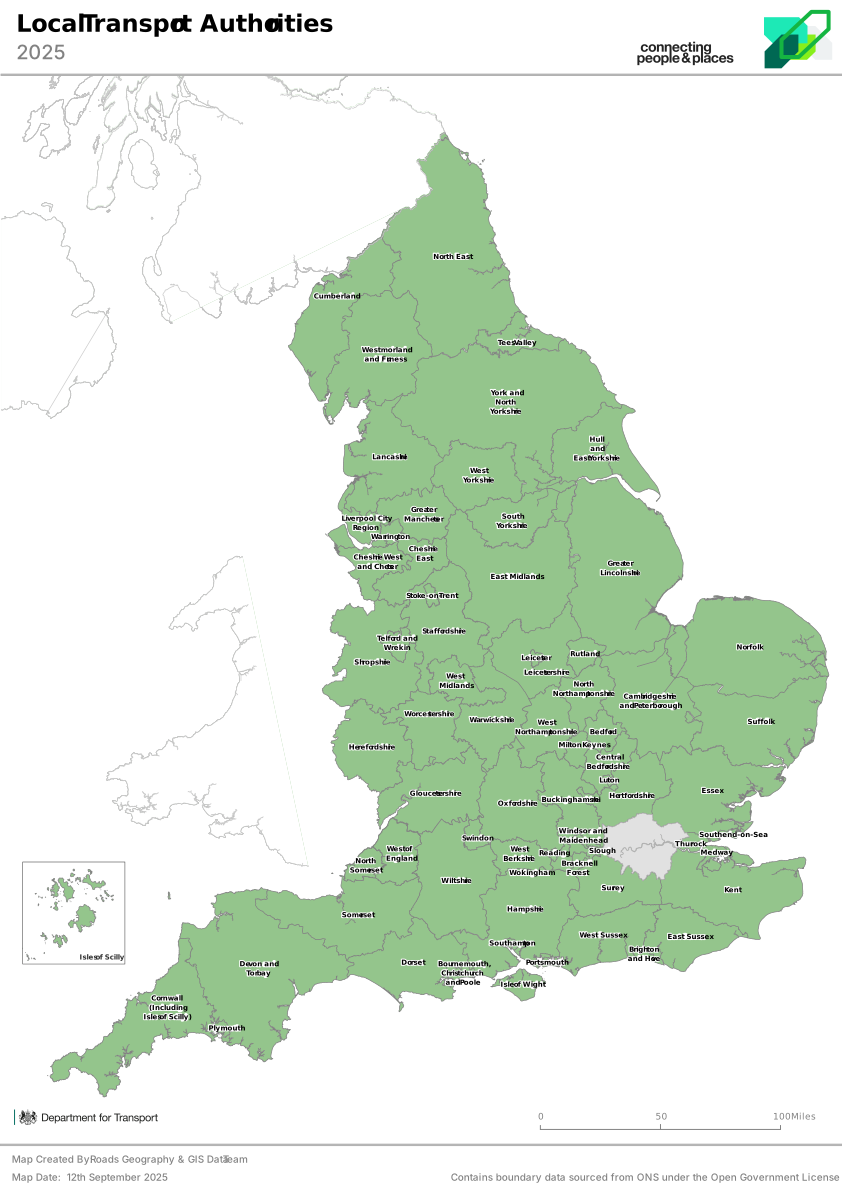
Map 1: local transport authorities in England
Proposed changes in local government
There are currently 263 taxi and PHV licensing authorities. This consists of:
- 164 district councils
- 62 unitary authorities
- 36 metropolitan councils
- TfL
This consultation is on the principle that taxi and PHV licensing should be the responsibility of LTAs, which means strategic authorities where they exist currently or in the future. This will enable larger licensing authorities and the benefits this brings. Strategic authorities, which are formed of a number of councils working together, cover sensible geographies comprised of areas that people recognise and work in. A strategic authority will provide coordination on issues which cross local authority boundaries within its area, including transport, as the LTA. The ultimate ambition of English devolution is for universal coverage of strategic authorities. Once this ambition is realised, it would mean that, unless this consultation proposal goes ahead, no LTAs would be responsible for taxi and PHV licensing apart from TfL.
As also set out in the English devolution white paper, government has committed to an ambitious programme of local government reorganisation (LGR). The ambition is to move to a single tier of local government in all parts of the country. This would create simpler structures, strengthen disjointed services and help councils pursue efficiencies.
A statutory invitation has been issued to all councils in 2-tier areas and small neighbouring unitary authorities to develop proposals for unitary local government, which will bring together lower and upper tier local government services in new unitary authorities. This means that services, including licensing, currently delivered by district councils would be delivered by new unitary councils.
Therefore, even if this proposal does not proceed, the licensing authority in most areas will change. This is because, where implemented, LGR would move the licensing authority from district councils and any small neighbouring unitary councils within proposals to the successor unitary councils, resulting in fewer licensing authorities than at present. See local government reorganising policy and programme updates for more information about LGR.
What proposed changes in local government would mean if licensing moved to LTAs
This consultation is on the principle of whether taxi and PHV licensing should be a function of all LTAs, regardless of which local government body has this role. Where a strategic authority (SA) is in place, it will be the LTA. For areas undergoing LGR, if there is not an existing strategic authority, any new unitary councils that are established will become the LTA until an SA is in place.
Should the decision be to make all LTAs responsible for taxi and PHV licensing, its implementation would take into account progress with the government’s English devolution and LGR programmes and obtaining the legislative powers to move the licensing function where needed.
Making all local transport authorities responsible for taxi and PHV licensing
We believe there are significant benefits in all local transport authorities (LTAs) being responsible for taxi and PHV licensing, enabling the sector to be fully considered and integrated in local transport plans. Taxis and PHVs are an integral part of local transport networks and are particularly relied upon by those with mobility difficulties. There is a strong case for taxi and PHV licensing to sit with the body responsible for local transport planning, alongside other modes of local transport.
People do not generally live their lives within the boundaries of local authorities. Their lives will take them across borders frequently, they may live in one area, work in another and socialise in a third. LTAs, however, better reflect local travel patterns, particularly in the case of strategic authorities, which generally cover much larger footprints across whole functional economic areas and reflect travel-to-work patterns and local labour markets.
Making LTAs responsible for taxi and PHV licensing would allow them to introduce relevant policies which align with their local transport plans and support the wider local transport strategy for their areas. It would also mean that the LTA has direct control, rather than influence, over policies such as emissions standards, as well as charging infrastructure provision, to support its overall transport decarbonisation strategy for the area.
All metropolitan councils are the taxi and PHV licensing authority for their area and already sit within a strategic authority, which is the LTA for that area. If this proposal is not taken forward, that position would remain unchanged. Metropolitan council areas are arguably the locations where this proposal could have the greatest benefit.
In large metropolitan areas with several licensing authorities, such as the Liverpool City Region which has 6 (see map 2), taxis and PHVs will frequently work across multiple authority areas when carrying passengers, just as the buses do. Designating LTAs such as Liverpool City Region Combined Authority with the responsibility for taxis and PHVs would mean that taxis and PHVs would be considered alongside all their other local transport responsibilities.
As well as helping to ensure taxis and PHVs are an integral part of transport planning, making all LTAs responsible for licensing would also see a significant reduction in the number of licensing authorities. There are currently 263 licensing authorities compared to 70 LTAs. This would have the effect, in many places, of increasing the size of taxi and PHV licensing areas, which would:
- greatly improve consistency in licensing standards
- remove the factors that can induce a driver to license away from the area in which they intend to work
- increase in area working
Increased ‘in-area’ working would better match resourcing and compliance costs and enable more effective use of existing enforcement powers. The government’s ambition to have a strategic authority in every part of England has the potential to deliver the smallest number of taxi and PHV licensing authorities and so enable the greatest benefits in terms of consistency in standards, more in-area working and a more efficient taxi and PHV licensing regime. The impact on trade and passengers is discussed in detail later in this document.
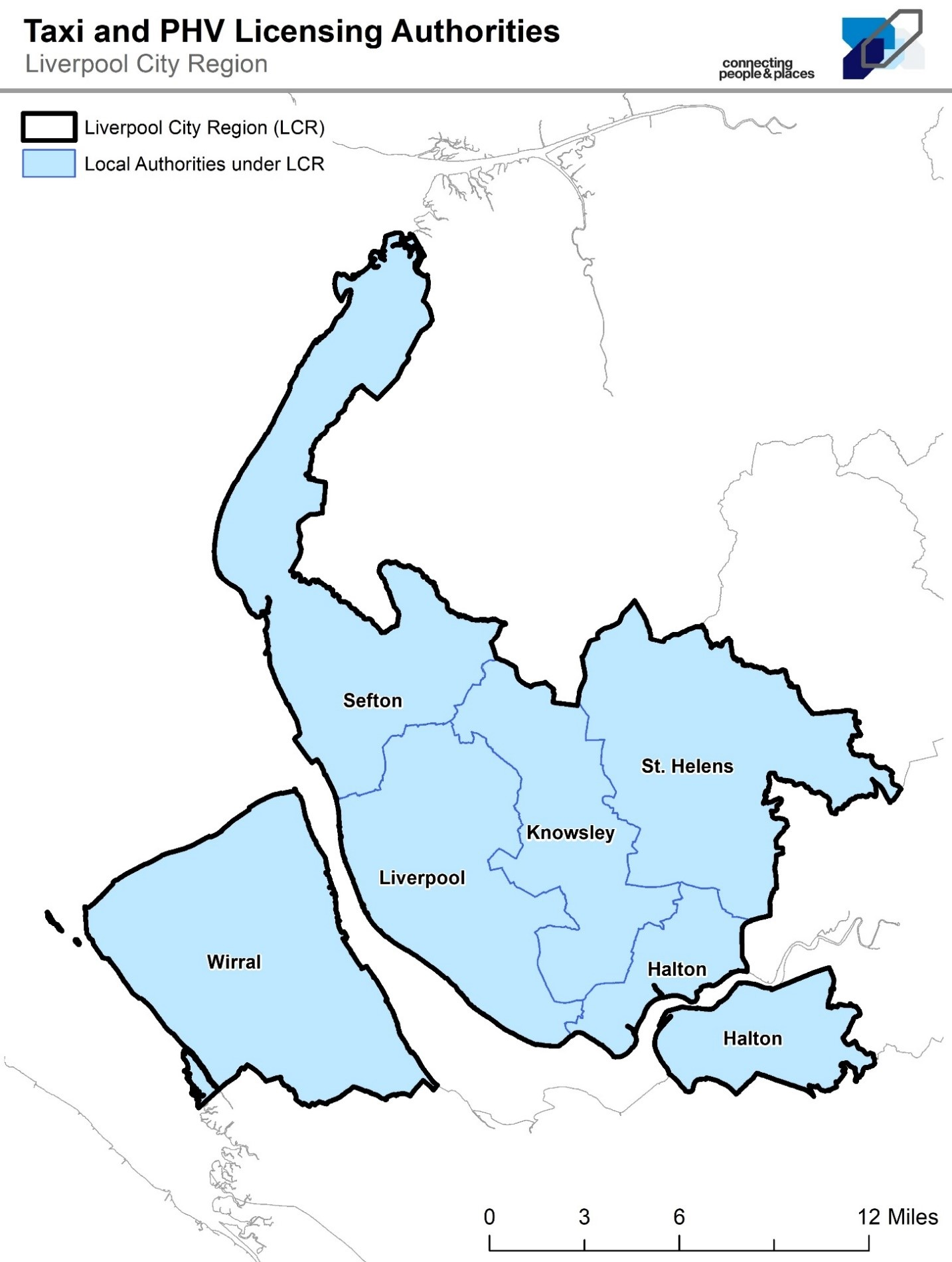
Map 2: Liverpool City Region and its current constituent licensing authorities
Simplifying the regulation of taxis and PHVs
Taxis can only ply for hire or stand at a taxi rank in the area (or zone) in which they are licensed, but can undertake pre-booked journeys anywhere. PHV journeys must always be pre-booked, and as with taxis, these journeys can be anywhere. The PHV driver, their vehicle and the PHV operator must all be licensed by the same authority. For PHVs, this is known as the ‘triple licensing lock’. In both cases, journeys will frequently cross local authority borders.
The ability of taxis and PHVs to undertake bookings outside of their licensing authority’s area is important to meet the demands of the travelling public. There is nothing inherently unsafe about this practice.
Statutory guidance to licensing authorities issued by the department in 2020 outlines how they should carry out their licensing function to protect children and vulnerable adults, and means that safeguarding requirements are broadly similar across England. For example, all applicants for a taxi or PHV driver licence are subject to the highest level of criminality checks – an enhanced Disclosure and Barring Service check with checks of the adults’ and children’s barred lists.
The Taxis and Private Hire Vehicles (Safeguarding and Road Safety) Act 2022 means that a driver who has a licence refused, suspended, or revoked for safeguarding, road safety or discrimination reasons cannot obtain a licence elsewhere without that relevant information being known and considered by any licensing authority that received a new application.
Significant numbers of drivers working ‘out-of-area’, licensing with a different authority to the one in which they predominantly work, cause challenges in regulating the sector. A significant reduction in the number of licensing authorities is likely to considerably reduce the amount of out-of-area working, diminishing the challenges it presents to licensing authorities.
As well as better, more integrated transport planning, making LTAs responsible for licensing would create a situation where more vehicles and their drivers are operating more of the time in the area in which they are licensed, leading to a reduction in out-of-area working.
A significant reduction in the number of licensing authorities would mean there are fewer boundaries. This could potentially mitigate, but not eradicate, the negative aspects of other policy solutions to address the challenges of out-of-area working that are currently being considered, such as the imposition of journey restrictions, to secure the best overall outcomes for passenger safety.
Licensing requirements
The reasons why a taxi or PHV driver may obtain a licence from an authority in which they do not intend to work are varied and complex.
The time and cost taken to gain a licence have been given as factors that induce ‘out-of-area’ working. Overly burdensome, poorly targeted and expensive requirements by some licensing authorities are key to the decisions made. Restrictive vehicle requirements, such as a maximum vehicle age at first licensing, and a lack of available opportunities to complete mandatory training and testing, can both prevent or, at best, delay new entrants from obtaining the necessary licences and from earning an income. Licensees may well ‘invest’ in higher fees if they can reap a return on that by working sooner.
Action has been taken by the department to increase consistency in licensing requirements through the publishing of guidance. The government has issued extensive guidance to licensing authorities, outlining how they should carry out their licensing function. A reduction in the number of licensing authorities, while inconsistencies might still exist between authorities, would mean there would be fewer policies for there to be variations between (for example, the current 70 LTAs rather than the current 263 licensing authorities).
We would expect LTAs taking on the licensing function for the first time, having considered the department’s guidance, to look afresh at what its requirements and policies would be. Achieving a significantly greater level of consistency would reduce the incentive and ability to shop around for a PHV licence. Greater variation in taxi vehicle requirements may continue, but they would still only be able to stand and ply for hire in the area (or zone) in which they are licensed.
Under the current structure, implementing a common set of standards across an area requires all licensing authorities within it to agree to them. Licensing authorities are expected to consult on significant changes in policy requirements. In Greater Manchester, for example, such a process would require each of the ten licensing authorities to consider the responses received and reach a reasonable position which may be different from its neighbours. Should Greater Manchester Combined Authority be the licensing body, it would need to consult only once and its policies would apply throughout. We expect this reduction in administration would reduce the licensing authority costs and fees to the sector.
Making licensing the responsibility of larger authorities would also create opportunities for those authorities to take advantage of economies of scale and create more specialised and efficient taxi and PHV licensing teams. For example, each of Liverpool City Region’s 6 councils license between 440 to 5,235 vehicles and 542 to 5,916 drivers. Should licensing move to the LTA (Liverpool City Region Combined Authority), it would license more than 13,100 vehicles and 16,200 drivers, bringing economies of scale to the administration of the taxi and PHV licensing regime.
Compliance and enforcement powers
Local authorities can prosecute breaches of taxi and PHV law via the court system, such as illegal plying for hire, regardless of whether they issued the licence, or the taxi or PHV was unlicensed. A licensing authority has the power to suspend or revoke a taxi or PHV driver, vehicle or PHV operator licence only when it granted the licence.
The decision by some drivers to license ‘out-of-area’ can lead to a significant number of drivers and vehicles licensed with one authority operating in other licensing authorities’ areas.
While safety standards in licensing requirements are consistently high across England, a licensing authority would not generally be able to undertake compliance checks or suspend or revoke the driver, vehicle or PHV operator licence where unsafe activity is identified, unless it issued the licences. However, licensing authorities must report safeguarding, road safety and discrimination concerns in respect of drivers to the authority that licensed the driver and that authority must consider whether to suspend or revoke the licence.
The statutory guidance recommends that licensing authorities should jointly authorise officers from other authorities so that compliance and enforcement action can be taken against licensees from outside their area. Such an agreement would set out the range of powers available, but these could include the ability to undertake compliance checks and immediately suspend a driver’s licence in the interests of public safety. The department acknowledges that this would only apply to drivers and vehicles licensed by the authority with which the agreement is with and that it might be challenging for a licensing authority to seek co-authorisation of licensing officers to exercise these powers from every relevant licensing authority. Nonetheless, this is an important existing tool to mitigate the opportunities for drivers to evade regulation.
Should the decision be taken to move licensing to all LTAs this would make this process of joint authorisation more effective. Leeds City Council, for example, would currently need 4 agreements in place to have powers over licensees licensed by adjoining authorities. If strategic authorities, as the LTA, were responsible for licensing, 3 of those current authorities would be within the West Yorkshire Combined Authority (WYCA) and additionally, Calderdale Borough Council would also be included. A single joint authorisation agreement with York and North Yorkshire Combined Authority would mean that both would have effective powers to ensure compliance of over 17,800 vehicles and 22,500 drivers.
WYCA entering into 4 agreements with its neighbours, York and North Yorkshire Combined Authority, South Yorkshire Combined Authority, Greater Manchester Combined Authority and Lancashire Combined County Authority, would mean it has powers over 42,500 vehicles and over 54,000 drivers in its region.
Larger licensing areas would mean more drivers and vehicles operating in the area in which they are licensed (work ‘in area’) more often. As a result, the licensing authority’s full compliance and enforcement powers would be applicable to more, if not all, of the sector operating in the area without the need for joint authorisation agreements. Licensing authorities would then have greater ability to protect the travelling public directly if there were circumstances that required immediate licensing action.
Compliance and enforcement resourcing
Expanding licensing areas by making LTAs responsible for licensing is expected to better match resources raised through licensing fees with compliance activities, as more licensees work ‘in area’. It would also create opportunities for them to take advantage of economies of scale and create more specialised and efficient taxi and PHV licensing teams.
Specialised teams would have the flexibility to target their compliance and enforcement activity in areas where concerns are identified or in response to spikes in demand, such as those associated with large sporting or entertainment events, which, under the current framework, frequently require additional sector capacity from nearby areas – out-of-area working.
Impact on licensing authorities
The local government body that is the LTA could change, either as a result of the creation of new strategic authorities or local government reorganisation. If this proposal does not proceed, and taxi and PHV licensing is not moved to all LTAs, the establishment of new unitary authorities through LGR would still result in a change to existing licensing authorities in most places. For this reason, it is difficult to say with certainty what the impact would be on authorities that currently carry out licensing.
Nevertheless, this proposal only relates to the taxi and PHV licensing function, so if taken forward, it would mean that in future, there would be instances where taxi and PHV licensing would be split off from the wider licensing function, such as alcohol and gambling (which are static businesses). This would be the case in areas where there is a strategic authority, as these are the LTA, but not the wider licensing authority. This section, therefore, looks at the impact of a split on the wider licensing function, for which local government is responsible.
If an LTA becomes responsible just for taxi and PHV licensing, there would be some duplication of licensing processes between it and the local authority responsible for the wider licensing function. The taxi and PHV licensing regime is, however, designed and intended to be self-funding and so paid for by the taxi and PHV sector rather than local residents. This means that, although there are likely to be one-off transitional costs, no long-term unfunded burden should be placed on LTAs. If there are transitional costs to the sector, these should be offset in the long term by the efficiencies that would be gained from LTAs licensing a significantly larger number of taxi and PHV drivers, vehicles and PHV operators across their larger area.
Taxi and PHV licensing can currently be a significant proportion of a local authority’s licensing function, so moving it could potentially impact the other licensing functions referenced above. Where a local authority team works across multiple licensing functions, the loss of the taxi and PHV licensing function may mean that they need to reallocate resources to take into account the reduction in responsibilities and the corresponding reduction in income.
As mentioned above, taxi and PHV licensing should be self-funding and funds raised from taxi and PHV licensing fees cannot be used to fund other licensing regimes. For this reason, making LTAs responsible for taxi and PHV licensing should not affect the funding available for other forms of licensing that are not the responsibility of the relevant LTA.
Given the current significant variances in licensing requirements across the country, LTAs taking on licensing for the first time could face a challenge in rationalising the existing licensing requirements for their area. If all authorities followed the recommendations in the guidance issued by the department, this difficulty should be mitigated. Consolidating requirements provides an opportunity to engage the breadth of the sector and passengers across the expanded area to determine the appropriate licensing requirements.
Should the proposal be taken forward, we would encourage LTAs taking on licensing to develop policies, requirements and have in place systems to process licensing applications before assuming responsibility for taxi and PHV licensing. While LTAs could seek to temporarily continue to apply the requirements of their predecessors in their respective areas as a transitional measure, it would be preferable for LTAs to have in place the long-term regime they intend to take forward.
LTAs would need to agree transitional arrangements for those who are already licensed by one of their predecessors in terms of complying with any new licensing policies where these are different. It would be unreasonable, for example, for an LTA to expect the replacement of vehicles with little notice and it should consider a reasonable timeframe for a fleet to adjust. Having an agreed policy on these matters in advance of any transfer of responsibility would, however, enable those licensed for the first time to meet the new requirements from day one.
Most taxi and PHV licensing powers are a non-executive function of councils and current strategic authorities effectively only have an executive. Should the proposal to move licensing to all LTAs be taken forward, we would need to consider how best the licensing power should be conferred and exercised by LTAs. We would take into account the 2 existing models, the model operated by the Mayor of London and TfL and the model operated by local authorities outside London, as well as other relevant information.
Impact on the taxi and PHV sector
As stated in the ‘Proposed changes in local government’ section, in many areas the authority responsible for taxi and PHV licensing could be changing as a result of the LGR programme. Making LTAs responsible for taxi and PHV licensing, regardless of which body in an area has this role, would deliver benefits for both taxis and PHVs. Improvements in consistency and efficiency of licensing would simplify the process for applicants and those seeking to renew their licence. The main impact would be fewer licensing authorities covering larger areas. These areas would better reflect the working practices of the sector and the travel patterns of their customers, the public.
Consistency
Each of the current 263 licensing authorities in England has its own taxi and PHV licensing policies, which has led to significant variation in non-safety related requirements, for example, vehicle requirements, across the country. The difference in licensing requirements and fees between current licensing authorities can vary the costs for taxi and PHV vehicle proprietors and drivers by hundreds, if not thousands of pounds and far greater differentials for operator licensing fees.
These licence holders serve passengers who will frequently move between licensing authority areas, especially in our cities, where metropolitan councils are currently the licensing authorities but are not the LTA. For example, a passenger may live in one area, work in another and socialise in a third, yet each will have different licensing requirements, and so costs, for taxi and PHV services.
Making LTAs, who in metropolitan areas are already the strategic authority, responsible for licensing, would mean that the same licensing requirements would apply across a wider area that better reflects passengers’ travel patterns. Alongside the adoption of the statutory guidance and best practice guidance, this would ensure consistency in a region by making a single authority, with requirements, policies and processes applied throughout. Nationally, reducing the number of licensing authorities is expected to increase consistency.
Making LTAs responsible for licensing would simplify the operation of taxi and PHV businesses for those who currently operate in multiple licensing areas within a region. This simplification would give the many small businesses that operate in this sector valuable clarity and lower costs through reduced time spent obtaining multiple licences and monitoring multiple authorities’ policies, thus empowering them to focus on providing a safe and efficient service for passengers. As outlined previously, consulting once on policies and applying these over a wider area would increase consistency and reduce administrative costs that would be reflected in lower licensing costs to the sector.
Cost and speed of licensing
The variance in time and cost to obtain a licence is a major influence on where individuals and businesses choose to license. For example, a driver may wish to obtain a licence from the authority in which they live and intend to work, but unnecessary requirements and long processing times may induce them to license elsewhere, even if fees are higher, so that they can start to earn an income sooner. This does not mean that either the driver or the vehicle they use is unsafe.
If the government decided to make LTAs responsible for licensing, there would be administrative efficiencies and benefits for taxi and PHV licensing due to there being fewer licensing authorities of greater scale. For example, where a strategic authority, as the LTA, receives a larger number of applications for taxi and PHV driver licences, it should be better able to run required training courses or provide testing opportunities more frequently.
Drivers and PHV operators
The proposal to make LTAs responsible for licensing would result in larger licensing areas, which potentially could give taxi drivers the ability to ply for hire across a much larger area, opening up additional earning opportunities, although licensing authorities may decide to introduce taxi zones. The PHV sector and its regulation would also benefit from these changes.
The ‘triple licensing lock’ can lead to drivers seeking licences from authorities other than where they predominantly work, so they can work with PHV operators that are popular with the public, even though they are not licensed by that area’s authority. A PHV operator that is popular with passengers in a region will be able to attract more drivers, as it can provide drivers with more work. If this operator does not hold a licence with a driver’s local authority, but the driver wishes to work with/for that operator, they must apply for a licence with an authority that licenses that operator.
If a large number of driver and vehicle licence holders change the authority they license with to work with or for a particular PHV operator, this could significantly impact PHV operators licensed by the original authority. Those operators licensed by that authority would have a smaller number of drivers and vehicles available, which may affect the service levels they can provide and so they may lose even more passengers to the popular operator. This could induce affected operators to follow the flow of drivers and seek an additional operator licence to retain access to a larger pool of drivers and vehicles.
For example, a PHV operator that wanted to be able to draw from the pool of drivers licensed by every authority in Greater Manchester would need to hold 10 licences, with all the cost and complexity this entailed, and may need to sub-contract bookings between its operations to be able to send the driver that was closest to the passenger, reducing wait times, avoiding ‘dead miles’ and the unnecessary congestion and emission this creates.
LTAs, being the licensing authority, would create a single large licensing authority for a region. This change would create a larger pool of drivers, making it easier for smaller PHV operators to co-exist alongside larger ones without having to change where they are licensed to maintain access to a wide pool of drivers. This would also have benefits for drivers, making it easier for them to change who they work with. Increased competition among operators for drivers may result in better pay and conditions from operators, without having to apply for a different licence.
Taxi zones
Under the existing system, some licensing authority areas are divided into taxi zones. Taxi zones act as separate licensing areas for taxis but are administered by one licensing authority. Each taxi zone has its own byelaws and may have different licensing requirements and fare tariffs. A taxi driver and vehicle may receive a licence for a zone only, rather than the entire licensing area.
Currently, licensing authorities are only able to abolish taxi zones in their licensing area or retain them wholly unchanged. This means that these zones exist as a result of previous local government reorganisation rather than to better regulate the taxi sector.
Using zones means that local knowledge tests can be set for each taxi zone rather than across the entire licensing authority area and different licensing requirements can be set for each taxi zone. However, taxi zones can also create additional complexity and cost in the administration and enforcement of the taxi licensing regime for licensing authorities.
Under the current licensing framework with 263 licensing authorities, the department’s best practice guidance for taxi and PHV licensing authorities recommends the abolition of taxi zones, as zoning to subdivide what may already be small licensing areas diminishes the supply of taxis and the scope for customer choice. If larger licensing authority areas are created, DfT recognises the potential benefits of continuing to set local knowledge tests for taxi drivers over a smaller area, where the relevant licensing authority considers this necessary. The department would look to update the guidance to reflect this.
Financial implications of licensing policy rationalisation
If licensing was moved to LTAs, there could potentially be a financial short-term cost to taxi and PHV drivers, vehicle proprietors and PHV operators due to the potential for rationalisation and standardisation of licensing requirements in the areas affected. For example, if an LTA were to replace several authorities that have variations in their licensing policies, this would need to be rationalised in its new policy, which would lead to changes in some licensing requirements for some, if not all, licensees.
Changes could include different vehicle specifications or additional training requirements that generate extra costs for businesses and existing licence holders. Equally, this may mean that those who might be subject to excessive and disproportionate regulation may benefit from the rationalisation process, but the financial implications would vary between individuals. The need for changes should be mitigated if existing polices already follow the guidance issued by the department.
LTAs, being the licensing authority, would have a positive long-term impact through the greater consistency in licensing requirements and efficiencies for the taxi and PHV sector. It would be the responsibility of LTAs to determine the transition arrangements to any new policies and allow the sector sufficient time to comply with any new requirements.
Impact on passenger experience
The public are with a few exceptions able to choose which business they use and competition encourages better services and value for consumers. Passengers should be able to choose which licensed operator they wish to use. Taxis are more regulated and restricted in how they provide services to protect consumers, as in the immediate hire (hail and rank) market, competitive pressure does not apply as they are unable to compare prices and other factors.
The licensing regime should reflect the way in which the public uses taxi and PHV services, as people will regularly travel beyond licensing authority areas, particularly in our cities. For example, someone may live in one metropolitan borough council’s area, work in another and socialise in a third. These proposals would amend the licensing regime to better reflect that. Residents would benefit most if taxi and PHVs are integrated into the local transport network and moving licensing to LTAs will help ensure that they are considered during local transport planning.
Though the safety standards applied to drivers, vehicles and PHV operators are already broadly the same, increased consistency in other aspects of licensing should provide the public with a more consistent experience. Integration of taxi and PHV licensing within LTAs may give them a greater opportunity to create improvements beyond taxi and PHV services by facilitating a holistic local transport network where different modes of transport interact effectively and support one another. This would benefit the wider travelling public.
The increased ability to undertake compliance activity highlighted earlier will ultimately lead to safer journeys for passengers by empowering LTAs to maintain effective oversight of the larger number of licensees in its area and take direct action against drivers, vehicles and PHV operators who break the rules, without relying on securing co-authorisation of licensing officers from other authorities. The consolidation of licensing at the LTA level may also help to ensure resources are available to target unlicensed and uninsured drivers and vehicles.
Accessibility policies
LTAs taking on the licensing function would need to develop a new licensing policy and rationalise the various licensing policies which the previous authorities had. This could have a significant impact on disabled passengers, as we know that disabled people use taxis and PHVs more than those who are not disabled, as reflected in the National Travel Survey.
Disability is a protected characteristic under the Equality Act 2010, and disabled people may face particular barriers accessing taxi and PHV services if authorities fail to regulate services inclusively. Some licensing authorities have licensing requirements to improve the accessibility of services. According to the department’s taxi and private hire vehicle statistics, as of 1 April 2024:
- 67% of licensing authorities required taxi drivers to complete disability awareness training
- 65% of licensing authorities required PHV drivers to complete disability awareness training
The best practice guidance for licensing authorities in England states that drivers should be trained in disability awareness and/or have their knowledge and skills assessed. The guidance also sets out that authorities should understand the demand for accessible services in their area, including wheelchair accessible vehicles, as part of their wider inclusive service plans, and ensure that they have the right mix of vehicles. As set out above, the department would expect the guidance to be the starting point for the creation of new licensing authority policies, including on accessibility.
Though this is a recommendation in the department’s best practice guidance and all licensing authorities are subject to the Public Sector Equality Duty (PSED), not all authorities currently require the completion of disability awareness training and/or the passing of an assessment before a licence is granted. The government would expect LTAs to include this requirement in their licensing policies. This would increase the number of suitably skilled drivers, making taxis and PHVs more accessible for disabled passengers. While it is the case that new licensing authorities could elect not to require this, which could mean taxi and PHV services became less accessible, given the steer from government and their PSED obligations, we consider this an unlikely outcome when looking at policies afresh.
Similarly, new licensing policies could positively or negatively affect the number of wheelchair accessible taxis and PHVs available to passengers who require them. Current licensing authorities, particularly in urban areas, may have a policy that all taxis must be wheelchair accessible. This is less common in more rural areas where there may be little or no demand for rank and hail services and passengers instead rely on booking a taxi or PHV in advance and passengers can specify their requirements at the time of booking to ensure the vehicle satisfies their needs.
It is possible that, with more licensing authorities covering both urban and rural areas as they cover a larger geographic area, there could be calls for the removal of policies that require all or part of the taxi and PHV fleet to be wheelchair accessible, potentially reducing the overall supply for passengers who require such vehicles. The recommendations in the best practice guidance should mitigate this risk, as the new licensing authority would be expected to ensure that the supply of wheelchair accessible vehicles meets the demand in their area. The new authority could incentivise the provision of wheelchair accessible vehicles.
Compellability
When a taxi is at a rank or hailed in the street, the driver is obliged to take a passenger anywhere within a prescribed area unless they have a reasonable excuse. Outside London, the prescribed area is usually the licensing authority boundary or within any taxi zones that the authority may operate. The area in which this duty applies is often referred to as the ‘compellable area’. This provides passenger protection, as drivers are required to accept less attractive journeys, for example, because they are short or to an unpopular destination.
Journeys that occur entirely within the compellable area are also subject to fare regulation. Licensing authorities can set the maximum fares for taxis they license. Fare regulation and compellability provide important consumer protection in situations where passengers are unable to shop around, unlike the pre-booked PHV sector, where market forces apply.
Under the current situation, where a passenger wants to take a taxi to another licensing area (which could be a different borough of a metropolitan area) or zone, the driver would generally be under no obligation to take them. Where a taxi driver does agree, the passenger would not benefit from the protection of regulated fares.
Moving licensing to the LTA level would mean that, in most places, there would be larger taxi and PHV licensing areas, which would mean, in the absence of taxi zones, the compellable area for taxis would be larger as well. This could provide greater protection on price within these larger areas and give passengers, including disabled passengers who rely on taxis the most, greater travel freedom. It would, however, place taxi drivers under an obligation to carry passengers much longer distances than at present. It would be for LTAs to decide whether to implement taxi zones or use a single area approach. They would be expected to balance the benefits of large areas for passengers with the impacts this would have on taxi drivers.
How to respond
See the ways to respond section of the consultation page on GOV.UK to find out how you can respond to this consultation.
The consultation period began on 8 January 2026 and will run until 1 April 2026. Ensure that your response reaches us before the closing date.
If you would like further copies of this consultation document, it can be found on GOV.UK or you can contact taxisandphvs@dft.gov.uk if you need alternative formats (Braille, audio CD, etc.).
You can submit your response to:
Taxi and PHV Policy Team
Zone 2/22
Department for Transport
Great Minster House
33 Horseferry Road
London
SW1P 4DR
Alternatively, you can email: taxisandphvs@dft.gov.uk.
When responding, state whether you are responding as an individual or representing the views of an organisation. If responding on behalf of a larger organisation, make it clear who the organisation represents and, where applicable, how the views of members were assembled.
What will happen next
We will publish a summary of responses, including the next steps, in due course on GOV.UK. Paper copies will be available on request.
If you have questions about his consultation, contact:
Taxi and Private Hire Vehicle Policy Team
Zone 2/22
Department for Transport
Great Minster House
33 Horseferry Road
London
SW1P 4DR
Email address: taxisandphvs@dft.gov.uk
Full list of questions
These questions are listed here to give you an overview of what we are asking. The consultation response form may include more questions, for example, questions about who you are.
See the ways to respond section of the consultation page on GOV.UK to read a full list of questions and find out how you can respond to them.
Consultation questions for local authorities
Questions to local authorities who are currently responsible for taxi and private hire vehicle licensing
If all local transport authorities were made responsible for taxi and private hire vehicle licensing as proposed, would your local authority expect:
Question 1: Any one-off costs? If so, what would the one-off costs to your authority be for? How much would the costs be? Please provide a monetary value in pounds, if possible, otherwise the resource time required in hours.
Question 2: Any ongoing costs? If so, what would the ongoing costs to your authority be for? How much would the additional costs be? Please provide a monetary value in pounds, if possible, otherwise the resource time required in hours.
Question 3: Any one-off savings? If so, what would the savings to your authority be for? How much would the savings be? Please provide a monetary value in pounds, if possible, otherwise the resource time required.
Question 4: Any ongoing savings? If so, what would the savings to your authority be for? How much would the savings be? Please provide a monetary value in pounds, if possible, otherwise the resource time required.
Questions to local transport authorities who would become responsible for taxi and private hire vehicle licensing if this proposal went ahead
If all local transport authorities were made responsible for taxi and private hire vehicle licensing as proposed, would your local authority expect:
Question 5: Any one-off costs? If so, what would the one-off costs be for? How much would the costs be? Please provide a monetary value in pounds, if possible, otherwise the resource time required in hours.
Question 6: Any ongoing costs? If so, what would the ongoing costs be for? How much would the costs be? Please provide a monetary value in pounds, if possible, otherwise the resource time required in hours.
Question 7: Any one-off savings? If so, what would the savings to your authority be for? How much would the savings be? Please provide a monetary value in pounds, if possible, otherwise the resource time required.
Question 8: Any ongoing savings? If so, what would the savings to your authority be for? How much would the savings be? Please provide a monetary value in pounds, if possible, otherwise the resource time required.
Consultation questions for the Taxi and PHV sector
If all local transport authorities were made responsible for taxi and PHV licensing as proposed, would you expect:
Question 9: Any one-off costs? If so, what would the one-off costs be for? How much would the additional costs be? Please provide a monetary value in pounds, if possible, otherwise the resource time required in hours.
Question 10: Any ongoing costs? If so, what would the ongoing costs be for? How much would the costs be? Please provide a monetary value in pounds, if possible, otherwise the resource time required in hours.
Question 11: Any one-off savings? If so, what would the savings to your business be for? How much would the savings be? Please provide a monetary value in pounds, if possible, otherwise the resource time required.
Question 12: Any ongoing savings? If so, what would the savings be for? How much would the savings be? Please provide a monetary value in pounds, if possible, otherwise the resource time required.
Consultation questions for all respondents
Consultation questions on proposals
Question 13: Should all local transport authorities be responsible for taxi and private hire vehicle licensing? Why?
Consultation questions on economic benefits and costs
Question 14: Are there wider economic benefits in making all local transport authorities responsible for taxi and private hire vehicle licensing? If so, what are they?
Question 15: Are there other costs in making all local transport authorities responsible for taxi and private hire vehicle licensing? If so, what are they?
Freedom of Information
Information provided in response to this consultation, including personal information, may be subject to publication or disclosure in accordance with the Freedom of Information Act 2000 (FOIA) or the Environmental Information Regulations 2004.
If you want information that you provide to be treated as confidential, please be aware that, under the FOIA, there is a statutory code of practice with which public authorities must comply and which deals, amongst other things, with obligations of confidence.
In view of this, it would be helpful if you could explain to us why you regard the information you have provided as confidential. If we receive a request for disclosure of the information, we will take full account of your explanation, but we cannot give an assurance that confidentiality can be maintained in all circumstances. An automatic confidentiality disclaimer generated by your IT system will not, of itself, be regarded as binding on the department.
The department will process your personal data in accordance with the Data Protection Act 2018 (DPA) and in the majority of circumstances this will mean that your personal data will not be disclosed to third parties.
Confidentiality and data protection
The Department for Transport (DfT) is carrying out this consultation on making LTAs responsible for taxi and PHV licensing. This consultation and the processing of personal data that it entails is necessary for the exercise of our functions as a government department. If your answers contain any information that allows you to be identified, DfT will, under data protection law, be the controller for this information.
What data we collect and how we will use it
We process the following personal data through our online forms, surveys and consultations:
- name
- email address
This personal data is collected for the purpose of further communication or response to you, including:
- asking you follow-up questions about your entry
- verifying the identity of the individual as required, for example, by sending access passwords
We may also ask whether you are responding on behalf of an organisation or yourself. If responding on behalf of an organisation, we may ask for the name of your organisation and your role in the organisation. In some circumstance, we may also ask for some further details about the operations of your organisation.
This allows us to correctly weight your response, ascertain your validity to the organisation when responding, and ascertain your employer or company when completing transactional services.
Our lawful basis for collecting your data
Under data protection law, the lawful basis for processing your personal data is Article 6(1)(e) – public task.
Processing is necessary for the performance of a task carried out in the public interest or in the exercise of official authority vested in the controller.
Data sharing
Your personal data is processed on behalf of DfT by SmartSurvey, with respect that they are our current survey collection software provider only.
Your responses and evidence may be shared with third-party research organisations, or other government departments, for the purposes of analysis. Your name and contact details will be removed prior to that sharing taking place and will not be shared with any other third parties unless separately stated.
Artificial intelligence
Your data, including personal data, may be analysed and summarised using technology, such as artificial intelligence (AI). Your name and contact details will be removed prior to the use of AI.
Your data may also be used for the purposes of trialling and developing certain AI solutions. Personal data will only be used to develop AI models where the models are hosted on systems that are under our control. We will not allow your personal data to go outside of those systems.
How long we retain the data
Your personal data will be kept securely by DfT and anonymised within 12 months of the entry or consultation closing date, unless separately stated.
Further information
For more information about your rights in relation to your personal data, how to complain or how to contact the DfT Data Protection Officer, view our personal information charter.