Fairer, faster redress in the energy market: consultation response (accessible webpage)
Updated 17 June 2026

© Crown copyright 2026
This publication is licensed under the terms of the Open Government Licence v3.0 except where otherwise stated. To view this licence, visit nationalarchives.gov.uk/doc/open-government-licence/version/3 or write to the Information Policy Team, The National Archives, Kew, London TW9 4DU, or email: psi@nationalarchives.gov.uk.
Where we have identified any third party copyright information you will need to obtain permission from the copyright holders concerned.
This publication is available at https://www.gov.uk/government/consultations/fairer-faster-redress-in-the-energy-market/outcome/fairer-faster-redress-in-the-energy-market-consultation-response-accessible-webpage
Ministerial Foreword
When we came into power, we made a commitment to reform our energy system so that it works for working people again.
For too long, parts of the energy market have been letting consumers down and not paying up when mistakes are made. When complaints are raised with suppliers, they can take weeks to respond and often take no action at all. That doesn’t just affect customers directly; it damages trust and confidence in the whole market.
This government is on a mission to bring homegrown, clean energy to the whole country – in order to strengthen our energy security and shield people from fossil fuel price shocks. But that mission will only succeed if consumers are confident enough to take the right decisions for their home or businesses.
That’s why we are strengthening the powers of the Energy Ombudsman (EO) and making it faster and easier to get money back when things go wrong.
I want to thank everyone who responded to our consultation on these reforms, from consumer groups to energy suppliers, trade associations and consultants. Your insight is invaluable as we build a fairer market. We have listened carefully to what you told us, and it’s clear that we need to simplify the complaints journey, reduce delays and increase confidence in the whole process.
This response sets out the action we will take.
It includes giving redress scheme providers the power to levy penalties against suppliers who have failed to pay up on time or carry out the Ombudsman’s decision.
We will also reduce the time before consumers can raise a complaint to the Ombudsman from 8 weeks to 6 weeks, as well as cutting the window for the Ombudsman to provide decisions to consumers from 6 weeks to 4 weeks. Taken together, these measures will cut the time taken for complaints to be dealt with by a month, while incentivising suppliers to deal with complaints sooner to avoid escalation.
We will also ensure consumer details are automatically transferred to the Ombudsman when cases reach deadlock with suppliers, making accessing redress easier for consumers.
The measures set out in this response will deliver a more accessible, faster, and more accountable redress system, at a time when it has never been more crucial. Alongside wider reforms to the market in the new Energy Independence Bill, this is how we will rebuild trust and confidence – and, in doing so, ensure everyone feels the full benefits of clean power.
Martin McCluskey MP,
Minister for Energy Consumers
Executive Summary
Suppliers have been continuing to make progress in tackling the source of consumer complaints and driving improvements in customer satisfaction. Ofgem’s latest customer service data shows that overall customer service satisfaction in January 2026 reached an all-time high of 77%, up 1% from the previous survey covering July to August 2025. The number of complaints per 100,000 customers was also 2% lower in Q4 2025 compared to the previous quarter and 15% lower than Q4 2024. While these numbers signal progress, there is still further to go. A Which? survey in 2024 estimated that around 1.2 million energy customers were left £166 million worse off because they gave up trying to resolve their issues, while 8.9 million consumers experienced emotional harm from poor service.
The government wants to ensure that when things do go wrong, energy consumers have the confidence and awareness to seek redress. Where redress is granted, consumers should expect this to be delivered on time and in full. As part of ongoing efforts to strengthen consumer protections, the UK government has been developing measures to improve consumer access to redress and strengthen the enforceability of redress scheme decisions. The aim of this work is to ensure that consumers can easily access compensation when things go wrong, with confidence that this will be delivered in a timely manner. This will increase consumer trust in the marketplace to deliver for them at a crucial period as the government works to achieve its goal of becoming a Clean Energy Superpower by 2030.
Stakeholders responding to the consultation strongly supported this ambition, with broad agreement on the need to simplify the complaints journey, reduce delays and increase confidence in outcomes. The proposals that we consulted on were:
- Exploring how to make referral to the EO more automatic to reduce the burden on consumers, including advanced signposting, automatic onboarding of consumer details and proactive outreach.
- Making the process quicker for consumers by reducing the window before complaints can be escalated to the EO from 8 weeks to 4 weeks (with exceptions for complex cases) and reducing the time that the EO has to consider complaints to 4 weeks.
- Giving the EO an explicit power to require suppliers to compensate consumers where a ruling has not been implemented on time.
- Strengthening the standing of the EO by designating it in legislation and giving statutory weight to EO decisions by placing an explicit obligation on suppliers to implement EO rulings.
- We also sought views on how to ensure that the accountability arrangements for the EO are driving continuous improvement.
Having considered the consultation responses, improving access to redress remains a central focus. We will take forward clearer and more consistent signposting to the EO as a proportionate and effective means of supporting consumers. More advanced approaches, including automatic onboarding, have the potential to deliver further improvements and we will actively pursue these, subject to appropriate safeguards around consent and data sharing. Proposals for proactive outreach without consumer consent raised significant concerns and will not be taken forward. Following further trialling, we will recommend mandating consumer consented automatic onboarding where it is shown to be effective.
We recognise the importance of improving the speed of redress. Evidence suggests that most complaints are resolved early in the process, supporting a shorter escalation window. Taking account of stakeholder feedback, the government recommends reducing the time before consumers can access independent redress to six weeks. This strikes a balance between faster access, while allowing suppliers sufficient time to resolve complaints. We suggest maintaining the option to reduce it further in the long term if the evidence supports this. We do not consider that introducing complex exceptions would benefit consumers and will instead prioritise a simple and consistent approach. We will also ask the EO to shorten their time to reach a decision from 6 weeks to 4 weeks. These two changes, combined, amount to a total reduction of 4 weeks from the current consumer journey.
Ensuring that decisions are implemented fully and on time is a key priority. Current arrangements do not go far enough to guarantee compliance, particularly where operational or third-party barriers arise. We will therefore strengthen enforcement by enabling redress schemes to require compensation where remedies are not delivered, and by clarifying the legal standing of decisions so that consumers can have greater confidence that outcomes will be upheld.
Strengthening accountability and oversight is also central to the approach. We agree that Ofgem should continue to play the lead role in overseeing redress schemes and will introduce strengthened arrangements to improve transparency, performance monitoring, and accountability. This includes taking powers to establish a more robust framework over time.
Across the consultation, we have placed particular weight on maintaining fairness, proportionality and consumer trust as reforms are implemented, especially for vulnerable consumers who are more likely to experience harm from delays and complexity.
These reforms will apply to the retail energy sector, covering both domestic customers and eligible small businesses[footnote 1]. The government also intends to extend reforms to heat networks, aligning protections with the wider sector, while continuing to work with Ofgem and the EO to determine appropriate timing and implementation, given the complexity of the sector and the introduction of a new regulatory regime. Collectively, these measures will deliver a more accessible, faster, and more accountable redress system—reducing the burden on consumers, strengthening incentives for good supplier behaviour, and improving confidence in the energy market.
The key proposals being taken forward by DESNZ are:
- Strengthening redress scheme providers’ enforcement powers by giving them the power to levy penalties against suppliers for implementing redress late or not at all.
- Clarifying and strengthening the route for consumers to pursue remedies from suppliers through the courts.
- Taking the power to create regulations that will improve accountability and oversight of redress schemes.
Proposals to be implemented by Ofgem and the EO are:
- Shortening the escalation window for consumers to raise a complaint to the EO from 8 weeks to 6 weeks.
- Shortening the window for the EO to provide decisions to consumers from 6 weeks to 4 weeks.
- Advanced signposting and automatic onboarding of consumer details that will make accessing redress easier for consumers.
- Establishing the regulations to ensure ongoing accountability and oversight for redress schemes to ensure service levels and ongoing performance improvement.
Measures that will no longer be taken forward are:
- Proactive outreach to consumers by redress schemes without express consumer consent.
- Directly appointing the EO through statute as the provider of redress for the sector.
Introduction
On 19th June 2025, the government announced that we would consult on a package of measures to strengthen redress for energy consumers, including proposals to strengthen the EO’s powers so that suppliers must comply with its final decision or pay compensation to the consumer, cutting the time before complaints can be escalated to the EO from 8 to 4 weeks and making referrals to the EO automatic, instead of people having to do it themselves.
A consultation, ‘Fairer, faster redress in the energy market’ was issued by the Department for Energy Security and Net Zero (DESNZ) on 23rd October 2025. It consulted on the above proposals, amongst others, and closed on 4th December 2025. This summary of responses is being published by DESNZ.
The consultation received 42 responses, including from consumer groups, energy suppliers, trade associations, consultants, academics and other market participants. We are grateful to all those who took the time to respond.
Since the consultation was released, there has been significant progress made on policy positions for the proposals put forward which have been set out in this summary of responses, informed by extensive further evidence provided by suppliers.
Wider context and related policy reforms
Alongside this consultation, the government is progressing a wider programme of reform to strengthen consumer protection, improve regulatory effectiveness, and support a fair and resilient energy market. Several related initiatives are relevant to the proposals set out in this document and provide important context for how reforms to redress will be delivered.
Energy Independence Bill
The government’s flagship Energy Independence Bill (EIB) will include a broad suite of measures designed to support energy affordability and consumer protection, strengthen energy security, and drive the transition to a clean, low-carbon energy system, while also supporting employment opportunities and better protecting the workforce across the energy sector.
The Bill also serves as the legislative vehicle for several proposals in this consultation. The full detail of the EIB and its policy measures will be set out in due course when it is introduced to Parliament.
Ofgem Review
In December 2024, the government launched a comprehensive review of Ofgem with the aim of creating a regulator fit for the future which puts consumers first and attracts investment to make Britain a clean energy superpower.
The final report for this review was published on 22nd April 2026. The report sets out a clear programme to modernise Ofgem while enhancing consumer protection, enabling innovative regulation, and clarifying system boundaries. The report focuses on several key areas including:
- Clarifying roles and responsibilities between government, Ofgem and NESO
- Updating statutory duties
- Strengthening enforcement and redress
- Enhancing digital, financial and technical capabilities
These changes seek to reinforce Ofgem’s role as a strong, independent regulator with the correct regulatory tools to provide oversight and drive service improvements in a dynamic energy market. The proposed changes to the EO align with these reforms, seeking to create an energy market that is consumer focused and fair, providing consumers with high service standards and trust in the organisations that manage and maintain the market.
Ofgem Publications
Ofgem have also published two relevant publications that have helped inform this work, a Call for Input (CfI) on the Guaranteed Standards of Performance (GSOP) framework and another CfI on Consumer Outcomes. The CfI on GSOPs considered several areas including the role of GSOPs as part of a wider approach to supplier regulation, the scope of supplier activities covered, the design of minimum standards levels (including payment levels, performance targets and valid exemptions) and the operation of GSOPs in practice. This work directly informed the proposals on remedy implementation.
The CfI on consumer outcomes considered two main areas: a set of proposed outcomes which represent a clear set of expectations for the consumer experience across all energy consumers, and how to use these outcomes alongside the regulatory framework to encourage improvements. This work informed the broader intentions of these proposals regarding the outcomes that consumers should expect from the energy market and what the appropriate level of prescription is for future regulatory changes.
Flexibility Service Providers
The Smart and Secure Electricity Systems Programme is establishing an Ofgem administered load control licence. The licence framework will include protections to ensure that flexibility consumers are treated fairly, offered simple and consistent complaints and redress processes, and can easily compare service offerings while ensuring they are not unfairly locked into contracts. DESNZ consulted on the draft regulations and licence conditions at the end of last year, including the proposal to appoint the EO to provide a single alternative dispute resolution scheme for this market. A response to this consultation is due later this year.
Third-party Intermediaries
Alongside the launch of this consultation the government announced its plans to empower Ofgem to regulate energy brokers, price comparison services and other third-party intermediaries. The government will bring these plans to parliament as parliamentary time allows.
Ofgem regulation would improve consumer confidence, crack down on the minority of rogue actors who exploit consumers and empower households and businesses to benefit from the smart, secure and sustainable energy system of the future. Government plans would allow Ofgem to appoint a dispute resolution scheme for the TPI market and incorporate the outcome of this consultation into the operation and oversight of the appointed scheme.
Section 1: Making the redress process easier for consumers
Strengthening routes to redress and reducing consumer burden
We highlighted several barriers to consumers accessing support in the consultation, including low awareness and inconvenience. We therefore consulted on options for ‘automatic referral’ that included three proposals:
- Advanced signposting – improving signposting by suppliers through a range of mechanisms such as a URL or QR code that automates referral to the EO.
- Automatic onboarding of consumer details - key details of a consumer’s complaint being automatically passed on by their supplier to the EO where the consumer has consented, reducing some of the burden on the consumer in the complaint process.
- Proactive outreach - the EO proactively reaching out to consumers to determine if they wish to escalate their complaint, building awareness and providing clear, easily digestible information about how the process would work.
Advanced Signposting
The government is clear that consumers should be able to access redress easily and with confidence when things go wrong. Evidence from the consultation demonstrates strong stakeholder support for advanced signposting as a proportionate and cost-effective way to simplify the complaints journey and reduce the burden on consumers. Suppliers responding to the consultation indicated a willingness to improve signposting practices including the use of clearer communications, QR codes, or direct URLs, where this improves consumer experience.
Consumer groups also strongly supported advanced signposting, while emphasising the importance of ensuring that consumers are clearly directed to all appropriate sources of support. They stressed that signposting should include statutory consumer advocacy organisations alongside routes to independent redress.
The government recognises the importance of effective communication throughout the consumer complaints journey and agrees with respondents that clearer, more consistent routes to redress can help consumers navigate what can otherwise be a complex and stressful process. We will therefore take steps to strengthen signposting to the EO, working with redress schemes, Ofgem and industry to drive improvements within the existing regulatory framework. We expect these changes to be implemented as soon as reasonably possible and certainly no later than when the EIB receives Royal Assent.
In doing so, the government is clear that suppliers must continue to signpost consumers in a consistent and compliant manner to Citizens Advice and its associated services in line with their existing legal obligations, ensuring that consumers are aware of the full range of advice, advocacy and redress options available to them.
Automatic Onboarding
The consultation revealed mixed views on the use of automatic onboarding of consumer details. Stakeholders recognised its potential to reduce friction and effort for consumers—particularly those who are vulnerable, time-poor or less confident—and to improve awareness and access to redress. However, respondents also raised concerns about consent and data protection, increased costs and case volumes, and the risk that premature escalation could undermine supplier-led resolution or direct consumers away from more appropriate support. There was broad agreement that any approach must be based on consumer consent, be transparent about data use, be carefully timed within the complaints journey, and be informed by further trial evidence.
The government has carefully considered these perspectives alongside other emerging evidence. We welcome the results of the EO’s recent Access for All trial, which demonstrated that advanced signposting and automatic onboarding to the EO, with consumer consent, improved customer satisfaction and customer effort scores. Where consumers experience an easier process in accessing the EO, this is likely to improve trust and satisfaction not only in the EO, but also in suppliers and the wider sector.
Building on this evidence, we see merit in further exploring advanced signposting and automatic onboarding approaches that operate within existing legal and regulatory requirements. We recommend that Ofgem consider mandating suppliers to work with the EO to provide automatic onboarding of consumer complaints to redress schemes once a complaint has been open for 6 weeks or has reached deadlock in the complaints journey. Any such process would require consumer consent and must take full account of consumer needs. An example of such an approach may be similar to that trialled by Access for All whereby when a consumer consents, some of their data would be automatically shared with the EO at the point of escalation, such as by the scanning of a QR code on a deadlock or signposting letter. This would then populate a case document with the consumer’s details, saving them time and effort.
We will continue to work with industry, consumer advocacy bodies and redress schemes to understand how these approaches can be delivered promptly, safely, proportionately and in a way that delivers clear consumer benefit. Any approach must ensure consumers are directed to the most appropriate route for support, whether that is a redress scheme or statutory consumer advocacy bodies. We expect these changes to be implemented as soon as reasonably possible and certainly no later than Royal Assent for the EIB.
Proactive Outreach
Views on proactive contact without consumer consent were largely negative. While a small number supported outreach to raise awareness, many raised concerns around consumer discomfort with unsolicited contact, premature escalation, and higher costs passed on to bills.
To enable proactive outreach without consumers’ consent, legal change would be necessary to require suppliers to share consumers’ contact and complaint information with redress schemes, which are likely to be sensitive and personal. A high threshold of consumer benefit would need to be met to justify removing the need for consumers to consent before their personal information is shared with redress schemes operated by private companies. Evidence gathered through the consultation does not suggest that there is significant consumer benefit, and that we should continue to require that consumers must consent before their personal information is passed on to a redress scheme.
Consumer Consent and Future Opportunities
The evidence gathered suggests that more advanced approaches, including automatic onboarding or proactive outreach, depend on appropriate processes for consumer consent.
In this context, Ofgem consulted on a Consumer Consent Solution in August 2024 that will enable consumers to share their energy data with trusted third parties to receive tailored services, encompassing the granting of consent, and the more complex aspects of managing, reviewing, and revoking consent. The Retail Energy Code Company (RECCo) were appointed by Ofgem as the delivery body for this solution and are looking to deliver the first phase in March 2027. The initial scope will focus on domestic consumers and the sharing of half hourly metered data via existing and forthcoming arrangements.
RECCo are aiming to create a system that provides a form of open access for authorised third parties (ATPs), with the aim that this will encourage the market to innovate new products and services. Prospective ATPs can get in touch with RECCo to discuss future use cases. This may provide a future pathway for recording and managing consumer consent for sharing complaint data with redress or support organisations. Such a solution may be necessary to enable approaches such as automatic onboarding of consumer details or proactive outreach by suppliers.
Improving consumer interactions with the Energy Ombudsman
Respondents to the consultation provided a range of helpful suggestions about how the experience of consumers interacting with the EO could be improved. This includes more consistent communication about case progression, a more transparent and user-friendly website, a process in which it is easier for representatives to act on behalf of consumers, ensuring that interaction with the EO is easy across a range of communication channels, and the EO using prompt questions which enable consumers to articulate their complaint.
We expect redress schemes to take these insights into account as part of their ongoing service improvement. Ofgem, through its role in overseeing the performance of the EO, may consider whether appropriate improvements have been implemented and whether these deliver tangible benefits for consumers.
Action:
- Ofgem, the EO and industry to strengthen and standardise signposting to redress, making it clearer and easier for consumers to access support, including statutory consumer advocacy groups;
- With consumer consent, automatic onboarding to redress schemes once a complaint has been open for 6 weeks or has reached the point of deadlock to be mandated by Ofgem across the energy retail market for domestic consumers.
Section 2: Faster
Reducing the time consumers spend in the redress process
Another barrier to consumers accessing support in the consultation was long waiting times. We therefore consulted on two proposals for reducing this:
- Reducing the time consumers must wait for referral to the EO from 8 to 4 weeks.
- Reducing the amount of time the EO has to make a decision from 6 to 4 weeks.
Shortening the supplier escalation window for consumer complaints
We have considered the evidence from the consultation and additional stakeholder engagement to inform the decision on whether reducing the current 8-week escalation window to the EO remains appropriate. Taken together, the evidence we have gathered supports the case for reducing the window but raises some concerns on immediately reducing it to 4 weeks.
Evidence from suppliers shows that the majority of complaint resolution occurs early in the complaint lifecycle. For domestic complaints, suppliers resolve high rates of complaints in the first 4 weeks (around 80% according to figures provided by suppliers) and then make relatively small amounts of progress in the subsequent 4 weeks. Based on estimates provided by suppliers, an average of 22% of cases still open at week 4 were resolved by week 6 and an average of 24% of cases still open at week 6 were resolved by week 8.
Many suppliers raised concerns about premature escalations, in which consumers would receive slower resolutions because complaints were escalated to a redress scheme before a supplier had sufficient time to investigate and resolve them, leading to increased cost without consumer benefit. However, where this is the case, even where a consumer does take their case to the EO, we expect that suppliers should continue to seek a resolution and that they are incentivised to do so by the EO’s lower fee for facilitated resolutions.
Suppliers have different ‘escalation rates’ (the proportion of consumers whose complaint reaches week 8 who then choose to take their complaint to the EO), which cannot be explained by different signposting rates. Anecdotal evidence suggests that some of this difference in escalation rates may be related to whether consumers feel informed and confident that a supplier is continuing to investigate and resolve a complaint. This suggests that high quality customer service and complaint handling, even where it does not lead to quicker resolution, will encourage consumers to continue with supplier complaint processes.
Suppliers also raised the concern that they cannot resolve complaints more quickly because of a dependence on third parties e.g. metering agents or industry bodies such as the Data Communications Company. We sought further evidence from suppliers about whether an increasing proportion of their unresolved complaints include these factors as complaints mature. If it were the case that a higher proportion of unresolved complaints included these factors, this would imply that suppliers were able to resolve complaints without such dependence on third parties more quickly and therefore that dependence on third parties prevented quicker resolution. However, we did not find that an increasing proportion of unresolved complaints over time included these factors. We therefore judged that this did not support retaining the existing 8-week window rather than reducing the window.
We also sought evidence about the applicability of these measures to the non-domestic market, noting that different contracting practices and more complex metering could support different approaches. However, the vast majority of complaints by non-domestic consumers are raised by microbusinesses (13,000 microbusiness cases compared to only 400 small business cases) which are likely to have similar concerns to domestic consumers. Further, the experience of consumers must be simple and clear, and we judge that a single escalation window which applies equally to domestic and non-domestic complaints is likely to minimise confusion and complexity. We therefore recommend that the period that existing, eligible small business non-domestic consumers must wait before escalating a complaint to the EO should be reduced to 6 weeks under a single escalation window with domestic consumers.
Based on the above evidence, Ofgem and DESNZ have agreed that the EO should reduce the period that domestic and non-domestic consumers must wait before escalating a complaint to 6 weeks. We expect these changes to be implemented as soon as reasonably possible and certainly no later than Royal Assent for the EIB. Through their reviews of the performance of the EO, Ofgem may consider whether this 6-week window is appropriate and delivering consumer benefit, as well as continuing to consider whether a 4-week window is more appropriate.
Maintaining a Single, Clear Escalation Route for Consumers
Respondents to the consultation agreed that a process for exceptions, in which some complaints could be escalated more quickly and others given longer to resolve would be complex, confusing and could divert attention away from complaint resolution and towards arbitrating the applicability of exceptions. We agree with this rationale and support the EO retaining a single escalation window for all complaints.
Shortening Decision Making Timeframes for Redress Schemes
Stakeholders supported shortening the time that the EO has to make decisions if the EO could deliver the same quality of decisions at proportionate cost. At present, the EO already consistently meets their existing KPI of 95% of decisions being made within 6 weeks, suggesting that there may be an opportunity for this target to be made more ambitious and demanding. We believe that, where the EO has already received a completed case file, 6 weeks is too long for consumers to wait for a decision, especially where there may be high levels detriment such as in billing cases, and the targets placed on redress schemes should reflect this. While equivalent data for 4 weeks does not currently exist, shortening the time that the EO has to provide decisions is unlikely to increase overall workload, but by condensing the same volume of work into shorter timescales, this could increase the volatility of workload. We therefore believe that a more ambitious target would not lead to increased costs and is likely to be to the overall benefit of consumers.
We believe that there is clear evidence that a more demanding target for redress schemes could be achievable and would provide assurance to consumers about the speed with which their complaint will be resolved. We expect that Ofgem will consider the case to make this target more ambitious as part of their wider review of the performance of the EO. We expect these changes to be implemented as soon as reasonably possible and certainly no later than Royal Assent for the EIB. A more demanding target of 4 weeks for redress scheme decisions combined with the suggested 6-week window for escalating complaints to redress schemes would reduce the maximum consumer journey from 14 to 10 weeks, saving consumers a total of 4 weeks. This represents a significant improvement in outcomes for consumers.
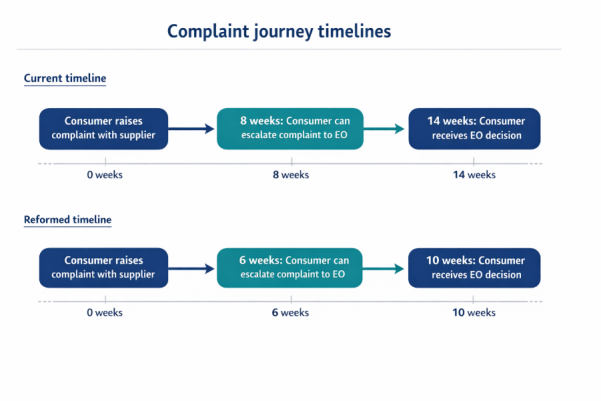
Costs and Benefits of reducing the supplier escalation window
The cost to suppliers of faster redress will vary, but costs are expected to be lowest for those with strong customer service, reinforcing incentives to resolve complaints earlier. Based on supplier‑reported estimates, the per‑case cost for an EO dispute is around £750, with a plausible range of £600–£900 reflecting variation across suppliers. As an illustrative example, if the policy were to increase EO disputes by 30%, this could result in approximately £17 million in additional costs for suppliers, with £5.1m of this relating to internal operational costs and case handling.
While compensation payments would not directly increase operational expenditure, associated impacts such as the need for additional call center resourcing would constitute ongoing operational costs. The scale of these impacts is also likely to vary across suppliers, but it is not expected to materially impact end-consumer bills.
Faster redress is expected to benefit households by helping them resolve complaints more quickly and access compensation sooner, reducing the time and stress involved in dealing with suppliers. Evidence suggests current processes are difficult and time-consuming, as shown by a Which? survey where 47% of people who made a formal complaint said it was made harder by the supplier, often due to long waits[footnote 2]. Delays also have real financial impacts: in 2024, Which? estimated that around 1.2 million energy customers were left £166 million worse off because they gave up trying to resolve their issues, while 8.9 million consumers experienced emotional harm from poor service[footnote 3]. By enabling earlier access to independent resolution at 6 weeks, households are likely to spend less time navigating complex processes and receive compensation more consistently.
Overall, faster redress can reduce stress, improve fairness, strengthen trust in the energy market, and provide particularly important support to vulnerable households who are more likely to face harm from long delays and unresolved complaints.
For further details on the cost benefit analysis, please see Annex B.
Action:
Shorten the overall maximum consumer complaint journey from 14 weeks to 10 weeks by:
- Ofgem reducing the supplier escalation window to the EO from 8 weeks to 6 weeks for domestic and eligible small business non-domestic consumers, with the option of reducing it further to 4 weeks;
- Recommending Ofgem to assess the case for setting a 95% decision-making target of 4 weeks, instead of 6 weeks, for the EO.
Section 3: Remedy implementation
Strengthening Enforcement and Timely Delivery of Redress Decisions
We noted in the consultation that the EO is perceived by some as lacking effective enforcement powers, with the result that redress is, in some cases, implemented late or not at all. We therefore consulted on several proposals to address this:
- Giving the EO penalty powers to levy against suppliers for non-compliance.
- Increasing the weight of EO decisions to create an explicit legal obligation to implement EO rulings.
Stakeholders broadly supported the proposals to levy penalties on suppliers for non-compliance with remedies and place a specific obligation on suppliers to implement the decisions of redress schemes.
Suppliers suggested that remedies were sometimes not implemented only because of the quality of decisions made by the EO and the presence of factors beyond supplier control that may restrict their ability to comply with decisions. Further evidence provided by suppliers did not show that the non-implementation of remedies could be explained by unfeasible EO decisions. Further, where remedies require additional time, the EO does already often provide extensions where appropriate.
The EO assesses extension requests on a case-by-case basis to determine if a supplier is unable to implement a remedy within 28 days due to matters beyond their reasonable control. The latest data from the EO for 2025 shows that 11% of remedies were implemented late or are still outstanding, with just under half of these having received an agreed extension. In total, 2,905 cases were granted an extension. In their ongoing reviews of the performance of redress schemes, Ofgem may evaluate whether the use of extensions for remedy implementation is fair and appropriate.
We continue to believe that too many rulings by redress schemes are not implemented on time and in full, and all consumers should be confident that, where a redress scheme has made a ruling in their favour, it will be acted upon. We considered whether this objective would best be delivered through penalties administered by a redress scheme and paid directly to consumers or through Ofgem’s existing automatic compensation framework. In doing so, we considered feedback provided to Ofgem through their Call for Input on the Guaranteed Standards of Performance as well as responses to this consultation.
We judged that the GSOP framework works best when it applies to clear, binary rules where compliance can be judged automatically and where detriment may be relatively consistent between instances of non-compliance. By contrast, penalties administered by a redress scheme could be applied more flexibly, reflecting the extent of consumer detriment in different cases and allowing the use of extensions where it would not be possible for suppliers to implement remedies more quickly. We therefore judge that the objective of ensuring redress scheme decisions are implemented on time and in full is best achieved by granting redress schemes the power to require suppliers to compensate consumers where decisions have not been implemented.
The government also believes that there is a clear case to clarify the legal standing of decisions made by redress schemes. Measures to achieve this will be taken forward when parliamentary time allows.
We recognise that suppliers have raised concerns about the quality of decisions made by the EO, including decisions which are infeasible or inconsistent with other legal or regulatory obligations. Through its continuing oversight, Ofgem will consider whether redress schemes have sufficient expertise and provide adequate training and may consider whether redress schemes are delivering decisions which are appropriate and proportionate.
Ofgem and the EO are continuing to work on an escalation framework to codify when and where the EO will raise concerns with Ofgem about systemic issues, including the non-implementation of remedies. The output will be an initial framework to formalise escalation routes and provide transparency for stakeholders that can be built on over time as Ofgem improve visibility of other areas. Ofgem will also be working to develop similar products with Citizens Advice and the EHU. Both Ofgem and the EO will continue to progress this work and aim to share a formal escalation process with DESNZ, energy suppliers and key stakeholders by Q2 FY2026.
The EO has also been reviewing its remedy policy to ensure it is up to date and fit for purpose, sets redress levels that are proportionate and appropriate to the circumstances, and repairs consumer detriment without unfairly burdening suppliers. In updating this policy, the EO has been benchmarking awards made in the energy sector such as GSOP payments and other ombudsman/dispute resolution schemes. They aim to have an updated policy in place by the end of Q3 FY2026. The EO has additionally confirmed that during the rest of 2026 and into 2027, they will be looking at exploring additional incentives for better remedy implementation.
Action:
- DESNZ to grant redress schemes powers to require compensation where suppliers fail to implement decisions on time and in full.
- DESNZ to clarify the legal standing of redress scheme decisions, with measures to be progressed as parliamentary time allows.
- DESNZ and Ofgem to strengthen oversight of remedy implementation, including Ofgem’s evaluation of the use of extensions and the proportionality and quality of redress scheme decisions.
- Ofgem and the EO to formalise escalation routes for systemic issues, including non‑implementation of remedies, through a transparent escalation framework.
- DESNZ to support the EO’s updated remedy policy, ensuring redress levels remain proportionate and appropriate, and explore further incentives to improve implementation.
Section 4: Accountability
Introduce new accountability and oversight arrangements for redress schemes
We noted in the consultation the need for effective accountability mechanisms to drive continuous improvement in the performance of the EO. We therefore sought views on:
- The best mechanisms to continue to improve the performance of the EO.
- Whether Ofgem remains the appropriate organisation to review the performance of the EO.
There was strong consensus among stakeholders that Ofgem remains the appropriate body to approve and oversee redress schemes given their expertise, independence, existing relationships and understanding of the sector. Some emphasised that Ofgem playing this role ensured consistency with other work, allowing the EO’s insights to inform Ofgem’s monitoring and enforcement and ensuring alignment with Ofgem’s own consumer outcomes work programme to improve standards across the sector.
Stakeholders noted that there were opportunities for improved transparency in reporting on the performance of redress schemes such as the EO’s and argued that accountability and oversight arrangements could be strengthened further. Suggestions included assessing the cost-effectiveness of the EO’s performance and reporting metrics on decision timeliness, quality of decisions, appeal rates, and systemic impacts. DESNZ and Ofgem will continue to work together on appropriate accountability and oversight arrangements, drawing on evidence provided by stakeholders and insights drawn from other sectors. Measures to achieve this will be taken forward when parliamentary time allows, with government taking the power to establish regulations covering accountability and oversight through secondary legislation.
Action:
- DESNZ and Ofgem to strengthen accountability and oversight of redress schemes by continuing to work together to improve transparency, assess performance, and establish regulatory arrangements through secondary legislation as parliamentary time allows.
Section 5: Appointment
Strengthen the standing of the Energy Ombudsman by designating it in legislation
We noted in the consultation that some stakeholders perceive the EO to be weaker than equivalent organisations such as the Financial Ombudsman Service due to the nature of their appointment. We therefore consulted on the proposal to designate the EO directly through statute as a redress scheme provider.
Stakeholders were divided regarding the EO being designated directly through legislation. Those who supported the proposal argued that this would strengthen the authority and legitimacy of the EO and provide greater certainty for consumers and suppliers. Some respondents suggested that changing the way in which the EO was appointed would ensure binding decisions, improve consumer confidence, and align the EO with other regulated sectors such as financial services. However, others argued that designating the EO in this way could entrench it as a monopoly provider, reducing competitive pressure, innovation and cost control. The EO is currently provided by the Trust Alliance Group who are a not-for-profit organisation that also delivers the Communications Ombudsman. Opponents also raised concerns about the risk of overlapping roles between the EO, Ofgem and government, especially if the EO was provided enforcement or penalty powers. Some also warned this could undermine the EO’s independence or create confusion about accountability.
We do not consider that a compelling case has been made that legislative designation would deliver material additional consumer benefit compared with existing arrangements. Many of the outcomes cited by proponents—such as binding decisions, improved confidence and alignment with other sectors—can be achieved through non-legislative means, including strengthened regulatory oversight, clearer performance requirements, and improved transparency. We also consider that the proposed measures to strengthen accountability and the implementation of remedies, as set out in this consultation response, would further reinforce the effectiveness of the EO without the need for designation.
In the absence of a clear case for change, we have decided not to continue with this proposal. Instead, we will focus on proposals with more immediate consumer benefit.
Action:
- Do not proceed with legislative designation of the EO, instead focusing on strengthening its effectiveness through enhanced regulatory oversight, clearer performance requirements, improved transparency, and measures to improve accountability and remedy implementation that deliver more immediate consumer benefit.
Applicability to Heat networks
We recommend that the proposed reforms to the EO are extended to heat networks to ensure alignment with the wider retail energy sector. While the EO is appointed by statute in the heat networks sector which differs to the appointment by Ofgem in the wider domestic and non-domestic retail market, we still believe the proposals outlined in this response should also apply to heat networks. Due to the complexity of the heat networks sector and its new regulatory regime, DESNZ will work with Ofgem and the EO to assess the best timescale to implement these changes. This will also enable the EO to establish the necessary capacity and capability to take on these responsibilities. There is potential for this to result in a delay in when some reforms are implemented to the heat networks market relative to other sectors. However, we recommend that the increased oversight of the EO from Ofgem and the Secretary of State are implemented in coordination with the wider energy sector to facilitate assessments of the implications of further changes to the role of the EO in the heat networks sector.
Next Steps
The government will continue to work towards an energy market that works better for consumers, ensuring that access to redress is fast, fair and strikes an appropriate balance of protection for both consumers and energy providers in a dynamic and changeable marketplace.
The proposals that are being taken forward from this consultation process will be progressed through the most appropriate means. The proposals on remedy implementation and accountability that require legislative change will be progressed as parliamentary time allows, strengthening redress scheme providers powers for enforcement and establishing the powers for new accountability and oversight regulations. DESNZ has a strong expectation that Ofgem and the EO will progress the proposals around shortening of the escalation and decision windows that fall within those organisations gift to implement. We expect these proposals to be implemented as soon as reasonably possible and certainly no later than Royal Assent for the EIB. DESNZ will also undertake further work with broader industry stakeholders and Ofgem to develop solutions for advanced signposting and automatic onboarding that sit within the existing regulatory framework.
Annex A – Summary of Responses
Consultation Questions:
1. Which of the options to tackle barriers to accessing the EO’s services do you support? Please evaluate the advantages and disadvantages, particularly in relation to consumer benefit. Where possible, provide evidence or examples.
2. What potential unintended consequences do you anticipate from implementing the above options? Please substantiate your response with evidence or examples.
38 respondents answered question 1 and 31 respondents answered question 2.
Most respondents supported advanced signposting as a proportionate, cost-effective measure which could streamline the process for consumers. However, some consumer groups noted that reforms needed to include those with low digital confidence or who were digitally excluded. Some also stated the importance of robust compliance action by Ofgem and accurate recording of complaints before signposting. A small number of suppliers and trade associations opposed the proposal suggesting it would be unnecessary, duplicative of existing communications, and added administrative burden on suppliers without corresponding consumer benefit. Potential unintended consequences included the risk of complaints being prematurely escalated to the EO before a supplier had been able to resolve an issue leading to slower resolutions, prolonging detriment, and increasing costs.
Respondents were divided roughly evenly on automatic onboarding. Supportive respondents such as consumer groups noted that it could prevent inconvenience and duplication for consumers, particularly benefiting vulnerable consumers, while stressing the need for informed, explicit consent and robust data protection. Respondents who were not supportive, including suppliers and trade associations, argued that consumer convenience would be limited given the need for consent and to verify information provided by a supplier, while there would be an administrative burden for suppliers to repeatedly ask for consent. Suppliers also argued that automatic onboarding could increase the volume of complaints going to the EO, undermining the role of the supplier and leading to slower resolution overall. The key unintended consequences cited were the risk of data being transferred inaccurately where complaints are complex, the challenge for suppliers of repeatedly asking consumers to provide consent, and the risk that a higher volume of complaints referred to the EO would lead to slower resolution.
Views on proactive contact were more negative overall. Only eight respondents were supportive of proactive outreach, arguing that it would raise awareness and remove burden from consumers, while still noting that there was a risk of complaints being prematurely or unnecessarily escalated to the EO and noting the importance of consumers consenting to being contacted.
Most respondents were opposed, with many consumer groups concerned about the risk of scams. This includes both the risk of consumers being targeted by impersonators, and the risk that when the EO contacted consumers, they would themselves be perceived to be undertaking a scam, such that proactive contact was ineffective and served only to undermine trust. Other respondents noted that consumers may be uncomfortable being contacted directly and that the EO may need to take on significant additional resource to reach consumers who may not respond to initial contact, adding to costs for suppliers which would be recovered from consumer bills.
Suppliers and consumer groups noted that the EO contacting consumers directly could push consumers away from services which would be more suitable for them towards an impartial dispute resolution process in which the root cause of challenges for consumers may not be diagnosed or addressed. Noted unintended consequences included the risk of causing confusion, pushing consumers to escalate unnecessarily even while a supplier is making their best efforts to resolve an issue, and the risk that more cases lead to slower resolutions, more cost, or lower-quality decisions by the EO. A handful of respondents raised questions about how the EO would target different groups of consumers for proactive outreach.
Some respondents provided more general reflections. Several suppliers and trade associations challenged the applicability of the proposals to the non-domestic market, noting that there was limited evidence provided of low levels of awareness or inconvenience. A range of respondents suggested alternative ways of increasing awareness, such as the EO advertising or promoting the EO through advice organisations. Others noted that the appropriate response was for Ofgem to take regulatory action if signposting rates were low. However, others challenged whether the low signposting rates were a result of the EO accepting cases which were outside their Terms of Reference (and therefore where no complaint had first been raised with a supplier, meaning that a supplier had not had an opportunity to signpost), the EO’s narrow definition of signposting (which does not include the provision of information when a complaint is first raised) or a lack of clarity amongst suppliers about the signposting evidence required by the EO. Several suppliers, consumer groups and trade associations emphasised the importance of fully evaluating the results of the EO’s ‘Access for All’ trial before taking further action.
Consultation Questions:
3. Can you identify other ways to overcome barriers to accessing the EO’s support not listed above? Please explain the relative merits of these options.
4. Are there any other barriers to consumers accessing the Energy Ombudsman that we should seek to remove? How should those barriers be removed?
30 respondents answered question 3 and 22 answered question 4.
Respondents suggested a range of alternative ways of overcoming the barriers that consumers face. The most common suggestion was for the EO to improve its own customer support. This included more consistent communication about case progression, a more transparent and user-friendly website, a simpler process for representatives to act on behalf of consumers, easier interaction with the EO across a range of communication channels, and the EO using prompt questions which enable consumers to articulate their complaint.
Several respondents felt that the EO or Ofgem should raise awareness themselves, for example through targeted outreach for vulnerable consumers through charities. Several suppliers emphasised the role of Ofgem to monitor and take compliance action where signposting falls short of existing regulatory obligations. Some also suggested signposting earlier or more often, such as clear links to the EO on suppliers’ websites.
A smaller number of suppliers highlighted the need for the EO to provide information on outcomes so consumers would know what kind of outcome to expect. Others called for overall improvement of the performance of the EO through more transparent performance standards or the introduction of competition.
Additional suggestions included mandatory vulnerability checks with automatic flagging of vulnerable consumers to allow prioritisation, a standardised ‘plain English’ complaint summary for use when contacting the EO or other support services and ensuring that complaints are correctly logged so that suppliers’ automated processes consistently signpost for all consumer complaints.
Some respondents challenged whether there were meaningful barriers to consumers accessing the EO, while others called for further research.
Consultation Questions:
5. Do you agree with shortening the waiting time before a consumer can refer their complaint to the EO to 4 weeks with exceptions? Please describe any advantages and/or disadvantages for consumers and suggest alternative approaches you think may be more effective providing evidence or examples. Evidence about the proportion of complaints resolved after 4 and 6 weeks may be of particular use.
6. What are some examples of valid exceptions to these shortened timescales? Please explain how any proposed exceptions would avoid disadvantaging consumers.
40 respondents answered question 5 and 33 answered question 6.
Several respondents, largely from consumer groups, supported a reduction in the period that consumers must wait before being able to escalate their complaint to 4 weeks. They argued this could incentivise faster resolution by suppliers, lead to quicker outcomes, reduce stress for consumers by tackling detriment earlier, better align with consumer expectations, and would be more appropriate to digital communication.
Those supporting a reduction tended to recognise that some cases require longer to resolve and that where this was the case, it would not be in the best interests of consumers for these complaints to be escalated to the EO prematurely. One respondent suggested that there should be exceptions, for example where a consumer is in crisis, allowing for immediate escalation to the EO.
A few respondents, largely suppliers, suggested that 6 weeks without exceptions would be preferable, particularly if supported by a trial in the domestic market, noting that a single referral point would avoid the complexity of exceptions while recognising the increased speed of communications.
A majority of respondents opposed shortening the period that consumers must wait before they can escalate a complaint to the EO. They argued that this would give suppliers insufficient time to resolve many complaints, leading to premature escalations. It was also noted that where a supplier would have been able to resolve complaints themselves, such a premature escalation would be self-defeating, with many consumers receiving slower resolutions because of the length of the EO’s own process in investigating a complaint and increasing costs for all consumers because of the EO’s own case fees.
Other respondents highlighted the impacts on particular consumers who may feel harassed to respond to suppliers with accelerated timelines and noted that shorter timelines would reduce the opportunity for other consumer organisations to work collaboratively in supporting a consumer, which could involve signposting towards financial support and offering more holistic advice. Some respondents noted that suppliers may be incentivised to rush to solutions which may be unsatisfactory, while others expressed concerns about whether the EO would be able to handle the substantial increase in additional cases, which would increase operational pressure and the risk of delays, backlogs, or rushed decisions.
Respondents also noted that the best outcome for consumers was where suppliers resolved all complaints as quickly as feasible rather than aiming only to avoid escalation deadlines. They emphasised that it was important that suppliers were not incentivised to prioritise only complex cases, leaving more straightforward cases unresolved until shortly before a 4-week deadline. One respondent suggested a mandatory update for consumers about the status of their case.
Respondents were divided on whether exceptions would be workable with slightly more being supportive than opposing this. Those respondents who were opposed argued that they would be complex and confusing for consumers, would require suppliers to change systems to operate different processes, and would introduce a risk of disputes about whether an exception is applicable which would require investigation, diverting resource away from complaint resolution.
Respondents listed a range of exceptions, many of which were not within a supplier’s control. These exceptions included where complaints involved:
- Reliance on third parties such as network operators, third-party intermediaries, meter operators, data collectors / aggregators, landlords, the Data Communications Company (DCC), consumer groups, credit referencing agencies or banks. The participation of these third parties may be required to diagnose or resolve problems, but they may have their own response timelines which sit outside a supplier’s control.
- Site access or appointments which depend on customer availability and may require non-domestic consumers pausing operations and providing access to sensitive sites.
- Erroneous transfer or change of supplier complaints which involve more than one supplier.
- Legal or safety concerns.
- Significant work needing to be undertaken by a supplier.
- Technical investigations.
- Uncertainty about who is responsible.
- Consumers who haven’t engaged or who have requested more time to gather documents and seek advice.
- Consumers who have additional needs such as translation or accessibility needs which require more time.
- Historical billing cases.
- Subject Access Requests.
Some suppliers noted that these factors may be particularly common in the non-domestic market which has more complex multi-site arrangements, complex contracting, and where site visits may require business operations to be paused. Some suppliers provided helpful evidence about the proportion of their complaints which include some of these factors. One respondent argued that faster resolutions for consumers would be delivered if government sought to speed up the industry processes on which suppliers rely upon.
Consultation Question:
7. Do you agree that the EO should reduce their target to reach a decision to 4 weeks? What are the advantages and/or disadvantages for consumers?
32 respondents answered question 7.
Roughly half of respondents were supportive, noting that it could lead to problems being solved more quickly, if the EO could deliver faster resolutions without any compromise in the quality of decisions or any increased cost. Those who were opposed were mostly suppliers and argued that this would not be possible, noting concerns about the ability of the EO to meet its existing targets. They argued that this would either inevitably require more resources and investment by the EO which would not be proportionate, or that this would lead to a compromise in the quality of decisions. This would lead to more procedural errors and more rushed or superficial assessments which failed to address core issues, meaning more unsatisfactory outcomes for consumers. Several respondents emphasised that consumers care as much about thorough investigations and meaningful remedies as they do about speed and that there was limited evidence that slow decisions by the EO contributed to consumer dissatisfaction. Several respondents emphasised that accelerated timelines could increase the pressure on consumers to provide information more quickly than they are able to and that there may need to be exceptions for complex cases or for vulnerable consumers.
Consultation Question:
8. Are there any other interventions we should consider to secure faster redress for consumers through the EO process?
22 respondents answered question 8.
Respondents suggested a range of additional interventions to secure faster redress. The most common suggestion was that the EO should introduce standardised templates, secure evidence portals, and digital case management to enable evidence to be shared more quickly and easily. The second most common suggestion was that faster redress would be secured with improved performance by the EO, which could be achieved through transparent reporting of performance against targets, sanctions for under-performance, and the introduction of competition. Other common suggestions included more facilitated resolutions to deliver faster outcomes without the need for lengthy investigations and the triage of cases, either where a quick resolution was possible or where there was a high risk of detriment. Other respondents argued that focus should be on preventing complaints through regulatory intervention and through the EO providing more insight to suppliers on complaint outcomes and root causes.
Consultation Question:
9. What are the existing barriers to the implementation of EO decisions? From a consumer perspective, which barriers cause the greatest detriment?
31 respondents answered question 9.
Respondents highlighted several barriers to implementation of EO decisions. Third party dependencies were the most commonly highlighted issue, citing reliance on metering agents, landlords, network operators and others as key blockers to implementation that lie outside of supplier control.
Operational and systemic delays were the next most highlighted issue, flagging concerns such as internal resource constraints at suppliers, industry-wide processes such as data flows, metering appointments, or regulatory timelines that are outside the direct control of suppliers.
The EO’s own processes were noted as part of this issue if there are delays in transferring cases or providing necessary information. EO decisions were also highlighted as sometimes being unclear, technically unfeasible, or not aligned with regulatory requirements, making implementation difficult or impossible without further clarification or appeal. The lack of a clear mechanism to challenge or appeal such decisions was of particular concern. Some suppliers being given extensions for a significant portion of remedies provides further indication that the timelines can be unfeasible for certain remedy categories.
Other commonly flagged issues included consumer engagement such as delays when consumers do not respond, provide information, or are vulnerable and need extra support. Poor communication and transparency were also a concern for some, noting a lack of clear communication between the EO, suppliers, and consumers regarding what actions are required, timelines or the status of implementation. A lack of transparency was also highlighted by some as a reason both consumers and suppliers may be left uncertain about progress, leading to frustration and repeated follow-ups.
Some respondents argued that while most suppliers implement EO decisions promptly, a minority may delay or avoid implementation due to lack of strong enforcement or meaningful penalties. Several respondents also highlighted the cost impact of remedies on smaller suppliers or heat networks.
The most significant detriment was seen to be when financial redress, billing corrections or refunds are delayed, especially for vulnerable or low-income households. These situations are compounded if there is also poor communication, leaving consumers in the dark about when or if the situation will be remedied.
Consultation Questions:
10. Do you agree that the EO should be able to levy penalties against suppliers for late or incomplete implementation of their decisions? Please describe any advantages and/or disadvantages for consumers.
11. What considerations should be included when setting any penalty regime? For example, how should the level of penalties be set, what exceptions should be included.
40 respondents answered question 10 and 29 answered question 11.
A majority of respondents agree in principle that the EO should have the power to levy penalties against suppliers who fail to implement decisions on time or in full. Consumer groups were strongly supportive, emphasising the need for meaningful enforcement to ensure consumer protection and trust in the system. The main reasons for support were penalties incentivising compliance by providing clear consequences for suppliers, ensuring that EO decisions are taken seriously and encouraging suppliers to act promptly to ensure timely redress. The existence of penalties is expected to give consumers confidence that there are real consequences for suppliers who do not follow through.
However, there was also significant caution and opposition, particularly from suppliers and trade associations, who raised concerns about proportionality, fairness, and the risk of unintended consequences. Some suppliers argue that the current rate of non-compliance is very low so additional penalties may be disproportionate. There was also concern from several respondents over the quality of EO decisions and the lack of mechanism for challenge, with some respondents suggesting there should be a clear appeals system for EO decisions.
Penalties treating the symptom rather than the cause was also a concern for some respondents, with acknowledgement that more needs to be done to determine the root cause of poor implementation. Some respondents suggest penalties should be proportionate to the severity and impact of the non-compliance with a distinction between minor administrative delays and more serious or repeated failures. There is widespread acknowledgement that penalties must also not apply where delays are genuinely outside the supplier’s control e.g. third-party dependencies, force majeure or customer inaction.
Regarding the level of penalties, many respondents supported a flat fee that escalates the longer a remedy is overdue e.g. £50 per month, increasing for repeat offenders. Some respondents suggest linking penalties to the value of the remedy or the degree of consumer detriment. Some respondents acknowledged that penalties should be high enough to incentivise compliance but not so high as to be punitive or disproportionate.
Some respondents called for clear, transparent exceptions for cases involving third-party dependencies, technical complexity or customer-driven delays. Many respondents felt the overall regime should be simple to understand and administer, with clear criteria and oversight while avoiding unnecessary complexity and confusion.
Many respondents suggested the penalty process should be transparent with published criteria and regular reporting. Some suppliers and trade associations suggested there should be an appeals process for suppliers to challenge penalties they believe are unjustified while independent oversight or review is recommended by others.
Many respondents raised concerns about increased operational costs being passed on to consumers. Some consumer groups highlighted the importance of penalties being absorbed by suppliers rather than being passed on to consumers, with one respondent highlighting that Ofgem requires suppliers to not seek to recover the costs of financial penalties or consumer redress from their customers. Some respondents also noted that penalties going to the EO may create perverse incentives, and all compensation should therefore go to the consumer.
Several respondents highlight the need to clarify the EO’s role versus Ofgem’s existing enforcement powers to avoid regulatory overlap and confusion. Many respondents felt that penalties should not duplicate existing enforcement mechanisms e.g. Ofgem fines or GSOP payments, avoiding suppliers being penalised twice for the same issue.
The complexity of problems in the non-domestic and heat networks sectors was highlighted as a topic for consideration by several respondents when setting penalty regimes as these may require a more bespoke approach.
Consultation Question:
12. Are there any other interventions we should consider to ensure that EO decisions are implemented on time and in full?
27 respondents answered question 12.
Respondents highlighted several alternatives to a penalty regime. Better communication between the EO, suppliers and consumers were recurring themes. Many respondents wanted clearer and transparent data processes to provide benefits including real-time updates to consumers on the status of remedy implementation as well as standardised templates and digital platforms for sharing case information and tracking progress. Improved data sharing protocols to reduce duplication and ensure all parties have the necessary information to act promptly were also highlighted by many respondents.
Publishing supplier performance data e.g. rates of timely implementation, overdue remedies etc, is seen by some suppliers, consumer groups and trade associations as a way to drive accountability and continuous improvement. Some respondents suggest “naming and shaming” persistent non-compliers while cautioning that such an approach must be balanced and fair.
Some suppliers suggested that Ofgem should strengthen their oversight role, particularly for systemic or repeated non-compliance. Some respondents proposed that the EO should report patterns of non-implementation to Ofgem which could then take regulatory action where necessary.
Several suppliers and trade associations highlighted that some delays arise from EO decisions that are unclear, technically unfeasible or outside supplier control. Some within this group called for the EO to ensure that remedies are practical, deliverable and aligned with regulatory and technical realities before setting deadlines for implementation. A robust appeals or challenge process is recommended by some suppliers for cases where suppliers believe a remedy cannot be implemented as directed. Some suppliers also question whether the EO is itself acting in a timely manner, with suggestions from several respondents to establish clearer service standards for the EO.
Heat networks and non-domestic markets were highlighted by some respondents as potentially needing tailored approaches given their complexity and the involvement of multiple parties. Phased or proportionate implementation is recommended by some respondents for newly regulated sectors.
Several respondents advocate for mechanisms to learn from implementation failures such as root cause analysis, feedback loops, and sharing of best practices. Joint working groups or forums involving the EO, suppliers, consumer groups, and Ofgem are suggested by some respondents to address systemic issues.
Consultation Question:
13. How can we improve cooperation between different organisations in the consumer support journey?
29 respondents answered question 13.
Most respondents said unified or more consistent consumer pathways could improve cooperation between different organisations in the consumer support journey. Ideas suggested to improve consistency included unified referral protocols (e.g. warm handover procedures), a shared map of the consumer journey, classification of consumer vulnerability, and a structured triage process. Within this group, several respondents specified that clarity of the roles and responsibilities in the pathways process could be beneficial through a new Memorandum of Understanding.
Several respondents said that better data sharing could improve cooperation and reduce duplicate requests for information through shared protocols for information exchange and standardisation of processes, while acknowledging the need for data privacy concerns. Several respondents within this group, mostly suppliers, suggested a shared centralised case platform could help ensure cross-organisation information visibility.
Some respondents put forward ideas for strengthening communication to improve cooperation such as developing best practices for cooperation, working across the sector to ensure services are accessible at the right time for the right consumers, and the EO acting as more of a hub in a multi-way communication loop for consumer issues. A small number of respondents said a mechanism to enable organisations to work more closely on complex cases could be beneficial, such as a shared network for when a customer case involves multiple companies.
Several suppliers and consumer groups said a forum for organisations to manage strategic redress issues could improve cooperation by enabling stakeholders to discuss trends, systemic issues and process improvements. Respondents suggested the forum could include energy suppliers, the EO, Citizens Advice (and the EHU), other consumer support organisations, Ofgem, and government/DESNZ.
Several suppliers and consumer groups said shared training and up-skilling across stakeholders could improve cooperation. Ideas included shared learning between different organisations, standardised training on the role of consumer support organisations and referrals processes, secondment opportunities between organisations, and cross-industry workshops.
A few respondents said a more structured serious issues escalation process could improve cooperation by formalising information sharing processes around triggers and timelines to ensure prompt escalation of issues identified by the EO to Ofgem when required, which could help identify patterns of poor performance and address regulatory concerns. Others stated that streamlined and co-ordinated performance reporting could support good practice and responding to issues, ensuring consistency and providing clarity for consumers.
A smaller number of respondents said opening up EHU referral pathways could enable consumers to access the right support more quickly, reducing delays and improving outcomes for vulnerable consumers. Other stated that shared accountability and objectives could facilitate effective cooperation between organisations.
One consumer group said a better consents process for advisory services could help advice organisations act on behalf of clients with EO complaint cases by recognising when they are acting on the behalf of a customer. Another said guidelines on compensation provided by the EO for stakeholders could help representatives of advice services advise clients on matters of compensation and settlements.
Consultation Question:
14. Would any of the changes proposed in this consultation negatively impact other organisations in the consumer support landscape? Please refer to specific proposals in your response.
23 respondents answered question 14.
Reflecting on the proposals in general, two consumer groups said the EO may end up dealing with more issues that would be better addressed by advice providers if the EO is seen as the main or only route for customers to seek help or advice. Others stated that the caseload for advice services could increase as customers seek to understand the changes. It was also noted that energy supplier costs could increase through additional EO cases being created.
One supplier was concerned that Third Party Intermediaries could become more involved in the complaints process, increasing requirements on them, while a trade association said there may be confusion in and disruption to the small business sector which the EO has only recently had its services expanded to.
On shortening the referral window, some suppliers and trade associations said the EO may end up dealing with more issues that would be better addressed by advice providers if there is less time available to understand consumers’ issues and refer them to the right advice or support services. Other respondents, largely suppliers, said suppliers’ complaint resolution could be rushed as less time would be available for collaboration with advice services while delays can frequently occur on the customer side. The risk of additional cost to suppliers was also noted.
Two suppliers said efforts to resolve consumer issues could be duplicated across multiple organisations causing greater confusion and potential for inconsistent advice, especially for vulnerable customers. Commenting on reducing the EO’s decision window, several respondents said cases may not be sufficiently investigated, driving dissatisfaction with the process.
Regarding proactive outreach and automatic referral, some respondents, largely suppliers, said the EO may have to deal with more issues that would be better addressed by advice providers if the opportunity for engagement with advice providers is reduced or customers are not made aware of the choices available to them. Customers, including those with financial hardship or severe vulnerabilities, could therefore be delayed in accessing the right support.
Regarding advanced signposting, one supplier said the EO may end up dealing with more issues that would be better addressed by advice providers if signposting does not include the full range of options of advice providers to help resolve a customer’s issue. Another supplier stated concerns around increased costs while a trade association highlighted concerns around data protection issues with automated sharing of information.
Consultation Question:
15. Do you agree that the EO should be appointed directly through statute? Please describe any risks or unintended consequences you foresee from appointment in this manner.
33 respondents answered question 15.
Just under half of those who responded to this question supported the principle of designating the EO directly through statute. Those who supported the proposal argued that this would strengthen the authority and legitimacy of the EO and provide greater certainty for consumers and suppliers. Some respondents suggested that changing the way in which the EO was appointed would ensure binding decisions, improve consumer confidence, and align the EO with other regulated sectors such as financial services.
However, many also noted that any changes should be accompanied by additional accountability mechanisms. This view was shared by respondents who supported or opposed the direct designation of the EO in statute. Respondents called for the EO’s performance to be improved through the monitoring of performance metrics, mechanisms for suppliers to appeal or challenge EO decisions, competitive tendering, strong governance, transparency and regular independent reviews e.g. by Ofgem.
Several respondents opposed the designation of the EO in statute. Some suppliers and trade associations argued that designating the EO in this way could entrench it as a monopoly provider, reducing competitive pressure, innovation and cost control. These respondents pointed to other sectors e.g. telecoms, where multiple ADR providers exist and argued that competition drives better outcomes.
Respondents also raised concerns about the risk of overlapping roles between the EO, Ofgem and government, especially if the EO was provided enforcement or penalty powers. Some also warned this could undermine the EO’s independence or create confusion about accountability. This was a particular concern where there were already challenges raised about the current quality of EO decisions and operations. Many suppliers argued that statutory footing could lead to higher case fees and operational costs which would ultimately be passed on to consumers through higher bills.
Consultation Question:
16. Do you agree that the weight of EO decisions should be increased so that suppliers have an explicit legal obligation to implement EO rulings? Please describe any advantages and/or disadvantages for consumers.
32 respondents answered question 16.
Opinion on this was very divided. Many respondents, especially consumer groups, supported the idea of giving EO decisions greater legal weight to make them binding on suppliers to strengthen consumer protection, ensure timely redress, and build trust in the complaints process. Respondents suggested that a specific legal obligation on suppliers would ensure clarity and certainty for consumers as well as consistency in outcomes. Respondents also suggested that it provided suppliers with an additional incentive to implement decisions in a timely manner. Many respondents suggested that any change in legal obligations needed to be accompanied by appropriate governance and accountability measures to ensure that EO decisions were robust and appropriate.
Some respondents suggested that before increasing legal weight, the EO’s own processes, decision quality, and technical understanding should be strengthened. Some respondents highlighted the need for clear exceptions for cases outside supplier control and an appeals mechanism.
However, many respondents, especially suppliers, expressed reservations or opposition, particularly regarding the risks, costs and practicalities of such a change. Many suppliers warned that increased legal obligations could drive up operational costs which would ultimately be passed on to consumers through higher bills. Many respondents noted that EO decisions were already binding and therefore did not see what difference this would make to consumers, while also noting that non-implementation figures were low.
Some respondents raised concerns that legal enforceability could lead to more decisions being challenged by suppliers and more disputes being taken to court, increasing complexity and potentially slowing down resolutions. Some respondents argued that a rigid, legally binding framework could reduce the ability to tailor remedies to individual or complex cases, potentially leading to worse outcomes for consumers.
Several respondents noted that Ofgem already had enforcement powers and that duplicating these with EO legal powers could create confusion, regulatory overlap and “double jeopardy” for suppliers. There was broad agreement that Ofgem should retain oversight of EO performance and that any new powers for the EO must be balanced with appropriate accountability and transparency.
Consultation Questions:
17. What are the best mechanisms to continue to improve the performance of the EO in delivering easier and faster redress for consumers?
18. Does Ofgem remain the appropriate organisation to review the performance of the EO? Please describe the advantages and/or disadvantages of Ofgem retaining this role. What criteria should be applied in evaluating the EO’s performance?
30 respondents answered question 17 and 32 answered question 18.
The majority of respondents emphasised the importance of transparent reporting of the EO’s performance, with published metrics on decision timeliness, backlogs, quality of decisions, appeal rates, and systemic impact. Many respondents, largely suppliers and trade associations, advocated for the introduction of competitive tendering to incentivise the EO to improve their performance and to reduce cost. Some respondents, largely suppliers and trade associations, emphasised that performance standards for the EO should be enforceable, for example, by linking funding to performance. Many respondents argued that the EO’s performance could be improved with a more collaborative approach, gathering feedback from and working more closely with, consumer groups and suppliers. Other suggestions include the introduction of more specialist training for case handlers at the EO, independent audits, and a formal right to appeal incorrect decisions by the EO.
Almost all respondents agreed that Ofgem were the appropriate organisation to review the performance of the EO. Advantages included Ofgem’s expertise in consumer protection and regulation, independence, existing relationships with suppliers and other groups, and understanding of the sector. Others emphasised that Ofgem playing this role ensured consistency with other work, allowing the EO’s insights to inform Ofgem’s monitoring and enforcement and ensuring alignment with Ofgem’s own consumer outcomes work programme to improve standards across the sector. Other respondents argued that there were no other plausible candidates to perform the role and that it would not be desirable to create a new body to do so. A small number of respondents raised disadvantages of Ofgem performing this role, such as whether it risked creating a perception that the EO was not appropriately independent or a perception of bias towards suppliers. Several respondents also raised concerns about whether Ofgem had sufficiently strong levers over the EO, sufficient resources, and sufficient expertise in alternative dispute resolution.
One respondent suggested that there should be an independent consumer panel and another that a supplier-convened Performance Assurance Board should oversee the EO and report to Ofgem.
Respondents suggested a range of criteria or metrics which should be used in evaluating the EO’s performance, including:
- Timeliness of decisions.
- Fairness, impartiality, consistency, and transparency of decisions.
- Practicality and proportionality of remedies, including using discretion appropriately where decisions cannot be implemented within usual timelines for factors beyond a supplier’s control.
- Customer satisfaction.
- Contact-handling performance (e.g. speed with which calls are answered).
- Data-handling.
- Value for money.
- Simplicity, accessibility, and inclusiveness of processes.
- Whether the EO has successfully contributed to performance improvements across by sector by identifying patterns in complaints and sharing insights with Ofgem and industry.
- Compliance rates with decisions.
- Transparency of communication with consumers and suppliers, including clear published decisions.
Consultation Question:
19. Do you agree with our proposal that proposed reforms to the EO should also be applied to heat network markets? Please provide evidence to support your answer.
26 respondents responded to question 19.
The majority of respondents supported alignment between the heat networks market and the wider sector. Some respondents called for a degree of market segmentation to protect smaller networks from financial penalties which they may be unable to absorb. Another respondent expressed concern on the potential risk of a two-tier regulatory framework as a result of too much segmentation, wherein consumers of smaller networks are less well protected. A ‘light touch’, balanced and proportionate approach was recommended.
Several respondents noted that attention should be paid to the timing of this change, and that the proposed changes should be extended to heat networks later than the wider market. This is due to the heat networks market only recently becoming regulated by Ofgem in January 2026, and the EO only being able to accept cases from all heat networks since April 2025. Respondents noted that any further changes to the regulatory system should only be introduced with consideration and analysis of any additional burdens upon heat network operators and suppliers, and that time should be allowed for these organisations to adapt their systems and structures. Changes to consumer journeys through complaints processes should also be communicated.
Several respondents noted the complexity of the heat network market, including instances where several organisations are involved in the operation and supply arrangements governing a single network. Respondents noted that any changes to the heat networks regulatory framework, including the proposed reforms to the EO, should be carefully planned to reflect the complexity of this sector.
Several respondents shared concerns that reducing the time period before a case can be referred to the EO might reduce heat networks’ capacity to effectively resolve complaints before escalation, given that complaints handling processes have only recently been regulated in this sector, and that many network operators and suppliers are still implementing changes to these processes. Several respondents expressed the view that referral to the EO should be the last resort for consumers, and that an expedited referral process might undermine the role of other statutory bodies who might be able to resolve an issue without necessitating an EO case, or who might be better placed to support more vulnerable consumers with multiple issues including debt or housing concerns.
Several respondents called for increased Ofgem oversight of the EO’s performance, and the outcomes of cases, if the proposal to reduce the complaints-handling timescale is taken forward. One respondent argued that heat networks should be mandated to report against the recommendations of the EO, to ensure that rulings are correctly followed. Several respondents called for stronger links between Ofgem and the EO to help identify trends or recurring problems, or a formal process by which the EO could raise concerns about systemic issues to Ofgem.
The few respondents who opposed the extension of these reforms to heat networks were similarly concerned about the nascency of heat network regulation and doubted whether the EO has the capacity or the depth of understanding of this sector to appropriately handle an increase in the volume of cases.
Annex B
Costs of Faster Redress
Cost benefit analysis provides an indicative framework for understanding potential impacts, but it should not be interpreted as a definitive or precise measure of overall value. While some costs to suppliers can be estimated, benefits such as improvements in fairness, reduced stress, and better outcomes for vulnerable households are more difficult to quantify robustly.
The following analysis is based on EO and supplier-reported data. Estimates remain subject to uncertainty given the difficulty of forecasting behavioural and volume effects.
Costs
Faster redress aims to shorten the period before a complaint can be escalated to the EO. This is expected to increase the number of disputes handled by the EO in the short term, as suppliers have less time to resolve issues internally. This could lead to higher operational or case handling costs for suppliers, increased EO case fees, and more compensation payments. Compensation or goodwill payments to households following ombudsman decisions are however considered transfers rather than a net cost to society. Estimated increases in these transfers are included in the per-case estimates below as they still represent a cost to suppliers.
Based on supplier-reported estimates, the indicative per‑case cost for an EO dispute is around £750, with a plausible range of £600–£900 reflecting variation across suppliers. While compensation and goodwill payments represent transfers from suppliers to households rather than a net cost to society, they remain a financial cost to suppliers so are included in the per‑case impact. These transfers are around 20% of the total per-case cost figure. Around 30% of these estimates are internal operating costs faced by suppliers, and 50% are EO case fees.
There were around 80,000 dispute cases accepted by the EO in 2025. As an illustrative example, if the policy were to increase disputes by 30%, this could result in approximately £17 million in additional costs for suppliers, with £5.1m of this relating to internal operational costs and case handling.
Cost estimates are based on a disputes-weighted average of supplier‑reported per‑case costs, ensuring that suppliers with higher EO caseloads are proportionately represented, consistent with how costs would be expected to fall in practice.
Total costs are likely to be lowest for suppliers with good customer service, better complaint resolution, and lower dispute numbers. Most of the costs would fall on suppliers with more dispute cases and poorer complaint resolution, acting as an incentive to improve their service levels and avoid complaints escalating to more costly disputes.
The true number of additional EO disputes resulting from the policy remains highly uncertain. In practice, this cost is likely to vary materially across firms, reflecting differences in goodwill policies, case fee structures and internal operating costs. Costs from these policy changes are not considered, nor are changes to EO subscription fees, which include fixed and dispute-volume-based components.
Benefits
The policy is expected to deliver benefits to households by enabling faster access to independent redress and earlier resolution of unresolved complaints. It is also expected to improve outcomes for households and raise service standards across the market, as the potential costs to suppliers provide stronger incentives for early prevention of issues and the provision of good service.
Households are expected, on average to spend less time navigating complex complaints processes with suppliers and receive compensation more quickly and more consistently where errors or poor service have occurred. Wider welfare benefits include reduced stress, improved fairness, and greater trust in the energy market.
Time saving
Time spent in supplier complaints is costly to households, and often stressful and frustrating. A survey conducted by consumer body ‘Which?’ in 2023 found that almost half of people who made a formal complaint (47%) said the process was made difficult by the supplier, with long waits specifically referenced among the reasons.[footnote 4]
Estimating the aggregate value of this time saved across households is difficult due to lack of evidence in hours saved per complaint per household. A household’s time saved in supplier complaints could potentially be valued at £22.10 per hour, based on the value of time spent waiting (or queuing) while doing admin, finances, or organising estimated in a 2023 discussion paper from the London School of Economics[footnote 5], uplifted to 2025 prices[footnote 6]. However, this may not be evenly distributed across all households, as evidence suggests that low-income households are generally more likely to experience longer waiting spells.[footnote 7]
People experiencing financial precarity, disability or other forms of vulnerability are disproportionately represented among those raising complaints and are more likely to experience heightened detriment, including significant financial and emotional harm from prolonged resolution timelines. Delays in complaint resolution can exacerbate debt, stress and risks of disconnection.
Increased compensation
A key benefit of the policy is improved access to remedies for households, where suppliers have fallen short of expected standards. Earlier escalation to independent dispute resolution increases the likelihood that eligible households receive compensation in a timely and consistent way, helping to address financial detriment arising from billing errors, service failures or delays.
While compensation payments represent transfers rather than a net economic gain, they play an important role in improving fairness and confidence in the complaints system and ensuring that detriment is more effectively redressed when it occurs.
This benefit is particularly significant for those facing financial precarity, as receiving compensation sooner can help alleviate immediate financial pressures and prevent the build-up of debt-related issues.
Following the illustrative example in the costs analysis, if disputes were to increase by 30% because of the policy, this could result in £3.4m in additional compensation for households. This is only from the ‘faster redress’ part of the policy and does not include additional measures such as late penalties, or higher per-case compensation payments.
-
Small businesses are defined as those with an annual consumption of electricity of not more than 200,000 kWh, or with gas of not more than 500,000 kWh, or with fewer than 50 employees (or their full time equivalent) and an annual turnover not exceeding £6.5 million or a balance sheet total not exceeding £5 million ↩
-
https://www.which.co.uk/policy-and-insight/article/short-opening-hours-long-wait-times-and-difficulties-getting-help-which-reveals-common-energy-customer-service-fails-aVe8n3K8RKpe ↩
-
https://consumervoice.uk/utilities/energy/energy-and-broadband-customer-lost-300m-due-to-poor-customer-service/#:~:text=Over%20a%20third%20of%20people,million%20hours%20for%20broadband%20customers. ↩
-
Which? Energy customer service survey October 2023, n=9,025, reported in press release “Short opening hours, long wait times and difficulties getting help: Which? reveals common energy customer service fails”, https://www.which.co.uk/policy-and-insight/article/short-opening-hours-long-wait-times-and-difficulties-getting-help-which-reveals-common-energy-customer-service-fails-aVe8n3K8RKpe ↩
-
Krekel, Christian & MacKerron, George, 2023, Back to Edgeworth? Estimating the Value of Time Using Hedonic Experiences, https://researchonline.lse.ac.uk/id/eprint/121308/1/dp1932.pdf ↩
-
Uplifted using GDP deflators at market prices, and money GDP March 2026 (Spring Statement), https://www.gov.uk/government/statistics/gdp-deflators-at-market-prices-and-money-gdp-march-2026-spring-statement ↩
-
Holt, S.B., Vinopal, K. Examining inequality in the time cost of waiting. Nat Hum Behav 7, 545–555 (2023). https://doi.org/10.1038/s41562-023-01524-w ↩