Common biomass sustainability framework: consultation document (accessible webpage)
Published 2 December 2025

© Crown copyright 2025
This publication is licensed under the terms of the Open Government Licence v3.0 except where otherwise stated. To view this licence, visit nationalarchives.gov.uk/doc/open-government-licence/version/3 or write to the Information Policy Team, The National Archives, Kew, London TW9 4DU, or email: psi@nationalarchives.gov.uk.
Where we have identified any third party copyright information you will need to obtain permission from the copyright holders concerned.
This publication is available at https://www.gov.uk/government/consultations/common-biomass-sustainability-framework/common-biomass-sustainability-framework-consultation-document-accessible-webpage
General information
Why we are consulting
Biomass plays an important role in our energy system and in meeting our decarbonisation goals, generating around 10% of the UK’s total energy supply across the power, domestic and non-domestic heat and transport sectors in 2024. The government only incentivises the use of biomass if it complies with relevant sustainability criteria as defined within existing support schemes and policies across multiple bioenergy sectors.
However, we are conscious of concerns around biomass sustainability and the need for levels of sustainability that are in line with latest scientific evidence or global best practice. For biomass to continue to play a role in supporting the government’s ambitions to be a clean energy superpower and accelerate towards net zero by 2050, confidence in the sustainability of biomass must be improved. It is essential that effective sustainability standards coupled with robust monitoring, reporting and verification regimes continue to underpin biomass use in the UK to ensure positive environmental, economic and social impacts, both domestically and internationally.
This consultation is seeking views on the development of a common biomass sustainability framework, which includes proposals for strengthening existing biomass sustainability criteria in line with latest evidence as well as improvements to current monitoring, reporting and verification practices, and sets out guiding principles for addressing non-compliance. It aims to provide a consistent view on biomass sustainability across all relevant bioenergy sectors.
Consultation details
Issued: 2 December 2025
Respond by: 27 February 2026
Enquiries to email: biomasssustainabilityconsult@energysecurity.gov.uk
Consultation reference: Common Biomass Sustainability Framework Consultation
Audiences:
We welcome views from stakeholders focussed on biomass feedstock production and use across a range of sectors, including those looking at the wider environmental impacts of biomass use in the UK and elsewhere. It will be particularly relevant to stakeholders with an interest in bioenergy production, including with carbon capture and storage.
Territorial extent:
The territorial extent of the common sustainability framework will depend on the final outcomes of this consultation. Given that both reserved and devolved policy areas currently include biomass sustainability criteria, the scope and implementation route of this common framework will be shaped by consultation feedback. We will continue to engage with devolved administrations as the proposals in this consultation are developed.
How to respond
Respond online at: energygovuk.citizenspace.com/energy-security/biomass-sustainability-common-framework
or
Email to: biomasssustainabilityconsult@energysecurity.gov.uk
When responding, please state whether you are responding as an individual or representing the views of an organisation.
Your response will be most useful if it is framed in direct response to the questions posed, though further comments and evidence are also welcome.
Confidentiality and data protection
Information you provide in response to this consultation, including personal information, may be disclosed in accordance with UK legislation (the Freedom of Information Act 2000, the Data Protection Act 2018 and the Environmental Information Regulations 2004).
If you want the information that you provide to be treated as confidential please tell us, but be aware that we cannot guarantee confidentiality in all circumstances. An automatic confidentiality disclaimer generated by your IT system will not be regarded by us as a confidentiality request.
We will process your personal data in accordance with all applicable data protection laws. See our privacy policy. The Department for Energy Security and Net Zero may share consultation responses with the Department for Science Innovation and Technology who are carrying out analysis of consultation responses using an Artificial Intelligence (AI) tool. The AI tool processes data securely and does not copy or share data. The data will only be accessed and used by those authorised to do so.
We will summarise all responses and publish this summary on GOV.UK. The summary will include a list of names or organisations that responded, but not people’s personal names, addresses or other contact details.
Quality assurance
This consultation has been carried out in accordance with the government’s consultation principles.
If you have any complaints about the way this consultation has been conducted, please email: bru@energysecurity.gov.uk.
Executive Summary
Context
Role of sustainable biomass in accelerating to net zero
The Prime Minister’s Plan for Change includes a key mission to make Britain a clean energy superpower, delivering clean power by 2030 and accelerating the UK’s trajectory to net zero. This includes building a diverse and resilient low carbon energy system that can bring energy security, as well as support the transition to net zero.
Biomass is defined as any material of biological origin, including wastes and residues from biological origin e.g. forestry residues, sawmill residues, food waste. Sustainable biomass is currently expected to play an important role in this mission. It is a low carbon alternative to fossil fuels and has many uses across the economy including for energy (heat, power, transport fuels), as an energy source for industrial processes or as a raw material used to make products (such as bio-based plastics and materials from foundational industries). It also has the potential to deliver greenhouse gas removals (GGRs) through bioenergy with carbon capture and storage (BECCS).
With robust safeguards in place, global institutions such as the IPCC, and the UK’s independent advisor, the Climate Change Committee (CCC) recognise that bioenergy can make a significant contribution to decarbonising economies and meeting net zero. In 2023, the UK’s total biomass demand was 193TWh, representing 10% of the country’s total energy demands. Looking ahead into mid-2030s, we expect demands to continue at this level to support our carbon budget 6 targets.
For the longer term, the CCC in its advice for the Seventh Carbon Budget (CB7) states that ‘Sustainable bioenergy plays an important role in the Balanced Pathway and, when combined with CCS, can provide a valuable source of CO2 removals’, while recognising that biomass feedstocks are a limited resource and must be prioritised in highest value applications.
BECCS could be applied in a number of sectors including electricity supply, industry, waste, and fuel supply in the longer term. Yet, the government recognises that in certain hard-to-decarbonise sectors, where deploying BECCS universally may not be feasible and alternatives are limited, biomass can continue to play a role.
To encourage the use of biomass where appropriate, the government has in place a number of financial incentive schemes and policies such as Contracts for Difference (CfD), Renewable Transport Fuel Obligation (RTFO), Sustainable Aviation Fuel (SAF) Mandate and Green Gas Support Scheme (GGSS). Looking ahead, in May 2025 government commissioned an independent review of GGRs, to consider how options for GGRs, including large-scale Power Bio-energy with Carbon Capture and Storage (BECCS) and Direct Air Carbon Capture and Storage (DACCS), can assist the UK in meeting our net zero targets, out to 2050. The findings were published on 23 October, and the government will now consider the recommendations and respond in due course.
Existing biomass sustainability criteria, enforcement and related policies
Existing government incentive schemes for biomass are already contingent on compliance with sustainability criteria. However, there is no single internationally accepted definition of ‘low carbon’ or ‘sustainable’ biomass. The government currently assesses the low carbon nature of biomass against sector specific sustainability criteria. Internationally, other countries that use biomass assess the low carbon nature of biomass against their own sustainability criteria.
Existing sustainability criteria are holistic, ensuring that biomass can be considered low carbon, and is sourced in way that meets wider environmental (e.g., biodiversity) and social requirements. Existing criteria sit within individual biomass policies across different sectors with varying levels of alignment between criteria.
As scientific understanding of biomass sustainability continues to evolve, we have an opportunity to refine our approach and ensure that our definition of sustainable biomass reflects the latest evidence – maximising carbon benefits from biomass use while supporting wider environmental and social objectives associated with sourcing and harvesting. In this way we can secure its role as a truly low carbon resource. Given the wide array of feedstocks and diverse energy applications, we recognise that sustainability considerations will need to be tailored to the unique characteristics of each feedstock and its supply chain context.
Globally, there is increasing momentum towards further developing and upholding robust sustainability monitoring, reporting and verification regimes. While the complexity of biomass supply chains and the specialist knowledge required present challenges, there are also greater efforts towards increased transparency. These efforts have the potential to improve public and industry confidence that biomass used in the UK is adhering to strong sustainability standards. The CCC has also called for stronger international governance and updated sustainability criteria to reflect the latest evidence. As such, in its report, Progress in reducing emissions - 2025 report to Parliament, the Committee included a recommendation to publish a common sustainability framework. [footnote 1]
Sustainability of bioenergy feedstocks also needs to be considered in the context of other related sectors and policies such as the wider forestry sector policies and waste policies (e.g. the waste hierarchy) so that biomass is prioritised towards delivering the greatest benefits for the UK.
A common framework as proposed in this consultation therefore presents a strong opportunity to strengthen confidence in biomass use by applying robust, clear and consistent rules on sustainable biomass across our net zero programmes. This will maximise carbon benefits while safeguarding environmental and social outcomes across diverse biomass feedstocks and supply chains.
Other international sustainability standards
Biomass is a globally traded commodity, with the UK currently relying on both domestic and international biomass supply chains to meet its bioenergy demand, with around one third of biomass (by energy content) being imported for use across heat, electricity and transport fuels in 2024. It is therefore important that the global context around biomass sustainability is recognised, including consideration of standards established by other countries or regions such as EU Renewable Energy Directive (RED). As well as continuing to maintain high standards in the UK, there is a need to find the right degree of alignment with other standards, particularly those in the EU, to facilitate smooth international trading.
Summary of consultation content and proposals
The aim of this consultation is to seek views from stakeholders on the development of a common biomass sustainability framework, including on the scope of framework and the sustainability criteria that should be included. The framework would set minimum sustainability criteria to enable consistency between different biomass applications and ensure government only supports low carbon biomass to meet its ambition to accelerate towards net zero. The proposals in this consultation therefore build on existing criteria based on evidence around minimising environmental impacts and limiting carbon emissions from the biomass supply chain, as well as impacts/costs relating to deliverability and enforcement of these criteria.
The consultation proposes that the framework would initially apply to government incentive schemes supporting bioenergy and would be adopted by relevant government policies in the future. It may also be used as a voluntary framework by biomass users outside of the bioenergy subsidy regime to improve public confidence and trust in the sustainability of the biomass used.
The proposed framework would be delivered as a policy document following this consultation to support individual biomass schemes to develop and deliver a consistent set of sustainability criteria, without the need for additional legislation. The policy document could be incorporated directly into relevant legislation or contractual arrangements of the individual schemes. Due to the difference in the demographics of participants of incentive schemes, this consultation does not propose specific enforcement provisions, as these are most appropriately developed by individual incentive schemes in the respective legislation or contracts. This will avoid imposing inappropriate penalties or non-compliance by suggesting a standardised approach to enforcement. However, this consultation proposes a series of guiding enforcement principles to support of design or update of enforcement regimes within individual biomass policy incentives.
In the context of this consultation, biomass sustainability criteria are defined as the land criteria and greenhouse gas (GHG) criteria (Figure 1). The land criteria relate to requirements around wider environmental protections associated with the sourcing of biomass feedstocks from land, including those relating to maintaining forest carbon stocks. The GHG criteria set out the requirements around the supply chain emissions associated with the production and use of the biomass feedstock. As part of this consultation, we will also seek views on where improvements could be made under a common framework to the existing monitoring, reporting and verification requirements.
Figure 1 - Key aspects of Land and GHG Criteria
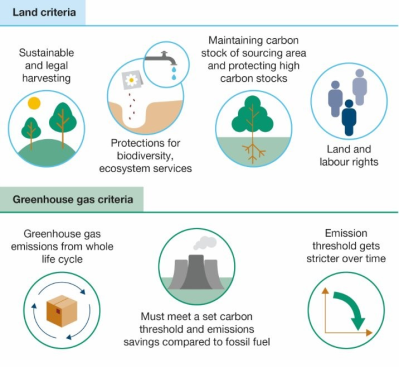
Figure 1 - Key aspects of Land and GHG Criteria - text version
Land criteria:
- Sustainable and legal harvesting
- Protections for biodiversity, ecosystem services
- Maintaining carbon stock of sourcing area and protecting high carbon stocks
- Land and labour rights
Greenhouse gas criteria:
- Greenhouse gas emissions from whole life cycle
- Must meet a set carbon threshold and emissions savings compared to fossil fuel
- Emission threshold gets stricter over time
There are a number of detailed proposals in this consultation and the evidence we collect will be important in helping us develop the common framework. A summary of proposals set out in this consultation can be found in Table 1. These proposals have been developed in line with meeting the policy objectives of this framework (as set out below) to minimise environmental harm and carbon emissions from the biomass supply chain while taking into account key considerations around deliverability and costs to government and industry. We welcome views on these proposals throughout this consultation.
Table 1 – Summary of Common framework proposals as set out in this consultation
| Criteria | Common Framework Proposals – Summary |
|---|---|
| Overarching | - To be delivered as a policy document to help inform legislation or contractual arrangements for individual schemes (rather than additional legislation). - Applied to any biomass feedstocks that are sourced domestically or internationally and used for bioenergy that is subject to a government support mechanism in the UK. - May also be used as guidance by the unsubsidised market on a voluntary basis to develop their own sustainability criteria. - To be reviewed regularly, and updates published every 5 years. |
| Land Criteria – Agricultural Land Criteria | - Direct Land Use Change (DLUC): Prohibited land categories to align with EU RED III. - Indirect Land Use Change (ILUC): Individual biomass policies to carry out ILUC/food competition risk assessment and set appropriate measures. - ILUC: Seeking further views/evidence on high ILUC risk feedstocks. |
| Land Criteria – Soil Criteria | - Requires agricultural residues to have soil management and monitoring plans in place, aligns with EU RED III. - Seeking further views on whether energy crops and food/feed crops where the whole plant is used should also be required to meet soil criteria. |
| Land Criteria – Forest Criteria | - Sustainable forest management principle setting process in line with Timber Procurement Policy (TPP) and Timber Standard. - Requirement to ‘maintain’ biodiversity and ecosystem services, (including soil and water quality) in line with UK Timber Standard. aligns with RED III intention. - Social criteria (e.g. health and safety of workers and indigenous land rights are included), including additional social criteria, i.e explicitly reference to principles in International Labour Organisation (ILO) Conventions and require that management and harvesting activities have a positive impact on local communities. - Forest Carbon Criteria: Explicit requirement to prevent sourcing from deforestation, aligns with RED III. - Forest Carbon Criteria: Requirement to maintain forest productivity, plus explicit requirement for carbon stocks to be maintained or enhanced. - Prohibited land categories integrated in forest criteria in line with RED III. - Roots as an ineligible feedstock, aligns with EU RED III. - Seeking views on how cascading use principle can be implemented in UK context. - Sawlogs not permitted for use aligns with EU RED III. - 100% sustainable sourcing, aligns with EU RED III. |
| GHG Criteria | - Common key parameters to be included within GHG criteria lifecycle calculation, with flexibility to develop detailed methodology within individual biomass policies. The proposed life cycle parameters align with latest EU RED III. - Separate GHG threshold to be developed by sector within individual biomass policies taking into account: - Sector carbon intensity and an assessment of how hard the sector is to decarbonise, allowing prioritisation of feedstocks for sectors where low-carbon alternatives are limited. - Tightening of threshold over time |
| Monitoring Reporting Verification (MRV) | - To seek views on harmonising feedstock definitions across different biomass applications. - Mandatory reporting country of origin in order for biomass to qualify as sustainable. - Reporting of minimum ustainability metrics in standardised format. - Incentive schemes publish detailed or aggregated sustainability data based on minimum sustainability metrics. - To strengthen the quality of auditing across end-use sectors by carrying out risks assessments prior to ISAE3000 third-party audits. - To introduce a regular and robust benchmarking process for Voluntary Certification Schemes (VCSs). This includes disclosing information related to quality control framework, auditor qualifications, level of scrutiny involved in decision-making, and the duration of each auditor rotation. - To address the potential conflicts of interest between operators and VCSs by making a declaration of conflict of interest mandatory from both sides. - To seek views on government nominated bodies carrying out targeted in-person site visits and inspections of all elements of biomass supply chains. - To seek views on giving enforcement bodies powers to request any data from any body involved in the process of designating biomass as sustainable, including operators. - Guiding enforcement principles to strengthen compliance practices within individual biomass policies. |
1. A Common Sustainability Framework
1.1 The case for intervention
Biomass covers a broad range of feedstock types of biological origin (as set out in chapter 2) that can be converted into multiple energy vectors and applications via various conversion routes and technologies. This is reflected in the UK policy landscape where there are multiple biomass incentive schemes across different areas depending on the specific policy objectives as shown in Table 1.1. Across these policies, there is currently no one UK definition of biomass sustainability. Much of the existing criteria are historically derived from the EU Renewable Energy Directive (RED I and RED II [footnote 2]) and the UK’s Timber Regulations (UKTR) and Timber Procurement Policy (UK TPP). There is currently no government policy on biomass sustainability of this type applied to unsubsidised biomass use in the UK. While there are many similarities between existing criteria, there are also increasing levels of divergence between existing biomass incentive schemes, leading to potential market distortion from applying inconsistent criteria across various biomass applications. This is primarily the case currently in the bioenergy sectors (power, heat and transport fuels) due to the absence of an overarching framework. A common sustainability framework would enable a consistent government view on sustainable biomass. A lack of consistent overarching policy framework on biomass sustainability from government also risks future policies not updating their sustainability criteria in line with the latest evidence.
A common framework covering multiple biomass applications would look to include standard minimum requirements but allow sectors to set higher requirements and ambitions where relevant and achievable. The common framework would recognise areas where there should be consistency across sectors i.e. on key environmental parameters relating to the sourcing of the biomass feedstock under the land criteria, and where divergence may be needed. This recognises the diverse nature of biomass supply chains i.e. in the inclusion or exclusion of certain parameters relating to life cycle emissions accounting under the GHG criteria. The common framework in its first and future iterations could also expand the scope of existing criteria to cover emerging biomass feedstocks and uses within the net zero landscape, such as bioenergy with carbon capture and storage (BECCS).
Table 1.1: Current biomass sustainability policy landscape
| Policy | Biomass application | Sustainability Criteria | Policy Owner | Delivery body |
|---|---|---|---|---|
| Renewables Obligation (RO) | Electricity | Based on UK Timber Procurement Policy and EU Renewable Energy Directive (RED I) | DESNZ | Ofgem |
| Contracts for Difference (CfD) | Electricity | Aligns with RO | DESNZ | LCCC |
| Low Carbon Dispatchable CfD | Electricity (Large Scale) | CfD criteria, with updates to certain elements such as 100 % sustainable sourcing requirements and GHG threshold in line with EU RED II. | DESNZ | LCCC |
| Renewable Heat Incentive (RHI) | Heat (Domestic and non-domestic) | Based on UK Timber Procurement Policy and EU Renewable Energy Directive (RED I) | DESNZ | Ofgem |
| Green Gas Support Scheme (GGSS) | Biomethane (as green gas) | Land criteria based on UK Timber Procurement Policy and EU RED I | ||
| GHG criteria based on EU RED II | DESNZ | Ofgem | ||
| Renewable Transport Fuel Obligation (RTFO) | Transport – Multiple | Similar to EU RED II, with some specific areas of difference | DfT | LCF Delivery Unit, DfT |
| Sustainable Aviation Fuel Mandate (SAF Mandate) | Transport – Aviation | Similar to EU RED II, with some specific areas of difference | DfT | LCF Delivery Unit, DfT |
| Hydrogen Production Business Model (HPBM) | Hydrogen production via various biomass pathways | As set out in Low Carbon Hydrogen Standard. Land criteria based on EU RED II. GHG criteria based on methodology of International Partnership for Hydrogen and Fuel Cells in the Economy (IPHE) | DESNZ | LCCC |
| UK ETS | Multiple | Criteria for bioliquids in line with EU RED I or with relevant UK schemes No criteria for solid or gaseous biomass |
DESNZ | UK ETS Authority |
1.2 Policy objectives
The aims of this common framework are to:
- Develop consistent biomass sustainability criteria and ensure effective delivery across different biomass applications in line with latest evidence.
- Ensure government only supports biomass that meets sustainability criteria to support its net zero objectives.
The policy objectives set out above will be achieved through the development of minimum sustainability criteria in line with evidence and taking into consideration a wider range of factors and key principles. Where there is an evidence gap, we are seeking views from stakeholders through this consultation to provide us with relevant evidence to support the development of this policy.
Overarching principles for developing sustainability criteria
The principles set out below have been considered in developing the proposals set out within this consultation.
- Maximise carbon benefits from bioenergy use. Biomass can only be considered low carbon if it is sourced in line with certain conditions. These conditions vary depending on the feedstock, and type of land from which it is sourced. This is because the carbon risks vary between feedstocks if these are unsustainably sourced. For example, forest derived biomass if sourced unsustainably could lead to overall negative carbon impacts. Supply chain emissions (e.g. from the cultivation, processing and transportation of the biomass) should also be minimised. The common framework should therefore ensure that biomass that meets the sustainability criteria can be considered low carbon, according to the latest evidence.
- Minimise wider environmental harm associated with bioenergy supply chains e.g. biodiversity and ecosystem services. The sourcing of biomass feedstocks can have negative wider environmental and social impacts if not managed carefully. For example, through land use change or poor land management/harvesting practices. It is therefore important that sourcing is undertaken with the aim of minimising these wider impacts.
- Alignment with wider government objectives and policies for related sectors e.g. timber industry, waste management, air quality, energy security. Typically, biomass used for bioenergy is a co-product, residue or waste from other industries. For example, forest derived biomass is closely linked to commercial forestry (timber production) sector, where the biomass industry will take the lowest quality / cost residues and by-products from the timber harvest. Where wastes are used for bioenergy, it must be in line with the waste hierarchy which is a legal requirement in England and Wales. The waste hierarchy ranks waste management options according to what is best for the environment, prioritising the prevention of waste where possible. Where waste is created, it gives priority to preparing it for re-use, then recycling, then energy recovery, and lastly disposal (e.g. landfill). Biomass sustainability criteria should therefore work alongside policies and regulations in these related sectors.
- Alignment with criteria used in other countries or regions e.g. EU Renewable Energy Directive (RED). Many countries, including the EU, have sustainability criteria for using biomass in electricity, heat, and transport. Some of these are similar to what the UK currently has in place, but there are also differences (Table 1.1). Because the UK relies on global supply chains for much of its biomass, it’s important that our criteria can work alongside other international criteria. If our requirements are too different, it could make importing and certifying biomass more costly or complicated. The goal is to create a balanced approach—one that allows the UK to keep pace with international best practice, while also ensuring our policies work well for our own needs. Where matching approaches used by other countries is suggested, it is because this could bring the greatest benefits to the UK overall.
- Deliverability. The practical ability to implement and operate the criteria, including the feasibility of robust monitoring, reporting, and verification (MRV) systems. This will depend on the availability and accessibility of data and evidence to demonstrate compliance.
- Costs to government, businesses and consumers. Stricter sustainability criteria are expected to require additional evidence collection and assurance, with associated cost and resource implications for industry and administrators. In addition, stricter criteria could result in a reduction in the supply of biomass, leading to possible increases in the cost of some biomass feedstocks. Some of these additional industry costs could be passed onto consumers, depending on the specific biomass application.
1.3 Implementation and scope of the common framework
We are inviting feedback and views through this consultation on how this framework could be implemented. The framework could be delivered as a policy document or through a legislative route. A legislative pathway could provide for enforcement of the framework across the whole UK bioeconomy, i.e. beyond government subsidised bioenergy generation. However, a legislative common framework would take longer to put in place and the increased uncertainty caused by this delay may discourage investment in areas already subject to extensive sustainability requirements.
A policy document could be published next year. This would provide a clear direction of travel from government on future criteria for those sectors and industries looking to invest in the nearer term in government incentivised bioenergy decarbonisation routes. If the common framework was delivered via a policy document, it would be implemented via individual biomass incentive schemes amending their own legislation or relevant contracts. This would limit the reach of the common framework to bioenergy applications that are subject to government incentive schemes and policies but would not require the establishment of a new overarching regulatory system. Currently, the majority of biomass use across power, heat and transport applications is supported by government through various subsidy schemes and policies (Table 1.1). A policy document would also be more flexible and responsive to review and update in line with latest evidence which is an important consideration for developing technologies. We expect future bioenergy policies within different sectors to be regulated by way of its own legislation or by contract.
Therefore, our preferred option is to develop a policy document, and that this framework should initially cover any biomass feedstocks (sourced domestically or internationally) that are used for bioenergy, within the UK, that is subject to government incentive schemes and policies.
Future use of biomass in the UK is expected to evolve, including a move to greater unsubsidised use. The framework would be reviewed regularly to align with the evolving landscape including expanding its scope to the unsubsidised market as needed in the future. The legislative route could be explored as an option to enable this as part of the future review of the framework.
In the meantime, where relevant, this framework may be used as a voluntary framework by biomass users outside of the bioenergy subsidy regime, e.g. chemicals manufacturers, to improve public confidence and trust in the sustainability of the biomass used.
If delivered through a policy document, the initial scope of this framework would cover government incentive schemes for bioenergy to support the decarbonisation of power, heat, transport and industry including BECCS. This also includes policies that support the production of bio-based fuels such as biomethane and biomass-derived hydrogen which can have multiple decarbonisation applications. It would be expected that all relevant schemes will take steps to adopt the framework once published, noting it could take several years to fully adopt the framework if legislative changes are required. Where legislative schemes are updated to align with the common framework, the new criteria may not apply to existing participants in the scheme. It will not apply to participants under schemes that are closed to new participants. Existing terms on biomass sustainability would still apply to participants who are operating under contractual schemes, such as CfDs, because they have undertaken their investments on the basis of the applicable biomass sustainability terms and conditions within their signed contracts.
For existing schemes ending in the nearer term, it may not be feasible to adopt the framework before closure; there may be financial implications and costs to government and consumers that will need to be considered when implementing the framework.
For ongoing schemes which operate on a consignment basis, such as the RTFO and SAF Mandate, transition arrangements to the common framework will be set out when these schemes update their existing criteria.
Any future biomass policies launched after the common framework is published would be expected to align with the common framework. This overarching framework would continue to allow flexibility for the variable sectoral and technical needs of different biomass feedstocks and applications within the scope of this framework.
Implementation of this framework by individual policies in the future should consider options to avoid imposing unnecessary administrative burden on smaller operators. For example, appropriate exemptions from sustainability criteria could be introduced for small operators where compliance would be disproportionately burdensome and there is minimal risk of large-scale unsustainable biomass use.
1. Do you agree that the initial scope of the framework should be limited to bioenergy that is subject to government incentive schemes? If not, please explain why and provide evidence to support your response.
2. Do you agree that the common criteria should be delivered as a policy document and implemented through the relevant legislative or contractual frameworks of each individual biomass policy?
3. Should government consider a legislative route for implementing the common sustainability framework in the future, including expanding for non-subsidised uses? Please provide evidence to support your response.
Further details of how we expect the common framework to interact with existing and emerging biomass policies are described in the sub-sections below.
Power
Multiple sustainable biomass feedstocks can be used to generate electricity, playing a key role in the UK’s current electricity system, including through hundreds of small-scale generating stations. In 2024, around 14% of electricity generation came from biomass [footnote 3], and biomass may play an important role in future UK electricity generation via BECCS (see BECCS section below).
Currently, the majority of biomass use in the power sector is supported by government via subsidy schemes. These include schemes that are closed to new entrants, such as the Renewables Obligation (RO) and Feed in Tariff (FIT), as well as ongoing policies like the Contracts for Difference (CfD) scheme. Most recently, the Low Carbon Contracts Company (LCCC), on the direction of the Secretary of State, signed a short-term Low-Carbon Dispatchable Contract for Difference (LCD CfD) with Drax on 5 November 2025. The new contract ensures Drax’s continued operation for four years from 2027 to 2031. [footnote 4] Some power stations are also required to report emissions as part of the UK ETS (see section below).
Electricity support schemes such as RO and CfD include sustainability criteria as a condition for receiving support. These are based on RED I and the UK TPP/Timber Standard. For the forthcoming low-carbon dispatchable CfD for large-scale generation specifically, the sustainability criteria that will underpin the agreement are being further tightened. This includes increasing the proportion of woody biomass that must come from sustainable sources to 100%; reducing the allowable supply chain emissions and excluding material sourced from primary forests and old growth forests from receiving support payments.
Generators supported under existing schemes have invested in good faith based on current sustainability criteria. There is no plan to amend the sustainability criteria (to align with the common framework once finalised) for closed schemes, such as the RO, or CfDs already signed and entered into. Retrospective changes may affect investor confidence, increase costs for investors and/or bill payers, and in extreme cases, could impact fuel supplies and security of supply. Nevertheless, government keeps existing arrangements under review to ensure they remain fit for purpose taking account of the science and evidence base as it evolves.
Any future policies on biomass electricity developed after publication of the framework, including power BECCS, are expected to include sustainability criteria in line with this common framework. See further details under BECCS section.
Heat
Biomass feedstocks are utilised as a heat source to heat buildings as well as an energy source for industrial processes (as described in ‘Industrial use of Biomass’ section below). In 2024, 67% of renewable heat in the UK was generated using biomass (around 37 TWh) [footnote 5].
The primary form of Government support for biomass in heating to date has been through the Renewable Heat Incentive (RHI), which is closed to new applicants. Ongoing support schemes include the Boiler Upgrade Scheme which offer grants of £5,000 to support the installation of biomass boilers up to 45 kW capacity in domestic and non-domestic buildings in rural areas off the gas grid. The Green Gas Support Scheme (GGSS) is another ongoing government incentive scheme supporting the production of biomethane for injection into the gas grid (see section below on ‘Biomethane Production’). Government also supports the use of biomass as the primary heat source in Heat Networks under one scheme funded by the Green Heat Network Fund (GHNF).
For most homes and buildings, the transition to clean heating will involve installing a heat pump, or connection to a heat network, as these are cost-effective, proven technologies. It is expected that biomass may continue to have a role in decarbonising certain properties such as some off gas grid homes and in Heat Networks either as heat supplied directly, or as recirculation of captured waste heat (i.e. from Biomass Combined Heat and Power (CHP)).
Government would require stronger evidence on their affordability for consumers, and the availability of sustainable feedstocks before taking a decision on whether to support the use of biomass derived renewable liquid heating fuels (RLHFs), like hydrotreated vegetable oil (HVO) for clean heating.
Schemes such as the RHI include biomass sustainability criteria requirements based on RED I and the UK TPP/Timber Standard. The Biomass Suppliers List (BSL) [footnote 6], which is a list of wood fuel that has proven to meet the sustainability criteria under RHI, is used by participants of RHI to show compliance with the criteria. As we progress towards the later years of the RHI, we would like to consider the future interaction between the common framework and the BSL. Any future policies to support the use of biomass to decarbonise heating is expected to align with the common framework for sustainability criteria. However, the framework is not intended to alter existing scheme requirements for participants.
Participants in the RHI or other heat sector schemes may be in scope of the UK ETS. Where participants are in scope, and where UK ETS sustainability criteria apply, they must demonstrate that they have met the UK ETS biomass sustainability criteria in order to be given credit. For further detail on the UK ETS see the section below.
4. What are your views on the role of the Biomass Suppliers List (BSL) post RHI and how government should frame the relationship between the common framework and BSL in relation to sustainability requirements?
Transport
Biomass feedstocks can be used to produce liquid and gaseous biofuels that, alongside other low carbon fuels and zero emission technologies, currently play an important role in the decarbonisation of the transport sector and will continue to do so as the UK transitions towards net zero 2050.
Since 2008, the RTFO has been the main government policy supporting the decarbonisation of fuels used in surface transport. Examples of these biofuels include biodiesel and bioethanol, typically blended into diesel and petrol respectively, while more recently we have seen increasing use of HVO (also known as renewable diesel) and biomethane [footnote 7].
Supported by the RTFO, biofuels made up 7.7% of surface transport fuel in 2024 [footnote 8] and delivered 55 MtCO2e of GHG savings since its inception in 2008, which is around two thirds of transport’s GHG savings between 2008 and 2022. [footnote 9] DfT recently published a Statutory Review of the RTFO, which reaffirmed the importance of low carbon fuels such as biofuels in surface transport decarbonisation and committed to consult on various aspects of the scheme, including options for increasing future targets. [footnote 10]
Government has also been expanding its low carbon fuel policy framework beyond surface transport in support of wider transport decarbonisation efforts. In aviation, the Sustainable Aviation Fuel (SAF) Mandate came into force on 1 January 2025. [footnote 11] Similar to the RTFO, this sets targets for fuel suppliers to ensure a proportion of their jet fuel is SAF (including SAF derived from biomass), starting at 2% in 2025, reaching 10% by 2030, and 22% by 2040. We are supporting SAF production in the UK by developing a Revenue Certainty Mechanism (RCM) to help de-risk domestic SAF production projects, thus creating both demand and supply side regulatory support from government for these fuels. We are also providing grant funding through the Advanced Fuels Fund to support first-of-a-kind SAF production plants, with £63m allocated across 17 UK projects for this financial year. The Spending Review 2025 committed to continue support for the production of SAF in the UK to 2029/30. Under the UK ETS, aircraft operators can submit emissions reduction claims for SAF which meet the eligibility criteria established in the RTFO. SAF is treated as producing zero emissions under the UK ETS. In the government response to the ‘Developing the UK Emissions Trading Scheme’ consultation, the UK ETS Authority committed to review the treatment of SAF under the UK ETS in light of the introduction of the UK SAF Mandate. The Authority will consult in due course.
Meanwhile the Maritime Decarbonisation Strategy (MDS) [footnote 12] committed to consulting on the introduction of domestic regulations to drive uptake of low carbon fuels in maritime transport, including biofuels. This will sit alongside and complement action being taken through the International Maritime Organization (IMO) to deliver the IMO 2023 GHG Strategy [footnote 13]. From 1 July 2026 domestic maritime voyages and in-port emissions involving vessels of 5,000 gross tonnage (GT) and above will be included in the UK ETS. The use of sustainable fuels including those derived from biomass will be incentivised through zero-rating from the start of the scheme. Further details on eligibility criteria for sustainable fuels will be set out in guidance in due course.
Policies such as RTFO and SAF Mandate include biomass sustainability criteria similar to RED II. Subject to the outcome of this consultation, DfT would look to update the RTFO and SAF Mandate in line with the common framework once published. For any future maritime policies, given the international nature of the policy area, the implementation of robust sustainability criteria in line with similar domestic and international policies and standards, will be essential. This will include consideration of the latest EU RED III criteria and the emerging work at the IMO on the implementation of LCA Guidelines, alongside the common framework criteria.
Biomethane Production
Biomethane is a biomass fuel produced from biogenic material such as food waste, manure and plants. These biogenic materials are broken down by microbes in the absence of oxygen in Anaerobic Digestion (AD) plants to produce biogas, which is then ‘upgraded’ by removing CO2 and other contaminants to produce biomethane. The resultant biomethane is chemically identical to fossil fuel gas and can be directly injected to the existing gas grid, representing 1% of total gas demand in 2024 [footnote 14].
Across a range of pathways, biomethane has an important role to play in the transition to net zero, decarbonising the gas supply, reducing reliance on fossil fuels, and increasing our country’s energy security across a range of sectors. Currently, biomethane is primarily used to decarbonise heating (by means of gas grid injection), and in the longer term we expect it to be used flexibly across many different end-uses including industry, transport, and low carbon dispatchable power generation at gas-fired power plants. Government is assessing the strategic role of biomethane within the energy system to inform policy on a future framework for biomethane from 2028.
The government currently supports the production of biomethane which is injected into the gas grid through the Green Gas Support Scheme (GGSS) which closes to new applicants in March 2028. The GGSS includes biomass sustainability criteria covering land criteria (derived from RED I) and GHG criteria, derived from RED II. The scheme also requires at least 50% of all biomethane (by energy content) to be produced using wastes or residue feedstocks in view of the greater environmental benefits and carbon savings available relative to the use of crops. Given the GGSS scheme closure date and the already close alignment with the common framework proposals, we do not intend to amend existing GGSS sustainability requirements. This is because of the low risk of any distortions across biomass sectors and their sustainability practices which could inappropriately shift biomass feedstocks to different sectors.
Currently, biomethane producers may participate in both the GGSS and the RTFO scheme which offers support for biomethane use in transport, however producers are not able to claim for the same unit of biomethane under both schemes and each unit must comply with the respective scheme sustainability requirements. This is to offer flexibility for biomethane producers to participate in both schemes which recognises biomethanes value as a flexible fuel.
In February 2024, we issued the future policy framework for biomethane production: call for evidence (CfE) to inform post-GGSS policy development, assess the barriers to growth in the sector, and the options available to address them. We are considering the responses received from the CfE and are developing policy options on a future framework consultation we expect to publish in FY (financial year) 2025/26.
Any future biomethane policy will prioritise biomethane which is environmentally sustainable, in line with the common biomass sustainability framework recommendations, while also considering options for maximising carbon savings and supporting sustainable practices that contribute positively to the wider environment.
The UK ETS applies a zero emissions factor to combustion of biomethane where it is supplied directly to ETS installations. As outlined in the future policy framework for biomethane production call for evidence, the ETS Authority is considering whether the ETS could account for biomethane injected into the gas grid.
Hydrogen Production
Biogenic sources, such as biomass, biogas, and bio-based waste materials, can serve as feedstocks for hydrogen production through several pathways. Biomass gasification involves heating organic material in a controlled environment to produce syngas, which is then processed to extract hydrogen. Biogas reforming, on the other hand, utilises methane from anaerobic digestion of organic waste, converting it into hydrogen through steam reforming, similar to natural gas-based hydrogen production. Low carbon hydrogen may also be produced using biomass-derived electricity, for example using power BECCS to produce electrolytic hydrogen. The use of biomass-derived electricity would be classified as final bioenergy use and therefore the hydrogen product would be outside the scope of this biomass sustainability common framework. When combined with carbon capture and storage (CCS), these pathways using biogenic feedstocks can produce low or even negative emission hydrogen (See BECCS section below).
The Low Carbon Hydrogen Standard (LCHS) sets the definition for what the Government considers to be ‘low carbon’ production of hydrogen, which includes biomass sustainability criteria (land criteria) as well as a strict GHG emissions methodology. It takes a technology agnostic approach, establishing a methodology for calculating GHG emissions from hydrogen derived from renewable, biomass and fossil sources and sets a maximum emissions threshold for hydrogen production. Compliance with the LCHS is a condition for accessing support through the Hydrogen Production Business Model. We expect to update the LCHS to align with the common framework, where appropriate.
Low carbon hydrogen, including biomass derived hydrogen is also eligible to receive support through the RTFO and SAF Mandate when used to support decarbonisation of transport. (see Transport section).
Bioenergy with Carbon Capture and Storage (BECCS)
Certain applications of bioenergy can incorporate CCS at the point of use. CCS can also be incorporated at the biomass fuel production stage as described under the biomethane and Hydrogen sections above. BECCS can be a carbon-negative technology that removes CO₂ from the atmosphere while producing renewable energy. During the energy generation process, CO₂ emissions are captured using carbon capture technology, preventing them from being released into the atmosphere. The captured CO₂ is then compressed and transported for permanent storage in deep geological formations like saline aquifers or depleted oil and gas fields.
BECCS could be an important tool for achieving global net-zero targets, as it not only offsets emissions but also actively removes CO₂ from the atmosphere. Most 1.5C compliant climate modelling scenarios used for the IPCC 6th Assessment Report [footnote 15], consider BECCS essential for meeting long-term climate goals and mitigating the effects of climate change. Examples of BECCS include power BECCS, industrial BECCS (including industrial Energy from Waste (EfW) BECCS), Biomethane BECCS and hydrogen (H2) BECCS.
Specific BECCS pathways can also be considered greenhouse gas removal (GGR) operations if net negative emissions can be achieved based on the life cycle assessment. Where they do not, such as some industrial BECCS pathways, these would not be considered as GGR, but a decarbonisation pathway to support reduction in emissions within the industrial sector. The Government has committed to developing a GGR Standard which will be published in due course. The technology-specific GGR methodologies are currently being developed by BSI who were commissioned in September 2024. BSI has already published initial BECCS and DACCS quantification specifications in July 2025 after a BSI-led consultation with a range of stakeholders. Going forward, we have asked BSI to build on that work but to also align wherever possible and appropriate for the UK context, with the EU CRCF (Carbon Removals and Carbon Farming) directive and permanent carbon removal regulation The fleshed out detailed methodologies are expected to be delivered in 2027. The initial specifications will be further fleshed out into detailed methodologies. The primary purpose is to ensure that any carbon removal activities if supported by government in the future under schemes such as the GGR Business model, and Waste ICC Business model – for technologies such as direct air carbon capture and storage (DACCS) or BECCS generate carbon credits that are robust, measurable, verifiable, and permanent.
The GGR Standard once developed will include biomass sustainability requirements and the intention is to align with this common framework, as relevant, to ensure that any biomass supported under relevant future BECCS policy incentive schemes, if launched, would only support the use of sustainable biomass. In May 2025 government commissioned an independent review of GGRs, to consider how options for GGRs, including large-scale Power Bio-energy with Carbon Capture and Storage (BECCS) and Direct Air Carbon Capture and Storage (DACCS), can assist the UK in meeting our net zero targets, out to 2050. The findings were published on 23 October, and the government will now consider the recommendations and respond in due course.
For any future projects supported under the Industrial Carbon Capture (ICC) business model, which use biomass fuels or feedstocks, it is expected that they will be required to demonstrate compliance with the relevant UK ETS biomass criteria (see section below). This is because part of the subsidy payment under the ICC business model is designed to reflect the emitter’s counterfactual exposure to the UK ETS, i.e., the emissions which, if not captured, would otherwise have been subject to the carbon price.
Industrial uses of biomass
Sustainable biomass is a renewable low carbon source of energy (i.e. Bioenergy) and input material for industrial processes. For instance, it could be used as a low carbon fuel for industrial processes like cement manufacturing or as a feedstock to make products like bio-based chemicals (see section below on biomass for non-energy uses). Government recognises the role of biomass use in industry to meet net zero, particularly where there are limited alternatives to biomass to decarbonise industrial processes or products. This includes long term uses in combination with carbon capture to generate negative emissions (see section above on BECCS), and in the short and medium term as a transitional fuel, and non-energy uses in industry (see section below on Biomass for non-energy use).
The government is committed to developing a new plan for industrial decarbonisation where it will outline its approach for a competitive low carbon industrial base in the UK, ensuring growth opportunities are captured in tandem with emissions reductions. The government has set out further details on its plans to decarbonise industry in its Carbon Budget and Growth Delivery Plan, published on 29 October. Future government policies to support the use of biomass in industry will be expected to align with the common framework for sustainability criteria.
UK Emissions Trading Scheme (UK ETS)
The UK ETS is an essential part of our approach to cutting emissions and driving green investment. It sets a limit on emissions, creating a carbon price for the power sector, heavy industry and aviation, incentivising investment in the clean technologies that will power and supply the economy of the future. The UK ETS is jointly run by the UK ETS Authority (‘the Authority’), made up of the UK Government, Scottish Government, Welsh Government and Department of Agriculture, Environment and Rural Affairs for Northern Ireland (DAERA). Currently under the UK ETS, sustainability criteria are applied to bioliquids, in line with EU RED I.
Where ETS operators can demonstrate adherence to this sustainability criteria when combusting bioliquids, they can zero-rate these emissions. In July 2022, as part of the “Developing the UK Emissions Trading Scheme” consultation the Authority consulted on introducing sustainability criteria to solid and gaseous biomass fuels in scope of the UK ETS (power and energy intensive industries). In the response to this consultation, the Authority signalled that it aims to align the UK ETS sustainability criteria with those used in other UK biomass policy areas. The Authority identified aligning the UK ETS with the sustainability criteria in EU RED II would also harmonise with other UK policies, such as the RTFO. This was intended to ensure that there would be some familiarity amongst relevant UK industry with the criteria to be implemented. Currently, the Authority still intends to align the UK ETS biomass sustainability criteria to other UK policy areas. Therefore, the Authority will consider wider responses to this consultation in drawing up future policy proposals for updated biomass sustainability criteria for the UK ETS. To support this, responses to questions in this consultation, where they pertain to the UK ETS, will be shared with the Authority, which includes officials from the UK Government as well as those of the Devolved Governments (Scotland, Wales and Northern Ireland) to support development of UK ETS policy on biomass sustainability.
Biomass for non-bioenergy uses
Biomass for non-energy uses, such as the production of chemicals, timber products and other materials, is currently not produced under government subsidy support, and therefore not in scope of this framework. Government recognises that the use of biomass as a sustainable feedstock is an area that is developing rapidly in certain areas, such as the chemicals sector and enabled by engineering biology and industrial biotechnology. However, further work is required to understand the complex supply chains and pathways associated with use of biomass within the non-energy sectors and determine appropriate sustainability requirements and its impacts on those sectors. This consultation is being used to gather initial views and evidence on how this framework could be expanded in the future to include these sectors (see questions under relevant individual chapters later in this consultation). Other traditional uses of biomass such as timber products and paper are also currently not in scope of this framework [footnote 16].
1.4 Review and updates to the common framework
The sustainability requirements developed within this framework are subject to evolving evidence and will need to be updated regularly to remain in line with advancements. The scope of application of the framework should also be regularly reviewed to in line with evolving bioenergy use and prioritisation policies in the UK in line with the government’s wider objectives. However, these updates must be balanced with the need to provide stability and predictability for businesses, avoiding disruption from frequent or unpredictable policy changes. Therefore, on balance, it is proposed that the framework is reviewed and updated guidance published every five years. This should not prevent individual biomass policies from updating their schemes to reflect any emerging technologies or issues as relevant in between these updates.
5. Do you agree that the updated policy guidance document should be published every 5 years? Please provide evidence to support your response or an alternative proposal for review timelines.
2. Biomass Feedstock Categories & Definitions
For the purposes of this framework, a biomass feedstock is defined as any solid, liquid or gaseous material of biological origin, including the biodegradable fraction of products, wastes and residues from biological origin, which is consistent with other international definitions of biomass feedstock such as IPCC and EU Renewable Energy Directive (RED) [footnote 17]. This definition covers a broad range of potential biomass feedstock types in scope of the framework, with varying requirements on sustainability. Therefore, throughout this consultation we have used key biomass feedstock categories and definitions to clarify which criteria applies to which biomass feedstock group. This will enable biomass users/generators to understand what requirements they need to follow and report against to show compliance with the framework criteria, further details of which are set out in the MRV chapter. We have used a list of key feedstock categories, and their definitions as set out in Table 2.1. These are based on existing definitions and aim to avoid divergence with existing UK policies and frameworks. They are not necessarily mutually exclusive, and certain feedstock categories may be a subset of others. The following chapters will make clear what requirements apply to each feedstock categories.
Table 2.1: Key biomass feedstock categories and definitions
| Feedstock category | Definition |
|---|---|
| Forest derived biomass | Any biomass derived from the trees or shrubs in a forest. |
| Sawmill/wood industry residues and wastes. | Residues generated directly during the processing of wood at a sawmill or from the wood industry (does not include forestry residues). Can include sawdust, small offcuts, wood shavings or bark. |
| Biomass, including residues, from trees or shrubs from land that is not forest or agricultural land | Wood materials sourced from urban areas, parks, gardens, and other land that is neither forest nor agriculture land. This includes tree trimmings, pruning waste, and other woody residues generated from urban forestry and landscape maintenance activities. |
| Woody biomass | Woody biomass is a term commonly used in some existing UK sustainability criteria. For the purposes of this consultation, woody biomass is organic material composed of lignin, cellulose and hemicellulose, such as biomass sourced from forests, woody energy crops, post-consumer waste wood, sawmill residues and forest-based industries’ residues and wastes. |
| Energy crops | Crops that consist of non-food cellulosic material or ligno-cellulosic material, except saw logs and veneer logs, which: - are grown for the purpose of being used as fuel or energy - are not a residue or a waste - would not normally be used for food or feed Includes both woody and non-woody crops, eg: - short rotation coppice (SRC) (woody energy crop) - miscanthus, reed canary grass, switchgrass (non-woody energy crops) Based on RTFO |
| Other crops | Crops that do not fall under the definition of energy crops. This could include food / feed crops that are typically grown and harvested for the primary purpose of human or animal consumption. |
| Short Rotation Forestry (SRF) | Tree plantations that use fast-growing species. These trees are harvested on shorter rotations than conventional forestry, typically every 10-20 years. Based on Forest Research definition [footnote 18] |
| Residues, including processing residues | A substance that is not the end product sought directly from the process; the production of which is not a primary aim of the process; and in respect of which the process has not been deliberately modified in order to produce it. Since some substances or materials that are produced in a production process (but are not the target product of the process, such as woodchips and sawdust at the sawmill) can have economic value, waste materials may well lose their waste characteristics (non-waste) and thus become processing residues. Based on RED II/III |
| Residues from agriculture, aquaculture, fisheries, forestry | Residues that are directly generated by agriculture, aquaculture, fisheries, forestry. It does not include residues from related industries or residues from processing. Residues from agriculture includes straw, husks, and other by-products from crop production. Residues from forestry includes branch wood, diseased wood and storm salvage from natural disturbances, or treetops. Based on RED II/III |
| Wastes | Any substance or object which the holder discards or intends or is required to discard. This definition excludes substances that have been intentionally modified or contaminated for the purpose of transforming it into a waste. Based on RED II/III (point (1) of Article 3 of Directive 2008/98/EC) |
| Wastes from agriculture, aquaculture, fisheries, forestry | Wastes that are directly generated by agriculture, aquaculture, fisheries, forestry. It does not include wastes from related industries or residues from processing. Based on RED II/III |
| Residual Municipal Solid Waste | Municipal solid waste refers to non-recyclable household waste and that from other sources which is similar in nature and composition to household waste, including ‘household-like’ waste generated by businesses and collected by private contractors. Municipal solid waste will have both a biogenic and fossil component and includes a mixture of materials such as waste food, paper, plastics, glass, metals and textiles. |
Note that table 2.1 does not provide a comprehensive list of all biomass feedstocks and further guidance on fuel classification against these categories would need to be provided to operators participating in future biomass policies and schemes as they adopt this framework. We expect this to be provided as guidance by relevant authorities responsible for checking compliance with the framework under the relevant future biomass schemes/policies, as needed as per current practice within existing schemes. In particular, classifying something as a waste or residue is a complex area and requires further guidance to be provided by relevant authorities responsible for checking compliance with the framework.
6. Do you agree with the list of key feedstock categories and their definitions in scope of the common framework? Please provide evidence to support your response.
The following chapters set out the detailed policy proposals under the land criteria and GHG criteria for the common framework and include discussion on feedstocks in scope of each set of criteria. The final chapter sets out proposals on the associated monitoring, reporting and verification requirements to show compliance with the land and GHG criteria.
3. Land Criteria
3.1 The case for land criteria
For biomass use to be sustainable, it must be low carbon but also be compatible with wider environmental goals (such as protecting biodiversity and ecosystem services). Biomass feedstocks, if sourced unsustainably, can lead to negative environmental consequences through land use change, poor land management and overexploitation of land. To prevent this, biomass supported by existing UK incentive schemes and policies is required to comply with land criteria. The greenhouse gas emissions associated with the whole supply chain are addressed separately under the Greenhouse Gas Criteria in Chapter 4.
The existing land criteria put in place environmental protections and social requirements; ensure good forest management practices are followed; and areas of high carbon stock are protected. These criteria apply to the sourcing of biomass feedstocks (see Table 3.1 in ‘3.2 Land Criteria Structure & Scope’ section), regardless of whether it is sourced domestically or internationally. The requirements differ according to the type of the biomass feedstock and the impact it could have on different types of land (i.e. forest and agricultural) and soil, which would continue under the common framework.
Currently, the requirements vary by sector because each scheme independently developed its own requirements based on UK Timber Procurement Policy or on EU RED I and RED II. The common sustainability framework aims to align and strengthen these requirements, in line with principles set out in Chapter 1, to give clarity to the bioenergy market and ensure a high level of environmental and social integrity across all uses. This includes an assessment of potential biomass supply impacts, where evidence is available.
Summary tables are included at the top of the agricultural land criteria, soil criteria and forest criteria sections comparing the proposals to existing criteria for each section.
3.2 Land criteria structure & scope
Raw feedstocks (the natural materials such as those set out in chapter 2 to make biomass fuels) are sourced from many different land types and industries. Different protections are therefore needed depending on feedstock type. The land criteria requirements therefore consist of:
-
The agricultural land criteria [page 36 to 48]
Seeks to minimise the carbon and wider environmental impacts (e.g. biodiversity) of bioenergy feedstocks grown on agricultural land through qualitative measures such as preventing the sourcing of feedstocks from land that has been recently converted from certain ‘prohibited land categories’, namely areas of high biodiverse value and areas of high carbon stock. It also includes consideration of measures to prevent indirect land use change (ILUC) risks. -
The soil carbon criteria [page 48 to 50]
Minimises potential impacts of the growing, cultivation and harvesting bioenergy feedstocks on soil health and soil carbon via measures such as requirement to have soil monitoring plans. -
The forest criteria [pages 50 to 72]
Seeks to minimise carbon and wider environmental and social impacts of bioenergy feedstocks sourced from forests through requirements on sustainable forest management practices, including on forest carbon, biodiversity and ecosystem services.
The following sections of this chapter set out further detail on the proposed criteria under the common framework (and where they differ from existing UK and international criteria), including proposals on which feedstocks need to comply with which criteria as shown in table 3.1 below. We are inviting feedback and evidence on these proposals through this consultation. Note: further detail and questions on which feedstocks should comply with each section of the land criteria are set out under the relevant sections.
Table 3.1: Proposed land criteria requirements for each feedstock type under the common framework.
| Feedstock category | Proposed requirements |
|---|---|
| Forest derived biomass, including residues from forestry or wastes from forestry. | Forest criteria Note: Sawmill residues currently do not have to meet forest criteria under some existing UK schemes (such as RTFO, SAF Mandate and LCHS) and EU RED III. |
| Sawmill/ wood industry residues and wastes. | |
| Short Rotation Forestry (SRF) | |
| Residues from agriculture or wastes from agriculture | Agricultural land criteria and soil carbon criteria |
| Residues, including processing residues, which are not residues from agriculture, aquaculture, fisheries, forestry or sawmill/wood industry | Exempt from land criteria |
| Wastes, which are not wastes from agriculture, aquaculture, fisheries, forestry or sawmill/ wood industry | |
| Biomass, including residues, from trees or shrubs from land that is not forest or agricultural land | |
| Energy crops | Agricultural land criteria. Seeking views on application of soil criteria Note: Energy crops under existing UK schemes and EU RED III currently do not have to comply with soil criteria. |
| ‘Other crops’ where whole plant is used | Agricultural land criteria. Seeking views on application of soil criteria. Note: These do not have comply with soil criteria under existing UK schemes and EU RED III. |
| Any other feedstock, e.g. biomass from trees or shrubs on agricultural land that is not a forest (e.g. agroforestry) | Agricultural land criteria. |
3.3 Policy Proposals: agricultural land criteria
The case for agricultural land criteria
There are growing pressures on global land use both from the supply side (including as a consequence of climate change, e.g. desertification, sea level rise or impacts on yields) and from the demand side (population growth, resource use increase and land set aside for nature protection).
As demand for low carbon biomass energy increases, it places additional pressures on global land use to grow crops for bioenergy use, as well as for food. In 2023, biofuels accounted for 15% of global maize consumption and 17% of global vegetable oil consumption. [footnote 19]
Increased demand for bioenergy feedstocks produced on agricultural land can therefore have implications on the level and volatility of agricultural prices. It can also result in additional land being converted to agriculture, if yield increases cannot keep up with increasing demand. Land use change can occur through Direct Land Use Change (DLUC) and Indirect Land Use Change (ILUC). DLUC relates to when an area of land is converted to cropland for bioenergy from another use, which may have positive or negative GHG impacts. ILUC relates to where non-agricultural land (e.g. forest) elsewhere is brought into agricultural production due to displacement of existing food and feed crops by biomass production, which will generally have negative GHG impacts.
Emissions resulting from land use change can outweigh the GHG savings achieved by switching to bioenergy, particularly if the conversion occurs to land with high carbon stock (such as forests, wetlands and peatland). When high carbon stock land is cleared for agricultural use, much of the carbon stored is released into the atmosphere. In addition, the capacity of the land to absorb carbon dioxide from the atmosphere may also be compromised.
Land use change to cropland for bioenergy can also have negative impacts on other environmental goals, such as biodiversity, depending on site specific factors. For example, where a highly biodiverse area is converted to monoculture cropland.
Summary of Proposals
Table 3.2: key changes proposed in the common framework for the agricultural land criteria compared to existing criteria.
| RO / CfD / GGSS / RHI | RTFO / SAF mandate / LCHS (RED II based) | EU RED III | Common Framework proposals |
|---|---|---|---|
|
DLUC – Prohibited Land Categories: Prevents sourcing from prohibited land categories (areas of high biodiverse value and high carbon stock). ILUC: GGSS includes a waste threshold. |
Same as RO plus: DLUC Prohibited Land Categories: Adds additional prohibited land categories (highly biodiverse forest and separating natural and non-natural grassland) compared to RO. ILUC: RTFO and SAF mandate place restrictions on use of food crops. LCHS includes a waste threshold. |
Same as RTFO plus: DLUC – Prohibited Land Categories: Adds additional prohibited land categories (old growth forest and heathland) compared to RTFO. ILUC: Phase out of high ILUC risk feedstocks. |
DLUC - Prohibited land categories: align with RED III. ILUC: Individual biomass policies to carry out ILUC/food competition risk assessment and set appropriate measures. Gather further views/evidence on high ILUC risk feedstocks. |
The following sections sets out further details for each of the proposals shown in table 3.2 above, including key consultation questions as part of each proposal. We welcome views on these proposals.
Direct land use change (DLUC) – Prohibited land categories
In England, the principles of the Land Use Framework will include sustainability considerations regarding the conversion of other land uses, including food-producing agricultural land. The Land Use Framework will set out the principles, evidence, data and tools needed to help safeguard our most productive agricultural land and achieve our climate and nature targets.
This section covers proposals for prohibited land categories under the common framework, namely different types of land with high biodiverse value and high carbon stock.
Separately, the GHG criteria set out in chapter 4 of this consultation includes principles that seek to account for the carbon impacts of direct land use change (see section ‘Common parameters for calculating GHG life cycle emissions’).
The land criteria aim to provide protections against the use of land with high carbon stock and high biodiverse value for growing bioenergy crops. Existing criteria (both UK and international) include ‘prohibited land categories’ as a way to achieve this. These are land categories on which biomass feedstocks cannot be grown at all, as well as categories where the harvesting of biomass feedstocks must not change the status of the land.
In existing UK and international criteria, the land categories relate to the status that the land had in January 2008, which is derived from the original EU RED I. This prevents land which met the description of a ‘prohibited land category’ in January 2008, but since then has been converted to a different land category, from being utilised for bioenergy.
In some circumstances, and for certain protected land types (e.g. designated nature protection areas and non-natural grassland), the application of good land management practices means that material can be harvested from protected areas without damaging the integrity of the land. In these instances, the existing criteria include exclusions which allow feedstocks to be sourced from these land categories provided they can evidence that the pre-requisite good land management practices have been observed.
Building on existing criteria and including prohibited land categories in the common framework would ensure consistency across domestic and international requirements and reduce administrative burden. Retaining the reference date of January 2008 would also bring the same benefits in terms of international alignment and reducing administrative burden.
Therefore, we propose that the common sustainability framework continues to include prohibited land categories within the agricultural land criteria in line with latest EU criteria (RED III). The full list of specific land categories to be protected including up-to-date definitions are outlined below. This builds on existing criteria and includes proposals for the inclusion of new protected land categories within the common framework. We also propose retaining the reference date of January 2008 from existing UK and international criteria. The UK and Global Bioenergy Resource Model [footnote 20] already excludes these land categories and so we do not expect these proposals to have a significant impact on future biomass availability.
7. Do you agree that the agricultural land criteria should continue to include prohibited land categories in line with existing criteria? Please provide evidence to support your response.
8. Do you agree that the baseline should be set in January 2008? Please provide evidence to support your answer or provide an alternative proposal for when the baseline should be set.
Prohibited Land Categories – Areas of high biodiverse value
Biodiversity is essential for the processes that support all life on Earth and is the building block of our ecosystems.
When areas of high biodiverse value are converted to agricultural use, the biodiversity and ecosystems can be harmed or destroyed. In line with the principle of minimising wider environmental harm, to protect these important land categories and prevent biodiversity loss, biomass should not be sourced from these areas.
However, we recognise that biomass can be cultivated within some important land types without damaging the land or ecosystems and can be harvested sustainably if the correct measures are taken. In some cases, cultivating and harvesting biomass can be essential for maintaining that land status.
Therefore, we propose that raw material cannot be obtained from land that had one of the following statuses in or after January 2008, irrespective of whether the land continues to have that status:
- Primary forest, old growth forest, highly biodiverse forest, heathland and natural highly biodiverse grassland;
- Non-natural highly biodiverse grassland, unless evidence is provided that the harvesting of the raw material is necessary to preserve its status as highly biodiverse grassland;
- Areas designated for nature protection, unless evidence is provided that the production of that raw material did not interfere with those nature protection purposes.
Table 3.3 provides definitions for the protected land categories of high biodiverse value. These definitions align with the latest, up to date criteria developed by EU (RED III), allowing for consistency for suppliers operating across multiple jurisdictions. We propose that the common framework adopts these definitions.
Table 3.3: Definitions of land categories of high biodiverse value.
| Land category | Definition | Proposed sourcing requirement |
|---|---|---|
| Primary forest | Woodland of native species, where there is no clearly visible indication of human activity and the ecological processes are not significantly disturbed. Based on RED II/RED III |
Sourcing not permitted |
| Old growth forest | As defined in the country where the forest is located. If a definition for ‘old growth forest’ is not available in the country in which the forest is located, then ‘old growth forest’ has the following meaning: a forest stand or area consisting of native tree species that have developed, predominantly through natural processes, structures and dynamics normally associated with late-seral developmental phases in primary or undisturbed forests of the same type, and in which any visible signs of former human activities are gradually disappearing or are too limited to significantly disturb natural processes. Based on RED III and other EU documents [footnote 21] |
Sourcing not permitted. |
| Highly biodiverse forest | Woodland which is species-rich and not degraded and has been identified as being highly biodiverse by the relevant competent authority. Based on RED II/RED III |
Sourcing not permitted. |
| Natural highly biodiverse grassland | Grassland spanning more than one hectare that is natural grassland that would remain as grassland and that maintains its natural species composition and ecological characteristics and processes in the absence of human intervention. Based on RED II/RED III |
Sourcing not permitted. |
| Non-natural highly biodiverse grassland | Grassland spanning more than one hectare that is non-natural grassland that would cease to be grassland in the absence of human intervention and that is species-rich and not degraded and which has been identified as being highly biodiverse by the relevant competent authority. Based on RED II/RED III |
Sourcing not permitted, unless evidence is provided that the harvesting of the raw material is necessary to preserve its status as highly biodiverse grassland. |
| Nature protection areas | Areas designated by law or by the relevant competent authority for nature protection purposes, including for the protection of rare, threatened or endangered ecosystems or species. Based on RED II/RED III |
Sourcing not permitted, unless evidence is provided that the production of that raw material did not interfere with those nature protection purposes. |
| Heathland | As defined in the country where the raw material is sourced. If a definition for heathland is not available in the country in which the raw material is sourced, then ‘heathland’ has the following meaning: vegetation with low and closed cover, dominated by bushes, shrubs, dwarf shrubs (heather, briars, broom, gorse, laburnum etc.) and herbaceous plants, forming a climax stage of development. Based on RED III and EU Copernicus |
Sourcing not permitted. |
9. Do you agree with the definitions of the highly biodiverse land categories given? If not, please explain why and provide evidence to support your response.
10. Do you agree with the list of protected highly biodiverse land categories where sourcing is not allowed? Please provide evidence to support your response.
11. Do you agree with the list of protected highly biodiverse land categories where sourcing is allowed if sufficient evidence of no harm to the area of land can be provided? Please provide evidence to support your response.
12. Should other highly biodiverse land categories be added? If yes, what associated sourcing requirements could be included?
Prohibited Land Categories – Areas of high carbon stock
Land with high carbon stocks is a natural carbon store and sink. When high carbon stock land is cleared for agricultural use, much of the carbon stored in the biomass is released into the atmosphere. In addition, the capacity of the land to absorb carbon dioxide from the atmosphere may also be compromised or reduced. Therefore, when these land categories change to an alternative land use, emissions resulting from the land use change can outweigh the GHG savings achieved by the use of biomass.
In order to prevent unintended adverse carbon impacts from land use change, we propose that raw material cannot be obtained from land that had one of the following statuses in January 2008, and no longer has that status:
- Wetlands and continuously forested areas;
- Lightly forested area, unless evidence is provided that the carbon stock of the area before and after it was converted for the production of biofuels was such that there is no breach of the GHG emission saving thresholds (see chapter 4 for further details on GHG criteria).
We also propose that material cannot be sourced from land that was peatland in January 2008, unless evidence is provided that the cultivation and harvesting of that raw material does not involve drainage of previously undrained soil.
Table 3.4 provides definitions for the protected land categories of high carbon stock. These definitions align with the latest, up to date international criteria (EU RED III), allowing for consistency for suppliers operating across multiple jurisdictions. We propose that the common framework adopts these definitions.
Table 3.4: Definitions of land categories of high carbon stock.
| Land category | Definition | Proposed sourcing requirement |
|---|---|---|
| Continuously forested area | Land spanning more than one hectare with trees higher than five metres and a canopy cover of more than 30%, or trees able to reach those thresholds in situ. Based on RED II/RED III |
Sourcing not permitted. |
| Lightly forested area | Land spanning more than one hectare with trees higher than five metres and a canopy cover of between 10% and 30%, or trees able to reach those thresholds in situ. Based on RED II/RED III |
Sourcing not permitted, unless evidence is provided that the carbon stock of the area before and after it was converted for the production of biomass for energy was such that there is no breach of the GHG emission saving thresholds. |
| Peatland | Areas with soils containing organic material (peat substrate) of a cumulative thickness of at least 30 cm at a depth of down to 60 cm. The organic matter contains at least 20 mass percent of organic carbon in the fine soil. Based on RED II/RED III |
Sourcing not permitted, unless evidence is provided that the cultivation and harvesting of that raw material does not involve drainage of previously undrained soil. |
| Wetland | Land that is covered with, or saturated by, water permanently or for a significant part of the year. Based on RED II/RED III |
Sourcing not permitted. |
13. Do you agree with the definitions of high carbon stock land categories given? If not, please explain why and provide evidence to support your response.
14. Do you agree with the list of protected high carbon stock land categories, where sourcing is not allowed? Please provide evidence to support your response.
15. Do you agree that sourcing should be allowed from peatlands if evidence is provided that the cultivation and harvesting of that raw material does not involve drainage of previously undrained soil? Please provide evidence to support your response.
16. Should other high carbon stock land categories be added? If yes, what associated sourcing requirements could be included?
Indirect Land Use Change (ILUC)
As demand for biomass feedstocks increases, there are additional pressures on global land use to grow crops for bioenergy use, as well as to maintain adequate food supply. Competition with food crops has the potential to pose a high ILUC risk where non-agricultural land (e.g. forest) elsewhere is brought into agricultural production due to displacement of existing food and feed crops by biomass production. Although ILUC is much more challenging to predict, measure and address, it is nonetheless potentially as important as Direct Land Use Change (DLUC) and can have a significant effect on the carbon impact of bioenergy.
This section explores possible policy measures under the land criteria that could be adopted to minimise the impacts of ILUC from biomass. The GHG criteria chapter (‘ILUC emissions within GHG criteria’ section) explores potential quantitative measures that could be adopted such as the use of ILUC factors that could be included within the GHG emissions calculations, noting that modelling to quantitatively predict ILUC implications comes with significant uncertainties.
Existing UK and international schemes have introduced policies which seek to limit competition between bioenergy and food which can help to limit the level and volatility of agricultural prices (due to bioenergy demand) and minimise ILUC risks. These include crop caps, phasing out of high ILUC risk feedstocks and other indirect measures such as incentivising the use of low ILUC risk feedstocks e.g. wastes. Government incentive schemes should continue to consider and address ILUC risk in their scheme designs, especially where risks are sector specific.
Current evidence suggests that crop-derived and oil-based feedstocks carry a much higher ILUC risk than forest derived feedstocks, which is why ILUC is considered as part of the Agricultural Land Criteria.
Crop cap
Bioenergy from crop-derived feedstocks can place bioenergy in direct competition with food requirements (although bioenergy can provide a market for cover crops that enhance soil health). In 2023, arable land used for bioenergy crops in the UK was 133 thousand hectares which equated to 2.2% of the total arable area. [footnote 22]
The RTFO introduced a ‘crop cap’ in 2018 to restrict the maximum amount of biofuel from crop-derived feedstocks (except for dedicated energy crops) that can be rewarded under the RTFO. The cap decreases incrementally from 4% in 2018 to 2% in 2032. [footnote 23] The EU also have a ‘crop cap’ in place for transport fuels set at a maximum of 7%. [footnote 24]
The UK SAF mandate currently goes further. SAF produced from food, feed or energy crops is not eligible for support under the scheme.
Factors impacting the level at which a crop cap is set are sector specific; for example, the type and source of crop-derived feedstocks used in a particular sector, the availability of alternative feedstocks and scale of demand for those feedstocks. Therefore, a crop cap set at a cross-sector level may not be the best approach and it could be more appropriate for individual biomass policy schemes to conduct sector specific analysis to determine if a crop cap is required and at what level it should be set. The analysis could include the level of ILUC risk from crop derived feedstocks and the availability of alternative feedstocks.
Regardless of whether a crop cap is set at sector level or at cross-sector level, we will continue to monitor use of crops across all UK bioenergy industries, this could include the land area used for bioenergy crops and the implications this might have on food security and ILUC.
17. Should the crop cap be set at a sector level subject to sector specific ILUC risk assessments? If not, please suggest what level a cross-sector crop cap should be set at and provide evidence to support your response.
18. If crop caps are set at a sector level, what factors should be included in the sector-specific food competition and ILUC risk assessment? What should this assessment consist of? Please provide evidence to support your response.
19. What factors should be monitored at a cross-sector level to highlight emerging risks regarding food competition and ILUC risks from crop derived feedstocks?
High ILUC risk feedstocks
Some feedstocks have a higher risk of displacing agricultural crops or indirectly contributing to deforestation.
The EU has introduced restrictions on ‘high ILUC risk feedstocks’, gradually phasing out their use by 2030. [footnote 25] The EU identifies high ILUC risk feedstocks based on criteria which determine whether there is significant expansion of their feedstock production areas into high carbon stock land. [footnote 26] Feedstocks are periodically assessed against the criteria to ensure the feedstocks identified as high ILUC risk is up to date. Currently, the only feedstock identified as high ILUC risk by the EU, following this methodology, is palm oil.
The EU has also set out conditions for certifying a specific source of a high ILUC risk feedstock (i.e. palm oil) as low ILUC risk. [footnote 27] Where a consignment of feedstock meets these conditions, it is exempt from the phase out.
The UK could introduce a similar phase out of high ILUC risk feedstocks for bioenergy uses. This could either be at a cross-sector level or individual sectors might choose to restrict specific feedstocks if they are particularly prevalent in that sector. However, further work is required to set out an appropriate methodology to identify high ILUC risk feedstocks and understand any unintended impacts that a phase out of these feedstocks might have, including assessing how any such policy could be implemented in line with international treaties (such as WTO compliance).
20. How could high ILUC risk feedstocks be identified? Please include what factors could be considered and provide evidence to support your response.
21. Should high ILUC risk feedstocks be phased out? If yes, please provide a timeframe and state if it should be at a cross-sector or individual sector level. Please provide evidence to support your response and explain how this could be done in compliance with international rules, e.g. WTO compliance.
Other indirect measures
Some UK support schemes seek to reduce ILUC risk by incentivising the use of low ILUC risk feedstocks, such as wastes. For example, the GGSS and LCHS require that a minimum of 50% of the total biogas yield is derived from waste or residue-based feedstocks and the RTFO awards twice the amount of Renewable Transport Fuel Certificates (RTFCs) per litre to biofuels derived from certain wastes and residues.
Whilst these measures are out of scope of the common framework, we are interested in other ways that ILUC risk might be reduced through the common framework.
22. Are there other approaches (beyond those suggested above) that should be considered to limit ILUC impacts of bioenergy feedstocks, in particular with regards to competition with food?
23. Are there any other issues (e.g. social or other environmental) that should be considered as part of the agricultural land criteria?
Feedstocks in scope of agricultural land criteria
As a default, we have proposed that all feedstocks, unless specifically identified as having to meet the forest criteria or as exempt (see table 3.1 in section ‘Land Criteria Structure & Scope’), should have to comply with the agricultural land criteria. This provides protection for high value land categories, regardless of the feedstock, and ensures that new feedstocks are captured by the sustainability criteria.
Dedicated energy crops are considered to automatically meet the land criteria in some existing UK support schemes (such as the RO and CfD), if they have been planted to meet requirements in supply-side incentive schemes (e.g. The Energy Crops Regulations 2000 – now revoked). This is to reduce barriers to energy crop production and avoid the need for unnecessary further certification.
However, energy crops also present similar risks to other agricultural crops with regards to land use change. Therefore, on balance, we feel it is proportionate to require energy crops to meet the agricultural land criteria. This aligns with the current approach taken by the RTFO, LCHS and international criteria (RED III).
Government recognises that some jurisdictions (including the UK) regulate certain woody energy crops, such as SRC, within their respective forestry regulatory regime, rather than as agriculture. Government would like to make clear that the inclusion of SRC within the agricultural land criteria (rather than the forest criteria) for support under energy schemes would not supersede the regulatory framework within the country/region of harvest. For example, SRC grown in the UK should meet all domestic regulations (under the forestry regulatory regime) and, if it is to be eligible for government support under the common framework, meet the agricultural land criteria.
24. Do you agree that, unless otherwise specified, all feedstocks should have to comply with the agricultural land criteria? If not, please explain why and provide evidence to support your response.
25. Should dedicated energy crops be required to meet the agricultural land criteria? If not, please explain why and provide evidence to support your response.
26. Do you have evidence regarding the impact of requiring energy crops to meet the agricultural land criteria? We are particularly interested in potential impacts on planting targets and spatial distribution of energy crops.
Compliance with the agricultural land criteria
The agricultural land criteria are broadly the same as existing sustainability criteria (the common framework aligns definitions and adds some prohibited land categories). Existing schemes have comprehensive guidance on demonstrating compliance with the agricultural land criteria. [footnote 28]
Generally, this can be done via a recognised and benchmarked voluntary scheme or through bespoke evidence. Bespoke evidence can include aerial photographs or maps from trusted sources (e.g. government agencies). Further information on current evidencing requirements is included in monitoring and verification sections of the MRV chapter.
27. Should the types of evidence for demonstrating compliance with agricultural land criteria be kept aligned with existing criteria? If not, please outline what changes should be made.
28. Please highlight any specific cost implications to your business/sector in meeting the proposed agricultural land criteria. Please provide evidence to support your response.
3.4 Policy Proposals: soil criteria
The case for soil criteria
Soil carbon is key to maintaining overall soil quality, providing structure to the soil and a reservoir of nutrients, as well as other ecosystem services such as supporting microbial activity and water quality and retention. This is essential for sustaining plant/crop productivity. Soil carbon accounting is discussed as part of the GHG criteria (see ‘soil carbon accounting’ section under chapter 4).
Land management decisions, such as leaving agricultural residues on the land to decompose and crop rotation decisions, play a key role in maintaining soil quality and carbon services. Bioenergy demand should not contribute to land management decisions that have a detrimental impact on the site’s soil quality and soil carbon content.
Summary of Proposals
Table 3.5: key changes proposed in the common framework for the soil criteria compared to existing criteria.
| RO / CfD / GGSS / RHI | RTFO / SAF mandate / LCHS (RED II based) | EU RED III | Common Framework proposals |
|---|---|---|---|
| Not included | Requires soil management and monitoring plans. | Aligns with RTFO. | Aligns with RTFO and RED III. |
Under the common framework, we propose that the land from which raw feedstock is sourced is subject to established soil monitoring and management plans to minimise the impact of the growing, harvesting and removal of biomass on the site’s soil quality and soil carbon. These monitoring and management plans could be administered by either the supplier of the biomass or the relevant national authority.
This approach already aligns with some existing UK policies (RTFO and LCHS sustainability criteria) and international best practice (EU RED III). The common framework will therefore expand the scope of this requirement to other biomass incentive schemes to enable greater alignment within the UK and international frameworks.
29. Do you agree that the land on which the raw feedstock was grown should be subject to soil monitoring and management plans? Please provide evidence to support your response.
30. Are there any additional aspects that should be included in the soil criteria? Please explain what these are, how they could be implemented and the rationale for inclusion.
Feedstocks in scope of the soil criteria
After a harvest, some agricultural residues are typically left on the land to decompose, or in some systems burnt in place. The decomposition of organic waste in-situ has the potential to deliver soil quality and carbon services.
However, as demand for feedstocks for bioenergy increases, agricultural residues that would have traditionally been left on land to decompose, are at risk of being removed.
As such, we propose that agricultural residues should comply with the soil criteria to prevent any detrimental impact on the site’s soil quality and soil carbon content resulting from excessive removal of the waste product. This aligns with the existing UK policies that include soil criteria and international best practice (EU RED III).
As discussed in the agricultural land criteria above, ‘other crops’ can be used as bioenergy feedstocks. In these cases, often the whole plant is harvested and used for bioenergy, including parts of the crop that would typically be defined as agricultural residues and would be left on the field to decompose in the absence of other markets. This therefore poses a risk to the soil quality and soil carbon of the land where ‘other crops’ (specifically the whole plant) are used as bioenergy feedstocks. Under existing UK and international criteria, where ‘other crops’ are used as a bioenergy feedstock and the whole plant is used, soil monitoring and management plans do not have to be in place.
Dedicated energy crops also do not have to comply with the soil criteria under existing UK or international criteria. Whilst perennial energy crops often have a positive impact on soil quality as the plant is left in place to regrow after harvest and the soil is not tilled as regularly, there is a risk of negative impacts on soil health if the land is not managed appropriately.
However, as there are no existing sustainability criteria (either domestically or internationally) that require ‘other crops’ or energy crops to meet the soil criteria, there are not any voluntary certification schemes that certify against this requirement. Introducing soil criteria for these feedstocks presents a risk of MRV challenges and could impact biofuels supply chains. This is because biofuels are commonly manufactured/refined without a known end market region and are often traded in transit. This could increase barriers to them being traded on the UK market if biofuels require double certification to qualify for both UK and EU support.
31. Do you agree that agricultural residues should comply with the soil criteria? Please provide evidence to support your response.
32. Should ‘other crops’ (where the whole plant is used as a bioenergy feedstock) have to comply with the soil criteria? Please provide evidence to support your response, including the benefits and challenges of applying the soil criteria to these feedstocks.
33. Should dedicated energy crops have to comply with the soil criteria? Please provide evidence to support your response, including the benefits and challenges of applying the soil criteria to dedicated energy crops.
Compliance with the soil criteria
The soil criteria already exist in the RTFO, SAF Mandate and LCHS where it should be demonstrated that appropriate monitoring or management practices are either:
- required by law in the country of origin of the feedstock, and that their implementation is monitored and enforced,
- in place at the farms from which the material was sourced.
Evidence can either be provided by a recognised and benchmarked voluntary scheme or through bespoke evidence. Further information on current evidencing requirements is included in the monitoring and verification sections of the MRV chapter.
Given the potential MRV challenges highlighted above, we welcome views, in particular from certification schemes, to understand if their requirements could be updated to encapsulate the proposals for the common framework in relation to energy crops and ‘other crops’.
34. Should the types of evidence for demonstrating compliance with soil criteria be kept aligned with existing criteria? If not, please outline what changes should be made.
35. Please highlight any specific cost implications to your business/sector in meeting the proposed soil criteria. Please provide evidence to support your response.
3.5 Policy Proposals: forest criteria
The case for forest criteria
Forests play a key role in policies related to the protection of ecosystems, biodiversity, the sustainable use of natural resources, carbon sequestration and climate change. In the past few decades, there has been growing concern over the state of the world’s forests. Recognition of the need to ensure sustainable management of forests has been reflected through UK action both internationally and domestically.
The UK Timber Regulations (UKTR) prohibits the placing of illegally harvested timber and timber products on the GB market [footnote 29], with the primary objectives of tackling illegal logging and creating demand for legally harvested timber. Relevant bioenergy feedstocks will be required to continue to comply with the UKTR (and any relevant future updates) as they currently do, alongside the requirements in the common framework.
As a result, forest derived biomass (or any other woody biomass) used in GB [footnote 30] will, by default, continue to be required to be legally harvested (as defined in UKTR).
Forest derived biomass has been used extensively in the UK to produce low carbon electricity and heat over the past two decades. Existing biomass support schemes for these sectors (e.g. RO, RHI) have sustainability criteria in place requiring that at least 70% of wood fuel (including forest derived biomass) is obtained from sustainable sources. [footnote 31] Although there is no one definition of what constitutes a ‘sustainable source’, the existing requirements in the UK and internationally form a good basis for defining ‘sustainable source’, but the evidence base continues to evolve.
Therefore, for the common framework, we have reviewed the latest evidence, relating specifically to bioenergy, and have built on the existing requirements where relevant, in particular around maintaining forest carbon as set out in the ‘Forest carbon criteria’ section. Whilst the specific proposals for the common framework do diverge in some ways from recent international frameworks, e.g. EU RED III, the intention of the EU approach and the common framework proposals are comparable as shown in table 3.6.
Summary of Proposals
Table 3.6: key changes proposed in the common framework for the forest criteria compared to existing criteria.
| RO/ CfD / GGSS / RHI | RTFO / SAF mandate/ LCHS (RED II based) | EU RED III | Common Framework proposals |
|---|---|---|---|
| Based on Timber Procurement Policy (TPP). Sustainable forest management criteria based on TPP |
Based on EU RED II Sustainable forest management criteria based on EU RED II |
Based on EU RED II with enhancements | Based on existing criteria with enhancements |
| Biodiversity and ecosystem services, (including soil and water quality) ‘maintained’ | ‘Minimising’ decline in biodiversity and soil quality. Maps onto the ‘biodiversity and ecosystem services’ bullet from RO, but is not as comprehensive | Same as RTFO plus additional protections for biodiversity and ecosystem services. Maps onto the ‘biodiversity and ecosystem services’ bullet from RO and is broadly in line. | Same as RO |
| Social criteria (e.g. health and safety of workers and indigenous land rights) are included | Social Criteria: None | Social Criteria: None | Social Criteria: Same as RO plus additional criteria proposed i.e. explicitly reference principles in fundamental ILO Conventions and require that management and harvesting activities have a positive impact on local communities. More comprehensive than any existing criteria. |
| Forest Carbon criteria: Maintaining forest productivity. | Forest Carbon criteria: Forest area regeneration Not included explicitly in RO, but should be implicitly covered by productivity requirement. Maintaining productivity. Same as RO. Forest carbon stocks (depending on country of origin can just be monitoring and recording forest carbon stock changes, or can be a requirement to maintain). No equivalent in RO. |
Same as RTFO | Forest Carbon criteria: Same as RO, plus: Explicitly disallow sourcing from deforestation. Aligns with RTFO / RED III. Explicit requirement for carbon stocks to be maintained or enhanced. Closest analogous requirement is in RTFO / RED III, but common framework goes further. |
| Prohibited land categories: Preventing sourcing from land categories such as wetlands, peatlands or a protected area. The aim of this is to protect biodiversity and lands of high carbon stock, but goes about it in very different way to RO – no direct comparison in RO. | Prohibited Land categories: Sourcing not permitted from additional prohibited land categories (eg primary and old growth forest, highly biodiverse forest). The aim of this is to protect biodiversity and lands of high carbon stock, but does this in very different way to RO – no direct comparison in RO. | Prohibited land categories integrated in forest criteria. Aligns with RED III. | |
| NA | NA | Roots as an ineligible feedstock. No direct comparison in RO. | Roots as an ineligible feedstock. Aligns with RED III. |
| NA | NA | Cascading use principle must be followed. Cascading use principle – Sawlogs not permitted for use. |
Consult on how cascading use principle can be implemented. Aims to align to RED III, subject to consultation. Cascading use principle – Sawlogs not permitted for use. Aligns with RED III. |
| 70% must be from a ‘sustainable source’. | 100% from sustainable source | 100% from sustainable source | 100% from sustainable source |
The following sections sets out further details for each of the proposals shown in table 3.6 above, including key consultation questions as part of each proposal.
Sustainable forest management criteria
The definition of a ‘sustainable source’ in existing UK sustainability criteria for the electricity and heat sector is based on the definition in the UK Timber Procurement Policy (TPP) and is set out in the Timber Standard. [footnote 32], [footnote 33] Note that some government incentive schemes and their related sustainability criteria, such as the RTFO, SAF Mandate and LCHS, are not based on the Timber Standard, but are based on the EU RED II and have similar objectives (i.e. ensuring sustainable forest management principles are followed).
The Timber Standard requires that the biomass feedstock is sourced from a forest that is managed in a way that meets a set of international principles for the sustainable management of land and that these principles are decided in the following way:
- the principles have been adopted following a process (“the principle setting process”) which sought to:
a. obtain a balanced representation of the views of interest groupings,
b. ensure that no single interest grouping could dominate the principle setting process, and
c. ensure that no decision on the contents of the principles could be made in the absence of agreement from a majority within each interest grouping involved in the principle setting process; and
- can be changed by a process (“the change process”) which seeks to ensure that:
a. no single interest grouping can dominate the process, and
b. no decision on changes to the principles can be made in the absence of agreement from a majority within each interest grouping involved in the change process.
- each of the following is an interest grouping:
a. persons with interests which are predominantly economic in nature;
b. persons with interests which are predominantly environmental in nature;
c. persons with interests which are predominantly social in nature.
We propose that the common framework retains the existing requirements in the Timber Standard regarding how these international principles are set.
36. Do you agree that the requirements for setting the principles for sustainable land management are appropriate for the common framework? If not, how could they be changed?
The Timber Standard also states that these sustainable forest management principles must include requirements around forest productivity, biodiversity, ecosystems and social criteria. Our analysis to date suggests that these form a good basis to build on and are already well understood and familiar to biomass producers and the wider forestry sector. The following sections set out where the common framework could align with existing criteria and where we could look to strengthen the criteria.
Biodiversity and ecosystem services criteria
Forests have an essential role to play as habitats, supporting biodiversity, and providing vital ecosystem services such as clean air and fresh water, as well as climate regulation and flood protection.
Forests need to be sustainably managed in a way to protect biodiversity and ecosystem services; and the common framework should ensure forest biomass feedstocks are coming from forests that are managed in this manner.
We propose that the common framework is aligned with the requirements set out in the Timber Standard. [footnote 34] Namely that:
- harm to ecosystems is minimised, in particular by:
a. assessing the impacts of the extraction of wood from the area and adopting plans to minimise any negative impacts,
b. protecting soil, water and biodiversity,
c. controlling the use of chemicals and ensuring that chemicals are used in an appropriate way,
d. wherever possible, using integrated pest management, and
e. disposing of waste in a manner that minimises any negative impacts;
- the health and vitality of ecosystems is maintained, in particular by:
a. adopting plans to maintain or increase the health and vitality of ecosystems,
b. adopting plans to deal with natural processes or events such as fires, pests and diseases, and
c. taking adequate measures to protect the area from unauthorised activities such as illegal logging, mining and encroachment;
- biodiversity is maintained, in particular by:
a. implementing safeguards to protect rare, threatened and endangered species,
b. conserving key ecosystems in their natural state, and
c. protecting features and species of outstanding or exceptional value.
Biodiversity and ecosystem service requirements must be high-level and broad by their nature to be applicable to forest biomes globally. It is also important to note that the considerations relating to biodiversity and ecosystem services are generally not confined to bioenergy; they apply equally to wood fuel for bioenergy as they do to timber for other uses. As a result, we believe that the biodiversity and ecosystem services in the Timber Standard form a good basis for the common framework, but welcome evidence on if and how we could go further.
Further, we propose that the common framework is updated in line with any future amendments made to the TPP relating to biodiversity and ecosystem services. This will ensure that the common framework is aligned to the most up to date forest management practices and operates as part of the wider forestry sector.
37. Do you agree that the common framework should continue to align with the biodiversity and ecosystem requirements set out in the Timber Standard? Please provide evidence to support your answer.
38. Are there any areas where government should go further than the existing requirements? How should these requirements be included?
Social criteria
Forests play a key role for communities, where forests may have particular cultural importance and indigenous people may have historic land rights. The health and safety and rights of forest workers is also important when considering the social sustainability of biomass supply chains.
Social criteria are included as part of the Timber Standard and therefore are embedded within the sustainability criteria of the UK schemes that support the majority of forest derived biomass for bioenergy (RO, CfD and RHI).
The requirements in existing criteria require those responsible for the management of the area (and any contractors engaged by them) to comply with the local and national laws relating to health and safety and the welfare of workers. They also require those responsible for the management of the area to have regard to:
- legal, customary and traditional rights of tenure and land use,
- mechanisms for resolving grievances and disputes including those relating to tenure and land use rights, forest or land management practices and working conditions, and
- safeguarding the health and safety and rights of workers.
We propose that these existing protections are maintained as part of the common framework.
39. Do you agree that the common framework maintains the existing social requirements in current criteria? Please provide evidence to support your answer.
Although social concerns apply equally to timber and to biomass for bioenergy, stakeholders have specifically raised this as an area where the sustainability criteria could be strengthened to directly link the social criteria to international agreements and also broaden their scope to cover the wider community.
The UK is a member of the International Labour Organisation (ILO) and, as such, must respect, promote and realise the high-level principles that run through the fundamental Conventions [footnote 35], namely:
- freedom of association and the effective recognition of the right to collective bargaining;
- the elimination of all forms of forced or compulsory labour;
- the effective abolition of child labour;
- the elimination of discrimination in respect of employment and occupation; and
- a safe and healthy working environment.
Whilst these principles are implicit within the existing social criteria, an explicit reference to the principles would anchor the sustainability criteria to international agreements.
40. Should the common framework require forest managers to uphold the high-level principles running through the fundamental ILO Conventions? Please provide evidence to support your response.
Stakeholders have raised that the social criteria mostly cover health and safety and land rights, but do not sufficiently protect or advance the wider welfare of workers or the community in the sourcing area. Voluntary certification schemes (such as SBP, FSC and PEFC) already include requirements to protect or advance the wider welfare of workers or the community.
To address this gap in the common framework, we propose that the social criteria require forest managers to ensure that management and harvesting activities have a positive impact on local communities in the sourcing area.
41. Do you agree that forest managers should be required to ensure the management and harvesting activities have a positive impact on local communities in the sourcing area? Please provide evidence to support your answer.
42. Are there any other social requirements that should be included in the common framework relating to the sourcing and harvesting of forest biomass? Please explain what these are, how these could be implemented, and the rationale for inclusion.
Forest carbon criteria
We have worked with forest carbon experts at Forest Research to undertake a review of the conditions necessary for forest derived biomass to be low carbon, in line with the latest evidence, and how these can be best reflected in the common framework. The proposals below build on existing criteria.
For forest biomass to be considered low carbon, the forest harvested (across the landscape of the forest – not just the individual stand/tree) must continue to absorb carbon from the atmosphere through regrowth at a rate no lower than the removal of material from the harvested forest. Therefore, biomass should not be sourced from areas that become permanently deforested. The forest should also be managed in a way to ensure that the mean long term carbon stocks of the forest are maintained, otherwise the reduction in carbon stock is equivalent to an emission.
Current criteria address both of these points by requiring that the productivity of the area is maintained. [footnote 36] This prevents exploitative harvesting that negatively impacts the forest environment in an attempt to minimise costs or maximise short-term extraction of material, as well as implicitly requiring the area to be restocked and forest carbon stocks maintained.
We propose that the common framework continues to include the productivity requirement, in alignment with the Timber Standard and the most up to date international criteria, namely:
The productivity of the area is maintained, in particular by:
- adopting plans to avoid significant negative impacts on productivity,
- adopting procedures for the extraction of wood that minimise the impact on other uses of the area,
- providing for all of the contractors and workers who are working in the area to be adequately trained in relation to the maintenance of productivity, and
- maintaining an adequate inventory of the trees in the area (including data on the growth of the trees and on the extraction of wood) so as to ensure that wood is extracted from the area at a rate which does not exceed its long-term capacity to produce wood.
43. Do you agree that requirements relating to productivity are sufficiently addressed in existing criteria? Please provide evidence to support your response.
Whilst the productivity requirement should address deforestation, we propose further refining the forest criteria to explicitly prevent sourcing of forest biomass from areas where it would result in permanent deforestation. We also propose that deforestation is defined as the conversion of a forest to non-forest land, in alignment with existing domestic definitions. [footnote 37]
For clarity, under this definition clear-fell forestry is not considered deforestation, providing the site is restocked or allowed to naturally regenerate successfully (i.e. it remains under the country inventory as forestland and is not converted to any other use). This could also include sanitary felling after a pest outbreak or clear up after windblow events.
We also propose that certain forestry practices, whilst strictly falling within the definition of deforestation, should not preclude the resulting material from being used in bioenergy:
- Removals for conservation purposes – where woody material is removed from a site, that is designated for nature protection, in order to meet a conservation objective, that would occur in the absence of a bioenergy market.
- Removals for forest management purposes, such as the construction of firebreaks, sanitary felling during pest outbreaks, or clear up after windblow events.
We recognise that jurisdictions across the globe have definitions of deforestation (including the EU through EU Deforestation Regulation (EUDR)) and local legislation that links to those definitions. The definition and requirements regarding deforestation described above would be used to determine the feedstock’s compliance with the common framework and therefore whether it will be supported for bioenergy uses by the UK government. Where local laws and definitions are not aligned with the common framework, operators would still need to comply with relevant local requirements, as well as those in the common framework.
44. Do you agree that the forest criteria should explicitly prevent forest derived biomass from being sourced from areas that would be permanently deforested? Please provide evidence to support your response.
45. Do you agree with the definition of deforestation given above? If not, please explain why and provide an alternative definition.
Likewise, in current criteria the productivity requirement acts as proxy for ensuring that the long-term carbon stock is maintained or increased. [footnote 38] This is because there is a direct relationship between timber volume and carbon in forestry biomass. If forest productivity is to be maintained, the amount of woody biomass removed should be at least balanced by the growth of trees to maintain future production, hence the carbon stock should stay broadly constant.
However, there could be scenarios where the sourcing of biomass for bioenergy could lead to an effective emission or long-term carbon debt even where the existing productivity criteria is being met.
Therefore, to minimise this risk in the future we have identified an opportunity to strengthen the criteria by explicitly requiring that long term forest carbon stocks are stable or increasing.
This requirement is already included within existing voluntary certification schemes, such as Sustainable Biomass Program (SBP), which many existing UK users of forest derived biomass use to certify their material as sustainable.
SBP sets out two approaches to meet the forest carbon stocks requirement:
- Option A: Feedstock may be sourced from supply bases where an assessment of the supply base shows that the forest carbon stocks are stable or increasing, or
- Option B: If the assessment shows that the forest carbon stocks are declining, feedstock may still be sourced from the supply base, provided that the decline is due to natural processes (fire, pests etc.) and sourcing of feedstock has the aim of recovering feedstock which would otherwise be lost or more generally assists in regeneration.
As well as natural disturbances, there may be other reasons, such as uneven age-distributions of the trees within a sourcing area [footnote 39], that cause carbon stocks to decrease in the short term, but that does not mean that sourcing biomass from that area is unsustainable.
SBP requires that those carrying out Supply Base Evaluations and Regional Risk Assessments (part of which consider compliance with the forest carbon stock requirements) to have the necessary competence, knowledge and experience to carry out the assessments.
We propose adopting a similar approach to SBP, requiring carbon stocks to be stable or increasing. However, we have also identified areas where refinements could be made to the SBP approach to increase its robustness and improve clarity:
Improve scope and definition of assessment area
Forest areas are sometimes split into areas designated for timber harvesting and areas designated for protection and/or conservation which cannot be commercially harvested, which may include natural, primary forests and old-growth forests. Including areas where commercial harvesting is prohibited in the area assessment could inflate the carbon stock assessment and could technically allow greater and unsustainable volumes of biomass to be harvested from the timber harvesting land.
However, protecting these areas and preventing them from being harvested, is a management decision of the wider forest area.
There should be clear guidance regarding the areas (e.g. non-harvestable forests) that are included in the forest carbon stocks assessment and how these are determined.
Guidance on how operators should address a short-term fall in carbon stocks
There are reasons, such as uneven age-distributions and natural disturbance, that cause carbon stocks to decrease in the short term, but that does not mean that sourcing biomass from that area is unsustainable. There can also be other valid forest management reasons for a reduction in forest carbon stock, such as bringing woodlands into management to improve resilience or biodiversity.
Further detailed guidance is required on the circumstances in which a short-term reduction in carbon stocks is acceptable, how that is evidenced and more explicit obligations on the operator regarding how short-term carbon stocks should be addressed (e.g. the length of time until carbon stocks begin to increase again).
46. Do you agree there should be an explicit requirement for long term forest carbon stocks to be maintained? What timescale should this assessment consider. Please provide evidence to support your response.
47. How could the assessment area be defined and determined? When should non-harvestable forests be included/excluded from the area assessment?
48. What additional guidance should there be regarding a short-term reduction in carbon stocks? This should include what reasons are acceptable for short-term reductions in forest carbon stocks, what evidence should be provided to demonstrate steps are being taken to restore forest carbon stocks and how often assessments should be revisited?
Changes in forest management can have negative carbon impacts even if forest carbon stocks are stable. This is because changes in management can result in the forest carbon stock being lower than it would have been if the management changes had not occurred.
Metrics such as length of rotation, mean age of trees harvested or mean diameter of trees harvested can act as proxies for changes in management practices that could have negative carbon outcomes. For example, if the mean diameter of harvested trees is decreasing, it could be an indication of intensified management in the area with worse carbon outcomes compared to historic practices. See Technical Annex for more information.
However, a change in one of these metrics does not necessarily always equate to negative carbon outcomes or practices that government would want to disincentivise (e.g. bringing woodlands into management to improve resilience). Therefore, additional investigation would need to be carried out to determine if biomass should be allowed to be sourced from a given area, which could be highly burdensome on biomass and forest operators.
In a sustainably managed forest, changes in management practices depend on multiple factors covering environmental, economic and social considerations relating to developments in the wider forestry sector.
We have not seen robust evidence to suggest that the bioenergy demand (rather than any of the other complex and multiple factors influencing management decisions) has materially contributed to widespread management changes that may negatively impact long term carbon stocks and go against ‘good forest management practice’ in the context of the wider of forestry sector.
Therefore, it may not be proportionate to set requirements relating to management changes at this time. It also risks working against the wider forestry sector objectives/priorities, e.g. supporting biodiversity and resilience, as well as having significant implementation challenges. Government will continue to monitor this risk going forward and take action in the future as needed.
49. Should government set requirements relating to management changes? How could these be monitored and what should these requirements cover? Please provide evidence, rationale and risks of this approach.
50. What data could government collect from sourcing regions to monitor management changes? How can government understand the extent to which bioenergy demand may be influencing management changes?
Prohibited land categories
In addition to forest management requirements, the latest international criteria (such as the EU RED III) introduce prohibited land categories to the forest criteria.
The prohibited land categories operate in the same way as in the agricultural land criteria by protecting areas of high carbon stock and areas of high biodiverse value.
Stakeholders have raised concerns that, under current sustainability criteria, material sourced from primary and old growth forests can be (and is) used in bioenergy supply chains. These areas are particularly valuable in terms of their biodiversity and ecosystems. They also store significant amounts of carbon which, although reabsorbed through regrowth, can create the risk of long carbon debts if biomass is sourced from these areas.
We recognise that the biomass supply chain operates as part of the wider forestry sector. There are cases where areas of primary, old growth and highly biodiverse forest are felled for good forest management reasons, such as fire, pest and disease management, or clear up from windblow events. The Forest Criteria could allow the use of material from primary, old growth and highly biodiverse forest areas if the operator can demonstrate that the area has been harvested to prevent disease, fire or pests, or that the production of the raw material did not interfere with nature protection purposes.
The prohibited land categories also include other non-forest areas such as wetland, peatland and grassland. Including these land categories in the forest criteria seeks to protect these land categories and disincentives them from being converted to plantation forest because, where the UK bioenergy market is the destination, it effectively prevents forests being planted in areas with prohibited land status solely for energy use. It also disincentivises planting where there is a dual purpose of timber and biomass (as income is lost through the prevention of selling residues for bioenergy).
We propose that forest biomass cannot be obtained from land that had one of the following statuses in or after January 2008, irrespective of whether the land continues to have that status:
- Primary forest and old growth forest, unless removals are required due to pest, disease or fire management, or due to windblow.
- Natural highly biodiverse grassland
- Non-natural highly biodiverse grassland, unless evidence is provided that the harvesting of the raw material is necessary to preserve its status as highly biodiverse grassland;
- Highly biodiverse forest, heathland and areas designated for nature protection, unless evidence is provided that the production of that raw material did not interfere with those nature protection purposes.
We propose that forest biomass cannot be obtained from wetland that had that status in January 2008 and no longer has that status.
We also propose that material cannot be sourced from land that was peatland in January 2008, unless evidence is provided that the cultivation and harvesting of that raw material does not involve drainage of previously undrained soil after that date.
The prohibited land categories above broadly align with those in the EU RED III Forest Criteria. [footnote 40] Note that the list of proposed prohibited land categories or sourcing requirements for the forest criteria differs slightly from the agricultural land criteria as some are not relevant to forest derived biomass (e.g. continuously forested areas), or where more flexibility can lead to better environmental outcomes (e.g. primary forest). The UK and Global Bioenergy Resource Model [footnote 41] already excludes the majority of these land categories. We have made an additional assessment of the remaining proposals and do not expect to see a significant impact on future biomass availability.
51. Do you agree that forest biomass should not be sourced from the prohibited land categories proposed? Please provide evidence to support your response.
52. Should material be allowed to be sourced from primary, old growth and highly biodiverse forest if it can be demonstrated that the area has been harvested to prevent disease, fire or pests, or that the production of the raw material did not interfere with nature protection purposes? If so, what evidence should be required to demonstrate compliance?
Roots criterion
Extraction of roots is typically very energy intensive and has a significant impact on soil carbon. The process involves considerable disturbance to the soil, leading to significant losses of existing soil carbon, and also prevents the breakdown of the below ground biomass (which would have contributed to soil carbon stocks). [footnote 42], [footnote 43]
We therefore propose that any below ground roots should be an ineligible feedstock for bioenergy. The UK and Global Bioenergy Resource Model [footnote 44] already excludes material derived from roots and so we do not expect these proposals to have a significant impact on future biomass availability.
We recognise that there are some cases where the extraction of roots is required for phytosanitary (plant health) reasons [footnote 45] or to restore peatlands.
We could therefore allow the use of roots, where it is demonstrated they are removed for phytosanitary reasons or to restore ecosystems. However, this may be challenging to evidence and may encourage forest managers to exploit the sustainability criteria by falsely claiming root removal is necessary when it may not be (though we consider the risk of this to be low).
53. Do you agree that roots should be an ineligible feedstock? Please provide evidence to support your response.
54. Should the sustainability criteria allow for certain circumstances where roots can be used for bioenergy? If yes, please state what circumstances these might be and how they can be evidenced.
Cascading use principle
The cascading use principle requires that resources are re-used sequentially in the order of the specific resource quality at each stage of the cascade chain (wood should be used and recycled for as long as possible and used for the most valuable, and longest lasting, purposes at each stage). This helps maximise the environmental, societal and economic value and benefits of the biomass resource. Any wastes (including waste wood) produced or handled in England and Wales should be managed in accordance with the waste hierarchy [footnote 46], which ranks waste management options according to what is best for the environment. See ‘wastes and residues’ section for more information on the treatment of wastes in the land criteria.
In line with the cascading use principle, woody biomass used for bioenergy should not negatively impact other markets higher up the cascading chain by competing directly for feedstocks.
The EU has included the cascading use principle in RED III, namely that Member States must design support schemes for bioenergy that ensure woody biomass [footnote 47] is used in the following order of priority:
(a) wood-based products;
(b) extending the service life of wood-based products;
(c) re-use;
(d) recycling;
(e) bioenergy; and
(f) disposal.
However, the EU is yet to publish guidance on how this should be implemented. Sawlogs almost always have an alternative market that is higher up the cascade chain than bioenergy. It is only in extreme circumstances (e.g. when a limited number of sawlogs are felled in a remote area) that it should be acceptable for sawlogs to be used in bioenergy.
To support the cascading use principle, we propose that the common framework prevents sawlogs from being used for bioenergy. A margin of tolerance could be built in such that a very small amount of sawlog material could be used in bioenergy to account for the extreme circumstances above.
Sawlogs are already defined and reported against in the RO legislation (although there are no restrictions on their use under the RO scheme). [footnote 48] The common framework can use this definition to ensure alignment across schemes and application globally. Namely that, the operator must adopt a specification for determining a sawlog which is identical to:
- a specification used by the sawmill closest to where the wood was grown, or
- a specification issued by a body exercising functions of a public nature and issued for use by sawmills in the area in which the wood was grown, or
- the specification in the second column of Table 1 of Forestry Commission Field Book 9 (other than the parts of that specification relating to “log category” and “species” set out in the first and second rows of that table).
55. Do you agree with the proposed specification of sawlogs? If not, please explain why and provide an alternative definition.
56. Should sawlogs be prevented from use in bioenergy? Please provide evidence to support your response.
57. If sawlogs are prevented from use in bioenergy, should a small margin of tolerance be introduced? If yes, what should the margin of tolerance be set at? Please provide evidence to support your response.
As well as sawlogs, we also want to ensure other forest derived or woody biomass [footnote 49] feedstocks follow the cascading use principle. [footnote 50] However, this may be challenging to implement without introducing significant complexity and administrative burden. Implementation routes could include requiring generators to submit a ‘due diligence’ statement that there is sufficient governance in place to ensure the cascading principle is followed or via a risk-based approach that limits sourcing from higher risk feedstocks.
58. Beyond the above sawlog proposal, how could the cascading use principle be implemented in the common framework? Please provide details of the administrative burden across the supply chain and how this could be reduced.
59. Should the cascading use principle only apply to forest derived biomass, or all woody biomass? Please provide evidence to support your response.
100% ‘sustainable source’
Electricity and heat are currently the biggest end users of forest derived biomass for bioenergy in the UK. Under the sustainability criteria for the electricity and heat support schemes, a minimum of 70% of woody biomass [footnote 51] must be obtained from a ‘sustainable source’.
Stakeholders have raised concerns that this means that a proportion of unsustainable feedstocks can still be eligible for payments from government. Others have commented on the difficulties for small forest owners in complying with the documentation required. Demonstrating that forest derived biomass used in bioenergy supported by government is from sustainable sources (by reporting relevant data to regulators) can increase transparency and trust, which is vital for public acceptance of biomass technologies.
Although other applications, such as SAF, other transport fuels and hydrogen, do not currently use forest derived biomass feedstocks, there may be opportunities for these sectors to use forest derived feedstocks in the future. Current sustainability criteria in the existing schemes that support these sectors already require 100% of feedstocks, where the forest criteria apply, to meet the forest criteria. This also aligns with the approach in the EU RED III sustainability criteria and updated criteria for large biomass electricity generators from 2027 through the low carbon dispatchable CfD. [footnote 52]
To maximise the contribution of biomass to decarbonisation and have a harmonised approach across all biomass applications that better aligns with other international approaches, we propose that, under the common framework, government only provides support (where the forest criteria apply) to bioenergy from feedstocks that meet the forest criteria.
The existing 70% - 30% split for woody biomass sustainability derives from the TPP, recognising that forest derived biomass is part of the wider forestry sector. Therefore, it is important to understand how the 100% requirement can be implemented without undesirable impacts on the wider forestry sector and forest landowners.
When implementing the common framework, teams designing government incentive schemes should consider how they can achieve the aim of only providing support for biomass (where applicable) that meets the forest criteria, whilst recognising that the biomass supply chain operates as part of the wider forestry sector. This may involve accepting a risk that operators (supported under government schemes) are able to use unsustainable forest biomass in their operations, provided it is legally harvested, but government would only provide payment for the biomass (where applicable) that meets the forest criteria.
60. Do you agree that, under the common framework, government should only provide support (where the forest criteria apply) to bioenergy from feedstocks that meet the forest criteria? Please provide evidence to support your response.
61. Considering the forest criteria in the round, are there any other criteria that should be included to ensure forest biomass is low carbon?
Feedstocks in scope of forest criteria
Table 3.7 summarises the feedstocks that are proposed to comply with the forest criteria and any proposed exemptions.
Table 3.7 Feedstocks in scope of forest criteria
| Proposed feedstock in scope of forest criteria | Proposed exemptions | Existing UK / international criteria comparison |
|---|---|---|
| Forest derived biomass, including forestry residues | NA | Aligns with all existing criteria. |
| Sawmill residues | Seeking views on exemption from prohibited land categories and forest carbon stock criterion |
RED II/III, RTFO, SAF mandate and LCHS do not require sawmill residues to meet forest criteria. RO, CfD and RHI (which support the majority of woody biomass used in UK bioenergy) require sawmill residues to meet the ‘woody biomass’ criteria, which does not include prohibited land categories or forest carbon stock criterion. |
| SRF | Seeking views on exemption from productivity, forest carbon stocks and deforestation criteria when SRF is planted as a transient land use. | SRF needs to comply with all parts of existing UK and international criteria, which currently includes productivity criterion but not forest carbon stock or deforestation criteria. |
When forest derived biomass from unsustainable sources is used for bioenergy, it can promote deforestation and forest degradation. This can have a significant negative carbon impact, but also harm biodiversity and ecosystem services. Therefore, we propose that any forest derived biomass, including forestry residues, should have to comply with the forest criteria. For clarity, biomass that is derived from trees or shrubs that are not part of a forest do not have to comply with the forest criteria (see table 3.1 in section ‘Land Criteria Structure & Scope’).
Sawmill residues
We are aware that some stakeholders have suggested that residues from sawmills should be exempt from the forest criteria as this is a by-product of another industry, in line with the EU RED III and some UK criteria such as the RTFO and LCHS. We have considered this issue, but believe that it is important for there to be accountability, and transparency, across the whole bioenergy value chain to give government and the public confidence that government policy is not contributing to unsustainable practices even as part of the wider timber forestry sector. Whilst this diverges from RED III, RTFO and LCHS, it aligns with the existing UK schemes that support the vast majority of woody biomass feedstocks (RO, CfD and RHI) and therefore should be possible to implement and show evidence of compliance via certification schemes. Given this, we propose that residues produced by sawmills should have to comply with the forest criteria. The scope of forest criteria that sawmill residues must comply with will be subject to consultation on the issues described below.
We recognise that the proposals in the consultation go further than existing UK criteria in certain areas for sawmill residues, specifically, the proposals on prohibited land categories and forest carbon stock criterion, which could introduce challenges around showing evidence of compliance. We also recognise that divergence from international criteria (in particular the EU RED III) could increase the risk of supply chain impacts as a result of certification challenges discussed below in the section ‘Evidence of compliance with the forest criteria’.
The biomass supply chain operates as part of the wider forestry sector. Sawmill residues are processing residues of the lumber industry. In many cases, there is not an alternative use for sawmill residues and historically they have either been left to rot or burnt onsite once higher paying markets than energy, such as materials and animal bedding, are satisfied. Additionally, sawmill residues have a lower risk of driving / impacting harvesting and management decisions than feedstocks directly from forestry because they demand a significantly lower value.
Therefore, we are using this consultation to gather specific evidence on the applicability of certain aspects of the forest criteria (the forest carbon stocks criterion and prohibited land categories which go further than existing UK criteria) to sawmill residues, recognising the lower risk that they pose, the need for proportionality and that the bioenergy industry can provide a use for a feedstock that may otherwise go to waste.
Short Rotation Forestry (SRF)
For the avoidance of doubt, SRF does have to comply with the forest criteria, but SRC does not (SRC must comply with the agricultural land criteria – see ‘agricultural land criteria’ section). We recognise that in many cases, SRF is selected for its fast-growing nature as a purpose-grown biomass feedstock. SRF used for biomass would be unlikely to reach a stage of maturity akin to conventional forestry and may often be planted on land that has low carbon and biodiversity value such as low value agricultural land. The planting of SRF for a transient period could provide benefits to the planting area and surrounding land that would otherwise not have been realised, such as improving soil fertility, mitigating water run-off, and augmenting agricultural practices.
However, some of the criteria are not compatible with using SRF as a transient land use and may disincentive growers from planting SRF. Therefore, we could exempt SRF, where it is short term transient land use, from the following requirements in the forest criteria:
- Productivity criterion
- Forest carbon criterion
- Deforestation criterion.
To demonstrate that SRF is a transient land use we propose that it should be proven that the SRF is in its first rotation and the trees have not been in the ground for more than a specified number of years, unless, in exceptional circumstances, where growth has not met expectations.
To make sure that the negative impacts of SRF removal are mitigated, we propose that the grower must prove that the SRF was planted on land that was not previously deforested and following SRF removal will revert to its original land use or permanent forest.
62. Do you agree with the feedstocks that are in scope? If not, please explain which feedstocks should be in or out of scope of the forest criteria. Please provide evidence to support your response.
63. What are the challenges with applying the forest carbon stocks criterion to secondary feedstocks (e.g. sawmill residues)? How could these be overcome?
64. Are there challenges with applying the prohibited land categories to secondary feedstocks (such as sawmill residues)? If yes, please identify challenges and suggest how these could be overcome (e.g. through the use of appropriate proxies).
65. Do you have any additional views on secondary feedstocks (such as sawmill residues) that have not been captured by questions above? For example, the risks associated with misalignment with other international sustainability criteria (e.g. EU RED III).
66. Should SRF have to comply with the productivity criterion, forest carbon criterion or deforestation criterion? If not, what should the cut off age of the trees harvested be for the exemption? Please provide evidence to support your response.
Evidence of compliance with the forest criteria
Existing schemes have comprehensive guidance on demonstrating compliance with the forest criteria. Evidence can either be provided by a recognised and benchmarked voluntary scheme or through bespoke evidence.
Bespoke evidence could include:
- A felling licence and UK Forestry Standard compliant management plan (UK only); or
- A Risk-Based Regional Assessment (RBRA). This requires credible evidence for low risk of non-compliance to be provided on a regional level. If there isn’t sufficient credible evidence of low risk for non-compliance with any of the criteria across the entire supply base available, then the supply base must be redefined or mitigation measures must be implemented to reduce the risk of non-compliance with the woody biomass land criteria to low risk.
Further information on current evidencing requirements is included in the monitoring and verification sections of the MRV chapter.
We are aware that some of the forest criteria proposals go beyond existing sustainability criteria in the UK or internationally. In particular, proposals on forest carbon stocks and applying the forest criteria to sawmill residues go beyond the requirements in the EU RED III. This presents a risk to biofuels supply chains, which are commonly manufactured/refined without a known end market region, often being traded in transit. Although, forest biomass is not typically used to produce biofuels currently, greater use of forest derived feedstocks could be seen in the future. This could increase barriers to them being traded on the UK market if biofuels require double certification to qualify for both UK and EU support. We would particularly welcome views from voluntary certification schemes that operate in the EU to understand if their requirements could be updated to encapsulate the proposals for the common framework and the EU RED III.
Note: additional evidence (compared to existing criteria) would be required to demonstrate compliance with the new requirements proposed under the forest criteria. This may mean that certification schemes that can be used to demonstrate compliance with the existing criteria no longer qualify as appropriate certification evidence. Voluntary certification schemes will need to be benchmarked by the relevant scheme regulators against the new requirements under the common framework before they can be used as certified evidence (see monitoring and verification sections in the MRV chapter for more details).
67. Should the types of evidence for demonstrating compliance with forest criteria be kept aligned with existing criteria? If not, please outline what changes should be made.
68. Please highlight any specific cost implications to your business/sector in meeting the proposed forest criteria. Please provide evidence to support your answer.
69. What challenges (including costs) are faced by certification schemes updating their criteria to be compatible with the forest criteria proposals that go beyond existing requirements? Please highlight any challenges that may vary depending on biomass end use sector or application e.g. transport vs electricity.
3.6 Wastes and Residues
Many government incentive schemes promote the use of residual wastes and residues as feedstocks as they offer some of the highest GHG savings and make use of feedstocks which would otherwise be discarded. Additionally, most wastes and residues carry a low environmental risk provided they are genuine non-recyclable wastes and are not purposefully created. [footnote 53] The GGSS and LCHS requires a minimum of 50% of the total biogas yield must be derived from waste or residue based feedstocks and the RTFO rewards twice the amount of Renewable Transport Fuel Certificates (RTFCs) per litre to biofuels derived from certain wastes and residues.
The government is supportive of the use of wastes and residues for bioenergy, when used in line with the Waste Hierarchy, and recognises the low environmental risk of the majority of these feedstocks that are biogenic residual wastes. Therefore, other than for specific waste and residue categories highlighted in table 3.1 as having to meet criteria (eg forestry residues), we propose that wastes and residues are exempt from the land criteria.
This approach aligns with existing UK schemes, as well as international best practice, such as the EU RED III. We will conduct further work to assess the risk of purposefully created waste and establish if the exemption is creating incentives for this.
70. Do you agree that, unless otherwise stated, wastes and residues should be exempt from the land criteria? Please provide evidence to support your response.
71. Do you have evidence that wastes are being purposefully created to produce feedstocks for bioenergy? If yes, please provide evidence.
3.7 Novel feedstocks
We are aware that biomass feedstocks and technologies evolve, and new ones emerge. As novel feedstocks such as algae and seaweed become more prevalent, new criteria may be required to ensure only sustainable feedstocks are used for bioenergy.
Further work is required to assess new feedstocks and sustainability criteria that might be required. We will keep the common framework under review and update it with criteria for new feedstocks, as required.
72. Are there any emerging or novel biomass feedstocks for which sustainability criteria may need to be developed? If so, please specify the feedstocks and suggest criteria that would mitigate potential environmental harms arising from the sourcing of the feedstock.
3.8 Application of land criteria to non-bioenergy uses
As set out in Chapter 1 ‘A Common Sustainability Framework’, the initial scope of this framework will be limited to bioenergy that is subject to government incentive schemes (including the UK ETS). Biomass for non-energy uses, such as in the production of chemicals and materials (and enabled by engineering biology and industrial biotechnology), is currently not subsidised by government and therefore currently not in scope of this framework. We are interested in views on whether the land criteria as proposed can be applied regardless of end use.
73. How would the land criteria, as currently formulated, be applied to biomass feedstocks regardless of their end use (including non-energy uses)?
74. Would the land criteria need be adapted to mitigate potential negative environmental impacts associated with non-energy uses of biomass? Please provide evidence to support your response.
75. If applied to non-energy uses, how could government ensure that the application of land criteria does not create unintended barriers for sustainable non-energy uses of biomass?
3.9 Application of (non-GHG) environmental protections to wider biomass supply chain
The land criteria (in UK and international sustainability criteria) only apply to harvesting of the raw biomass feedstock from land (e.g. from agricultural land or forests) and do not include protections relating to the impacts of the entire supply chain (regardless of the feedstock type), such as processing and transport (e.g. air quality impacts from pellet mills or oil refineries/biofuel processing plants). It is important to note that the GHG impacts of the wider supply chain (e.g. processing and transport) are accounted for and have limits set by the GHG criteria (see chapter 4).
The UK currently relies on imports (and therefore international supply chains) for a large proportion of its wood pellet consumption [footnote 54], mostly from the US, Canada and Europe. We expect the UK to continue to rely on imported biomass to meet its demand in the short-medium term based on modelling for the Biomass Strategy. Likewise, biofuels have a global supply chain. In 2024, 93% of biofuels supplied under the Renewable Transport Fuel Obligation were derived from feedstocks sourced from outside of the UK. [footnote 55]
Industrial operations (including pellet mills and refineries) are regulated in the country in which they are situated. The relevant authority provides permits allowing industrial processes to occur and monitors environmental impact (such as air and water quality) in line with local regulations. Operations also must comply with any other local laws where relevant, including employment law. The relevant laws and regulations vary across the globe, depending on the country of origin.
However, some stakeholders have raised concerns about the environmental and social impact of these operations, in particular the respiratory health of local communities from pellet mills, and that there is a gap in current sustainability criteria by relying on laws and regulations in the jurisdiction where the operations take place.
The common framework covers multiple biomass applications and feedstocks with distinct supply chains. As a result, there are significant challenges and risks associated with introducing (non-GHG) environmental protections to the wider supply chain as set out below.
Delivery challenges and enforcement issues.
Environmental risks are often location specific, and the supply chain is located in various countries. It would be difficult to audit compliance effectively and verify any complaints and so instead would require reliance on local regulations.
Regulations and sanctions vary across the world, but sanctions are generally proportionate to the regulation breached (for example, a reporting error attracts a low-level sanction; a dangerous chemical leak attracts a more serious sanction). Relying on local regulations would likely lead to a binary approach that deems biomass as unsustainable if any local regulation is breached at any point in the supply chain, regardless of the severity of the breaches.
It can be challenging to attribute breaches to specific consignments of biomass. For example, if a pellet mill or biofuel refinery is found to have breached regulations on an inspection, it can be difficult to determine which consignments should be deemed to be unsustainable given the breach is not associated with any specific consignment. Additionally, enforcement action processes by relevant bodies could vary by country/location and industry. Enforcement action could take many months to report whilst the authority investigates. This could lead to uncertainty, delays and subsequent revisiting of (future) support paid.
The monitoring, reporting and verification infrastructure does not currently exist for the wider supply chain. Collating and verifying relevant data would be a significant undertaking for biomass suppliers and users, and auditors and regulators in the UK, which will add cost to the compliance process for biomass users (including consumers through energy bills, transport fuels etc) and regulators.
Established supply chains move to less well-regulated regions / countries.
If delivered through compliance with local regulations, UK biomass users and suppliers may be incentivised to source from regions with less stringent environmental regulations and standards, potentially leading to worse environmental outcomes.
International trade barriers.
Given that the majority of biomass imported by the UK comes from regions that are established trading partners, imposing additional requirements on the wider supply chain could add bureaucracy and barriers to those existing relationships.
76. What environmental or social concerns are there regarding the wider biomass supply chain? Please be specific about their nature and the sectors that these concerns relate to.
77. Should sector specific policy measures be put in place to mitigate potential risks relating to the wider supply chain or should these be set out at a cross-sector level under the common framework? Please provide detailed evidence on what these could be and how they could be implemented, noting the challenges highlighted above?
4. Greenhouse Gas (GHG) Criteria
4.1 The case for GHG criteria
Emissions associated with the conversion of sustainably sourced biomass feedstocks into biomass fuels and bioenergy i.e. biogenic emissions, are considered carbon neutral. This is because these emissions can be netted off against the carbon absorbed during the growth of the biomass feedstock e.g. trees. However, there are other GHG emissions throughout the biomass supply chain that must be minimised in order to ensure that bioenergy can contribute to meaningful GHG emission reductions. These supply chain emissions can be determined via a life cycle assessment (LCA). Existing government incentive schemes and policies supporting biomass use include GHG criteria which require that associated lifecycle GHG emissions are reported and meet set maximum emission thresholds (which generally tighten over time) to ensure bioenergy is contributing to decarbonisation.
The majority of the existing GHG criteria for biomass in the UK were developed whilst the UK was a member of the EU and originate from the EU Renewable Energy Directive (RED), with some based on more updated EU methodologies (RED II [footnote 56]), and others based on older iterations (RED I [footnote 57]). There are also some UK schemes based on other international non-EU related schemes, such as the UK Low Carbon Hydrogen Standard which sets out sustainability and GHG emissions criteria for hydrogen production. As bioenergy schemes in the UK vary by application and sector , existing criteria includes different greenhouse gas emission thresholds set according to how the energy is ultimately used, with varying levels of alignment with the EU.
This means that there is some divergence in the GHG criteria approach between different UK biomass schemes and policies. The common framework aims to harmonise the approach across different biomass applications in the UK, considering alignment with international standards and ensuring it reflects the latest evidence.
4.2 GHG criteria structure & scope
The common framework would aim to set key considerations that should be followed across all sectors to ensure a harmonised approach while providing sector specific flexibility. The GHG criteria would cover rules around:
- Calculating the GHG emissions associated with bioenergy supply chain – covers the key life cycle emissions that must be accounted for along the biomass supply chain.
- The development of default values for GHG supply emissions for various biomass production pathways – this relates to the development and use of pre-determined estimates of GHG emissions for biofuels, bioliquids and biomass fuels used to simplify compliance with the criteria where calculating actual emissions may lead to significant admin burden.
- Setting GHG emissions savings thresholds by sector.
- Evidence for demonstrating compliance with GHG criteria - This relates to evidence required to show compliance with the GHG criteria. Detailed monitoring, reporting and verification requirements associated with the common framework are set out in chapter 5.
Detailed proposals on these aspects are set out in the next section in line with common framework policy principles set out in chapter 1. We are inviting views and evidence on these proposals through this consultation. This chapter also discusses the policy proposals around biomass feedstocks that are in and out of scope of the GHG criteria.
4.3 Policy proposals
Common parameters for calculating GHG life cycle emissions
A common accounting approach for life cycle greenhouse gas (GHG) emissions across UK bioenergy government schemes is essential to ensure consistency, comparability, and to prevent market distortions. However, harmonising life cycle assessment methodologies needs to take into account the diverse and evolving nature of bioenergy technologies and feedstock supply chains. For instance, associated emissions vary depending on the feedstock (e.g. forest derived versus wastes) and the conversion technology (e.g. combustion versus gasification). This means that a single prescriptive methodology would be too rigid to accommodate varying circumstances. Many existing UK GHG methodologies (table 1.1 – chapter 1) have been recently developed, are grounded in robust sustainability principles, and reflect the specific requirements of their respective sectors.
Imposing a uniform methodology across all schemes, particularly when it requires altering well-functioning and up-to-date frameworks, would offer little to no additional sustainability benefit. On the contrary, it risks disrupting established certification systems, increasing compliance burdens, and disrupting stakeholder consensus built through years of policy development and negotiation.
To strike the right balance, we propose a series of common emission parameters to be included by all relevant biomass policies in the future and welcome views on this approach through this consultation. The detailed methodologies on how the parameters are presented would then be developed by individual biomass policies based on their specific sector context, by building on existing methodologies such as EU RED II or LCHS. This approach offers the flexibility to accommodate diverse sectoral needs and technological contexts while ensuring consistency in sustainability outcomes. It enables individual biomass policies to retain or develop methodologies tailored to its objectives, provided they incorporate the agreed sustainability parameters. At the same time, it facilitates the necessary updating of existing UK methodologies in line with the latest evidence where relevant as well as provide guidance to new and emerging biomass policy areas in developing a GHG criteria. In doing so, this framework protects environmental integrity, supports innovation, and avoids unnecessary cost and disruption to industry and regulators alike.
Under the common framework, we propose the inclusion of the following life cycle calculation parameters, which should be considered when developing the biomass sustainability GHG criteria within individual biomass policies:
- Feedstock Extraction and Cultivation: This should consider factors such as fuel use in machinery, fertiliser application, and energy inputs in agricultural or forestry operations. These emissions form a critical baseline for assessing the overall impact of bioenergy.
- Direct Land-Use Change Emissions: If land is converted to produce bioenergy feedstocks, carbon stocks in vegetation and soil may be altered. This includes carbon losses from deforestation, peatland drainage, or soil disturbance, which can significantly impact the net emissions of bioenergy pathways.
- Processing and Conversion: The transformation of raw biomass into a usable energy product, such as liquid biofuels, biogas, or solid biomass fuel, involves emissions from heat, electricity, and other inputs required in industrial processes.
- Transport and Distribution: The movement of feedstocks and processed bioenergy products from production sites to end users generates emissions from fuel combustion in transport vehicles, whether by road, rail, water, or pipeline. The distance travelled and the mode of transport influence the overall emissions burden.
- Final Energy Use: When bioenergy processes release greenhouse gases, biogenic CO₂ emissions are typically considered neutral under the assumption of sustainable biomass sourcing (i.e. in line with the land criteria). Other emissions such as methane and nitrous oxide must be accounted for in the assessment. This should be considered whenever such data is available but there is a recognition that in certain uses it might not be feasible to include such emissions when they occur outside of the system boundary.
- Soil Carbon Accumulation and Sequestration: Certain land-use practices associated with bioenergy feedstocks can lead to increased soil carbon storage such as shifting to reduced or zero-tillage, improved crop/rotation, the use of cover crops, including crop residue management, and the use of organic soil improver (e.g. compost, manure fermentation digestate). Sustainable agricultural or forestry management techniques may enhance carbon sequestration, leading to measurable emissions savings.
- Carbon Capture and Storage (CCS): CCS refers to the process of capturing carbon dioxide emissions from industrial or energy-related sources and storing them, so they do not enter the atmosphere. This parameter reflects the potential for reducing emissions from the supply chain through CCS during biomass production, processing, and final use. By actively removing CO₂ from the atmosphere, Bioenergy with Carbon Capture and Storage (BECCS) can play an important role in supporting net zero targets through delivery of low carbon energy and potential negative emissions. For instance, CO₂ from industrial processes such as during ethanol fermentation can be captured and stored and the emissions avoided through these CCS activities can be subtracted from the total life cycle GHG emissions of the fuel. This also includes permanent solid carbon sequestration. Solid carbon forms, such as biochar or mineralised carbonates can be permanently stored underground or integrated into construction materials like concrete or cement. Accounting for solid carbon storage could ensure a more accurate reflection of life cycle greenhouse gas (GHG) reductions.
- Carbon Capture and Replacement (CCR): In some cases, CO₂ captured from bioenergy processes can be used as a substitute for fossil-derived CO₂ in industrial applications. This prevents the need for additional emissions from fossil CO₂ sources, contributing to overall emissions reductions in the system. Therefore, these captured emissions should be deducted from the total emissions calculations provided fossil-derived CO₂ is proven to be replaced.
These core parameters are also embedded in other established criteria such as the EU Renewable Energy Directive and reflect scientifically recognised life cycle emissions and could represent a robust and harmonised framework for assessing the greenhouse gas impacts of bioenergy systems. These could be systematically applied to ensure consistency, transparency, and environmental integrity across LCA methodologies.
For life cycle stages that constitute negative emissions, such as those associated with soil carbon accumulation, Carbon Capture and Storage (CCS), and Carbon Capture and Replacement (CCR), individual biomass policies should assess whether to exclude these from their methodologies if they determine that a more conservative approach, which does not allow for the accounting of negative emissions in the LCA, is more appropriate in their specific regulatory or environmental context. This flexibility enables methodologies to remain aligned with the most stringent interpretation of sustainability, while still recognising the potential benefits of negative emissions when relevant and scientifically justified. Similarly, biomass policies assessing negative emissions should determine appropriate application of these parameters in their methodologies to avoid double counting.
When applying these parameters within a life cycle assessment, it is also important that the emissions reporting is done on the basis of the final energy commodity. This is because, the sustainability of a biogenic feedstock is intrinsically tied to its efficient use. Bioenergy deriving from consignments with low life cycle emissions can become disproportionately carbon intensive if excessive feedstock is consumed to produce only a limited amount of energy. Energy efficiency plays a crucial role in assessing the emissions linked to bioenergy systems. The efficiency of converting biomass into usable energy, is relevant for heat and electricity, as it directly affects the emissions profile and as such it is essential to account for the ratio of useful energy output to the biomass input in the LCA assessment, as systems with higher conversion efficiency naturally exhibit lower emissions per unit of energy produced.
Many UK biomass schemes and related standards (e.g. RTFO, SAF Mandate, GGSS, LCHS) already align broadly with these parameters. These factors are also reflected in the latest EU RED II/III methodologies. As set out in chapter 1, alignment may offer benefits such as simplifying trade of globally traded biomass feedstocks and biofuels.
78. Do you agree that the proposed life cycle parameters can be used to give an appropriate representation of the bioenergy LCA emissions? If not, please specify which parameter is not appropriate for your sector and justify your answer. Please provide evidence to support your response.
79. Are there additional parameters that should be considered? Please provide evidence to support your response
System boundary application
UK biomass policies and government incentive schemes vary in their objectives; some promote fuel production regardless of end use while others support fuel use to decarbonise specific sectors. As a result, life cycle assessment system boundaries differ depending on whether production or end use is being incentivised (Figure 4.1 illustrates the scope of different assessments). For example, Hydrogen Production Business Model supports the production of hydrogen and the LCHS applies GHG criteria only up to the production gate. In contrast, schemes supporting bioenergy end use consider emissions across the full lifecycle, though only up to a feasible point. The Green Gas Support Scheme (GGSS), for instance, assesses emissions until biomethane is injected into the grid, beyond which tracking is impractical due to blending with natural gas. Similarly, under the RTFO, emissions are measured only up to the point where biofuel reaches the vehicle, as tracking individual vehicle emissions isn’t feasible.
Figure 4.1 Diagram showing different life cycle assessment system boundaries
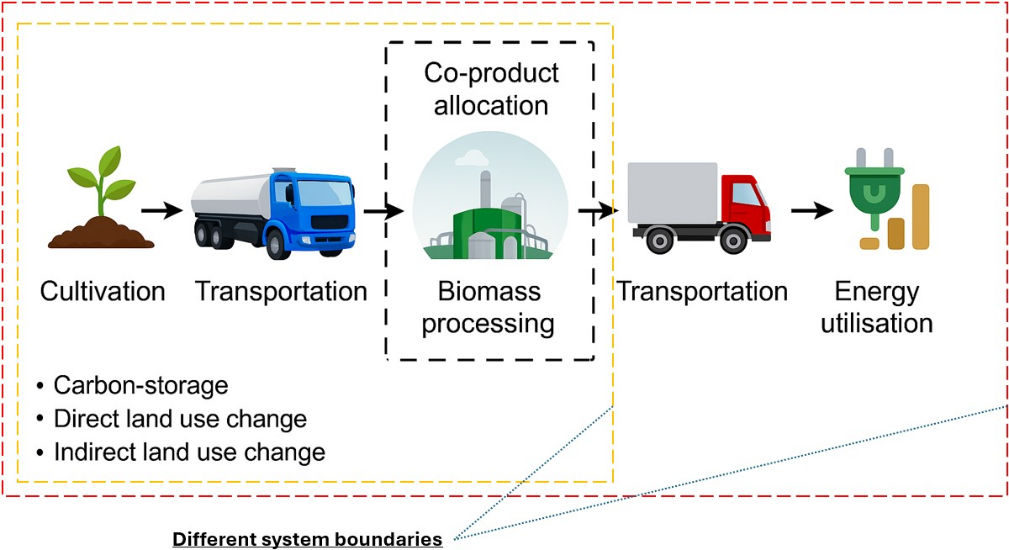
Figure 4.1 Diagram showing different life cycle assessment system boundaries - text version
- Cultivation
- Transportation
- Co-product allocation
- Biomass processing
- Transportation
- Energy utilisation
[ 1 boundary line around Co-product allocation and Biomass processing, 1 boundary line around Cultivation, Transportation and Co-product allocation/Biomass processing (also including carbon storage, direct land use change and indirect land use change), 1 boundary line around all]
Appropriate system boundaries should therefore be considered when applying the life cycle assessment parameters. For instance, if a scheme supports the production of a product (regardless of the end use such as Hydrogen Production Business Model), the GHG emissions should be calculated at least up to the creation of the product. For energy end use schemes such as RTFO, the principles would apply for the entire lifecycle, or at least up to where it is feasible to measure the emissions.
80. Do you agree with the approach on system boundary application? If not please explain why, including the impacts on your sector. Please provide evidence to support your response including sector-specific impacts where possible.
ILUC emissions within GHG criteria
Depending on the feedstock type used, there may be associated direct and indirect land use impacts on GHG emissions which must be considered. Indirect Land Use Change (ILUC) emissions are not directly accounted for in the greenhouse gas (GHG) calculation methodologies in existing UK criteria. Instead, it focuses on direct emissions from bioenergy production rather than the broader land-use impacts caused by shifting agricultural production.
As set out in the land criteria chapter, current evidence suggests that food crop and oil-based feedstocks carry a much higher ILUC risk than forest derived feedstocks. This is because competition with food crops has the potential to pose a high ILUC risk if non-agricultural land (e.g. forest) elsewhere is brought into agricultural production due to displacement of existing food and feed crops by biomass production.
ILUC risks can be addressed in a number of ways within the biomass sustainability criteria. these include:
1. Regulatory measures such as a crop cap, feedstock exclusions and high ILUC risk categorisation as proposed under the land criteria.
2. Inclusion of ILUC emissions within the GHG criteria life cycle assessment.
3. Reporting of ILUC emissions separately outside of the GHG criteria to inform future regulatory measures under option 1.
Under the common framework, we propose that in addition to the regulatory measures proposed under the land criteria, individual biomass policy schemes include a requirement to separately report estimated ILUC values for food and feed derived biomass feedstocks based on published ILUC factors such as EU RED II, initially outside of the GHG criteria life cycle assessment. This is because modelling ILUC emissions is inherently uncertain due to the complexity of global land use dynamics, price elasticity effects, and agricultural productivity changes, and how far markets are assumed to be relatively ‘slack’ or ‘tight’, with different models producing varying results [footnote 58].
While there have been some examples of international regulation such as the California Low Carbon Fuel Standard (LCFS) or the US Renewable Fuel Standard (RFS2) which incorporate ILUC factors into life cycle assessment calculations by estimating ILUC emissions per unit of biofuel produced, further work is required to assess whether similar approach could be applied in the UK context, including addition research and modelling.
Not accounting for ILUC impacts carries risks, including that the use of certain feedstocks is over-incentivised and that GHG emission savings from the use of some forms of renewable energy are lower than claimed. Equally, the inclusion of uncertain values within the GHG criteria life cycle assessment could risk overestimating the carbon intensity of the supply chain, which could lead to unintended consequences where certain sustainable pathways may become ineligible under the GHG criteria. Separate reporting of these values would still enable greater transparency and monitoring of ILUC impacts of relevant biomass feedstocks. These reported figures could then be used to support development of future policy measures on ILUC e.g. the use of ILUC factors in calculating emissions savings, crop caps and identification of high ILUC risk feedstocks. This approach is aligned with some existing UK and international criteria, such as those set out in RTFO, LCHS and the EU RED III.
81. Do you agree that there should be a requirement for ILUC values to be reported separately for crop-based feedstocks by all future biomass policies? Please provide evidence to support your response.
82. How could the GHG criteria life cycle assessment be expanded to include accurate ILUC emissions in the future? Please provide evidence to support your response.
83. To ensure consistency, and to minimise reporting costs, should those reporting on ILUC values, and incorporating them into GHG criteria life cycle assessments, be obliged to base such values on future government provided coefficients? Please provide evidence to support your response.
84. Are there other ways in which ILUC could be addressed within the common biomass sustainability framework? Please provide evidence to support your response.
Soil Carbon Accounting
Soil carbon stocks represent the amount of carbon stored in soil, which can increase or decrease depending on land management practices. These stocks can be assessed at various spatial scales, from individual stands managed uniformly to the entire landscape. While stand level measurements offer greater precision, they vary more over time and don’t reflect landscape level change. In contrast, landscape-level estimates are typically modelled, with gains and losses balancing out across stands and uncertainty about the accuracy with which local management practices and spatial differences are reflected in the model. Measurements at a landscape scale are expensive to deliver.
Soil organic carbon (SOC), the carbon component of organic matter, is measured through soil sampling at the stand level and subsequent lab analysis. These measurements inform models of SOC dynamics at larger scales. SOC is distinct from inorganic carbon, which is found in soil minerals such as carbonates.
SOC changes are important for greenhouse gas (GHG) life cycle assessments (LCA) of bioenergy, as they can be a significant carbon sink or source depending on prior land use, crop type, and management, enhancing the accuracy and credibility of GHG estimates when included in LCA. Perennial bioenergy crops like miscanthus often increase SOC compared to annual crops or previously degraded land.
However, policies often omit or simplify SOC changes due to the complexity of measurement and modelling. SOC dynamics are highly site-specific, influenced by many factors, and unfold over long timescales that may not align with LCA models and with the timing of any specific consignment, making integration both methodologically and administratively difficult.
As part of the proposed methodology, soil carbon is explicitly addressed through both direct land-use change emissions and ongoing soil carbon accumulation. When land is converted for bioenergy feedstock production, initial emissions from soil disturbance, peatland drainage, or vegetation clearance are quantified to account for potential carbon losses. Simultaneously, the methodology recognises that sustainable management practices, such as reduced or zero tillage, improved crop rotations, cover cropping, residue retention, and the application of organic soil amendments like compost or digestate, can promote soil carbon sequestration. This dual approach ensures that both the immediate and ongoing impacts on soil carbon are reflected in the overall assessment of bioenergy systems. However, we recognise that in practice, soil carbon accounting is rarely done due to the complexity of data collection and monitoring.
Further research into improved data collection methods will enhance the accuracy, consistency, and transparency of soil carbon accounting over time, ultimately supporting more robust and verifiable assessments.
Under existing UK schemes such as RTFO, SAF Mandate, GGSS and LCHS and the EU Renewable Energy Directive II (RED II), soil carbon changes are considered in the greenhouse gas (GHG) emissions methodology, but only in specific cases. When biofuel feedstock production involves land-use change, such as converting forest or grassland to cropland, it requires accounting for the resulting carbon stock changes over a 20-year period. This includes emissions from soil organic carbon loss, alongside changes in biomass and dead organic matter, following IPCC guidelines.
RED II also allows for an optional credit called “esca” (emission savings from soil carbon accumulation via improved agricultural management), which enables producers to claim GHG savings from practices that enhance soil carbon stocks, such as reduced tillage, cover cropping, or agroforestry. However, the inclusion of esca requires robust scientific evidence and verifiability, and is subject to further guidance from the European Commission. As a result, while RED II provides a mechanism to recognise soil carbon improvements, esca is rarely used in practice due to the complexity of data collection and monitoring.
85. What could be done to further improve data collection and monitoring of soil carbon accounting?
Default values
Default values are predefined greenhouse gas (GHG) emission figures for biofuels, bioliquids, and biomass that can be used instead of calculating actual emissions. They reflect real-world supply chains and are a conservative (overstated) estimate of emissions for different biomass production pathways to encourage operators to calculate actual figures where possible. These values provide a standardised approach to demonstrating compliance with sustainability criteria, reducing the need for complex and resource-intensive individual assessments, which may be particularly relevant in reducing costs for smaller businesses.
Schemes and related standards such as the RTFO, SAF Mandate, LCHS and GGSS already define appropriate default values in line with their existing criteria. Where future policies need to be updated in line with the common framework GHG life cycle parameters, appropriate default values that reflect the latest GHG criteria should be developed. These should be based on published values from the best available government, industry and academic sources. Data may be taken from international sources, provided it represents the UK supply chain or develop bespoke values, where appropriate. To ensure robustness and avoid underestimating emissions, a safety factor should be considered when developing default values, accounting for any uncertainties or data gaps in the calculation process.
86. What other considerations should be made when defining or updating default values in line with the common framework GHG life cycle parameters?
Rules around the use of default values are set out later in the ‘compliance with GHG criteria’ section.
Approach to setting GHG savings thresholds by sector
Existing UK and the latest EU approach sets GHG thresholds for bioenergy by sector. This is because bioenergy incentives and policies in the UK and globally vary in its scope and objectives. This means that bioenergy pathways being incentivised differ in terms of its system boundary and feedstock supply chains and therefore its life cycle emissions. A single cross-sector threshold would therefore not be appropriate in supporting the specific objectives of an incentive scheme.
For example, the aim of the RTFO is to provide emissions savings in the transport sector compared to fossil-based transport fuels and as such sets an emissions threshold based on savings against that fuel. The aim of the LCHS is to define low carbon hydrogen production and has set a single threshold for all low carbon hydrogen production pathways including bio-based hydrogen production, based off what is ambitious but achievable across different hydrogen production technologies.
Under the common framework, we propose that relevant thresholds are set by individual policies, with the primary objective to minimise supply chain emissions as far as possible balanced with the governments decarbonisation and wider energy security objectives. Therefore, when determining sector specific thresholds, we propose that it should take into account factors such as:
- The carbon intensity of the energy source being displaced by the biomass fuel, where relevant, alongside how hard the sector is to abate based on the availability of other low-carbon alternatives. It should recognise that harder-to-abate sectors, such as aviation, have fewer viable options compared to sectors like road transport, where more practical renewable alternatives exist. This approach also supports the prioritisation of biogenic feedstock use by directing limited sustainable biomass resources to sectors where they deliver the greatest decarbonisation impact. This approach, where relevant, ensures continuity with existing UK policy frameworks as well as with the established approach under the EU Renewable Energy Directive and existing UK schemes.
- A tightening of the threshold over time as appropriate (to ensure greater greenhouse gas savings, drive cleaner technologies, and align with the UK’s escalating climate goals).
Determination of the threshold should be carried out with regards to latest evidence, methodological developments, and stakeholder consultation, to maintain credibility and alignment with international standards. We welcome views on this approach through this consultation.
The threshold for greenhouse gas (GHG) savings could be expressed as a direct value of carbon intensity instead of percentage savings (e.g. if the fossil comparator emits 100 gCO₂eq/MJ and the bioenergy savings threshold is set at 50%, the bioenergy carbon intensity threshold would be 50 gCO₂eq/MJ).
87. Do you agree that thresholds under the GHG criteria should be set by individual biomass policies instead of a single cross-sector biomass supply chain threshold? Please provide evidence to support your response.
88. Do you agree with the proposed considerations in determining appropriate thresholds and that these can achieve meaningful decarbonisation across different bioenergy sectors? Are there other key considerations that should be factored in? Please provide evidence to support your response.
89. Are there alternative ways to set a threshold for bioenergy pathways? If yes, please explain how this could be achieved?
Feedstocks in scope of GHG criteria
Table 4.1 sets out proposals for feedstocks in scope of the GHG criteria and associated requirements. We propose that the criteria apply to all biogenic feedstocks for their entire lifecycle, except for waste and residues where it would only apply from point of collection. This reflects the principle that these materials are by-products of other processes, with their associated emissions attributed to the primary products of those processes. As a result, emissions prior to collection are considered zero. For example, forestry residues are assigned zero emissions for their creation as by-products of logging or other forestry activities. GHG emissions associated with the collection, transport, processing and storage, of waste and residue feedstocks are included in the life cycle assessment. This ensures that emissions resulting from these activities are accounted for, as they represent direct energy use and potential environmental impacts in terms of carbon intensity.
For waste-based biogenic fuels, emissions from combustion or end use are also included in the life cycle assessment. These emissions are typically offset by the renewable nature of the fuel, as the carbon released during combustion is considered biogenic (originating from biological sources), although non-CO₂ greenhouse gases need to be accounted for in the overall greenhouse gas (GHG) calculation.
When waste or residue feedstocks result in co-products, emissions should be allocated among the primary fuel and any co-products based on energy content.
Table 4.1 - Biomass feedstock categories and associated GHG criteria requirements
| Feedstock category | GHG criteria requirements |
|---|---|
| Wastes & Residues | GHG criteria applies only from point of collection. |
| Mixed waste such as residual MSW, landfill gas and sewage gas | Seeking views in this consultation on potential challenges with accounting for life cycle emissions from biogenic portion of mixed wastes. |
| Any other feedstock (e.g. Energy crops) | GHG criteria applies on entire life cycle. |
Mixed Wastes
For some categories of mixed wastes such as residual Municipal Solid Waste (MSW), we recognise there may be challenges with calculating its life cycle emissions because MSW consists of both fossil and biogenic portions. Attributing upstream emissions (e.g. transport, processing) solely to the biogenic fraction of MSW could be complex. While radiocarbon (C14) testing can determine the biogenic vs. non-biogenic composition of MSW at the point of use, for example in an Energy from Waste (EfW) facility, the ratio changes significantly throughout the waste’s life cycle. Since upstream emissions occur before the final biogenic/non-biogenic ratio is determined, it can be difficult to allocate those emissions fairly. Applying them only to the biogenic portion at the point of use does not reflect the shifting composition throughout the waste’s life cycle, leading to inconsistent or misleading GHG accounting.
Furthermore, when using MSW to produce electricity, heating and cooling, the energy content of the MSW would have to be known in order to determine the efficiency of conversion as this will have an impact on associated emissions. While calculating the energy content for each consignment of MSW or mixed industrial waste is technically possible, it could be challenging in practice due to the heterogeneity of the feedstock.
Energy recovery from the combustion of MSW plays a role in diverting this waste from landfill, which involves similar transport-related emissions but can result in higher overall emissions due to the generation of methane (CH₄) during landfill decomposition. This methane, a potent greenhouse gas, significantly increases the emission intensity of the landfill disposal pathway compared to other management options. Requiring these facilities to comply with GHG criteria may inadvertently incentivise landfilling over energy recovery. Equally, exemption from GHG criteria could lead to unintended consequences such as overuse or inefficient use of MSW for bioenergy. Therefore, additional policy measures would need to be put in place e.g. inclusion of technologies allowing the most efficient use of the feedstock (e.g. combined heat and power). In any scenario, it also remains essential to align the use of MSW with the principle of waste hierarchy, prioritising waste prevention, reuse and recycling before energy recovery.
We propose that individual biomass policies develop the most appropriate approach for treatment of MSW within the GHG criteria based on the broader policy and sector context with the aim of determining the biogenic emissions where possible. Where not possible, additional measures must be put in place to prevent any unintended negative consequences.
90. Do you agree with the proposed feedstocks in scope of the GHG criteria as shown in table 4.1? Please provide evidence to support your response, including sector-specific impacts where possible.
91. What are the barriers and challenges if any in accounting for GHG emissions from wastes including mixed wastes?
Compliance with GHG criteria
GHG emissions savings are currently reported using one of the following approaches, which is in line with majority of existing UK and latest EU criteria:
- Using default values.
- Actual values: Calculating the actual GHG emissions savings using the methodologies developed in line with the LCA principles.
- Combination of disaggregated default values and actual values: Using a combination of disaggregated default values for certain supply chain stages and actual values calculated for other stages.
92. Should the methods for reporting greenhouse gas (GHG) emissions savings be kept in line with existing criteria? If not, please outline what changes should be made.
93. Please highlight any specific cost implications to your business/sector in meeting the proposed GHG criteria. Please provide evidence to support your response.
To ensure the use of the most accurate values, individual biomass policies when implementing the common framework should establish clear guidelines regarding the circumstances under which default values may be applied, either alongside or in place of actual values.
4.4 Application of GHG criteria to non-bioenergy uses
Government recognises that the use of biomass as an alternative feedstock for producing chemicals and materials is an area that is developing rapidly in certain areas and is enabled by engineering biology and industrial biotechnology. However, further work is required to understand the complex supply chains and product life cycles associated with use of biomass within the non-energy sectors, in a way that allows for standardised comparisons. This basis is needed to determine life cycle assessment methodology principles, appropriate product sustainability requirements and ultimately monitor and evaluate the sustainability data for non-energy biomass products.
This consultation will be used as a call for evidence on how the biomass sustainability framework could be expanded in the future to include non-energy sectors, such as chemicals and materials. In particular, government would like to seek views on how current GHG calculation methodologies would need to be adapted for non-energy uses.
There are several aspects of the current proposed approach that pose challenges for calculating GHG emissions from biomass used for non-fuel purposes. These include:
- End of life emissions calculations: the end of life of the materials or chemicals that are derived from biomass are likely to add complexity to the calculation, as recycle/reuse/recovery / upcycling of materials is currently not considered in the standard methodology. Additionally, methodological challenges may exist around use of pyrolysers for waste processing, which may be grouped into waste incineration under some methodologies.
- Unit expression of GHG emissions calculations: the current unit expression used to calculate GHG emissions from biofuel and bioenergy is gCO2e/MJ – a functional unit indicating the known function of a given unit of energy. This would not be appropriate for non-fuel uses of biomass, where the function is not standard or known. A new metric of gCO2eq / [X] may need to be developed around a declared unit, likely based on mass or volume.
- Existence of valid carbon intensity comparators that allow defining thresholds: Fossil resource comparator values would be complex for biochemicals, given the multitude of chemical products and processes. As a result, significantly different comparator values would be needed than those for use as fossil/biofuels. This is particularly true for innovative bio-products, which are even less likely to have a direct fossil fuel equivalent.
- Existence of a sufficient evidence base on default sustainability values: calculating emissions and sustainability values from biomass for fuel relies on standard default values from certain feedstocks. Given the complexity of feedstocks used for non-energy uses of biomass, and challenges associated with calculating LCAs for biomass-derived chemicals and materials, it could be difficult to produce an equivalent database of default emissions values for non-energy biomass feedstocks.
- Complications caused by biomass lacking homogeneity: Biomass of various types from various sources used together present significant challenges to LCAs.
- Complications caused by biomass ‘freshness’: For readily degradable biomass used as feedstock (e.g. organic wastes), feedstock emissions depend on how fresh the material is before being used for resource recovery (whether energy, fuels, chemicals or materials). The longer it takes to process this biomass the more it would have started degrading and emitting GHGs.
- Setting appropriate LCA boundaries: the end of life for a biofuel is clearly at the point of combustion, but for chemicals and biomaterials that are commonly recycled and repurposed, the end of life is not clear. This makes drawing a boundary within which to calculate non-energy uses of biomass’s LCA difficult.
- Managing different non-energy co-products that result from a common industrial process: For example, this may include following a mass balance methodology. In the case of integrated biorefineries that may produce both non-energy (material) and energy products, separate GHG calculations will need to be made.
Government is interested to hear from stakeholders on which of the life cycle stages it would be feasible to collect data and how this could align with the broader, common biomass sustainability framework.
94. How can life cycle GHG emissions from non-energy uses of biomass best be calculated, taking account of methodological challenges?
95. At what points in the material life cycle is it most feasible to collect data on GHG emissions for non-fuel uses of biomass?
96. What is your view on the preferred declared or functional unit of expression for LCAs for non-fuel uses of biomass, as an alternative to gCO2e/MJ?
97. Do you believe that there exists a sufficient evidence base to set default values of biomass sustainability for non-energy uses?
5. Monitoring, Reporting and Verification
5.1 The case for MRV
We refer to monitoring, reporting and verification (MRV) as a group of activities which demonstrate compliance with scheme criteria and provide assurance to government and the public of the sustainability of biomass incentivised by government, as shown in figure 5.1.
Currently, MRV is carried out within individual government incentive schemes across multiple bioenergy applications such as power, heat and transport fuels. It includes measuring and submitting evidence from the biomass supply chain by the operator/user to show compliance with land and greenhouse gas (GHG) criteria. Compliance with the land criteria can be demonstrated either through evidence gathered using a Voluntary Certification Scheme (VCS) or bespoke evidence, such as chain of custody certification and aerial photographs. Evidence of compliance with GHG criteria is provided either through certification schemes or through submission of GHG calculations to the delivery body, in line with the methodology as set out in the GHG criteria of the relevant scheme. This evidence is then verified through third party auditing and further assurance processes by the relevant authorities to check the accuracy and reliability of the evidence submitted. Delivery bodies have the power to undertake additional checks to investigate any concerns they have with evidence submitted, and issue penalties where applicable. Sustainability data is then published by government or relevant authorities to support transparency. These MRV activities are designed to assure government and reinforce public confidence that the various components of government incentive schemes are giving an accurate and reliable representation of the sustainability of biomass used within the scheme.
Figure 5.1: Stages of MRV
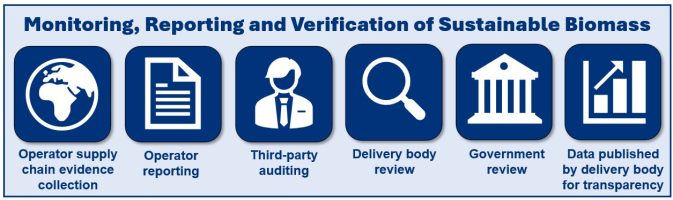
Figure 5.1: Stages of MRV - text version
Monitoring, reporting and verification of sustainable biomass
- Operator supply chain evidence collection
- Operator reporting
- Third-party auditing
- Delivery body review
- Government review
- Data published by delivery body for transparency
5.2 Summary of proposals
The table below is a summary of our proposals for strengthening MRV practices for biomass. For early-stage policy ideas, we are seeking views in a call for evidence instead of proposing a single option.
Table 5.2 Summary of MRV proposals
| Policy Area | Proposal / Call for evidence |
|---|---|
| Monitoring: Land and GHG Criteria | Call for evidence: To seek views on harmonising feedstock definitions across different biomass applications. |
| Reporting | Proposal: Mandatory reporting country of origin in order for biomass to qualify as sustainable. |
| Reporting | Proposal: Reporting of minimum sustainability metrics in standardised format. |
| Reporting | Proposal: Incentive schemes publish detailed or aggregated sustainability data based on minimum sustainability metrics. |
| Verification: Sustainability Audits | Proposal: To strengthen the quality of auditing across end-use sectors by carrying out risks assessments prior to ISAE3000 third-party audits. |
| Verification: VCSs | Proposal: To introduce a regular and robust benchmarking process for VCSs. This includes disclosing information related to quality control framework, auditor qualifications, level of scrutiny involved in decision-making, and the duration of each auditor rotation. |
| Verification: VCSs | Proposal: To address the potential conflicts of interest between operators and VCSs by making a declaration of conflict-of-interest mandatory from both sides. |
| Verification: Site visits | Call for evidence: To seek views on government nominated bodies carrying out targeted in-person site visits and inspections of all elements of biomass supply chains. |
| Verification: Overarching | Call for evidence: To seek views on giving enforcement bodies powers to request any data from any body involved in the process of designating biomass as sustainable, including operators. |
| Verification: Overarching | Proposal: On guiding enforcement principles to strengthen compliance practices in biomass. |
Further details around these proposals are set out in the following sections, where we are inviting feedback and evidence via this consultation.
5.3 Current MRV arrangements
Institutional arrangements
Table 5.3 sets out a summary of the different existing MRV arrangements across the various biomass schemes and policies. The individual biomass scheme delivery bodies are responsible for overseeing the associated biomass sustainability MRV activities. These include Ofgem which oversees the RO, RHI and GGSS schemes, the LCCC which oversees the CfD scheme, and the Hydrogen Production Business Model (HPBM), and the Low Carbon Fuel Delivery Unit in the Department for Transport which oversees the RTFO [footnote 59] and SAF Mandate [footnote 60]. The RTFO and SAF Mandate are the only schemes administered from within a ministerial department. Ofgem is a non-ministerial government department and an independent National Regulatory Authority, and LCCC is a government-owned private company. LCCC currently outsources biomass MRV services to Ofgem and the two delivery bodies are aligned in their approach to biomass MRV.
Table 5.3 Summary of existing MRV arrangements
| Renewables Obligation (RO) and CfD | HPBM | GGSS | RTFO and SAF Mandate | RHI | |
|---|---|---|---|---|---|
| Delivery body | Ofgem for RO and LCCC for CfD | LCCC | Ofgem | LCF Delivery Unit, embedded within DfT | Ofgem |
| Land criteria evidence requirements | Category A (approved CSs*), Category B (bespoke evidence) and mixed claims allowed | Follows LCHS, which has same as RTFO, | Same as RO | Via approved list of CSs † ILUC** reported separately from land criteria profiling data, for information purposes. Additional information required for crops | Compliance shown using BSL***, self-reporting by submitting Category A, B evidence etc |
| GHG evidence Requirements | Submit GHG value to regulator Can use certification (e.g. SBP) as proof | Follows LCHS (GHG value submitted to regulator, ILUC emissions reported separately) | Same as RO | Same as RO, except ILUC emissions are reported for information purposes only | Same as RO |
| Frequency of Reporting, granularity of data | Monthly reporting & annual report with more detailed sustainability metrics | Same as RO | Monthly reports | Reporting done on a consignment basis per application for certificates | Same as RO |
| Assurance & verification process | Third party limited assurance audits commissioned by generators | Same as RO | Same as RO | Level of assurance required is at the discretion of the delivery body and can be changed to reasonable from limited | Same as RO |
Notes: CSs* - Certification schemes, ILUC** - indirect land use change, BSL*** - Biomass Suppliers List †A reporting party can provide supporting evidence of compliance with one or all of the RTFO or SAF Mandate criteria by using one or more voluntary schemes. The scope and version of the voluntary scheme being used must be recognised by the Administrator and appear on the Administrator’s list of recognised voluntary schemes. Using a voluntary scheme provides valuable evidence to support applications for certificates but does not guarantee issuance of certificates
Monitoring & Evidence Collected
Biomass users / operators are required to collect and submit evidence to demonstrate compliance with land and GHG criteria. Without demonstrating the right evidence, a biomass user who is a participant of a government incentive scheme will face specific consequences as set out in the individual schemes, which include: withholding of financial incentives, withholding of certificates needed to meet a fuel obligation under the RTFO and SAF Mandate, and in cases where it is found that due care and attention was not given to supplying accurate information, civil penalties. The RTFO, SAF Mandate, and RO schemes are set up as regulatory obligations which include market incentives.
Compliance with land and GHG criteria across government schemes is currently demonstrated through the use of certified evidence or bespoke evidence, providing biomass users with flexibility to submit bespoke evidence if unable to use a certification scheme. Operators using the RHI scheme can also demonstrate compliance with the land and GHG criteria by purchasing biomass feedstocks through the Biomass Suppliers List (BSL), as set out in table 5.2 above for woody biomass or via Sustainable Fuel Register (SFR) for non-woody biomass fuels.
Evidence of compliance with land criteria covered by certified and bespoke evidence includes, but is not limited to, aerial photographs, soil management plans, chain of custody certification, and regional risk assessment documents as set out in the Land Criteria chapter.
Evidence of compliance with GHG criteria is demonstrated by submitting a GHG calculation to the delivery body. The methodology for the GHG calculation is in line with the methodology outlined in the previous chapter. There are some minor differences between schemes, and in some schemes, default GHG saving values can be used for certain pathways.
Requirements around ILUC emissions reporting is set out in GHG chapter (section 4.3 under ‘ILUC emissions within GHG criteria’).
Certified evidence
Certified evidence includes documents provided by certification schemes, which are then used by operators to apply for financial support or comply with an obligation. This includes providing certification from voluntary certification schemes (VCSs) approved or delivered by government (through benchmarking against the criteria), including Forest Stewardship Council (FSC) and Programme for the Endorsement of Forest Certification (PEFC) certificates. Note that FSC and PEFC certificates specifically apply to woody biomass feedstocks; other feedstocks can also demonstrate compliance with land criteria using a VCS. International Sustainability & Carbon Certification (ISCC), for example, cover biogenic waste and agricultural biomass among other feedstock categories.
Depending on the scope of the VCS, GHG criteria and general traceability of the supply chain may be demonstrated through the certification process. Submitting evidence from a VCS is not always sufficient to prove compliance with land and GHG criteria. Bespoke evidence may be submitted instead of, or in addition to, evidence provided as part of a certification scheme.
VCSs appoint (and approve) Certification Bodies (CBs) to conduct audits of biomass supply chain actors (e.g. biomass producers, biomass users, etc.) against their voluntary standards. There is a distinction between a CB and a VCS: VCSs develop standards which are benchmarked and recognised as demonstrating compliance with a regulation, while CBs use these standards to carry out audits of biomass supply chain actors. The VCS then issues a sustainability certificate, based on the conclusion of the Certification Body.
Whilst evidence provided from voluntary schemes can provide valuable evidence to support applications, voluntary scheme evidence does not guarantee issuance of certificates and further supporting evidence may be requested by the administrator before certificates are issued.
Bespoke evidence
This applies to evidence collected and submitted directly by operators. Bespoke evidence is submitted directly to the delivery body to demonstrate compliance with land and GHG criteria. Documents such as a felling licence or a land management plan can be bespoke evidence. For smaller operators, it may be more economic to provide evidence directly to the delivery body as this does not incur ongoing costs associated with the use of a voluntary certification scheme. Providing bespoke evidence also allows smaller operators to tailor their documentation to their specific operations and feedstocks.
A mixed approach currently is also an option in the RO scheme, which involves mixing certified and bespoke evidence, to show that 70% of a woody biomass consignment complies with the land criteria. This requirement does not apply to other biomass feedstocks.
Reporting
Across incentive schemes, operators collect sustainability evidence to show compliance with the criteria, with varying frequency across schemes (monthly, quarterly or annually). This information is not always submitted as reports to the delivery body. Instead, reports are held and retained by operators and used as part of the auditing process (see verification section below). The GGSS scheme asks participants to submit quarterly reports with land and GHG criteria evidence. The RTFO and SAF Mandate require participants to submit reports on a consignment basis with information on biofuel feedstock type and origin and GHG criteria evidence to the LCF Delivery Unit.
Additional sustainability profiling data such as the type of feedstock used, its country of origin, and whether the feedstock is derived from wood is sometimes also submitted by operators/users at varying frequencies e.g. annual sustainability reports under RO scheme.
Publicly available sustainability reports
In addition to biomass operators submitting sustainability data and reports to the delivery body and the government as described above, making relevant sustainability data publicly available could improve transparency and public confidence in the sustainability of the use of biomass incentivised by government.
Currently, the RO scheme makes biomass feedstock profiling data available to the general public by publishing reports on the Ofgem website [footnote 61]. DfT publishes quarterly and annual statistics relating to the RTFO and SAF Mandate. [footnote 62] RHI, GGSS and CfD schemes do not publish sustainability reports.
Verification
Across different biomass incentive schemes, evidence (voluntary certification schemes and bespoke evidence) collected by the operator/user is verified through independent third-party audits. It is commissioned by the operator/user through an independent verifier and carried out to either ‘limited assurance’ or ‘reasonable assurance’ level in line with ISAE 3000, which is an international standard for assurance [footnote 63]. The level of assurance required for third-party audits is determined by the incentive scheme. The RO, CfD, RHI, GGSS and LCHS schemes use limited assurance. The LCF Delivery Unit has the flexibility to require a reasonable assurance audit under the RTFO or SAF Mandate, however, in practice, limited assurance is generally used.
Delivery bodies responsible for incentive schemes have the power to investigate any operator where needed to assure the delivery body of compliance with the specific requirements of the incentive scheme. If non-compliance is found, delivery bodies have powers to take compliance actions against operators, including revoking incentives.
Third-Party verification
Third party verification is required by all government incentive schemes, with some schemes such as RO requiring annual audits and reports to be submitted to the delivery body. An example of an incentive scheme which does not rely on annual verification is the RTFO and SAF Mandate, where each application for certificates is subject to independent verification (e.g. verification is undertaken on a consignment not annual basis).
The purpose of the verification is to help the delivery body assure compliance with the land and GHG criteria, including the volume of biomass reported, and other key data such as, fuel type (such as sawmill residue, waste etc.) and voluntary scheme used. Under existing schemes like RO, this is currently achieved through the following, which includes checking robustness of the systems and processes in place for data collection:
- To consider whether the systems used to produce the relevant sustainability information are likely to produce information which is reasonably accurate and reliable.
- To consider whether there are controls in place to help protect the relevant sustainability information against material misstatements due to fraud or error.
- To consider the frequency and methodology of any sampling carried out for the purpose of obtaining or checking the data on which the operator relied in preparing the relevant sustainability information.
- To consider whether the systems used to produce the relevant sustainability information are likely to produce information which is reasonably accurate and reliable.
- To consider whether there are controls in place to help protect the relevant sustainability information against material misstatements due to fraud or error.
- To consider the frequency and methodology of any sampling carried out for the purpose of obtaining or checking the data on which the operator relied in preparing the relevant sustainability information.
Limited assurance
For most biomass schemes verification is conducted to a limited assurance standard. During a limited assurance audit, an auditor sifts the data for errors and reports them to the commissioning body. Limited assurance auditing involves lower levels of evidence gathering, and is generally desk based, therefore the assurance opinion is stated in the negative form, such as “nothing has come to our attention to cause us to believe there are errors in the data.”
Reasonable assurance
Reasonable assurance is a more thorough level of auditing. During a reasonable assurance audit, a much more detailed sift of data is carried out, and every aspect of the reporting mechanism is examined. Reasonable assurance auditing involves higher levels of evidence gathering and the assurance opinion is expressed in the positive form, such as “we have assessed that the data is free from material misstatement”.
For certain incentive schemes, including the Renewables Obligation (RO), Contract for Difference (CfD), and Renewable Heat Incentive (RHI), the audit must be carried out to the ‘limited assurance’ level, or an equivalent standard. The LCF Delivery Unit can use discretion to change this to ‘reasonable assurance’ under the RTFO and SAF Mandate.
5.4 Policy proposals
We have reviewed the existing requirements and identified areas to strengthen/harmonise MRV processes, as explained in the following sections. These proposals have been developed in line with the policy principles set out in Chapter 1, in particular deliverability and costs to businesses and consumers.
The National Audit Office (NAO) in January 2024 produced a report entitled ‘Government support for biomass’. [footnote 64] In their report, the NAO considered aspects of existing MRV arrangements used in government incentive schemes that support the use of biomass, with a focus on the electricity sector. The NAO recommended that government should evaluate whether the current arrangements provide adequate assurance that biomass electricity generators under existing schemes are complying with sustainability criteria. The report suggests that there is a need for clarification of the roles of different organisations in the supply chain across many end-use sectors as well as transparency of biomass governance mechanisms.
Following the publication of the NAO report, we have undertaken research and engagement with biomass experts to develop recommendations that could be implemented to biomass incentive schemes. This work considered where improvements could made to biomass incentive schemes across the economy and informed our thinking on the proposals set out below.
The existing MRV arrangements applicable to current and future schemes vary across different biomass end use schemes as outlined in the section above. In most cases this is reflective of the needs of the specific biomass applications, the levels of inherent risk, and policy scheme design e.g. supply chains and feedstock types vary between applications.
The common framework aims to provide guidance on how to align practices where relevant and ensure a consistent approach to MRV, with the aim of improving assurance to government, transparency and public confidence. We propose that individual biomass policies incorporate these when developing and implementing their MRV process.
This consultation will also be used as a call for evidence to address any evidence gaps and identify where further improvements and analysis may be needed from a cross-sectoral perspective under this common framework.
The following sections set out the specific proposals and call for evidence around harmonising and strengthening the MRV approach across different government incentivised policies.
Improving and harmonising Monitoring & Reporting
We consider the current evidence gathered to be robust and enable close monitoring of biomass sustainability. However, there is potential to improve the consistency and transparency of data collected. These improvements will mean that data can be compared across schemes and biomass applications, promoting best practice and improving confidence in biomass sustainability across the economy. It will also mean that policymakers are able to use timely and relevant data to inform implementation of, and future updates to, the common framework.
There are a range of monitoring and reporting requirements across schemes. We have considered these requirements and comments from various stakeholders, including recommendations made from industry experts, and a sustainability data sharing pilot with Ofgem, when identifying the following proposals.
Harmonising feedstock definitions
Call for evidence
As set out in Chapter 2, biomass covers a broad range of feedstock types. Detailed fuel classifications against broad feedstock categories are provided by the relevant delivery body responsible for checking compliance under the individual biomass incentive schemes and policies in line with current practice. For example, the RTFO and SAF Mandate provide a standardised list of feedstock categories, which are used by participants to report against. [footnote 65].
However, there are inconsistencies in the way feedstock categories are defined across different biomass policies, and some incentive schemes use reporting templates that allow for free text in fields that describe the name of the feedstock. This creates additional work for operators and means that a single feedstock can be reported under multiple different names under the same scheme. Some examples are outlined below.
Table 5.4. Reporting template showing examples of inconsistent feedstock names in the RO scheme sustainability dataset 2021/2022
| Tallow | Chicken Manure | Blood | Fats |
|---|---|---|---|
| Tallow (Category 3) | AD – Chicken Manure | AD – Blood | Fats & Oils |
| Tallow (Cat3) -AP | Poultry litter | AD – Biogas: Blood | AD – Biogas fats |
| Tallow washings | Liquid Blood |
Inconsistent feedstock categorisation and reporting within and between policies leads to a lack of clarity for operators. It also creates challenges for government and delivery bodies when monitoring the use of sustainable biomass across individual policies and the economy as a whole. A standardised approach to feedstock categorisation could help to inform future policymaking and improve public and industry confidence in biomass sustainability reporting.
Therefore, we would like to seek views on developing a list of harmonised feedstock categories and definitions that could be used by individual policies in developing their own guidance to users on reporting feedstock type. Given the breadth of biomass feedstock types in scope, we propose that harmonisation of feedstock categories could be done to a similar level as those categories set out in Chapter 2. A more detailed set of feedstock classifications under those broad categories should be set out by individual policies as relevant, similarly to the current RTFO and SAF Mandate approach.
Individual government incentive scheme guidance contains comprehensive lists of feedstock categories that can be used as a starting point for cross-sector vocabulary harmonisation. Further engagement at cross-sector level would be needed to agree these definitions, and consider the impact of feedstock categorisation decisions on relative reward rates under different schemes.
98. Do you agree that biomass feedstock definitions need to be harmonised across end-use sectors? If biomass feedstock definitions should be harmonised, how broad or granular should these categories / definitions be? Please provide examples.
99. Are there any other improvements to the feedstock type reporting process that should be considered?
Mandating reporting of biomass country-of-origin
At present, reporting the country of purchase is allowed in the profiling data, in place of the country of origin, if this is not known, for some feedstocks. In light of the NAO report recommendations discussed earlier in the chapter, country of origin reporting is an important step in ensuring transparency and accountability across the biomass supply chain. In addition, knowing the country of origin of a biomass consignment is useful during the verification stage, when an independent auditor assesses the robustness of the data provided by the generator.
We propose that reporting country of origin become mandatory in order for biomass to qualify as sustainable. We recognise that some feedstocks, such as wastes, can be difficult to ascertain the origin for, so exemptions could be considered for certain feedstocks.
100. Do you agree that biomass feedstock country of origin reporting should be mandatory, with certain exemptions? Please provide evidence to support your response.
101. Please state which feedstocks should be exempt from country of origin reporting? Please provide evidence to support your response.
Reporting of minimum sustainability metrics in standardised format
While incentive schemes need to collect appropriate data tailored to specific scheme requirements, differences in the content and format of how biomass sustainability data is collected and published mean that it can be challenging to compare data across schemes. It also creates additional burden for operators who may report against more than one scheme. To enable greater consistency and increase public and industry confidence in biomass sustainability, a set of minimum sustainability metrics should be collected and reported.
We would like to seek views through this consultation on what minimum sustainability metrics should be. Once agreed, we propose that operators should be mandated to report against these metrics within the monitoring and reporting processes of individual biomass schemes in a harmonised format.
102. Do you agree there should be a list of minimum sustainability metrics that are collected and reported to the relevant delivery body? Please explain your answer, including examples of sustainability metrics that could be included.
103. How should this be achieved in practice?
104. What potential barriers or challenges, including cost implications, need to be considered to achieve standardisation of reporting?
Improving transparency of sustainability data
Currently only the RO, RTFO and SAF Mandate schemes publish detailed sustainability data. Ofgem publishes annual RO sustainability profiling data, while the DfT publishes quarterly and annual statistics relating to the RTFO and SAF Mandate.
Publishing transparent biomass sustainability data in a harmonised format improves access to information for industry, academia and the public. This provides businesses with additional clarity and promotes best practice, enables an improved understanding of biomass sustainability through further analysis or research, and ensures greater assurance, accountability and confidence in sustainable biomass use.
Government recognises that not all data relating to the sustainability of biomass can be made publicly available, given the commercially sensitive nature of some aspects of an operator’s business. While commercial sensitivity is a valid reason for not making data publicly available under contractual arrangements, more can still be done to improve transparency surrounding the working practices and supply chain of operators to increase public confidence in biomass as a sustainable, low-carbon fuel. Data aggregation, where sensitive data is anonymised and reported as part of a summarised dataset, can still allow for insights into the overall sustainability of biomass use across incentive schemes.
We have identified some areas where transparency can be improved, and we will use this consultation to gather evidence on what further data would be appropriate to share with the public.
We propose that relevant delivery bodies responsible for enforcement of sustainability criteria for individual biomass incentive schemes publish detailed and relevant sustainability data, and where publishing detailed data is not possible, publish aggregated data relating to minimum sustainability metrics by incentive scheme. This data should give a clear accounting of the sustainability of biomass from origin to point of use. We will use this consultation to gather views on which data should be made available and why, before providing a list of data points in the government response.
105. Do you agree with the above proposal on publishing sustainability data? Please provide evidence to support your response.
106. Which data points should be included to improve the transparency of sustainability practices across the biomass incentive schemes? Please provide evidence to support your response.
107. Are there any data points should not be included? Please provide evidence to support your response.
Improving and harmonising verification processes
To provide government with assurance over the sustainability information provided by operators, the information must be independently verified. This consists of an independent auditor verifying the data and producing a conclusion by working closely with a biomass user/operator throughout the verification process.
We think that the process of determining the frequency and level of detail that the form of auditing involves can be improved. At present there are differing approaches to auditing. For example, the GGSS applies a single defined level of detail (‘limited assurance’) whilst others such as the RTFO and SAF Mandate can alter the level of detail at the discretion of the delivery body. There is a clear need for a standardised approach to determining the frequency and level of assurance needed across government incentive schemes.
The verification process involves a number of steps, outlined in the table below:
| Step 1: | Read and understand the auditing requirements as set out by the support scheme and their responsibilities in the verification process. |
|---|---|
| Step 2: | Engage a verification body that is appropriately qualified to undertake the required level of assurance engagement, either limited or reasonable, of the station’s sustainability data following ISAE 3000 standard, or equivalent. |
| Step 3: | Continually engage with, and submit the relevant information and biomass sustainability data and evidence to, the auditor. |
| Step 4: | Host any visits from the auditor. |
| Step 5: | Respond to any of the auditor’s questions. |
| Step 6: | Correct any material and non-material misstatement(s) identified by the auditor. |
| Step 7: | Read the audit report provided by the auditor and check that it includes all the information required. |
| Step 8: | Submit the annual sustainability audit report to the delivery body by the relevant date. |
The responsibility for appointing a verifier to carry out assurance audits lies with the operator.
They are responsible for ensuring that the selected verifier is appropriately qualified. This usually involves demonstrating that the verification body:
- Is not connected personally to the owner or operator.
- Has experience carrying out ISAE 3000 audits and has appropriate experience working with supply chains.
- Has internal quality controls including keeping up to date with best practice.
- Can demonstrate that the involved staff are appropriately qualified, with ongoing training and performance monitoring in place.
The verification audit consists of three phases:
Phase 1: Preparation, where preliminary site visits, information gathering, risk assessments and auxiliary planning is undertaken.
Phase 2: Execution, where detailed tests, reviews, analysis of data and risk assessments are undertaken and an opinion is determined.
Phase 3: Conclusion and Reporting, where findings are evaluated, amendments are required to be made by operators, and an assurance document is prepared.
Third-Party Verification
Submission of a sustainability audit report by the biomass operator/user is required by most incentive schemes, with some schemes, such as RO and RHI requiring annual auditing reports, whilst the RTFO specifies that audits should be carried out on specific consignments of biomass. The report must be commissioned by the operator from an independent verifier.
The scope of the report is to check compliance with the land and GHG criteria, including the volume of biomass reported, and other key data such as biomass fuel name, fuel type (such as sawmill residue, waste etc.) and voluntary scheme used.
We propose that each auditing cycle includes a risk assessment by the delivery body. The result of this risk assessment will determine the frequency and level of detail of the audit. This way, an appropriate level of auditing attention is allocated to operators, while mitigating unnecessary burden.
108. Overall, do you agree that there should be a risk assessed approach to carrying out third-party audits? Please provide evidence to support your response.
109. Do you agree the risk assessment should determine whether a ‘reasonable’ or ‘limited’ assurance audit needs to be carried out? Please provide evidence to support your response.
110. Do you agree the risk assessment should determine the frequency of auditing? Please provide evidence to support your response.
111. What are the differences in the financial and resourcing burden involved in carrying out ‘reasonable’ versus ‘limited’ assurance audits? Please provide evidence to support your response.
112. What effect would the requirement of reasonable assurance have on government incentive scheme participants? Please provide evidence to support your response.
Benchmarking of Certification Schemes
Voluntary certification schemes are checked by relevant delivery bodies, such as Ofgem and LCF Delivery Unit, against the specific sustainability requirements of each scheme. Auditing, certification and accreditation requirements are also assessed to assure that the scheme has a robust, independent and consistent approach to cover the necessary sustainability criteria.
Certification schemes must pass the benchmarking process for the specific incentive scheme before they can be used as certified evidence for that particular scheme. There are currently no set intervals at which benchmarking must take place [footnote 66].
There is potential for improvement in the benchmarking of voluntary certification schemes. A proportionate approach is necessary, as the administrative burden of frequent benchmarking may be too costly for the parties involved. We do not have concerns about the methodology or the quality of benchmarking. However, there is an opportunity to strengthen the process by introducing a structured approach to the frequency of benchmarking across incentive schemes. This will prevent gaps in benchmarking, which in turn will improve cross-sector oversight of the benchmarking process.
We propose that delivery bodies increase their oversight of the benchmarking process by conducting benchmarking at intervals no greater than five years.
113. Do you agree that benchmarking exercises for voluntary certification schemes should be at intervals no greater than five years? Please provide evidence to support your response.
Introduce additional monitoring/verification of voluntary certification schemes in benchmarking process
When operators use certified evidence in their sustainability reporting, the evidence is made up of documentation generated by VCSs. Before issuing certification, VCSs carry out third-party audits on evidence submitted by operators. This places a large burden on the accuracy and reliability of the work that VCSs do to produce this documentation. Whilst there is no reason for concern as to the robustness or veracity of the work that VCSs undertake, and we recognise that VCSs are committed to delivering high standards when they collect data from biomass operators and have their own third party auditing process in place, the common framework should set out best practice for delivery bodies to ensure that VCSs are upholding the highest possible standards. This will allow government to be assured that there is consistency in auditing the compliance of operators to sustainability criteria across incentive schemes where certified evidence is used to show compliance.
At present, when a third-party audit is undertaken (as part of the VCS led certification process), auditors typically follow the ISAE3000 standard which contains requirements to ensure that the body issuing an audit opinion has the competency to design and execute an appropriate scope of work to support the opinion that is issued. However, there is no overarching mechanism for delivery bodies, or Government, to check whether the auditors are appropriately qualified, or that the requirements within ISAE3000 are being followed by the auditors. Therefore, there is currently a gap in the assurance that the requirements are being adhered to, a risk that the scope and delivery of the audit is not appropriate, and the opinion issued could be unreliable. Furthermore, there is a need to ensure that safeguards are in place to address ethical threats within the auditing and certification process:
- Auditor rotation: Under the FRC Revised Ethical Standards 2024 and the Statutory Auditors and Third Country Auditors Regulations 2017, financial auditors must be rotated every ten years, with engagement partners required to rotate every five years. The IESBA code, which describes the ethical requirements for ISAE3000, states that safeguards must be in place to address ethical issues but does not require rotation of auditors.
- Conflicts of interest: At present there is a lack of structure to the process of declaring and monitoring conflicts of interest across the multiple MRV processes.
We propose that delivery bodies should introduce the following measures into the process of benchmarking VCSs to strengthen government assurance of the auditing process:
1. What quality control framework the auditor has in place and how the operator has confirmed that the quality control framework is sufficient to ensure that the ISAE3000 auditor can issue a reliable opinion.
2. The competence and qualifications of the individuals delivering each assessment, including the amount of required professional development hours undertaken by auditors to maintain necessary skills.
3. Specific details on the level of scrutiny and detail involved in the decision-making process to issue a certificate to any generator.
4. How long an auditor has been working with each operator they audit.
Operators that rely on VCS documentation should be required to provide a declaration that they are independent from the VCS. To the extent that there are any actual or perceived conflicts of interest, the generator should declare this and set out how the potential conflict of interest is managed to preserve the objectivity of the VCS and the documentation it issues.
A ten-year time limit should be imposed on auditors working with the same operator, unless significant reasoning can be given as to why the rotation of an auditor would severely impact the VCS’s ability to form a decision on the biomass sustainability of a given operator.
114. Do you agree that VCSs should be required to disclose as part of the benchmarking process? Please provide evidence to support your response.
a. What quality control framework the auditor has in place and how the operator has confirmed that the quality control framework is sufficient to ensure that the ISAE3000 auditor can issue a reliable opinion.
b. The competence and qualifications of the individuals delivering each assessment, including the amount of required professional development hours undertaken by auditors to maintain necessary skills.
c. Specific details on the level of scrutiny and detail involved in the decision-making process to issue a certificate to any operator.
d. How long an auditor has been working with each operator they audit.
115. Do you agree that operators should be required to provide a declaration that they are independent from the VCS, and to declare any actual or perceived conflicts of interest? Please provide evidence to support your response.
116. Do you agree that auditors carrying out ISAE3000 audits should rotate on a more frequent basis to provide more objective outputs and mitigate the risk of bias and conflicts of interest? Please provide evidence to support your response.
Emerging MRV Practices
We recognise that MRV practices are evolving, and government continues to look for improvements or innovative approaches to monitoring, reporting and verification of sustainable biomass that can help these areas develop further. We have identified two emerging policy areas which we are in the early stages of considering, and we would welcome thoughts in the feasibility and practicality of implementing these in the future.
Supply chain site visits and inspections
At present, monitoring of biomass supply chains across end-use sectors consists of chain of custody documents submitted to VCSs to demonstrate compliance with land criteria and GHG calculations to demonstrate supply chain emissions against a GHG threshold. Individual VCSs may carry out site visits and inspections to verify certain aspects of these chain of custody documents. For example, SBP accredited Certification Bodies (auditors) carry out site visits to ensure adequate internal auditing, paperwork and systems are in place. Where they have concerns, these Certification Bodies may undertake an additional site visit and further follow up with the supplier, and where necessary recommend that SBP suspend or terminate the certification. At present, government oversight of the supply chain of sustainable biomass relies on submitted evidence and third-party audit reports, and whilst these are important elements to assuring sustainable biomass use, there is potentially an absence of government sanctioned physical inspections within incentive schemes which could add an extra layer of scrutiny and assurance that biomass is sustainable.
Call for evidence
We see potential value in government, or government nominated bodies carrying out targeted in-person site visits and inspections of all elements of biomass supply chains. This undertaking will likely incur significant costs and require appropriate resource allocation for implementation. Potential increased on-site costs for suppliers are a possible ramification of carrying out site visits overseas in particular.
We are not looking to implement this within the framework at this time but instead are seeking views on how practical and feasible this could be to implement in the future.
117. What challenges and barriers to achieving this are you aware of? For example, are there specific feasibility or cost concerns with overseas site visits?
118. What benefits do you see this providing to the monitoring and assurance of biomass sustainability?
Powers to request data
Incentive schemes such as the RO, RHI and RTFO and SAF Mandate have provisions set out in legislation that give the authority powers to request any information from incentive scheme participants. This does not extend to VCSs and any other actors in the decision-making process for determining whether biomass used by a generator is sustainable, introducing a risk that authorities may not be able to identify any issues in this area, should they arise. Contractual arrangements between support scheme participants, with whom the responsibility to comply with legislation lies, and third parties may limit government’s ability to investigate every aspect of the biomass supply chain. For example, at present delivery bodies have powers to request data from participants of the scheme, however those powers do not extend to third parties contracted by the participants, who may hold useful and important data pertaining to any investigations the delivery body may need to carry out. Introducing powers to request data from these third parties needs to be explored, as well as introducing specific requirements that participants of incentive schemes must include data sharing provision in any contractual agreements with third parties.
Call for evidence
We see benefit in incentive schemes having the ability to access data from all biomass actors involved in the supply chain. This ability could be either:
- Through introducing powers to requests data from any body involved in the certification, auditing and evidence gathering process.
- Through requiring incentive scheme participants to include data sharing provisions in contractual agreements with third parties.
- Through introducing data sharing provisions as part of the benchmarking criteria for VCSs.
We are not looking to implement this within the framework at this time but instead are seeking views on how practical and feasible this could be to implement in the future.
119. Should incentive schemes have the ability to request data relating to biomass sustainability from any body involved in the certification, auditing and evidence generation process? Please provide evidence to support your response.
120. Should incentive schemes have the ability to require incentive scheme participants to include data sharing provisions in contractual agreements with third parties? Please provide evidence to support your response.
121. What barriers (including costs) are there to implementing data sharing as described above?
To identify any other emerging policy areas, we would welcome feedback on current practices and suggestions for further improvements and innovations.
122. Do you have any additional views on current MRV practices that have not been captured by questions above?
123. Please provide any suggestions for further strengthening MRV practices that are not outlined above, including as much detail as possible.
5.5 Enforcement Guiding Principles
Addressing non-compliance
Government takes enforcement of compliance seriously. Maintaining public trust in biomass sourcing is key and enforcement has an important role to play. Enforcement mechanisms must act as both a deterrent to rule-breaking and an appropriate redress. That is why we are consulting on overarching enforcement principles that all future schemes and relevant open schemes should consider following.
Scope
These enforcement principles should be applied to all relevant open biomass schemes. Noting we encourage appropriate enforcement so do not expect change in current enforcement practices for small and microbusinesses, or scheme participants that are domestic premises or public buildings.
Enforcement mechanisms should include appropriate penalties to address non-compliance. We recognise the importance of allowing flexibility to accommodate the unique objectives and structures of individual schemes and their delivery bodies, while also minimising additional regulatory and administrative burdens. Having centralised enforcement mechanisms will not allow for a sufficient degree of flexibility for end-use sectors. Our position is the enforcement of MRV activities should remain the responsibility of individual biomass policy schemes and delivery bodies. However, we are proposing enforcement guiding principles which should be considered by current open schemes and in future policy design.
Current practices
In cases of non-compliance, delivery bodies under existing incentive schemes have appropriate mechanisms in place to address issues with biomass deemed unsustainable (see Table 5.5 below).
Table 5.5. Overview of enforcement provisions across schemes
| Enforcement Mechanism | Delivery Body | Relevant Schemes & Legislation |
|---|---|---|
| Withholding/revoking payments or certificates for non-compliance | Ofgem, LCCC, LCF Delivery Unit in DfT | Renewable Heat Incentive (RHI) Renewables Obligation (RO) Contracts for Difference (CfD) Green Gas Support Scheme (GGSS) RTFO and SAF Mandate Hydrogen Production Business Model |
| Civil penalties for non-compliance | Ofgem, LCF Delivery Unit in DfT |
RTFO and SAF Mandate Not included in Renewables Obligation legislation, however Ofgem draws powers from Electricity, Gas, Competition Acts to impose penalties on licensed operators in the energy market. |
| Voluntary redress fund payments | Ofgem | Not included in Renewables Obligation legislation, however Ofgem draws powers from Electricity, Gas, Competition Acts to impose penalties on licensed operators in the energy market |
| Contract termination or accreditation revocation for repeated or serious non-compliance | Ofgem, LCCC, LCF Delivery Unit in DfT | Renewable Heat Incentive (RHI) Green Gas Support Scheme (GGSS) Renewables Obligation Hydrogen Production Business Model |
Responsibility for enforcement lies with the delivery body. For example, under the Electricity [footnote 67], Gas [footnote 68], and Competition [footnote 69] Acts, Ofgem have the discretionary authority to impose civil penalties or payments into a voluntary redress fund upon operators in the energy market. Ofgem’s decision on how to address non-compliance depends on the relationship with the stakeholder and market conditions, and the power to impose a civil penalty is permissive rather than mandatory due to Ofgem’s status as an independent regulator. This does not apply to the Renewable Heat Incentive, as participants are not licensed operators in the energy market.
An example of a payment into a voluntary redress fund is outlined in the PAC report from April 2025 [footnote 70]. Similarly, the RTFO and SAF Mandate schemes’ delivery body, LCF Delivery Unit in DfT, has the power to impose civil penalties for certain cases of non-compliance, including the failure to provide the delivery body with accurate information [footnote 71]. Third-party audits described above are used, in conjunction with checks carried out by the delivery body, to identify non-compliance and take appropriate action to continue supporting the use of sustainable biomass.
Approaches to enforcement differ across incentive schemes, most notably the Renewables Obligation, the Green Gas Support Scheme, and Renewable Heat Incentive schemes do not include specific mechanisms within their respective legislation to impose civil penalties, or payments into a voluntary redress fund. The RTFO and SAF mandate have these powers specifically laid out in their legislation. It is important to note that the RTFO and SAF Mandate are regulatory obligations where compliance is mandatory, instead of contractual support schemes, where participants in the schemes meet certain conditions in exchange for financial support. As such, the RTFO and SAF Mandate do not require contract termination or accreditation revocation provisions. Furthermore, the RTFO and SAF mandate focus on regulatory compliance and market-based certificate trading, and as such do not include mechanisms for consumer redress payments.
Recognising that there are different approaches to enforcement depending on the nature of the operational schemes, we see an opportunity to use the common framework to build on best practice and go further in certain areas. This includes outlining tiered civil penalties for differing levels of non-compliance and punishing those who continually fail to comply. As well as this, in instances where non-compliance has required in depth and enhanced scrutiny from the delivery body, either in the form of closer monitoring of data, or through physical compliance verification, the cost of such activities is currently borne by the administrator. We are therefore considering whether this is the appropriate party to meet such costs.
Proposed Guiding Principles
We propose that the following guiding principles be followed when designing enforcement for future policy schemes, and considered when updating relevant open schemes. The nature of the scheme, for example whether it is a voluntary market incentive scheme or a regulatory obligation, will determine which enforcement mechanisms are appropriate:
- Financially Impactful: there should be powers to impose financial penalty for non-compliance, where appropriate to support scheme delivery.
- Effective: mechanisms addressing non-compliance should be designed in such a way that they act as a deterrent, and not, for example, as a consequence of a preferred business practice.
- Proportionate: enforcement mechanisms should be proportionate to the severity of non-compliance. Considerations should be made for the size and impact of non-compliance, as well as cases of repeated non-compliance.
- Self-contained: powers for enforcing non-compliance, particularly powers to impose civil and criminal penalties, where appropriate, should be built into scheme legislation, or contractual agreements.
- Balanced: the approach to addressing non-compliance should always assess the circumstances and causes, and consider pathways to resolution before escalating to enforcement action
Examples of enforcement mechanisms across schemes, which may be considered in future policy design are:
- Withholding payments
- Revoking certificates
- Payments into a voluntary redress fund, as per Ofgem enforcement.
- Civil penalties for non-compliance.
- Contract termination rights for repeated non-compliance.
124. Do you agree with the outlined enforcement guiding principles? Please provide evidence to support your response.
Passing on delivery body cost for enhanced scrutiny of non-compliant entities
Where non-compliant entities need to be investigated with an enhanced level of scrutiny, including detailed investigation of complex supply chains and business practices, this can amount to a significant resource cost that is currently borne by the delivery body. We are seeking views on whether including a mechanism in future policy design to pass on these costs to the non-compliant entity would be feasible and appropriate.
125. What are your views on including a mechanism in future policy design to pass on costs of investigating non-compliant entities? Please provide evidence to support your response.
126. What is the appropriate forum for resolving disputes over the amount of costs charged to a non-compliant entity, for example a first-tier tribunal, or independent auditor?
Conclusion
This common framework is being designed to establish consistent and evidence-based sustainability criteria for biomass, ensuring that only genuinely sustainable biomass is supported in pursuit of the government’s net zero ambitions. The proposals outlined in this consultation are designed to ensure that these objectives are achieved in accordance with the core policy principles detailed in Chapter 1, specifically to:
- maximise the carbon benefits of bioenergy, while minimising environmental harm by only allowing sourcing in line with certain conditions.
- align with wider government policies relating to sectors such as timber, waste management, and air quality.
- enable alignment with international criteria, such as those in the EU Renewable Energy Directive, to maintain smooth global supply chains and competitiveness.
- ensure deliverability and feasibility by including reliable monitoring and verification and giving careful consideration to the costs and practicalities for government, industry, and consumers, ensuring that the criteria are both effective and feasible in practice.
Through these proposals, the policy seeks to strike a balance between environmental integrity, economic viability, and operational deliverability in advancing the UK’s sustainable bioenergy agenda.
We would welcome any further views from stakeholders beyond those expressed in answer to specific questions above on how the framework could achieve its objectives. In particular we would be keen to hear from stakeholders on any longer-term implications of the proposed framework including on costs to sectors, business, or consumers.
127. Do you consider there to be any longer-term implications that have not already been addressed in this consultation, including costs to sectors, business, or consumers?
128. Do you have any further comments or suggestions across all policy proposals included in this consultation in relation to the objectives (set out above and in chapter 1), including on the costs and practicalities.
Consultation questions
Chapter 1 – A Common Sustainability Framework
1. Do you agree that the initial scope of the framework should be limited to bioenergy that is subject to government incentive schemes? If not, please explain why and provide evidence to support your response.
2. Do you agree that the common criteria should be delivered as a policy document and implemented through the relevant legislative or contractual frameworks of each individual biomass policy?
3. Should government consider a legislative route for implementing the common sustainability framework in the future, including expanding for non-subsidised uses? Please provide evidence to support your response.
4. What are your views on the role of the Biomass Suppliers List (BSL) post RHI and how government should frame the relationship between the common framework and BSL in relation to sustainability requirements?
5. Do you agree that the updated policy guidance document should be published every 5 years? Please provide evidence to support your response or an alternative proposal for review timelines.
Chapter 2 – Biomass Feedstock Categories & Definitions
6. Do you agree with the list of key feedstock categories and their definitions in scope of the common framework? Please provide evidence to support your response.
Chapter 3 – Land criteria
7. Do you agree that the agricultural land criteria should continue to include prohibited land categories in line with existing criteria? Please provide evidence to support your response
8. Do you agree that the baseline should be set in January 2008? Please provide evidence to support your response or provide an alternative proposal for when the baseline should be set.
9. Do you agree with the definitions of the highly biodiverse land categories given? If not, please explain why and provide evidence to support your response.
10. Do you agree with the list of protected highly biodiverse land categories where sourcing is not allowed? Please provide evidence to support your response.
11. Do you agree with the list of protected highly biodiverse land categories where sourcing is allowed if sufficient evidence of no harm to the area of land can be provided? Please provide evidence to support your response.
12. Should other highly biodiverse land categories be added? If yes, what associated sourcing requirements could be included?
13. Do you agree with the definitions of high carbon stock land categories given? If not, please explain why and provide evidence to support your response.
14. Do you agree with the list of protected high carbon stock land categories, where sourcing is not allowed? Please provide evidence to support your response.
15. Do you agree that sourcing should be allowed from peatlands if evidence is provided that the cultivation and harvesting of that raw material does not involve drainage of previously undrained soil? Please provide evidence to support your response.
16. Should other high carbon stock land categories be added? If yes, what associated sourcing requirements could be included?
17. Should the crop cap be set at a sector level subject to sector specific ILUC risk assessments? If not, please suggest what level a cross-sector crop cap should be set at and provide evidence to support your response.
18. If crop caps are set at a sector level, what factors should be included in the sector-specific food competition and ILUC risk assessment? What should this assessment consist of? Please provide evidence to support your response.
19. What factors should be monitored at a cross-sector level to highlight emerging risks regarding food competition and ILUC risks from crop derived feedstocks?
20. How could high ILUC risk feedstocks be identified? Please suggest what factors could be considered and provide evidence to support your response.
21. Should high ILUC risk feedstocks be phased out? If yes, please provide a timeframe and state if it should be at a cross-sector or individual sector level. Please provide evidence to support your response and explain how this could be done in compliance with international rules, e.g. WTO compliance.
22. Are there other approaches (beyond those suggested above) that should be considered to limit ILUC impacts of bioenergy feedstocks, in particular with regards to competition with food?
23. Are there any other issues (e.g. social or other environmental) that should be considered as part of the agricultural land criteria?
24. Do you agree that, unless otherwise specified, all feedstocks should have to comply with the agricultural land criteria? If not, please explain why and provide evidence to support your response.
25. Should dedicated energy crops be required to meet the agricultural land criteria? If not, please explain why and provide evidence to support your response.
26. Do you have evidence regarding the impact of requiring energy crops to meet the agricultural land criteria? We are particularly interested in potential impacts on planting targets and spatial distribution of energy crops.
27. Should the types of evidence for demonstrating compliance with agricultural land criteria be kept aligned with existing criteria? If not, please outline what changes should be made.
28. Please highlight any specific cost implications to your business/sector in meeting the proposed agricultural land criteria. Please provide evidence to support your response.
29. Do you agree that the land on which the raw feedstock was grown should be subject to soil monitoring and management plans? Please provide evidence to support your response.
30. Are there any additional aspects that should be included in the soil criteria? Please explain what these are, how they could be implemented and the rationale for inclusion.
31. Do you agree that agricultural residues should comply with the soil criteria? Please provide evidence to support your response.
32. Should ‘other crops’ (where the whole plant is used as a bioenergy feedstock) have to comply with the soil criteria? Please provide evidence to support your response, including the benefits and challenges of applying the soil criteria to these feedstocks.
33. Should dedicated energy crops have to comply with the soil criteria? Please provide evidence to support your response, including the benefits and challenges of applying the soil criteria to dedicated energy crops.
34. Should the types of evidence for demonstrating compliance with soil criteria be kept aligned with existing criteria? If not, please outline what changes should be made.
35. Please highlight any specific cost implications to your business/sector in meeting the proposed soil criteria. Please provide evidence to support your response.
36. Do you agree that the requirements for setting the principles for sustainable land management are appropriate for the common framework? If not, how could they be changed?
37. Do you agree that the common framework should continue to align with the biodiversity and ecosystem requirements set out in the Timber Standard? Please provide evidence to support your response.
38. Are there any areas where government should go further than the existing requirements? How should these requirements be included?
39. Do you agree that the common framework maintains the existing social requirements in current criteria? Please provide evidence to support your response.
40. Should the common framework require forest managers to uphold the high-level principles running through the fundamental ILO Conventions? Please provide evidence to support your response.
41. Do you agree that forest managers should be required to ensure the management and harvesting activities have a positive impact on local communities in the sourcing area? Please provide evidence to support your response.
42. Are there any other social requirements that should be included in the common framework relating to the sourcing and harvesting of forest biomass? Please explain what these are, how these could be implemented, and the rationale for inclusion.
43. Do you agree that requirements relating to productivity are sufficiently addressed in existing criteria? Please provide evidence to support your response.
44. Do you agree that the forest criteria should explicitly prevent forest derived biomass from being sourced from areas that would be permanently deforested? Please provide evidence to support your response.
45. Do you agree with the definition of deforestation given above? If not, please explain why and provide an alternative definition.
46. Do you agree there should be an explicit requirement for long term forest carbon stocks to be maintained? What timescale should this assessment consider? Please provide evidence to support your response.
47. How could the assessment area be defined and determined? When should non-harvestable forests be included/excluded from the area assessment?
48. What additional guidance should there be regarding a short-term reduction in carbon stocks? This should include what reasons are acceptable for short-term reductions in forest carbon stocks, what evidence should be provided to demonstrate steps are being taken to restore forest carbon stocks and how often assessments should be revisited.
49. Should government set requirements relating to management changes? How could these be monitored and what should these requirements cover? Please provide evidence, rationale and risks of this approach.
50. What data could government collect from sourcing regions to monitor management changes? How can government understand the extent to which bioenergy demand may be influencing management changes?
51. Do you agree that forest biomass should not be sourced from the prohibited land categories proposed? Please provide evidence to support your response.
52. Should material be allowed to be sourced from primary, old growth and highly biodiverse forest if it can be demonstrated that the area has been harvested to prevent disease, fire or pests, or that the production of the raw material did not interfere with nature protection purposes? If yes, what evidence should be required to demonstrate compliance?
53. Do you agree that roots should be an ineligible feedstock? Please provide evidence to support your response.
54. Should the sustainability criteria allow for certain circumstances where roots can be used for bioenergy? If yes, please state what circumstances these might be and how they can be evidenced.
55. Do you agree with the proposed specification of sawlogs? If not, please explain why and provide an alternative definition.
56. Should sawlogs be prevented from use in bioenergy? Please provide evidence to support your response.
57. If sawlogs are prevented from use in bioenergy, should a small margin of tolerance be introduced? If yes, what should the margin of tolerance be set at? Please provide evidence to support your response.
58. Beyond the above sawlog proposal, how could the cascading use principle be implemented in the common framework? Please provide details of the administrative burden across the supply chain and how this could be reduced.
59. Should the cascading use principle only apply to forest derived biomass, or all woody biomass? Please provide evidence to support your response.
60. Do you agree that, under the common framework, government should only provide support (where the forest criteria apply) to bioenergy from feedstocks that meet the forest criteria? Please provide evidence to support your response.
61. Considering the forest criteria in the round, are there any other criteria that should be included to ensure forest biomass is low carbon?
62. Do you agree with the feedstocks that are in scope? If not, please explain which feedstocks should be in or out of scope of the forest criteria. Please provide evidence to support your response.
63. What are the challenges with applying the forest carbon stocks criterion to secondary feedstocks (e.g. sawmill residues)? How could these be overcome?
64. Are there challenges with applying the prohibited land categories to secondary feedstocks (such as sawmill residues)? If yes, please identify challenges and suggest how these could be overcome (e.g. through the use of appropriate proxies).
65. Do you have any additional views on secondary feedstocks (such as sawmill residues) that have not been captured by questions above? For example, the risks associated with misalignment with other international sustainability criteria (e.g. EU RED III).
66. Should SRF have to comply with the productivity criterion, forest carbon criterion or deforestation criterion? If not, what should the cut off age of the trees harvested be for the exemption? Please provide evidence to support your response.
67. Should the types of evidence for demonstrating compliance with forest criteria be kept aligned with existing criteria? If not, please outline what changes should be made.
68. Please highlight any specific cost implications to your business/sector in meeting the proposed forest criteria. Please provide evidence to support your answer.
69. What challenges (including costs) are faced by certification schemes updating their criteria to be compatible with the forest criteria proposals that go beyond existing requirements? Please highlight any challenges that may vary depending on biomass end use sector or application e.g. transport vs electricity.
70. Do you agree that, unless otherwise stated, wastes and residues should be exempt from the land criteria? Please provide evidence to support your response.
71. Do you have evidence that wastes are being purposefully created to produce feedstocks for bioenergy? If yes, please provide evidence.
72. Are there any emerging or novel biomass feedstocks for which sustainability criteria may need to be developed? If yes, please specify the feedstocks and suggest criteria that would mitigate potential environmental harms arising from the sourcing of the feedstock.
73. How would the land criteria, as currently formulated, be applied to biomass feedstocks regardless of their end use (including non-energy uses)?
74. Would the land criteria need be adapted to mitigate potential negative environmental impacts associated with non-energy uses of biomass? Please provide evidence to support your response.
75. If applied to non-energy uses, how could government ensure that the application of land criteria does not create unintended barriers for sustainable non-energy uses of biomass?
76. What environmental or social concerns are there regarding the wider biomass supply chain? Please be specific about their nature and the sectors that these concerns relate to.
77. Should sector specific policy measures be put in place to mitigate potential risks relating to the wider supply chain or should these be set out at a cross-sector level under the common framework? Please provide detailed evidence on what these could be and how they could be implemented, noting the challenges highlighted above.
Chapter 4 – GHG Criteria
78. Do you agree that the proposed life cycle parameters can be used to give an appropriate representation of the bioenergy LCA emissions? Please provide evidence to support your response.
79. Are there additional parameters that should be considered? Please provide evidence to support your response
80. Do you agree with the approach on system boundary application? Please provide evidence to support your response, including sector-specific impacts where possible.
81. Do you agree that there should be a requirement for ILUC values to be reported separately for crop-based feedstocks by all future biomass policies? Please provide evidence to support your response.
82. How could the GHG criteria life cycle assessment be expanded to include accurate ILUC emissions in the future? Please provide evidence to support your response.
83. To ensure consistency, and to minimise reporting costs, should those reporting on ILUC values, and incorporating them into GHG criteria life cycle assessments, be obliged to base such values on future government provided coefficients? Please provide evidence to support your response.
84. Are there other ways in which ILUC could be addressed within the common biomass sustainability framework? Please provide evidence to support your response.
85. What could be done to further improve data collection and monitoring of soil carbon accounting?
86. What other considerations should be made when defining or updating default values in line with the common framework GHG life cycle parameters?
87. Do you agree that thresholds under the GHG criteria should be set by individual biomass policies instead of a single cross-sector biomass supply chain threshold? Please provide evidence to support your response.
88. Do you agree with the proposed considerations in determining appropriate thresholds and that these can achieve meaningful decarbonisation across different bioenergy sectors? Are there other key considerations that should be factored in? Please provide evidence to support your response.
89. Are there alternative ways to set a threshold for bioenergy pathways? If yes, please explain how this could be achieved?
90. Do you agree with the proposed feedstocks in scope of the GHG criteria as shown in table 4.1? Please provide evidence to support your response, including sector-specific impacts where possible.
91. What are the barriers and challenges (if any) in accounting for GHG emissions from wastes, including mixed wastes?
92. Should the methods for reporting greenhouse gas (GHG) emissions savings be kept in line with existing criteria? If not, please outline what changes should be made.
93. Please highlight any specific cost implications to your business/sector in meeting the proposed GHG criteria. Please provide evidence to support your response.
94. How can life cycle GHG emissions from non-energy uses of biomass best be calculated, taking account of methodological challenges?
95. At what points in the material life cycle is it most feasible to collect data on GHG emissions for non-fuel uses of biomass?
96. What is your view on the preferred declared or functional unit of expression for LCAs for non-fuel uses of biomass, as an alternative to gCO2e/MJ?
97. Do you believe that there exists a sufficient evidence base to set default values of biomass sustainability for non-energy uses?
Chapter 5 – Monitoring Reporting and Verification
98. Do you agree that biomass feedstock definitions need to be harmonised across end-use sectors? If biomass feedstock definitions should be harmonised, how broad or granular should these categories or definitions be? Please provide examples.
99. Are there any other improvements to the feedstock type reporting process that should be considered?
100. Do you agree that biomass feedstock country of origin reporting should be mandatory, with certain exemptions? Please provide evidence to support your response.
101. Please state which feedstocks should be exempt from country of origin reporting? Please provide evidence to support your response.
102. Do you agree there should be a list of minimum sustainability metrics that are collected and reported to the relevant delivery body? Please explain your answer, including examples of sustainability metrics that could be included.
103. How should this be achieved in practice?
104. What potential barriers or challenges, including cost implications, need to be overcome to achieve standardisation of reporting?
105. Do you agree with the above proposal on publishing relevant sustainability data? Please provide evidence to support your response.
106. Which data points should be included to improve the transparency of sustainability practices across the biomass incentive schemes? Please provide evidence to support your response.
107. Are there any data points that should not be included? Please provide evidence to support your response.
108. Overall, do you agree that there should be a risk assessed approach to carrying out third-party audits? Please provide evidence to support your response.
109. Do you agree the risk assessment should determine whether a ‘reasonable’ or ‘limited’ assurance audit needs to be carried out? Please provide evidence to support your response.
110. Do you agree the risk assessment should determine the frequency of auditing? Please provide evidence to support your response.
111. What are the differences in the financial and resourcing burden involved in carrying out ‘reasonable’ versus ‘limited’ assurance audits? Please provide evidence to support your response.
112. What effect would the requirement of reasonable assurance have on government incentive scheme participants? Please provide evidence to support your response.
113. Do you agree that benchmarking exercises for voluntary certification schemes should be at intervals no greater than five years? Please provide evidence to support your response.
114. Do you agree that VCSs should be required to disclose the following measures as part of the benchmarking process? Please provide evidence to support your response.
a. What quality control framework the auditor has in place and how the operator has confirmed that the quality control framework is sufficient to ensure that the ISAE3000 auditor can issue a reliable opinion.
b. The competence and qualifications of the individuals delivering each assessment, including the amount of required professional development hours undertaken by auditors to maintain necessary skills.
c. Specific details on the level of scrutiny and detail involved in the decision-making process to issue a certificate to any operator.
d. How long an auditor has been working with each operator they audit.
115. Do you agree that operators should be required to provide a declaration that they are independent from the VCS, and to declare any actual or perceived conflicts of interest? Please provide evidence to support your response.
116. Do you agree that auditors carrying out ISAE3000 audits should rotate on a more frequent basis to provide more objective outputs and mitigate the risk of bias and conflicts of interest? Please provide evidence to support your response.
117. What challenges and barriers to achieving this are you aware of? For example, are there specific feasibility or cost concerns with overseas site visits?
118. What benefits do you see this providing to the monitoring and assurance of biomass sustainability?
119. Should incentive schemes have the ability to request data relating to biomass sustainability from any body involved in the certification, auditing and evidence generation process? Please provide evidence to support your response.
120. Should incentive schemes have the ability to require participants to include data sharing provisions in contractual agreements with third parties? Please provide evidence to support your response.
121. What are barriers (including costs) are there to implementing data sharing as described above?
122. Do you have any additional views on current MRV practices that have not been captured by questions above?
123. Please provide any suggestions for strengthening MRV practices that are not outlined above, including as much detail as possible.
124. Do you agree with the outlined enforcement guiding principles? Please provide evidence to support your response.
125. What are your views on including a mechanism in future policy design to pass on costs of investigating non-compliant entities? Please provide evidence to support your response.
126. What is the appropriate forum for resolving disputes over the amount of costs charged to a non-compliant entity, for example a first-tier tribunal, or independent auditor?
Conclusion
127. Do you consider there to be any longer-term implications that have not already been addressed in this consultation, including costs to sectors, business, or consumers?
128. Do you have any further comments or suggestions across all policy proposals included in this consultation in relation to the objectives (set out above and in chapter 1), including on the costs and practicalities.
Glossary
AD: Anaerobic digestion
BECCS: Bioenergy with Carbon Capture and Storage
Biodiesel: renewable fuel made from natural oils or fats, such as vegetable oil, animal fat, or used cooking oil, processed through transesterification to produce a diesel substitute that can be used in diesel engines or heating systems.
Bioenergy: energy that is produced from a biomass fuel.
Bioethanol: renewable alcohol-based fuel made by fermenting sugars or starches from crops such as sugarcane, corn, or wheat, and is commonly blended with petrol to reduce greenhouse gas emissions.
Biofuel: A type of biomass fuel, specifically in liquid or gaseous form, used mainly for transportation.
Biogenic: originating from living organisms, whether currently alive or in the recent past.
Bioliquid: A bioliquid is a liquid fuel made from biomass feedstocks that is used for energy production, typically in stationary applications like electricity generation, heating, or cooling, rather than in transport.
Biomass feedstock: any solid, liquid or gaseous material of biological origin, including the biodegradable fraction of products, wastes and residues from biological origin
Biomethane: a renewable form of methane gas produced by upgrading biogas from organic waste, making it chemically similar to natural gas and usable for heating, electricity, or as vehicle fuel.
BSI: British Standards Institution
BSL: Biomass Suppliers List
Carbon debt: the net increase in atmospheric greenhouse gases (often expressed in CO₂-equivalent) that can occur as a result of producing, using, or converting a biogenic resource, which must be “paid back” over time through emission reductions or carbon sequestration before that resource can be considered climate-neutral
Carbon stocks: refers to the total amount of carbon stored in a particular ecosystem or “pool”, vegetation, litter, dead wood, roots and soil, at a specific point in time.
Cascading Use Principle: The cascading use principle requires that resources are re-used sequentially in the order of the specific resource quality at each stage of the cascade chain (wood should be used and recycled for as long as possible and used for the most valuable, and longest lasting, purposes at each stage).
CCC: Climate Change Committee
CCS: Carbon Capture and Storage
CfD: Contracts for Difference
CHP: Combined Heat and Power
Consignment (biomass): discrete batch of renewable fuel with uniform sustainability characteristics, such as feedstock type, origin, and production process, tracked and reported separately for compliance and certification purposes.
DAERA: Department of Agriculture, Environment and Rural Affairs (Northern Ireland)
DESNZ: Department for Energy Security and Net Zero
DLUC: Direct Land Use Change
Ecosystem services: the benefits that humans obtain, directly or indirectly, from natural ecosystems.
EfW: Energy from Waste
ETS: Emissions Trading System
EUDR: EU Deforestation Regulation
EUTR: EU Timber Regulation
FIT: Feed-in Tariff
FSC: Forest Stewardship Council
GGR: Greenhouse gas removal
GGSS: Green Gas Support Scheme
GHG: Greenhouse Gas
GHNF: Green Heat Network Fund
HPBM: Hydrogen Production Business Model
HVO: Hydrotreated Vegetable Oil
ICC: Industrial Carbon Capture
ILO: International Labour Organisation
ILUC: Indirect Land Use Change
IMO: International Maritime Organization
IPCC: Intergovernmental Panel on Climate Change
IPHE: International Partnership for Hydrogen and Fuel Cells in the Economy
ISAE 3000: International Standard on Assurance Engagements 3000
LCA (life cycle assessment): structured method for evaluating the environmental impacts of a product, process, or service over its entire life cycle
LCCC: Low Carbon Contracts Company
LCF Delivery Unit: Low Carbon Fuels Delivery Unit
LCFS: Low Carbon Fuel Standard
LCHS: Low Carbon Hydrogen Standard
MRV: Monitoring, Reporting, and Verification
MSW: Municipal Solid Waste
NAO: National Audit Office
Ofgem: Office of Gas and Electricity Markets
PEFC: Programme for the Endorsement of Forest Certification
RED: Renewable Energy Directive
RED II: (Directive (EU) 2018/2001) (adopted in 2018)
RED III: RED II as amended by Directive (EU) 2023/2413 (adopted in 2023)
RFS: Renewable Fuel Standard
RHI: Renewable Heat Incentive
RLHF: Renewable liquid heating fuel
RO: Renewables Obligation
RTFC: Renewable Transport Fuel Certificates
RTFO: Renewable Transport Fuel Obligation
SAF: Sustainable aviation fuel
SBP: Sustainable Biomass Program
SOC: Soil organic carbon
Soil carbon: the carbon stored in the soil, primarily in the form of organic matter (like decomposed plant and animal materials) and inorganic carbon (such as carbonates in dry regions).
SRC: Short rotation coppice
SRF: Short Rotation Forestry
Stand: distinct area of land that is managed as a unit, typically with uniform vegetation or land use characteristics. This term is commonly used in forestry, agriculture, and ecological studies.
Supply base: the total network of suppliers that provide the goods, materials, components, and services a company needs to operate, produce, or deliver its products.
Syngas (synthetic gas): fuel gas mixture primarily made of hydrogen, carbon monoxide, and some carbon dioxide, typically produced by gasification of biomass, coal, or waste, and used to generate electricity, produce fuels, or make chemicals.
Timber Standard: set of criteria and requirements that define what constitutes legal and sustainable timber, guiding procurement policies to ensure timber is responsibly sourced and compliant with environmental and social safeguards.
TPP: Timber Procurement Policy
UKTR: UK Timber Regulations
VCS: Voluntary Certification Schemes
Waste hierarchy: ranking of waste management options according to what is best for the environment, prioritising the prevention of waste where possible.
-
https://www.theccc.org.uk/publication/progress-in-reducing-emissions-2025-report-to-parliament/ ↩
-
The Renewable Energy Directive (RED) is a key piece of European Union legislation designed to promote the use of energy from renewable sources and reduce greenhouse gas emissions across member states. RED I (Directive 2009/28/EC), adopted in 2009, established the first binding target of 20% renewable energy in the EU’s total energy consumption by 2020. RED II (Directive (EU) 2018/2001), adopted in 2018, replaced RED I and raised the target to 32% by 2030, while introducing stricter sustainability criteria for bioenergy. RED III (RED II as amended by Directive (EU) 2023/2413), adopted in 2023 as part of the EU’s “Fit for 55” package, further increased the binding target to 42.5% by 2030 and strengthened measures to accelerate permitting, ensure sustainability, and promote renewable energy use across transport, industry, and heating sectors. ↩
-
Department for Energy Security and Net Zero, 2025, Digest of UK Energy Statistics (DUKES): renewable sources of energy Table 6.2 ↩
-
Low-carbon dispatchable CfD contract agreement - Drax Global ↩
-
Department for Energy Security and Net Zero, 2025, Digest of UK Energy Statistics (DUKES): renewable sources of energy Table 6.4. This does not include 7.9 TWh of biomethane injected into the gas grid. ↩
-
https://www.gov.uk/government/collections/renewable-transport-fuel-obligation-rtfo-statistics ↩
-
Department for Transport, 2025. Renewable Transport Fuel Obligation (RTFO) statistics 2024: Fifth provisional release - GOV.UK. ↩
-
Department for Energy Security and Net Zero, 2025. 2023 UK greenhouse gas emissions: final figures. GHG savings from the energy emissions projections are relative to a 2009 counterfactual forecast of no additional decarbonisation policy beyond that date. ↩
-
https://www.gov.uk/government/calls-for-evidence/rtfo-statutory-review-and-future-of-the-scheme ↩
-
Department for Transport, 2025. Sustainable Aviation Fuel (SAF) Mandate ↩
-
https://www.gov.uk/government/publications/maritime-decarbonisation-strategy ↩
-
Department for Energy Security and Net Zero, 2025, Digest of UK Energy Statistics (DUKES): renewable sources of energy Table 6.1 ↩
-
UK Timber Regulations require all timber products placed on the UK market to be legally sourced, and the UK TPP includes sustainability requirements for wood products that are used on the government estate. ↩
-
Note that Renewable fuels of non-biological origin (RFNBOs) produced using captured biogenic CO2 are not considered biofuels and are therefore not in scope of this framework. ↩
-
https://www.forestresearch.gov.uk/tools-and-resources/fthr/biomass-energy-resources/fuel/energy-crops-3/short-rotation-forestry/ ↩
-
OECD-FAO Agricultural Outlook Database OECD Data Explorer • OECD-FAO Agricultural Outlook 2024-2033 ↩
-
European Commission (2023). COMMISSION STAFF WORKING DOCUMENT, Commission Guidelines for Defining, Mapping, Monitoring and Strictly Protecting EU Primary and Old-Growth Forests. SWD (2023) 62 final. Link: https://data.consilium.europa.eu/doc/document/ST-7736-2023-INIT/en/pdf ↩
-
https://www.gov.uk/government/statistics/bioenergy-crops-in-england-and-the-uk-2008-2023/bioenergy-crops-in-england-and-the-uk-2008-2023 ↩
-
Page 63 https://www.gov.uk/government/publications/renewable-transport-fuel-obligations-order-government-response ↩
-
https://eur-lex.europa.eu/legal-content/EN/TXT/?uri=CELEX%3A32023L2413&qid=1699364355105 ↩
-
https://eur-lex.europa.eu/legal-content/EN/TXT/?uri=CELEX%3A32023L2413&qid=1699364355105 ↩
-
https://eur-lex.europa.eu/legal-content/EN/TXT/PDF/?uri=CELEX:32019R0807 ↩
-
https://eur-lex.europa.eu/legal-content/EN/TXT/PDF/?uri=CELEX:32019R0807 ↩
-
RO guidance: https://www.ofgem.gov.uk/publications/renewables-obligation-sustainability-criteria RTFO guidance: https://www.gov.uk/government/publications/rtfo-and-saf-mandate-technical-information ↩
-
For the purposes of bioenergy this relates to HS code 4401: Fuel wood, in logs, in billets, in twigs, in faggots or in similar forms; wood in chips or particles; sawdust and wood waste and scrap, whether or not agglomerated in logs, briquettes, pellets or similar forms. Liquid biofuel derived from wood/timber/forest biomass is not in scope of UKTR). ↩
-
While NI remains part of the UK customs union, EU Timber Regulations are in force. ↩
-
It is important to note that some UK schemes, such as the RTFO, SAF Mandate and LCHS, have quite different sustainability requirements for forest biomass compared to the support schemes for heat and electricity. The transport and hydrogen sectors do not currently use a significant amount of forest biomass, but this may increase in the future. ↩
-
The TPP requires that only timber and wood-derived products originating from an independently verifiable legal and sustainable source (with appropriate documentation) can be used on the government estate. The UK TPP applies to both domestic and internationally sourced timber products. ↩
-
https://www.gov.uk/government/publications/timber-standard-for-heat-electricity ↩
-
It should be noted that this reflects a bigger change in the sustainability criteria for the RTFO, SAF Mandate and LCHS – though these schemes do not support large quantities of forest biomass currently. ↩
-
https://www.ilo.org/projects-and-partnerships/projects/fundamental-principles-and-rights-work ↩
-
Long term productivity refers to the forest landscape’s long-term ability to grow and produce biomass (and in turn wood products). ↩
-
Forestry in the UK is a devolved matter, so each country will have its own definition that may vary slightly. The definition that applies in England can be found here: https://www.gov.uk/government/publications/definitions-of-felling-and-restocking-options/felling-and-restocking-definitions ↩
-
See technical annex for additional analysis of forest carbon stock assessments. ↩
-
The sourcing area is the geographically defined area from which the forest biomass feedstock is sourced, from which reliable and independent information is available and where conditions are sufficiently homogeneous to evaluate the risk of the sustainability and legality characteristics of the forest biomass. ↩
-
Note that: RED III only applies the Forest Criteria (and therefore the prohibited land categories) to primary feedstocks (and secondary feedstocks such as sawmill residues are exempt from meeting the requirements). ↩
-
Moffat, Nisbet and Nicoll, 2011 ↩
-
Kaarakka et al., 2018 ↩
-
Cleary et al., 2013 ↩
-
https://www.legislation.gov.uk/uksi/2011/988/regulation/12 and https://www.gov.uk/government/publications/guidance-on-applying-the-waste-hierarchy ↩
-
Note: RED III applies the cascading use principle to all woody biomass, not just forest derived biomass. ↩
-
https://www.legislation.gov.uk/uksi/2015/1947/part/9 ↩
-
Woody biomass is organic material composed of lignin, cellulose and hemicellulose, such as biomass sourced from forests, woody energy crops, post-consumer waste wood, sawmill residues and forest-based industries’ residues and wastes. ↩
-
Whilst this is true for all woody products, this consultation only covers policy proposals relating to the use of these feedstocks for bioenergy that is subject to a government support mechanism. Other government policies (such as the Government Buying Standards which covers purchase of broad range of wood products) may consider how to implement the cascading use principle higher up the chain. ↩
-
Note: UK support schemes for electricity (RO and CfD) and heat (RHI) refer to ‘woody biomass’ in their criteria, rather than forest derived biomass, ↩
-
https://assets.publishing.service.gov.uk/media/67a9f462699d77bee014847c/transitional-support-mechanism-large-scale-biomass-generators-consultation-government-response.pdf ↩
-
In England and Wales, the waste hierarchy is a legal requirement and must be applied by operators who produce or handle waste. The waste hierarchy ranks waste management options according to what is best for the environment. It gives top priority to preventing waste in the first place. When waste is created, it gives priority to preparing it for re-use, then recycling, then recovery, and last of all disposal (e.g. landfill). ↩
-
In 2024, the UK produced 327 thousand tonnes of wood pellets (exporting 14 thousand tonnes) but imported a further 9.3 million tonnes to meet demand. Forestry Statistics tables 2.32; 3.4a; 3.5a https://www.forestresearch.gov.uk/tools-and-resources/statistics/forestry-statistics/forestry-statistics-2024/ ↩
-
https://www.gov.uk/government/statistics/renewable-transport-fuel-obligation-rtfo-statistics-2024-fifth-provisional-release ↩
-
Directive - 2009/28 - EN - Renewable Energy Directive - EUR-Lex ↩
-
The models used for estimating ILUC, and the results derived from them, vary greatly. Alternative modelling approaches may use different, but nonetheless justifiable, assumptions and alternative baseline (counterfactual) scenarios, making the direct comparison of model outputs difficult, and sometimes impossible. There is general agreement that economic models provide the most comprehensive approach to assessing ILUC, but there is no agreement on which of the many alternative models (or modelling assumptions) provides the most robust overall estimates of ILUC or are the most appropriate for informing biomass related policy. Examples of these models include GTAP-Bio (Global Trade Analysis Project – Bioenergy) and GLOBIUM (Global Biosphere Management Model) ↩
-
https://www.gov.uk/government/collections/renewable-transport-fuels-obligation-rtfo-orders ↩
-
https://www.gov.uk/government/collections/sustainable-aviation-fuel-saf-mandate ↩
-
Ofgem: Biomass Sustainability Dataset 2023 to 2024 (Scheme Year 22) ↩
-
https://www.gov.uk/government/collections/renewable-transport-fuel-obligation-rtfo-statistics ↩
-
IAASB: International Standard on Assurance Engagements (ISAE) 3000 Revised, Assurance Engagements Other than Audits or Reviews of Historical Financial Information ↩
-
RTFO and SAF Mandate list of feedstocks including wastes and residues - GOV.UK ↩
-
RTFO and SAF Mandate published guidance on assurance arrangements in January 2025, RTFO and SAF Mandate third party assurance guidance 2025, which includes provisions on benchmarking of voluntary certification schemes using five year intervals. This guidance will be implemented shortly. ↩
-
Government support for biomass - Committees - UK Parliament ↩