Banning conversion therapy: analysis of consultation responses
Updated 26 June 2026

© Crown copyright 2026
This publication is licensed under the terms of the Open Government Licence v3.0 except where otherwise stated. To view this licence, visit nationalarchives.gov.uk/doc/open-government-licence/version/3 or write to the Information Policy Team, The National Archives, Kew, London TW9 4DU, or email: psi@nationalarchives.gov.uk.
Where we have identified any third party copyright information you will need to obtain permission from the copyright holders concerned.
This publication is available at https://www.gov.uk/government/consultations/banning-conversion-therapy/public-feedback/banning-conversion-therapy-analysis-of-consultation-responses
Disclaimer
This report was commissioned and completed under the previous administration but not published. Owing to delays in publication, the content and language of the report does not reflect current government policy or the latest available evidence.
The views expressed in this report are the authors’ and do not necessarily reflect those of the government. While the Office for Equality and Opportunity has made every effort to ensure the information in this document is accurate, they do not guarantee the accuracy, completeness or usefulness of that information.
Executive summary
Background and objectives
The previous government in 2021 committed to introducing a legislative ban on conversion practices.[footnote 1] To support this, they launched a consultation which was open for 14 weeks between 29 October 2021 and 4 February 2022 and asked for views on a package of proposed measures that would apply to England and Wales. The consultation consisted of 21 closed-format and 13 open-format free-text questions and focused on how the previous government should ban conversion practices. Questions were asked about proposals including the new criminal offence and the inclusion of conversion practices as an aggravating factor in sentencing for existing violent or physical offences. The consultation also focused on civil measures, including the introduction of protection orders and the impact on existing regulatory frameworks such as promotion, advertising, and charities.
Alma Economics, an independent research consultancy, was commissioned to analyse the responses to this consultation to produce a comprehensive summary of respondents’ views. The report provides an in-depth overview of the key insights emerging from responses which includes those from both individuals and organisations. For closed-format questions, the report also presents results from segmentation analysis, which breaks down responses by respondent type and key demographics, to help better understand how views differed across respondents.
In total, the consultation received 28,569 valid responses, with the vast majority (96%) submitted through the online platform Citizen Space and the remaining responses submitted via email or post. 98% (27,932 valid responses) were submitted by individuals and 2% (628 valid responses) were submitted on behalf of organisations.
Among respondents who identified as individuals:[footnote 2]
-
45% of individual respondents identified as straight/heterosexual, 23% as gay or lesbian, 15% as bisexual, and 7% as another sexual orientation (9% answered ‘prefer not to say’)
- 85% of individual respondents identified as non-transgender and 11% as transgender (4% answered ‘prefer not say’)
- 29% of individual respondents had religious beliefs, and 6% worked for a religious organisation
- 3% of individual respondents reported that they were medical practitioners
- 3% of individual respondents reported that they have experienced conversion practices – when respondents were asked about whether they had any experience of conversion practices, 3% reported that a family member had experienced conversion practices
Among respondents answering on behalf of organisations:
- overall, 51% of organisational respondents reported that they were religious organisations, 28% reported that they were charities or third sector organisations, and 12% reported that they were community groups – in total, 6% of organisations reported that they were ‘healthcare organisations’, or were identified by the research team as organisations comprising healthcare professionals or whose main purpose was to represent or provide a voice for healthcare professionals, such as representative bodies
- 65% of organisations worked with people with religious beliefs, 58% worked with young people (16 years or over), 54% worked with women, 51% worked with lesbian, gay, bisexual and transgender (LGBT) people, and 50% worked with children (organisations could select more than one group)
- 46% of organisations had 1 to 10 employees, 21% had 11 to 49 employees, 12% had 50 to 249 employees, and 12% had 250 or more employees
The sections below provide an overview of the quantitative results to the closed-format questions, as well as key themes that emerged from the qualitative results to the open-format free-text questions. All percentages relate to the total number of valid responses per question.
Unless otherwise specified, any reference to ‘government’ in this report relates to the Conservative government from 2021 to 2024.
Banning acts of conversion practices
The 2021 to 2022 consultation found, with reference to the previous government, that 68% of respondents agreed or strongly agreed that the government should intervene to end conversion practices in principle. Both individual and organisational respondents frequently mentioned the physical and psychological harms of conversion practices, which they thought could lead to long-term adverse outcomes and distress such as depression and anxiety. Many individual respondents, in particular LGBT people, emphasised that being LGBT was not something wrong that needed to be fixed, while religious organisations and individuals with religious beliefs expressed concern that the current wording of the proposals, if carried into legislation, could limit religious freedoms around activities designed to support individuals struggling with their sexual orientation or whether or not they were transgender.
76% of respondents supported the proposal for addressing physical acts of conversion practice. Respondents frequently expressed their belief that conversion practices caused significant, long-lasting impacts on mental health, and many individual respondents expressed support for including all forms of conversion practices (both physical acts and speech-based or mixed acts) under the ban. A small number of respondents disagreed with the proposal and said there were already laws in place targeting physical acts of conversion practices.
61% of respondents agreed or strongly agreed with the proposals described in the consultation to introduce a new criminal offence, and 58% of respondents agreed or strongly agreed with the proposed penalties. When asked if the proposals had missed anything, many individual respondents, including more than half of medical practitioners and healthcare organisations, said that the option to consent or exemptions for conversion practices taking place in religious settings should not be included. A number of religious organisations and individuals with religious beliefs, as well as a small number of healthcare organisations, said that additional detail was needed in the proposals to clarify that access to legitimate therapies would not be restricted. Some respondents also mentioned that the proposals should not make reference to conversion practices attempting to change individuals to being LGBT, or that the proposals should explicitly consider people who identify as asexual, aromantic, intersex and non-binary, among others.
Additional policy tools to end conversion practices
34% of respondents agreed or strongly agreed that Ofcom’s Broadcasting Code already provided measures against the broadcast and promotion of conversion practices, while 31% disagreed or strongly disagreed. Many respondents felt that the Broadcasting Code should be improved by clarifying the ban on promoting conversion practices and implementing stronger enforcement mechanisms. Some individual respondents, including LGBT people, believed that the Broadcasting Code did not cover social media sites, online platforms or local social networks that promoted conversion practices through private interactions. Other respondents, including religious organisations, said that any individual should be able to seek and find information on therapies that could potentially benefit them.
12% of respondents knew of examples of broadcasting they considered to be endorsing or promoting conversion practices. The most common examples raised by respondents related to media organisations or organisations with media exposure either indirectly validating conversion practices or in their view misrepresenting gender dysphoria.[footnote 3]
35% of respondents agreed or strongly agreed that the existing codes set out by the Advertising Standards Authority and the Committee of Advertising Practice already prohibited the advertisement of conversion practices, while 27% disagreed or strongly disagreed. 8% of respondents said they knew of examples of advertisements they considered to be endorsing or promoting conversion practices. The most common examples raised by respondents related to advertisements in public areas (such as public transit) or unsolicited materials distributed by charities.
60% of respondents agreed or strongly agreed that there was a gap in the provision for victims of conversion practices, and 53% agreed or strongly agreed with the consultation’s proposals for addressing this gap. Many respondents, including both individuals who worked with conversion practices victims and organisations which worked on behalf of LGBT people, pointed out that individuals or organisations overseas could still offer and promote conversion practices, which meant that individuals could still be subject to conversion practices once they left the UK (though a number of religious organisations disagreed and said they had seen no evidence individuals were being taken abroad for conversion practices without consent). Respondents suggested a range of additional enforcement mechanisms, and some said that protection orders should be made available to people older than 18 more generally.
65% of respondents agreed or strongly agreed with the consultation’s proposed approach to charity trustees found guilty of carrying out conversion practices. Respondents frequently mentioned their belief that individuals supporting conversion practices would not be fit to meet the duty of care implicit in the purpose and operations of charities. Some individual respondents called for stronger consequences (so disqualified individuals could not continue to promote conversion practices in different areas of influence), while religious organisations and respondents with religious beliefs often expressed concern that the proposal could be misused due to lack of specificity in its language.
12% of respondents agreed or strongly agreed that the Police, Crown Prosecution Service, and other statutory services were providing adequate action against people who might already be carrying out conversion practices. Many individual respondents mentioned that conversion practices were still potentially widespread, and more work needed to be done to identify and track individuals and organisations carrying out conversion practices. Other individual respondents, as well as colleges and universities, felt that statutory services might be struggling to identify victims, especially if the victims were subject to conversion practices within religious or family settings. Religious organisations frequently said they were not aware of any incidents of conversion practices for which action was needed but not taken.
7% of respondents agreed or strongly agreed that the Police, Crown Prosecution Service, and other statutory services were providing adequate support for victims of conversion practices, and 63% of respondents agreed that these 3 organisations could do more to support victims. Respondents mentioned a broad range of potential support mechanisms, with the most common including specialist mental health support to help process the trauma of conversion practice, specialised education and training for staff, and increased resources for prevention and monitoring. Many individual respondents and some organisational respondents also raised concerns about potential discrimination in the treatment of LGBT people by statutory organisations, or that these organisations did not take victims of conversion practices seriously (with limited action taken to prosecute those carrying out conversion practices or to provide support for victims).
1. Introduction
A consultation on the previous government’s proposals to ban conversion practices was launched on 29 October 2021 and closed 14 weeks later on 4 February 2022. The consultation sought views on a package of proposed measures that would apply to England and Wales. These included:
- a ban on conversion practices – introducing a new criminal offence alongside sentence uplifts for existing violent offences
- a package of support for victims, restricting promotion of conversion practices, removing profit streams, and strengthening the case for disqualification from holding a senior role in a charity
- introducing Conversion Practice Protection Orders to protect potential victims from undergoing the practice including overseas
- exploring further measures to prevent the promotion and advertisement of conversion practices
In the original consultation document, the previous government described ‘conversion therapy’ as “an attempt to change a person’s sexual orientation or to change them to or from being transgender”. Since the publication of the consultation, terminology has changed from ‘conversion therapy’ to ‘conversion practices’, to reflect the fact that conversion acts take a range of different forms and to avoid conflation with legitimate therapeutic support. The term ‘conversion therapy’ will still be used in this report where text is quoted directly from the consultation document or by respondents, otherwise, the report refers to ‘conversion practices’.
Alma Economics, an independent research consultancy, was commissioned by the previous government in 2021 to analyse the responses to this consultation. This report provides a summary of the analysis in relation to the questions the previous government asked during the consultation. Another report, produced by the Equality Hub in the Cabinet Office looks in detail at the responses from those who responded to the consultation who reported that they had experienced conversion practices. Following the change in government in July 2024, the Equality Hub is now the Office for Equality and Opportunity (OEO), and will be referred to as such throughout this report.
1.1 Consultation structure and format
The previous government’s online consultation on proposals to ban conversion practices was hosted on the government’s Citizen Space portal and consisted of 21 closed-format and 13 open-format free-text questions (in addition to 26 questions about respondents’ background and/or demographics). Respondents were able to indicate whether they were responding as an individual, or on behalf of an organisation.
An Easy Read version of the consultation was also published, and responses could be submitted via the online platform, Citizen Space, or directly to OEO, by email (to a dedicated consultation inbox) or post. A full list of consultation questions and closed response categories is included in Annex A.
1.2 Data processing
Responses from Citizen Space, and those sent by email and post, were merged into a single, final dataset combining all responses to the consultation. Responses received by email or post were reviewed by officials in OEO and entered manually into the final dataset and analysed alongside responses submitted through the online platform. All responses were treated equally regardless of how they were submitted. A very small number of responses were modified or removed if the respondent directly emailed the dedicated consultation inbox to request this. In addition, during manual review of responses the research team screened for those responses that were clearly intended as offensive, abusive, or explicitly vulgar. No responses were removed as a result of this screening.
The research team identified 6 sets of questions for which responses needed to be re-coded to ensure the quantitative analysis was consistent: respondent type, sexual orientation, gender identity, region, and experience of conversion practice. Each of the 6 sets of questions are discussed in more detail below.
Respondent type
There were a total of 28,569 valid responses to the consultation. The final sample comprised:
- 27,932 valid responses from individuals
- 628 valid responses from organisations
- 9 respondents included (in the analysis of all respondents) which could neither be attributed to individuals or organisations
Of these, 22 respondents selected ‘Individual’ to the question ‘Are you providing an individual or personal response or a response on behalf of an organisation?’, but also answered the set of questions about organisations (including organisation name, type, and size, among others). In 7 cases, the organisation had submitted separate individual and organisational responses (based on duplicates in the organisation name) or the organisation name was left blank. In these cases, the research team has kept these responses labelled as ‘Individual’, as it is possible one response was submitted by an individual within the organisation (reflecting the individual’s views) and the other response was submitted on behalf of the organisation as a whole (reflecting the organisation’s views). On the other hand, in the 15 cases for which the organisation only submitted one response, this response was re-coded from ‘Individual’ to ‘Organisation’.
Geographic region
Respondents were asked which English region they lived in, or, if they lived outside of England, which country of the UK. This provided a high-level breakdown of respondent location. 6 write-in respondents (who submitted responses outside the Citizen Space portal) listed 2 different regions (for example, ‘South East, West Midlands’) in their response to this question. Because quantitative analysis was carried out at the country level, these responses have been re-coded as ‘England’.[footnote 4]
Healthcare organisations and medical practitioners
Individuals: As part of collecting data on the background of respondents, individuals were asked to check a box if they were a medical practitioner who supported anyone questioning whether they were LGBT. In total, 927 respondents answered ‘Yes’ to this question. Quantitative responses for these respondents are presented in Annex B.
Organisations: Some organisations with relevant healthcare experience or expertise did not identify as ‘healthcare organisations’ in the consultation. To capture the collective views of organisational respondents who may have unique insight on conversion practice from a healthcare perspective, the research team created a new sample.[footnote 5]
All organisation names were manually reviewed by the research team, and healthcare organisations were identified (based on a Google search and review of the organisation’s online ‘About’ web page). The final sample of ‘healthcare organisations’ comprises organisations which either:
- self-identified as ‘healthcare organisations’
- were identified by the research team as organisations comprising healthcare professionals or whose main purpose was to represent or provide a voice for healthcare professionals
In total, 40 healthcare organisations were identified using this definition. Of these, only 18 self-identified as a healthcare organisation. As a general observation, the views of self-identified healthcare organisations and healthcare organisations identified by the research team were closely aligned.
Qualitative analysis of responses provided by both those who identified as medical practitioners and were identified as ‘healthcare organisations’ has been included for key consultation questions which have bearing on healthcare issues, particularly Questions 1 to 4 and 14. The views of both of these types of medical or healthcare respondents often aligned or addressed similar themes. As a result, they have been analysed jointly. These sections of the report have been titled ‘Responses by healthcare organisations and self-identified medical practitioners’.
Sexual orientation
As part of the consultation, respondents were asked about their sexual orientation with the same approach used in the 2021 Census for England and Wales. This provided respondents with closed options or the opportunity to enter how they refer to their sexual orientation into a free-text field. For the quantitative analysis, all free-text responses for this question were re-coded as ‘Other sexual orientation’.
Gender identity
Respondents were asked about their gender identity using the latest version of the Government Statistical Services’s ‘under development’ harmonised data standard for gender identity.[footnote 6] This asked respondents: “Is the gender you identify with the same as your sex registered at birth?” If they selected ‘No’, they could then enter their gender identity into a free-text field. These free-text responses were re-coded into 2 categories: ‘Transgender’ and ‘Gender identity different from sex registered at birth but no specific identity given’. The Transgender category represents respondents who reported that their gender identity was, for example, ‘Trans man’, ‘Trans woman’, or ‘Non-binary’ (including other identities such as ‘Gender fluid’). A small number of respondents who answered ‘No’ when asked if the gender they identified with was the same as the sex registered at birth, did not provide a specific gender identity. Owing to there being a higher degree of uncertainty about how to categorise these respondents’ gender identity, for the purposes of this analysis, these responses were re-coded as ‘Gender identity different from sex registered at birth but no specific identity given’ and excluded from the quantitative analysis on gender identity.[footnote 7]
Experiences of conversion practices
Individual respondents were asked if they ever had experience of conversion practices. If they had, several further questions about their experience followed. These included who carried out the conversion practice, what age the respondent was when the conversion practice was carried out, where was the conversion practice carried out, if the conversion practice was aimed at sexual orientation, gender identity, neither, or both, and, what form the conversion practice took.
In total, 820 respondents reported that they had ever experienced conversion practices. There were 10 respondents who answered ‘No’, ‘Maybe/don’t know’, or ‘Prefer not to say’ when asked if they had ever experienced conversion practices, and provided answers to one or more questions about their experience of conversion practices. These respondents have been excluded from the analysis on specific conversion practices experiences, given there is some degree of uncertainty from their response about whether or not they had experienced conversion practices in the first place. A report which analyses this data relating to experiences of conversion practice for this sub-sample of respondents has been published by OEO.
1.3 Campaign responses and removal of duplicates
As is usual for a large-scale government consultation, a number of campaigns organised by groups or individuals coordinated responses to this consultation. While responses to qualitative questions could be flagged as close or exact duplicates, it is difficult to robustly identify whether duplicate responses came from campaigns, or from individuals and/or groups who informally consulted each other before submitting their responses. It is worth noting that no single cluster of matching responses was larger than 1% of the total dataset, and groups of respondents who submitted duplicate responses to one question often did not submit duplicate responses to another question. This suggests that the results of the consultation reflected the views of a range of organisations and individuals rather than being dominated by specific campaigns. Due to the small sample sizes of potential campaign responses and to ensure that all responses are considered, responses which were close or exact duplicates were not removed from the analysis presented in this report.
1.4 Approach to quantitative analysis
Descriptive analysis was conducted on the responses to the 21 closed-format questions using Python. The main body of this report presents a breakdown of responses to each consultation question by respondent type (individual or organisation) and a set of demographic variables. Each question includes a chart that summarises responses as a percentage of all consultation respondents who answered the question by selecting one of the available options, including ‘Prefer not to say’. Full tables of results broken down by key demographics are presented in Annex B. Missing or un-codable data have been removed from bases.
When the consultation was first published, the first question (‘Do you agree or disagree that the government should intervene to end conversion therapy in principle?’) included one set of duplicate answer choices (‘strongly agree’ was mistakenly included twice instead of ‘strongly disagree’). The response categories were corrected when it was brought to the Equality Hub’s attention after approximately 6 hours. As it is not possible to determine which of the respondents to the original question intended to answer ‘strongly disagree’, a total of 800 responses (only 4 of which were organisational responses) have been removed from the analysis of this question. This represents less than 3% of all individual responses and 1% of all organisational responses to this specific question and would not have affected the overall results.[footnote 8] This was the only question affected by this issue, and the 800 respondents have been included in the totals for all other consultation questions.
1.5 Approach to qualitative analysis
The consultation included 13 open-format questions with free-text fields, and there was no limit to the amount of text which respondents could write in their answers. To analyse these responses, the research team followed an approach that combined manual and automated coding due to the substantial amount of data to review (some responses to a single question were nearly 5,000 words long). Broadly, the approach taken to analyse the qualitative responses comprised 4 steps: developing a codebook of themes, initial manual coding, integrated manual and automated text analysis, and thematic analysis. More detail on this approach is set out in Annex C.
The main body of this report follows the same question order as the consultation document, and themes for each open-format question are presented in order of frequency (number of responses that discuss the theme). In general, for the qualitative analysis:
- ‘many’ or ‘a large number’ indicate that 15% to 50% of respondents who answered the open-ended question cited the specific theme
- ‘some’ or ‘a number of’ indicate that 5% to 15% of respondents cited the theme
- ‘several’, ‘a few’, or ‘a small number’ indicate that fewer than 5% of respondents cited the theme
The ranges vary by question as the distribution of themes across responses can differ substantially. For example, some questions have a smaller number of prominent themes in responses, while other questions have many different themes mentioned by respondents.
In the qualitative analysis, the research team has sought to appropriately reflect the full range of emotions, views, and perceptions expressed within the consultation responses. Individual quotes have been used, where appropriate, to illustrate specific themes. Quotes were only selected from respondents who provided explicit permission for their views to be published in their consultation response and with any potential identifiers (such as the name of a specific organisation) removed.
1.6 Limitations
While the quantitative and qualitative analysis presented in the report aimed to capture the broad range of views and perspectives across submitted responses, there are a number of potential limitations to be considered.
Any information cited in quotes may not be accurate and has not been validated or fact checked. Instead, the quotes represent, and should be treated as, the subjective views or experiences of respondents alone, rather than as factual information. Respondents were asked to provide examples of advertising and broadcasting of ‘conversion therapy’. The consultation defined ‘conversion therapy’ as “an attempt to change a person’s sexual orientation or to change them to or from being transgender” which may have led to a broad interpretation by respondents of the definition of conversion practices. Any examples provided by respondents have not been verified by the research team about the extent to which they meet the consultation or the proposed legislation definition.
The responses to the consultation from individuals and organisations are in general unlikely to be representative of the broader population or any specific demographic group due to the self-selecting nature of respondents.
The research team could not verify whether all responses identifying as organisations were submitted in an official capacity.
Some responses did not directly address or relate to the questions set out in the consultation (which are the focus for this report, including the qualitative analysis sections).
1.7 Structure of the report
The report initially sets out details about the sample of respondents to the consultation. This is followed by chapters which cover each of the consultation questions. Each chapter contains the findings from the quantitative analysis, followed by the qualitative analysis of respondents’ free-text answers.
Chapter 6 draws out cross-cutting themes, for which a notable proportion of respondents have raised similar points, across multiple questions. These have been summarised to keep repetition between chapters to a minimum.
2. Overview of responses received
2.1 Total number of responses
The consultation was open to everybody and received 28,569 valid responses, either through the online platform Citizen Space or via email or post. The vast majority of responses (96%) were submitted through Citizen Space, while 4% of responses were submitted via email and 5 responses via post.
Respondents to the consultation were asked whether they were responding as an individual or an organisation. These responses have been accepted on face value. They form the basis of the analysis of individual and organisational responses.
In total, 27,932 valid responses were submitted by individuals and 628 valid responses submitted by organisations. A total of 9 respondents did not identify as an individual or organisation, and as a result are excluded from the individual and organisation breakdown in the quantitative analysis but are instead included under ‘All respondents’.
2.2 Profile of individual respondents
As part of the consultation, those who identified as individuals rather than those responding on behalf of organisations were asked several questions about their demographics and background:
- 84% of individual respondents reported that they were based in England, 4% in Wales, 6% in Scotland, 3% in Northern Ireland, and 2% from outside the UK
- the age breakdown of individual respondents was: 3% were aged 16 to 17 years, 12% were aged 17 to 18 years, 21% were aged 25 to 34 years, 17% were aged 35 to 44 years, 15% were aged 45 to 54 years, 15% were aged 55 to 64 years, 12% were aged 65 to 74 years, and 5% were 75 years and over
- most individual respondents identified as white (87%), followed by those from a mixed ethnic group (3%), Asian (3%), black (2%), and those from other ethnic groups (1%) – 5% of individual respondents did not answer this question
- 48% of individual respondents identified as following no religion, while 40% of individual respondents identified as Christian – 6% of individual respondents selected ‘Prefer not to say’
- 45% of individual respondents identified as straight/ heterosexual, 23% identified as gay or lesbian, 15% identified as bisexual, and 7% identified as ‘Other sexual orientation’ – 9% selected ‘Prefer not to say’
-
85% of individual respondents identified as non-transgender, 11% as transgender, and 4% selected ‘Prefer not to say’
- individual respondents were also asked if they had undergone experiences relevant to the consultation and could check a box if, for example, they had a family member who had experienced conversion practices – overall, 3% of individual respondents reported that they had a family member who had experienced conversion practices
- 3% of individual respondents reported that they had experienced conversion practices – of these, 68% reported that the conversion practice was aimed at changing their sexual orientation, 13% reported that it was aimed at changing whether they were transgender or not, and 12% reported that it was aimed at changing both their sexual orientation and whether they were transgender or not
- 2% of individual respondents reported that they worked with victims of conversion practices, and 3% of individual respondents reported that they worked with organisations that had experience of conversion practices
- 7% of individual respondents reported that they worked with the LGBT charity sector
- 29% of individual respondents reported that they had religious beliefs, and 6% reported that they worked for a religious organisation
- 3% of individual respondents reported that they were medical practitioners who supported anyone questioning whether they were LGBT
2.3 Profile of organisational respondents
As part of the consultation, respondents who reported that they were answering on behalf of an organisation were asked to answer several questions about their organisation. Please note that no attempt has been made to verify that these organisations are as they have been described by the respondent:
- 51% of organisations which responded to the consultation reported that they were religious organisations, 28% charities or third sector organisations, and 12% community groups – there were also responses from 6 organisations which reported that they were central or local government, 12 responses from organisations which reported that they were educational institutions (schools, colleges or universities), 3 responses from organisations which reported that they were criminal justice organisations, 16 responses from organisations which reported that they were professional bodies, 23 responses from organisations which reported that they were private businesses, and one response from an organisation which reported that they worked in advertising – in total, there were 40 responses from organisations which selected ‘Other’ or ‘Prefer not to say’ when asked about what type of organisation they were
- 6% of organisations which responded to the consultation were classified as ‘healthcare organisations’ – this group comprises those which reported they were ‘healthcare organisations’ (3%), or those which were identified by the research team as organisations comprising healthcare professionals or whose main purpose was to represent or provide a voice for healthcare professionals (3%)
- 65% of organisations which responded to the consultation reported that they worked with people with religious beliefs, 58% worked with young people (16 years or over), 54% worked with women, 51% worked with LGBT people, and 50% worked with children (organisations could select more than one group) – 7% of organisations selected ‘None of the above’
- 20% of organisations which responded to the consultation reported that they worked in all 4 countries of the UK (organisations could select more than one country) – 85% of organisations worked in England, 27% worked in Scotland, 26% worked in Wales, 24% worked in Northern Ireland, and 15% indicated they operated outside the UK (with 91% of these organisations also operating within the UK)
- 46% of organisations which responded to the consultation reported that they had 1 to 10 employees, 21% had 11 to 49 employees, 12% had 50 to 249 employees, and 12% had 250 or more employees
3. Banning acts of conversion practice
3.1 Views on banning conversion practices
Overarching consultation question
Do you agree or disagree that the government should intervene to end conversion therapy in principle?
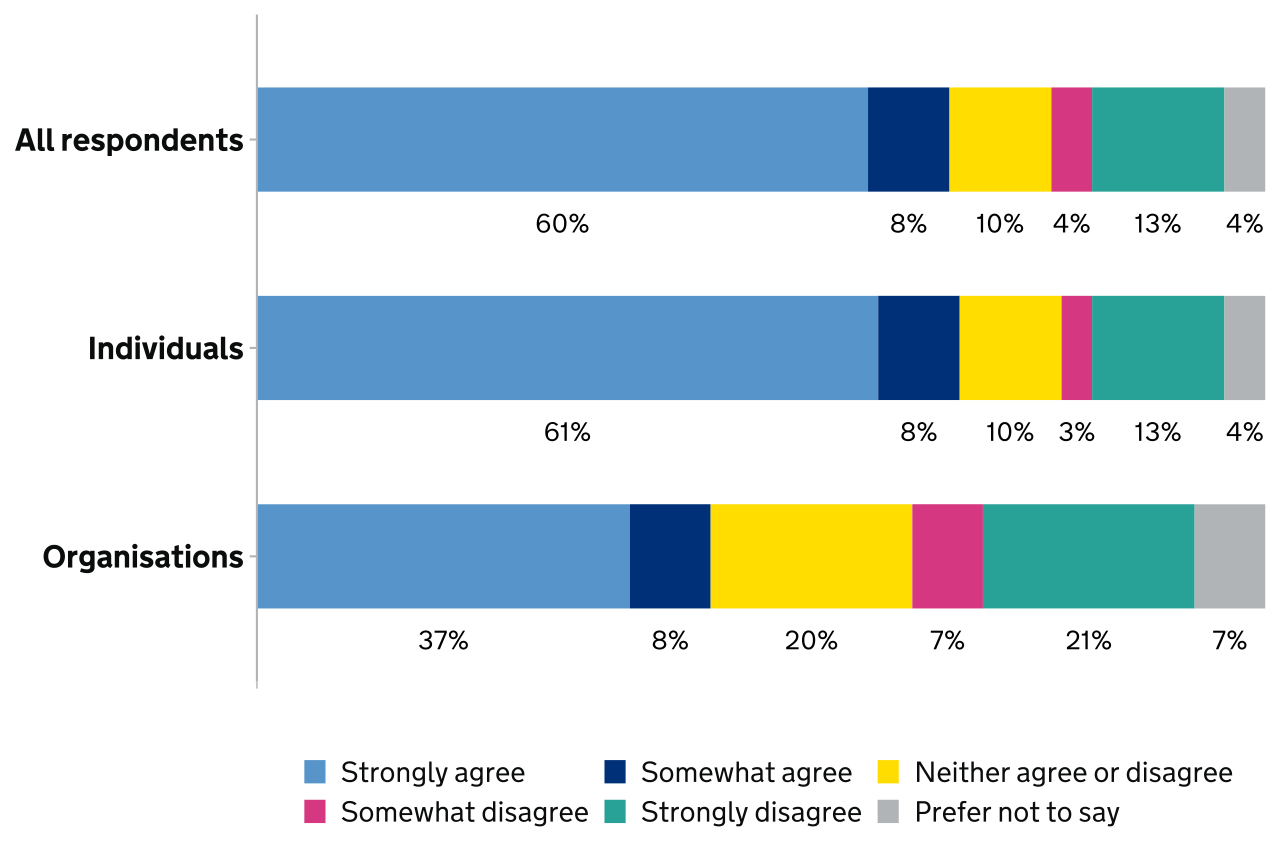
Note: The total dataset consisted of 28,569 respondents: 27,932 individuals, 628 organisations and 9 respondents who did not identify as either. Percentages may not sum to 100% due to rounding.
An analysis of responses shows that:
- with reference to the previous government, over two-thirds (68%) of respondents to this question agreed or strongly agreed that the government should intervene to end conversion practices in principle, 10% of respondents neither agreed nor disagreed, and 17% of respondents disagreed or strongly disagreed
- individuals were more likely than organisation respondents to agree or strongly agree that the government should intervene to end conversion practice in principle (69% compared to 45%)
- respondents who have undergone conversion practices were just as likely to agree or strongly agree compared to respondents who responded that they had not (74% compared to 71%)
- respondents with a religious background were much less likely to agree or strongly agree compared to respondents without a religious background (35% compared to 83%)[footnote 9]
- respondents who reported that they were medical practitioners were more likely to support the proposals compared to those who did not (80% compared to 65%)
- straight/ heterosexual respondents were less likely to agree or strongly agree compared to LGB+ respondents (49% compared to 97%)[footnote 10]
- 99% of transgender respondents agreed or strongly agreed compared to 66% of non-transgender respondents
- 72% of large organisations (250 people or more) agreed or strongly agreed that the government should intervene to end conversion practices in principle, while 41% of organisations employing fewer than 250 people agreed or strongly agreed
The main themes emerging from qualitative analysis of free-text responses for this question related to:
- physical and psychological harm
- inaccurate implications about sexual orientation
- perceived impacts on religious freedoms
- legitimate counselling and therapies
Thematic analysis
The key themes identified from qualitative analysis are discussed in more detail below. They are presented in order of how often they were raised by respondents, and any differences between individual respondents and organisations are highlighted.
Theme 1: Physical and psychological harm
The most common theme raised by both individual and organisational respondents was that they felt conversion practices caused both physical and psychological harm, which they thought could lead to long-term adverse outcomes and distress, in particular depression, anxiety and suicidal ideation. These respondents pointed out that they believed that the harms of conversion practices were frequently facilitated or enabled by families and communities. As a result, they felt that conversion practices would have a considerable negative impact on children and individuals from ethnic minority groups in particular.
Conversion practices or reparative therapy, and all other so-called sexual orientation change efforts are rightly condemned by reputable mental health, counselling, and psychotherapy bodies around the world as unethical and harmful to the people who are subjected to these practices. There are many different forms of conversion therapy, and they can happen in all sorts of environments, from religious, to psychological or psychiatric. There is significant harm associated with conversion practices including a higher risk of depression, anxiety, suicidal ideation, and suicide attempts.
(Organisation working on behalf of LGBT people, people with religious beliefs and women, no further details about size provided)
Theme 2: Inaccurate implications about sexual orientation
Many individual respondents, in particular LGBT respondents and those with experience of conversion practices, disagreed with 2 assumptions which they felt were implicit in conversion practices: first, that sexual orientation could be changed:
Conversion therapy - any attempt to change sexuality or gender identity - risks serious mental harm to an individual because of the creation of an incongruence in hard-wired biological traits and their expression.
(Individual, 45 to 54 years old, no religion, straight/heterosexual, non-transgender)
And second, that being LGBT was something wrong that needed to be fixed:
Conversion therapy is an act fundamentally grounded in an irrational and destructive belief that someone’s sexual orientation or gender identity is something that needs to be ‘fixed’.
(Individual, 18 to 24 years old, Christian, non-transgender)
These respondents stated that sexual orientation was not a choice and therefore was not possible to change through any external intervention, and the perception of being LGBT as ‘wrong’ led to further emotional harm and cruelty. In particular, these respondents emphasised that there appeared to be no scientific basis for conversion practices and the majority of individuals subjected to conversion practices did not change their sexual orientation. Respondents to this question generally did not distinguish between conversion practices aimed at sexual orientation and conversion practices aimed at gender identity.
Theme 3: Perceived impact on religious freedoms
Both individual and organisational respondents expressed concern that the current wording of the proposals, if carried into legislation, could lead to severe limitations on religious freedoms related to group prayer and consensual spiritual discussions. This view was mostly shared among people who identified as having religious beliefs or working with religious organisations, and many of these respondents proposed that religious organisations should be exempted from a ban.
In particular, some religious organisations felt that under the new proposals, they would no longer be able to provide support, including prayer or spiritual counselling, for individuals struggling with their sexual orientation or whether or not they were transgender, and as a result, individuals who sought support would be further isolated.
The proposals risk criminalising well-meaning people who seek to support and help those struggling with their sexuality. The truth that is not being talked about in this conversation is that there are those who admit same sex attraction or who struggle with their gender identity for whom these feelings are unwanted. Making it an offence to help such individuals who are already vulnerable discriminates against their human rights and risks isolating them further.
(Organisation, working on behalf of children, young people, people with religious beliefs, and women, with 1 to 10 people)
Other organisations worried that the language used in the proposals was ambiguous and could prevent teaching of religious beliefs around sexual ethics, potentially infringing upon freedom of religious expression.
We have always condemned abusive or coercive practices, but we are concerned that simply explaining the biblical teaching on sexual ethics will be classified as ‘conversion therapy.’ We are a church that teaches the doctrine of repentance, and this is not something the state should interfere in.
(Organisation, working on behalf of children, young people, LGBT people, people with religious beliefs, and women, with 11 to 49 people)
Theme 4: Legitimate counselling and therapies
Some respondents suggested that legitimate counselling and therapies, whereby individuals are exploring their sexual orientation or whether they are transgender or not, should be excluded from the ban. These respondents felt that consensual discussions facilitated by qualified specialists were beneficial, particularly to minors experiencing gender dysphoria. Without these sessions, many felt that additional problems would emerge due to regrets over physical transition leading to emotional distress and some choosing to physically transition again.
This depends on the definition of conversion therapy. Forcefully attempting to change a person’s sexuality should absolutely be banned (and I believe it already is). However talk therapy to help people exploring their ‘gender identity’, particularly for people who have complicating factors such as mental health issues or past trauma are vital and need to be protected.
(Individual, 35 to 44 years old, no religion, straight/heterosexual, non-transgender)
However, a smaller number of respondents disagreed, saying that counselling and prayer (as well as other forms of non-physical therapy) should be included under the ban as individuals seeking these therapies were in a vulnerable position and not fully able to give informed consent.
From my own personal experience, I think conversion therapy needs to be banned completely as if I had been asked to give consent at the time to counselling and prayer, I would have given my consent, but I was vulnerable and had been led to believe homosexuality was wrong, so I wasn’t able to give informed consent.
(Individual, 35 to 44 years old, Christian, gay or lesbian, non-transgender)
Responses by healthcare organisations and self-identified medical practitioners
The themes raised by both respondents who self-identified as medical practitioners and healthcare organisation responses were similar to those raised by respondents as a whole. Many of these respondents agreed that conversion practices caused both physical and psychological harm, and a number of respondents also mentioned conversion practices wrongly suggested that being LGBT was something that needed to be fixed or solved.
There exists no evidence that conversion therapy is therapeutic or effective, whether in relation to sexual orientation or gender identity, and neither sexual orientation nor gender identity are in themselves indicators of a mental disorder. Instead, the practice of conversion therapy is unethical and potentially harmful especially with regards to mental health outcomes.
(Organisation, healthcare, with 250 people or more)
Healthcare organisations further specified that conversion practices were in general unethical, and a few of these organisations specifically stated that practising or encouraging individuals to undertake forms of conversion practice was in violation of their professional codes (one organisation also mentioned a perceived obligation under Public Sector Equality Duty):
Nurses, midwives and nursing associates should not be involved in providing conversion therapies or encouraging people to undergo them. Doing so is against the standards set out in our Code and risks not only harm to the public, but also damaging public confidence in the profession by undermining the principle of promoting good standards in professional care.
(Organisation, healthcare, no further details about size provided)
A few individual medical practitioner respondents expressed concern that potential ambiguities in the definition of ‘therapy’ could inhibit discussions about sexuality or relationships, or access to therapy to explore sexual or gender identity.
As a CBT therapist I’m concerned that what is considered therapeutic according to a working knowledge and understanding of mental health disorders and our standards of conduct, performance and ethics may be easily misconstrued by a layperson. An example which easily springs to mind would be in the case of obsessive-compulsive disorder which in a heterosexual individual can be experienced as intrusive (unwanted) thoughts of being a homosexual.
(Individual, 35 to 44 years old)
3.2 Physical acts of conversion practices
Questions covered in this section
This section of the consultation outlines the government’s proposal to legislate to ensure that when existing violent offences are motivated by conversion practices, this is considered as a potential aggravating factor by the judge upon sentencing by a court.
Question 1
To what extent do you support, or not support, the government’s proposal for addressing physical acts of conversion therapy? Why do you think this?
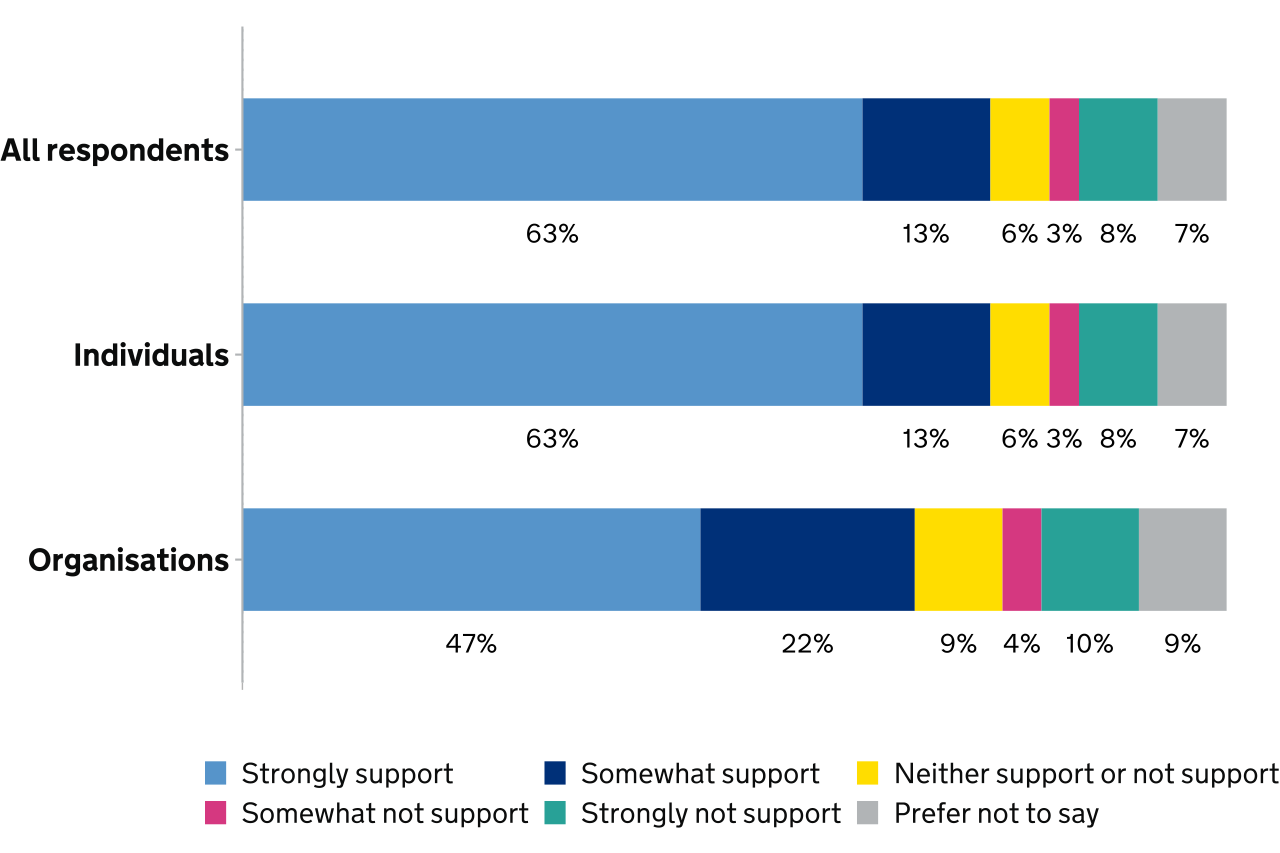
Note: The total dataset consisted of 28,569 respondents: 27,932 individuals, 628 organisations and 9 respondents who did not identify as either. Percentages may not sum to 100% due to rounding.
An analysis of responses shows that:
- 76% of respondents to this question supported the previous government’s proposal for addressing physical acts of conversion practices, 6% of respondents neither supported or did not support, and 11% of respondents did not support the proposal
- individuals were more likely to report that they supported the proposal than organisations (76% compared to 69%)
- respondents who have had conversion practices were more likely to agree or strongly agree compared to respondents who responded that they had not (81% compared to 78%)
- respondents with a religious background were less likely to support or strongly support the proposal compared to respondents who did not have a religious background (63% compared to 82%)
- respondents who were medical practitioners were more likely to support the proposal compared to those who were not (82% compared to 76%)
- straight/heterosexual respondents were less likely to support or strongly support the proposal compared to LGB+ respondents (68% compared to 92%)
- 93% of transgender respondents supported or strongly supported the proposal compared to 75% of non-transgender respondents
- 79% of large organisations (250 people or more) supported the previous government’s proposal for addressing physical acts of conversion practices, while 68% of organisations employing fewer than 250 people supported the proposal
The main themes emerging from qualitative analysis of free-text responses for this question related to:
- physical and psychological harm
- banning all forms of conversion practices
- no need for proposals addressing physical acts
Thematic analysis
The key themes identified from qualitative analysis are discussed in more detail. They are presented in order of how often they were raised by respondents, and any differences between individual and organisational respondents are highlighted.
In addition to the themes presented below, some respondents mentioned the cross-cutting theme that the proposals could potentially ban legitimate support and medical care (such as the provision of hormones or gender-confirming therapy to transgender individuals). These respondents specifically mentioned in their view that the proposal should not treat conversion to being transgender as equivalent to conversion from being transgender.
Theme 1: Physical and psychological harm
The majority of individual and organisational respondents supported the previous government’s proposal for addressing physical acts of conversion practices, which they described with words such as “torture” or “evil”. Respondents frequently expressed their belief that conversion practices caused severe and long-lasting impacts on the mental health of those who experienced them.
Physical conversion therapy covers a broad spectrum of awful practices that no one should ever have to endure based solely on who they are.
(Individual, 35 to 44 years old, Buddhist, gay or lesbian, non-transgender)
Physical acts of conversion therapy can be extremely traumatising and result in severe and long-term mental health consequences, including PTSD. This is nothing other than abuse.
(Individual, 35 to 44 years old, Christian, other sexual orientation, non-transgender)
Theme 2: Banning all forms of conversion practices
Many individual respondents highlighted that all forms of conversion practices (both physical and practices without any physical acts) should fall under the ban, arguing that long-lasting consequences could also arise from non-physical practices. These respondents frequently mentioned that the ban should not allow consent to be given at any point, even if an individual was specifically seeking conversion practices.
This is irrelevant since conversion therapy is wrong regardless of the methods used by abusers. We cannot understate the psychological damage by focusing purely on the physical; both need to be addressed as equally damaging.
(Individual, 18 to 24 years old, no religion, other sexual orientation, transgender)
Theme 3: No need for proposals addressing physical acts
A small number of respondents who provided a free-text response strongly did not support the previous government’s proposal, citing the importance of freedom of choice (individuals should be allowed to make their own choice about undergoing conversion practices). Other respondents who strongly did not support the proposals said that there were already laws in place targeting physical acts.
Physical acts of violence in the name of conversion therapy are already covered by existing laws. Introducing additional laws is likely to cause confusion and may do more harm than good.
(Individual, 45 to 54 years old, no religion, straight/heterosexual, gender identity different from sex registered at birth but no specific identity given)
Responses by healthcare organisations and medical practitioners
The themes raised by medical practitioners and healthcare organisations were similar to those raised by respondents as a whole. Almost all of these healthcare respondents who answered this question expressed general agreement with the proposal and highlighted the harm caused by physical acts of conversion practice.
Article 3 of the European Convention in Human Rights (‘ECHR’), places a duty on government to provide protection to individuals from serious harm amounting to torture, or inhuman or degrading treatment. Conversion therapy amounts to a clear violation of Article 3 ECHR, and as this is an absolute right (that is, i.e. non-derogable), there is no balancing of other human rights, for example Article 9 ECHR (freedom of religion), or Article 10 ECHR (freedom of expression) to enable conversion therapy practices to be exempted from prohibition.
(Organisation, healthcare, with 250 people or more)
3.3 Non-physical conversion practices
Questions covered in this section
This section of the consultation covers the previous government’s proposal to introduce a new criminal offence that would capture non-physical conversion practices committed against those who are under 18 years old, aged 18 or over who have not given informed consent or due to their vulnerability are unable to give such consent.
Question 2
The government considers that delivering talking conversion therapy with the intention of changing a person’s sexual orientation or changing them from being transgender or to being transgender either to someone who is under 18, or to someone who is 18 or over and who has not consented or lacks the capacity to do so should be considered a criminal offence. The consultation document describes proposals to introduce new criminal law that will capture this. How far do you agree or disagree with this?
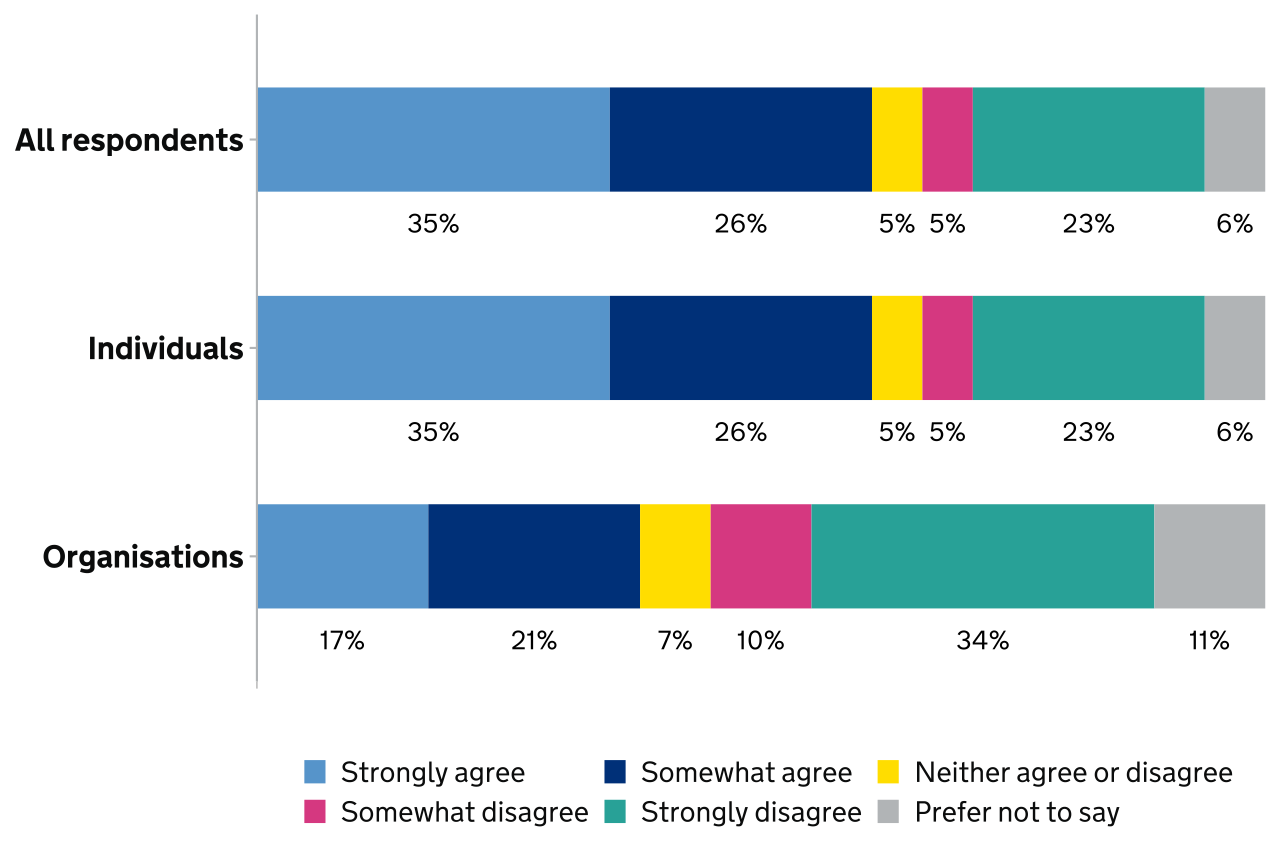
Note: The total dataset consisted of 28,569 respondents: 27,932 individuals, 628 organisations and 9 respondents who did not identify as either. Percentages may not sum to 100% due to rounding.
An analysis of responses shows that:
- 61% of respondents agreed or strongly agreed with the proposals described in the consultation to introduce new criminal law, 5% neither agreed nor disagreed, and 28% disagreed or strongly disagreed
- individuals were more likely to report that they agreed or strongly agreed than organisations (61% compared to 38%)
- respondents who have had conversion practices were more likely to agree or strongly agree compared to respondents who responded that they had not (70% compared to 66%)
- respondents without a religious background were twice as likely to agree or strongly agree compared to respondents with a religious background (72% compared to 35%)
- individual respondents who were medical practitioners were more likely to agree or strongly agree compared to those who were not (72% compared to 60%)
- straight/heterosexual respondents were less likely to agree or strongly agree compared to LGB+ respondents (45% compared to 90%)
- 92% of transgender respondents agreed or strongly agreed compared to 61% of non-transgender respondents
- 63% of large organisations (250 people or more) agreed or strongly agreed with the proposals described in the consultation to introduce new criminal law, while 34% of organisations employing fewer than 250 people agreed or strongly agreed
Question 3
How far do you agree or disagree with the penalties being proposed?
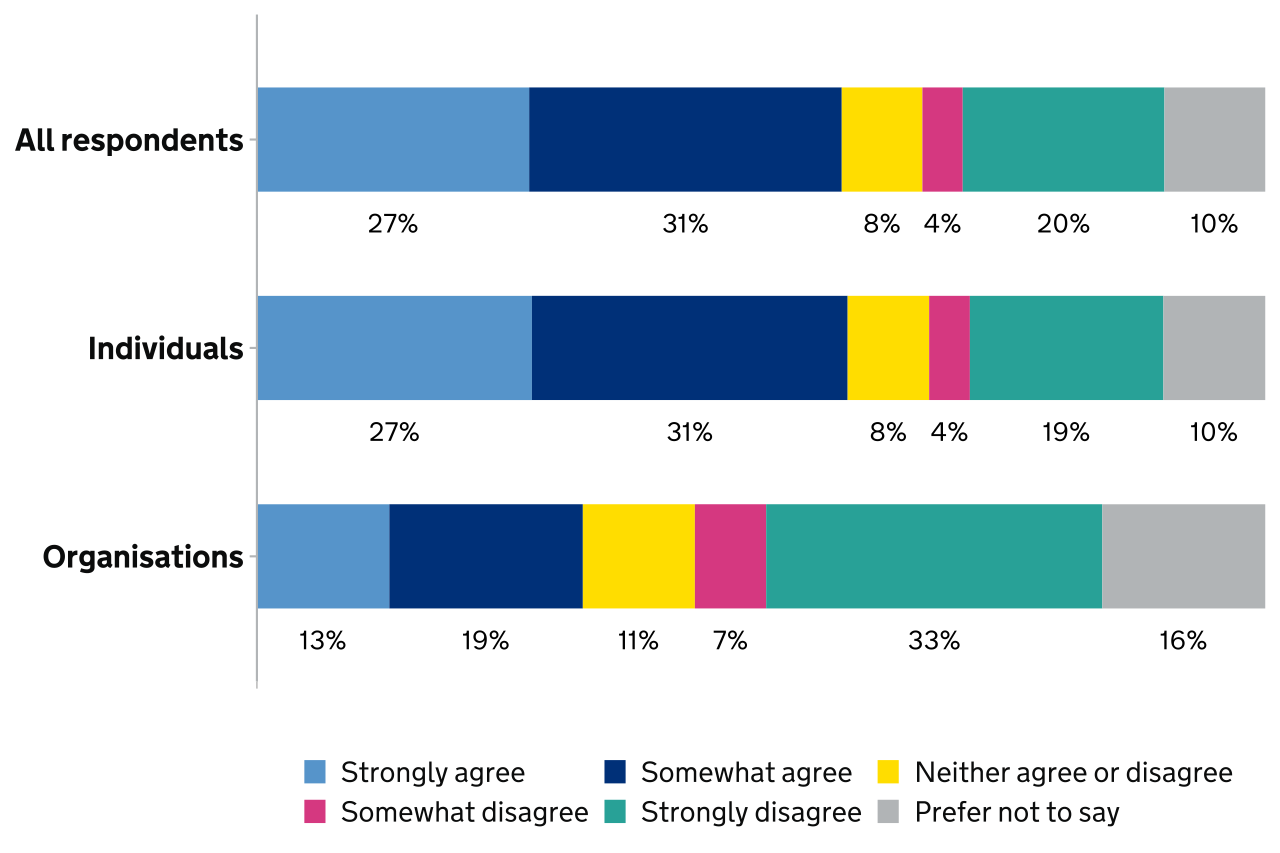
Note: The total dataset consisted of 28,569 respondents: 27,932 individuals, 628 organisations and 9 respondents who did not identify as either. Percentages may not sum to 100% due to rounding.
An analysis of responses shows that:
- 58% of respondents agreed or strongly agreed with the proposed penalties, 8% neither agreed nor disagreed, and 24% disagreed or strongly disagreed
- individuals were more likely to report that they agreed or strongly agreed than organisations (58% compared to 32%)
- respondents who have had conversion practices were more likely to agree or strongly agree compared to respondents who responded that they had not (66% compared to 61%)
- respondents without a religious background were more than twice as likely to agree or strongly agree compared to respondents with a religious background (71% compared to 30%)
- respondents who were medical practitioners were more likely to agree or strongly agree compared to those who were not (67% compared to 58%)
- straight/heterosexual respondents were less likely to agree or strongly agree compared to LGB+ respondents (40% compared to 85%)
- 87% of transgender respondents agreed or strongly agreed compared to 56% of non-transgender respondents
- 52% of large organisations (250 people or more) agreed or strongly agreed with the penalties being proposed, while 29% of organisations employing fewer than 250 people agreed or strongly agreed
Question 4
Do you think that these proposals miss anything? If yes, can you tell us what you think we have missed?
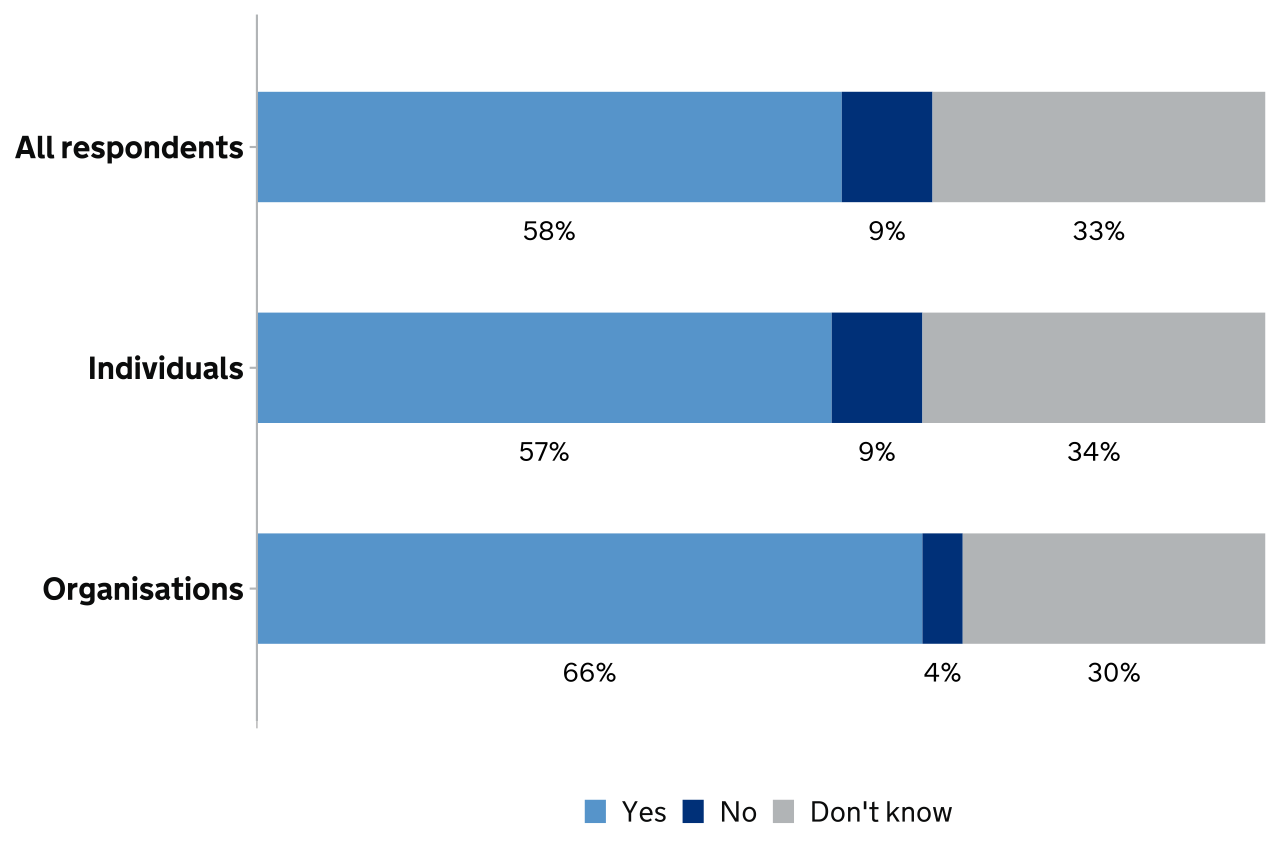
Note: The total dataset consisted of 28,569 respondents: 27,932 individuals, 628 organisations and 9 respondents who did not identify as either. Percentages may not sum to 100% due to rounding.
An analysis of responses shows that:
- 58% of respondents agreed that the proposals had missed something, 9% said the proposals did not miss anything and the remaining 33% answered ‘Don’t know’
- individuals were less likely to report that they agreed that the proposals had missed something compared to organisations (57% compared to 66%)
- respondents who have had conversion practices were more likely to answer ‘Yes’ compared to respondents who responded that they had not (73% compared to 57%)
- respondents with a religious background were as likely to answer ‘Yes’ as respondents without a religious background (59% compared to 57%)
- respondents who were medical practitioners were as likely to answer ‘Yes’ as those who did not (56% compared to 58%)
- straight/heterosexual respondents were less likely to answer ‘Yes’ compared to LGB+ respondents (53% compared to 63%)
- 70% of transgender respondents answered ‘Yes’, compared to 56% of non-transgender respondents
- 79% of large organisations (250 people or more) agreed that the proposals had missed something, while 65% of organisations employing fewer than 250 people agreed
The main themes emerging from qualitative analysis of free-text responses for this question related to:
- the option to consent
- legitimate talking therapy and counselling
- removing references to converting people to be transgender
- expanding protections to other sexual orientations
Thematic analysis
The key themes identified from qualitative analysis are discussed in more detail below. They are presented in order of how often they were raised by respondents, and any differences between individual respondents and organisations are highlighted.
Theme 1: The option to consent
Many individual and organisational respondents called for a complete ban on all forms of conversion practices with no exemptions for conversion practices which take place in religious settings and no options for those who are over 18 years old to consent. These respondents frequently mentioned that they felt consent itself was not possible within the context of conversion practices (as they believed individuals could not consent to acts of abuse), and a number of these respondents specifically stated that the option to consent should not be included in legislation.
You cannot consent to abuse. The situation of an adult consenting to conversion therapy is the same as a person consenting to abuse, coercion and rape within a relationship. It is still abuse.
(Individual, 35 to 44 years old, no religion, gay or lesbian, non-transgender)
Other respondents stated that the proposals should not offer any exemptions, such as for religious activities.
I do not think even if someone over 18 ‘consents’ this should be a practice which is allowed. There could be family pressure, religious pressure etc to feel the need to attend talking conversion therapy which could lead to someone over 18 ‘consenting’ - I think the practice as a whole should be banned.
(Individual, 25 to 34 years old, no religion, gay or lesbian, non-transgender)
Theme 2: Legitimate talking therapy and counselling
A number of respondents, including religious organisations and individuals with religious beliefs, expressed concern that the proposals would limit access to legitimate talking therapy or counselling, and that additional detail was needed in the proposals to clarify that this would not be the case.
The law needs to make it extremely clear that someone questioning their gender or sexuality can explore it with counsellors. If someone who thinks they are gay goes to a counselling service or helpline, the provider of that counselling service or helpline should not be criminalised.
(Individual, 18 to 24 years old, no religion, gay or lesbian, transgender)
These respondents felt that therapy or counselling was often beneficial in helping individuals to explore their sexuality or whether or not they were transgender in an unbiased way, and practitioners might be concerned about the risk of prosecution under the proposals, making it more difficult for individuals to access these services. Similarly, some respondents believed that the proposals would prevent parents from talking to their child about sexual orientation or transgender status, and parents should not fear prosecution for having these conversations.
Parents are responsible for the upbringing of their children according to their beliefs, without mental, physical or emotional abuse, to provide a better understanding of those beliefs. The consultation doesn’t allow for this and would constrain parents’ freedom of speech, giving overall control to the law when guiding children.
(Individual, 65 to 74 years old, Christian, straight/heterosexual, non-transgender)
These respondents in general feared children might mistakenly believe they are transgender and face pressure to transition, but as a result of the proposals would no longer have access to the levels of professional and specialist support to help them understand the ramifications of transitioning.
It is essential that children and young people experiencing gender dysphoria are given opportunities to explore their feelings and discuss issues with trusted professionals. This is a vital part of any treatment and support plan, and essential for child safeguarding. We are concerned that under these proposals, such support would be potentially criminalised.
(Organisational working on behalf of children, young people, LGBT people, and women, no further details about size provided)
Theme 3: References to converting people to being transgender
A number of individual and organisational respondents focused on the discussion of the motivation behind conversion practices, in particular the phrase “with the intention of changing their sexual orientation or changing them to or from being transgender”. These respondents argued that there was no evidence of conversion practices taking place that attempted to change individuals to being LGBT. Some of these respondents believed that no reference should be made in the proposals to conversion practices taking place that attempted to change individuals to being LGBT, while others wanted the proposals to make clear that these services did not constitute conversion practices. They felt this would ensure individuals were not discouraged from seeking access to therapy or counselling to explore their sexual orientation or whether or not they were transgender.
While the intent of fairness in the phrase ‘changing them from being transgender or to being transgender’ is clear, there is no evidence of conversion therapy attempting to convert people into being trans, whereas there is a massive moral panic underway in the UK at the present time about trans children. It is vital that the bill is phrased in such a way that if a child expresses that they think they might be trans, that being supportive of that child as they explore their gender identity and come to their own conclusions about their identity is not bundled up with conversion therapy and made illegal.
(Individual, 35 to 44 years old , no religion, bisexual, transgender)
Theme 4: Expanding protections to other sexual orientations
Some individual respondents urged the proposals to explicitly consider people who identify as asexual, aromantic, intersex, and non-binary, among others, as these respondents were worried that individuals identifying in such ways were at similarly high levels of risk as transgender individuals of being offered or undergoing conversion practices.
The law does not explicitly specify whether or not it includes intersex, non-binary, asexual, and aromantic people. These people should be included in the protections.
(Individual, 25 to 34 years old, no religion, bisexual, non-transgender)
Responses by healthcare organisations and medical practitioners
The themes raised by respondents who were medical practitioners or responding on behalf of healthcare organisations were similar to those raised by respondents as a whole. The most common theme in medical practitioner responses (also raised by a majority of healthcare organisations) focused on the issue of consent, in particular concerns that either:
- consent would act as a ‘loophole’ in which conversion practices could proceed
- consent was not provided in an environment in which the individual was provided with sufficient information about risks and alternatives
We are seriously concerned that the exception for ‘consensual’ ‘conversion therapy’ provides a dangerous loophole that can be exploited. This is based on the qualitative evidence included in the government’s report which shows that many participants ‘chose’ to undergo the ‘therapy’ but actually felt pressured into doing so. Indeed most of the participants involved in the report technically consented, but were still clearly pressured into doing so and suffered as a result. This is why there must be no exception for consent, as this will most likely undermine all the efforts to end the harmful practice.
(Organisation, healthcare, no further details about size provided)
A small number of medical practitioner respondents were worried that access to ‘exploratory therapy’ for individuals wanting to discuss their gender identity (in particular young people) would be negatively impacted.
Many patients who I have seen in clinical practice are confused about their gender and sexuality, particularly young people. Therapy can help them discover who they are and what underlying issues they are dealing with. The outcome may confirm their feelings or it might not but there has to be help and support available regardless of the outcome. Debating the ‘intention’ is subjective and making it subject to criminal charges makes me concerned that those who are genuinely confused will not access the help they want/need.
(Individual, medical practitioner, 35 to 44 years old, Christian, straight/heterosexual, non-transgender)
Similarly, many healthcare organisations mentioned the need to explicitly safeguard ethical therapeutic practices (this was the second most common theme after the issue of consent). Organisations presented slightly different definitions of what ethical practices were, though common criteria included delivery by trained and regulated staff, focus on individual autonomy and choice, and alignment with professional codes.
We believe it is important for the legislation or accompanying guidance to make clear that the law will not stop ethical, affirmative forms of therapy (which are non-directive and non-judgemental). It is also important that the legislation does not interfere with psychological and medical professionals who are trained and competent in working with trans and gender questioning youth from engaging in identity exploration or performing clinical assessment of suitability for medical intervention. It should not interfere with regulated professionals working in gender identity clinics under NHS specifications (including any changes to practices made in light of the Cass review).
(Organisation, healthcare, with 50 to 249 people)
A few healthcare organisations also encouraged the previous government to adopt the specific language used to define conversion practices set out by the Memorandum of Understanding (MoU) on Conversion Therapy in the UK. These respondents felt that the MoU definition clearly distinguished between targeted conversion practices and the therapeutic exploration of uncertain feelings around sexuality or gender identity. Other healthcare organisations specified practices that should be explicitly allowed. These included gender transition services, gender transition healthcare, and legitimate and explorative therapy for gender identity.
We support the view that any therapeutic approach which begins with an assumption that any sexual orientation of gender identity is inherently preferable, or which attempts to bring about a change of sexual orientation or gender identity, can never be considered legitimate. However, we also welcome the recognition within these proposals that a ban on conversion therapy must not limit or interfere with legitimate talking therapies or other support for those who may be questioning if they are LGBT.
(Organisation, healthcare, with 250 people or more)
Finally, a small number of healthcare organisations suggested the importance of establishing a reciprocal relationship between statutory services and professional bodies to inform each other about charges of conversion practices against individuals (to support investigations within each body).
The proposals also need to include a duty for statutory services to inform regulators and professional bodies of accusations and charges of conversion therapy, so they can be investigated within their own conduct procedures. We would also envisage a reciprocal duty on professional bodies and regulators to inform the criminal prosecution authorities at the outset in cases where the threshold for physical coercion and intent has clearly been crossed. These systems of policing and dealing with individual cases will need to work in tandem.
(Organisation, healthcare, working on behalf of children, young people, LGBT people, people with religious beliefs and women, with 250 people or more)
4. Additional policy tools to end conversion practices
4.1 Restricting the promotion of conversion practices
Questions covered in this section
This section of the consultation addresses the promotion of conversion practices in broadcast media, advertisements and online. The previous government had set out a proposal to review Ofcom’s Broadcasting Code and consider how best to restrict promotion of conversion practices.
Question 5
The government considers that Ofcom’s Broadcasting Code already provides measures against the broadcast and promotion of conversion therapy. How far do you agree or disagree with this? Why do you think this?
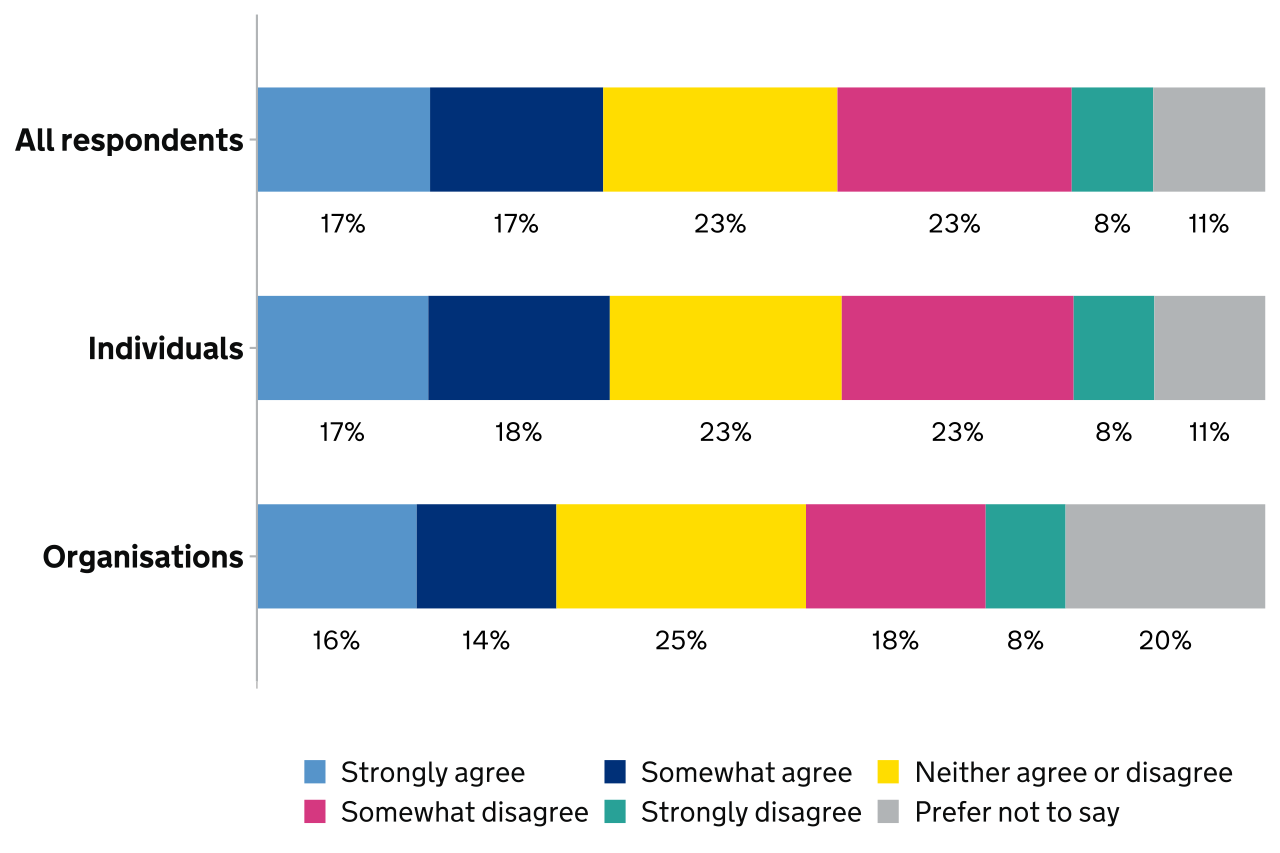
Note: The total dataset consisted of 28,569 respondents: 27,932 individuals, 628 organisations and 9 respondents who did not identify as either. Percentages may not sum to 100% due to rounding.
An analysis of responses shows that:
-
just over one-third (34%) of respondents to this question agreed or strongly agreed that Ofcom’s Broadcasting Code already provided measures against the broadcast and promotion of conversion practices, 23% neither agreed nor disagreed, 31% disagreed or strongly disagreed, and the remaining 11% selected ‘Prefer not to say’
- individuals were slightly more likely to report that they agreed or strongly agreed than organisations (35% compared to 30%)
- respondents who have had conversion practices were more likely to agree or strongly agree compared to respondents who responded that they had not (39% compared to 35%)
- respondents with a religious background were equally as likely to agree or strongly agree as respondents without a religious background (35% of both respondent types)
- respondents who were medical practitioners were more likely to agree or strongly agree compared to those who were not (44% compared to 34%)
- there were no major differences in the percentage of respondents who agreed or strongly agreed across sexual orientation, gender identity, or organisation size (between 30 to 35% of all respondents)
The main themes emerging from qualitative analysis of free-text responses for this question related to:
- enforcement of existing regulations
- handling promotion through local organisations, charities and word of mouth
- allowing adults to seek information on conversion practices
- accessing information on healthcare services
Thematic analysis
The key themes identified from qualitative analysis are discussed in more detail. They are presented in order of how often they were raised by respondents, and any differences between individual and organisational respondents are highlighted.
Theme 1: Enforcement of existing regulations
Most individual and organisational respondents argued that Ofcom’s Broadcasting Code should be improved by clarifying the ban on promoting conversion practices and implementing stronger enforcement mechanisms. Many of these respondents believed that the Broadcasting Code did not stop advertising or promotion of conversion practices. In addition, some of these respondents suggested that specific legislation might be better suited to addressing the challenges of banning the promotion of conversion practices (rather than a regulatory body such as Ofcom), as they believed legislation could better cover online platforms and enable stronger legal penalties to be implemented.
Whilst Ofcom does prohibit such practices, it may not catch some who underhandedly promote conversion therapy through promotion of ideology or through suggestive actions. Ofcom should make it explicit that any and all forms of promoting such ideology is classed as hate speech and an attempt of conversion therapy. An amendment of the Communications Act would benefit the new proposal - it will work better if both legislations are up to date and stipulate the same information as to what constitutes an offence.
(Individual, 16 to 17 years old, no religion, no further demographic details provided)
Theme 2: Handling promotion through local organisations, charities and word of mouth
Some respondents, in particular individuals who identified as LGB+, pointed out that Ofcom’s Broadcasting Code did not cover local social networks that promoted conversion practices through private interactions (as opposed to public settings). A number of respondents shared their personal experiences of learning about conversion practices through local organisations, charities, and word of mouth.
While Ofcom is effective at dealing with the promotion of conversion therapy at the national level, there needs to be measures put in place at a local level, as many instances of conversion therapy occur within local communities and especially in local faith groups.
(Individual, 25 to 34 years old, no religion, gay or lesbian, non-transgender)
These respondents expressed concern that this form of promotion was more subtle and reliant on indirect or ambiguous reference to conversion practices, and addressing this form of promotion required comprehensive regulation and systems for reporting. However, few respondents provided solutions that might address this perceived loophole.
We know this doesn’t go far enough. Conversion therapy isn’t promoted within the media, it is private conversations between organisations and vulnerable families.
(Individual, 25 to 34 year old, no further demographic details provided)
Theme 3: Allowing people to seek information on conversion practices
A few respondents, including religious organisations, argued that any individual should be able to seek and find information on practices that would potentially benefit them. In particular, these respondents pointed out that if the proposals allowed adults to consent to undergoing conversion practices, then it did not make sense to restrict adults from trying to find more information about such practices in the first place.
The consultation paper accepts that conversion therapy can be undertaken by consenting adults - but it then talks about stopping promotion of conversion therapy. The promotion of conversion therapy should not be prohibited because it is of great help to some people.
(Individual, 65 to 74 years old, Christian, non-transgender)
Theme 4: Accessing information on healthcare services
A small number of respondents were concerned that the proposals could deter individuals (in particular children) from getting access to educational content or relevant information related to gender identity services or other resources for exploring possible transgender status.
This measure could risk a section 28-esque censorship of media which educates the public on the realities of gender affirmative healthcare, such as documentaries like I Am Leo and My Transsexual Summer. ‘Promotion’ is an exceptionally flexible term and has a well-known history of being weaponised against LGBTQ people by censoring educational materials about their lives.
(Individual, 18 to 24 years old, Christian, bisexual, transgender)
Question 6
Do you know of any examples of broadcasting that you consider to be endorsing or promoting conversion therapy? If yes, can you tell us what these examples are?
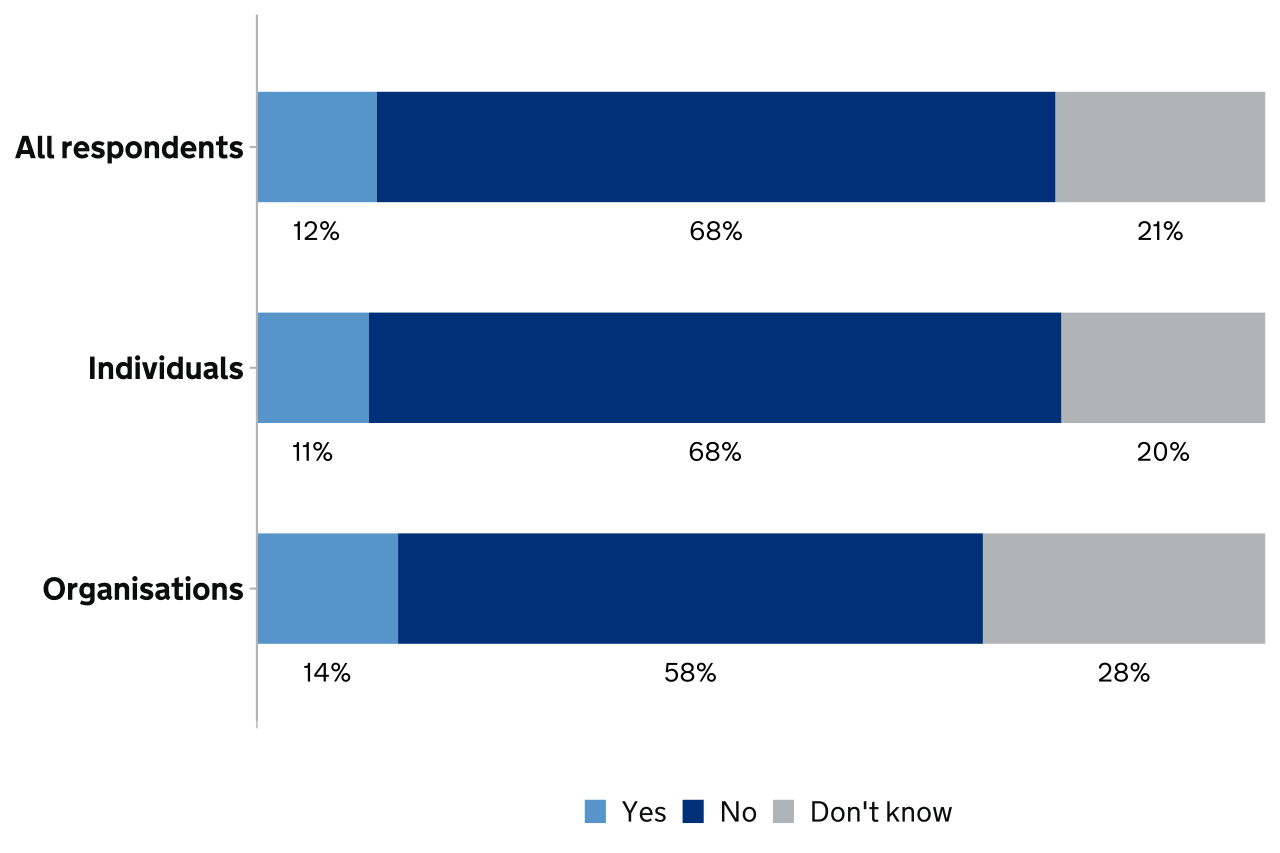
Note: The total dataset consisted of 28,569 respondents: 27,932 individuals, 628 organisations and 9 respondents who did not identify as either. Percentages may not sum to 100% due to rounding.
An analysis of responses shows that:
- around 1 in 8 respondents (12%) reported that they knew of examples of broadcasting which they considered to be endorsing or promoting conversion practices, 68% did not know of any examples, and the remaining 21% answered ‘Prefer not to say’[footnote 11]
- organisations were slightly more likely to answer ‘Yes’ than individuals (14% to 11%)
- respondents who have had conversion practices were more likely to answer ‘Yes’ compared to respondents who responded that they had not (29% compared to 11%)
- respondents with a religious background were slightly less likely to answer ‘Yes’ compared to respondents without a religious background (8% to 13%)
- respondents who were medical practitioners were slightly more likely to answer ‘Yes’ compared to those who were not (15% compared to 11%)
- straight/heterosexual respondents were slightly less likely to answer ‘Yes’ compared to LGB+ respondents (9% compared to 14%)
- 17% of transgender respondents answered ‘Yes’ compared to 11% of non-transgender respondents
- 19% of large organisations (250 people or more) knew of examples of broadcasting they considered to be endorsing or promoting conversion practices, while 12% of organisations employing fewer than 250 people knew of examples
Thematic analysis
The key themes identified from qualitative analysis are discussed in more detail. They are presented in order of how often they were raised by respondents, and any differences between individual and organisational respondents are highlighted. Please note that any examples of conversion practices provided by respondents have not been verified.
Theme 1: Some organisations are perceived to be indirectly validating conversion practices
The main theme raised by respondents was that some organisations within the United Kingdom and overseas with high levels of media exposure, on occasion, actively opposed what respondents referred to as “gender-affirming” care and gender transitioning. These respondents felt that the high visibility of these organisations (through interviews conducted with media and quotes in news articles), and, more generally, public opposition to transgender identities or gender identity services could indirectly validate conversion practices in the eyes of the public. Respondents also felt that media coverage of these views should be more critical and offer alternative perspectives.
It appears that anti-trans platforms are given considerable voice despite coming from a very small minority and making claims that have no scientific or statistical validity - and these claims are not vigorously challenged. This bias gives room and legitimacy for the ‘conversion therapy’ groups.
(Individual, 55 to 64 years old, Christian, gay or lesbian, non-transgender)
Similarly, respondents raised a number of different examples of media they felt to be endorsing or promoting conversion practices. However, a few charities, religious organisations and individuals took the opposite view, that media organisations had misrepresented gender dysphoria, encouraging children to see themselves as transgender and suggesting that affirmation and hormone therapy was the only proper approach to treatment.
Many TV shows are aimed at children and promote the incorrect claim that “gender identity” is fixed, and thus that gender dysphoria and gender nonconformity in children is predictive of being transgender in adulthood.
(Individual, 35 to 44 years old, no religion, straight/heterosexual)
These respondents consistently mentioned the same set of examples of media that they felt misrepresented gender dysphoria.
Question 7
The government considers that the existing codes set out by the Advertising Standards Authority and the Committee of Advertising Practice already prohibits the advertisement of conversion therapy. How far do you agree or disagree with this?
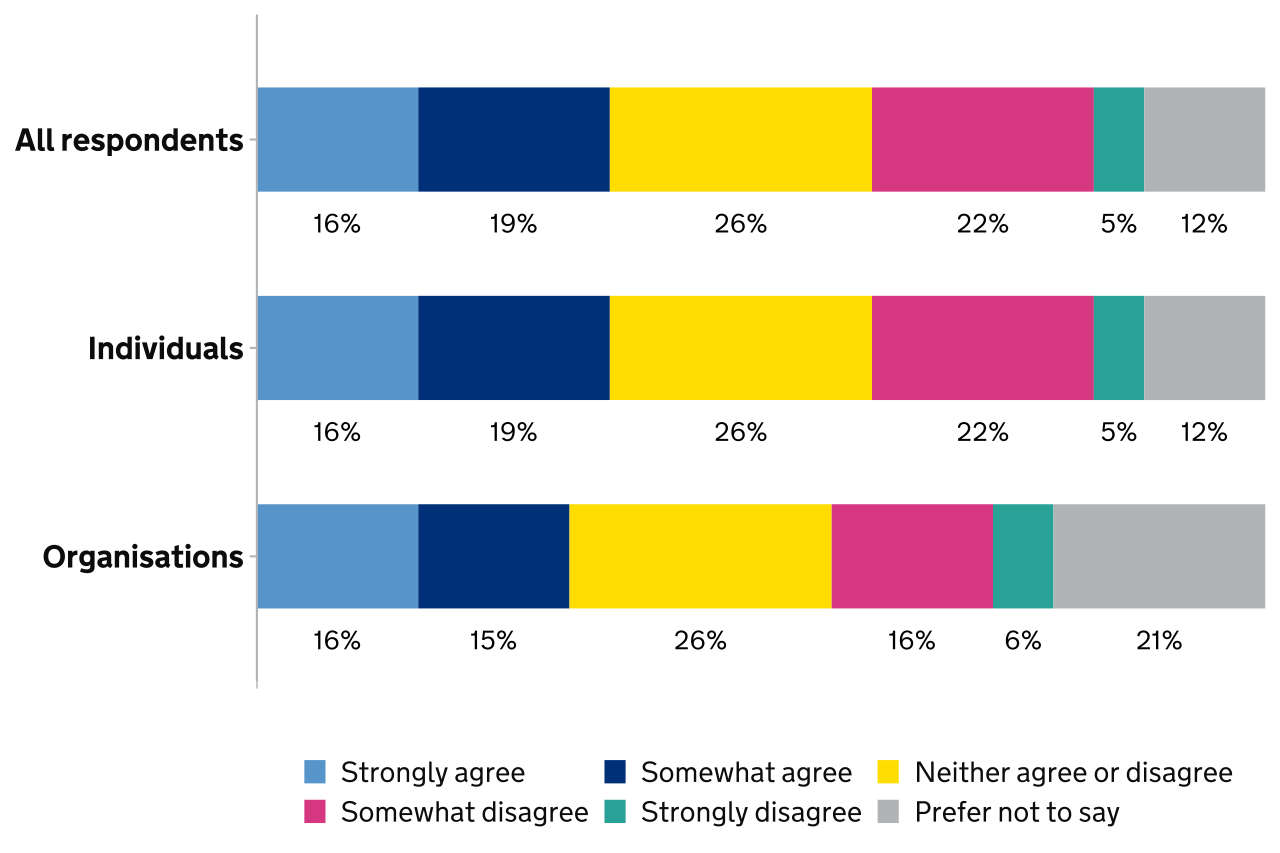
Note: The total dataset consisted of 28,569 respondents: 27,932 individuals, 628 organisations and 9 respondents who did not identify as either. Percentages may not sum to 100% due to rounding.
An analysis of responses shows that:
- just over one-third of respondents (35%) to this question agreed or strongly agreed that the existing codes set out by the Advertising Standards Authority and the Committee of Advertising Practice already prohibited the advertisement of conversion practices, 26% of respondents neither agreed nor disagreed, 27% disagreed or strongly disagreed, and the remaining 12% selected ‘Prefer not to say’
- individuals were slightly more likely to report that they agreed or strongly agreed than organisations (35% compared to 31%)
- respondents who have had conversion practices were more likely to agree or strongly agree compared to respondents who responded that they had not (39% compared to 35%)
- respondents with a religious background were slightly more likely to agree or strongly agree compared to respondents without a religious background (37% to 34%)
- respondents who were medical practitioners were more likely to agree or strongly agree compared to those who were not (43% compared to 35%)
- straight/heterosexual respondents were as likely to agree or strongly agree as LGB+ respondents (36% compared to 35%)
- 31% of transgender respondents agreed or strongly agreed compared to 36% of non-transgender respondents
- 30% of large organisations (250 people or more) agreed or strongly agreed, while 31% of organisations employing fewer than 250 people agreed or strongly agreed
Question 8
Do you know of any examples of advertisements that you consider to be endorsing or promoting conversion therapy? If yes, can you tell us what these examples are?
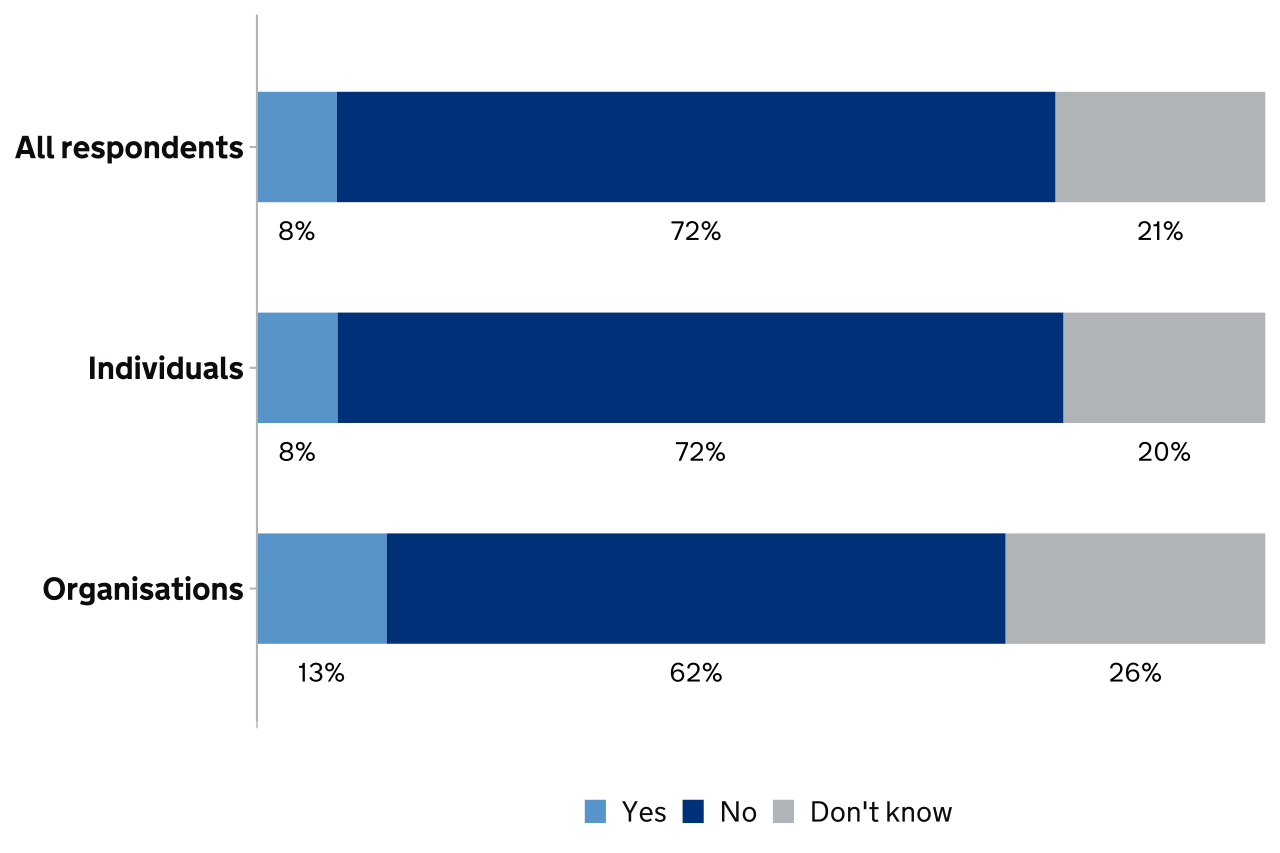
Note: The total dataset consisted of 28,569 respondents: 27,932 individuals, 628 organisations and 9 respondents who did not identify as either. Percentages may not sum to 100% due to rounding.
An analysis of responses shows that:
- a small number of respondents (8%) to this question said they knew of examples of advertisements they considered to be endorsing or promoting conversion practices, 72% did not know of any examples and the remaining 21% answered ‘Prefer not to say’[footnote 12]
- respondents who have had conversion practices were more likely to answer ‘Yes’ compared to respondents who responded that they had not (18% compared to 8%)
- respondents without a religious background were slightly more likely to answer ‘Yes’ compared to those with a religious background (9% to 5%)
- respondents who were medical practitioners were slightly more likely to answer ‘Yes’ compared to those who were not (11% compared to 8%)
- straight/heterosexual respondents were slightly less likely to answer ‘Yes’ compared to LGB+ respondents (6% compared to 9%)
- 10% of transgender respondents answered ‘Yes’ compared to 8% of non-transgender respondents
- 16% of large organisations (250 people or more) said they knew of examples of advertisements they considered to be endorsing or promoting conversion practices, while 11% of organisations employing fewer than 250 people said they knew of examples
The main themes emerging from qualitative analysis of free-text responses for this question related to:
- advertisements or unsolicited materials distributed by charities
- advertisements in public areas or on public transit
Thematic analysis
The key themes identified from qualitative analysis are discussed in more detail. They are presented in order of how often they were raised by respondents, and any differences between individual and organisational respondents are highlighted. Please note that any examples of conversion practices provided by respondents have not been verified.
Theme 1: Advertisements or unsolicited materials distributed by charities
A small number of respondents expressed the view that opposition to gender identity services was indirectly promoting conversion practices. As a related theme, other respondents, in particular individuals who identified as transgender, cited charities that had advertised or distributed materials that discouraged conversations with children about being transgender, including among parents and schools. Respondents complained that in their view these advertisements portrayed transgender people as misguided or confused.
A number of anti-transgender groups have attempted to place their materials in schools, some of which use language likely to encourage or promote ‘conversion therapy’ and the isolation of transgender individuals from their family and peers.
(Individual, 55 to 64 years old, Hindu, bisexual, transgender)
Theme 2: Advertisements in public areas or on public transit
A few respondents cited coordinated campaigns to promote conversion practices or that promise to “cure” or “fix” individuals through messages in public areas or on public transport. The most common example cited by respondents was an advertisement campaign on London buses.
I have twice seen an advert on a hackney carriage in London and Cardiff promoting the therapy but in a subtle way.
(Individual, 25 to 34 years old, gay or lesbian, non-transgender)
Respondents also described these campaigns using leaflets, billboards, door-to-door activity, or people speaking out loud (via megaphone or microphone) to communicate their messaging.
There are billboards that come up on the streets of London regarding conversion therapy.
(Individual, 18 to 24 years old, no religion, gay or lesbian, non-transgender)
4.2 Protecting people from conversion practices overseas
Questions covered in this section
This section of the consultation concerned the previous government proposal to introduce Conversion Practice Protection Orders, which set out certain conditions to protect a person from undergoing conversion practices. These may include removing the passport or means of travel from the person to be protected (only in extreme circumstances for over-18s) so they are not forced or coerced to go abroad to receive conversion practices as well as any other requirement the court considers necessary to protect the person for whose protection the order is made.
Question 9
The consultation document describes proposals to introduce conversion therapy protection orders to tackle a gap in provision for victims of the practice. To what extent do you agree or disagree that there is a gap in the provision for victims of conversion therapy?
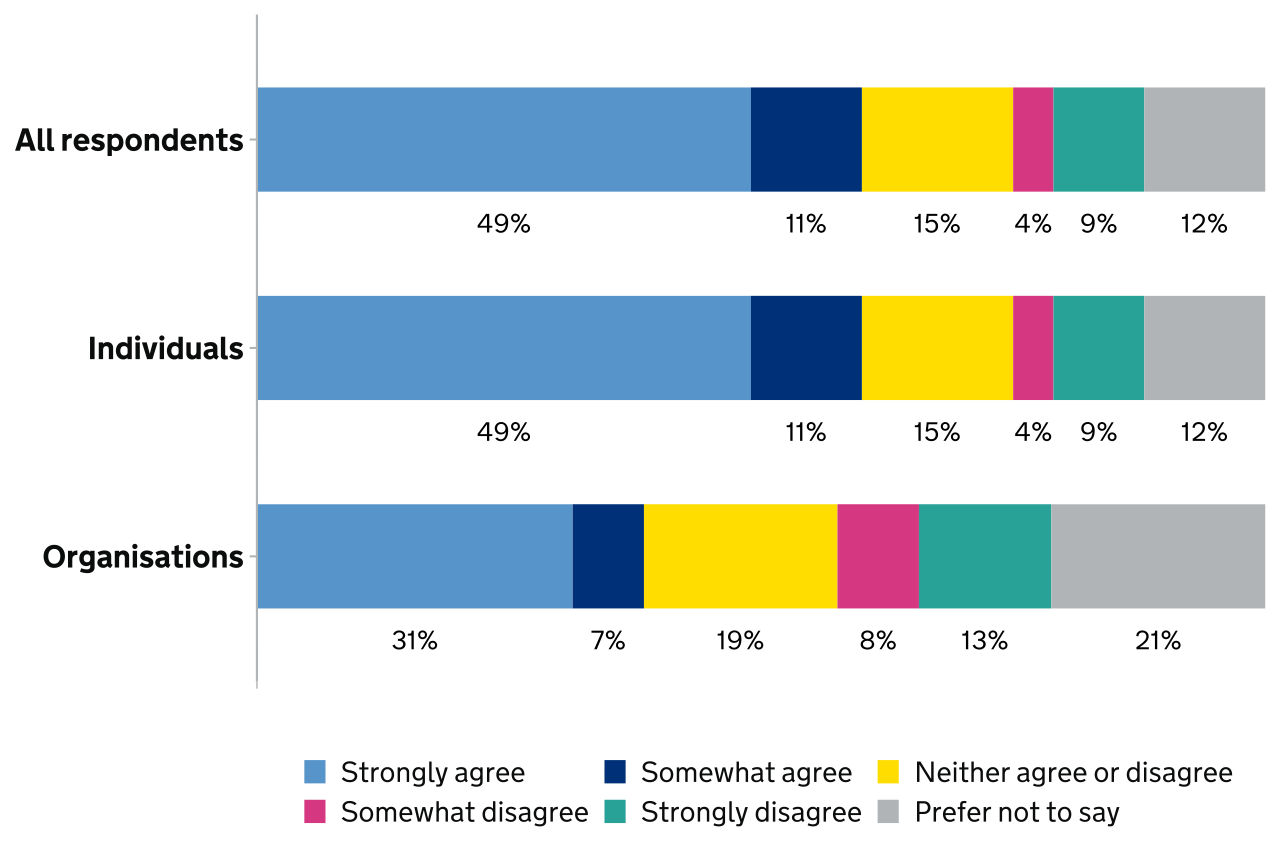
Note: The total dataset consisted of 28,569 respondents: 27,932 individuals, 628 organisations and 9 respondents who did not identify as either. Percentages may not sum to 100% due to rounding.
An analysis of responses shows that:
- 3 in 5 respondents (60%) to this question agreed or strongly agreed that there was a gap in the provision for victims of conversion practices, 15% of respondents neither agreed nor disagreed, 13% of respondents disagreed or strongly disagreed, and the remaining 12% of respondents selected ‘Prefer not to say’
- individuals were more likely to report that they agreed or strongly agreed than organisations (60% compared to 39%)
- respondents who have had conversion practices were more likely to agree or strongly agree compared to respondents who responded that they had not (68% compared to 62%)
- respondents without a religious background were twice as likely to agree or strongly agree that there was a gap in the provision for victims of conversion practices compared to those with a religious background (72% to 31%)
- respondents who were medical practitioners were more likely to agree or strongly agree compared to those who were not (71% compared to 60%)
- straight/heterosexual respondents were less likely to agree or strongly agree compared to LGB+ respondents (41% compared to 87%)
- 90% of transgender respondents agreed or strongly agreed compared to 58% of non-transgender respondents
- 61% of large organisations (250 people or more) agreed or strongly agreed that there was a gap in the provision for victims of conversion practices, while 34% of organisations employing fewer than 250 people agreed or strongly agreed
Question 10
To what extent do you agree or disagree with our proposals for addressing the gap we have identified? Why do you think this?
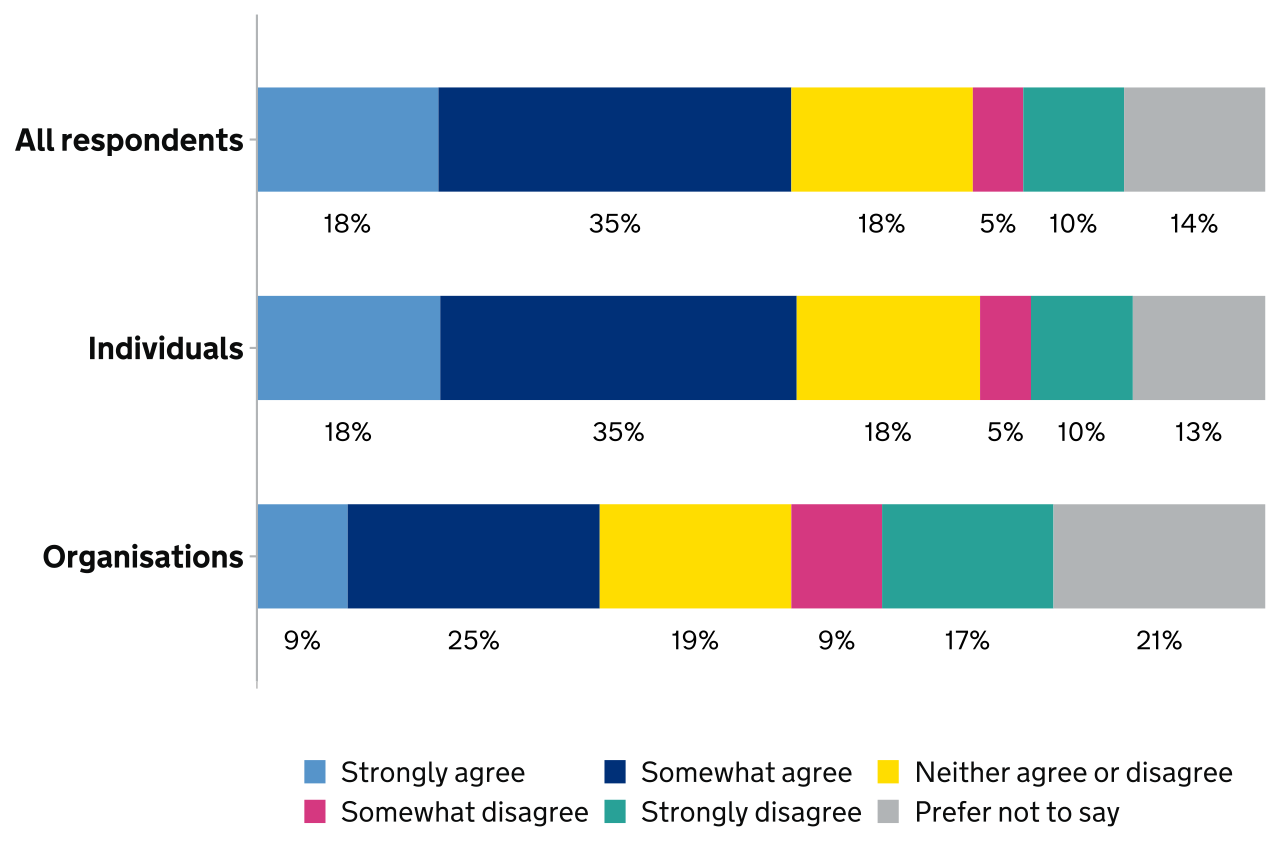
Note: The total dataset consisted of 28,569 respondents: 27,932 individuals, 628 organisations and 9 respondents who did not identify as either. Percentages may not sum to 100% due to rounding.
An analysis of responses shows that:
- just over half of respondents (53%) agreed or strongly agreed with the consultation’s proposals for addressing the gap in provision, 18% neither agreed nor disagreed, 15% disagreed or strongly disagreed, and the remaining 14% selected ‘Prefer not to say’
- individuals were more likely to report that they agreed or strongly agreed than organisations (53% compared to 34%)
- respondents who have had conversion practices were more likely to agree or strongly agree compared to respondents who responded that they had not (58% compared to 56%)
- respondents without a religious background were twice as likely to agree or strongly agree compared to those with a religious background (65% to 27%)
- respondents who were medical practitioners were more likely to agree or strongly agree compared to those who were not (63% compared to 53%)
- straight/heterosexual respondents were less likely to agree or strongly agree compared to LGB+ respondents (37% compared to 78%)
- 80% of transgender respondents agreed or strongly agreed compared to 52% of non-transgender respondents
- 51% of large organisations (250 people or more) agreed or strongly agreed with the consultation’s proposals for addressing the gap in provision, while 30% of organisations employing fewer than 250 people agreed or strongly agreed
The main themes emerging from qualitative analysis of free-text responses for this question related to:
- protecting against conversion practices overseas
- resourcing of support services
- additional enforcement mechanisms
- no need for proposals introducing protection orders
- protection orders for people over 18 years old
Thematic analysis
The key themes identified from qualitative analysis are discussed in more detail. They are presented in order of how often they were raised by respondents, and any differences between individual and organisational respondents are highlighted.
Theme 1: Protecting against conversion practices overseas
While a number of religious organisations said they had seen no evidence individuals were being taken abroad for conversion practices without consent, many respondents, including both individuals who worked with the victims of conversion practices and organisations which worked on behalf of LGBT people, maintained that individuals or organisations overseas could still offer and promote conversion practices. This, they reported, meant that individuals could still be subject to conversion practices once they left the UK. These individuals and organisations believed that individuals with overseas links (such as family living outside the UK) might be particularly vulnerable and there might be limited ability to protect potential victims of conversion practices outside the UK despite protection orders.
Some organizations, including religious ones, may have representation or be registered overseas and may use this as a loophole to offer conversion therapy in the UK if the overseas reach of the law is not tightened.
(Individual, 35 to 44 years old, Christian, gay or lesbian, non-transgender)
To address this issue, respondents, especially individual respondents who identified as LGB+, called for additional resources to monitor non-UK-based organisations that might advertise conversion practices online or offer conversion practices via video-conferencing.
This is a good step in terms of safeguarding, and welcome to see. However, this must be expanding to cover LGBTQ+ individuals virtually (via Zoom or Skype etc) - if conversion therapy is happening remotely, this must also be banned. Individuals aiding and abetting the sending of LGBTQ+ individuals abroad for therapy should also be prosecuted.
(Individual, 25 to 34 years old, no religion, straight/heterosexual, non-transgender)
Criminal justice organisations who responded to the consultation generally agreed with the proposals (noting this would bring these measures in line with existing measures targeting female genital mutilation and forced marriage), with one respondent mentioning the importance of increasing awareness of protection orders among potential victims so they have the knowledge to come forward and access protection.
Victims would have to be made aware of both the harms of conversion therapy and the fact that these protection orders exist. It is likely that such protection orders would primarily relate to children being taken abroad for conversion therapy, so awareness of what is banned and how protection orders can be sought is essential. Addressing the gap would protect the mental, emotional, and physical health of an individual who is at risk of being forced into conversion therapy. Nevertheless, for such protection to actually work, the victims would have to be made aware that they could come forward and access such protection.
(Organisation, no further details about size provided)
Medical practitioners and healthcare organisations mentioned a broad range of themes in their responses, touching on similar points raised by respondents more generally. Regarding services offered overseas, many of these respondents agreed that proposals should align fully with legal protections and restrictions for female genital mutilations (FGM) and forced marriages, though some respondents pointed out that FGM and forced marriage required the victim to leave the UK while conversion practices could also be provided through virtual means (thus requiring proposals that were broader in scope than those addressing FGM and forced marriages alone).
We would like the government to ensure the final proposals align fully to the legal restrictions provided for FGM and forced marriage. We would also like to see this protection extended to people of all ages on the basis that consent is inappropriate. Despite the introduction of [protection orders], people will still be vulnerable to conversion therapy from someone outside of the UK through online platforms, text or the telephone. The government must consider as part of these proposals how it will protect people in the UK from becoming the victim of conversion therapy in this way.
(Organisation, healthcare, with 50 to 249 people)
A small number of healthcare organisations also suggested that (i) individuals who conduct conversion practices abroad should be prohibited from entering the UK and (ii) being a victim (or at risk) of conversion practices should be an approved basis to seek asylum in the UK.
Theme 2: Resourcing of support services
Many respondents, in particular individuals, called for additional funding or resources for support (such as mental health services, helplines with support for non-English speakers or community-based initiatives) to help victims of conversion practices. In particular, these respondents mentioned that effective support required staff who had been formally trained and/or shared a similar background to victims, and that existing services did not always provide adequate support to LGBT individuals.
LGBT+ people are far more at risk of things like domestic violence and homelessness than the general population, with conversion therapy playing a part in this. These services are underfunded in general and LGBT+ specific ones are often non-existent with the services that do exist offering patchy at best support to the LGBT+ community.
(Individual, 35 to 44 years old, no religion, bisexual, non-transgender)
Theme 3: Additional enforcement mechanisms
Many individual and organisational respondents called for the proposed protection orders to go further. Respondents suggested a range of methods to address this, including introducing an additional offence and legal penalty targeting UK-based individuals who ‘aid and abet’ or otherwise facilitate overseas organisations promoting conversion practices, monitoring potential victims through local authorities, monitoring the effectiveness of the proposals once implemented, and outlawing all conversion practices outright with no option to consent.
The UK government should introduce offences for aiding or abetting the removal of a person from the UK for the purpose conversion therapy in the way that female genital mutilation or forced marriage are criminal offences.
(Individual, 45 to 54 years old, no religion, gay or lesbian, non-transgender)
Theme 4: No need for proposals introducing protection orders
Most respondents who disagreed with the proposals stated either (i) they had not seen any evidence individuals were being taken abroad for conversion practices without consent, or (ii) there was no gap in provision, which meant the proposals were unnecessary.
There are no cases of anyone being taken abroad for conversion therapy against their will! The proposed law, though I disagree with it, would already protect people from ‘conversion therapy’ if they are under 18, and without consent if they are over 18. There is therefore no ‘gap’ in the proposals, and no need for protection orders.
(Individual, 18 to 24 years old, Christian, straight/heterosexual, non-transgender)
In addition, a small number of religious organisations and individual respondents who identified as having religious beliefs felt that the proposals would interfere with parents’ ability to raise their children, such as the ability to travel abroad or live in another country with their children. These respondents were concerned that the proposals lacked clarity around who could apply for protection orders, and as a result parents with specific religious beliefs might be targeted unfairly by ‘activists’.
Due to the ambiguity of who can or cannot apply for these protection orders I would refrain from implementing it, as it would simply create a means for activists who hold to an LGBTQ affirming position to exploit it, as they could apply these orders to children who are under the care of Christian parents who hold to a biblical standard of sexual morality.
(Individual, 18 to 24 years old, Christian, straight/heterosexual, non-transgender)
Theme 5: Protection orders for people over 18 years old
Some respondents argued that the option for removing the passport or means of travel from the person to be protected should also be available to people older than 18 more generally and not only in extreme circumstances.
I would argue that in family homes where young people are aged 18+, the risk of being forced to go abroad to undergo conversion therapy is high and that removal of the passport to protect these young adults should not only occur in ‘extreme circumstances’, but in the same way it would for a young person under 18.
(Individual, 25 to 34 years old, no religion, straight/heterosexual, non-transgender)
4.3 Ensuring charities do not support conversion practices
Questions covered in this section
This section concerns the previous government’s proposal that a person found guilty of either 1) the new criminal offence, or 2) an existing offence that was subjected to a conversion practice aggravating factor would be more likely to be disqualified from working as a senior leader in a charity. If no charitable purpose for public benefit was found for the charity, the status would be removed from the organisation. Each case would be considered on its particular facts, and all parts of the test in section 181A of the Charities Act 2011 would need to be met.
Question 11
Charity trustees are the people who are responsible for governing a charity and directing how it is managed and run. The consultation document describes proposals whereby anyone found guilty of carrying out conversion therapy will have the case against them for being disqualified from serving as a trustee at any charity strengthened. To what extent do you agree or disagree with this approach? Why do you think this?
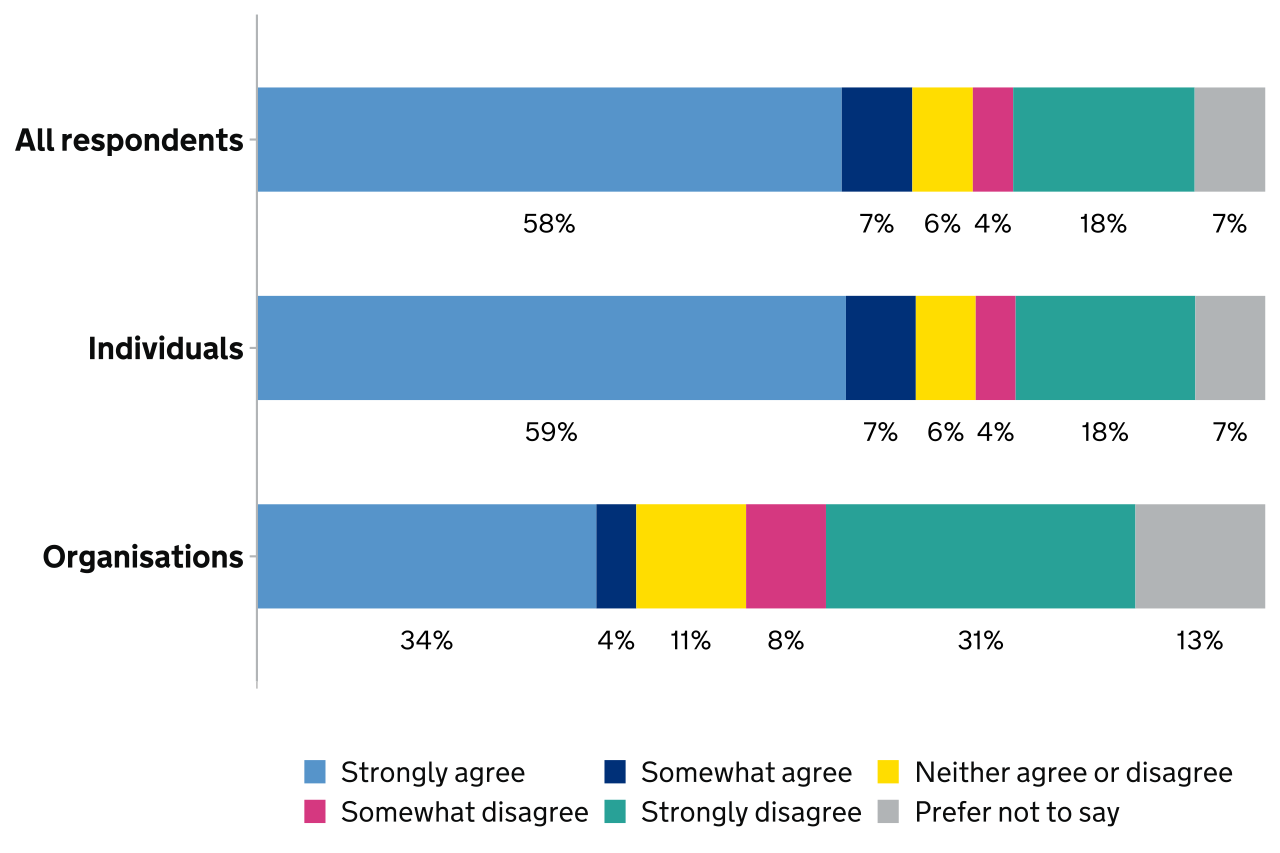
Note: The total dataset consisted of 28,569 respondents: 27,932 individuals, 628 organisations and 9 respondents who did not identify as either. Percentages may not sum to 100% due to rounding.
An analysis of responses shows that:
- nearly two-thirds of respondents (65%) to this question agreed or strongly agreed with the consultation’s proposed approach to disqualify charity trustees found guilty of carrying out conversion practices, 6% of respondents neither agreed nor disagreed, and 22% of respondents disagreed or strongly disagreed
- individuals were more likely to report that they had agreed or strongly agreed than organisations (65% compared to 38%)
- respondents who have had conversion practices were more likely to agree or strongly agree compared to respondents who responded that they had not (72% compared to 68%)
- respondents without a religious background were twice as likely to agree or strongly agree compared to those with a religious background (78% to 34%)
- respondents who were medical practitioners were more likely to agree or strongly agree compared to those who were not. (76% compared to 65%)
- straight/heterosexual respondents were less likely to agree or strongly agree compared to LGB+ respondents (46% compared to 93%)
- 96% of transgender respondents agreed or strongly agreed compared to 63% of non-transgender respondents
- 60% of large organisations (250 people or more) agreed or strongly agreed with the consultation’s proposed approach to disqualify charity trustees found guilty of carrying out conversion practices, while 33% of organisations employing fewer than 250 people agreed or strongly agreed
The main themes emerging from qualitative analysis of free-text responses for this question related to:
- misuse of power
- enforcement scope
- potential impact on faith-based charities
Thematic analysis
The key themes identified from qualitative analysis are discussed in more detail. They are presented in order of how often they were raised by respondents, and any differences between individual and organisational respondents are highlighted.
Theme 1: Misuse of power
Many individual and some organisational respondents highlighted the duty of care implicit in the purpose and operations of every charity. These respondents argued that on this basis, individuals found guilty of carrying out conversion practices would not be suitable for any position of trust or working with vulnerable people. For these respondents, trustees would be expected to make decisions based on the best interests of people in need. They felt that individuals supporting conversion practices would not be fit to serve this purpose and uphold standards of integrity. Some respondents also argued that disqualification was important to ensure these individuals would not be able to seek other positions of power over potential victims of conversion practices.
As a charity we strongly support this proposal. It is important that the public has confidence in the work of charities and that charitable purpose cannot be claimed by any organisations providing conversion therapies. We also welcome that the proposals would limit the impact of anyone who have been found guilty of trying to change a person’s sexual orientation or gender identity by attempting to do so under another charity.
(Organisation, working on behalf of LGBT people, with 11 to 49 people)
A number of respondents, including some who identified as charity trustees in the consultation, also mentioned that individuals supporting conversion practices should face severe consequences to act as a deterrent and ensure the accountability of charity trustees. These respondents felt that stronger penalties would discourage others from suggesting or promoting conversion practices. A few respondents also suggested that such penalties would serve to limit the influence of people who are found guilty of supporting conversion practices.
Personal agendas may influence the way charities work. Penalties need to be in place to prevent this from happening.
(Individual, 55 to 64 years old, Buddhist, straight/heterosexual, non-transgender)
Theme 2: Enforcement scope
Some individual respondents argued that the proposed consequences did not go far enough, as disqualified individuals could still promote conversion practices in different areas of influence – for example, outside of charity work. These respondents called for stronger consequences, including immediate disqualification of the individual, removal of any clinical licences, or punishment levied on the charity for which the individual was a trustee.
I am concerned there is a gap around the lack of targeting a charity as an organisation whose purpose may be focused on conversation therapy. If the legislation only targets individuals, then the responsibility to promoting conversation therapy by that charity could simply be passed on to someone else, and on and on.
(Individual, 35 to 44 years old, no religion, gay or lesbian, non-transgender)
On the other hand, some individual and organisational respondents felt that even if a trustee was found guilty of carrying out conversion practices, they should not be prevented from serving as a trustee as their views on conversion practices might not have any relationship with their ability to govern a particular charity. Other respondents (including a very small number of charities which were not faith-based) felt that the proposal was unnecessary as charities already had the legal power, autonomy, and tools to disqualify their trustees if they desired to do so.
A person might work in one charity and be a trustee of another in a personal capacity. The day job might have nothing to do with their beliefs around conversion therapy which makes disqualification from their day job role - thereby denying their ability to earn a wage - a rather blunt tool.
(Individual, 45 to 54 years old, Christian, straight/heterosexual, non-transgender)
Theme 3: Potential impact on faith-based charities
Religious organisations, respondents with religious beliefs, and a smaller number of faith-based charities expressed concern with the proposal. These respondents were worried that the proposal could be misused due to lack of specificity in its language. Many of these respondents raised the example that, in their view, church trustees should not be penalised for praying for members of their church or teaching traditional Christian sexual ethics, and these actions should be insufficient grounds to disqualify them from serving as a trustee.
Parents, pastors, and therapists who advocate Christian sexual morality could be criminalised for expressing their views. We do not feel that these are grounds for them to be disqualified from serving as a trustee of a charity, particularly from a Christian charity that promotes Christian sexual morality.
(Organisation, working on behalf of children, young people, people with religious beliefs, and women, with 11 to 49 people)
4.4 Cross-cutting themes on the promotion of conversion practices
Addressing the perceived promotion of conversion practices on social media and online platforms
Individual respondents frequently expressed concern that Ofcom’s Broadcasting Code might not sufficiently address content on social media sites and other online platforms. These respondents believed that many organisations or practitioners publicly advertised or expressed support for conversion practices, which could then be used in targeted advertising to vulnerable individuals. For example, organisations could create web pages that offered to ‘assist’ individuals struggling with their identity and set up the web pages so they would appear in search results based on common search terms or questions.
Not all influence is undertaken through explicit advertising, with a financial fee paid, or structured between TV shows or on paper. There is also the need to think about the unpaid for influences in social media, tabloid headlines, wider culture too.
(Individual, 55 to 64 years old individual, no religion, gay or lesbian, non-transgender)
To better curb what these respondents perceived as promotion of conversion practices on online platforms, one potential solution suggested was Ofcom providing more specific guidance for what language constituted promotion of conversion practices.
The government should utilise this opportunity to review the Broadcasting Code and the understanding of Ofcom in applying it to the issue of conversion therapy. This may require specific guidance to broadcasters, given that conversion therapy has not been covered as an offence previously. Specific consideration should be given in any review and guidance to social media, and how to effectively ban signposting to conversion therapies on social media, including in situations where such signposting may take the appearance of religious or faith based communication.
(Organisation, working on behalf of women, with 1 to 10 people)
The perception of faith-based promotion of conversion practices
Many respondents mentioned the need to address conversion practices promoted, directly and indirectly, by churches or faith groups.
Among many religious organisations, ‘advertising’ takes place by word of mouth or when a person seeks pastoral care from clergy who turn out to be bigoted and homophobic. I know of examples where clergy have recommended “conversion.
(Individual, 65 to 74 years old individual, Buddhist, gay or lesbian, non-transgender)
These respondents maintained that churches and other faith groups used a broad range of channels to promote conversion practices, including physical signs, word of mouth, or advertisements using generic language, such as “discipleship” or “personal wholeness”.
I have seen homophobic signs outside of churches and encountered religious preachers in public spreading messages about LGBTQ+ identities being entirely ‘unnatural’ and encouraging those part of the community to ‘change themselves’ or attend conversion therapy.
(Individual, 18 to 24 years old, no religion, gay or lesbian, transgender)
Negative perceptions and narratives
Finally, a number of respondents discussed positive or negative portrayals of LGBT people in films or TV shows - either as a part of the narrative and debate or the broadcast of specific people. While this may be an important issue to address, this is out of scope for the consultation on introducing new legislation to ban conversion practices.
4.5 Ensuring statutory services recognise conversion practices
Questions covered in this section
In this section, the previous government’s consultation discussed the expectations of statutory services offered by organisations to act against practitioners of conversion practices and support its victims. In particular, the consultation specified that statutory services would be expected to develop policy frameworks that recognise conversion practices as a problem and to focus on resolving the challenges faced by victims coming forward. In addition, statutory services would be expected to provide training for how to protect people from being harmed, and the previous government would have worked with the relevant public authorities to develop this guidance.
Question 12
To what extent do you agree or disagree that the following organisations are providing adequate action against people who might already be carrying out conversion therapy? (Police, Crown Prosecution Service, other statutory services)? Why do you think this?
Police:
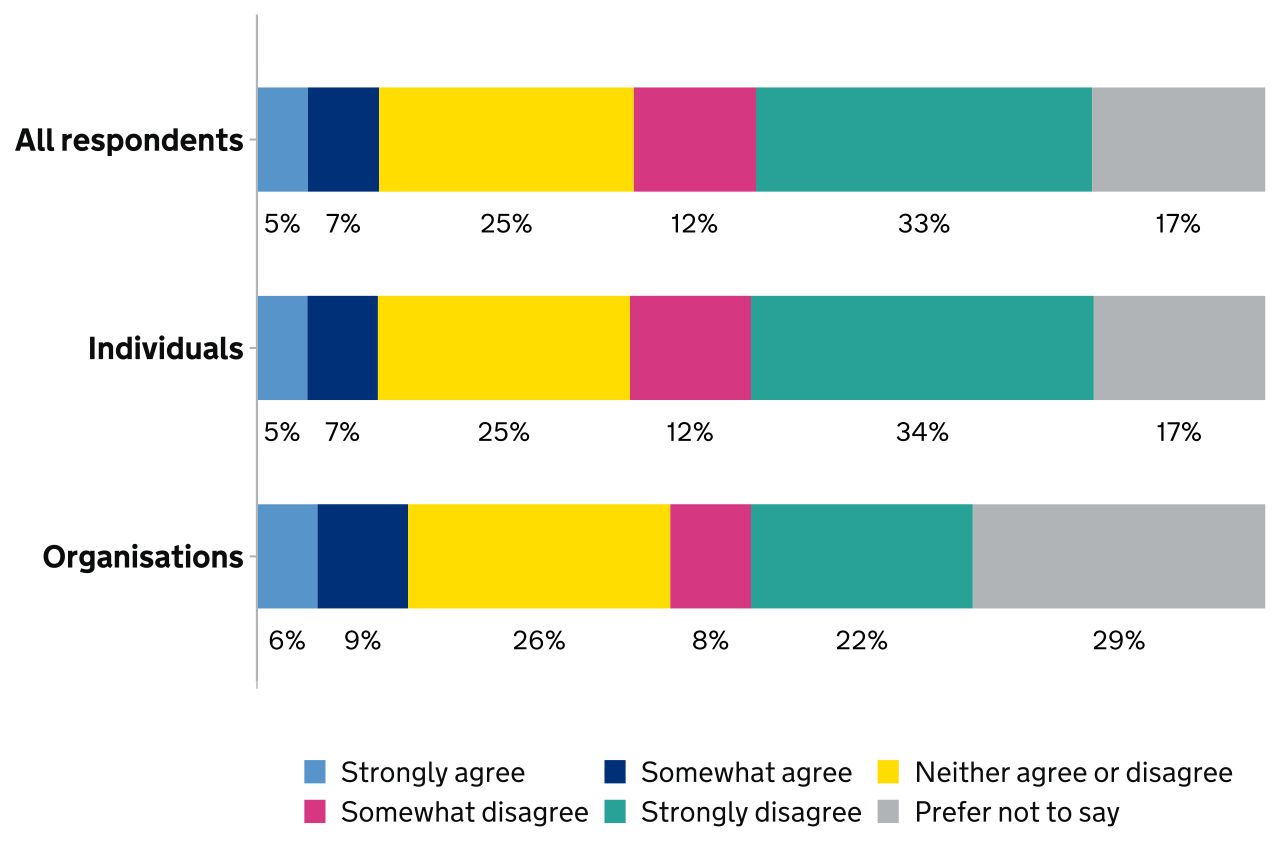
Note: The total dataset consisted of 28,569 respondents: 27,932 individuals, 628 organisations and 9 respondents who did not identify as either. Percentages may not sum to 100% due to rounding.
CPS:
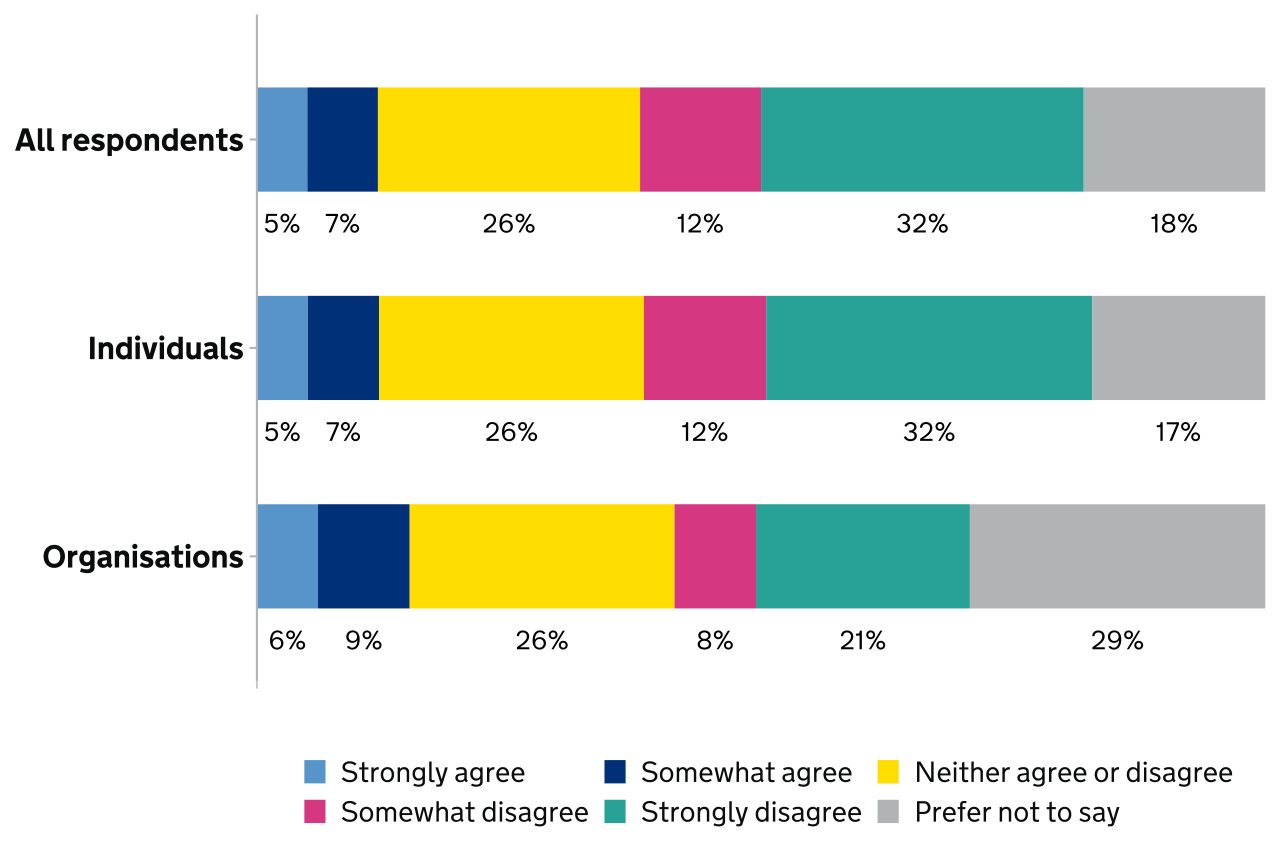
Note: The total dataset consisted of 28,569 respondents: 27,932 individuals, 628 organisations and 9 respondents who did not identify as either. Percentages may not sum to 100% due to rounding.
Other services:
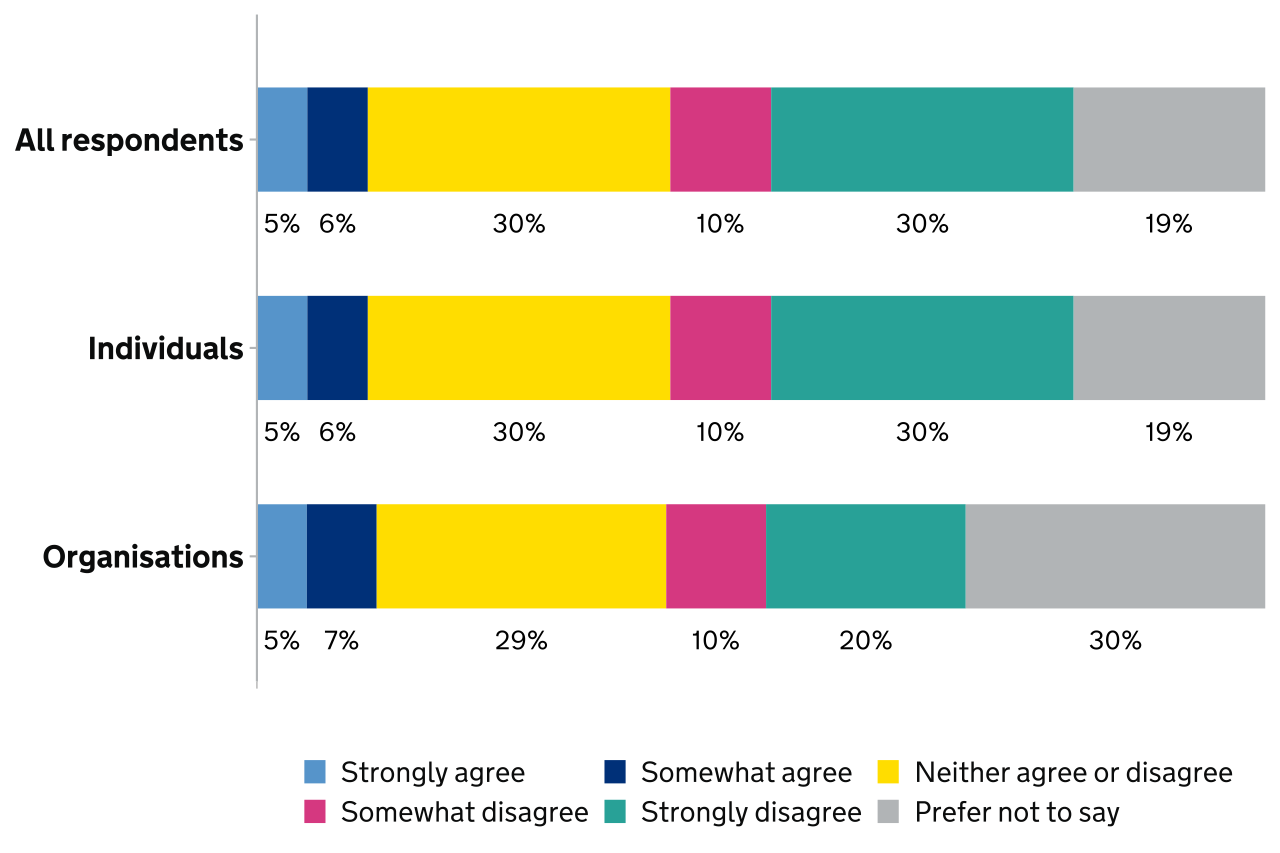
Note: The total dataset consisted of 28,569 respondents: 27,932 individuals, 628 organisations and 9 respondents who did not identify as either. Percentages may not sum to 100% due to rounding.
An analysis of responses shows that:
- there were no notable differences between respondents’ quantitative answers to the police, Crown Prosecution Service, and other statutory services (respondents generally selected the same answer for all 3 questions)
- around 12% of respondents to this set of 3 questions agreed or strongly agreed that the police, Crown Prosecution Service, and other statutory services were providing adequate action against people who might already be carrying out conversion practices – in comparison, 45% of respondents disagreed or strongly disagreed when asked about the police, followed by 43% of respondents for the Crown Prosecution Service and 40% of respondents for other statutory services
- individuals were more likely to disagree or strongly disagree across all 3 questions than organisations (37% compared to 28%) – organisations were more likely to select ‘Neither agree or disagree’ or ‘Prefer not to say’ for all 3 questions (53% compared to 38%)
- respondents who have had conversion practices were more likely to disagree or strongly disagree for the police (57% to 47%), Crown Prosecution Service (57% to 47%) and other statutory services (52% to 42%) compared to respondents who responded that they had not
- 20% of respondents with a religious background disagreed or strongly disagreed across all 3 organisations (compared to 44% who did not have a religious background) – 60% of respondents with a religious background instead selected ‘Neither agree or disagree’ or ‘Prefer not to say’ across all 3 organisations
- respondents who were medical practitioners were equally likely to disagree or strongly disagree across all 3 organisations as respondents who were not medical practitioners (38%)
- 25% of straight/heterosexual respondents disagreed or strongly disagreed across all 3 organisations compared to 51% of LGB+ respondents
- 63% of transgender respondents disagreed or strongly disagreed across all 3 organisations compared to 36% of non-transgender respondents
- 39% of large organisations (250 people or more) disagreed or strongly disagreed that all 3 organisations were providing adequate action against people who might already be carrying out conversion practices, while 26% of organisations employing fewer than 250 people disagreed or strongly disagreed
In free-text responses, respondents most commonly focused on the police or jointly addressed all 3 organisations, with fewer specific references made to the Crown Prosecution Service or other statutory services. However, as discussed above, there were no notable differences between respondents’ quantitative answers across the 3 organisations.
The main themes emerging from qualitative analysis of free-text responses for this question related to:
- preventative action
- challenges faced by statutory services in identifying victims
- perceived issues with statutory services
Thematic analysis
The key themes identified from qualitative analysis are discussed in more detail. They are presented in order of how often they were raised by respondents, and any differences between individual and organisational respondents are highlighted.
Theme 1: Preventative action
Many individual respondents felt that the continued existence of conversion practices was sufficient proof that statutory services were not taking adequate action. Some respondents also suggested that conversion practices were considerably more widespread than these services believed, and more work should be done to identify and track individuals and organisations carrying them out.
It is still a widely delivered practise, hence these proposals, so clearly police either aren’t or can’t do enough under the current laws.
(Individual, 18 to 24 years old, no religion, bisexual, non-transgender)
Theme 2: Challenges faced by statutory services in identifying victims
Many respondents, in particular individuals as well as organisations which reported representing colleges and universities, expressed concerns that statutory services were failing to take action against individuals or organisations carrying out conversion practices because they were struggling to identify victims, especially if the victims were subject to conversion practices within religious or family settings.
The fact that conversion therapy often occurs within closed family or faith settings means that the statutory authorities are often unable or unwilling to interfere. There needs to be a greater willingness on the part of the authorities to intervene to protect people who are vulnerable.
(Organisation, working on behalf of LGBT people, with 1 to 10 people)
It is well documented, and very obvious when working in the sector, that survivors from religious households are more likely to be ignored, put at further risk, or re-traumatised by statutory services. This is because intimate/family violence, especially against women, is still too often perceived as a disagreement over religious or cultural beliefs. Because conversion therapy most often takes place in familial, religious, and cultural settings, it is nearly guaranteed that the same issue would arise - statutory services would be at risk of ignoring or justifying immoral, harmful, and banned practices in the name of religious tolerance.
(Individual, 25 to 34 year old, other religion, bisexual, transgender)
To mitigate this, both individuals and a small number of organisations (in particular those that worked on behalf of LGBT individuals) suggested that statutory services should provide specialised training to their staff to better recognise and support victims, or be provided with more resources.
Conversion therapy often takes place behind closed doors and the police do not currently have the resources or training to recognise when conversion therapy is taking place.
(Individual, 25 to 34 years old, no religion, straight/heterosexual, non-transgender)
We believe that without any sanctions currently available, statutory services are unable to deal effectively with issues of conversion therapy. There is also a lack of awareness of conversion therapy and harm amongst statutory services and a clear need for specialist expertise and knowledge.
(Organisation, healthcare, working on behalf of children, young people, LGBT people, people with religious beliefs and women, with 11 to 49 people)
Theme 3: Perceived issues with statutory services
Many religious organisations said that they were not aware of any incidents of conversion practices for which action was needed but not taken (and thus they could not fully answer the question). A small number of religious organisations expressed beliefs and concerns about the actions taken by statutory services and other public bodies. Some of these respondents stated that they believed that charities, clinics, and local authorities were directly or indirectly promoting gender transition among minors without the necessary caution or prior counselling.
I have serious concerns about the body which is advising our local authority on gender issues, as it is wholly recommending of the ‘affirmation model’ for trans-identifying children which I understand to be conservative, regressive and restrictive.
(Individual, 45 to 54 years old, no religion, straight/heterosexual, non-transgender)
Other respondents raised the point that statutory services did not have specialised guidance to distinguish between conversion practices, behaviour including hate speech, and legitimate therapeutic or counselling sessions, leading to risks of infringement of religious or other liberties.
The police have been often too quick in their response to allegations of hate speech. Organisations have then been taken to court on such accusations - yet the matters were eventually dismissed on the grounds of freedom of speech/conscience/religion.
(Organisation, working on behalf of children, young people, people with religious beliefs, and women, with 1 to 10 people)
Question 13
To what extent do you agree or disagree that the following organisations are providing adequate support for victims of conversion therapy? (Police, Crown Prosecution Service, other statutory services)? Why do you think this?
Police:
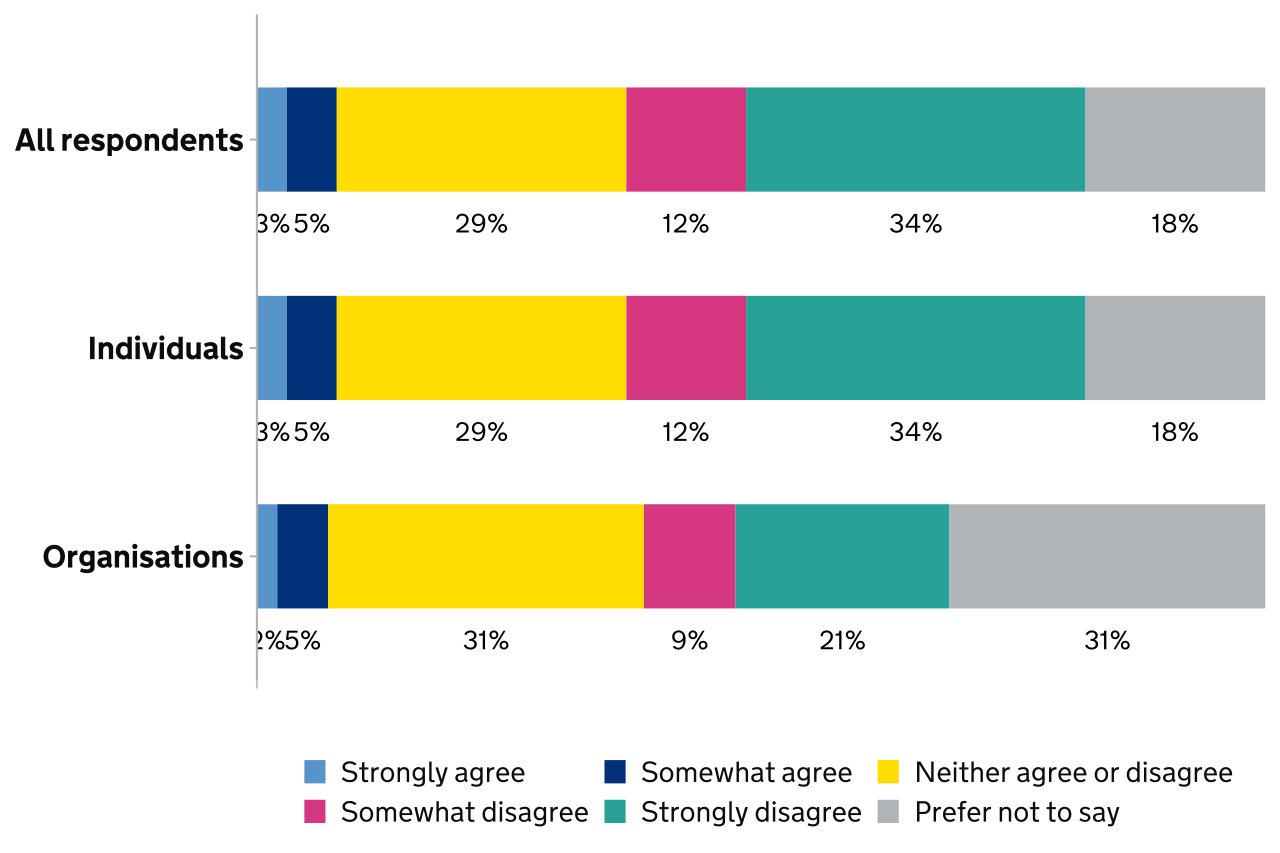
Note: The total dataset consisted of 28,569 respondents: 27,932 individuals, 628 organisations and 9 respondents who did not identify as either. Percentages may not sum to 100% due to rounding.
CPS:
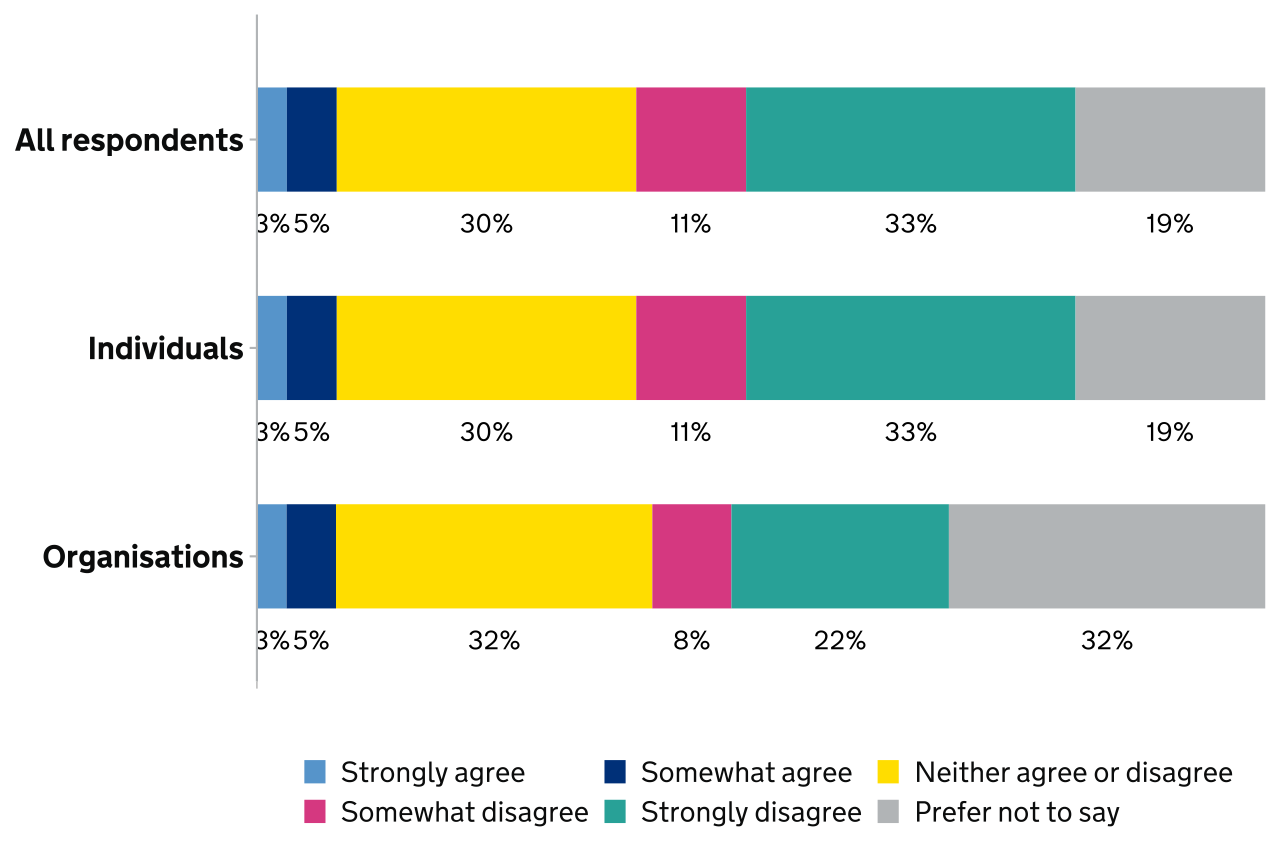
Note: The total dataset consisted of 28,569 respondents: 27,932 individuals, 628 organisations and 9 respondents who did not identify as either. Percentages may not sum to 100% due to rounding.
Other services:
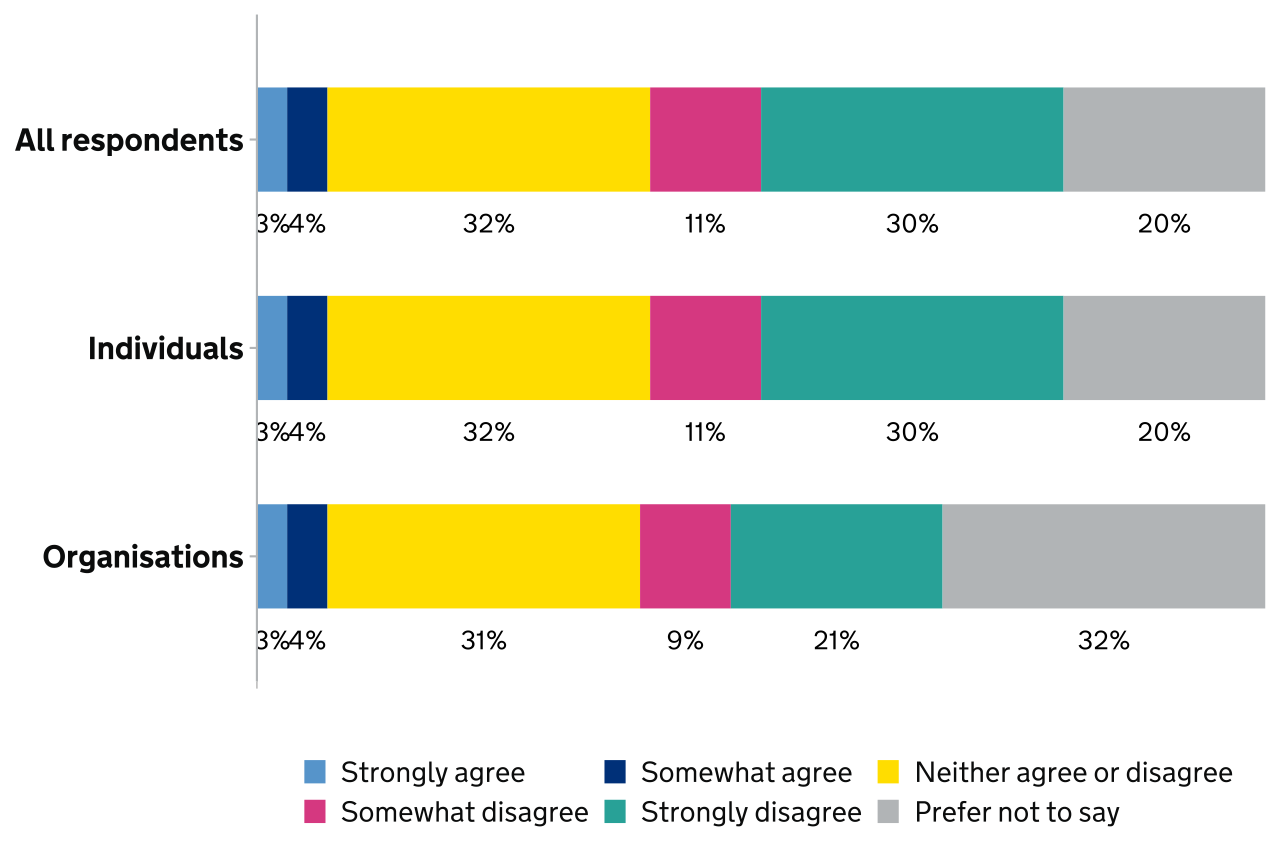
Note: The total dataset consisted of 28,569 respondents: 27,932 individuals, 628 organisations and 9 respondents who did not identify as either. Percentages may not sum to 100% due to rounding.
An analysis of responses shows that:
- there were no large differences between respondents’ quantitative answers to the police, Crown Prosecution Service, and other statutory services (respondents generally selected the same answer for all 3 questions)
- around 7% of respondents to this set of 3 questions agreed or strongly agreed that the police, Crown Prosecution Service, and other statutory services were providing adequate support for victims of conversion practice – in comparison, 46% of respondents disagreed or strongly disagreed when asked about the police, followed by 44% of respondents for the Crown Prosecution Service and 41% of respondents for other statutory services, and around 19% of respondents answered ‘Prefer not to say’ for each question
- individuals were more likely to disagree or strongly disagree across all 3 organisations than organisations (38% compared to 28%) – organisations were more likely to select ‘Neither agree or disagree’ or ‘Prefer not to say’ for all 3 questions (60% compared to 43%)
- respondents who have had conversion practices were more likely to disagree or strongly disagree for the police (58% to 47%), Crown Prosecution Service (57% to 46%) and other statutory services (53% to 42%) compared to respondents who responded that they had not
- 19% of respondents with a religious background disagreed or strongly disagreed across all 3 questions compared to 45% who did not have a religious background – in comparison, 67% of respondents with a religious background selected ‘Neither agree or disagree’ or ‘Prefer not to say’ for all 3 questions compared to 34% who did not have a religious background
- 40% of respondents who were medical practitioners disagreed or strongly disagreed across all 3 questions compared to 39% of respondents who were not medical practitioners
- 24% of straight/heterosexual respondents disagreed or strongly disagreed across all 3 questions compared to 52% of LGB+ respondents
- 64% of transgender respondents disagreed or strongly disagreed across all 3 questions compared to 37% of non-transgender respondents
- 43% of large organisations (250 people or more) disagreed or strongly disagreed that all 3 organisations were providing adequate support for victims of conversion practices, while 25% of organisations employing fewer than 250 people disagreed or strongly disagreed
Question 14
Do you think that these services can do more to support victims of conversion therapy?
If yes, what more do you think they could do?
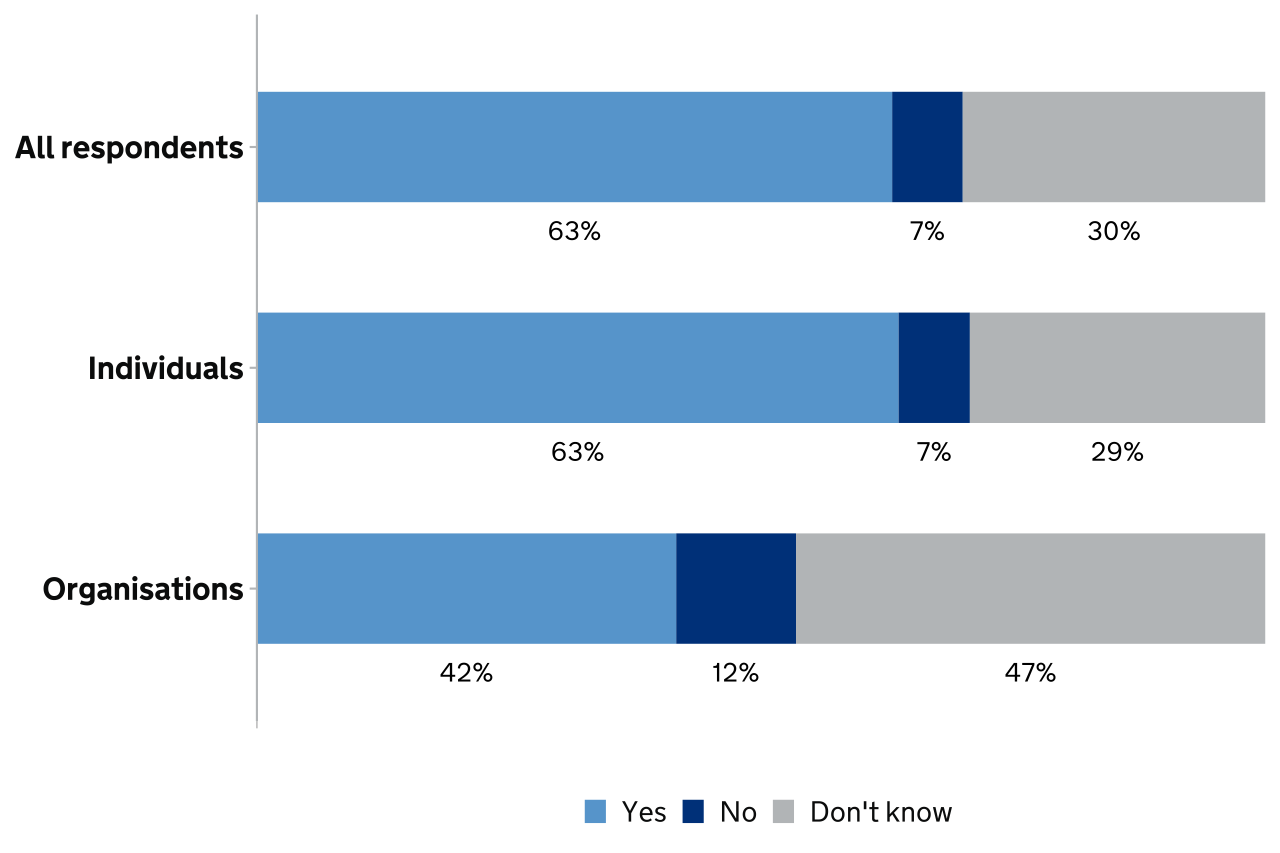
Note: The total dataset consisted of 28,569 respondents: 27,932 individuals, 628 organisations and 9 respondents who did not identify as either. Percentages may not sum to 100% due to rounding.
An analysis of responses shows that:
- nearly two-thirds of respondents (63%) who answered this question agreed that the police, Crown Prosecution Service, and other statutory services could do more to support victims of conversion practices, 7% disagreed, and 30% answered ‘Prefer not to say’
- individuals were more likely to report that they agreed than organisations (63% compared to 42%)
- respondents who have had conversion practices were more likely to answer ‘Yes’ compared to respondents who responded that they had not (73% compared to 66%)
- respondents without a religious background were more than twice as likely to answer ‘Yes’ than those with a religious background (76% to 34%)
- respondents who were medical practitioners were more likely to answer ‘Yes’ compared to those who were not (75% compared to 63%)
- 45% of straight/heterosexual respondents answered ‘Yes’ compared to 90% of LGB+ respondents
- 92% of transgender respondents agreed compared to 61% of non-transgender respondents
- 57% of large organisations (250 people or more) agreed that these services could do more to support victims of conversion practices, while 38% of organisations employing fewer than 250 people agreed or strongly agreed
As with Question 12, in free-text responses, respondents were more likely to focus on the police or jointly address all 3 organisations, with fewer specific references made to the Crown Prosecution Service or other statutory services. However, as discussed above, there were no notable differences between respondents’ quantitative answers across the 3 organisations.
The main themes emerging from qualitative analysis of free-text responses for Questions 13 and 14 related to:
- mental health services
- staff education and training
- other forms of support
- questioning the need for support
Thematic analysis
The key themes identified from qualitative analysis are discussed in more detail. They are presented in order of how often they were raised by respondents, and any differences between individual and organisational respondents are highlighted.
Theme 1: Specialist mental health support for victims of
conversion practices
Many individual and organisational respondents agreed that victims of conversion practices needed considerable support to process the trauma of conversion practices and that current levels of support from statutory services were inadequate, with some respondents stating they were not aware of any substantial support provided by these services. To address this, respondents proposed solutions such as free counselling sessions delivered by specialised professionals, a dedicated helpline, and support groups.
I’m not aware of any substantial ongoing support available. Victims of conversion therapy would typically need regular counselling sessions for a number of months or years to allow them to process the abuse they have suffered and enable them to live a happy and full life. The government should put this support in place for those who need it.
(Individual, 25-34 years old, Christian, straight/heterosexual, non-transgender)
Theme 2: Staff education and training
Many individual respondents as well as specialist LGBT healthcare providers and colleges and universities felt that support could be improved through additional specialised education and training for staff. These respondents suggested that educating staff on the specifics of conversion practices would build knowledge to better understand victims and combat biases and assumptions.
First contact with police and CPS is crucial, and all officers need to have proper training in techniques to support and validate the victims they encounter at the point of reporting the crime. Ideally, there should be an emphasis on social justice attitudes in recruitment and training.
(Individual, 35 to 44 years old, Christian, bisexual, transgender)
Some respondents, including professional bodies, suggested that staff should be specifically trained on how to handle victims of conversion practices. They suggested that this training should include being able to recognise signs of conversion practices, building an empathic and sensitive approach in helping victims, and learning about techniques for data collection. A few respondents specifically mentioned that education and training should be designed by survivors of conversion practices or LGBT individuals.
Employ and specially train professionals to provide practical and emotional support specifically to victims of conversion therapy, as the trauma can be complex and unique.
(Individual, 18 to 24 years old, no religion, gay or lesbian, non-transgender)
Theme 3: Other forms of support which respondents felt could be made available to victims of conversion practices
Some respondents called for increased resources to be invested in prevention efforts, such as monitoring websites that promoted conversion practices.
There needs to be greater monitoring of organisations that influence and pressure vulnerable young people online via websites, blogs, etc. which promote conversion therapy.
(Individual, 55 to 64 years old, Christian, straight/heterosexual, non-transgender)
Other respondents said it was important to make it easier for members of the public to report potential incidents.
Listen to what members of the LGBT community are saying, and make it easier for them to report a hate crime.
(Individual, 18 to 24 years old, no religion, gay or lesbian, non-transgender)
Some respondents felt that statutory services should not bear the responsibility of providing support to victims of conversion practices.
It isn’t the place of the Police nor the Crown Prosecution Service to provide support to victims of conversion therapy, that should go to Mental Health Services provided by the NHS.
(Individual, 16 to 17 years old, no religion, bisexual, non-transgender)
Theme 4: Questioning the need for support
A small number of organisations (especially charities and religious organisations) and individuals with religious beliefs felt that not everyone who had undergone conversion practices could be labelled as ‘victims’. These respondents often mentioned that some forms of conversion practices were private, consensual conversations between individuals that should not be regulated by government.
Therapy is a private consensual conversation. The government should not be interfering in private conversations. Physical acts done in the name of ‘conversion therapy’ are already unlawful as the consultation document recognises. The police and other services should provide adequate support to any victims of such physical acts.
(Organisation, working on behalf of children, young people, and people with religious beliefs, with 11 to 49 people)
Responses by healthcare organisations and medical practitioners
When asked how to better support victims of conversion practices, medical practitioner and healthcare organisation respondents most commonly suggested similar ideas to respondents more generally. In order of frequency, these included formal training on how to support victims, increased education around issues facing LGBT communities (some felt this education should be delivered by members of the LGBT community), signposting to mental health services (and other forms of psychological support), public awareness campaigns about conversion practices, and engagement with communities where young people are at higher risk of undergoing conversion practices.
The GMC could facilitate the development of professional guidance to doctors on what to do when presented with a victim of conversion therapy. Developing clear guidance on the type of sanctions that might be appropriate for doctors engaged in this practice would also discourage participation.
(Organisation, healthcare, no further details about size provided)
More LGBT+ awareness training that covers issues such as conversion therapy is essential and would help to better equip those working in statutory services to identify those at risk, to support victims and to signpost victims to relevant sources of support, including dedicated helplines and LGBT+ charities.
(Organisation, healthcare, with 250 people or more)
4.6 Cross-cutting themes relating to statutory services
Concern about prejudice in statutory services
Many individual respondents and some organisational respondents raised concerns around potential discrimination in the treatment of LGBT individuals by statutory organisations. Many of these respondents referred specifically to prejudice by the police, resulting in a lack of motivation to punish perpetrators of conversion practices and neglect of support to victims.
LGBT people of colour have long been victimised by the police due to their race/ethnicity and gender identity/sexuality. Conversion therapy victims of colour are also going to face discrimination by the police (and other government organisations) for their race/ethnicity.’
(Individual, 18 to 24 years old, no religion, gay or lesbian, transgender)
Attitudes to and support for victims
Many individual and some organisational respondents felt that statutory services did not take victims of conversion practices seriously, with limited action taken to prosecute those carrying out conversion practices or to provide support for victims. These respondents argued that without clear, specific legislation, and sufficient education and training, victims of conversion practices would not receive the appropriate attention and support.
Statutory services ignore risks of conversion therapy – including physical or sexual abuse – because they perceive them as disagreements over religious or cultural beliefs in families or communities. Statutory authorities are taking limited action to support conversion therapy victims to escape abusive situations, and extremely limited action against the perpetrators.
(Organisation working on behalf of young people, LGBT people, people with religious beliefs, and women, no further details about size provided)
5. Economic and equalities impacts appraisals
Question 15
Do you have any evidence on the economic or financial costs or benefits of any of the proposals set out in the consultation? If yes, please can you provide us with details of this evidence, including where possible, any references to publications?
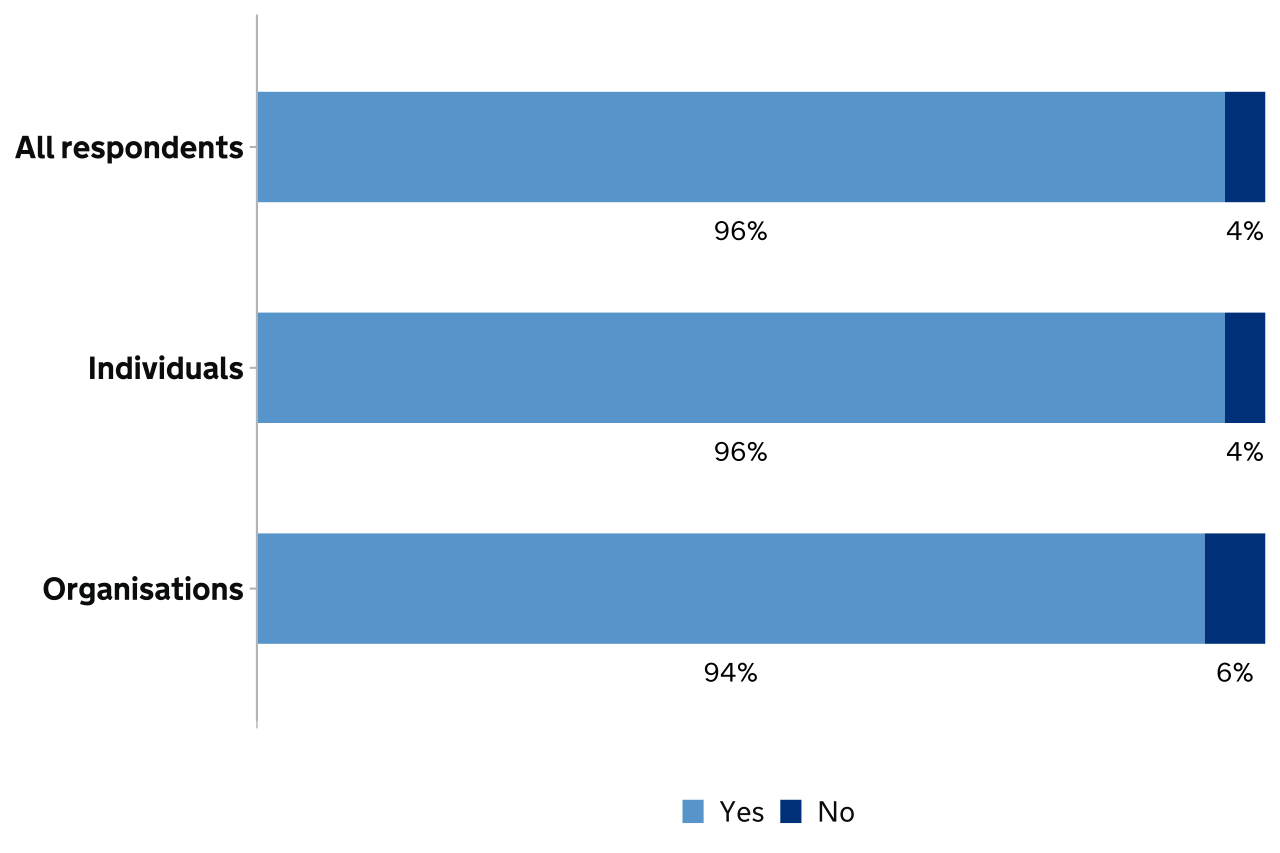
Note: The total dataset consisted of 28,569 respondents: 27,932 individuals, 628 organisations and 9 respondents who did not identify as either. Percentages may not sum to 100% due to rounding.
An analysis of responses shows that:
- 4% of respondents said they had evidence on the economic or financial costs or benefits of any of the proposals set out in the consultation, and 96% of respondents said they did not have evidence
- organisations were slightly more likely to answer ‘Yes’ than individuals (6% compared to 4%)
- respondents who have had conversion practices were more likely to answer ‘Yes’ compared to respondents who responded that they had not (11% compared to 3%)
- there was no major difference in responses by religious background, medical practitioners, healthcare organisations, sexual orientation, gender identity, or organisation size (around 4% of respondents across all groups)
The consultation asked for examples of evidence on the economic or financial costs or benefits of any of the proposals set out in the consultation. Most respondents did not provide any specific examples, but did discuss their thoughts and opinions on the issue of costs or benefits more generally.
The main themes that emerged from qualitative analysis of free-text responses for this question included:
- savings from actions to address conversion practices: respondents argued that victims of conversion practices would require greater levels of healthcare services due to the long-term negative impacts on physical and mental health – these respondents believed that physical and mental health issues would also have second-order effects on employment, leading to foregone tax revenue, loss of productivity, and greater need for benefit payments
- the relevance of financial costs and benefits: many respondents believed that economic and financial concerns should not be considered when discussing human rights issues, calling for implementation of the proposals regardless of potential costs
- opportunity costs: the most frequently cited cost was the indirect cost of not investing in other areas that respondents viewed as more beneficial for the public, including the NHS, support services for families, or the police
- costs from investigating and enforcing compliance with the proposals: a small number of respondents felt that supervising and implementing the proposals would entail considerable financial costs, including the costs of investigating reports of conversion practices and punishing guilty individuals, and it would be difficult for statutory services to handle the additional responsibilities as they were already stretched to the limit
Question 16
There is a duty on public authorities to consider or think about how their policies or decisions affect people who are protected under the Equality Act 2010. Do you have any evidence of the equalities impacts of any proposals set out in the consultation?
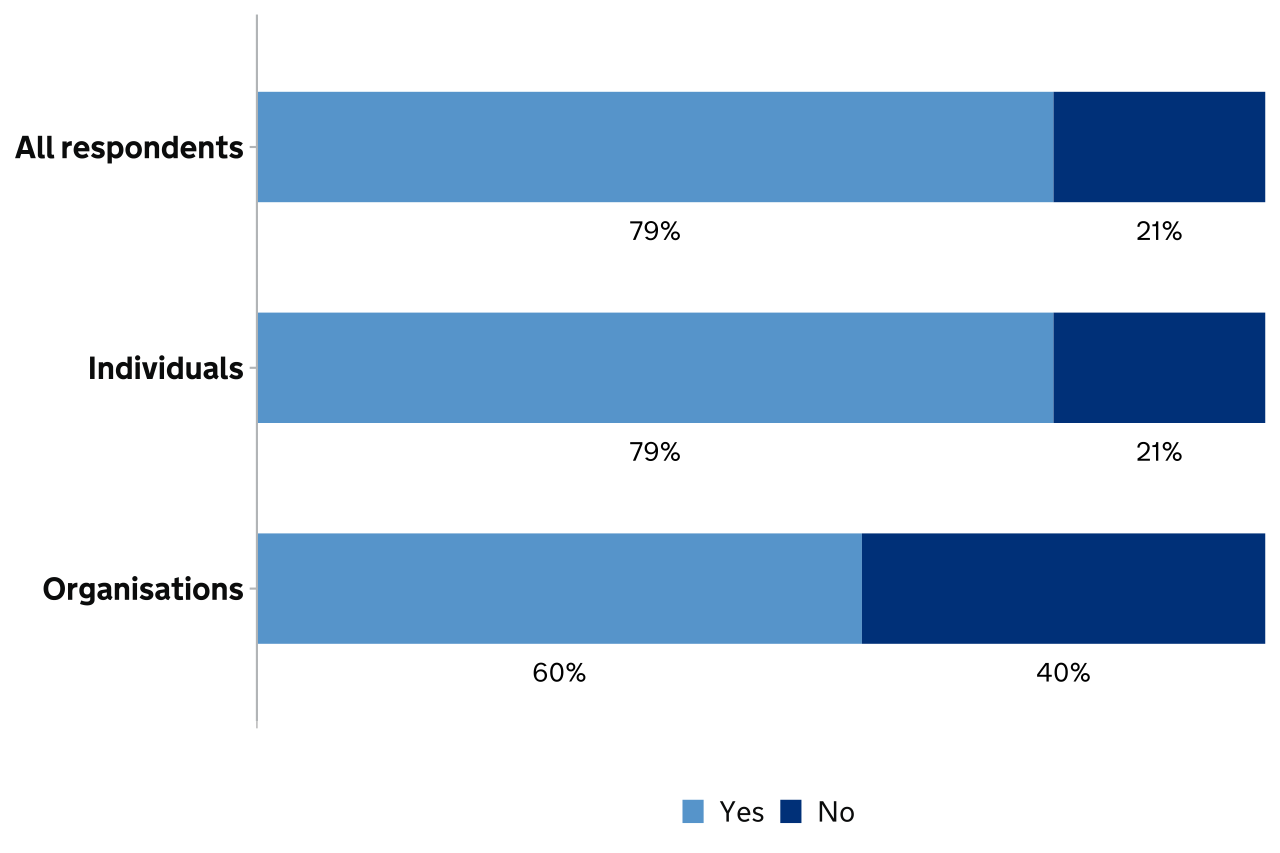
Note: The total dataset consisted of 28,569 respondents: 27,932 individuals, 628 organisations and 9 respondents who did not identify as either. Percentages may not sum to 100% due to rounding.
An analysis of responses shows that:
- most respondents (79%) said they did not have any evidence of the equalities impacts of any proposal set out in the consultation, while 21% said they did have evidence
- 40% of organisations said they had evidence of equalities impacts compared to 21% of individuals
- respondents who have had conversion practices were more likely to answer ‘Yes’ compared to respondents who responded that they had not (25% compared to 19%)
- respondents with a religious background were more than twice as likely to answer ‘Yes’ than those who did not (33% to 16%)
- respondents who were medical practitioners were slightly less likely to answer ‘Yes’ compared to those who were not (19% compared to 21%)
- straight/heterosexual respondents were twice as likely to answer ‘Yes’ compared to LGB+ respondents (26% compared to 12%)
- 11% of transgender respondents answered ‘Yes’ compared to 21% of non-transgender respondents
- 29% of large organisations (250 people or more) said they had evidence of the equalities impacts of any proposal set out in the consultation, while 41% of organisations employing fewer than 250 people said they had evidence
The consultation question asked for examples of evidence of the equalities impact of any proposals set out in the consultation. Most respondents did not discuss any specific examples, but did provide their thoughts and opinions about equalities issues more generally.
The main themes that emerged from qualitative analysis of free-text responses for this question included:
- potential threats to freedom of speech and religious liberty: most respondents to this question raised concerns about the proposals’ implications for freedom of speech and religious practice – many of these respondents believed that, depending on the specific wording used in the legislation, the proposals could limit the ability to pray for others or teach religious beliefs, ultimately marginalising and discriminating against religious groups
- concern about impacts on single-sex spaces: some respondents also expressed concern about the impact of the proposals on single-sex spaces and sex-based rights (especially for women) – for example, a small number of respondents believed that the proposals would facilitate sex offenders’ access to single-sex spaces (with a very small number of respondents specifically referencing women’s prisons as an example)
- equality for LGBT people: some respondents focused on the positive outcomes of the proposals: by removing conversion practices as an accepted part of society, the proposals would support LGBT individuals to feel more accepted and integrated within their communities – for these respondents, the proposals would also promote equality by clearly communicating that prejudice was unacceptable and fostering a greater understanding of sexual orientation and transgender status across the broader public
6. Cross-cutting themes
A number of themes were identified during the qualitative analysis which cut across multiple questions in different sections of the consultation document, and the most commonly raised themes are reported below. 2 other blocks of questions were noteworthy for having a number of cross-cutting themes, specifically the block of questions on ‘Restricting the promotion of conversion therapy’ and on ‘Ensuring statutory services recognise conversion therapy’. Those specific cross-cutting themes have been included in this report (see sections 4.4 and 4.6) along with the most relevant set of questions.
The cross-cutting themes covered in this section are:
- key terms in the proposals
- dealing with sexual orientation and transgender status
- different approaches for people under 18 years
- provision of healthcare services
- raising awareness of resources and support
6.1 Key terms in proposals
Many respondents expressed views that the proposals outlined in the consultation document were not clear enough, with the specific definitions used for “conversion therapy”, “prayer”, and “consent” discussed extensively. According to many respondents, if ambiguous definitions were used in future legislation, this could obstruct legitimate support and leave loopholes for the continuation of non-consensual conversion practices. Some respondents believed that a more concrete definition of non-physical acts of conversion practices was needed to avoid misunderstandings with what they considered to be legitimate expression of views.
If conversion therapy is defined as converting from [LGBT] to heterosexual, and from trans to cisgender, then I entirely agree with this approach. However, this document does not. With the current definition, it would limit the impact of hundreds of charities who support young people as they make progress in reaffirming their gender and sexuality as divergent from the majority of the population. This is life-saving work, which should not be impeded.
(Individual, 25 to 34 years old, male, gay or lesbian, non-transgender)
6.2 Dealing with sexual orientation and transgender status
Some respondents differentiated between conversion practices focused on efforts to change a person to or from being transgender and conversion practices focused on changing a person’s sexual orientation. These respondents, which included both individuals and organisations, supported a ban on conversion practices aimed at converting someone from being lesbian, gay or bisexual specifically (rather than say, other sexual orientations), to heterosexual. However, they raised concerns about banning practices that used similar approaches but were focused on changing someone to or from being transgender. These respondents were generally likely to respond ‘Neither agree nor disagree’ when asked ‘Do you agree or disagree that the government should intervene to end conversion therapy in principle?’, suggesting they did not explicitly oppose a ban on transgender conversion practices but instead focused on the potential difficulties and considerations in drafting and implementing specific legislation implementing such a ban.[footnote 13] According to these respondents, transgender identities should not be immediately affirmed, but discussed with professional medical practitioners, family, and other relevant adults. This would include teachers in the case of children. For these respondents, talking therapies, watchful waiting approaches, or other similar services should not fall within the ban on conversion therapies.
By lumping gender identity in with same sex orientation you risk creating poor policy that will be impossible to interpret and implement. There is a massive risk of limiting important conversations for people who are exploring their sexuality and identity, either with therapists or in wider society.
(Individual, 45 to 54 years old, no religion, straight/heterosexual)
6.3 Different approaches for people under 18 years
The consultation document noted that the proposed new criminal offence includes stronger protections for those under 18 years of age as it was the previous government’s view that those under 18 are more vulnerable and therefore at higher risk of being harmed by this practice. Many respondents highlighted the importance of protecting children, whose personal development may be negatively affected and would be particularly vulnerable to the long-term effects of harmful experiences associated with conversion practices. However, respondents differed in how those over-18 should be protected by the proposals. Some respondents argued that no ban should apply to adults if they consented and there was no physical harm.
I agree for those under the age of 18, but I think adults should be able to make their own choices about conversion therapy.
(Individual, 45 to 54 years old, no religion, bisexual)
Other respondents argued that special protection should also be granted to those over-18, as in their view adults could also be vulnerable and harmed by conversion practices.
Whilst there should obviously be additional protections for minors, there are many instances where impressionable at-risk adults could feel they should seek treatment. Adults who would consider it should be helped mentally in other more beneficial ways.
(Individual, 35 to 44 years old, Christian, gay or lesbian, non-transgender)
A few respondents highlighted concerns over the proposals delaying necessary provision of medical interventions and that adequate access to healthcare services should not be denied to people under 18 on the basis of their age.
These provisions may be used to deny transgender people under the age of 18 access to healthcare. I would agree with these proposals if they included protections for transgender people under the age of 18 who need to access healthcare.
(Individual, 25 to 34 years old, no religion, gay or lesbian, non-transgender)
6.4 Provision of healthcare services
Many respondents argued that the proposals might prevent people from accessing legitimate healthcare services. Some respondents, including many healthcare organisations, said that care should be taken to ensure the proposals did not inhibit the provision of legitimate talking therapies for people who did not feel that their gender aligned with their registered sex, or those questioning their sexual orientation.
Some charities provide support for children and young adults with gender dysphoria. They must be allowed to offer an alternative to affirmation and a life of medical treatments.
(Individual, 45- to 54 years old, no religion, straight/heterosexual, non-transgender)
Legitimate talking therapies are important for society, indeed particularly for LGBTQ people, who have worse mental health outcomes compared to the general population. Banning conversion practices must not result in interference for professional psychologists, psychiatrists, psychotherapists, counsellors and other clinicians and healthcare staff providing legitimate support for those who may be questioning if they are LGBTQ.
(Organisation, healthcare, working on behalf of children, young people, LGBT people, and women, with 250 people or more)
These respondents also felt that charities providing support to children and young people with gender dysphoria or those questioning their sexual orientation should not risk any sanction or ban, as these charities were providing regular support to individuals.
If an 8-year-old says to a professional, ‘I believe I have been born in the wrong body’, it is absolutely right that a professional should thoughtfully question that rather than just accept or re-affirm. This sort of situation cannot be caught by any new law.
(Individual, 35 to 44 years old, no religion, straight/heterosexual)
Some respondents believed that the proposed ban could affect access to legitimate and necessary healthcare services for transgender people, such as gender-reassignment surgery for adults and/or gender identity services, as well as exploratory talks on an individual’s sexual orientation and whether or not they were transgender. Support is currently provided by both specialised health care practitioners and LGBT-focused charities and some respondents expressed concern that these organisations would risk sanctions under the proposals or that accessing equivalent services abroad could also be at risk.
The government’s current proposals leave too much room for the suppression of groups invested in helping LGBTQIA+ people explore their identities. Any legislation that could affect these charities, NGOs and other groups will cause incalculable harm. The official channels for access to trans healthcare - particularly in the public sector - are clogged with bureaucracy, understaffed and underfunded.
(Individual, 18 to 24 years old, no religion, straight/heterosexual, non-transgender)
6.5 Raising awareness of resources and support
A number of respondents emphasised the lack of public information relating to conversion practices, and more particularly around actions that could be taken, both where a criminal offence may have taken place and to provide support to victims of conversion practices. Respondents also emphasised the need to better inform the public regarding the prevalence and dangers of conversion practices.
Conversion therapy is so often not recognised and often not seen for what it is either. Authorities don’t appear to be trained on it enough to be aware of the signs or the harms, and put it down to general bickering or identity difference stresses in families and tight-knit communities.
(Organisation, working on behalf of LGBT people, with 11 to 49 people)
References
Fereday J and Muir-Cochrane E (2006). Demonstrating Rigor Using Thematic Analysis: A Hybrid Approach of Inductive and Deductive Coding and Theme Development. International Journal of Qualitative Methods, 5(1), 80 to 92. https://doi.org/10.1177/160940690600500107
Government Equalities Office (2018). National LGBT Survey.
Jowett A, Brady G, Goodman S, Pillinger C and Bradley L (2021). Conversion therapy: An evidence assessment and qualitative study. https://www.gov.uk/government/publications/conversion-therapy-an-evidence-assessment-and-qualitative-study/conversion-therapy-an-evidence-assessment-and-qualitative-study
Wei J and Zou K (2019). EDA: Easy Data Augmentation Techniques for Boosting Performance on Text Classification Tasks. Proceedings of the 2019 Conference on Empirical Methods in Natural Language Processing and the 9th International Joint Conference on Natural Language Processing (EMNLP-IJCNLP), 6382 to 6388. https://doi.org/10.18653/v1/D19-1670
-
Since the publication of the consultation, the government has changed its terminology from ‘conversion therapy’ to ‘conversion practices’. The term ‘conversion therapy’ will still be used in this report where text is quoted directly from the consultation document or responses> Otherwise, in line with what is now preferred government terminology, we will refer to ‘conversion practices’. ↩
-
For demographics and background questions, respondents also had the option of not answering or selecting ‘Prefer not to say’. ↩
-
“Gender dysphoria is a term that describes a sense of unease that a person may have because of a mismatch between their biological sex and their gender identity. This sense of unease or dissatisfaction may be so intense it can lead to depression and anxiety and have a harmful impact on daily life.” (NHS website, accessed in April 2023.) ↩
-
2 respondents included both one English region and “Outside the UK” in their responses. As these respondents specifically stated in their responses to other questions that they were based in England, the research team felt it was most accurate to re-code these responses as “England”. As this only applied to a very small number of respondents, the choice of country for re-coding did not impact the overall country-level breakdown of results presented in the report. ↩
-
As part of the consultation, organisational respondents were asked to select an organisation type that most closely reflected their organisation, with relevant categories including ‘general healthcare provider’ and ‘specialist LGBT healthcare provider’. ↩
-
More details about the harmonised data standard for gender identity are available at: Gender identity data harmonised standard – Government Analysis Function ↩
-
Measuring gender identity is an evolving topic.The analytical categories for the analysis of the consultation responses by gender identity were developed prior to the analysis and release of self-identified gender identity data from the 2021 Census in January 2023. The gender identity categories used for this analysis were similar to those of the Census in January 2023.In 2024, the Office for Statistics Regulation published a review of 2021 Census gender identity data, and found that there were quality issues with the question and data. The Census gender identity data was subsequently downgraded to ‘official statistics and in development’, and the Government Statistical Service has since published a work programme to develop final harmonised standards for gender identity data. ↩
-
We analysed the effect of removing these 800 responses from the base and found that the relative proportion of responses changed by less than 1% for any specific answer choice. ↩
-
This variable is recorded as ‘Yes’ if the respondent indicated they have experience working for a faith organisation or has religious beliefs (or both). If neither criteria is met, the variable is recorded as ‘No’. ↩
-
LGB+ respondents refer to individual respondents who selected ‘gay or lesbian’, ‘bisexual’, or ‘other sexual orientation’ (entered into a free-text field) when asked about their sexual orientation. ↩
-
Almost all respondents who answered ‘Yes’ to this question also answered the corresponding free-text question, though the level of specificity in the examples provided by respondents varied significantly: some mentioned specific programmes, while others focused on broader categories or types of broadcasting media. No further work has been done to verify any examples provided. ↩
-
As with Question 6, almost all respondents who answered ‘Yes’ to this question also answered the corresponding free-text question, though the level of specificity in the examples provided by respondents varied significantly: some mentioned specific campaigns or organisations, while others focused on broader categories or types of broadcasting media with advertising. No further work has been done to verify any examples provided. ↩
-
This is similar to points raised by respondents to Question 4 under the theme of access to legitimate talking therapy or counselling. ↩