Embedding co-design and participation in early years services
Policy Lab worked with the Department of Health and Social Care to develop a co-design toolkit enabling parents and carers to shape early years services.
Summary
- The Family Hubs and Start for Life programme included an ambition to provide support to bring the voices of parents and carers into the development of services. Many local authorities, who received funding for enhanced Start for Life (now Healthy Babies) services, cited a lack of tools and skills to meaningfully do this.
- Policy Lab partnered with the Department of Health and Social Care (DHSC) to strengthen co‑design capability across local authorities delivering enhanced Healthy Babies services within the Best Start Family Hubs and Healthy Babies programme.
- Launched in June 2025 across 75 local authorities, the toolkit has supported more consistent and meaningful engagement with families, strengthened relationships between national and local stakeholders, and embedded more participatory ways of working.
The policy challenge
The first 1,001 days of a child’s life, from conception to the age of 2, are crucial to long-term health, development and life chances. The joint DHSC and Department for Education Family Hubs and Start for Life programme was established to improve support for families during this period, working through 75 local authorities across England.
A central ambition of the programme was to place parents, carers and families at the centre of service design so that services reflect the needs, circumstances and lived experiences of local communities. In practice this has often comprised consultation or feedback, with many local teams lacking the tools and confidence to do deeper collaboration in ways that were genuinely participatory.
Policy Lab’s initial engagement with the programme, covering nearly two thirds of the 75 participating local authorities, confirmed the gap. As a result, services risk being designed at a distance from the people they are intended to support - particularly those whose voices are less frequently heard. Local teams wanted practical, flexible resources that could be adapted to their context and used to build participation capacity over time. They asked for less theory and more action: tools they could pick up, test and return to as part of regular working practice. This pointed to a clear challenge question:
How can we support local authorities to meaningfully involve parents and families in the co‑design of early years services, in ways that are practical, scalable and sustainable?
What changed
Greater public participation in policy: enabling parents and carers to shape services
Policy Lab developed and tested the co-design toolkit with parents, carers and local authority teams across 6 authorities in diverse geographic and social contexts. Testing took place in varied environments, including sessions with babies present and rooms without tables, and with groups including parents of children with Special Educational Needs and Disabilities. This ensured the toolkit was genuinely flexible rather than designed for ‘ideal’ conditions.
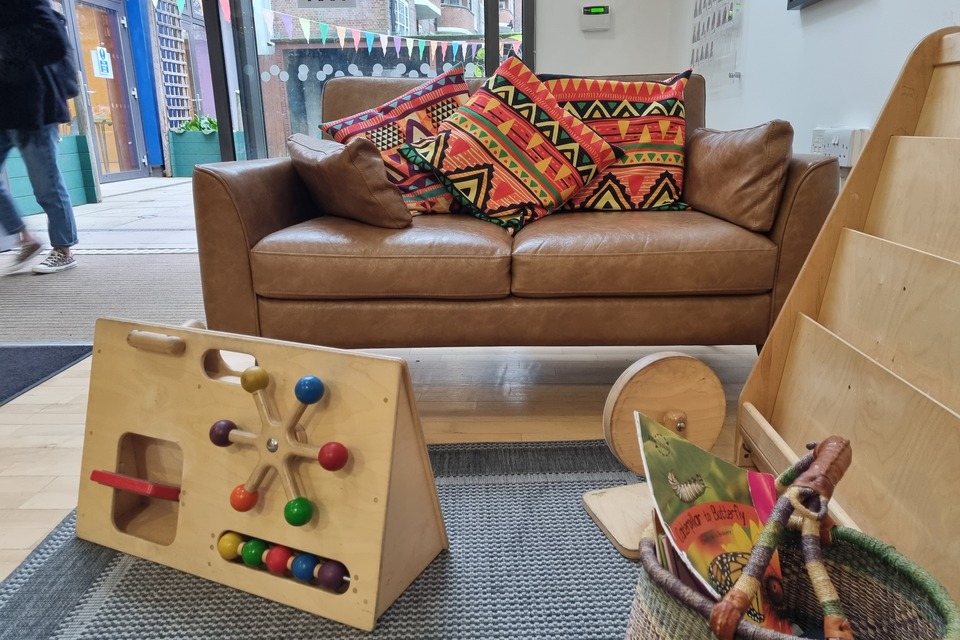
The final toolkit includes a co‑design wheel to guide users through 4 stages of co‑design, 25 activity cards offering structured and creative engagement methods, wisdom cards capturing shared principles, and a supporting playbook with facilitation guidance.
These 3 components were designed specifically to support participation by people who might otherwise find formal consultation inaccessible. Testing showed that this approach created space for quieter voices to contribute. It supported participation across a range of communication styles, confidence levels and contexts and prompted suggestions that more conventional engagement methods had not surfaced.
A Parent and Carer Participation Lead at Barnsley Council said:
I’ve seen more varied input from members … It enabled people to come up with suggestions that I don’t think they would have come up with otherwise.
The toolkit is freely available for download and has been designed to work in both in-person and online settings, lowering the practical barriers to participation for communities with different levels of access.
Enhanced energy, skills and ways of working
Through the process of co‑designing and testing the toolkit, local authority staff developed confidence and capability in participatory approaches. By creating structured space for shared exploration, reflection and decision‑making, teams could transcend traditional consultation methods to include more collaborative approaches. This includes the importance of meeting people where they are, creating safe and welcoming environments, and actively ensuring that quieter or less confident voices are heard alongside those who might otherwise dominate discussions.
A Local authority participant said:
The toolkit allows voices to be heard… it provided deeper conversations and got people to talk from different angles.
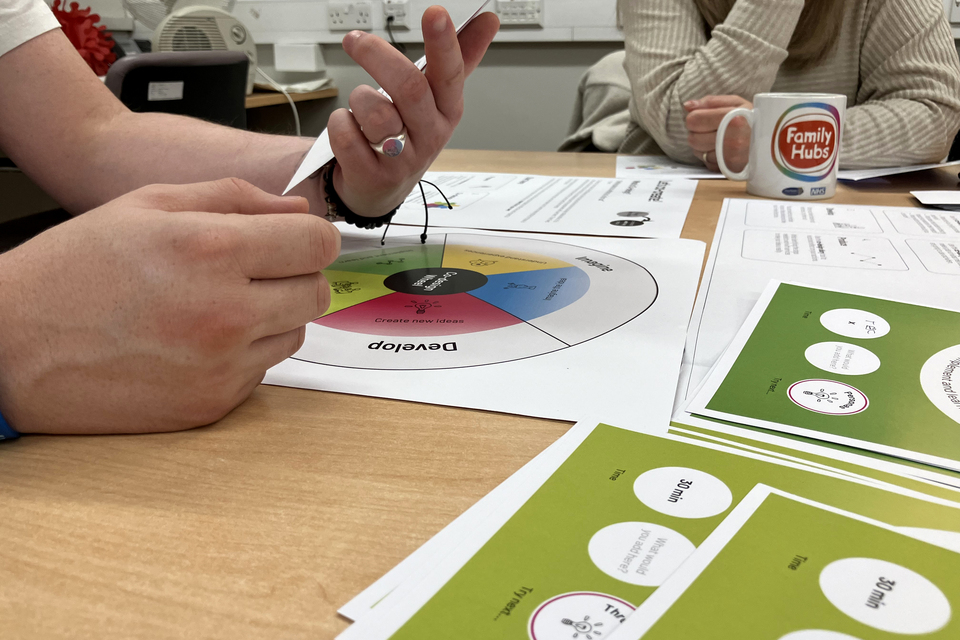
The toolkit positions co‑design not as a one‑off activity but as an ongoing way of working. It supports teams to move from occasional engagement towards more continuous and embedded collaboration with families. Since testing, Parent and Carer Participation Leads have continued to use it in regular practice. Leads report that having a shared set of resources that panel members recognise and understand has made participation more consistent and given communities a greater sense of agency in how sessions are run.
A Parent and Carer Participation Lead at Barnsley Council said:
I’ve now brought all the resources in and panel members know how to use it. It’s giving us sustainability and consistency.
This shift in skills and practice is a key part of the project’s impact, enabling longer‑term change in how early years services are designed and delivered.
The toolkit also reflects a wider Policy Lab commitment to building capacity rather than creating dependency on external expertise. By making it freely available and designing it to be extended by those who use it, the project aims to unlock knowledge that already exists in communities and local authority teams across England.
Better relationships between internal and external stakeholders
By involving local authorities and parents and carers directly in the design and testing of the toolkit, the project strengthened relationships across the early years support system. The co‑design process created shared ownership of both the approach and the outputs, building trust between central government, local authorities and communities.
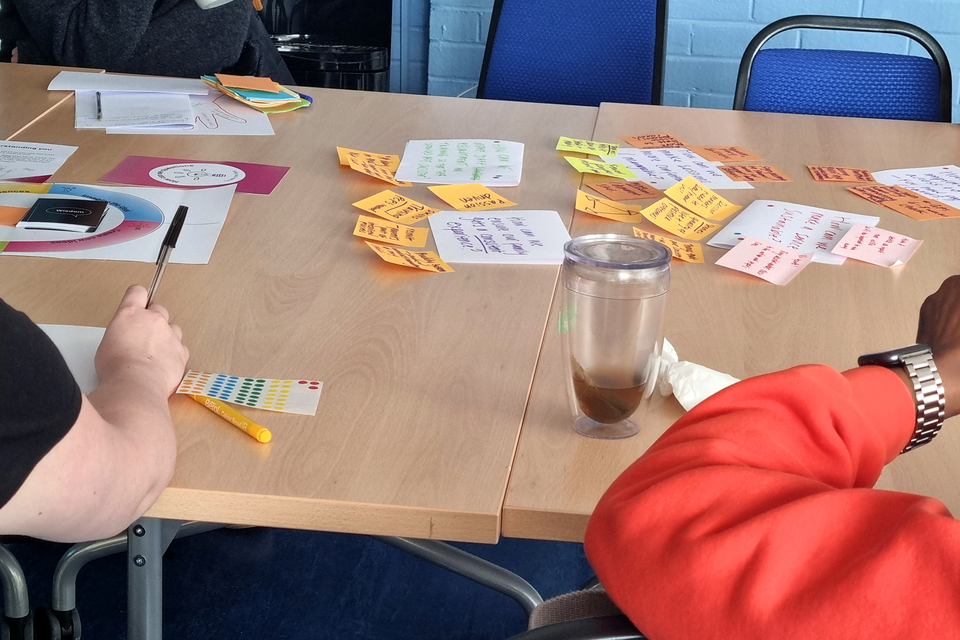
The iterative testing phase established ongoing feedback loops between policy and practice, enabling DHSC to engage more directly with frontline realities while ensuring local insight shaped the final product. This helped move relationships from transactional engagement towards more collaborative and sustained ways of working.
Since its launch in June 2025, the toolkit was rolled out across 75 local authorities delivering enhanced Healthy Babies services and continues to be shared more widely. Early feedback indicates that it is supporting more consistent, meaningful engagement with families while strengthening connections between national strategy and local delivery.
A spokesperson for Camden Council said:
The toolkit has become a valuable resource, providing a structured framework to support meaningful parent involvement in service design. It offers practical guidance, which I have begun embedding into Camden’s participation structures. This has encouraged greater variance in how we engage families, allowing us to tailor approaches to different communities and needs.
Following on from this work, Policy Lab continued to work with DHSC as they developed their thinking around the enhanced Healthy Babies services and wider system of support. Taking a systems-approach, Policy Lab engaged with over 100 local authorities to deepen understanding of their needs and experiences to date, while also thinking about future ambitions.
Acknowledgements
The co-design toolkit was developed by Policy Lab with support from local authority teams, Parent and Carer Panel leads and members, policymakers, and sector experts from across England. We’re grateful to everyone who contributed – including Barnsley, Blackburn with Darwen, Camden, Durham, Lewisham, Sheffield local authorities, Professor Leon Cruickshank from Imagination Lancaster, and Claire Craig from Lab4Living for generously sharing their experiences, expertise and ideas.