Call for evidence: summary of findings report
Updated 9 July 2026

© Crown copyright 2026
This publication is licensed under the terms of the Open Government Licence v3.0 except where otherwise stated. To view this licence, visit nationalarchives.gov.uk/doc/open-government-licence/version/3 or write to the Information Policy Team, The National Archives, Kew, London TW9 4DU, or email: psi@nationalarchives.gov.uk.
Where we have identified any third party copyright information you will need to obtain permission from the copyright holders concerned.
This publication is available at https://www.gov.uk/government/calls-for-evidence/timms-review-of-personal-independence-payment-call-for-evidence/outcome/call-for-evidence-summary-of-findings-report
1. Introduction
-
The Timms Review steering group, as part of its wider programme of engagement and evidence gathering, launched a call for evidence on 19 March 2026. It remained open for 10 weeks, closing on 28 May 2026, and received 38,713 responses from a broad range of individuals and organisations. These included disabled people and people with long-term health conditions, carers, representative organisations and charities, clinicians and other subject-matter experts, as well as academics and think-tanks.
-
The steering group is grateful to all those who took the time to respond. This report summarises the key findings from the wide range of evidence received.
-
The call for evidence was administered by the Department for Work and Pensions (DWP) on behalf of the steering group. It was published in a range of accessible versions including braille, audio, British Sign Language, Easy Read, large print and web accessible PDF. It was supported by a comprehensive communications approach to ensure wide reach. This included promotion through national and regional media, social media channels (including those of steering group members), stakeholder networks, and disability organisations.
-
The call for evidence was deliberately in broad scope. It was structured around 4 themes agreed by the Review’s steering group to help guide responses, while still giving people the freedom to raise the issues that mattered most to them. Respondents were not required to follow specific questions and were able to provide insight across the full scope of the Review’s Terms of Reference. Responses were submitted anonymously, enabling contributors to share views openly and in detail, including on sensitive or personal experiences.
-
Questions used to guide the call for evidence are set out in Annex A; however, findings in this report are not presented against individual questions, as respondents were not constrained to follow them.
-
The call for evidence forms a key part of the Review’s overall evidence base. While it sits alongside other key engagement and evidence-gathering activity, it provides a uniquely large-scale and direct account of lived experience.
-
The views expressed by respondents in this summary of the findings from the call for evidence are not necessarily endorsed by DWP.
1.1. Breakdown of respondents
8. The call for evidence received 38,713 responses from a wide range of people. Responses were anonymous. While respondents had the option to indicate which broad group they identified with, this was not required and some chose not to provide this information. Those who did could select more than one group, meaning categories may overlap.
9. As a result, the breakdown of respondents should be treated as indicative only. Percentages do not total 100% and volumes are presented as a range because they are rounded estimates, and respondents often belong to more than one category, meaning the categories are not mutually exclusive.
| Respondent Group (self-identified) | % of total | Number of responses |
|---|---|---|
| Individuals (lived experience) | 70–75% | 27,099 – 29,035 |
| Carers | 9–12% | 3,384 – 4,646 |
| Organisations | 5–7% | 1,936 – 2,710 |
| Clinicians | 2–4% | 774 – 1,549 |
| Academics | ~1% | ~391 |
| Think-tanks | ~0.3–0.5% | 116 - 194 |
| Elected representatives (MPs) | ~0.05% | 15 |
| Unknown / not identifiable | 8–10% | 3,097 – 3,871 |
1.2. How responses were analysed
10. A structured analytical approach was required to ensure consistency, transparency, and robustness. To support this, the Review used an Analytic Vertical Intelligence System (AVIS), an artificial intelligence-assisted, human-led analytical framework designed to enable large-scale analysis.
11. AVIS applied a staged process to systematically identify, classify, and synthesise themes across the evidence, progressing from initial coding through to system-level analysis and strategic insight. The system was configured to operate within a constrained analytical framework, ensuring that outputs remained grounded in submitted evidence and did not rely on external assumptions or speculative interpretation.
12. Human oversight was embedded throughout the process. Humans reviewed and validated outputs at each stage, ensuring that thematic classifications were consistent, that analytical judgements remained proportionate to the evidence, and that nuance within lived experience responses was preserved.
13. This combined approach, integrating multiple evidence strands within a single analytical framework and applying AI-assisted analysis alongside structured human quality assurance, enabled the Review to process a large and complex number of responses in a consistent way, while maintaining a clear evidential link between individual responses and overall findings. The methodology is set out in detail at Annex B.
2. Executive Summary
14. This report presents findings from the Timms Review of Personal Independence Payment (PIP) call for evidence, which received 38,713 responses from disabled people, carers, organisations and professionals.
15. A common view across responses is that PIP is an important benefit. Respondents describe it as helping with the extra costs of disability, supporting independent living, and enabling people to participate in everyday life. Many responses also highlight the importance of being able to take part in society on an equal basis, and the contribution disabled people make to communities and the economy.
16. At the same time, responses indicate that PIP is not working well in practice. Respondents set out a wide range of experiences across the claimant journey, including applying, providing supporting information, undergoing an assessment, receiving a decision, and taking part in reassessments. Across these stages, the process is often described as involving a high level of effort.
17. Responses frequently describe completing forms, gathering information, and engaging with assessments as complex, and at times, difficult to navigate. Some respondents also describe these processes as repetitive, stressful, and, in many cases, dehumanising.
18. Respondents consistently raise concerns about how well the system reflects people’s day-to-day needs. This includes accounts from people with fluctuating conditions, multiple conditions, and less visible conditions, who describe challenges in explaining or evidencing the impact of their condition. Some responses also refer to variation in how circumstances are understood and reflected in outcomes.
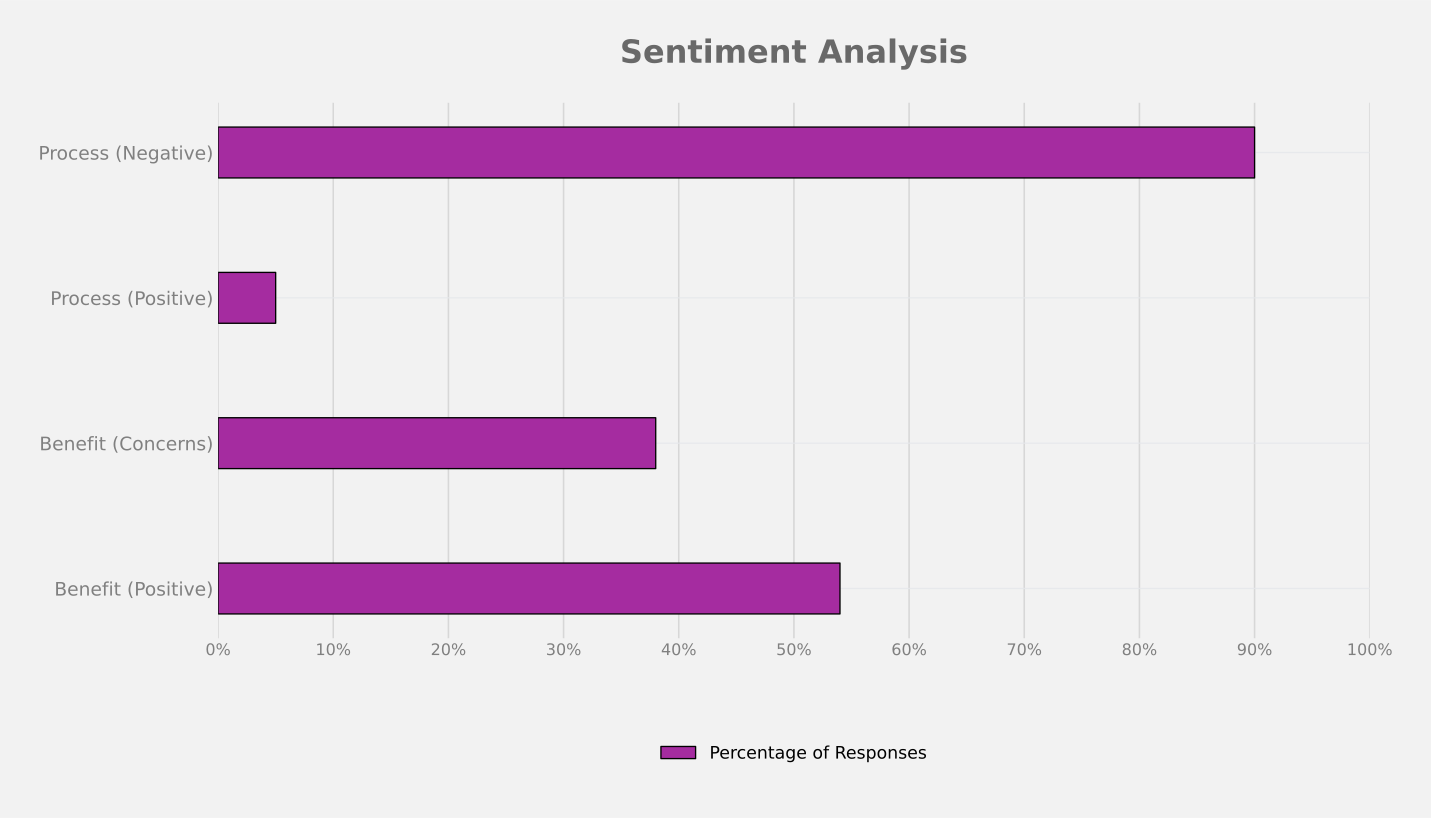
19. A number of responses refer to participation in everyday life, including the ability to work, engage in education, take part in community activities, and manage day-to-day tasks. Respondents describe the role PIP plays in supporting this participation, particularly through helping to meet additional costs. At the same time, some responses describe ways in which the process of claiming and maintaining PIP, and aspects of how support is assessed, can affect people’s ability to participate in society. These accounts reflect both the practical demands of engaging with the PIP system and the ways in which individual needs are represented within it.
20. Responses also describe the wider context in which PIP operates. These include changes in the nature of disability and long-term health conditions, as well as expectations around independence and participation. Some respondents refer to pressures in other services and the role PIP plays alongside wider forms of support, rather than on its own.
21. A strong and recurrent message across responses is that, while the purpose of PIP is widely recognised and valued, the process of accessing and maintaining support is often described as complex and demanding, with some respondents experiencing it as impersonal and often dehumanising.
3. Summary of key insights
Experiences of claiming PIP
22. Respondents describe a range of issues in their experience of the PIP system, including:
-
high-stakes and financial dependence: respondents describe PIP as high‑stakes and emotionally taxing, saying that awards affect their housing security, health and independence
-
stressful and destabilising process: respondents often describe interactions with the system as stressful and destabilising, with impacts on wellbeing, particularly during applications, reassessments and appeals
-
culture of disbelief: many respondents say they feel they enter the process from a position of being disbelieved, leading to anxiety and a need to prove their legitimacy rather than explain their needs
-
dehumanising assessment experience: respondents often describe assessments as dehumanising and adversarial and say they feel reduced to tick boxes that do not reflect their lived reality
-
misrepresentation in decisions: some respondents report feeling misrepresented or not believed and say that decisions do not reflect their circumstances
-
ongoing reassessment burden: respondents frequently describe reassessments as destabilising and ongoing, including in cases where they consider their conditions to be lifelong or degenerative
Barriers and challenges in accessing PIP
23. Respondents to the call for evidence describe a range of barriers and challenges in their interactions with the PIP system, including:
-
complex and inaccessible processes: long forms, reliance on telephone communication, rigid deadlines, and limited flexibility in how people can provide information are described as creating substantial barriers, particularly for individuals with cognitive impairments, mental health conditions, neurodivergence, or fatigue-related conditions
-
high administrative burden: repeated requests for evidence, lengthy waiting periods, reassessments, and appeals are characterised as exhausting and, in some cases, as exacerbating existing conditions
-
prolonged and repetitive processes: many respondents describe ongoing cycles of engagement, including completing forms, undergoing reassessments, and pursuing appeals, which create sustained pressure and uncertainty
-
insufficient consideration of pain and fatigue: responses suggest that decision-making often focuses on whether a task can be completed, rather than whether it can be carried out safely, repeatedly, or without causing harm
-
“snapshot-style” assessments: assessments are reported to capture a single point in time, failing to reflect the fluctuating nature of many conditions or their cumulative impact
-
less visible and non-linear conditions: Respondents describe situations where credibility is judged based on outward appearance, behaviour, or coping strategies, rather than the overall impact of their condition
-
inconsistency in decision-making: outcomes are described as varying across similar cases, with many respondents reporting the need to challenge initial decisions
-
inequitable outcomes: access to advocacy and the ability to navigate and persist within the system are seen as influencing outcomes, potentially disadvantaging those without support
-
access barriers: successfully navigating the system is often described as dependent on an individual’s capacity to engage, with some people disengaging due to the level of burden or distress involved
-
impact on wellbeing: the process is frequently reported as contributing to stress, anxiety, and exhaustion, and in some cases worsening existing conditions
-
financial adequacy: respondents describe how rising living costs mean PIP is often used for essentials, limiting its ability to meet wider disability-related needs and suggesting it is doing more than it is intended
What respondents say is working well
24. Respondents to the call for evidence highlight a number of positive aspects of PIP, including:
-
core purpose is widely valued: respondents strongly recognise PIP as an essential source of income that supports survival, stability, and dignity
-
cash-based support enables autonomy: respondents describe how the flexibility of PIP allows individuals to prioritise their own needs as conditions, symptoms, and circumstances change
-
supports independence and work: respondents report that PIP helps to cover additional costs that enable them to remain in employment, attend appointments, and maintain social connections
-
prevents greater costs elsewhere: respondents describe how PIP can help avoid the need for crisis support, reduce reliance on family and informal care, and limit demand for more intensive state services
Changes proposed by respondents
25. Respondents to the call for evidence proposed a wide range of suggestions and reflections relating to changes that could improve how PIP works. These do not represent recommendations of the steering group, but reflect the views expressed by respondents to the call for evidence.
26. The improvements suggested by respondents can be summarised as:
1. Improve accessibility and reduce administrative burden
-
respondents suggest simplifying forms and shortening processes
-
respondents describe the need for more accessible application routes, including alternatives to telephone communication and improved digital options
-
respondents highlight the importance of embedding accessibility and reasonable adjustments by default, including communication formats and timelines
-
respondents emphasise improving access to advocacy and support for those who may struggle to navigate the system
2. Reform assessments and decision-making
-
respondents describe the need to shift towards a more evidence-led and less adversarial approach
-
respondents suggest giving greater weight to medical evidence and input from specialist clinicians
-
respondents highlight the importance of using trained assessors with condition-specific knowledge
-
respondents report that fluctuating and less visible conditions should be better recognised
-
respondents suggest that assessments should focus on real-world functioning over time, including the impact of pain, fatigue, and variability
-
respondents emphasise that coping strategies or momentary presentation should not be used as proxies for need
3. Reduce repeated and prolonged engagement with the system
-
respondents suggest reducing or stopping reassessments for lifelong, progressive, or terminal conditions
-
respondents describe the need for reassessment processes to be more supportive and proportionate
-
respondents highlight the importance of reducing the time taken for decisions, Mandatory Reconsiderations, and appeals
4. Improve transparency, consistency, and trust
-
respondents suggest recording assessments to improve transparency
-
respondents highlight the need for greater accountability where reports are perceived to be inaccurate
-
respondents describe the importance of improving communication and the clarity of decisions
-
respondents suggest improving public messaging to reduce stigma and better clarify eligibility
5. Strengthen the role and value of PIP
-
respondents emphasise maintaining PIP as flexible cash support, rather than vouchers or means-tested provision
-
respondents highlight the importance of keeping PIP separate from employment
-
respondents describe PIP as part of a wider system of support, including links to health, care, and employment services, alongside calls for more joined-up and coordinated support
-
respondents suggest reviewing the adequacy of awards in relation to the full cost of disability
4. Responses from the call for evidence across the 4 themes
27. The call for evidence, published on GOV.UK and shaped by the Review’s steering group, invited views, experiences and information across 4 themes: the role and purpose of PIP, assessment, decision-making, and the wider claimant experience.
28. Across these 4 themes, responses consistently highlight the importance of PIP in supporting independent living and participation. At the same time, respondents describe challenges in how the system operates in practice, including how needs are understood, how decisions are reached, and the effort involved in engaging with the process.
29. Administrative demands, repeated interactions with the process, and concerns about consistency in assessment and outcomes are raised across responses. Many also refer to the impact of these experiences on their ability to engage with the system and on their wellbeing.
30. The responses set out in this chapter should not be viewed as discrete or mutually exclusive categories. Many of the issues raised are inherently interconnected, and there is a significant degree of overlap between them. This reflects the complex and cross-cutting nature of the subject matter where individual points often contribute to multiple themes simultaneously.
31. While we have made every effort to organise responses clearly and minimise repetition, it has not always been possible (or appropriate) to separate related points entirely. As a result, some issues may appear across more than one theme or be referenced in similar terms. This is intentional to preserve the context and integrity of responses, and to ensure that important nuances are not lost through over-simplification.
Theme 1: Role and Purpose of Personal Independence Payment
Overview
32. The Review is examining whether PIP is meeting its intended purpose. Through this theme, the Review is interested in understanding what PIP should be doing to support disabled people and people with long-term health conditions.
33. Responses indicate that PIP is widely recognised as an important source of support that contributes to independent living, access to services, and participation in daily life. At the same time, respondents describe differences between how disability-related costs are experienced and how they are reflected within the current system. While the benefit itself is valued, some respondents raise concerns about the adequacy and consistency of support, alongside the way it operates in practice.
Key findings
-
around 50% (~19,350) of responses reference financial adequacy, making it one of the most frequently raised topics across responses
-
approximately 40% (~15,485) of responses refer to the relationship between PIP, employment, and independent living, with many highlighting its role in supporting work and independence, while some raise concerns about how employment is interpreted in assessment
-
between 50-58% (~19,400 to 22,500) of respondents express positive views about PIP as a benefit, while 36-40% (13,900 to 15,500) refer to concerns about the adequacy and reliability of support and how the process works in practice
Key messages on Theme 1
PIP enables independent living and participation
34. Respondents consistently describe PIP as fundamental to managing the practical realities of living with a disability, by enabling access to transport and mobility, supporting attendance at healthcare appointments, enabling participation in employment, and assisting with daily living activities.
35. PIP is also described as enabling choices that people without a disability or long-term health condition can make routinely, such as deciding when and how to travel, how to manage day-to-day living at home, including tasks such as preparing food, maintaining a safe and suitable living environment, organising routines, or how to engage in social, cultural or community activities. Many people state that PIP enables independent living alongside work, not instead of it.
Where the current system may present challenges to participation
36. Some responses describe concerns that aspects of the PIP assessment process can discourage independent living and participation. Respondents highlight that coping strategies, engagement in work, or efforts to improve health and wellbeing may be interpreted as evidence of reduced need, even where underlying support requirements remain.
37. Some respondents say this can influence how they engage with work, social activities, or actions to improve their health, due to concerns about how this may be reflected in an assessment and the potential impact on their entitlement. In particular, responses refer to a perceived risk that evidence of participation or improvement could be associated with a reduction or loss of PIP.
Gap between support and the lived cost of disability
38. Respondents frequently said that there is a gap between the level of support provided through PIP and the cost of living with a disability. Around half of responses to the call for evidence refer to financial adequacy, making it one of the most commonly raised issues. A smaller proportion of responses (around 6%) refer to concerns about over-generosity of PIP, most often in relation to the Motability scheme.
39. Respondents say that disability-related costs are ongoing rather than one-off, as well as variable and dependent on individual circumstances. They also describe these costs as interconnected across different aspects of daily life.
40. Respondents commonly refer to costs such as transport and mobility-related expenses, higher energy use, assistive equipment and adaptations, and access to care, support, and services. Many say that these costs are cumulative, with PIP forming part of a wider set of financial pressures rather than addressing them in isolation.
41. Some respondents say that fixed levels of financial support do not reflect changes in their needs or costs over time. This includes situations where costs increase or fluctuate while the level of support remains the same. Where this is described, respondents say there is a gap between the support received through PIP and the costs they experience day-to-day, including impacts on their ability to maintain independent living.
Understanding of PIP as a non-work-related benefit
42. Many responses refer to a connection between PIP, work and independent living, with around 40% of submissions mentioning independence and employment. Respondents describe work as part of being independent and refer to PIP in the same context.
43. A small proportion of respondents (7%) say that PIP helps them stay in work by covering costs such as transport or workplace adjustments. A further small number say it indirectly supports their ability to work. Some respondents also refer to situations where being in work or taking part in work-related activity is seen as affecting entitlement, particularly where it is taken as an indication of reduced need.
PIP is seen positively as a benefit, but the process is experienced negatively
44. Respondents consistently say that while PIP is valued as a benefit, their experience of claiming and dealing with the system is often different.
45. Sentiment analysis shows that:
-
around 54% of responses relating to PIP as a benefit (the support it provides) are positive, in contrast to views on the process of claiming it
-
around 38% of responses raise concerns about adequacy and reliability of PIP
-
over 90% (~34,842) of responses relating to process of claiming PIP are negative
-
around 5% (~1,936) of responses relating to process of claiming PIP are positive
Figure 1: Sentiment analysis shows the percentages of negative and positive responses in relation to PIP itself, and the process of claiming
Theme 2: Eligibility, Fairness and Equity
Overview
46. The Review is examining eligibility, fairness and equity in the award of PIP. Through this theme the Review is considering what people want PIP to assess, how this is done, and the barriers people may face accessing PIP.
47. Responses highlight concerns about inconsistencies in decision-making and how eligibility is defined, assessed and applied in practice. Respondents say the system does not always distinguish well between different levels of need, particularly for people with complex, fluctuating or less visible conditions.
Key findings
-
around 70% (~27,100) of responses refer to issues relating to the assessment, with the majority describing concerns or negative experiences, making this the most commonly raised area across responses
-
approximately 45% (~17,400) of responses describe difficulties in capturing fluctuating conditions
-
around 35% of responses refer to mental health and less visible conditions in the context of assessment, with many describing concerns and negative experiences relating to how these conditions are understood and reflected within the assessment process
-
around 30% (~13,600) of responses raise concerns about how evidence is considered and the accuracy of assessments
-
approximately 25-30% (~9,700 to ~11,600) of responses refer to the need to challenge decisions through Mandatory Reconsideration or appeals
Key messages on Theme 2
Limitations in the assessment’s ability to capture complexity and variability
48. Many respondents say the current assessment does not always reflect conditions that change over time, build up over the day, or depend on individual circumstances.
49. Respondents explain that the assessment often looks at whether someone can complete specific daily tasks at a single point in time and uses this as evidence of what they can do more generally. They say this does not fully reflect conditions that fluctuate (mentioned in around 45% of responses), have effects that build up over time, or are influenced by factors such as environment.
Challenges in recognising less visible conditions
-
respondents often say that conditions which are not visible, including mental health conditions, cognitive impairments, neurodivergence, and sensory difficulties, are not always well reflected in assessments or decisions
-
respondents also say that assessments can focus on what is seen during short interactions or on how someone appears at the time. They describe situations where being able to complete tasks in a supported or structured setting does not reflect the difficulties they experience in everyday life. This includes barriers such as anxiety, difficulties with planning or organisation, and sensitivity to environments
-
some respondents say that coping strategies can be taken as evidence that they are able to manage without support. Others describe that the ongoing effects of pain and fatigue are not always taken into account
-
around 35% of responses refer to mental health and less visible conditions
Inconsistency and variability in decision-making
-
respondents refer to differences in how eligibility criteria are applied in practice. While the criteria are set out, some respondents say that how they are interpreted can vary between assessments. They describe situations where similar circumstances can lead to different outcomes
-
around 30-35% of responses refer to decisions being challenged through Mandatory Reconsideration and appeals. Respondents who mention this often describe decisions being changed in their favour following appeal
-
some respondents also describe challenges with the appeals process itself, including that it can be time-consuming and difficult to navigate. A number of responses refer to a need for the process to be faster and fairer
-
respondents who raise these issues often say this can make outcomes feel difficult to predict. They describe decisions as being interpreted differently across assessments, including where similar information is considered by different assessors
How medical evidence is used in decisions
50. Respondents often raise concerns about how medical and specialist evidence is considered and weighted in decision-making.
51. Respondents say that, in some cases, medical evidence is given less weight than observations made during assessments. They describe situations where this can lead to differences between what clinicians have said and the final decision. This is mentioned particularly where specialist knowledge is needed to understand how a condition affects daily life.
52. Some respondents also describe challenges where people have more than one condition. They say that evidence about each condition may be looked at separately, rather than as a whole. Respondents describe how this can mean the combined impact of multiple conditions is not always reflected, particularly where physical, mental health, and cognitive conditions overlap.
53. Around 30% of responses refer to issues relating to how evidence is considered and the accuracy of assessments. These are often described alongside concerns about consistency in decision-making and how assessment reports reflect people’s circumstances.
Where PIP assessment criteria do not fully reflect real-life need
54. Respondents raised concerns about whether the current PIP assessment framework reflects their needs in practice. While they recognise PIP as an important form of support, they describe a difference between the assessment criteria and how disability affects their daily lives. Respondents say that the descriptors for both Daily Living and Mobility do not always reflect fluctuating conditions, mental health conditions, neurodivergence, or conditions that affect energy levels.
55. Respondents also say that assessments often focus on whether a task can be completed at all, rather than whether it can be done safely, repeatedly, to an acceptable standard and within a reasonable time.
56. Some respondents describe how this can mean that the effects of pain, fatigue and cognitive effort are not always fully taken into account. Respondents say this can affect how their needs are recognised, particularly where conditions do not present in a consistent or visible way.
Theme 3: Experience of claiming PIP
Overview
57. The Review will examine the experience of claiming PIP, from applying through to receiving or disputing a decision and subsequent award reviews. Through this theme the Review will consider the current experience of people claiming PIP, and how this could be improved.
58. Across all the different groups of people who responded to the call for evidence, the experience of claiming PIP is consistently described as complex, demanding, and, in many cases, distressing or dehumanising. This represents one of the most consistent findings across responses.
Key findings
59. Analysis of responses relating to the experiences of claiming PIP shows:
-
around 70% (27,100) refer to issues relating to assessment and how it is applied in practice
-
over 90% (~34,842) refer to the process of claiming PIP and describe negative experiences
-
around 28% (~10,800) refer to the administrative burden of the process, including completing forms, providing information and engaging with assessments
-
around 60% (~23,200) refer to psychological or emotional impacts linked to the process. Within this, a small proportion of responses (around 5%, or ~1,936 responses) describe more severe distress, including references to feeling at breaking point, trauma, or being unable to cope
-
around 25% (~9,700) refer to delays and waiting times, often alongside concerns about uncertainty and financial pressure while waiting for decisions
Key messages on Theme 3
Administrative complexity and cumulative burden
-
respondents often describe the application and assessment process as involving multiple stages, including completing detailed forms, gathering supporting information, attending assessments, and engaging with reconsideration and appeals
-
respondents say that these stages can build up over time, creating ongoing administrative demands
-
around 28% of responses refer to this administrative burden. Respondents who raise this often describe it alongside other factors, including their health, capacity, and financial pressures
-
references to administrative burden appear more often in responses that mention certain conditions, including learning disability (around 67%), neurodivergence (around 62%), and chronic pain or fatigue (around 59%)
-
respondents also describe the process itself as creating barriers to access, particularly for people with complex or long‑term conditions, lower levels of literacy, or where English is not a first language
-
respondents describe different aspects of the system affecting them in different ways. For example, some responses from people with neurodivergence or learning disabilities refer more often to administrative burden. Responses from people with chronic or long‑term conditions more often refer to repeated reassessment. Responses that mention mental health conditions more often describe psychological distress and challenging assessment experiences
-
respondents often describe experiencing more than one of these challenges at the same time. For example, responses that mention fluctuating conditions also refer to administrative demands and difficulties providing medical information. Responses that mention long‑term conditions also refer to repeated reassessment and anxiety
The PIP assessment is not fit for purpose
60. Whilst a small number of responses (around 5%) describe a positive experience with the PIP assessment, the vast majority of responses describe it as confrontational and interrogative, people repeatedly say they felt they were being tested, judged, or “caught out”, rather than listened to or understood. Respondents frequently describe the assessment process as “soul destroying”, “humiliating”, and “degrading” due to:
-
an adversarial environment where individuals are not believed and are required to prove their impairments
-
being required to describe intimate details such as toileting, personal care, mental distress, or trauma to strangers
-
being reduced to tick-box answers and narrow descriptors
61. Some say they were penalised for appearing articulate, calm, or composed during assessments, even when this contradicted their day‑to‑day reality. Individuals also describe being asked trick questions and challenged on their evidence.
Delays and waiting times across the claim process
-
respondents often refer to long wait times at different points in the process, including initial decisions, Mandatory Reconsideration and appeals
-
respondents say these delays can mean longer periods of uncertainty, causing stress, disruption to their finances, and continued engagement with the system over a long period of time
-
some respondents describe delays as being longer in cases involving more complex evidence or where decisions are challenged. They say this can result in people remaining in the system for extended periods before a final outcome is reached
-
a small number of responses (around 0.3%) refer to the impact of delays on people with terminal illness. Respondents who raise this describe delays as having a particularly serious impact and refer to the importance of timely and straightforward support in these cases
Negative impact on wellbeing and engagement
-
many respondents describe psychological and emotional impacts linked to interacting with the PIP system. They refer to these impacts in relation to different stages of the process, including assessments, delays, and repeated engagement
-
respondents describe effects such as stress and anxiety, emotional exhaustion, and feelings of being dehumanised or not trusted. Some responses also refer to more severe distress
-
respondents say that these impacts can affect their ability to continue engaging with the process
-
respondents also describe the demands of the process as affecting how they engage with it. They refer to factors including administrative complexity, psychological pressure, delays, and capacity
-
respondents say these factors can affect outcomes, including incomplete applications, decisions not being challenged, or withdrawal from the process
-
respondents describe situations where the ability to engage with the process affects access to support, particularly where needs are more complex or support requirements are higher
Theme 4: Changing Context
Overview
62. The Review is examining the changing context since PIP was introduced, and the impact that this has had on PIP and wider society. Through this theme the Review is considering what changes have contributed to the rising number of PIP claimants, and how PIP adapts to the future and the wider changes needed to make PIP work.
-
respondents say that PIP is operating in a changing context, characterised by increasing complexity in people’s needs, shifts in the types of conditions people experience, and closer links with other services. They also note that this context has evolved over time, pointing not only to the growing number of people claiming PIP but also to changes in how conditions present and how individuals experience and manage them in their daily lives
-
respondents describe these changes alongside concerns that the system is based on assumptions about stable, single conditions and more visible forms of disability
Key findings
63. Analysis of responses relating to how the context of disability and claimant experience has evolved shows:
-
multiple and interacting health conditions are referenced in around 83% (-32,100) of responses, making this the most consistent feature of responses to the call for evidence for this area
-
less-visible, cognitive, neurodivergence, and mental health conditions appear in around 70% (~27,100) of responses, indicating a substantial presence of conditions that are more difficult to observe
-
interaction between PIP and other systems, including NHS/healthcare, employment, care and wider support services, appear in approximately 75% (~29,000) of responses, highlighting a high interdependence of systems
-
external pressures, including rising living costs and increasing service demands are mentioned in 88% (~34,100) of responses
Key messages on Theme 4
Increasing complexity of claimant conditions
-
respondents often describe increasing complexity in the conditions people experience, including having more than one condition
-
these include combinations of physical health conditions, mental health conditions, neurodivergence, and sensory or cognitive impairments
-
respondents say that these conditions do not act separately, but can overlap and interact with each other, affecting how people experience daily life. They describe this as making needs more difficult to understand within the assessment process
-
respondents refer to challenges in understanding the overall impact of multiple conditions, considering evidence across them, and applying assessment criteria consistently
-
respondents say that as the number and complexity of conditions increases, they find it more difficult for their needs to be fully reflected and accurately assessed
Less visible and fluctuating conditions
-
respondents often refer to conditions that are not always visible or do not stay the same over time. These include mental health conditions, neurodivergence, fatigue-related conditions, and sensory difficulties
-
respondents say that these conditions can change over time, depend on the situation, and are often based on internal experiences that may not be easily observed
-
many respondents describe how their ability to function can change from day to day, across different environments, or depending on factors such as energy levels, stress, or health
-
respondents say this can make it difficult for the assessment process to reflect their needs, particularly where it relies on observations at a single point in time or expectations that ability will remain consistent
-
some respondents also describe challenges in receiving consistent outcomes where their condition changes over time. They refer to difficulties in having fluctuating or less visible needs fully recognised within the system
Interaction with wider systems and services
64. Respondents report interaction between PIP and other systems, including:
-
healthcare services (NHS)
-
employment support (including Access to Work)
-
Universal Credit
-
local authority and social care provision
65. Respondents report issues associated with these interactions, including:
-
duplication of evidence requirements
-
variation in how need is interpreted across different systems
-
limited coordination between services
66. Responses indicate the need to:
-
engage with multiple systems at the same time
-
complete similar processes for different services
-
manage differing decisions or expectations across systems
67. Respondents report that these interactions add complexity and contribute to the administrative and cognitive demands described in earlier sections.
External pressures and changing context
68. The wider context in which PIP operates is also changing, particularly in relation to:
-
rising cost of living
-
energy costs
-
increased demand on health and care services
69. Respondents to the call for evidence suggest that these factors increase reliance on PIP as a means of maintaining independence and managing essential costs.
5. What different groups of people told us
Organisational responses
-
emphasise the importance of PIP within a wider system. They describe it not only as support for the additional costs of disability, but also as a source of financial stability alongside health, social care, housing and employment services
-
say that PIP is often used to address gaps in other services, including delays in healthcare, reduced social care provision and high housing or transport costs. They also indicate that changes to PIP can have wider effects, such as increased reliance on carers, local authority services and crisis support
-
highlight challenges in obtaining and presenting evidence, including delays in diagnosis, limited access to specialist input and the cost of documentation
-
indicate that these factors can affect how need is evidenced, and that outcomes may be influenced not only by level of need but by access to appropriate evidence and the ability to present it
-
describe difficulties in capturing fluctuating, cumulative or context‑dependent conditions, and variation in how criteria are applied in practice
-
indicate that these challenges can affect some groups more than others, particularly individuals with non‑visible, cognitive or multiple conditions
-
say that administrative requirements can affect whether support is successfully accessed, not only how the system is experienced. They highlight the role of advice, advocacy and informal support in enabling individuals to complete processes, gather evidence and challenge decisions
-
suggest that outcomes may vary depending on an individual’s ability to engage with the process and describe a risk of disengagement or drop‑out, particularly for those with complex needs or limited support
-
report variation in decision‑making and a frequent need to challenge initial decisions. They highlight decision changes at appeal, limited impact of Mandatory Reconsideration in some cases, and concerns about the consistency of assessment reports
-
also report wider system pressures, including rising living costs, increased demand on public services and constraints in accessing healthcare and social care
-
within this context, organisational responses describe increased reliance on PIP and its use to address gaps in other provision. Responses indicate that demand for PIP may be influenced by wider environmental factors as well as changes in health and disability
Individuals with a disability or long-term health condition
-
respondents describe a range of experiences in their interaction with the PIP system. They report practical challenges across different stages of the process, including completing applications, providing supporting information, undergoing assessments, and navigating reconsideration and appeals. Many describe the process as complex, demanding, and difficult to navigate
-
a consistent theme across responses is the negative experience of assessment. Respondents often report that assessments do not fully capture the reality of their day-to-day lives, particularly for people with fluctuating, cumulative, or less visible conditions. Some describe feeling that they are not believed or that their experiences are reduced to narrow descriptors that do not reflect their overall needs
-
respondents also highlight the impact of engaging with the system on their wellbeing. Many describe feelings of stress, anxiety and emotional strain associated with the process, particularly during assessments, waiting periods, and repeated interactions with the system. Some responses indicate that these experiences can affect their ability to engage with the process over time
-
a number of responses point to a mismatch between the design of the system and lived experience. Respondents describe difficulties in capturing the combined impact of multiple conditions, as well as challenges where the system does not reflect how conditions vary over time or across different contexts
-
respondents also describe the cumulative nature of engagement with the system. Interactions across multiple stages, including applications, reassessments, and appeals, are described as building over time, contributing to an ongoing administrative and emotional burden
Carers
-
respondents describe the cumulative impact of the PIP process on carers, including the additional support required to help individuals navigate applications, assessment and disputes. They indicate that this can increase caring responsibilities over time
-
respondents report that administrative requirements are a key challenge within the PIP system and can contribute to the overall burden experienced by carers
-
respondents indicate that the PIP process is associated with psychological distress, particularly in relation to reassessments and appeals. They report that this can affect both individuals and those providing care
-
respondents also highlight the role carers play in supporting evidence gathering, communication with services and managing ongoing claims. They indicate that access to support and guidance can influence how effectively carers are able to fulfil this role
-
respondents suggest that the demands of the process may affect carers’ own wellbeing and capacity, particularly where support is limited or needs are complex
Clinicians
-
respondents highlight issues relating to the interpretation and use of clinical evidence within the PIP process. They report that medical evidence is not always reflected accurately in decisions, particularly for complex, fluctuating or less visible conditions
-
respondents indicate that assessment approaches rely on point in-time observations, which may not align with longitudinal clinical understanding of an individual’s condition
-
respondents also report differences between clinical assessments and functional assessments within the system. They suggest this can lead to variation in how need is understood and applied in decision‑making
Academics
-
respondents highlight issues relating to evidence standards and system design within PIP. They report that the assessment model does not fully reflect the complexity or variability of health conditions
-
respondents indicate that there are structural limitations in how evidence is interpreted and applied within decision‑making, which may affect how need is assessed
-
respondents suggest that greater alignment is needed between policy intent, the use of evidence, and how the system operates in practice
Think‑tanks
-
respondents highlight issues relating to policy framing and how the system operates. They report that many system‑level issues reflect structural design features rather than isolated operational problems
-
respondents indicate consistent patterns of decision‑making variability and the impact of reassessment within the system
-
respondents report that the system does not consistently produce similar outcomes across different groups, reflecting differences in how processes and criteria are applied in practice
-
respondents suggest that reform should focus on how different parts of the system interact, rather than changes to single elements in isolation
Elected representatives (MPs)
-
respondents raise concerns about the assessment process, reporting that it does not always capture real-world need, particularly for fluctuating, complex or mental health conditions
-
respondents describe the experience of claiming PIP as stressful, distressing or adversarial
-
respondents highlight wider pressures influencing demand for PIP, including the cost of living, changes in health, delays in accessing healthcare, gaps in social care and labour market conditions
-
respondents report concerns about initial decision‑making, referencing the role of Mandatory Reconsideration and tribunal processes in changing outcomes
-
respondents indicate that medical evidence and specialist expertise should play a greater role in decision‑making
Unknown / not identifiable
Responses where no group was selected are reflected in the overall findings.
6. Next steps
70. The steering group is grateful to all those who responded to the call for evidence. These findings form an important part of the evidence base and will inform the Review’s next phase of work.
71. These findings, alongside wider evidence and engagement across the Review, will inform the steering group’s policy analysis and its development of recommendations.
72. Ongoing engagement with disabled people, carers, organisations and professionals will continue to inform this work.
Annex A: The Timms Review call for evidence
Introduction
The purpose of this call for evidence is to gather feedback and insight to inform the Timms Review of Personal Independence Payment (PIP). This call for evidence is being administered by the Department for Work and Pensions (DWP) on behalf of the Timms Review steering group. The steering group is keen to hear from organisations and individuals who have information that is relevant to the Review.
Key information
The government has launched the Timms Review to ensure that Personal Independence Payment (PIP) is fair and fit for the future in a changing world, and helps support disabled people to achieve better health, higher living standards and greater independence, including through employment.
The purpose of PIP is to provide a contribution to the extra costs faced by disabled people and people with long-term health conditions. We are undertaking the Review with the aim of making sure that PIP effectively captures the impact of long-term health conditions and disability in the modern world. The Review is being co-produced with disabled people, the organisations that represent them, carers, clinicians, experts, MPs and other stakeholders.
The Review is co-chaired by Sir Stephen Timms, Minister for Social Security and Disability; Sharon Brennan and Dr Clenton Farquharson CBE. The co-chairs work with a steering group of 12 members who jointly lead co-production of the Review. The steering group brings together a range of lived experience, expertise, and diverse characteristics.
The steering group has shaped the 4 themes that are the focus of this call for evidence, which is being conducted on their behalf by DWP. There is a strong commitment from the steering group to make all engagement that is undertaken as part of co-production of the Timms Review, including this call for evidence, as accessible as possible. The information that is gained from this call for evidence will provide critical evidence and insight to support the steering group to develop its recommendations.
You can read more about the Terms of Reference for the Review, how it will operate in practice and information about the Co-Chairs and steering group members from the documents provided on the Timms Review page on GOV.UK.
Further information about PIP, and how to claim, is available at GOV.UK on the Personal Independence Payment (PIP) and Personal Independence Payment (PIP) assessment guide for Assessment Providers guidance pages.
Call for evidence description
This call for evidence is aimed at organisations and individuals who have information that is relevant to the Review. This call for evidence is being administered by DWP on behalf of the Timms Review steering group. The Timms Review is committed to engaging with disabled people, the organisations that represent them, carers, clinicians, experts, MPs and other stakeholders, so a wide range of views and voices are heard. The purpose is to gather evidence from all interested parties to inform the Review.
The Review welcomes evidence and insight from individuals and organisations with lived or learned experience, knowledge and expertise. Evidence can take many forms and could include written submissions, existing data or unpublished analysis or reports.
This call for evidence will be part of a wider programme of engagement with stakeholders which will be determined by the steering group. This call for evidence is open from 19 March 2026 and will close on 11:59pm on 28 May 2026. All evidence submitted will be made available to the steering group. In addition, DWP will create a summary response to support the steering group in consolidating the evidence received.
Call for evidence
The Review would like to gather feedback and insight relating to the areas outlined in the Terms of Reference.
From the Terms of Reference, the steering group has shaped the work of the Review around 4 key themes:
-
the role and purpose of PIP
-
eligibility, fairness and equity in the award of PIP
-
experience of claiming PIP
-
changing context and the impact on PIP underpinned by some specific areas the group would like to focus upon
Key themes
Theme 1 - Role and purpose of PIP
The Review will examine whether PIP is meeting its intended purpose. Through this theme, the Review is interested in understanding what PIP should be doing to support disabled people and people with long-term health conditions.
The below question is to help prompt thinking on this theme:
How effectively is PIP delivering on its intended role and purpose?
While you are free to submit any evidence pertaining to the role and purpose of PIP, the Review is particularly interested in evidence relating to:
-
the role of PIP in enabling disabled people and those with long-term conditions to live independently and fully participate in society (from the Terms of Reference)
-
what role the assessment could and should play in unlocking wider support to better achieve higher living standards and greater independence (from the Terms of Reference)
-
the extent to which the purpose of PIP is understood
-
what it means to live independently and what this means for PIP
-
the role of PIP in enabling and supporting people to do meaningful activity, including employment
-
factors that affect the extra costs faced by disabled people
-
perceptions of PIP in society and how this affects people’s interactions with PIP
-
wider vision and ambitions for PIP and disabled people
Theme 2 - Eligibility, fairness and equity in the award of PIP
The Review will examine eligibility, fairness and equity in the award of PIP. Through this theme the Review will consider what people want PIP to assess, how this is done, and the barriers people may face accessing PIP.
The below question is to help prompt thinking on this theme:
Does the PIP assessment, including the assessment criteria, effectively capture the impact of long-term health conditions and disability in the modern world, and provide fair access to the right support at the right level across the benefits system?
While you are free to submit any evidence pertaining to the fairness and equity in the award of PIP, the Review is particularly interested in evidence relating to:
-
the assessment criteria for both Mobility and Daily Living elements of PIP – including activities, descriptors and associated points – and whether these effectively capture the impact of long-term health conditions and disability in the modern world (from the Terms of Reference)
-
whether any other evidence should be considered alongside the functional assessment to fairly reflect the impact of living with a long-term health condition or disability (from the Terms of Reference)
-
how the PIP assessment could provide fair access to the right support at the right level across the benefits system (from the Terms of Reference)
-
PIP’s interactions with other forms of support, and how it may be used to cover gaps in wider support
-
the use of evidence in making PIP award decisions
-
the additional barriers people, such as those with protected characteristics, from different socio-economic groups, or in different locations, may face
-
provisions for people with fluctuating, multiple and episodic conditions
-
the use of technology in the evidence gathering process
Theme 3 - Experience of claiming PIP
The Review will examine the experience of claiming PIP, from applying through to receiving or disputing a decision and subsequent award reviews. Through this theme the Review will consider the current experience of people claiming PIP, and how this could be improved.
The below question is to help prompt thinking on this theme:
What is the experience of people claiming PIP and does this vary for different groups of people?
While you are free to submit any evidence relating to the experience of claiming PIP, the Review is particularly interested in:
-
customer trust in the process
-
the assessment process and experience
-
equity and inclusion in the process
-
the public’s perception and trust in the PIP system
-
communication and accessibility
-
professionals’ training and skills
-
reasonable adjustments throughout the claim process
-
use of external assessment providers
-
the award review process
-
the appeals process
-
the role of technology, including the potential use of AI, in the process
Theme 4 - Changing context and the impact on PIP
The Review will examine the changing context since PIP was introduced, and the impact that this has had on PIP and wider society. Through this theme the Review will consider what changes have contributed to the rising number of PIP claimants, and how PIP adapts to the future and the wider changes needed to make PIP work.
The below question is to help prompt thinking on this theme:
What has changed in wider society and the workplace since 2013 (and might be expected to change in the future), how has this impacted PIP and does PIP need to change accordingly?
While you are free to submit any evidence pertaining to the changed context and PIP’s fitness for the modern world, the Review is particularly interested in evidence relating to:
-
the factors contributing to increased disability prevalence in society including different conditions, ages, people, and terminal illness
-
the impact of changes in wider society on disability prevalence and the rising number of PIP claimants
-
the impact of changes in the workplace and labour market
-
the flexibility of PIP to adapt to future changes in disability and society
-
adapting to the future abolition of the Work Capability Assessment (WCA) and other changes to benefits
-
how PIP can remain within fixed financial limits
Responding to this call for evidence
The Review is inviting responses to this call for evidence by 11:59 pm on 28 May 2026.
Online
Please respond to this call for evidence using the online form. You can submit your response anonymously.
If your response includes attachments, or exceeds the character limit of the online form, please email your response to us on timmsreview.callforevidence@dwp.gov.uk.
By post
If you would like to respond by post, please mail your response to the Department for Work and Pensions at the following address:
The Timms Review Disability and Health Strategy Directorate Department for Work and Pensions Floor Two Caxton House London SW1H 9NA
By email
You can email us on timmsreview.callforevidence@dwp.gov.uk to find out about alternative ways of submitting a response (for example, by audio). You can also use this email address if your response includes attachments or exceeds the character limit of the online form.
You can submit a video in British Sign Language to timmsreview.bsl@dwp.gov.uk.
Please ensure that call for evidence responses are submitted before the closing date of 11:59 pm on 28 May 2026.
Accessibility
This call for evidence has been published in accessible versions including British Sign Language, Easy Read, audio, Braille, large print and Welsh translation. To request a Braille version or physical copies of other published accessible versions of this call for evidence, please email us on timmsreview.callforevidence@dwp.gov.uk.
Next steps
Once the call for evidence closes on 28 May 2026, all evidence submitted will be made available to the steering group to inform the next stage of the Review. In addition, DWP will create a summary response to support the steering group in consolidating the evidence received. A summary of responses received will be published during the course of the Review, as determined by the steering group.
Data protection and confidentiality
The Department for Work and Pensions will analyse and summarise responses and may use Artificial Intelligence to assist with the handling of responses - this will be under human oversight and will not replace human judgement in the consideration of evidence. An anonymised version of your response may be published in a list of responses, in a summary of responses received, and in any subsequent review reports. We may also share your personal data where required by law, for example in relation to a request made under the Freedom of Information Act 2000. We will remove information which could identify you, such as email addresses and telephone numbers from these responses, but apart from this we may publish responses in full. You can leave out personal information from your response entirely if you would prefer to do so.
Annex B: Methodology and use of artificial intelligence (AI)
Given the large number of responses received, DWP used AI to assist with synthesising the evidence using a human-led approach. The methodology consisted of a carefully designed human-led model, where AI supported scale, consistency, and evidence processing efficiency, while human reviewers retained responsibility for interpretation, contextualisation, and policy judgement.
In practice this meant that humans prompted the AI tool using a structured, multi-stage framework designed to identify emerging themes, patterns and system-level insights across responses to the call for evidence, whilst maintaining a separation of these stages to ensure analytical integrity and rigour.
Analysis was conducted using a staged framework, with each stage designed to progressively deepen insight while maintaining evidential grounding and analytical discipline.
The staged framework can be summarised as:
Stage 1 – Standardisation and batching of submissions: Responses were organised into a consistent structure and processed in manageable batches. This ensured analytical consistency and enabled large volumes of evidence to be handled efficiently without compromising quality.
Stage 2 – Thematic extraction and evidential mapping: Key themes were identified across responses using a structured coding framework. Each theme was directly linked back to source submissions, ensuring a clear evidential audit trail and supporting transparency in how findings were derived.
Stage 3 – Pattern identification and co-occurrence analysis: Relationships between themes were examined to identify recurring patterns and commonly associated issues. This enabled the analysis to move beyond individual responses and identify broader trends within the dataset.
Stage 4 – Quantification, signal structuring, and frequency analysis: Themes were quantified and structured to assess their prevalence, distribution across respondent groups, and overall evidential weight. This allowed the analysis to distinguish between high-volume issues and those that, while less frequent, carried significant impact.
Stage 5 – Secondary depth analysis and thematic interaction review: At this stage, the analysis explored underlying drivers and interactions between themes. This enabled a more detailed understanding of how issues combine and reinforce each other within the system described by respondents.
Stage 6 – Strategic signal identification and prioritisation: Finally, high-value analytical signals were identified and distinguished from unconnected information. This enabled the prioritisation of key insights, focusing attention on the most significant systemic issues emerging from the evidence.
This staged approach enabled the analysis to move systematically from descriptive evidence extraction toward higher-order insight generation, while preserving full auditability and traceability to individual source submissions through structured coding and evidential mapping.
AI-assisted analysis was used to support the evidence-focused stages of processing, particularly thematic extraction, consistency checking, pattern identification, and structured aggregation across a large volume of responses.
The analytical framework was deliberately constrained to ensure outputs remained tightly grounded in submitted evidence. All outputs were subject to routine human quality assurance and review.
There were also a number of safeguards put in place within the analytical framework to ensure outputs were robust and represented the evidence received in an accurate and balanced way.
Safeguards within the methodology included:
-
strict evidential grounding with no speculative inference
-
structured output formats and coding schemas
-
separation between extraction and interpretation
-
sensitivity to variation in language and lived experience
-
and explicit protection of low-frequency but high-impact themes from being obscured by dominant patterns
The framework also recognised that responses varied significantly in tone, structure, communication style, and complexity. Submissions based on lived experience, including emotive or non-linear accounts, were treated as analytically equivalent to professionally drafted submissions.
Human oversight was integrated throughout the analytical process to ensure accountability, quality assurance, and interpretive discipline.
Outputs were also subject to structured human review for quality assurance purposes. Human reviewers retained decision-making authority and judgement at all stages and intervened where necessary to validate outputs, correct errors, assess thematic consistency, review high-risk or high-impact findings and ensure alignment with the analytical framework.
The methodology was intentionally designed as a human-led model, where AI supported scale, consistency, and evidence processing efficiency, while human reviewers retained responsibility for interpretation, contextualisation, and policy judgement.