A review of Ofgem: call for evidence – summary of responses (HTML)
Updated 22 April 2026

© Crown copyright 2026
This publication is licensed under the terms of the Open Government Licence v3.0 except where otherwise stated. To view this licence, visit nationalarchives.gov.uk/doc/open-government-licence/version/3 or write to the Information Policy Team, The National Archives, Kew, London TW9 4DU, or email: psi@nationalarchives.gov.uk.
Where we have identified any third party copyright information you will need to obtain permission from the copyright holders concerned.
This publication is available at https://www.gov.uk/government/calls-for-evidence/review-of-ofgem-call-for-evidence/outcome/a-review-of-ofgem-call-for-evidence-summary-of-responses-html
Executive summary
This document summarises the findings and recommendations of the Ofgem Review call for evidence (CfE). The CfE launched on 19 December 2024 and closed on 28 February 2025 and received over twenty thousand responses from a range of stakeholders. The views expressed through this CfE have informed the development of the actions outlined in the Ofgem Review Final Report to seek to position Ofgem as an effective and adaptable regulator, that supports the clean energy transition while providing high levels of protection for consumers.
A common theme was that Ofgem’s remit lacks clarity, creating confusion and gaps in areas such as cyber security, local energy systems, Third Party Intermediaries (TPIs), and heat networks. Respondents wanted clearer responsibilities, improved coordination with government and regulatory bodies, and more transparent, flexible decision making. Views differed on whether Ofgem should have stronger oversight of low carbon technologies.
Stakeholders called for far greater transparency and accountability from both Ofgem and energy companies. They supported clearer public reporting on supplier behaviour, pricing, enforcement, and consumer outcomes, alongside more meaningful key performance indicators (KPIs) for example customer satisfaction, complaint resolution, compensation speeds, and progress toward net zero and regular benchmarking. Many also sought stronger parliamentary scrutiny to enhance consumer protection and rebuild trust.
Respondents widely agreed that Ofgem needs stronger financial, technical, and sector specific skills to regulate a more digital, complex energy market. They emphasised improved capability in financial analysis, engineering, AI, and cybersecurity, alongside the value of recruiting individuals with direct industry experience. Stronger consumer engagement, regional awareness, leadership, and staff retention were seen as essential to maintaining consistent, informed regulation.
Views were mixed on Ofgem’s role in promoting economic growth, some felt this is a government responsibility, while others argued that regulation should better align with wider policy goals. Respondents highlighted the need for faster grid connections, stable regulation, clearer investment signals, and strong innovation support. Opinions varied on Ofgem’s influence on energy prices, the price cap, and the role of renewables, but many sought improved supplier oversight.
Most respondents believed Ofgem’s regulatory processes are slow and burdensome, though many warned that speeding them up must not compromise decision quality. Improving consumer outcomes was seen to require clearer standards, targeted enforcement, improved accountability, and risk-based regulation. Views differed on prescriptive rules versus flexible approaches, though there was agreement on the need for skilled, proactive oversight.
There was broad support for introducing a Senior Manager Regime to increase accountability at executive level, though concerns included Ofgem’s capacity to implement it and potential impacts on innovation. Views on a Consumer Duty were more mixed: consumer groups strongly backed the proposal for improved outcomes and alignment with FCA standards, while many industry respondents feared overregulation, disproportionate impacts on small suppliers, and duplication of existing rules.
Respondents called for stronger financial oversight, earlier intervention, and clearer consumer protections to prevent supplier insolvency. They urged improvements to Supplier of Last Resort processes, stress testing, transparency requirements, and communication practices to protect credit balances and maintain confidence.
Opinions on expanding Ofgem’s powers were divided. Some supported stronger investigatory and enforcement tools similar to the Competition and Markets Authority’s direct enforcement powers. Others argued existing powers are underused and cautioned against increased regulatory burden. Views on penalties varied, including concerns about low level fines, the need to follow due process for quasi-automatic fines and it affecting companies’ investability.
Many respondents supported more agile rulemaking powers to allow faster response to emerging issues, while emphasising the need for transparency, consultation, and regulatory certainty. Stakeholders also encouraged a more proactive, data driven regulatory model using real-time insights.
The current automatic compensation framework was viewed as inadequate due to low awareness, low payment levels, complexity, and weak enforcement. Respondents called for higher, simpler, more automatic compensation and stronger accountability. There was broad support for the Energy Ombudsman model, with consumer groups emphasising accessibility and faster case handling, while suppliers stressed the need for impartiality and cautioned against expanding its powers.
Introduction
The Ofgem Review set out to assess whether Ofgem has the right responsibilities, powers, and skills to protect consumers and support innovation as the energy market evolves. It also aimed to identify ways Ofgem could become more transparent and accountable, especially to Parliament.
A call for evidence was issued by the Department for Energy Security and Net Zero (DESNZ) on 19 December 2024 and closed on 28 February 2025. In the call for evidence (CfE) we sought views on the role of Ofgem to ensure that it can support an energy market where innovation and high standards help drive better products and services for consumers, giving them more options to make choices more suitable for their circumstances.
Outline of the call for evidence (CfE)
At the International Investment Summit, the Prime Minister announced the challenge for UK regulators was to make sure that they are fit for the markets of the future, creating the right conditions for growth and investment, making the UK a clean energy superpower and protecting consumers; this review began that work regarding Ofgem.
Ofgem was formed over 25 years ago as the independent regulator for gas and electricity markets in Great Britain, to drive competition and deliver benefits for consumers. The CfE discussed the role of Ofgem in regulating the energy market, where it seeks to protect current and future customers.
The Ofgem Review sought views on how Ofgem can become an effective regulator as the market changes, examining what remit, powers and duties it needs to protect consumers during the changes in the market and beyond. The review also sought views on the skills and capabilities Ofgem needs and how it can be more transparent and accountable to its stakeholders, including Parliament.
In recent years, consumers have faced rising energy costs, placing significant pressure on household budgets. Fluctuating prices and unexpected spikes have brought uncertainty to many, especially those already struggling to manage their energy bills. Of particular concern have been instances of forced installation of prepayment meters in the homes of vulnerable consumers a practice which has highlighted serious gaps in consumer protection and regulatory oversight. The government recognises the urgent need for a stable and affordable energy market one that not only encourages innovation and economic growth, but also ensures consumers are safeguarded from sharp price increases and harmful practices that undermine their wellbeing.
Central to the government’s vision is an energy sector that supports the UK’s net zero ambitions through innovation, competition, and strong consumer protection. The aim is to foster clean energy solutions, encourage new technologies, and ensure fair pricing and high-quality service for all, especially vulnerable consumers. Addressing past issues like forced pre-payment meter installations and supplier failures is key to rebuilding trust. The vision also emphasises transparency, accountability, and tailored regulation to reflect regional needs, ensuring the transition to a clean energy system that benefits everyone.
Number of responses
The review received more than 20,000 responses from a wide range of stakeholders, with the majority of these coming from consumers or consumer groups. A significant number of responses came from specific campaign or community interest groups expressing concerns about specific local issues. The chart shows a breakdown of the stakeholders that submitted substantive submissions, excluding those submitted as part of coordinated large-scale responses, however all feedback has fed into the review process and the views from these responses are included in the analysis within this document.
The review team would like to express their gratitude to all those that took time to send their views and input on reforming the regulator.
Number of respondents by type:
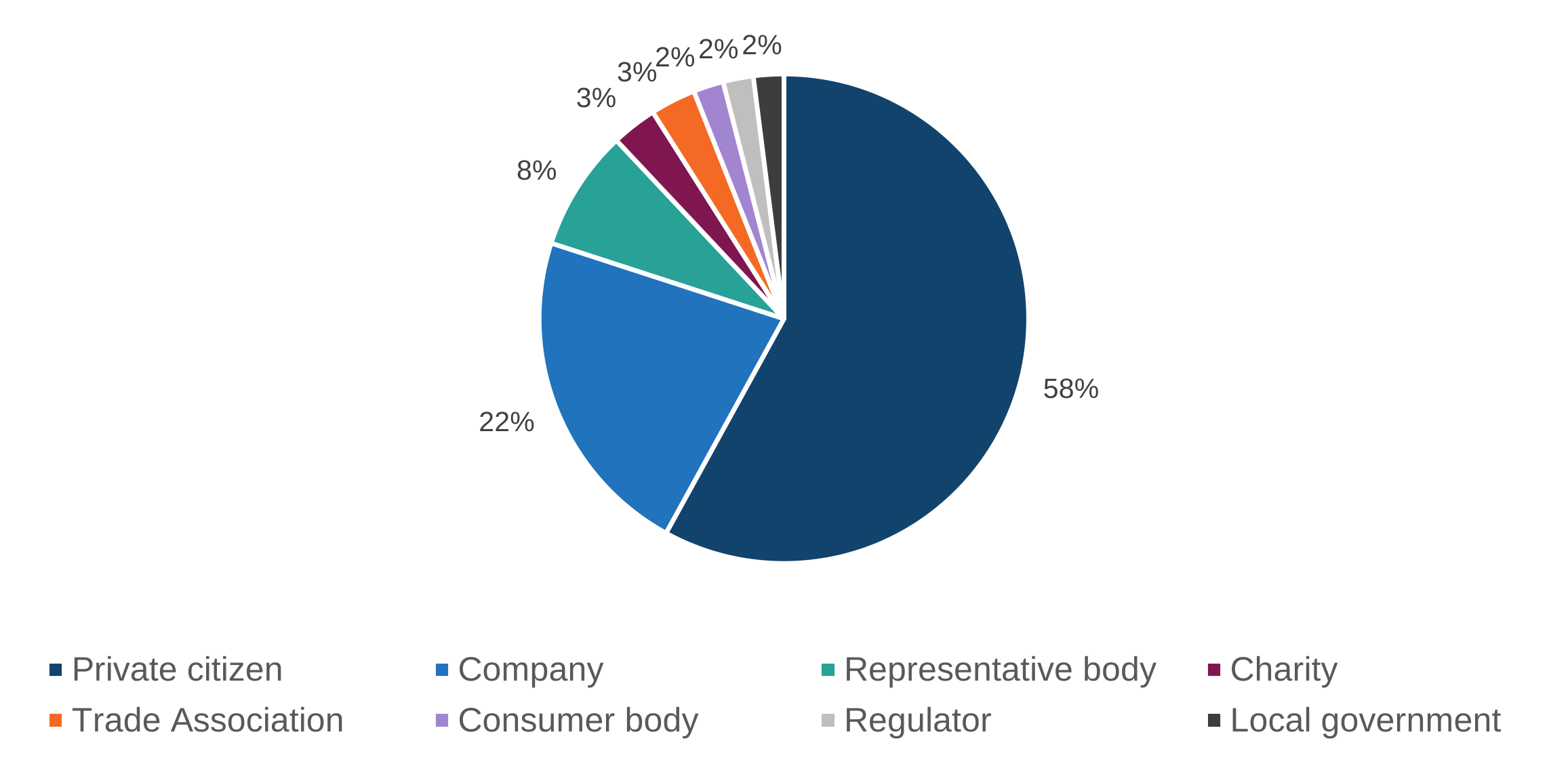
Description of chart: A pie chart giving a percentage breakdown of the types or respondent to the Ofgem review.
| Type of respondent | % |
|---|---|
| Private citizen | 58% |
| Company | 22% |
| Representative body | 8% |
| Charity | 3% |
| Trade Association | 3% |
| Consumer body | 2% |
| Regulator | 2% |
| Local government | 2% |
Legal mandate
Ofgem’s mandate and remit
Relevant questions:
We are seeking views on what Ofgem’s mandate should be.
We are seeking views on whether Ofgem’s duties should be streamlined, and if they should, views on which goals might be prioritised.
Mandate
DESNZ sought views on what Ofgem’s mandate should be. Stakeholders suggested that Ofgem’s mandate should be to protect the interests of existing and future energy consumers, with a particular focus on affordability, fairness, and consumer protection. Stakeholders widely agreed that Ofgem must act independently, prioritise vulnerable customers, and ensure energy is supplied safely, reliably, and at fair prices. The mandate should also include promoting transparency, accountability, and high standards of customer service, while supporting the transition to net zero and enabling innovation.
Many responses called for Ofgem to have stronger investigatory and enforcement powers, to be proactive in addressing market failures and consumer harm, and to ensure that regulatory decisions are made in the public interest, free from undue influence by industry or government.
There was clear acknowledgement of the need for regulatory activity to align with net zero targets, particularly amongst industry responses. For some this was through supporting the development and deployment of innovative technologies that reduce carbon emissions. Suggestions included regulatory incentives to encourage the uptake of technology to improve resilience and efficiency and regulatory requirements for Distribution Network Operators (DNOs) to adopt future-ready technologies. There were also calls for Ofgem to work with the National Energy System Operator (NESO) and industry to streamline the commercialisation of emerging technologies, enabling deployment at scale and increased efficiency and resilience of the system.
Ofgem’s role in strategic planning was also raised, with a strong focus on the need to establish clear roles and responsibilities between Ofgem and other parts of the sector, including government and NESO. Some respondents felt that strategic planning was not a role for Ofgem, and that this should be led by government. In these instances, it was suggested that Ofgem should focus solely on regulation and enforcement rather that setting strategic direction, though it should have a responsibility to ensure that regulatory activity was aligned with net zero. Several respondents noted that there was a role for Ofgem in scrutinising energy companies and ensuring that their operations are in line with net zero.
DESNZ sought views on what Ofgem’s mandate should be for the transition to net zero. Overall, responses were supportive of Ofgem should have a mandate for the transition to net zero and should take an active role in its delivery. However, there was a range of opinions as to what this mandate should be.
Another key area of focus was the protection of consumer interests. Several responses alluded to the need for more general consumer protection regarding financial accountability and scrutiny of suppliers, increased legal protection for consumer and ensuring a high standard of customer service across the sector. With regard to net zero, some responses noted the need to provide protections for vulnerable consumers, particularly regarding any financial impact of the transition. A small number of responses highlighted that Ofgem should have a role in supporting community energy projects.
Streamlining Ofgem’s duties
DESNZ sought views on whether Ofgem’s statutory duties should be streamlined, and which goals should be prioritised. At present, Ofgem has a principal objective to protect the interests of existing and future energy consumers in relation to the supply of gas and electricity. This is supplemented by a range of statutory duties, including to promote competition (where appropriate), meet gas and electricity demand, consider the interests of specific consumer groups (such as vulnerable consumers), further net zero ambitions and promote economic growth.
There was strong support for reforming Ofgem’s duties to make them clearer, more focused, and more responsive to current and future challenges. Many called for Ofgem’s duties to be centred on protecting consumers especially the most vulnerable and to be more consumer-centric overall. There was also a consensus that there is a need to clarify Ofgem’s remit and prioritise its duties to tackle fuel poverty, ensure affordability, and support the transition to net zero.
Respondents supported the proposal to streamline Ofgem’s duties, with many responses noting that Ofgem’s duties have become too complex and that streamlining could lead to more efficient and effective regulation. It was noted that the complexity of Ofgem’s duties had led to a lack of focus, particularly regarding consumer protection. Although largely supportive of streamlining, some responses queried the extent to which this would improve Ofgem’s performance and proposed making improvements to its processes and transparency as alternative approaches. Responses predominantly mentioned consumer protection, economic growth, investment, innovation, net zero, decarbonisation, and environmental and social goals as priorities for inclusion in a revised statutory framework.
While broadly supportive of the proposal to streamline the existing duties, industry and trade associations highlighted the risk of over-simplification of the regulatory framework, noting that the broad spectrum of duties is necessary to address the diverse and complex issues in the energy sector. Consumer protection was the most referenced priority for Ofgem, particularly by private citizens. Specific consumer interests cited included concerns of excessive profits for energy companies, vulnerable consumers, fair pricing, and the efficiency of energy supply. Several respondents called for Ofgem to adopt a more consumer-centric approach, particularly about fair treatment across the energy market. Additionally, some respondents emphasised the need for better public engagement, both with respect of Ofgem’s decision-making and energy company’s performance and behaviour.
Many responses described the critical role of net zero in Ofgem’s regulatory framework, citing the need for Ofgem to ensure that its regulatory decisions were aligned with net zero targets. These responses, from a broad range of stakeholders, also supported the need for a focus on innovation and the integration of low carbon technologies within the energy system. Some respondents raised concerns that prioritising net zero would raise costs in the short term, but several argued that the long-term benefits of achieving net zero would outweigh these costs. These responses often also warned against the inclusion of net zero in Ofgem’s duties, citing concerns about reducing focus on its core responsibilities, such as consumer protection, and about the financial burden of the net zero transition being too high.
Responses emphasised the need to create regulatory stability to attract investment, for both net zero as well as economic growth more widely, noting that regulatory decisions should support long-term economic benefits through attracting investment in the sector.
There were also notable references to the need to balance both net zero and growth goals with consumer protection. Many of the responses recognised this challenge and suggested that clear guidance from government would help with managing these trade-offs. Some noted that Ofgem’s tendency to focus on short-term consumer protection could sometimes undermine long-term growth and investment, and there was a need to focus on this rather than short-term gains. A few responses felt that growth should not be a focus for Ofgem, and that it should remain focused solely on regulation, arguing that the addition of growth only increased the complexity of Ofgem’s duties. Transparency was highlighted as an area of importance for several respondents across industry, charities and local government, particularly regarding how Ofgem balances its duties.
Remit and role
Relevant questions:
Does Ofgem have the right regulatory remit? Have you observed harms caused by uncertainty over Ofgem’s remit, or by gaps in what is currently regulated in the energy sector?
We are seeking views on Ofgem’s role in an energy system that is now, in part, driven by strategic planning following the creation of NESO, in particular, how should regulatory strategy be aligned with strategic energy plans.
We are seeking views on Ofgem’s remit in enforcing consumer law in respect of low carbon technologies, such as heat pumps and solar panels, and what the appropriate boundaries might be.
Regulatory remit
DESNZ sought views on whether Ofgem has the right regulatory remit, what harms are caused by uncertainty over Ofgem’s remit and what gaps currently exist in the regulation of the energy sector. We also asked for views on what Ofgem’s role is in an energy system driven in part by strategic planning following the creation of NESO, particularly regarding strategic energy plans.
Respondents expressed a range of opinions on whether Ofgem has the right regulatory remit. Many highlighted the need for greater transparency and strategic direction, particularly with the emergence of the NESO. There was a call for Ofgem to clarify its role and communicate more proactively to alleviate confusion and build trust among stakeholders. This sentiment was echoed across various respondent groups, who believe that a clearer understanding of Ofgem’s responsibilities would enhance its effectiveness, with legal and representative bodies in particular suggesting clearer definitions and expanded oversight roles.
Some respondents noted that the lack of clear communication from Ofgem has led to a perception of predetermination in its decisions, which undermines trust. For example, concerns were raised about Ofgem’s pre-application project funding process, where there was a perception that acceptance appeared to precede a proven need case. This has led to suspicions of predetermination and calls for greater transparency at earlier stages to build trust.
Consumer protection emerged as a significant theme, with respondents emphasising the need for Ofgem to be more effective in scrutinising energy companies and ensuring fair practices. This was seen as particularly important in the context of evolving energy markets and technologies, where new challenges and opportunities arise.
Respondents stressed that Ofgem must enhance its consumer protection measures to safeguard against unfair practices and ensure that consumers are well-informed about energy pricing and market dynamics. Examples of unfair practices given to the review were a lack of transparency about how prices are set, misleading green claims (greenwashing), poor customer service and complaint handling, and the use of unclear or unfair contract terms such as deemed contracts without explicit consent. Specific examples of consumer harm were provided, such as high energy prices, poor regulation of market entrants, and issues with energy bills and metering. Some respondents highlighted a need for Ofgem to have more power to scrutinise energy companies and enforce consumer protections effectively.
Innovation and modernisation were also key concerns. Respondents called for Ofgem to adopt a clearer mandate to support new technologies and modernise the grid, believing that fostering innovation is crucial for meeting net zero and energy security goals. There was a consensus that Ofgem needs to be more proactive in encouraging the adoption of innovative solutions by industry and providing clear incentives for modernising infrastructure. This would not only improve the efficiency of the energy sector but also help the UK achieve its long-term sustainability targets. Additionally, some respondents pointed out that the current regulatory framework does not adequately support innovation, leading to a reliance on outdated infrastructure and technologies.
Several gaps in regulation were identified, particularly in areas such as cyber security, local energy regulation, and the integration of heat networks. Respondents suggested that Ofgem needs to address these gaps to ensure there is a comprehensive regulatory framework. Consumer groups identified that inconsistent regulatory approaches to different energy sources required attention, noting as an example that additional costs are applied to end consumers through energy resale. The lack of regulation in these areas poses risks to the stability and resilience of the energy sector. For instance, some respondents noted that existing regulations do not sufficiently address the cyber security risks associated with an increasingly digitalised energy sector.
Additionally, concerns were raised by consumer groups about the regulation of TPIs, which some respondents believe to be inadequate, leading to consumer harm.[footnote 1] The regulation of local energy systems was also highlighted as a gap, with respondents pointing out that the current framework does not adequately support the development and integration of distributed generation and heat decarbonisation.
Regulatory approach
Several respondents referenced different types of regulatory regimes which Ofgem could use, including by focusing on outcomes and to drive innovation. Some suggested that Ofgem should adopt a more flexible and adaptive regulatory approach, such as general authorisation or principle-based regulation, rather than relying solely on prescriptive rules. This would allow for greater innovation and responsiveness to emerging technologies and market changes.
Principle-based regulation was particularly highlighted to ensure that regulatory frameworks remain relevant and effective in a rapidly evolving energy landscape. Goal-based regulation was also mentioned to set clear objectives for the energy sector while allowing flexibility in how those objectives are achieved. These approaches were seen as essential for fostering innovation and ensuring that the regulatory environment supports the development of new products, services, and business models.
Several responses referenced the concepts of assurance and insurance, suggesting that Ofgem should consider adopting assurance products to manage the complexity of the energy system and ensure compliance with standards. This approach would involve creating tailored assurance schemes for different types of energy products and services, similar to the assurance models used in other sectors, such as food safety.
Additionally, some respondents proposed that Ofgem should require businesses to have insurance to cover risks and failures, reducing the burden on consumers.[footnote 2] They argued that the current system, whereby consumers effectively act as the insurance policy for business failures, is inadequate. By requiring companies to have insurance, Ofgem could ensure that businesses take greater responsibility for their actions and provide a more robust framework for managing risks. This would also drive continual improvement, as companies with better governance and risk management practices would benefit from lower insurance premiums.
Roles and responsibilities
Some concern was expressed about Ofgem’s role in developing policy and its role in areas beyond the core functions of a regulator. Those respondents argued that this should be the responsibility of the government rather than Ofgem; responses noted that Ofgem should be focused on regulation and enforcement rather than policy development. Examples given included limiting Ofgem’s involvement in policy areas such as the regulation of heat networks and the development of strategic energy plans, with the government taking the lead on these issues. This perspective was shared by several respondents who felt that Ofgem’s primary focus should be on ensuring compliance with existing regulations and protecting consumer interests.
Collaboration and coordination with other regulatory bodies was highlighted in many responses as essential for effective energy regulation. Respondents stated that Ofgem should work more closely with other organisations to ensure a cohesive approach to regulation, these included consumer bodies and charities (such as Which?, Citizens Advice, and National Energy Action) to ensure consumer interests and protections are prioritised; certification and standards bodies (like MCS, TrustMark, and Trading Standards) to uphold quality and safety in low-carbon technology installations; and parliamentary committees and government departments for robust scrutiny, accountability, and strategic alignment. This would involve sharing information, aligning strategies, and coordinating efforts to address common challenges. Improved collaboration would enhance the overall regulatory environment and ensure that all stakeholders are working towards common goals. Some respondents suggested that better coordination between Ofgem and other regulatory bodies could help address the regulatory gaps and improve the overall effectiveness of energy regulation.
Low Carbon Technologies
Respondents expressed a range of opinions on Ofgem’s role in enforcing consumer law for low carbon technologies. Many emphasised the need for robust consumer protection, particularly in the transition to net zero, to prevent financial, emotional, and physical harm due to high upfront costs and uncertain returns. Consumer and advocacy groups voiced particularly strong concerns on this theme.
There was a consensus that consumer protection is crucial for the successful adoption of low carbon technologies. Opinions varied on the extent and nature of Ofgem’s oversight. Some respondents advocated for a strong regulatory role for Ofgem, while others suggested a more limited or collaborative approach. Private citizens expressed particularly strong views around the need for consumer protection and regulatory oversight, with a number citing experiences of poor installation and querying the suitability of certain technologies for specific consumer groups. There was, however, some scepticism among this group that this should sit within Ofgem’s remit.
It was noted that the effectiveness of low carbon technologies is often dependent on the quality of installation, highlighting the need for stringent monitoring and enforcement of installation standards. Suggestions included extending mandatory certification to all installers in the green home improvement sector to improve standards and consumer confidence. Energy suppliers especially highlighted the need to ensure regulatory consistency across the sector to avoid licensed energy suppliers being placed at a disadvantage compared to unregulated installers.
Several respondents suggested that Ofgem should work closely with existing certification schemes like Microgeneration Certification Scheme (MCS) and TrustMark, as well as local authority trading standards, to ensure high standards and consumer confidence. Concerns were raised about potential regulatory overlap and the need for clear demarcation of responsibilities between Ofgem and other bodies like the Competition and Markets Authority (CMA) and Trading Standards. It was suggested by some that Ofgem should provide oversight, coordination, and enforcement in support of certification schemes and local authority trading standards.
However, some organisations preferred a single enforcement body to avoid replicating powers and creating complexity for consumers. Where respondents indicated that they do not believe Ofgem should play a role in enforcing consumer law for low carbon technologies, they stated existing bodies, such as local authority trading standards and certification schemes like MCS and TrustMark, already have the necessary frameworks and expertise to ensure high standards and protect consumers.
Some respondents suggested that the CMA should take on a more prominent role in enforcing consumer law in this area. They highlighted the CMA’s existing powers as well as their experience in dealing with consumer protection issues and felt that it would be better equipped to handle the complexities of the low carbon technology market. There were also calls for better coordination between Ofgem and the CMA to ensure a cohesive approach to regulation and avoid duplication of efforts.
Additionally, a few respondents proposed the creation of a new, dedicated regulatory body specifically for low carbon technologies. This body would oversee the installation and maintenance of technologies such as heat pumps and solar panels, ensuring that consumers are protected from poor practices and substandard installations. They argued that a specialised regulator would be more effective in addressing the unique challenges of the low carbon technology sector.
There was also a clear differentiation between the need to regulate the energy activities related to low carbon technologies, versus the actual hardware and installation. Some respondents focused on the need for Ofgem to regulate the energy activities associated with low carbon technologies, such as ensuring fair pricing, consumer protection, and market dynamics. They emphasised that Ofgem’s role should include overseeing the broader energy market and ensuring that consumers are not subject to unfair practices by energy suppliers. This includes monitoring energy pricing, scrutinising market entrants, and ensuring that consumers are well-informed about their rights and the services they receive.
There were, however, several responses that highlighted the importance of regulating the hardware and installation of low carbon technologies. They argued that the effectiveness of technologies like heat pumps and solar panels is heavily dependent on the quality of installation. Therefore, stringent monitoring and enforcement of installation standards are crucial to ensure that consumers receive high-quality installations that perform as expected. These respondents suggested that certification schemes like MCS and TrustMark should play a significant role in regulating the installation process and ensuring that all installers meet high standards.
Some respondents mentioned assurance schemes for low carbon technology and energy services. They suggested that Ofgem should consider adopting assurance products to manage the complexity of this market and ensure compliance with standards. Some respondents mentioned the concept of a consumer duty for regulated parties, which is addressed in detail later in this summary.
Transparency and reporting
Relevant questions:
We are seeking views on Ofgem making more detailed information available about energy company performance and behaviour, and how this might assist other licensees and consumers.
We are inviting views on Ofgem’s annual report and the KPIs it reports against, and how to strengthen Parliamentary scrutiny of Ofgem’s performance.
DESNZ sought views on Ofgem making more detailed information available about energy company performance and behaviour, and how this might assist other licensees and consumers. We also asked for feedback on Ofgem’s annual report, its key performance indicators (KPIs), and how parliamentary scrutiny of its performance could be strengthened.
There was also a strong focus on the need for transparency and accountability across Ofgem’s activity. This ranged from calls for greater transparency in Ofgem’s decision-making, particularly in the context of its existing statutory duties, and more rigorous scrutiny of proposals, including adherence to Treasury Green Book guidance, greater transparency in energy pricing and ensuring that consumers are able to make informed decisions.
Energy company performance
To improve scrutiny of companies in the energy sector, responses to the call for evidence highlighted several key areas for consideration. Responses noted that detailed public reporting of supplier behaviour can encourage better practices within the industry and provide consumers with more information to help them make informed choices. Respondents felt that these measures would help increase consumer confidence, with private citizens in particular highlighting the need for enhanced transparency and accountability to build greater trust with consumers and ensure that regulatory decisions are made in the best interests of the public.
Some respondents highlighted the need for Ofgem to seek feedback on regulatory performance to help them improve. Some respondents suggested including data on standing charges and supplier tariff structures in Ofgem’s reporting. Respondents also highlighted that Ofgem should actively share data and collaborate with other regulators, government departments, local authorities, industry bodies, and the wider research community. It was suggested this would improve regulatory effectiveness, transparency, and consumer protection, especially as the energy sector becomes more complex and interconnected.
Some responses suggested that KPIs could be included in consumer bills to enhance transparency and help consumers understand the progress being made. Additionally, it was suggested there should be greater transparency on company payments, supplier performance, and standing charges. Some responses also proposed that detailed reports on National Grid performance and company accounts should be published, alongside more data on enforcement actions and consumer treatment by suppliers.
Ofgem’s accountability and Key Performance Indicators (KPIs)
Many respondents remarked on the need for better parliamentary scrutiny supported by better reporting from Ofgem. Several responses referred to Ofgem’s Annual Report and Accounts (ARA), with the most consistent point raised being the need for better transparency on many aspects of Ofgem’s work. As Ofgem is directly accountable to Parliament, regular parliamentary sessions to question Ofgem’s performance against KPIs to boost accountability and transparency were a key theme of many responses.
Many respondents stated the need for clearer key performance indicators (KPIs) to track progress towards net zero targets and consumer-focused outcomes, including consumer satisfaction and compensation payments. There were two main themes, the KPIs used by Ofgem to monitor their performance and those Ofgem uses to track energy companies’ performance.
Respondents recommended that Ofgem’s KPIs should be more transparent, regionally detailed, and outcome-focused, with regular public reporting and benchmarking across suppliers. They suggested including region-specific metrics (such as energy costs, grid constraints, and fuel poverty rates), tracking progress towards net zero, and measuring consumer outcomes like compensation speed and customer satisfaction. There was a strong call for KPIs to be regularly reviewed and adapted to reflect changing market conditions and consumer needs, with greater parliamentary scrutiny and stakeholder consultation to ensure local priorities are addressed. Additionally, respondents wanted KPIs to focus on real-world impacts for consumers—especially the most vulnerable—rather than just process compliance, and to be used as a tool for driving accountability, service improvement, and fairer outcomes across the energy sector.
Stakeholders recommended that Ofgem should require energy companies to report on KPIs that are more transparent, regionally detailed, and outcome focused. They suggest including metrics such as customer satisfaction, complaint resolution rates, speed of compensation payments, and progress towards net zero, as well as region-specific data on energy costs and service quality. There is a strong call for Ofgem to benchmark performance across suppliers, publish comparative data, and ensure KPIs reflect the experiences of vulnerable and rural consumers. Additionally, respondents want KPIs to be regularly reviewed and adapted to changing market conditions, with greater public and parliamentary scrutiny to ensure that these indicators drive real improvements in service, accountability, and consumer outcomes.
Enhancing parliamentary scrutiny and oversight of Ofgem’s performance featured in many of the responses. Increasing scrutiny of Ofgem’s annual report by parliamentary committees and ensuring regular reviews and structured oversight to provide consistent accountability was a common theme Stakeholders recommended including metrics such as customer satisfaction, complaint resolution rates, compensation speed, and progress towards net zero, as well as region-specific data on costs and service quality when considering supplier performance. Stakeholders suggested benchmarking across suppliers, regular review and adaptation of KPIs, and greater public and parliamentary scrutiny to ensure these indicators drive real improvements in service. It was suggested this information should be included in Ofgem’s Annual Report and Accounts to inform stakeholders including different consumer groups and investors, as well as Parliament.
Some respondents commented on the frequency of parliamentary scrutiny sessions, with responses suggesting quarterly reviews of Ofgem by Parliament. These would be supported by quarterly written reports to improve scrutiny of Ofgem and the Energy Ombudsman, to better protect customers. Providing more detailed information on enforcement actions and supplier behaviour was also suggested to achieve this goal.
Responses showed the need to improve the scrutiny, transparency, and accountability of Ofgem and the companies in the energy sector, benefiting consumers and supporting the transition to a more sustainable energy system.
Skills and capability
Relevant questions:
We are seeking views on the capabilities Ofgem needs to be an effective regulator in a more digital, fast-moving sector.
DESNZ sought views on the capabilities that Ofgem needs to be an effective regulator in a more digital, fast moving energy sector. Several respondents highlighted the need for improving the financial and business skills of Ofgem staff. They suggested Ofgem should upskill staff in financial analysis, business management, and project management to better scrutinise company accounts, assess financial resilience, and regulate complex market activities. Some recommended learning from the banking sector’s approach to stress testing and senior appointment scrutiny, and called for more staff with expertise in economics, engineering, and fiscal analysis to ensure effective oversight and decision-making in a rapidly evolving energy market. Many respondents felt that Ofgem should ensure it has the financial skills to anticipate risks and put early controls in place. This would help Ofgem manage financial stability in the energy market and protect consumers.
There was also a strong call for Ofgem to improve its technical and digital skills, including cybersecurity, data analysis, AI, and digital technologies, to improve its understanding and make better use of technology to improve its regulatory processes for both new and existing markets. Consumer groups especially noted the growing importance of AI in the energy sector, with calls for Ofgem to understand and use these technologies for better consumer outcomes.
Respondents suggested that Ofgem needs to keep pace with industry changes and have the technical expertise to effectively regulate new products and delivery methods. Respondents believed that improving these skills would assist Ofgem in responding to the risks and opportunities associated with new technologies.
Many responses suggested that Ofgem should more regularly seek to recruit staff with direct experience from the energy sector and other relevant industries. This would strengthen Ofgem’s understanding of the real-world effects of regulatory decisions and make better rules. Many believed that robust industry knowledge is important for Ofgem to handle the complexities of the energy market, and to make practical and effective regulations. By having staff with firsthand industry experience, Ofgem could make sure its rules are based on a deep understanding of the sector.
Improving engagement with consumers and understanding their needs was highlighted as crucial for Ofgem to make decisions that benefit consumers. Responses stressed the importance of listening to consumer feedback and making sure regulatory decisions reflect consumer interests. It was suggested that improved consumer engagement would help Ofgem to identify and fix consumer concerns early and build trust. This would include developing better ways to communicate and get feedback from consumers. Of note, private citizens highlighted the need for an improved online presence and interactive communication systems to better serve consumers.
High staff turnover and the need for better retention strategies were frequently mentioned by industry respondents. Respondents suggested this could be tackled by offering competitive pay and incentives to attract and keep skilled staff. They also highlighted the importance of building institutional memory and reducing staff churn to keep regulatory effectiveness. By retaining experienced staff, respondents believed Ofgem would ensure continuity and stability in its regulatory approach, which is important for managing long-term projects. Competitive pay and career development opportunities would help attract and retain top talent.
Developing a deeper understanding of regional differences and sector-specific challenges was seen as important for tailored regulatory interventions. Responses highlighted the need for Ofgem to understand regional energy dynamics and to make region-specific rules. This would enable Ofgem to address the unique challenges faced by different regions and ensure that rules are appropriate and effective across the country. Understanding regional variations in energy supply and demand, as well as local economic and social factors, is essential for making targeted and impactful rules. Consumer groups emphasised the need for a good understanding regional challenges to ensure fair regulatory interventions.
Consumer organisations highlighted the importance of Ofgem having strong leadership and independent decision-making capabilities. Responses stressed the need for Ofgem to have confident and independent leadership to support consumers effectively, noting that strong leadership is essential for Ofgem to navigate the complexities of the energy market.
Growth, investment and innovation
Relevant questions:
We are seeking views on the role Ofgem should play to support growth and the government’s industrial strategy, so that investment and innovation reduce energy prices.
What can Ofgem do to increase investment and innovation in the sector?
What might Ofgem do to support an environment of falling energy prices?
What might Ofgem do differently to support higher growth in the energy sector and wider economy?
DESNZ asked several questions pertaining to Ofgem’s role in growth and the government’s Industrial Strategy, including what Ofgem can do to reduce energy prices, increase investment and innovation, and support growth in the energy sector and wider economy. We also sought views in the efficiency of Ofgem’s regulatory process and the extent to which they are user-friendly.
Growth, investment and innovation
There were mixed responses as to what role Ofgem should play in supporting growth, innovation and the government’s Industrial Strategy. A significant number of respondents believed that furthering growth and investment should not be the role of the regulator and that it was the responsibility of the government. Others, however, stated that regulators must play an important role in achieving these wider government objectives. These respondents felt that Ofgem need to take a more holistic approach to ensure that regulation aligns with wider government objectives, particularly those associated with growth and environmental considerations. Some responses said that, as an independent regulator, Ofgem should be holding the government to account and providing challenge over the delivery of government objectives. Respondents felt that it is important for the regulator to consider all views when doing this, and not just those that the government wants to hear.
In relation to growth more specifically, respondents felt that it was important to focus on ensuring that businesses are able to speedily obtain network connections. Responses stressed the importance of network infrastructure, along with the need to ensure its resilience. Other respondents raised the need to encourage the adoption of renewables and adoption of ‘green’ technology, including ensuring that people are equipped with the necessary skills.
Along with the increased use of renewable energy provision, respondents felt that reducing energy prices was important to encourage growth. There were mixed views on how this could be achieved. Additionally, to promote less reliance on international energy markets, some respondents felt that increased competition in energy supply would be beneficial whilst others felt that increased competition simply resulted in a race to the bottom due to corner-cutting and a lack of consumer focus.
Several responses focussed on the need to adopt a long-term approach to investment and the need for the regulator to give clear signals about long-term strategy and needs. Such signals could include the longer-term infrastructure needs that would facilitate faster and cheaper grid connections.
Many responses commented on the impact of regulation on businesses. It was suggested that stable and predictable regulation is needed to foster confidence with businesses, avoiding ‘red tape’ and unnecessary barriers. Several respondents highlighted the benefits of having outcome-based regulation rather than process based. The need for consistent and rapid decision-making was commonly mentioned, and the need for decisions and enforcement to be consistent across all players in any particular field was also highlighted. Several responses raised concerns over the energy price cap, stating that it creates uncertainty over return on investment and requires reform.
The increased risk associated with innovative ideas was raised in several responses, noting that overregulation should not be used as a mechanism to remove all risk. This would necessitate provision of adequate consumer protection to ensure uptake of new innovative products and services.
A number of respondents commented on the need to maintain funding for the research and development of innovative products and services. Increased digitalisation, and access to data, could play an important role in such developments. A few responses highlighted that innovation should not be solely considered as a way to reduce costs, as it can also result in wider benefits which should also be considered.
Energy prices
Consumers and consumer groups understandably expressed concerns over energy pricing. However, across the full range of respondents, there was no common view regarding Ofgem’s role in reducing energy prices, with some respondents calling for less emphasis on renewable energy and others calling for more. Others felt that the current price cap was to blame for current energy prices, calling for it to be reformed and an increase in competition in the market.
Several responses highlighted the need for more oversight of suppliers by Ofgem, with greater scrutiny of the pricing claims that they make and the tariffs offered. The need for increased consumer protection was also mentioned by some, along with reducing standing charges. This was notably a strong theme raised by consumers and consumer groups.
The importance of investment in network infrastructure and increasing grid capacity was also highlighted by some respondents, with calls for increased clarity on long term investment needs.
Regulatory processes and effectiveness
Relevant questions:
Are Ofgem’s regulatory processes sufficiently fast, effective and user friendly?
The ‘better outcomes for consumers and more accountability’ section therefore seeks views around increasing accountability and consumer standards in the sector.
Regulatory processes
A substantial majority of views on Ofgem’s regulatory processes stated that they are not sufficiently fast, effective or user friendly. A few responses did, however, raise concerns that increasing the speed of decision-making must not be at the expense of the quality of the decision that are made and how well outcomes are considered in the decision-making process.
Additional comments focused on improvements to codes and the regulatory framework, with a preference for Ofgem to adopt a more risk-based regulatory framework. Some respondents mentioned Ofgem providing information on interactions with other bodies in the energy sector.
Better outcomes for consumers
DESNZ asked for views on how accountability and consumer standards could be increased in the energy sector. Views were mixed on the best way of achieving good outcomes, though many respondents emphasised the need for increased accountability and transparency, Specific suggestions for improving standards included:
- implementing robust mechanisms to ensure fair pricing and equitable service delivery, especially for vulnerable consumers
- establishing minimum service standards for all market participants, including TPIs and low-carbon technology installers
- requiring suppliers to report detailed metrics on customer service, complaint resolution, pricing fairness, with regional data to highlight disparities
- increased competition, though one consumer organisation noted that if consumers were to have confidence in the switching process, then it was important to ensure that customers were protected if their energy supplier went through the insolvency process
- appropriately calibrated incentive targets and the use of an appropriate balance of opportunity to earn rewards and less of a focus on simply avoiding penalties
- focusing compliance and enforcement efforts on the worst performing firms and those causing the biggest consumer harms
- simplifying the supply licence and by making the requirements easier to navigate
- encouraging suppliers to exceeded minimum customer service standards by rewarding them with public recognition or financial incentives
- enhanced customer feedback mechanisms
Some industry respondents believed that overly prescriptive regulations prevented suppliers from achieving better outcomes for their customers. Others stated that licensees should simply need to comply with the Standards of Conduct and treat customers fairly. They often believed the rest of the licence conditions were superfluous providing that the Standards of Conduct were complied with.
Another view was that Ofgem should have the necessary skill set at both board level and with their advisors, so they were well-informed on commercial and financial issues. It was also suggested that the fit and proper test could be bolstered to prevent bad actors from remaining in the sector.
Some respondents noted that, while enhanced enforcement powers could be a valuable tool, it was essential to recognise that a well-functioning market should not rely on regulatory enforcement as the primary mechanism for consumer protection. Instead, the focus should be on proactive market interventions that prevented harm before enforcement became necessary.
Improving executive accountability and consumer standards
Relevant questions:
We are seeking views on how Ofgem can ensure consumer standards are better represented – for example with reference to other business models within the sector, such as through potentially adopting a ‘consumer duty’ and ‘Senior Management Regime’.
DESNZ sought views on how consumer standards could be better represented through other business models such as a ‘Senior Management Regime’ or ‘Consumer Duty’. A Senior Management Regime would enable Ofgem to hold executives to account for failures. At present, no mechanism exists for this and there is little incentive to act responsibly with the interests of consumers in mind. A ‘Consumer Duty’, similar to that of the FCA, would require regulated firms to deliver good outcomes for consumers, going beyond a mere requirement to demonstrate that the right process and frameworks are in place.
Senior management regime
Most respondents expressed support for introducing a Senior Management Regime because they believed it would ensure that senior executives were directly accountable for their decisions and actions. Those in favour hoped it would promote a culture of responsibility within the sector and lead to better consumer protection. They also believed it would lead to ethical decision making at the highest levels of management and should help in identifying and addressing issues more effectively rather than solely chasing profits. Private citizens were strongly in favour of increased accountability within the sector with some responses referring to supplier insolvencies and how the cost of this falls on to energy bills and taxpayers.
One suggestion was that Ofgem should have the authority to impose penalties on senior managers for non-compliance and that this would enhance consumer protection and ensure better outcomes for consumers. An alternative suggestion was to encourage cooperative regulation by ensuring market participants understood and upheld their obligations.
Respondents that were against a Senior Management Regime approach highlighted various concerns about Ofgem’s role, effectiveness, proactiveness, transparency, and its ability to protect consumers and enforce regulations. One supplier argued that implementing a Senior Management Regime, along with enhanced fines and investigatory powers, might entrench existing problems with Ofgem’s current approach rather than addressing the underlying causes. They believed that it would not achieve the desired results for consumers and could potentially stifle innovation and reduce market investability.
Responses also noted that – at time of the CfE publication - the Financial Conduct Authority (FCA) was reviewing their Senior Management Regime because, whilst it had improved standards, it was seen as too costly and administratively burdensome. It was suggested that should a senior manager regime be implemented, unnecessary regulatory prescription would need to be removed. A small number of respondents were concerned about the cost of implementing the regime and several respondents believed that Ofgem’s Fit and Proper test was sufficient. One response highlighted that different approaches had been tried over the years and that a review of those would be beneficial.
Consumer duty
Opinions were split regarding a proposed Consumer Duty, though more were in favour than against. Positive responses cited potential benefits such as greater accountability, improved consumer outcomes, and driving a ‘consumer-first’ culture. Alignment with FCA standards was commonly mentioned, with several responses noting that accountability frameworks like the Consumer Duty improve outcomes for consumers.
Of those that did not support the Consumer Duty approach, reasons centred on concerns about over-regulation (particularly for smaller suppliers), additional or disproportionate regulatory burden, implementation challenges and the need for proper enforcement mechanisms to achieve the desired outcomes.
Consumer bodies and charities were the strongest supporters of a Consumer Duty. There was a more mixed response from private citizens and trade associations, who were supportive of the drive for enhanced consumer protection but noted concerns about enforcement and the effectiveness of such a concept. Industry respondents were the most sceptical on this issue, though some favoured a move towards more outcome focused regulation, with commonly raised concerns about implementation given the review of the FCA’s regime and effectiveness, as well as noting the duplication with the existing standards of conduct.
Supplier failure
Relevant questions:
We are seeking views on how Ofgem might be better equipped to protect consumer interests in cases of (predicted or actual) supplier insolvency and/or financial distress.
Many companies emphasised the need for better financial oversight to prevent supplier insolvency. They highlighted the importance of robust financial checks and balances to ensure that suppliers are financially stable and capable of managing consumer credit balances effectively. It was suggested that Ofgem should develop stronger financial skills and capabilities to oversee the financial health of energy suppliers.
Companies generally supported the idea of enhanced regulatory measures to prevent supplier insolvency. They recommended that Ofgem adopt a more proactive approach in monitoring the financial health of suppliers and take pre-emptive actions to address potential issues before they lead to insolvency. There was also a call for more stringent entry requirements for new suppliers to ensure they have the necessary financial resilience.
Some companies expressed concerns about the impact of supplier insolvency on market competition. They argued that frequent insolvencies could undermine consumer confidence and disrupt the market. To mitigate this, it was suggested that Ofgem should implement measures to ensure a level playing field and support the entry of financially robust suppliers.
There was an emphasis on the need for stronger consumer protection measures in the event of supplier insolvency. It was recommended that Ofgem should have clear protocols in place to manage the transition of customers from insolvent suppliers to new ones, ensuring minimal disruption and protecting consumer credit balances. There was also a call for better communication with consumers during such transitions to maintain trust and confidence.
Private citizens expressed significant frustration with the large number of failures of energy suppliers during the energy crisis. They highlighted personal experiences of being affected by supplier insolvency, including issues with billing, credit balances, and service continuity. Many individuals called for Ofgem to take stronger actions to prevent supplier failures and protect consumers from the associated inconveniences and financial losses. There was a feeling that Ofgem’s focus in regard to supplier insolvency should be to protect consumers from potential harm, rather than holding companies up to prevent them from failing.
These responses also emphasised the need for greater transparency in how Ofgem monitors and regulates the financial health of energy suppliers. They expressed concerns about the lack of information available to consumers regarding the financial stability of their suppliers. Respondents suggested that Ofgem should provide more detailed and accessible information about the financial health of suppliers to help consumers make informed decisions.
Many respondents supported the idea of enhanced consumer protections in the event of supplier insolvency. One suggestion was that Ofgem should implement automatic compensation mechanisms for consumers affected by supplier failures. It was also noted that there should be better communication and support for consumers during the transition to new suppliers, including clear guidance on how to manage credit balances and billing issues.
Some responses questioned the effectiveness of Ofgem’s current regulatory framework in preventing supplier insolvency. arguing that Ofgem needs to be more proactive and stringent in its oversight of energy suppliers. There were suggestions for Ofgem to adopt a more risk-based approach to regulation, focusing on early identification and mitigation of financial risks within the sector.
There were several suggestions made regarding improvements to the process around supplier insolvency. These included:
- mandatory stress testing and regular financial audits to ensure suppliers have adequate capital reserves to withstand market volatility
- raising the barriers to entry to prevent financially unstable companies from entering the market, reducing the risk of insolvency
- a permanent ban on acquisition-only tariffs: Ensure all customers, not just new ones, can access the best energy prices
- a strengthened Supplier of Last Resort (SoLR) process. Enhancing the SoLR process to better protect consumers, including the ability to take regulatory and enforcement action against insolvent companies and intervene with third parties
- ensuring administrators of failed suppliers treat consumers fairly, including those in arrears, by requiring debt collection firms to follow Ofgem licence conditions and FCA rules. Requiring clear communication with consumers during supplier insolvencies to provide clear guidance and support
- systemic improvements, such as addressing the moral hazard like avoiding passing the costs of supplier failures onto remaining suppliers and their customers. Instead, Ofgem should focus on ensuring the financial health of the market. In addition, learning from past failures such as the 2021/22 supplier failures to understand the impact of over-simplifying market arrangements and the importance of maintaining robust financial oversight
- early intervention supported by equipping Ofgem with the authority to intervene before a supplier reaches financial distress, using data from organisations like the Energy Ombudsman to identify early signs of financial distress
- granting Ofgem powers like those of the CMA to take more decisive action in cases of supplier insolvency
Investigatory and enforcement powers
Relevant questions:
We are seeking views on Ofgem having enhanced investigatory powers.
We are seeking views on Ofgem being granted enhanced enforcement powers similar to the CMA.
We are seeking views on whether the scope and scale of Ofgem’s current penalties are set at the right level.
We are seeking views on the current system of a maximum fine of 10% and whether it should change.
Enhanced investigatory and enforcement powers
DESNZ sought views on awarding Ofgem enhanced investigatory powers and direct enforcement powers, like that of the Competition and Markets Authority (CMA).
Many respondents believed Ofgem should be equipped with stronger and more comprehensive powers to effectively regulate the energy market and protect consumers. They believed it would enable better monitoring and enforcement of regulations. One suggestion was that Ofgem should have the power to disqualify directors when there was repeat non-compliance.
A few respondents said it was important to give Ofgem the ability to tackle minor or repeat instances of non-compliance as these could have an impact on consumers, particularly the vulnerable.
Another view was that granting Ofgem consistent powers to investigate and enforce would make it easier for consumers to pursue action against their supplier for poor practice because the overall remit of what Ofgem could do would be more understandable from the consumer perspective.
However, many respondents were sceptical about the effectiveness of giving Ofgem more powers, arguing that the current powers were not being deployed properly. One suggestion was that Ofgem should change to a risk-based approach, with stronger engagement with licensees about areas of concern. Others noted that it was important that the powers were proportionate to avoid placing unnecessary burden on industry.
Some respondents questioned the value in Ofgem having similar powers to the CMA on the basis that the CMA is already able to act in the energy market. Another alternative idea was to improve regulatory outcomes and efficiency by shifting the burden of compliance to the licensees (as it does with the Guaranteed Standards of Service), which would also ensure that consumers were swiftly recompensed for any failures. However, there was caution that increasing the regulatory burden would eventually result in higher energy bills.
Approach to penalties and compliance orders
DESNZ sought views on the scope of Ofgem’s current penalties and whether they are set at the right level, including whether the current maximum fine that Ofgem can levy of 10% of company turnover is a sufficient number or should change. We also asked how Ofgem could be better equipped to deal with emerging challenges, including whether Ofgem should be able to create new rules in response to these challenges.
Penalties to deter bad practice
Several respondents made suggestions regarding penalties to deter bad practice. These included:
- licence revocation, on the basis that that they did not believe the system of fines appeared to be successful in changing company behaviour
- reputational sanctions: for example, individuals or organisations could be publicly identified for wrongdoing, with the intent of invoking social disapproval, remorse, or condemnation. It operates outside traditional legal penalties and relies on the power of public exposure to deter misconduct
- tiered penalties, with higher penalties for systemic or repeat failures and proportionate penalties for smaller companies that reflected the detriment to consumers, along with fines for executives to incentivise ethical leadership
- using an alternative metric instead of turnover to determine the level at which penalties are set
Some cautioned against imposing a higher cap or ‘auto-penalties’ because they believed it would deter investment into the sector which would lead to higher consumer bills. Alternatively, it was proposed that fines should be designed carefully to ensure market participants were afforded the right level of protection and appeal rights, so they could challenge any decisions that they considered had been made incorrectly. This was seen as important because the main avenue of challenge is judicial review, which has a high bar both in terms of cost and process and may not be appropriate for lower scale infringements. One response stated that if Ofgem’s remit increased then granting them the ability to impose fixed penalties would be essential, providing the breaches were minor and clear cut.
Some respondents suggested that penalties should be directed towards consumer support programs and community energy projects. Others recommended that the funds from penalties should be used to support energy efficiency programmes and financial assistance schemes.[footnote 3]
Several respondents were concerned that the cost of penalties were passed on to consumers rather than being absorbed by the companies themselves. It was suggested that Ofgem needs to have the ability to impose penalties on unlicensed entities and have expanded enforcement powers.
Penalty levels
Many respondents felt that the current penalties weren’t right, with views split between being too high or too low and ineffective in deterring poor practices. Some suggested that penalties should be more proportionate to the harm caused and should act as a deterrent to future breaches.
Many respondents believed that the current 10% fine was an insufficient deterrent and should be increased. Suggestions for new fine percentages ranged from 25% to 100% of turnover. Some respondents suggested a sliding scale or ratchet system where the fine percentage increased with the severity of the breach or the size of the company.
Several responses highlighted the need for penalties to better protect consumers, especially vulnerable groups such as rural and low-income households. Understandably, consumers were overwhelmingly in favour of increased penalties for enforcing against and deterring bad practice within the market as they felt that energy companies take advantage of consumers in the market. One suggestion specified that penalties needed to be higher even for minor breaches because these could have a significant impact on individuals.
Some respondents felt that the 10% fine was already a substantial penalty that acted as a strong deterrent against non-compliance. They argued that increasing the fine might not necessarily lead to better compliance but could have unintended consequences such as deterring investment in the sector. There were concerns about unintended consequences that could increase costs for consumers and stifle competition and innovation. Some believed that the current fine level struck a balance between deterrence and avoiding excessive regulatory burden.
Quasi-automatic fines
Several respondents agreed that Ofgem needed the ability to impose small fines to improve the speed with which it could tackle low level non-compliance. A range of reasons were given for support, including:
- companies have the right to appeal if they felt the penalty imposed was unjustified
- providing Ofgem with the ability to apply penalties more quickly would better equip it to tackle low level non-compliance
However, there were numerous objections to this approach. Several respondents believed a thorough investigation should always be undertaken because of the reputational damage to firms that would be caused.
Some respondents believed that the current restrictions on imposing a fine provided the fundamental right of defence. If Ofgem’s decision is to not pursue a breach via an investigation, it indicated low consumer harm or an easily rectifiable issue. Introducing a lower threshold for investigations could lead to more penalties but less rigorous processes; this could result in less robust decisions that are more susceptible to challenges and could undermine confidence in the regulatory landscape. Another concern was that giving Ofgem the power to impose penalties without a full investigation would impact the businesses’ investability, as well as reduce the likelihood that licensees would self-report breaches. They raised concerns that this could create an overly cautious industry, stifle innovation and hinder the development of new technologies and business models that are necessary for achieving net zero.
Other responses cited the following reasons for disagreeing with the proposal of quasi-automatic fines:
- Ofgem’s interview process incentivises the rapid delivery of enforcement cases for career advancement and might lead to a shift towards prioritising low-level cases over more complex issues, which could negatively impact consumers
- the perception that Ofgem spends too much time looking into issues that had little impact on consumers and that allowing Ofgem to impose fines for minor infractions would ensure that Ofgem continued to focus on low impact issues instead of serious breaches. They felt that Ofgem should be willing to remove licences for serious breaches
- low-level non-compliance could often be symptomatic of wider compliance failings, and that there is a risk that dealing with such issues in a less impactful way could be counterproductive
- Ofgem’s perceived less rigorous approach to low level non-compliance had led some companies to take a risk on avoiding being penalised
Concerns were raised about Ofgem’s investigatory processes and said that overly time consuming and complex investigations would deter the regulator from challenging simple breaches. That in turn would lead to a culture of non-compliance with errant company behaviour going unchecked. Equally investigations that had too short deadlines would hamper the ability of the regulator to get to the bottom of the issue.
One view was that protracted investigations delayed consumers receiving redress. In contrast, another response stated that protracted investigations didn’t change the overall outcome in a way that benefited consumers and was a disincentive to self-report. It was suggested that investigations could be sped up if Ofgem restricted the investigation to a few licence conditions instead of including the standard of conduct requirements too.
Provisional Orders (PO)/Final Orders (FO)
There were a handful of views expressed on POs and FOs. One concern was that increasing the timescales for POs and FOs would allow Ofgem to respond slowly while companies were kept to tight timescales. Some responses suggested that Ofgem should use this power more frequently and prevent companies from recruiting new customers until the issue under investigation had been fixed. A few respondents were supportive of increasing the timescales in some cases to enable Ofgem to do a thorough investigation.
Many respondents believed Ofgem should be equipped with stronger and more comprehensive powers to effectively regulate the energy market and protect consumers. They believed it would enable better monitoring and enforcement of regulations. One suggestion was that Ofgem should have the power to disqualify directors when there was repeat non-compliance.
A few respondents said it was important to give Ofgem the ability to tackle minor or repeat instances of non-compliance as these could have an impact on consumers, particularly the vulnerable.
Another view was that granting Ofgem consistent powers to investigate and enforce would make it easier for consumers to pursue action against their supplier for poor practice because the overall remit of what Ofgem could do would be more understandable from the consumer perspective.
However, many respondents were sceptical about the effectiveness of giving Ofgem more powers, arguing that the current powers were not being deployed properly. One suggestion was that Ofgem should change to a risk-based approach, with stronger engagement with licensees about areas of concern. Others noted that it was important that the powers were proportionate to avoid placing unnecessary burden on industry.
Some respondents questioned the value in Ofgem having similar powers to the CMA on the basis that the CMA is already able to act in the energy market. Another alternative idea was to improve regulatory outcomes and efficiency by shifting the burden of compliance to the licensees (as it does with the Guaranteed Standards of Service), which would also ensure that consumers were swiftly recompensed for any failures. However, there was caution that increasing the regulatory burden would eventually result in higher energy bills.
Remuneration
Particular concerns were raised regarding the roll-out of smart meters, and some respondents believed that if there was a greater link between managers’ bonuses and resolving issues, this would lead to better outcomes for consumers.
Settlement
Multiple companies believed that Ofgem could take a more proportionate approach to redress and the threat of escalation to enforcement action, nor should companies be penalised for challenging redress decisions. One view was that the ranges for penalties for a specific breach could be dramatically widened through negotiation which undermined the credibility of the process. Some believed the fines appeared to be relatively arbitrary and guided by a desire for visibility rather than an objective assessment against any outlined criteria.
Compliance
Several respondents expressed views on the impact of current arrangements on compliance. These ranged from a belief that the current arrangements did not need changing, to a view that Ofgem’s market compliance work should be targeted specifically at those that are not compliant, rather than requesting information from those who were compliant. It was suggested that improved company relationships with the regulator would result in better outcomes for consumers, as the current approach did not encourage collaboration. Others felt that the collaborative approach during compliance work ensured consumers achieved resolutions faster. It was suggested that sharing information on non-compliance would ensure that other entities amended their processes too.
Responding to emerging challenges and issues
Relevant questions:
We are seeking views around whether this process should change to make it easier for Ofgem to create new rules to respond to emerging challenges.
We are seeking views on how Ofgem might better respond, or be better equipped to respond, to emerging issues, especially for which there is not already a clear precedent.
Many companies supported making it easier for Ofgem to create new rules, especially in response to fast-moving or unforeseen challenges. They emphasised the need for a more agile regulatory framework that allows timely interventions. However, companies also stressed the importance of maintaining transparency, consultation, and accountability when introducing new rules. They warned that overly rapid changes could undermine regulatory certainty and investor confidence. Some companies suggested a middle ground: streamlining the process for urgent issues while preserving full consultation for broader or long-term changes.
Companies recommended that Ofgem adopt a more proactive, data-driven approach to identify risks early. This included using real-time market data and consumer feedback to anticipate problems. Several companies called for Ofgem to engage in more forward-looking scenario planning and to work closely with innovators and industry experts to stay ahead of technological and market developments. Companies also suggested that Ofgem examine best practice from other regulators (e.g., financial services or telecoms) that were perceived to have more flexible rulemaking powers and faster response mechanisms. However, there was a sense of caution, and many comments emphasised the importance of consulting on potential changes that will affect industry.
Private citizens also generally supported simplifying the process for Ofgem to introduce new rules. They felt that the current system is too slow and reactive, often lagging behind real-world issues. While supporting faster rulemaking, some also emphasised the need for safeguards to prevent misuse of power. There was a desire for assurance that consumer interests would remain central in any streamlined process.
Individuals urged Ofgem to be more responsive to consumer complaints and trends, especially where there is no clear precedent. Respondents mentioned that they felt that Ofgem should act more decisively when new issues arise, pointing to billing errors, supplier insolvencies, or poor customer service as examples where was not seen to be the case. There were also calls for better communication from Ofgem when new issues are identified, including clearer explanations of what actions are being taken and why.
Automatic compensation
Relevant questions:
Is the current compensation framework in the energy market fit for purpose to protect consumers and ensure they receive a consistent minimum level of service?
Are consumers aware of their rights under the existing compensation framework and are eligible consumers receiving timely, appropriate redress when they do experience poor levels of service?
Are there ways in which the current compensation framework could be improved to better serve consumers? For example, are there specific issues or service areas not currently covered by the existing compensation framework where there is evidence of consumer detriment?
Are there examples of compensation frameworks in other sectors that are worth consideration in the context of the energy market?
DESNZ sought feedback on the current compensation landscape including whether it was fit for purpose, whether consumers were aware of the compensation available, and whether there were ways in could be improved. Compensation frameworks are common in other sectors for example ‘Delay Repay’ in rail or the Guaranteed Standards Scheme in water and so we sought feedback on good examples from other sectors which could be considered in the context of the energy market.
Many private citizens and consumer representative respondents stated they felt Guaranteed Standards of Performance (GSoP) amounts in the retail market were too little, not proportionate to consumer harm, and that the knowledge of the mechanism is poor. There was support for expanding the GSoP regime to cover more areas. Additionally, there were also suggestions there needs to be greater transparency with GSoP data, how robustly Ofgem monitors suppliers and their use of GSoPs.
Supplier respondents were less supportive of expanding GSoPs, especially in complex situations (such as billing disputes), which would need a more nuanced response. Suppliers expressed that GSoPs cover scenarios where actions either ‘have to be’ or ‘have not’ been taken, whereas not all disputes can be set against these types of standards.
Consumer protection and compensation
The responses to the call for evidence indicate that the current compensation framework, specifically the Guaranteed Standards of Performance (GSoP), is seen as inadequate by many private citizens and consumer representative respondents. They feel that the compensation amounts are too low and not proportionate to the harm experienced by consumers. There is also a lack of awareness among consumers about their rights under the existing framework.
There was support for expanding the GSoP regime to cover more areas and for greater transparency in how GSoP data is monitored and used by Ofgem. This suggests that the current framework may not be fully fit for purpose and could benefit from improvements to better protect consumers and ensure they receive a consistent minimum level of service. Energy suppliers, on the other hand, were less supportive of expanding the GSoP, particularly in complex situations like billing disputes. They argued that not all disputes can be set against the standards currently in place.
Awareness of their rights and timely, appropriate redress
Most respondents agreed that consumer awareness of compensation rights is very low. Many consumers do not know what compensation they are entitled to, how to claim it, or even that such rights exist. This lack of awareness is particularly acute among vulnerable groups and those in rural or remote areas. Several respondents, including both individuals and organisations, explicitly stated that they themselves are unaware of their rights or where to find information about them. There was a strong call for Ofgem and suppliers to make compensation rights much more visible, for example by including clear information on bills and supplier websites.
Even when consumers are eligible for compensation, the process to obtain it was often described as complex, slow, and discouraging. Many respondents reported that the claims process is not user-friendly, involves too much bureaucracy, and can be especially challenging for vulnerable consumers. Delays in receiving compensation are common, and some suppliers do not proactively inform consumers of their rights or process claims efficiently. There were also reports of suppliers failing to pay compensation even after it has been awarded, with consumers sometimes advised to pursue small claims court action, seen as unfair and burdensome.
Most responses indicated that eligible consumers are not receiving timely or appropriate redress. Compensation payments are often delayed, and the amounts awarded are frequently seen as inadequate, especially when compared to the inconvenience or financial loss suffered. Some respondents noted that the current system allows suppliers to treat compensation as a minor cost of doing business, rather than a meaningful deterrent. There was also concern that the Energy Ombudsman lacks the power to enforce decisions quickly and effectively, leading to further delays and frustration for consumers.
Complexity and transparency
The compensation framework was widely viewed as overly complicated and lacking in transparency. Consumers find it difficult to navigate the process, and information about compensation is not easily accessible. Reports and guidance are often hard to find or understand, and there is little consistency in how suppliers communicate about compensation. This complexity deters many consumers from pursuing claims, and those who do often face a confusing and protracted experience.
Some suppliers were criticised for not proactively informing consumers about their rights or for making the claims process unnecessarily difficult. There were accounts of suppliers ignoring compensation claims, failing to pay awarded amounts, or using tactics to delay or avoid redress. Respondents also highlighted that some suppliers factor potential fines or compensation into their business models, reducing the incentive to improve service. There was a call for stronger enforcement and for penalties that are significant enough to change supplier behaviour.
Calls for higher and more meaningful compensation
Many respondents believed that current compensation levels are too low to act as a deterrent or to provide meaningful redress for consumers. There were calls for compensation to be increased, with some suggesting a minimum threshold (e.g., £100), especially for repeated failures or significant inconvenience such as missed appointments or prolonged outages. Some also suggested that compensation should be proportional to the harm or inconvenience suffered, and that penalties for companies should be much higher, potentially up to 100% of turnover for severe or repeated breaches.
Automatic and simpler compensation processes
A strong theme in the responses was the need for automatic compensation for common failures, such as missed appointments, delayed connections, or prolonged outages, to remove the burden from consumers to initiate claims. Respondents also wanted the process for claiming compensation to be much simpler, more user-friendly, and accessible both online and offline. There was a call for clearer communication of rights and for suppliers to proactively inform consumers when they are eligible for compensation.
Broader coverage and addressing gaps
Several responses highlight gaps in the current framework, noting that it mainly covers specific service failures (like loss of supply) but does not address broader issues such as inaccurate billing, poor customer service, or delays in grid connections. There are also concerns that vulnerable consumers, those in rural areas, or those affected by supplier insolvency are not adequately protected or compensated. Some suggest expanding the framework to cover new technologies (e.g., heat pumps, solar panels) and to address issues like mis-selling, poor installation, or lack of aftercare.
Transparency, accountability, and enforcement
Respondents wanted greater transparency in how compensation is determined and paid, and for Ofgem to publish data on supplier performance and compensation outcomes. There was a call for stronger enforcement powers for Ofgem and the Energy Ombudsman, including the ability to impose and enforce penalties directly, and for penalties to be targeted at executives where appropriate. Some also suggested that fines and penalties should not be passed on to consumers but should be paid from company profits or executive bonuses.
Learning from other sectors
Many responses recommended looking at compensation frameworks in other sectors, such as telecommunications (automatic compensation for service failures), water (Guaranteed Standards Scheme), rail (Delay Repay), and financial services (Financial Ombudsman). These sectors often provide more automatic, proportional, and accessible compensation, and respondents believed similar models could improve outcomes in the energy sector.
There was a strong view that the framework should do more to protect vulnerable consumers and those in rural or remote areas, who may face higher costs, more frequent service failures, or greater difficulty accessing redress. Suggestions included targeted support, additional compensation for fuel poverty, and tailored communication and outreach.
We have included some examples of compensation schemes here:
- Telecommunications (Ofcom’s Automatic Compensation Scheme): Several respondents highlight the Ofcom automatic compensation scheme for broadband and landline customers as a strong model. This scheme provides automatic compensation for service failures such as delayed repairs, missed appointments, or missed service activation dates. Respondents suggest that a similar approach in energy—automatic compensation for delayed grid connections, missed service appointments, or prolonged outages—could provide quicker redress and reduce the administrative burden on consumers.
- Rail Transport (‘Delay Repay’ Scheme): The rail industry’s ‘Delay Repay’ scheme is mentioned as a model for proportional compensation. Train operators compensate passengers for delays starting from as little as 15 minutes, with refunds based on the length of the delay. Respondents suggest that a proportional compensation system for energy service disruptions (such as delayed resolution of complaints or power restoration) would better reflect the impact on consumers, particularly in rural communities.
- Aviation (EU Regulation 261/2004 for Flight Delays and Cancellations): The aviation sector’s compensation framework, which requires airlines to compensate passengers for delays or cancellations based on the length of the delay and distance travelled, is also cited. Respondents suggest that compensation linked to the duration and severity of service failures could provide a fairer system for energy consumers, especially where extended outages or delays in grid connections have greater impacts.
Energy suppliers and customer service
Relevant questions:
We are seeking views on whether there are changes that could be made to the model under which Ofgem appoints the Energy Ombudsman, to strengthen the Energy Ombudsman’s ability to resolve consumer disputes.
DESNZ sought views on whether there were changes that could be made to the model under which Ofgem appoints the Energy Ombudsman (EO) as the Alternative Dispute Resolution (ADR) body for retail energy complaints about suppliers, to strengthen the EO’s ability to resolve consumer disputes.
Views on the EO were generally favourable with consumer organisations commending its ability to provide remedies in disputes between consumers and suppliers but cautioned against changes that could harm vulnerable consumers’ access to advocacy services. Suppliers felt the current model was effective and did not require significant changes. They stressed the importance of maintaining the Ombudsman’s impartiality and suggested that Ofgem should ensure suppliers implement remedies.
Private citizen responses expressed some frustration with the EO, finding the process complex and lengthy with remedies not always being followed by suppliers. There was also a call for greater transparency in the EO’s processes and closer collaboration with Ofgem and consumer advocacy groups to improve service awareness and accessibility.
There was strong support from consumer groups for reducing the eight-week period for bringing cases to the EO, stating that current modes of communication should make this possible. However, suppliers highlighted the challenges with the eight-week timescale for signposting the EO and the 28-day Service Level Agreement for implementing remedies. They noted that issues frequently involved multiple parties, often constrained by third-party Service Level Agreements, making it difficult to resolve cases within these timeframes.
Suppliers expressed concerns about granting the EO more powers, particularly for remedy implementation. They argue that remedies are not always appropriate or aligned with license requirements or government policy. Additionally, they questioned the EO’s capacity and governance processes for further expansion.
Next steps
The feedback from this CfE has informed the findings and actions outlined in the Ofgem Review’s final report. The actions arising from this review action will be taken forward by DESNZ and Ofgem through a jointly agreed implementation plan.
-
The government has separately consulted on introducing regulation for third party intermediaries in the retail energy market: DESNZ (2024) ‘Regulating Third-Party Intermediaries (TPIs) in the retail energy market’. ↩
-
Firms are not universally required to have insurance for risk and failure, but certain types of insurance are legally mandated depending on the business’s location, structure, and activities. For example, a transport firm should have motor insurance. ↩
-
To some degree this exists already, as in 2018 Ofgem appointed the Energy Saving Trust (EST) as the independent service provider to manage and allocate voluntary redress. It has allocated £128m since its inception. ↩