Mobile Market Review: call for evidence
Updated 27 March 2026

© Crown copyright 2026
This publication is licensed under the terms of the Open Government Licence v3.0 except where otherwise stated. To view this licence, visit nationalarchives.gov.uk/doc/open-government-licence/version/3 or write to the Information Policy Team, The National Archives, Kew, London TW9 4DU, or email: psi@nationalarchives.gov.uk.
Where we have identified any third party copyright information you will need to obtain permission from the copyright holders concerned.
This publication is available at https://www.gov.uk/government/calls-for-evidence/mobile-market-review/mobile-market-review-call-for-evidence
Ministerial foreword

Digital infrastructure is the backbone of modern Britain. It powers our economy, connects our communities, and opens up opportunities for people and businesses across the country. It is fundamental to ensuring that everyone has the tools they need to thrive in the digital age.
This government has made growth a priority. As Minister for Digital Economy, I am clear: if we want a more prosperous, innovative and inclusive UK, world class connectivity is not optional, it is essential.
Mobile connectivity sits at the heart of this mission. Fast, reliable and secure mobile networks will support everything from remote healthcare to cutting-edge manufacturing, from smart cities to the everyday services that we all now rely on. That is why we are setting out a framework so that everyone in the UK can benefit from high-quality mobile connectivity, delivered by the latest technology – standalone 5G by 2030.
Mobile operators have made rapid progress on coverage. Today, according to Ofcom, standalone 5G extends to 83% of UK premises, despite deployment only beginning in 2023.
But there is still some way to go. We cannot take the progress we have made to date for granted; delivering on our ambition requires bold, long-term investment from industry. I recognise that the recent investment environment has been challenging; shaped by rapid technological change and wider economic pressures such as energy prices and the increasing costs of materials which have increased the cost of doing business.
Over the past decade, the mobile sector has undergone a major transformation as each new generation of mobile connectivity has enabled new technological possibilities. Market dynamics have shifted too, moving from 4 operators to three with both established and new players stepping into expand roles.
Mobile data consumption has surged, up 495% between 2018 and 2025, driven by richer content and more powerful devices enabled by advances in connectivity.[footnote 1] What began as a smartphone‑centric landscape in the late 2000s and into the 2010s, powered by 3G and 4G networks, has evolved into a diverse technology ecosystem spanning innovative connectivity across sectors - from AI and advanced manufacturing to consumer wearables and smart cities.
Mobile operators began deploying basic non-standalone 5G from 2019, boosting speeds and capacity for consumers. But it is standalone 5G with its faster speeds, lower latency and improved reliability that will power the proliferation of these innovative technologies across business and society.
As the market continues to evolve, one thing remains constant: progress depends on networks that are robust, widely available and backed by sustained investment. The government therefore has a vital role to play in ensuring that the policy and regulatory framework supports investment in our national networks and does not act as a barrier.
This is why I am launching this call for evidence. I want a clear evidence-based picture of how technology, changing market dynamics and regulation are shaping investment in mobile networks. I am determined that we maintain a competitive, innovative ecosystem that supports thriving UK companies, delivers for consumers, drives growth and keeps our networks secure and resilient.
I want to understand what more the government can do to unlock investment and support the delivery of high-quality connectivity that meets the needs of people and business across the UK over the course of this decade.
My first priority is ensuring investment to deliver the availability of reliable, high‑quality and affordable 5G standalone coverage across the UK this decade to drive growth and guarantee digital inclusion. I am also clear that the security and resilience of our telecoms networks is increasingly of central importance to ensuring that the essential services the public rely on continue to operate.
Looking beyond 2030, it is also critical that we understand how the market will evolve over the following decade and what that means for the government’s long‑term objectives.
I am therefore calling on all parts of the sector and interested parties to share detailed insights and evidence on:
- the impact of technological and market developments on investment, innovation, competition and consumers
- policy levers that could unlock further investment in mobile networks
- the appropriate quality-of-service and level of coverage that will enable UK people and businesses to realise the full benefits of standalone 5G
- how we ensure the current regulatory framework continues to deliver the government’s objectives
Together, we can shape a future where connectivity drives prosperity, inclusion, and innovation across the UK.
I look forward to seeing your responses.
Baroness Lloyd of Effra CBE
Parliamentary Under-Secretary of State in the Department for Science, Innovation and Technology (Minister for Digital Economy)
Introduction
We are in an era of rapid technological transformation. New technologies and wireless services are critical to our day to day lives, our economy and our society. Digital Infrastructure is the core enabler of this transformation, and it is crucial that the UK’s telecommunications networks are ready for the future.
Mobile and other digital networks, like fibre networks, will drive growth and innovation across the country, deliver modern public services, increasingly underpin our critical national infrastructure, and will be essential for ensuring that people everywhere are digitally included.
That is why this government’s ambition remains for all populated areas to have access to higher quality standalone 5G by 2030. Our immediate challenge is to secure investment to deliver this ambition by 2030, driving digital inclusion and ensuring every community and business and can depend on the connectivity that underpins modern life. Our coverage ambition goes hand in hand with affordability of access so that everyone can carry out essential online activities and, aligned with the government’s tech adoption agenda, supports take-up of premium 5G-enabled services across the economy.
Looking forward, we must also anticipate how the mobile market, and technologies that underpin it will evolve, and what this means for our objectives over the next decade - shaping a framework that supports innovation, investment and the needs of future users.
We have made a strong start.
Last year we published the Modern Industrial Strategy, which set out 6 frontier technologies that will boost productivity, drive innovation, and strengthen the competitiveness of UK industry.[footnote 2] These technologies are crucial to almost every aspect of doing business and critical to underpinning the AI revolution. The government identified Advanced Connectivity Technologies (ACT) as one of these 6 technologies. ACT includes the networks that make up advanced wireless systems, such as 5G and future 6G, and satellite services.
The economic potential of these technologies is significant and far-reaching. From enabling predictive maintenance in manufacturing and utilities networks to improving public service delivery. Research commissioned by Department for Science, Innovation and Technology (DSIT) shows that 5G adoption across key sectors could unlock between £9–37 billion annually by 2035, but achieving these benefits needs action by government and industry.[footnote 3]
As set out in the Digital Inclusion Action Plan , access to secure and reliable connectivity is the foundation to ensuring that people everywhere can get online.[footnote 4] Delivering these benefits requires substantial investment in mobile networks. The government will support industry to deliver this investment, including through removing barriers to deployment and ensuring digital connectivity is appropriately considered and built into new infrastructure projects from the outset.
To date, the national Mobile Network Operators (MNOs) have been investing significantly in the UK’s mobile networks, averaging £2 billion annually between 2020 and 2024. Looking forward, VodafoneThree have committed to investment £11 billion as a result of their merger. This sits alongside major commitments from BTEE and VMO2 to invest in upgrading their networks over the course of the decade. For example, BTEE has an ambition to deliver standalone 5G to 99% of the population by the end of 2030.
However, the sector stands at a critical inflection point of rapid market changes, coupled with persistent investment challenges. Sustained investment is required to ensure nationwide coverage from all operators but we recognise that this is not guaranteed.
Governments and regulators across the globe are considering how their telecoms policies and regulatory frameworks can best drive innovation and investment in this new era. That is why we must act now: to understand the challenges, safeguard the UK’s international competitiveness and deliver the high-quality, nationwide connectivity the UK relies on.
The government’s vision for the mobile sector
Realising the potential of the mobile sector will require concerted and coordinated action across government and industry, to deliver the coverage we need this decade and shape the mobile market over the coming decade. We are therefore setting out a high-level vision for the UK’s mobile market. The aim of this vision is to provide clarity, consistency and enable targeted action.
The 4 principles below outline our expectations for a thriving mobile sector. To unlock the potential of connectivity and innovation, the UK’s mobile market must:
1. Drive investment in comprehensive, high-quality connectivity by 2030
The mobile market, and the wider sector ecosystem, should deliver connectivity that benefits people, businesses and the public sector across the UK. This means availability of reliable services to work, travel and access public services wherever and whenever we need it.
2. Deliver for consumers
The mobile retail market must deliver competitive, transparent, and affordable choices for consumers. Digital infrastructure is the foundation our of digital ambitions, and a sector which works well for consumers will support the UK’s further evolution to a modern and inclusive digital economy .
3. Support innovation and growth across the economy
Over the next decade mobile networks should support adoption of new technologies, including AI, driving innovation and growth in sectors across the UK economy. Competition across the ecosystem, including between healthy, thriving UK telecoms operators and tech firms, will spur innovation and unleash value for consumers, businesses and the public sector. In turn, this can help attract further investment into the UK telecoms sector.
4. Provide secure and resilient connectivity
People in the UK should live in a society that is as secure and resilient as anywhere else in the world. Given the increasingly connected infrastructure we rely on, a loss of service in mobile networks can have cascading impacts across society. Mobile networks will need to continue to proactively manage risks as threats evolve and new technologies emerge.
The action we are taking to achieve our objectives
Strategic and outcome-focused investment is a crucial building block to delivering a market for consumers that supports innovation, growth and provides secure and resilient networks by 2030. The government has a programme of work in place to support the sector to achieve this.
Ensuring the market delivers for consumers
Digital infrastructure is the foundation our of digital ambitions, and the bedrock of the economy and wider society. Strong competition in the sector has helped deliver wide consumer choice and some of the lowest mobile prices internationally, even as data use has grown rapidly year on year. Sustaining that positive trajectory and ensuring all consumers continue to benefit from affordable, reliable and high quality services will drive the UK’s evolution to a modern and inclusive digital economy.
We are working closely with Ofcom, which has a statutory duty to further the interests of consumers. Our aim is to maintain robust safeguards while exploring additional measures that could enhance affordability and consumer confidence, without undermining long‑term investment incentives. As part of this, the Secretary of State has asked Ofcom to review recent regulatory changes, such as the January 2025 ban on inflation‑linked price rises and improvements to switching processes, to assess whether further protections may be necessary.
Responses to this call for evidence will provide key information to enable us to examine how the market will evolve over the next decade and what additional steps may be needed to ensure consumers continue to benefit from a dynamic, competitive, and resilient sector.
Supporting investment and innovation in mobile networks
We welcome industry’s investment commitments and continue to believe our 2030 standalone 5G ambition can be delivered by commercial investment, with the government creating the right conditions to support industry. However, we recognise that operators face a challenging investment environment and delivery of this ambition by all operators is not guaranteed. The costs of deploying advanced networks remain high: industry estimates up to £34 billion is required for the deployment of advanced 5G to 2030.[footnote 5] MNOs also highlight that they face high cumulative regulatory pressures, such as Annual Licence Fees (ALFs) of approximately £250 million per year across the sector, the implementation of the Telecoms Security Regulations and Code, and consumer protection regulations. In addition, while the demand for standalone 5G services continues to develop, MNOs face uncertain returns for new services.
The government has a programme of work in place to support the sector to invest in high-quality networks by:
-
Stimulating demand for wireless connectivity services through the £46 million 5G Innovation Regions programme. We are backing projects that demonstrate how improved connectivity drives productivity and growth across the UK.[footnote 6]
-
Accelerating adoption of wireless connectivity by ensuring national infrastructure, such as transport and utilities, is digital-ready. The UK’s 10 Year Infrastructure Strategy highlights the government’s focus on embedding digital infrastructure planning from the outset and notes that the government is assessing the telecoms needs of the transport, energy and water sectors. This assessment is expected to be complete by the end of 2026.[footnote 7]
-
Aggregating demand across the public sector for wireless connectivity services, including innovative 5G use cases, using government purchasing power as an ‘anchor tenant’.
-
Continuing to implement the Product Security and Telecommunications Infrastructure Act 2022 to support cheaper and faster rollout.[footnote 8]
-
Exploring changes to planning law to further reduce barriers to deployment. To support this work, we launched a call for evidence alongside the Ministry of Housing Communities and Local Government (MHCLG) in December 2025.
-
Supporting long-term investment as set out in the Statement of Strategic Priorities (SSP) to Ofcom, to be laid in Parliament in this year. For example, the SSP requests that Ofcom consider whether the regulatory framework should be amended to better support long-term investment and growth in telecoms networks.
Where the market has not been incentivised to deliver due to high costs and low returns, the government has stepped in to directly support deployment of mobile infrastructure. Our partnership with industry through the Shared Rural Network (SRN) continues to improve 4G coverage nationwide, with Ofcom reporting around 96% of the UK landmass now has 4G coverage from at least one operator.[footnote 9] We continue to invest in delivering 4G coverage to areas where there is no, or little 4G coverage through the Total Not Spots (TNS) element of the programme, expected to conclude in January 2027.
However, the pace of technological change, the scale of investment required, and the evolving market dynamics mean that the government must remain proactive in supporting the sector.
Meeting the challenge of a rapidly evolving sector
Deploying standalone 5G presents a significant cost to industry, all while the demand on mobile networks continues to grow. Data traffic increased by 495% between 2018 and 2025, driven by data-heavy applications like video streaming, the proliferation of connected devices and Fixed Wireless Access services provided by MNOs.[footnote 10] Mobile services in 2024 were also 25% cheaper in real terms than in 2019, despite average data use having almost trebled over this period.[footnote 11] This means consumers are paying less for mobile data services despite increased data consumption.
Emerging technologies, including AI, could further accelerate traffic growth. Whilst exact future growth rates are difficult to predict, a GSMA report indicates AI traffic could increase overall traffic by 20 – 80%.[footnote 12]
In addition to increasing demands on networks, the mobile sector is undergoing a fundamental transformation driven by technological developments. The traditional vertically integrated value chain is fragmenting. New players, such as cloud providers and technology firms, are entering the market and reshaping how mobile connectivity is delivered. The rise of neutral host models and satellite connectivity is also expanding the wireless infrastructure landscape, offering new ways to reach underserved areas and diversify service provision.
The relationship between telecoms operators and tech companies is becoming more interdependent, each playing a critical role in delivering advanced connectivity services. These developments present significant opportunities for innovation, efficiency, and improved coverage. However, they also introduce new dependencies and shift market dynamics, redefining how value is created across the ecosystem.
The government recognises the importance of supporting a thriving tech ecosystem that can drive innovation and unlock new business models. At the same time, we must ensure that the mobile sector remains competitive, resilient, and capable of delivering nationwide public networks. MNOs continue to provide the backbone of national connectivity, and their ability to invest over the long term is essential to achieving our connectivity ambitions.
The resilience of the UK’s critical national infrastructure is of central importance to ensuring that the essential services the public rely on continue to operate. Given the fundamental and connected nature of these services, a loss of service in mobile networks can have cascading impacts across the rest of society. Likewise, a loss of services in other sectors such as electricity can impact on the normal operation of mobile networks, and so we welcome Ofcom’s review of the power resilience of mobile networks, recognising the complexity of the challenge but also the importance consumers place on being able to have uninterrupted access to mobile services. The effects of climate change also means the impact of severe storms will likely continue and increase. Mobile networks need to be well-adapted to those challenges so that services remain available as much as possible, and can recover quickly when there is disruption.
We also recognise that the close ties between the UK and EU telecoms markets, bolstered by shared infrastructure and cross-border investment. This means that any major shift in EU policy, through initiatives such as the Digital Networks Act, could have significant implications for the UK. It is therefore essential that we understand the emerging issues in our own market and are cognisant of this wider landscape when taking a proactive approach to shaping the regulatory and policy environment.
Going further to deliver our objectives
This call for evidence is an important step in securing a comprehensive view as to how the market is changing and to identifying what more can be done to support investment, innovation, and competition for the benefit of consumers and business.
The positions outlined in this call for evidence are informed by research from external consultants, extensive engagement with stakeholders, and insights from technical experts across the sector. However, we recognise that wider and more detailed evidence is crucial to shape future policy effectively. The aim of the call for evidence is therefore to:
1. Assess the impact of factors affecting investment in high-quality connectivity by 2030.
As new technologies and market dynamics reshape the mobile ecosystem, we must be clear as to how these changes affect MNOs’ ability to invest in nationwide public networks.
2. Identify actions to support the sector to achieve government objectives over the next decade.
We are seeking detailed evidence and proposals on what additional measures the government could take to support the sector in ensuring markets deliver for consumers and businesses and to unlock further investment in mobile infrastructure to meet the UK’s connectivity needs now and in the future.
3. Assess how the regulatory framework can be improved to support investment, innovation and competition
As the sector evolves, we must assess whether the current regulatory environment is fit for purpose. We want to understand where targeted reforms could better support our vision for the mobile market.
The remaining sections of this call for evidence are structured around these 3 aims.
Next steps
This call for evidence will be open from 10 February 2026 until 5 May 2026. (The original closing date was 21 April 2026). We encourage stakeholders to provide detailed, quantitative evidence wherever possible.
We welcome responses from across the ecosystem including:
- mobile operators
- infrastructure providers
- technology companies
- local authorities
- public sector bodies
- civil society organisations
- academia
- investors
Your insights will help shape the future of mobile connectivity in the UK.
We will set out our findings and next steps later this year.
How to respond
You can complete the questions in the call for evidence via this online survey. This will support our assessment of your responses.
This call for evidence will run until 11:59pm on 5 May 2026. (The original closing date was 21 April 2026).
If you would like to send additional evidence by email, Word format is preferred. This will support our assessment of your responses.
If you have any questions, please email: Telecoms@dsit.gov.uk
Section 1: The technological and structural evolution of the mobile market over the next decade
Delivering the government’s objectives in a changing market
We have set out a vision for the UK’s mobile sector, with 4 underpinning objectives to achieve a market that:
- Drives investment in comprehensive high-quality connectivity
- Delivers for consumers
- Supports innovation and growth
- Provides secure and resilient networks
Achieving these requires a clear understanding of the technological and structural factors reshaping the sector and what impact they could have over the long term.
Through engagement with industry and sector experts, we understand there is a shift towards more software-defined networks whereby mobile network providers are increasingly incorporating software and cloud-based infrastructure to support delivery and management of connectivity. For example, BTEE deployed a software-based technology called Advanced Radio Access Network Coordination (ARC) from Ericsson, in 2023.[footnote 13] The software manages how data is shared between sites in real time, improving capacity without needing hardware upgrades. In 2024, VMO2 announced its standalone 5G networks will be driven by a cloud-based core network.[footnote 14]
We would like to understand in more detail how this shift impacts the achievement of the government’s vision. This section explores the following elements of this integration:
1. Cost and efficiencies: Software defined networks can enable long-term costs savings by reducing network upgrade costs or improving resource efficiencies. It also requires significant initial investment and ongoing operational costs. We want to understand whether the shift in capital and operational expenses will impact investment in the network over the long-term.
2. Structural changes: New competitive relationships are emerging as technology and telecoms companies increasingly offer similar services such as edge computing and cloud services. Operators are also becoming more dependent on third-party software to deliver connectivity. This can lead to new security and resilience risks. Understanding these dynamics is essential to assessing whether any action is needed by the government to better support effective competition and resilience of networks.
3. Commercial opportunities: The shift towards software defined networks can open new revenues streams for operators and other companies in the mobile value chain but realising these opportunities requires adapting to new business models. We want to understand whether there are any barriers to realising these opportunities and what the adoption of software-based networks means for innovation, investment and collaboration across the value chain.
Costs and efficiencies: Networks relying on software can enable long-term costs savings but require significant short- to medium-term investment and potential new operational costs
Over the long-term, networks that increasingly rely on software can support cost savings by enabling operators to provide more efficient, more easily scalable and flexible networks.[footnote 15] This allows operators to deploy services or updates via software more quickly than upgrading hardware, reducing time to market for new services and minimising deployment costs.
Mobile operators’ deployment of AI can also support network functions and operations leading to cost reductions and efficiencies. For example, BTEE integrated AI technology to assist network management within its 5G network, to reduce energy demand when sections were not being used.[footnote 16] Operators are also deploying AI to support efficiency of business operations. For example, Vodafone has partnered with Microsoft to integrate AI tools within employee working practices to boost productivity.[footnote 17]
Whilst there is the potential for long-term cost savings and efficiencies, over the short- to medium-term operators have highlighted that the deployment of software can lead to duplicative investments and increased operational costs, as both hardware and software components are required to run initially.
We are interested in understanding in greater detail how this shift in cost saving and expenditures impacts operators’ ability to invest in their networks over the long-term.
Structural changes: The shift towards software-based networks is leading to new competitive and collaborative relationships
The deployment of software-based networks enables new competitive relationships in mobile ecosystem as both tech and telecoms companies increasingly provide similar services, such as edge computing.[footnote 18] However, it can also support increased collaboration across sectors. For example, Vodafone signed a 10-year deal with Microsoft to include AI, cloud computing and Microsoft services to its business customers.[footnote 19] Similarly, VMO2 worked with Amazon Web Services (AWS) to integrate AI tools into their customer service operations.[footnote 20]
This kind of collaboration can enable mobile operators to expand their product and service offerings with the addition of tech driven features, supporting greater product variety and competitive differentiation. However, we currently lack a comprehensive understanding of the benefits and challenges associated with increased collaboration for partners in adjacent sectors, particularly among technology and cloud service providers.
We are therefore interested in detailed information outlining how partnerships with telecoms operators to deliver connectivity may bring benefits to companies in adjacent sectors such as reaching new customers or support for scaling their services. We would also be interested in the challenges and barriers to further collaboration.
Structural: Monitoring competition and innovation risks in emerging markets within the mobile ecosystem
The introduction of new technologies also introduces new markets within the mobile ecosystem. Mobile operators have raised concerns about the potential impact of limited competition in new markets, such as the cloud market, which could increase costs for operators and reduce innovation. In July 2025, the Competition and Markets Authority (CMA) found that the UK cloud computing market was highly concentrated and recommended the CMA Board prioritise further action under the digital markets regime.[footnote 21] For the mobile sector, ineffective competition in the cloud market could lead to high fees for operators, data portability blockages and a stifling of innovation which would limit incentives for the sector to move further towards adoption of these technologies.
The CMA has also designated Apple and Google’s mobile platforms with Strategic Market Status (SMS) under the digital markets competition regime.[footnote 22] Network connectivity is in scope of these designations, but the CMA is not currently prioritising interventions in this space. We will closely monitor the developments in this area as they progress and engage with the CMA where appropriate.
Noting the CMA and Ofcom’s roles in competition monitoring and enforcement, we are interested in further evidence on the changing nature of competition across the mobile sector and what impact this may have on innovation and operators’ ability to invest in their networks and work collaboratively with other companies.
Structural: a more complex ecosystem can create new security risks and a concentrated market can also increase the impact of potential resilience risks
Industry has highlighted that the adoption of new technologies and the entrance of additional actors to the market can bring new security risks. The Telecommunications (Security) Act 2021 plays a key role in establishing robust security duties for telecoms providers and their supply chains to mitigate these risks.[footnote 23]
Industry has also highlighted that a concentration in software markets could impact resilience. When MNOs rely on only a few suppliers, such as vendors or cloud providers to deliver connectivity, UK networks may become more susceptible to both accidental and malicious disruptions. This includes from software errors, cyber-attacks or commercial or equipment failure. A concentrated market will mean the impacts on consumers and business are more widespread as a greater proportion of the market relies on their services.[footnote 24]
However, increasingly software-defined networks also provide the opportunity to increase diversification in supply chains. Building on Open RAN deployments, this year Vodafone partnered with Zinkworks, an Irish software firm, to develop and deploy cloud-based RAN controller in Europe. This will remove the need to manually upgrade a mobile mast and enables Vodafone to provide signal boosts for customers, detect faults and turn off unused parts of the system to save energy.[footnote 25]
We welcome evidence on how the growing integration of software in networks impacts the security and resilience of networks over the long-term. We also welcome views on how the government can more effectively support the development of secure and resilient software-based networks.
Commercial opportunities: Technological shifts can open new revenue opportunities for operators, but the business models are still in early stages
Software in 5G networks enable operators’ ability to deploy ‘network slicing’ and Application Programming Interfaces (APIs). Network slicing and APIs support the delivery of differentiated connectivity for users, bringing benefits to consumers, business and the public sector by unlocking new services, driving innovation and providing personalised high-quality user experiences.
Network slicing allows operators to deliver dedicated and secure channels of connectivity with guaranteed levels of quality over the public internet. This can provide MNOs and vendors new sources of revenue as they are able to provide customers differentiated services based on their specific requirements.
For example, Vodafone and Ericsson conducted live trials of a 5G network slice for cloud gaming to maintain performance under high traffic loads.[footnote 26] While BTEE and Nokia provided a standalone 5G network slice in the Portsmouth harbour for UK Sail GP. The slice supported race boat connections for broadcasting onboard video and photography, as well as spectator and payment connectivity.[footnote 27]
Industry has also indicated that APIs will form an important part of their service offerings going forward. APIs provide a common language for different systems to interact. This allows developers to access telecom network capabilities such as location, identity verification, or quality on demand services. For example, Telefónica, AWS, and Spanish broadcasting startup Cinfo, collaborated to broadcast a live sports event in Madrid. They used a combination of Telefónica’s 5G network, AWS edge computing services, and Cinfo’s Tiivii cloud-based AI broadcasting platform. Using APIs to adjust the network performance and AWS Wavelength services, Cinfo could ensure a high quality of service for the live event stream.[footnote 28],[footnote 29]
Software defined networks make it easier to implement, manage, and scale new capabilities, unlocking revenue opportunities for operators and other actors in the value chain and providing enhanced experience for users. However, the business models underpinning these opportunities remain in early development and therefore evidence outlining the potential impact of these new technologies on investment, innovation and market dynamics is limited.
We are keen to understand in detail what impact new technologies and business models will have on revenues for actors across the value chain as well as what barriers there are to further commercialisation.
A dynamic wireless connectivity ecosystem
Neutral hosts and non-terrestrial networks are evolving and increasingly support widespread coverage, whilst technological and regulatory changes in spectrum are enhancing spectrum efficiencies and opening new routes to deliver connectivity.
Collaboration across the ecosystem will be essential to achieving widespread coverage and integrating a range of connectivity solutions that meet increasingly diverse user needs, now and in the future. We welcome further evidence on the extent to which these developments will impact investment, innovation and competition across the market.
Expansion of the neutral host market
The neutral host model allows multiple MNOs to share active infrastructure. This can significantly reduce deployment costs, especially in rural or high footfall areas by avoiding duplication and enabling shared investment. It also supports a more diverse vendor ecosystem, which helps foster innovation and competition, particularly in areas underserved by national operators. Neutral host models continue to develop, as providers such as Boldyn Networks, WIG, Freshwave, and Cellnex expand their presence and provide both active and passive infrastructure to MNOs.
However, there are challenges that could limit further adoption of the neutral host model. Integration can be complex as ensuring interoperability between MNOs and the shared infrastructure requires coordination across technologies, standards, and operational processes. Additionally, this model can lead to a loss of centralised network control for MNOs, as key aspects of network management are handled by the neutral host. This may limit MNOs’ ability to differentiate their services, respond quickly to performance issues, and maintain strategic oversight, potentially impact the return on investment from their existing network assets.
Despite potential challenges, neutral hosts can play an important role in helping to improve mobile coverage across the UK. Further detailed evidence is required to understand the impact neutral host solutions can have on achieving comprehensive high-quality coverage across the UK, and consider what the government can do to ensure the benefits are realised.
Non-terrestrial networks
The non-terrestrial network market is developing rapidly, particularly driven by changes in the Low Earth Orbit (LEO) satellite market. LEO satellite networks can deploy connectivity where challenging geographies or low population densities make delivering terrestrial connectivity more difficult. These services can therefore extend the range of terrestrial networks in a cost-effective way (through backhaul). They can also support network resilience where terrestrial networks are disrupted, as a result of storms or power cuts, for example.
One key development is the evolution of direct-to-device (D2D) services, which use LEO satellites, enabling satellite-to-device communication without the need for dedicated satellite phones. For the consumer, these can complement fixed satellite broadband services (such as those already offered by Starlink and OneWeb / Eutelsat), by providing a connection that works on the move. Consumer interest in D2D services is growing and this is reflected in the evolutions of D2D services being offered to consumers.[footnote 30] For example, Vodafone has invested in AST SpaceMobile and together they have developed a spaced-based cellular broadband network that can be accessed directly mobile phones.[footnote 31] In addition, VMO2 has partnered with Starlink to provide D2D services for : consumers in rural areas.[footnote 32]
These satellite networks are unlikely to be able to match the capacity and latency performance needed to compete with services on terrestrial networks in all but the most remote areas. They are therefore expected to be complementary services to existing terrestrial networks, rather than replacement.
Given the nascency of these services, there is limited evidence on the size of the UK D2D market, the level of demand, and the barriers to adoption. We are keen to understand how this market will evolve, which use cases it is best suited for, and what steps the UK should take to ensure it develops in line with government’s objectives. We are also seeking views on the potential benefits and risks for consumers as D2D services become more widely adopted.
Spectrum access and innovation
Radio spectrum (spectrum) refers to the invisible electromagnetic waves that enable all wireless technology, from our mobile phones, Wi-Fi and Bluetooth devices to aircraft navigation and satellite applications, among many others. Appropriate access to spectrum is essential for all wireless communications.
Spectrum is a finite resource and with the growing demand for wireless services across this vast number of sectors, it is facing increasing pressure. New technologies, access mechanisms and regulation can help maximise access to spectrum. However, addressing competing pressures on spectrum will require collaborative, and at times difficult, decisions to ensure access supports both sectoral needs and future growth opportunities.
Ofcom is responsible for the management of spectrum in the UK and the government expects Ofcom to ensure that the UK’s spectrum management approach is maximising access to and use of this strategically important resource for the growing number of wireless applications that depend on it.
ACT is a key sector that is underpinned by spectrum access. The government is working closely with international counterparts ahead of the World Radio Conference 2027 and collaborating with Ofcom to promote efficient, innovative spectrum allocation and regulation to support the development and deployment of ACT.
Ofcom has taken pioneering steps in enabling D2D connectivity and access to millimetre wave bands. The millimetre wave auction[footnote 33] opened access to the 26 GHz and 40 GHz bands in towns and cities across the UK, boosting capacity and helping mobile operators to deliver faster, more reliable services.
In 2019, Ofcom also took the innovative step of introducing its framework for spectrum sharing. Today, the device ecosystem across Shared Access Licence bands is maturing and the EU’s decision to follow the UK’s approach in allocating the 3.8–4.2 GHz band as shared spectrum is expected to further accelerate the adoption of private and Fixed Wireless Access networks.[footnote 34]
Ofcom’s revision of ALFs will further support investment across the sector. The regulator reduced fees for the 900 MHz and 1800 MHz bands by 26% and fees for the 2100 MHz band by 6%, saving operators a total of around £60 million annually.[footnote 35] These fees incentivise efficient use of spectrum and it is right that Ofcom has taken steps to ensure that these fees are set appropriately to ensure optimal outcomes. Ofcom has also made amendments to the Mobile Trading Regulations to allow spectrum trades without requiring full upfront payment of ALFs, which should encourage more efficient spectrum use.[footnote 36]
Wider technological advancements are also central to unlocking the full potential of mobile spectrum access. Innovations such as massive Multiple-Input Multiple Output (MIMO), dynamic spectrum sharing, and integrated network topologies are improving capacity, coverage, and service quality. These developments are helping to create more flexible and responsive mobile infrastructure, which is essential for supporting new services, business models, and maintaining the UK’s competitiveness in mobile connectivity.
We want to better understand how spectrum policy, regulation, and management can further support innovation and investment. We welcome views on the effectiveness of current frameworks, what barriers remain, and what changes could help unlock new opportunities.
A comprehensive standalone 5G network lays the foundations for 6G deployment
Deployment of 6G is expected to begin in the 2030s and is projected to offer higher capacity, greater speeds and lower latency alongside improved security, “ubiquitous connectivity” and a greener network operation. This will allow networks to handle much higher traffic volumes at speed, which will be critical to mass on-demand use of technologies like AI as well as use cases like robotics and digital twins.
The UK is actively collaborating with international partners to shape 6G-related technology through policy coordination, targeted R&D initiatives and technical standard development. In October 2025, we announced the UK-India Connectivity and Innovation Centre, a £24 million initiative to enable innovation across both nations’ ecosystems and create new commercial opportunities.[footnote 37] We are deepening collaborations with other leading ACT-developing countries, including Japan, Korea, the US and EU, and continue playing a leading role in the Global Coalition on Telecoms (GCOT).
As a priority, 6G should be secure and resilient by design, building on lessons learned from 5G; it should help advance digital inclusion, including through driving improvements to coverage; and it should help us progress towards our Net Zero targets through improved sustainability and energy efficiency. As 6G develops, it must also be designed in a way that offers tangible benefits to UK consumers.
We also want UK companies to be able to take advantage of the opportunities offered by 6G across all levels of the supply chain. We recognise that many innovative connectivity technologies may be suited to markets beyond public macro networks and may thrive serving specific deployment markets. Although the vendor base for mobile networks remains concentrated, the range of technologies and new services on offer may create new revenue for network operators and market opportunities for new entrants to the connectivity supply chain. The integration of satellite and other non-terrestrial technologies envisaged for 6G will also help address ongoing coverage challenges and improve the resilience of UK networks.
We recognise that developing 6G needs to be considered in parallel with the deployment of standalone 5G and industry has stated that it should not require significant investment in new radio hardware. The future rollout of 6G systems will depend substantially on the establishment of a solid 5G service footprint. In developing the next generation of mobile networks, industry needs to strike a balance between advancing innovations in service type and delivery, and the realities of commercial adoption.
We want to understand whether and how the government can take further steps, including through domestic and international interventions, to ensure 6G develops in line with our priorities.
An evolving retail market that delivers for consumers and businesses
The mobile retail market is evolving rapidly, with increased eSIM uptake, continued growth in the Mobile Virtual Network Operator (MVNO) market, and increasing deployment of private networks all supporting innovation, competitive offerings and consumer choice. As new connectivity options enter the market, it is essential that consumers are not left worse off and that the market continues to protect consumers as it evolves.
While there are many benefits of increased connectivity options, MNOs will continue to be required to invest in maintenance of national infrastructure, often while facing pressures from a potentially shrinking customer base. Inability for national operators to invest in networks risks consumers getting a worse service over time. Further detailed evidence is needed to fully understand the implications of retail market changes on investment, innovation, competition, and consumers.
eSIM markets are developing
eSIMs are embedded into a device and remove the need for a physical SIM. eSIMs enable easier switching between mobile providers allowing consumers to more easily shop for better deals. At present, a key use case is international travel, as eSIMs can be cheaper than roaming charges when consumers travel abroad. A study by Juniper estimates that travel eSIM users are forecasted to grow 440% globally over the next 5 years. As the adoption of eSIMs for travel increases, the study estimates that operators will lose over $11 billion globally to travel eSIMs.[footnote 38]
MNOs are increasingly offering eSIM products primarily for travel and business customers.[footnote 39][footnote 40] Businesses outside of the telecoms sector are also beginning to offer eSIMs to complement the products and services of their primary business. For example, online banking companies, such as Revolut and Monzo, now both provide eSIMs that can be downloaded from their app.[footnote 41] Nomad, a travel company, is also offering eSIMs to provide its customers with connectivity abroad.
Whilst eSIMs bring a wider variety of user benefits they also have the potential to disrupt the mobile retail market by lowering barriers to entry and providing new entrants the ability to deliver mobile connectivity to end users, acting as an intermediary between the MNO and the customer.[footnote 42] This could significantly change the basis of MNOs’ business models and the relationships with customers.
We are seeking detailed evidence on the current uptake of eSIM technology and projections for its future growth. We would welcome further insight into business models emerging around eSIM deployment, including in IoT devices. We would more broadly welcome insight on implications of eSIMs for investment, innovation, security and competition across the sector. on across the sector.
The Mobile Virtual Network Operator (MVNO) market continues to grow
A recent report by Enders Analysis stated that MVNOs made up 19% of the UK mobile market at the end of 2024; over recent years, it has continued to be the fastest growing segment of the market.[footnote 43] MVNOs act as downward pricing pressure as they have generally provided cheaper offers than MNOs, supporting good outcomes for consumers.[footnote 44] However, this can also limit market wide revenues.
One of the conditions of approval of the merger between Vodafone UK and Three UK was for VodafoneThree to provide access terms to MVNOs in the market to stimulate competition and ensure prices do not rise for consumers as a result of the merger. This remedy provides supportive conditions for continued growth of the MVNO market.
We want to understand stakeholder views on the development of the MVNO market over the next decade and what this means for consumer outcomes, competition and investment in networks.
5G private network deployment shows potential for growth but remains small scale
5G private networks are well positioned to meet the demands of specific use cases from industry and the public sector. They can be configured to meet speed, security or latency requirements and deployed in defined locations. Private networks can be provided either through contained slices of the MNOs’ public network via network slicing (a ‘virtual private network’) or as bespoke deployments not connected to the public networks; Shared Access Licences are an important enabler for these networks.
Private network deployment in the UK remains on a small scale thus far. According to Ofcom, as of July 2025, there were around 20 MNO-operated private networks primarily providing standalone 5G connectivity, a decrease of 10 from since 2024.[footnote 45] 5G networks have been deployed in many ports in the UK, including Southampton, Belfast, Felixstowe, Port of Tyne and Thames Freeport. They are used in manufacturing environments, such as British Sugar and Jaguar Land Rover, and on construction sites, such as the Silvertown Tunnel.
We are interested in exploring whether private networks could play a more significant role in meeting the connectivity needs of industry and the public sector, supporting our tech adoption ambitions as emphasised in the Industrial Strategy. We would also welcome views on the barriers that may be preventing wider adoption.
MNOs are looking beyond their traditional customer base
MNOs’ core business model has traditionally been focused on growing consumer subscriptions. However, the growth rate for new subscriptions has slowed over the last decade as the market becomes more saturated. A recent report by Enders Analysis outlines that MNO contract net additions were negative in 2024, and flat in 2023, compared to an average 2% growth over previous 5 years.[footnote 46] This is not unique to UK with most developed markets experiencing a similar trend.
MNOs are looking beyond the consumer market and towards the public sector and business markets to support future revenues. Standalone 5G enables operators to provide connectivity services that meet the varied needs of public sector use cases in health and social care, the police or smart cities. Operators also see future growth in the business sector. Vodafone Group recently outlined this growth can be achieved particularly through providing small and medium-sized businesses with additional digital services such as AI, cloud and cybersecurity.[footnote 47] While, VMO2’s business segment merged with Daisy Group, a UK IT company, to further their business offerings.[footnote 48] BTEE also restructured to make BT the business-facing brand and EE consumer brand, allowing for increasingly tailored services in each market.[footnote 49]
Fixed Wireless Access (FWA) also provides a potential area for growth, with Ofcom acknowledging that take up of FWA has increased.[footnote 50] FWA delivers fixed broadband to homes or business over mobile networks. FWA is particularly beneficial in areas with limited fixed broadband or for customers, particularly business, who need rapid installation.
The government recognises the benefit of revenue diversification for the ongoing growth and health of the mobile sector. We welcome further evidence on the revenue opportunities outside of the traditional consumer market and any barriers to further growth.
Section 1: Questions
To help us understand how these trends may evolve over the next decade, we encourage stakeholders to provide detailed, quantitative evidence wherever possible.
We would welcome evidence and insights in response to the following questions:
1. Mobile networks have become increasingly software defined and new market players such as tech companies and cloud providers have entered the market to support this shift.
Please provide detailed evidence as to how these technological and structural changes at the mobile infrastructure level could impact, over the next decade:
a. Investment in networks
b. Innovation
c. Infrastructure level competition
d. Security and resilience of networks
e. Collaboration between companies in adjacent sector
2. The mobile retail market has become increasingly diverse as connectivity delivered through eSIMs and MVNOs grows. Please provide detailed evidence as to how developments in the mobile retail market over the next decade will impact
a. Affordability of services
b. Investment in network
c. Retail market competition
d. Security and resilience of networks
e. Collaboration between companies in adjacent sectors
3. 5G private networks could potentially play a more significant role in meeting the connectivity needs of industry and the public sector. Please provide views on:
a. The future key growth areas and use cases for 5G private networks, including within critical national infrastructure
b. The current barriers to the uptake of 5G private networks in the UK
c. Actions that the government could take to support the deployment of 5G private networks
4. Please provide detailed evidence regarding the role that the wider wireless infrastructure market, such as satellite connectivity and neutral hosts, can play in improving coverage and quality of connectivity across the UK, including the impact on:
a. Affordability of services
b. Investment in the market
c. Competition across the market
d. Security and resilience of networks
e. Collaboration and innovation
5. Technological and structural evolution of the sector can support new revenue opportunities in the consumer, business and public sector markets.
a. Provide a description of the new revenue opportunities available over the next decade
b. Provide an evidenced estimate on the value of these new opportunities over the next decade
c. Provide evidence on the sectors’ ability to capitalise on these new revenue opportunities and any barriers to deployment and uptake.
6. How can the UK’s approach to spectrum policy and regulation be improved to better enable innovation and investment? Please provide evidence outlining any barriers that currently hinder progress and suggestions for unlocking new opportunities.
7. Please provide views on whether the government’s 6G priorities are appropriate and whether they align with the needs of UK consumers and the UK telecoms sector.
8. How can the government take further steps to ensure 6G develops in line with our priorities? Please provide detailed evidence to support your answer.
Section 2: State of the mobile market and the government’s approach to supporting the sector
A challenging investment environment
Our first challenge is to support industry to invest to ensure the availability of comprehensive, high quality 5G standalone by 2030, supporting growth and digital inclusion.
MNOs continue to face a challenging investment environment as high costs of 5G rollout and low revenues pose barriers to profitability and investment. Industry estimates that deployment of advanced standalone 5G networks across the UK could cost the sector as much as £32-34 billion up to 2030.[footnote 51] Alongside these factors, MNOs have also encountered wider macro‑economic pressures that have increased the cost of doing business, such as higher energy costs. They also face new regulatory requirements like those introduced by the Telecoms Security Act, which have added further costs for industry.
The impact of these costs is exacerbated by falling real revenues for the sector as a whole as demand for new 5G services remains uncertain and a highly competitive retail market squeezes MNOs’ revenue base. As noted, new sector dynamics and dependencies have the potential to bring new revenue sources and efficiencies for operators. However, this potential is reliant on operators’ ability to adapt to new business models and effective competition across the mobile ecosystem.
MNO financial results have shown recent signs of improvement. Over the past year, the share prices of operators and their parent companies have increased, outperforming the FTSE100 over the same period. However, while mobile operators have experienced relatively steady revenues in cash terms between 2019 - 2024, with a small increase of 1.8%, MNOs income has decreased by 18% in real terms over the same period, as shown in Figure 1.[footnote 52]
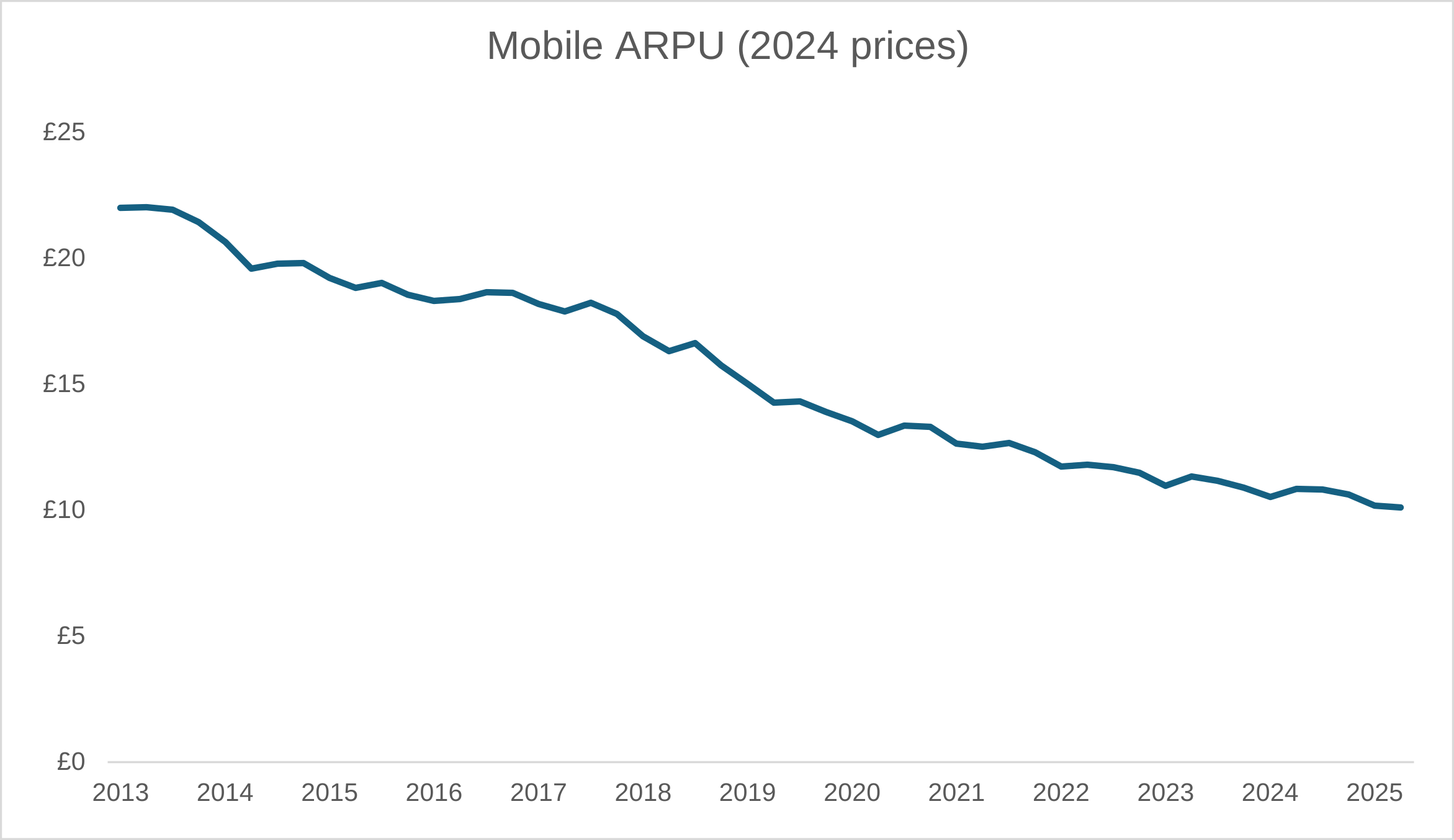
Profitability is also under pressure. A key measure of profit, EBITDA, has increased by 1.9% in cash terms over 5 years. However, taking into account inflation, it has dropped by 18% in real terms. Similarly, the average revenue per user (ARPU) has declined significantly over the past decade, from around £19 in 2015 to around £10 in 2025 as shown in Figure 2.[footnote 53] These developments are not UK specific and European operators have similarly experienced decreases in ARPU and revenues over the same period.
Figure 1. Real mobile service revenues, 2024 prices
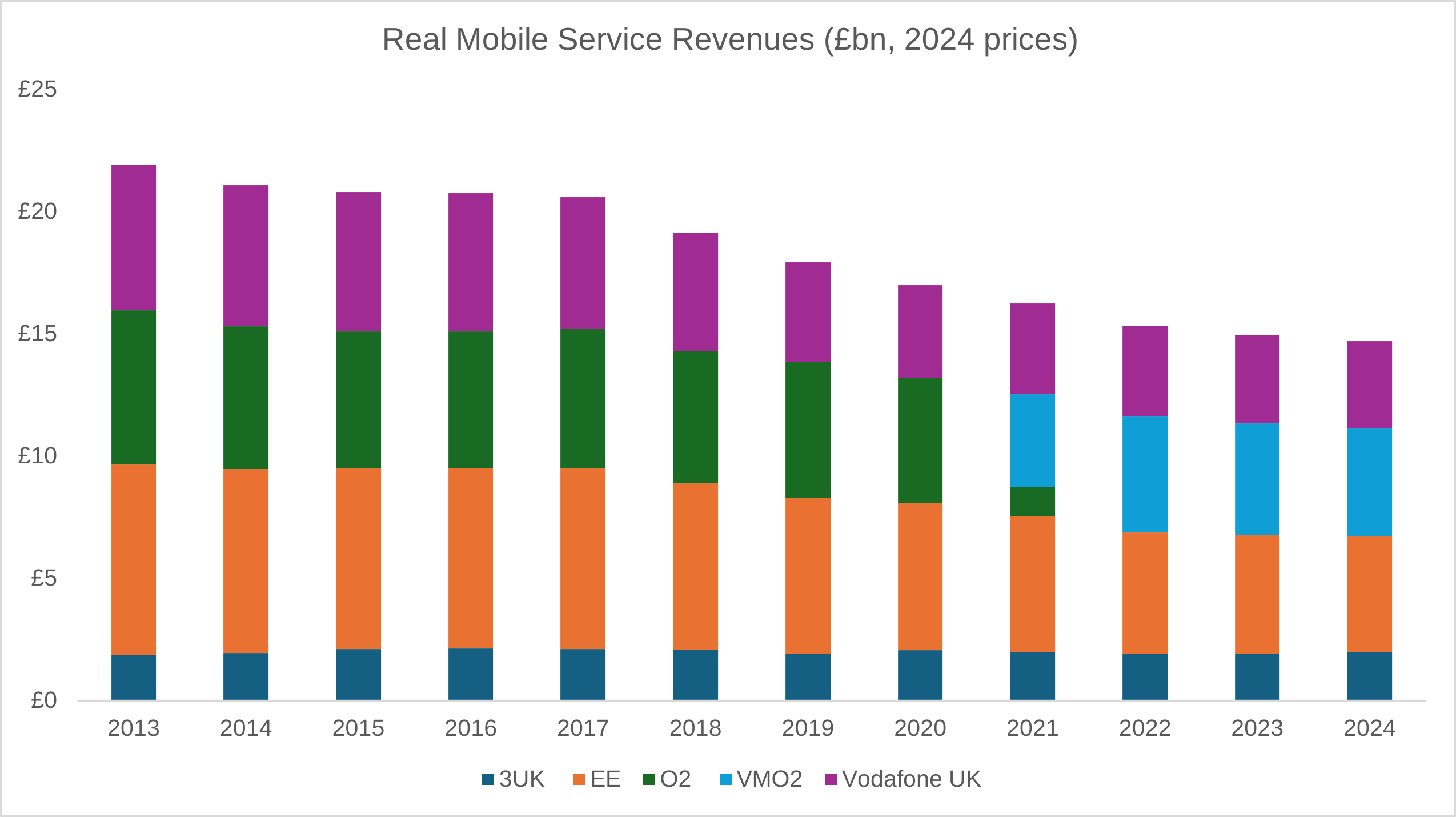
Figure 2. Real mobile Average Revenue Per User (ARPU) UK, 2024 prices
Barriers to MNO investment in 5G can have a knock-on impact on the wider ecosystem, particularly on wireless infrastructure providers. For example, if MNOs struggle to invest in 5G networks this has a knock-on effect on neutral host providers who lease infrastructure to MNOs. These infrastructure providers work on longer return on investment plans, compared to traditional telcos who seek return over shorter time frames. Barriers to MNO investment can therefore lead to uncertain market conditions that make it difficult for wireless infrastructure providers to develop investment plans.
Investing to meet increasing demand
The increasing digitalisation of the economy and of society, combined with growing consumption of data-intensive content and up-take of Fixed Wireless Access networks is driving continued traffic increases on mobile networks. Ofcom data shows that traffic over mobile networks has grown significantly over the last 7 years and continues to grow, albeit at a slower rate than in previous years. Mobile traffic increased by 495% between 2018-2025, at an average (compound) annual rate of 29%, with smaller increases of 25% between 2022-2023 and 18% between 2023-2024. [footnote 54][footnote 55]
Evidence suggests that traffic peaks are also increasing, particularly during live events as more consumers follow live action on their phones. BTEE noted significant growth in data usage on its networks during the British Grand Prix. During the 2023 event, BTEE recorded a 50% leap in data traffic compared to the previous year. In response, BTEE has invested in permanent infrastructure at Silverstone to enhance network capacity.[footnote 56]
The increasing use of AI-driven technology by consumers and businesses is also expected to further increase traffic over networks, although the exact impact is difficult to predict. Analysis from the GSMA estimates that AI-driven data traffic could contribute an additional 20-80% on top of 2024 levels, depending on how widely AI applications are adopted.[footnote 57] It is also expected that new technologies will drive need for higher quality networks, particularly with regards to reliability. For example, the GSMA estimates that industrial Internet of Things (IoT) and autonomous vehicle use cases will require decreases in network latencies of more than 20%.[footnote 58]
Changes to the distribution of TV are also likely to impact the level of traffic flowing over networks. The growing prevalence of Internet Protocol Television (IPTV) is shifting more content delivery online. Whilst the majority of this traffic will be delivered over fixed networks, there will also be an impact on mobile networks as more consumers use their phones to stream content and live events. DSIT and Department for Culture, Media and Sport (DCMS) are working together to understand the implications of changes to TV viewing habits for both the broadcasting and telecoms sectors.
MNOs provision their networks to provide capacity for instances of peak traffic. This ensures quality of service remains consistent. Future growth rates are difficult to predict as new technologies and use cases emerge, with their impact on the network driven by uptake. However, traffic growth is highly likely to continue over the next decade. It is therefore essential that the policy and regulatory environment supports operators to invest to meet this demand over the long-term and manage networks efficiently.
We are interested in better understanding how demands on the network will develop over the next decade, what the potential drivers are of any future change and what this means for required investment and traffic management.
Investment in high quality coverage
Investment to deliver our 2030 ambition is a priority for this government, and accurate reporting of mobile coverage is an important step in helping to achieve this.
Accurate and timely coverage reporting can also enable consumers to make informed choices about which network operator provides the best service where they live, work and travel. This in turn can drive competition, spurring further investment in the market. Exploration of the use of measured data, collated using a robust methodology that accurately reflects lived experience, in particular on the road and rail network, remains a priority.
Ofcom reports that there is a ‘good’ level of coverage of both 4G and 5G across the UK.[footnote 59] At present, 5G coverage is primarily provided as non-standalone 5G. However, we know that user experience of mobile signal can differ significantly in both rural and urban areas; signal strength alone does not directly correlate with the service performance experienced by users. Crowdsourced user experience data, has started to be integrated into Ofcom’s ‘Map You Mobile’ mobile checker, which reflects the quality of mobile networks at a postcode district level. Further work is required to improve consumer information on the quality of mobile networks.
Standalone 5G rollout is progressing across the UK. VodafoneThree has committed to invest £11 billion to upgrade their joint networks, as a result of the merger between Vodafone UK and Three UK. The company state this will see their standalone 5G network reach 99% of the UK population by 2030, and 99.96% by 2034. In November 2025, BTEE publicly confirmed that EE’s long-term plan will see 99% of the UK population get standalone 5G (which BTEE term 5G+) connectivity by Spring 2030. BTEE state 5G+ is already available to more than 44 million people, equivalent to 66% of the UK population. In September 2025, VMO2 announced that its standalone 5G network is now available to more than 70% of the UK population, in 500 towns and cities.
Ofcom began reporting on standalone 5G coverage separately from non-standalone in their 2025 Connected Nations Report, published in November 2025. This highlighted that standalone 5G is available outside of 83% of premises across the UK, demonstrating the progress made by industry to deploy standalone 5G across the UK.
Whilst the rollout of standalone 5G is progressing, there remain total and partial not spots where there is no or limited 4G coverage. The switch off of 2G and 3G services has already begun and will pick up pace in the coming years. In its 2025 Connected Nations Report, Ofcom reported that MNOs estimate that, based on data on their direct customers, approximately 2 million active devices are reliant on 2G and 3G networks.[footnote 60]
For areas where there continues to be limited coverage, more innovative solutions may be required, particularly where the cost of deployment and operational costs of sites are potentially significant. This could include Neutral Host deployments, effective utilisation of non-terrestrial networks, or a form of roaming arrangement in the most rural, remote areas.
Whilst connectivity in rural areas is reported to be worse than in urban areas, connectivity challenges do also remain in urban and suburban areas. Continued investment in increasing capacity in urban areas through effective working with local authorities is likely required to deliver this.
Following the launch of Ofcom’s Map Your Mobile tool, the signal strength thresholds for ‘good’ coverage have been updated. Ofcom analysis of crowdsourced data provides the likelihood of achieving a performance level of >=5Mbit/s download speed and >=1.5 Mbit/s upload speed with <=50ms latency at different received signal strengths on a typical mobile handset.[footnote 61] Whilst this will likely be sufficient for consumers to carry out the tasks they expect to be able to do on their mobile devices, for some commercial, industrial and public sector applications that could deliver economic growth, a higher level of service is likely required. The definition of ‘good’ mobile coverage should be kept under review to ensure it is in line with users’ mobile service expectations.
If the benefits of standalone 5G are to be realised and future potential innovative use cases are to be developed, high quality and reliable mobile coverage needs to be available across the UK.
Ensuring nationwide mobile coverage also means building networks that are resilient to shocks - from cascading impacts across critical national infrastructure to power disruptions and increasingly severe weather - so that services remain available and can recover quickly when disruption occurs.
We are keen to understand, in detail, stakeholder views on what quality of service is required to realise the full benefits of standalone 5G and what coverage level would be appropriate.
Ensuring the market delivers for consumers
Affordable access is fundamental to ensuring everyone can carry out essential online activities and to delivering our mobile ambitions.
As connectivity becomes a critical part of peoples’ daily lives, people must feel confident they are getting a fair deal, with clear choices, transparent information, and reliable, high-quality mobile services.
We recognise that any intervention must strike the right balance between protecting consumers and enabling providers to deliver the infrastructure that underpins the UK’s digital future. To achieve this, we are working closely with Ofcom to ensure adequate safeguards remain in place and to explore how we can go further in protecting consumers and promoting affordability, while balancing the government’s long-term investment priorities.
We welcome evidence to understand what more the government can do to ensure the policy and regulatory framework adequately protects and empowers consumers.
Supporting the sector to invest to meet the UK’s future needs
Government is committed to working closely with industry to foster a strong, productive telecoms sector that boosts the UK economy – backing businesses to innovate, compete and deliver the world‑class connectivity that underpins growth and opportunity nationwide.
To date, the government’s approach to supporting the mobile sector has focused on strengthening the investment environment for operators by driving demand for 5G-enabled services, reducing costs and barriers to rollout and supporting market competition. Where the market has not been incentivised to deliver due to high costs and low returns, the government has stepped in to support deployment of infrastructure. Our partnership with industry through the Shared Rural Network (SRN) continues to improve 4G coverage nationwide with Ofcom reporting around 96% of the UK landmass having 4G coverage from at least one operator.[footnote 62]
The government currently has a range of measures in place to strengthen the investment environment for operators. For example, to stimulate demand and drive adoption of 5G and other advanced connectivity services, the government has invested £46 million in regions across the UK as part of the 5G Innovation Regions programme.[footnote 63] Projects are already demonstrating how businesses in key growth sectors can harness financial and productivity gains from adopting better digital connectivity solutions. The projects are also enabling local government and councils to make the case for investing in connectivity to digitalise public service delivery.
To show leadership in the take up of new services, including for innovative 5G use cases, the government will also use its purchasing power, through public sector procurement to act as “anchor tenant”. This is expected to increase investment confidence and as a result, support the deployment of standalone 5G. DSIT is currently working across the public sector to aggregate demand for 5G solutions from central government. We are also engaging with MNOs to understand the standalone 5G products and services that would support public sector use cases.
The government is committed to unlocking barriers to telecoms deployment across the sector, supporting network operators to deploy infrastructure and improve wireless coverage up and down the country.
As part of this work, we are considering the areas where planning laws could be relaxed to support the deployment of mobile infrastructure. As first announced in the 10 Year Infrastructure Strategy , the government has published a call for evidence on expanding Permitted Development Rights. Subject to the evidence received, we may consult on specific draft measures and bring forward secondary legislation where appropriate.
In addition, we will implement the remaining provisions of the Product Security and Telecommunications Infrastructure Act (PSTI Act) 2022 to make it easier and cheaper for wireless infrastructure to be deployed.[footnote 64] The Regulations to implement s61-64 of the Act were made on 15 December 2025, and will come into force on 7 April 2026.
The government continues to engage regularly with industry to understand the challenges affecting the sector and how we can work together to address these. We are aware of additional asks of the government, such as those relating to ALFs and net neutrality. Ofcom has revised ALFs, reducing the total amount paid by the sector by £60 million per year.[footnote 65] Regarding net neutrality, as part of this call for evidence, we are seeking detailed evidence on whether the regulations remain fit for purpose, please see section 3.
The government is keen to understand what further steps can be taken to improve the investment environment and ensure the sector is able to deploy comprehensive high-quality coverage.
Section 2: Questions
To help us understand how these trends may evolve over the next decade, we encourage stakeholders to provide detailed, quantitative evidence wherever possible. We welcome responses to the following questions:
9. Please provide evidence of the impact of the government’s existing measures on operators’ ability to invest in high-quality, nationwide infrastructure. Please suggest additional policies to further support investment across the sector to deliver our 2030 ambition.
10. How should the government think about, and define, ‘good’ mobile coverage in relation to quality of service provided to consumers, businesses and the public sector? What steps could government take to ensure operators are able to provide this?
11. The government’s current ambition is for all populated areas to have access to higher quality standalone 5G by 2030. Do you think this is the right level of ambition to support delivery of high-quality connectivity to people and businesses across the UK, and to ensure MNOs and the wider industry are able to deliver their investment plans? Please provide detailed evidence to support your answer.
12. Please provide detailed evidence outlining how mobile network performance will need to evolve over the next decade to meet demands from new applications and technologies.
13. Please provide detailed evidence outlining how mobile traffic will develop over the next decade, focusing specifically on changes to:
a. Volume of traffic
b. Type of traffic
c. Drivers of traffic
14. Please provide evidence on how current market conditions affect consumer outcomes, and explain how this will change over time.
15. In context of an evolving market, what additional measures could the government consider to further protect and empower consumers including from cost living pressures.
16. Please provide detailed evidence as to how any changes to mobile traffic will impact investment requirements and approaches to traffic management.
17. How can the government’s procurement frameworks be developed to support public sector take up of services based on standalone 5G?
Section 3: A regulatory framework to support investment, innovation and consumers
Overview of the regulatory framework
Industry’s ability to deliver on its strategic objectives depends on a regulatory framework that actively supports investment, innovation, and effective competition, and is suited to the challenges of today and the future.
The Communications Act 2003 (CA 2003) is the primarily legislative framework establishing the regulatory regime for communications providers in the UK. It covers fixed line telecommunications, mobiles, spectrum and other areas such as broadcasting and radio.[footnote 66]
Spectrum management duties and responsibilities are set out in both the CA 2003 and the Wireless Telegraphy Act 2006 (WTA 2006). The WTA requires Ofcom to:
a) manage spectrum efficiently in support of competition in electronic communications services;
b) consider how much spectrum is available for use and how much demand there is for it;
c) set and enforce regulatory requirements governing the transmission of radio signals; and
d) grant licenses for wireless telegraphy.[footnote 67]
In December 2018, Directive (EU) 2018/1972 establishing the European Electronic Communications Code (EECC) was published.[footnote 68] This replaced and repealed older directives and provided a harmonised framework for the regulation of electronic communication services across the EU. The amendments to the regulatory framework had a stronger emphasis on incentivising investment in very high-capacity networks, promoting efficient use of spectrum, and ensuring effective consumer protection and engagement. The UK transposed the EECC in 2020.[footnote 69]
While the framework has been amended through legislation such as the Digital Economy Act 2017, Telecoms Security Act 2021 and the Product Security and Telecommunications Infrastructure Act 2022, its fundamentals remain largely consistent. The framework was designed in a different technological era: around 15 years before the first commercial 5G networks were launched in the UK.
Regulatory stability is a critical factor in supporting long-term investment by mobile and fixed operators. We are therefore not looking at wholesale reform of existing primary legislation, but through this exercise we want to better understand how targeted and strategic changes to the framework could support long-term investment in mobile and the overall stability of the sector.
This call for evidence complements the government’s March 2025 Regulation Action Plan which seeks to ensure we have a regulatory system that supports growth; is targeted and proportionate; is transparent and predictable; and adapts to keep pace with innovation.[footnote 70]
How has the current framework performed to date?
The regulatory framework has generally provided the mobile industry with stability to invest, driven competition and delivered good outcomes for consumers and businesses over the past two decades. This is evidenced by the consistent nationwide rollout of 4G and 5G technology, as well as the strong levels of sector competition and consumer choice.
However, we acknowledge that the framework was designed in a different technological era and the market has evolved significantly since the implementation of the CA 2003. This, coupled with the fact that policymakers internationally are looking at their respective regulatory frameworks, underlines why now is the right moment to assess whether the current legislation will facilitate long-term investment.
We are therefore keen to understand to what extent the existing framework is equipped to support future investment, innovation and competition in mobile networks.
Given the global nature of investment decisions by investors, it is essential we maintain a supportive framework to avoid the risk of capital being directed elsewhere. As outlined, the UK’s telecoms regulatory framework has historically reflected the EU’s frameworks. This is because legislation such as the CA 2003 were derived from EU laws implemented while the UK was a member of the EU. Recognising the major shifts in telecoms networks, the EU has proposed the Digital Networks Act (DNA) to modernise, simplify and harmonise EU rules on connectivity networks.[footnote 71] Any major changes to the European mobile investment environment could also impact the UK mobile sector, given the interconnected nature of operators and markets.
Priority areas
To inform our understanding of how the communications regulatory framework could be improved, we are interested in views and detailed evidence outlining how targeted changes to the framework could be made to better support long-term investment, innovation and competition. We acknowledge that there are industry concerns over other frameworks, such as planning regulations, but these are out of scope of this call for evidence as existing steps are in train to address these.
Ensuring Ofcom has the tools it needs
Ofcom’s principal duty established under the CA 2003 is to further the interests of citizens and consumers, where appropriate by promoting competition.[footnote 72] While it must have regard to other areas such as encouraging investment and innovation, they are not primary duties. Ofcom’s duties have developed over time as the legislative framework has broadened and it has been asked by the government to take on more areas of regulation.
The Growth Duty, for example, was extended to Ofcom in 2024. This duty requires the regulator to have regards to the desirability of promoting economic growth in exercising certain regulatory functions.[footnote 73] This growth duty aligns with other Ofcom duties that require it to have regard to the desirability of promoting competition in relevant markets as well as encouraging investment and innovation.[footnote 74] The government has recently committed to reform the Growth Duty so that the legal framework is clearer, more focused and ensures regulators must consider and promote growth.[footnote 75] This gradual expansion of Ofcom’s duties potentially adds complexity to the regulatory system and it is important to understand what, if any, impact this might have on investment.
Ofcom’s role is more limited in mobile markets than its statutory role in fixed markets. As a result, it has fewer regulatory levers to incentivise investment. Significant Market Power (SMP), for example, does not generally arise in mobile retail markets.[footnote 76] Despite this, Ofcom still has an important role in ensuring a well-functioning mobile market. Ofcom is tasked with ensuring that conditions exist to encourage efficient investment in mobile networks. This involves maintaining a regulatory framework that incentivises long-term infrastructure deployment while balancing competition concerns. For example, Ofcom must consider whether its actions, such as spectrum management or mandating roaming agreements, support investment.
We are looking for views on whether Ofcom has the right duties and powers to stimulate future investment in mobile.
Ensuring that the government has the right levers to set strategic direction and support investment
The DSIT Secretary of State has specific statutory functions set out in the CA 2003, including:
-
The Secretary of State may under specific statutory powers give directions in respect of network and spectrum functions for limited purposes concerning national security, relations with the government of a country outside of the UK, securing compliance with the UK’s international obligations, the safety of the public or public health.
-
In specific statutory circumstances, the Secretary of State may give directions to Ofcom, with which Ofcom must comply, including by providing such information or assistance as is necessary to give effect to those directions.
-
In the context of social tariffs, the Secretary of State may direct Ofcom to review the affordability of qualifying services for individuals on low incomes or having special social needs, and for Ofcom to report to the Secretary of State. The Secretary of State has further powers relating to guidance and directions that can be given to Ofcom in relation to social tariffs.
The Digital Economy Act 2017 granted the Secretary of State with the power to designate a Statement of Strategic Priorities (SSP) relating to telecommunications, spectrum and postal services. Ofcom must have regard to the SSP when exercising its regulatory functions.[footnote 77] In the proposed SSP published on 21 July 2025, we stated that the government would welcome regular reporting from Ofcom on the cost of regulation to industry, the impact of regulation on investment, and whether the regulatory framework could be amended to better support long-term investment and growth in telecoms networks.[footnote 78]
We are looking for views on whether legislative changes to these powers could better support investment in mobile networks, while maintaining Ofcom’s statutory and operational independence. We would also welcome views on what further strategic tools, or statutory mechanisms, the government could use to provide clearer strategic direction to Ofcom in support of investment.
Understanding regulatory costs and opportunities for simplification
We appreciate that mobile operators face cumulative costs due to essential consumer and security regulations. We also acknowledge that the regulatory framework has become increasingly complex.
We are therefore looking for detailed evidence on the areas of regulation that are burdensome for mobile operators and deter investment. This commitment to simplify regulation, while protecting consumers from detriment, aligns with the government’s approach to ensuring regulators and regulation support growth, as outlined in the March 2025 Regulation Action Plan.[footnote 79]
Ensuring net neutrality rules support investment and innovation
The Open Internet Access Regulations, commonly referred to as the net neutrality regulations, were designed to support an ‘open internet’ where users, and not internet service providers (ISPs), control what they see and do online. The rules require ISPs to treat all internet traffic on their networks equally (whether in terms of quality or speed) and not favour certain services or providers.
In October 2023, Ofcom revised its guidelines acknowledging significant changes in the internet ecosystem. Ofcom’s consultation recognised rising traffic volumes, primarily driven by the growth of large-scale content providers, as well as the emergence of new players who can also hold gatekeeper positions in controlling access to content accessed through operating systems. Ofcom also recognised technological advancements that have introduced a wide array of new services, including augmented and virtual reality. The revised net neutrality guidelines provide greater clarity on how:[footnote 80]
- ISPs can offer premium quality retail offers, open to all customers. For example, offering low latency or a temporary boost to a customer’s quality of service, as long as they are sufficiently clear to consumers about what they can expect from the service.
- ISPs can implement ‘reasonable’ traffic management to support efficient use of the network where different treatment of traffic is based on its technical characteristics, and ‘exceptional’ traffic management to prevent and mitigate congestion as long as traffic with similar characteristics is treated the same.
- Zero-rated services – a service that does not use up data when accessed - are acceptable in most cases, particularly when they serve public interest goals like - access to NHS services or are open to all content providers of a particular type i.e. all streaming services
- ISPs can provide ‘specialised services’ to deliver specific content and applications that need to be optimised, using a network slice.
The government welcomed the clarification provided by Ofcom and considered that this provided additional additional flexibility for ISPs in the products they can deliver and approaches to traffic management, supporting innovation. Given the evolution occurring across the mobile market, underpinned by technological advancements and the shift towards a more dynamic ecosystem, it is important that the government assesses whether the current rules continue to support investment and innovation across the sector, balancing the needs of the wider digital ecosystem.
To support innovation and growth, the framework must empower operators and players in the ecosystem to collaborate on delivering a range of connectivity solutions and manage traffic efficiently. In line with the government’s drive towards regulatory simplification and reform, targeted changes could reduce burdens and enable more dynamic connectivity delivery and traffic management. We would like to consider whether changes are required, and what the impacts would be, in order to:
- Allow ISPs to provide differentiated connectivity services to specific users. For example, an ISP could work with individual car manufacturer to provide a high-speed low-latency connectivity package for their connected vehicles over the public internet, or an ISP could work with a streaming service to provide a high-quality service for their customers to improve user experience.
- Allow ISPs to apply more focused traffic management controls on specific companies to mitigate or prevent congestion. For example, during a temporary traffic peak, an ISP could put traffic controls on a specific company’s traffic depending on the quality requirements of the traffic, in order to prevent congestion on the wider network.
- Allow ISPs to provide zero-rated content once a user’s data has been used up. For example, this could mean that an MNO could allow a user to access zero-rated NHS services once their data had been used up.
In addition, we would like to understand from stakeholders the benefits or risks of added legal clarity to mandate:
- ISPs zero-rating all public sector services. This would mean that the government agrees that all public services can be zero-rated by ISPs.
Any examples provided are illustrative and non-exhaustive, used to stimulate and support evidence gathering.
Any examples provided are illustrative and non-exhaustive, used to stimulate and support evidence gathering.
The government is not considering any measures that would require content providers to contribute to operators’ infrastructure build costs otherwise known as ‘charging’ or ‘fair share’. Whilst the government recognises the investment pressures in the mobile market, we have not seen evidence to suggest this is a proportionate approach to stimulating investment in networks.
The government acknowledges that net neutrality rules, whilst directed at the activities of ISPs, also impact businesses across the internet ecosystem. We are therefore seeking views from all relevant stakeholders on whether the Open Internet Access Regulations remain fit for purpose and what the impacts of any potential change to permit activity above could have on, the functioning of, and investment in networks, innovation across the digital economy, competition and consumers.
Section 3: Questions
18. To what extent has the current regulatory framework supported investment, innovation and competition in the mobile market? Please include detailed evidence to support your response.
19. To what extent is the current regulatory framework equipped to support investment, innovation and competition in mobile networks going forward? Please provide detailed evidence to support any specific changes you consider are required.
20. Please provide detailed evidence of international approaches to regulation that have been successful in supporting investment, innovation and competition in the mobile market.
21. Please outline areas of regulation where there are risks and benefits to the UK and EU regulatory frameworks not closely aligning. Please provide detailed evidence to support your response.
22. To what extent does Ofcom have the right duties and powers to stimulate long-term investment, innovation and competition in the mobile market and what legislative or framework changes could be made to better support these outcomes? Please provide detailed evidence to support your response.
23. To what extent do existing government powers and strategic steers support investment, innovation and competition in the mobile sector, and should any changes be made (e.g. making strategic steers more frequent) to provide the government with clearer strategic oversight, consistent with Ofcom’s operational independence? Please provide detailed evidence to support your answer.
24. Please provide detailed evidence on the existing costs of regulation for your business and what impact this has on investment and innovation.
25. Please provide detailed evidence of areas of complexity in the regulatory framework and examples of how simplification could better support investment and innovation.
26. What further can the government do to ensure that the regulatory framework empowers and protects consumers.
Net Neutrality
The following questions focus on the effectiveness of the net neutrality framework; they do not include questions on the implementation of a charging regime.
27. What parts of the current net neutrality framework do you believe have functioned, and continue to function effectively? Please provide detailed evidence to support your answer.
28. Are there any elements of the current net neutrality framework that you think are not working well, or are no longer working as intended? Please provide detailed evidence to support your answer.
29. What current, or future, use cases or technologies cannot function optimally, or might not be able to function optimally, under the current net neutrality framework? Please provide detailed evidence to support your response.
30. Based on your response to question above, what is the estimated value of revenues lost, if any, due to barriers presented by current regulations?
31. What impact would allowing ISPs to provide differentiated services to specific companies have on:
a. Functioning of networks
b. Innovation across the digital ecosystem (both content and communications markets)
c. Competition
d. Consumers
e. Investment required in networks
- What impact would more focused traffic management to address and mitigate congestion have on:
a. Functioning of networks
b. Innovation across the digital ecosystem (both content and communications markets)
c. Competition
d. Consumers
e. Investment required in networks
- Are there any other areas of the net neutrality regulations you consider may warrant updating? Please explain what impact the change would have on:
a. Functioning of networks
b. Innovation across the digital ecosystem (both content and communications markets)
c. Competition
d. Consumers
e. Investment required in networks
-
At an average compound annual rate of 29%, based on DSIT analysis of mobile data traffic between 2018 and 2025 in Connected Nations UK Report 2025 (Figure 3.10) and Connected Nations 2020: UK report (Figure 20). ↩
-
£9 – 37 billion as Gross Value Added based on 2018 prices across various sectors Realising the benefits of 5G - GOV.UK ↩
-
Frontier Economics (commissioned by the Digital Connectivity Forum) The-Investment-Gap-to-Full-5G-Rollout ↩
-
Product Security and Telecommunications Infrastructure Act 2022 ↩
-
At an average compound annual rate of 29%, based on DSIT analysis of mobile data traffic between 2018 and 2025 in Connected Nations UK Report 2025 (Figure 3.10) and Connected Nations 2020: UK report (Figure 20). ↩
-
1 Ofcom: Pricing trends for communication services in the UK 2024 ↩
-
GSMA, Distributed inference: AI adds a new dimension at the edge, Newsroom ↩
-
EE unlocks next-level 5G performance with world-first network innovation - Tech and Innovation Hub - Research and development - BT, BT Plc ↩
-
Virgin Media O2 Unveils the Next Phase of its Mobile Network Evolution, with 5G Standalone Switch On - Virgin Media O2 ↩
-
Softwarization and virtualization in 5G mobile networks: Benefits, trends and challenges - ScienceDirect ↩
-
EE launches game changing 5G standalone network and next gen Wi-Fi 7 router to offer customers the UKs best connectivity in and out of home ↩
-
Vodafone and Microsoft sign 10-year strategic partnership to bring generative AI, digital services and the cloud to more than 300 million businesses and consumers ↩
-
Vodafone and Microsoft sign 10-year strategic partnership to bring generative AI, digital services and the cloud to more than 300 million businesses and consumers ↩
-
Virgin Media O2 launches new AI tools to supercharge customer services and better help most vulnerable customers - Virgin Media O2 ↩
-
CMA confirms Apple and Google have strategic market status in mobile platforms - GOV.UK ↩
-
Telecoms supply chain diversification: report and recommendations - GOV.UK ↩
-
Vodafone and Zinkworks partner to create AI platform to simplify and accelerate launch of new mobile network apps for customers ↩
-
Ericsson and Vodafone complete network slicing cloud-gaming trial ↩
-
Telefónica validates network quality on demand with AWS Wavelength ↩
-
Telefónica combines open APIs with AWS MEC zone – to demo live volleyball stream ↩
-
Ofcom (2025) Decision to amend the mobile trading regulations ↩
-
Travel eSIM Users to Grow 440% Globally Over the Next 5 Years ↩
-
Monzo joins the eSIM race, but is it catching up to Revolut? — TFN ↩
-
Discussions with industry, 2024 ↩
-
Subscribers in retreat: UK mobile market in Q4 2024, Enders Analysis ↩
-
https://www.endersanalysis.com/reports/subscribers-retreat-uk-mobile-market-q4-2024 ↩
-
Vodafone chief bets on selling AI and cyber security to businesses ↩
-
Virgin Media O2 and Daisy Group Announce New B2B Company to Create Communications and IT Powerhouse for UK Businesses - Virgin Media O2 ↩
-
Omdia, World Cellular Information Series (WCIS) Data Dashboard Omdia, October, 2025. [Company Analysis Dashboard: Revenue, EBITDA and ARPU]. Results are not an endorsement of DSIT. Any reliance on these results is at the third party’s own risk. Figures are adjusted to 2024 prices using the CPI index ↩
-
Ibid ↩
-
Based on DSIT analysis of mobile data traffic between 2018 and 2025 in Connected Nations UK Report 2025 (Figure 3.10) and Connected Nations 2020: UK report (Figure 20) ↩
-
Distributed inference: how AI can turbocharge the edge, GSMA (March 2025), retrieved from GSMA,Distributed inference: AI adds a new dimension at the edge, Newsroom ↩
-
ibid ↩
-
For more detail on Map Your Mobile methodology see: Map Your Mobile checker methodology“ ↩
-
Product Security and Telecommunications Infrastructure Act 2022 ↩
-
The Electronic Communications and Wireless Telegraphy (Amendment) (European Electronic Communications Code and EU Exit) Regulations 2020 ↩
-
New approach to ensure regulators and regulation support growth (HTML) - GOV.UK. A progress update and next steps on the Regulation Action Plan was published in October 2025: Regulation Action Plan - Progress Update and Next Steps - GOV.UK ↩
-
EU supports digital connectivity with simpler and harmonised rules in Digital Networks Act ↩
-
SMP does feature in mobile call termination where rates are regulated. ↩
-
Proposed Statement of Strategic Priorities for telecommunications, the management of radio spectrum, and postal services - GOV.UK ↩
-
New approach to ensure regulators and regulation support growth. ↩