CCUS future network strategy: call for evidence (HTML)
Updated 22 April 2026

© Crown copyright 2026
This publication is licensed under the terms of the Open Government Licence v3.0 except where otherwise stated. To view this licence, visit nationalarchives.gov.uk/doc/open-government-licence/version/3 or write to the Information Policy Team, The National Archives, Kew, London TW9 4DU, or email: psi@nationalarchives.gov.uk.
Where we have identified any third party copyright information you will need to obtain permission from the copyright holders concerned.
This publication is available at https://www.gov.uk/government/calls-for-evidence/ccus-future-network-strategy/ccus-future-network-strategy-call-for-evidence-html
General information
Rationale for calling for evidence
Carbon Capture, Usage and Storage (CCUS) will be essential to meeting the UK’s 2050 Net Zero target, playing a vital role in nationwide economic growth, supporting the low-carbon economic transformation of our industrial regions, and creating new high value jobs.
Continued government, industry and wider stakeholder collaboration remains fundamental when considering the strategic direction for future network design and development of CO2 transport and storage (T&S) networks across the UK. The responses received from this publication will help guide policy development.
Through the 2025 spending review, the government has continued its support to building out the HyNet and East Coast Clusters and made development funding available to help the Acorn and Viking clusters progress toward future final investment decisions. Additionally, the National Wealth Fund recently announced co-investment in the Peak cluster, enabling it to also continue progression towards a future final investment decision.
As the first CCUS clusters deploy in the UK and start to mature through construction and operation, there remains the opportunity to transition CCUS development from a government-led initiative, towards a more independent, market-led approach.
During this transition, government envisions that CO2 networks will require collaborative development aligned with the required progression of the regulatory and economic landscape. This could have the fundamental aim of delivering network systems capable of integrating supply and demand of CO2 whilst also remaining economical and resilient to the needs of network users and an evolving UK energy landscape.
This call for evidence aims to:
- identify and characterise topics that are likely to be important for the commercialisation of CO2 T&S networks
- identify the challenges that may hinder progression of CO2 T&S network development towards an economically efficient, self-sustaining market
- develop an evidence base to inform policy development and direction on CO2 networks and inform evolution of the CCS Network Code
Call for evidence details
Issued:
6 August 2025
Respond by:
31 October 2025
Enquiries to:
T&S Future Network Strategy Policy Team
Carbon Capture, Usage and Storage Programme
Department for Energy Security and Net Zero
6th Floor
3-8 Whitehall Place
London
SW1A 2AW
Consultation reference:
Call for evidence on CCUS Future Network Strategy
Audiences:
The government welcomes responses from anyone with an interest in the CCUS policy and the development of CO2 networks. We envisage that this call for evidence will be of particular interest to:
- UK CO2 transport and storage network developers and infrastructure providers
- Current and prospective UK CO2 network users
- Providers of non-pipeline transport services
- Projects located outside the UK in an international jurisdiction which may have an interest in utilising UK CO2 transport and storage infrastructure for permanent storage
- Supply chain companies, trade bodies, academics, and prospective investors
- Non-governmental organisations and ALBs who have an interest in CCUS and its role in the enabling the UK to achieve net zero
Territorial extent:
The territorial extent is in the United Kingdom or in, under or over the territorial sea adjacent to the United Kingdom, or waters in a gas importation and storage zone (within the meaning given by Section 1 of the Energy Act 2008).
How to respond
Your response will be most useful if it is framed in direct response to the questions posed, and with supporting evidence wherever possible. When responding, please state whether you are responding as an individual or representing the views of an organisation. It is not necessary to answer every question.
However, responses in writing or via email will also be accepted. Should you wish to submit your main response via the e-consultation platform and provide supporting information via hard copy or email, please be clear that this is part of the same response to this call for evidence.
Or
Email to: ccus.future.network.strategy@energysecurity.gov.uk
Confidentiality and data protection
Information you provide in response to this consultation, including personal information, may be disclosed in accordance with UK legislation (the Freedom of Information Act 2000, the Data Protection Act 2018 and the Environmental Information Regulations 2004).
If you want the information that you provide to be treated as confidential, please tell us, but be aware that we cannot guarantee confidentiality in all circumstances. An automatic confidentiality disclaimer generated by your IT system will not be regarded by us as a confidentiality request.
We will process your personal data in accordance with all applicable data protection laws. See our privacy policy.
As part of this call for evidence, we are seeking to gather data on industry views into future CCUS network strategy and their insights regarding the overall strategic direction and relevant policy adaptations. We may share relevant data within government and with our technical advisors to aid CCUS policy development. The Future Network Strategy team may also reach out to clarify responses.
We will summarise all responses and publish this summary on GOV.UK. The summary will include a list of names or organisations that responded, but not people’s personal names, addresses or other contact details.
Quality assurance
This consultation has been carried out in accordance with the government’s consultation principles.
If you have any complaints about the way this consultation has been conducted, please email: bru@energysecurity.gov.uk.
Introduction
This call for evidence is seeking views on the steps that could be taken to advance CO2 network development and optimise network operations, as potential early progression towards becoming a self-sustaining and commercially operated sector. Government is looking to gain wider perspectives from respondents on how to approach network development, as well as the role of the parties involved including industry, regulatory bodies, government and the public.
The discussion within this document assumes a baseline understanding of current government CCUS policy and advises review of documentation previously published in relation to the CCS Network Code, Economic Licence, Business Model agreements and CCUS Vision. Further information on the government policy for CCUS can be found on the government website[footnote 1]. The questions within this document aim to engage interested parties to obtain viewpoints, commercial and technical insights, as well as wider feedback on the policy topics discussed with an aim to highlight any relevant considerations important to those parties.
This feedback will then be used to develop policy areas that are key enablers of network optimisation and commercialisation, identify potential milestones, appropriate levels of industry engagement, and understand opportunities to increase commercial uptake in the UK CCUS sector.
This publication is part of a series of 4 documents expected to be published in 2025, which aim to progress key workstreams that could help transition to a self-sustaining CCUS market. These documents explore how the specific workstreams could enable a largely industry-led UK CCUS sector that requires significantly less government intervention than the UK CCUS sector presently does. The documents are also intended to set out how CCUS can grow the economy and help the UK reach Net Zero at the lowest cost.
When responding to this call for evidence, you may find it helpful to consider the content and relevance of the other documents where possible.
- Evolution of Economic Regulation for CO2 Storage call for evidence, published 6 August 2025 (open to responses): This call for evidence, jointly produced by the DESNZ and Ofgem, is looking to understand whether the Regulated Asset Base (RAB) model of economic regulation for CO2 storage will continue to best meet the needs of users, developers, investors and consumers as the CCS market matures; whilst also meeting carbon budgets. We are seeking views and evidence on elements of economic regulatory regime in these key areas in relation to CO2 storage: i) Economic Regulation and Natural Monopolies ii) Competition and Storage Costs iii) Investment: Equity and Debt Considerations.
- Access to CO2 Transport and Storage Infrastructure Consultation, forthcoming in 2025: This consultation will seek views on how to ensure transparent and non-discriminatory third-party access to CO2 transport and storage infrastructure. It will also review the Storage of Carbon Dioxide (Access to Infrastructure Regulations 2011) to assess whether they remain fit for purpose and enable CO2 transport networks and storage sites to operate effectively with the new economic regulation and licensing framework.
- CCUS Non-Pipeline Transport (NPT) Consultation, forthcoming in 2025: This consultation follows on from the May 2024 call for evidence on NPT and cross-border networks as well as the Summary of Responses published in November 2024 and sets out policy proposals to support the deployment of NPT projects.
Context
What is CCUS?
Carbon Capture, Usage and Storage (CCUS) is the process of capturing carbon dioxide for use or permanent storage in geological formations underground, where it cannot enter the atmosphere. The Climate Change Committee discusses the importance of CCUS in ‘The Seventh Carbon Budget’ publication stating “While its role is limited to sectors where there are few, or no [industrial] alternatives, we cannot see a route to Net Zero that doesn’t include CCS”[footnote 2].
Government has set ambitious targets regarding the reduction of emissions. CCUS will be essential in decarbonising sectors of UK industry and enabling low carbon hydrogen, CCUS enabled dispatchable power, CCUS enabled energy-from-waste (EfW), low carbon products such as sustainable aviation fuel (SAF) and engineered greenhouse gas removal (GGR) technologies such as direct air capture (DAC) or bioenergy with carbon capture and storage (BECCS).
The UK’s wealth of geological assets, including depleted oil and gas reservoirs and saline aquifers, can provide additional CO2 storage services to accelerate a European wide CO2 storage market with the potential to reduce costs through greater competition and increased utilisation. Realising this potential through effective, continued collaboration between the UK government, the EU and relevant industry stakeholders will aid in the development of infrastructure and policy to best take advantage of the opportunity presented.
Progress to date
In May 2021 the government launched the CCUS cluster sequencing process. Its purpose was to identify at least 2 CO2 transport and storage companies (T&SCo’s) along with suitable capture projects, with business cases that supported deployment of a CO2 T&S network in the mid-2020s. It was designed to deploy full-chain pipeline T&S networks to support the deployment of CCUS. The 2 clusters selected were the East Coast Cluster (ECC) and HyNet with 8 capture projects selected to proceed to negotiations in March 2023.
In December 2024, ECC reached Final Investment Decision (FID), followed by HyNet in April 2025.
What is the challenge with CCUS
The existing government support regime was designed to address the specific challenges facing the development of these first-of-a-kind clusters. It is a part chain model, with support separately provided to capture projects and T&S networks. It is anticipated that through the development of new capture technologies, operator ownership models and other policy interventions, the form of new or continued government support could be evolved and adapt to the changing needs of the sector. This call for evidence is focused on T&S networks, not CO2 capture. For T&S networks, a challenge is how to develop, evolve and build-out efficient, resilient and cost-effective networks in a nascent sector which requires significant degrees of co-ordination and sector-wide input in a context where government intervention is reduced.
Future commercialisation of T&S networks
The CCUS Vision[footnote 3], published in December 2023 under the previous government, sets out an ambition for the UK to create a competitive, self-sustaining CCUS market. Investment could be unlocked, and the sector could grow by the development of a market creation phase, then a market transition phase, before finally reaching a full self-sustaining market for the CCUS sector.
The Vision described expectation that CO2 T&S networks could diversify and that early commercialisation steps could include separately licensed T&S pipelines and NPT helping to facilitate the decarbonisation of multiple regions of the UK and various sectors of the economy as well as enabling a cross-border CO2 market to emerge. This call for evidence is seeking to test these assumptions and explore policy proposals and adaptations that could benefit the deployment.
The Transport and Storage Regulatory Investment (TRI) Model
The Energy Act 2023 includes provisions for the regulation of CO2 transport and storage activities. Under this Act, operators of these activities must hold an Economic Licence (the ‘Licence’). Further to this, operators are required to adhere to the CCS Network Code (‘the Code’) as part of the provisions under the Licence.
The Economic Regulatory Regime (ERR) for T&S networks is through a Regulated Asset Base (RAB) model, similar to that used in electricity and gas networks, the Thames Tideway Tunnel and other infrastructure sectors in the UK. The RAB model addresses market failures resulting from natural monopoly characteristics likely present in T&S infrastructure. The ERR for CCUS follows precedents used across utilities, including regulated returns and costs, incentives to drive positive behaviours, reopeners to account for uncertainty, and defined price control periods to set the allowed revenue a T&S Licensee can recover from its Users.
In addition to the ERR, the TRI model includes additional government support that has been offered to help establish the East Coast and HyNet clusters: the Revenue Support Agreement (RSA) and Government Support Package (GSP). Under the RSA, if a licensed network operator earns less revenue than the Allowed Revenue for a charging year from user fees, then it will be exposed to a ‘revenue gap.’ The RSA is provided as a financial backstop to enable a licensed operator to recover any shortfall in the agreed Allowed Revenue under the Licence. The GSP provides protection for a network operator against stranded asset and leakage risks.
The TRI model creates the conditions to incentivise investment in transport and storage infrastructure. Within the framework of the TRI model there are possibilities for private-, public- or blended finance (public and private finance) approaches.
The CCS Network Code
The Code[footnote 4] sets out the commercial, operational and technical arrangements between network users and operators. The Code provides a framework for parties seeking a connection to a network, commissioning arrangements, operating parameters, plus other arrangements including governance, disputes, data management and liabilities. It also details responsibilities around capacity, charging and CO2 specifications.
The Code in its initial form is intended to evolve over time and includes a modification process where future requirements and amendments can be proposed to reflect evolving network user and operator requirements.
Influencing factors
In trying to establish a view on the possible nature of future UK CO2 networks, we are seeking to understand factors that will influence their development such as economic, technical and regulatory factors, alongside cross-chain risk management and wider public perception. Scenario planning and pathway identification is influenced by not only political direction, but also the unique challenges and opportunities presented by differing energy trajectories, use cases for CCUS and overall user mix connecting to UK CO2 networks.
The Clean Power 2030 Action Plan[footnote 5] is a priority for this government. Power CCUS has a clear role in supporting this, with Net-Zero Teesside (NZT) reaching financial investment decision alongside the ECC cluster.
The role that power CCUS plays in enabling low cost and low carbon electricity systems creates the need to consider how access to CO2 network capacity is managed when strategically planning network development. Power CCUS operates in accordance to demand signals from the electricity market which results in fluctuations of flow of CO2 onto the CO2 network with the potential for significant variations between average flow and peak flow. On early networks, these swings in network loading may affect average utilisation rates, until more sophisticated capacity booking products become available in future.
For some network users, their primary processes and carbon capture plants can provide predictable, linear flow onto the network whilst facilitating wider industrial decarbonisation of UK industry. For other types of network users, CO2 output may have seasonal or day-to-day variability.
We anticipate that T&S networks will therefore need to be designed to facilitate operational flexibility to accommodate the needs of a range of future users as determined by the technology mix in the future energy system and wider decarbonisation requirements. We also anticipate that the Code will need to evolve, to likewise support future user needs, into a commercialised future.
Spatial planning and sector integration
As CCUS will integrate with wider energy and industrial systems, spatial planning and optimisation may need to be considered with reference to existing and new infrastructure for hydrogen, natural gas and the electricity networks. The repurposing of existing oil and gas assets for CCUS may provide a practical and cost-effective way of expanding the length and breadth of CO2 networks in the UK and provide broader optionality versus decommissioning assets and building new infrastructure where repurposed ones may be sufficient.
The wider UK energy transition, including electrification of industry, will shape and influence the strategic development of our CO2 networks, with varying future energy scenarios having a large impact on infrastructure requirements, overall network demand and network location and routing. Whilst the fundamental energy transition direction of travel is known, the precise outcome is not, which creates uncertainties in strategic planning and highlights the dependencies across sectors as well as the potential desirability for national planning initiatives.
The National Energy System Operator (NESO) oversees the strategic planning of electricity, gas transmission and hydrogen networks through the Strategic Spatial Energy Plan (SSEP) and the Centralised Strategic Network Plan (CSNP), alongside Regional Energy Strategic Plans (RESPs) and Gas Transmission strategic planning products. NESO does not have a formal role in strategically planning CO2 network infrastructure. However, in developing these wider strategic energy plans, NESO will need to account for expected interactions between CCUS infrastructure and the electricity, gas and hydrogen networks, which might also be useful to inform future CO2 network evolution.
Storage considerations
The UK has a significant theoretical offshore geological storage capacity[footnote 6] (up to 78 Gt) which is located in saline aquifers and depleted oil and gas reservoirs off the UK coastline, with only a small percentage of this total capacity required to meet current CB6 and CB7 requirements. This capacity places the UK in a prominent position as a key player in the CCUS space both domestically and internationally.
Careful coordination and synchronisation will be needed between the development of storage sites and the networks that service them, specifically when considering appraisal requirements and storage development lead times. Further predictions for the number of required stores, their location, and modelling of store performance will play into the wider picture of how and when networks develop.
Figure 1: UKCS Storage Quantities[footnote 7]
Showing the relationship between UK point source emissions and the nature, size and location of potential UK Continental Shelf (UKCS) storage options available.
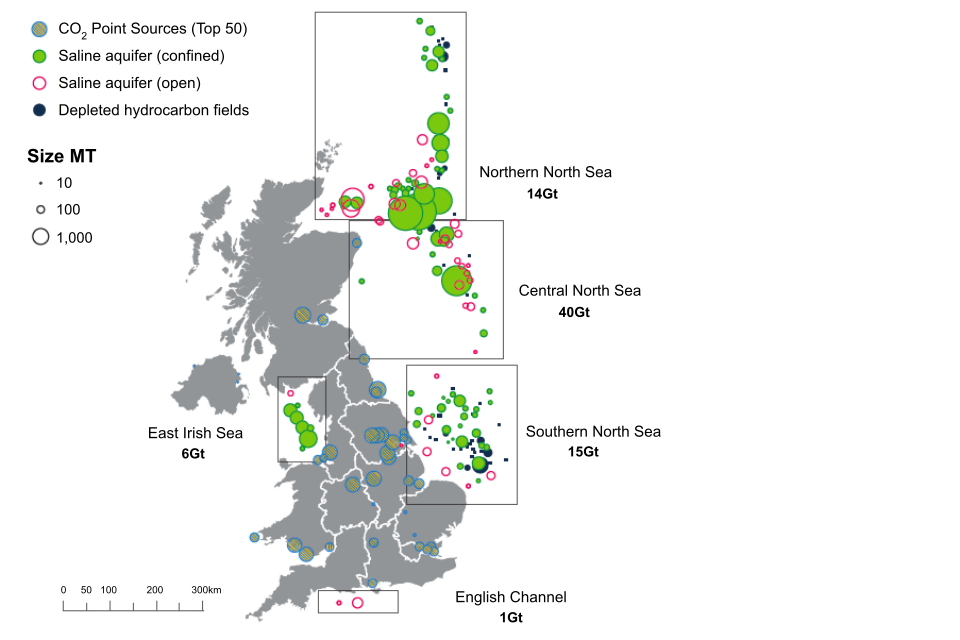
Storage units with less than 20 Mt of storage capacity are not included in this figure.
Description of figure 1: A map of the UK’s offshore storage capacity, with green and red circles. The green circles represent confined saline aquifers, the red represent open saline aquifers.
- Northern North Sea - 14Gt
- Central North Sea - 40 Gt
- Southern North Sea - 15 Gt
- English Channel - 1 Gt
- East Irish Sea - 6 Gt
Responding to the call for evidence
The following sections ask questions on a wide range of topics regarding future network development that government believes are currently important areas in transitioning towards a self-sustaining CCUS market.
There are many questions asked in this call for evidence due to our desire to gather evidence from a wide range of respondents. As a result, there may be questions posed within this call for evidence that are not relevant to all respondents. Therefore, there is no requirement to provide a response to all questions.
To better manage the responses that are received, please make clear which question(s) a response relates to. Government would like to thank respondents in advance for their cooperation as it will expedite the evaluation of the data and responses provided.
Questions are asked on the following topic areas:
- Respondent Data
- Intervention, Dependencies and Risk Appetites
- Overcoming Barriers: Network Utilisation
- Overcoming Barriers: Network Optimisation
- Delivery models and Emerging Opportunities
- Maturing Risk Management
- Further Enablers
Respondent data
We are collecting information on each respondent to better understand how the responses received align to different stakeholder groups. Further analysis may be required on the responses provided to look for trends, areas of interest and further engagement. Where this analysis may require third-party contractors (due to the technical nature of the information provided), respondent data received will be anonymised. The team may also reach out to respondents to clarify responses where required.
1. Who are you responding on behalf of, and what is your interest in this call for evidence?
2. In responding you confirm that you consent to members of the team reaching out for clarifications on responses provided, please provide contact details.
3. In responding you confirm that you give permission for your anonymised responses to be shared with external advisors, ALBs and regulators where appropriate for the purpose of analysis.
Intervention and dependencies
Transitional approach
As progress is made on initial CCUS deployment, focus remains on developing cost effective, efficient, and resilient networks. The characteristics that have so far influenced this initial phase of CCUS are:
- High degrees of government intervention and financial support through the RSA/GSP and government’s defining role over outcomes
- Allocation of business models for capture projects through negotiation
- Selection of and granting economic licences to Transport and Storage Companies (T&SCos)
These characteristics have wider implications in terms of the balance of risk between the government and the private sector. As commercial and technological risks become better understood, this may present opportunities for government intervention to evolve and transition in line with new understandings of risk. This may be supported and enhanced by wider industrial policies such as the Emissions Trading Scheme (ETS), EU Carbon Border Adjustment Mechanism (CBAM), Clean Power 2030 (CP2030) and the Industrial Decarbonisation Strategy (IS) which may in turn determine how networks evolve, for example to:
- Position CCUS as a way to decarbonise domestic industrial production, either as the only technology option, or where it is the most cost-option, so the UK becomes a producer of “green” products such as cement
- Position CCUS as an enabler for domestic production of hydrogen to replace fossil fuels in energy and industrial uses
- Provide energy security through use of abated gas power generation alongside growth of renewables in the energy mix
- Facilitate the development of direct air capture and bioenergy with carbon capture, usage and storage in the UK
- Seek to maximise revenue for the UK economy from cross-border trade by providing CO2 storage for European emitters
- Adjacent policy interventions which will impact demand for CCUS, for example, the Sustainable Aviation Fuels (SAF) mandate which will require airlines to reduce the emissions from the combustion of aviation fuel
Despite these wider policies, deployment of capture, transport and storage may continue to require government support in the near term; it is uncertain on what form(s) of support may be optimal to drive and capitalise on commercialisation steps over time.
The UK Infrastructure: A Ten-Year Strategy[footnote 8] publication sets out the entrepreneurial state the government is fostering, which will support business investment and catalyse growth. A key element of this support is through the use of ‘financial transactions’ which allow government to invest alongside the private sector, including equity investments, loans and guarantees, through Public Financial Institutions such as the National Wealth Fund (NWF) and Great British Energy (GBE). Institutions such as the NWF and GBE are expected to play a significant role in financing infrastructure in the coming years and create a strong end-to-end clean energy development and financing opportunity, including the potential for co-investment in future CCUS projects, where appropriate.
In the past few years there has been progress on European CCS projects in Norway, the Netherlands and Denmark who are showcasing a range of possible alternative ways for national governments to support CCS deployment. This call for evidence therefore also asks whether lessons can be learned from deployment in Europe and what opportunities, if any, GBE and NWF may offer.
Industry’s risk appetite for investment
Ahead of the design and initiation stages of the current cluster sequencing process, planning and engagement identified significant barriers to entry for industry to develop a solely private sector led CCUS sector in the UK. These included: high upfront capital expenditure, high operating costs, uncertain demand and regulatory barriers.
Understanding how to address these barriers through commercial measures such as commercial insurances, security of payment, and security of demand, without reliance on government supported RSA and GSP, is an important next step. We look to better understand from a commercial perspective what is currently being done and what further actions could be progressed to protect and mitigate against these risks in the short- and long-term as alternative approaches to the current ERR offering.
Risk coverage by the GSP provided to HyNet and ECC clusters is defined in a way to mitigate high impact/low probability events which pose investment risks, 2 of which are leakage and stranded assets. These risks are hard to mitigate due to the limited ability to assess the likelihood and impact before commercialisation and operation of assets has commenced. The insurance sector has identified that in order to develop commercially viable offerings to cover these specific risks, they need to be better understood and categorised appropriately. Understanding of leakage risk can be progressed through operational data and monitoring, whilst stranded asset risk can be minimised by ensuring adequate network utilisation and user sequencing.
Through the questions below, government seeks to identify barriers to progression and determine what support, incentives, and policy developments may be needed to facilitate the transition towards a self-sustaining and self-sufficient commercial CCUS market in the UK.
4. What are the key positive drivers for investment from your perspective that would remove the need for RSA and GSP support?
5. What do current and prospective network operators predict needs to be done to mitigate and manage future demand fluctuations and stranded asset risks?
6. How can commercial insurance products be tailored to better characterise the unique risks associated with CO2 transport and storage, such as leakage and stranded asset risks?
7. How can cross-sector collaboration (from financiers and insurance providers) be optimised to enhance financing and investment in future CO2 networks?
8. Should government evolve the nature of support made available to future T&S networks, to help enable market transition? Please set out your rationale and suggest any steps that could be taken.
9. How can co-investment from bodies such as NWF/GBE best play a role in deploying future CO2 networks and help enable market transition?
Overcoming barriers
Network utilisation: increasing network throughput and efficiency
Network utilisation in this context refers to the degree to which the pipeline’s capacity is being used to transport CO2 and indicates how much of the pipeline’s maximum capacity as a percentage is being utilised at any given point in time. Achieving higher utilisation rates across individual networks lowers the £/tonne for CO2 transported and stored and increases annual CO2 throughput into permanent storage.
Sustaining high utilisation rates is a key driver to supporting sufficient revenue recovery through T&S fees and lowering demand side risk for T&S operators where more of the network is utilised, reducing the reliance on external financial support mechanisms such as the RSA. Intermediate storage and/or flexible/interruptible capacity booking products may present opportunities to boost overall transport throughput and increase overall utilisation. From a T&S perspective, adjusting booking practices and compression operation, utilising operational data as it becomes available, may provide solutions to optimise networks and value-for-money.
Currently the “allowed revenue” an operator has via the ERR is recoverable through T&S fees charged to users. The rates are determined annually based on factors such as projected flow volumes, capacity bookings and connection size. If the revenue collected from these charges falls short of the allowed revenue, any shortfall is mutualised, meaning it is built into the charging rate to be recovered in the following charging year. If the price cap is reached (benchmarked to carbon price) any remaining deficit is met by the government-supported RSA. Increasing utilisation rates would help minimise or mitigate revenue shortfall.
Policy and regulatory factors, including those within the Code (which currently determine boundaries for capacity booking, capacity products and the use of system procedures) collectively impact the overall utilisation of a network. The Code in its initial form was designed as a minimum viable product to enable the first FIDs with the expectation that the Code itself would evolve alongside the sector.
Capacity products, which are the offering available under the Code for which users can book their registered capacity, are currently limited to firm, annual products only. They have been developed in this way to ensure long-term, uninterrupted access rights to the network for users. These products create predictability for T&S operators and users with respect to charging and revenue recovery, ensuring appropriate user business model support is paid to store CO2, and where possible network operator revenue recovery is recovered through T&S fees rather than reliance on RSA mechanisms. However, more flexible and interruptible capacity products (which can be designed to fit the needs of new user types with differing flow profiles and usage requirements within the Code) could help to enhance utilisation rates.
Conditions in the Code for registering capacity gives the user the right but not the obligation to flow CO2 onto the network at the determined rate in their capacity booking. A user cannot flow above their Registered Capacity within current Code provisions, which encourage users to register for capacity at their peak instantaneous flow rate. This ensures business model backed users can flow at the maximum their business requires.
Inefficiencies occur when user throughputs vary between peak and average flow or through seasonal adjustments to their underlying business demand. The difference between peak flow and average flows for some users necessitates large, registered capacity bookings to accommodate their 100% peak flow rate, despite these users having relatively low load factors. Power CCUS plants are expected to operate in a dispatchable mode and participate in the GB electricity balancing mechanism on very short notice. This is one example of where a demand profile may lead to underutilisation of a network’s capacity at any given point that could otherwise be utilised by other potential network users under the current approach in the Code. As CO2 itself is not the primary product for most users’ underlying business, it is prudent to ensure that the procedures and regulations around CO2 networks have minimal interference for underlying business processes.
Changes in the practice of capacity allocation, offering and booking may need to evolve in order to decrease underutilisation seen in early network designs and to better reflect the requirements of capture projects. It is understood in practice that users will not consistently operate at peak flow and that this will lead to underutilisation of the quantum of the network used compared to the amount that needs to be notionally reserved for them to accommodate any sustained peak flows. Mild over-booking of aggregate Registered Capacity against a network’s capacity may be a solution to increase store utilisation, provided the risks/trade-offs involved are adequately characterised. Changes in approach such as this could play a role in the wider attempt to increase utilisation of transport and storage capacity.
Flexible capacity products, like shorter-term, tradable and interruptible offerings, could further help provide wider flexibility to both capacity registering practices and capacity optionality. The introduction of interruptible products could provide a use case for pipeline and non-pipeline users to over-book total network registered capacity, or book against existing booked registered capacity on an interruptible basis for a discounted rate, to increase utilisation when total network CO2 flow is low.
The development of such products and wider Code modifications associated with enabling market transition as well as optimising networks, including charging structures, connection practices and CO2 specifications will need to progressively evolve to meet changing requirements of current and prospective users. The modification process in the Code enables such changes to take place and includes representation from various user groups and operators.
Solutions such as these, paired with intermediate storage solutions before CO2 enters the network, can provide more flexibility to network operators and users. Shorter-term products could then more appropriately align users’ registered capacity to their seasonal fluctuations or variable CO2 output. By further introducing a user-user or user-network capacity trading scheme, this could allow users to reduce or increase their booking within year to suit their needs. Each of these solutions have a use case and should be considered when the demand for such a product is requested.
The introduction of flexible users who can flow intermittently either through business practices or the use of on-site storage infrastructure may provide other methods to increase wider network utilisation. These short- and medium-term solutions can be considered in the round by current and prospective entities to create a best-use approach to highly utilised networks in the future.
Developing proposals on commercialisation priority areas (such as capacity booking products, licence disaggregation) that are supported by the sector, and modifying them into the Code, may be challenging; the subject matter is cross-cutting and complex, whilst the sector has a diversity of needs and interests. Ofgem can initiate Significant Code Reviews (SCRs). This can provide for a holistic review of a code-based issue and speed up industry reform but there may be value in joint working between industry and government to identify and plan for future commercialisation priorities.
10. How can the evolution of the Code and capacity products be optimised to enhance network utilisation and reduce reliance for the T&S operator, on external financial support mechanisms?
11. What specific flexible capacity products, interruptible offerings and/or network access would be required by different user types to best address the inefficiencies caused by seasonal fluctuation or another other reason for variable CO2 flows under the current Code?
12. Does industry see a need for government to help define wider commercialisation priorities for the Network Code? Or are priorities sufficiently clear that industry can deliver on them, outside of or through an Ofgem SCR?
Network optimisation: network right-sizing and future proofing
Industrial decarbonisation in the UK, a major goal for this government, will be achieved through a variety of ways that are not solely restricted to CCUS-enabled solutions. Electrification of the UK’s industrial sector, replacing previously carbon intensive industrial processes with supported electrification conversions, will allow the UK to make significant progress towards Net Zero ambitions.
Electrification will play a key role in decarbonising industrial clusters, especially in sites where CO2 specifications for CCUS participation are unlikely to be met or the cost of entry onto such a network is unfeasible. Electrification may also be more appropriate to the scale and nature of specific industrial processes and thus be preferable.
This electrification will nonetheless be carried out alongside processes such as CCUS and the government’s ambitions regarding emission reductions can be supplemented by a cost-effective, well-suited CO2 network that can symbiotically co-operate in advancing wider industrial decarbonisation in the UK.
The design, routing and sizing of network infrastructure will play a significant role in the future economic case and optimisation of CO2 networks in the UK. These factors will be heavily influenced by the demand, location and likelihood/readiness of potential emission sources looking to join future UK CO2 networks.
For CCUS, the development of domestic power generation in addition to a baseline demand from the industrial sector, will create the overall demand for CO2 network build-out. Initiatives led by the NESO such as the SSEP and CSNP will move towards defining these future requirements and help to answer the questions of demand and location.
On-site emission sources in the UK occur both within industrial clusters and dispersed sites nationwide. The location of these emission sources bears considerable implications for the development and planning of future decarbonisation efforts and subsequent infrastructure planning, both through access to pipeline and non-pipeline transport to a permanent geological store.
Figure 2: 2022 emissions (MtCO2e) from large industrial sites in clusters[footnote 9]
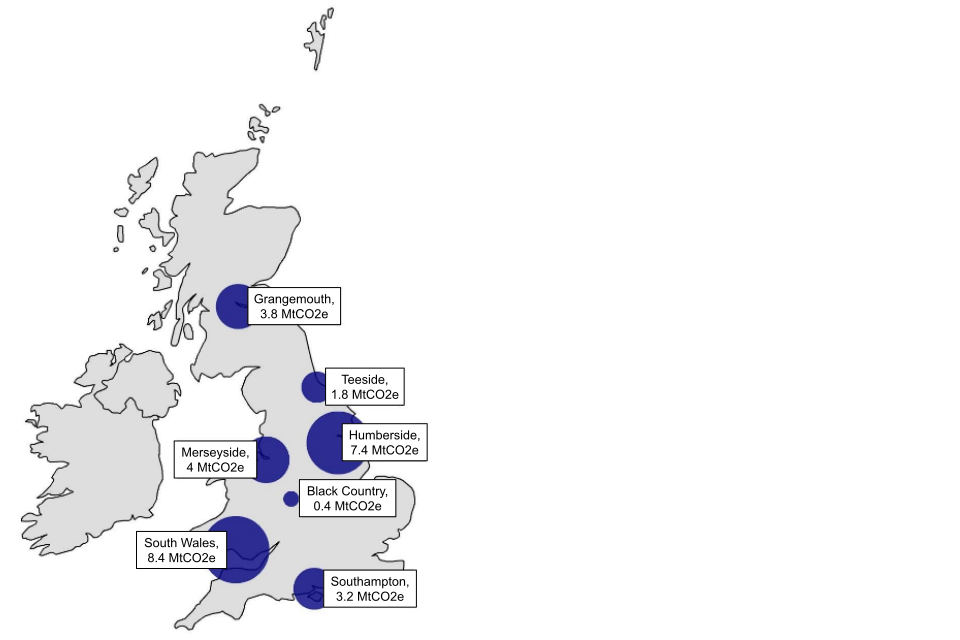
Description of figure 2: A map of the UK’s most significant CO2 emissions in large industrial sites across the country. It shows how the emissions are located in clustered areas, with significant areas being South Wales (8.4 MtCO2e), Humberside (7.4 MtCO2e), Merseyside (4 MtCO2e) and Grangemouth (3.8 MtCO2e).
The cluster approach has distinct, localised networks in mind. These networks utilise fixed pipeline connections to link traditional industrial hubs with offshore storage. With the introduction of NPT services, optionality can be introduced, and the economics of pipeline routing versus NPT solutions can be weighed on a user-by-user basis to determine the most appropriate transport solution.
NPT therefore could allow decarbonisation for dispersed emitters wherein it is not financially or environmentally feasible (due to planning constraints and/or infringement of protected natural environments) to deploy pipelines nearby. Aggregation of localised emissions sources may provide a stronger business case for transport, either pipeline or NPT, to service some of these dispersed, lower output emission sources and should be considered where appropriate.
The UKRI’s ‘Industrial Decarbonisation: Network Models’[footnote 10] paper identifies and discusses 2 proposed approaches to network planning, firstly, an organic project-by-project (bottom-up) development process where networks expand around anchor emitters and grow gradually. Secondly, a centrally planned (top down) approach, where wider spatial planning is used to optimise network development. The paper further identifies that nearly half of UK emissions are located in isolated or dispersed sites outside of main cluster areas, and that 88% of all UK point source emissions are less than 100 ktpa. Aggregation of emissions, relocation of emission sources to existing and proposed clusters’ locations and the use of non-pipeline transport solutions can be considered through top down or bottom-up approaches to optimise sequestration across the UK and reach carbon budget and net zero targets.
Both approaches maintain benefits and drawbacks, which would need to be effectively analysed before any proposed approach is defined. A top-down approach may allow supplementary processes such as permitting, storage availability, port, interconnector and road/rail infrastructure to be planned effectively but might be stifled by high-cost and asset stranding risk. Alternatively, a bottom-up approach may see sustained progressive growth but be limited by slow and disconnected policy and infrastructure development.
To date, government has played a role in developing and coordinating the work needed to enable CCUS clusters, recognising the nascency of the sector and the government’s role in subsidies and underwriting risks. As the sector develops, the degree of government intervention could decrease as the picture on risks evolves, and the coordination and development of clusters, dispersed sites and connections could increasingly fall to industry and to market forces, and/or a coordination function, to decide. Under the Licence, the T&SCo is required to publish plans and forecasts on capacity with the intention that it will, in future, fulfil a coordination and development role.
Resilience and redundancy across networks
Although the Licence and Code are designed to minimise network outages, networks remain vulnerable to unforeseen interruption. Localised clusters run the risk of being unable to provide short-term transport and/or storage services due to maintenance, trips, off spec CO2 remediation and other factors that could see users needing to vent CO2 in the absence of emergency transport or backup storage options with other sites. This disruption to operations has wider financial impacts and liabilities through the full value chain beyond the obvious reduced or halted flow of CO2. Where possible and economically feasible, interconnectivity of networks is being considered to alleviate the concerns around single-point failure of networks due to the nature of single pipeline connection dependencies.
The most accessible form of interconnectivity in the short-term is non-pipeline transport, which has the potential to play a vital role in enhancing the resilience of the initial, separated clusters through flexible inter-cluster transport.
A possible longer-term, aspirational ‘end-state’ scenario could be an inter-cluster pipeline network, akin to that utilised by the natural gas National Transmission System. This ‘end-state’ scenario could have the potential to significantly improve network resilience to unforeseen outages but would require significant financial investment, regulatory development and buy-in from current and prospective cluster operators.
13. What are the key considerations for spatial planning and optimisation when integrating CCUS with wider energy and industrial systems, particularly in relation to existing and new infrastructure for hydrogen and natural gas?
14. How can the resilience and redundancy of CO2 networks be enhanced to mitigate the risks associated with single-point failures and ensure continuous operation during maintenance or unforeseen outages?
15. Is there potential for different roles and responsibilities on the planning of future network build-out and new connections? What would the advantages and disadvantages be of any alternatives?
Delivery models and emerging opportunities
Unbundling of the CCUS value chain
Unbundling refers to the separation of different stages of the CO2 transport and storage value chain into distinct, potentially independently operated and owned entities. This requires disaggregation of the Licence, which is expected to be a clear commercialisation step for networks and would trigger the need for commensurate changes in the Code and further conception of other commercial interface agreements to manage cross-chain risks and liabilities. Unbundling would enable unique operators; pipeline transport only services (TCo), storage only services (SCo) and non-pipeline transport services (NPT), to operate independently, resulting in different operators being responsible for unique parts of the value chain.
Unbundling provides potential benefits for wider flexibility and optionality when it comes to network design and commercial arrangements. It provides a platform for the development of market competition and reduces the barriers to entry for potential new operators, allowing specialised entities to operate in more suitable domains according to their expertise and providing more appropriate risk allocation.
Government will look to work with industry to develop an appropriate unbundled approach and identify provisions within the Code that may require further evolution through Code modifications or through our powers set out in the Code, on topics such as charging and capacity provisions. This approach will look to enable the evolving structure and requirements of future networks as well as help provide increased optionality, flexibility and utilisation. As this develops, we will need to consider how the wider integrated system will work.
16. What benefits, disbenefits, complexities and challenges do you believe disaggregation of the Licence will bring?
System and operator models
The emergence of different ownership structures and operator models enabled by unbundling and non-pipeline transport (NPT), could allow a flexible approach to CO2 network design that could be tailored to cluster-specific requirements and help develop a more attractive investment landscape.
To enable this increased operational flexibility, a system model may be required to determine how these operators interact, what the key roles and responsibilities of each operator are and how fundamentally this nodal system will cohesively function. The architecture of a universal system model may aid in creating uniformity and consistency across CO2 networks in the UK, ensuring that systems are compatible with standards and regulations whilst creating a scalable environment for networks to evolve and potentially interconnect in the future. The creation of a suitable system model is a pre-requisite for wider unbundling policy and potentially the cross-border movement of CO2. Once defined, Code modifications can be designed and implemented to enable a functioning commercial system with the correct interfaces and liability structure in place.
To help consider how CO2 networks might transition over time, government has undertaken an analysis of current industry practices that set a precedent or use similar network infrastructure within the UK and then identified the CCUS specific requirements to test and evaluate appropriate models to determine if an existing system can be used as a baseline, or a novel approach is needed to help us understand how CO2 networks might transition.
Currently 2 models have been identified and have been deemed to hold some merit to helping us understand transition scenarios when evaluated across criteria of:
- Compatibility - with current policy, business models and industry standards.
- Scalability - when considering how flexible the system model is to scale up to potential future network requirements.
- Feasibility - technically, operationally and legally.
- Deliverability - achievability within required timelines.
The models discussed below have been distilled down to represent payment flows only in order to introduce the model design at a simplistic level, this is for illustrative purposes only. Government is more widely considering how these models and associated workstreams could and should deal with the intricate contractual relationships, cross-chain risks and interconnecting agreements throughout the network chain within the required commercial operations.
System model one is denoted a ‘Principal Operator Model’ which is based on a single-entity model and system model 2 is denoted a ‘Next-Entity Model’, where interactions happen only within the localised value chain. The aim of introducing these models within this call for evidence is to encourage respondents to begin thinking about how unbundled networks may operate in the future.
In the unbundled Principal Operator Model, it’s expected that user payment flow is directed through a ‘principal operator’, who acts as an agent on behalf of the other network or storage operators. The principal operator would invoice users for services utilised in transport of their CO2 across the full value chain. It receives invoiced payments and is then responsible for distributing payments of T&S fees to respective network operator for their services provided to the relevant section of the user base. The network portal, denoted in the Code and run by the principal operator, would act as a central data location for each network where charging, capacity booking, nominations and other Code provisions would be managed by the principal operator and accessible to all network operators and users. It is envisioned that this role as agent could be provided by an operator in the value chain or, where deemed appropriate, a third-party entity.
This model simplifies the interactions that users are required to have with other individual entities, as opposed to multiple separate payment streams – a solution that may begin to add undue scalability complexity to the model upon acquisition of additional operators. Instead, risk is limited to payment liabilities between the principal operator as agent and other operators in the chain. This proposal assumes that the principal operator will have adequate provisions in place to act as agent on behalf of the other operators and further commercial agreements will be in place between operators to mitigate against cross-chain risks. In the illustrative example below, we have designated the principal operator as the offshore element for illustrative purposes.
Figure 3: The Principal Operator Model
In this model, an entity in the value chain would act as ‘principal operator’, acting as an agent and receive all user-payments and administer these down to other operators in the network.
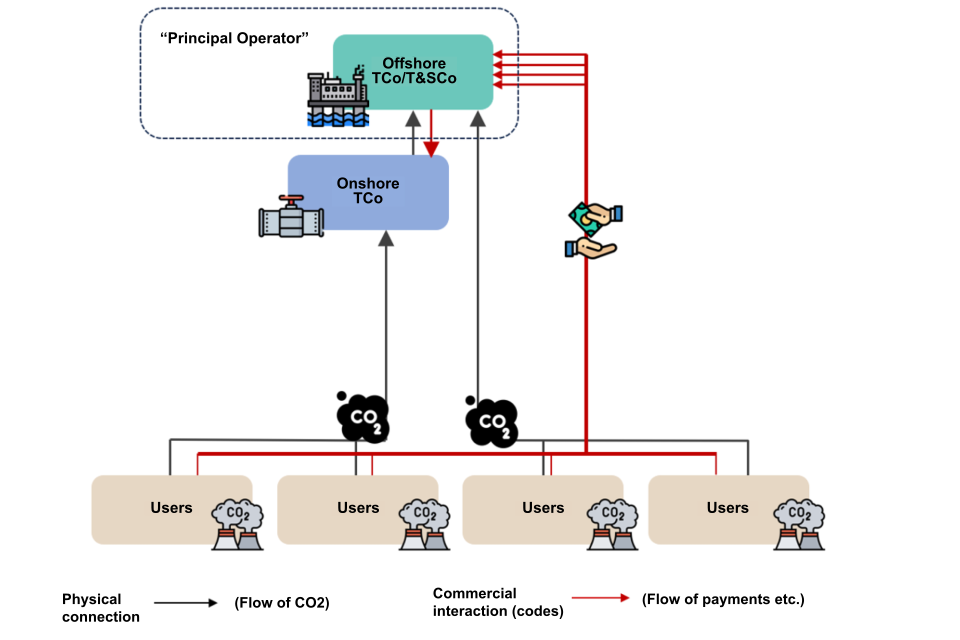
Description of figure 3: A flow diagram illustrating the Principal Operator Model. Detail below.
In the figure above, the red lines indicate a flow of payment – in the case of a Principal Operator Model, these are all paid to the principal operator which then distributes these payments down to other operators depending on their services provided. The black lines represent the physical flow of CO2, either directly to the Offshore T&SCo or via another operators’ services, meaning an Onshore TCo.
The unbundled Next-Entity Model functions slightly differently. It proposes payments flow via the next entity in the value chain until they reach their final recipient, reducing the number of interactions that each unique entity has to the other entities ahead and behind them. This model looks to make each interaction unique so that there is no reliance on one focal point in a network, making them more modular in nature, with the aim to enable all conceivable combinations of users and operators.
This model houses risks of financial payments potentially passing through numerous entities before being delivered to the final recipient, adequate provisions would have to be in place to ensure responsibilities were upheld and further subsequent agreements would need to address additional cross-chain risks that this approach may foster. This will be particularly important where smaller entities could be acting as a transfer agent for large entities further down the value chain.
Figure 4: The Next-Entity model
In this model emitters pay ‘directly along their CO2 stream’, financing whatever services they’ve utilised in an initial lump sum that gets filtered along the chain to the other respective operators in turn.
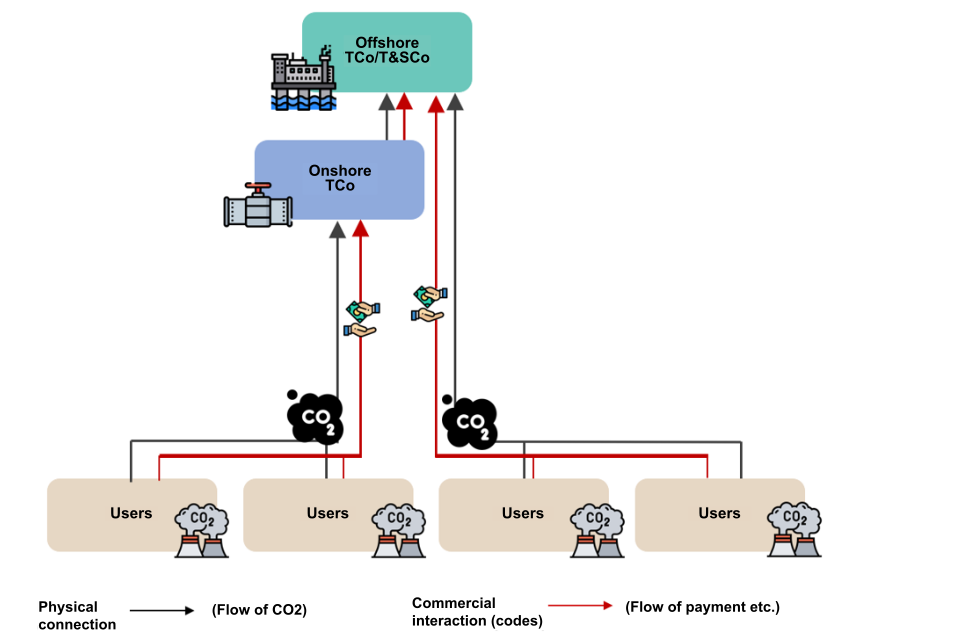
Description of figure 4: A flow diagram illustrating the Next-Entity model. Detail below.
The red lines indicate the flow of payment, in this case, flowing from each stage of the CCUS chain to the next entity within that chain. The black lines show CO2 flow directions. In the Next-Entity Model, payment flow and physical CO2 flow are similar. These options currently exist to identify differing approaches and will continue to be analysed and evaluated.
Non-Pipeline Transport solutions
Non-pipeline transport (NPT) refers to CO2 transport options which utilise road, rail, barge or ship as alternatives to emission sources being connected directly to stores via pipeline connections. These transport options may involve complex chains of transporters, intermediary storage, terminals, compression facilities and liquefaction plants in the process to get CO2 from one point source to a tie-in point on an existing network or storage location.
As an extension to the unbundling of network entities, the introduction of NPT brings considerations for how network systems as a whole would operate and interact. Nearly half of the UK’s industrial emissions are located outside of traditional industrial clusters[footnote 11] and NPT provides an option to decarbonise areas where pipeline connections are technically and/or economically unfeasible.
The development of NPT solutions would further increase the accessibility of the CCUS sector both for smaller, modular entities operating distinct value chain processes (such as shipping, liquefaction, temporary storage etc) and for dispersed or isolated emission sites where it is uneconomical or unfeasible to connect to an existing network or to a local storage site. The departure from a distinct piped model would require consideration of how these entities interact with regulated network operators, how the treatment of NPT CO2 may differ, what benefits it may bring to network utilisation and total CO2 throughput, and further consideration for how new, potentially unregulated payment structures may be defined.
NPT could potentially benefit CO2 networks on a macro scale, helping to facilitate ideas such as cross network transport of CO2 where long-term constraints created by maintenance, repair or remediation work prevents CO2 being transported to the originally designated store. New capacity and charging approaches may be developed through the Code to enable further benefits. These products could, for example, include interruptible products to help economically incentivise the less time-sensitive supply of CO2 from NPT intermodal storages that can be flowed onto the network at non-peak times in order to improve network utilisation rates.
Charging processes also have the potential to adapt alongside capacity products in regard to the development of unbundling and the introduction of NPT. New charging boundary definitions would likely be required in concordance with the new unbundled operator domains, and further consideration would be required for both NPT enabled domestic CO2 and international CO2 imports.
17. Do the 2 operator models as presented above show merit and meet expectations for a wider system model approach? Are there any significant benefits or challenges that either model presents from your perspective? Are there any other models you would propose?
18. What broad provisions/concepts within the Code and accompanying contractual arrangements do you believe require further evolution to support the unbundling of network entities and manage the cross-chain risks that unbundling might create?
Learning from progress around Europe
Alternative models to the UK’s are being deployed across Europe.
The Danish model utilises only non-pipeline transport projects rather than clusters of projects and unlike with UK CCUS business models, the Danish CCS contracts offer no cross-chain risk support. This lack of revenue certainty has meant projects have requested higher returns than in the UK. As there is no stranded asset protection (termination fee), projects are designing their infrastructure in a manner to maximise their ability to redeploy which comes at a higher cost.
Deployment in the Netherlands is via state owned gas companies. Those state-owned gas companies will own and operate the CO2 pipeline and ancillary infrastructure (such as compressor stations) with the Dutch state also covering under-utilisation risk. Subsidies for T&S Fees and capture costs are allocated on a competitive basis.
19. What can the UK learn from the various delivery approaches in use by nearby countries, and could any learnings be beneficially applied in the UK context? Please include thoughts in respect of operating model implications.
Maturing risk management
Improved risk allocation
Progressive proposals such as ‘unbundling’ of operating entities in the CCUS value chain, as discussed previously, have the potential to include optionality within networks to separate operational ownership of independent parts of the value chain to unique entities. This would allow commercial partners to operate more appropriately within the boundaries of their commercial expertise, significantly reducing risks associated with operating in new or unfamiliar territory, such as onshore, offshore or with storage facilities. By distributing ownership of risks more appropriately, this aims to provide reductions in uncertainty and subsequent financing costs as well as create an environment where barriers to market entry are reduced.
Identification of cross-chain risks
Cross-chain risks emerge when the performance or challenges within one segment of the value chain can have cascading effects on other segments. These risks often manifest as ‘project on project’ risks, where delays, operational issues, or disruptions in a single link have the potential to impact the broader network’s functionality, reliability, or financial viability.
Addressing these risks requires the development of comprehensive commercial agreements that establish clear allocations of responsibility, liability, and payment security among all participating entities, ensuring that the network as a whole remains resilient and adaptable. For the initial phase of deployment these risks are managed through the business model arrangements for both users and transport and storage operators. In time, the Code, which was developed as a minimum viable product to support FIDs for users backed by government, will need to more directly allocate risks between users and operators.
Enabling self-financing ‘Merchant’ capture connections
Development of low carbon products such as sustainable aviation fuels, low carbon cement and greenhouse gas removal technologies are likely to stimulate demand for access to CO2 networks by capture projects not directly supported by government. Accessing low carbon product markets may reduce the level of fiscal and cross chain risk support required for those projects. We are beginning to see business cases put forward for merchant access to networks such as sustainable aviation fuel (SAF) and greenhouse gas removal technologies (GGRs) which may be able to self-fund via the settlement of carbon credits sold to the wider UK market or other forms of government incentives. In the absence of government support contracts, T&S networks would need to operate on a merchant basis which introduces more commercial management of risk. This would precipitate need to update the Code to provide for more commercialised user connections.
20. How do respondents envision the incorporation of non-government backed operators and users being realised and what do you believe are the key requirements for their inclusion in a timely manner?
Further enablers
The topics discussed in this document could help to optimise CCUS networks and also enable the CCUS sector in the UK to transition to a more market-led approach.
Beyond the topics outlined in detail, there are wider factors that could support industry taking a greater role in CCUS. For example, a sustained higher carbon price under the ETS would directly enhance the investment case for capture, transport, and storage infrastructure. Higher ETS costs would increase the opportunity cost of unabated emissions, incentivising emitters to participate in CCUS value chains and providing a more robust price signal for long-term decarbonisation. Similarly, industry might welcome predictable and transparent financial incentives and revenue certainty for investors, whether delivered via direct subsidies, targeted grants, support schemes, tax incentives, or policy-driven mechanisms such as carbon take back mandates. These instruments could serve to de-risk capital outlay and stimulate private sector participation, while also establishing a clear commercial framework for market entrants.
Focusing more widely than the questions previously raised in this document, we would like to obtain views from respondents on the higher level, overarching drivers they see as important for enabling a self-sustaining market, please use the questions below to provide wider feedback where appropriate:
21. What key enabling factors/steps does industry see as being needed for a market transition phase to enable growth in a self-sustaining market? Are there any other significant considerations, benefits or challenges that you believe could impact market transition that have not been discussed within this document?
22. What does industry believe is within their power to do to aid in market transition as discussed in this document?
Next steps
After the call for evidence closes on 31 October 2025, DESNZ will analyse information received and provide a summary of responses circa early 2026. The analysis of responses will be used to inform future policy development. We intend to consult on future policy proposals.
Consultation questions
1. Who are you responding on behalf of, and what is your interest in this call for evidence?
2. In responding you confirm that you consent to members of the team reaching out for clarifications on responses provided, please provide contact details.
3. In responding you confirm that you give permission for your anonymised responses to be shared with external advisors, ALBs and regulators where appropriate for the purpose of analysis.
4. What are the key positive drivers for investment from your perspective that would remove the need for RSA and GSP support?
5. What do current and prospective network operators predict needs to be done to mitigate and manage future demand fluctuations and stranded asset risks?
6. How can commercial insurance products be tailored to better characterise the unique risks associated with CO2 transport and storage, such as leakage and stranded asset risks?
7. How can cross-sector collaboration (from financiers and insurance providers) be optimised to enhance financing and investment in future CO2 networks?
8. Should government evolve the nature of support made available to future T&S networks, to help enable market transition? Please set out your rationale and suggest any steps that could be taken.
9. How can co-investment from bodies such as NWF/GBE best play a role in deploying future CO2 networks and help enable market transition?
10. How can the evolution of the Code and capacity products be optimised to enhance network utilisation and reduce reliance for the T&S operator, on external financial support mechanisms?
11. What specific flexible capacity products, interruptible offerings and/or network access would be required by different user types to best address the inefficiencies caused by seasonal fluctuation or another other reason for variable CO2 flows under the current Code?
12. Does industry see a need for government to help define wider commercialisation priorities for the Network Code? Or are priorities sufficiently clear that industry can deliver on them, outside of or through an Ofgem SCR?
13. What are the key considerations for spatial planning and optimisation when integrating CCUS with wider energy and industrial systems, particularly in relation to existing and new infrastructure for hydrogen and natural gas?
14. How can the resilience and redundancy of CO2 networks be enhanced to mitigate the risks associated with single-point failures and ensure continuous operation during maintenance or unforeseen outages?
15. Is there potential for different roles and responsibilities on the planning of future network build-out and new connections? What would the advantages and disadvantages be of any alternatives?
16. What benefits, disbenefits, complexities and challenges do you believe disaggregation of the Licence will bring?
17. Do the 2 operator models as presented above show merit and meet expectations for a wider system model approach? Are there any significant benefits or challenges that either model presents from your perspective? Are there any other models you would propose?
18. What broad provisions/concepts within the Code and accompanying contractual arrangements do you believe require further evolution to support the unbundling of network entities and manage the cross-chain risks that unbundling might create?
19. What can the UK learn from the various delivery approaches in use by nearby countries, and could any learnings be beneficially applied in the UK context? Please include thoughts in respect of operating model implications.
20. How do respondents envision the incorporation of non-government backed operators and users being realised and what do you believe are the key requirements for their inclusion in a timely manner?
21. What key enabling factors/steps does industry see as being needed for a market transition phase to enable growth in a self-sustaining market? Are there any other significant considerations, benefits or challenges that you believe could impact market transition that have not been discussed within this document?
22. What does industry believe is within their power to do to aid in market transition as discussed in this document?
Glossary of terms
Allowed Revenue: The amount of revenue a T&S Licensee can recover from its Users within a defined price control period.
Anchor phase: Initial projects connecting to the transport and storage (T&S) network.
Arm’s Length Bodies (ALBs): A type of public sector organisation that operates independently from direct government control, though it remains accountable to the government. These bodies are established to deliver public services, regulate industries, or provide expert advice, while maintaining a degree of operational autonomy.
BECCS: Bioenergy with Carbon Capture and Storage
Buildout phase: Increasing the volume of captured, stored & abated CO2, filling spare transport and storage capacity and enabling future phases of store and network expansion enabling additional projects.
Call for evidence: An information-gathering exercise that seeks expertise from people, organisations and stakeholders with knowledge of a particular issue.
Capture BM: A business model designed to overcome the barriers to CCUS deployment in a range of sectors supporting the capture and permanent storage of CO2.
Capture project: A facility with carbon capture installed for future utilisation or storage
Carbon budget: A carbon budget places a restriction on the total amount of greenhouse gases the UK can emit over a 5-year period. The UK is the first country to set legally binding carbon budgets.
CCC: Climate Change Committee
CCS: Carbon Capture and Storage
CCUS: Carbon Capture, Usage and Storage
CCUS cluster sequencing process: The process by which Carbon Capture, Usage and Storage (CCUS) industrial clusters are chosen, with 2 by the mid-2020s, and a further 2 clusters by 2030 as outlined in the Net Zero Strategy.
CCUS policy landscape: The policy instruments that have been developed, or will be developed, by UK Government, Devolved Administrations and relevant regulatory authorities to aid the deployment of CCUS across the UK.
CCUS value chain: Defined as the full range of activities, from start (for example, capture) to finish (for example, geological storage) which are required to provide the CCUS service.
CfD: A Contract for Difference (CfD) is a private law contract between a low carbon electricity generator and the Low Carbon Contracts Company (LCCC), a government-owned company
CO2: Carbon dioxide
Consolidator: A consolidator refers to an entity that combines or aggregates multiple sources of CO2 emissions.
Cross-border CO2 T&S network: In this call for evidence, ‘cross-border CO2 T&S network’ should be taken to refer to a network which facilitates the transport and storage of CO2 and which traverses the territory of the UK and a third-party nation. Cross-border transport could be via NPT modes or pipeline.
Cross-border user: A capture project or intermediary which connects into a cross-border CO2 transport and storage network.
DACCS: Direct Air Carbon Capture and Storage
FOAK: First-of-a-kind
GGR: Engineered Greenhouse Gas Removal technology, for example, Bioenergy Carbon Capture and Storage (BECCS) or Direct Air Carbon Capture and Storage (DACCS)
GSP: Government Support Package
HICC: Hydrogen and Industrial Carbon Capture
ICC Business Model: Designed to incentivise the deployment of carbon capture technology for industrial users, the ICC business model is a common law contract, similar to a CfD, that provides the emitter with a payment per tonne of captured CO2. Projects looking to retrofit grey hydrogen production will be eligible for support through this scheme.
Industrial Decarbonisation Strategy: Outlines how the country aims to reduce carbon emissions from its industrial sector to achieve net zero by 2050.
Intermodal facility: The equipment required to allow for the successful transfer of CO2 from one mode of transport to another.
Market creation phase: Getting to 20 to 30 megatonnes per annum (Mtpa) CO2 by 2030.
Market transition phase: Following the market creation phase, the emergence of a commercial and competitive market that efficiently accelerates deployment whilst driving costs reduction and reducing the degree of government support needed.
Mutualisation: The rebalancing of User charges to address any shortfall in regulated allowed revenue arising from network underutilisation. Underutilisation may arise from uncontracted network capacity and/or different load factors of Users like peaking power stations. The final rebalanced price for those Users that were originally below the carbon futures price before rebalancing is capped at the carbon futures price.
NESO: National Energy System Operator
Network Code: The Carbon Capture and Storage Network Code is a key component of the business model and regulatory regime for CO2 transport and storage. It sets out the commercial, operational, and technical arrangements between T&S Co and users, together with governance arrangements.
Net zero: A legally binding target set out in the Climate Change Act to reduce UK greenhouse gas emissions by at least 100% of 1990 levels (net zero) by 2050.
Net Zero Strategy: This strategy, published in October 2021, sets out policies and proposals for decarbonising all sectors of the UK economy to meet our net zero target by 2050.
Node: Node is derived from telecommunication network nodes and used in this context to mean something capable of creating, receiving or transporting CO2.
NPT: Non-Pipeline Transport – the transport of CO2 by road, rail, barge and ship.
NPT enabled: NPT enabled means that the cluster has the infrastructure (temporary storage, loading/unloading equipment and transport node infrastructure (such as a jetty)) to allow for transport of CO2 to occur in and out of that cluster.
NPT service provider: An NPT service provider is defined here as the entity delivering those services that are required specifically to deliver an NPT solution. In other words, any entity which provides a service in the transfer of CO2 from the NPT user following capture and before being delivered to the T&S network.
NPT solution: The delivery of an NPT value chain
NPT storage operator: A commercial operator storing CO2 which has been transported to the storage site by road, rail, barge or ship.
NPT transport mode: Road, rail, barge and / or shipping.
NPT user: A capture project which connects to a non-pipeline transport CO2 network
NPT value chain: NPT value chain is the full chain from CO2 capture via NPT service provider to the geological store.
Phase-1: The first stage of the cluster selection process used.
Piped user: A capture project which connects to a CO2 transport network via a pipeline.
Receiving facility: A location where CO2 is unloaded from ships, barges, lorries, or railcars for injection into the piped T&S network.
Registered Capacity: The officially allocated capacities for CO2 volumes under the Code. It constitutes a user’s entitlement (but not obligation) to flow up to this amount onto the network.
Resilience: The ability to overcome a single point failure and continue to be operational.
RSA: Revenue Support Agreement
Revenue Support: A government provided risk mitigation measure to protect initial T&SCo’s against demand-side risk, facilitated through the TRI model.
SCo: A Storage Company. A company licensed to store CO2
Security of storage: The likelihood that any given unit of CO2 will be stored.
Send-out facility: A location where CO2 is loaded into ships, barges, lorries or railcars for onward transportation.
Storage operators: A company who is licensed by the relevant licensing authority to operate a CO2 store.
Store: A defined volume area within a geological formation used for the geological storage of CO2.
T&SCo: A transport and storage company. A company licensed to provide transport and storage services.
T&S fees: T&S fees under the TRI model refer to the charges paid by network users (such as power and industrial emitters) for the transport and geological storage of the CO2 they produce. It follows a user-pays economic regulation approach.
-
T&S network: A transport and storage network means infrastructure and facilities for:
- (a) the disposal of carbon dioxide by way of geological storage (or injection for the purposes of geological storage) at a relevant site, or
- (b) the transportation of carbon dioxide to a relevant site for the purpose of such disposal.”
- (As defined in the Energy Act 2023 - section 1(9))
T&S network user: Transport and storage network user means a person who is, or seeks to be, a party to arrangements for carbon dioxide to be transported to a relevant site for the purpose of disposal by way of geological storage.
Transport & Storage Regulatory Investment (TRI) Model: The Regulated Asset Base (RAB) model through which the initial T&S companies were incentivised to deploy CCUS. It combines the Economic Licence, Government Support Package and Revenue Support Agreement. The TRI Model was specifically designed for the market conditions associated with cluster deployment.
TRI Model: Transport and Storage Regulatory Investment Model
UK: United Kingdom of Great Britain and Northern Ireland
UK Emissions Trading Scheme (UK ETS): The UK Emissions Trading Scheme (UK ETS) is the UK’s cap-and-trade carbon pricing scheme. The UK ETS sets a cap on the total volume of greenhouse gases that sectors covered by the scheme (currently energy intensive industry, power generation, and aviation), can emit. Participating emitters purchase or receive emissions allowances at a price determined by the UK carbon market. The cap steadily decreases in line with the UK’s Net Zero trajectory, providing a long-term signal to decarbonise.
-
Department for Energy Security and Net Zero ‘Carbon capture, usage and storage (CCUS): business models’ ↩
-
The Climate Change Committee (2025) ‘The Seventh Carbon Budget’ ↩
-
Department for Energy Security and Net Zero (2023) ‘Carbon capture, usage and storage: a vision to establish a competitive market’ ↩
-
Department for Energy Security and Net Zero (2025) ‘CCS Network Code, January 2025’ (PDF) ↩
-
Department for Energy Security and Net Zero (2025) ‘Clean Power 2030 Action Plan’ ↩
-
Michelle Bentham and others (2014), ‘CO2 Storage Evaluation Database CO2 Stored). The UK‘s online storage atlas’, Energy Procedia, Vol. 3 ↩
-
Department for Energy Security and Net Zero (2023) ‘Carbon capture, usage and storage: a vision to establish a competitive market’ ↩
-
HM Treasury (2025) ‘UK Infrastructure: A 10 Year Strategy’ ↩
-
2022 emissions from large point sources, National Atmospheric Emissions Inventory – ‘Clusters’ include all industrial sites within 30km of the largest emitter in the area. Sites within each cluster can be seen on the ‘Point source emissions map’ tab on the Industry stats dashboard. ↩
-
UK Research and Innovation (2024) ‘Industrial decarbonisation: network models’ ↩
-
Department for Energy Security and Net Zero (2023) ‘Cluster sequencing for CCUS: Track-2 Guidance’ ↩