Niger
Subscriptions
Warnings and insurance
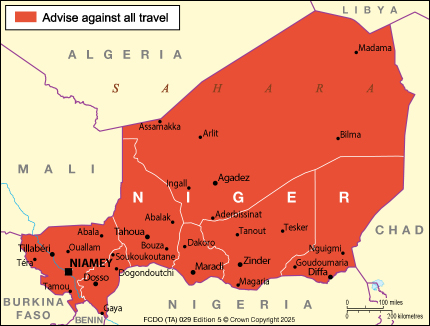
Your travel insurance could be invalidated if you travel against advice from the Foreign, Commonwealth & Development Office (FCDO).
FCDO advises against all travel to Niger
This is due to the rise of reported terrorist and criminal kidnappings of foreign nationals which have taken place this year in Niger.
There is an ongoing risk of terrorist attacks throughout Niger including in the capital, Niamey.
The political situation remains unstable following the military coup in July 2023. Further instability is possible.
Travel disruption
There have been reports of gunfire around the Presidential Palace and Diori Hamani International airport early morning on 29 August. The road between central Niamey and the airport may have more security checkpoints and possible short-notice travel disruptions.
You should:
- monitor local media
- follow the instructions of local authorities
- contact your airline before travelling
US Security Alert
The US Embassy in Niamey has issued a Security Alert warning that American citizens are at risk of kidnapping throughout Niger, including in the capital, Niamey. British citizens are equally at risk. Read the Security Alert – U.S. Embassy Niamey (October 22, 2025).
Limited UK government support
Support for British nationals is severely limited in Niger. Assistance is provided remotely from the British Deputy High Commission in Lagos. In-person assistance is not available.
If there is serious violence, unrest or a deterioration in the security situation, it could be difficult to leave safely.
Do not rely on the UK government to evacuate you as they may not be able to do so. Have your own plans on how you would leave the country, make sure you keep all travel documentation up to date and monitor the local situation.
Travel insurance
If you choose to travel, research your destinations and get appropriate travel insurance. Insurance should cover your itinerary, planned activities and expenses in an emergency.
About FCDO travel advice
FCDO provides advice about risks of travel to help British nationals make informed decisions. Find out more about FCDO travel advice.
Get travel advice updates
Sign up to get email notifications when this travel advice is updated.
Follow FCDO: