Vision profile statistical commentary: May 2026
Updated 13 August 2026
Applies to England

© Crown copyright 2026
This publication is licensed under the terms of the Open Government Licence v3.0 except where otherwise stated. To view this licence, visit nationalarchives.gov.uk/doc/open-government-licence/version/3 or write to the Information Policy Team, The National Archives, Kew, London TW9 4DU, or email: psi@nationalarchives.gov.uk.
Where we have identified any third party copyright information you will need to obtain permission from the copyright holders concerned.
This publication is available at https://www.gov.uk/government/statistics/vision-profile-may-2026/vision-profile-statistical-commentary-may-2026
What’s new
New data for hospital outpatients and procedures has been added for the financial year ending 2025 and data back to the financial year ending 2014 has been updated.
The following indicators have been updated (where age has not been specified, this refers to all ages):
- vision outpatient attendances (persons based): number of people attending
- vision outpatient attendances: number of attendances
- admissions to hospital for cataract surgery in people aged 65 years and over
- admissions to hospital for rhegmatogenous retinal detachment surgery in people aged 18 years and over
- intravitreal injection therapy procedures in people aged 60 years and over
Introduction
The vision profile gives local areas comparable indicators of risk factors, healthcare provision and outcomes to support commissioning and planning, and to identify geographical variation.
Main findings
This update shows:
- 3.9 million people attended 10.7 million hospital outpatient appointments for vision across England in the financial year ending 2025
- there has been a year on year increase in the number of patients attending hospital outpatient appointments for vision since the financial year ending 2014, with the exception of the pandemic financial year ending 2021
- rates of hospital procedures for cataract surgery and intravitreal injection therapy have increased and were significantly higher in the financial year ending 2025 than in the previous financial year
- rate of hospital procedures for rhegmatogenous retinal detachment surgery in the financial year ending 2025 remain similar to the previous financial year
Detailed findings
Vision outpatient attendances (persons based)
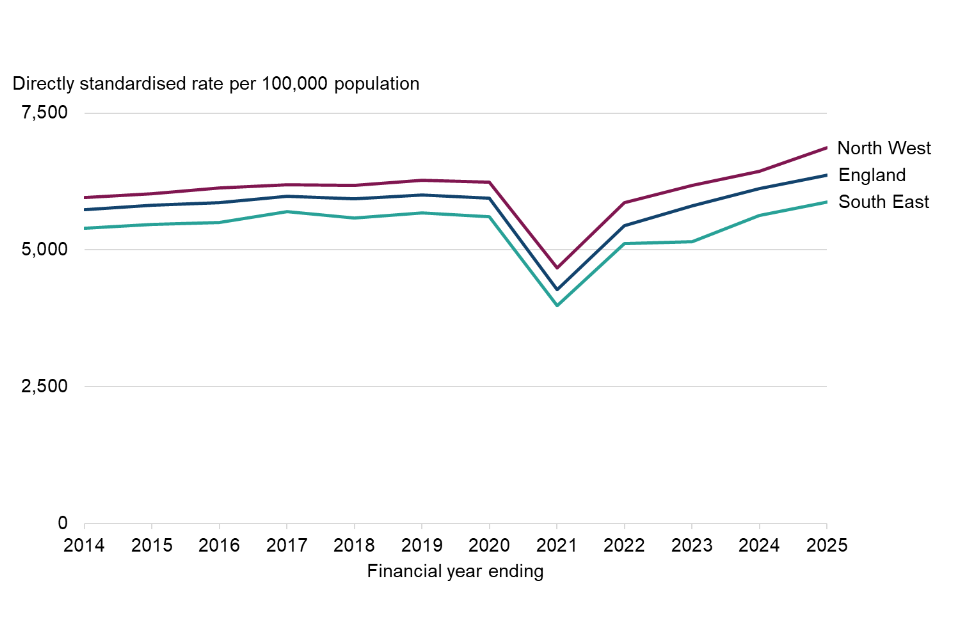
In the financial year ending 2025, there were almost 3.9 million people who attended hospital outpatient appointments for vision in England, a rate of 6,370 per 100,000 population which was significantly higher than the rate in previous financial years. The number of people attending appointments in the financial year ending 2025 were 30% higher than in the financial year ending 2014. This increase may reflect the increasing older population in England.
There is geographical variation in the rate of persons attending hospital outpatient appointments for vision across England (see figure 1). In the financial year ending in 2025, among NHS England regions:
- North West had the highest rate at 6,866 per 100,000 population, a 7% increase on the previous year
- South East had the lowest rate at 5,881 per 100,000 population, a 4% increase on the previous year
Figure 1: vision outpatient attendances (persons based), directly standardised rate per 100,000 population, selected NHS England regions and England, in the financial year ending 2014 to the financial year ending 2025
Source: Office for Health Improevment and Disparities (OHID), based on NHS England Hospital Episode Statistics Outpatients (HES OP) and patients registered at a GP practice.
Vision outpatient attendances
For diseases that affect vision it is common that a person might attend hospital several times during the year. This indicator measures the number of outpatient appointments and service provision rather than the number of people attending.
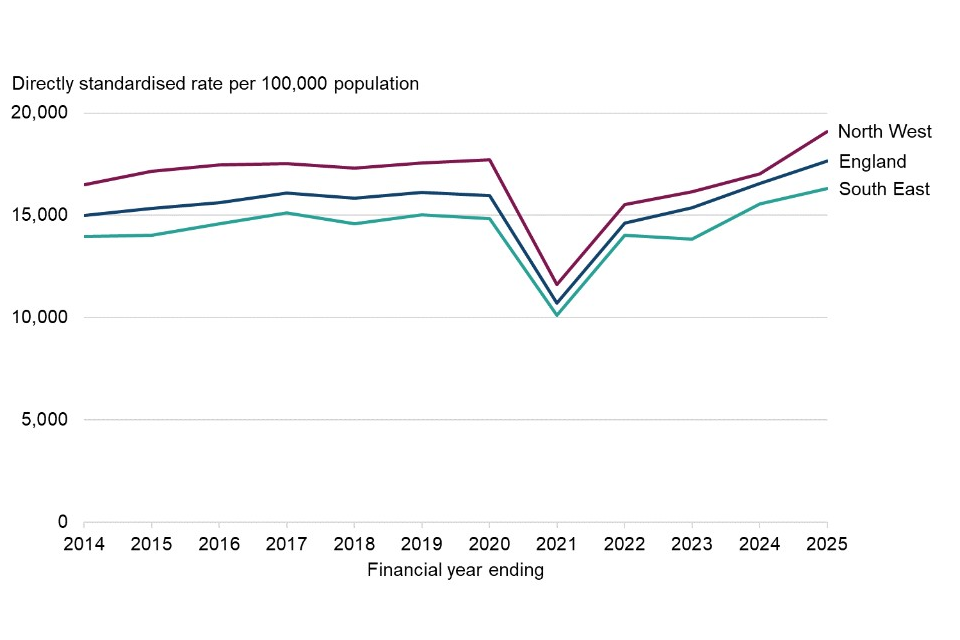
In the financial year ending 2025, there were almost 10.7 million vision outpatient attendances in England, a rate of 17,649 per 100,000 population which was significantly higher than the rate of the previous financial year of 16,565 and any of the years prior. Appointments in the financial year ending 2025 are 38% higher than in the financial year ending 2014.
There is geographical variation in the rate of hospital outpatient attendances for vision across England (see figure 2). Variation in the coding practice of outpatient appointments across sub-ICBs could be partly responsible for this variation. In the financial year ending in 2025, among NHS England regions:
- North West had the highest rate at 19,103 per 100,000 population, a 12% increase on the previous year
- South East had the lowest rate at 16,296 per 100,000 population, a 5% increase on the previous year
Figure 2: vision outpatient attendances, directly standardised rate per 100,000 population, selected NHS England regions and England, in the financial year ending 2014 to the financial year ending 2025
Source: OHID, based on NHS England HES OP and patients registered at a GP practice.
Admissions to hospital for cataract surgery in people aged 65 years and over
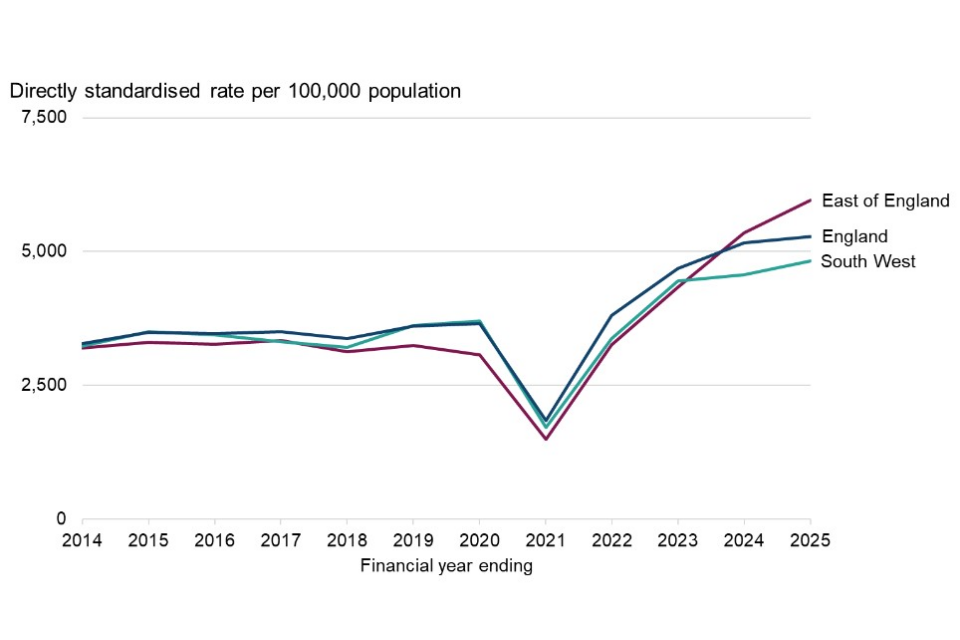
In the financial year ending 2025, there were 608,133 admissions to hospital for cataract surgery in England, a rate of 5,285 per 100,000 population which was significantly higher than the previous financial year rate of 5,160 and any of the years prior.
There is geographical variation in the rate of admissions to hospital for cataract surgery across England (see figure 3). In the financial year ending in 2025, among NHS England regions:
- East of England had the highest rate at 5,956 per 100,000 population, an 11% increase on the previous year
- South West had the lowest rate at 4,827 per 100,000 population, a 6% increase on the previous year
Figure 3: admissions to hospital for cataract surgery in people aged 65 years and over, directly standardised rate per 100,000 population, selected NHS England regions and England, in the financial year ending 2014 to the financial year ending 2025
Source: OHID, based on NHS England Hospital Episode Statistics Admitted Patient Care (HES APC) and patients registered at a GP practice.
Admissions to hospital for rhegmatogenous retinal detachment surgery in people aged 18 years and over
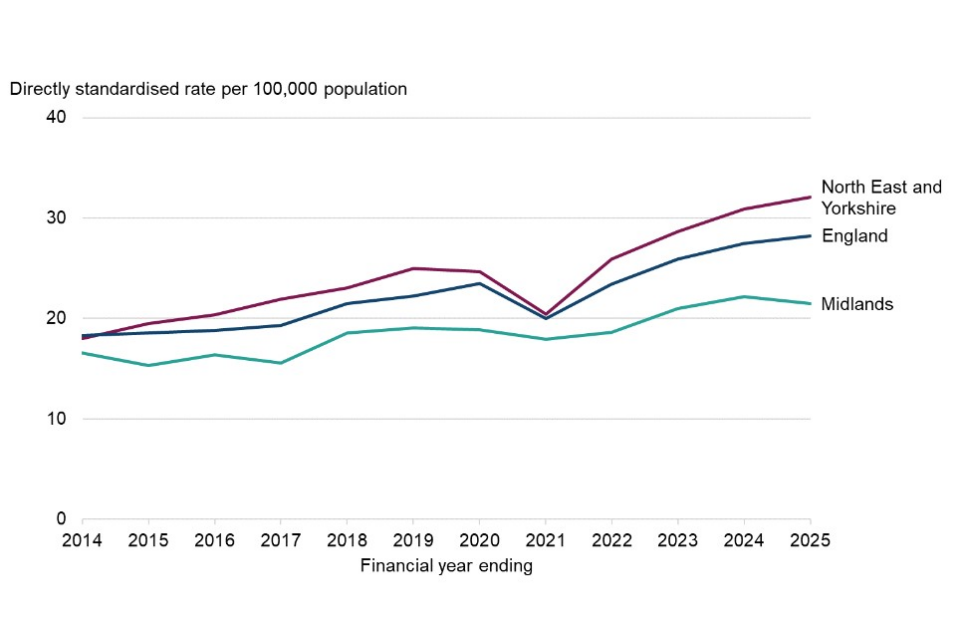
In the financial year ending 2025, there were 13,686, admissions to hospital for rhegmatogenous retinal detachment surgery in England, a rate of 28.3 per 100,000 population. This was not significantly higher than the previous financial year rate of 27.5 but is significantly higher than the years prior.
There is geographical variation in the rate of admissions to hospital for rhegmatogenous retinal detachment surgery across England (see figure 4). In the financial year ending in 2025, among NHS England regions:
- North East and Yorkshire had the highest rate at 32.1 per 100,000 population, which had not significantly increased on the previous year
- Midlands had the lowest rate at 21.5 per 100,000 population, which had not changed significantly on the previous year
Figure 4: admissions to hospital for rhegmatogenous retinal detachment surgery in people aged 18 years and over, directly standardised rate per 100,000 population, selected NHS England regions and England, in the financial year ending 2014 to the financial year ending 2025
Source: OHID, based on NHS England HES APC and patients registered at a GP practice.
Intravitreal injection therapy procedures in people aged 60 years and over
In the financial year ending 2025, there were 932,978 intravitreal injection therapy procedures in England, a rate of 6,156 per 100,000 population which was significantly higher than the previous financial year rate of 5,613 and any of the years prior. Procedures in the financial year ending 2025 are 274% higher than in the financial year ending 2014. It is possible that this increase reflects both an increase in procedures being carried out and improved data quality.
There is geographical variation in the rate of intravitreal injection therapy procedures across England (see figure 5). In the financial year ending in 2025, among NHS England regions:
- North East and Yorkshire had the highest rate at 7,723 per 100,000 population, a 7% increase on the previous year
- East of England had the lowest rate at 5,389 per 100,000 population, a 10% increase on the previous year
Figure 5: intravitreal injection therapy procedures in people aged 60 years and over, directly standardised rate per 100,000 population, selected NHS England regions and England, in the financial year ending 2014 to the financial year ending 2025
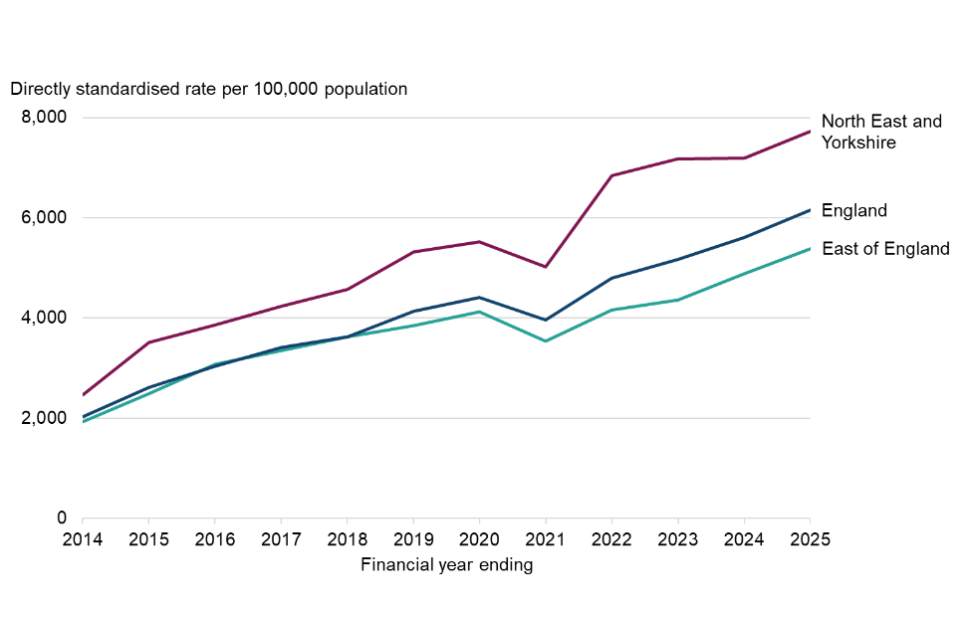
Source: OHID, based on NHS England HES APC, HES OP and patients registered at a GP practice.
There is wide variation in the rate of intravitreal injection therapy procedures across sub-ICBs in England. Some of the variation may be due to differences in coding by hospitals as there is no mandatory requirement for Hospital Episode Statistics outpatient episodes to be coded by diagnosis in the International Classification of Diseases, Tenth Revision (ICD10) or by procedure in the Office of Population Censuses and Surveys Classification of Interventions and Procedures (OPCS4). A more consistent approach to coding will increase our understanding of the variation in service delivery of this important service.
Methodology
Where significance is mentioned, this relates to comparing the 95% confidence intervals of the 2 different estimates to see if they overlap, with non-overlapping confidence intervals being considered statistically significant.
Background and further information
The profile contains where available data for sub-ICBs, ICBs, NHS England regions, upper tier local authorities, lower tier local authorities, statistical regions and England.
Further details about the profile methodology are available within the definitions section of the vision profile.
For queries relating to this document, contact: healthcare.variation@dhsc.gov.uk.