Respiratory disease profile: statistical commentary, May 2026
Published 6 May 2026
Applies to England

© Crown copyright 2026
This publication is licensed under the terms of the Open Government Licence v3.0 except where otherwise stated. To view this licence, visit nationalarchives.gov.uk/doc/open-government-licence/version/3 or write to the Information Policy Team, The National Archives, Kew, London TW9 4DU, or email: psi@nationalarchives.gov.uk.
Where we have identified any third party copyright information you will need to obtain permission from the copyright holders concerned.
This publication is available at https://www.gov.uk/government/statistics/update-of-indicators-in-the-respiratory-disease-profile-may-2026/respiratory-disease-profile-statistical-commentary-may-2026
What’s new
New data on emergency hospital admissions and the percentage of zero and one day admissions has been added to the respiratory disease profile for the financial year ending 2025.
The following indicators have been updated (where age has not been specified, this refers to all ages):
- emergency hospital admissions for respiratory disease
- emergency hospital admissions for chronic obstructive pulmonary disease (COPD)
- emergency hospital admissions for asthma in adults aged 19 years and over
- emergency hospital admissions for pneumonia
- emergency hospital admissions for bronchiolitis in children aged under 2 years
- the percentage of zero and one day emergency admissions to hospital for pneumonia
- the percentage of zero and one day emergency admissions to hospital for bronchiolitis in children aged under 2 years
The indicator for emergency admissions for asthma in children and young people aged under 19 years has also been updated and is included within the Child and Maternal Health profiles: May 2026 update statistical commentary.
Introduction
The respiratory disease profile gives local areas comparable indicators of risk factors, healthcare provision and outcomes for respiratory health to support commissioning and planning, and to identify geographical variation. Emergency admissions for many of these conditions are a significant burden to the NHS but are preventable.
Main findings
This update shows:
- the rate of emergency admissions for respiratory disease in England increased by 1.0% from the financial year ending 2024 to the financial year ending 2025
- in the same time period, the rate of emergency admissions decreased for COPD by 3.6%, asthma in adults by 5.9% and bronchiolitis in children aged under 2 years by 5.0%
- the rate of emergency admissions for pneumonia in England remained similar to the previous year
Detailed findings
Respiratory disease emergency admissions, all ages
Respiratory disease covers a wide variety of conditions, both acute and chronic upper and lower respiratory tract conditions, asthma, COPD, influenza and certain types of pneumonia. In this analysis, lung cancer and cystic fibrosis are not included.
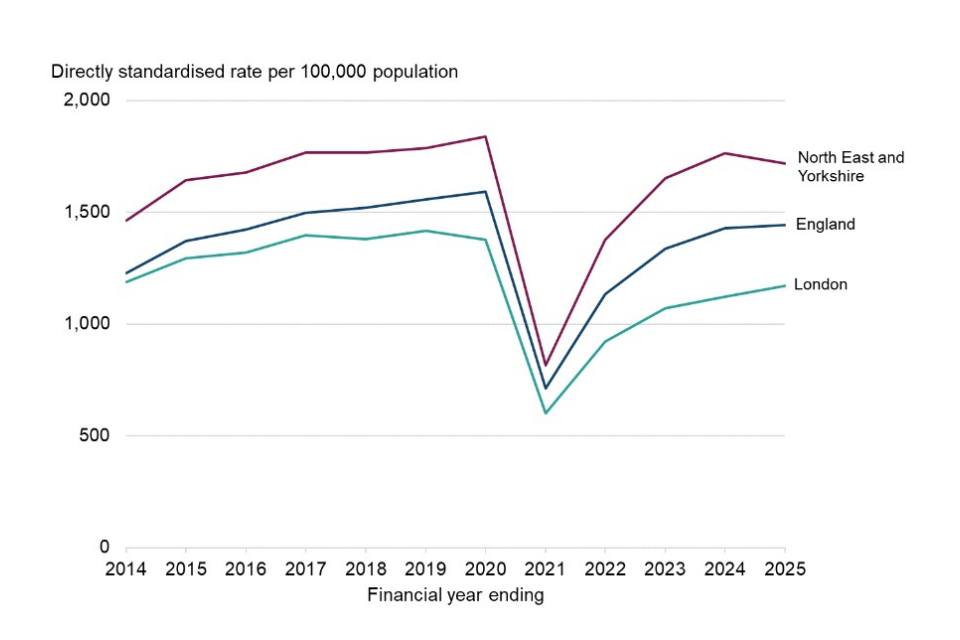
In the financial year ending 2025, there were 873,461 emergency admissions to hospital for respiratory disease in England, a rate of 1,442 per 100,000 population, a significant increase of 1.0% from the previous year. Emergency admissions from influenza doubled to over 56,000 in the financial year ending 2025 compared with the previous year.
There is geographical variation in respiratory disease admission rates across England (see figure 1). In the financial year ending in 2025, among NHS England regions:
- North East and Yorkshire NHS England region had the highest rate at 1,718 per 100,000 population, a 2.7% decrease on the previous year
- London NHS England region had the lowest rate at 1,171 per 100,000 population, a 4.5% increase on the previous year
Figure 1: emergency hospital admissions for respiratory disease, directly standardised rate per 100,000 population, selected NHS England regions and England, in the financial year ending 2014 to the financial year ending 2025
Source: OHID, based on NHS England Hospital Episode Statistics Admitted Patient Care (HES APC) and patients registered at a GP Practice.
COPD emergency admissions, all ages
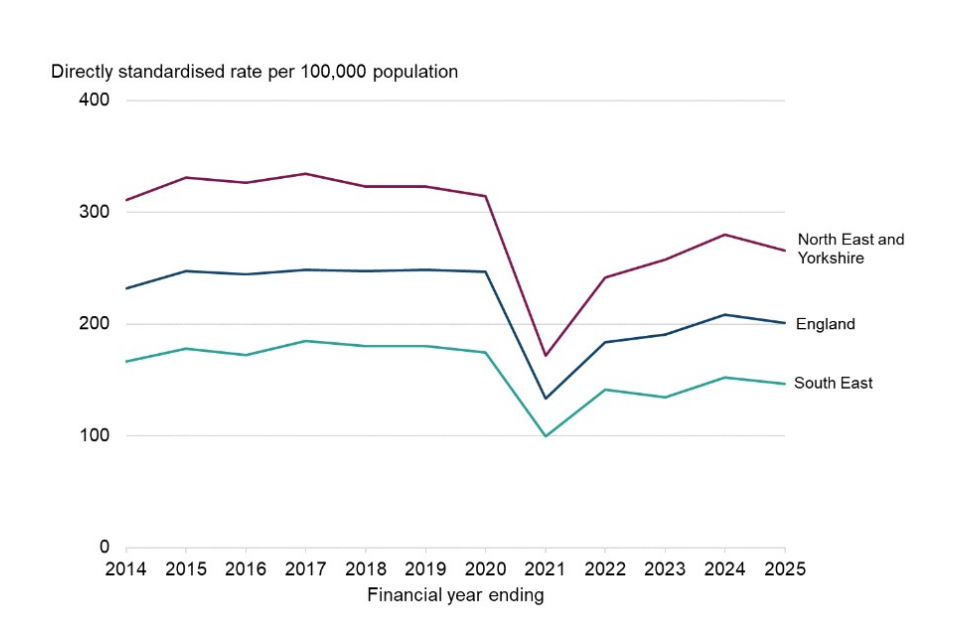
The rate of emergency admissions to hospital for COPD in England significantly decreased by 3.6% in the financial year ending 2025 from the previous year, to a rate of 201 per 100,000 population, representing 118,975 admissions.
There is geographical variation in COPD admission rates across England (see figure 2). In the financial year ending in 2025, among NHS England regions:
- North East and Yorkshire NHS England region had the highest rate at 266 per 100,000 population, a 5.0% decrease on the previous year
- South East NHS England region had the lowest rate at 146 per 100,000 population, a rate similar to the previous year
Figure 2: emergency hospital admissions for COPD, directly standardised rate per 100,000 population, selected NHS England regions and England, in the financial year ending 2014 to the financial year ending 2025
Source: OHID, based on NHS England Hospital Episode Statistics Admitted Patient Care (HES APC) and patients registered at a GP Practice.
Emergency hospital admissions for asthma in adults, aged 19 years and over
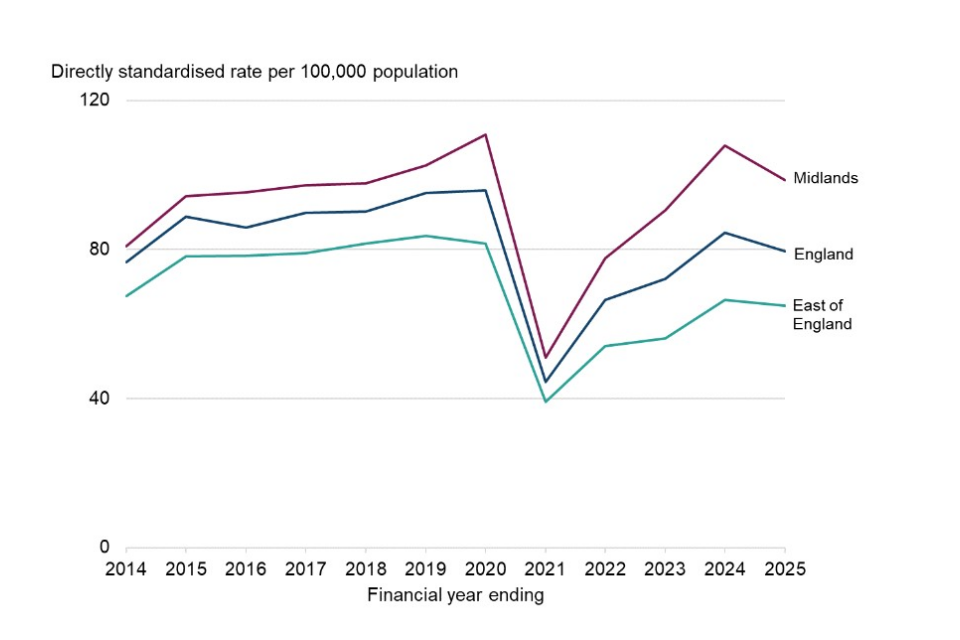
The rate of emergency admissions to hospital for asthma in adults in England significantly decreased by 6.0% in the financial year ending 2025 from the previous year, to 79.5 per 100,000 population, representing 39,384 admissions.
There is geographical variation in admission rates for asthma in adults across England (see figure 3). In the financial year ending in 2025, among NHS England regions:
- Midlands NHS England region had the highest rate at 98.7 per 100,000 population, an 8.6% decrease on the previous year
- East of England NHS England region had the lowest rate at 64.9 per 100,000 population, a rate similar to the previous year
Figure 3: emergency hospital admissions for asthma in adults, aged 19 years and over, directly standardised rate per 100,000 population, selected NHS England regions and England, in the financial year ending 2014 to the financial year ending 2025
Source: OHID, based on NHS England Hospital Episode Statistics Admitted Patient Care (HES APC) and patients registered at a GP Practice.
Emergency hospital admissions for pneumonia, all ages
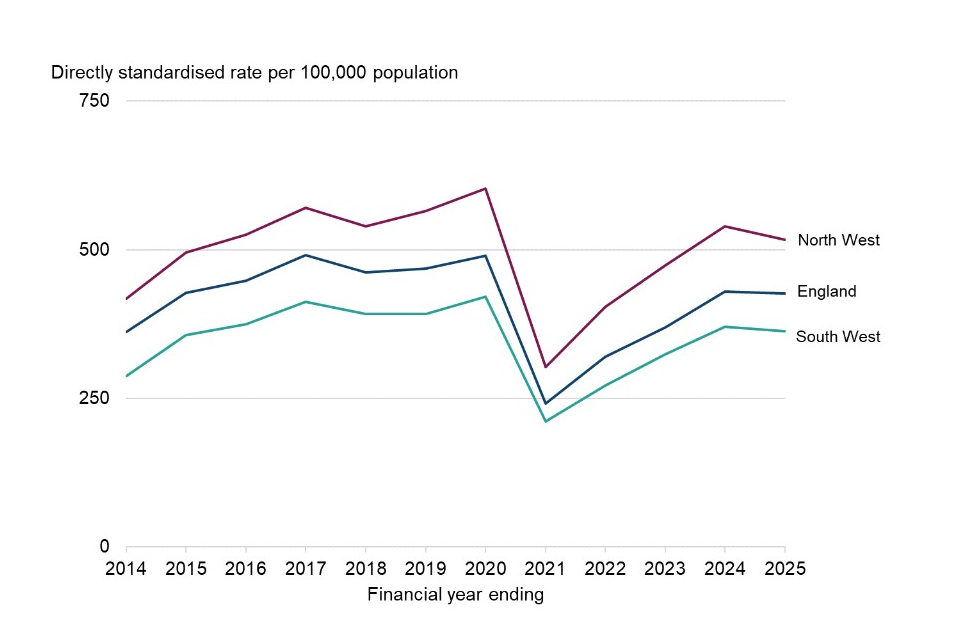
In the financial year ending 2025, there were 255,417 emergency admissions to hospital for pneumonia in England, a rate of 426.6 per 100,000 population. The rate is similar to the previous year.
There is geographical variation in pneumonia admission rates across England (see figure 4). In the financial year ending in 2025, among NHS England regions:
- North West NHS England region had the highest rate at 517.1 per 100,000 population, a 4.1% decrease on the previous year
- South West NHS England region had the lowest rate at 362.8 per 100,000 population, a rate similar to the previous year
Figure 4: emergency hospital admissions for pneumonia, directly standardised rate per 100,000 population, selected NHS England regions and England, in the financial year ending 2014 to the financial year ending 2025
Source: OHID, based on NHS England Hospital Episode Statistics Admitted Patient Care (HES APC) and patients registered at a GP Practice.
Emergency hospital admissions for bronchiolitis in children aged under 2 years
Bronchiolitis is a viral respiratory infection, predominantly affecting children under the age of 1 year but occasionally children up to the age of 2 years. The majority of children with bronchiolitis do not require admission to hospital.
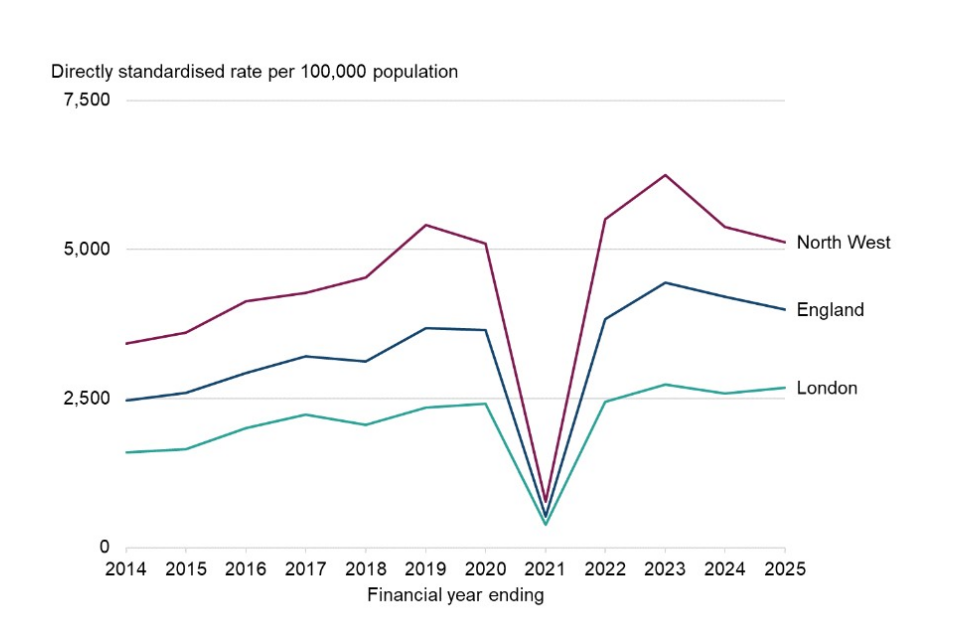
There were 47,709 emergency hospital admissions for bronchiolitis in children aged under 2 years in England in the financial year ending 2025, a rate of 3,994 per 100,000 population. The England rate was, significantly lower by 5.0% than the previous year.
There is geographical variation in bronchiolitis in children aged under 2 years admission rates across England (see figure 5). In the financial year ending in 2025, among NHS England regions:
- North West NHS England region had the highest rate at 5,124 per 100,000 population, a rate similar to the previous year
- London NHS England region had the lowest rate at 2,682 per 100,000 population, a rate similar to the previous year
Figure 5: emergency hospital admissions for bronchiolitis in children aged under 2 years, crude rate per 100,000 population, selected NHS England regions and England, in the financial year ending 2014 to the financial year ending 2025
The percentage of zero and one day emergency admissions to hospital for pneumonia, all ages
Length of hospital stay for pneumonia is associated with the severity of illness on admission to hospital.
In the financial year ending 2025, there were 60,199 zero and one day emergency admissions to hospital for pneumonia in England, a proportion of 20.8% which was similar to the previous year.
The percentage of zero and one day emergency admissions to hospital for bronchiolitis in children aged under 2 years
The duration of admission for bronchiolitis is affected by many factors including disease severity, local differences in the management of children with bronchiolitis in the emergency department, thresholds for hospital admission and discharge, and the availability of primary, community and social care support during the infant’s recovery period. Length of stay should not be assessed in isolation; areas should also assess local intelligence alongside this indicator.
In the financial year ending 2025, there were 31,253 zero and one day emergency admissions to hospital for bronchiolitis in children aged under 2 years in England, a proportion of 64.2%.
Methodology
Where significance is mentioned, this relates to comparing the 95% confidence intervals of the 2 different estimates to see if they overlap, with non-overlapping confidence intervals being considered statistically significant.
Background and further information
The respiratory disease profile provides an invaluable resource relating to one of the leading causes of death in England.
The profile contains where available data for sub-ICBs, ICBs, NHS England regions, upper tier local authorities, lower tier local authorities, statistical regions and England.
Further details about the profile methodology are available within the definitions section of the Respiratory disease profile.
For queries relating to this document, please contact: healthcare.variation@dhsc.gov.uk.